
24 August 2026
By Göran R Buckhorn
Göran Buckhorn and Mrs B. went to the rowing history event of the year when Marist University in Poughkeepsie, New York, opened its archives to display the Thomas E. Weil Jr. Rowing History Collection to the delight of Tom’s family and many friends. Historian Bill Miller gave a talk about an important but now forgotten race between Harvard and Oxford in 1869, which was followed by a panel debate on the future of rowing history.
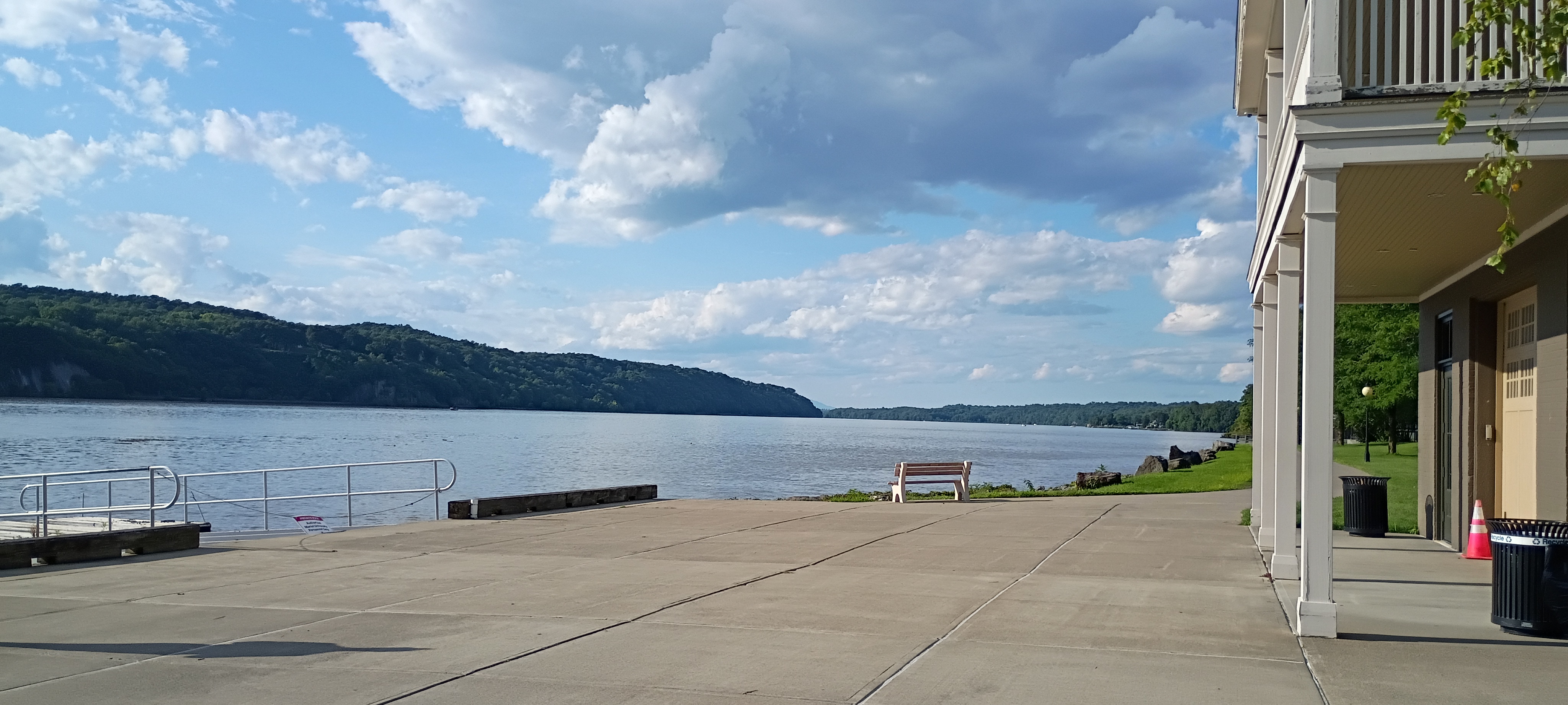
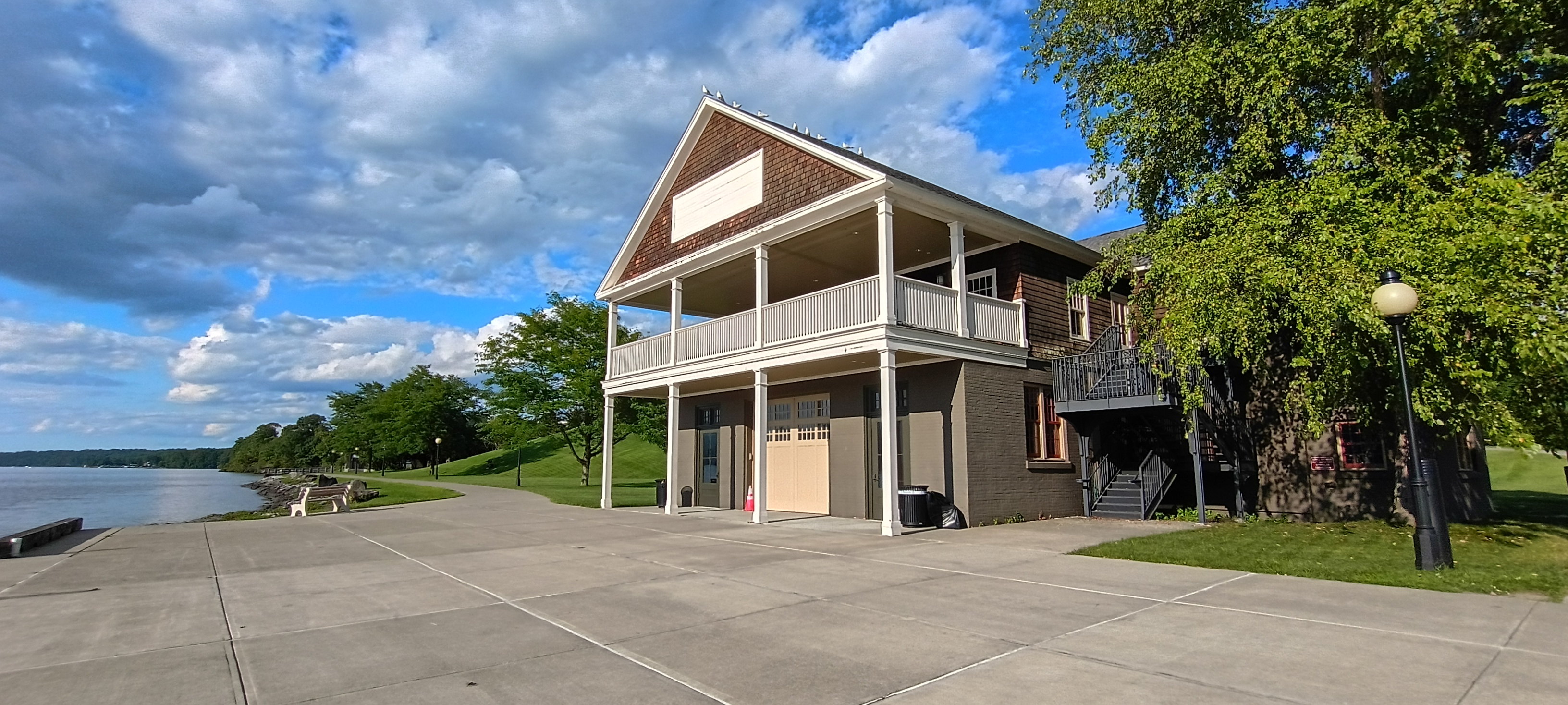
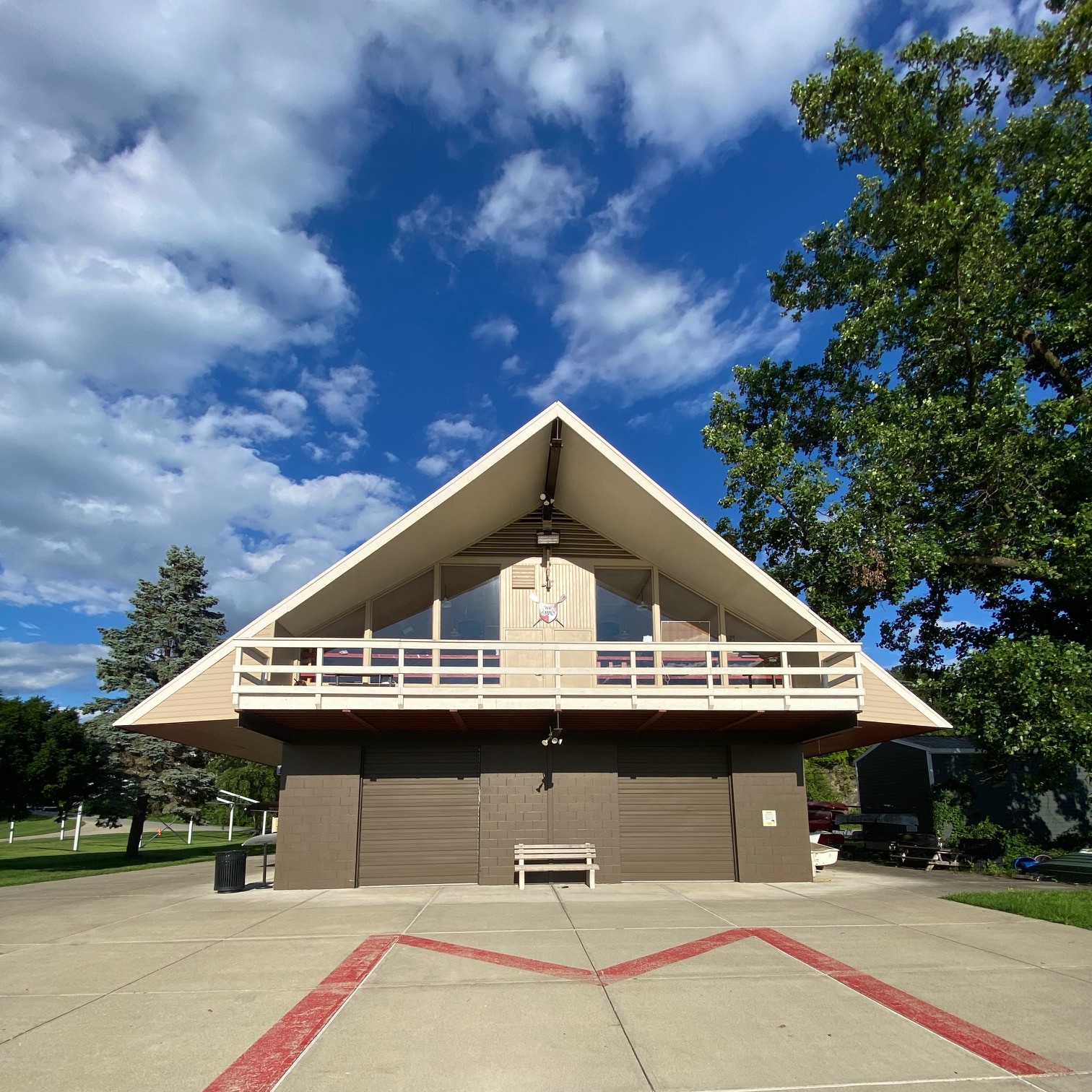
There is a magical ring to Poughkeepsie [pə-KIP-see]. For decades it was a rowing hub for the best college crews in America who were battling for trophies and pots in the annual Poughkeepsie Regatta. The Intercollegiate Rowing Association (IRA) organised the regatta on the Hudson River between 1895 and 1949. Nowadays, the river is used by crews from Vassar and Marist Universities, and for occasional regattas.
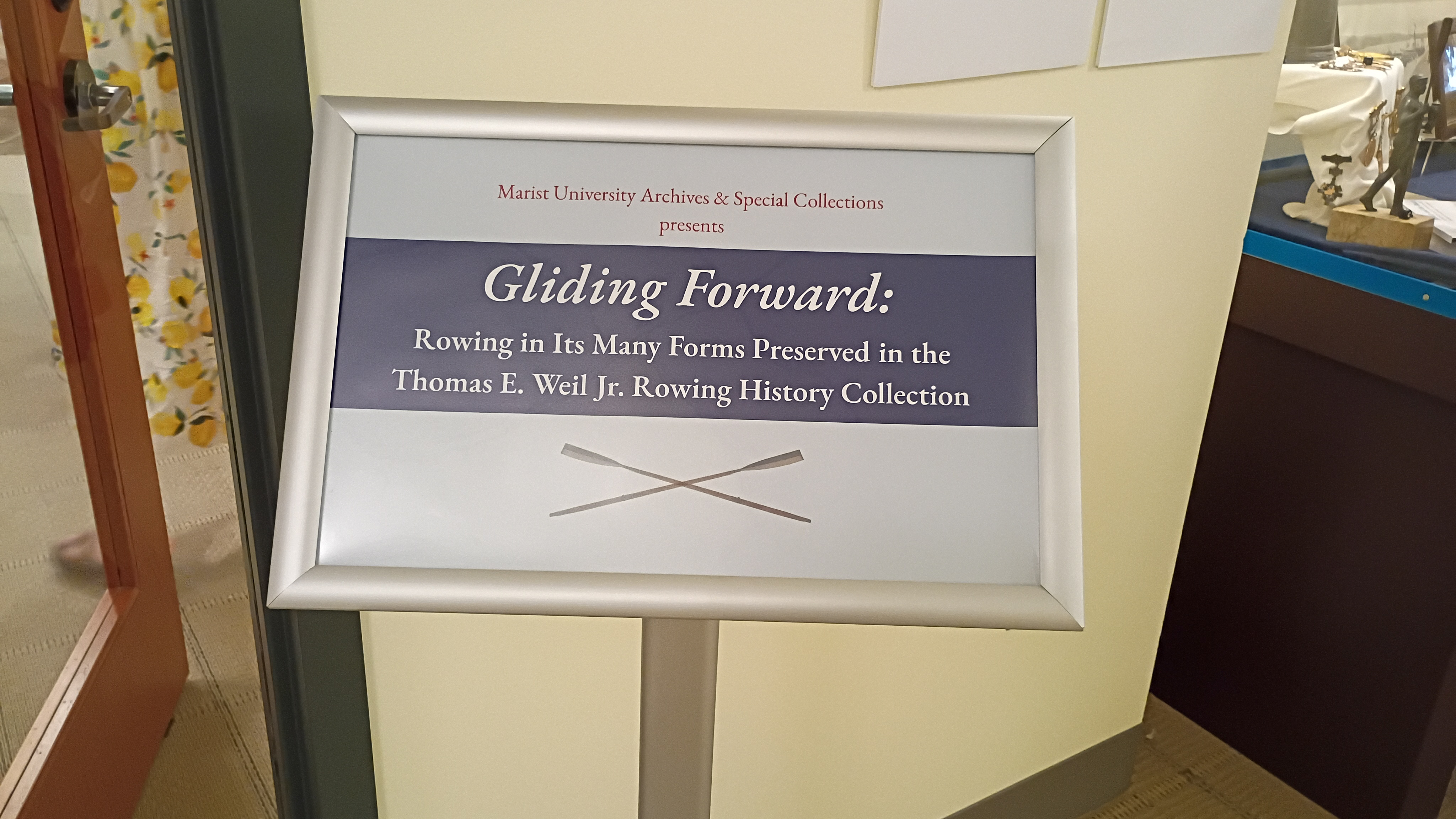
On Saturday, 15 August, Marist University organised a Rowing History Symposium and Exhibit Opening of Thomas E. Weil Jr. Rowing History Collection at Marist University Archives and Special Collections.
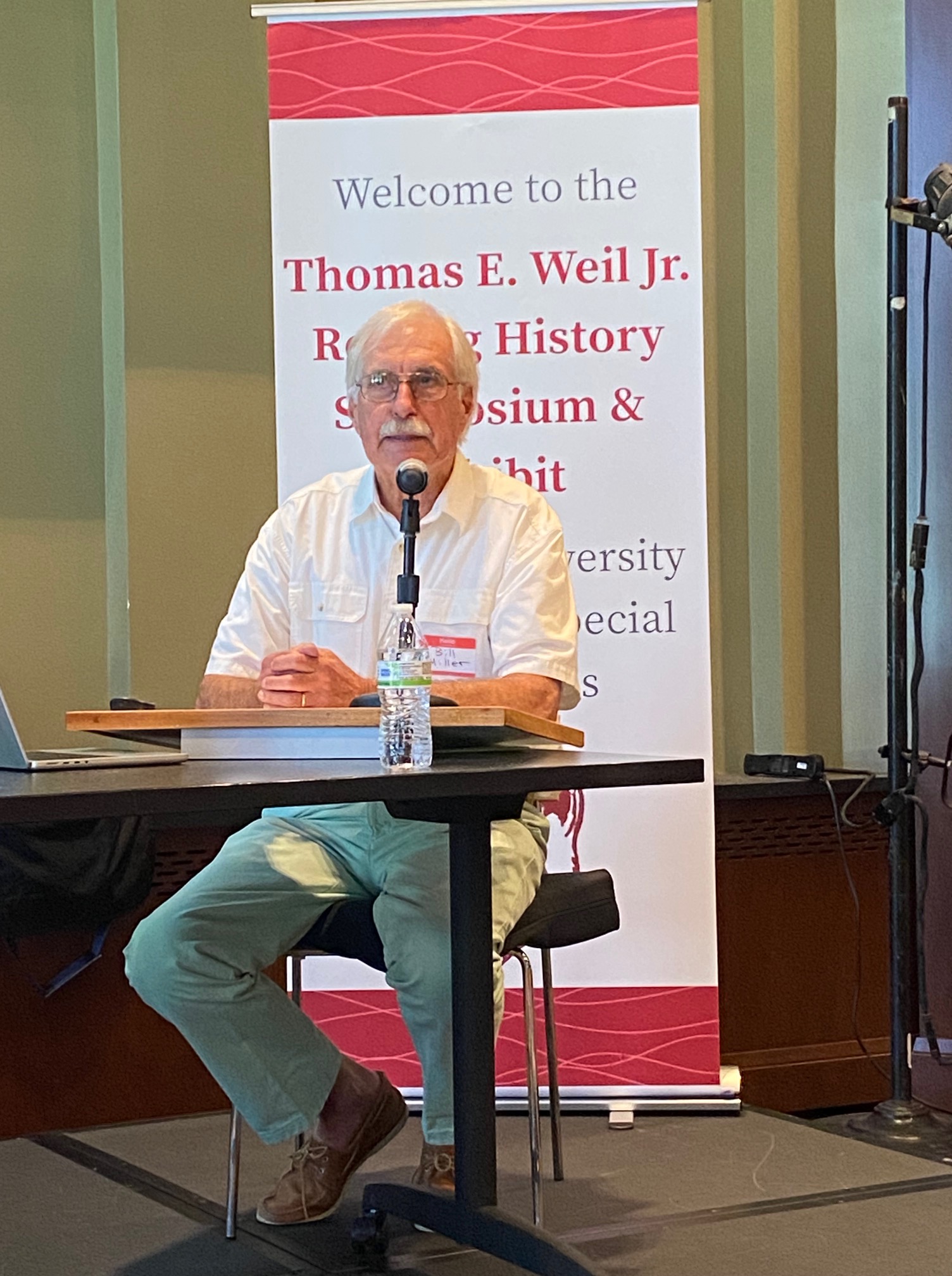
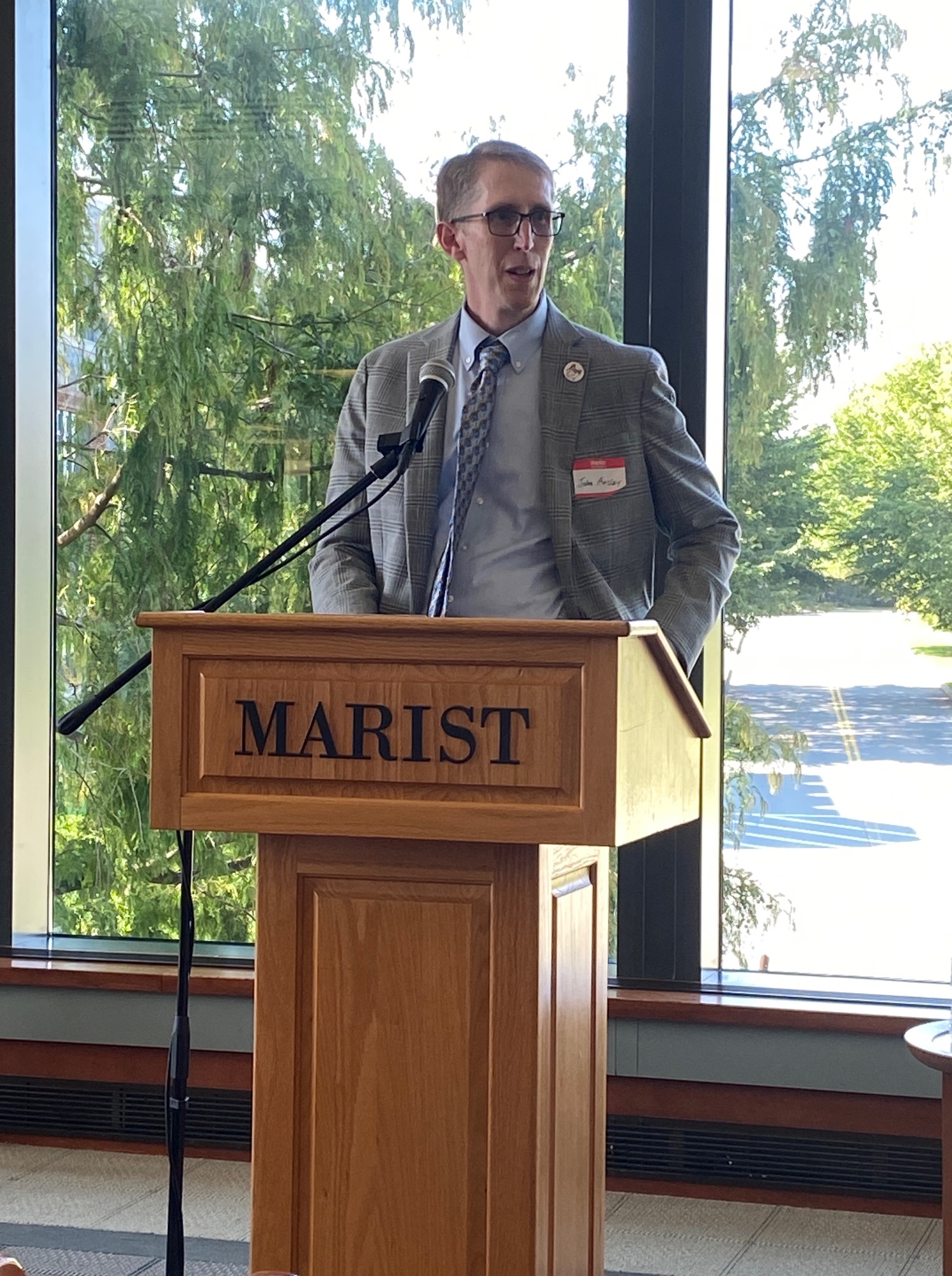
The event started at 1 pm in the Murray Student Center Cabaret where Dr. John F. Ansley, Director of Archives and Special Collections, gave the opening remarks and welcomed the more than 100 people who had gathered at the Cabaret. Ansley introduced the keynote speaker, rowing historian Bill Miller, who held an interesting talk titled “Great International University Boat Race of 1869” about a coxed four race between Harvard and Oxford Universities on 27 August 1869 on the River Thames in London.
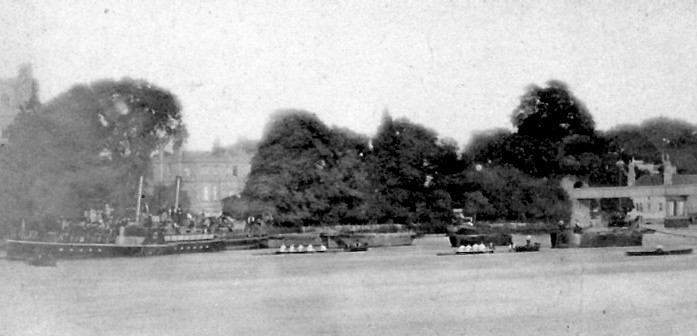

Newspapers reported that between 750,000 and 1 million spectators followed the race, and though Oxford won the race, many hundreds of American newspapers wrote detailed articles about the race. Many newspapers covered their whole front pages with race reports.
The race had an enormous effect on rowing in America. More than 100 new boat clubs and college rowing programmes were founded within a couple of years after 1869. Even sheet music was composed dedicated to “the Gallant Harvard Crew”.
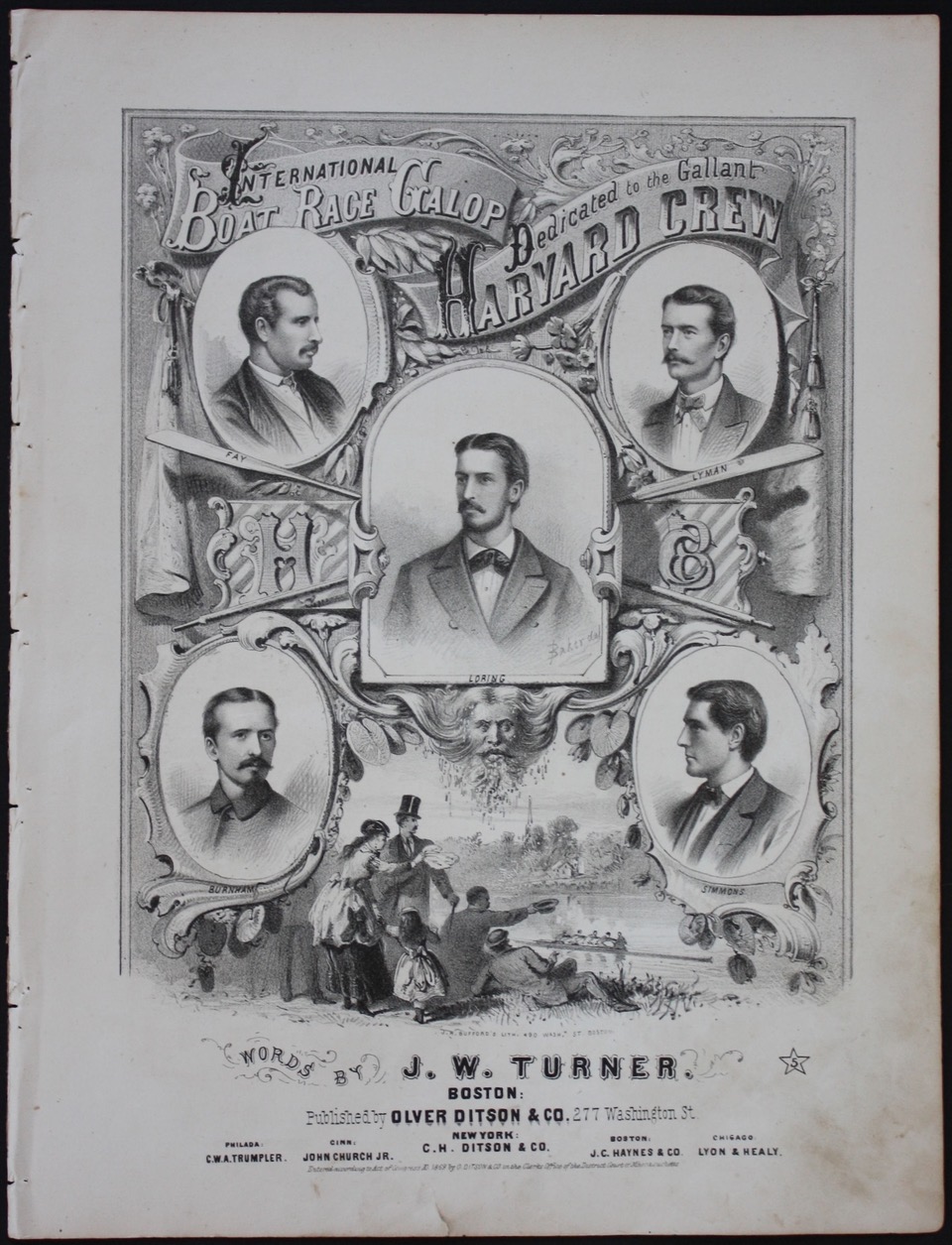
Miller wrapped up his talk by saying that “the Harvard – Oxford Race is the most significant rowing event in American rowing history.”
After a short break, the event continued with a panel discussion on the state of rowing history – where the field stands today and what the future looks like. The panel consisted of Bill Miller, Olympic rower, coach and historian; Elizabeth Clarke, Marist archivist and rowing historian, co-author of The Poughkeepsie Regatta: 1891–1950 (together with Ann Sandri; 2022); Ed Woodhouse, historian, Harvard Hall of Fame oarsman and author of Joe Burk: An American Ideal (2025); and Dave Vogel, renowned U.S. coach, rower and commentator.
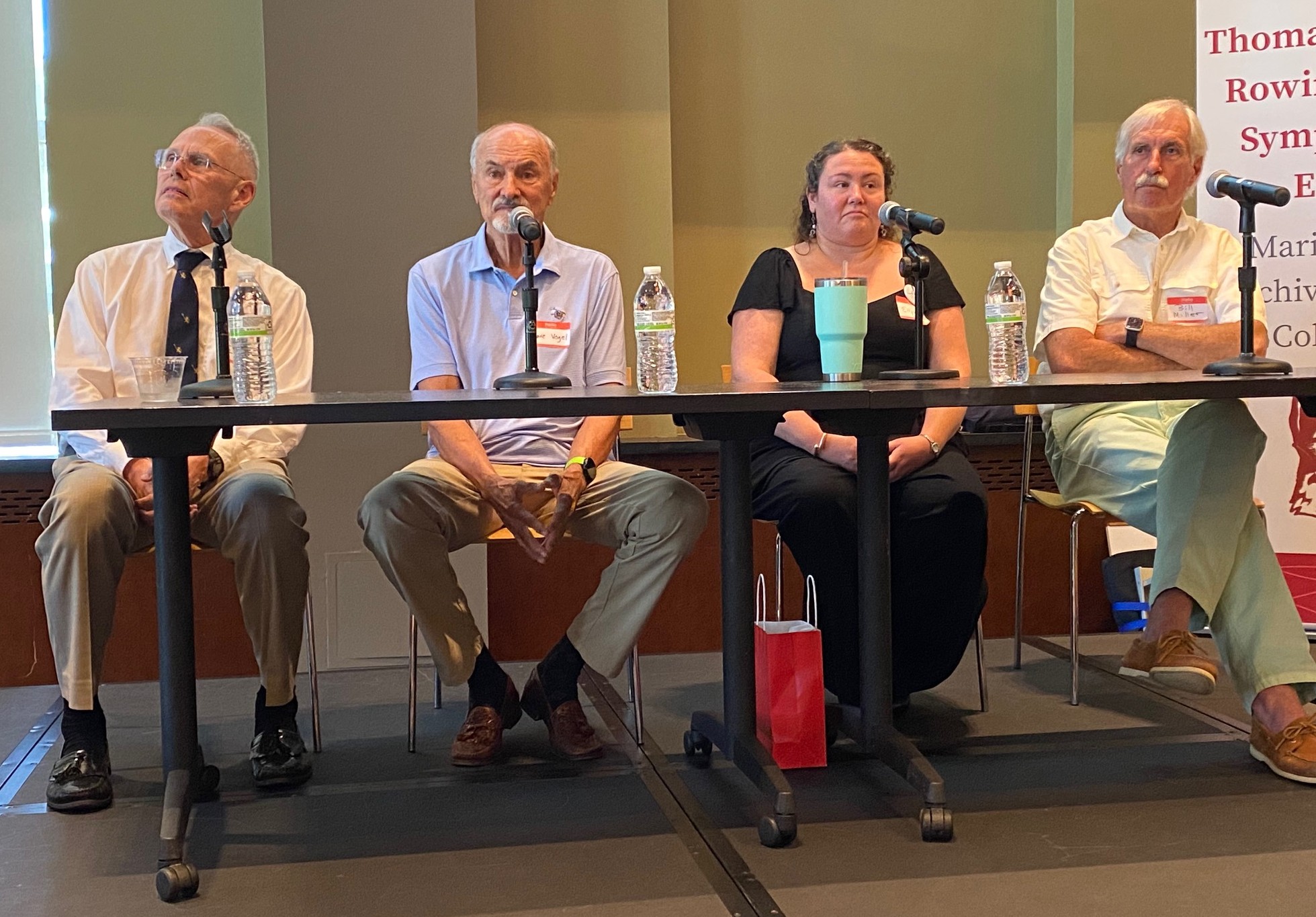
Vogel, a close friend of Tom, stated that while Tom was a collector of the highest rank, he was also a hoarder. It was after Tom and Vogel’s crew lost a race at Henley Royal Regatta in 1970 that they went to London to visit antiquarian book shops, art galleries and shops selling vintage prints that their collections took off. Vogel also talked about what a warm person Tom was, his kindness and how he shared his knowledge of rowing. A key phrase of Tom’s was “How can I help?”
Clarke started out by saying that she was not a rower, but she had become interested in the sport after doing research for her and Marist colleague Ann Sandri’s book about the history of the Poughkeepsie Regatta. Clarke is now one of the group cataloguing Tom’s collection.
Ed Woodhouse, who rowed for Harry Parker, in what the media called Harvard’s “The Rude and Smooth” crew, in 1974, knew Tom from University of Virginia Law School. Despite being seriously ill, Tom helped Ed with his biography Joe Burk: An American Ideal.
Bill Miller and Tom had known each other for decades, both being historians and members of the National Rowing Foundation’s “historic branch”, arranging the Rowing Hall of Fame events with Hart Perry and organising the Rowing History Forum events at Mystic Seaport Museum in the 2000s. They built the exhibition “Let Her Run” at the museum, which sadly closed in 2014.
The members of the panel talked about the different groups that are now safeguarding the history of rowing so it will live on in the USA. The Philadelphia group has made great progress with their project. Bill Miller said that building in Nathan Benderson Park in Florida is going forward with a rowing history exhibit and the National Rowing Hall of Fame.
Miller also mentioned that Mystic Seaport Museum still has the NRF’s rowing shells in its Watercraft Hall, and that the museum will open a watercraft exhibit with around 100 small boats in the Rossie Mill, which is opposite the newly-built Jim Dietz Rowing Center with Hart Perry Boathouse in the Mystic River Boathouse Park. There will be an official opening ceremony on 19th September, Jim Dietz said. Miller added that Mike Florio is working on a project to preserve New York City rowing history. In Seattle, there is a group working on the legacy of George Pocock to preserve wooden boats.
With the Thomas Weil collection, Marist University will be a rowing history center to count on. Regarding the latter, Dave Vogel mentioned the good news, which John Ansley could confirm, that Tom’s collection at the River and Rowing Museum in Henley, which closed its doors in 2025, will arrive at Marist maybe already this month.
The audience took active part in other discussions which included women’s rowing (a subject close to Tom’s heart), junior rowing and community rowing centers.
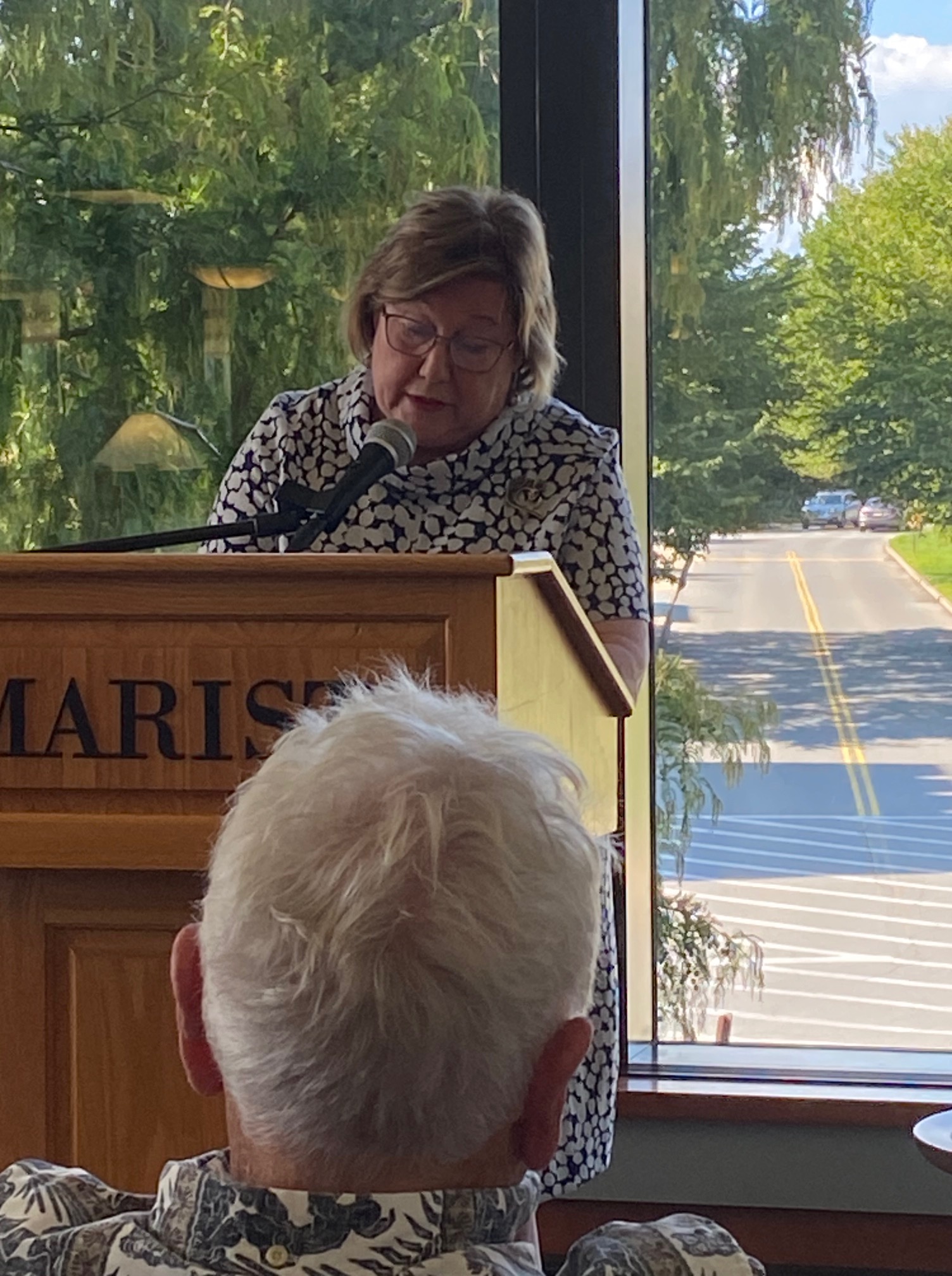
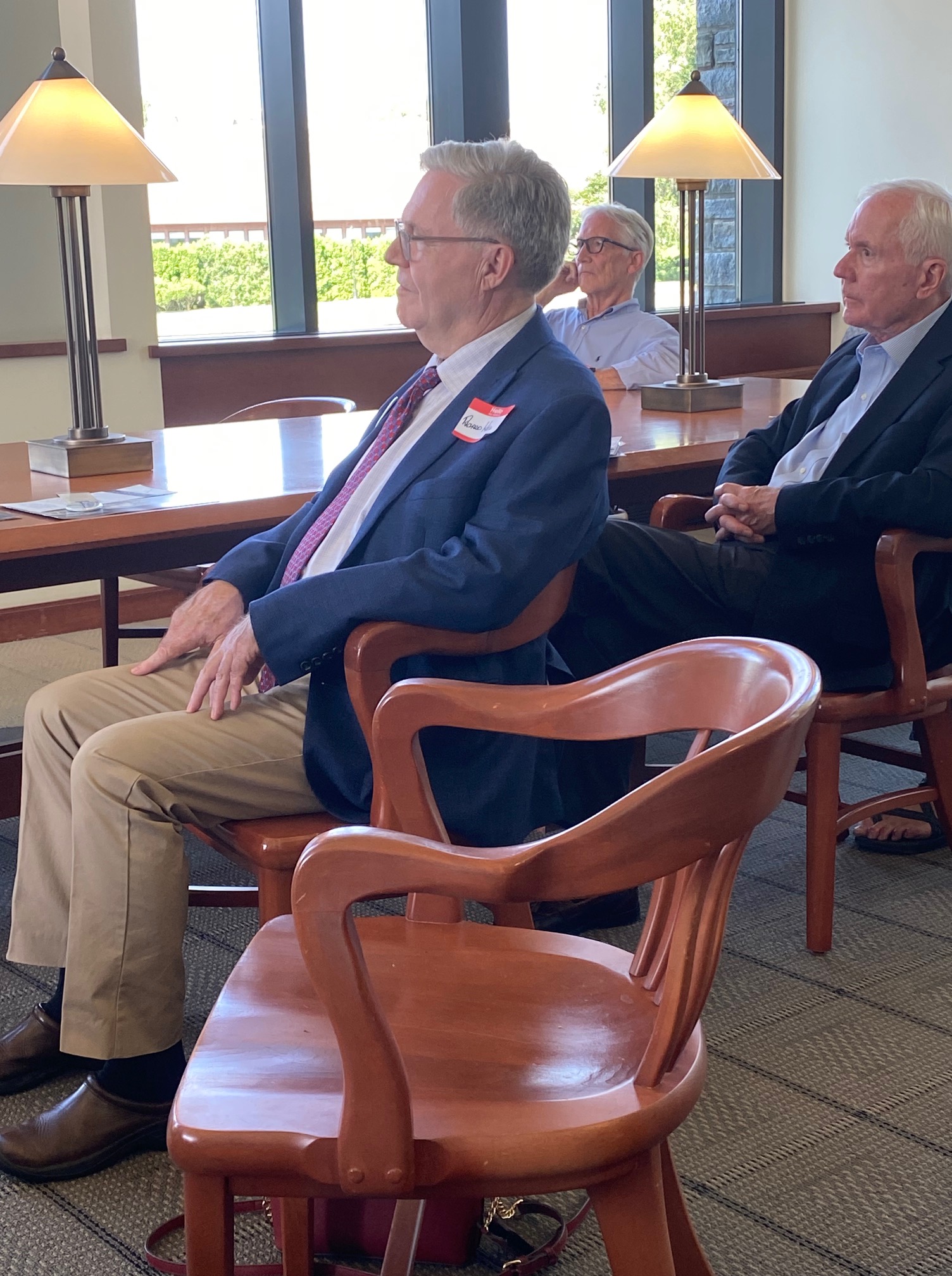
After a 30-minute break, the attendees moved over to the James A. Cannavino Library North Reading Room where Ansley gave the audience an introduction to Tom’s collection. Then Tom’s brother Richard Weil, on his and his sister Susan Weil-Percival’s behalf, thanked Ansley and the entire Marist staff who are working to catalogue his brother’s enormous collection. Next, Susan told stories of her big brother Tom, who at one time – in lack of a cox – had asked her, a teenage girl, to steer an eight with Tom in the crew. Susan said she was both scared, as she didn’t know what to do, and fascinated by the rhythm and synchronization in the boat. “But maybe I was only there as a weight in the stern,” she said, and, alas, “I was never asked to do it again.”
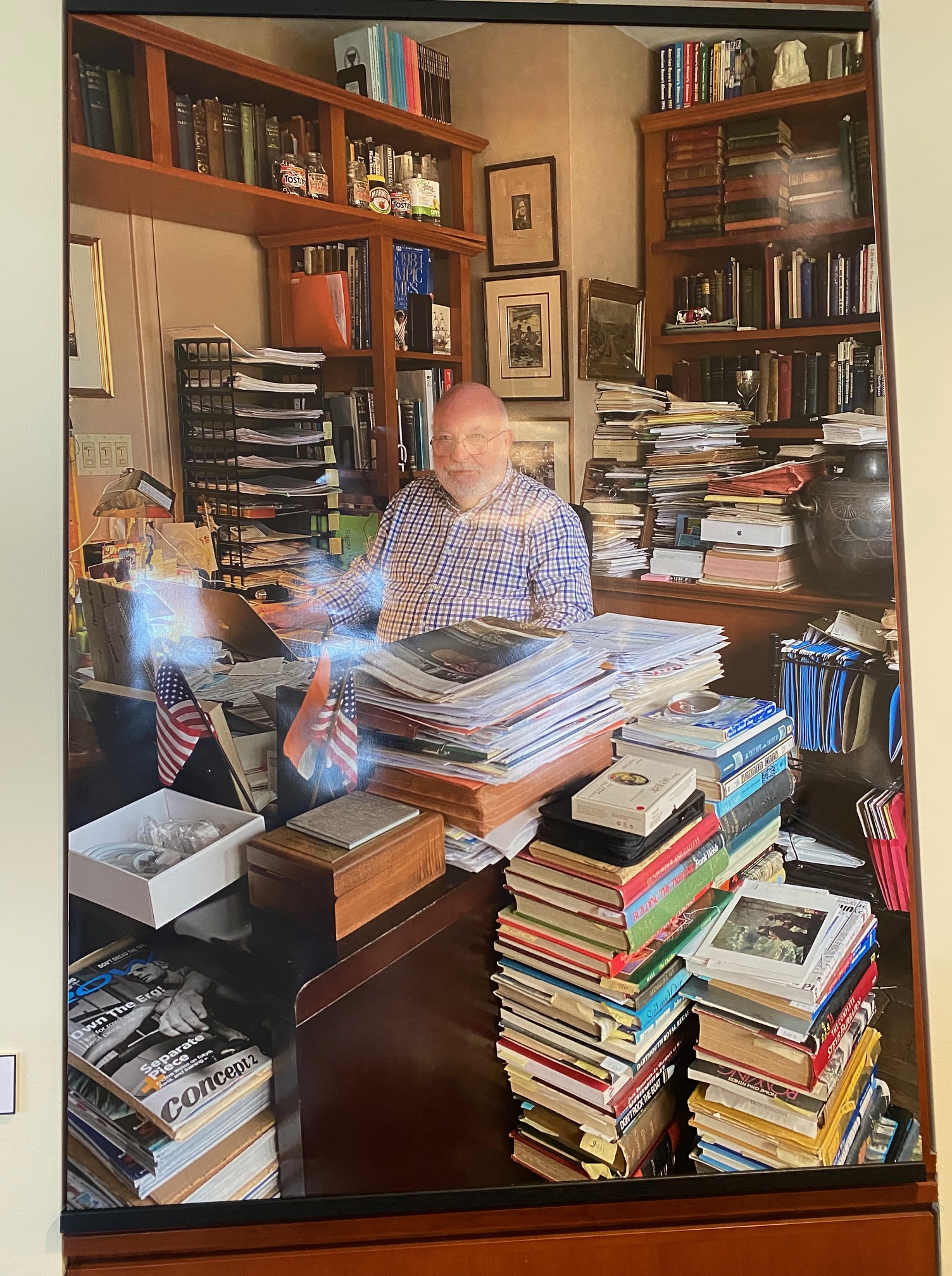
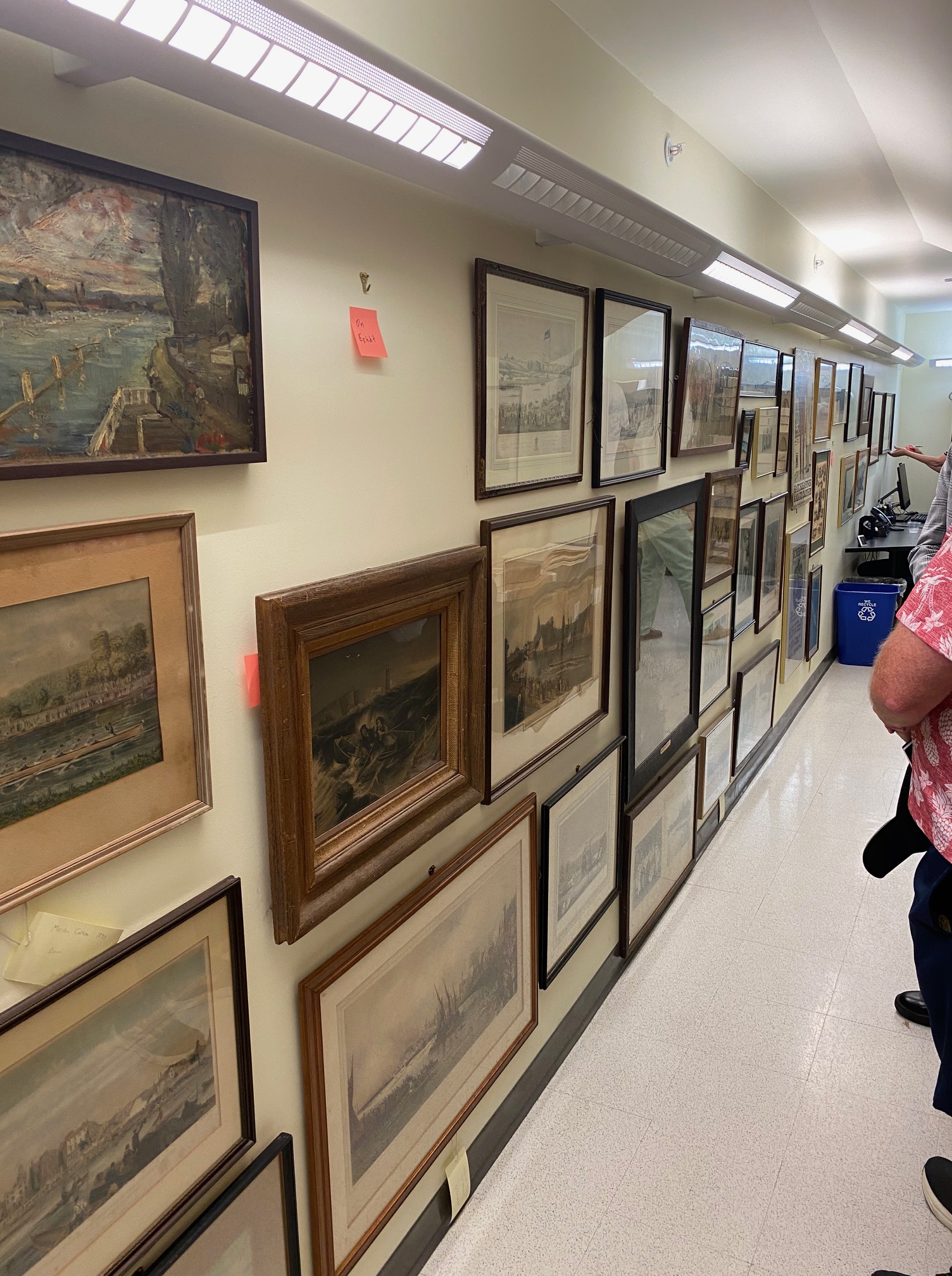
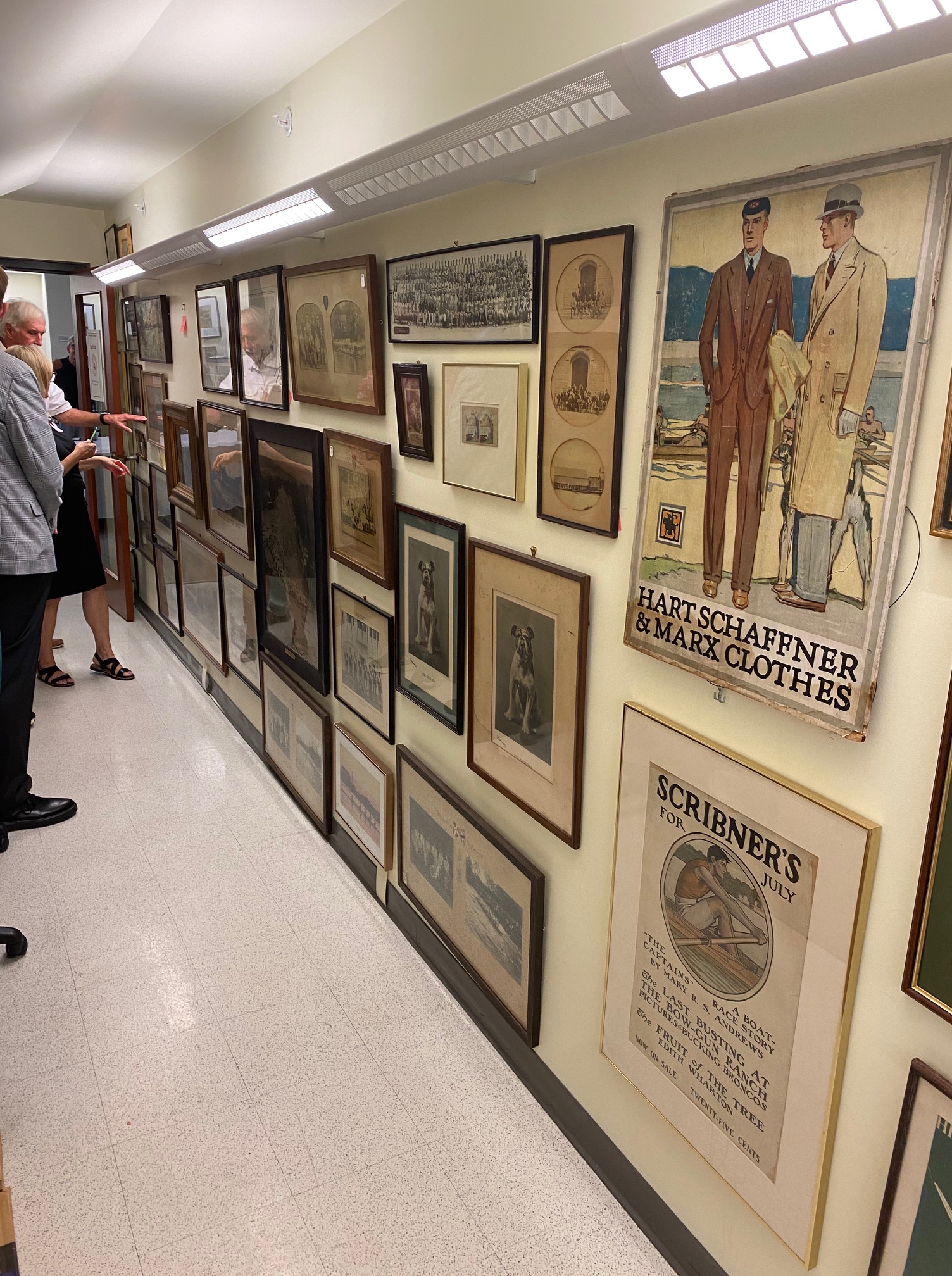
Ansley then invited the group to Marist Archives and Special Collections on the first floor, where Tom’s collection is held. Walking back to the stairs leading down to “the inner sanctum”, pictures of some pieces of Tom’s collection were hanging on the walls.
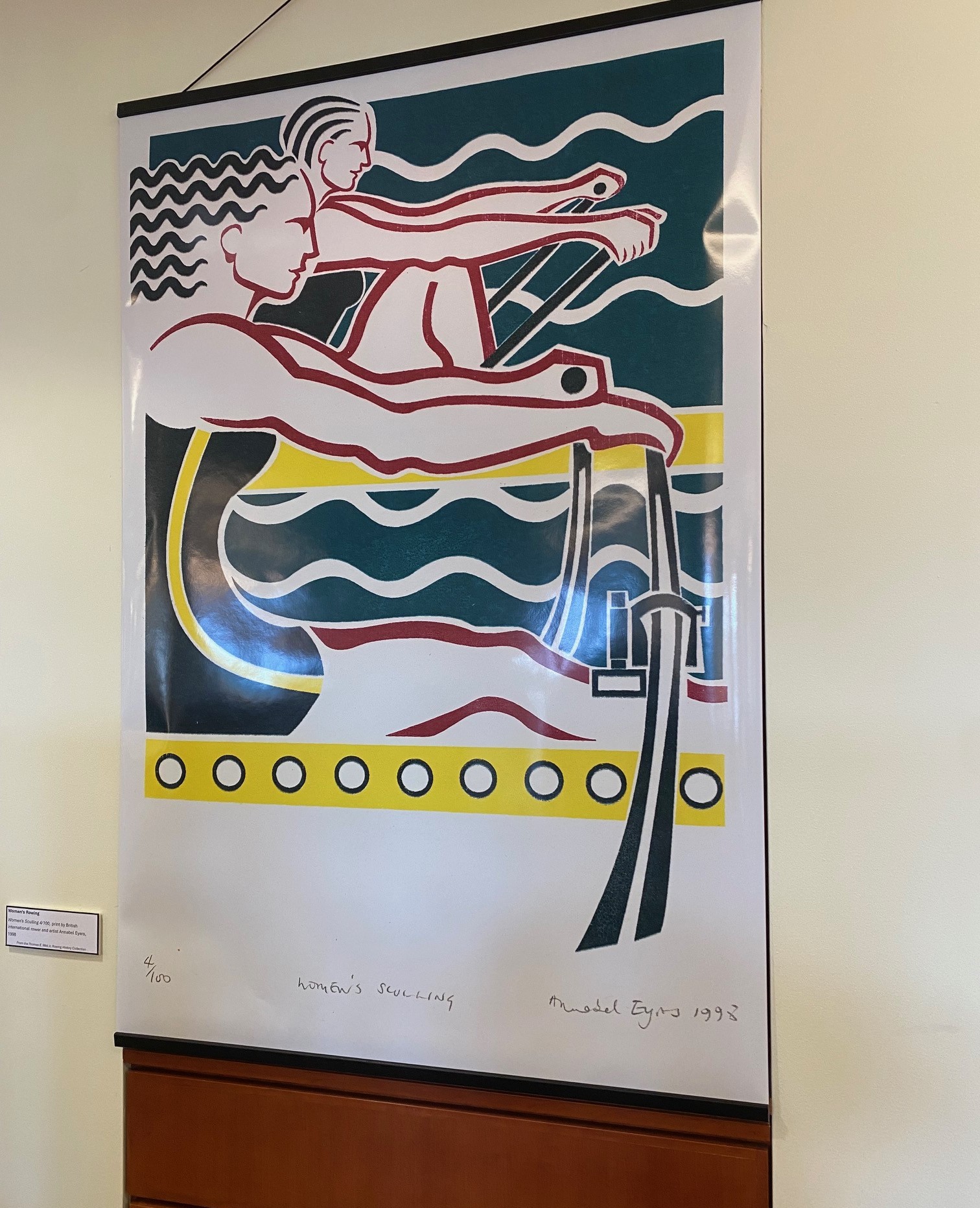
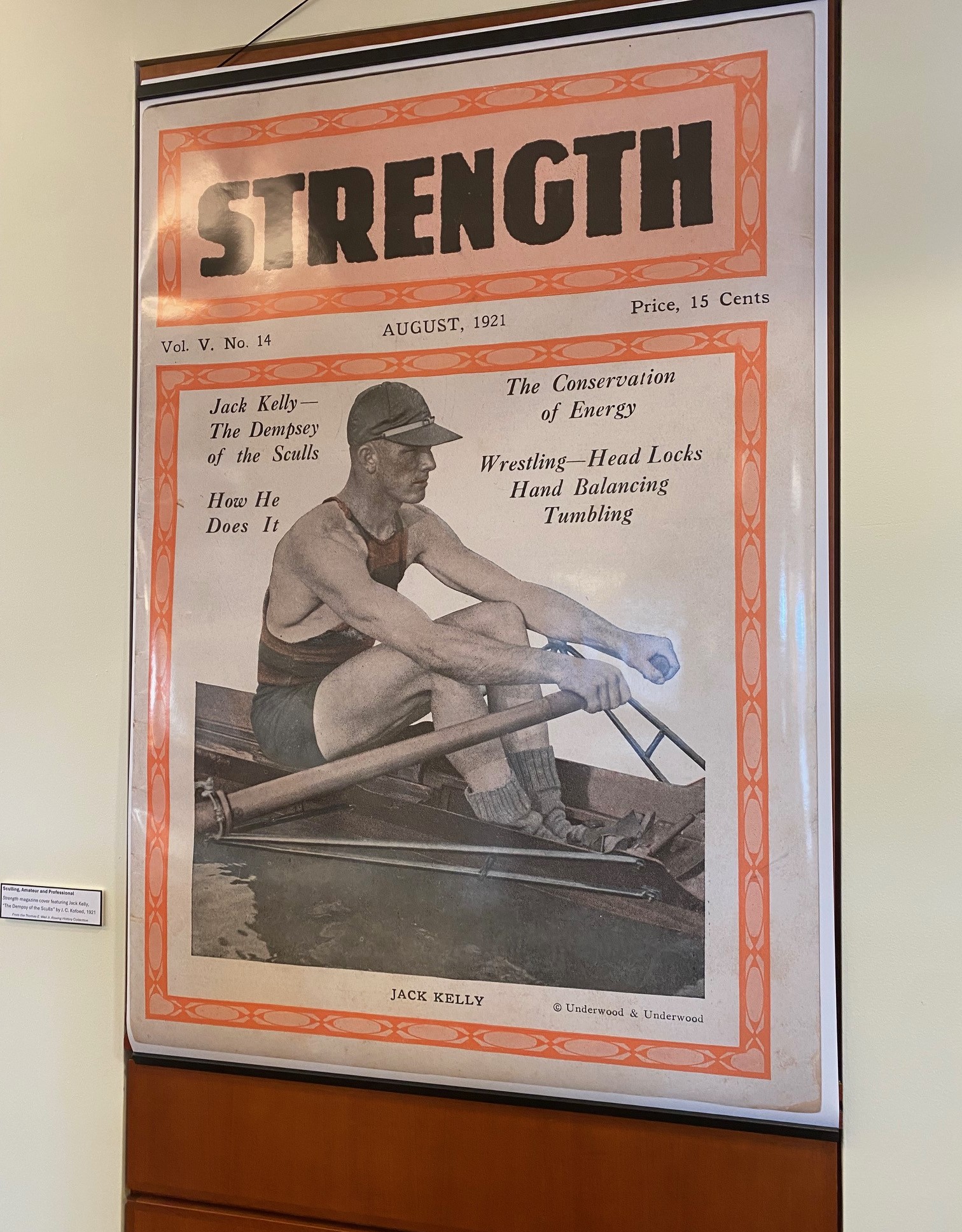
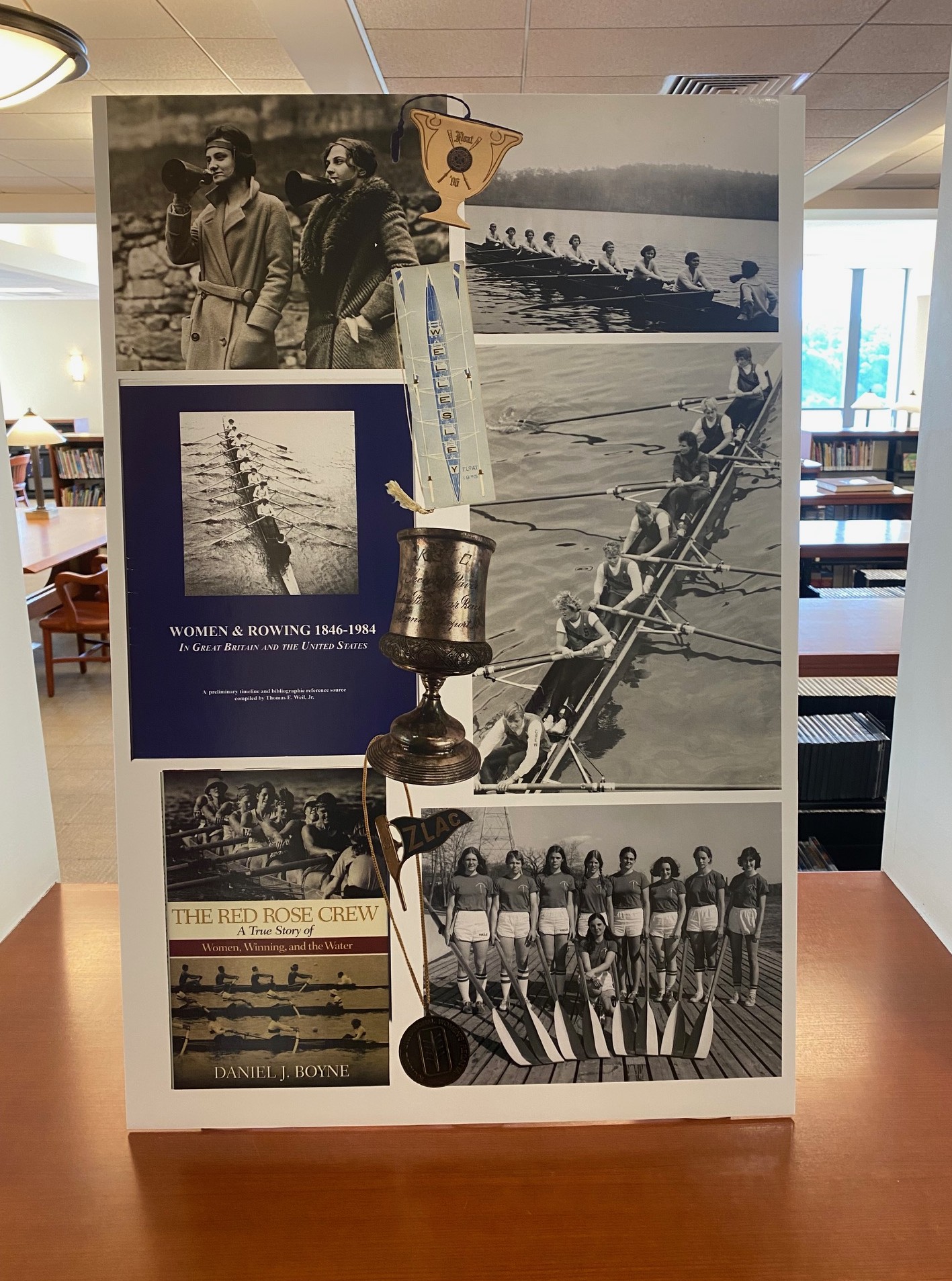
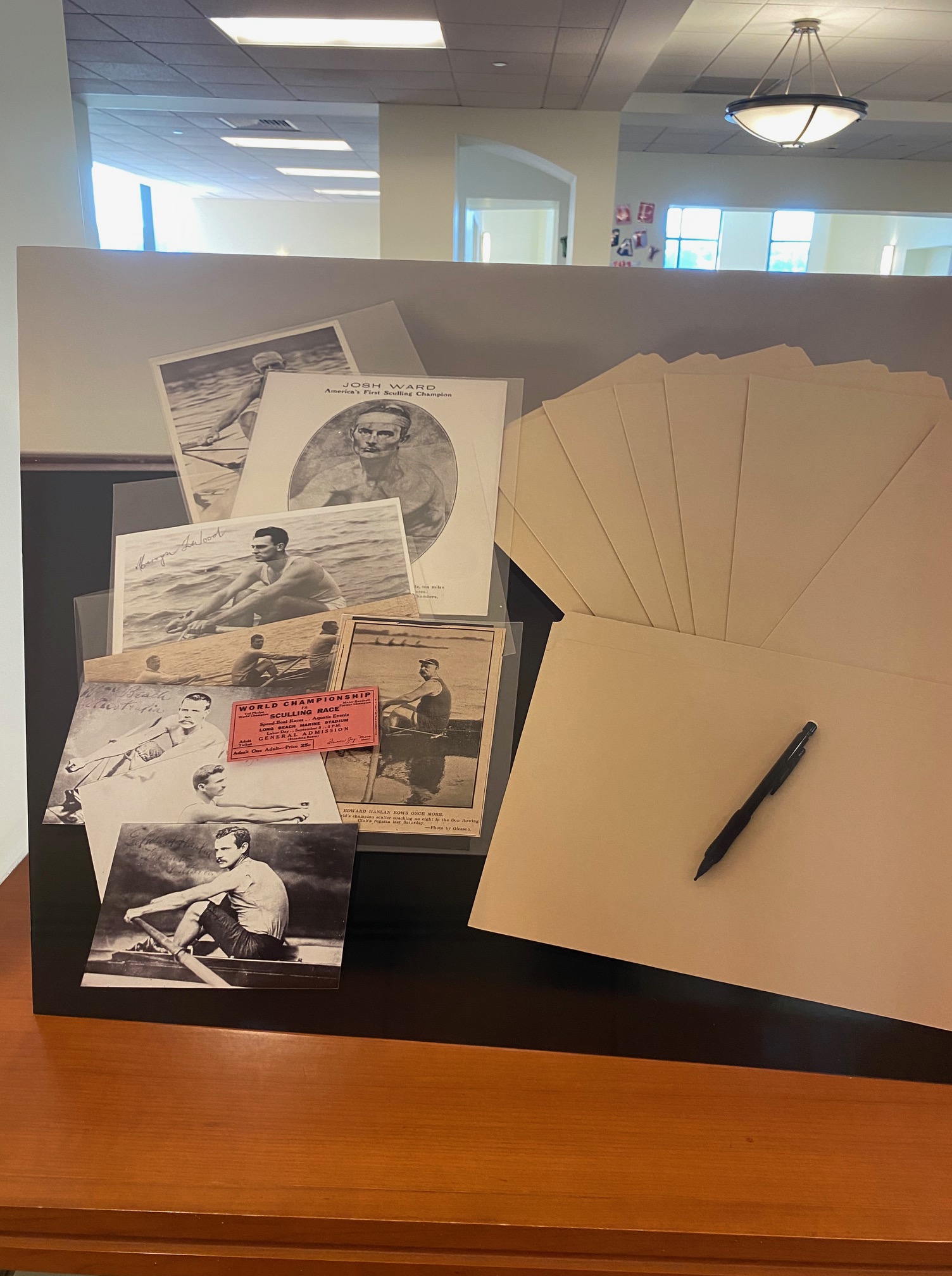
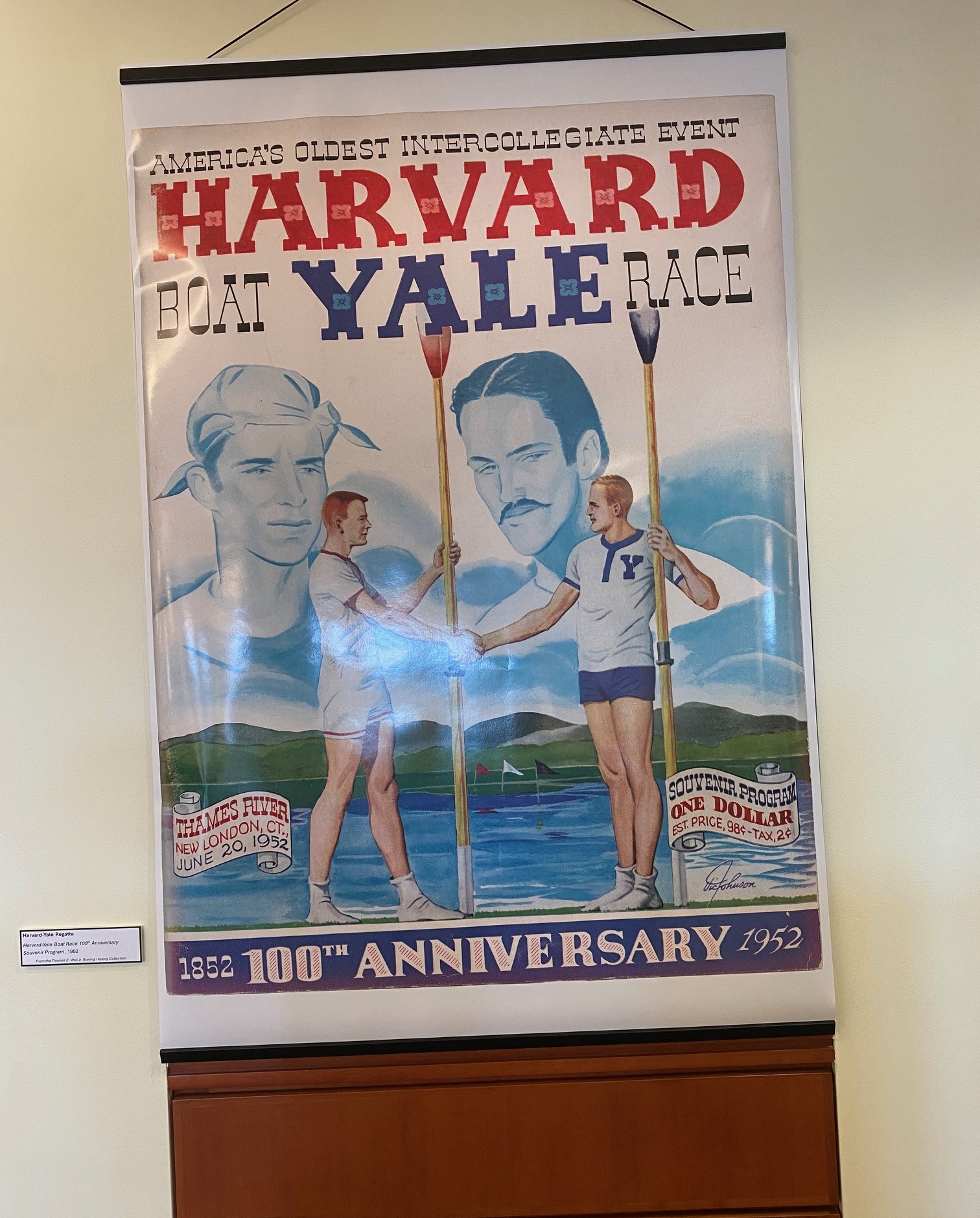
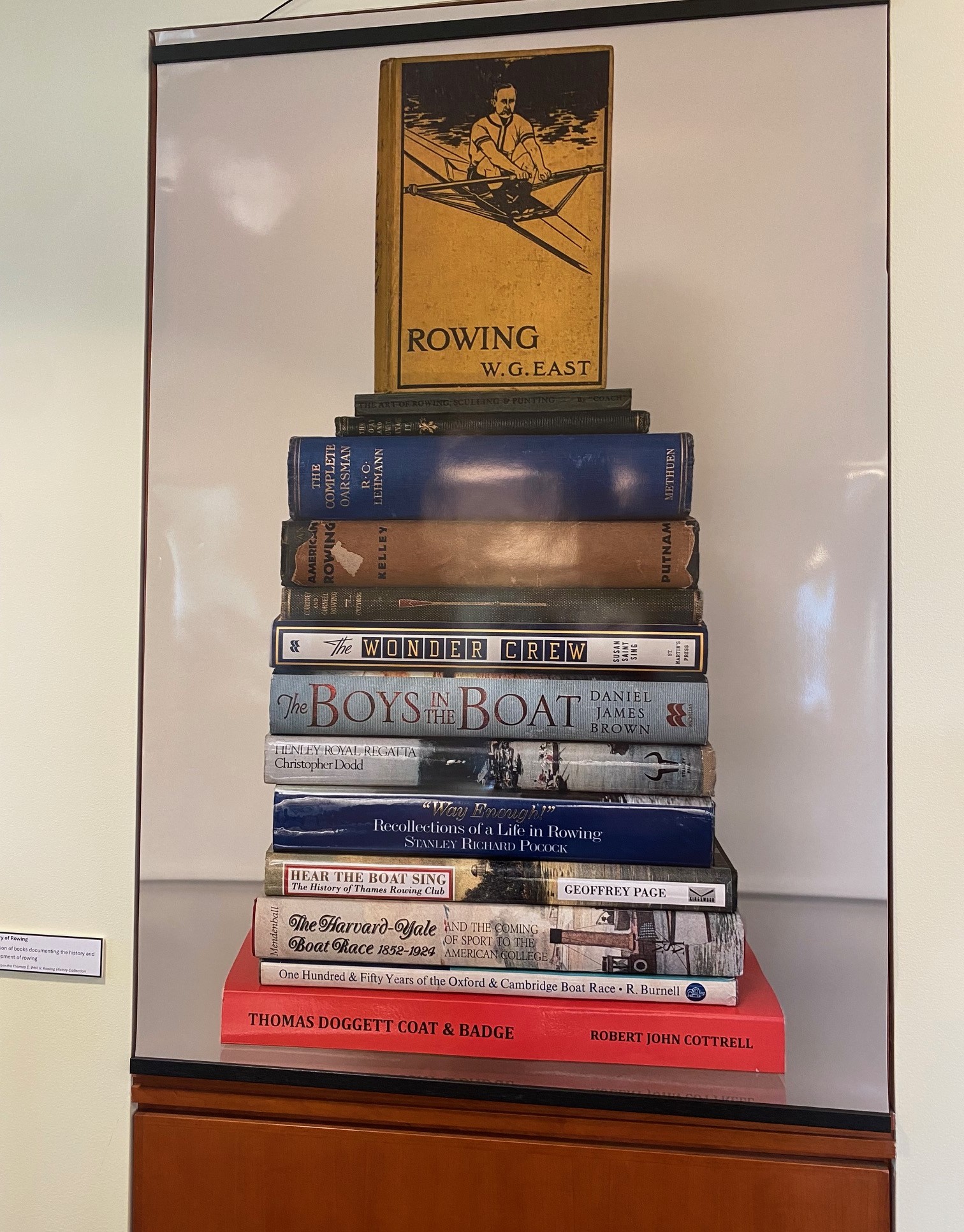
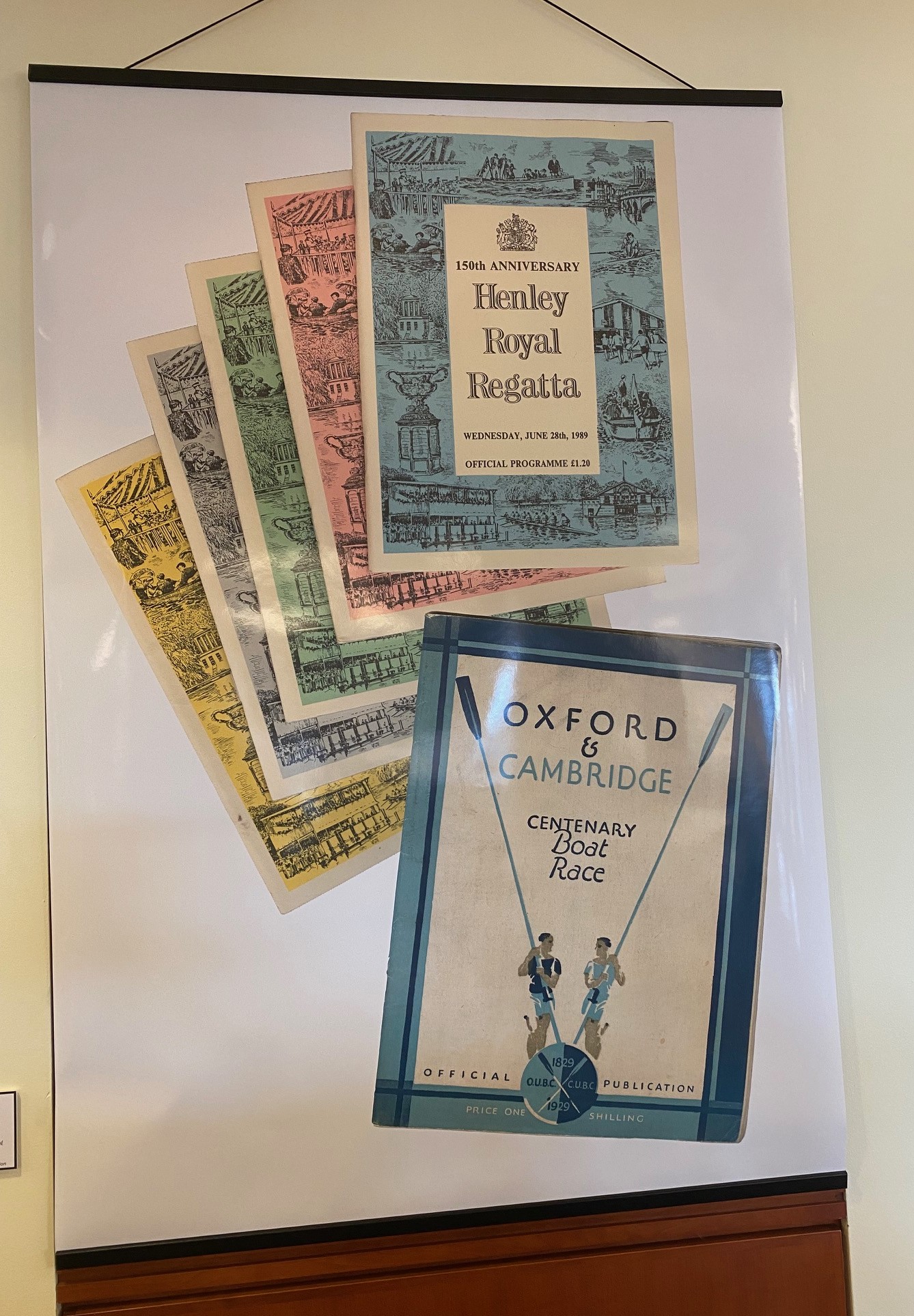
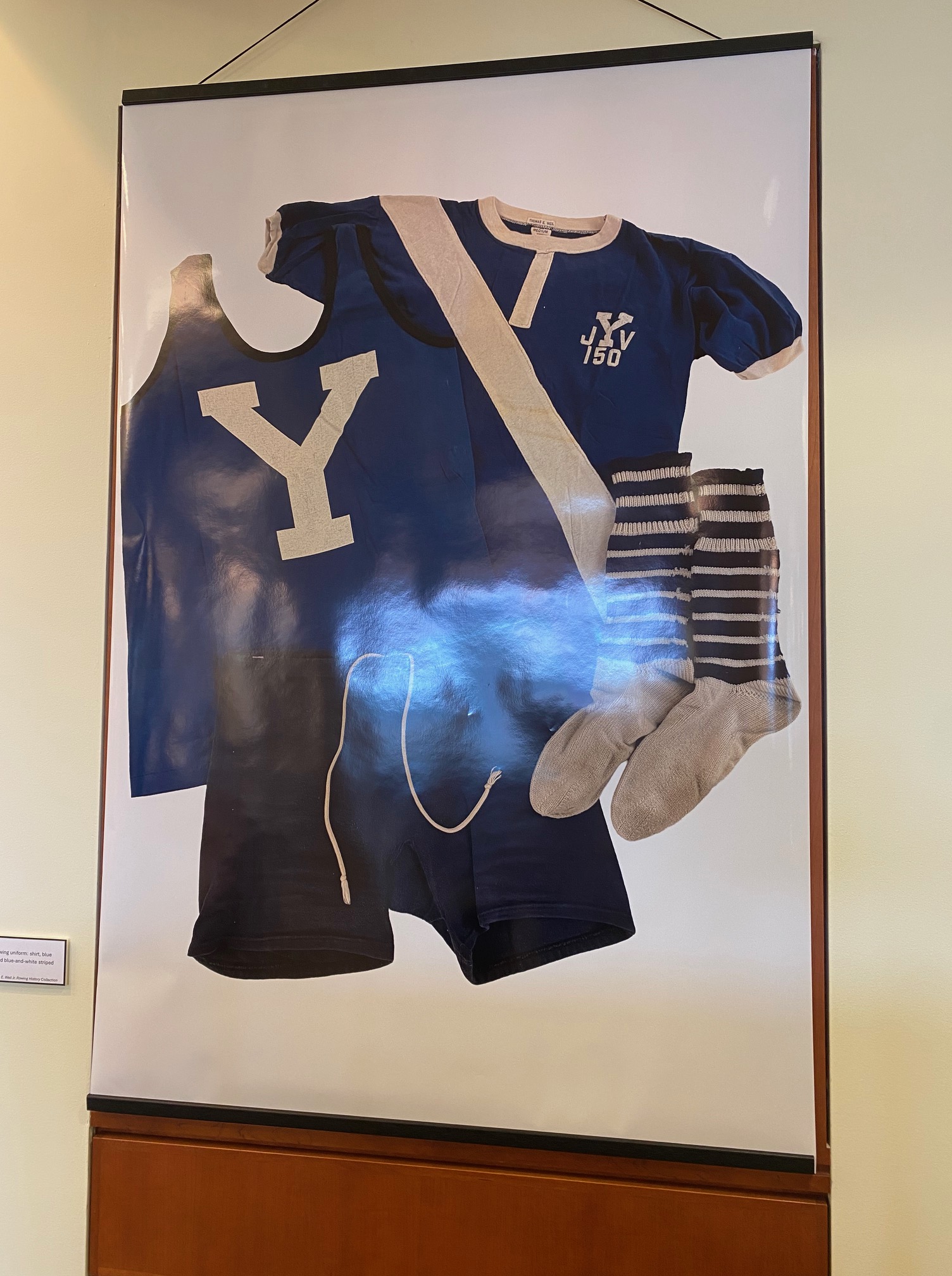
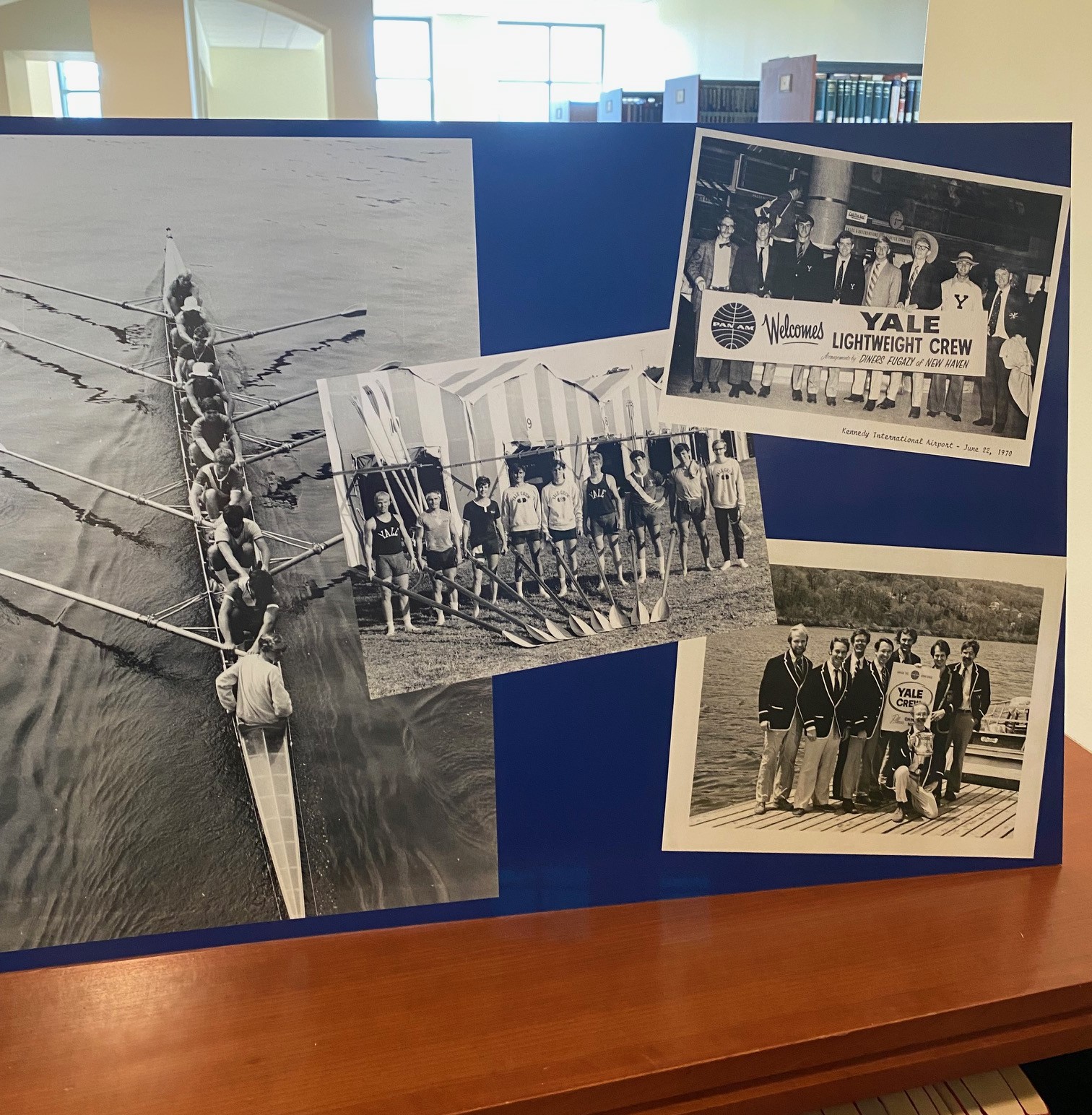
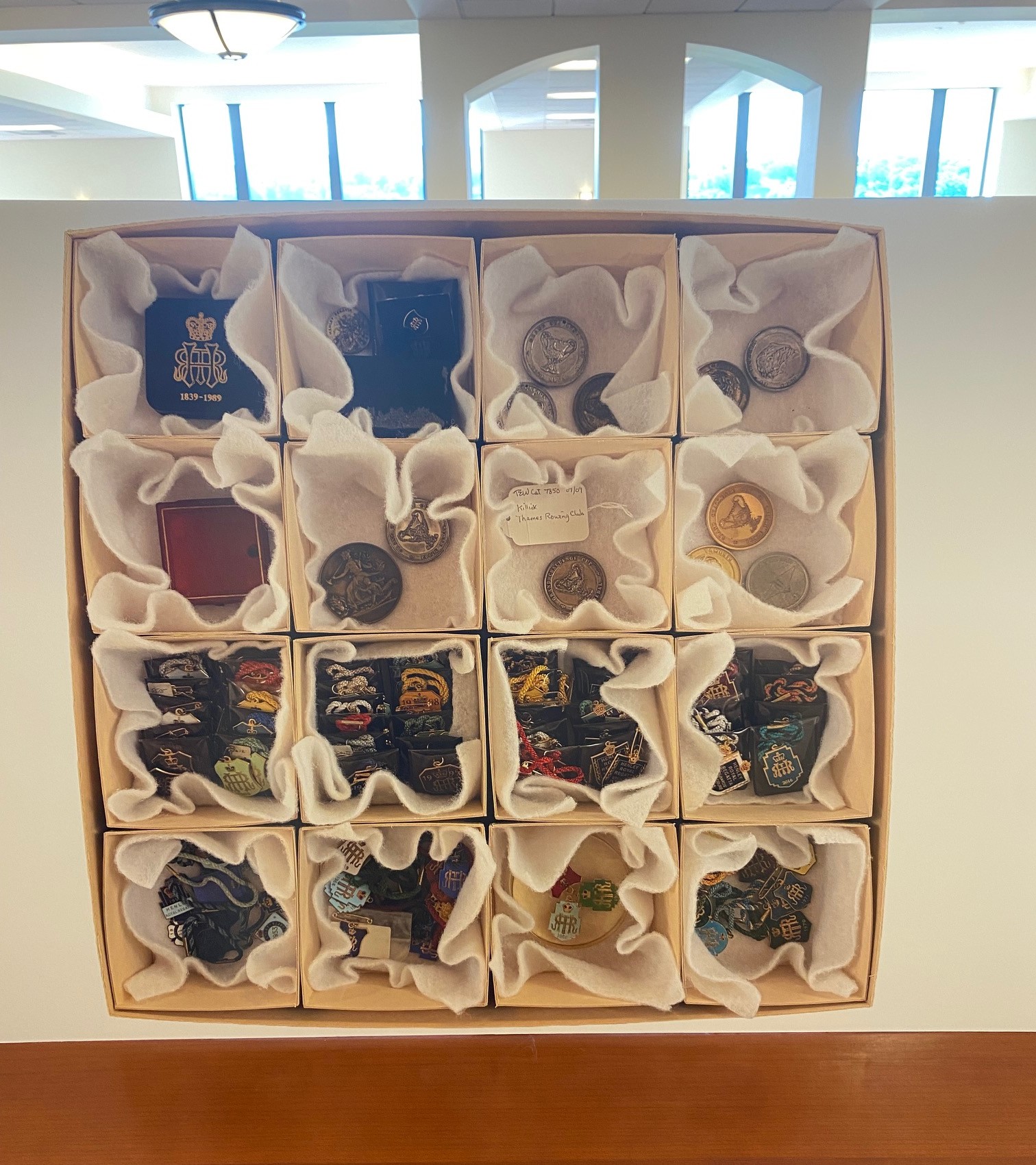
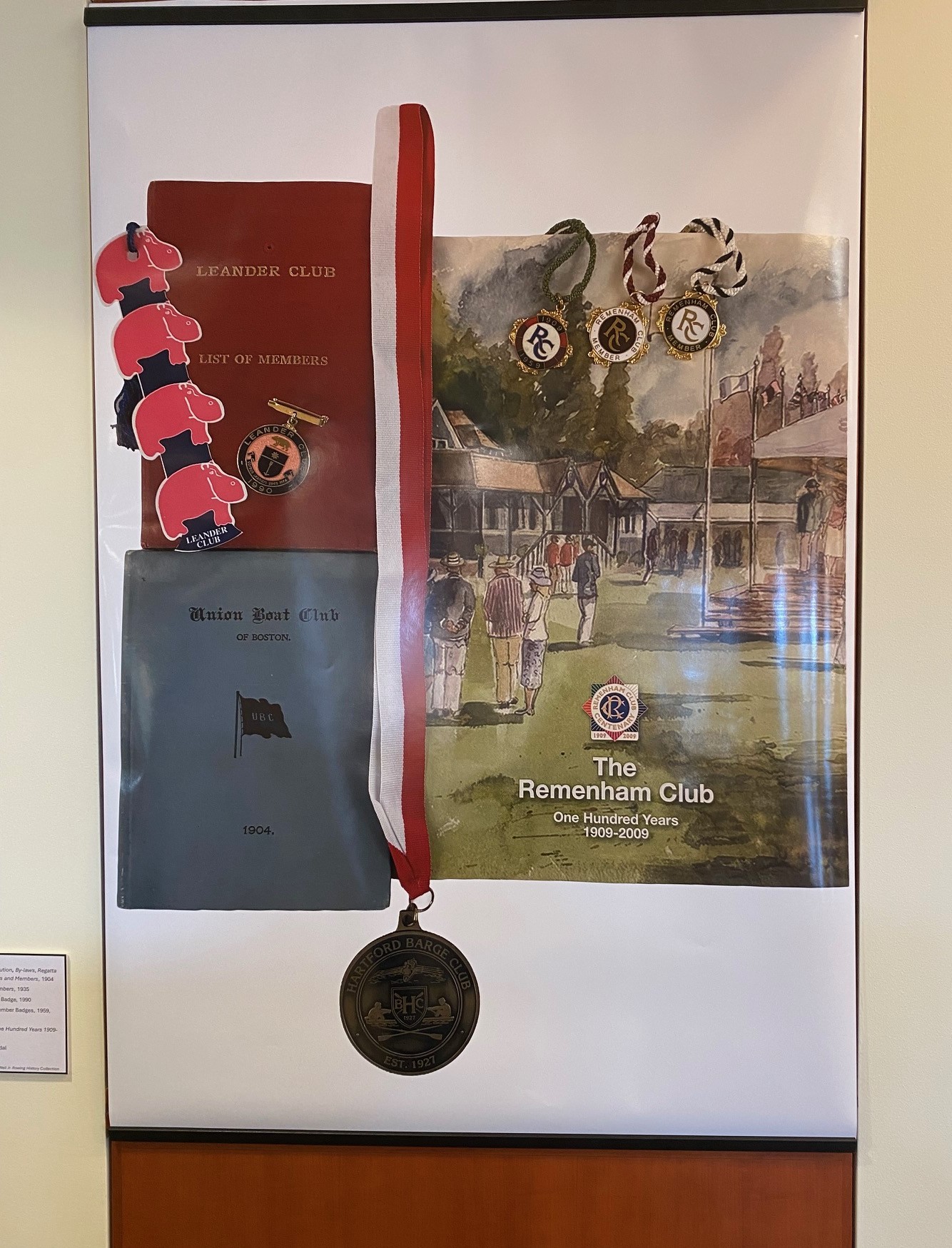
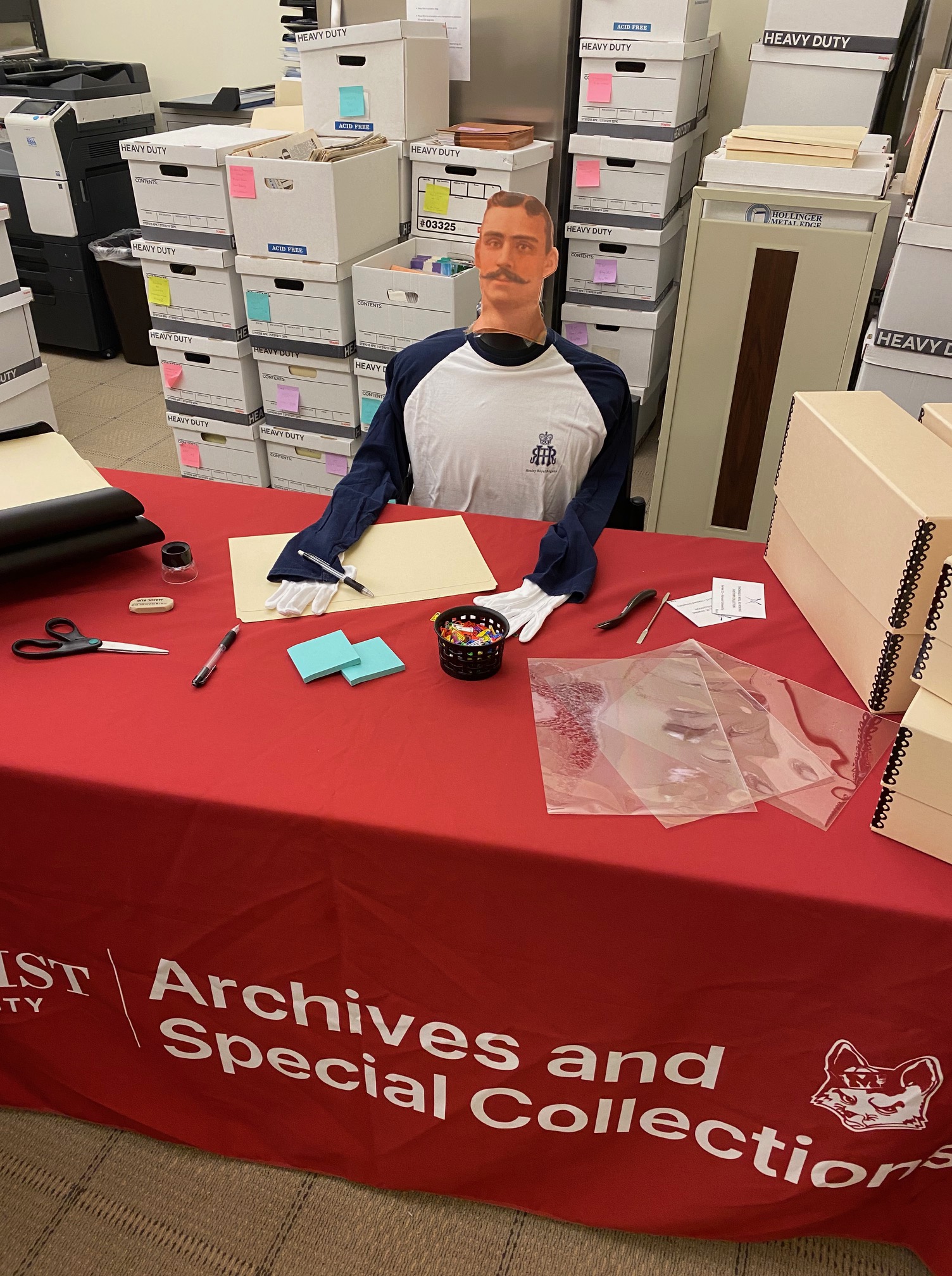
At the Archives and Special Collections, Marist’s friendly staff informed the group of Tom’s collection, which was placed in several display cases and rooms.
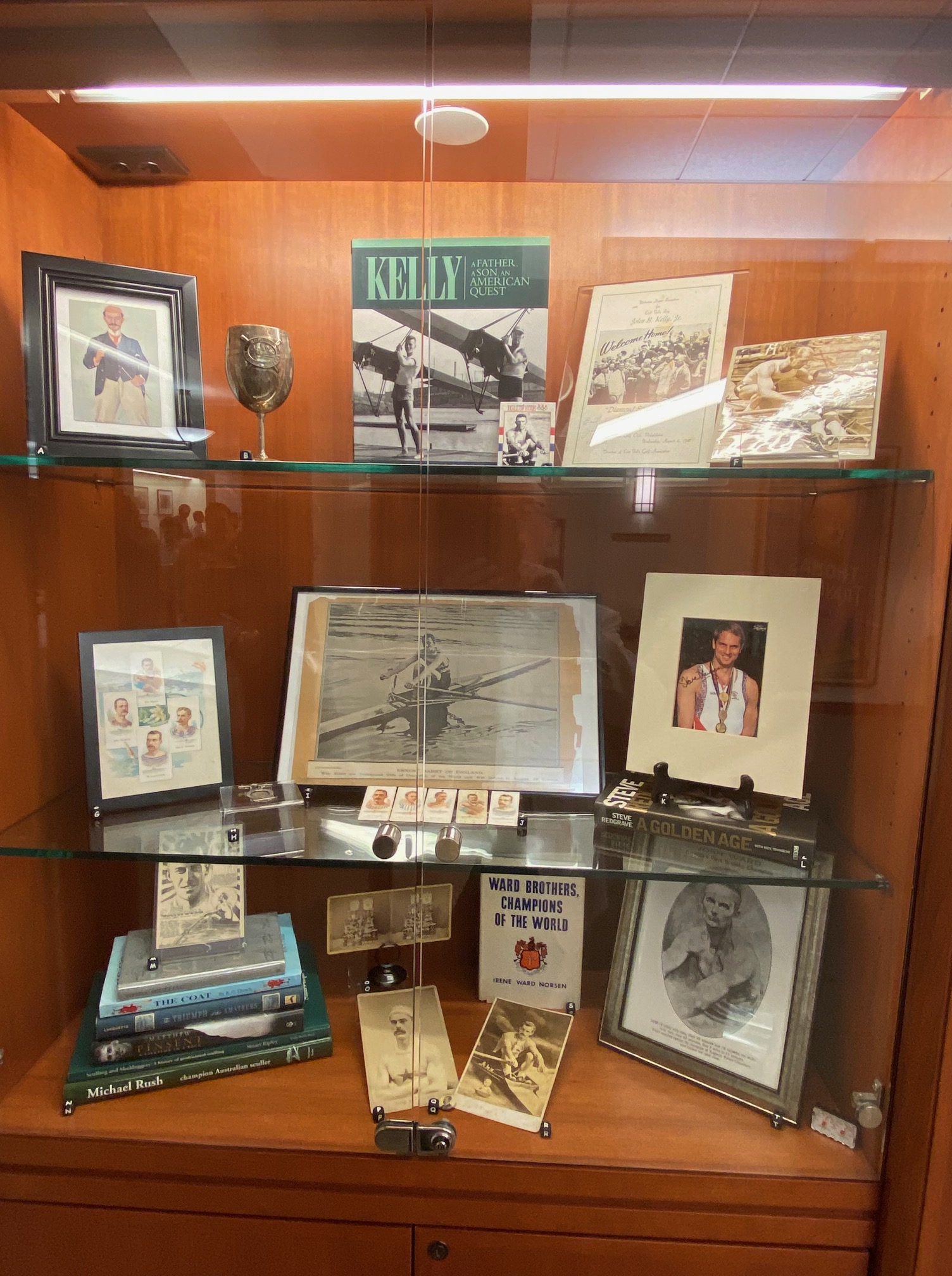
The display cases showed different topics like the Professional Oarsmen, Olympic Rowing, the Oxford – Cambridge Boat Race, Women Rowing, Henley Royal Regatta, the Yale – Harvard Regatta, University Rowing and Boat Clubs.
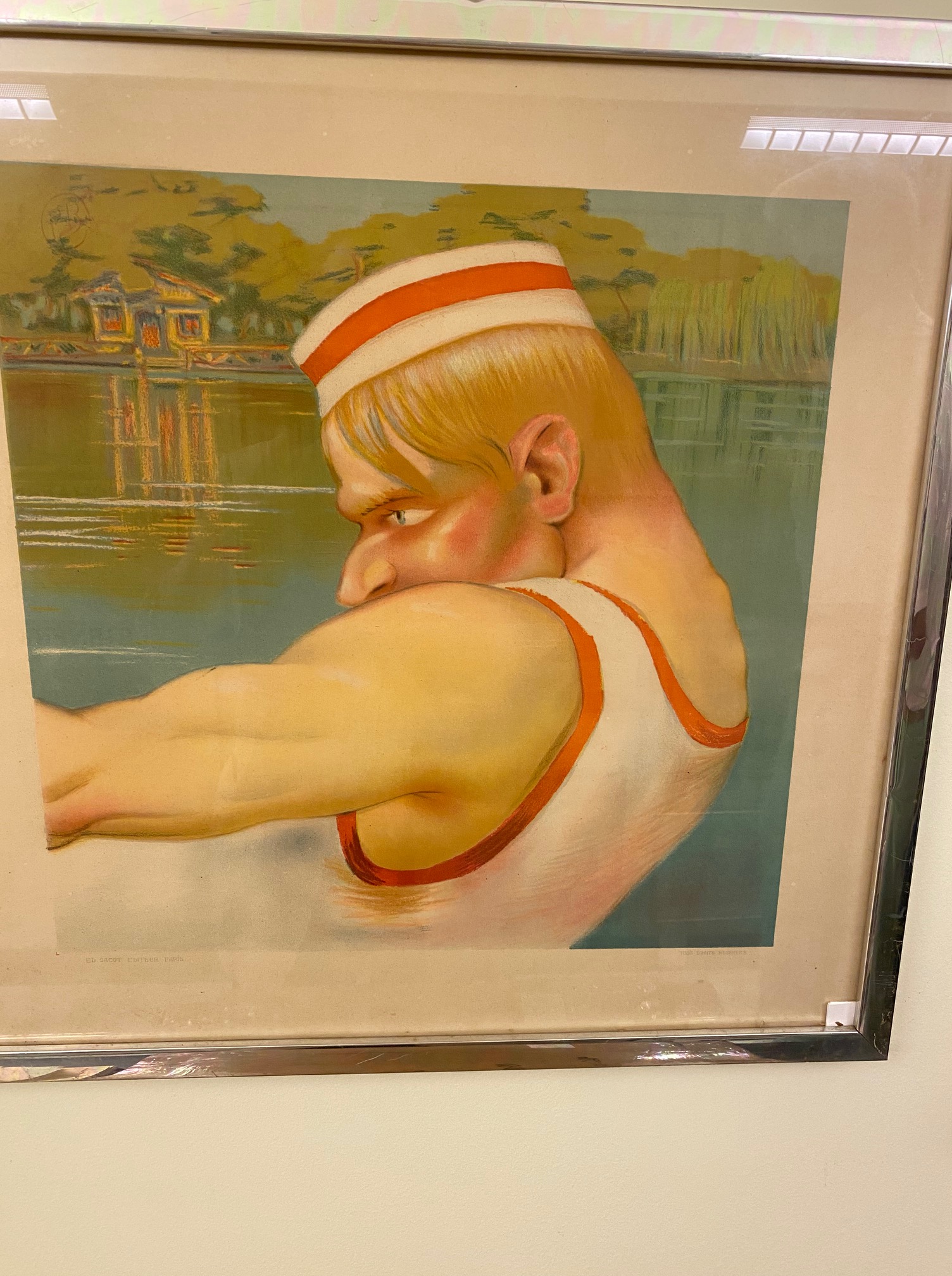
In one room were paintings and prints, in another were Tom’s books. It was clear that what we were able to see was only a small fraction of Tom’s collection. Dave Vogel mentioned that around 25 per cent of Tom’s collection had been at the River and Rowing Museum in Henley, and that it’s now coming to Marist. This will add to the workload for the Marist staff.
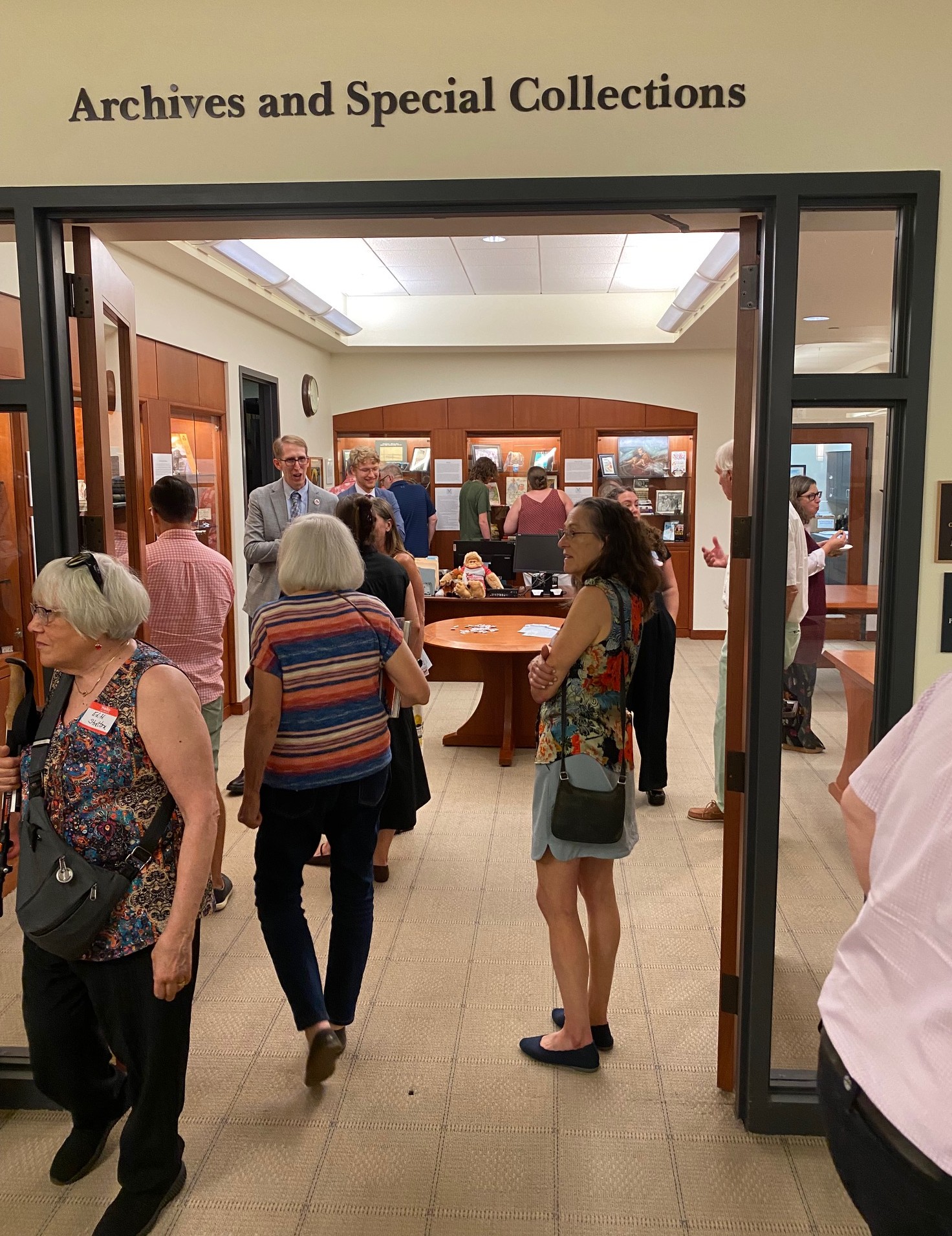
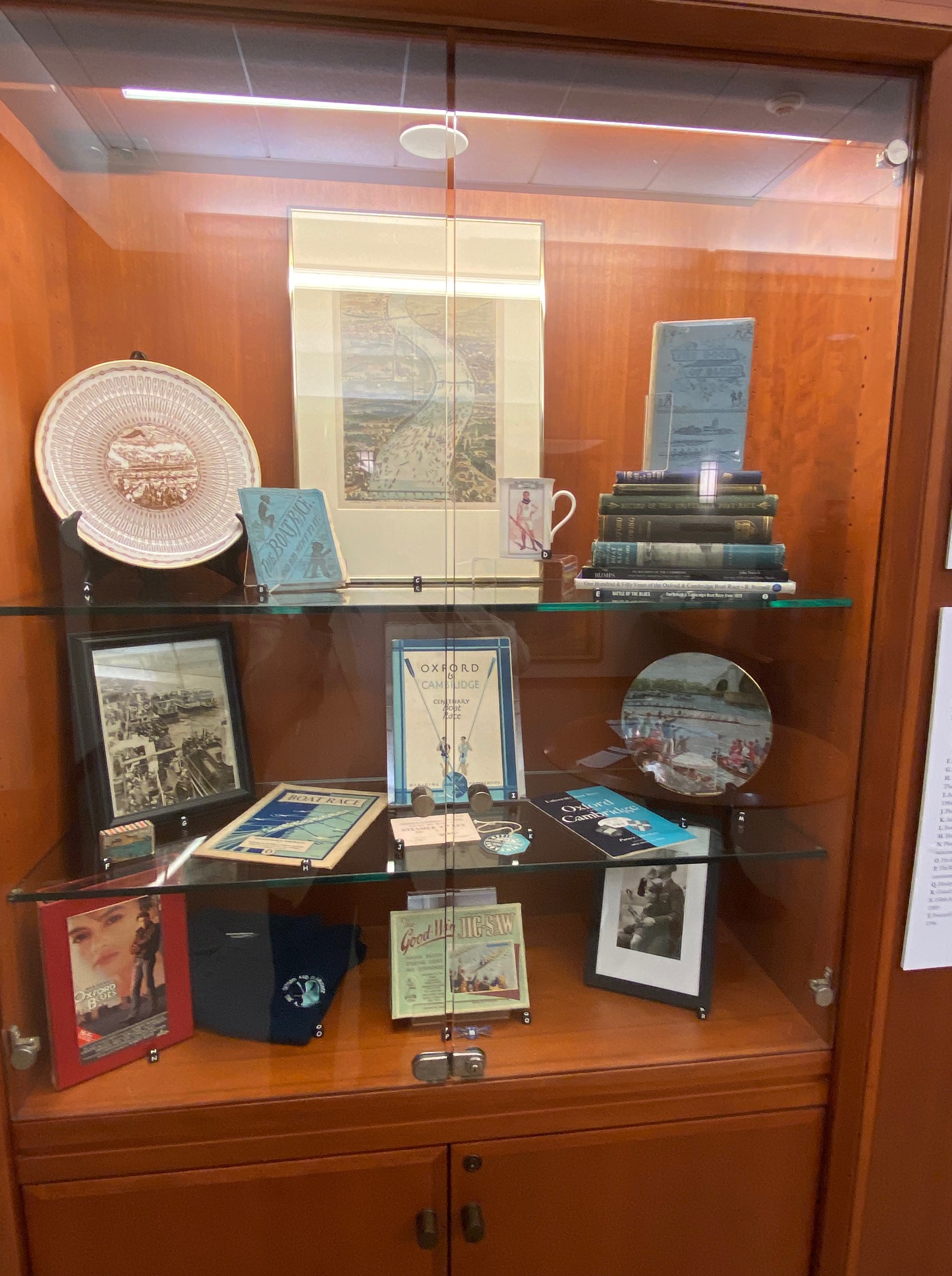
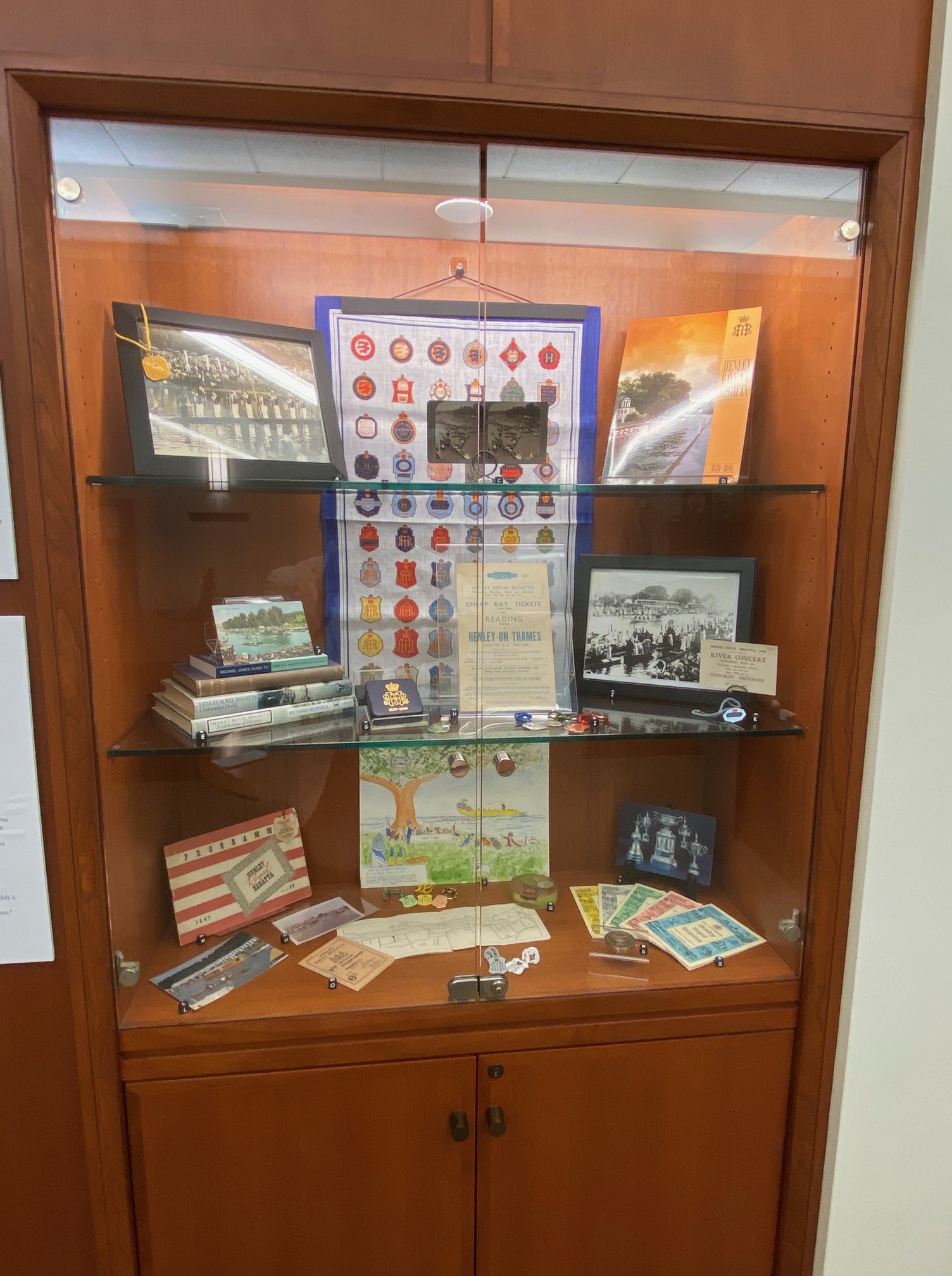
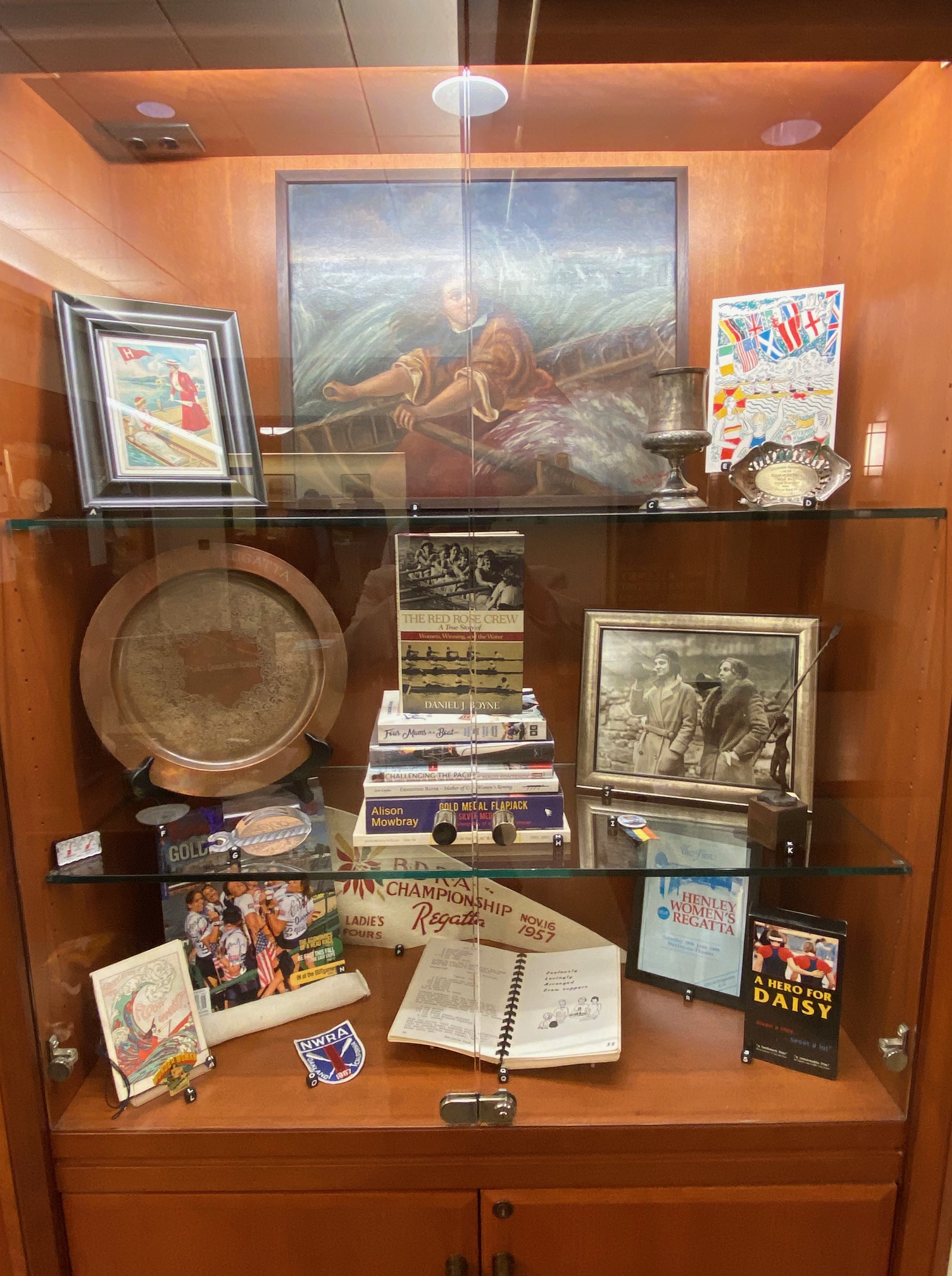
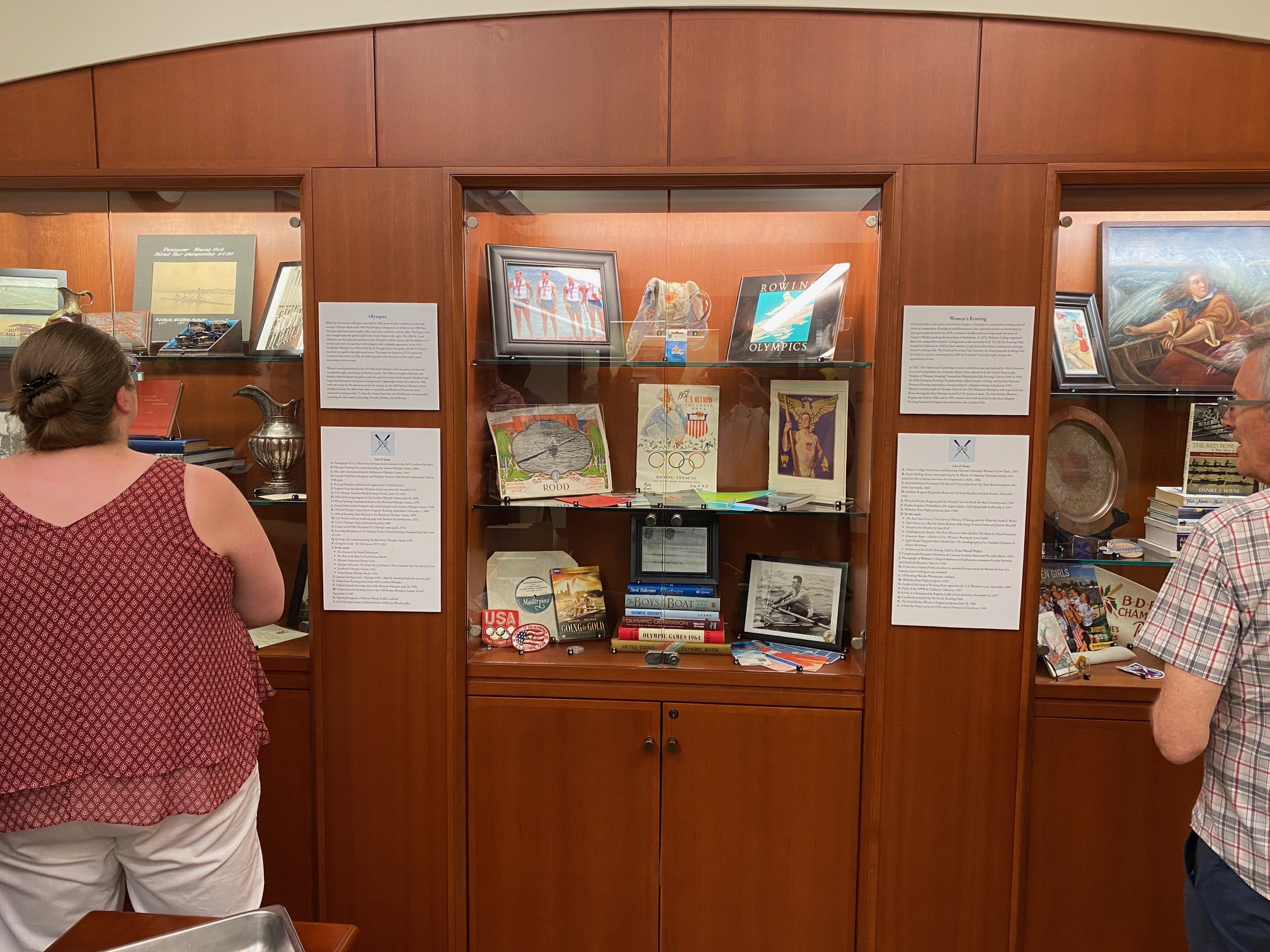
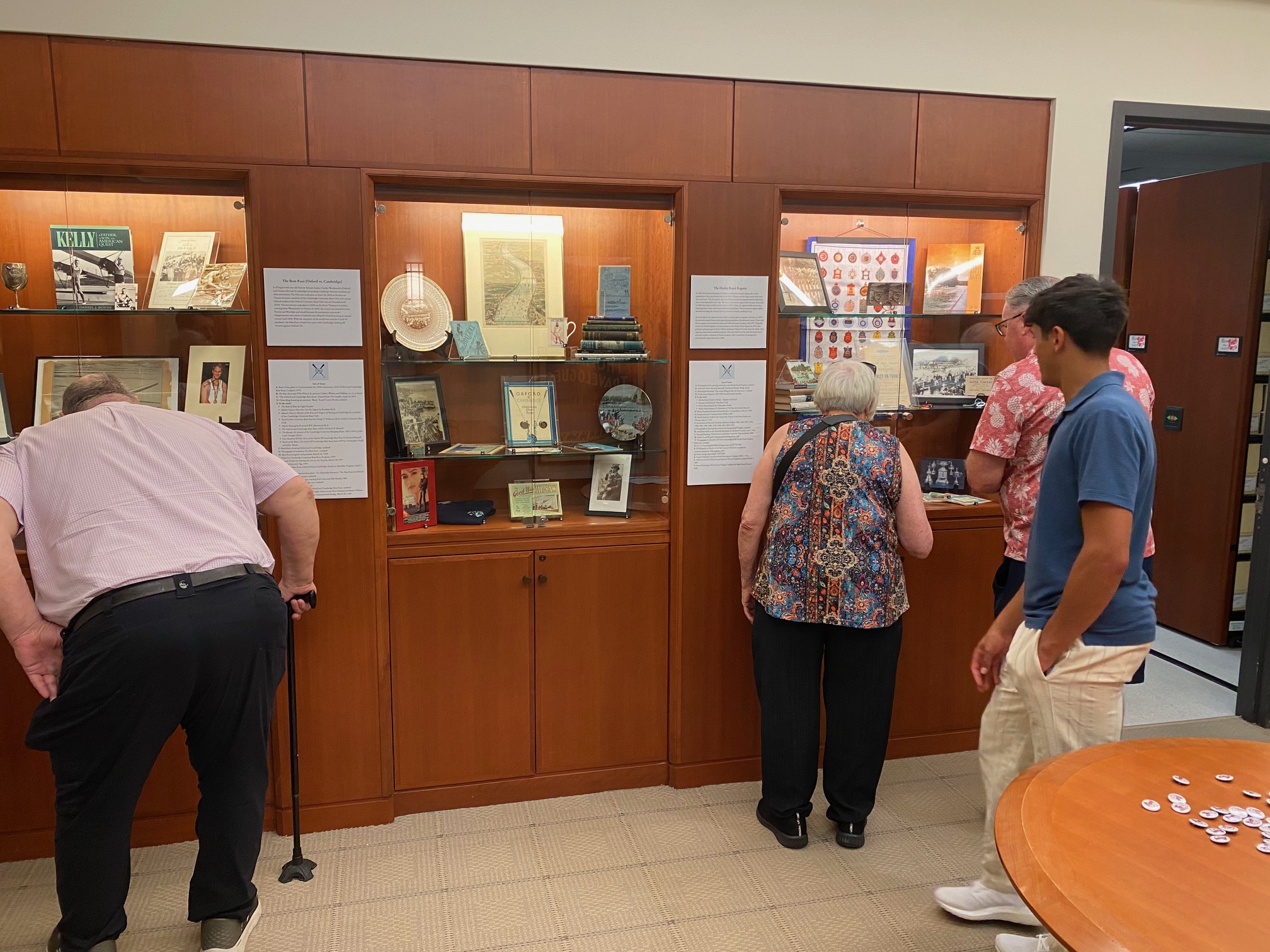

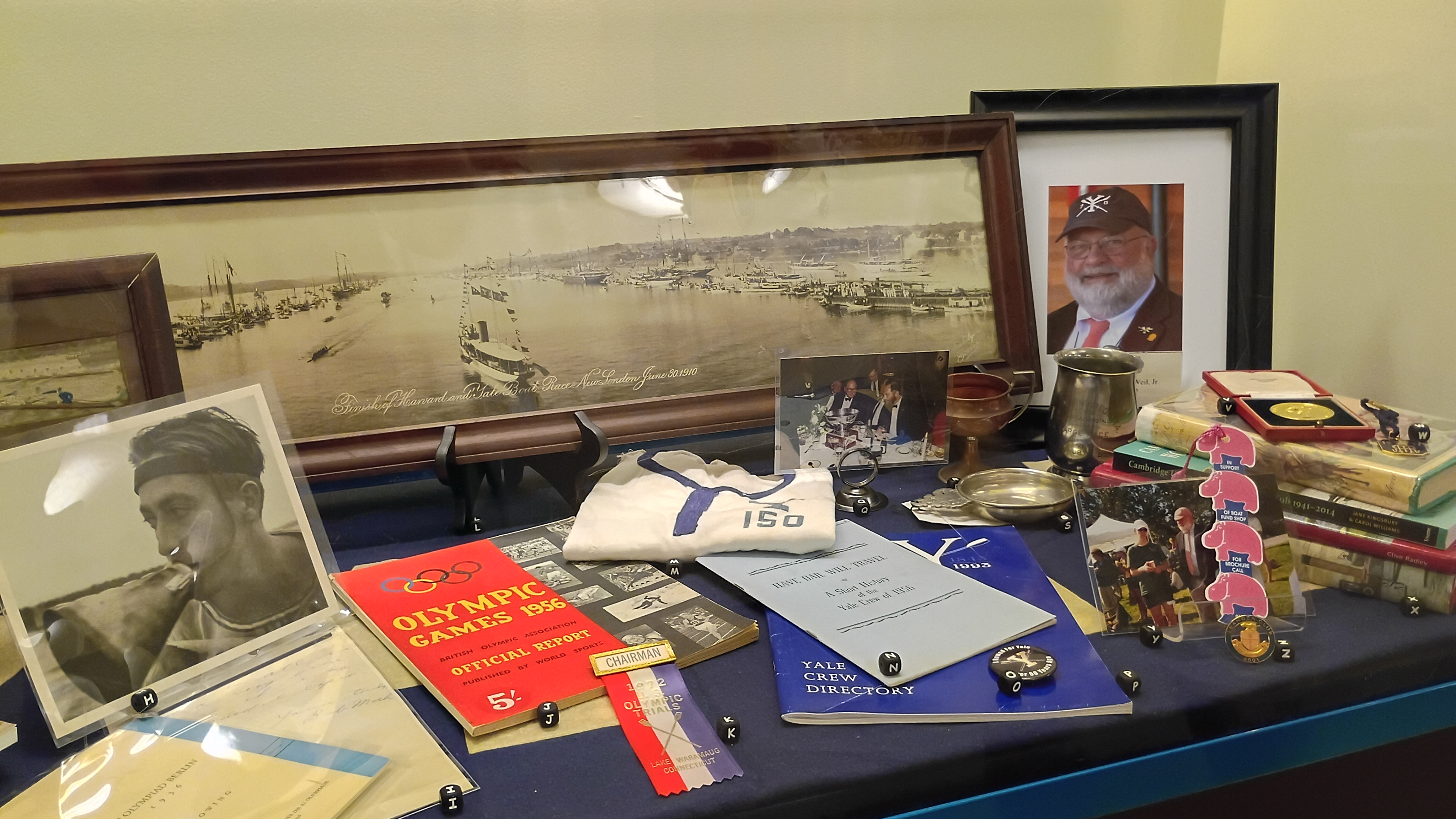
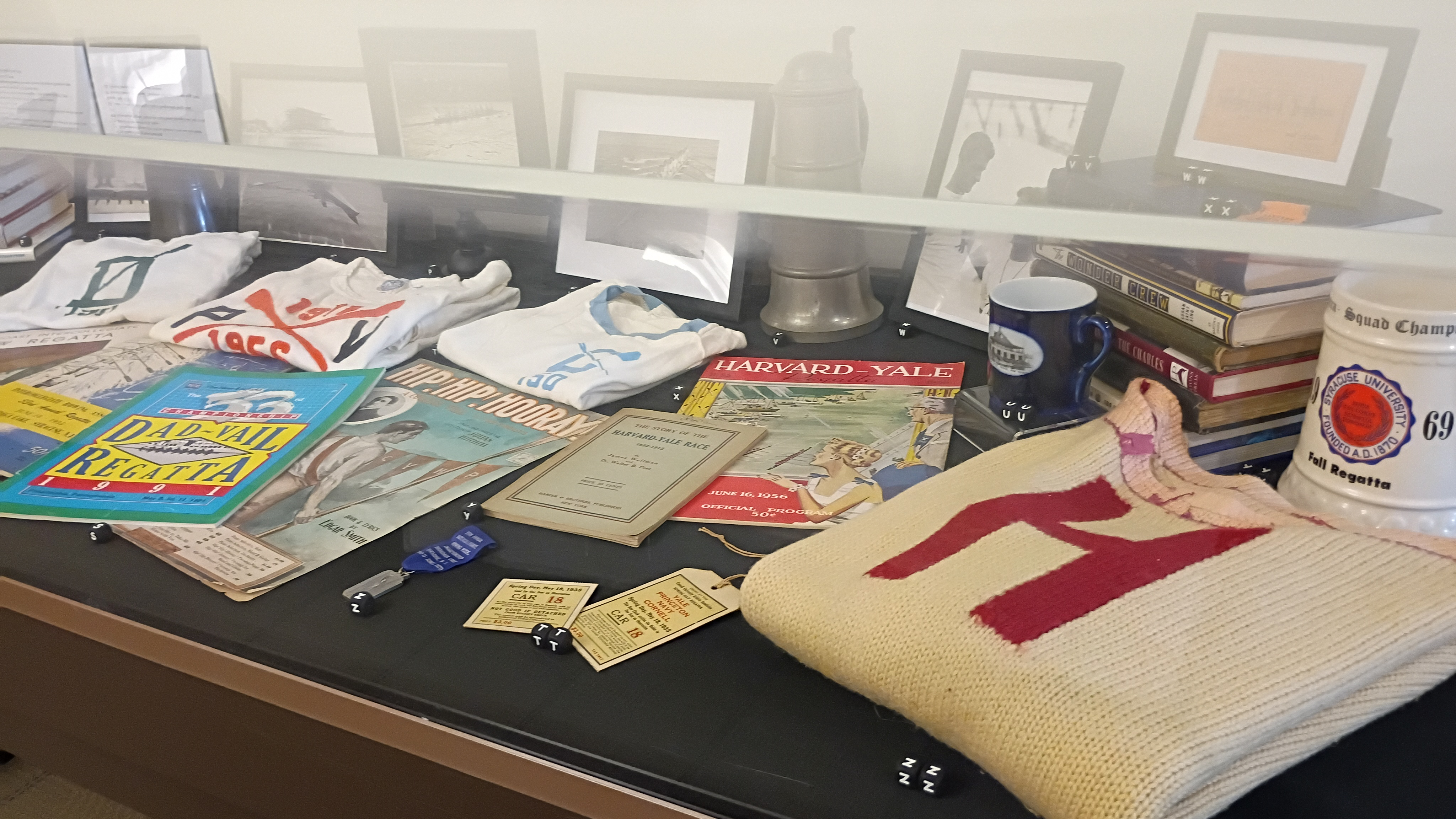
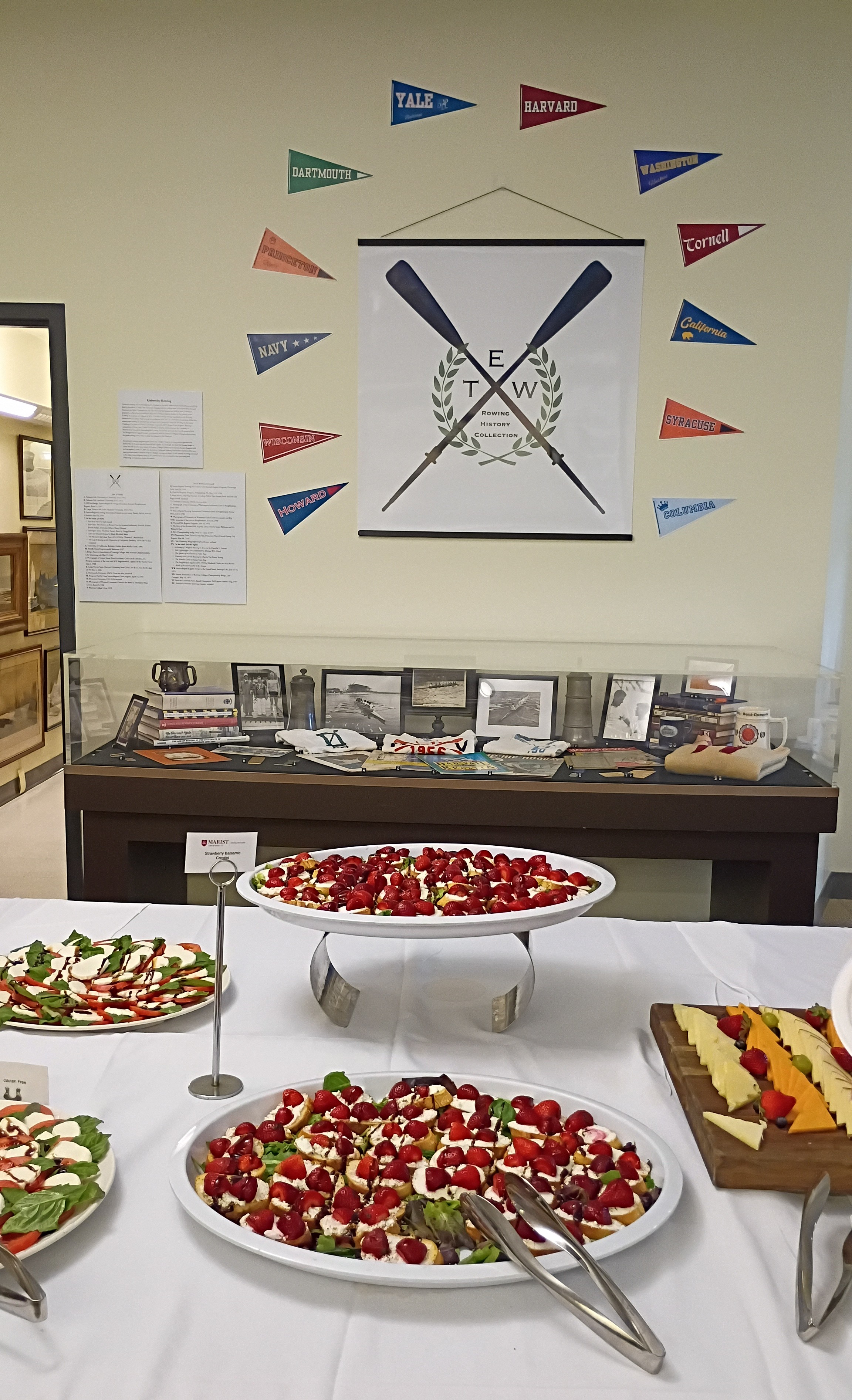
People were mingling, balancing their plates with hors d’oeuvres, soft drinks or coffee or tea while chatting with friends and newly-made friends. I’m not a familiar face in any rowing crowd, but I was approached by some of the attendees who proved to be readers of HTBS – maybe it was my nametag that gave me away…. It’s always nice to meet members of the HTBS readership. However, even after HTBS’s 17 years of existence – this is the 5,356th article since the start in 2009 – I’m still surprised that there are readers out there. One of them is Jim Dietz, who belongs to the “Philadelphia group”. He told me that HTBS is the first thing he reads in the morning.
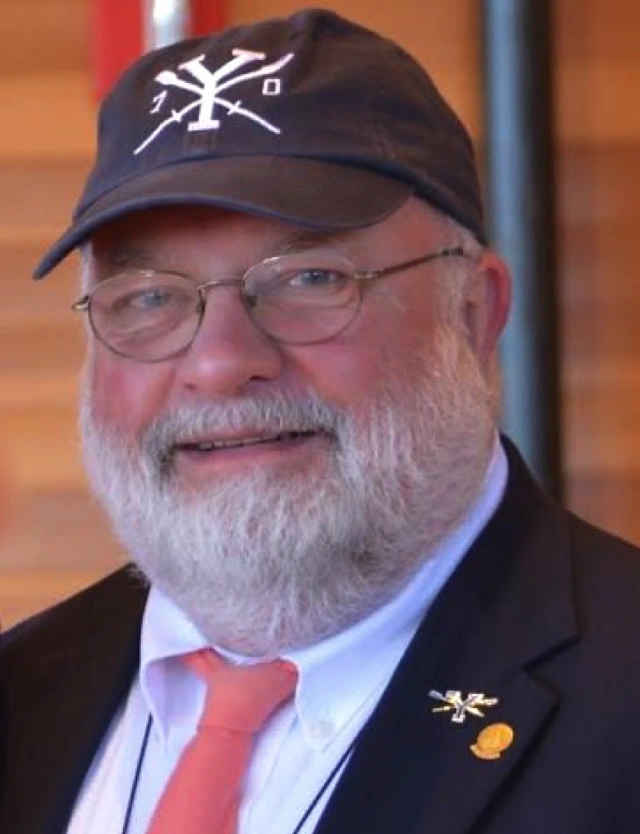
For me it was a great joy to finally meet Tom’s brother, Richard, and his sister, Susan. I was particularly happy to see Tom’s partner, Ellie, whom Mrs B. and I met a couple of times for dinner when they were visiting Mystic.
It was a most enjoyable afternoon, which was brilliantly organised by John Ansley and his staff.
Tom would have loved it!
With Marist stating that “Marist Archives & Special Collections is committed to Tom’s vision of ensuring the preservation and accessibility of this collection for future generations”, we who were there on this beautiful August day could see that Tom’s vast collection had come to the right place. Thank you!
However, a lot of Tom’s stuff remains to be catalogued and to do that, money is needed. You are welcome to donate to the Thomas E. Weil Jr. Rowing Art and History Collection Restricted Fund. Please go here.
Addendum
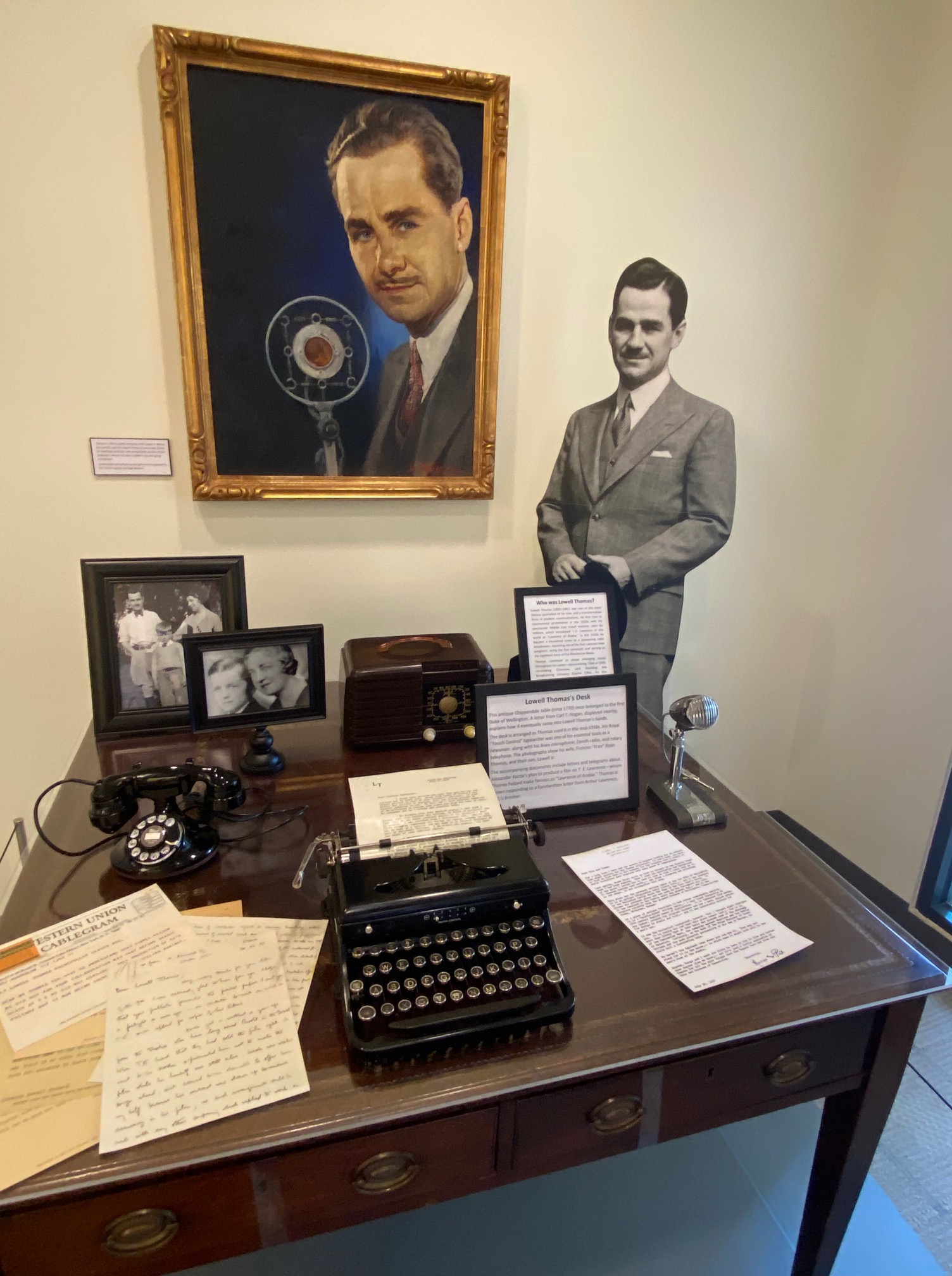
Marist University Archives and Special Collections also holds the collection of American journalist, travel writer, broadcaster and documentary filmmaker Lowell Thomas. While I knew that, I was happily surprised to find a display of his desk with his typewriter in a corner of the main room. I must confess that I don’t have an interest in Thomas per se, but more the man he made famous, T. E. Lawrence (of Arabia).
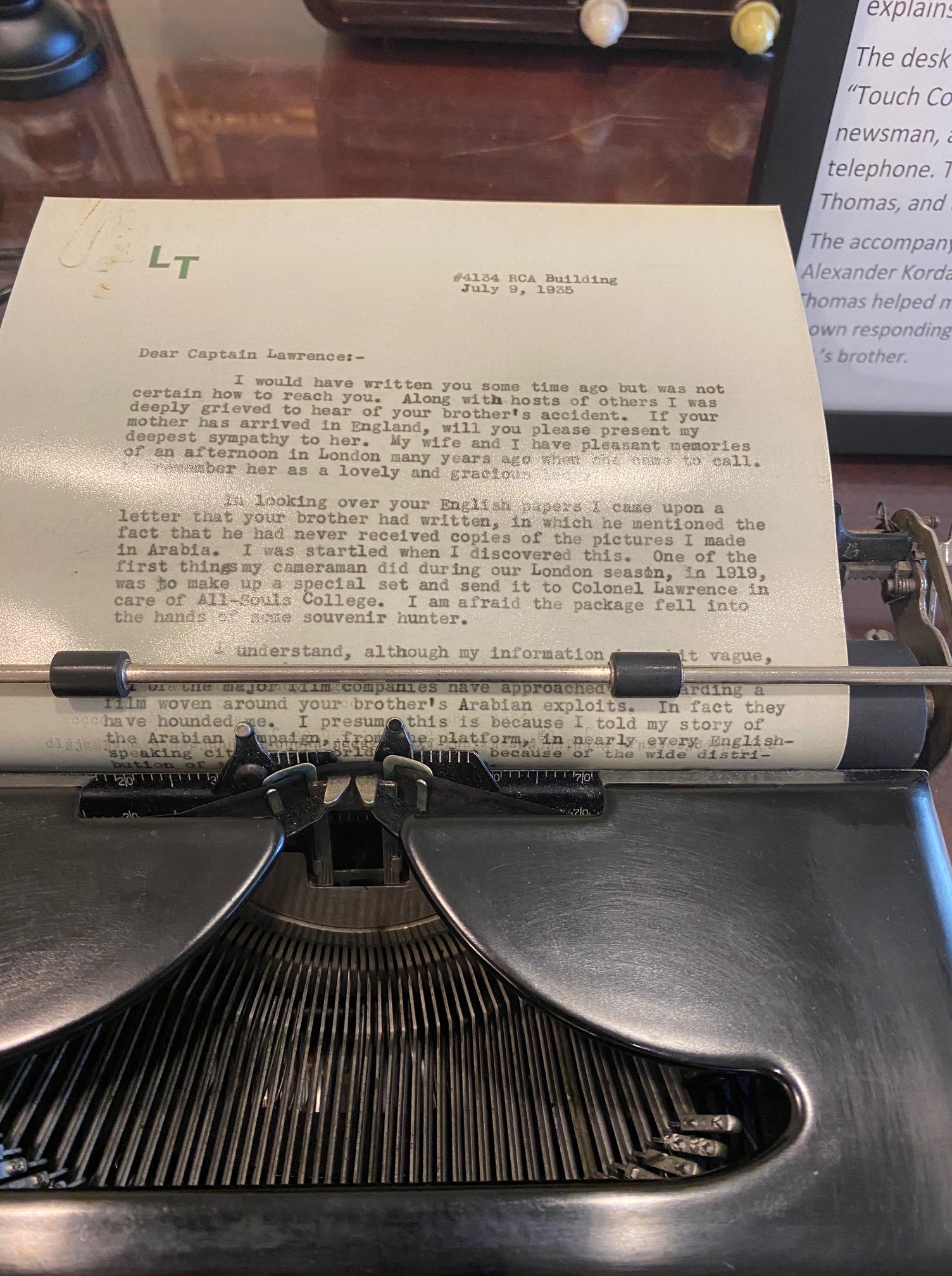
When I told John Ansley that T. E. Lawrence was a boyhood hero of mine, he brought me into the inner vaults where the Lowell Thomas collection is kept, showing me some of the letters and notes that Lawrence had written to Thomas. This added extra excitement to my already high opinion of the Archives and Special Collections at Marist.
Now I have two good reasons to come back to Marist to do some research.


Thank you for the excellent report. I hope to visit Tom’s collection some day. Best regards, Don Owen Costello
What a detailed and delightful account of Tom’s stuff in its new home at Marist. From Tom’s cramped and musty basement to these bright rooms his labor of love is now available to all!
— Bill Lanouette
Dear Bill & Don,
Thank you!
Göran
how do you access the collection? do you have to book with the college or can you just show up?
Martin, you should contact the head of Marist University Archives and Special Collections, John Ansley, before showing up. He will be able to tell you how acceciable Tom Weil’s collection is for the special research you are working on.
Lovely, Göran.