The 20th Women’s Wingfields: Storming

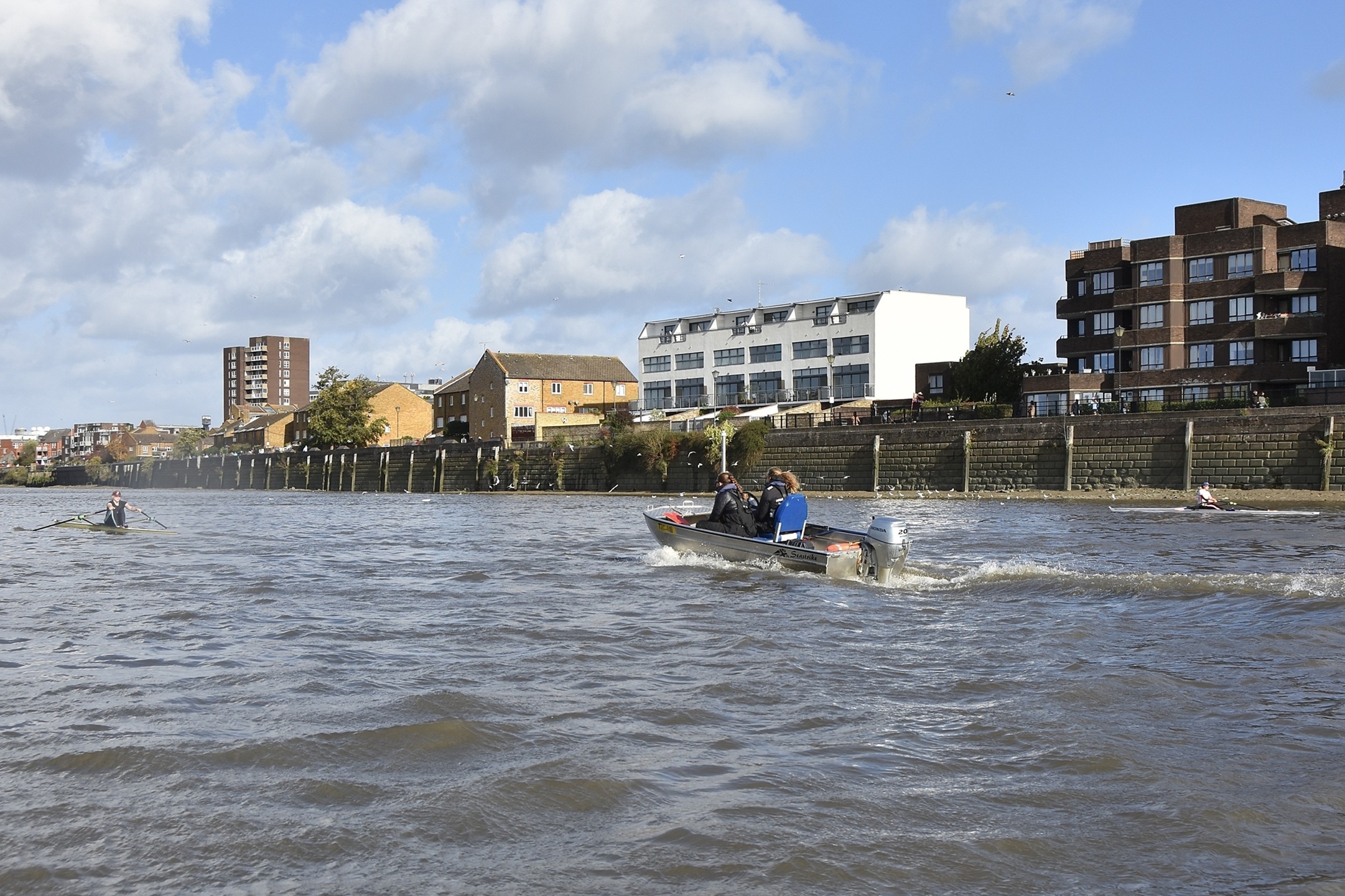
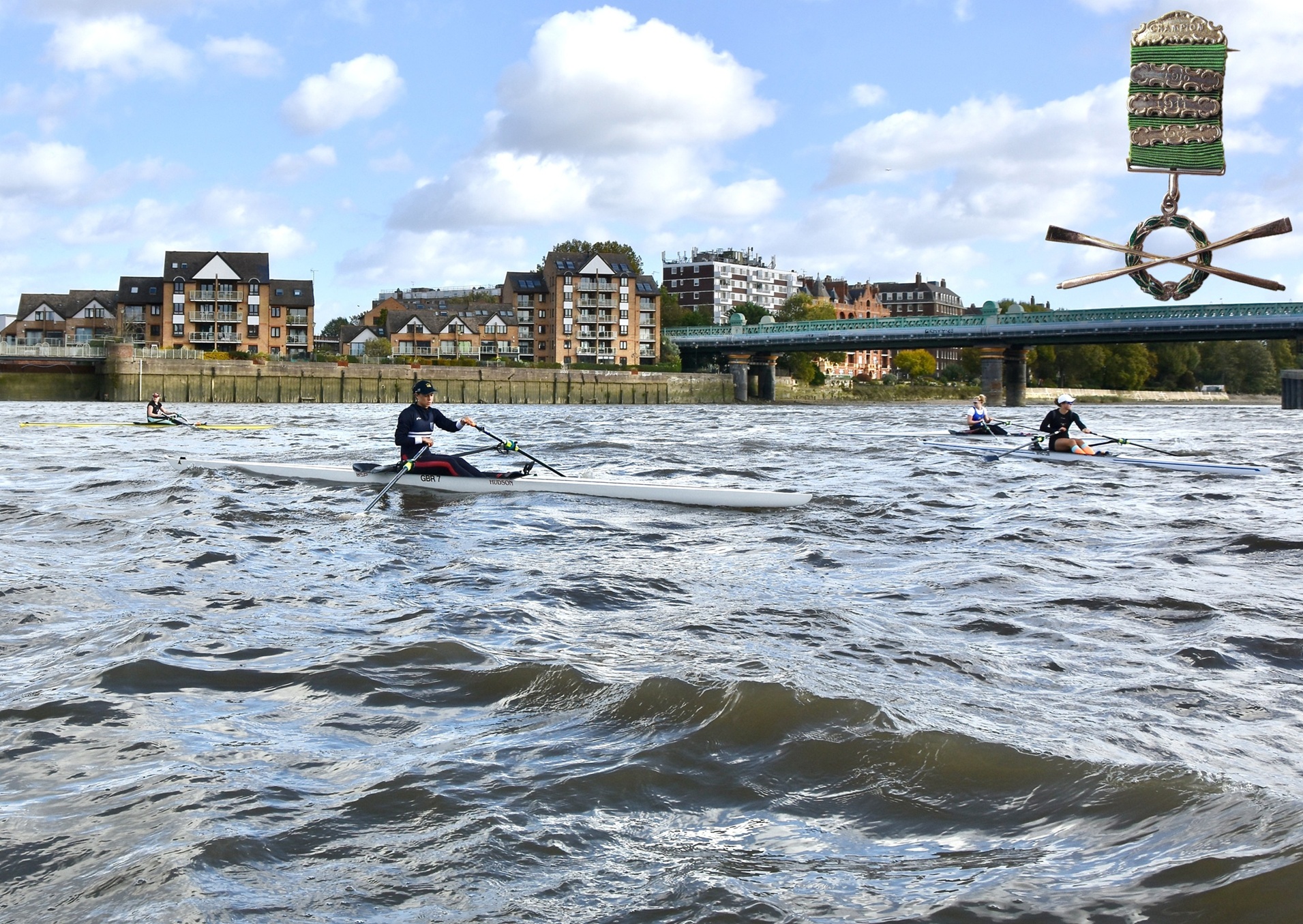
Competitors in the 2026 Women’s Wingfields get an indication of water conditions to come as they turn to go onto the start. After the race, Wingfields Secretary, Sam Meijer, wrote, The river threw everything it had at us today, conditions were nearly unrowable… Left to right: Freya Keto (Thames), Imogen Grant (Upper Thames), Ella Fullman (University of Bath) and Laura Grant (Molesey). Georgie Robinson Ranger of Leander was out of shot.

28 October 2026

By Tim Koch

As reported over the last two days, the Wingfield Sculls, the historic single sculling event run from Putney to Mortlake took place on 25 October with George Bourne winning the 186th men’s race and Imogen Grant winning the 20th women’s race.

This is my report on the women’s race, my piece on the men’s race was posted yesterday.

Sam Meijer, the Wingfield’s Honorary Secretary and 2019 Champion, previewed the five women who were to race:

Imogen Grant of Upper Thames goes for her fifth consecutive Wingfields title which would extend her record as the most successful contestant in the race’s history. The Olympic champion got World silver in the quad this summer and also won the women’s title in the Sculler’s Head last month. Leander provides a strong challenger in Georgie Robinson Ranger, runner up in 2023. Molesey’s Laura Grant arrives as an Under-23 World silver medalist and Henley quad sculls winner. Bath’s Ella Fullman won the Under-23 at the scullers’ Head and was the third-fastest woman in the event. Thames’s Freya Keto, a Boat Race winner and former GB International, completes the field. 

Sam also produced the official race report which I have reproduced here in bold italics interspersed with my photographs. As with the men’s race, conditions were sometimes too rough to take pictures so there are some gaps in the visual record.
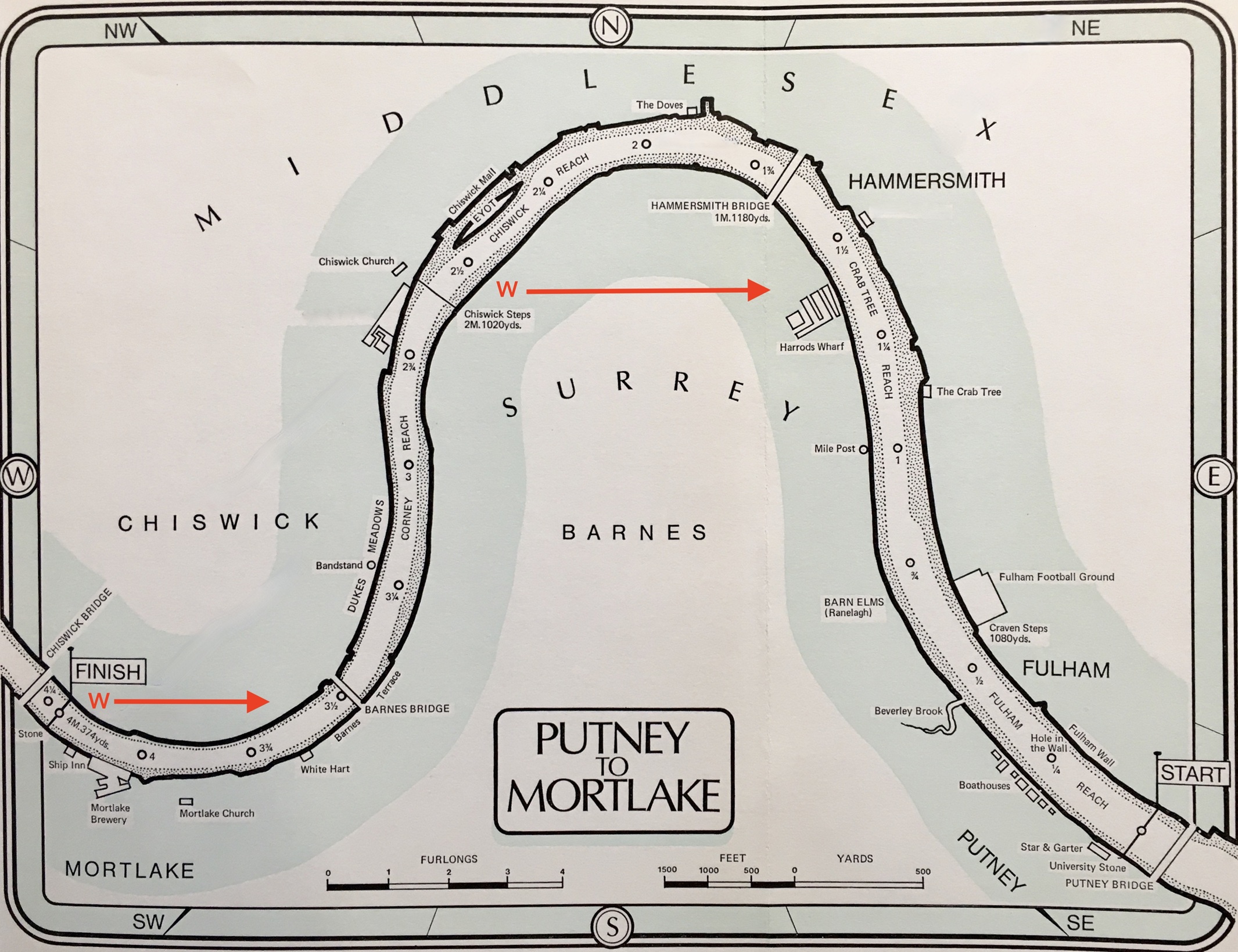
A map of the famous course showing the places where a westerly wind is most likely to produce rough water on an incoming tide.

The women lined up with the tide higher, and the river in a significantly worse state than for the earlier men’s race. With scullers getting swamped by staying stationary, a start was called alongside the Putney Pier.

Along the line of boats, I. Grant, Robinson Ranger and L. Grant led the pack with a fast start. For her four previous victories, I. Grant has been a slow starter and only came through around the first bend, but this year she decided to take the bull by the horns and lead by a length.

Passing the boathouses, I. Grant extended her lead over the pack with L. Grant, Keto and Robinson Ranger in hot pursuit.
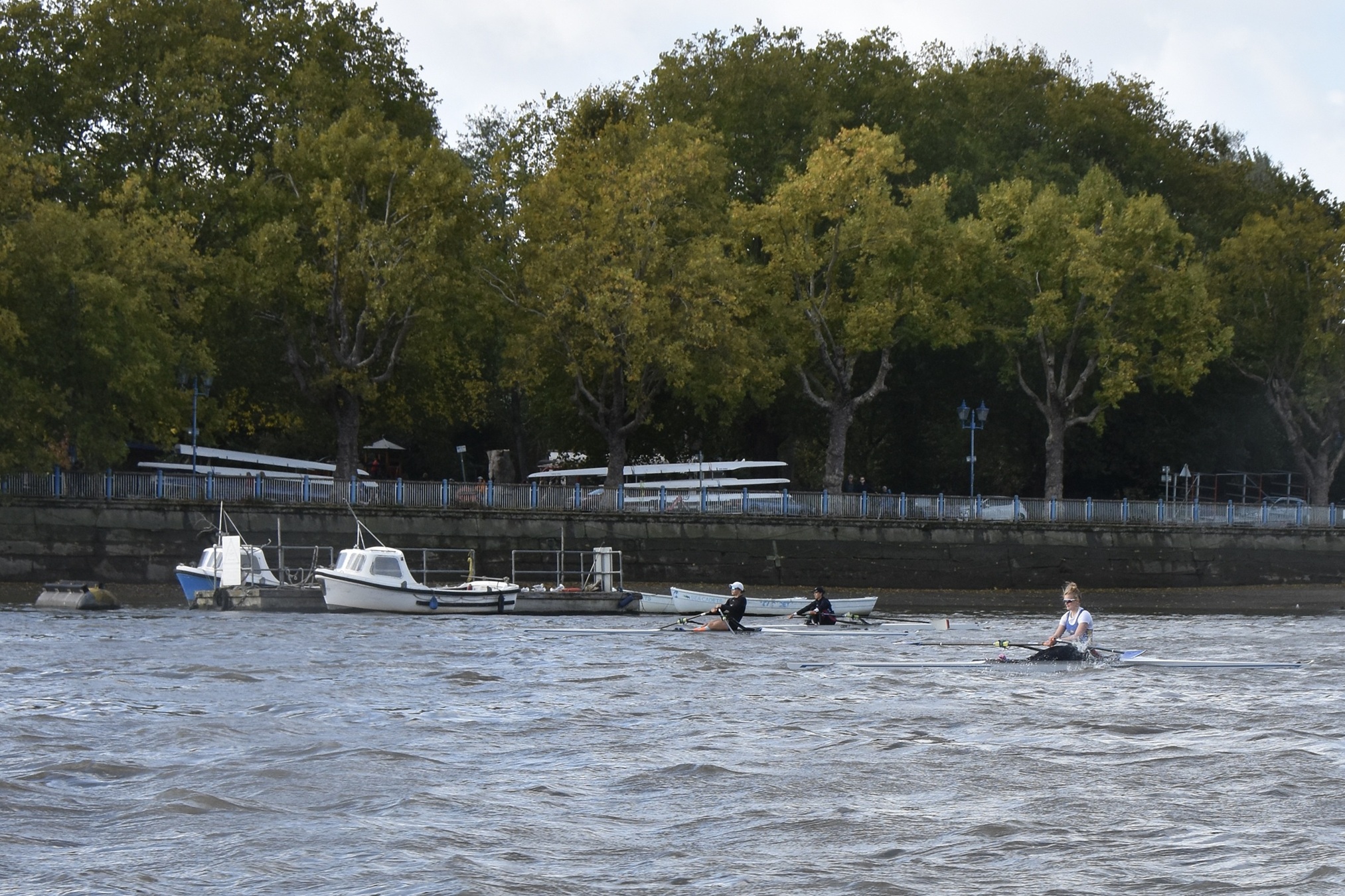
Left to right, L. Grant, I. Grant and Fullman pass the so-called Black Buoy at the upstream end of Putney Embankment. Parallax error distorts the fact that I. Grant was in the lead. These three started on stations 1, 2 and 3, the ones nearest to the Surrey Bank, and they hugged this shore to get as much shelter from the wind as possible.
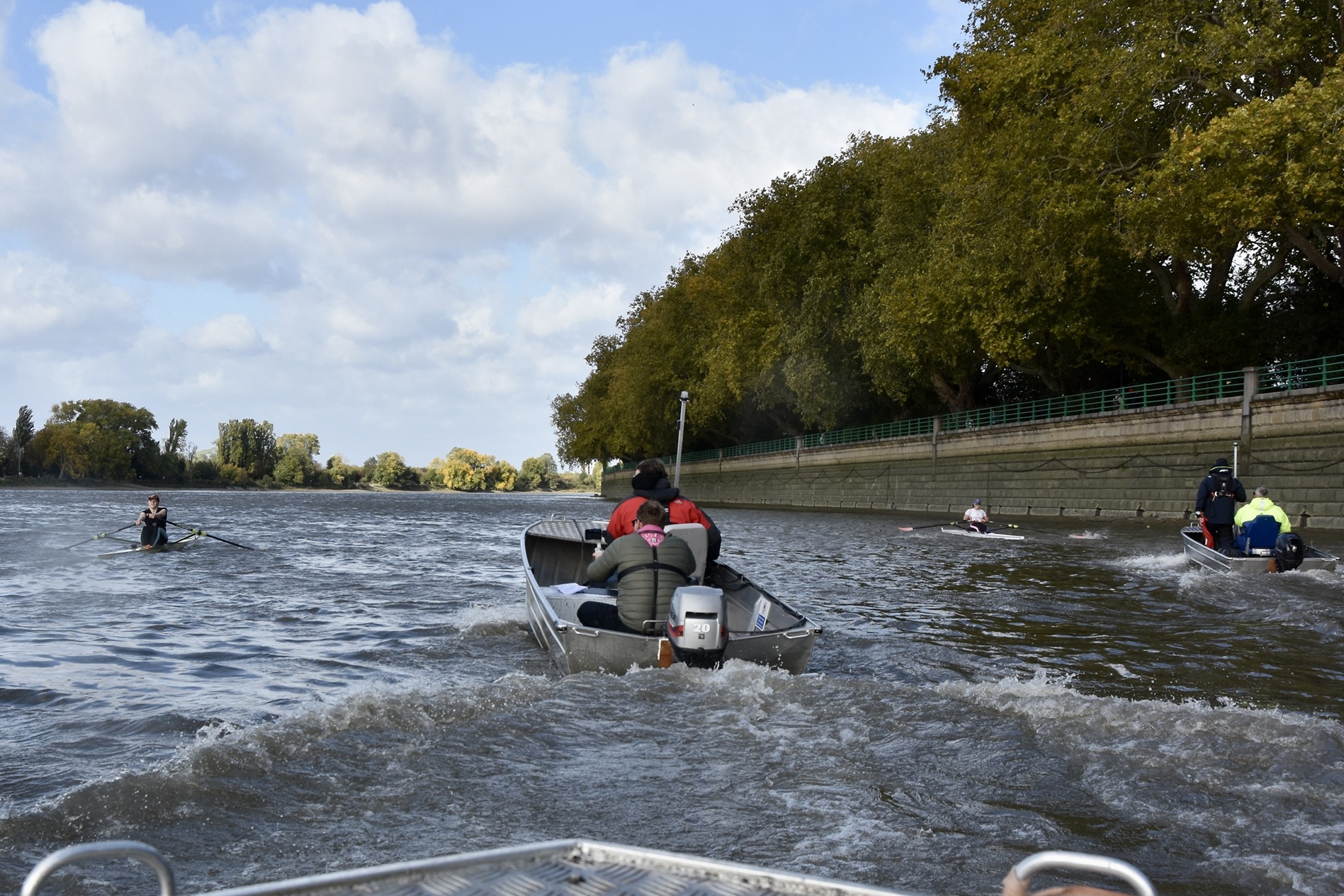
A picture taken seconds after the one above, Keto, left on station 4, and Robinson Ranger, right on station 5, spent perhaps the first four or five minutes close to the shelter of the Middlesex Bank and avoiding the rough water in the centre.

Passing Barn Elms, on the Middlesex side, Keto and Robinson Ranger started to feel the slow stream of the Fulham Flats, and I. Grant, L. Grant and Fullman began to extend out.
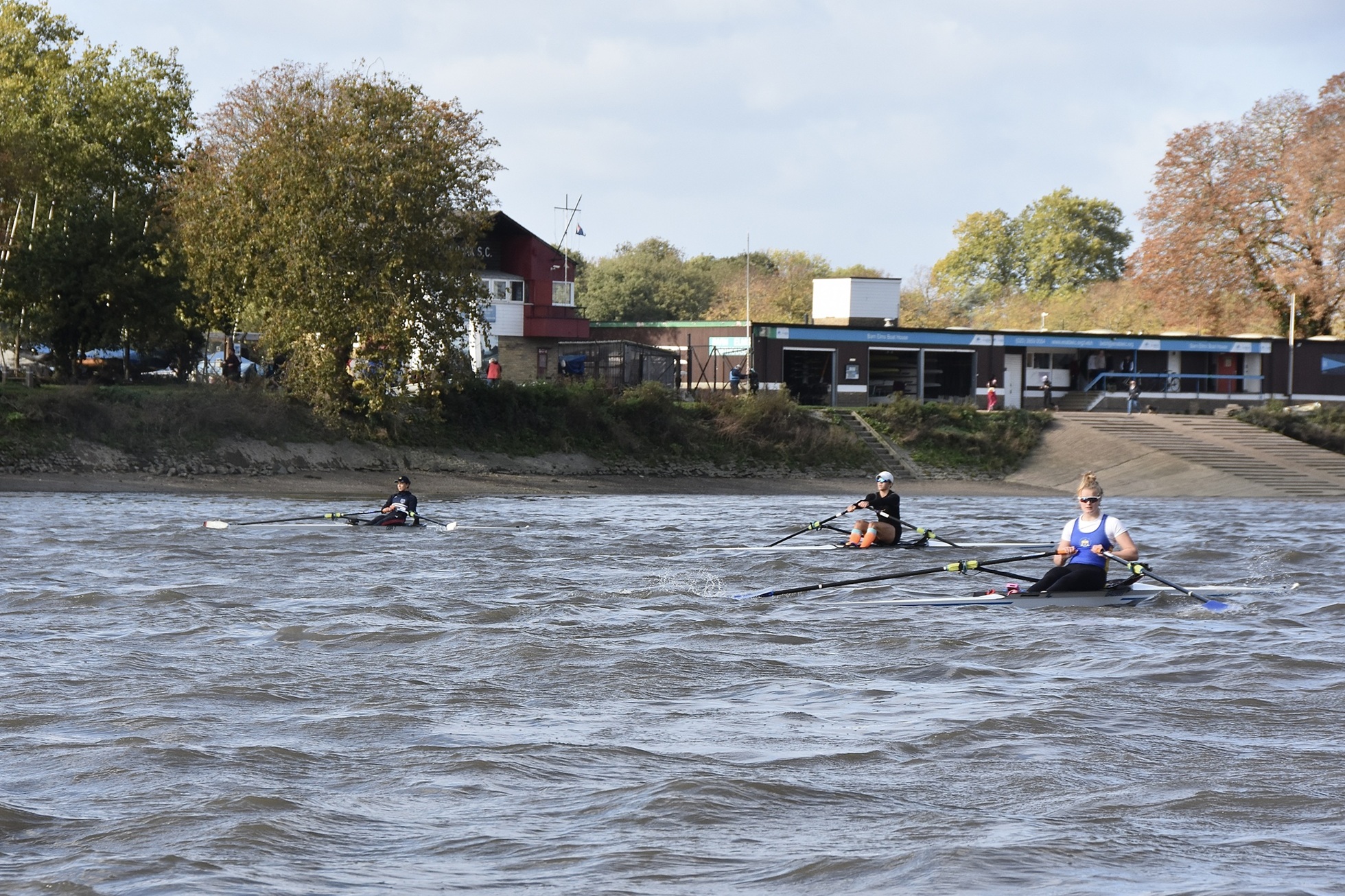
Left to right, I. Grant, L. Grant and Fullman at Barn Elms on the Surrey side. The actual order was the reverse of what appears here, again down to parallax error.
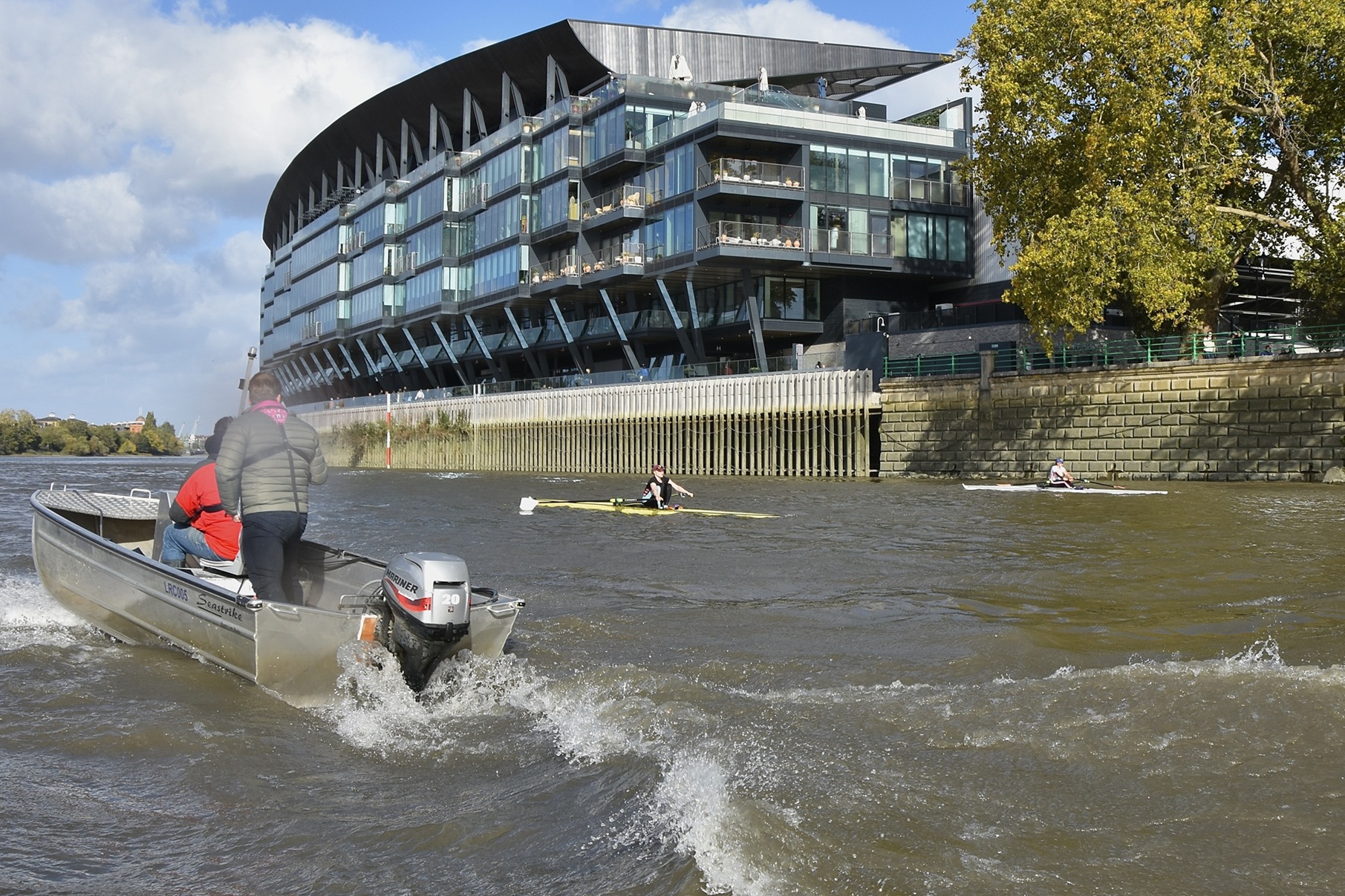
Again, this picture was taken seconds after the one above and shows Keto and Robinson Ranger approaching the Fulham Flats in front of the football ground on Middlesex, an area of shallow and slow water normally best avoided.
Keto starting to cross to the Surrey side. She was soon followed by Robinson Ranger.

Passing the Milepost, L. Grant tucked behind I. Grant on the Surrey side, with Fullman following.
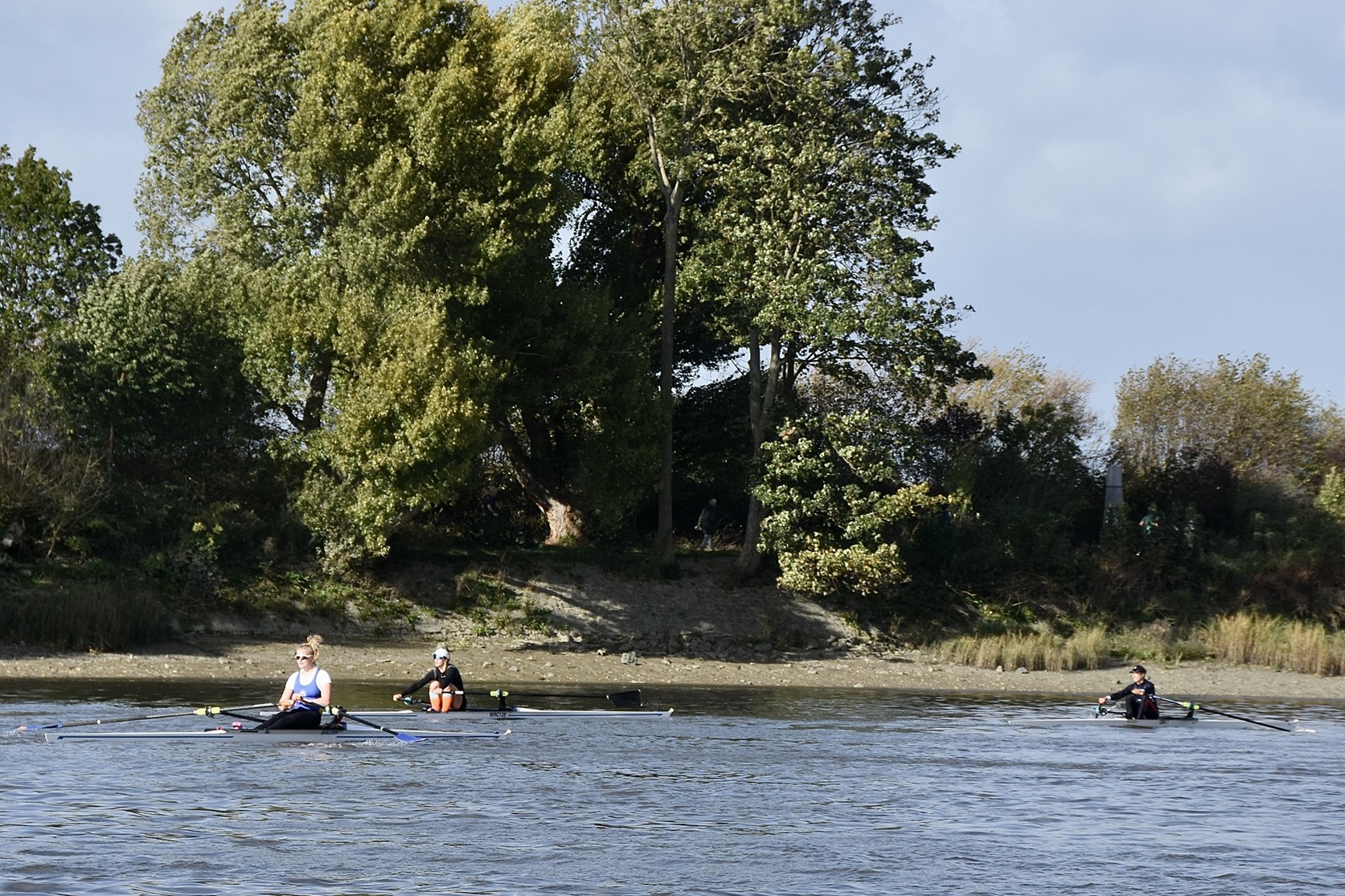
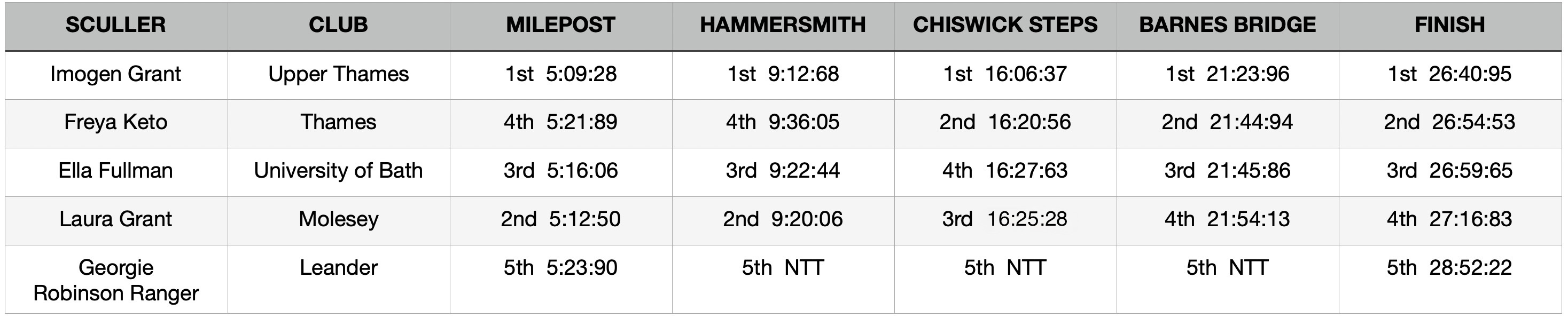
At the Milepost, I. Grant (5m 09s) leads followed by L. Grant (5m 12s) and Fullman (5m 16s). The actual Milepost monument to Steve Fairbairn can just be seen above Imogen’s head. Out of shot, Keto’s Milepost time was 5m 21s and Robinson Ranger’s was 5m 23s.

On the other side of the river, Keto overhauled Robinson Ranger and was now about 5 lengths back on the field.

With the conditions becoming more challenging, the crews ducked inside the buoy at Harrods and Robinson Ranger began to drop back. Fullman decided to stay more central as they approached the bridge, and Keto maintained her distance on this group.
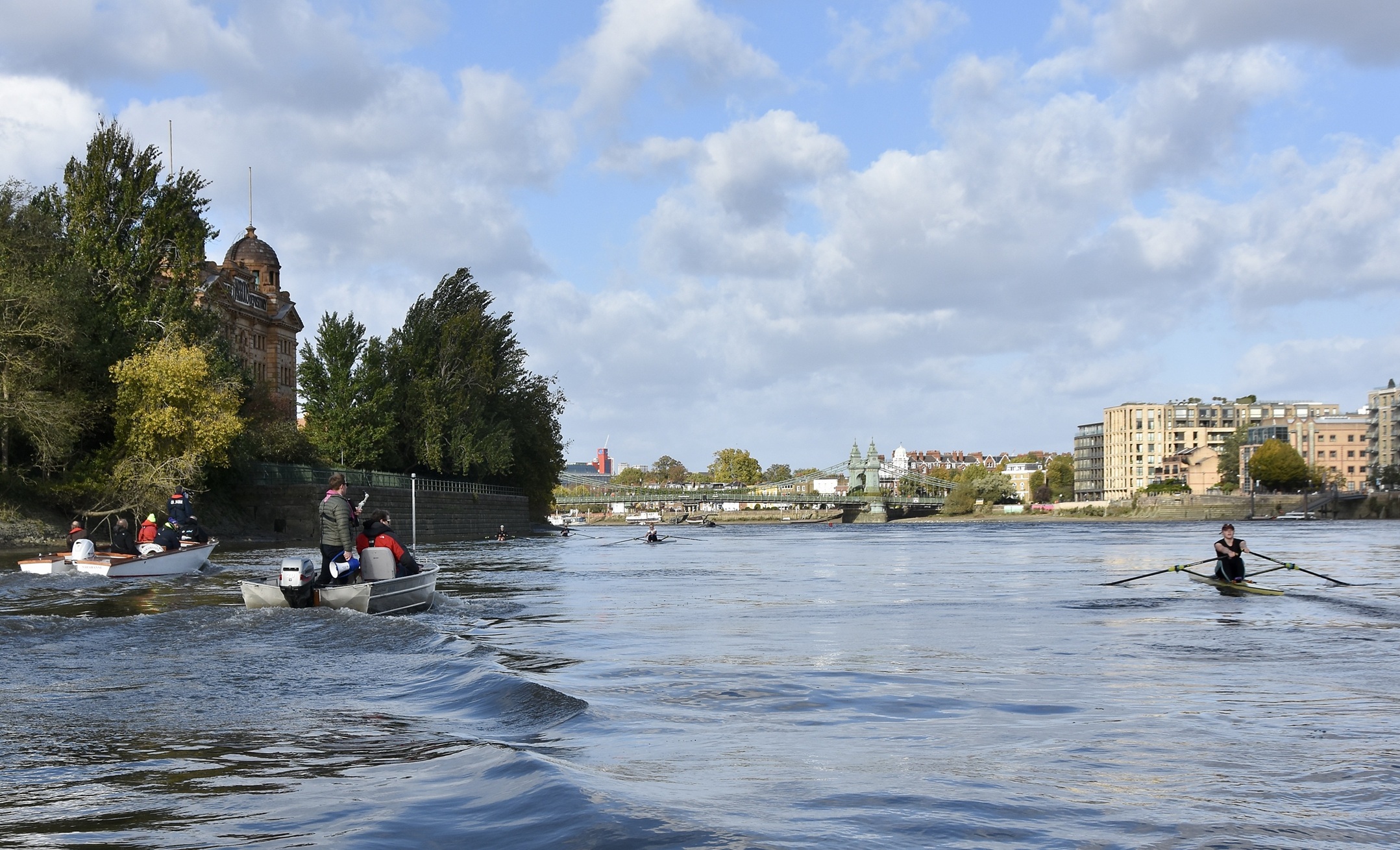
At Harrods and approaching Hammersmith Bridge. Left to right: L. Grant (2nd), I. Grant (1st), Fullman (3rd), Keto (4th). Robinson Ranger (5th) is out of shot.

Through the bridge, I. Grant, steered by Maurice Hayes, dived into the bank, with Fullman and L. Grant seeing the worst of the conditions in the middle. Keto got the better of the water here and closed several lengths in a matter of seconds, overhauling Fullman in the process.
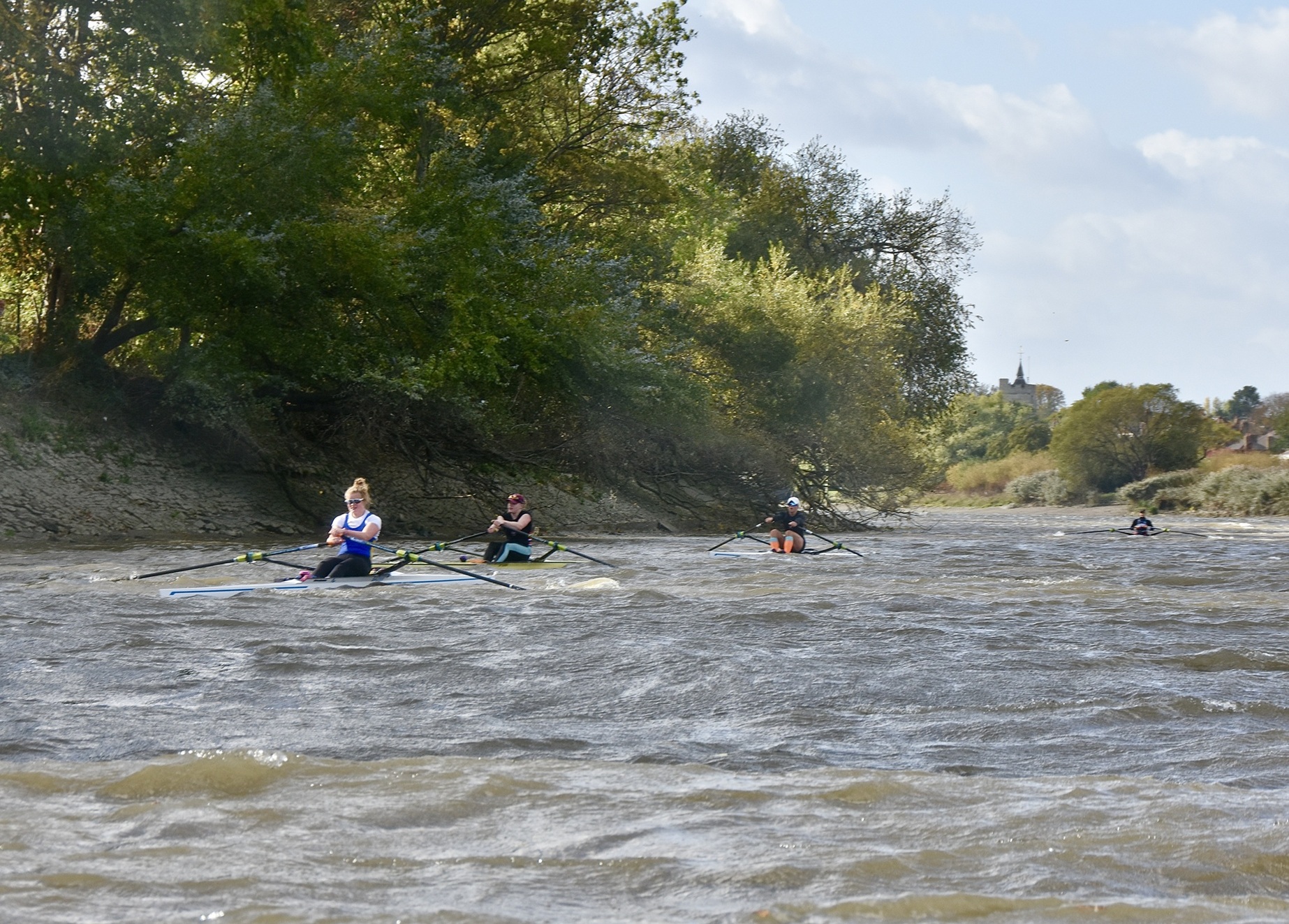
Through Hammersmith Bridge and past St Paul’s School, the water became increasingly rough. Here I. Grant is followed by L. Grant, Keto and Fullman.

Coming through the almost impassable conditions round the bend, with all scullers firmly in the Surrey bank, Keto launched an attack on L. Grant.
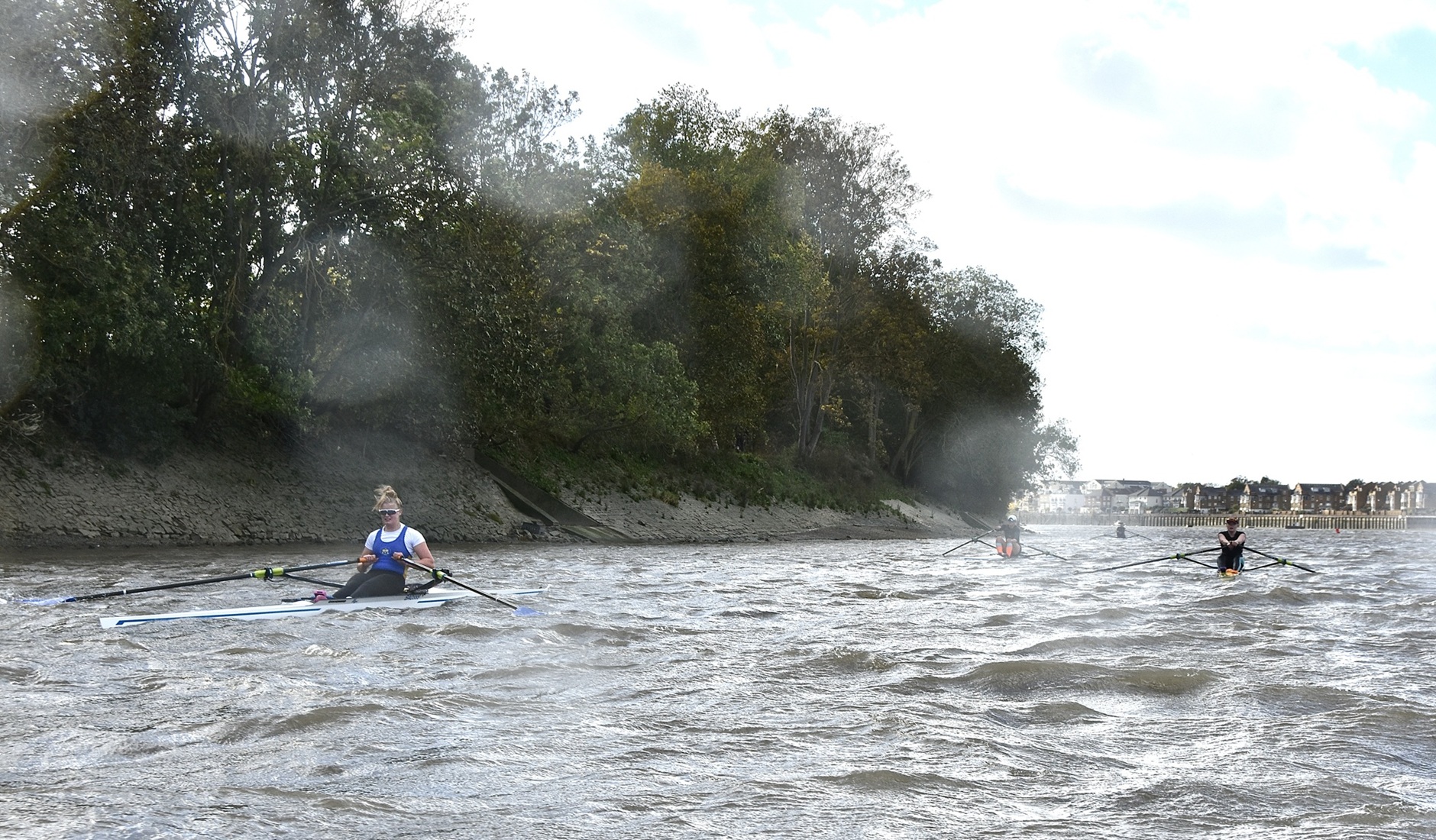
Keto begins her attempt to take L. Grant’s second place.

Down the Eyot, with I. Grant still leading, Keto overhauled L. Grant to take the second position, now five lengths down on Grant, the defending Champion.

Keto continued to push away from L. Grant, as Fullman closed up on her.
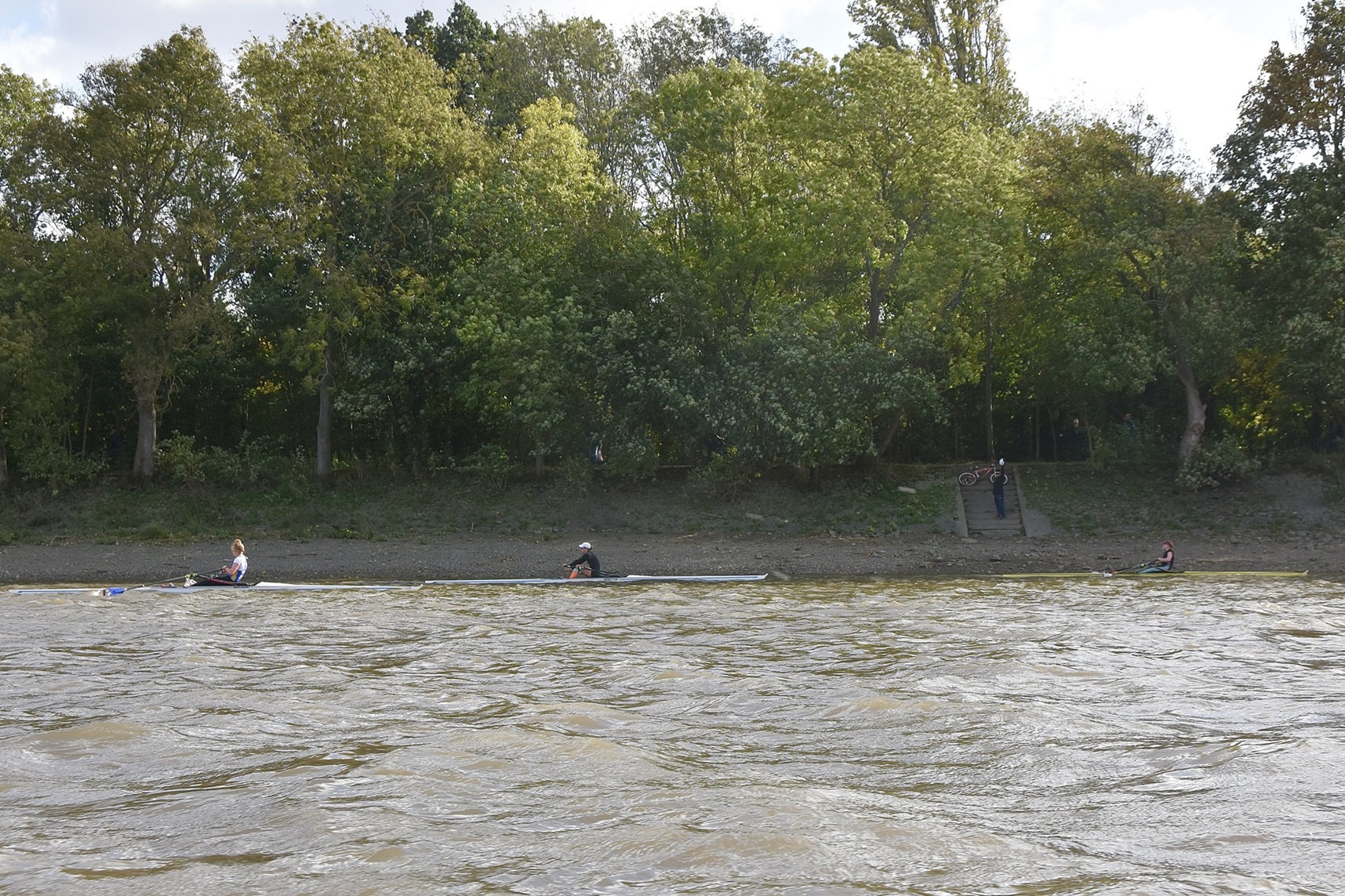
Left to right: Fullman (4th), L. Grant (3rd), Keto (2nd). This picture shows the flagman on the Chiswick Steps timing point who dropped a flag as each sculler passed so that the timekeeper in the umpire’s launch could get an exact time. Times here were: I Grant 16.06, Keto 16.20, L. Grant 16.25, Robinson Ranger NTT.

Passing Chiswick Steps, I. Grant continued to lead.
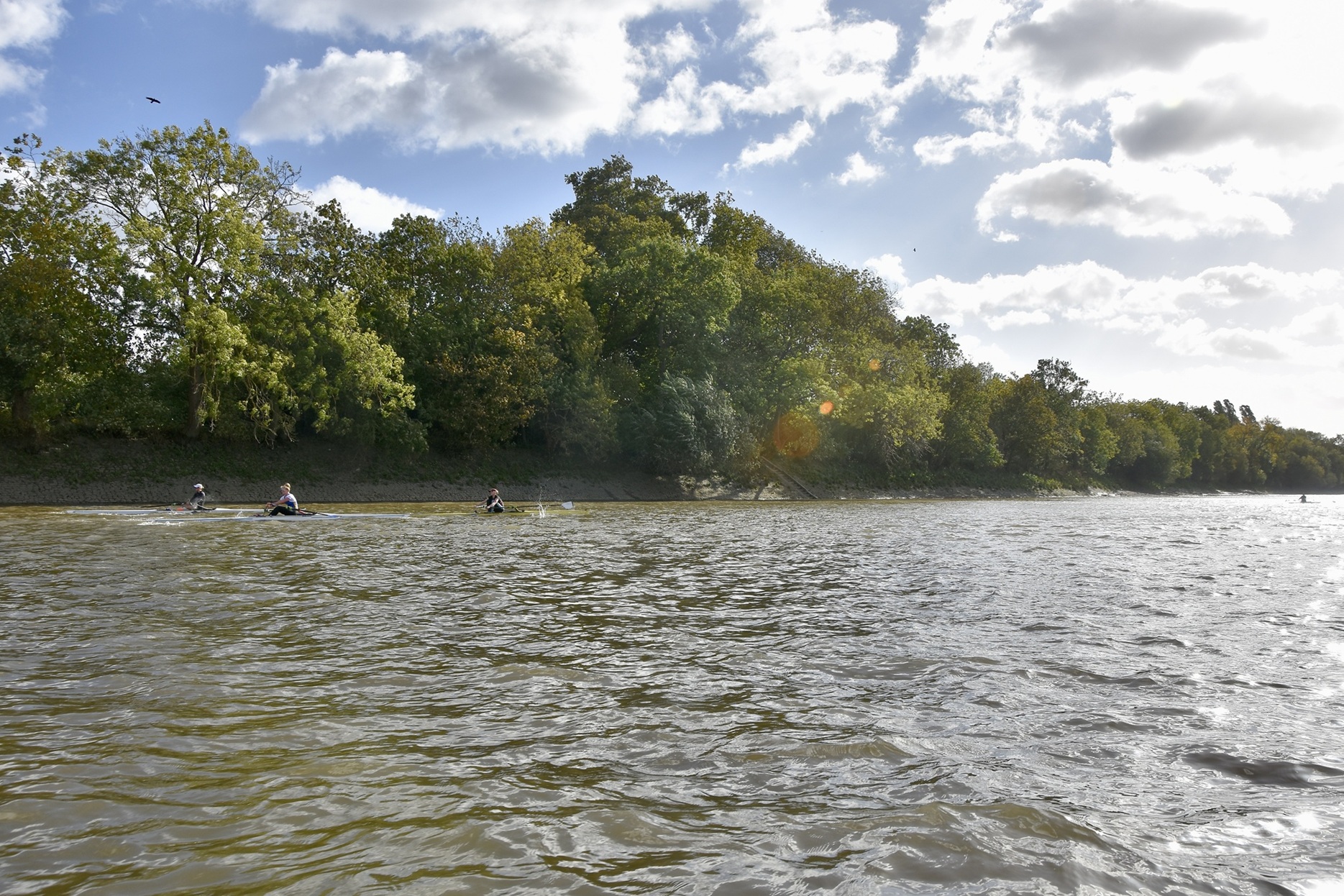
A distant speck on the far right, Imogen Grant has a commanding lead.

As the crews crossed the river by the bandstand, Fullman got the better of L. Grant, and drew up to half a length down on Keto to her strokeside.
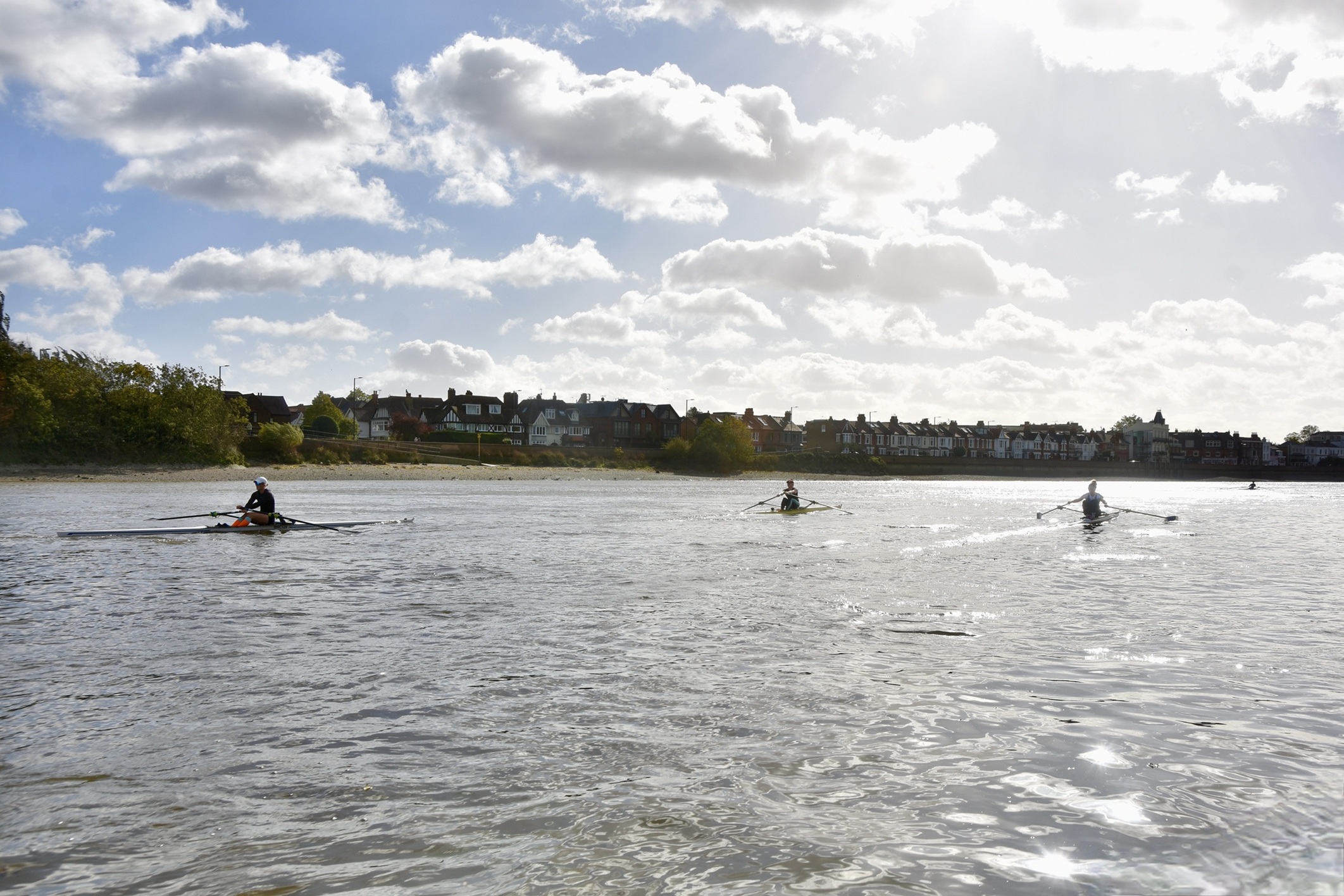
Approaching Mortlake and Barnes Bridge, I. Grant leads in the distance followed by Keto, Fullman and L. Grant.

As the water started to worsen, with Fullman on the inside, she continued to press Keto, closing the margin to near level.

All crews took the inside at Barnes Bridge. With the conditions becoming significantly worse, Keto and Fullman extended their lead over L. Grant, with Keto leading by two-thirds of a length.
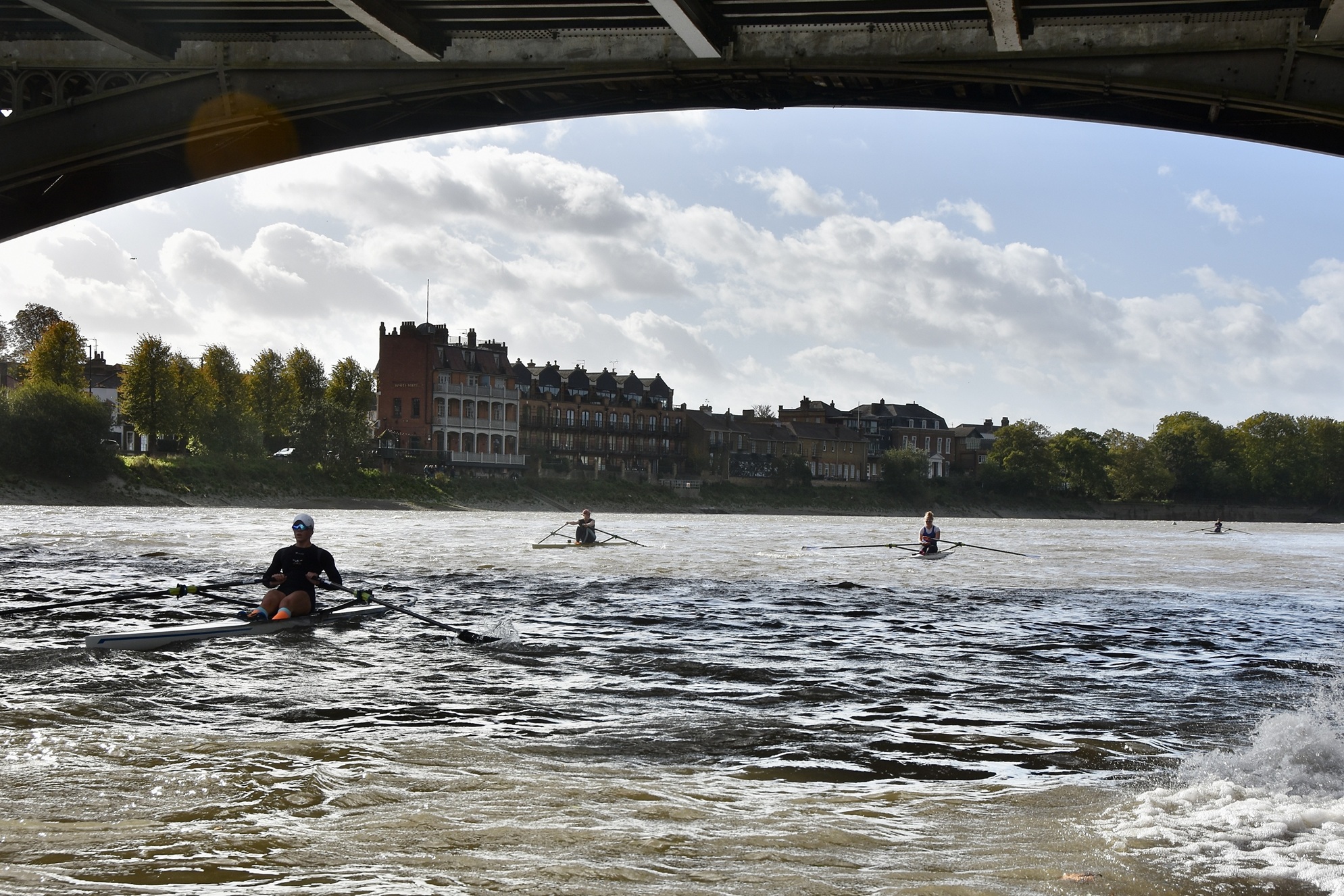
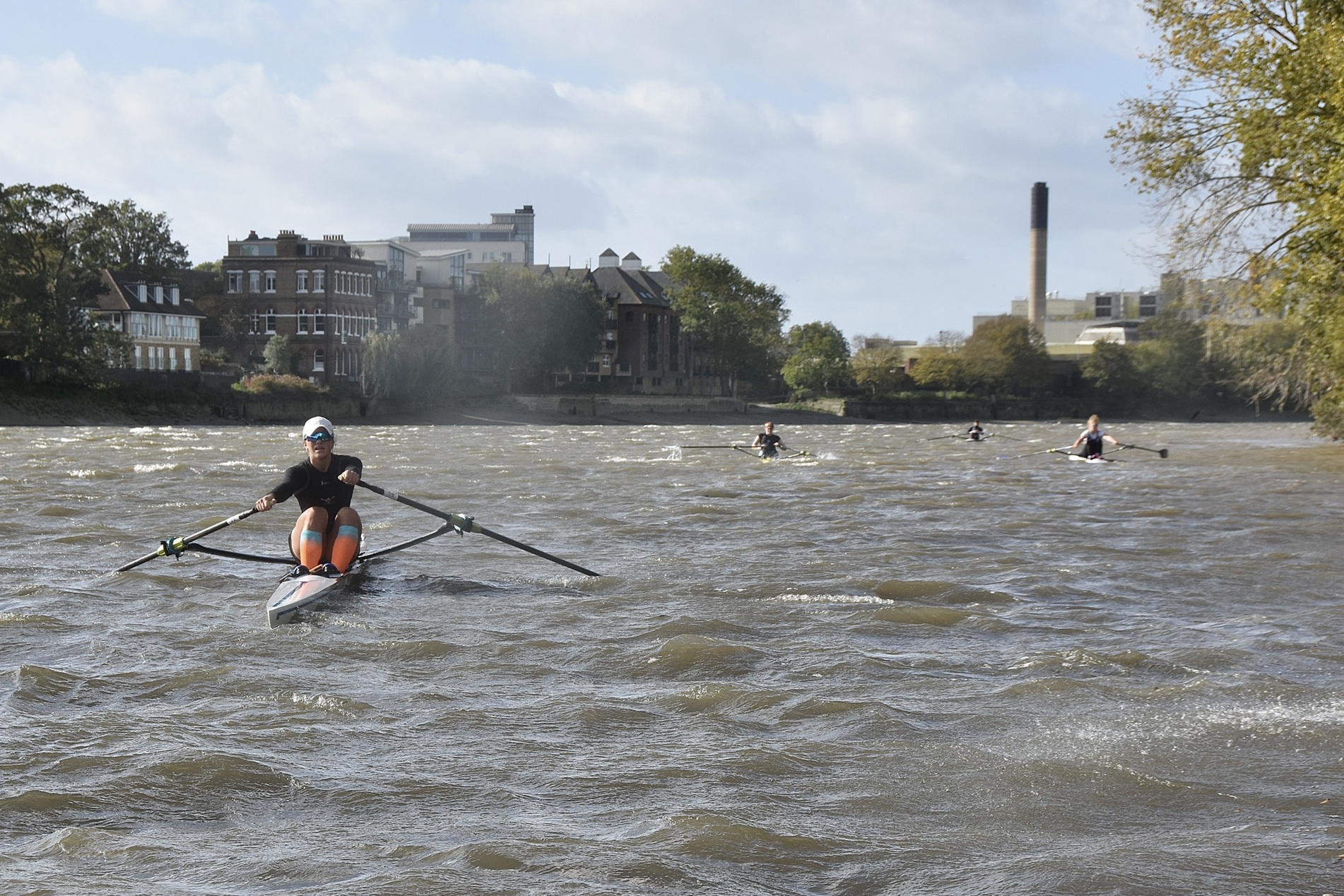
Under Barnes Bridge. I. Grant is comfortably ahead, Keto (centre left) is just up on Fullman (centre right) and L. Grant follows in fourth place. The times at the bridge were: I. Grant 21.23, Keto 21.44, Fullman 21.45, L. Grant 21.54, Robinson Ranger NTT.
All the scullers coped remarkably well with the conditions in the final stage – as they had done throughout. Not falling in under these conditions was worth a Wingfield’s medal.

Approaching the finish, the positions remained unchanged despite all crews putting in finishing bursts. Imogen Grant crossed the line in 26:40:96 to win her fifth Wingfield Sculls.
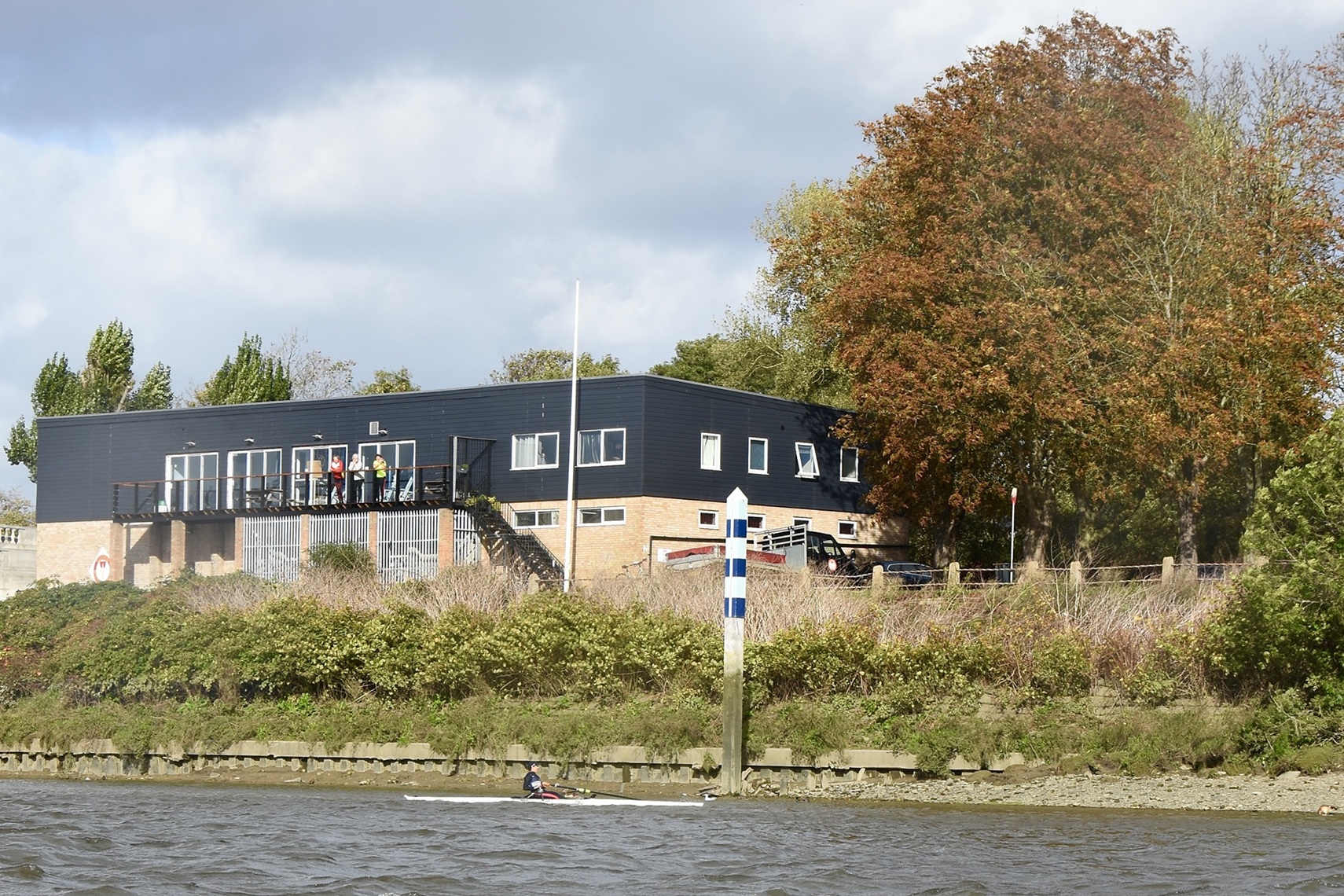
Not the first time that Imogen Grant has been first past this particular post, this time 21 seconds ahead of her nearest rival.
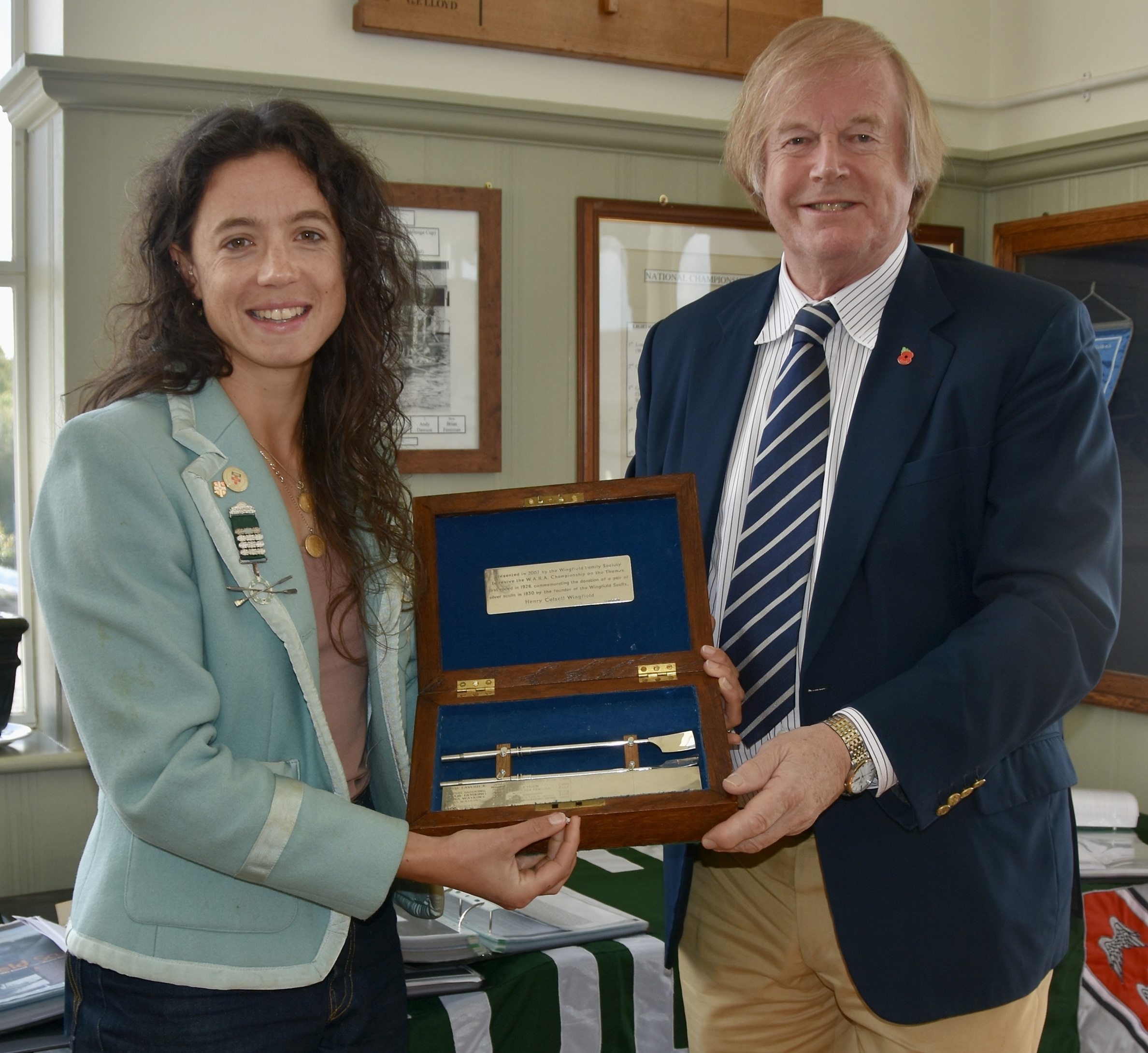
Imogen receives the Women’s Wingfield Sculls trophy from Sir David Wootton, Henley Steward and former Lord Mayor of London.
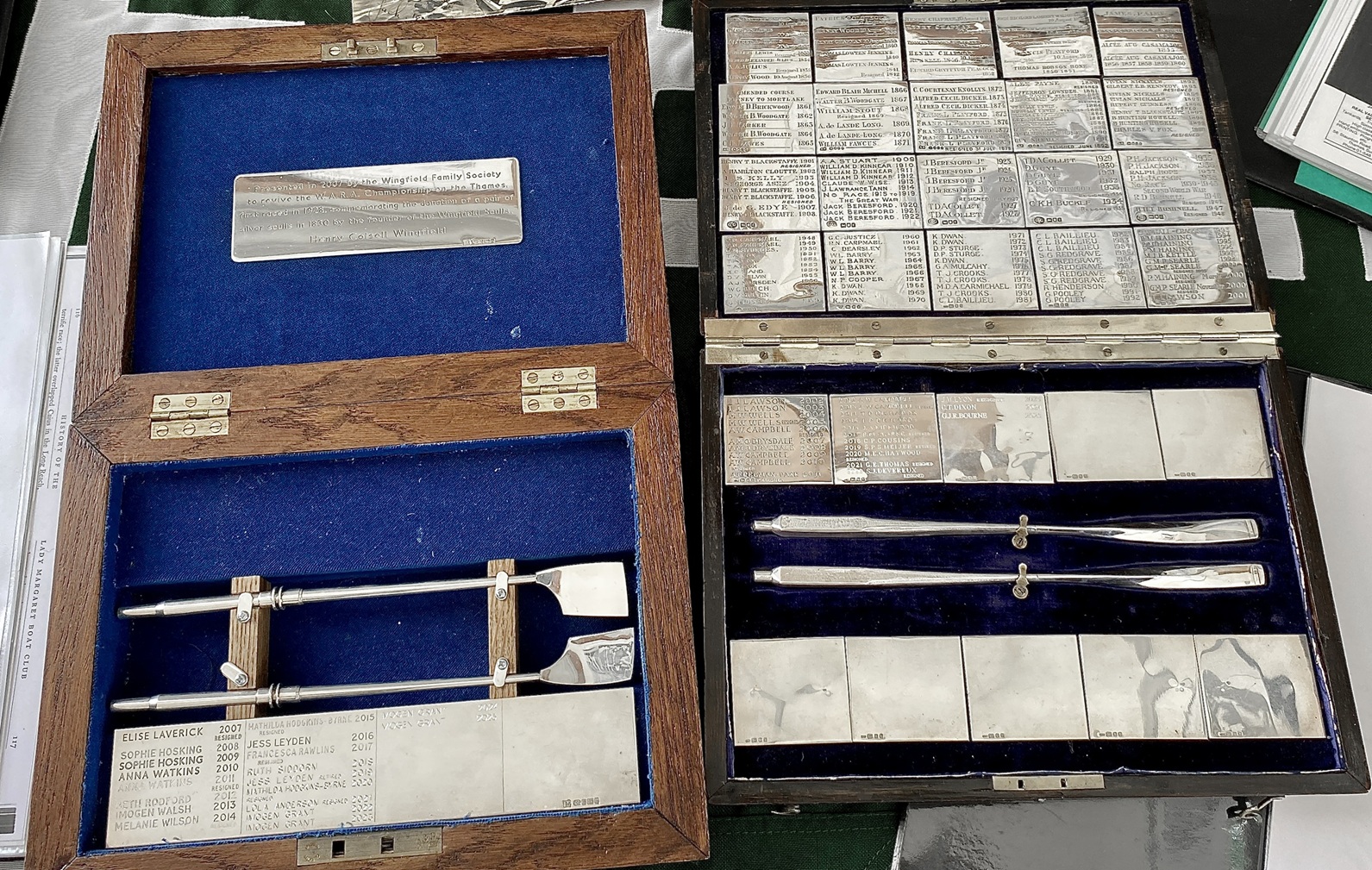
Some very famous names appear on both the women’s trophy, left, and the men’s trophy, right.
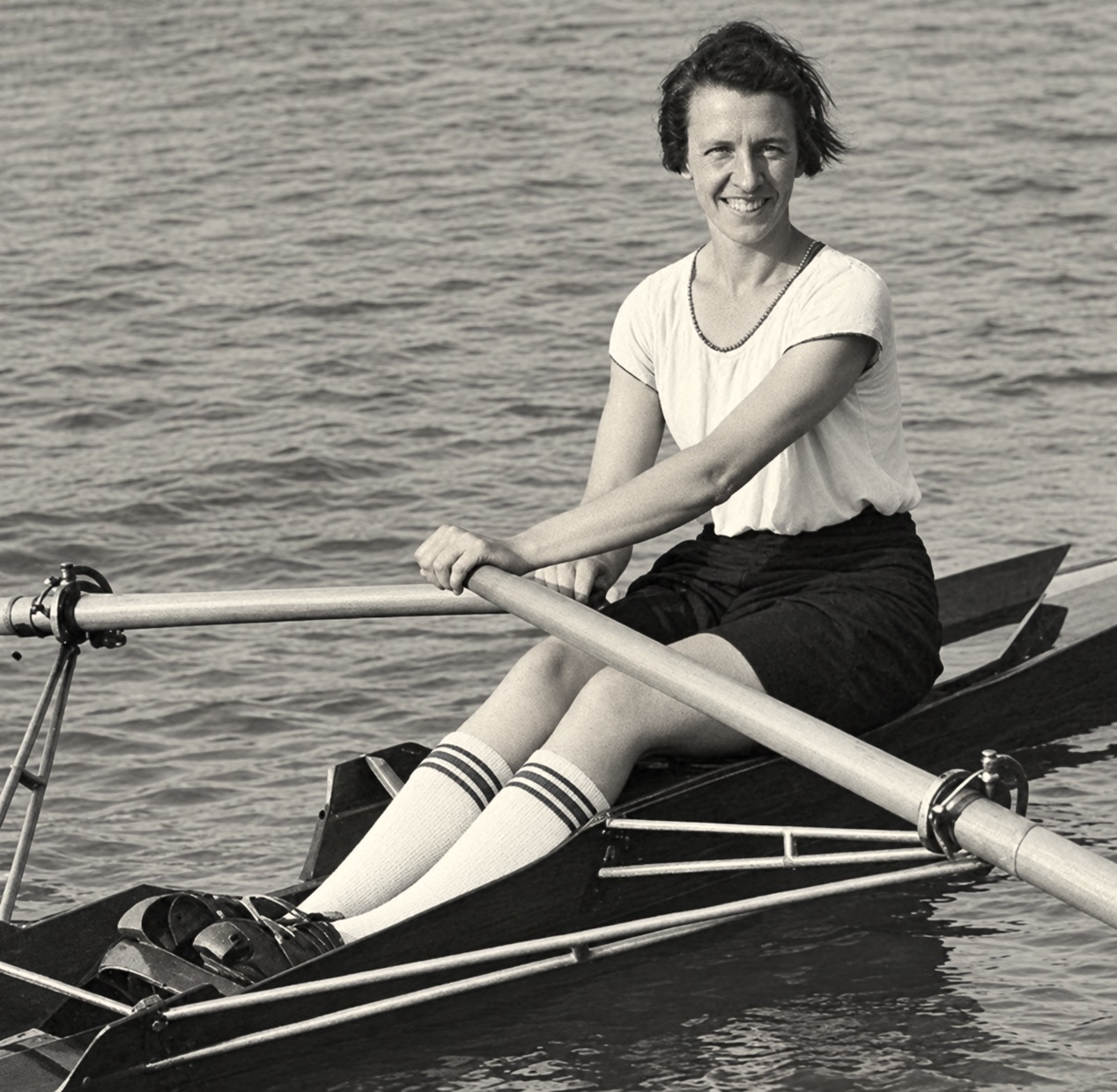
While the men’s race may appear to be 176 years older than the women’s, the latter perhaps has more of a heritage than most realise. The Women’s Amateur Sculling Championship, run over the Championship Course, began in 1928. Pictured above is Margaret Barff (1897-1990) who won the 1928 and 1929 Championships before she had to give up racing because of a heart condition. However, she continued to contribute to women’s rowing for many years after. Newspaper picture enhanced by AI.

Nice film of Margaret’s 1928 race and its exciting finish is on British Pathe.
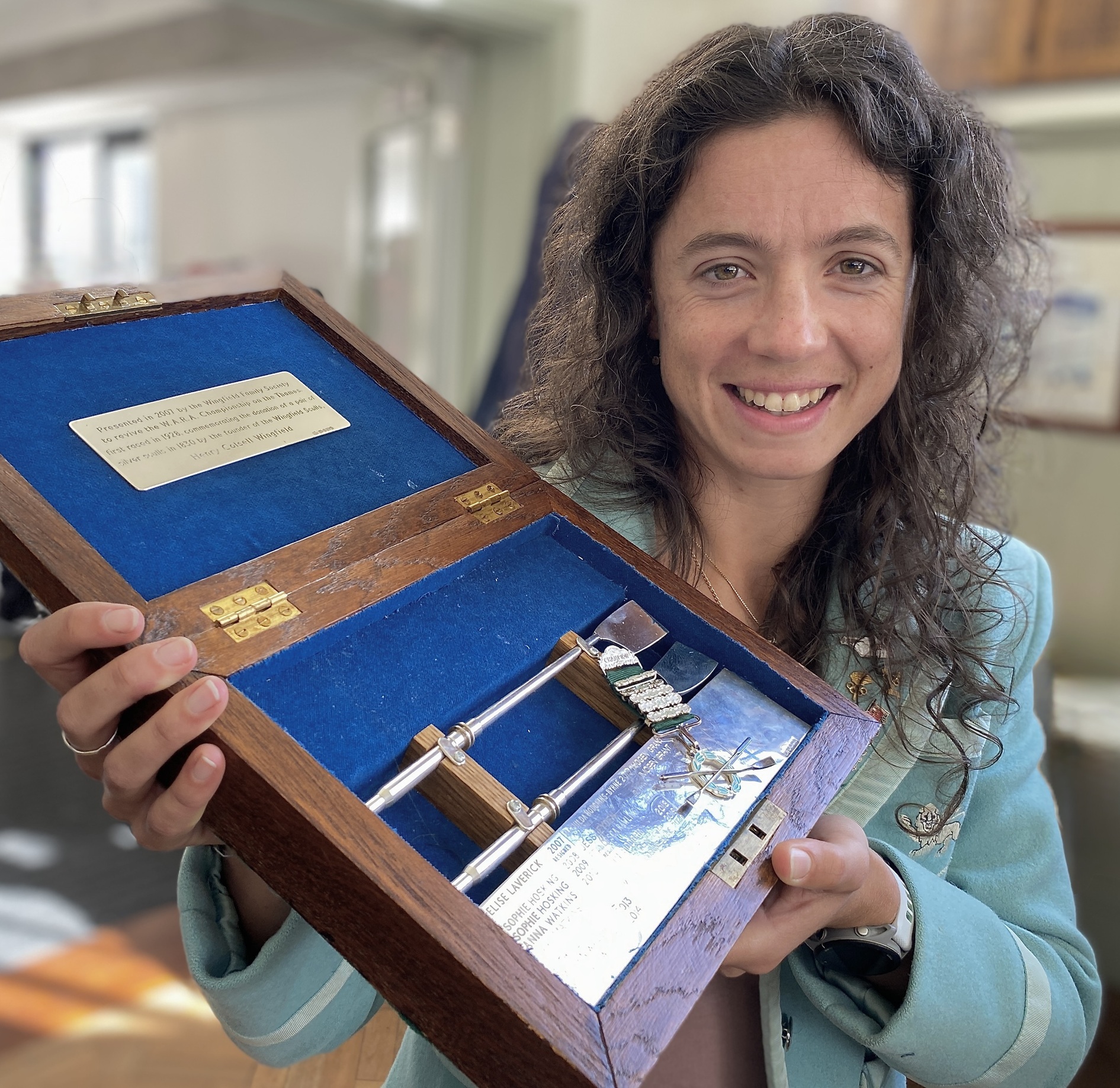
Speaking of history, Imogen is two wins away from equaling the great Jack Beresford’s record of seven Wingfield wins before he resigned, 1920-1926.

A recording of the livestream of the race is on YouTube. George Bourne, the winner of the men’s race, has posted a clip showing him losing and immediately recovering a blade during his race.

Leave a Reply

This site uses Akismet to reduce spam. Learn how your comment data is processed.