
19 October 2026
By Tim Koch
Tim Koch finds history in store.
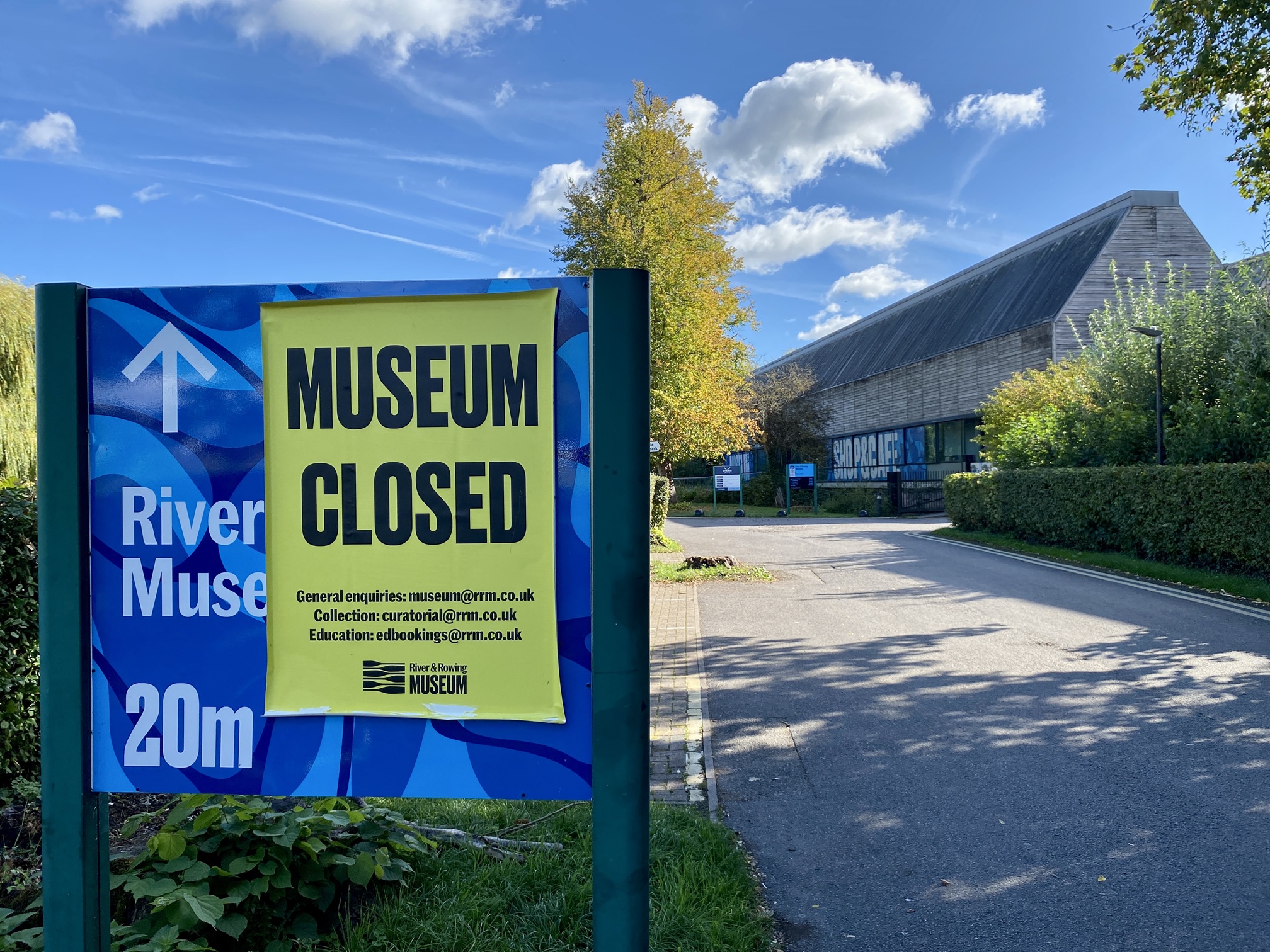
I usually look forward to visiting Henley-on Thames, a charming place to spend some time even without taking its historic rowing connections into account. Notably, it is the home of Henley Royal Regatta and of Leander Club. However, I recently made the forty-mile journey from West London with a little less than my usual enthusiasm as I was due to visit the industrial storage unit that now holds the remains of the collection once housed in the town’s River and Rowing Museum.
The RRM is in a “mothballed” state to reduce the level of financial losses while the trustees and the few remaining employees work to find new homes for the thousands of artefacts in its collection. Twenty percent of the objects held by the RRM were “on loan” and were thus easily returned to their donors but dealing with the remainder is more problematic.
The closing of a museum and the disposal of its objects is governed by strict rules. The RRM’s Ethical Framework Protocol states:
The River and Rowing Museum wishes to transfer its collections to organisations that can offer long-term public access and collections care. We are inviting expressions of interest from museums and other public and not-for-profit organisations interested in taking responsibility for all, or part, of the collections…
I was visiting the museum store to collect a few items connected to Kensington Rowing Club (KRC), which amalgamated with Auriol RC in 1981 to form today’s Auriol Kensington Rowing Club – of which I am the archivist. Formal approval for this transfer of ownership took some time but ultimately the museum authorities were happy that the club would display and properly care for the objects (more about them later).
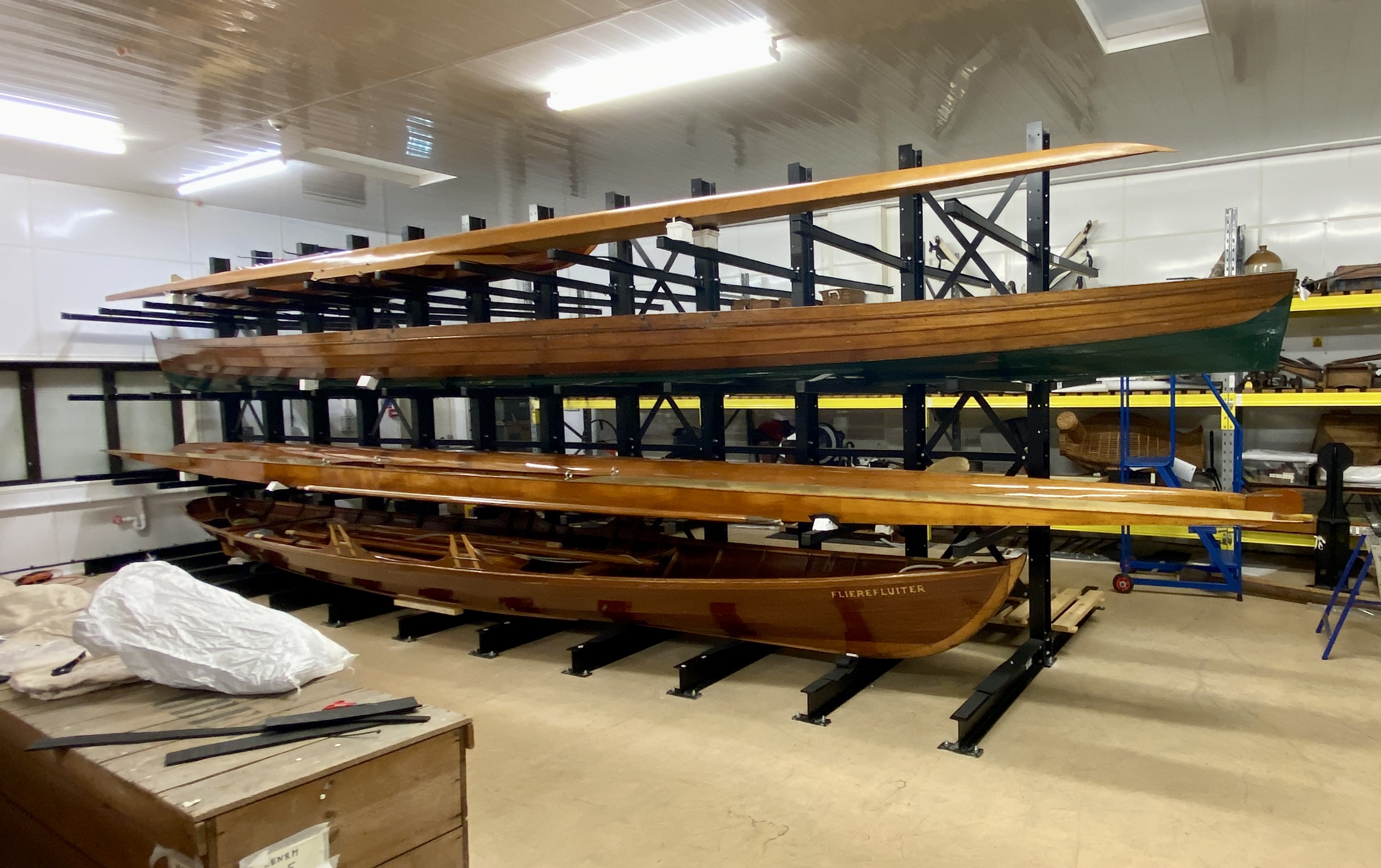
While it was sad to see the museum’s collection in its current state, I was pleasantly surprised to find out just how many of the thousands of objects have already been suitably relocated. This even applied to the boat collection, something that I had imagined would have proved the most difficult to rehome. Finding museums and institutions that would consider racing boats relevant to their raison d’être and that would also have space to display them cannot be easy.
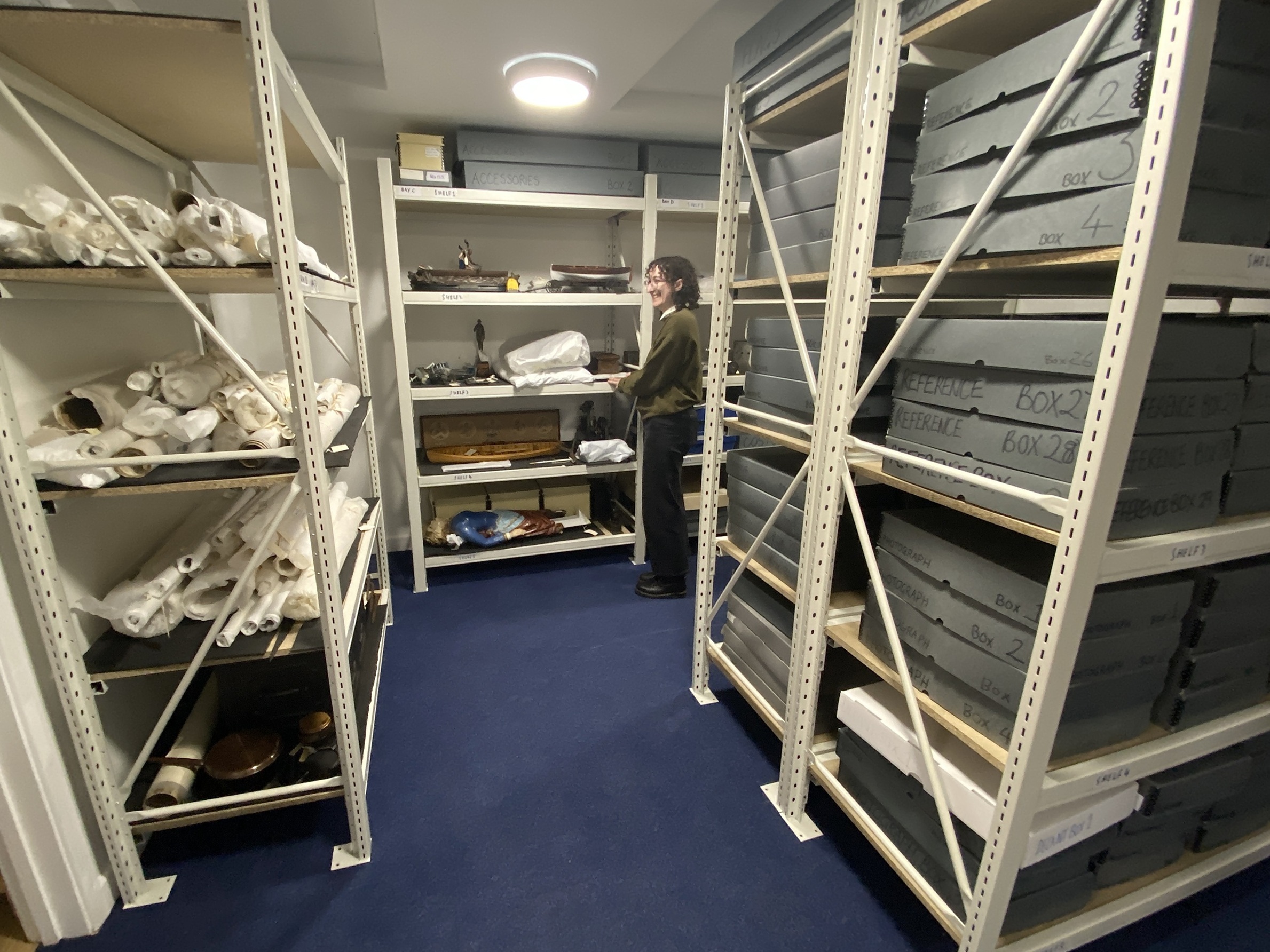
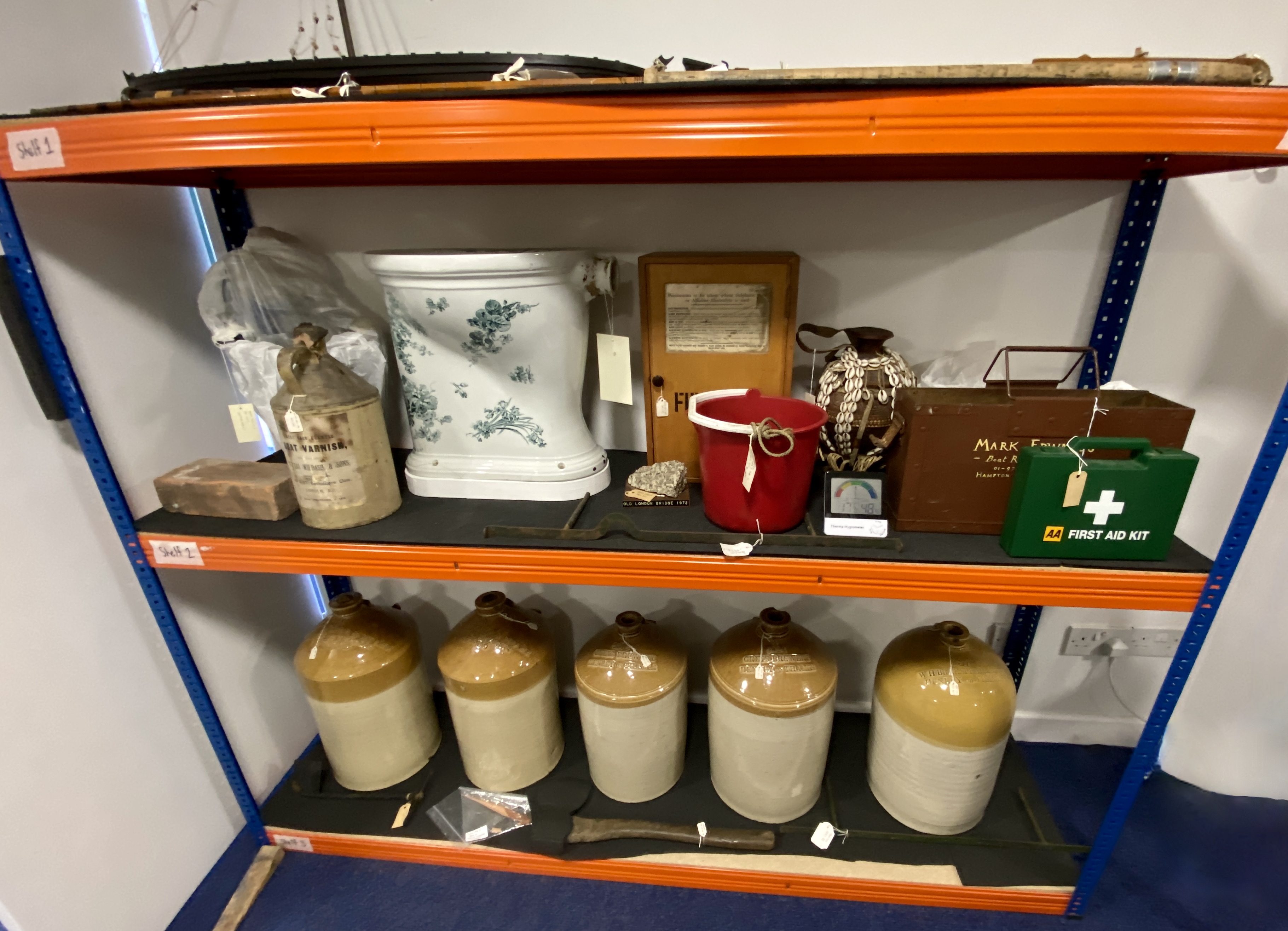
I would urge rowing clubs to look at the RRM’s collection online to find objects and ephemera relevant to them. Application for the transfer of ownership can then be made using this form. To discuss this further, contact the Curatorial Team at curatorial@rrm.co.uk.
The Kensington RC related objects that I collected from the RRM were three formal KRC crew pictures from 1908-09. They were donated to the museum in 2003 by John Siglow from the United States. They had belonged to his father, Robert Siglow, who rowed for Kensington between 1905 and 1912, had then emigrated to the US and who died in 1968.
The internet proved to be surprisingly informative about Robert’s story. While rowing plays only a small part in it, it is a tale typical of many periods and places in history when people would not or could not accept the situation that their birth had bestowed upon them and moved in search of a better life. It is still a very topical subject.
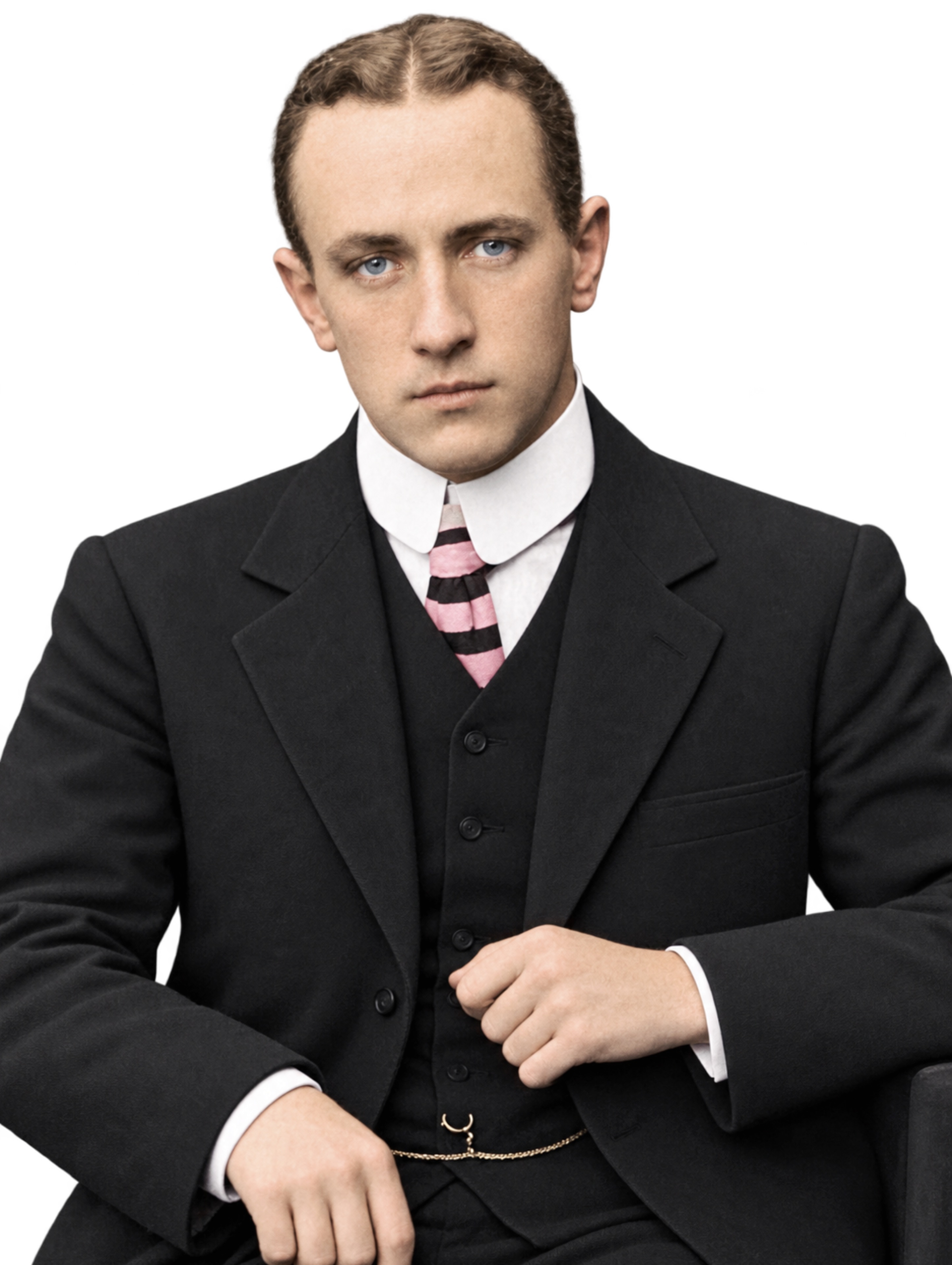
Robert Siglow was born on 26 January 1886, in Hamburg, Germany. At the age of 19, in 1905, he was first recorded as rowing for Kensington Rowing Club in Hammersmith, West London. That a young German should immigrate to Britain was not surprising as by 1905 the German community was one of the largest and most established immigrant groups in the country.
The 1911 Census recorded over 53,000 Germans in the UK although migration due to their country’s ailing economy during much of the 19th Century was slowing as by then the young German nation was transforming itself into an economic and industrial powerhouse.
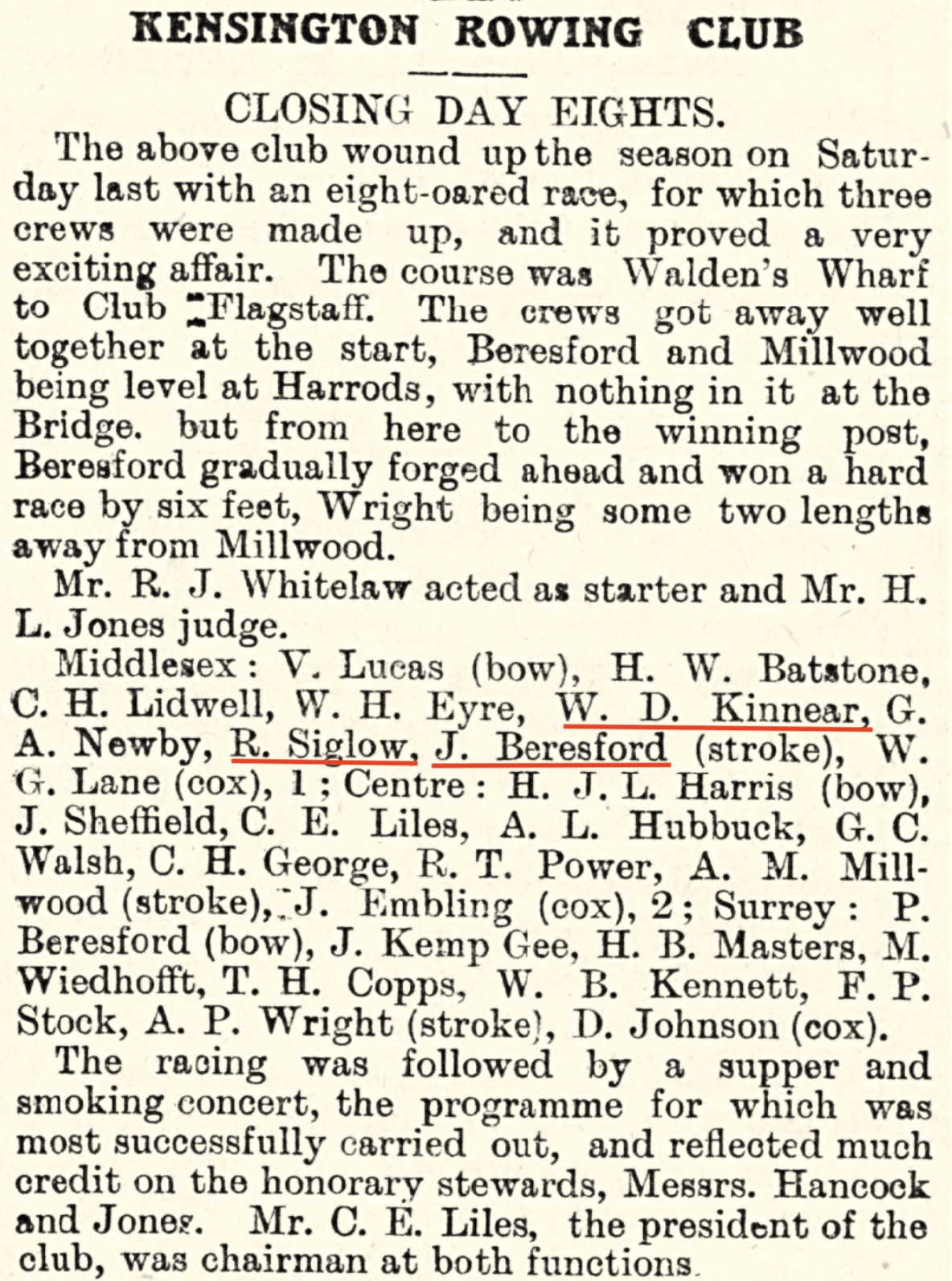
Local newspapers reported on local rowing in great detail before the 1914-18 War and Siglow’s name appeared in almost every report on KRC between 1905 and 1912.
Siglow was lucky to be at Kensington during its most successful decade since the club had been founded in 1872. In particular, in 1908 he was in the KRC crews that won Junior Eights at Kingston and Junior-Senior Eights at Reading and the Tideway and then, in 1909, Junior-Senior Eights at Kingston and the Metropolitan, beating London RC at their home regatta in the Old Barnes Challenge Cup at the latter.
The Kensington eight was greatly assisted in these high-class wins by having future Olympic champion Wally Kinnear at six and the boat was never quite as successful after 1909 when he left the crew to pursue a single sculling career. In 1910, Siglow was at seven in Kensington’s Henley Thames Cup Crew, but they were beaten in the first round by Emmanuel College, Cambridge, while Kinnear won that year’s Diamond Sculls.
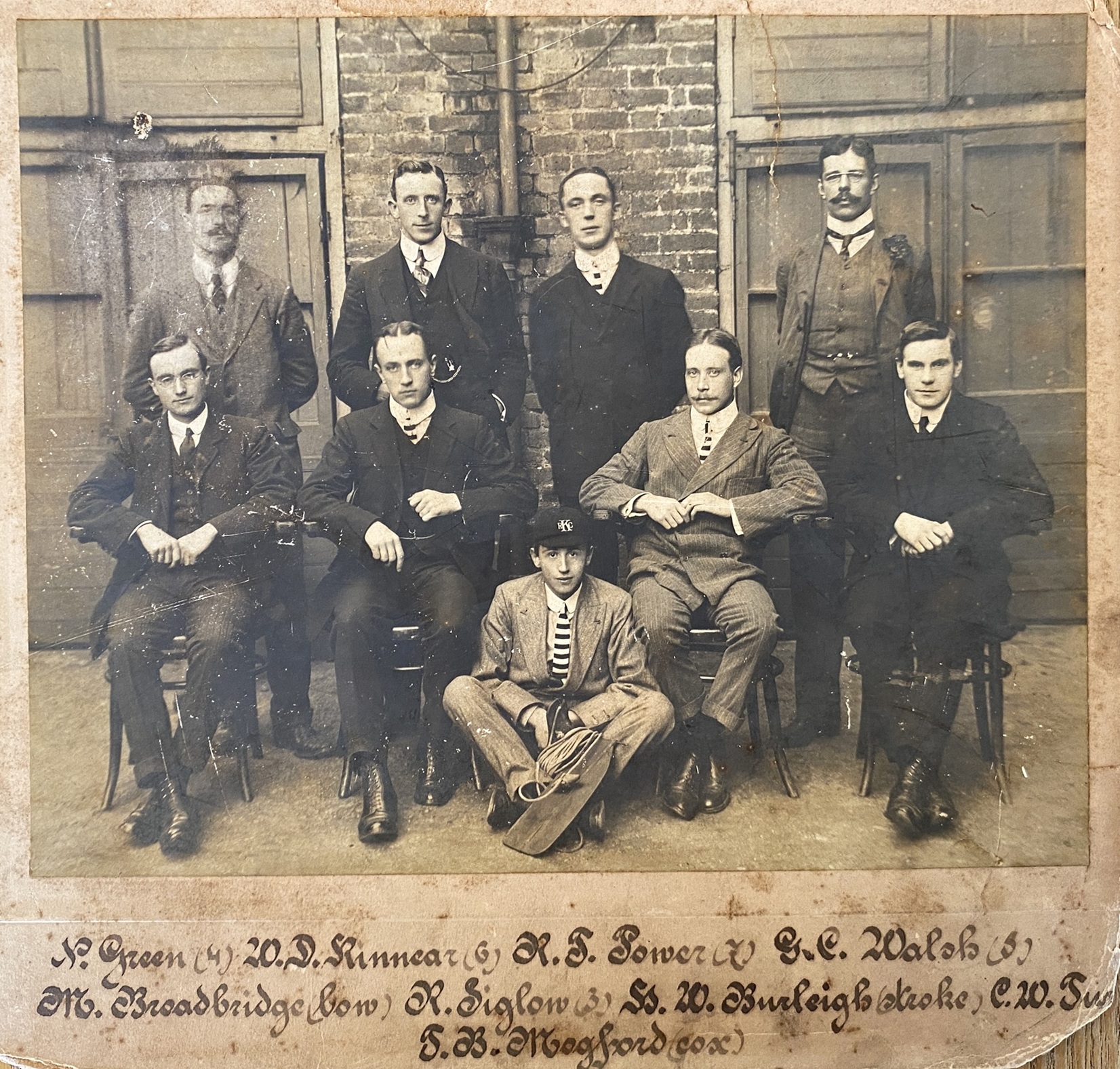
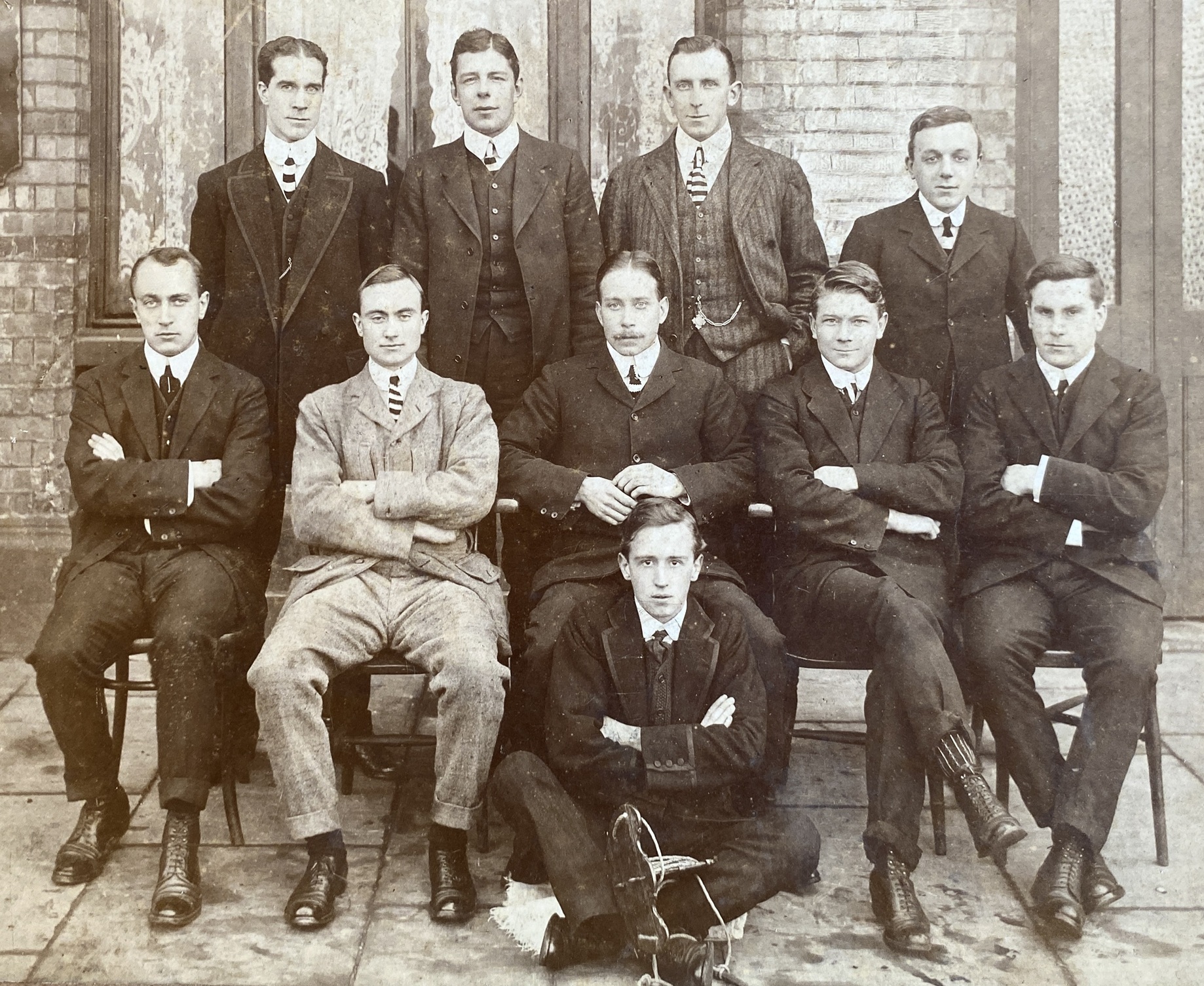
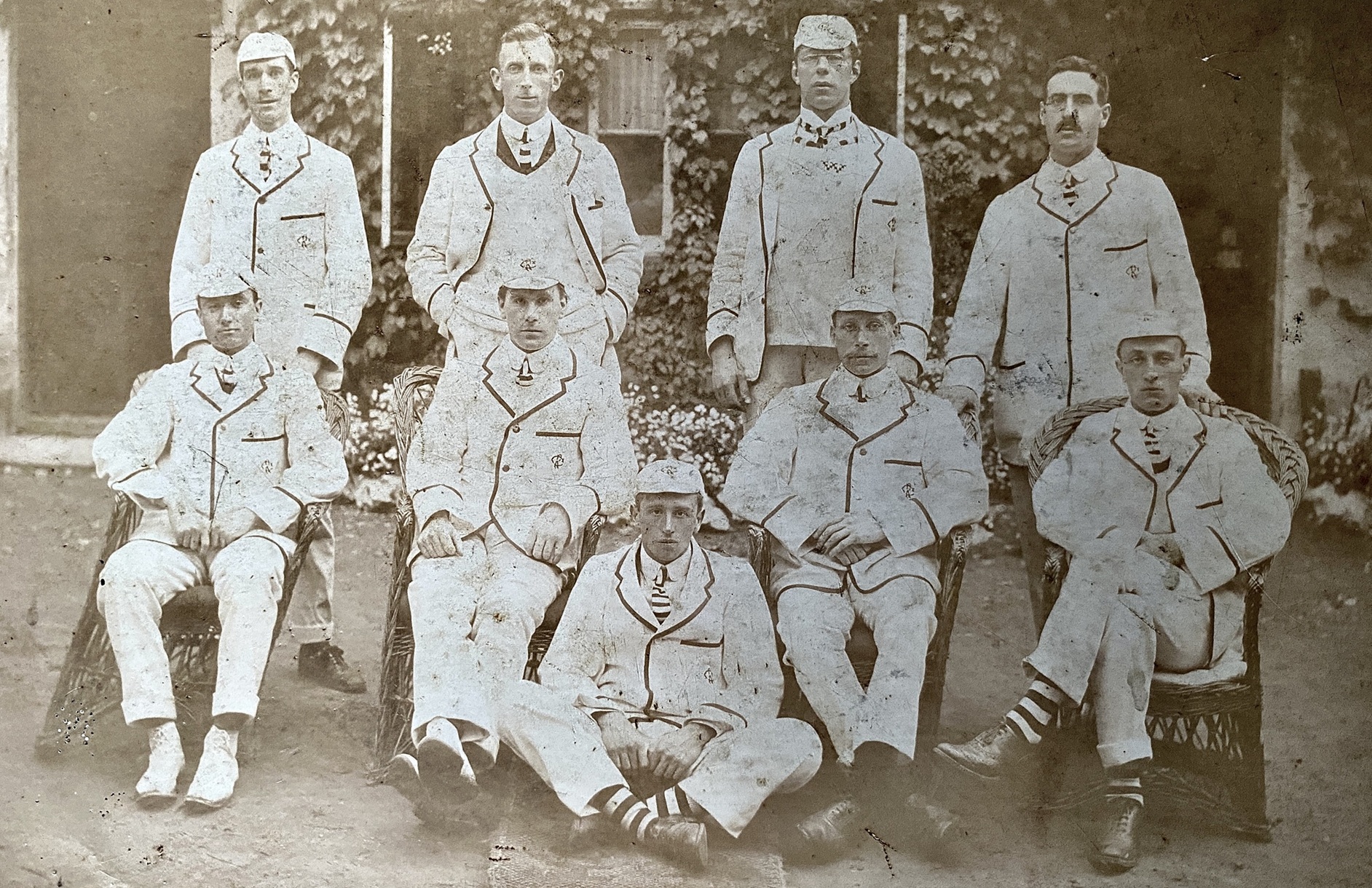
Siglow was last recorded rowing for Kensington in July 1912 and soon after that he emigrated to the United States. After he had spent at least seven years in England, it is tempting to speculate why he left.
Possibly, America was simply perceived as a land of greater opportunity for an ambitious immigrant than was Britain. Further, in March 1913 in New York City Siglow married Lilian Gertrude Seaby (1883-1965) from Wandsworth, London. Presumably they had met in London and agreed to start a new life together across the Atlantic. It is strange that they did not marry before they left, perhaps there is a story behind this – was it an elopement?
However, there may have been a darker reason for Robert and Lilian’s departure from Britain. For a long time, close ties between Britain and Germany had fostered a sense of acceptance and even admiration of immigrant Germans and they integrated smoothly, particularly the beer drinking, football playing Protestants. The British and Germans felt closer cultural links to each other than they did to their shared neighbours, the French.
By the early 1900s however, a positive public and political view of Germans in Britain began a slow transition and rising Anglo-German imperial, trade and naval rivalries meant the community would increasingly face suspicion in the years leading up to the outbreak of war in November 1914 – after which suspicion changed to hatred and hysteria.
In May 1915, following the sinking of the civilian liner, Lusitania, by a U-Boat, anti-German riots broke out across the country and crowds smashed windows, looted property, ransacked homes and businesses, and assaulted shopkeepers. The police were frequently overwhelmed or simply passive.
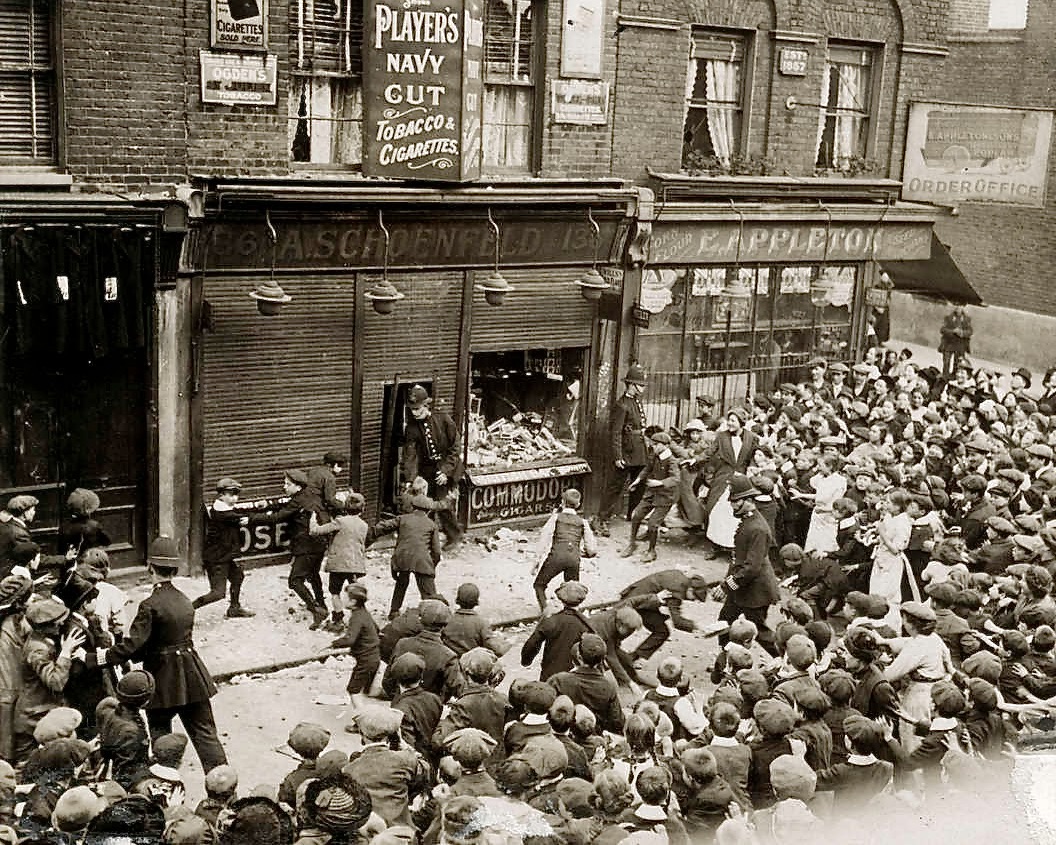
Two months after the attack on his shop, tobacconist Schoenfeld formally changed his name by deed poll to “Sheffield”. Unfortunately, as it turned out, he kept his given name of “Adolph”! By 1917, even the British Royal Family thought it politic to change their surname from the Teutonic “Saxe-Coburg and Gotha” to the invented but English sounding “Windsor.”
Although he probably did not know it at the time, Siglow’s move to the US was perfectly timed. Had he stayed in the UK he would have been interned during the 1914-18 War along with over 32,000 other male German nationals. Anti-German hatred lingered after the war and in 1920 for example, Kensington Rowing Club passed a rule barring membership to anyone of German, Austro-Hungarian or Turkish ancestry.
Had Siglow returned to Germany instead of immigrating to the US, he would have been conscripted into the Imperial Army during the 1914-18 War. If he had survived that, he would have had to live through the German hyperinflation and economic slump of the 1920s and, after 1933, the Nazi regime that led to war, aerial bombing and invasion.
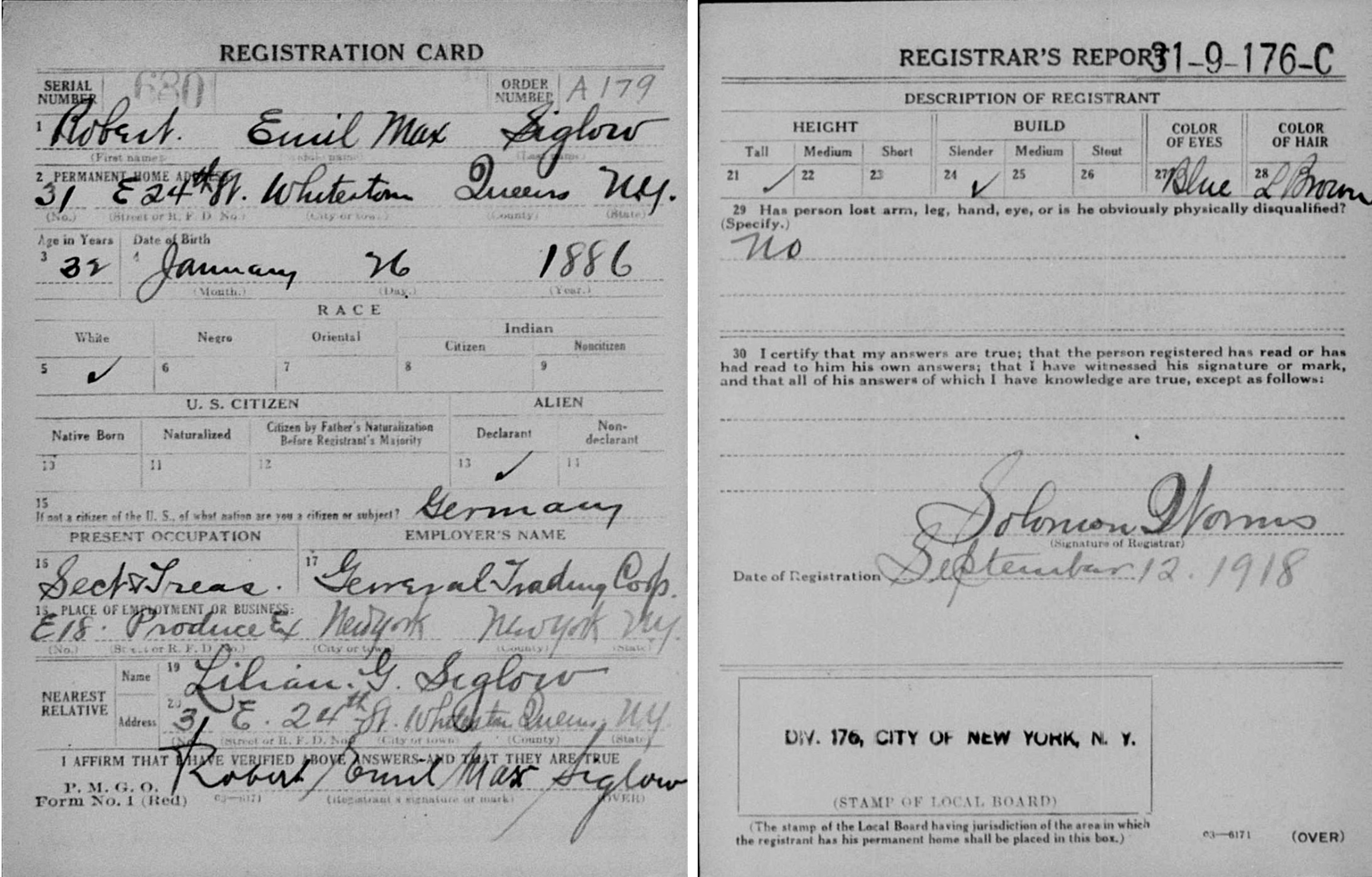
Robert and Lilian Siglow lived in the comfortable suburb of Whitestone, Queens, New York, for at least twenty-five years. In later years they moved to La Jolla, San Diego, California, a wealthy and affluent community. It seems that the migrants had realised the American Dream.
Robert and Lilian’s daughter, Dorothea Lillian Siglow (1914-1963), continued her parents’ immigrant ambitions when, under the name Diana Seaby, she had some success on Broadway and in Hollywood. She had started her career on the New York musical stage and in the early 1930s moved to California and appeared in comedy short films.
Diana’s career and personal life were closely intertwined with the prolific Hollywood director Alfred J. Goulding. Their marriage was highly publicised at the time due to their 29-year age gap, she was 20 and he was 49 when they married in Mexico in 1934. Goulding directed over 200 films during his lifetime, some for the legendary producers Hal Roach and Mack Sennett, and worked with talents such as Harold Lloyd, Fatty Arbuckle and Laurel and Hardy. The couple were divorced in 1941.
The pictures that I collected from the museum clearly meant so much to Robert that he made the effort of taking them to the US and then keeping them for the rest of his life. His son, John (1921-2018), must have understood this and, 33 years after his father’s death, he took the trouble to donate them to the RRM. I like to think that Robert Stiglow would have been very happy, if not a little surprised, that after 117 years his pictures would be returning to his old club by the Thames.


Intereresting to see ‘Berry’ Beresford, my grandfather, mentioned who of course started his rowing career as a Kensington R C member, before becoming a lifelong Thames member.