
26 June 2026
By Alexander K. Peyer
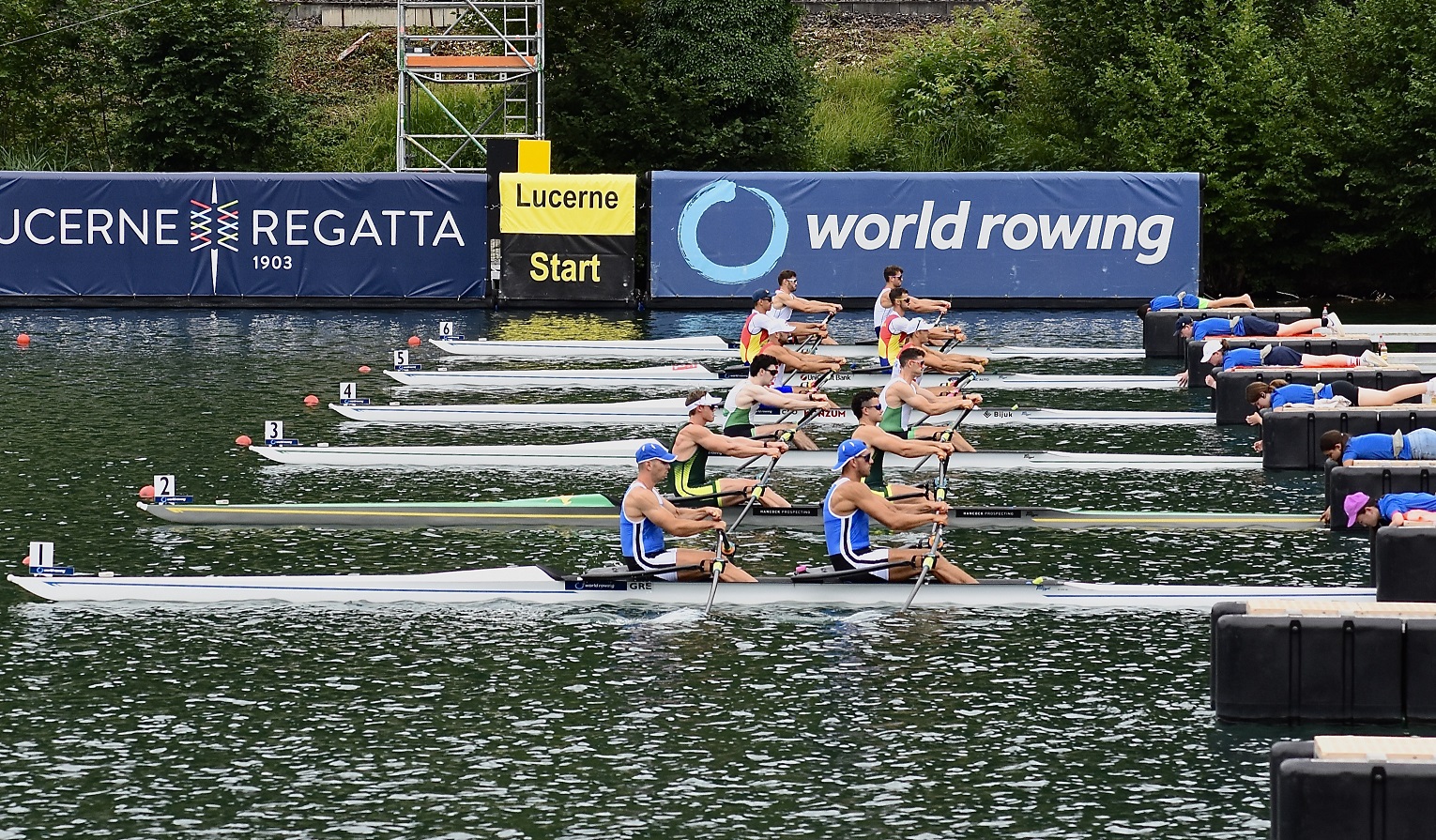
World Cup III in Lucerne, Switzerland, will begin today. Rotsee has for decades been one of the finest rowing venues in the world. In this article, Alexander K. Peyer writes about his father, Karl Peyer, who was a pioneer and the architect of Lake Rotsee.
The Rotsee surroundings are mostly used for local recreation. Some of the frontage is a protected area. There is no notable inflow and virtually no current. A walking pass leads around the lake and in the summer a small ferry can be used to cross the lake about halfway around.
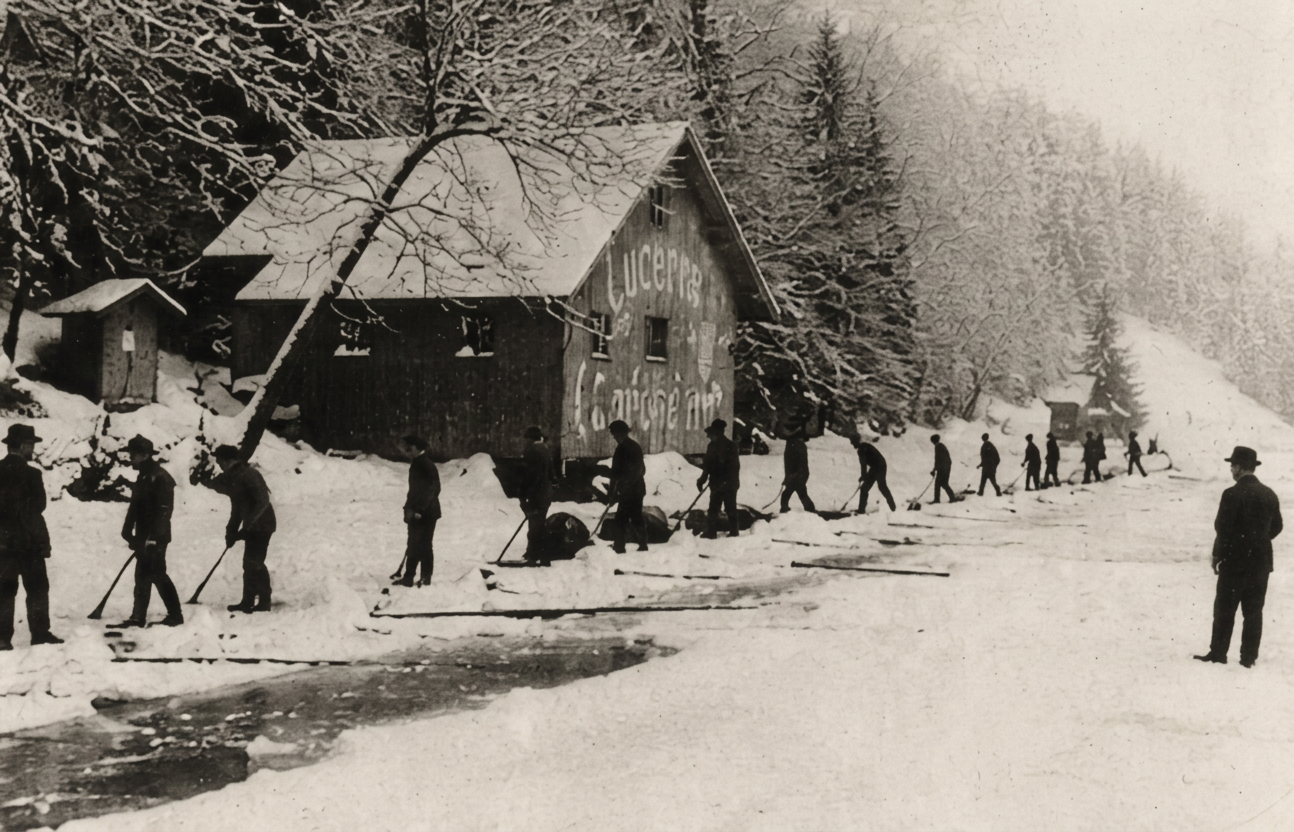
Since 1885, the Rotsee, which always used to freeze in winter, was used for ice cutting. The ice was used by hotels and the brewery which stored the ice in insulated cellars. This business ceased when refrigerators became more economical.
A small army ammunition depot next to the Rotsee exploded in 1916, resulting in five deaths and thousands of grenades ended up in the lake. Divers have since recovered grenades, but it is still assumed that there are more explosives in the lake.
Increasing housing in the area, with sewage discharge into the lake, resulted in an ecological decline. The sewage treatment plants built at the lake in 1922 and 1929 belonged to the first installations in Switzerland and a canal was built that diverted water from the river Reuss into the Rotsee.
Today the lake is used for fishing and at the eastern side for swimming. The close surrounding hills protect the lake from crosswinds. With a length of 2,400 metres (7,900 ft) and room for eight lanes, the Rotsee is an ideal rowing venue. German-speaking rowers refer to it as Göttersee – “Lake of the Gods” an expression coined by a Japanese rowing official in 1962.
In the late 1920s, the Rotsee was “discovered” by young members of the two Lucerne local rowing clubs, Seeclub and Reuss. One of the rowers was the late FISA President Rico Fioroni, who was born and raised in Lucerne.
As a junior of the RC Reuss Luzern, my father, Karl Peyer, was one of the first oarsmen to compete on the Rotsee. It soon turned out that the natural lake was a true gem for competitive rowing. However, it lacked the necessary infrastructure since the first constructions were limited to a small wooden shell house and a small wooden hut at the finish line.
The FISA Counsil, under the leadership of Mr. Fioroni, entrusted the Rotsee with the 1934 European Championships. Immediately afterwards the FISA Council decided that the Berlin Grünau course would be suitable to hold the Olympic rowing events in 1936.
Karl Peyer was born on October 31, 1914, in Lucerne. His home was within walking distance of the Rotsee. He joined the RC Reuss and started to row competitively as a junior. After graduation from Technicum Burgdorf, he continued rowing on the lake in his varsity eight. On his summer break in 1936, he went on a trip to Berlin to watch the Olympic rowing events from the grandstands.
Karl’s trip to Berlin (650 km/ 400 mls) by bicycle took him about a week. He spent ten days at the Berlin Grünau Boathouse watching all the races from the tribune in the midst of Nazi officers. In his diary he kept track of all the races, as well as the wind and weather conditions. He particularly mentioned the unfair lane conditions and the heavy head wind on the final day. He also focused on the winning American “Boys in the Boat” crew from Washington. He called their fantastic time of 6:00.8 in their semifinal, a fairytale time! He also noted: “In the finals all the German crews who had an outside lane steered immediately inward into the wind protected lanes!”
Karl not only watched the crews perform, but he keenly noted all the technical installations and materials used by the local organisers. He would use that knowledge later at the Rotsee.
Loaded with new ideas and experiences he remounted his bicycle and returned via Prague, Budapest and Vienna to Lucerne (some parts of his trip home he flew with a German Junkers 52 plane). Before he began to turn his “Rotsee Vision” into reality, he continued his competitive rowing in the Reuss Eight.
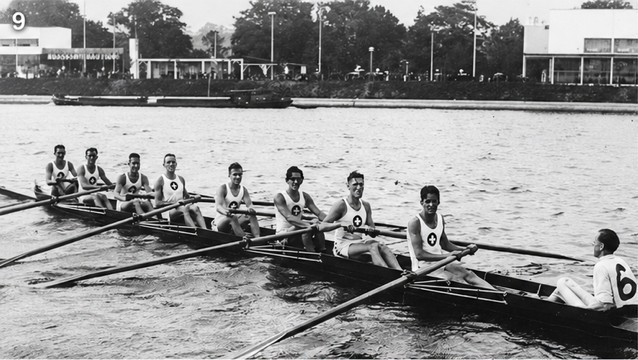
In 1938 he assembled a new young Reuss crew, who in 1939 won 11 races straight with the highlight of beating the European elite teams, including Germany’s Grossdeutsche Achter by a full length. This win, in August of 1939 in Lüttich, Belgium, qualified the team for the European Championships and the prequalification for the 1940 Olympic Games. However, three weeks later Adolf Hitler began his campaign and Karl changed into his uniform. His international rowing career was over and in 1941 he fully retired as a Swiss Champion in the eight.
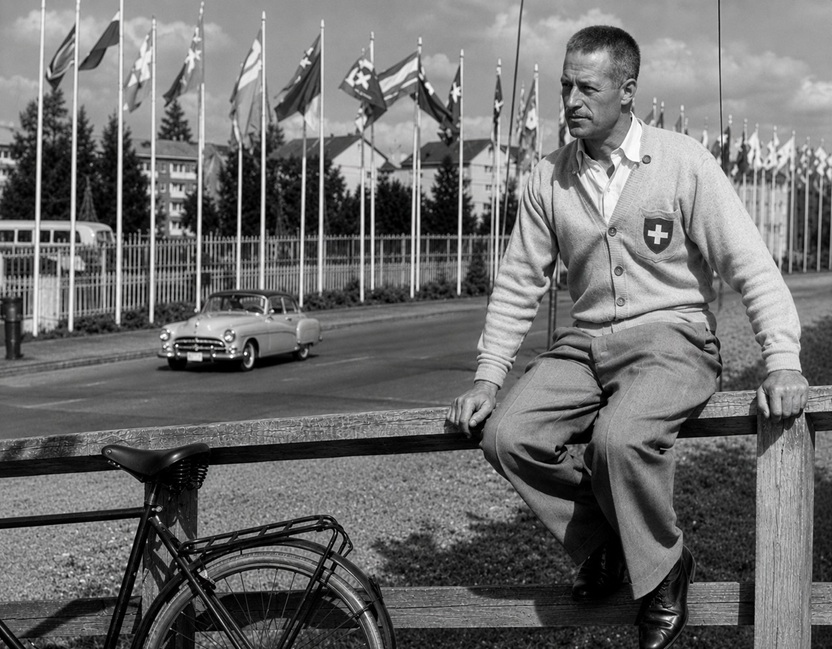
After the end of WW II, Karl became a coach, first for his home club the RC Reuss Luzern and from 1952 to 1958 for the Swiss National Team, which took a bronze and a silver medal in the 1952 Helsinki Olympic Games followed by two gold medals in the European Championships in 1954 and 1955.
His Melbourne 1956 Olympic Delegation was denied permission to race due to the Suez and Hungarian crisis, and other Swiss federations refused to compete against communist Russian athletes. Karl and one of his athletes, Thomas “Thomi” Keller, who later would become FISA President, wanted to participate. They both felt that they needed to “teach the Russians a lesson” on the water. They fought as hard as they could and finally succeeded. However, by then all accommodations had been fully booked.
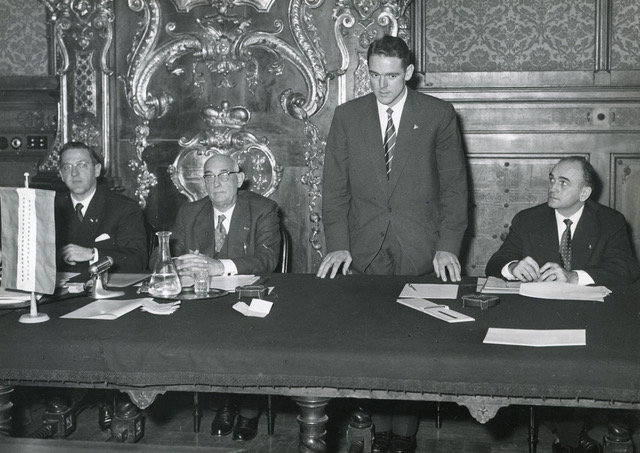
During this period, Karl and Thomi Keller developed a strong personal relationship. Karl ended his coaching career in 1958 and focused on his role as a FISA umpire and starter. He often returned to the Berlin Grünau to oversee the Olympic qualifications between East and West Germany. Karl was highly respected by both federations and became a close friend with Wilfried Hofmann, the President of the East German Rowing Federation.
As of 1943, Karl had been entrusted with all technical affairs regarding all Rotsee regattas. This job, all voluntary, included the Swiss Championships as well as the International Rotsee Regatta. Karl saw the first US Team from Cornell University win the eights at the international regatta in 1957. Knowing that FISA was planning a first World Championship in 1962, he put all his energy into turning the Rotsee into a potential candidate for the championships.
The Regatta Association was run by Dr. Hermann Heller, a well-known dynamic journalist and highly respected colonel of the Swiss armed forces. Dr. Heller knew marketing and had all the necessary political connections and raised the funds Karl needed to make his Rotsee Dream come true.
In 1958 Karl started with the first blueprints. The toughest part was the land fill at the finish area which required the skill to convince the environment agency, the Fishermen’s association and the bird watchers. The lake had to shrink, but Karl manged it miraculously. He designed a special catamaran so that the races could be broadcasted live on TV. When the nearby train tracks were renewed, he convinced the federal railway not to tear down a certain electric mast but rather cut it at half the length to make it a broadcasting tower.
By the end of 1961, the Rotsee had new adjustable floating platforms at the start. These could be adjusted to the length of each boat category – another Karl Peyer invention.
The new shell house with an office, changing rooms and a cafeteria was finished and a state-of-the-art finish tower in the shape of a tree, fit perfectly into the Rotsee’s natural environment.
The underwater wooden and metal installations were invisible. Numbered lane signs were hanging down from ropes spanning across the lake at every 250 meters helped the stroke to keep his boat in position.
In 1959 it was time to prepare and submit the bid for the first ever Rowing World Championships to be held in 1962. To achieve this, Karl and Heller convinced Rolf Schurter to join them as their skilled multilingual and charming Secretary General.
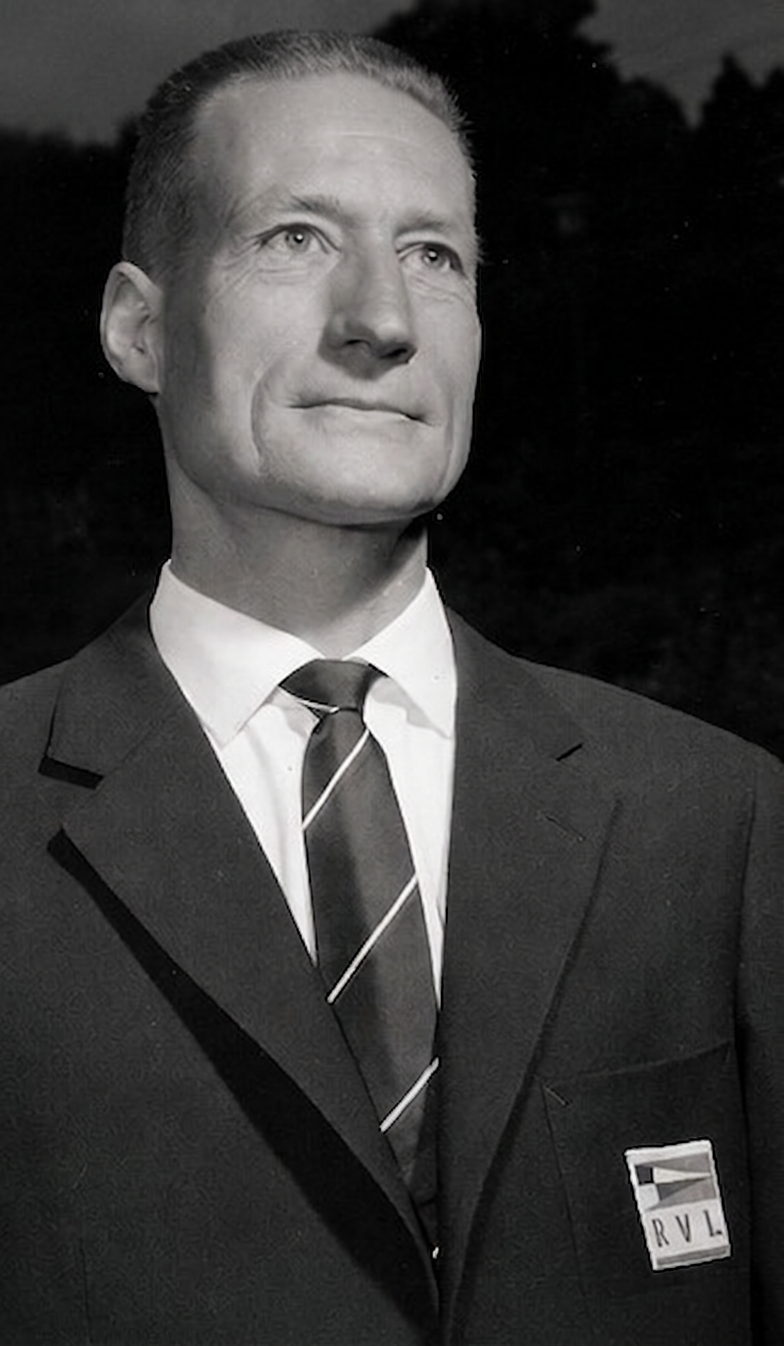
The three “rowing entrepreneurs” started their rally to sell the Rotsee to the public and to FISA delegates, who were led by Thomi Keller, who knew the Rotsee well. Keller fully trusted the entire local organizing committee. The city and the County of Lucerne as well as the Swiss Government all stood behind the Rotsee. Everybody in Switzerland wanted the championships and in 1960, during the Rome Olympics, Karl came home for lunch with the greatest news. “We got them!” I believe it was one of his happiest days.
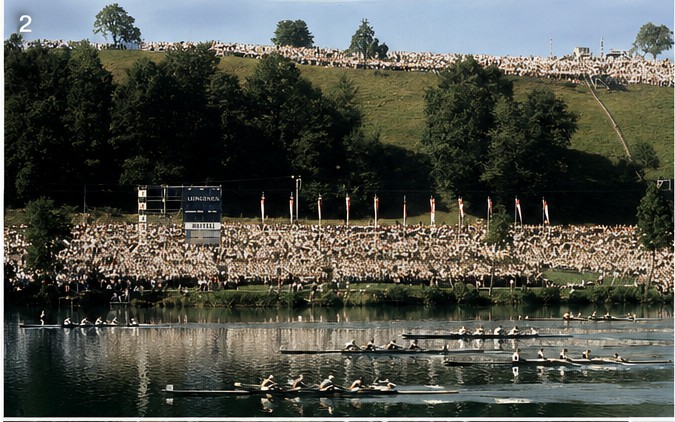
The 1962 inaugural World Rowing Championships wrote history as the first and best organized with the most spectators and an excellent financial result, 100,000 spectators and CHF 100,000 profit.
The Rotsee had made its name as the fairest rowing venue around the globe. Visitors flocked to Lucerne to see the Rotsee, and for a while the famous 14th-century wooden Kapellbrücke (Chapel Bridge) came second to the Rotsee. In July 1963, Richard Nixon, who at this time held no political position, visited the lake accompanied by his entire family and toured the lake in a motorboat with Karl. (The Richard Nixon Presidential Library has a “home movie” from the visit. Watch the boat trip, at 5:49-8:46, here.)
The village of Bled in Slovenia (then a part of Yugoslavia) sent a delegation, since they intended to bid for the 1966 World Championships. Karl advised them and Bled succeeded in getting the championships. Thereafter, Thomi Keller asked Karl to examine the blueprints of the Tokyo “Toda” Olympic rowing course.
In 1966 Keller offered Karl a six-month-stay in Mexico to supervise the construction of the Xochimilco rowing course. Karl declined due to his job but inspected the blueprints.
The year after he had to examine Munich Oberschleissheim. Karl was excited about the architecture but was sceptical regarding crosswinds.
In 1970 Karl was an umpire at St. Catherines in Canada and proposed the Rotsee for the 1974 World Championships. He and his team succeeded, but he knew there would be an expansion of the venue and another load of voluntary work!
Keller and Karl had become close friends over the course of those years. They had maintained that friendship with at least one outing per year. This was a 32K tour in an eight on the Rhine between Schaffhausen and Stein am Rhein. Their usual discussions: “How to improve and promote the sport of rowing and how to create fair conditions”. They hardly ever had any differences or arguments, except about lightweight rowing. Karl was opposed to it as he felt it would “water down” rowing and he feared for the athlete’s health.
Nevertheless, he put his energy into designing and building the second boat house for female crews, included a custodian apartment so that in the future the entire facilities, including bed & breakfast, could be rented out to sport campers and schools.
For the “in between race entertainment” Karl had the Swiss Army construct a “floating musical podium” which could be driven in front of the grandstand. The performing band thus was closer to and faced the audience. The podium had the looks of a large sausage, therefore, Karl named it “Bucher-Wurst”, after the acting Seeclub Luzern President Georges Bucher.
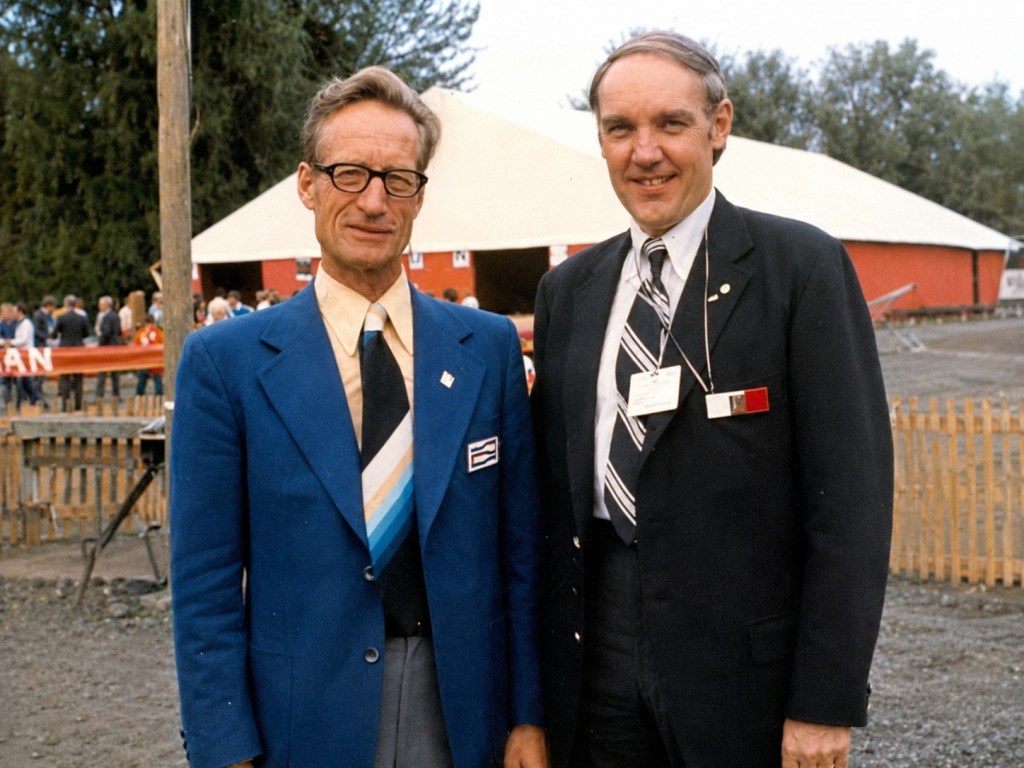
The 1974 World Championships were again a success. But despite more races and female athletes, there were fewer spectators.
At age 60, and after almost 30 years of pro bono work for his beloved lake, Karl retired from his “voluntary job” as the “Father of the Rotsee”, concentrating on his rowing and his first grandchildren. He maintained his almost daily walks around Rotsee.
When asked by his old friend Hermann Heller to help with overseeing the construction of a new Seeclub boathouse, Karl volunteered again, this earned him the third honorary membership and thus he was the only honorary member of all three local clubs in Lucerne.
In October of 1989 Karl turned 75 years old. Without his knowledge the RC Reuss organised a Dinner Ball in the Casino Lucerne. A collection for a new eight, a gift to Karl, was a huge success. Instead of the required $25,000, the collection amounted to $45,000. One hundred-fifty guests joined the celebration. Karls’s rowing buddies from 1939, Olympians from 1952, his entire family and guests from overseas saw Karl christening “his” new eight Liège 39 and handing it over to his Reuss club. Karl was given an oar which had all the donors’ names engraved as a memory.
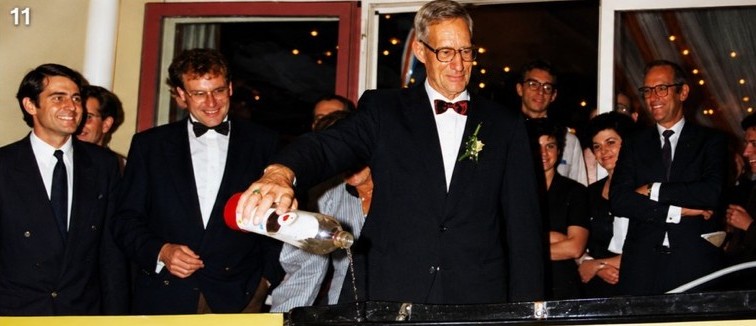
Speeches were given by Emil Ess, silver medallist in the coxed four from Helsinki, and ex-Swissair flight captain Fritz “Fries” Schreiber, a college buddy of Karl’s, who had landed his hijacked DC-8 safely in the Jordanian desert, Dawson Field, in 1970. Thomi Keller, who was supposed to have been the key speaker, had sadly passed away two months prior and was dearly missed.
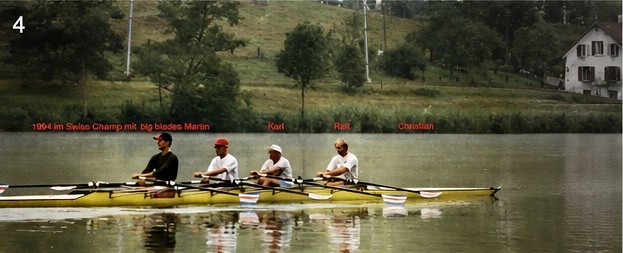
At age 80 Karl rowed the last time on his beloved “World Champ Lake Rotsee” in a brand new Empacher quad called Swiss Champ. This boat was donated by Carl Elsener, owner of the famous Swiss Knife Company Victorinox. The donation was partly in connection with a miracle. On August 25, 1946, Karl had saved the life of a pilot by using his Victorinox Swiss Army knife. The unexperienced and reckless pilot had crashed into Lake Constance, close to where Karl’s crew was rowing. The crew was quick to get to the plane before it sank. Karl donated the knife to the Victorinox Museum.
Karl retired at age 85 from rowing and skiing. He was still able to attend the 2001 World Championships at the Rotsee. In March of 2002, at age 88, he came down with pneumonia and rowed into his new World.
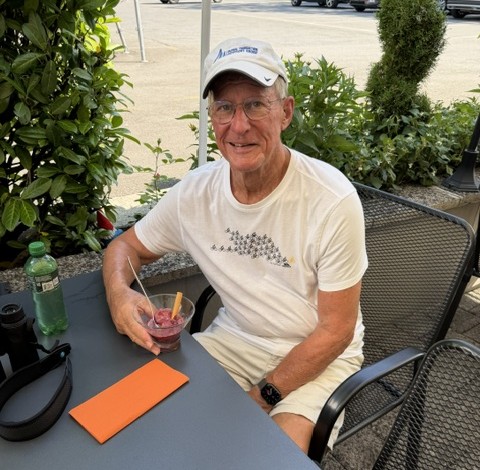


What a wonderful tribute to Karl Peyer — a man of the old school when FISA was just a sense of fairness of among great sportsmen. My Kent School coach Hart Perry was in his own day that type of gentleman–giving to rowing the same sort of unstinted devotion.
We owe these trailblazers alot.
Great the see the picture of Karl with John Garnjost, whom I last saw at the 1973 Adams Cup in Philadelphia when he was the referee for the Penn-Navy-Harvard races in Philadelphia.
Ed Woodhouse
thank you so much for your kind words. Indeed old school, humble!
Thank you,did you ever row/compete on the Rotsee?
What a great article! I thought I knew quite a bit about the history of how the Rotsee came into being as the premier race course for rowing. Little did I know, though, the amount of effort it took by a few fully dedicated volunteers from my home town to achieve such a lofty goal. I am proud to see that the author included the name of my father as one of the main drivers of that process.
This article does a great job portraying the kind of leadership that my grandfather, Karl Peyer, and his rowing colleagues embodied. Karl was never one to chase recognition. Life taught him that personal achievements are fleeting, and from watching him I learned that when circumstances change, you can take on a different role while remaining true to your purpose. Whether rowing, coaching, or building infrastructure, his energy was always directed toward something beyond himself. It came as no surprise to many of us when, after his death, the surviving members of the crew that qualified for the 1939 European Championships told my grandmother that Karl was “die Seele vom Achter”… the soul of their eight.
Thanks Sharon, the soul, so true.
Thanks for sharing this article about Grosspapi. It’s incredible how much energy and time he devoted to the sport. I spent many mornings taking walks with him around the Rotsee, crossing the lake with the little ferry, and stopping by the Seehuesli for some ice cream. I wish I had asked him more questions. I knew about some of these stories (from you and him) but when you are that young, it’s hard to put things into context. This article certainly does that. For all the things he accomplished, he was one of the most humble and understated people I’ve ever met, which is probably his most admirable quality.
What a fantastic and thorough depiction of a remarkable man, Karl Peyer. I had no idea he was such a critical cog behind making the Rotsee a premier lake for rowing. I first visited Lucerne from the US when I was in High School. It didn’t take long for Alex and Vati to get me in a boat on the Rotsee. Having never rowed before, Vati demonstrated an incredible amount of patience while teaching me the basics. I had a great time and enjoyed it so much that I went on to row in college at St. John’s University. We love and miss you Mutti and Vati!
When my brother Adolf and I first rowed in an inside rowing tank, Karl was our coach together with Walter Näpflin, Karl’s buddy and stroke from 1939. It was the first rowing tank in Switzerland built in inside the school house “Hubelmatt”. Karl was the architect of the school house. In 1962 my brother and I took part in the pair and we won the bronze medal. While my brother has passed 2 years ago I can at age 90 gratefully look back to those days on the flat Rotsee waters. Karl’s in the world of rowing need to be preserved
Very interesting story! A man with a vision and dedication made rowing at world top level possible.The Rotsee in Lucerne became famous for it and so did the City of Lucerne. Well don!
I knew Karl as one of the most distinguished rowers of the Reuss Rowing Club from the generation before my own. As a member of the Reuss eight, he even helped defeat what was then regarded as the best German eight in the world.
As an architect with the Luzerner Kantonalbank, Karl Peyer played a leading role in the planning and construction of the facilities at the Rotsee – from the regatta course and boathouse to the landing stages. His approach was unmistakable: everything unnecessary was left out, yet nothing essential was ever missing.
Substance rather than show.
His word meant something.
Better to deliver than to talk.
Thank you Alex for such an illuminating article on your father Karl. It is pleasing to read about a person who had a vision and then with skill and determination set about achieving it, and without fanfare – an inspiration for us all. The only good thing to come out of the 1956 Swiss boycott was that Keller and subsequent rowing administrators fought to keep politicians out of our sport. Sadly this has not always successful.
I, too, have many fond memories of Karl Peyer. Even though I wasn’t a very experienced rower yet, he let me row with him in the quadruple scull – often early on Sunday mornings. And the “Schaffhausen Tour,” an event he initiated, was an annual highlight for me. Karl had a long stroke, a very smooth rhythm, and even at the age of 80 he still sat bolt upright in the boat. He remains a role model for me to this day.
If anyone deserves such a glowing tribute as this, it’s my father-in-law, Karl Peyer. I spent many enjoyable hours walking with him in his beloved city, Luzern, and learned so much from him about its history and culture, including that of the famous Rotsee. Family outings at the Rotsee and the many regattas we attended there will always be highlighted in my memory. Karl and Lisel Peyer were the most generous and loving parents-in-law and I am forever indebted to them for welcoming me so heartily into their family and the country and culture of Switzerland that they loved so much.
Kathy Peyer
The Rotsee would not be what it is today without Kari Peyer.
Kari Peyer played a decisive role in developing the Rotsee into the world-renowned training and racing course we know today. As a competition venue, it is highly valued by rowers from around the world—especially for its exceptionally fair racing conditions. And, of course, its magnificent natural setting must also be mentioned.
I myself had the privilege of training on the Rotsee for more than thirty years, and I never took that privilege for granted.
As a token of gratitude for everything Kari had done for the Rotsee, the crew and I invited him to join us for one more outing in a racing quadruple scull. Seated directly behind Kari was his longtime friend and fellow Rotsee pioneer, Rolf Schurter. Kari was overjoyed to be back in a racing boat and to work up a sweat once again on “his” Rotsee.
Together with their colleagues, Kari Peyer and Rolf Schurter were part of the remarkable team that set the course for the Rotsee’s future at an early stage—and everyone continues to benefit from their work today.
The rowers know what they accomplished, and they deeply appreciate it.
Thank you, Kari Peyer—and thank you, Rolf Schurter!
Christian Steinbach
Former rowing coach, RC Reuss Lucerne
I experienced a beautiful childhood in the house of Karl and Liesel Peyer. They were very tolerant and friendly house owners. We were allowed to occupy the garden, play and romp around. There was never a bad word. The Rotsee and rowing were very present at the Friedberghalde, also with the Stutz family. We proudly presented our free passes, etc. More and more memories are emerging. Marianne Zaccaria-Stutz
Karl and all the luminaries of the time made possible what makes the Rotsee special. Well, the last of the Mohicans are slowly dying out, and that’s why you realized the time to capture possible voices at that time! I am happy to pass on memories of this very impressive time at RC Reuss with its real personalities, because it was a team of doers who also shaped me. I will always remember your father as the upright and clear decision-making man.
I remember the rowing oar hanging in the stairwell, covered with countless names engraved into the wood. Above it was a photograph of the eight, with Karl Peyer among the crew.
Every time I visited my grandparents, I would stop and admire it. One day, Karl Peyer noticed me standing there, staring at the oar and the photograph. I like to think that he was secretly pleased by my curiosity. That moment was probably the beginning of my fascination with the history of the Rotsee and everything that happened there.
Years later, I found myself being thrown into the Rotsee as a coxswain after numerous victories. Apparently, winning wasn’t enough – you also had to prove that you could swim afterwards!
With my southern Italian roots, I have to say that I am particularly grateful that the Rotsee is not only a perfect rowing lake, but that its average water temperature is also slightly higher than that of Lake Lucerne. In other words: being thrown into the water was still a shock… but at least it was a Mediterranean-style shock.
Looking back, it feels almost as if that old oar in the stairwell was quietly waiting for me to become part of the Rotsee story myself.
Kari Peyer Human – Educator – Role Model – Coach
“Mr. Peyer” – helped us youngsters and shaped us into personalities, that was more rewarding than victories. With his calm, bass voice, he gave us clear instructions and advice. We didn’t hear a bad word from Kari Peyer, no scolding. He understood young boys. Karl was like a father to us, he gave us a school of life. Later, I often rowed in the same rowing boat with him. Sitting in the same boat with the former coach was something special. Karl worked as an architect at the Luzerner Kantonalbank, where I found out that he was highly valued as an employe and much appreciated as a co-worker.
Kurt Steinmeier, Member RC Reuss Lucerne
A wonderful article about my grandfather, Karl Peyer, and a form of heroism we perhaps don’t talk about enough.
Heroism isn’t necessarily fame or a single extraordinary act. Often, it is the voluntary acceptance of responsibility — developing the competence and character to carry something that matters, serving something larger than yourself, and leaving behind something of value for generations you may never meet.
Karl’s life captures that beautifully
Thanks!
What a wonderful article in honour of the ‘Father of the Rotsee’. Karl Peyer. I joined the RC Reuss in 1961 and met Karl and his sons, who gave me a warm welcome. I have enjoyed a lovely friendship with Alex ever since and I am sure he will treat us to more interesting rowing stories in writing in future.
What you and your father have done for rowing and the RCR deserves my highest recognition and I take my hat off to you. Even though we haven’t seen each other too much in recent years rowing and you, Alex, will always be something I look back on with pride and gratitude. I never want to miss this time and wish you much success with your book and hopefully see you soon again on the water or on land
yours Eisi
As a junior rower at RC Reuss Luzern, I trained and raced on the Rotsee — a course shaped by the vision and dedication of Karl Peyer, one of the legendary oarsmen of the famous Reuss Eight of 1939, together with Erwin (Kick) Etter. His work created the environment in which generations of athletes, including myself, could grow. During my vocational training, I was supported by Alex Peyer, Karl’s son, which allowed me to combine work and competitive rowing and ultimately win seven Swiss junior titles. A moment I will never forget is being honoured at the Rotsee by Peter Eckert, CEO Zürich Switzerland, Karl Peyer, Erwin (Kick) Etter. It was a highlight of my junior years and a reminder of how Karl Peyer’s legacy continued to inspire long after he built the course. The Rotsee remains a place where his vision lives on.