
30 October 2026
By Marta Acosta*
You wake and dress long before
the sun peers over the hills
and the air is crisp but still gentle.
Summer has ended elsewhere,
but not yet at this edge
of the world. Our edge.
Gripping your gear bag and towel,
you wonder how you came to be
standing here on this dark shore.
Nearby, raucous mudlarks
disrupt the serenity,
while fishermen stand sentinel,
their rods like spears.
Stalwart tugboats, lowing warnings,
pull and nudge lumbering barges.
The murk and sludge exude an algaeic,
primordial, rotting, yet fecund richness
that takes you back to your childhood.
Or perhaps another’s childhood.
It’s impossible to say with a memory
as amorphous and dreamlike as the marine layer.
The black water laps and splashes a language
that is almost corporeal: salinous, hissing,
lashing, then luxurious and lax.
Your mouth cannot form its words, but—
if asked while you slept—you could transcribe
its hieroglyphics.
Your companions’ greetings overlap in excitement as
their flat shoes crunch on damp gravel to the boathouse.
You grow more somber as you join the practiced choreography—
drawing the shell from its metal embrace, dancing under it,
and then raising it like a ceremonial litter as you move forward.
The coxswain’s voice is as resonant and fervent
as the first call to worship,
and the incandescent full moon is so close
it almost falls into the rippled surface of the estuary.
If your boat is a litter,
then you have become the offering it carries.
Your straining legs and the precise tilt of your wrists,
the sweat beading on your brow and sliding down your back,
and your devotion to symmetry and synchronicity,
that is your tribute.
As you pass under the first bridge that marks your journey,
you’re still aware of the mechanical sounds all around—
of trains and trucks, cars and airplanes—
and note the anchored sailboats’ meditative bobbing.
You navigate around half-sunken ships, abandoned by pirates.
They list toward monumental cranes and cargo containers
(bathed in a sulfuric glow of sodium lamps),
as if to say, “Memento mori.”
As you slip under the second bridge
the world you travelled from
fades and recedes.
The breathing you hear may be your own—
or it may be the wind, caught in your seashell ears
carrying the roar of the ocean beyond.
You feel the silvery, shivery spray on your hot skin.
And there is the moment, when your teammates’
oars move as one, and your hearts beat as one,
and you glide swiftly through swells,
and each stroke forward washes away
every petty concern, the regrets and remonstrances,
the duties and the debts…
And now the sun’s first rays shy over the hills
reaching west to the Pacific. Always reaching,
as gulls begin their ascending cries
and whirl like dervishes in the gloaming sky,
and your every particle strives to find that perfect place
where force and precision exist in harmony.
Then, suddenly, you are beyond the third bridge,
breathless, spent.
You bow your head and sit in silence,
wanting to hold onto this moment.
Because the earth is water
and you are water,
and this ritual is an ancient one,
and you—although ephemeral—
have touched something
so elemental and pure and beautiful
that every time,
you are astonished,
and every time,
you could weep.
(2026)
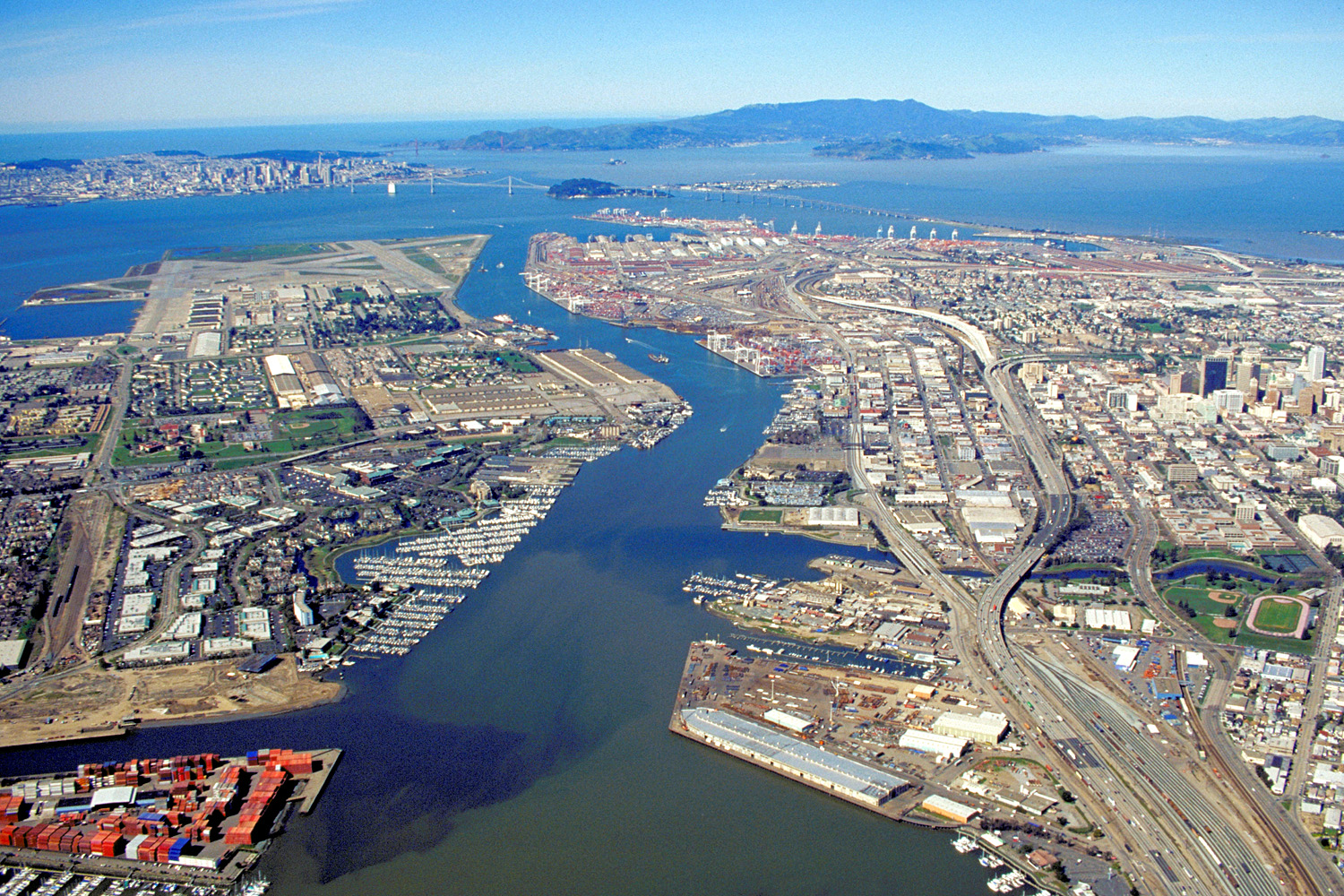
*Marta Acosta is a novelist and poet whose work ranges from mysteries to comedies. A Stanford graduate, she was a regular contributor to the San Francisco Chronicle and been a commentator for NPR. She has lived along the San Francisco Bay shoreline all her life and wrote this poem in honor of a dear friend and the many rowers who venture onto the Oakland Estuary before dawn.

