20 October 2026
By Gennadii Ochkalenko
Ukrainian coach and historian Gennadii Ochkalenko on Peter Mallory’s Magnum Opus The Sport of Rowing (TSOR): The Slag Block, Hundreds of Contributors, and the Battle for Ukrainian Identity.
The Global Breakthrough (2001–2024)
I bought my first book on rowing in 1968, just a few days after joining the junior sports school. I have always tried to learn as much as possible about the subject I am involved in.
In the USSR, we were completely cut off from information about Western rowing. Once a year, we would receive a tiny, half-page summary about the state of rowing abroad. We had absolutely no access to Western sports literature—only materials from the Eastern European bloc. I finally gained that opportunity in 2001, when I began traveling and coaching internationally. Over the next two decades, my career took me across the globe—coaching in Singapore, China, Ireland, Taiwan, Slovakia, and the UK. This international experience completely changed my perspective and allowed me to study the global heritage of our sport firsthand.
Windsor 2011: Meeting the Slag Block
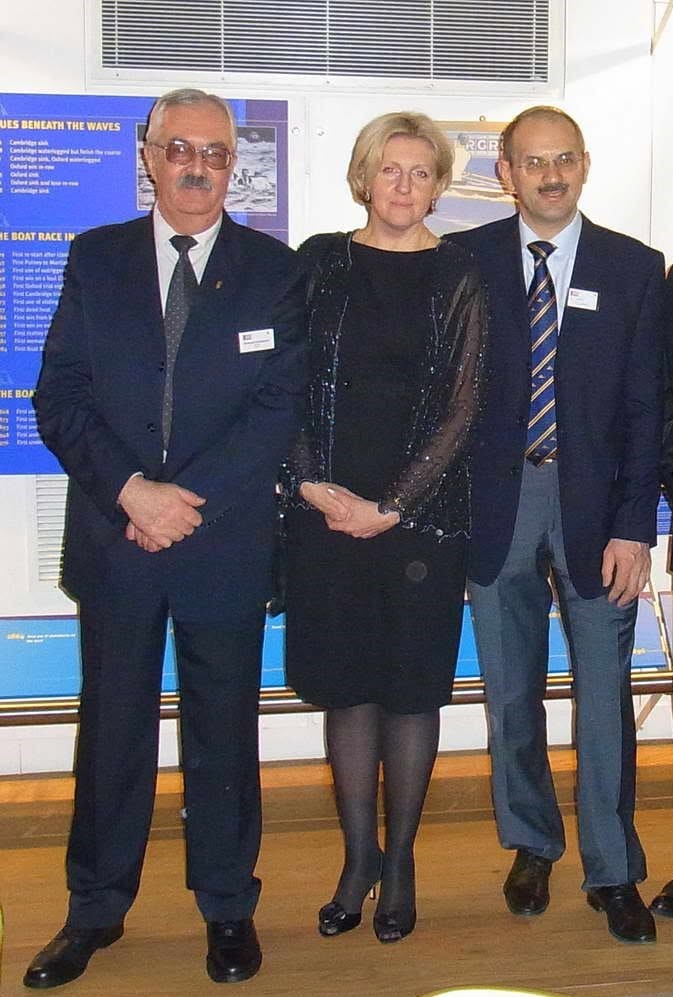
In 2011, I received a personal invitation from Sir David Tanner, the legendary Performance Director of British Rowing, to attend the World Rowing Coaches Conference in Windsor. Facing significant bureaucratic hurdles back home, I secured my visa and funded the entire trip myself, using the last of my savings from my time as coach at Durham University.
My presence there deeply baffled sports functionaries in Ukraine, who viewed it as a defiance of the system. But in Windsor, the reception was grand—a 5-star hotel and impeccable organization sponsored largely by the British hosts ahead of the 2012 London Olympics. I was the only Ukrainian coach there. When colleagues asked why others from my country never attended, I bitterly joked that our coaches already “knew everything,” a reflection of the unfortunate complacency I often witnessed at home.
Right upon my arrival in the hotel lobby, I crossed paths with a short, modestly dressed man carrying a massive canvas bag that literally made him lean to one side. We looked at each other’s badges and simultaneously exclaimed: “I know you!” It was Peter Mallory.
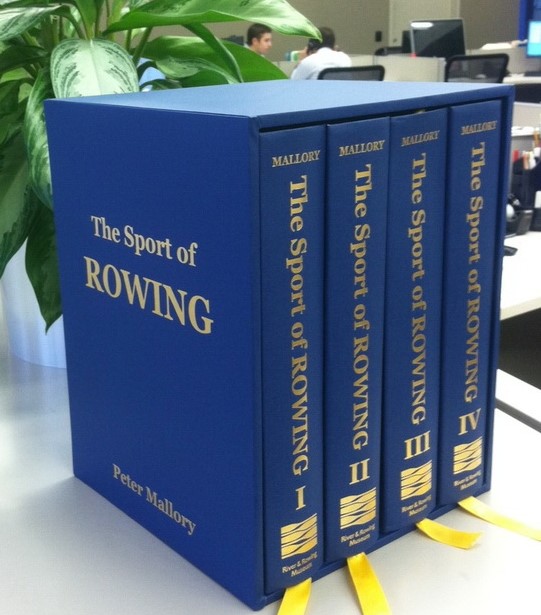
Inside his heavy bag was a printed draft of his upcoming monumental work, The Sport of Rowing—a single colossal volume the size of a slag block, which he brought to show the FISA leadership. Peter was also distributing digital copies of the book on discs to the participants, and I was fortunate to receive one.
The Shock: Erasing the Map
When I finally opened the files back home, I didn’t know whether to laugh or be outraged. While the American sections were masterfully researched, the chapters dedicated to Eastern European rowing were a total mess. Peter had never seen these rowers in person and wrote the sections based on hearsay, memories of Western emigrants, and brief notes from Moscow sports officials.
As a result, the rich history of our rowing was completely distorted. Worse, the few Ukrainian athletes mentioned were automatically turned into “Muscovites.” There was absolutely no mention of a distinct Ukrainian rowing school.
I immediately wrote a blunt letter to Peter: “You cannot publish this in its current form. The book will reach Europe, people will read it, and it will cause an international scandal!”
Peter’s response was uniquely American and direct: “You don’t agree? Then write it yourself!”
And so, I sat down to write.
The Brain Trust and Hundreds of Contributors
At the time, I was awaiting my return to Durham University and had open availability. People later asked me which state archives I had visited. I didn’t need to visit any. I was already completely immersed in the material. If I needed to double-check a date, I turned to the walls of my own room, where 50 years of collecting had built a library spanning two massive walls. (Today, due to the war, my wife and I had to downsize to a small studio, and that grand library is packed in boxes against the walls—but back then, it was my main archive.)
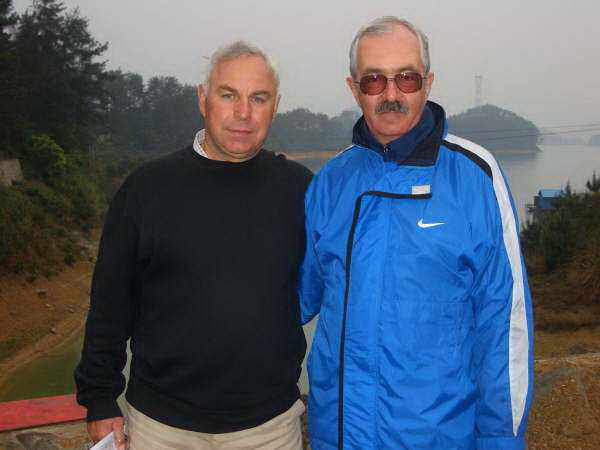
Peter Mallory’s project was monumental, incorporating insights from hundreds of authors and contributors worldwide. I became part of a strong working group. My close friend and prominent biomechanist, Valery Kleshnev, provided invaluable analytical data on the rowing techniques of that era, while I focused entirely on the historical narrative. We also ensured the inclusion of our mutual friend, Igor Grinko—a legendary coach from Kyiv who went on to lead national teams in the USSR, the United States, and China, producing world champions across three continents. The American rowing community respected him immensely.
Reclaiming Our Icons
Through intense daily debates—sometimes exchanging 10 to 12 messages a day—I fought for the historical truth across four major chapters:
The Anatomy of Soviet Sports: I deciphered the complex web of Soviet sports societies, rankings, and state systems, which looked like total gibberish to Westerners.
The Single Scullers: I helped reconstruct the biographies of Vyacheslav Ivanov and Yuri Tyukalov. Peter had sent a questionnaire for Ivanov, which I translated, but the great sculler ignored it, wrongfully assuming I was trying to profit off his name. I wrote his section myself from memory.
The Pioneers: I documented the story of the Krylya Sovetov men’s eight and their visionary coaches, Aleksandr Shwedov and Alexey Shebuev, who were the first to analyze rowing technique through mathematical models, decades ahead of their time. There is also their successful pupil Igor Demyanov, whose life—both as a rower and as a coach—was ruthlessly ruined by the system.
The 1976 Women’s Eight: In Peter’s draft, the story of the first Olympic women’s coxed eight—the Ukrainian crew that beat the Americans for the silver medal—was pure chaos. Names were scrambled, and their coach, German Ushakov, was completely erased. I restored the entire lineage. Ironically, years later, some of these women working in the ministry of sports would dismiss me as “incompetent,” completely unaware that it was my pen that secured their place in global rowing history.
Video of women’s eights final:
My greatest personal victory, however, was saving the legacy of my mentor, Igor Emchuk. A pioneer of Ukrainian rowing, a two-time Olympic medalist (1952, 1956), European and Henley champion with his teammate Georgy Zhilin, and a close friend of FISA President Thomas Keller. In Peter’s draft, this legendary Ukrainian icon had been labeled a “Muscovite.” I practically fought tooth and nail to reclaim his true nationality and historical status.
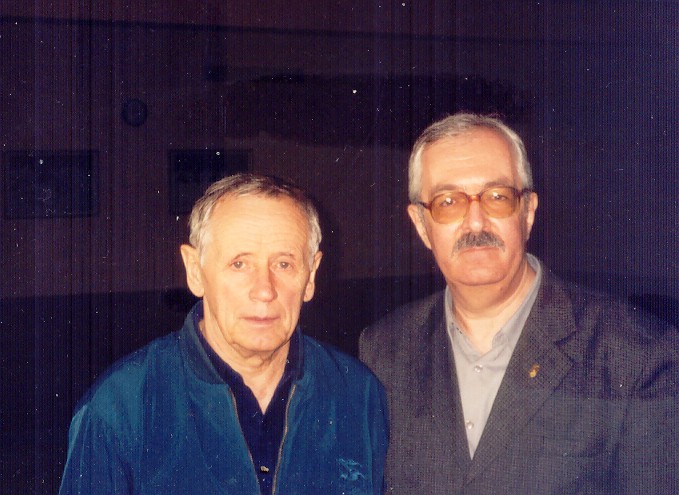
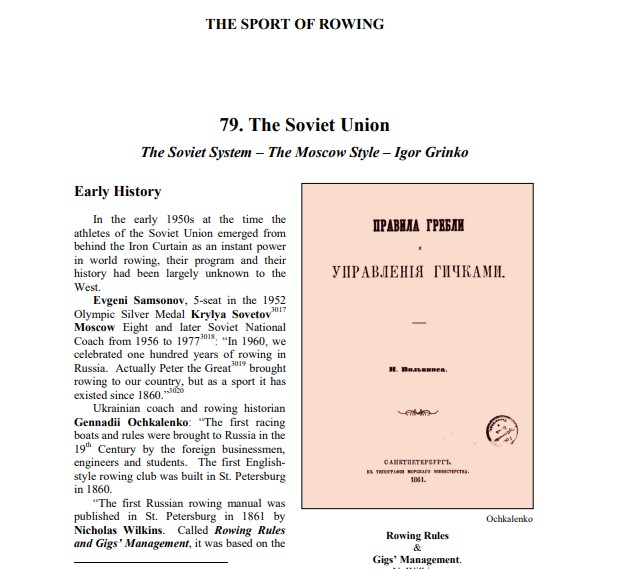
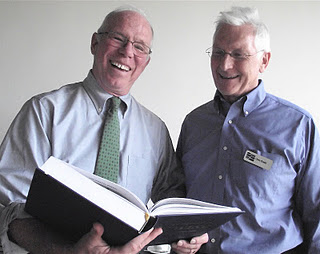
In the end, Peter officially included a note of gratitude to Valery Kleshnev and me at the closing of the Soviet system chapter, stating that these pages could not have existed without our insights.
The Airborne Delivery
When the four-volume epic was printed in Los Angeles, Peter offered me my co-author copy for free. But the final act of this odyssey belonged to Ukrainian bureaucracy.
I received a call from the customs office at Boryspil Airport: “Your package from America has arrived. Customs duties, broker fees, and storage will cost you $700.” I was stunned and immediately notified Peter, who was just boarding a flight in the US but promised to intervene.
A few days later, a courier service called out of nowhere, demanding to deliver the massive, heavy cardboard crate to my office immediately under strict orders. As my colleagues and company director gathered around the box in awe, I proudly told them: “This is a gift from America. This is what your employee does in his spare time.”
I later found out how the miracle happened. Peter Mallory had bypassed the local red tape entirely by contacting members of the Ukrainian diaspora in the US Congress. They launched an official congressional inquiry directly to the Ministry of Foreign Affairs of Ukraine. The MFA, in turn, gave the Boryspil customs office such a fierce reprimand that they rushed to release the book instantly, desperate to clear the diplomatic headache.
Through actual international chases and standoffs, I received my copy of The Sport of Rowing. A book where Ukrainian rowers remained, forever, Ukrainian.
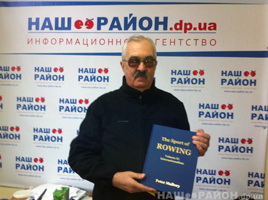
The day I finally held the complete multi-volume edition in my hands was a moment of immense triumph for me. This massive, arduous labor which had demanded so many sleepless nights, archival searches, and personal energy had finally taken physical form. As I turned the pages, I realized: we had accomplished something that had seemed nearly impossible.
Following the book’s release, all the major rowing nations held official presentations for this monumental publication. Peter received a deluge of congratulations, admiration, and gratitude from all over the world for the colossal work he had done. Naturally, during one of our conversations, he asked me: “And how did the book presentation go in Ukraine?”
What could I possibly answer him?
Time and again, I had reached out to the Ukrainian Rowing Federation, proposing that we organize an introduction to this work for athletes and coaches. There was absolutely no reaction. In the end, I organized and hosted the presentation myself at the newsroom of my home city, where my friends worked. Since our city of Dnipropetrovsk was the only place in Ukraine with a purpose-built artificial rowing canal, all major national competitions (and, in earlier times, many all-Union regattas) were held here.
It was during one of these all-Ukrainian events—back when I was still invited to collaborate and worked as a commentator for many years, always striving not just to announce the participants but also to inform the spectators about global rowing news—that I approached the federation’s leadership once more. I suggested showing the book to the people.
“Fine”, they waved me off patronizingly.
I transported the heavy load to the finish line at my own expense. The vice president of the federation lazily flipped through one of the volumes and muttered: “If only we could actually understand what’s written here! Well, maybe we’ll show it during the meeting at the break…” Needless to say, they showed nothing.
I believe the roots of this blind rejection ran a bit deeper. Sometime before these events, Rachel Quarrell, of Oxford University, who ran the well-known British resource, RowingVoice, asked me to send her short updates, lamenting that she received no news from the post-Soviet space. I published a brief note on her site: “Competitions were held in Dnipropetrovsk, serving as qualifiers for the Ukrainian national team for upcoming international regattas. Some crews showed decent results.”
That was it! It would seem, where on earth was the crime in that? Yet, what a monumental scandal erupted once the leadership of the federation and the national team found out about it! “Who gave you permission?! What if they find out over there?! What if they start asking us questions?! You had no right!” echoed from all sides.
At that point, I cut them off sharply: “That is it. I am done having anything to do with you.” This total, universal dread of any information leaking out (“what if something happens…”) paralyzed them completely.
When Peter later wondered in disbelief why the project had been virtually ignored at the official level in Ukraine, I tried to break down our realities for him point by point:
- The Lack of an Official “Resolution”: I had not obtained official clearance from the higher Ukrainian sports and rowing authorities to participate in his project. Peter genuinely could not comprehend this: “What permission did you need? This was a personal agreement between us, your free decision as a researcher!” Ah, Peter, you simply did not know our realities.
- The Vanity Factor: Not a single sports or rowing official of those years was mentioned in the book. Peter threw his hands up again: “But we were writing history, not a report on the present day!” However, the bureaucrats had no interest in history unless it included them.
- The Absence of Personal Gain: None of them lined up their pockets or received a single cent from this publication. This is what primarily drives their interest in any activity. Peter was astounded: “But none of the contributors worldwide received anything, everyone worked for free!” Peter himself, by the way, had invested thousands of dollars of his own personal savings into this project.
When my colleagues and acquaintances asked me why I had bothered getting involved in the preparation of this book in the first place—spending so much time and effort on a purely altruistic basis—I told them simply: Now, people all over the world have the opportunity to find at least brief, truthful information about our sport and the great history of our rowing, which they knew nothing about before.
Copies of this book will forever remain at the FISA/World Rowing headquarters in Switzerland, in Henley, and in the archives of the United States. And no one will ever throw them out or burn them at the stake there. For that alone, the entire journey was worth it.
The fallout came swiftly: after those events, I was never again invited to commentate at competitions, and even simply attending them became a tacit taboo at the official level. The system cast me out because I refused to play by its rules.
And today, there are no competitions here at all. They are banned. Our unique canal, which once bustled with vibrant life, lies empty. The occupiers strike anything that moves; to them, any solitary car on the shore or a peaceful boat on the water becomes a target. The rowing history of Dnipro, which we so carefully gathered and preserved, has been forced onto a tragic pause by the war…
Yet the books scattered across the globe continue to safeguard the memory of who we were, and who we will certainly be again.