
16 October 2026
By Tim Koch
Tim Koch is back at Tom Green’s.
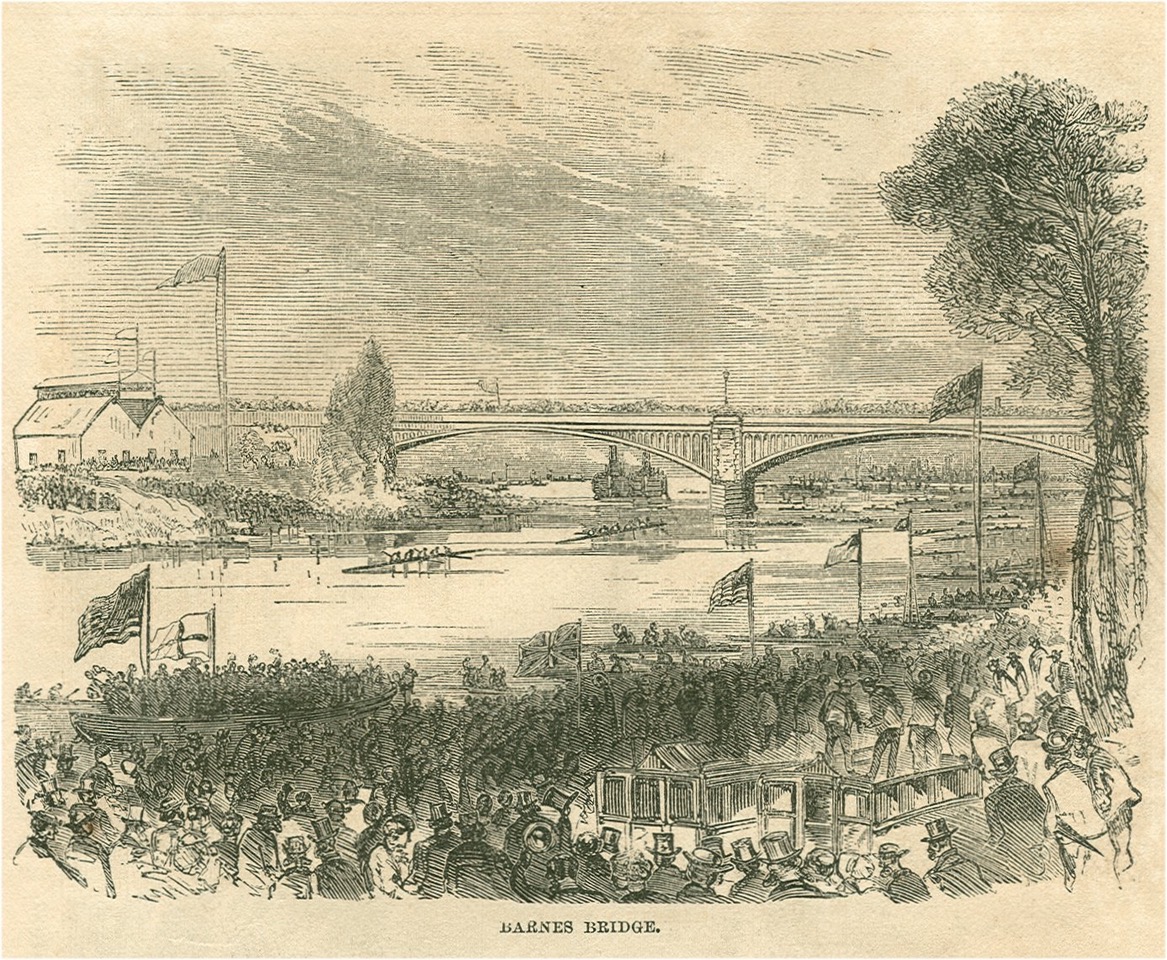
In response to my recent piece on Tom Green’s Boathouse, an iconic structure that stood next to the last marker on the Oxford Cambridge Boat Race Course, Barnes Bridge, between 1876 and 1978, Bill Miller sent me the above image.
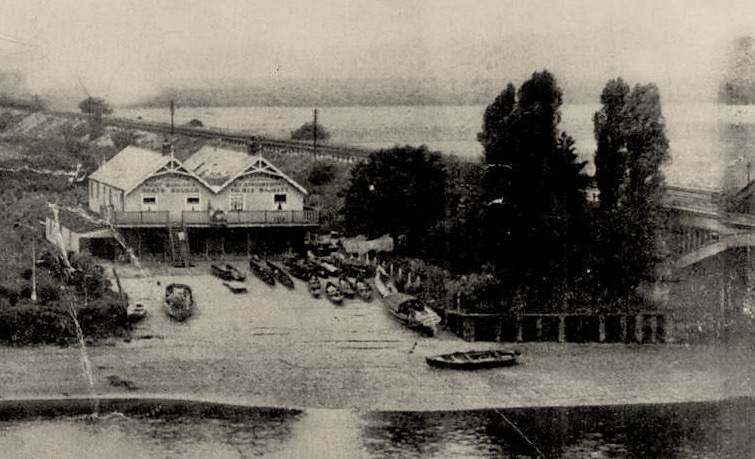
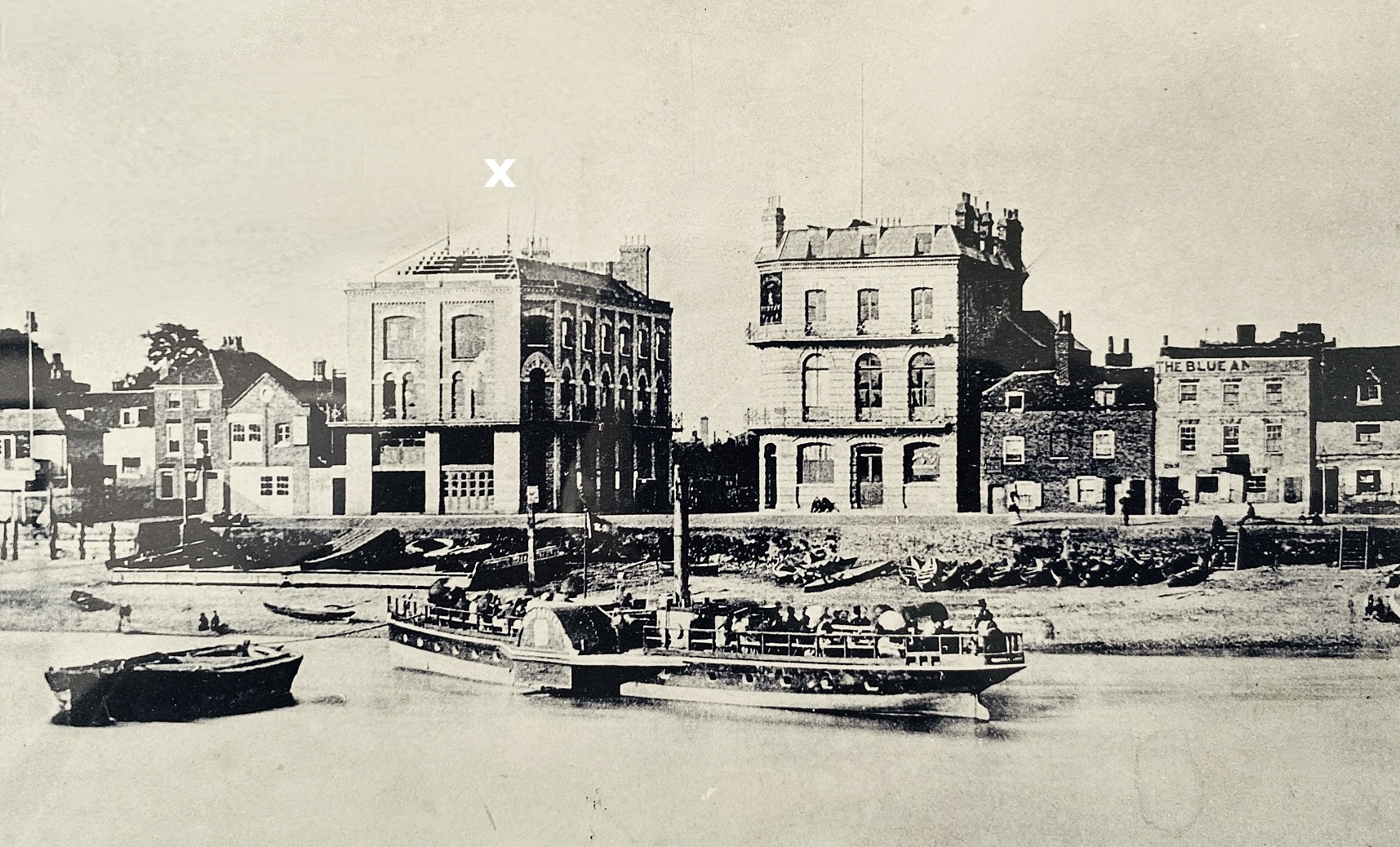
As the Harper’s Magazine picture dates from 1869, it shows not Tom Green’s but the only representation that I have seen of May’s Boathouse, the structure that preceded Green’s. In 1872, Tom Green Senior (1849-1925) bought May’s and spent the next four years rebuilding it and making it into the impressive structure that became his eponymous boathouse.
In his 1957 A History of Rowing, Hylton Cleaver wrote:
The first Tom Green had been taught boat building by his father (George Green, 1825-1888). He won the Doggett’s Coat and Badge in 1872 and bought a ramshackle erection which was in a state of ruin and housed no boats, but was at least on the present site. He gradually rebuilt the place. As he kept extending and improving, he also built boats until they filled the racks. Apart from training scullers, this first Tom rowed at bow in a waterman’s four which won the championship of England, and went to America to win five challenge races there…
Cleaver:
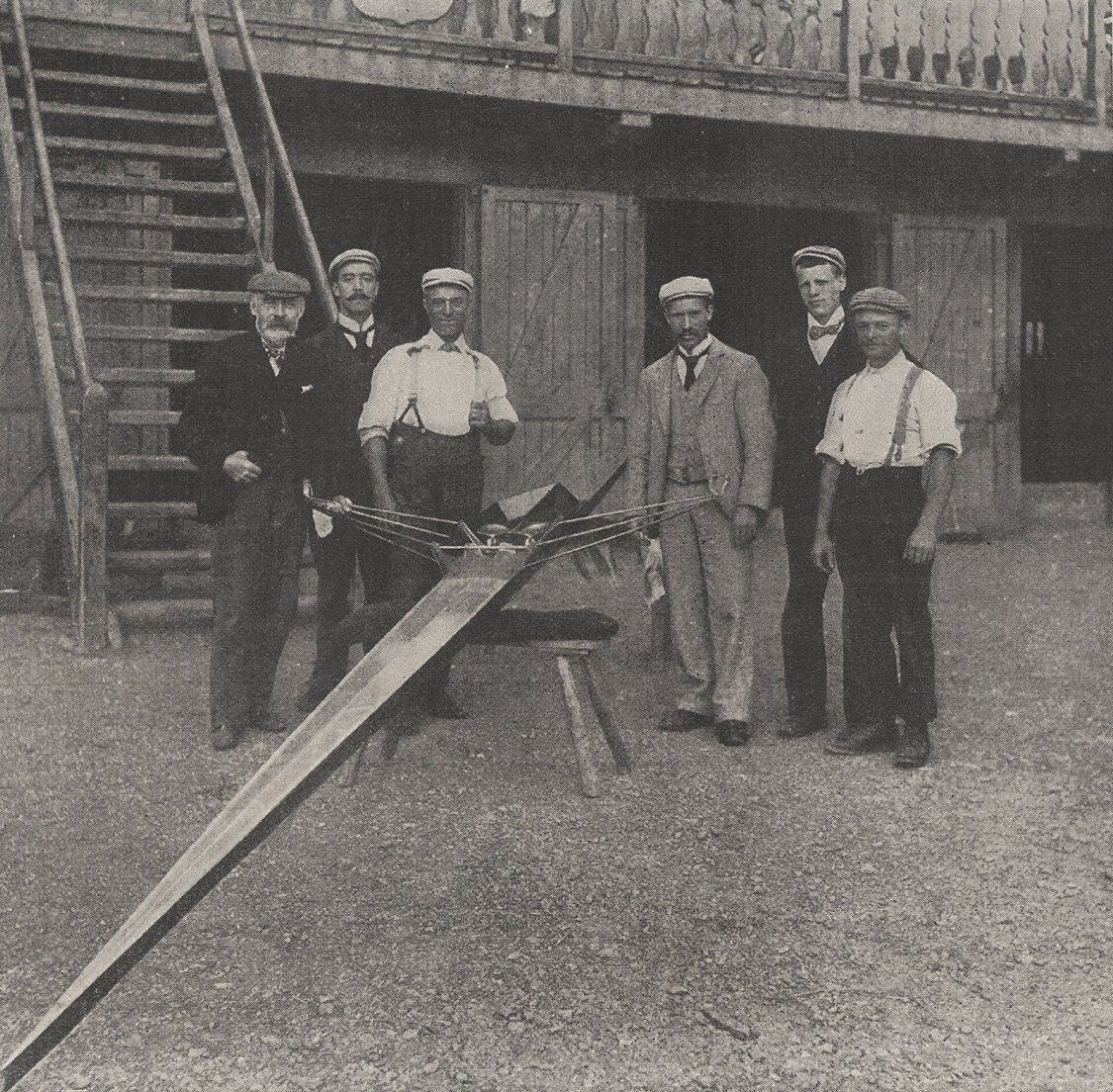
That first Tom had five sons and six daughters, but only one son followed him onto the river, the eldest, the present Tom (1877-1958) who in his eighty years living in rooms above the boat racks has not had one day’s illness…. He is too old now to lift heavy boats himself but his wife does it for him. She can be seen any afternoon or evening in summer, any weekend in winter, launching them or carrying them in.
Cleaver’s book also provided information that probably identifies one of the pictures that I posted in my recent article on Green’s.
Cleaver:
Young Tom Green never scaled more than eight-and-a-half stone (120 lbs / 54 kg) but he came second for the Doggett’s (in an entry of six)… in 1897. And that was in heavy ferry boats against the tide, with no control over the traffic. “None of your fancy modern business then,” says Tom. So small was he that Clasper, the famous builder of boats, designed one 31 feet (9.44 m) long, 21 pounds (9.5 kg) in weight, and only eight-and-a-half inches (22 cm) wide, in which Tom won the London Coat and Badge (in 1893 at the age of 16).
Returning to the 1869 Oxford – Harvard Race, in 2019 the much missed Chris Dodd wrote about the event for HTBS:
For many reasons the 1869 race is significant. It was one of the earliest international sports events; it was responsible for the spread of ‘crew’ in American colleges; it did much for Anglo-American relations and, perhaps even for the elusive Special Relationship; it was manna from heaven for daily and weekly newspapers; it provided high entertainment value for hundreds of thousands of people…
From the day they arrived, the Americans attracted enormous attention in the boat and on the bank. Visitors flocked to the (house in Barnes where they stayed), horsemen followed them on the towpath, and the London newspapers described and analysed their every stroke, comparing their rowing with Oxford’s in minute detail.
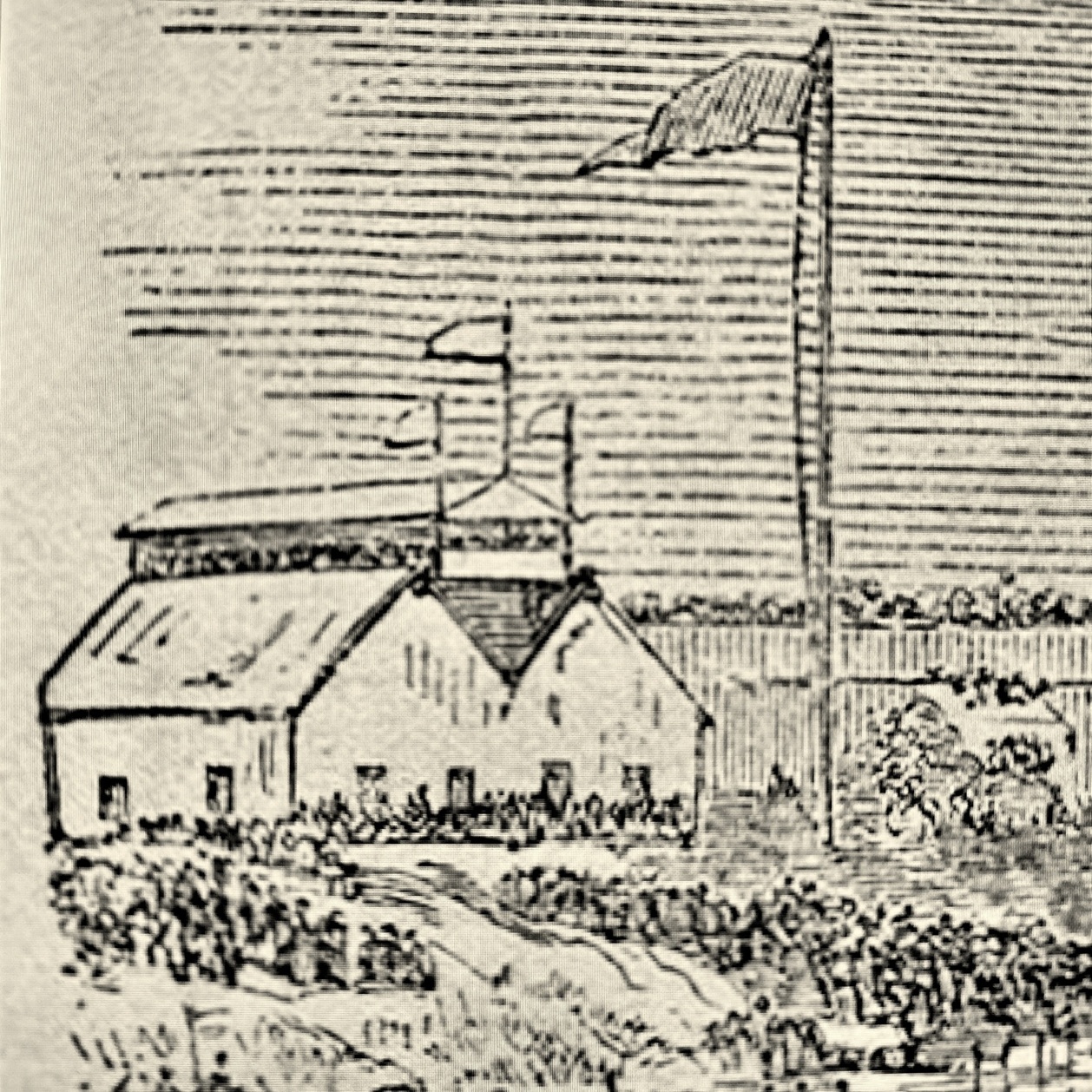
It is not surprising therefore that the Harper’s picture shows a grandstand erected on the roof of what was then May’s Boathouse in an effort to cash in on the great public interest in the International Boat Race. A high vantage point was needed here because, as Hylton Cleaver observed:
Remarkably… standing as it does at the most critical point of the University Boat Race course (Tom Green’s Boathouse) gives the worst view of it, being hidden under a buttress of Barnes Bridge which blocks any view of the race approaching; as soon as the crews have passed, the river takes such a bend that the race goes out of sight.
May’s was not the only grandstand on the river.
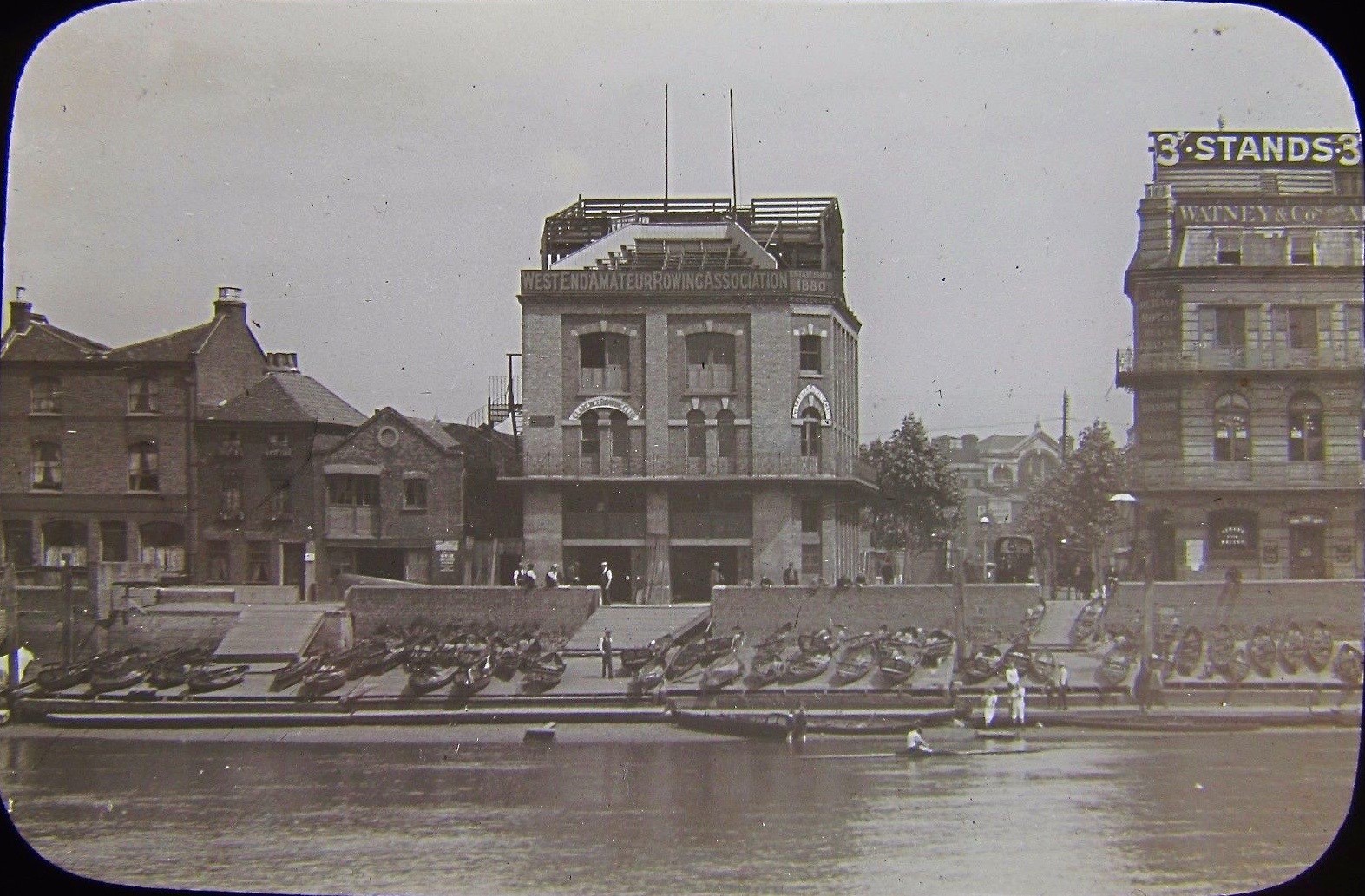
The West End Amateur Rowing Association (WEARA) building pictured above is no more. A newspaper article of 1897 said that its grandstand could accommodate 500 people and that they could view two miles of the Boat Race course. The Rutland pub pictured on the right remains today – albeit with its two upper floors and three shilling (15p) grandstand seats now gone. The building on the far left was and is Furnivall Sculling Club.
After I sent the above picture to Bill Miller, he responded with two American examples.
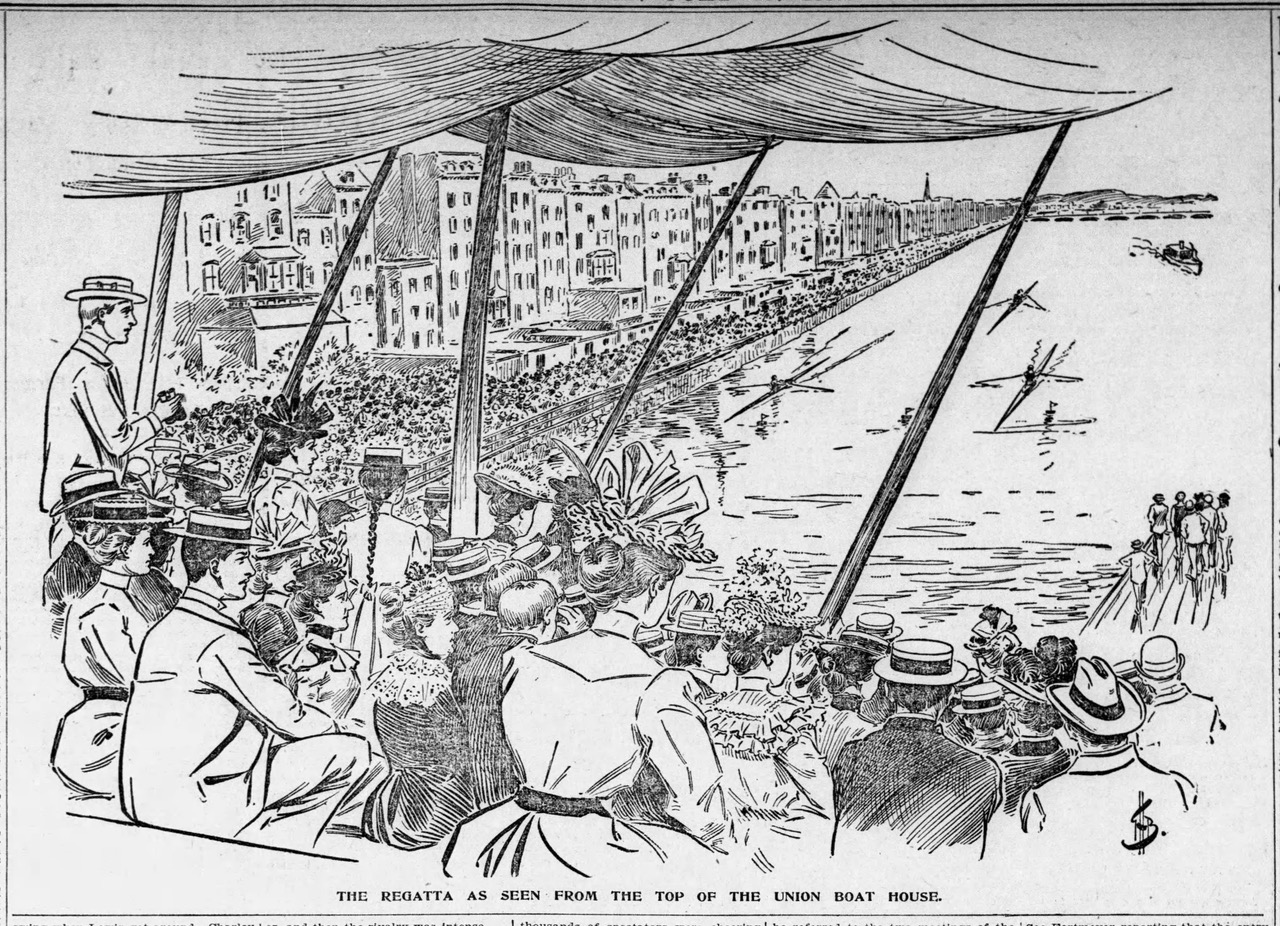
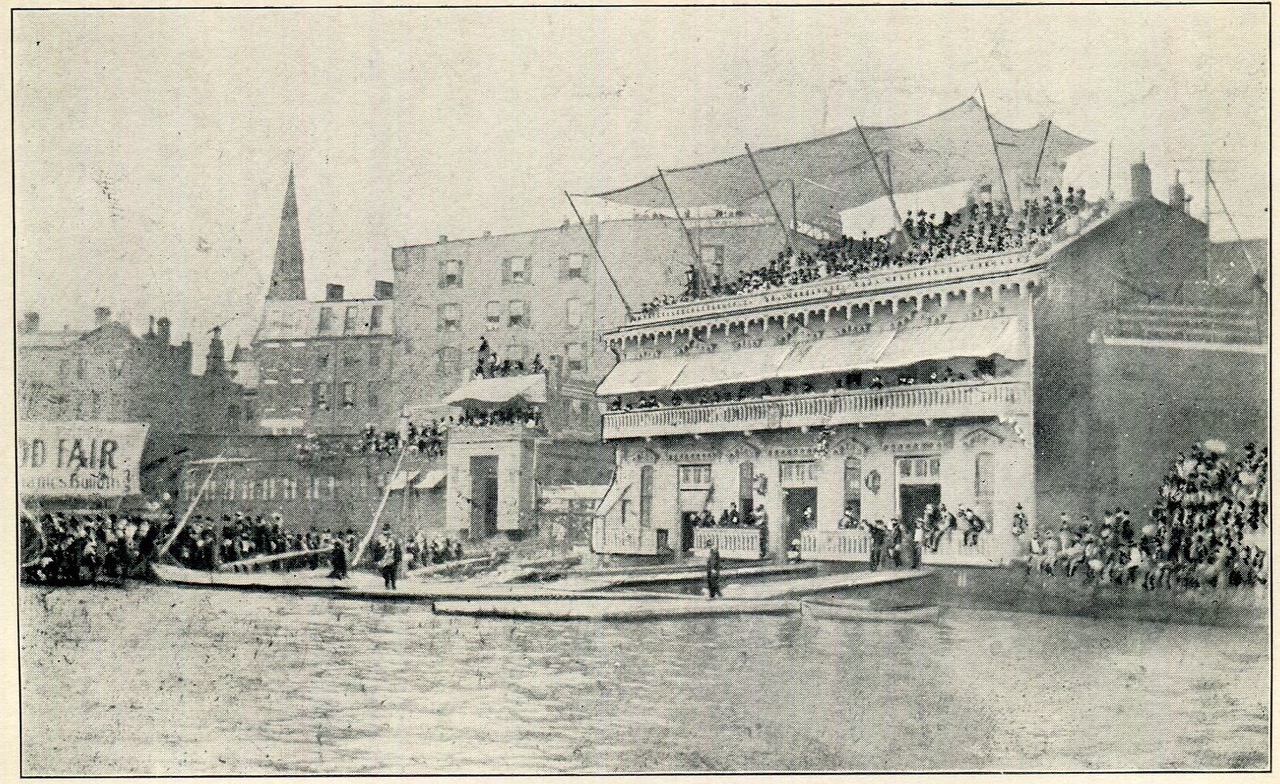
The erection of precarious looking grandstands (temporary or permanent) on the top of boathouses, pubs and other riverside buildings was probably not unusual in the days when public interest in rowing events was high, cheap entertainment was in great demand, and health and safety was not an issue.


Your nice article on Grandstanding has reminded me of my family history. My maternal grandmothers maiden name was Berry and the Berry family ran a lighterage business. They ran barges from the docks up to Mortlake taking grain to Watney’s Brewery. My father used to say he could remember as a child being taken to Mortlake for the Boat Race and sitting on a Berry barge that had been moored with seating erected. I don’t have any photos of this though I’m guessing they would exist somewhere. This would have been around the 1920s. Perhaps you have a source that might have some pictures ?
Also, William Berry (of the lighterage company) through family stories, won the “Westminster Coat & Badge” race (possibly 1920s) that had a green coat. Again I have no pictures and have failed to come up with any info on this race. Anyone out there perhaps ?
John Morrill