
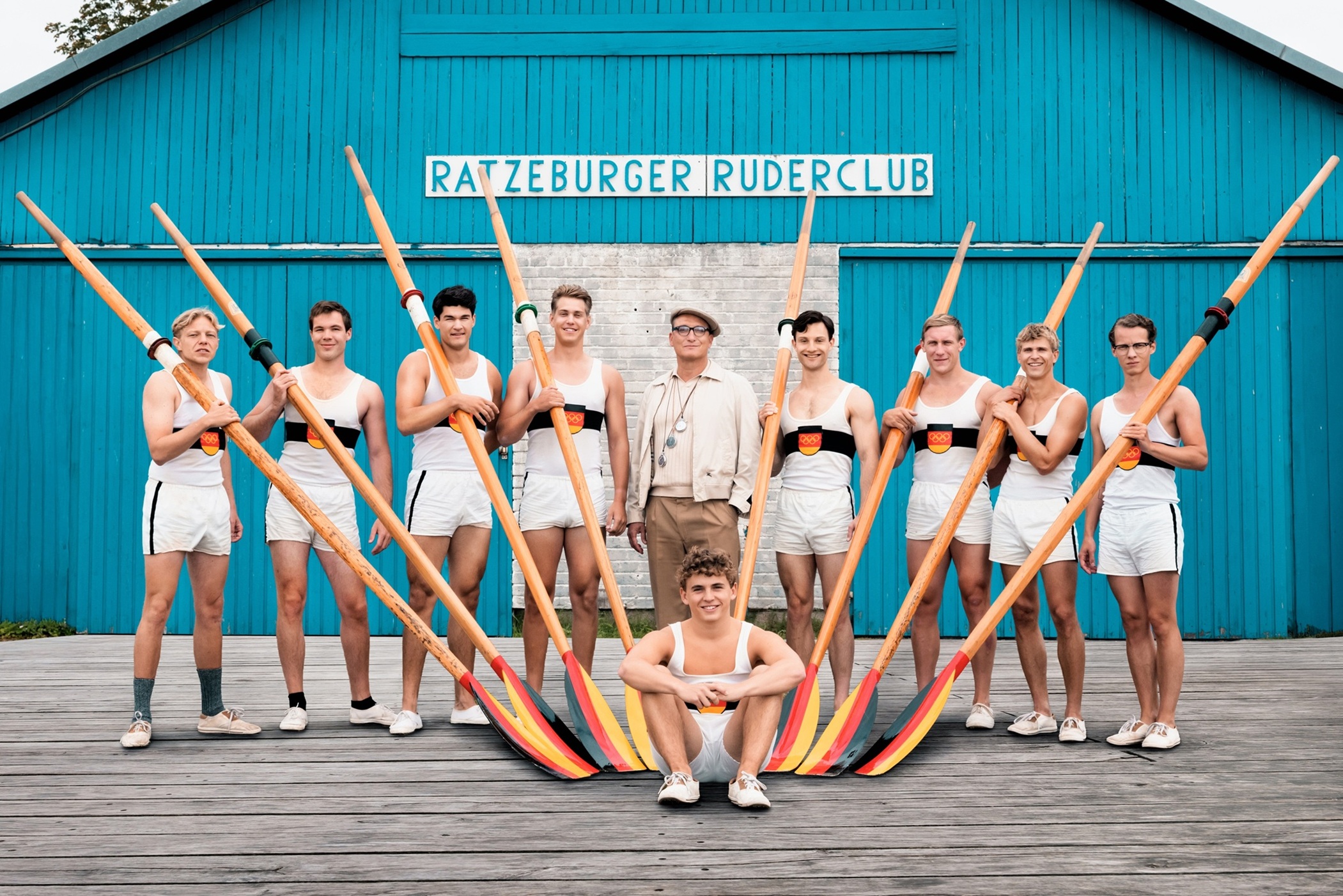
22 September 2026
By Wolfgang Chr. Goede
(Images © Courtesy Majestic / Goede)
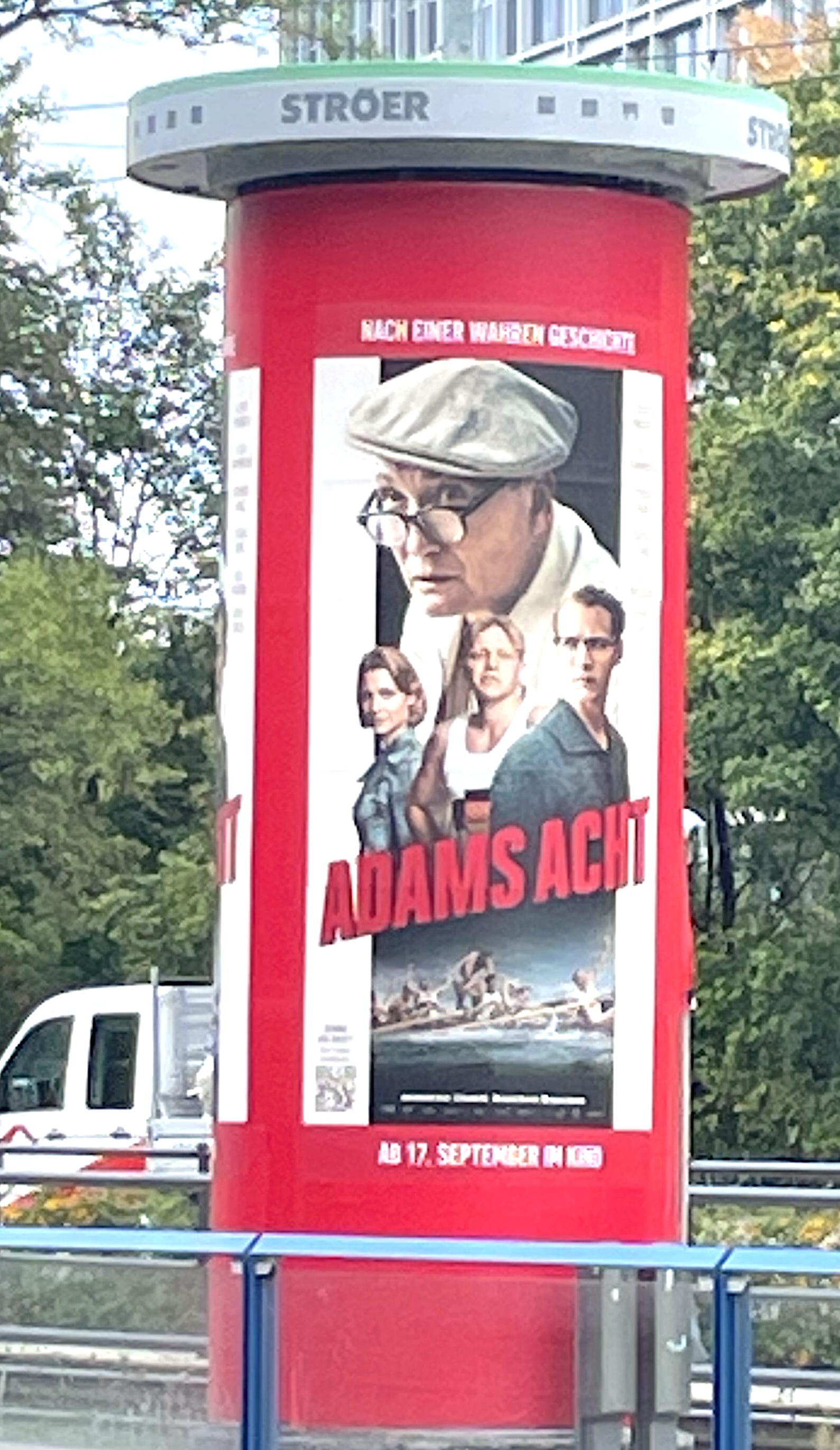
These days, in Munich, there is no getting around Adams Acht (“Adam’s Eight”). Newspaper ads are promoting the film in cinemas, leading media outlets are showering it with reviews, and even the city’s advertising columns stare down at us with the face of Karl Adam (1912–1976). The legendary rowing coach of international renown has brought rowing—a sport that normally occupies little space in the public eye—into the current conversation.
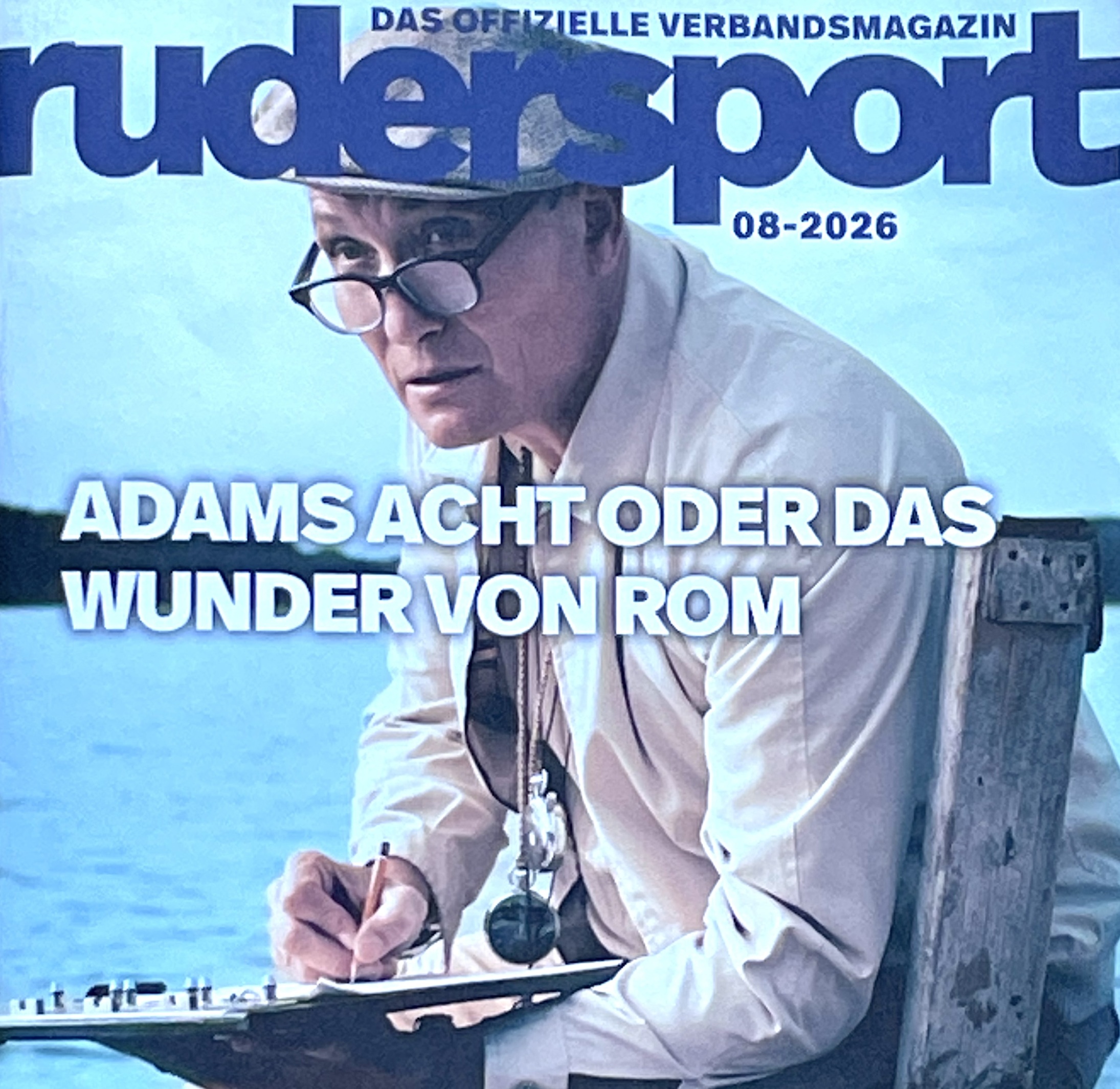
With his unorthodox training methods and his unconventional approach to sport, the German wrote rowing history. He gave birth to the Deutschlandachter, Germany’s legendary eight, led it to Olympic gold twice, in Rome in 1960 and Mexico City in 1968, and injected fresh impulses into international rowing.
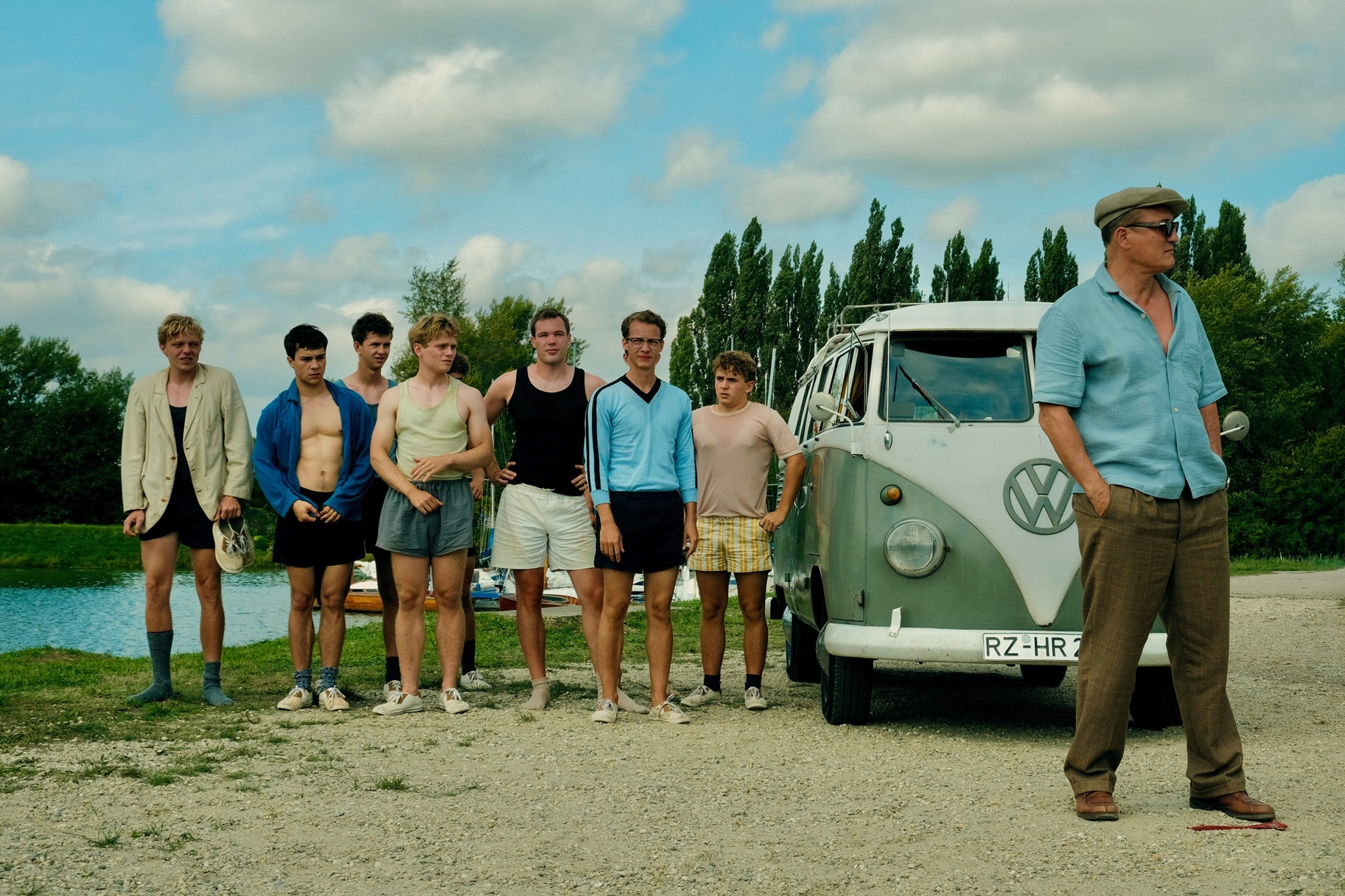
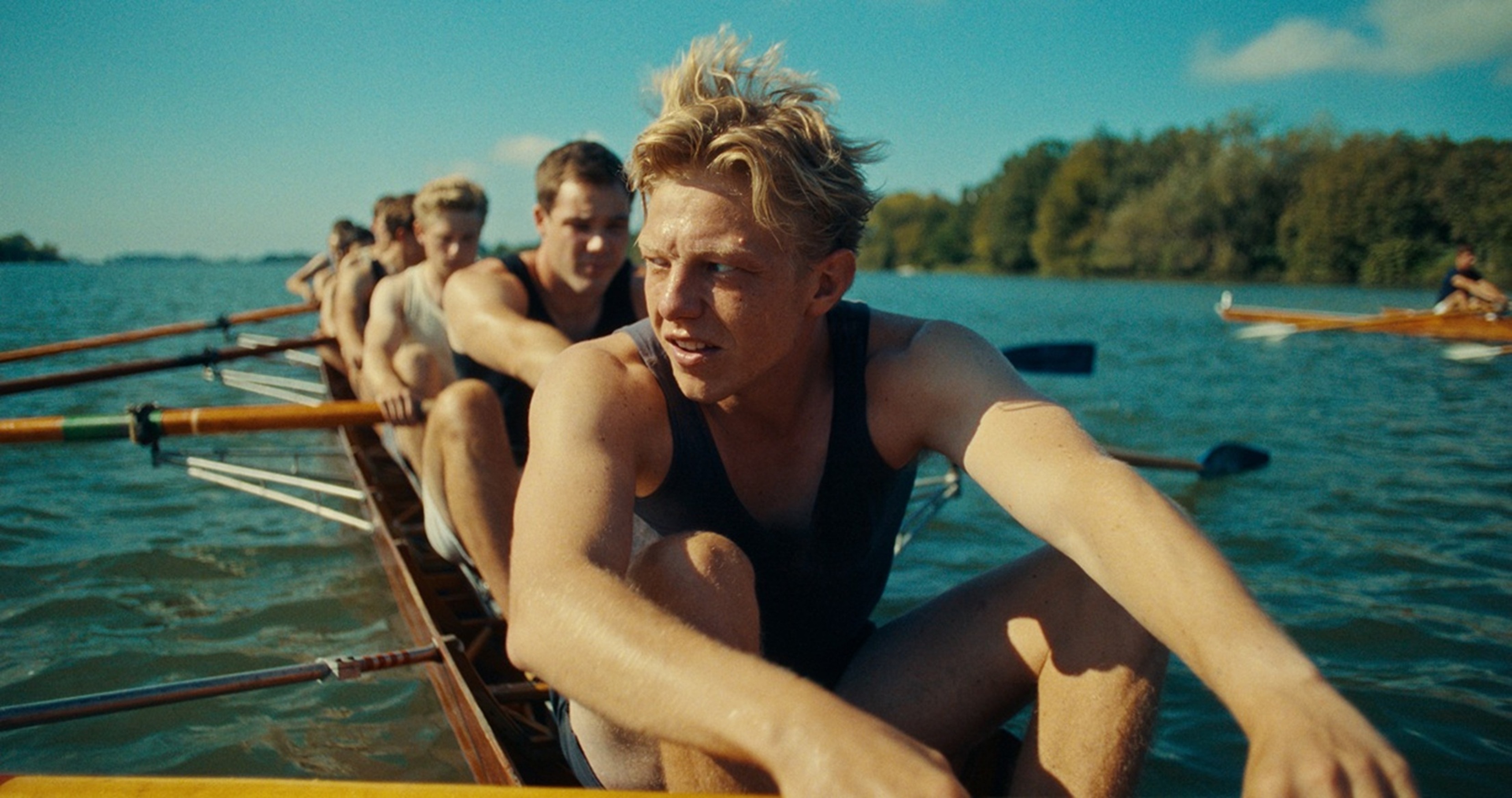
The cinematic epic, released in German cinemas on September 17, showcases the elegance of rowing against the breathtaking natural backdrop of the Ratzeburg lakes, not far from the Baltic Hanseatic city of Lübeck, where Adam worked. It portrays the relentless battle for milliseconds, the conflicts within a crew, the psychological challenges faced by a coach, his own struggle with doubts and entrenched rowing hierarchies, and his tireless efforts on behalf of his protégés—to achieve the best possible rowing performance despite all obstacles.
What exactly was Adam’s achievement? What did he do differently? And can rowing still learn something from him today?
Not conforming to the mainstream—being different—was Adam’s credo. He had been a boxer and had nothing to do with rowing when he first encountered it. Yet the sport fascinated him. As a teacher of physical education, physics and mathematics, he was captivated by its perfect rhythm.
He gathered a handful of strong students around him—not necessarily the privileged ones, but also social outsiders—and motivated them toward a higher purpose in life: rowing, with the lofty goal of becoming the very best at it. It was essentially a “Mission Impossible.” But as an outsider, Adam had not been socialized into the rowing world and its conventions. As an athlete and natural scientist, he therefore found it relatively easy to establish new and more effective principles, among them:
- Interval training, which he adopted from athletics: rowing at varying intensities and speeds, also known as “pyramid training,” with the load increasing and decreasing step by step;
- Strength and endurance training, including weightlifting, running through the woods and jogging—which only became fashionable in the 1970s—or, as shown in the film, using improvised crude equipment: throwing and catching sacks filled with potatoes back and forth on the boat landing;
- As a physics and mathematics teacher, Adam studied the mechanics of rowing and sought to optimize leverage, oar length, and the position and shape of the blades, while keeping the boat’s movement through the water as smooth as possible;
- The film portrays Adam as a restless analyst armed with stopwatches, binoculars, charts and rowing logs, constantly comparing figures and performance data to squeeze the last ounce of energy and reserve out of crew and boat;
- Yet he did not preach some dry theory of rowing. With vivid, almost tactile descriptions—delivered with flushed cheeks—he reduced the art of rowing to elementary, memorable images that even the rawest beginner could grasp. For example: “The eight works like an eight-cylinder engine, with the coxswain as the injection nozzle,” and “the more evenly this machine works, the more effectively and quickly it moves,” until it begins to fly and even starts to sing;
- With all these theoretical and practical tools, Adam earned himself the widely recognized honorary title of “Professor of Rowing.”
In other words, Adam transformed centuries of traditional rowing know-how into experimental sports science. He took rowing out of its insular, sometimes arrogant elite position and opened up the appetite for new rowing horizons, driven by a fiery determination to reshape the rowing world—differently, anew, and more egalitarian.
In the old-school tradition of coaching, Adam was patriarch, supreme commander and tribal chief—all rolled into one. Yet at the same time he was an empathetic listener, comforter and fatherly friend: a dialectically constructed leader full of enormous tensions and contradictions within himself, tensions that also drove him to perform at his best.
Shaped by Nazi Germany, he had been a teacher at one of the Nazi regime’s elite schools, Napola. After the war, he was de-nazified by the Allied authorities, which is where the film begins.
His home training waters became the Küchensee, a lake cut in two by the Iron Curtain. There, the young democratic, market-oriented Federal Republic of Germany (West Germany, FRG) confronted the communist German Democratic Republic (East Germany, GDR)—East and West colliding at close quarters in the increasingly irreconcilable Cold War between political systems.
Attempts to escape were met with real bullets. In the film, shots are even fired at one of Adam’s top athletes, “Ari(stoteles)”, who later became an internationally renowned professor of philosophy.
All of this contributed to Adam’s transformation. His newly acquired democratic outlook found expression in his famous guiding principle of the “mündiger Athlet”—the self-determined, autonomous athlete. The film captures this when the coach allows his athletes to make important decisions themselves, for example deciding who should give up his seat in the boat to a more capable rower.
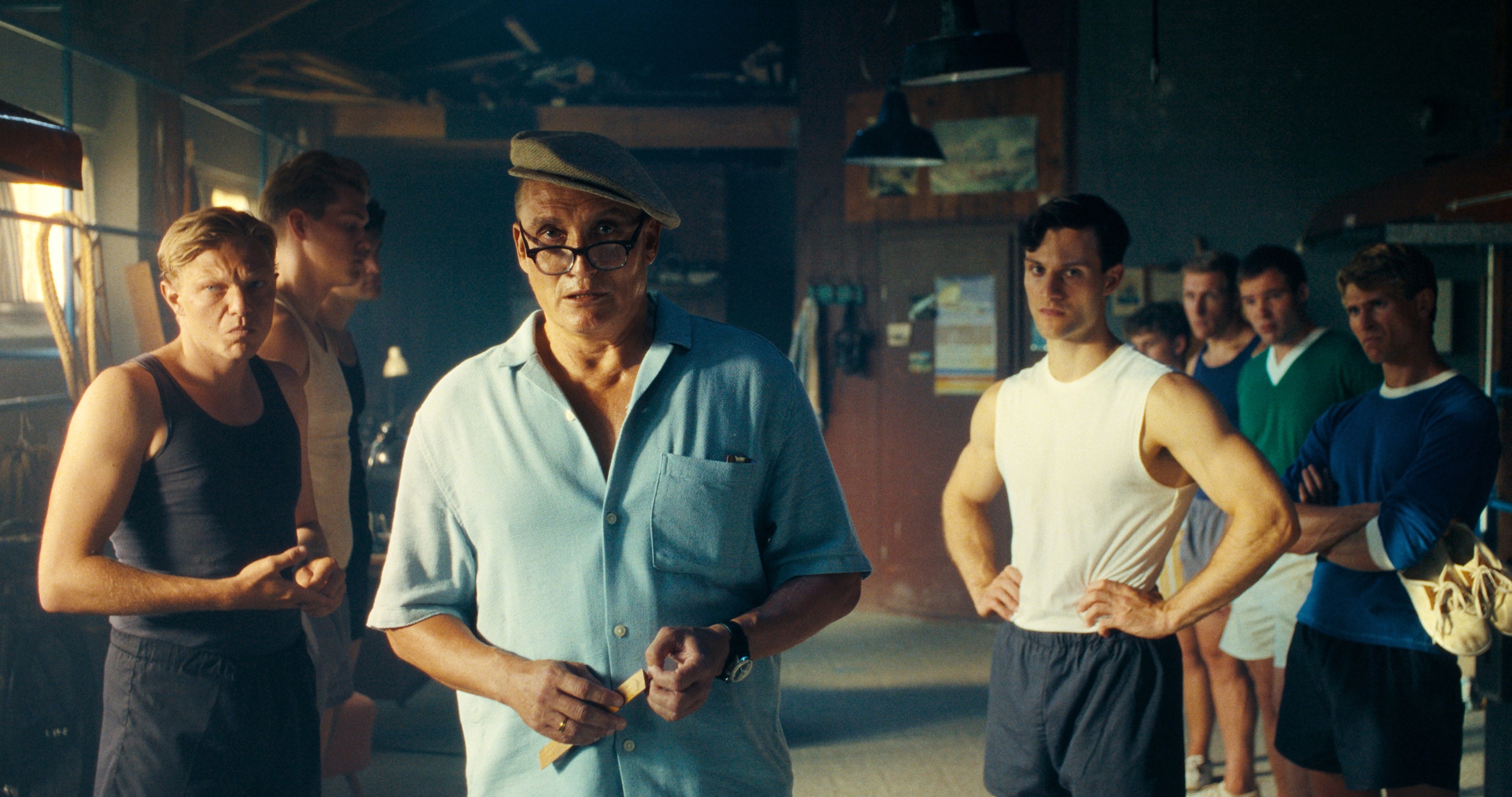
This occasionally leads to heated confrontations, from which the coach deliberately keeps his distance, commenting in the film:
“Arguments are good because they get things moving.”
“Sport is about fighting, and fighting requires aggression.”
The film is a work of fiction built around Adam’s biography. Statements such as these can be unsettling. Did the coach, former boxer, actually say them, or were they invented by the screenwriters, directors and dramaturges? They evoke the Olympics of ancient Greece, the Roman formula of bread and circuses, or the Nazi ideology that Adam helped instill in future Nazi cadres.
Out of this mixture, Adam produced rowing laurels at record speed. Starting from virtually nothing in the 1950s, he went on to win German championships, European championships and Olympic gold in the eight at Rome in 1960—then, eight years later, topped even that achievement under the most adverse conditions in Mexico City, 2,300 meters above sea level, where the thin air made everything harder. In between and afterwards came the glory of coaching numerous other winning crews.
The ultimate outsider, who had entered the competition with what established German rowing clubs mocked as a “ragtag crew”—and who scored his first major rowing victory in a stolen eight—proved unstoppable. Hollywood could not have come up with a better story.
His string of successes shook up the international rowing scene. His techniques and strategies were copied by the great rowing nations—the United States, England and Canada—and, together with advances in boat construction, helped make rowing ever faster.
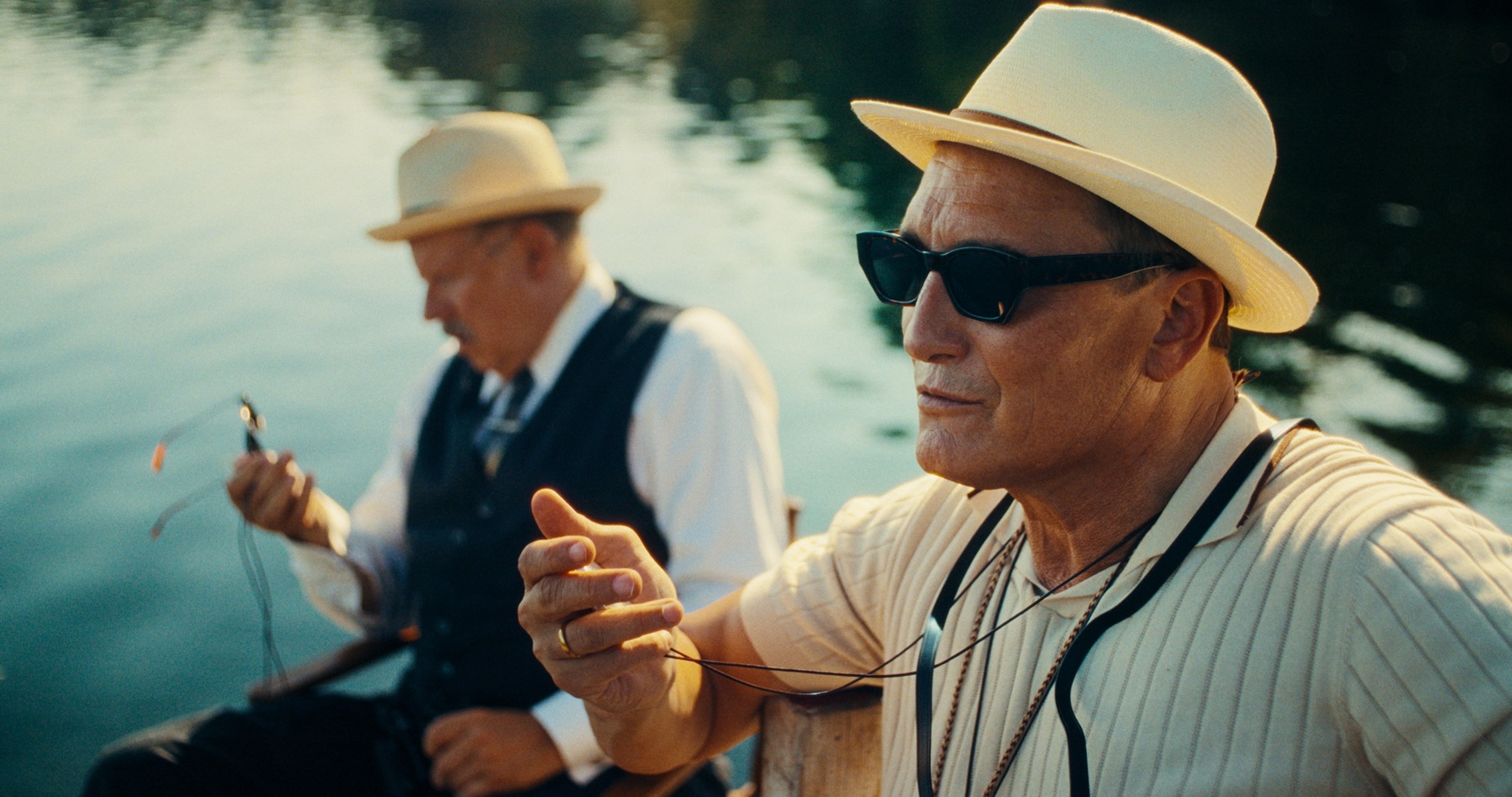
Even East Germany spied on its class enemy from the nearby border; Adam’s training waters were practically at its feet. The GDR adopted many of his successful methods and grew into one of the world’s great rowing nations. In the end, its state-subsidized sports system, heavily supported by public funds and boosted by doping, also used its medal successes on international waters to bolster international recognition of East Germany as a sovereign German state.
The president of the German Rowing Federation already had a sense of what was coming when, after the victory was announced at Rome’s Lago Albano in 1960, he enthusiastically embraced the coach and exclaimed: “You sorcerer!”
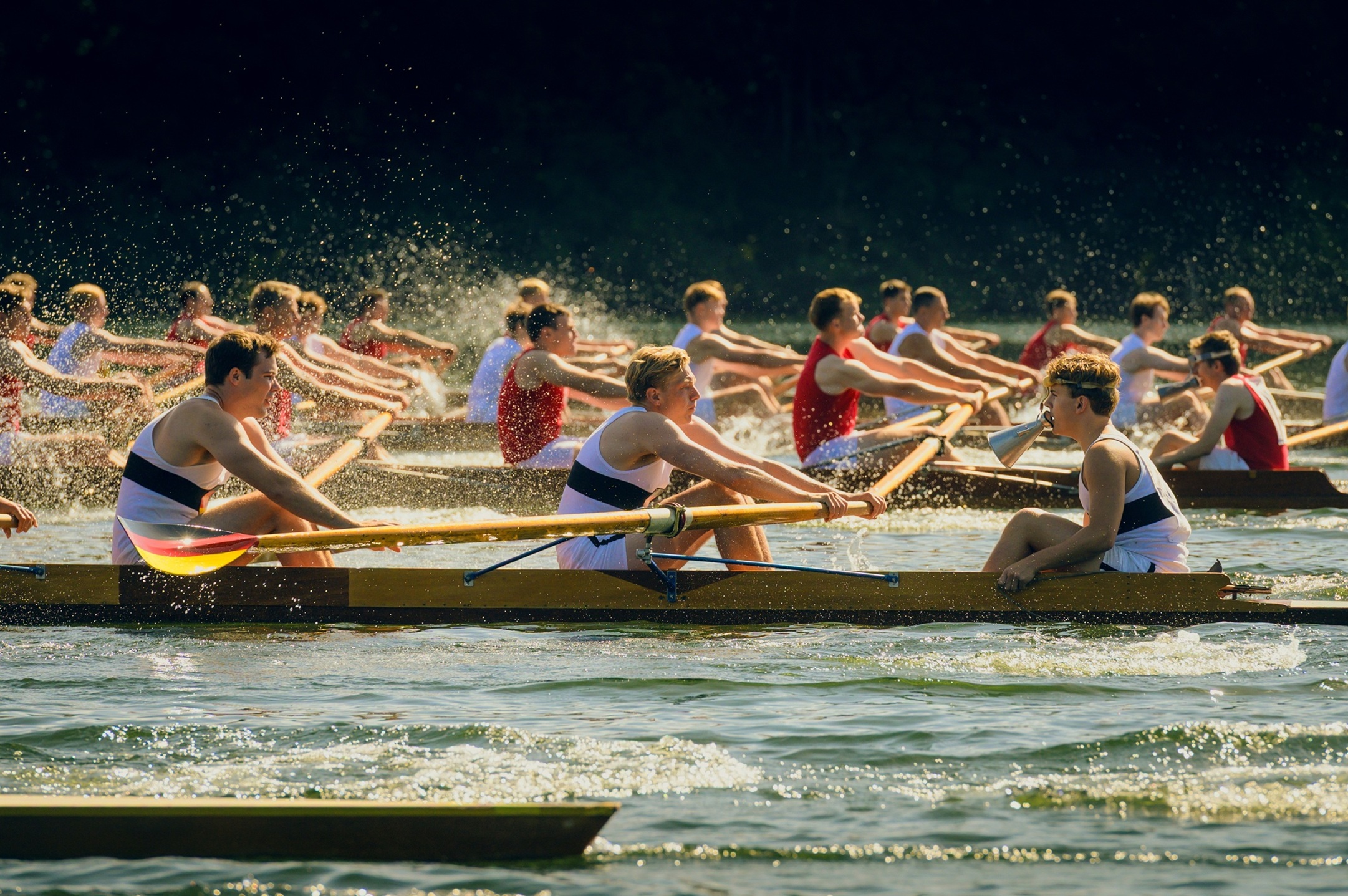
That was 66 years ago. Adam has long been dead and is now, thanks to cinema, a rowing legend once again.
Today, other innovators are at work. Coastal Rowing, already an Olympic discipline, is seeking to give rowing—often a rather dull sport from the media’s perspective—a more exciting future. High-tech oarlocks that redirect the rowing movement now make forward-facing rowing possible, something inventors had been tinkering with for an entire century.
They will probably always be regarded as a gimmick. But people once said the same about the sliding seat, which had already been used in principle by the ancient Greeks but only became established at the end of the nineteenth century.
Adam’s “think outside the box,” delivered with courage and fearlessness against the conservative rowing establishment, remains an ever-present message and challenge for the world-wide rowing community.
For all the grandeur of rowing, a hint of unease also runs through the film by director Hannu Salonen, with Oliver Masucci in the leading role as Adam. There is no doubt that rowing, like all other sports, has always been touched by political and ideological interests, as was demonstrated again recently at the Football World Cup. At the same time, sports teams—and rowing crews in particular—can homogenize individually different political inclinations, as the film also emphasizes.
“We’re all in the same boat” is not such a popular expression by accident.
And yet the film’s extensive portrayal of Adam as a former Nazi functionary gives food for thought. His “men,” as he calls his rowers, challenge their coach forcefully over his past.
In the film. In real life, he remained silent about it—silent as the grave.
It was only more than three decades after his death that journalists began uncovering Adam’s past. And another decade passed before the German Rowing Federation (DRV) distanced itself from its former idol.
As part of its effort to confront the troubling entanglement of German rowing with the spirit and practices of the Nazi regime, the DRV abolished the prestigious Karl Adam Prize as a symbolic act of historical reckoning.
At a time when autocratic and democracy-eroding systems of government are gaining ground in many parts of the world, one nagging question remains: Why were Adam and so many of his German contemporaries able to become enthusiastic supporters of National Socialism, to rise to positions of influence, and to serve, among other things, its factories of heroes and weapons?
Apparently with such verve, passion, human empathy and expertise that, after the change of political system, someone like Adam produced not war heroes but rowing champions—and in doing so transformed rowing around the world.
Much as the “people’s” Volkswagen, the VW, rooted in Hitler’s vision and an emblem of the racially defined “Aryan” ideology, transformed the automobile industry; much as Wernher von Braun’s V2 rocket (“Vengeance Weapon”) helped lay the foundations of spaceflight and ultimately took humans to the Moon.
What kind of radiance did the Nazi spirit possess that it could unleash so much energy in people that they went on to shape the world—even the world of rowing—well into the second half of the twentieth century?
That is a question Adams Acht neither wanted nor was able to answer although its producers intended to make it resonate, as they state in the press kit.
It is one of the film’s merits that it builds a bridge back to the Nazi era, places the two periods in relation to one another, and thereby encourages historical understanding and reflection. In doing so, it also becomes a marker of our own times.
And so, as the Olympic gold of Rome is won, a few tears can be seen rolling down Adam’s cheeks. This rowing flight into the heights—in reality and on screen—is worthy of the emotion it evokes.
At the film’s premiere, more than a few eyes in the audience also become moist. Including those of this critic.
Trailer (in German)
NOTES
Adams Acht is a regular theatrical feature film. It was shot in German and opened in German cinemas on September 17, 2026. An international release is in preparation. However, the date has not yet been announced.
Wolfgang Chr. Goede is a German science journalist. Throughout his career, he has dealt extensively and intensively with the history of the Third Reich as well as with the history of rowing under National Socialism.
Many German institutions have meanwhile examined and documented their roles during the Nazi period. But some questions remain open.
For details about the film’s production, creators, actors and contributors (in German) – Go here.


A wonderful review of the movie and the coach and crew it portrays. When I started rowing at Kent School in the spring of 1968, Ratzeburg’s methods were often copied and always discussed. Adam’s 1968 victory in the eights at Mexico City only solidified his hold on Americans seeking success in rowing.
In the summer of 1974, Dietrich Rose at Vesper asked me to come to Vesper to try out for his coxless four. Dietrich’s own training regime reflected his time rowing for Adam before immigrating to the US at Jack Kelly’s urging. I cherish my time at Vesper as it gave me a view — albeit at a distance — of Adam’s accomplishments.
I look forward to the movie’s release in the US.
Ed Woodhouse