This website covers all aspects of the rich history of rowing, as a sport, culture phenomena, a life style, and a necessary element to keep your wit and stay sane.
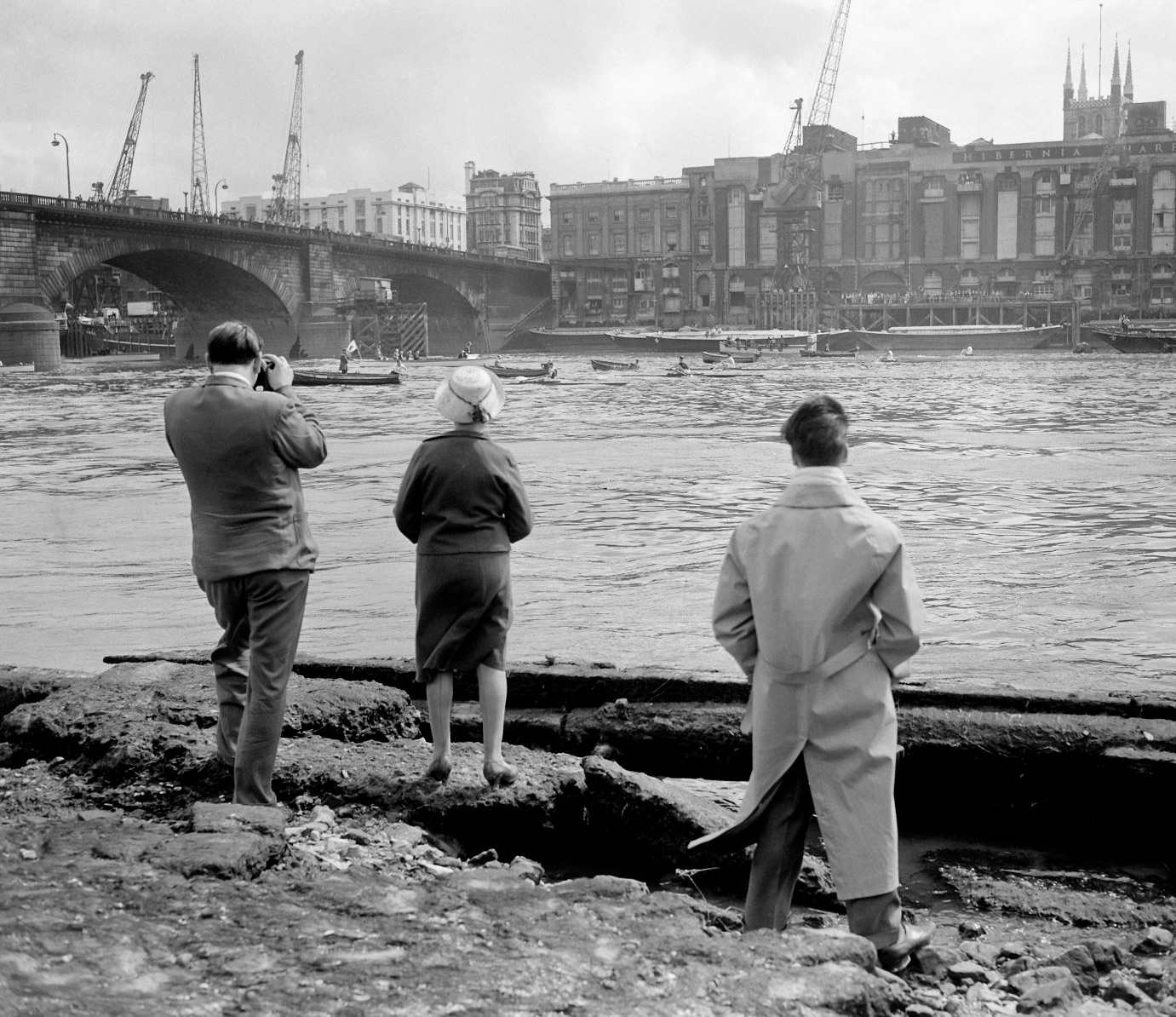
Flashback to the start of the 1960 Doggett’s as witnessed by some well dressed spectators. While the race appears the same, small details show how things have changed over sixty-six years. In 1960, “New” London Bridge (1831-1967) still stood, stakeboats were in use at the start and the cranes and barges hint that the Pool of London was still a bustling, commercial port employing over twenty thousand dockers with a thousand ships were arriving and leaving every week, importing and exporting goods from every part of the world.
5 September 2026
By Tim Koch
Tim Koch follows the 2026 Doggett’s Coat and Badge Race.
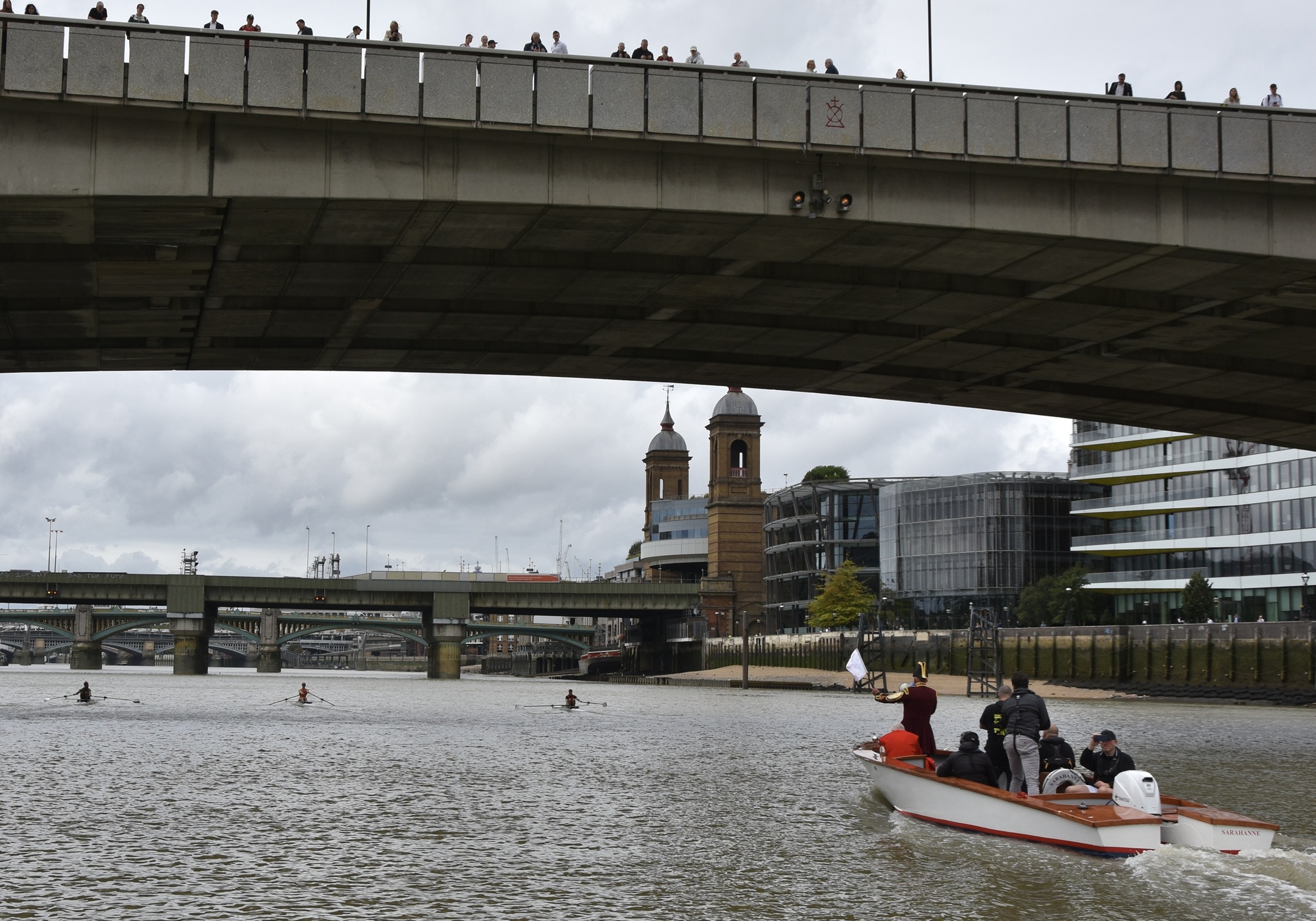
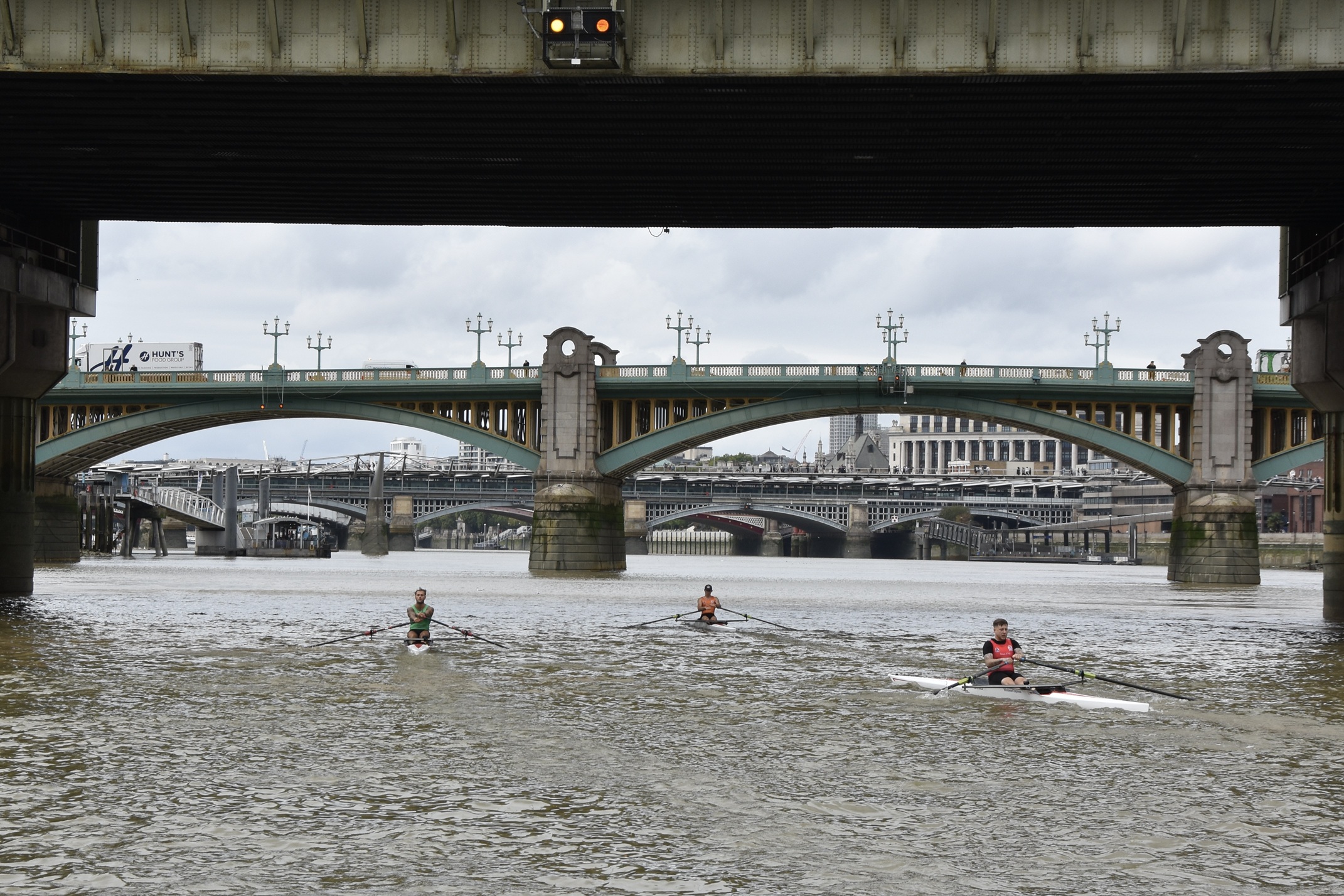
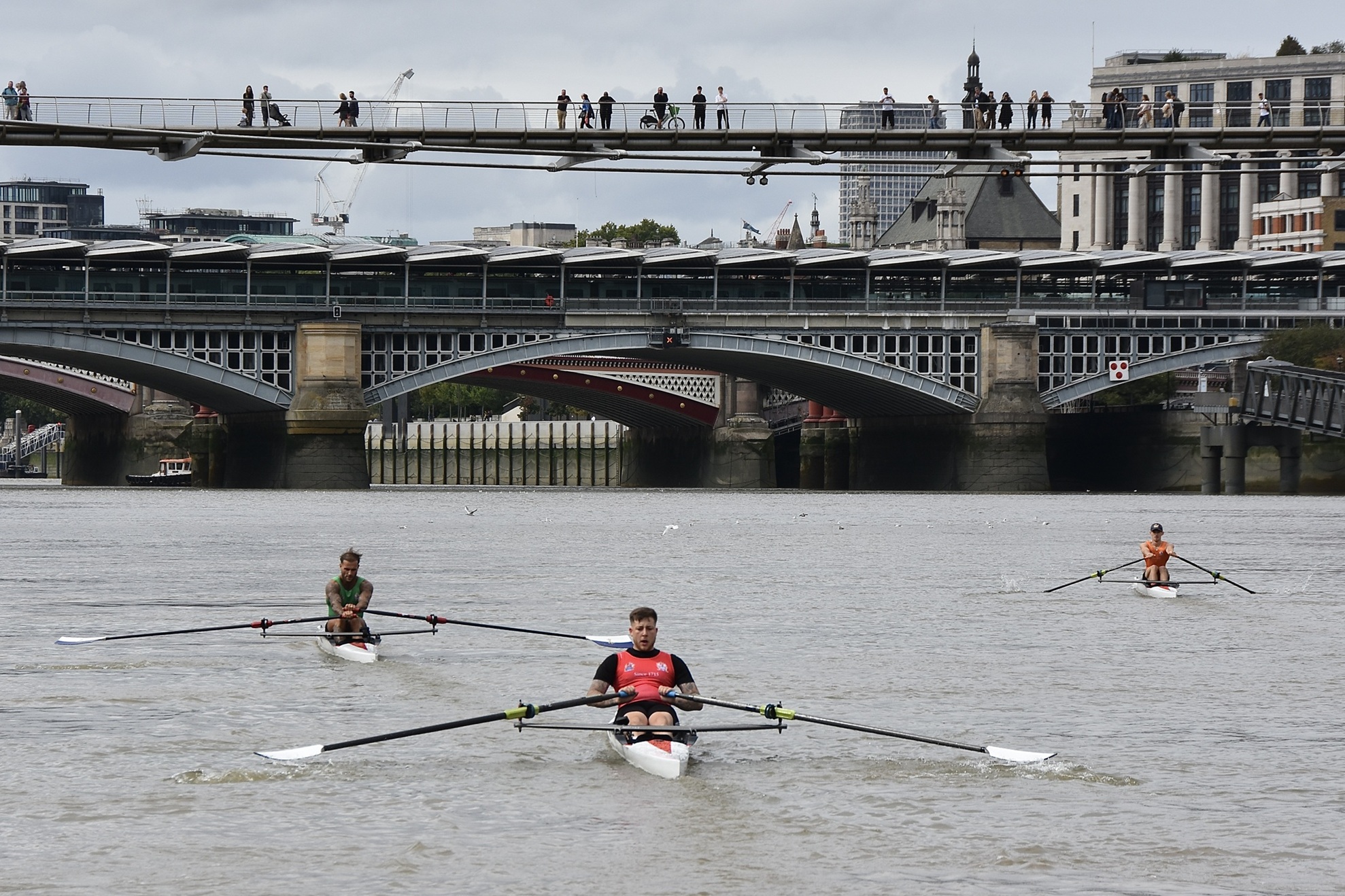
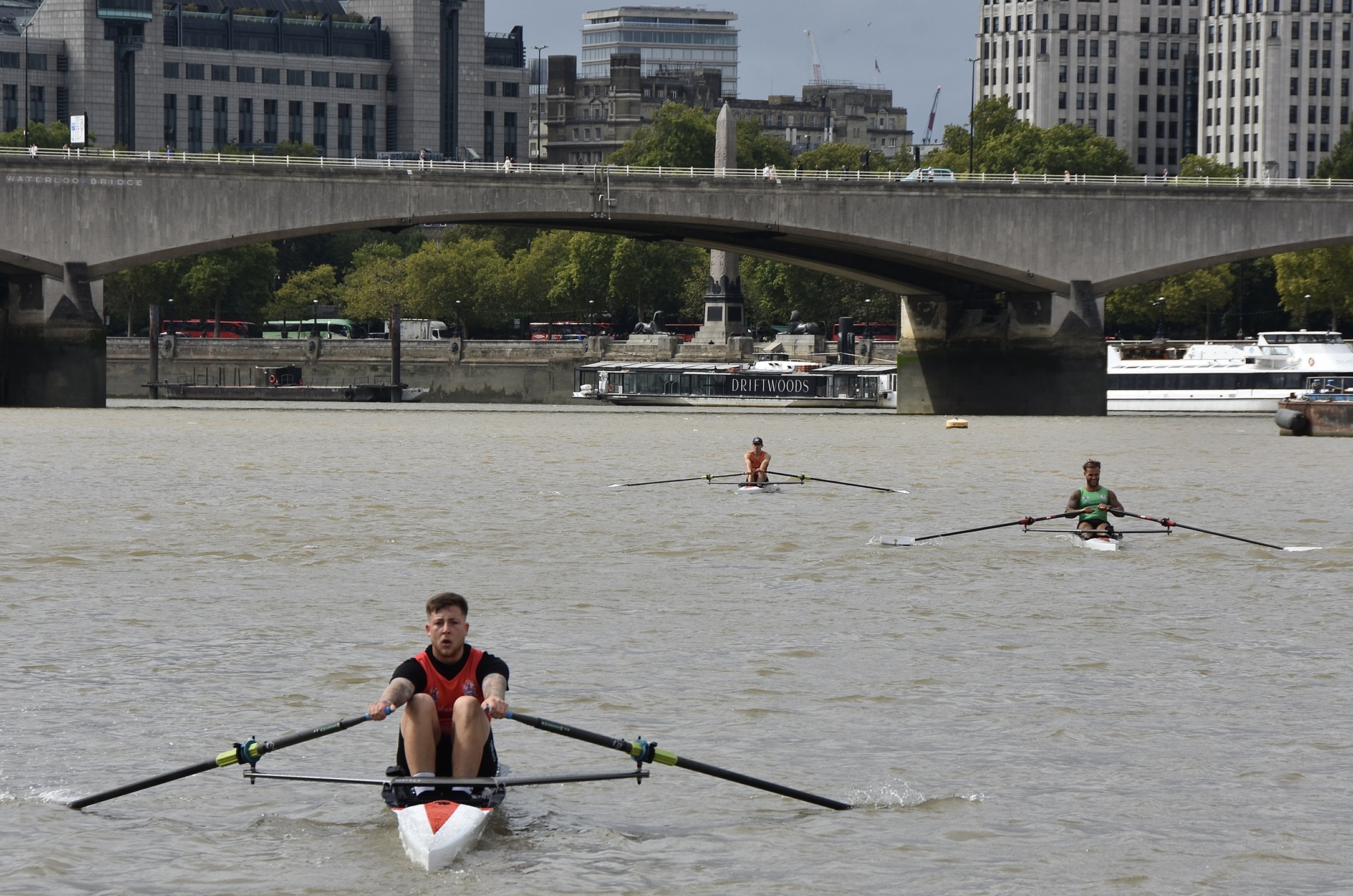
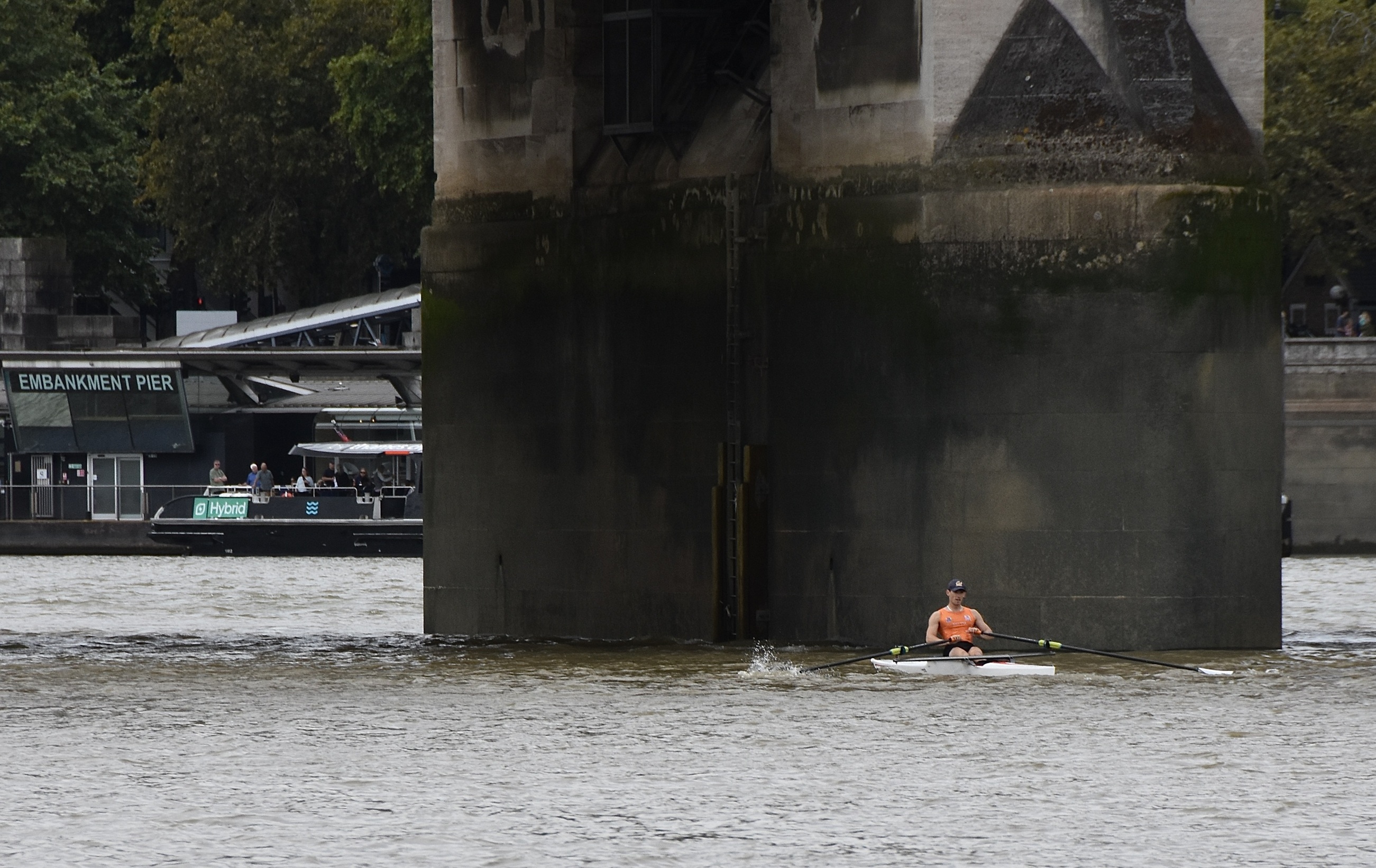
Shortly after low tide and downstream of London Bridge, umpire Bobby Prentice raised his white flag to start the 312th Doggett’s Coat and Badge Wager. Left to right: Jack Finelli (Station 3, Green, his third race), Callum Howard (Station 2, Orange, his first race), Charlie Milward (Station 1, Red, his second race).Conditions were untypically calm for Doggett’s when the umpire’s flag dropped and the boys got off to a clean start – though Howard and Finelli were a little close for a time. When the three had reached the central arch of Cannon Street Rail Bridge (pictured, 250 metres into the course) the race had already settled to Howard in orange leading, closely followed by Finelli in green and then Milward in red further back.
Howard’s coach, 1984 Doggett’s winner Simon McCarthy, later told me that the plan was to go off hard, get in front and control the race from there. Certainly, Howard’s early stroke rate, somewhere in the low thirties, was two or three pips higher than Finelli’s – who in turn was two or three up on Milward.
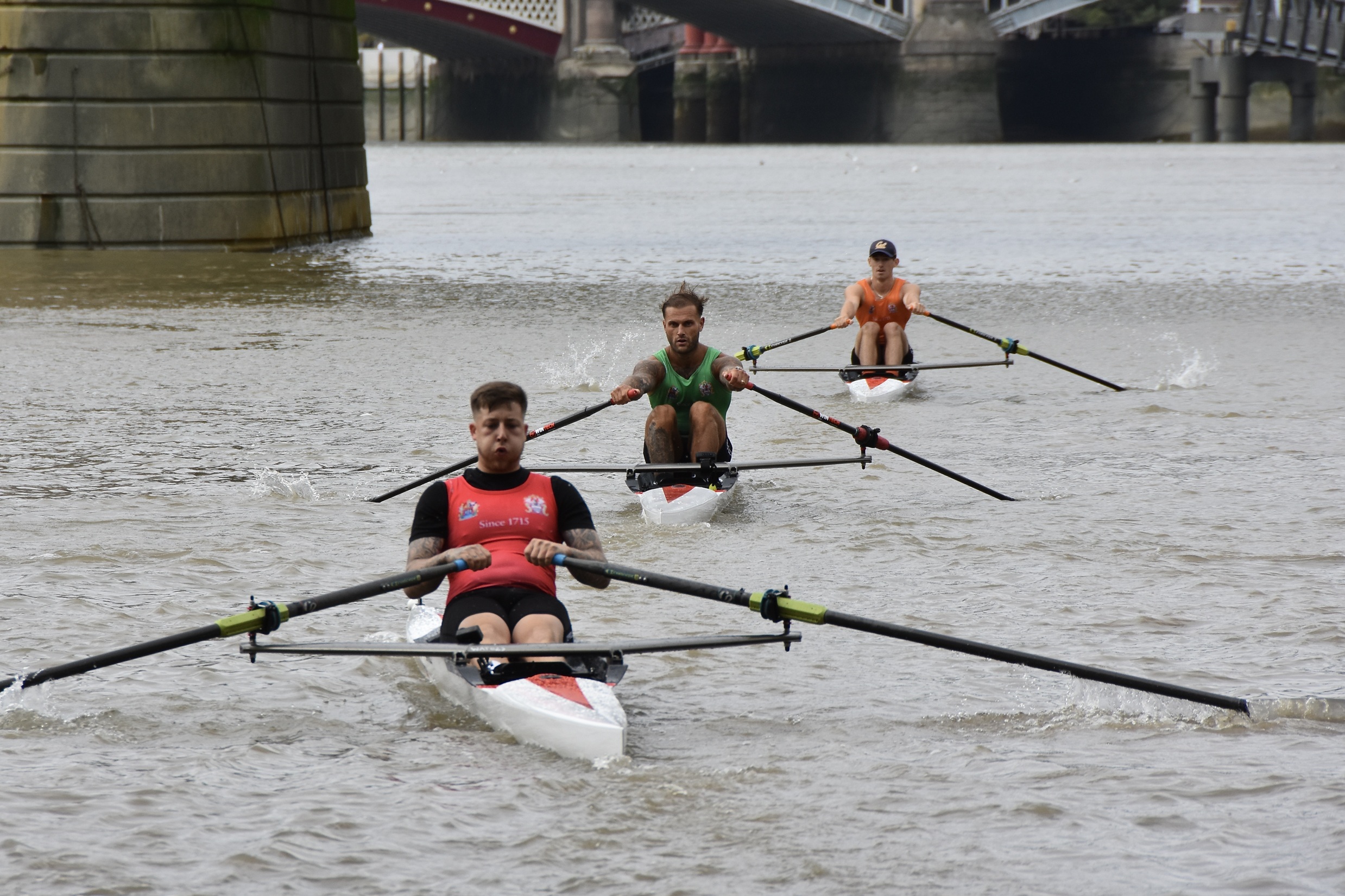
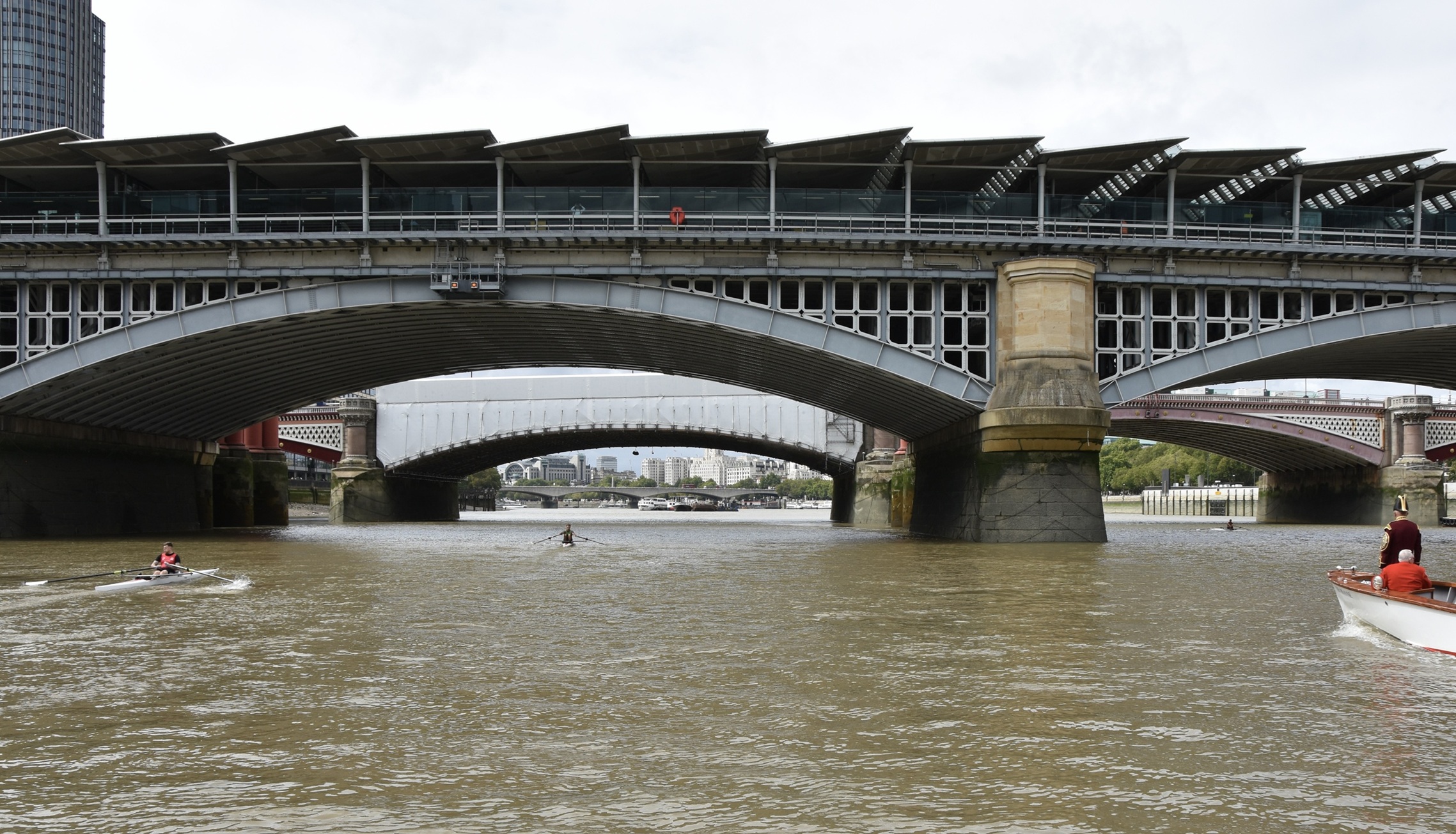
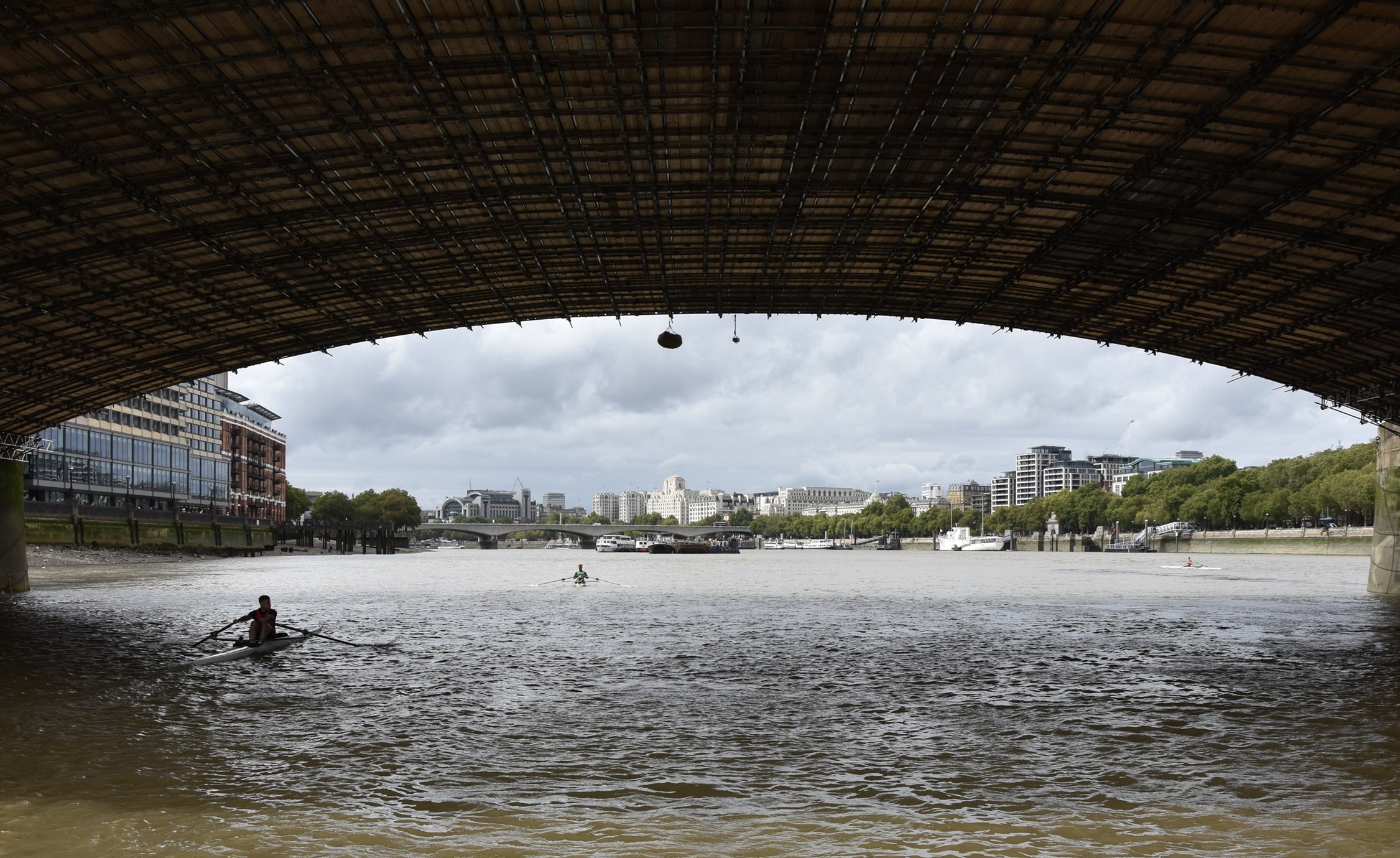
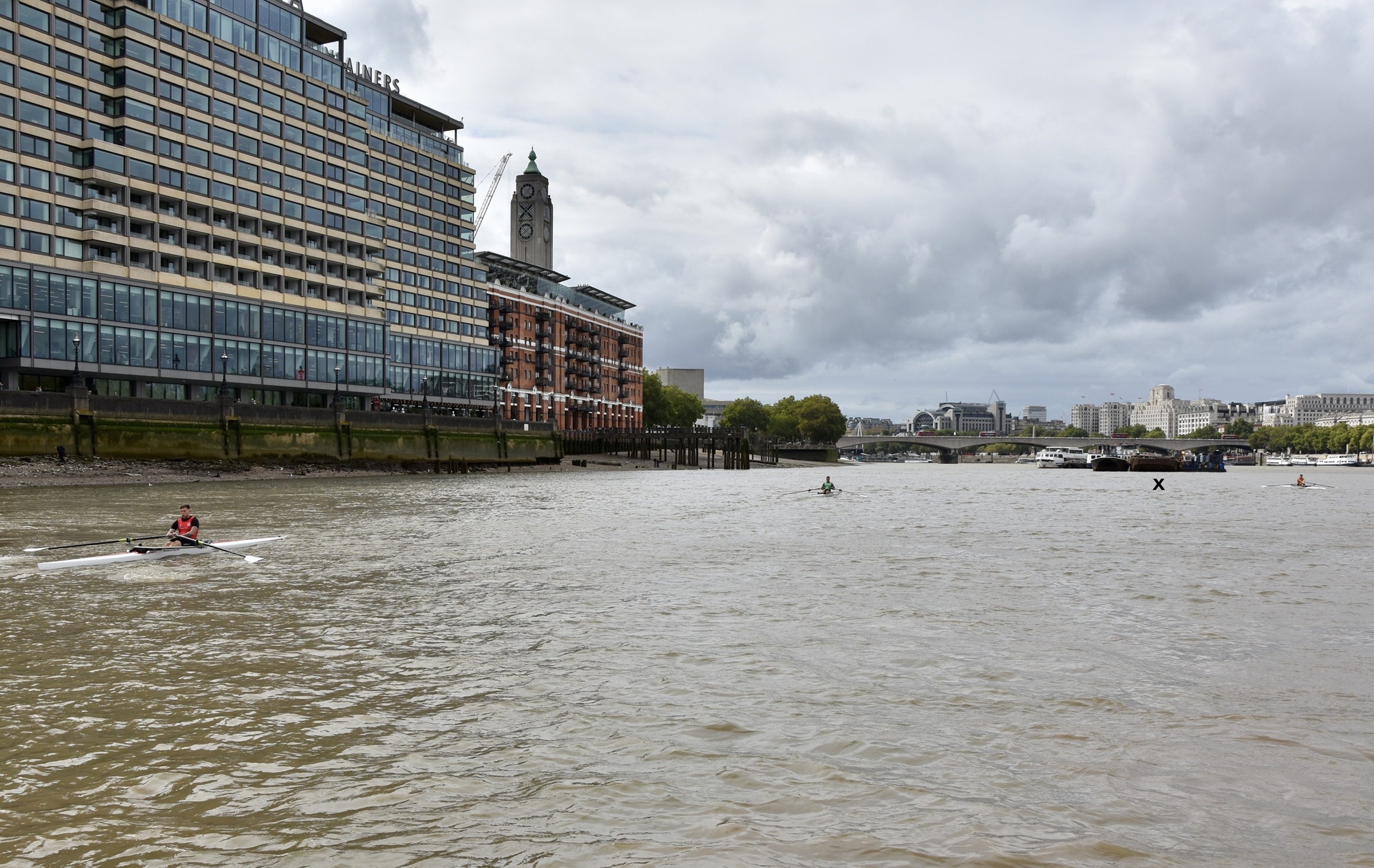
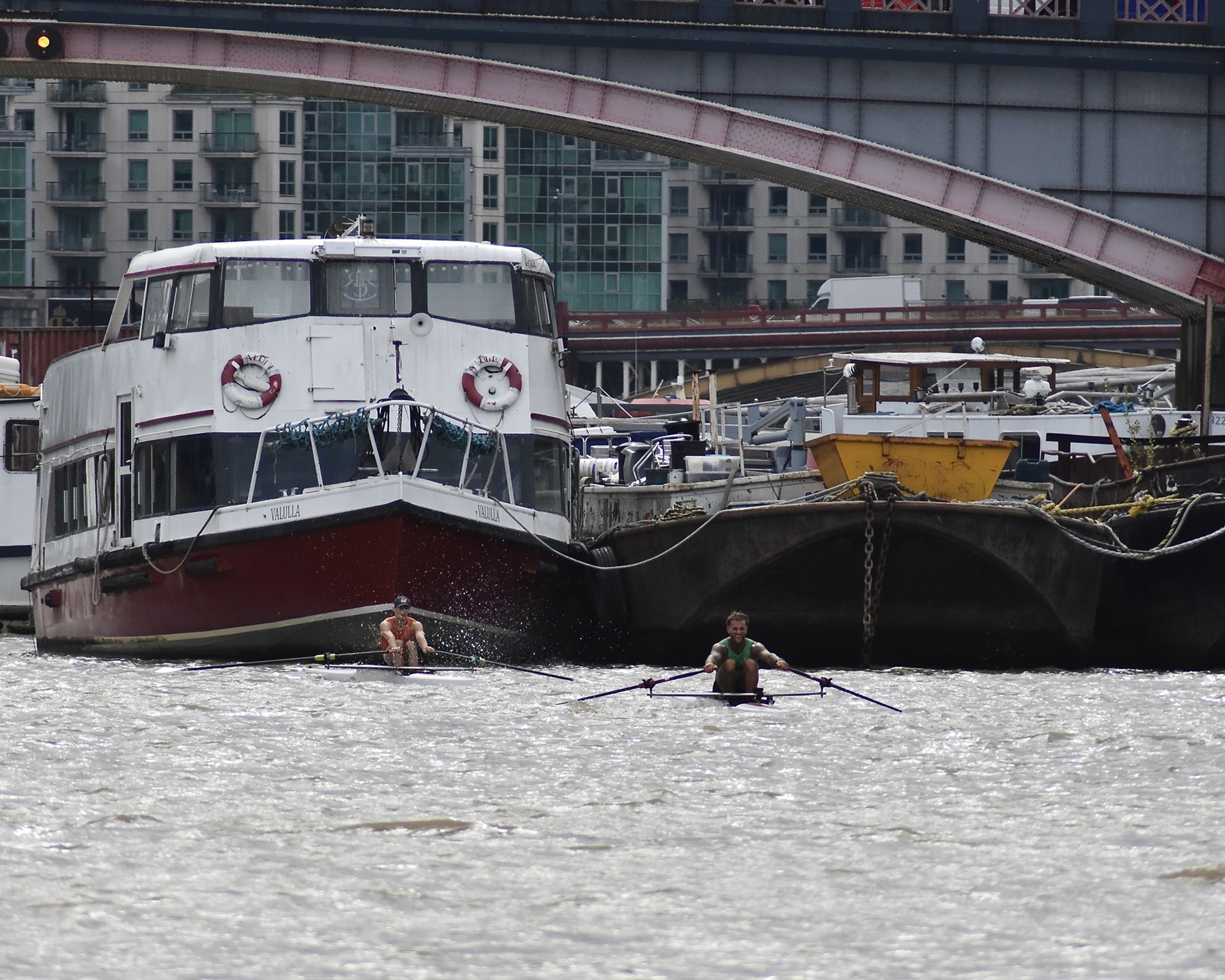
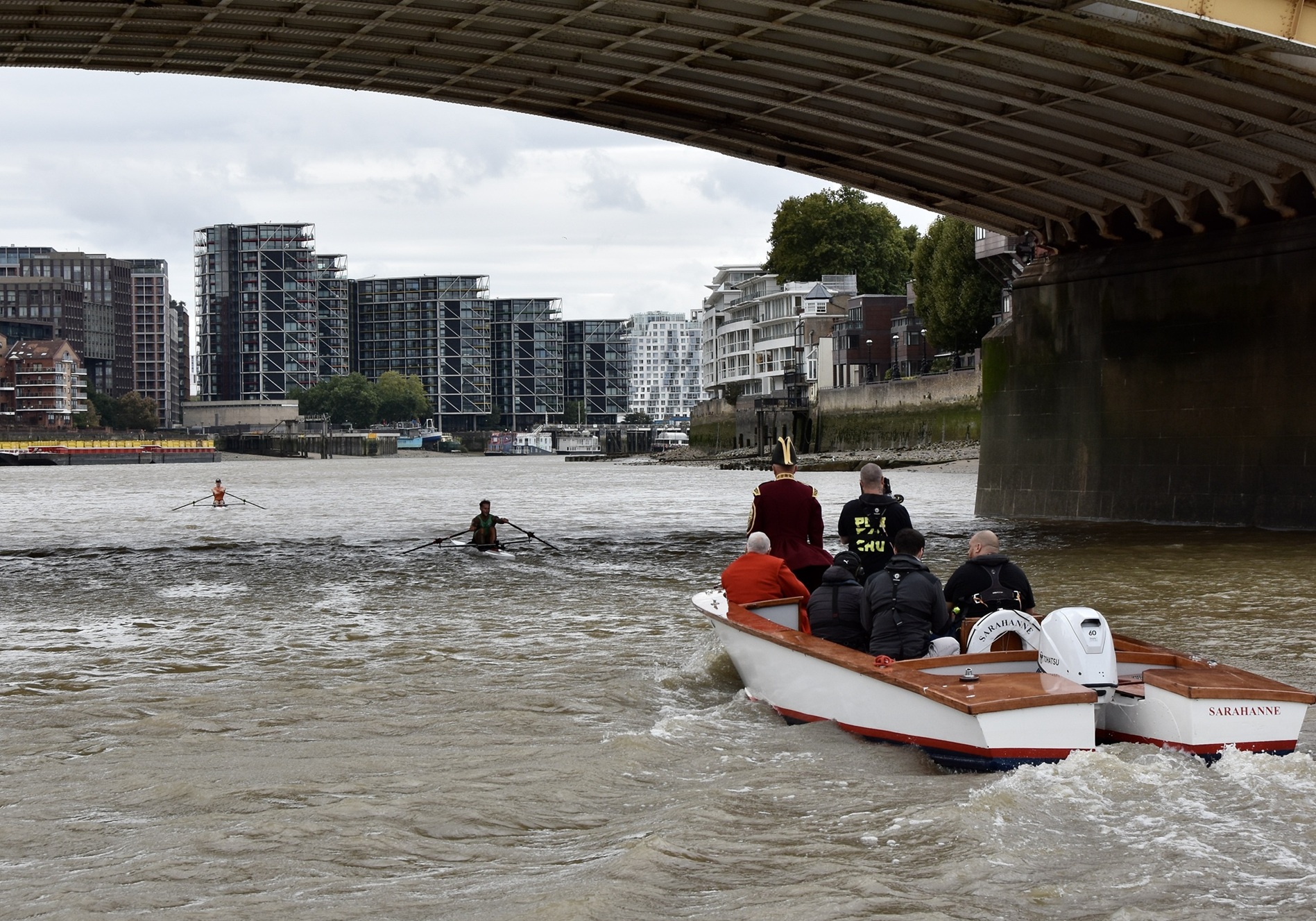
Approaching Southwark Bridge (400 metres) the boys had relaxed into their stride, a sensible move with 7,000 metres still to go.Through Southwark Bridge and approaching the London Millennium Footbridge (700 metres) and, beyond that, Blackfriars Rail Bridge (1,050 metres).At Blackfriars Rail Bridge (1,050 metres), Howard took the number three arch (right as viewed here) but Finelli followed by Milward took the number four arch (left as viewed here).Pictured from under Blackfriars Road Bridge (1,150 metres) Finelli and Milward were in the slower water near the south bank while Howard was in the faster water near the middle. Through Blackfriars Road Bridge and approaching the moored barges at Coin Street (marked with an x). Here, you can go between the moored barges and the south shore or go down the middle of the river. I thought that Callum looked as though he was going down the middle in the relatively calm water at that stage – but, as pictured here, he suddenly cut to the inside.
I later talked to coach Simon McCarthy about Howard’s move at Coin Street:
It was always the plan to do what he did. Stay in the middle of the tide, go through the number three arch of Blackfriars then cut in. Where the other two went (close to the south shore) is slack water. As you come out of Blackfriars Bridge, people say it’s tight but there is a big gap where you can get inside Coin Street, it’s definitely the fastest route but you do have to shape up through number three arch to make sure that (you are in the right position).
I also spoke to Tim Keech (who has trained two sons to Doggett’s victory) and he held that you should always go inside at Coin Street.
Past the Coin Street barges and approaching Waterloo Bridge (2,000 metres), it was still Howard, followed by Finelli, followed by Milward – who by now was increasingly falling behind the leading two. Though leading and sculling with rhythm and confidence, approaching Waterloo Bridge, Howard went wide whereas the other two took good lines through the centre arch. Umpire Prentice shouted a warning as Howard got seemingly very close to one of the Waterloo Bridge buttresses.
Simon McCarthy: (Callum’s worst steering) was as he went through Waterloo Bridge, he went over to the north shore (right as viewed by those following) but you are supposed to follow the centre of the river where the strong young flood tide is… (Before this, Callum) was about ten lengths up but Jack stayed more in the middle… and so pulled back about five lengths… This was a bit of a worry until Callum returned to the right course.
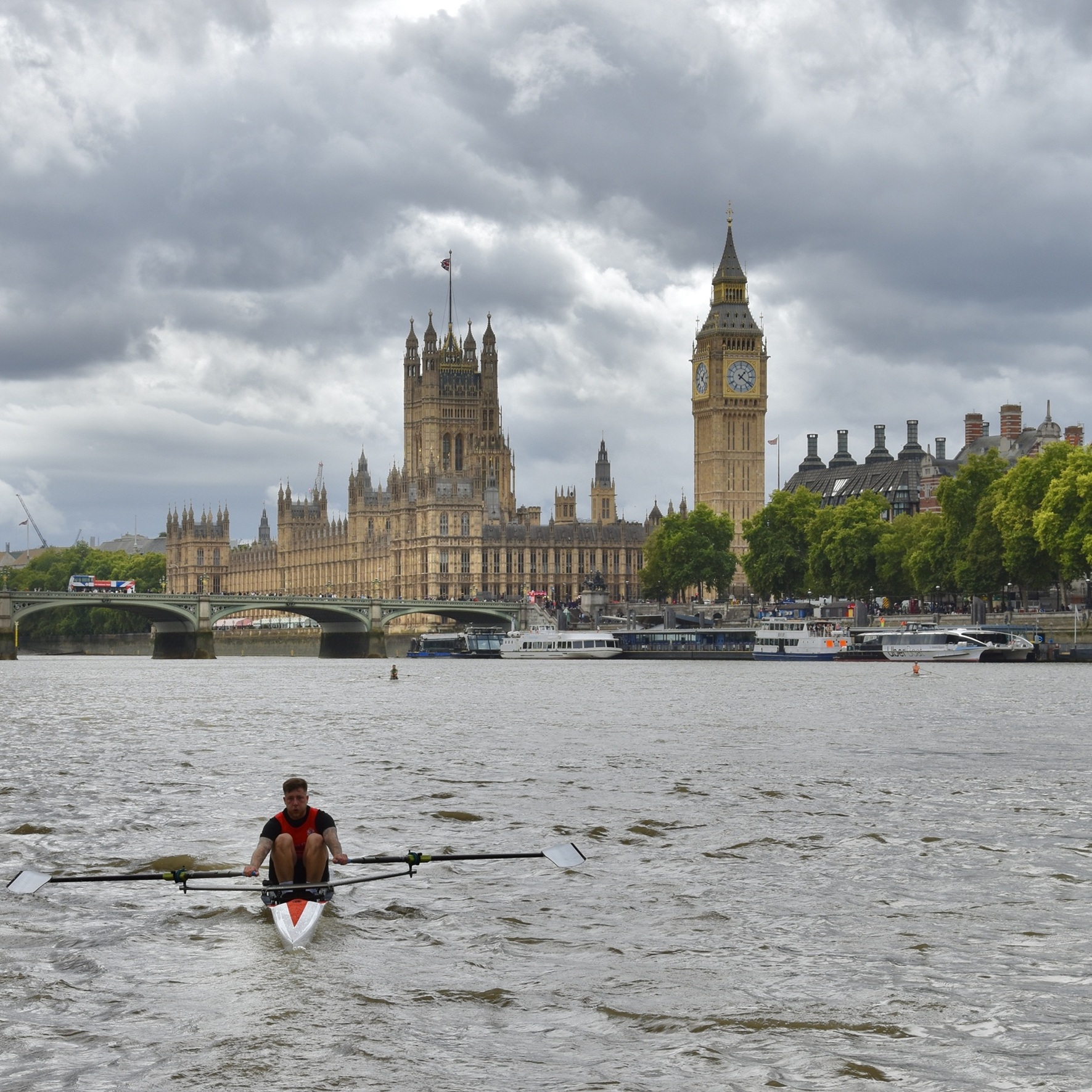
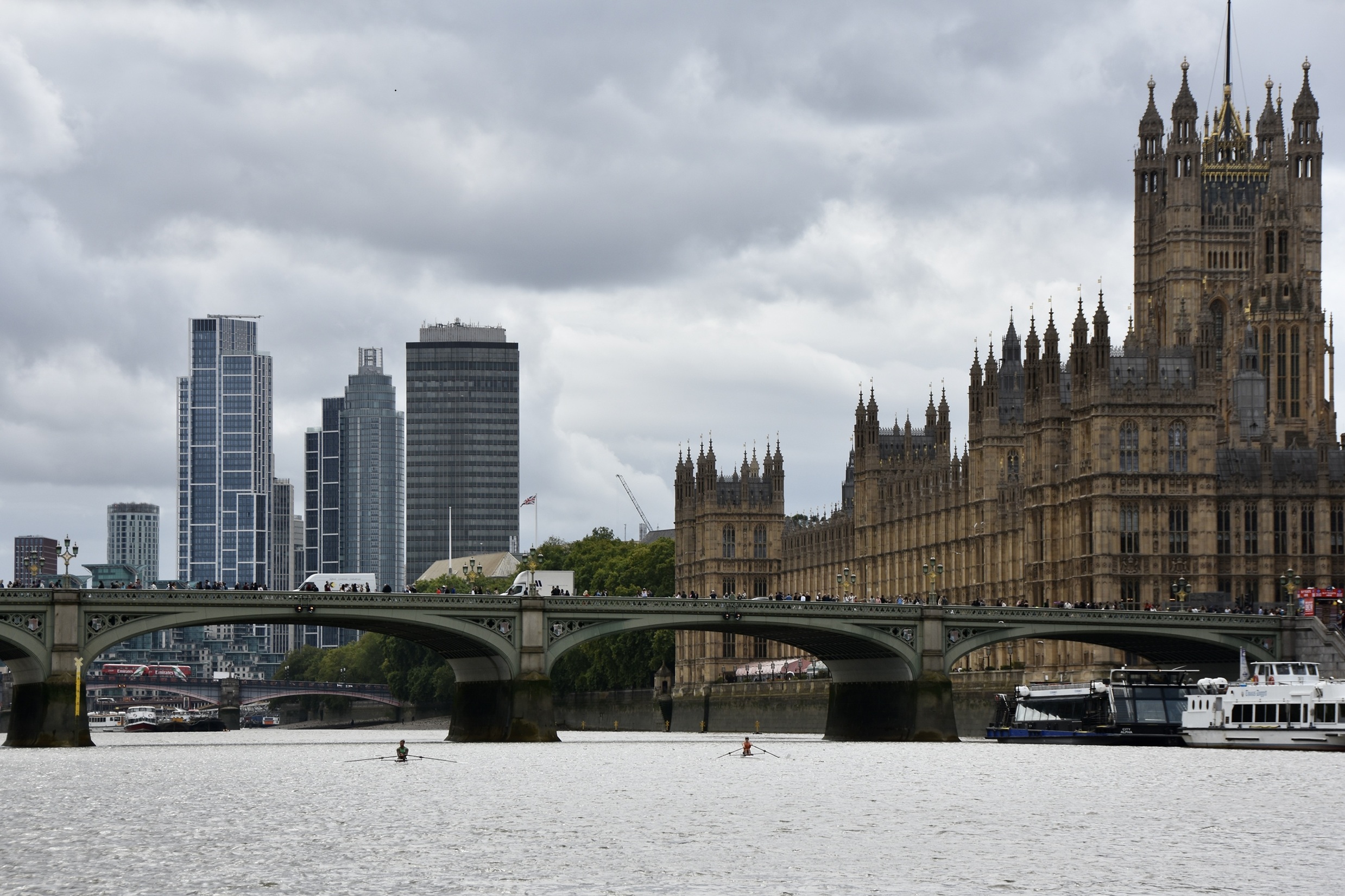
Heading towards the Palace of Westminster, Howard again left the right course and headed to the north shore towards the seat of the UK government.Viewed from a distance, it looked as if Finelli had drawn level or even passed Howard as they approached Westminster Bridge (2,950 metres). However, after the race, Howard assured me that at no stage was Finelli ahead and that he felt that he had plenty in reserve had his lead been seriously threatened. Approaching Lambeth Bridge (approximately half way at 3,650 metres) a headwind, which had been picking up for a time, was having its effect on the water and the scullers. Howard had perhaps a two lengths lead and often by this point the second placed sculler stops fighting – but amateur boxer Finelli was not throwing in the towel and, possibly implementing a Plan B, moved to the shelter of the north bank.
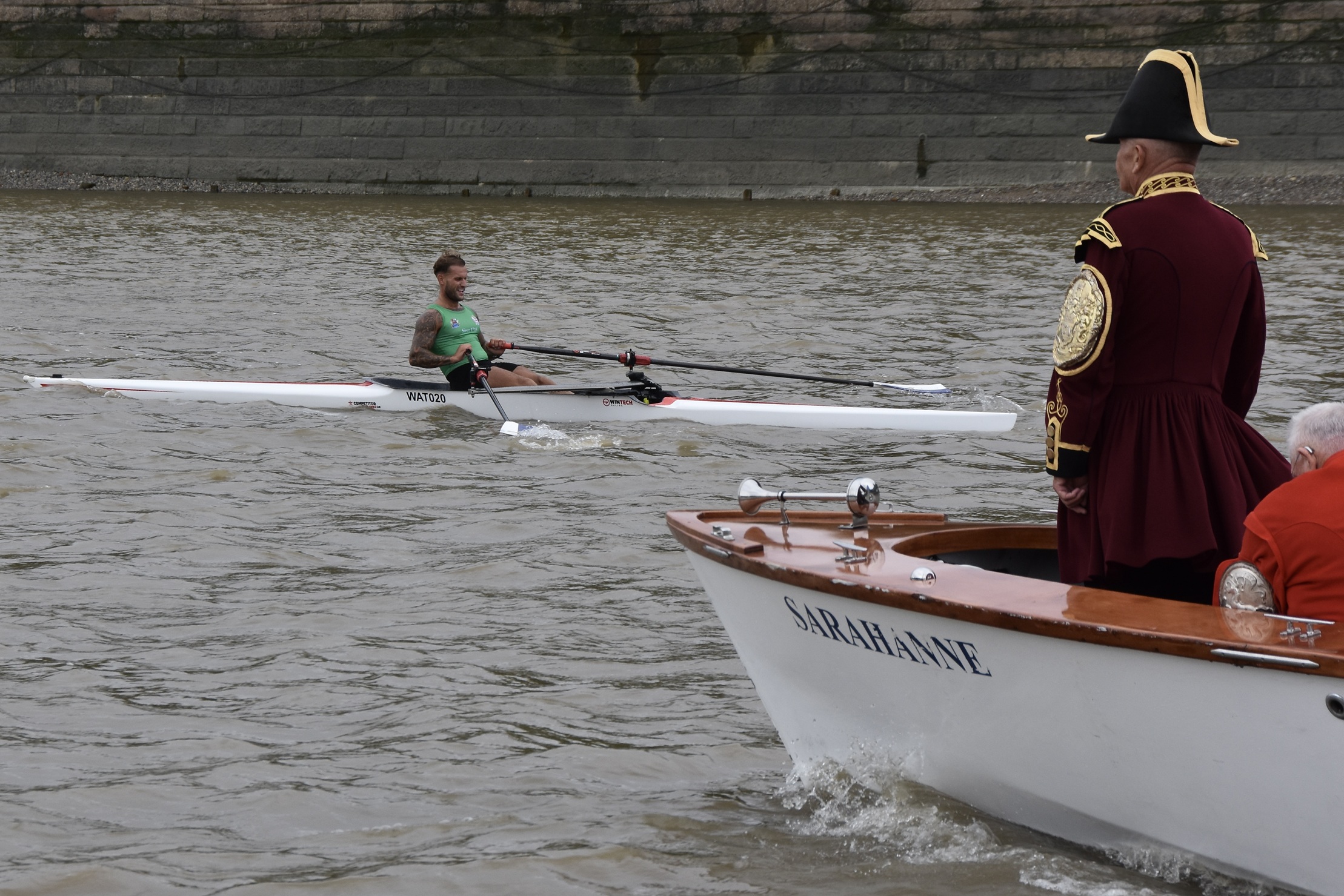
Somewhere between Lambeth and Vauxhall Bridges, umpire Prentice “dropped” Charlie Milward and he and the following flotilla passed the man who by now would clearly not win.
At Vauxhall Bridge (4,500 metres) Finelli was still sticking to Howard.
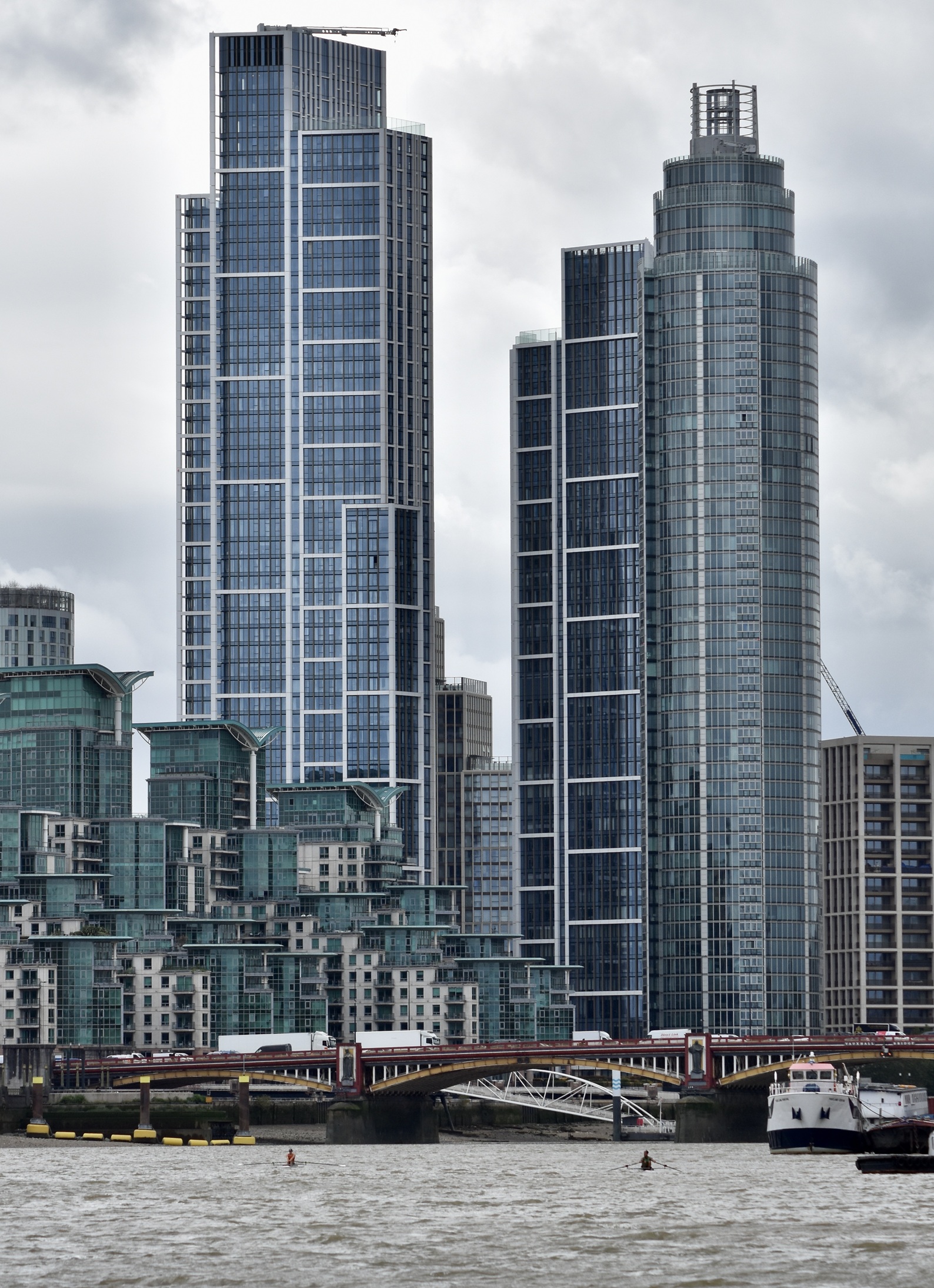
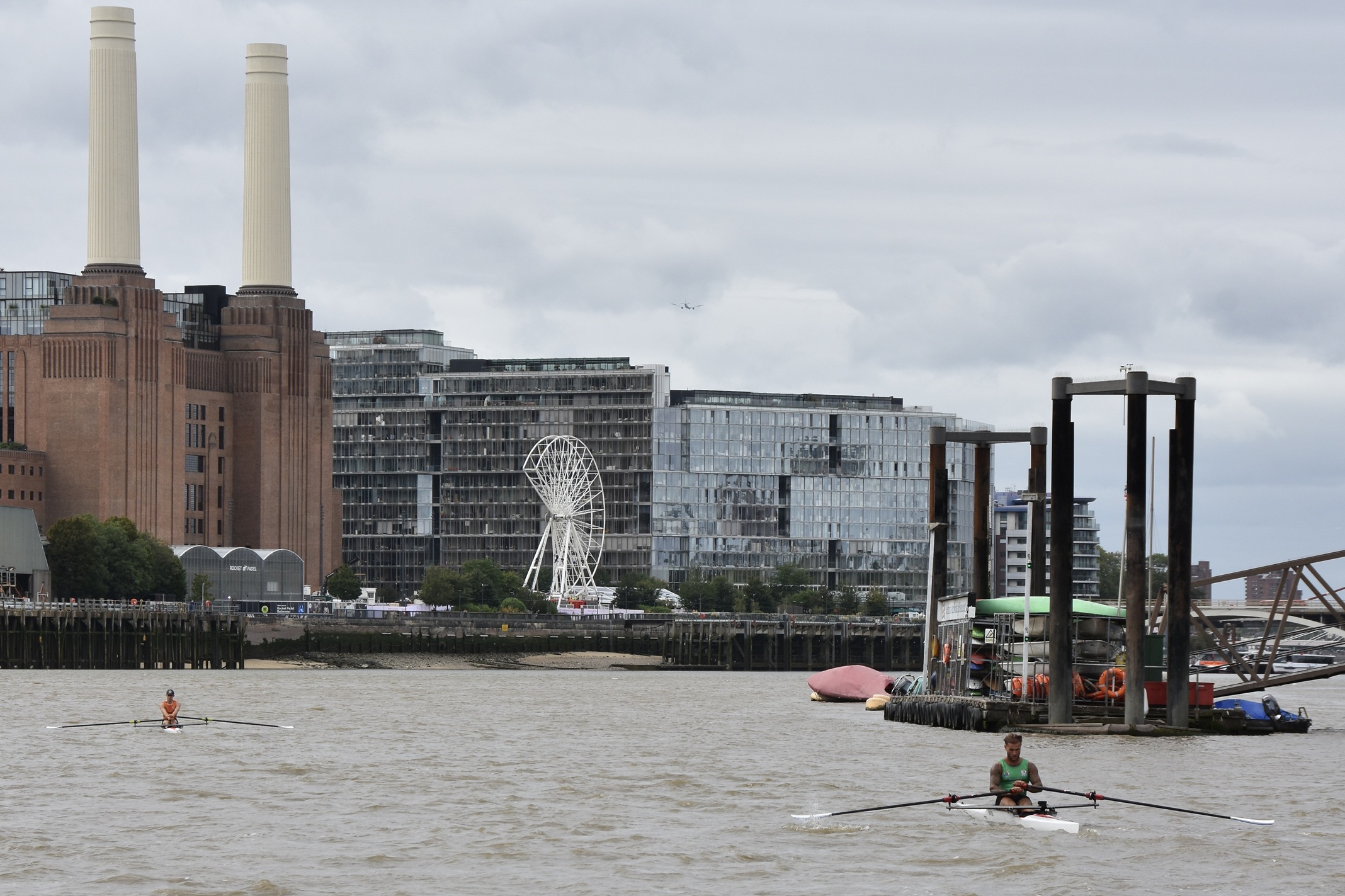
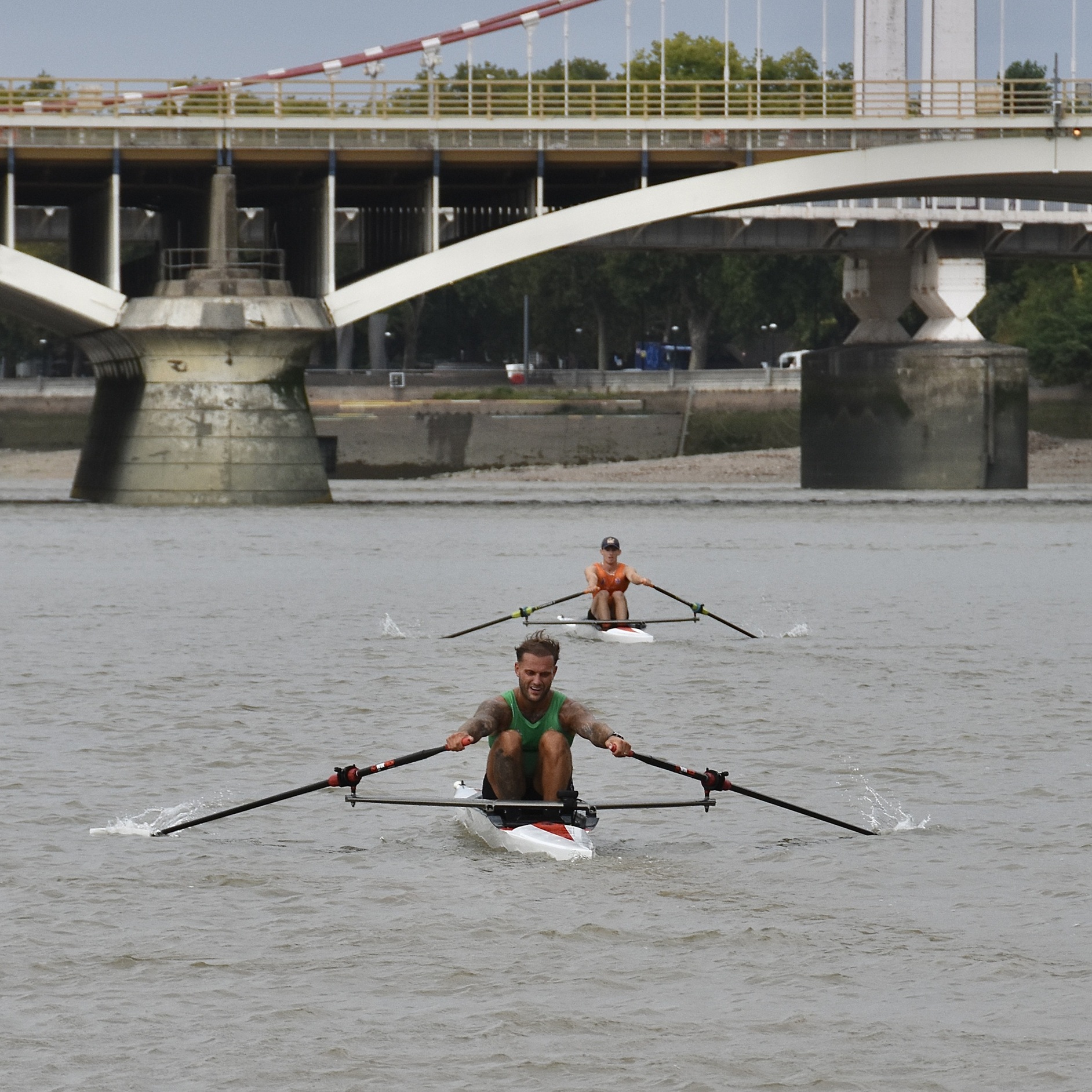
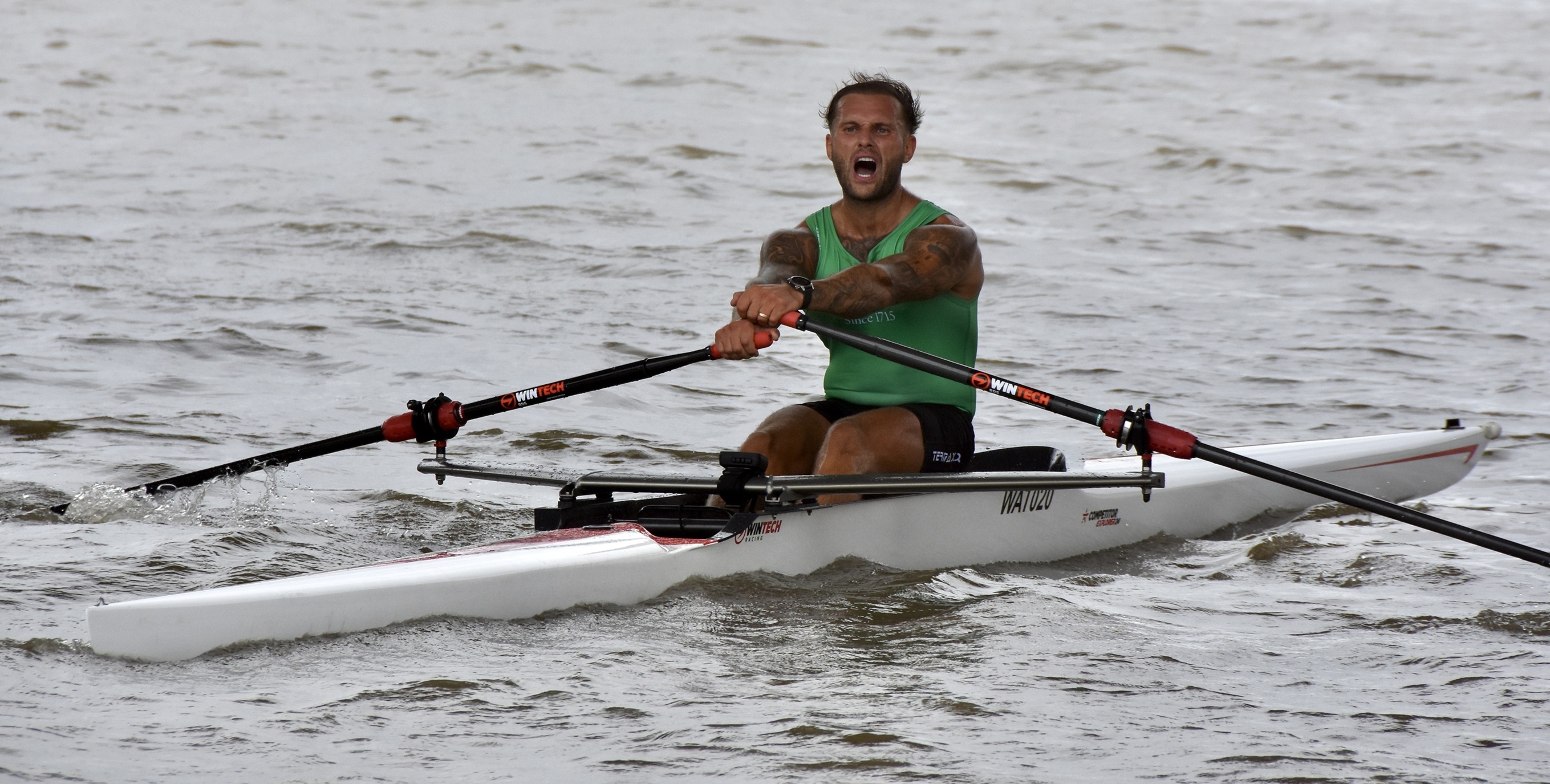
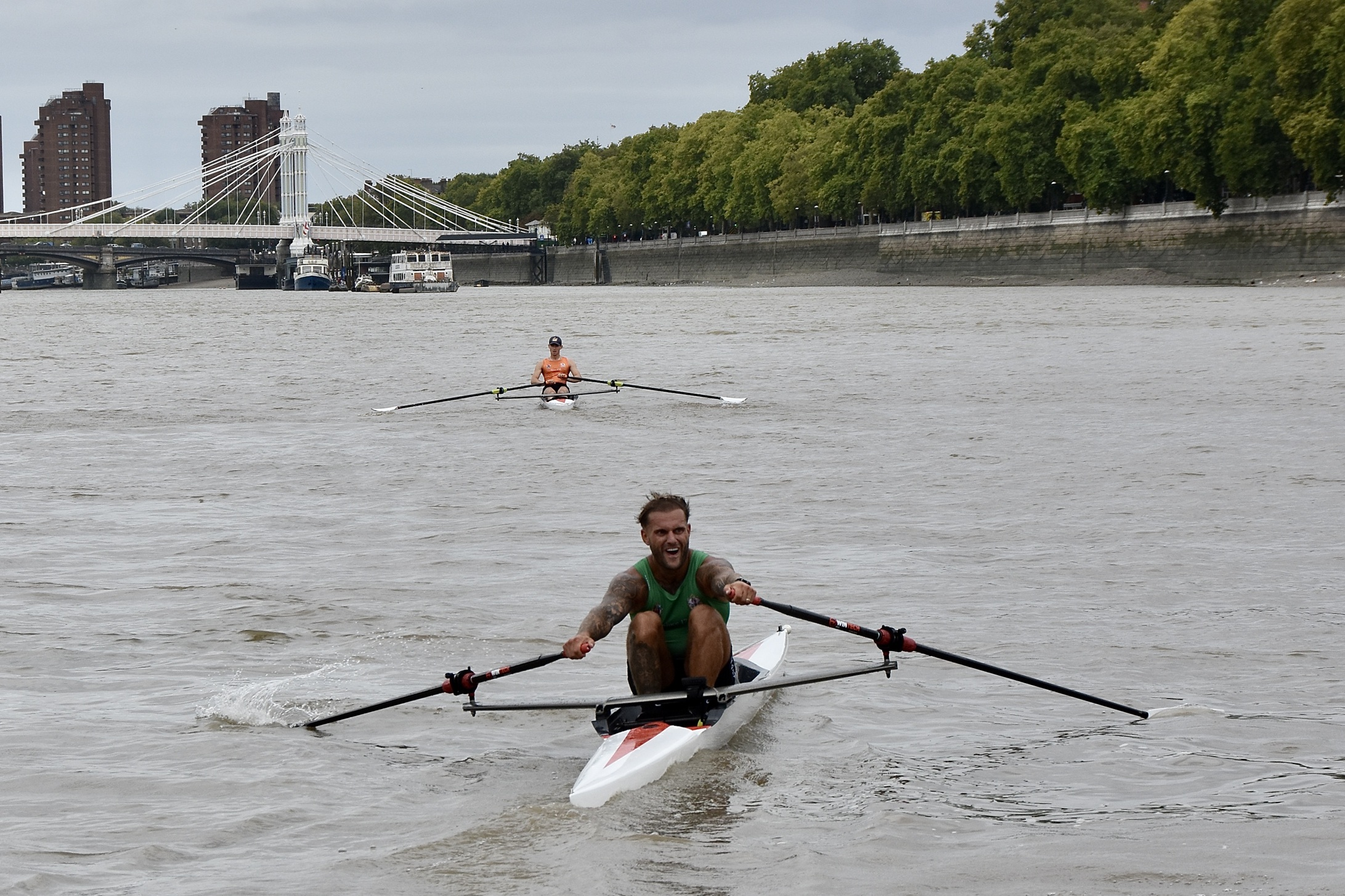
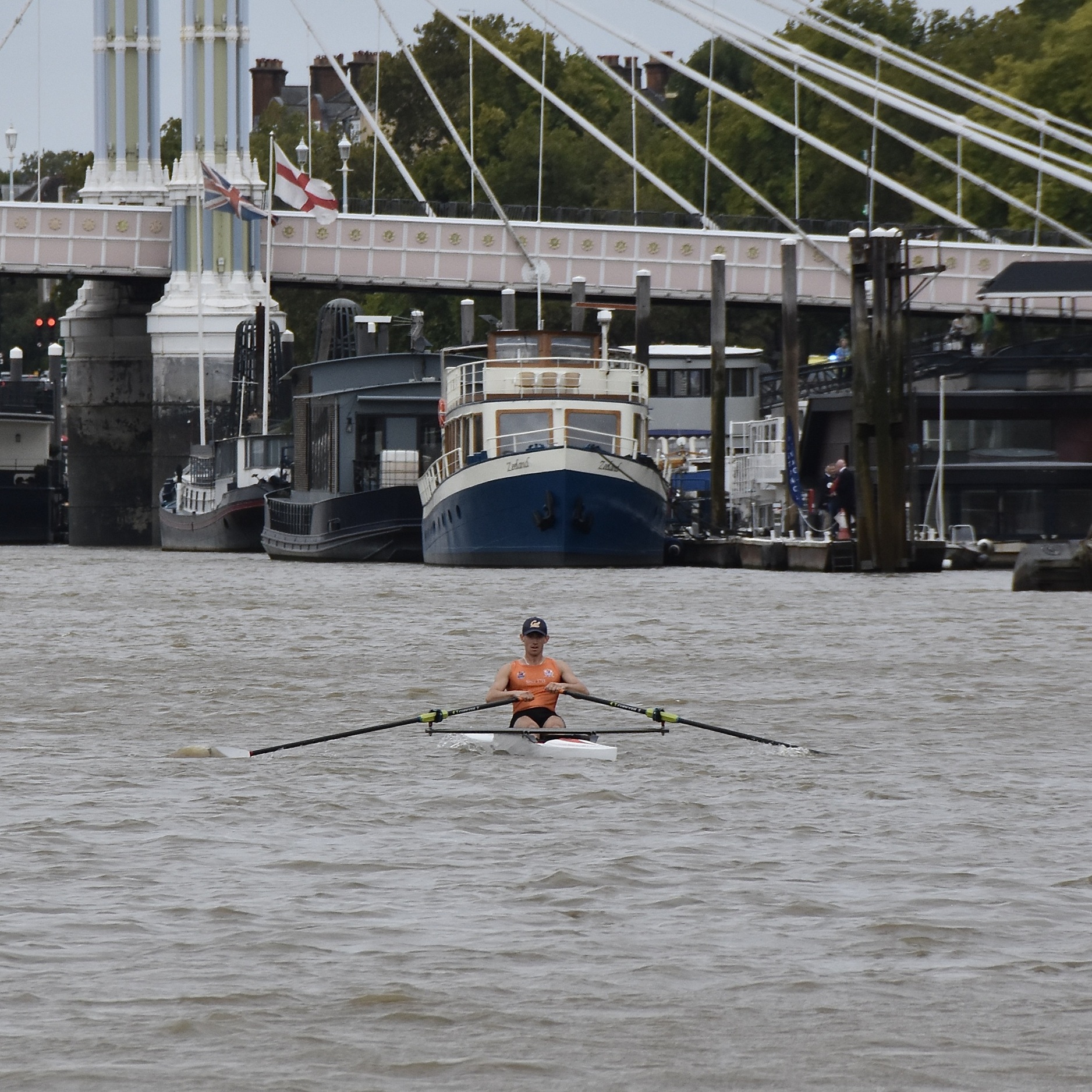
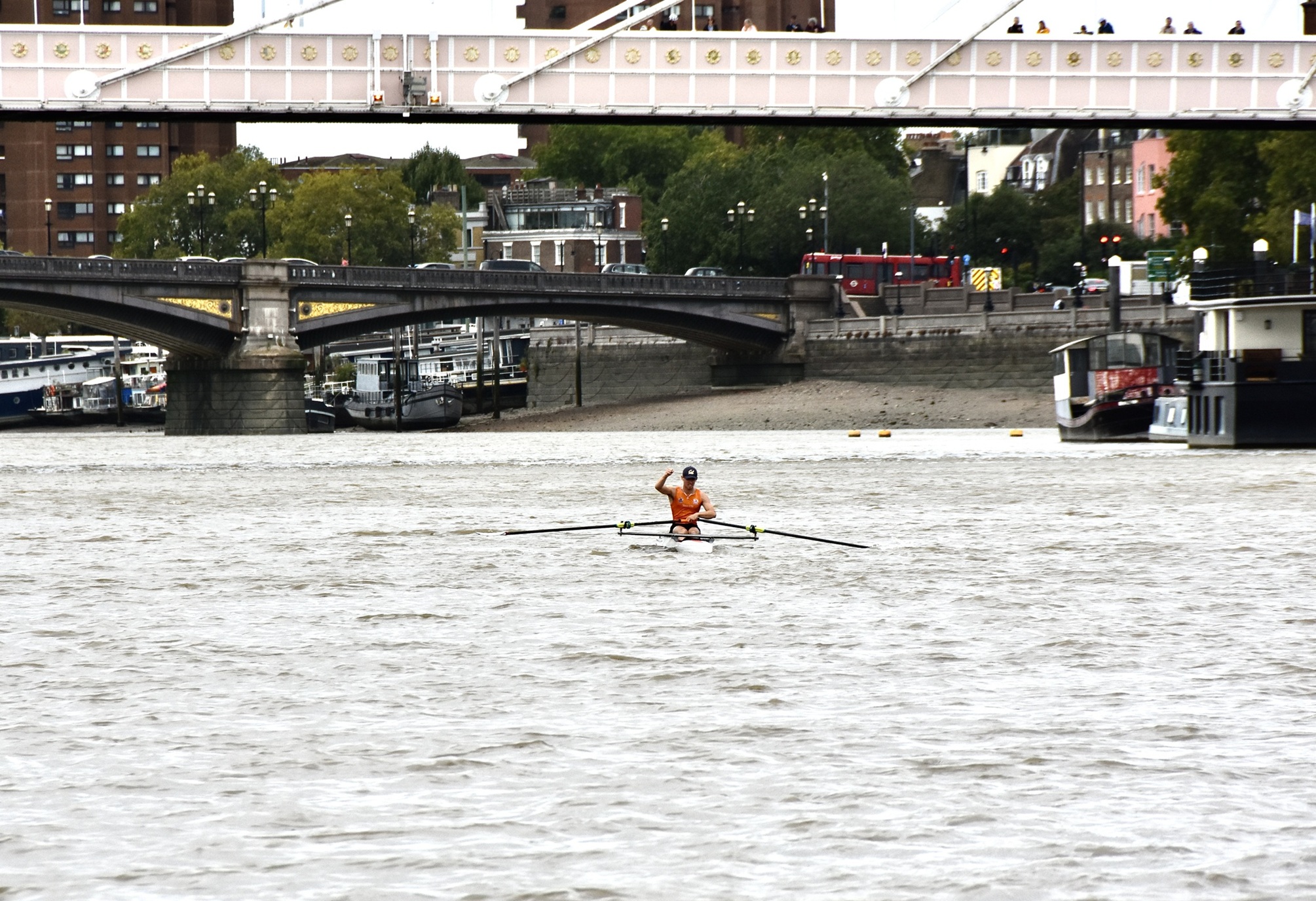
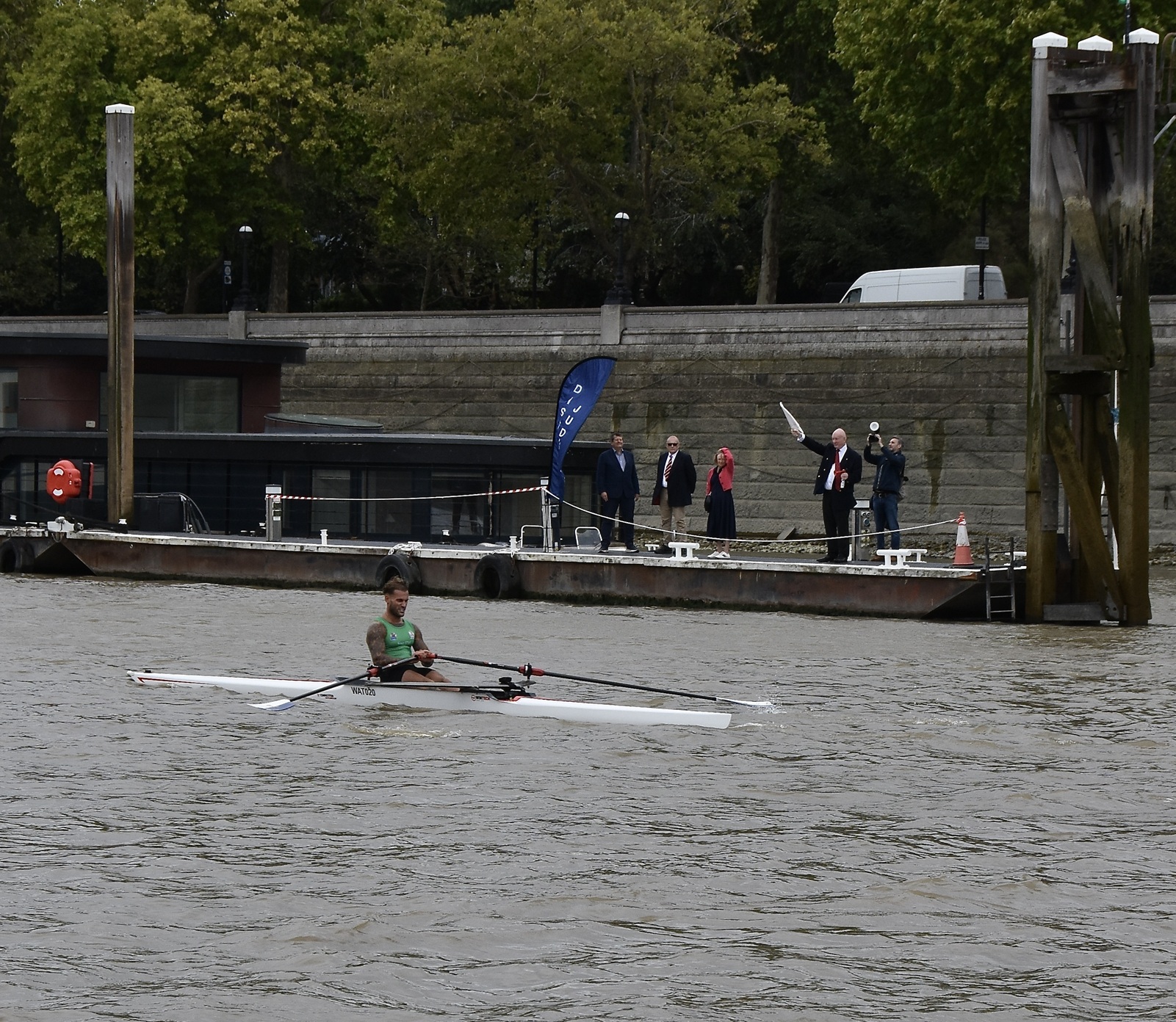
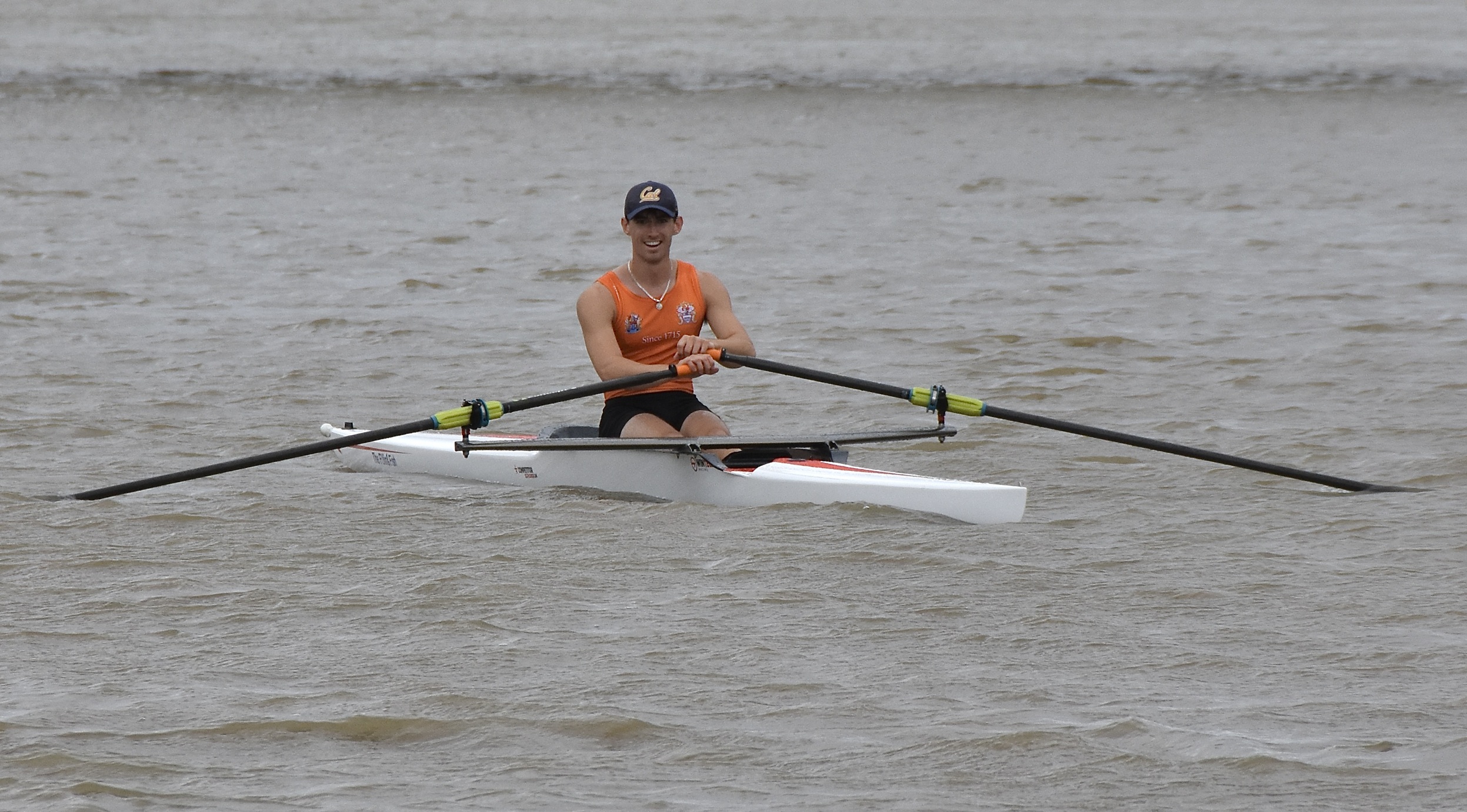
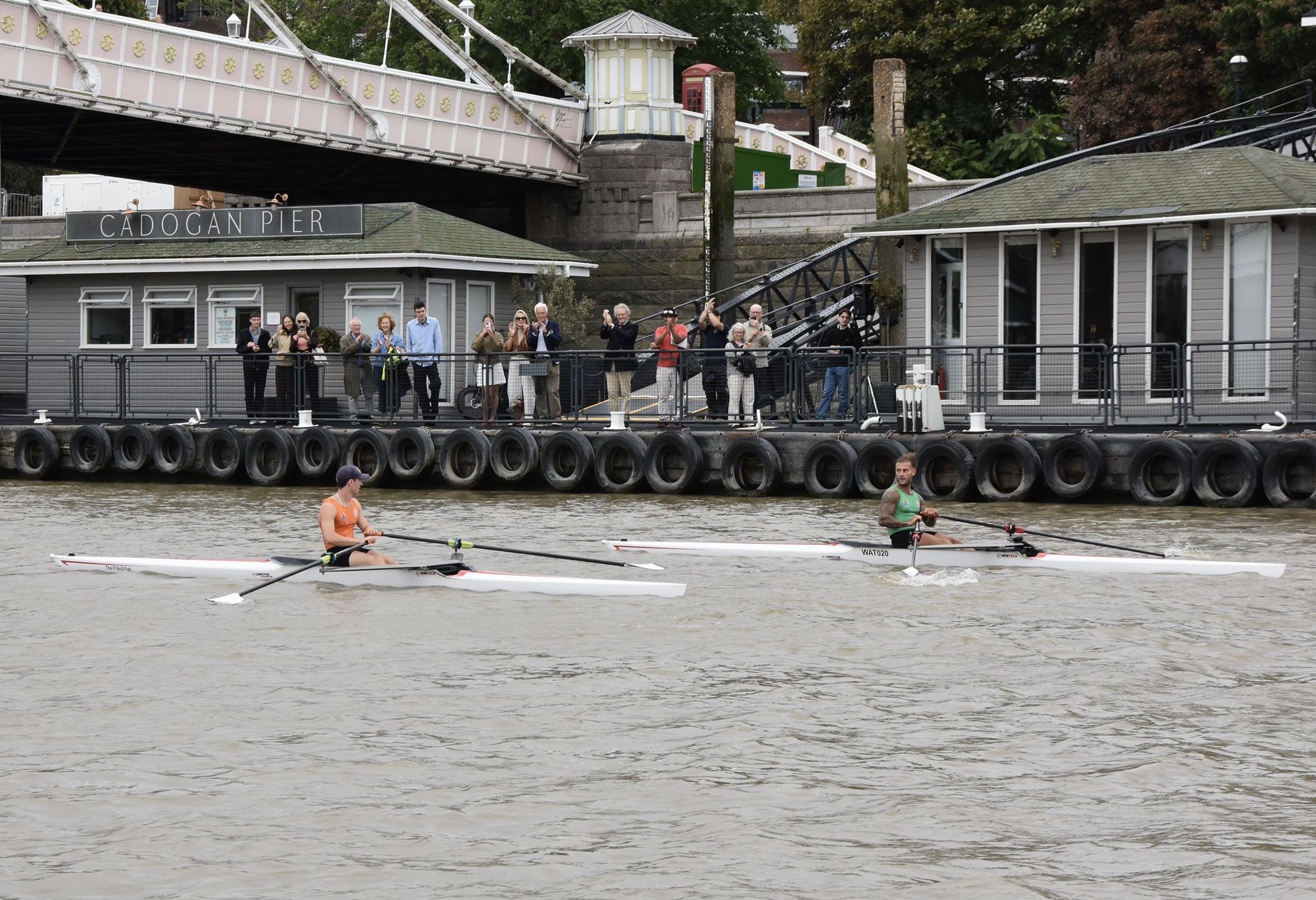
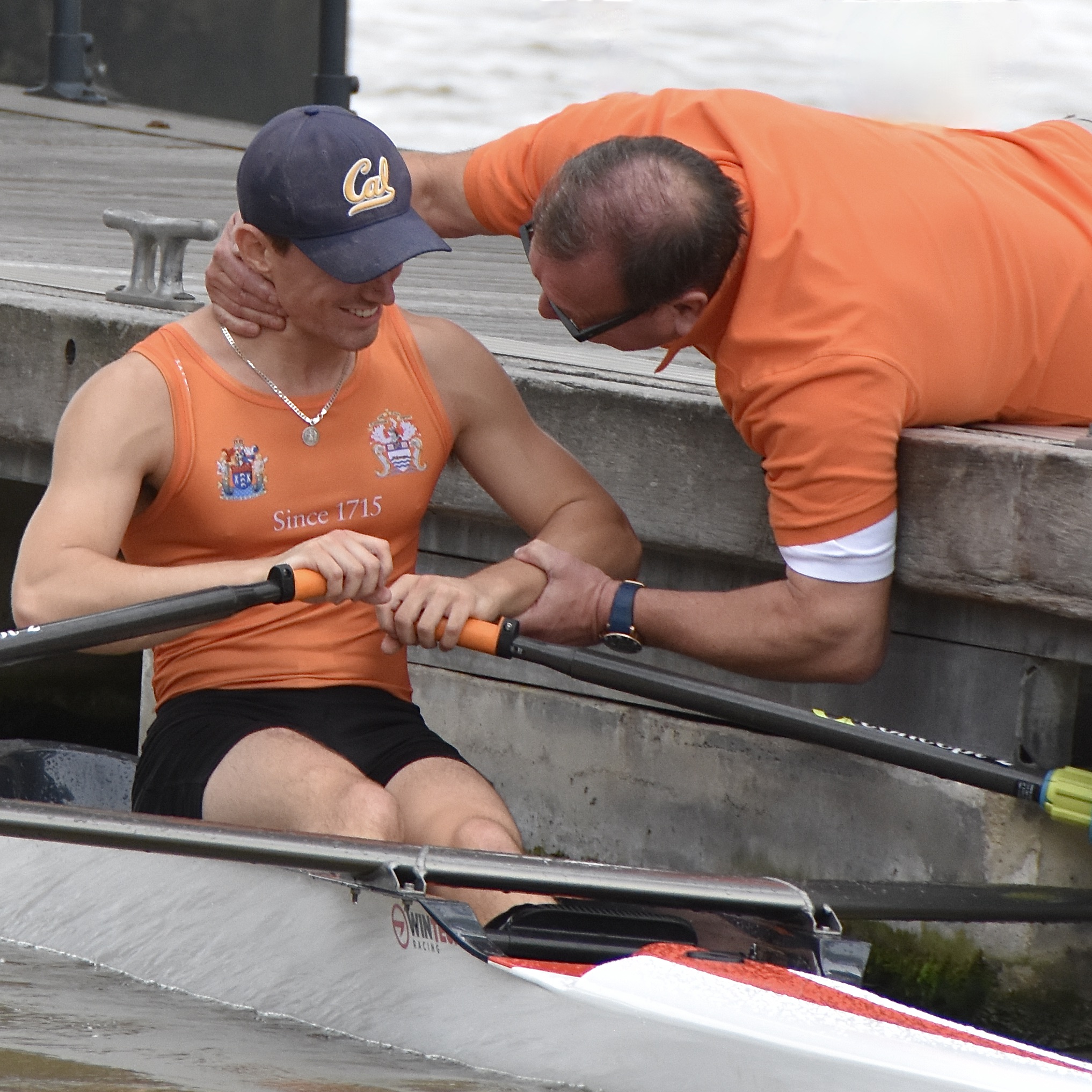
Under Vauxhall Bridge Howard’s lead was slowly increasing despite him underrating Finelli. The race was Howard’s to lose.Near the former Battersea Power Station (5,900 metres).Howard and Finelli approach Grosvenor Rail Bridge and Chelsea Road Bridge (6,300 metres).In the last 1,000 metres, a “red mist” apparently descended on Finelli and he put down an impressive amount of work.The scullers approach the finish line at 7,400 metres, sited just before the cable-stayed Albert Bridge.Usually, close to the finish the umpire would pass the second placed sculler so that the flotilla could have a clear view of the winner crossing the line. However, perhaps impressed by Finelli’s closing efforts, Bobby Prentice stayed behind the man in green, letting him finish in good style and not floundering in the wash of passing craft.Howard’s last few strokes.Callum Howard becomes the 312th winner of the Doggett’s Coat and Badge and enters the aquatic history books. Finelli finishes in 29 minutes 34 seconds.A happy Howard. His time was 28 minutes 29 seconds. Later, his sister, Lucy, later told me that she is going to be the first woman to win Doggett’s – and coach Simon McCarthy agreed. You heard it here first.Friends again.Simon McCarthy congratulates his protégé.
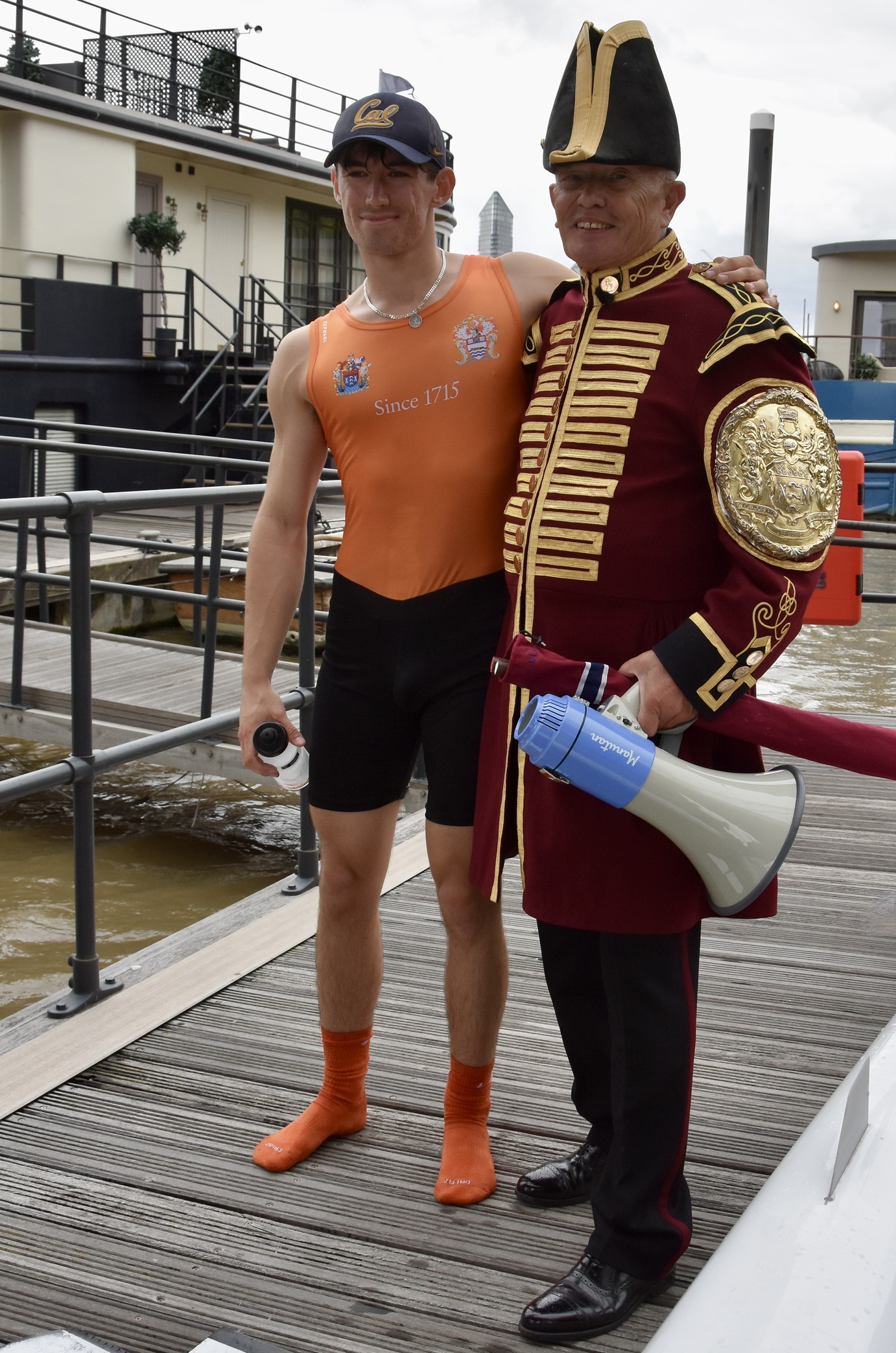
Howard and umpire Bobby Prentice – who still holds the course record.
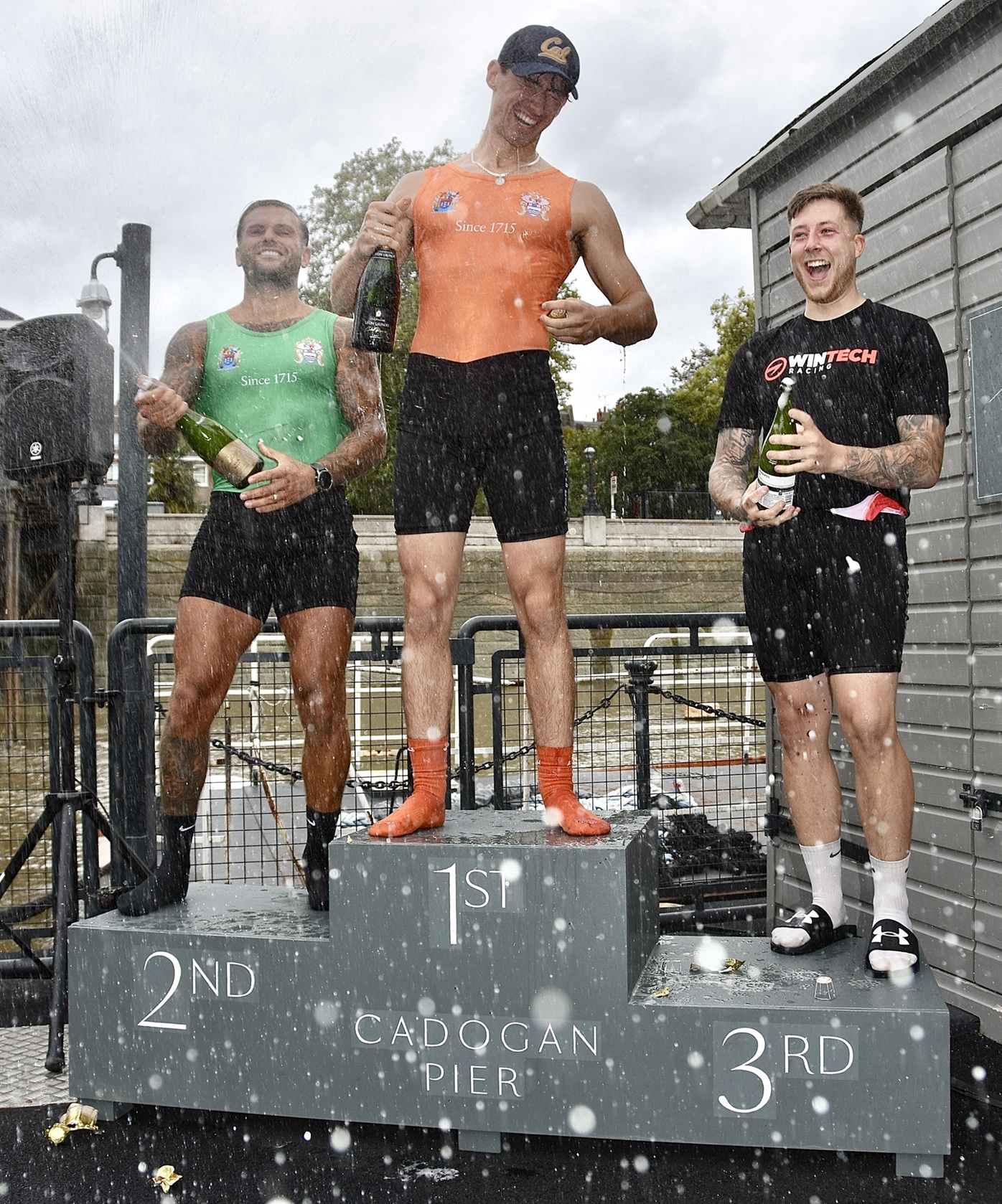
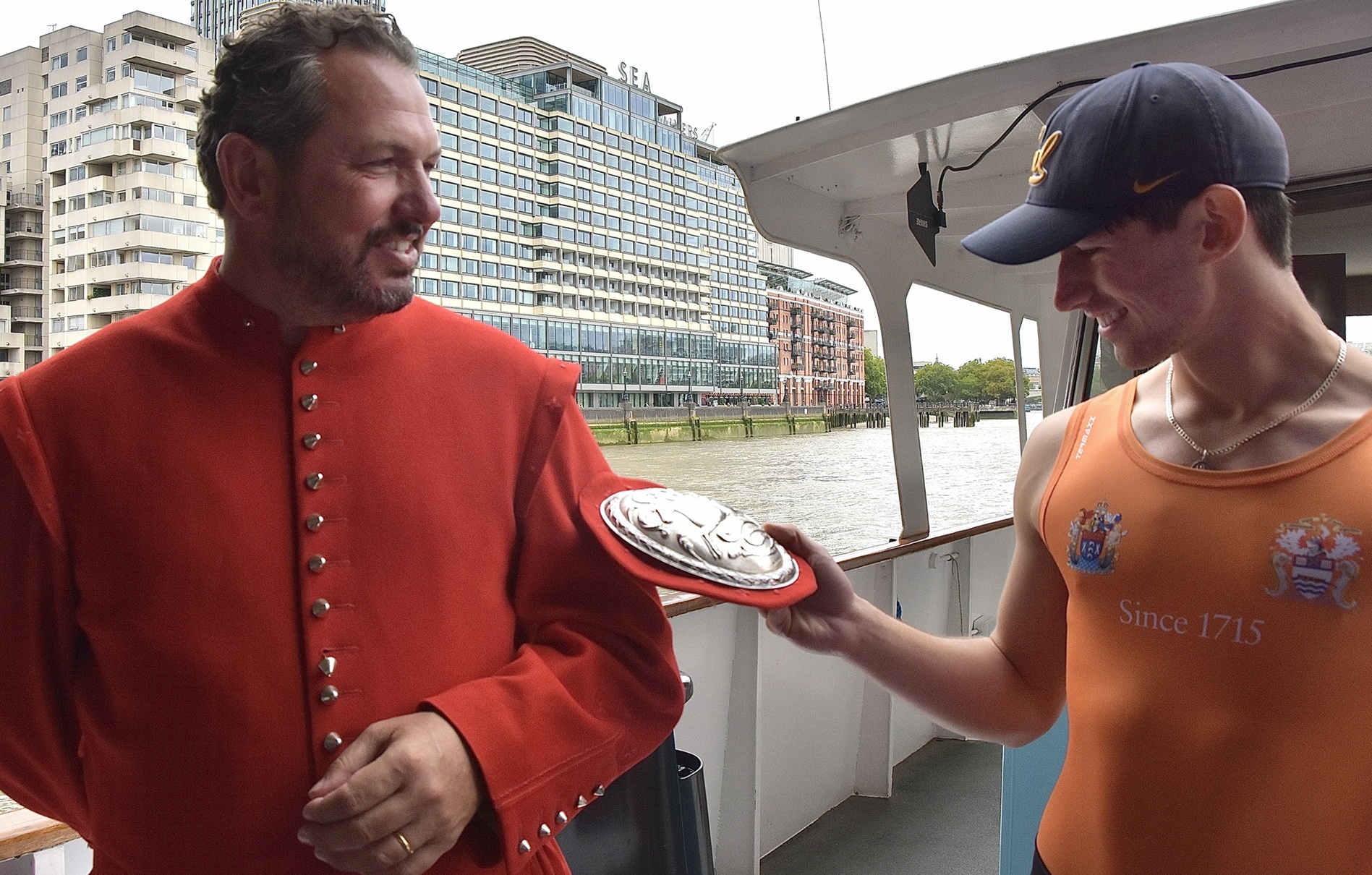
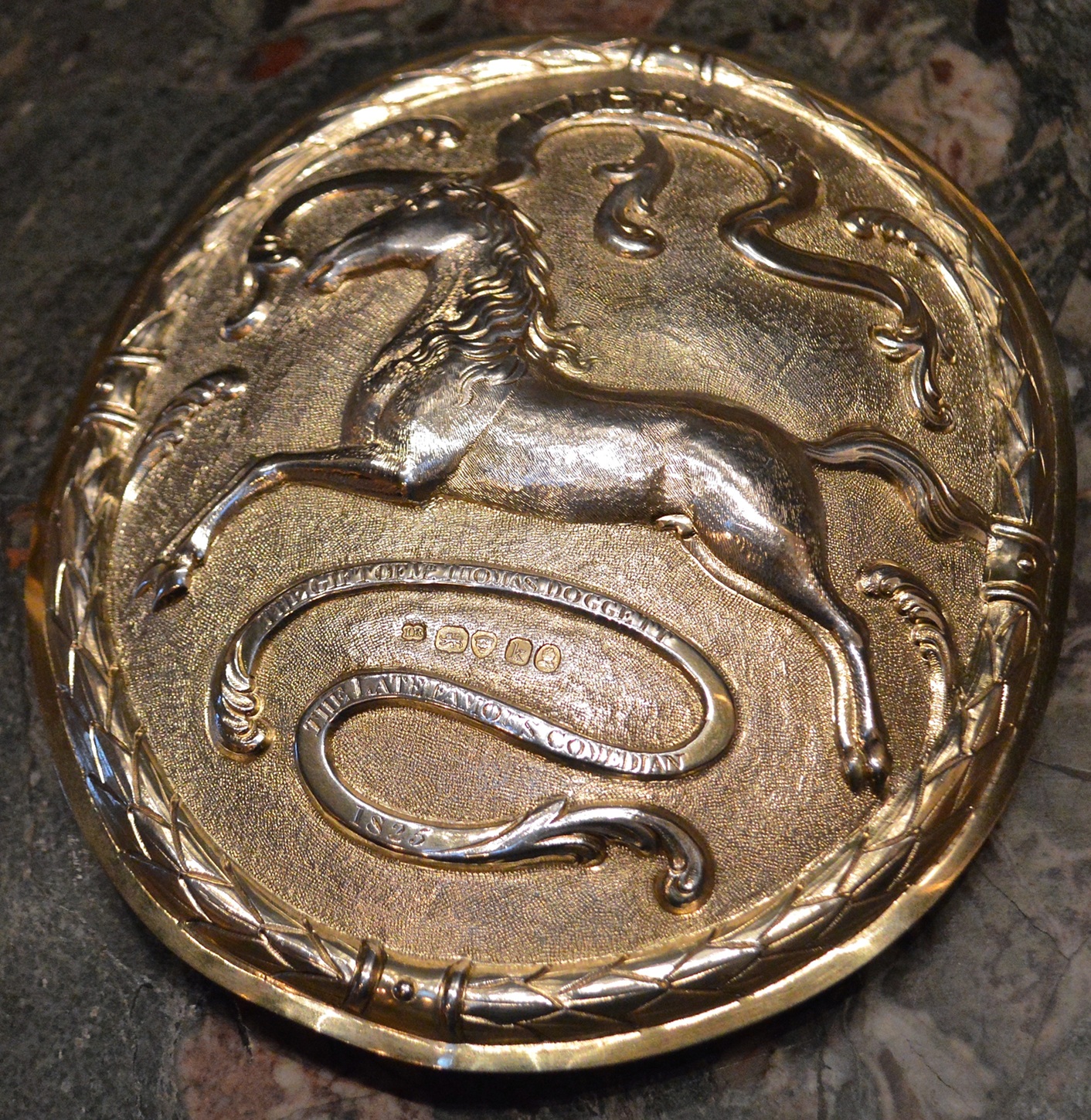
Pop stars Jack Finelli, Callum Howard and Charlie Milward.Howard admires Robert Dwan’s Doggett’s silver badge – but he will soon receive one of his own.This Doggett’s badge was won by George Staples in 1825 and is possibly the earliest surviving example. Picture: Matt Brown.