
17 August 2026
By Tim Koch
This is a revised version of my article of 11 August following information received from long-time HTBS Types, Malcolm Cook and Lionel Bailey of Quintin Boat Club. After publication of my original piece, Lionel forwarded me an article that he had obtained several years ago from the Isleworth Society, “Eights Off The Ait – Memories of Isleworth Rowing Club”, originally published in the July 2000 edition of the parish magazine of All Saints Church, Isleworth (“AIt” is an old word for a small river island such as exists at Isleworth). It was written by a Mary Brown who, if she was in her 80s in 2000, could have been an Isleworth rower in the 1930s. Malcolm has also supplied more details on the 1938 dispute between the men’s and women’s sections. Further, I include two extra pictures of the Isleworth waterfront in the 1920s and in the 1930s that I have just discovered on the London Museum site – plus more details of the women’s races abroad.
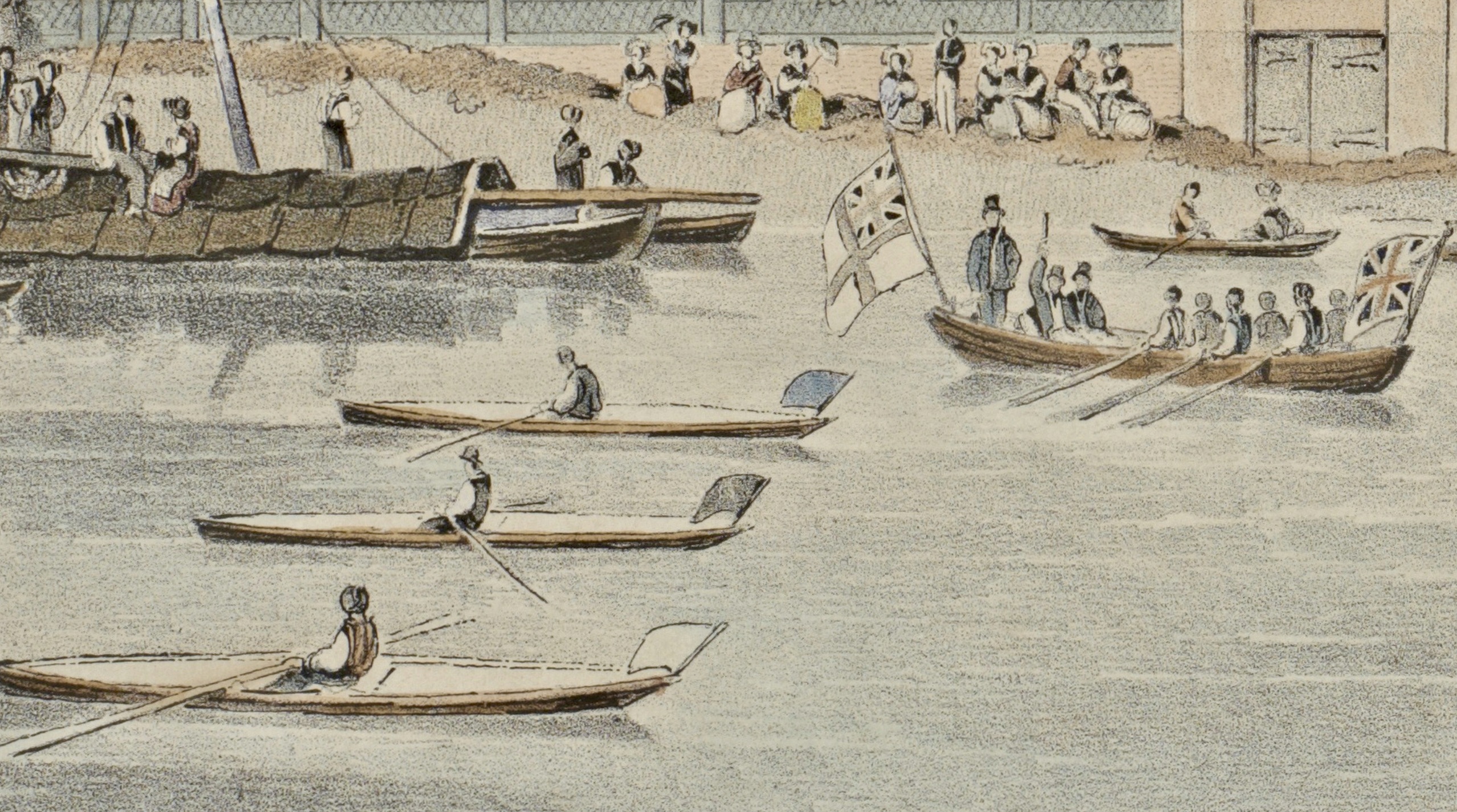
HTBS Types may remember that I previously wrote about rowing at Isleworth in my 2023 piece, The Percy-Grosvenor Nuptials Regatta of 1842. Thiswas just one of many impromptu regattas held at Isleworth in the mid-nineteenth century and beyond, mostly for watermen but sometimes with events open to gentlemen and tradesmen. Later, even women were allowed to occasionally join in.
My research for the Nuptials Regatta showed that historically there have been several rowing clubs with “Isleworth” in their names.
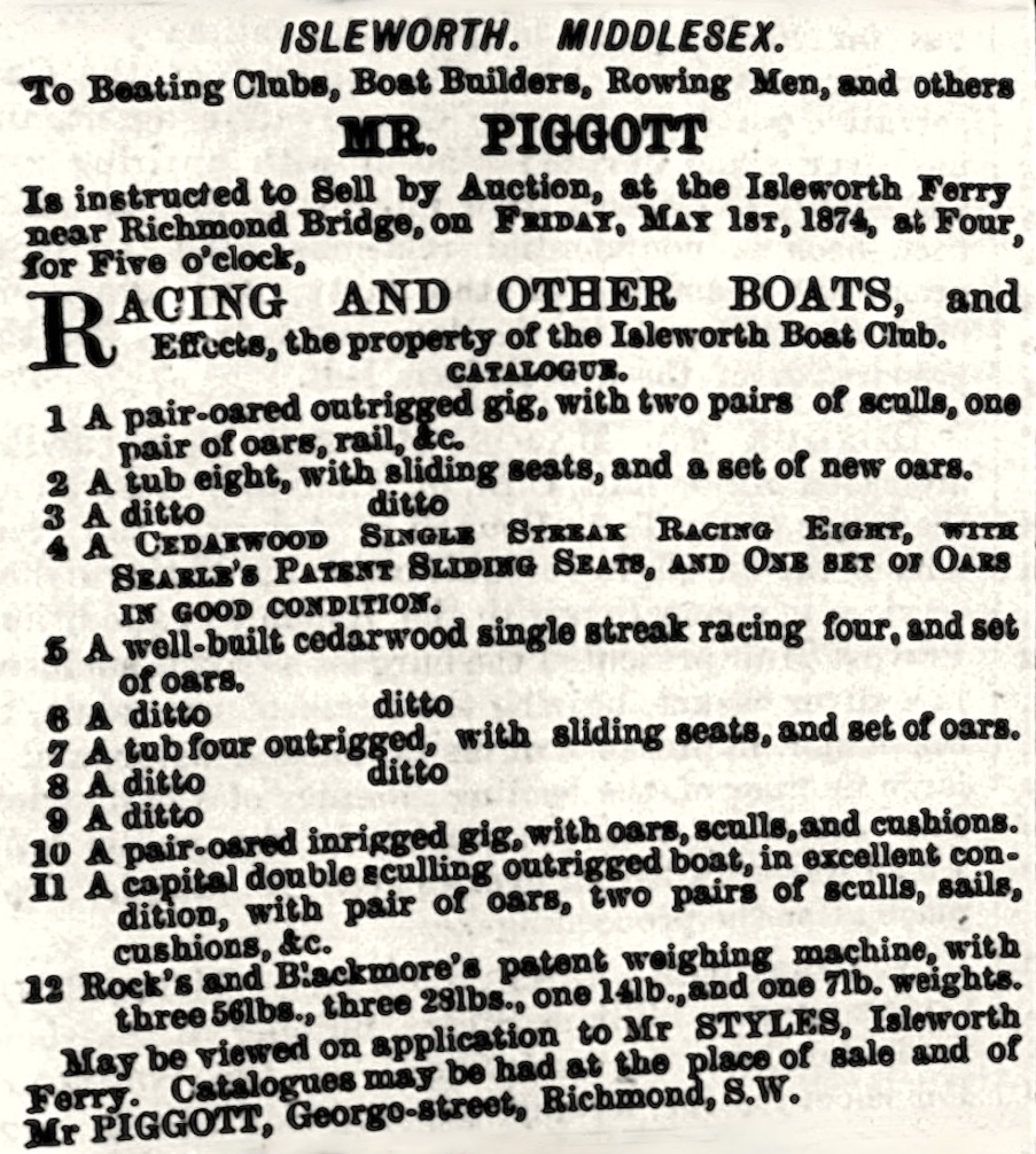
There is a newspaper reference to an Isleworth Rowing Club competing at the Kingston-on-Thames Regatta in 1872, though a report in 1900 noted that it had not existed for some years. I speculate that the boat club and the rowing club were the same.
The Isleworth Stella RC, a tradesmen’s club, existed for three brief but successful years, 1870 – 1872.
In 1886, the St John’s (Isleworth) Rowing Club aka the St John’s Institute Rowing Club (affiliated to the Tradesmen’s Rowing Club Association) was described as “a young club” and was very active in the 1880s and 1890s. In 1891, the Richmond and Twickenham Times called it, one of the largest (rowing clubs) on the Thames above London and its membership is steadily increasing… Strangely however, in 1900 it was reported that the club had decided to bring itself to an end.
Interestingly, in the Richmond and Twickenham Times of 15 August 1891, there is a report titled “Isleworth Ladies’ Rowing Club”:
The preliminary heats for the first annual contest got up by the first trained Ladies’ Rowing Club on the Thames were rowed on Saturday… Taking into consideration that the competitors had only put in practice in the past three weeks, the rowing was very good.
Only four boats entered and a man had to row at bow in each of the coxed double skiffs allegedly because a male sculler had drowned a few weeks earlier in one of the St John’s club races and having a man onboard was regarded as a safety precaution.
The prizes for the ladies’ race were “a pretty travelling clock” for the winner and a silver fruit knife for her instructor.
In its report on the race, the Middlesex Independent also of 15 August 1891 reported:
The (Isleworth Ladies’ Rowing Club) has now been in existence some six months, having been the outcome of the race for ladies at last year’s watermen’s regatta, and, during its life, it has been the means of providing healthy and rational amusement to a large number of girls, the roll of membership containing over thirty names…
The Independent continued:
The boat house at the church was thronged with ladies wearing the pretty light and dark blue dresses which form the distinctive badge of membership… They deserved the admiration too, for are they not forming a record of Isleworth and giving to the little waterside village the credit of the first down river spot to bring off a ladies’ club race? Regattas up the Thames are often patronised by the fair sex as competitors but they scarcely ever row under the colours of any recognised club, whilst here, in the almost unknown village, there is a flourishing combination of some months standing.
Sadly, the only other newspaper reference to the club is in 1895 when the Middlesex Mercury simply asks, Will the Isleworth Ladies Rowing Club be resurrected this season?
A 1903 newspaper article noted that, a movement has recently been started in (Isleworth) to resuscitate the rowing club, which in past years was so very successful… but the promoters have been accorded little support from the local rowing fraternity.
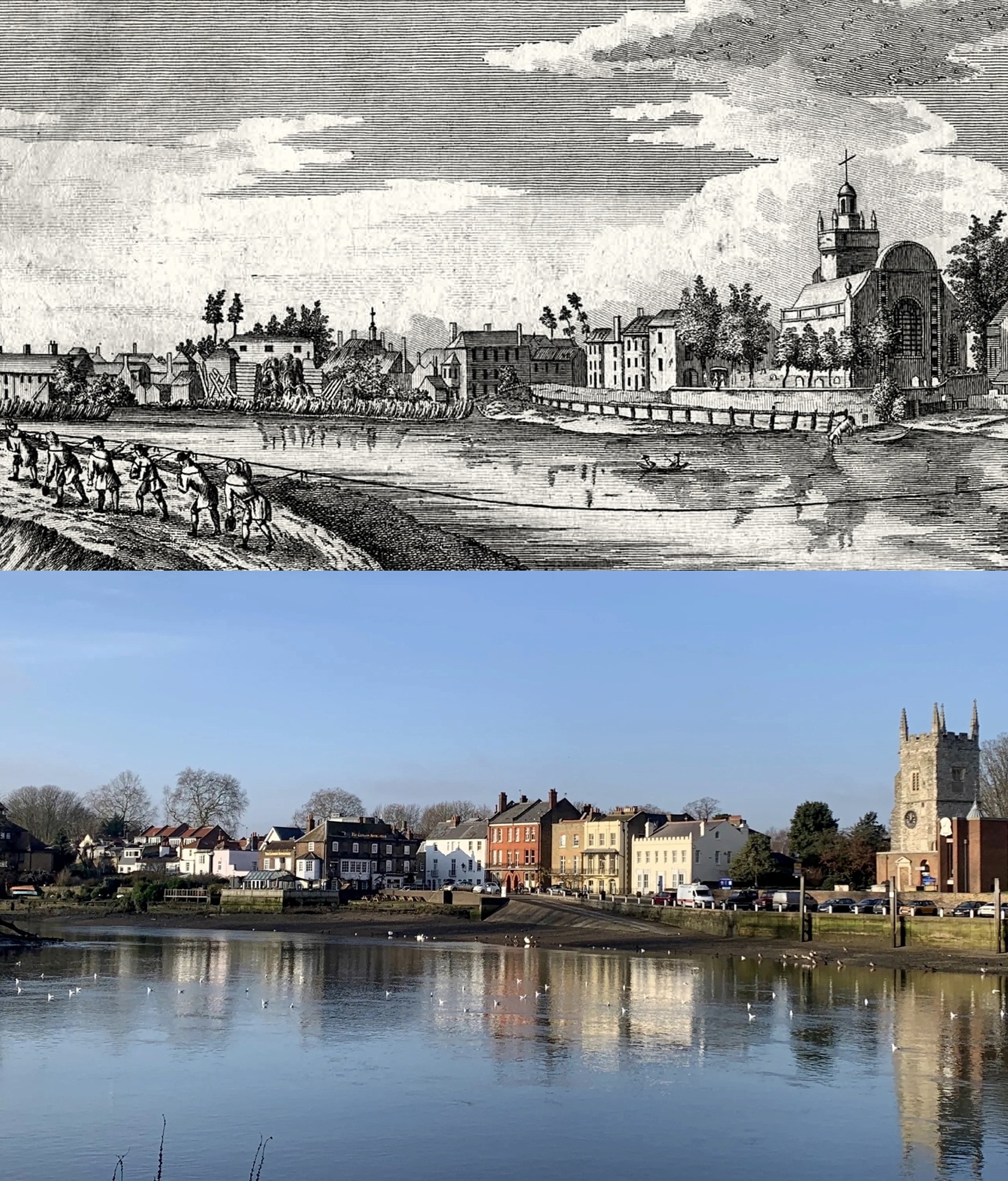
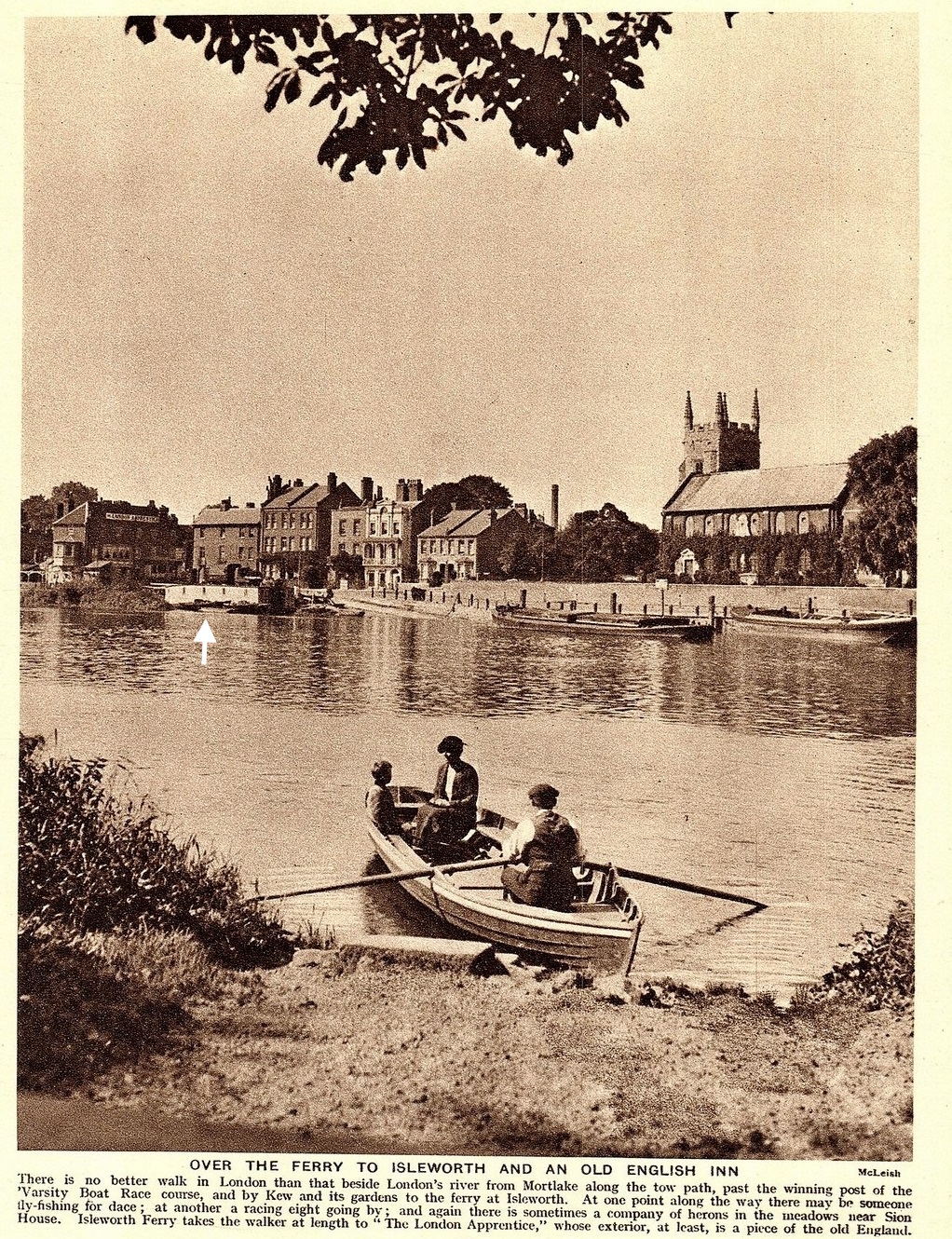
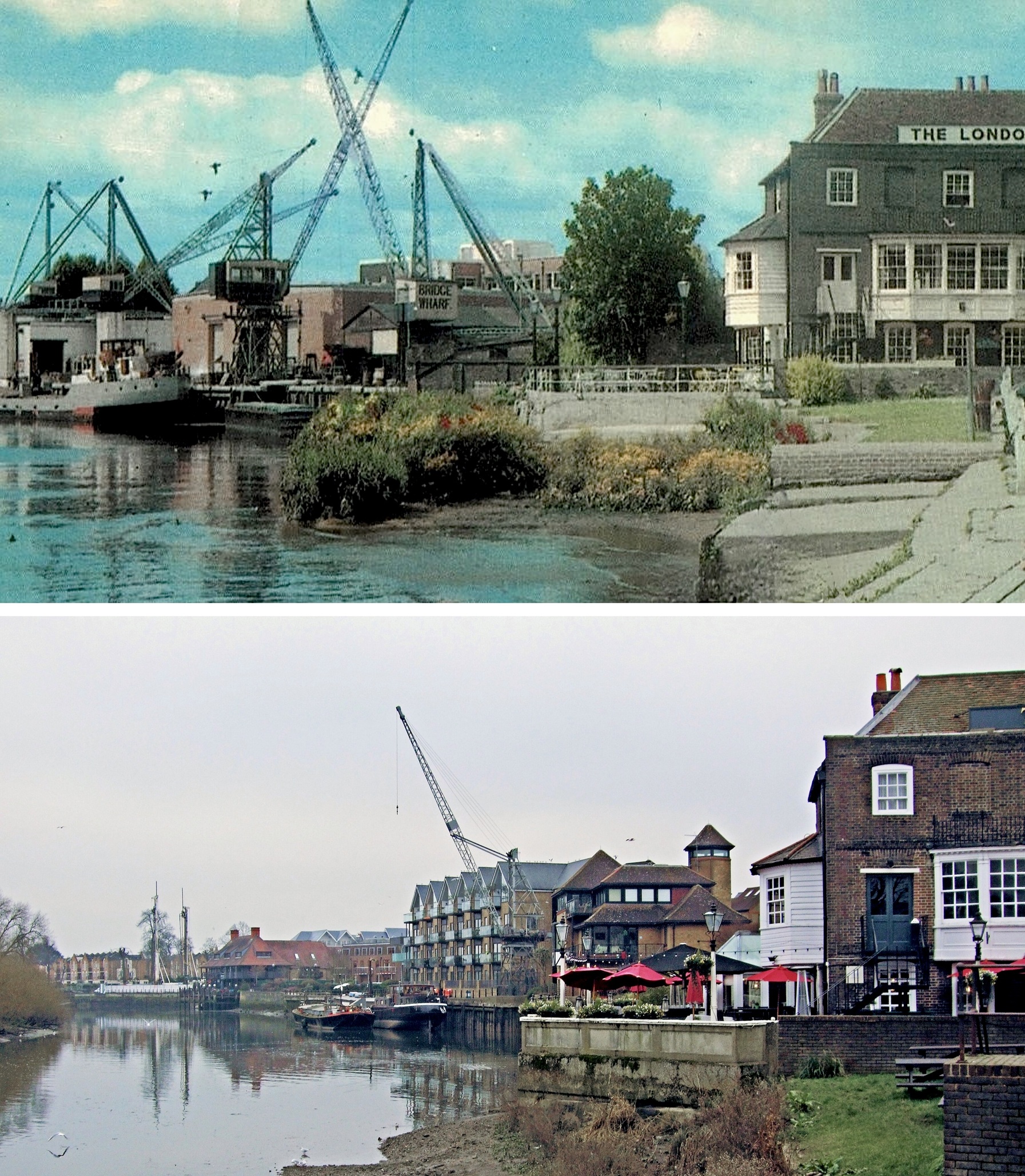
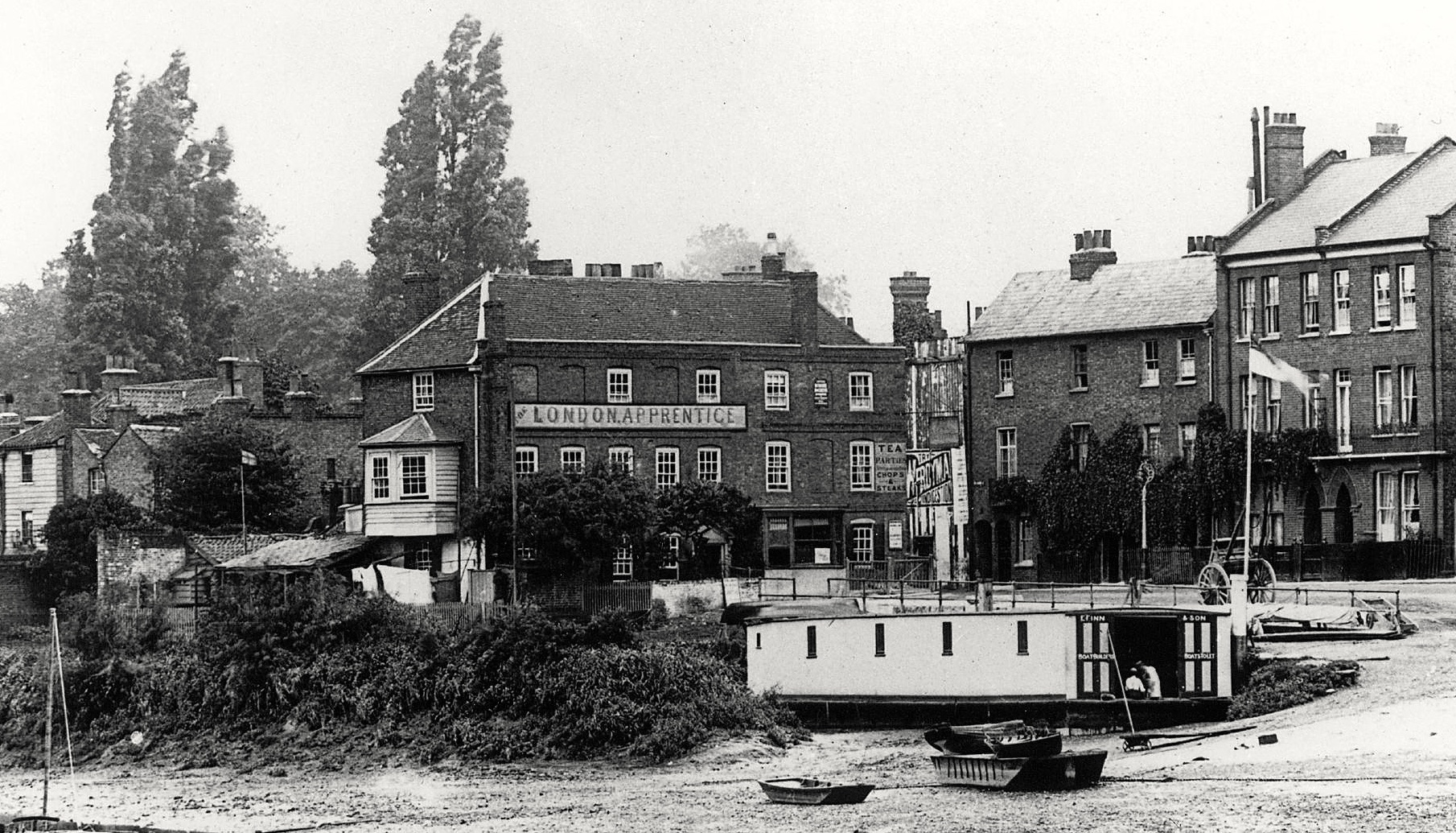
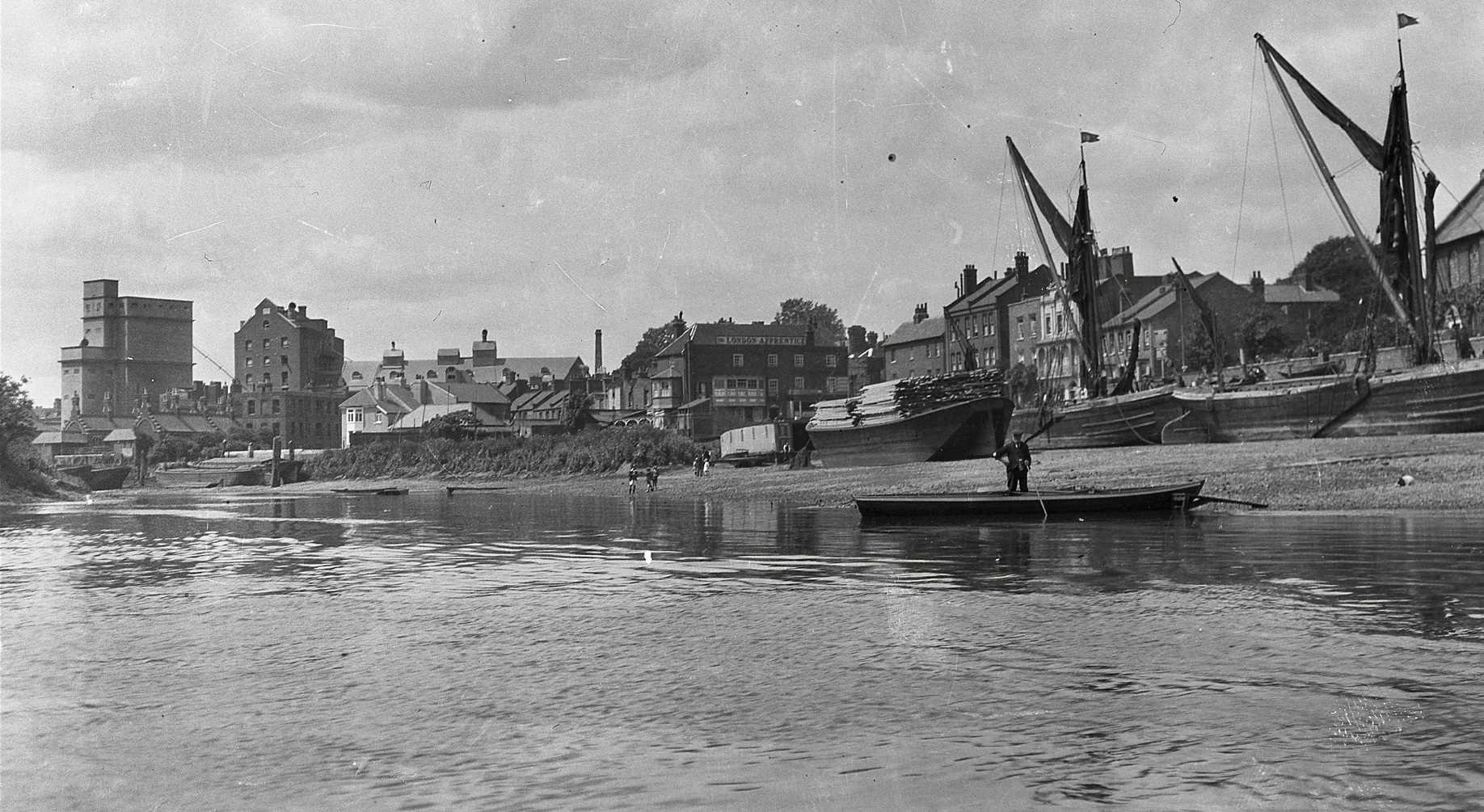
Mary Brown:
The (Isleworth Rowing Club, IRC) was formed in 1924 with a membership of eight, all men, but in the following year a ladies section was added; I believe the initial number of women was around six or eight. From this small beginning the club gradually expanded to a membership of 100 men and 30 ladies by 1932 when it was in its heyday.
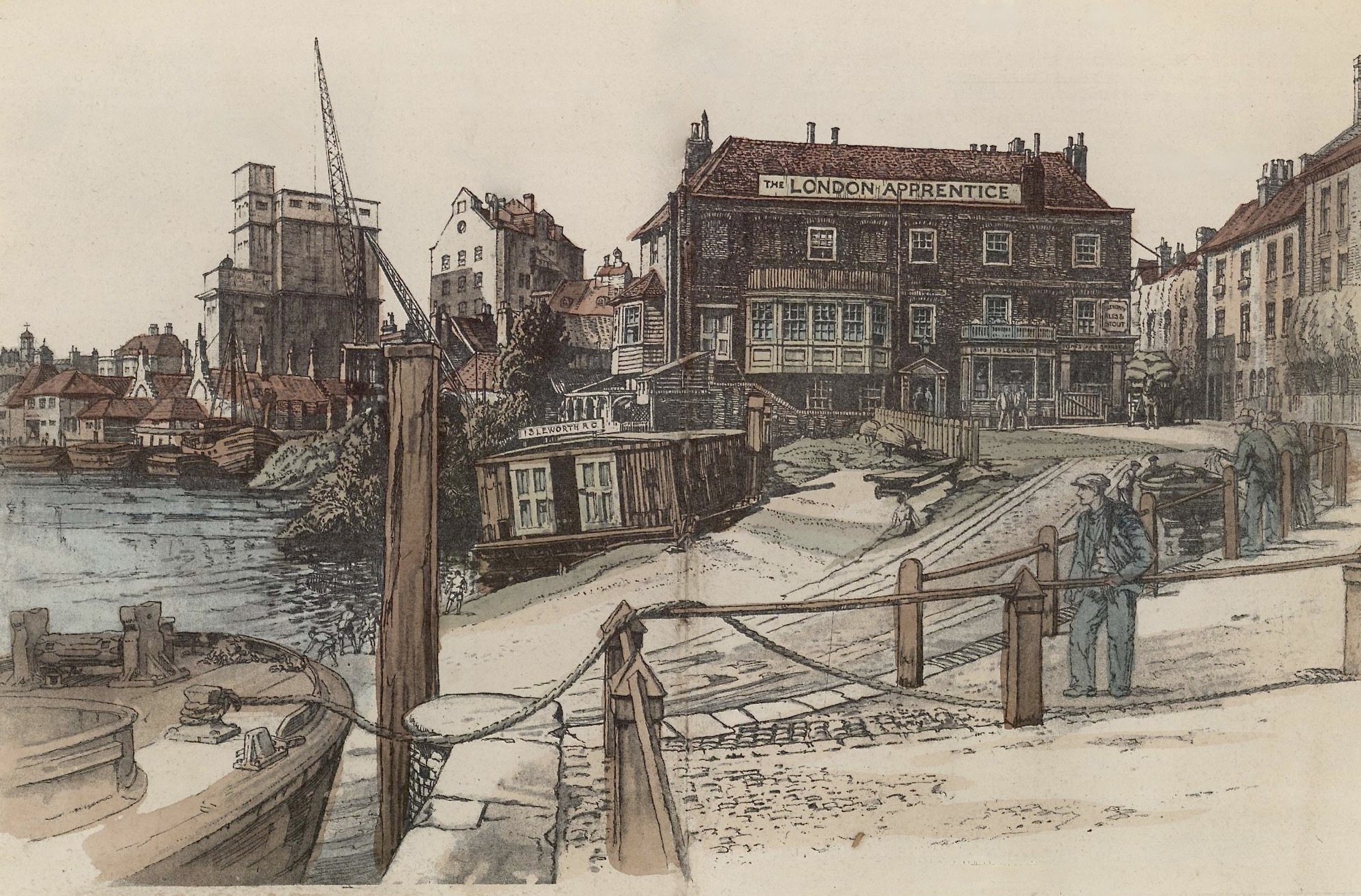
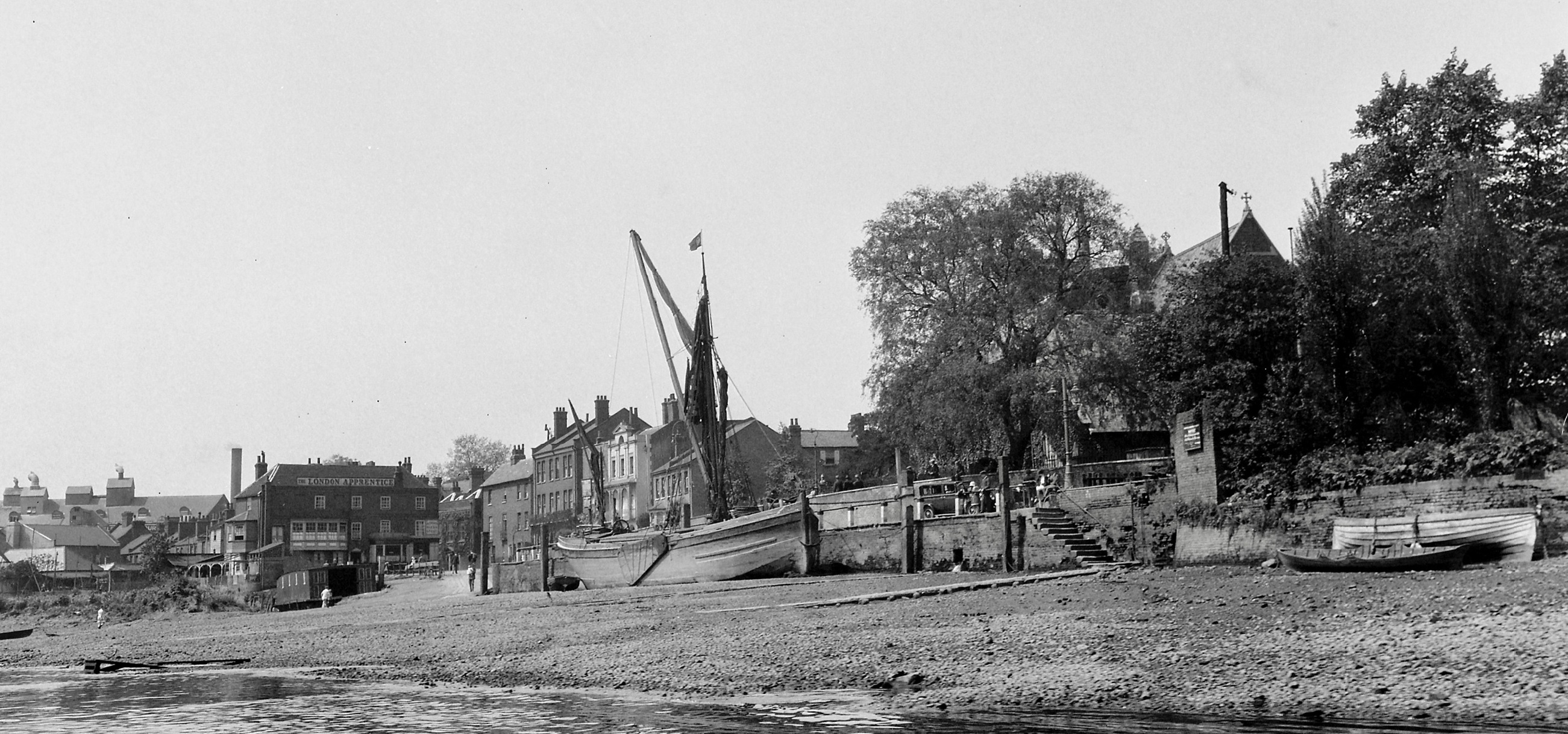
Headquarters was a floating boathouse moored on the foreshore about 20 yards from the London Apprentice at Isleworth and known as The Ark. This was E Finn’s Boathouse where rowing boats could be hired and repaired. In it were kept the eights and fours plus blades, with a changing room for the men at the rear.
I will have to trust Mary Brown on this, but I am surprised that The Ark was long enough to take eights and have room to spare for a changing room. Some sources say that the IRC was formed in 1923.
The girls had to be content to use a rather dilapidated wooden shed at the bottom of a garden belonging to the people in the house just before All Saints’s Church, an Edwardian cottage, now replaced by Butter Field House; not that it worried them, they were only too grateful to be allowed to use it… By the time the ladies had established their international reputation, they changed in the top room of the London Apprentice, a great improvement indeed, for there were facilities for washing, etc.
Mary then explained the finances of the club – which were no doubt typical of hundreds of other such institutions for working men and women at the time.
Each member paid a weekly subscription of 6d (2.5p) which I think increased to 1s (5p) by the late 1930s. Club funds were augmented by a series of dances in the winter plus of course subscriptions from a goodly number of Vice-Presidents.
The highlight of the year for members was the dinner-dance held at some well known local hotel in the district. In summer, regattas permitting, a coach outing to the seaside was always fully booked. The club was self financed and supported by local businessmen – no lottery grants then.
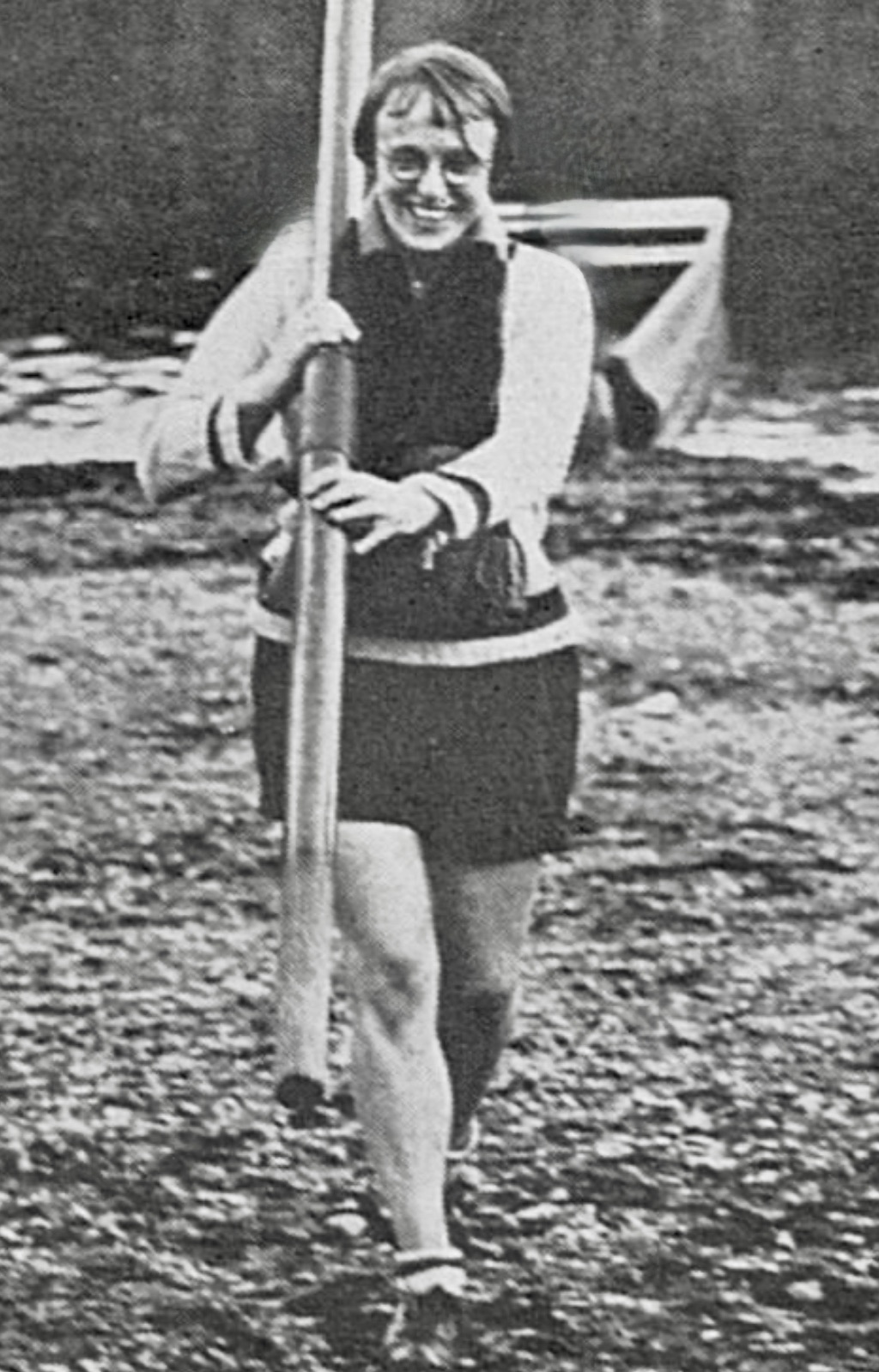
Mary quotes from Phylis “Phyl” Taylor’s memories of the kit that the women wore. Again, the question of what women should wear when rowing to maintain a balance between practicality and respectability was a typical one.
Phylis Taylor:
When I joined in 1929 the “get up” we wore was, by hindsight, hilarious in the extreme. Believe it or not, we used to sally forth for our row wearing ordinary navy blue gym knickers, long black stockings plus a red and blue woollen hat with a bobble on the top!!! What we looked like from the rear I shudder to think.
However, I had seen pictures in the press of the then leading ladies club, (Cecil Ladies) resplendent in natty navy blue shorts, light blue rowing vest and knee length white socks, so being me I was determined to change our antiquated image.
As you can guess it was quite a battle, you would think I was suggesting a uniform a la Folies-Bergere judging by the opposition but eventually common sense prevailed and we too appeared in navy shorts, white singlet with red and blue bands round neck and sleeves plus red and blue short socks – and NO hat; later, we sported thick navy sweaters with Isleworth in red across the chest to wear after our training rows and a scarf in the club colours – we were definitely with it.
Phylis is much referenced here. She was the stroke of Isleworth’s senior women’s four and her family had “form” in challenging sporting establishments. Her father was a professional golfer, JH Taylor, one of the pioneers of the modern game who co-founded the British Professional Golfer’s Association and successfully championed the cause of professional golf as an equal to the amateur game.
Mary Brown recalled the women’s training regime. This was in the time of the six-and-a-half day week, when most people – including clerical workers – worked on Saturday mornings. It is interesting that the IRC permitted rowing on Sundays. Some clubs only allowed Sunday rowing in personal sculling boats and forbad the wearing of club kit on what was still a rigorously enforced day of rest in Britain:
The ladies trained five evenings a week, this after a day’s work, and Sunday mornings, going out in all weathers, having to walk, when the tide was out, through thick Thames mud carrying their boat to the water. In winter, of course they were restricted to Saturday afternoons and Sunday mornings with a keep fit session one evening a week.

However, even with unsuitable premises and a small membership, the IRC Ladies’ Section produced a four that, with some occasional crew changes, briefly became quite a force in women’s rowing in the 1930s, both on the Thames and in some European contests, something now largely forgotten.
The Isleworth Women’s Four: Domestic Record
Mary Brown:
Up until 1931 the successes of the ladies river-wise had been shall we say occasional, but that year saw the start of a decade of victories when the Isleworth Ladies Senior Four reigned supreme.
There are many newspaper reports from the 1930s of an Isleworth women’s four beating crews from better remembered and longer lived women’s clubs such as Weybridge Ladies, Alpha, United Universities, St George’s Ladies, Lyons, Cecil Ladies and Ace. The Evening News of 7 July 1936 (quoted more fully below) wrote that, Three of the four have rowed together for five years now, winning forty races and losing only four.
A newspaper report of 1931 called the IRC Ladies’ Four, “Champions of England”. There is no information on how or when they won this title but possibly it came from their victory in the Senior Fours at the 1931 Women’s Amateur Rowing Association Regatta.
The fact that these victories were in fours, not eights, suggests either that the Isleworth women’s strength lay in the talents of a few or that they simply did not have access to an eight oared boat.
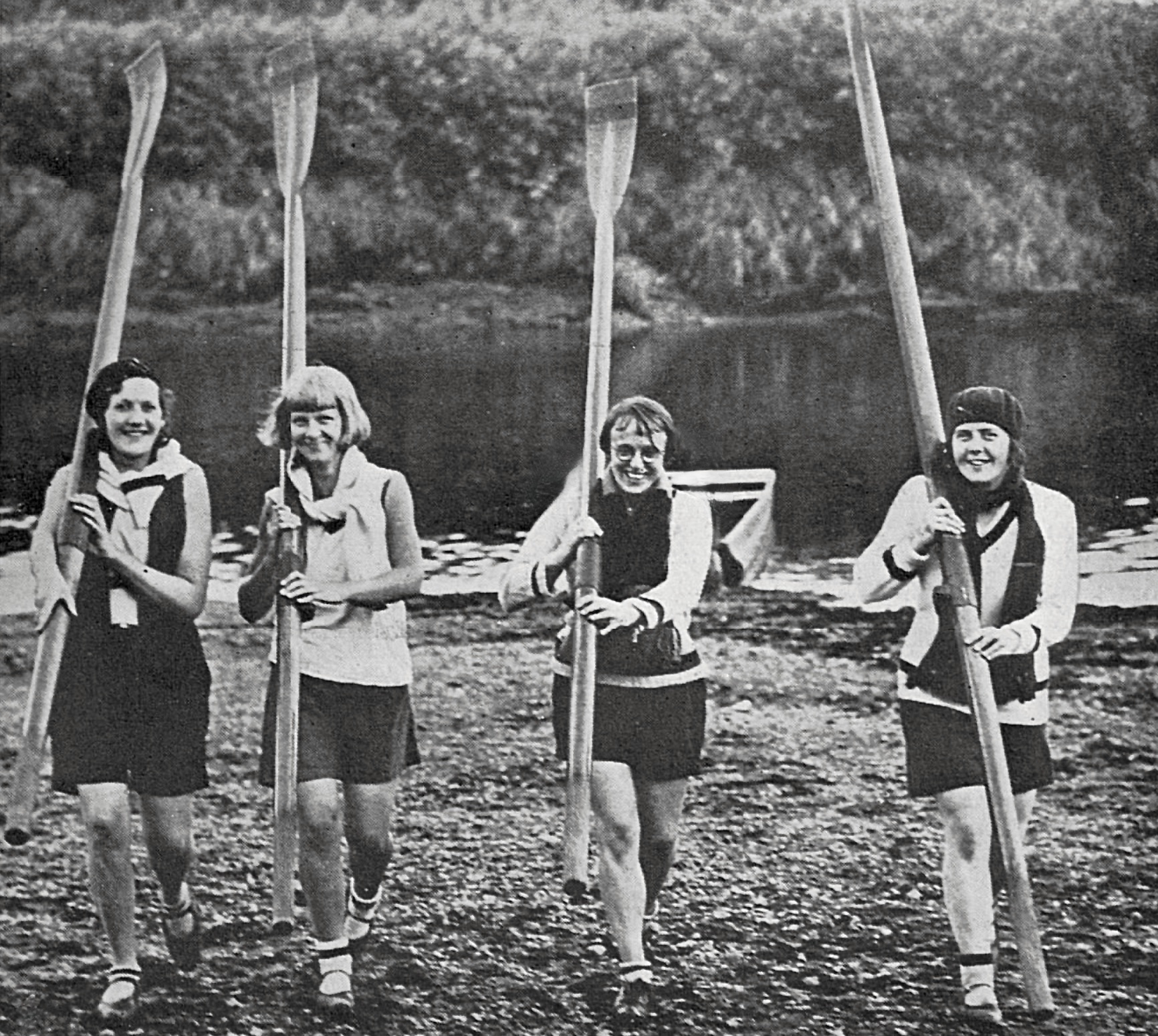
After beating six other crews over a mile in a trial race, the four pictured above were chosen by the Women’s Amateur Rowing Association to represent England in a match against a visiting Polish crew, a contest that resulted in a rare defeat for the Isleworth women.
The Annual Boxing Day Charity Regatta at Richmond was a particularly popular event. In 1932, the Richmond Herald wrote:
Particular interest was evidenced in the ladies’ fours race between Isleworth RC and St George’s Ladies’ RC. The fame of the Isleworth crew and their all-conquering way has been noticed abroad, and both teams took to the water to the accompaniment of the clicking of many cameras.
In 1937, the Herald noted that the Isleworth Ladies had won the women’s fours at the Boxing Day Regatta for the seventh year in succession. Mary Brown says that they eventually won for ten successive years.
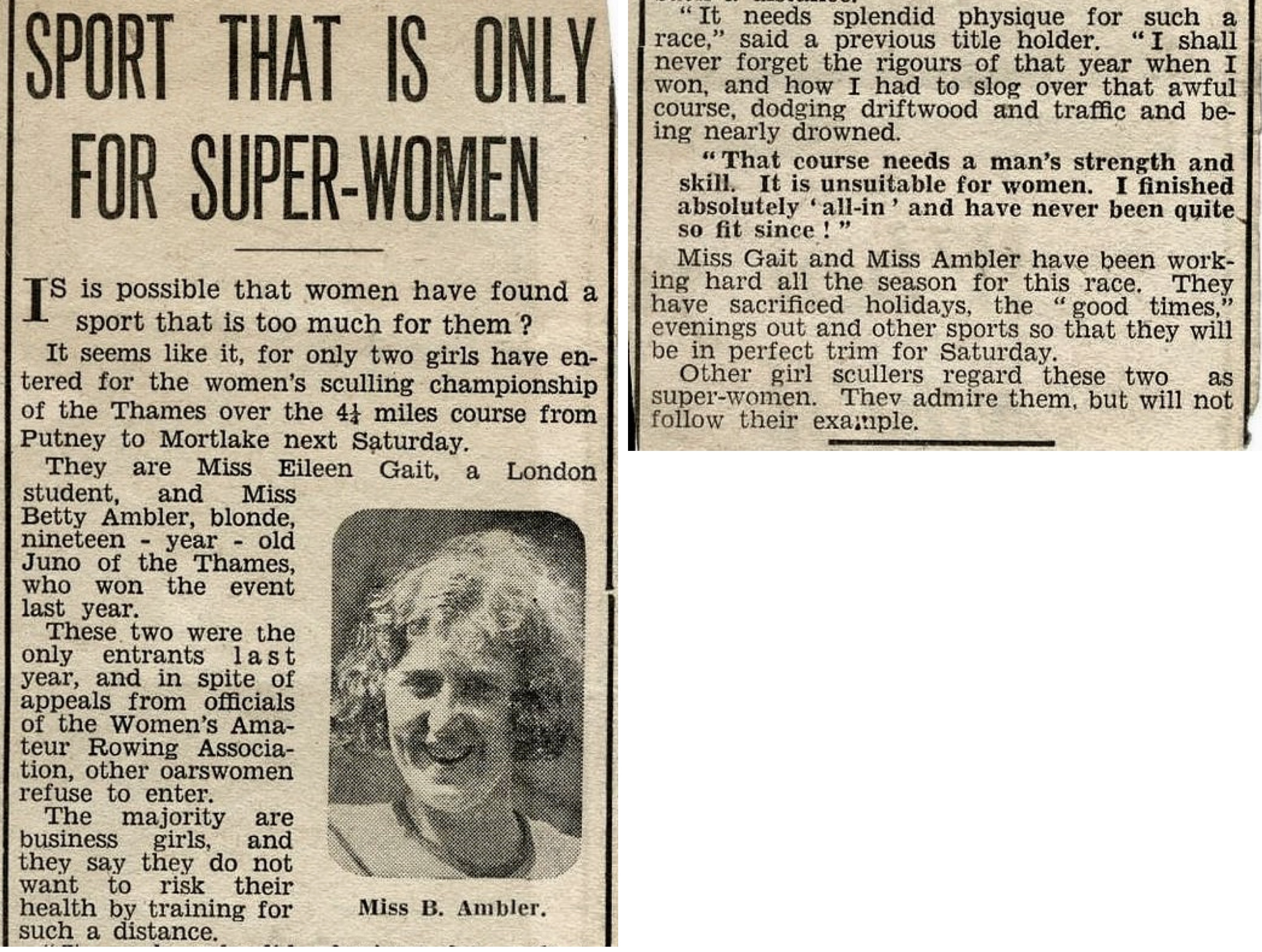
The Richmond Herald of 21 September 1935 had reported that:
Miss Betty Ambler, one of the members of the victorious Isleworth Ladies RC four, which has scored so often in the past year or two, is now the English women’s sculling champion. She won the title on Saturday last, when without much difficulty, she finished first in the 4 1/2 miles race from Putney to Mortlake.
The Isleworth Women’s Four: International Record
The London Evening News of 3 July 1936 noted that:
English racing crews are to take part in the Essen (Germany) regatta on July 11 and 12… The Ladies Amateur Rowing Club of Isleworth (sic) will… be carrying British colours. This will be the first time a crew of British women has taken part in German events.
The women’s Isleworth club won international honours in Paris in (1932) and 1934 and in Ostend in 1935 and 1936. They have been unbeaten… in Great Britain during the last four years.
Paris 1932. The Richmond Herald of 4 June 1932 reported:
Isleworth are sending a ladies’ four to row in the International Regatta on Sunday. Races are rowed on the Seine and winners, though not officially, are recognised as world champions. The Isleworth ladies have been training at Richmond for over a month and are a smart workmanlike crew… (They) have been coached by Mr Crampton of the Twickenham RC.
They won “easily” against three other crews.
Paris 1933. Isleworth were invited to race but declined as the event clashed with their club regatta.
Paris 1934. A club from Marseilles was beaten by Isleworth “with ease.”
Ostend, Belgium, 1935. In its preview of the regatta, the London Evening News of 6 June 1935 wrote that, Isleworth… are big girls and should have very little difficulty in quickly accommodating themselves to the boats lent to them for the races. In the event, they beat Ruche Sportive de Paris in two separate races, one by three lengths over 1,000 metres.
Ostend 1936. Isleworth again beat Ruche Sportive de Paris, this time by half-a-length.
Essen, Germany, 1936. The Evening News of 7 July 1936 wrote in a typically patronising way about the successes of the Isleworth women’s coxed four in the period 1931 – 1936. The News seemed as much concerned with hair colour as rowing ability:
Five London girls who think pastries a vice and smoking a crime, left London today for a very strenuous few days in Germany. They are members of the Isleworth Rowing Club and they are competing at the international regatta at Essen. They are taking with them a wonderful reputation and plenty of confidence.
Since they teamed up they have had triumph after triumph including victory in the women’s fours at the recent Ostend regatta. Three of the four have rowed together for five years now, winning forty races and losing only four. Yet all are still in their early twenties. Incidentally all are fair, there is not a brunette among them.
Starting at the bow, there is Miss Amy Tompkins. She’s so fair that she is always called “Blond Tommy”. During the day she is employed at a big engineering works, but most of her leisure time is spent training for rowing.
Next, No. 2, Miss Kate Davis, a hairdresser. She likes dancing (but not, of course, during the rowing season) as does No. 3, Miss Grace Berry. They go to dances together in the winter. Grace, by the way, is the heaviest member of the crew, but she doesn’t mind a bit.
Then comes Miss Phylis Taylor, the stroke. She does not like dancing but does like swimming. But it’s all the same because swimming and rowing, like dancing and rowing, don’t mix.
Last but not least – except on the scale – auburn haired seven-stone Miss Marion Ford, the cox. A dressmaker in the West End and (they say) a strict disciplinarian on the water.
Miss Taylor told me the rules all the girls observe most strictly. They are:
NO smoking
NO pastries or sweets
Chocolates – a few if you must
At least eight hours sleep a night
Practice on the river five nights a week (never mind the weather)
Hockey, netball and gym in the winter
“We have no particular tips to give” said Miss Taylor, “but these rules are necessary if we are to keep fit. Slimming we don’t bother about. For rowing fitness counts more than what the scales have to say. And you must have some weight in the boat you know. However strictly we are training for big events we all love it.”
The 1936 Internationale Hügel-Regatta in Essen served as a showcase for elite European rowing a month before the 1936 Berlin Olympics. While there would be no women’s rowing in the Olympic Games for another forty years, it still must have been a great thrill for the Isleworth women to mix in such company. Cox Marion Ford later recalled that they were entertained by members of the Krupp family, the major German industrialists and armament manufacturers.
I can find no record of any women’s results from Essen 1936. Mary Brown says that the Isleworth four won at Essen in 1938 but contemporary newspaper reports suggest that their only appearance there was in 1936.
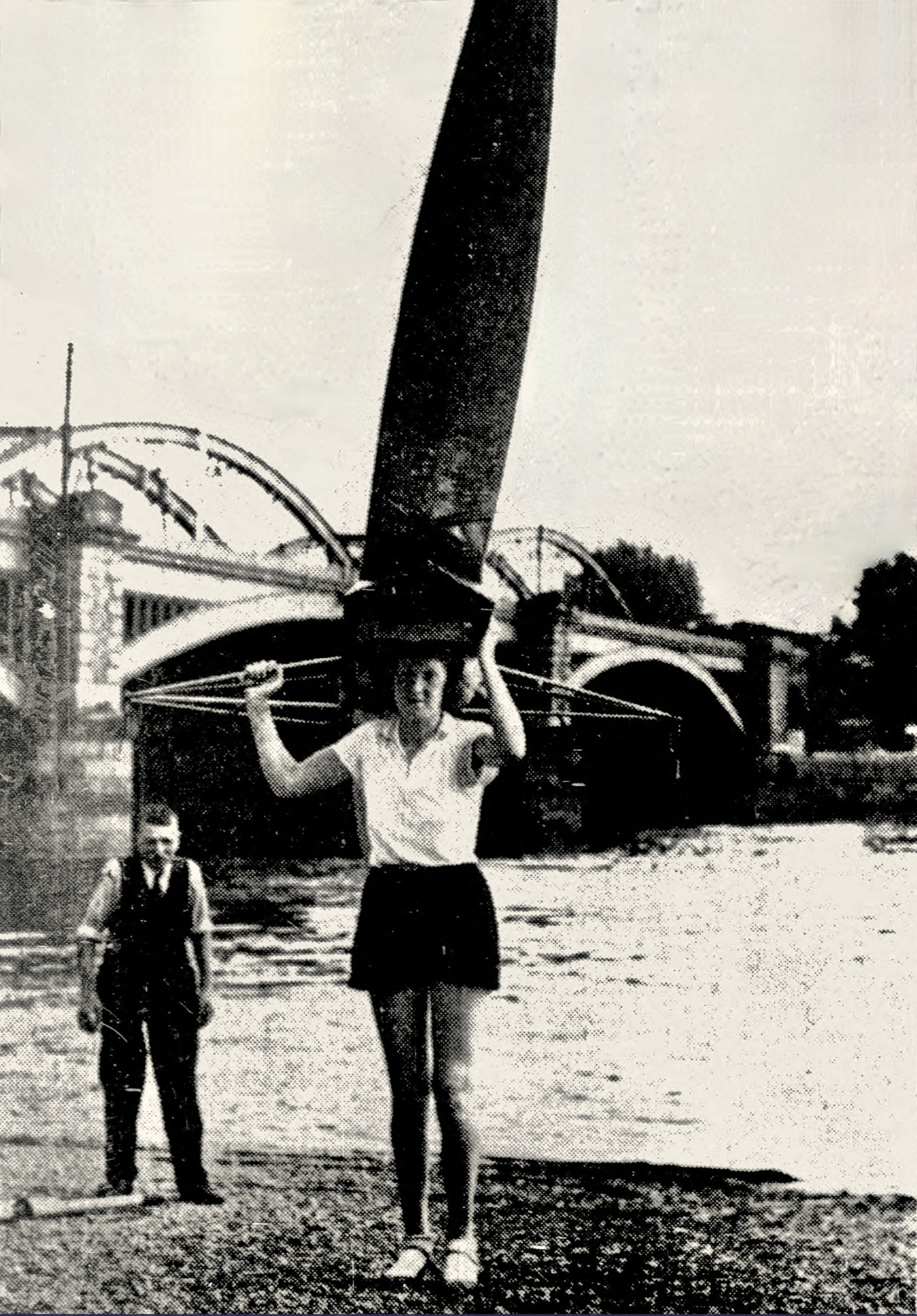
Ostend 1937. The Isleworth four won on both days beating their near neighbours, Alpha Ladies, on both occasions.
Paris 1939. Mary Brown says that a four also won at Joinville (Joinville-le-Pont, Paris) in 1939.
Travelling abroad must have been a considerable expense and effort for the women, at least two of whom were in low paid work, hairdressing and dressmaking. Further, before 1938 most working people had no legal right to paid time off, they only had unpaid days and public holidays.
On racing overseas, Mary Brown noted:
What has to be remembered is that in all these races they had to use the boats and oars provided by their host clubs as they did not have the finance to take their own. It also meant they only had one outing prior to the actual race to accustom themselves to a strange boat and oars, no easy thing, which adds an extra bit of glory to their achievements.
Despite their success, the women of Isleworth Rowing Club may have still been treated as second class members by the men. The Brisbane Courier Mail of 3 February 1938 reported:
Miss Phylis Taylor, 24, who is going to Australia with (a Women’s Amateur Rowing Association) crew, is figuring in a split in the Isleworth Rowing Club.
Women members of the club claim that they have an equal right with the men to the use of the club’s boats, and the men claim that the women adopt an “I’m in the boat, push off” attitude. Men have occasionally ejected women from the boats.
The club captain (Mr. George Plumtree) has resigned. He is unofficially engaged to Miss Taylor, who is the women’s captain. She is a daughter of the noted golfer, J. H. Taylor.
Mr. Plumtree explained that the men members were more numerous and more serious rowers than the women, and therefore should have first claim on the boats.
“I disapprove of women rowing, including Miss Taylor,” he added. “That she is good according to women’s standards makes no difference.”
Miss Taylor retorted: “The women’s section is more successful than the men’s. We won for three years in Belgium. Father approves of my rowing. He tried to teach me golf, but I have not got a handicap – unless it is my temper. I met George through rowing, we’ll see it doesn’t drive us apart.”
Apart from the serious and obvious sexual discrimination, it sounds like the plot of a modern rom-com. Did George and Phylis live happily ever after?
Mary Brown:
In 1935, Isleworth Rowing Club suffered a cruel blow; vandals wrecked their boathouse by removing bolts over a foot long from one of the ‘travellers’, which anchored it to a heavy pile on shore. This meant there was no way left to make it rise and sink with the tide, so on the next flood tide it became partially submerged. Before this, however, all the boats and blades had been removed; later of course it became a complete wreck… The club then took up accommodation at Hammerton’s Boathouse, also a floating one at Marble Hill, Twickenham (about three miles upstream from Isleworth).
The Richmond Herald of May 1939 reported that the National Fitness Council had provisionally offered to pay £1,500, half of the cost of a new IRC boathouse in Petersham Road, Richmond. This could have been the start of a centre of women’s rowing. However, it is reasonable to assume that the outbreak of war in September 1939 saw the end of this offer and also the end of this particular incarnation of the IRC. Apart from a couple of entries in women’s races at random morale-boosting wartime regattas, the Isleworth Rowing Club is not mentioned again.

