
6 July 2026
By Ralf-Peter Stumme,
text & photography
The fiftieth Vogalonga took place on Pentecost-day in May. Ralf-Peter Stumme, who rowed in Venice in what is probably the world’s largest rowing regatta, gives a brief historical background and asks: “Is there a future for this Venetian rowing culture event?”
Historical origins and the founding idea (1974– 1975)
The Vogalonga was born in late 1974, when, on 11 November – St Martin’s Day – a group of local rowing enthusiasts gathered for a spontaneous regatta in traditional Mascarete boats off the “Fisherman’s Island” of Burano. The idea for this event stemmed from a growing frustration with the increasing motorisation of Venetian waters, whose noise and choppy waves (moto ondoso) were increasingly crowding out the centuries-old rowing and boatbuilding traditions. Prominent figures such as Lauro Bergamo and Delfo Utimpergher from the regional daily newspaper Il Gazzettino, as well as the socially committed brothers Toni and Giuseppe Rosa Salva, subsequently set out to launch a broad countermovement. Together with Carlo Gottardi, Lilly Sirolla and Lalo, Pino and Paolo Rosa Salva, they formed an organising committee. On 26 January 1975, the Vogalonga was presented to the public.
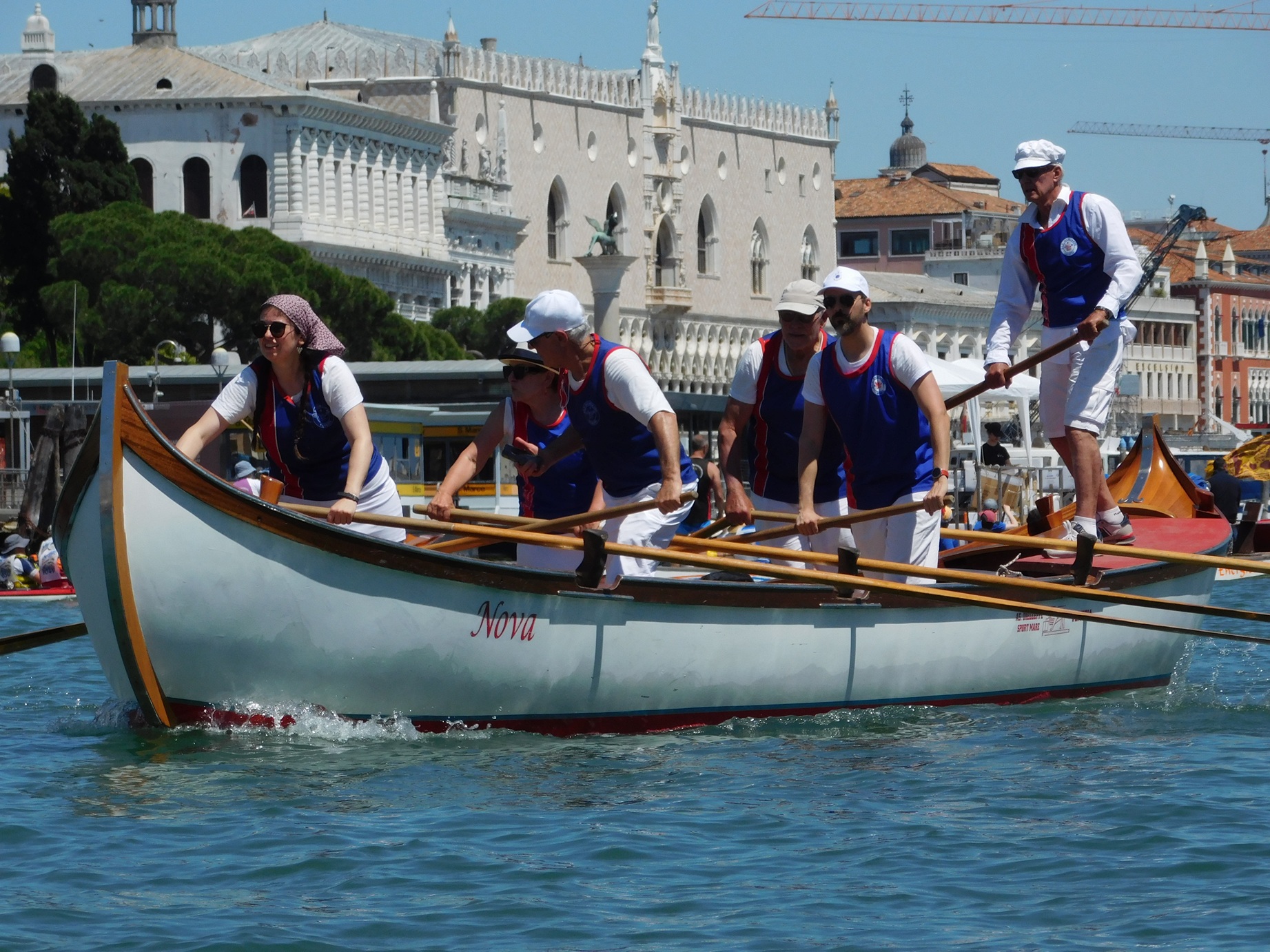
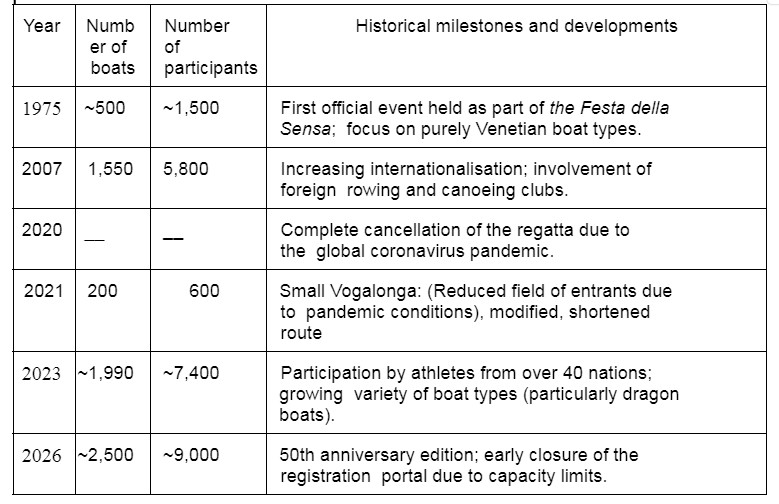
The first official event took place on 8 May 1975, Ascension Day (Festa della Sensa). St Mark’s Basin in front of the Doge’s Palace became the scene of an unexpectedly large mobilisation: 500 boats and around 1,500 participants gathered to send a message in support of the lagoon’s preservation by rowing in silence. The historic field of participants comprised a diverse mix of local boat types, including gondolas, pupparini, peate and vipere, as well as representative boats from local sports clubs.
The route and the sporting regulations
The Vogalonga route covers a distance of around 30 kilometres through the varied waters of the lagoon and places considerable demands on the participants’ physical fitness. The circuit takes the boats from St Mark’s Basin via the Canale delle Navi, the Canale della Bissa, the Canale Passaora and the Canale Crevan to Burano. From there, the route continues via Mazzorbo, the Canale S. Giacomo, the Canale Scomenzera and the Canale Bisatto to Murano, before finally ending at Punta della Salute – and thus back at St Mark’s Square – via the Canale di Tessera, the Rio di Cannaregio and the Grand Canal.
The logistical and sporting regulations are designed to safeguard the non-commercial nature of the event. The boats gather from 8.30 am in the Giudecca Canal behind Punta della Dogana, with positioning according to boat class – fast, classic rowing boats start at the front, followed by slower vessels. The official start takes place at 9.00 am with a traditional cannon shot and the ritual raising of the oars. As the Vogalonga is designed purely as a recreational sporting event without too much competitive element, there are no official rankings. That does not mean, however, that there won’t be some thrilling side-by-side racing.
Every team that reaches the finish line before the event ends at 3.00 pm receives a commemorative medal and a certificate of participation. To preserve the event’s non-commercial nature, advertising slogans and sponsor branding on the boats are strictly prohibited and will result in exclusion from the final prize draw.
Growth and historical milestones
Over the decades, the Vogalonga has evolved from a local protest action into one of the world’s most significant water sports events. Its internationalisation has led to sports clubs from across Europe and overseas taking on the logistical challenge of transporting their boats to Venice. However, this transformation has not been without historic turning points, as demonstrated by the pandemic-related cancellation in 2020.
This development reflects a parallel with the Venetian Carnival, which was revived during the same period. Both events shared the original aim of reclaiming urban space for the local population, but, as they grew in popularity, found themselves confronted with increasing tourist-driven transformation.
The 50th anniversary edition on 24 May 2026
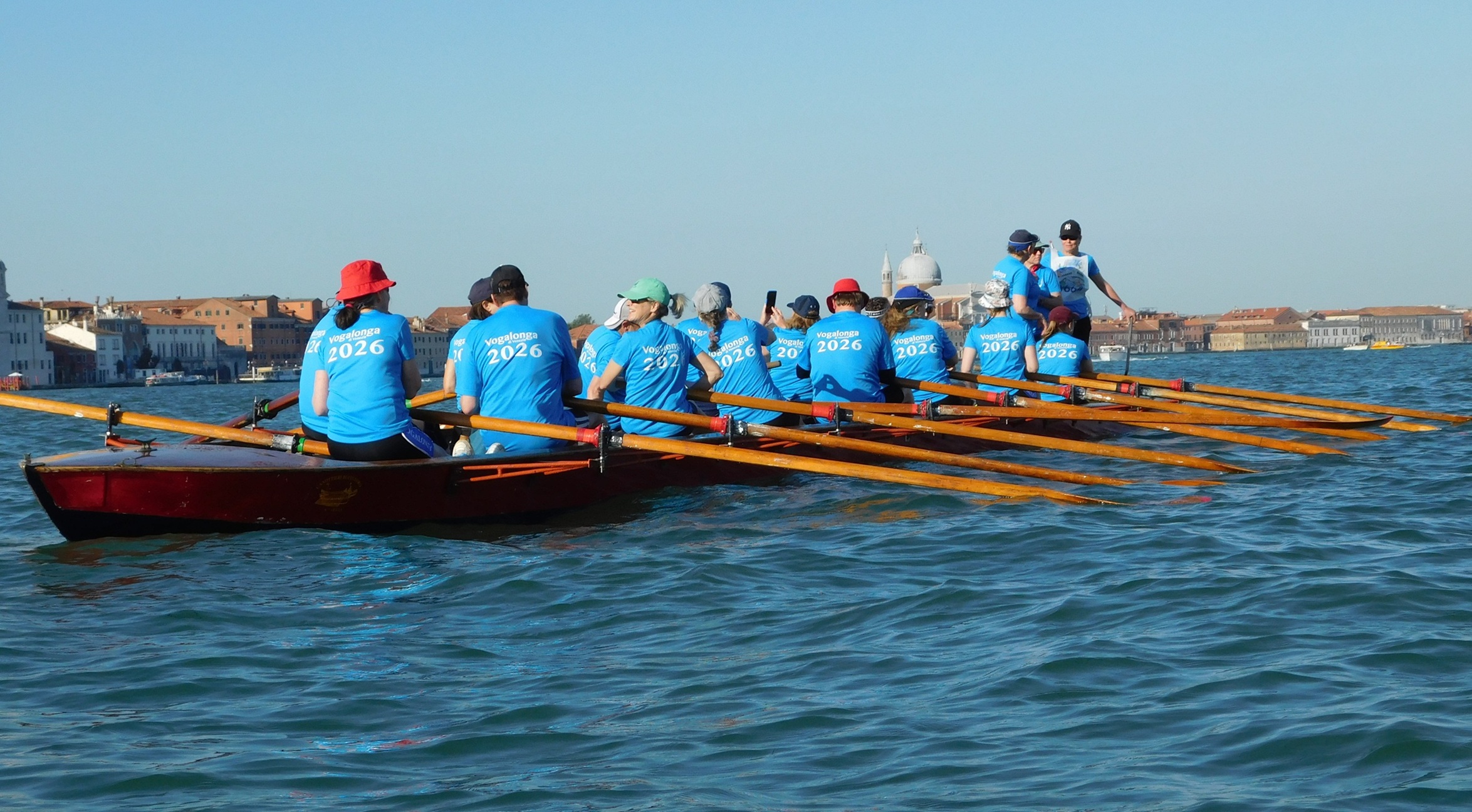
The 50th Vogalonga, held on 24 May 2026, marked a historic high point. The enormous interest meant that, just ten days after the registration portal opened, over 2,000 boats had already been registered, prompting the organising committee to close registration early. On the day of the event, around 2,500 boats with some 9,000 participants took part.
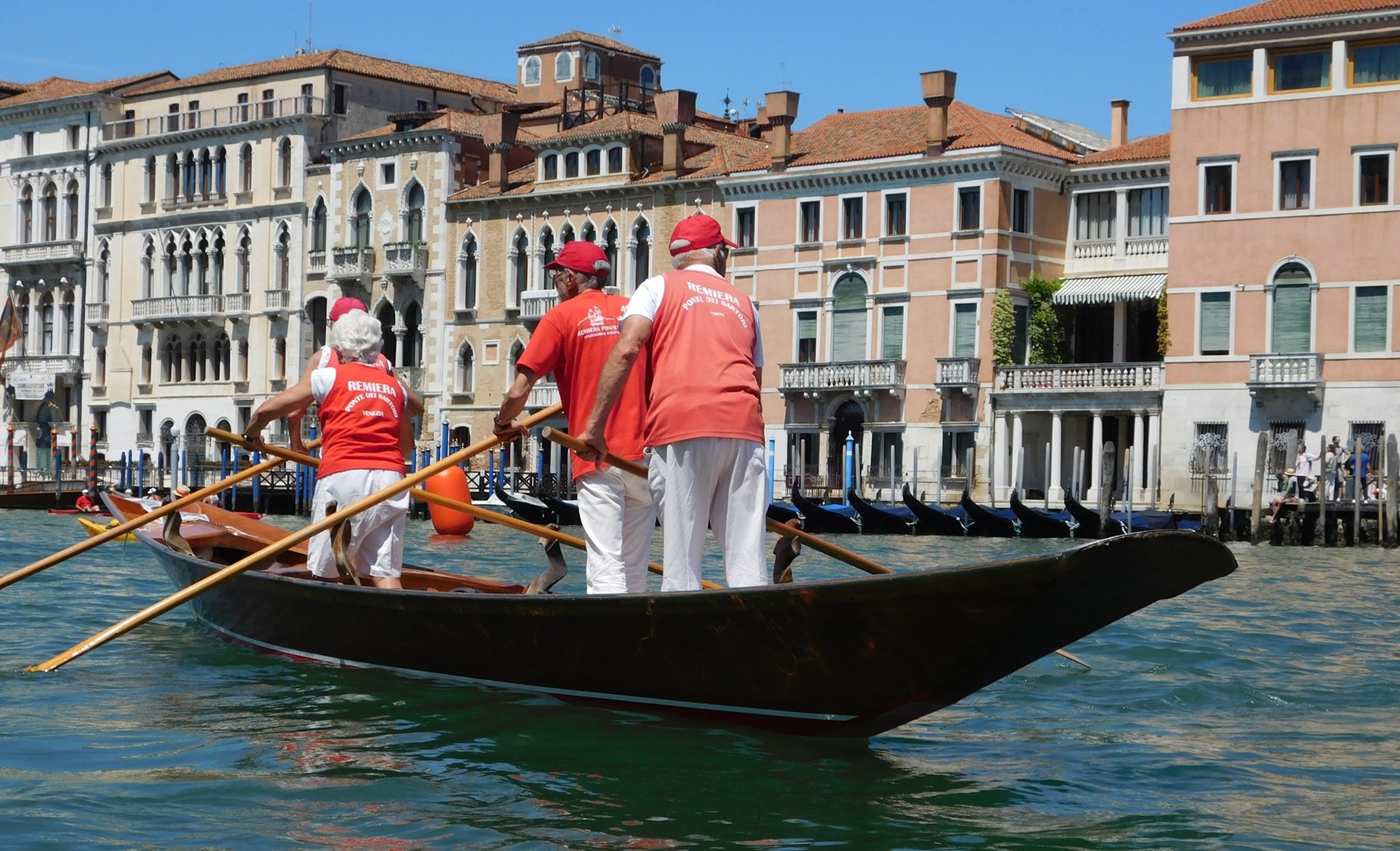
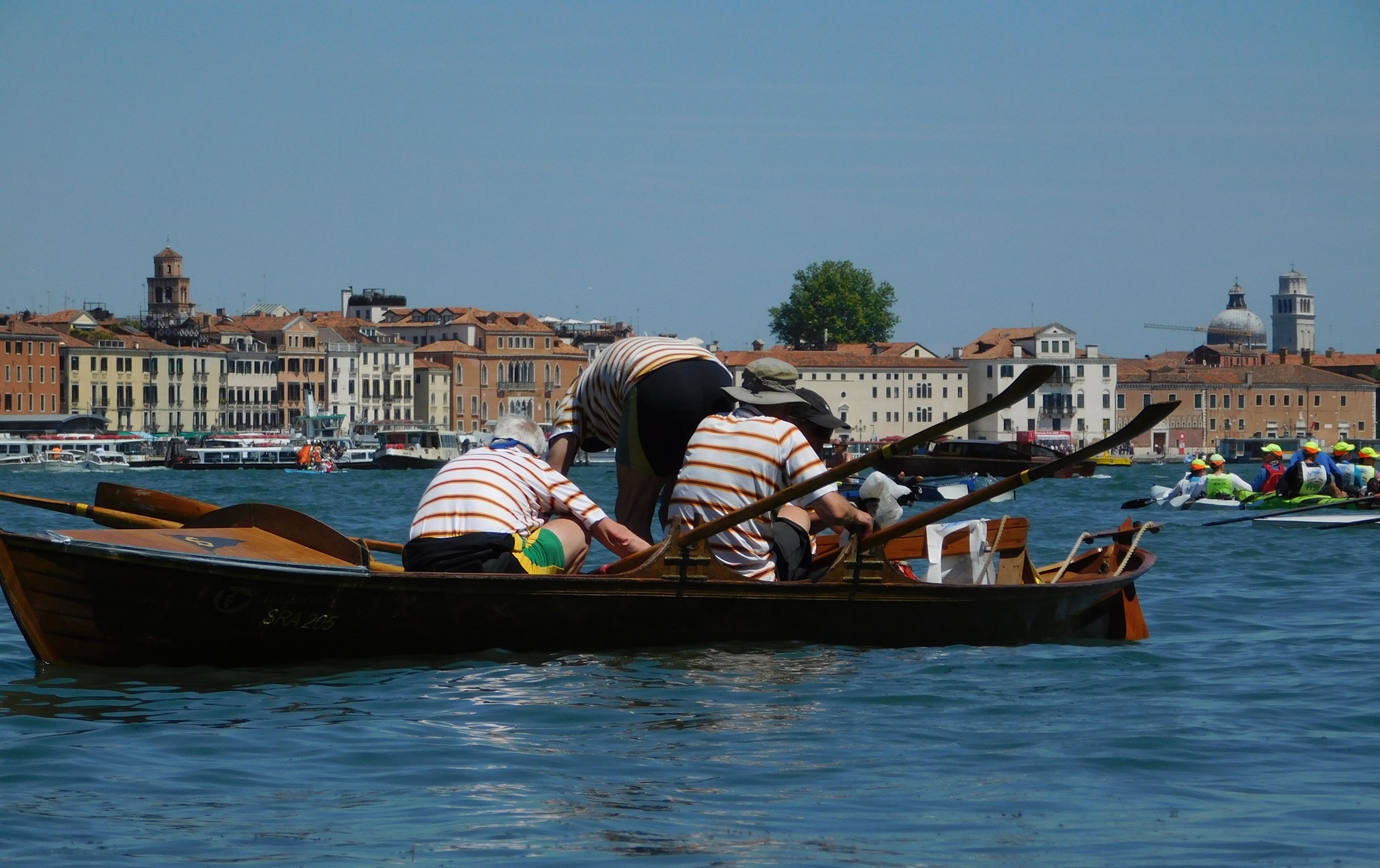
To protect the traditional Venetian rowing culture (voga alla veneta) in the face of the global influx of modern boat classes, the organising committee introduced targeted financial incentives in 2026. Whilst the standard entry fee was 30 euros per person, crews in traditional Venetian boats received a discount via a voucher system, thereby reducing the fee. One might well doubt whether this was successful. Well over 90 per cent of the participating boats belong to the ‘Tupperware marina’ class (mass-produced plastic boats). Traditional, handcrafted vessels, whether from the Venetian region or the rest of Europe (craft traditions are under threat elsewhere too), are in the absolute minority.
Environmental outlook and socio-cultural challenges
Despite the festive nature of the 50th anniversary, an examination of the Vogalonga reveals profound structural contradictions. The original impetus behind the regatta – the protest against the destruction of the lagoon caused by motorised wave action (moto ondoso) – remains unresolved in everyday life in Venice. Whilst motorboat traffic is (more or less) suspended for the few hours of the regatta, the impact has steadily worsened on the remaining days of the year. The physical erosion of the historic foundations caused by constant boat traffic and engine exhaust fumes continues to advance.
This environmental impact threatens the very existence of the traditional rowing culture. Navigating in traditional boats has become so dangerous amidst regular inner-city traffic that local sports clubs are struggling to attract new members, as parents are reluctant to let their children learn ‘voga alla veneta’ in the heavily trafficked canals. Without a continuous succession of new generations, the traditional craft and art of rowing are at risk of dying out in the long term. According to this is the impact on traditional boatbuilding and the variety of boat-types. The Vogalonga thus faces the paradoxical challenge of being celebrated worldwide as a symbolic festival of sustainability, whilst the actual living space for these traditions is increasingly being lost in everyday Venice.
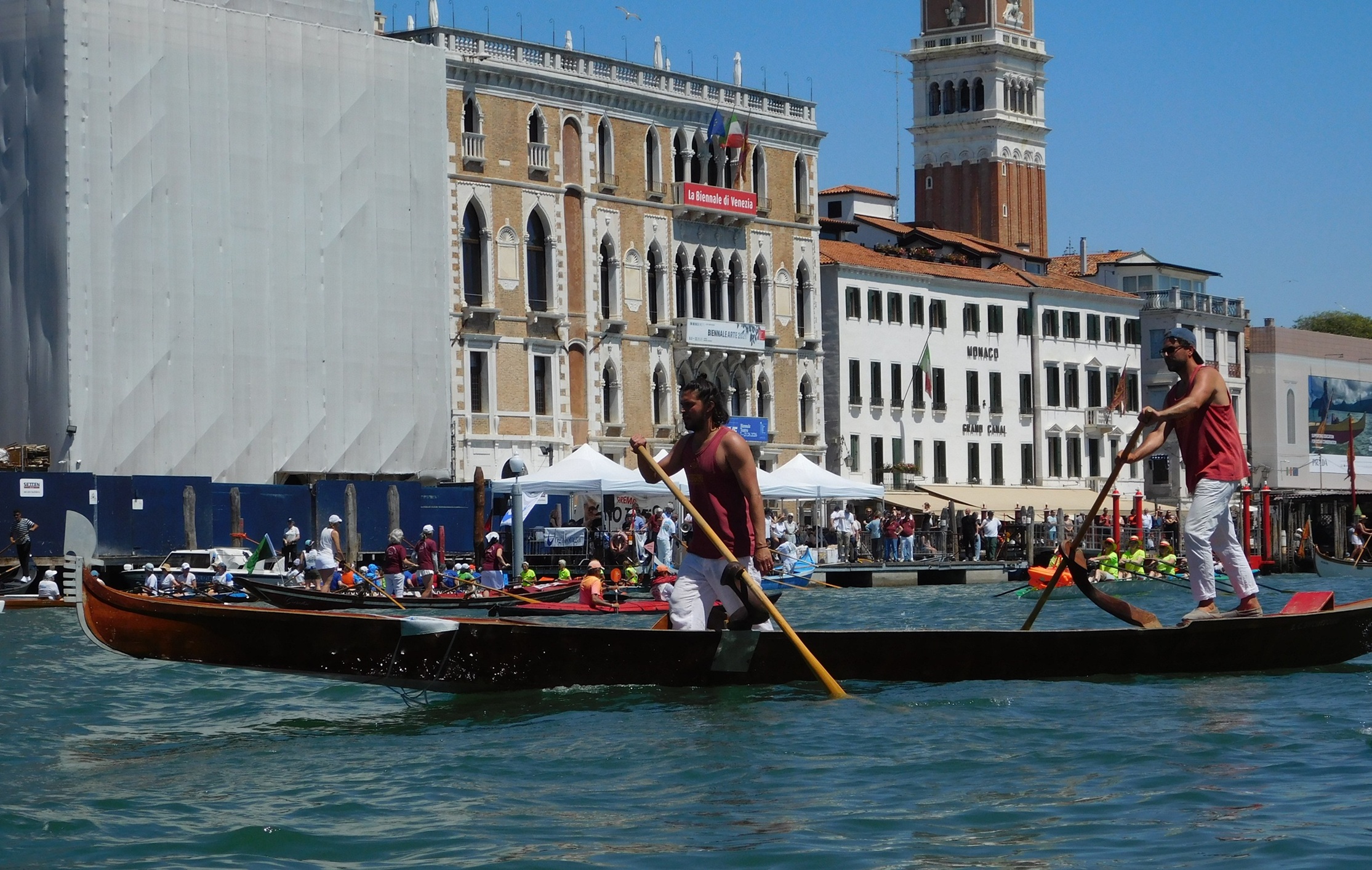
To be honest: How many of the participants are even vaguely aware that the Vogalonga is more than just a massive rowing event? During numerous conversations at the campsite in Fusina, one of the gathering points for participants, most of the athletes expressed surprise at this. They only mentioned the great atmosphere and scenery!
Does it make ecological sense to bring boats from half of Europe to Venice? Not to mention the teams’ journeys there (often by plane). One might also question the venue itself, which is already suffering from massive ‘overtourism’, is open to criticism. I think the Vogalonga has fallen a little victim to its own success!
There are unconfirmed rumours in the Vogalonga boating community that this Vogalonga was the last one.
Well, in any case, it would be sorely missed – and not just by me!
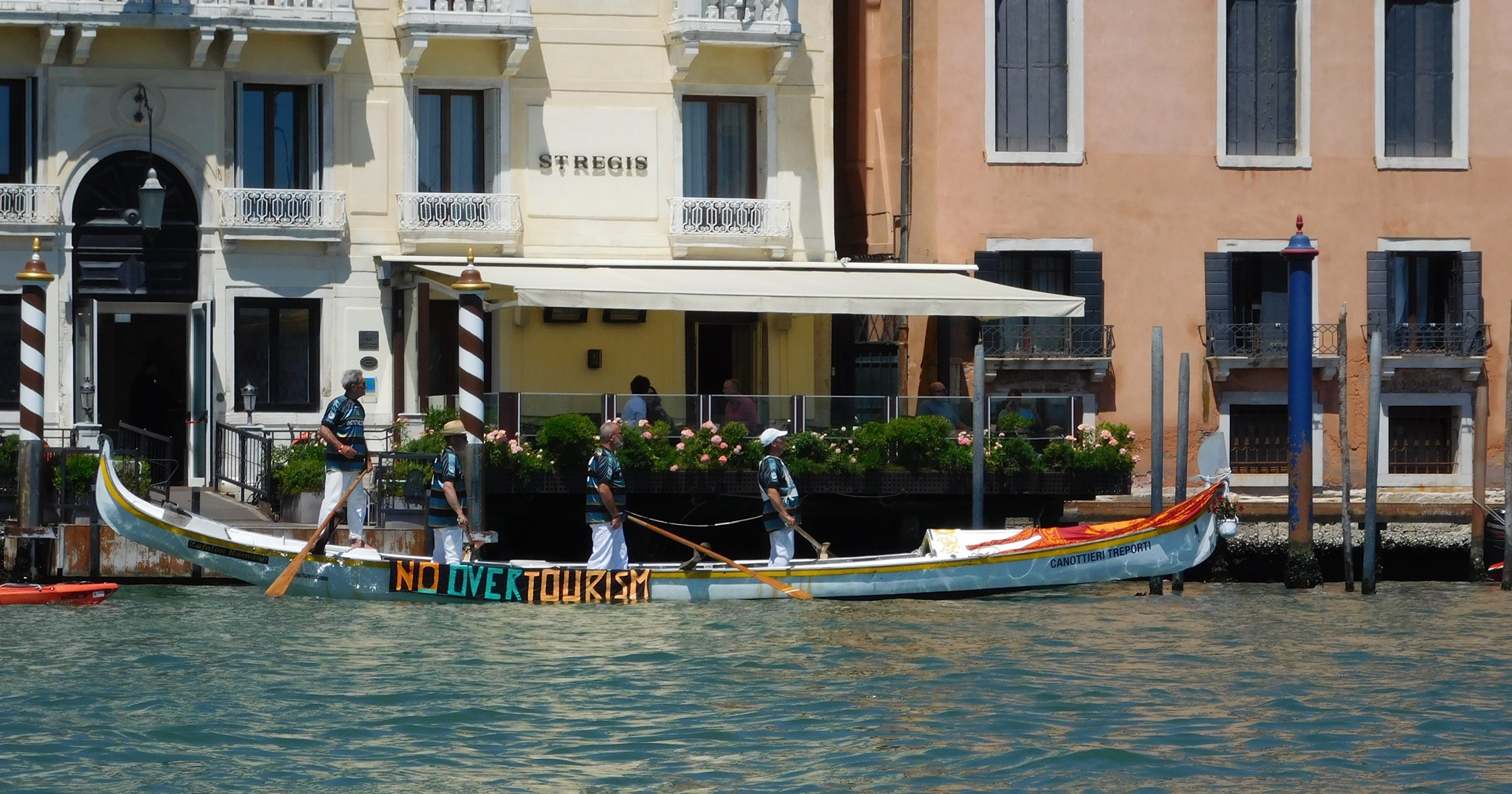
In October 2025, Tim Koch published two article about building gondolas – see here.
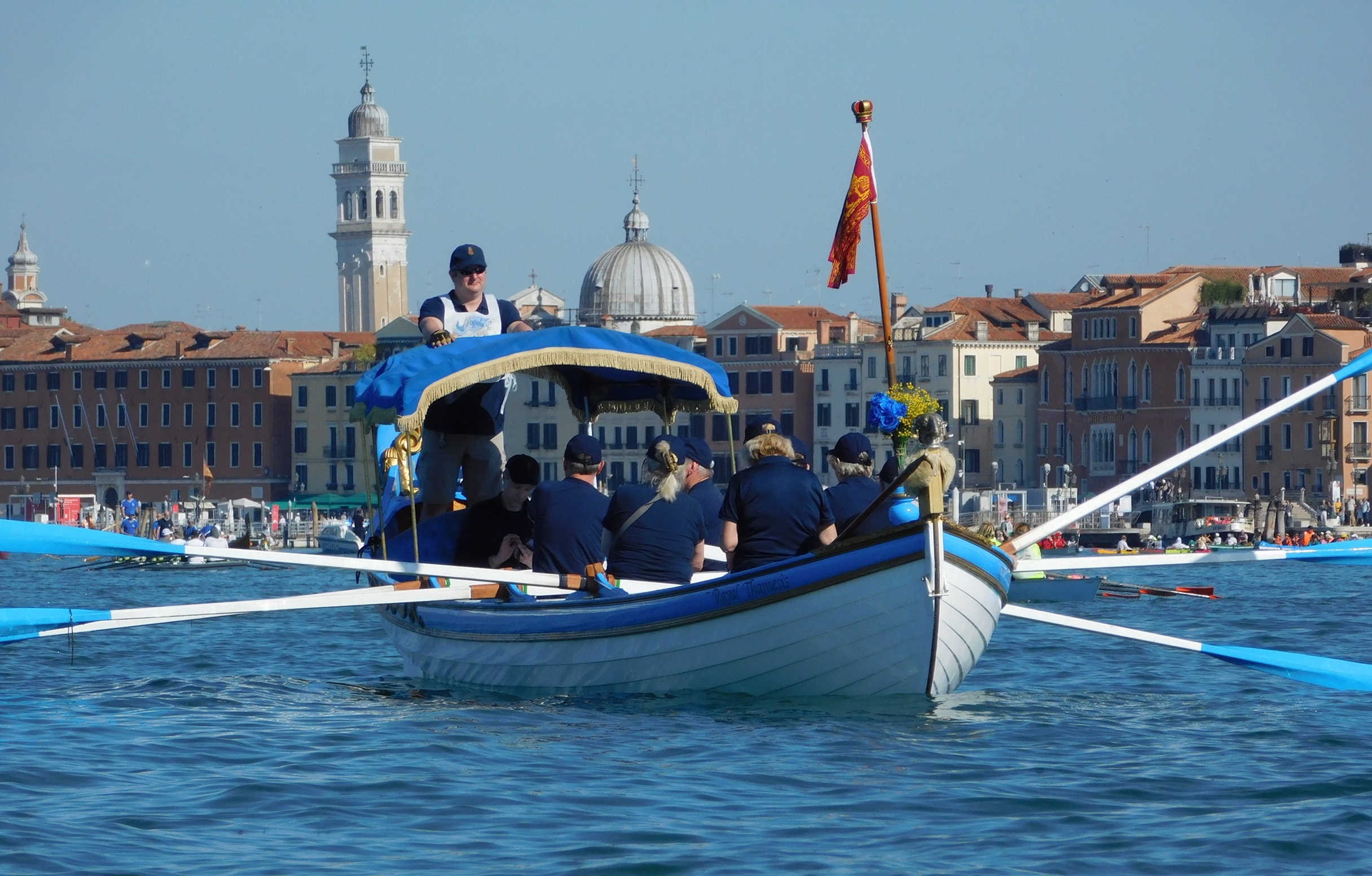
*Editor’s note: Stephen Heron has kindly pointed out that the Royal Thamesis belongs to The Drapers’ Company in London and not to City Barge Club of Oxford, which was mentioned in an earlier version of this article.


Hi Ralf-Peter,
Thanks for featuring our lovely crew in your article. Sons of the Thames is indeed represented at the Vogalonga, and this year the Bucintoro 16 was rowed by a mixture of some veterans like me, who have rowed the event now nine times, and some newbies. We were a mix of Sons rowers and a few Deben RC rowers from Suffolk, and a father-and-son Eton combo too.
Stephanie