
10 September 2026
By Mark Blandford-Baker
This article was first published in the Saturday 4th July 2026 Henley Royal Regatta Daily Racing Programme. The illustrations have been added by HTBS. HTBS would like to thank HRR for allowing us to republish the article.
The very first foreign entry at Henley was an American named E. Smith of Atalanta Rowing Club, New York, who entered The Diamond Challenge Sculls in 1872. Smith won two heats but was beaten in the third round. His nation was just 96 years old. Today, as the U.S.A. marks 250 years of independence, there are 72 entries (including composites) in the 2026 Regatta across 22 events, made up of 42 open crews and 30 women’s crews.
The Early Years
Smith’s entry made the Regatta a pioneer in international sport: there were no precedents in rowing; among amateur sports in Britain only cricket had made an informal tour to Canada in 1859 and Australia in 1860. The first sizeable foreign entry at Henley, all from the U.S.A., came in 1878 and there was immediate trouble in respect of the amateur and professional argument. By Henley standards it transpired that of the two American scullers, G.W. Lee of New Jersey and G. Lee of Boston one was certainly a professional and the other at best a very doubtful amateur.
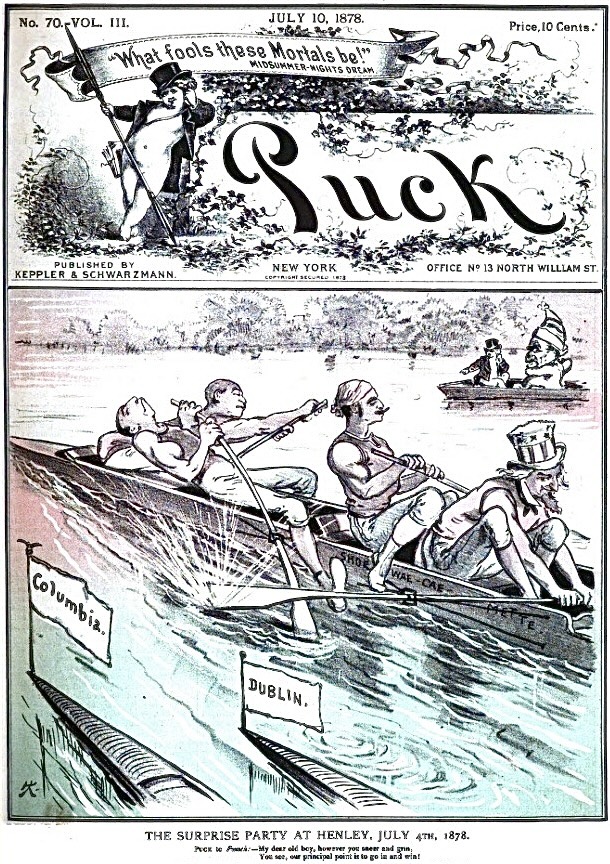
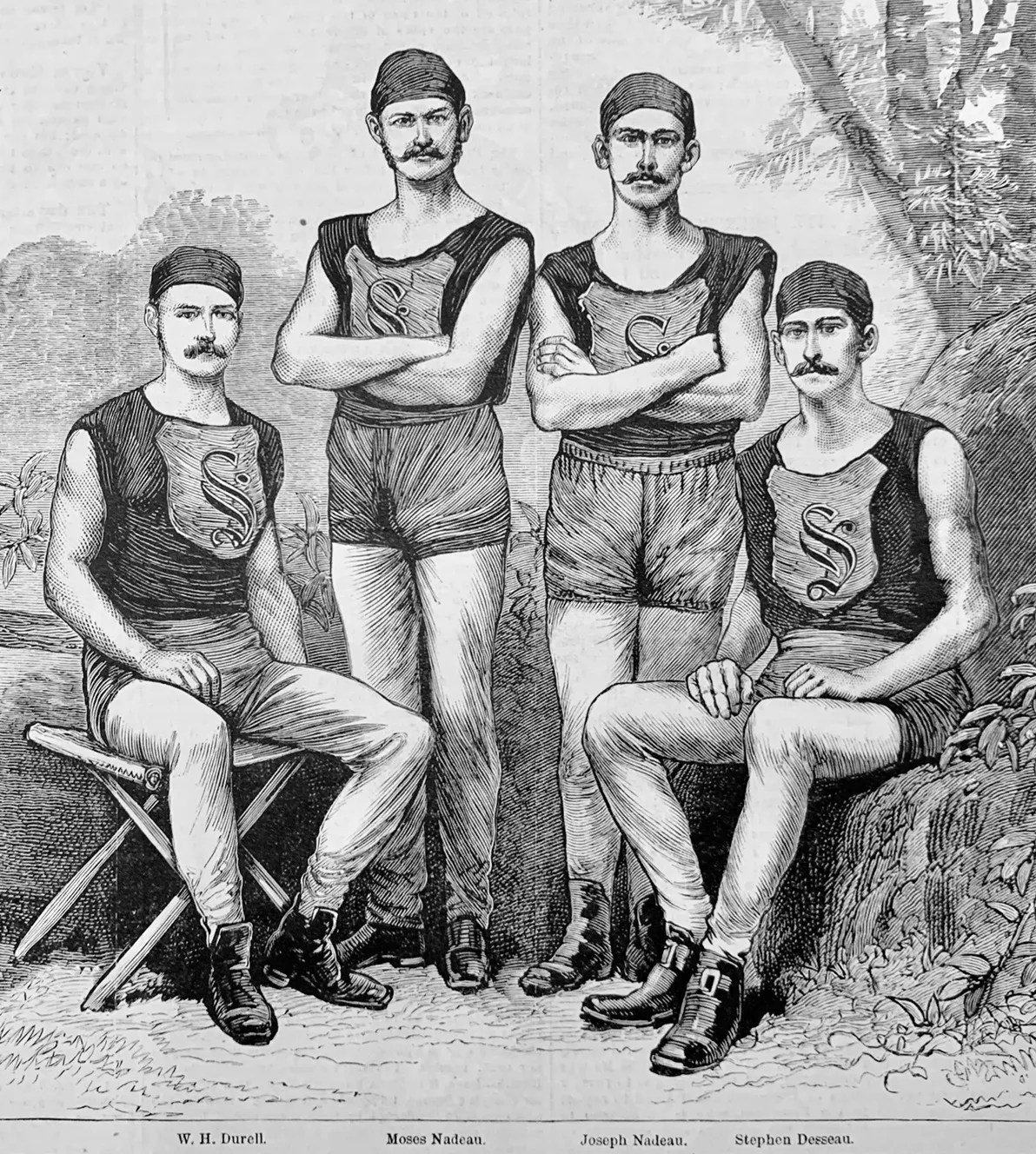
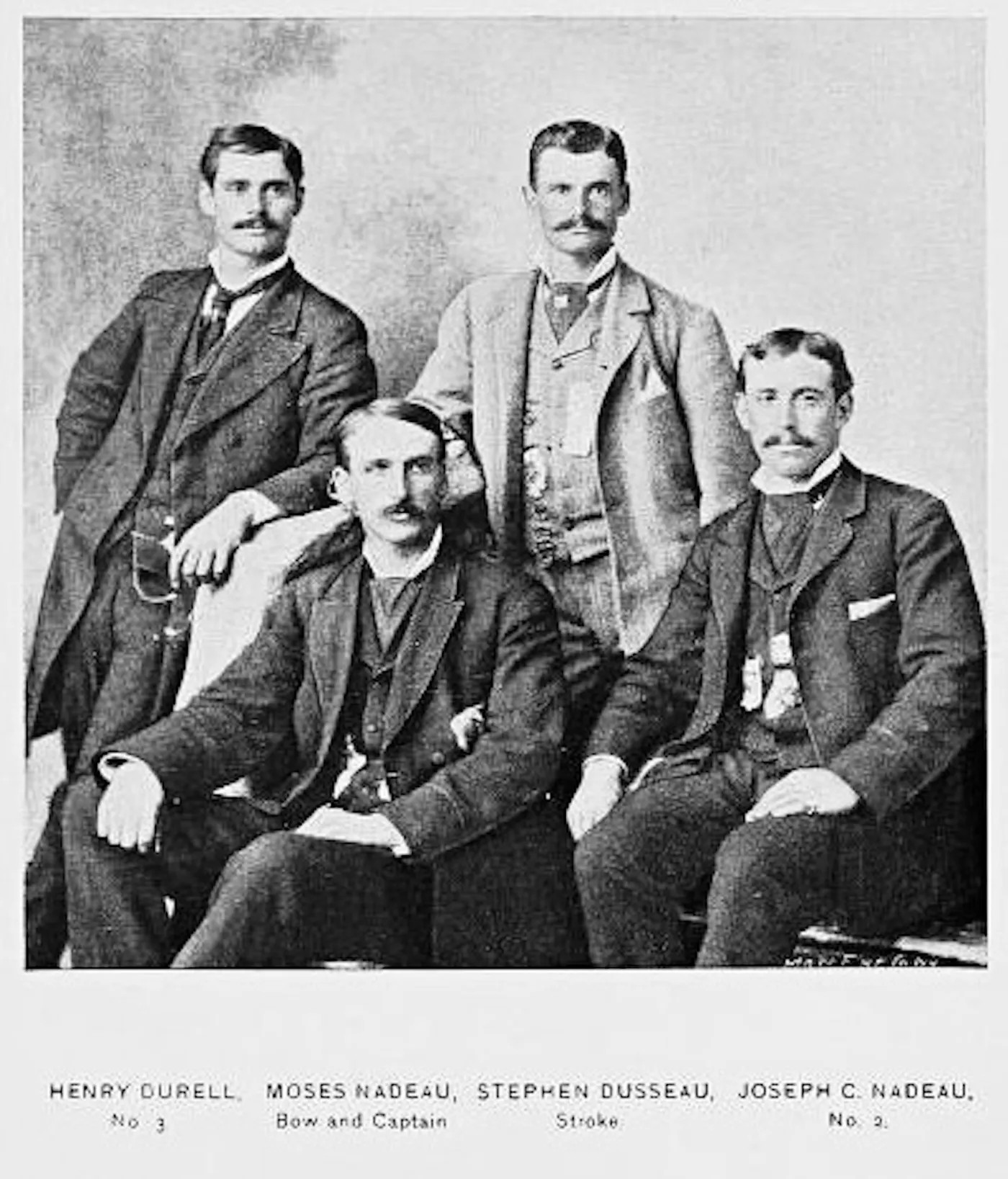
In the same year the Shoe-wae-cae-mette Boat Club of Monroe County, Michigan, entered The Stewards’ Challenge Cup. In front of a crowd of around thirty thousand people on the banks of the Thames, or in pleasure boats on the river, these French-Canadian lumbermen beat a crew from Columbia College, New York, and one from Dublin University Rowing Club, but lost the Final against London Rowing Club. ‘The Shoes’ were naturally disappointed to lose the race. Back home the press suggested that “these men did not know how to row”. The New York Times went onto criticise their clothing and the fact they drank whisky as well as beer! Cartoons at ‘The Shoes’ expense appeared in American publications.

The same Columbia College crew was also entered in The Visitors’ Challenge Cup where they beat University College, Oxford, and Jesus College, Cambridge, in a heat (this being the period of many races being three abreast), and went on to win the Final against Hertford College, Oxford. Thus, for the first time a Henley Royal Regatta trophy went overseas. The immediate result of the debate about the two scullers and ‘The Shoes’ was that in 1879 Henley produced its first formal definition of an amateur. A new rule also required overseas entries to be lodged by 31 March, accompanied by a declaration with respect to the profession of each competitor and their amateur status.
As the years went by there were further controversies surrounding the professional/amateur status question and the Americans were not alone in being doubted from time to time. Other issues sometimes arose – in 1881 Cornell University sought to enter two fours, one in The Stewards’ Challenge Cup, the other in The Visitors’ Challenge Cup, but they arrived on 25 May when the deadline was (by then), 1 March. After much representation by their agent, by some of the London clubs and Oxbridge Colleges, the Stewards, on a casting vote of the President, overturned the Committee’s decision to reject them but let in only the Stewards’ four. The disgruntled Visitors’ four arranged a private race against Hertford College, Oxford, but ran into the bank twice. Later, they raced in Vienna, but one member of the crew was accused of having ‘sold the race’ when he pretended to faint.
In 1897 E.H. Ten Eyck of Wachusett Boat Club, Massachusetts, won The Diamond Challenge Sculls, the second time the event had been won by a foreigner.
The Amateur Debate Continued
The amateur debate erupted again on a number of occasions, perhaps most famously with the refusal of the entry from J.B. Kelly, Snr. of the Vesper Boat Club of Philadelphia in 1920 for the Diamond Sculls. Jack had been an apprentice bricklayer in his youth. Kelly went on to win the Olympic single sculls title in Antwerp that year, from Jack Beresford, the Diamonds winner. At the 1920 Games, the American also won the double sculls title. He was again Olympic champion in the double in Paris in 1924. It perhaps had not helped that there had been a debate after the 1905 Regatta concerning the status of some of the Vesper crew in The Grand Challenge Cup. A ban on future entries from the club was imposed, but a proposal to ban all American crews was defeated.
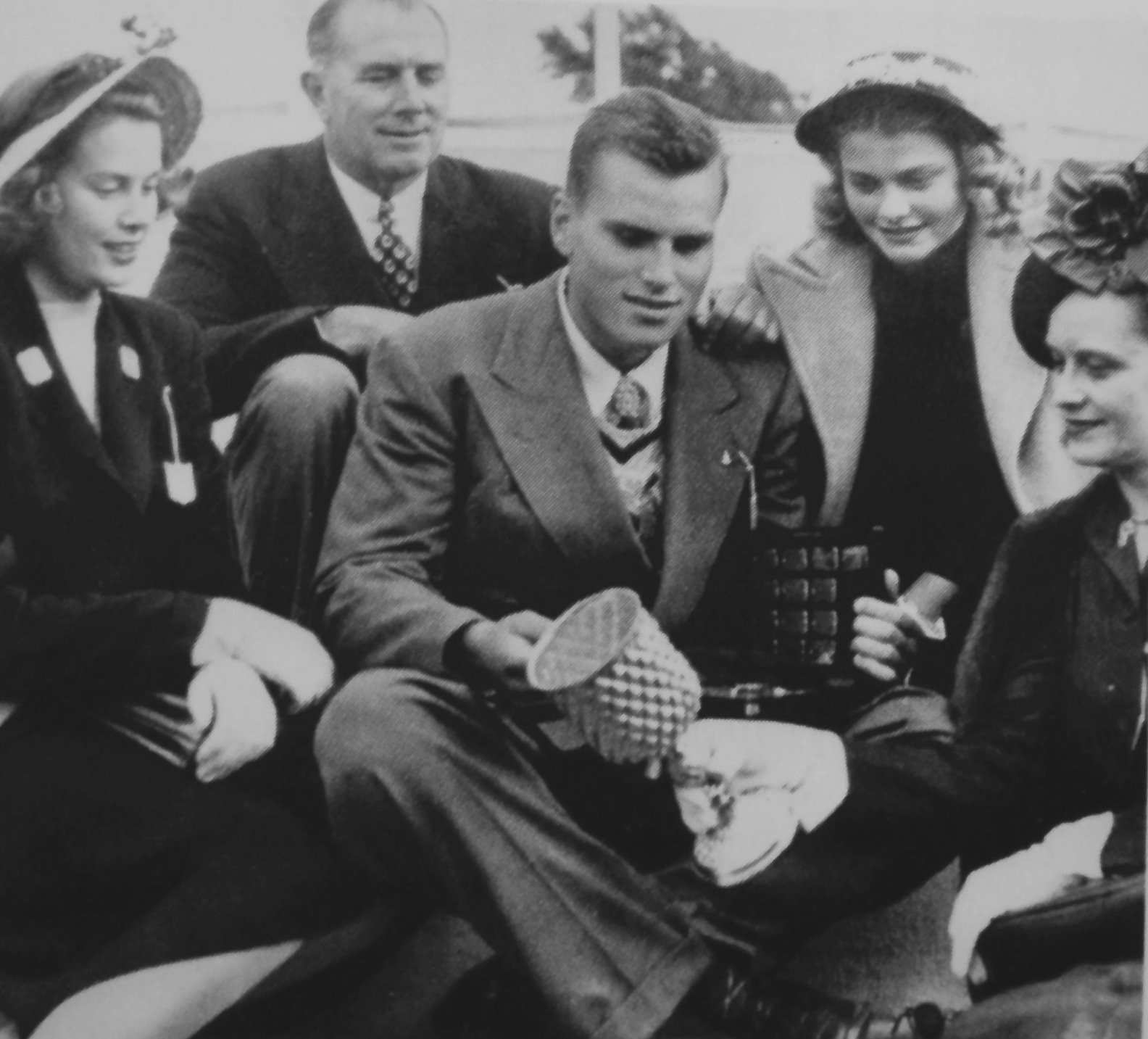
Jack Kelly had a daughter, Grace, and a son, Jack. Grace was an Academy Award-winning actress and became Princess Grace of Monaco on her marriage in 1956 to Prince Rainier. The premier women’s quadruple sculls event is named after her. Jack Kelly, Jnr., with no debate about his amateur status, followed his father’s footsteps to the river. He went on to win The Diamond Challenge Sculls in 1947 and 1949. He also won Olympic bronze in the single in Melbourne in 1956.
Powerhouses
The dominant crews at Henley have come mainly from the Ivy League universities and the national training centres. In 1914 Harvard won The Grand Challenge Cup. In 1964 the entire crew returned, rowed over the Course, met H.M. The Queen Mother, and presented a new ‘Grand’ cup. The old cup had become very fragile, and the Regatta was delighted to be gifted a replacement. Harvard have won 30 times, Princeton and Washington 10 times each. Harry Parker, the great Harvard coach of over fifty years, being interviewed in 1989 for a film about the Regatta, said “It’s very hard to win at Henley”. He was referring to the knock-out structure of the racing, but he knew when to bring crews and for which event. In 2013, a Four out of his final Varsity Eight broke the Course record in The Visitors’ Challenge Cup. When the base for The Grand Challenge Cup was running out of the space needed to engrave the winners’ names, an approach was made to a number of senior Harvard alumni to see if they were interested in donating a new base.
Happily, they were keen to do so, and a new base was presented in time for the 2014 Regatta. On the top of the base there is an inscription remembering the famous Harry Parker.
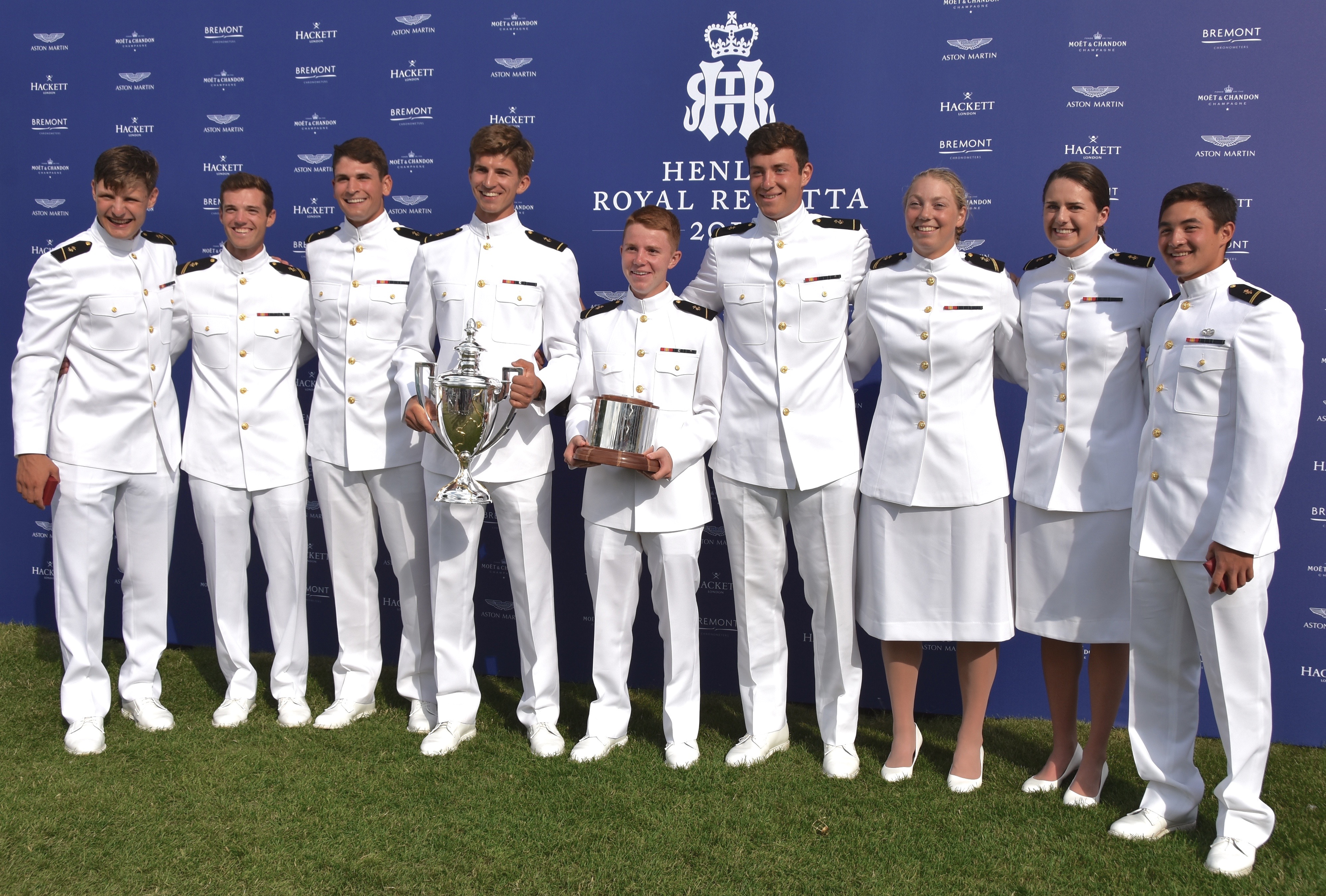
San Diego Training Center, Princeton Training Center, Charles River Rowing Association, Schuylkill Navy High-Performance Center have all got their names on various trophies. In 1980 all the entrants in The Grand Challenge Cup were national teams whose countries had decided to boycott the Moscow Olympic Games. The Charles River R.A. crew that raced and won delighted the Regatta by coming to Henley instead. In 2019 the Regatta commemorated the centenary of the Royal Henley Peace Regatta that was held to help the Allies build peace at the end of the Great War. For the first time in the Regatta’s history mixed crews raced over the Course. The King’s Cup was for military Eights racing for a new trophy and was won by the United States Armed Forces.
Women’s Crews
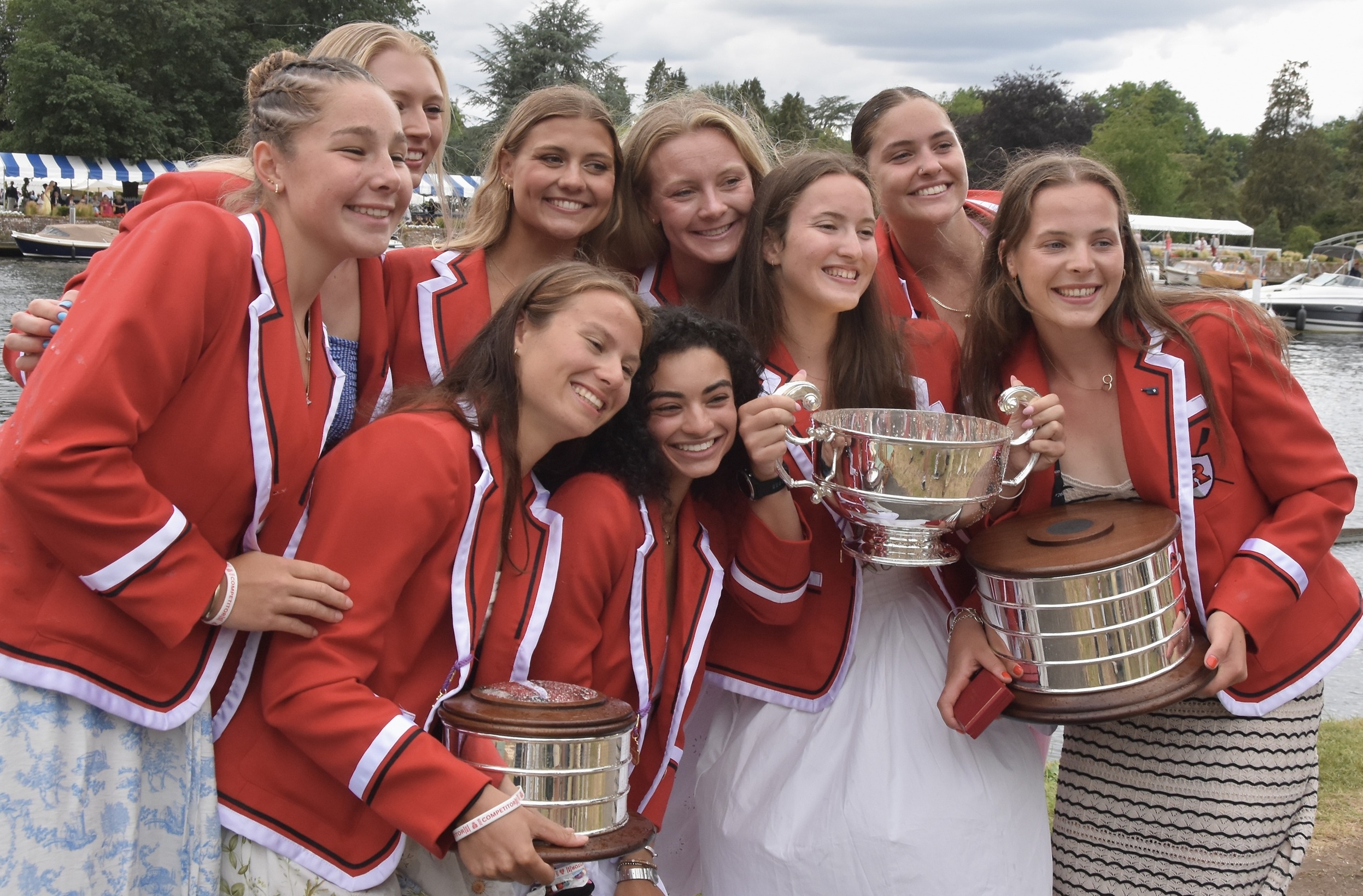
The first American women’s crew to win at Henley was in 1981 when 1980 R.C. won the Women’s Invitation Coxed Fours event. The following year, this event, which was raced on a shortened course, was won by Boston University. The event, along with the Women’s Invitation Double Sculls and Single Sculls, was discontinued after that because it was considered the Regatta programme was so full that it would not be possible to stage premier events for women without curtailing, or withdrawing, some existing events.
It was 1993 before the next event for women, when the single sculls, later named The Princess Royal Challenge Cup, was introduced. In 1993 and 1994 this event was designated as rounds of the F.I.S.A. World Cup. The first American winner was Cindy Bishop of Riverside B.C. in 2004. In 1998, the inaugural year of the Women’s Invitation Eights, America came and made its mark with the crew from San Diego Training Center winning. The event was made permanent in 2000 and named The Remenham Challenge Cup, the University of Washington being the first to get their name on the new trophy.
The small boat events for women, introduced in 2017, have seen American success. The Hambleden Challenge Cup and The Stonor Challenge Trophy have been won three times by crews from the east and west coasts. The Island Challenge Cup, introduced in 2021, brought success for Brown University in 2022, and Rutgers University in 2025.
Junior Crews
In the early years, before there was an event specifically for junior crews, schools entered one of the main Eights events. In 1929, Browne & Nichols School became the first American junior crew to win at Henley. After the introduction in 1946 of The Princess Elizabeth Challenge Cup, the cup went stateside when Washington-Lee High School won it in 1964. They were swiftly followed by Tabor Academy in 1965. There are usually several U.S. schools in the event; most recently, St Ignatius College Preparatory School won in 2006.
In 2021, an event was introduced for junior women’s Eights, and named The Prince Philip Challenge Trophy in 2022. American crews were seen from the beginning and in 2023 and all-American final was won by Greenwich Crew from Connecticut – they came from behind at Fawley to win by half a length over Deerfield Academy, Massachusetts. The Diamond Jubilee Challenge Cup, introduced in 2012 for junior women’s Quadruple Sculls, brought success for Y Quad Cities Rowing Association. An organisation based in Moline, Mississippi, it teaches sportsmanship based on the core values of the Y.M.C.A.
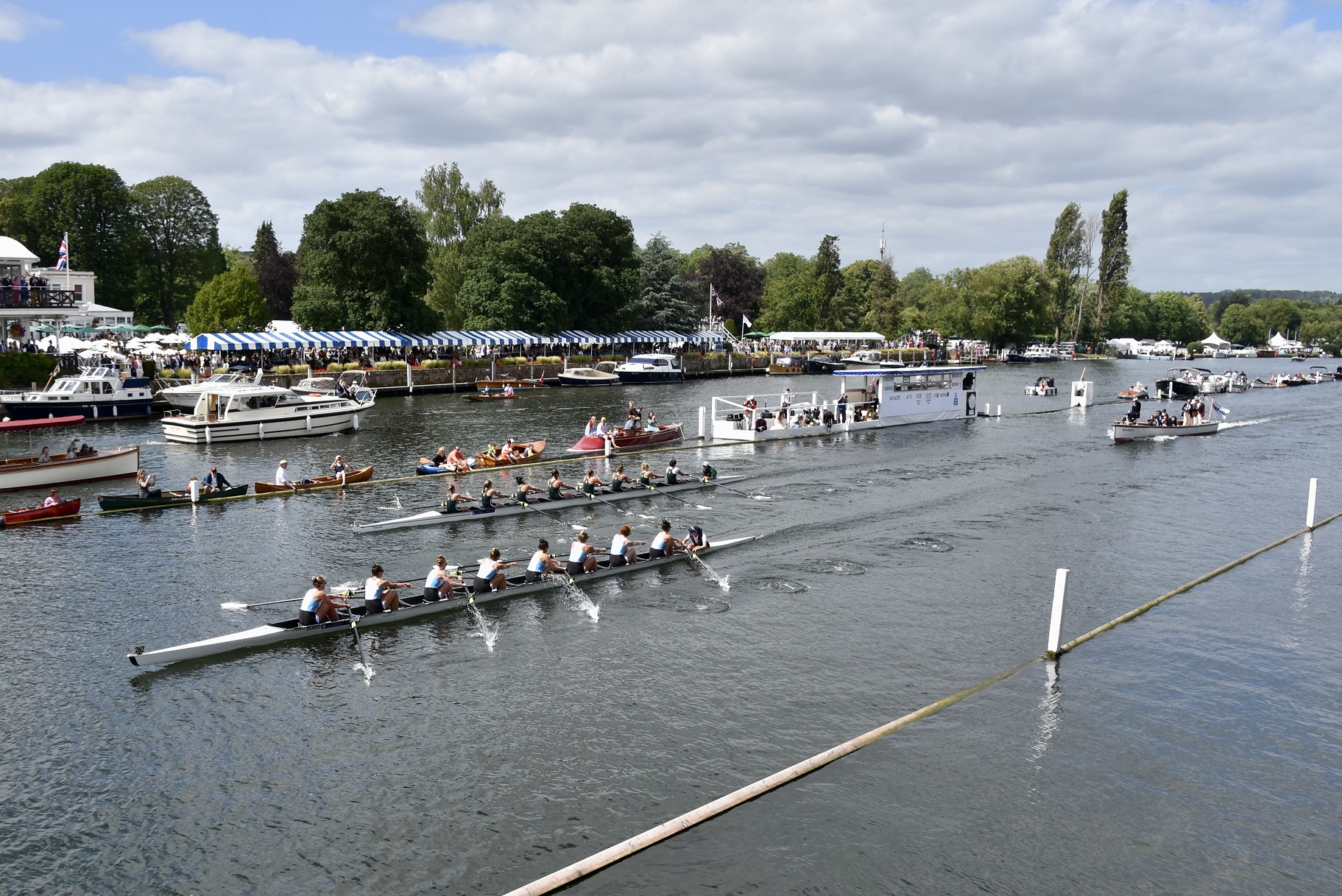
In 1927, Kent School was the first American prep school crew to compete at the Regatta, and so will celebrate a century since their first visit next year. Kent has generously donated the base for The Queen Victoria Challenge Cup, to be contested for the first time at this year’s Regatta. A fitting recognition of a student event for women’s Quadruple Sculls.
Stewards
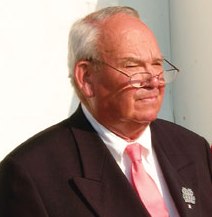
Hart Perry, elected in 1974, was the first non-Commonwealth person to be made a Steward of the Regatta. Hart first came to the Regatta in 1955 as the coach of the Dartmouth lightweight crew which raced in The Thames Challenge Cup that year. His much longer association with bringing crews to Henley was with Kent School. Hart joined Kent School in 1961 and became its Dean in 1969, a position he held until 1980. Through the sixties and the seventies Hart and his Kent School crews were regular visitors to the Regatta, competing in a number of different events over the years. The high point was their victory in The Princess Elizabeth Challenge Cup for schoolboy crews in 1972. He served as a Steward until his death in 2011. His widow Gill acted as a representative in assisting U.S. crews with their entries and arrangements until 2024.
Dr Joe Michels, (La Salle University, Philadelphia), was elected in 2001, rowed four times for Oxford in the Boat Race. In his second year, 1992, he was President of O.U.B.C. He rowed at the Regatta from 1991 to 1995 and won the Prince Philip Challenge Cup in a record time. He serves as a Trustee of the National Rowing Foundation, which is dedicated to the support of American rowers with Olympic aspirations.
Jamie Koven, elected in 2009, won The Challenge Diamond Sculls in 1998. An alumnus of Brown University, Jamie competed in the 1996 and 2000 Olympic Games; he raced in the World Championships between 1993 and 1999, winning gold in the Eight in 1994, and in the Single in 1997. He has won four Henley medals, including the Grand twice. He is co-Chairman of the National Rowing Foundation.
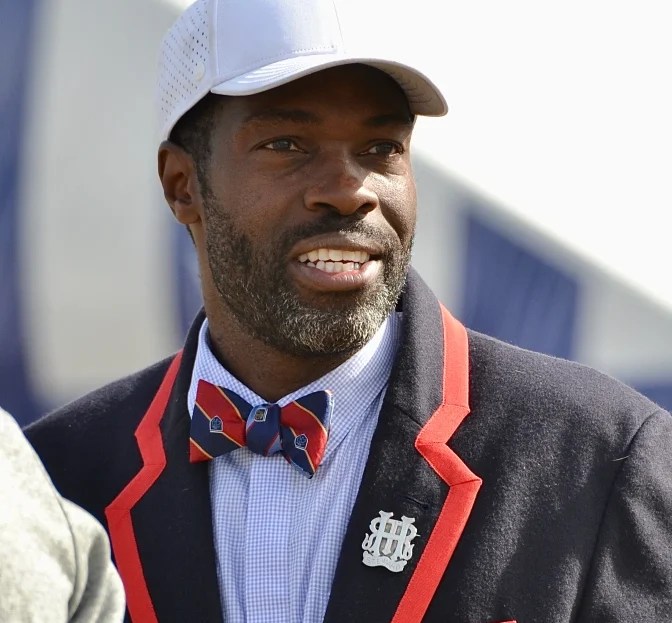
Aquil Abdullah, elected in 2021, started rowing in Woodrow Wilson High School in Washington, D.C. He continued rowing after George Washington University, and in 1996 became the first African-American to win the Single Sculls at the U.S. Championships. Aquil won The Diamond Challenge Sculls in 2000 competing in Princeton Training Center’s colours. Aquil serves on the Board of the National Rowing Foundation, and he has been Board Chair of the ‘A Most Beautiful Thing Inclusion Fund’, where he works to help remove barriers and increase access and participation to the sport of rowing.
Numbers
The U.S.A. has had 150 winning crews since the Regatta started, far more than any other foreign nation. These winning crews have come from 50 different clubs (including composites). Harvard University has the greatest number with 30: its first victory in 1914 was in the Grand which it has won a further four times. Princeton University and the University of Washington are tied with 10 winning crews apiece.
WINNING CREWS
Early years
| Club | Year | Event |
| Columbia College | 1878 | Visitors’ |
| E.H. Ten Eyck, Wachusett B.C. | 1897 | Diamond |
| Harvard University (as Harvard Athletic Association B.C.) | 1914 | Grand |
| W.M. Hoover, Duluth, Minnesota | 1922 | Diamond |
| Browne & Nichols School | 1929 | Thames |
| Kent School | 1933 | Thames |
| Tabor Academy | 1936 | Thames |
| Tabor Academy | 1937 | Thames |
| Kent School | 1938 | Thames |
| J.W. Burk, Penn Athletic Club | 1938 | Diamond |
| Harvard University | 1939 | Grand |
| J.W. Burk, Penn Athletic Club | 1939 | Diamond |
| Tabor Academy | 1939 | Thames |
Recent winners
| Club | Year | Event |
| Princeton Training Center | 2016 | Remenham |
| Schuylkill Navy H.P.C. | 2016 | P Wales |
| University of Washington | 2018 | Temple |
| Y Quad Cities R.A. | 2018 | D Jubilee |
| Harvard University | 2019 | P Albert |
| Brown University | 2022 | Island |
| Morrison & Musnicki, California R.C. | 2022 | Hambleden |
| Reckford & Sechser, Cambridge B.C. | 2022 | Stonor |
| KM Kohler, Texas Rowing Center | 2022 | P Royal |
| University of Washington | 2022 | Visitors’ |
| Greenwich Crew | 2023 | P Philip |
| Princeton University | 2024 | Ladies |
| Harvard University | 2025 | Temple |
| Wannamaker & Collins, New York A.C. | 2025 | Hambleden |
| Rutgers University | 2025 | Island |
USA Winners’ League Table
50 US Clubs (inc. composites) have won at Henley since 1878. The top ten are:
| Club | Wins | Years |
| 1. Harvard University | 30 | 1914-2025 |
| 2=. Princeton University | 10 | 1948-2024 |
| 2=. University of Washington | 10 | 1977-2022 |
| 4. Charles River RA (1) | 8 | 1980-1994 |
| 5. Princeton Training Center | 7 | 2000-2016 |
| 6=. Brown University | 6 | 1984-2022 |
| 6=. University of Pennsylvania | 6 | 1947-1991 |
| 8. Kent School | 5 | 1933-1972 |
| 9=. Yale University | 4 | 1979-2015 |
| 9=. Potomac BC (2) | 4 | 1973-1996 |
- Includes 2 wins as part of a composite entry
- Includes 1 win as part of a composite entry

