
7 August 2026
By Wolfgang Chr. Goede*
(Photos © Hartmut Digutsch)
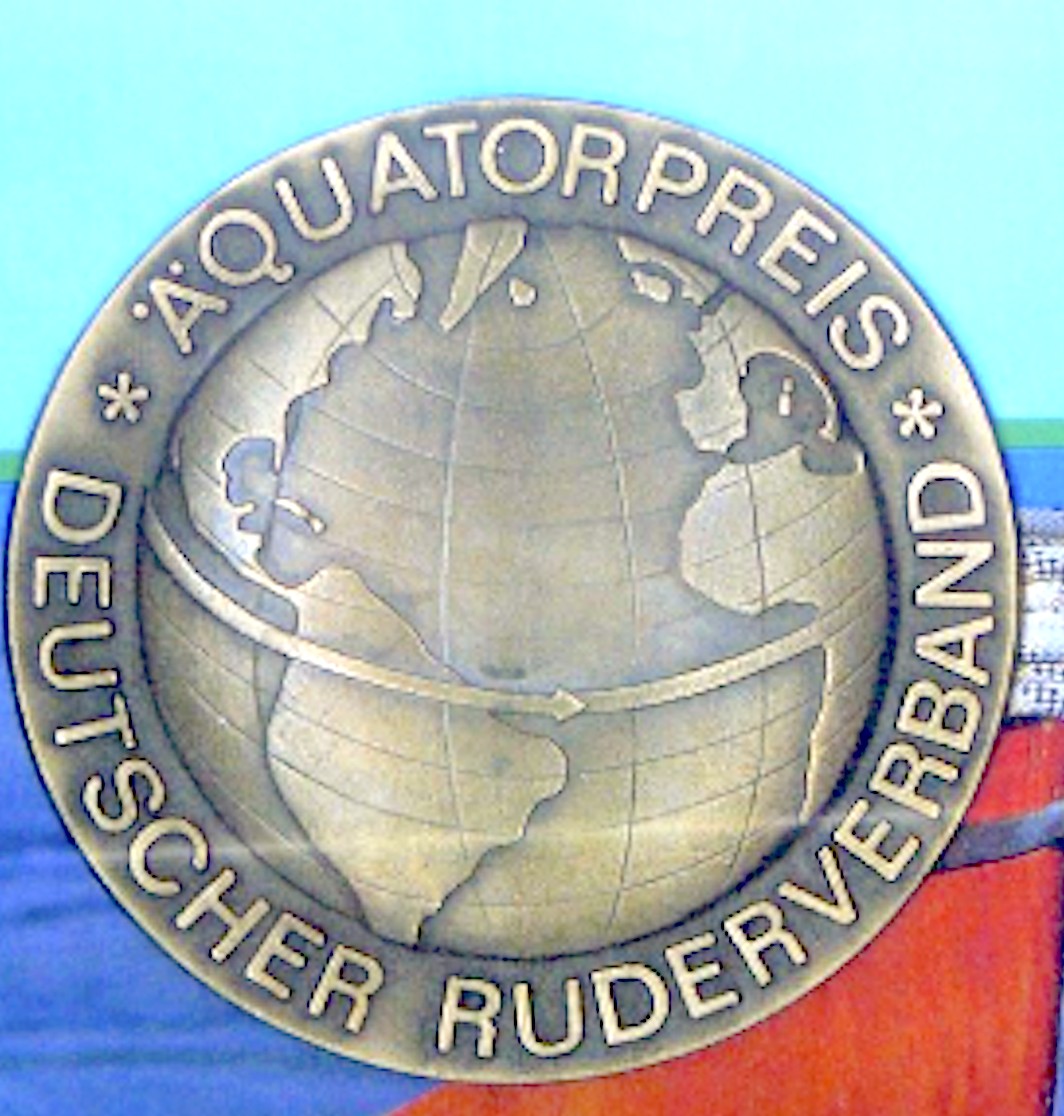
In 2025, the 83-year-old German Hartmut Digutsch received the Equator Medal in Silver for rowing 80,154 kilometers.
Rowing is far more than a sport. Its calm, rhythmic movements, fresh air, open water, and the shared experience of gliding through the water can become a powerful source of strength for both body and mind. For many, rowing is pure joy. For some, it even becomes a path back to life itself.
One of them is Hartmut Digutsch. His story raises an intriguing question: Could “Rowing for Mental Health” become a campaign as successful as “Rowing Against Cancer”? The German Rowing Association (DRV) appears open to the idea.
Digutsch received a special Christmas present in 2025. His local newspaper honored the now 84-year-old with a feature story marking his second Equator Award. At the German Touring Rowing Meeting, he received the Silver Equator Medal for rowing more than 80,000 kilometers—twice the circumference of the Earth.

What motivates someone to row the equivalent of two trips around the globe in just twenty years?
Today, Digutsch speaks openly about it. For decades, he did not.
The former German Army officer served for many years in some of the world’s most troubled regions—as military attaché in Moscow in 1980s and later on missions in the Balkans, Afghanistan, and Central Asia. He also became the first German to reach the North Pole as a member of a spectacular parachute expedition. His career repeatedly placed him in dangerous situations marked by uncertainty, immense responsibility, and constant stress.
Physically, he returned unharmed.
Mentally, he did not.
Whenever he came home from deployment, he recalls, he was “broken—a sick man.” Sudden noises made him flinch; slamming doors sent him instinctively looking for cover. His family barely recognized him. At that time, combat-related psychological trauma was rarely discussed within the German Armed Forces. Therapy was not something people talked about.
So he carried on.
Everything changed after retirement.
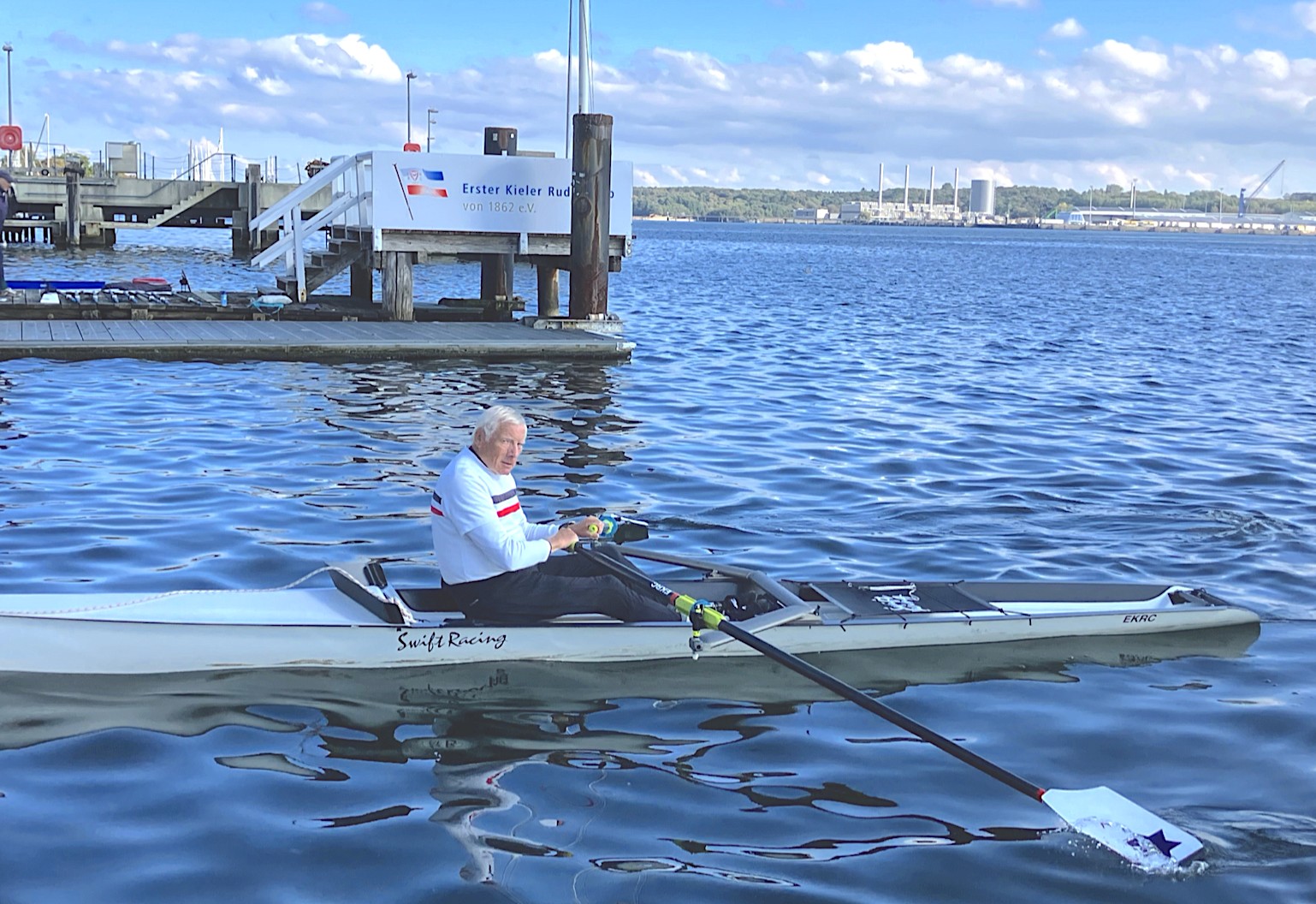
After moving house fifteen times during his career, Digutsch finally found a place of peace on the waters of Kiel Fjord. He began rowing regularly—about 4,000 kilometers every year. Discipline became routine. Routine became recovery.
Today, he says simply:
“I row for my mental health.”
From this personal experience emerges a broader vision.
Why not launch a “Rowing for Mental Health” initiative?
Much like “Rowing Against Cancer”, whose charity regattas have spent two decades promoting exercise, community, and hope, such a campaign could help reduce the stigma surrounding mental illness while encouraging people to seek support and discover the therapeutic value of rowing.
Mental health has long become a major social issue. Around one in three people experiences mental health challenges each year, including anxiety disorders, depression, or burnout. Young people are particularly affected. At the same time, access to psychotherapy remains limited, with waiting lists often stretching over many months.
Sports physicians have long recommended physical exercise as an important pillar of mental well-being. Rowing combines endurance training with nature, rhythm, and teamwork. Unlike many other sports, it is gentle on the joints while engaging almost the entire body. Psychotherapist and rower Dr. Jörg Roth describes rowing as “a wonderful source of strength,” especially when coping with crises, loss, and grief.
Mental health is therefore no longer a niche issue. Companies, schools, and sports organizations are increasingly investing in prevention and resilience. Interest is also growing within the German Rowing Association.
Sina Burmeister, the DRV’s Board Member for Youth, sees enormous potential:
“The smooth, rhythmic movement on the water offers incredible potential for strengthening mental health and emotional balance.”
The German Rowing Youth plans to make mental health a stronger focus in the coming years. Workshops for coaches are being prepared, along with expanded cooperation with the depression awareness initiative Wirfueryannic.
The proposal for a “Rowing for Mental Health” campaign has also found receptive ears. Burmeister says she will “get the ball rolling.” What matters most, she adds, are committed people willing to drive the project forward.
Meanwhile, Hartmut Digutsch simply keeps rowing.
Twice a week he takes to the water with his senior rowing group at the First Kiel Rowing Club (EKRC 1862)—in summer and winter, in sunshine, wind, or rain. His goal has long become something greater than the next kilometer. Perhaps one day he will even earn his third Equator Medal—this time in gold.
Above all, however, he represents countless people who have discovered that rowing is much more than exercise.
It can be a journey back to oneself.
And perhaps it can become a powerful symbol for better mental health throughout society.
*Article writer Wolfgang Chr. Goede is also actively engaged in promoting mental health. A complete German version on the topic appeared in the July 2026 issue of Rudersport. It includes “An Ode to the Joy of Rowing” by mentioned psychotherapist Dr. Jörg Roth, which will be published in a forthcoming sequel to this article.


Rowing is Meditation, Yoga on the water!