
12 November 2026
By Greg Denieffe
Greg Denieffe rides the Spanish Train between Guadalquivir and old Seville. **
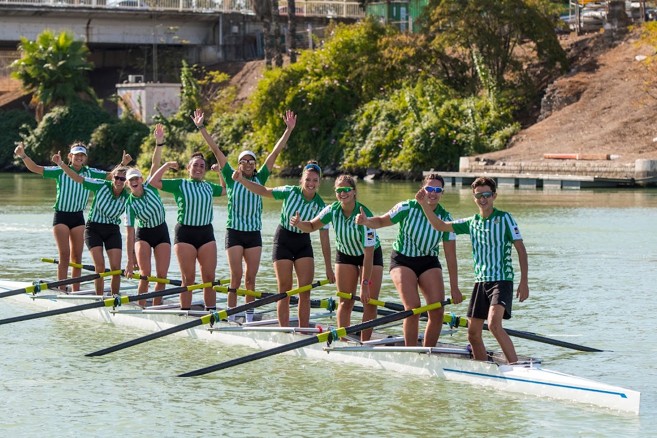
The rowing races between Sevilla Fútbol Club and Real Betis Balompié are unusual, perhaps unique, because they aren’t between rowing clubs per se. The rowers are members of local clubs in Seville, and their allegiance to one of the city’s two La Liga clubs determines who they compete for in the Regata Sevilla-Betis. To be selected, you must be a registered supporter of one of the clubs and get selected through an ergometer trial run by the Andalusian Rowing Federation.
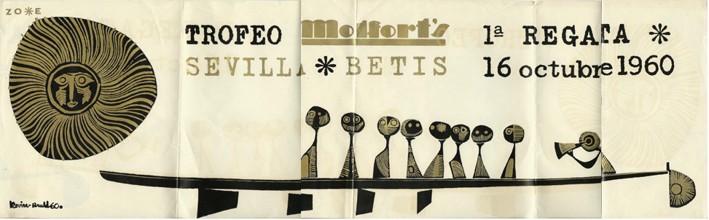
Miguel López Torróntegui, one of Sevilla’s attacking players in the 1940s, first had the idea for this regatta. After retiring from football, Torróntegui started rowing, and in 1960, he sought to extend the rivalry between the two Seville clubs beyond the football pitch to the great river, the Río Guadalquivir.
Torróntegui, together with Miguel Muñoz Doyega, a representative of the regatta’s first sponsor (Molfort’s), approached the football clubs, who welcomed the idea with enthusiasm. Each club bought a boat, and the regatta, albeit one race for men’s eights, was born.
The regatta website highlights the high rowing standard of the crews, which over the years have had 15 Olympic rowers, 13 world champions and many more medallists at the World and European Championships, and nearly 200 members who at some point rowed for the national team. Not quite your average corporate regatta.
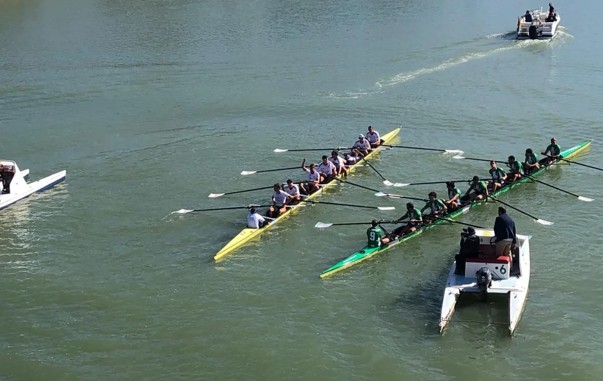
While the rowing rivalry only began in 1960, the football rivalry dates back to 1915 when the two clubs played a ‘friendly’. Since 1928, when the clubs first met in a competitive fixture, there have been 144 Derbi Sevillano, with Sevilla leading 66 wins to Betis’ 42. On the river, Sevilla took a commanding lead in the head-to-head before Betis won 14 races on the bounce: leaving the current score 31-28 to the Sevillistas.
A women’s race was introduced in 1990, and Betis leads that mano a mano 21 to 15.
Organisational difficulties meant that only three races were held in the 1960s, but since 1970, the regatta has taken place every year, and on Saturday 14 November 2026 the event celebrates its 60th edition.
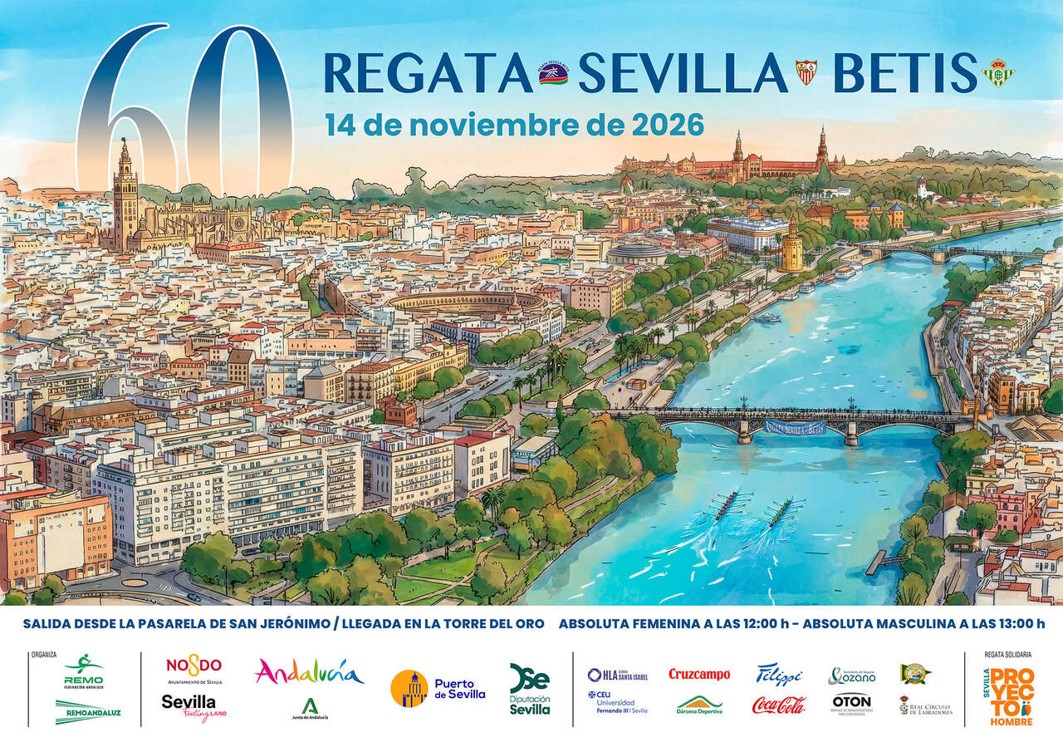
The race takes place on the Canal de Alfonso XIII—officially known as the Dársena del Guadalquivir— which is a 13.5 kilometre-long, man-made urban waterway, which flows through the heart of Seville with the natural river Guadalquivir lying just to the west, between half and one kilometre away.
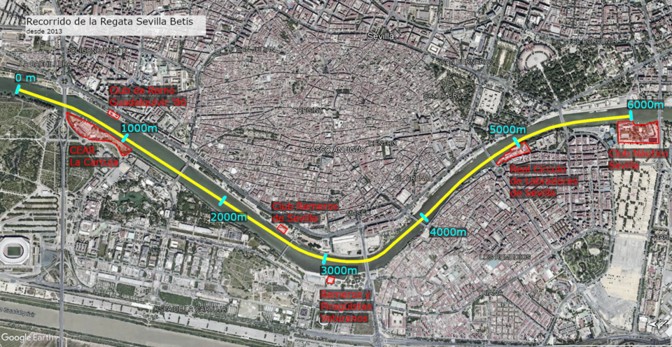
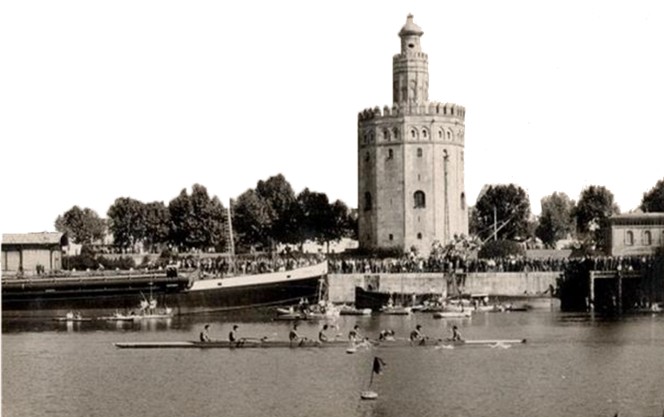
Since 2013, the men’s race has been just over 6,000m long from the San Jerónimo footbridge to the city centre, finishing in front of Club Náutico Seville. Before 2017, the women’s race was shorter than the men’s, but since then, both races have been raced over the same course. However, this year’s milestone 60th edition, will see both races shortened to 5,200 metres. The start remains at the San Jerónimo footbridge, while the finish line has been moved back upstream to sit directly in front of the Torre del Oro, alongside temporary spectator grandstands. Spectators can also follow the race from the banks and the many iconic bridges of Seville that span the course.
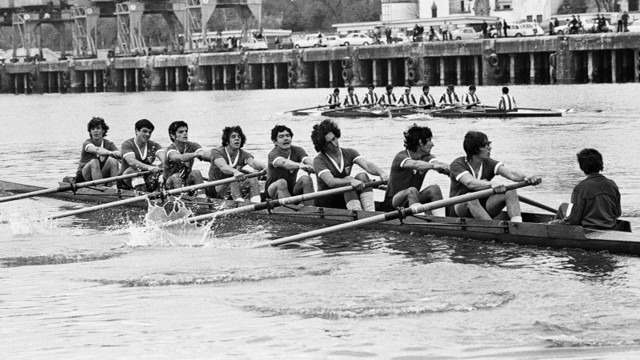
Several TV stations in the Seville region will show the race live. In the past, World Rowing have streamed the race on its YouTube Channel, and the regatta website says that they will do so again this year.
Along with the two main races, there are 500m sprint races for veterans and juniors. Racing begins at 11:30 a.m. CET (UTC+1). The women’s race begins at 12:00 noon, followed by the men’s race at 13:00.
If you would like a taste of the occasion, watch this six-minute video by The Tim Traveller. If you want the full two-hour experience, the 2025 races are here. The races begin with a free start, and the elaborate dance of the crews to get aligned is wonderful viewing.
Came for the rowing? Stay for the culture:
* ‘El Fútbol es así’ is an idiom used in Spain that translates as ‘that’s football’ much the same as ‘it’s a funny old game’ is used in England. Four years ago, I fell down the football cliché rabbit hole, and that fall resulted in a HTBS article: Rowing is a Funny Old Game. That piece covered football’s connection to rowing in Brazil, the USSR, and Switzerland. HTBS now welcomes Spain to that particular burrow.
Most football/soccer clubs in Spain use fútbol in their names, but Real Betis uses balompié. While fútbol is the direct phonetic adaptation of ‘football’, balompié is a calque formed by combining balón (ball) and pie (foot). That’s one of the reasons that Gregorio finds himself in the Betis camp, and the fact that they signed Irish international player Troy Parrott in August 2026.
** Chris De Burgh, an Irish singer and songwriter, released an album in 1975 called Spanish Train and Other Stories. It owes its title to the album’s most famous track, Spanish Train, which begins: There’s a Spanish train that runs between Guadalquivir and old Seville. And at dead of night the whistle blows, and people hear she’s running still.

