
21 July 2026
By Tim Koch
Tim Koch continues the story of a remarkable interwar oarsman as revealed by his scrapbook. (Part I is here.)
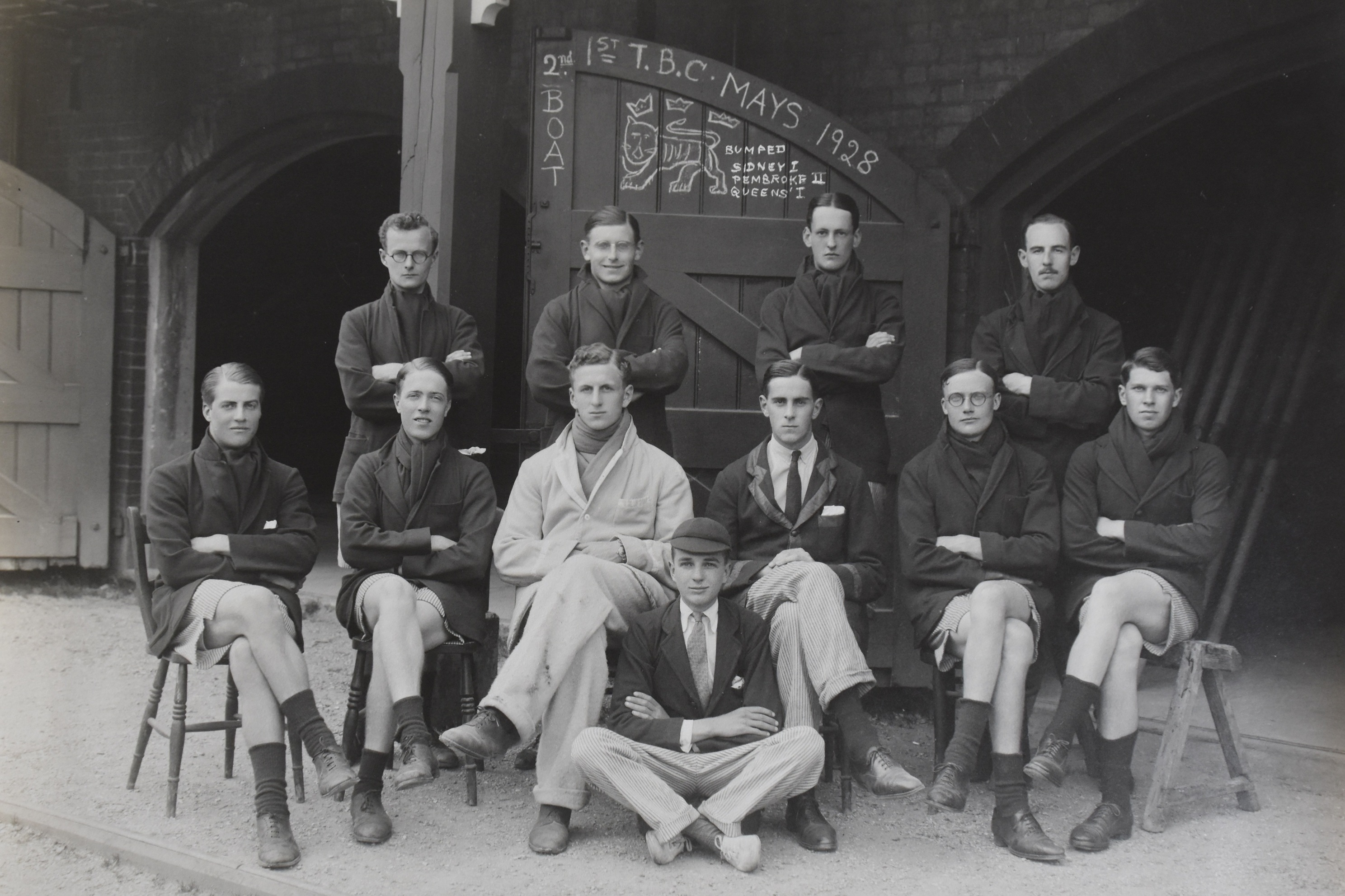
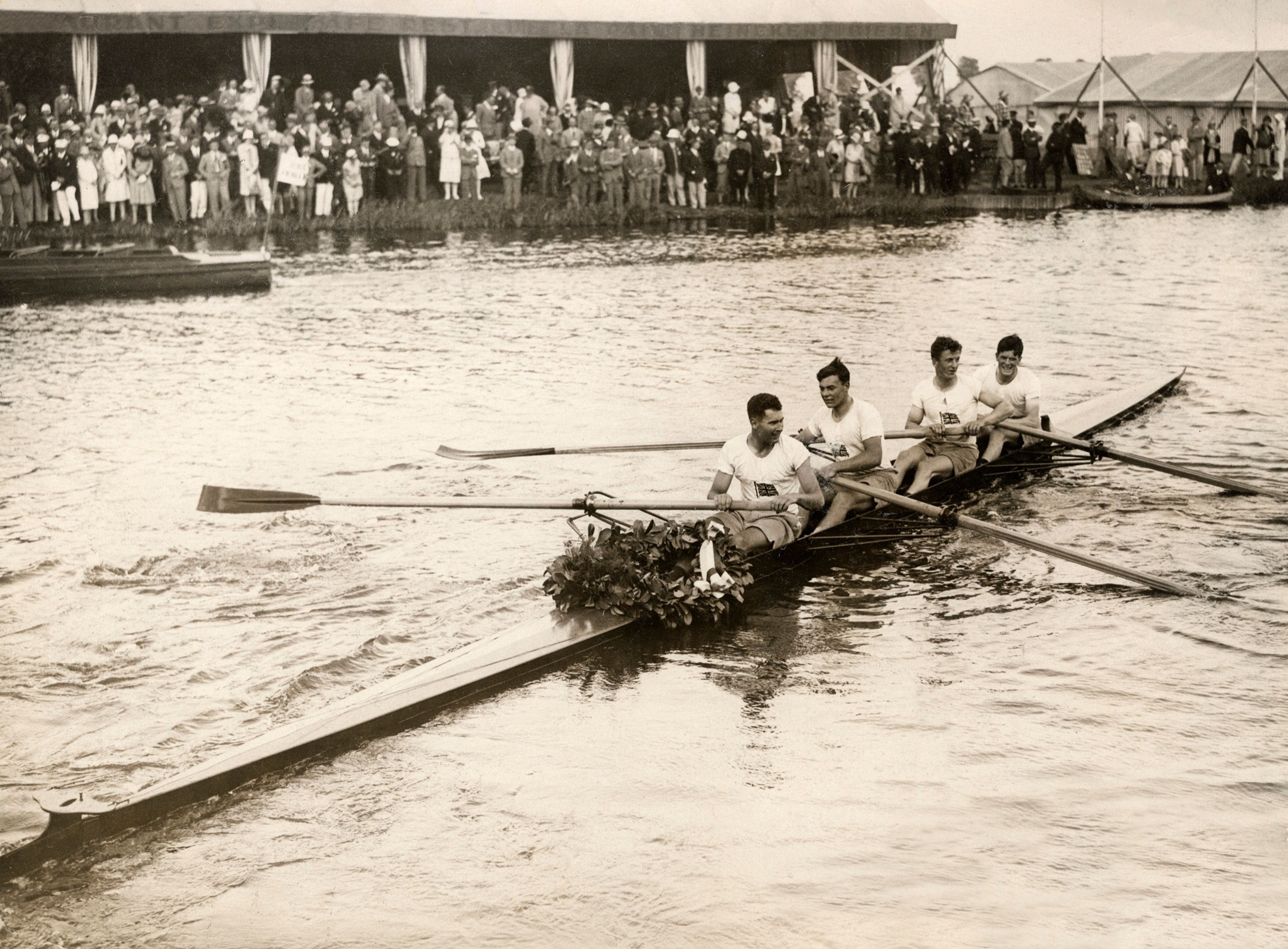
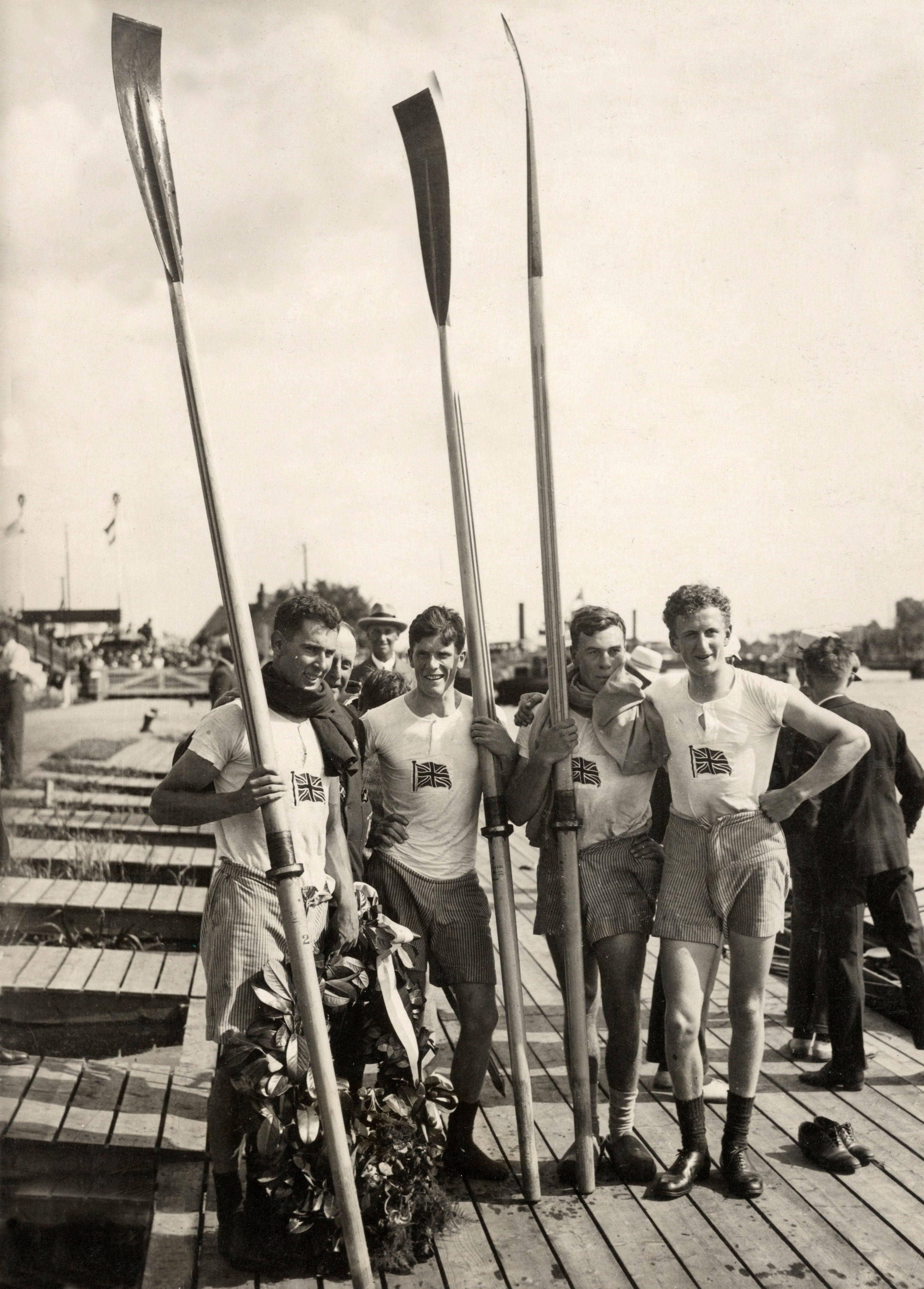
The year 1928 was Beesly’s annus mirabilis. He was victorious in the Boat Race for a second time, his First Trinity boat went Head of the River in that year’s Cambridge May Bumps and at Henley he won the Visitors’ and was a finalist in the Grand. He finished the season with Gold in the coxless fours at the Amsterdam Olympics.
The Boat Race of 31 March 1928
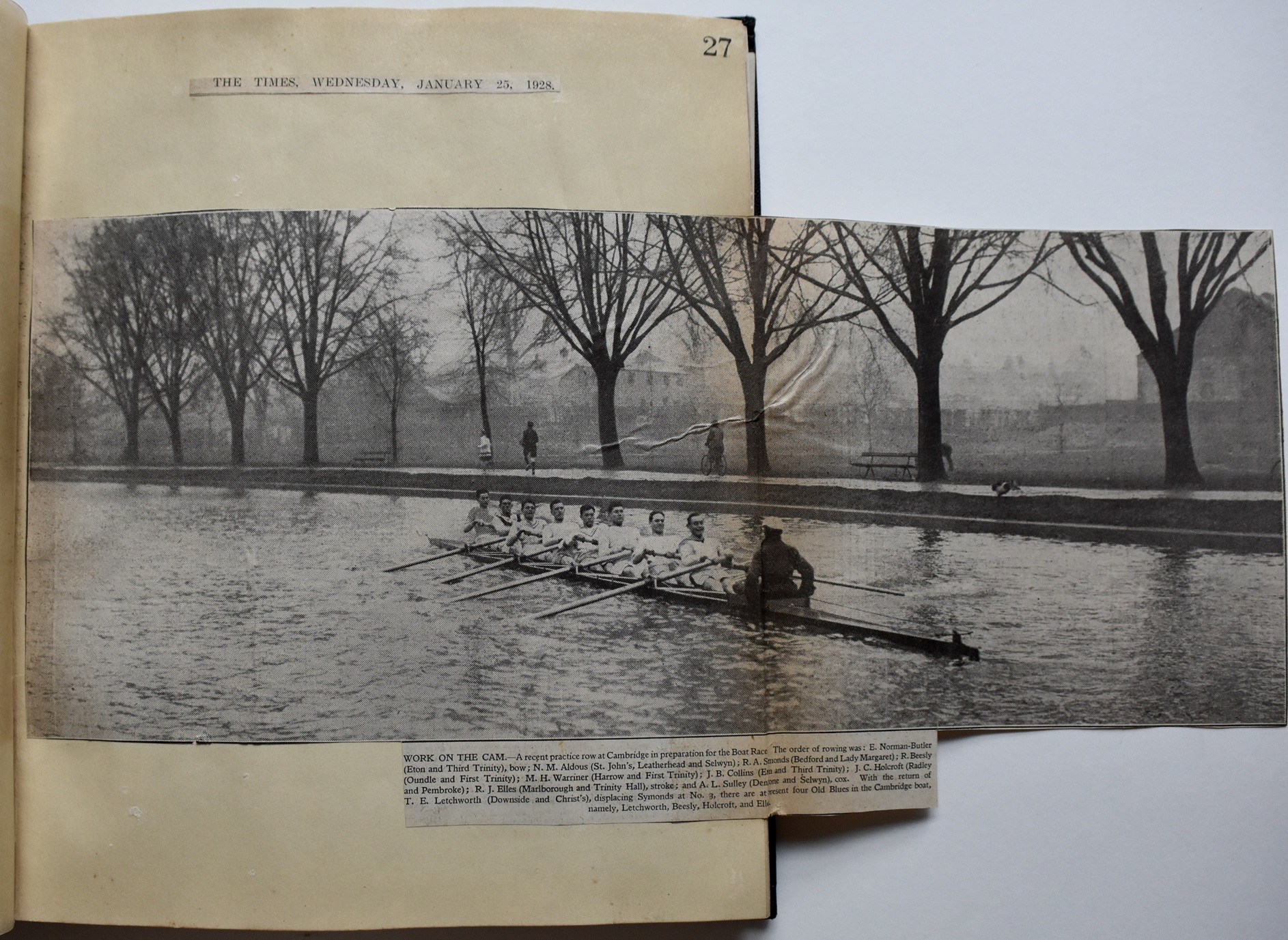
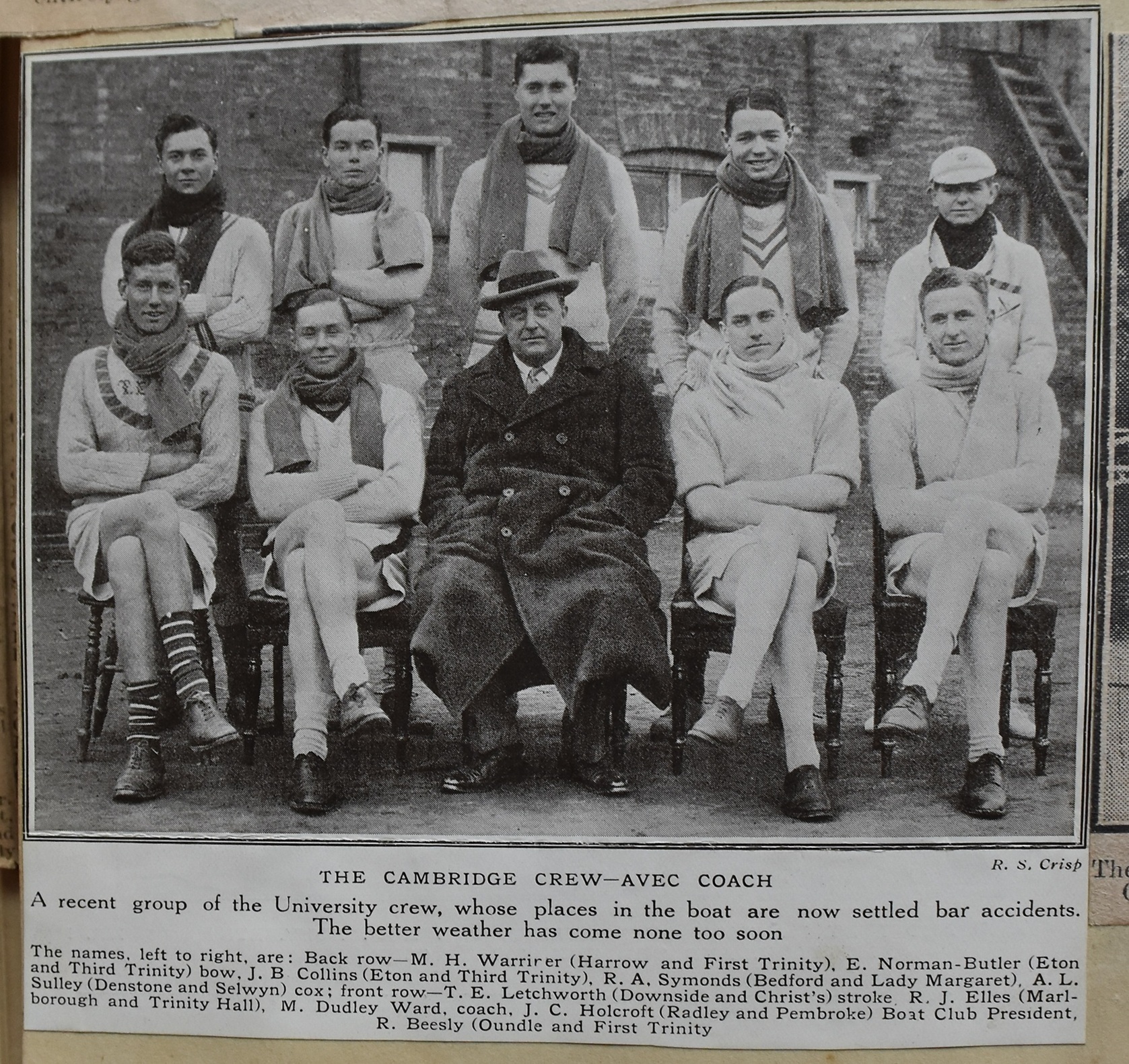
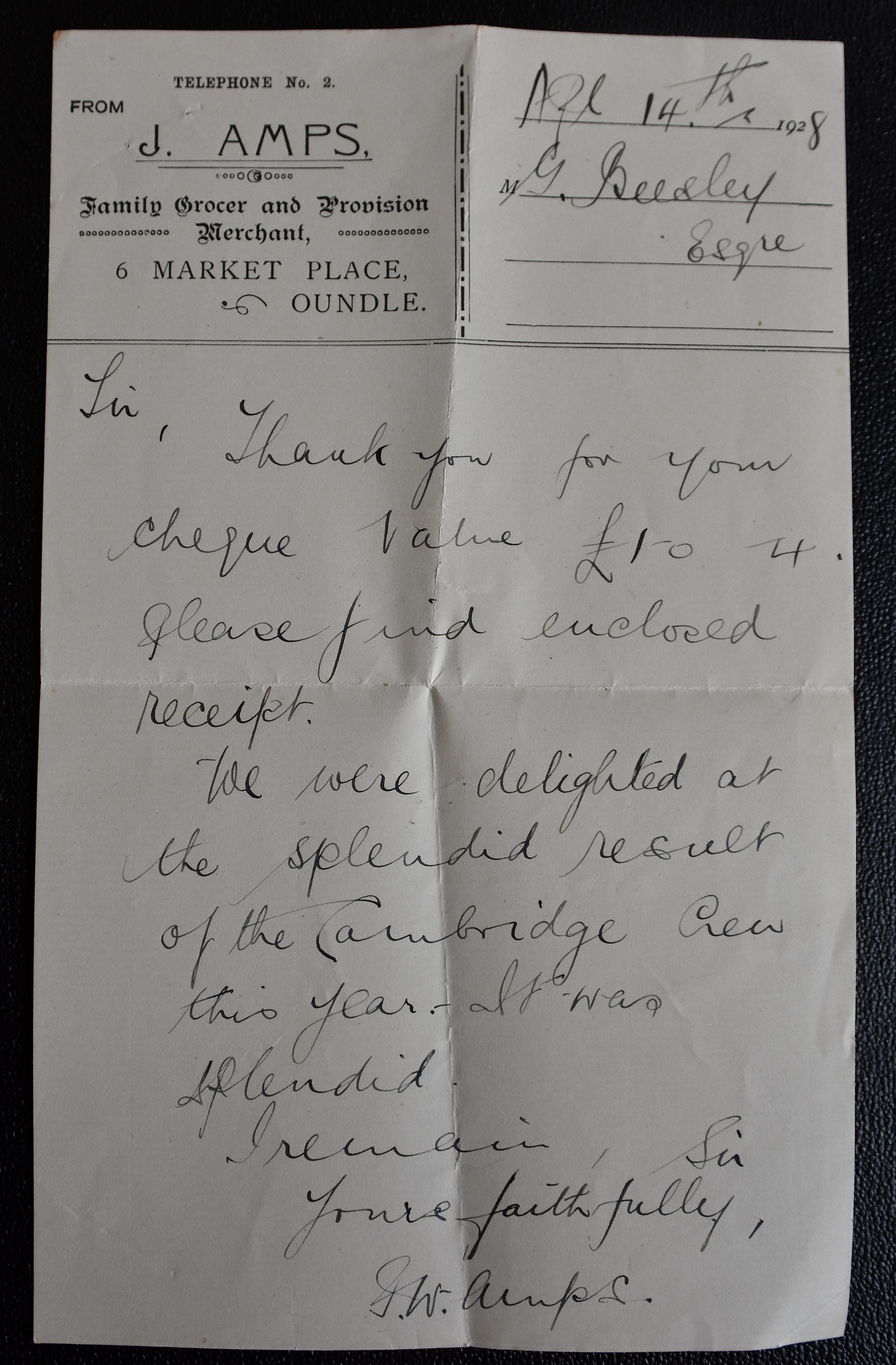
Reporting on the two crews that raced each other in the Cambridge Trial Eights in December 1927, The Times wrote that one of the crews “was obviously built around Beesly.” As was usual at the time, the Blue Boat was chosen early in the New Year and would have about twelve weeks of training – five weeks on the Cam, two weeks at Ely, three weeks at Henley and the remainder on the Tideway at Putney. As one of three Old Blues in the Trials, Beesly’s place in the crew to race Oxford was almost guaranteed.
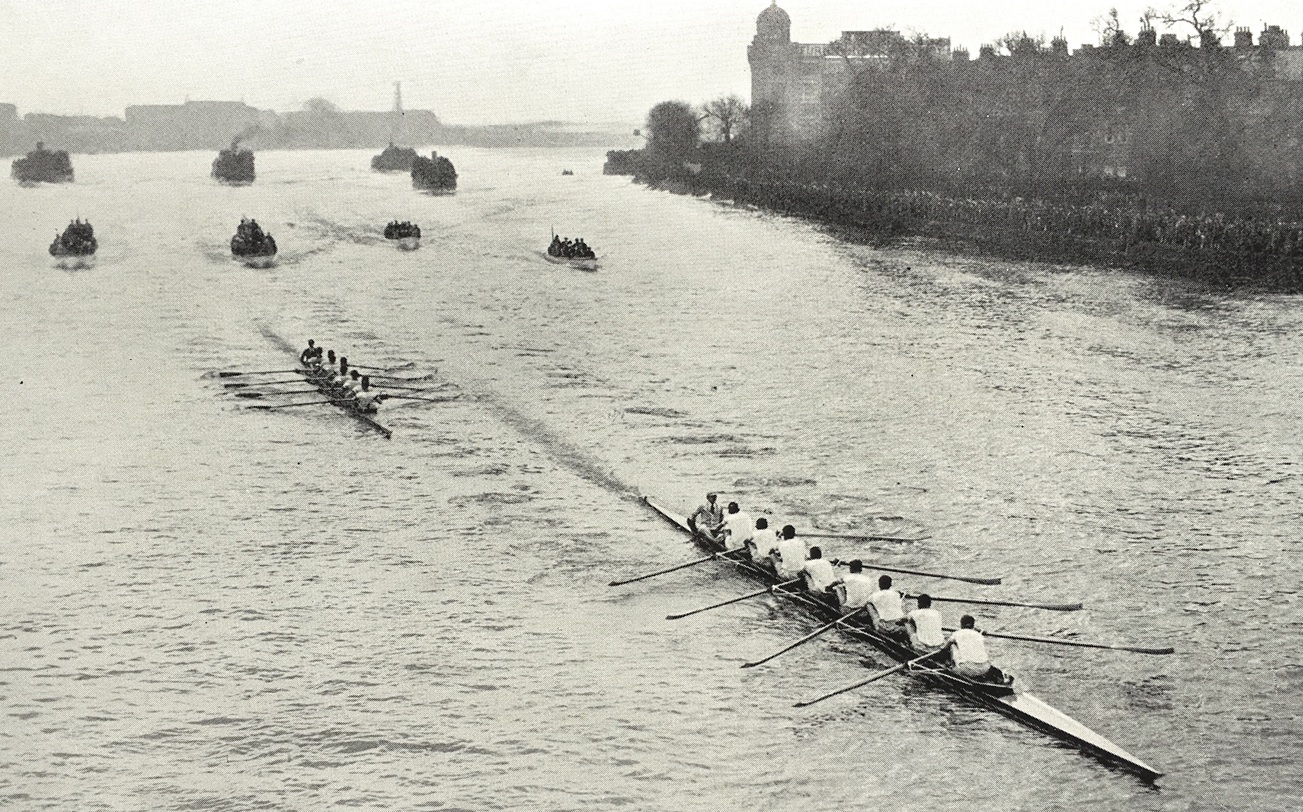
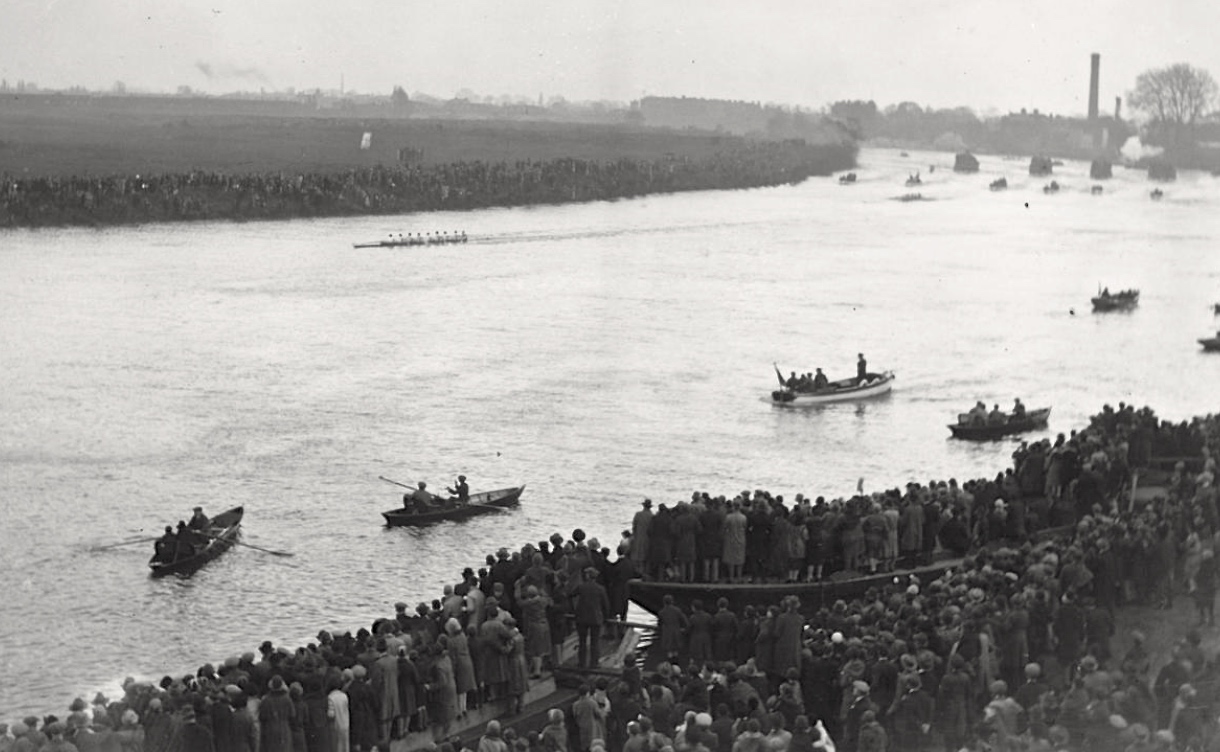
On race day, Cambridge, the clear favourites, took the lead from the start and were half a length ahead by the time they passed the boathouses on Putney Embankment. Dropping the rate to 29 strokes per minute, they held off the faster rating Oxford to the Mile Post. Here Cambridge pushed away quickly and the race became a procession and the Light Blues reduced their efforts to a paddle.
Head of the River
Three pages of the scrapbook cover previews and results of the Cambridge May Bumps. The Mays (and Oxford’s equivalent, the Summer Eights) were very important in an amateur rowing world then dominated by Oxbridge crews or the graduates of such crews.
For those not initiated into the mysterious but very clever world of bump racing, I recommend the explanation given in my report on the 2018 Mays.
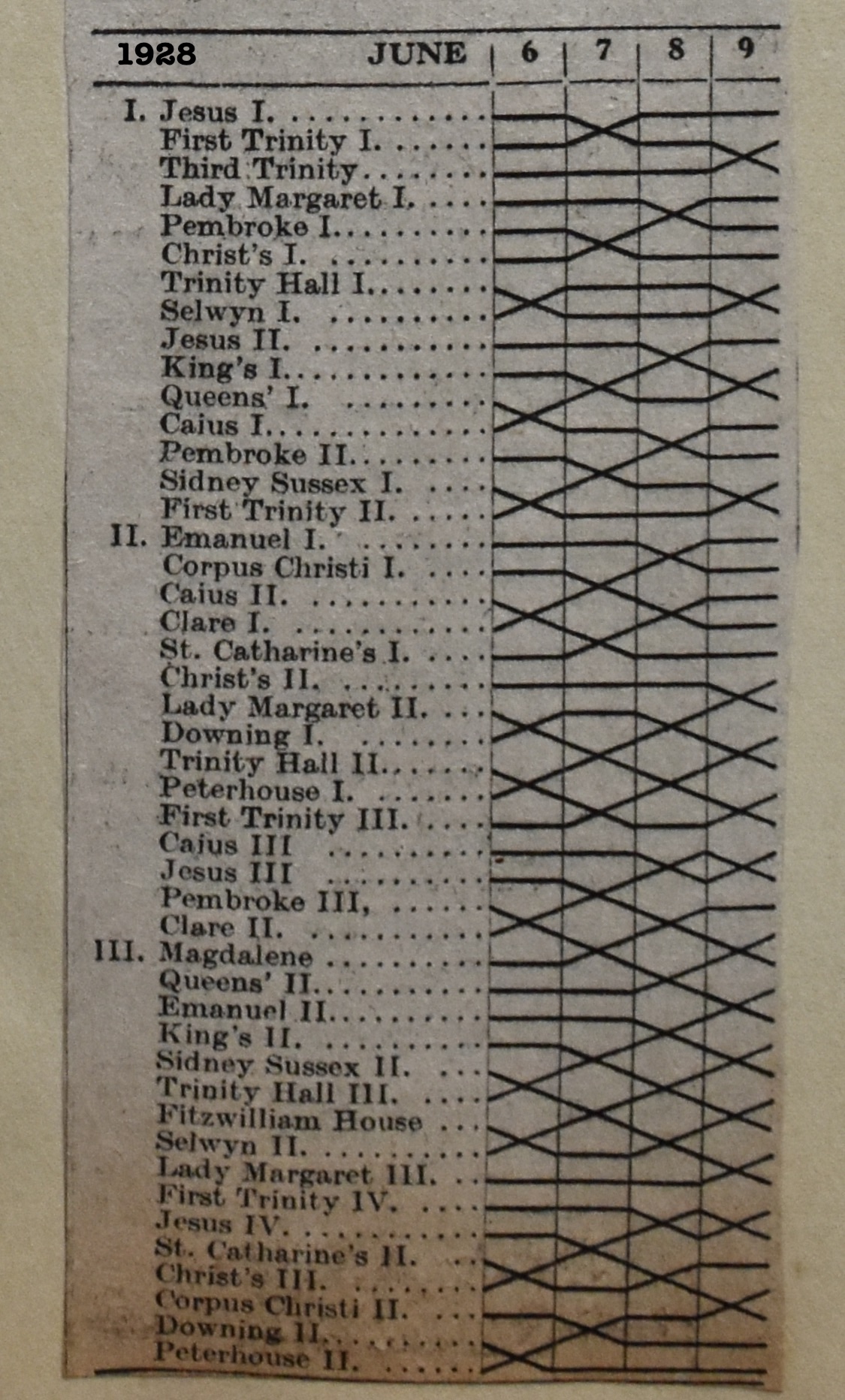
The above bumps chart shows each crew’s progress over the four days of racing. Thus, both Jesus I and First Trinity I “rowed over” on Day One, 6 June i.e. they did not bump and were not bumped. On Day Two, 7 June, Jesus was bumped by First Trinity, so the former went down and the latter went up replacing Jesus in the Head position. First Trinity rowed over for the remaining two days at Head of the River while Jesus was bumped again on the final day and finished third.
The Times report on the 1926 Mays said:
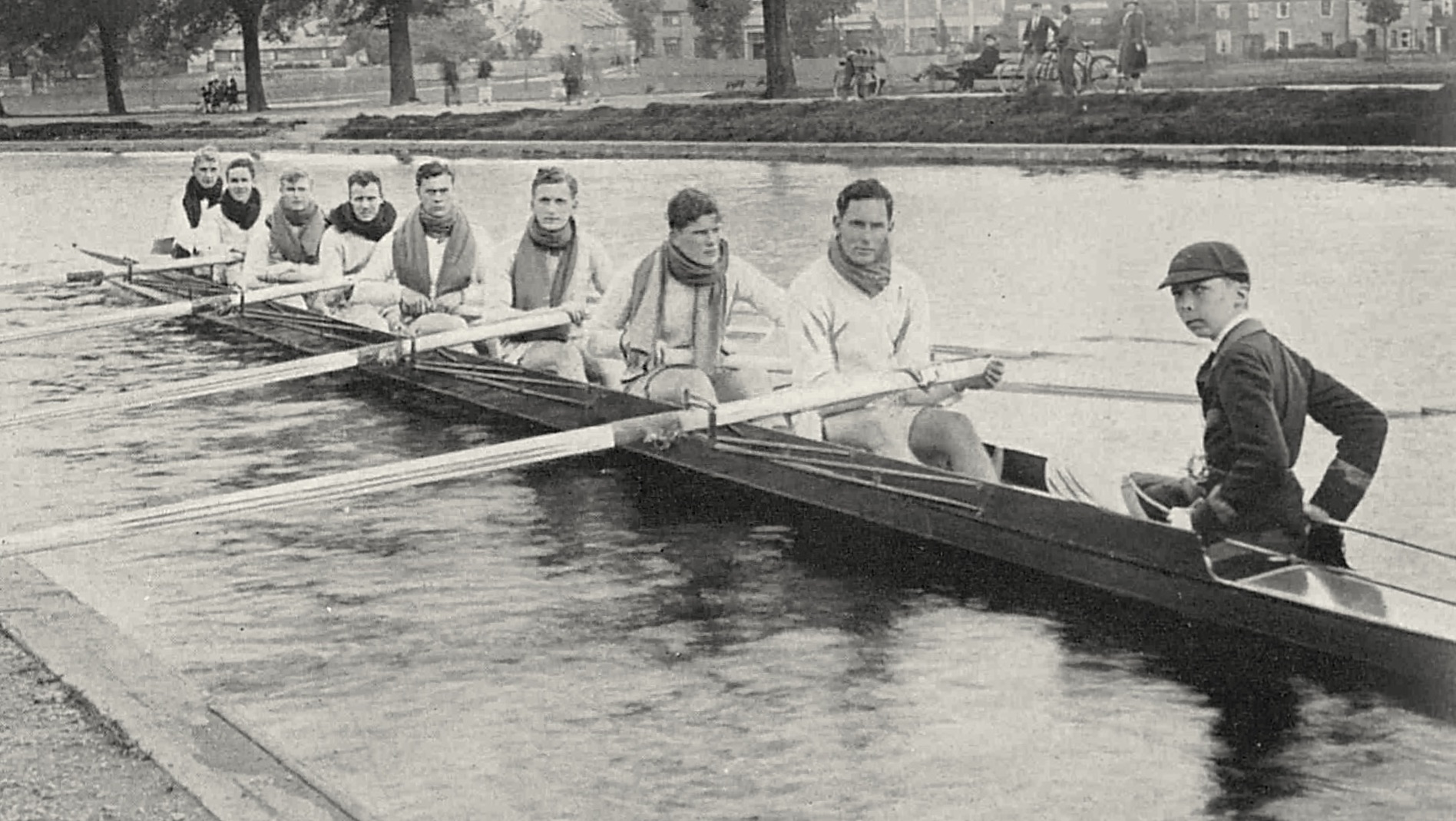
The First Trinity crew are a fine hard working crew, true to the traditions of their club, but with just enough form to make them definitely superior to other good crews of the past few years. While Beesly added balance and steadiness in the middle of the boat, the main credit is due to (stroke) Lauder, who, if he sacrificed rhythm a little, was all out to row Jesus down on the second night.
Henley 1928
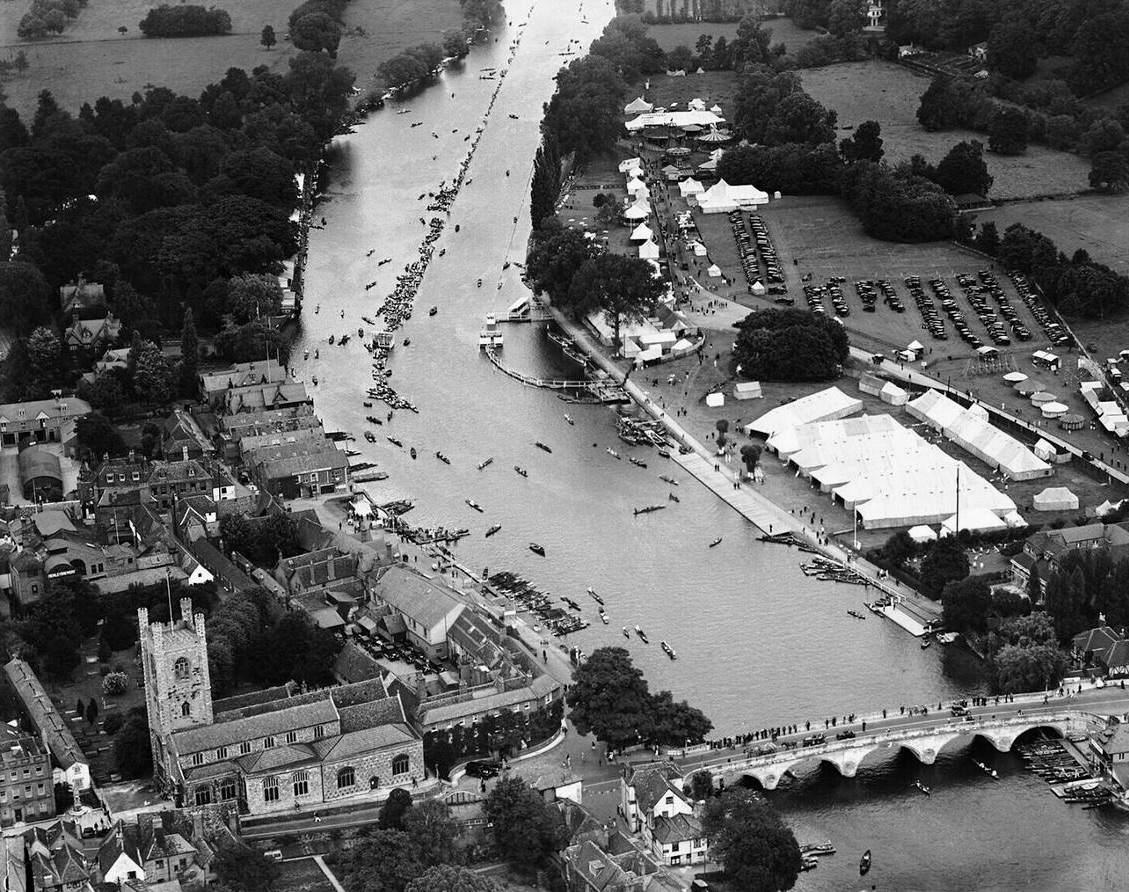
Previewing the Visitors’ (the intermediate coxless fours), the Times wrote: For the winners of the Visitors’ Cup, barring accidents, one need not seriously look outside Heat Two, in which Third Trinity meet First Trinity…
With Beesly at two, First Trinity won the Visitors’ by first defeating Third Trinity by 1 1/2 lengths; then Magdalen College, Oxford, by 5 lengths; and, in the final, Jesus College, Cambridge by two lengths. The crew was Edward Bevan (bow), Richard Beesly (2), Michael Warriner (3) and John Lander (stroke and steers), a combination that was to have much future success as a four or as the stern four of an eight.
Also in its Henley preview, the Times said of the Grand (championship eights): First Trinity should reach the final fairly easily… Since the Cambridge May races, First Trinity have lengthened their finish considerably, and that they are exceptionally good college crew is unquestioned.
First Trinity (with Beesly at six) did reach the final by defeating Leander by 1 1/2 lengths. However, they in turn lost by two lengths in the final to the favourites, Thames, who won in near record time.
The 1928 Grand crew and the 1928 May Boat also contained Roger Close-Brooks who later married Beesly’s sister, Marian. It was common for oarsmen to marry crew mates’ sisters, possibly the only young women who permeated their masculine world.
The Amsterdam Olympics
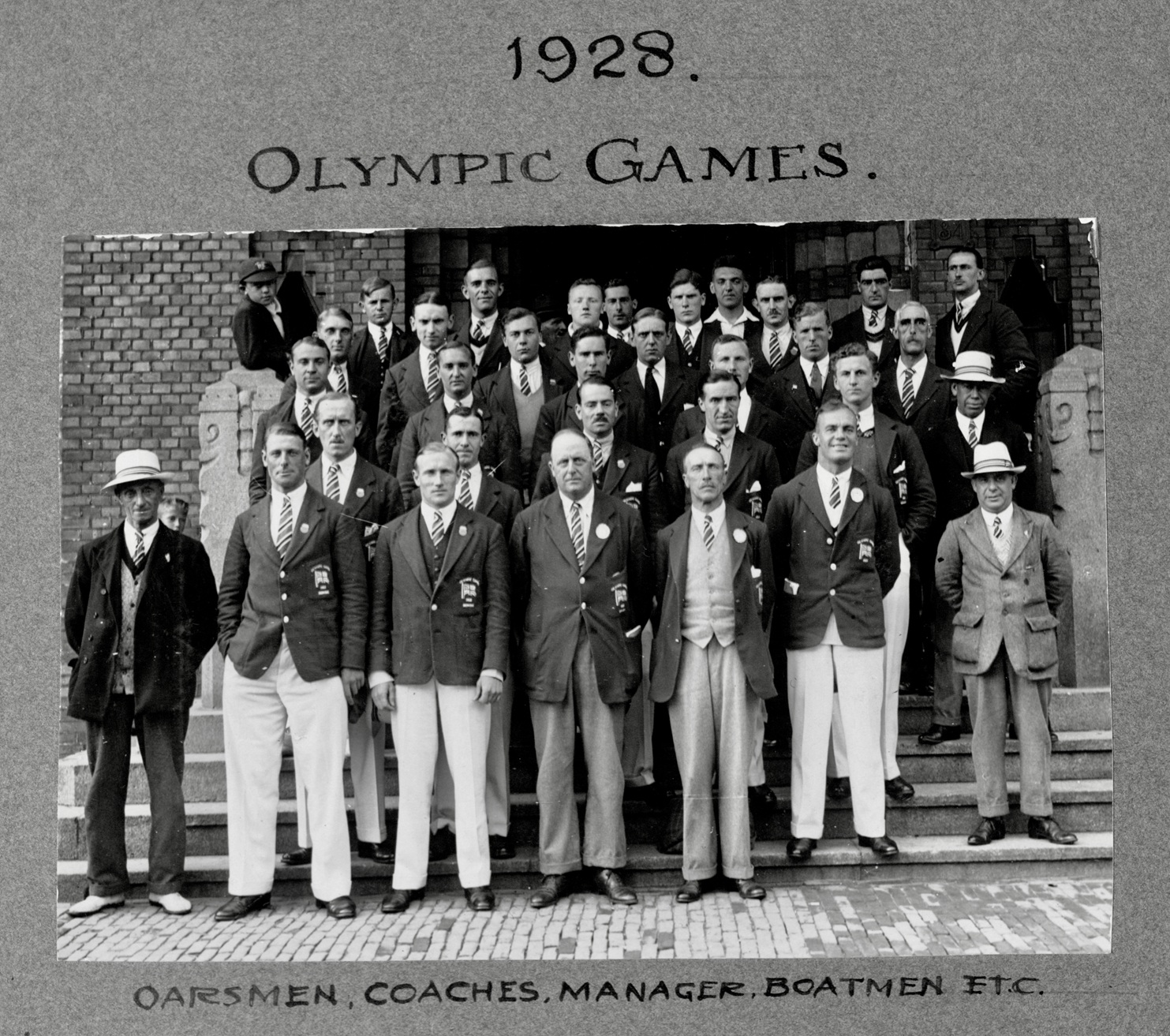
Rowing at the 1928 Olympics took place on a canal in Sloten in North Holland. The course was only wide enough for two boats to race at any one time.
There were seven events in the 1928 Olympic Regatta. British medals were Gold for Beesly’s coxless four; Silver for the coxless pair and the eight; and Bronze for David Collet the sculler.
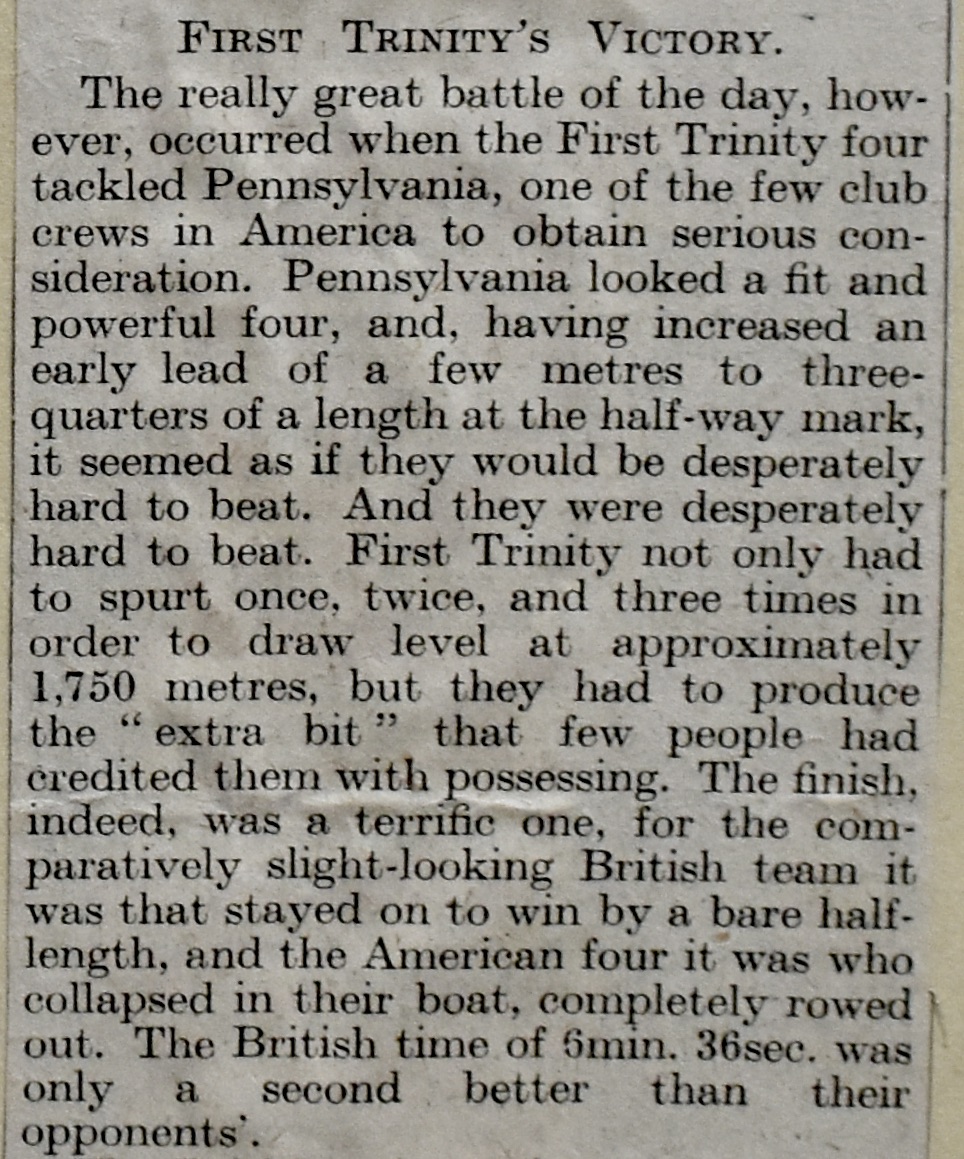
How little regarded the Olympic Games was in Britain in the 1920s and 1930s is illustrated by the fact that it merited only one press cutting in the scrapbook.
Perhaps even more telling is the letter that Beesly sent home to his father on 9 August, the day before the final. In Round One on 3 August, the GB/Trinity four had beaten France easily. In the Quarter Finals on 6 August, they had beaten Germany in a tough race. In the semi-finals on 8 August, they rowed over. The final against the United States was set for 10 August.
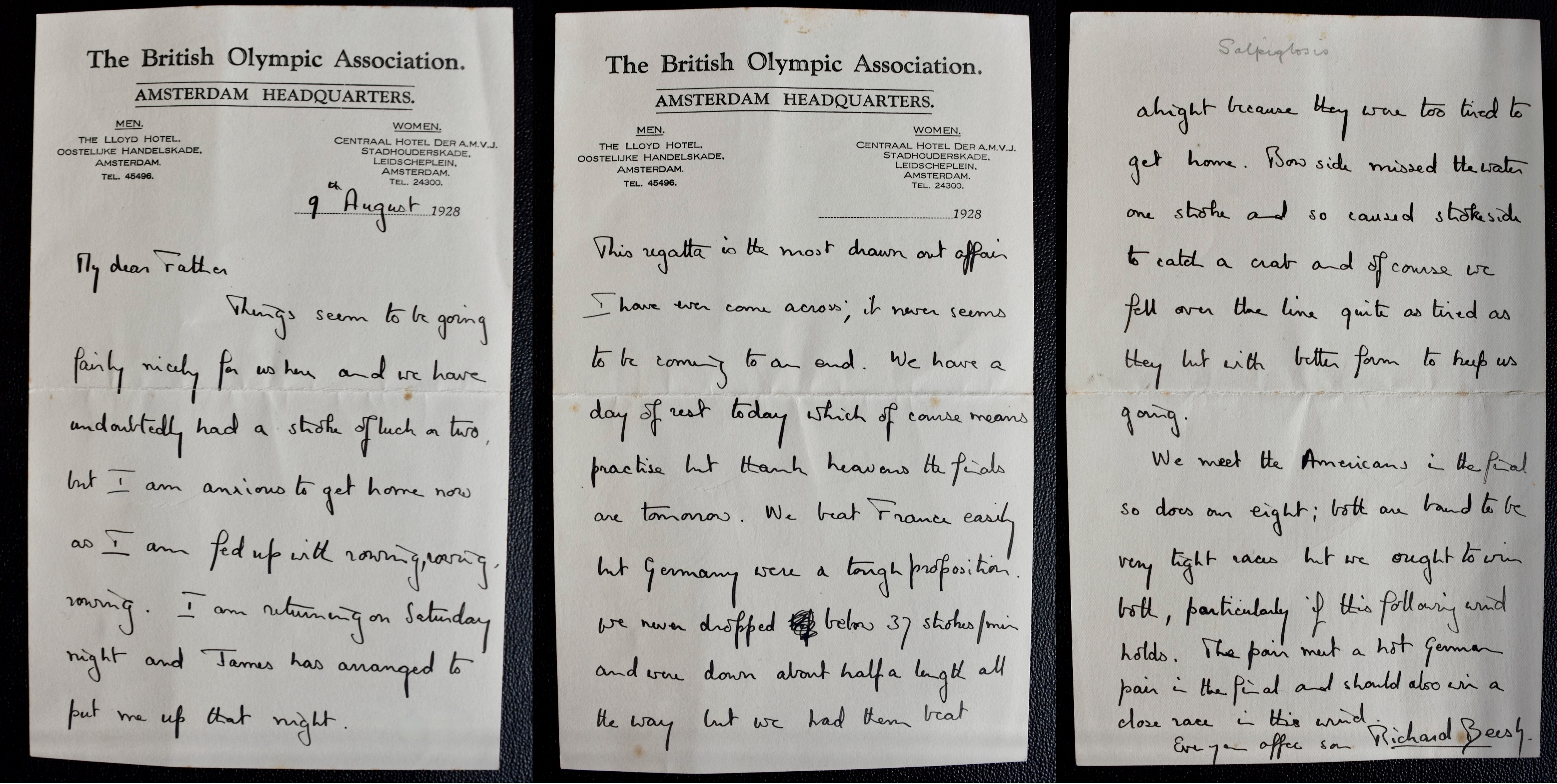
My dear Father
Things seem to be going fairly nicely for us here and we have undoubtedly had a stroke of luck or two, but I am anxious to get home now as I am fed up with rowing, rowing, rowing. I am returning on (11 August)…
This regatta is the most drawn out affair I have ever come across; it never seems to be coming to an end. We have a day of rest today which of course means practice but thank heavens the finals are tomorrow.
We beat France easily but Germany were a tough opposition. We never dropped below 37 strokes / min and were down about half a length all the way but we had them beat alright because they were too tired to get home. Bow side missed the water one stroke and so caused stroke side to catch a crab and of course we fell over the line quite as tired as they but with better form to keep us going.
We meet the Americans in the final so does the eight; both are bound to be very tight races but we ought to win both, particularly if this following wind holds. The pair meet a hot German pair in the final and should also win a close race in the wind.
Ever your affectionate son
Richard Beesly
Part III, 1929 and beyond, will be posted tomorrow.

