
29 September 2026
By Tim Koch
Tim Koch fills his meerschaum with rough shag and ponders.
HTBS Types will know that I enjoy the challenge of dating or identifying unmarked rowing images and may remember the two that I was most pleased with, A Study in Scarlet and Dating Aquatic Art.
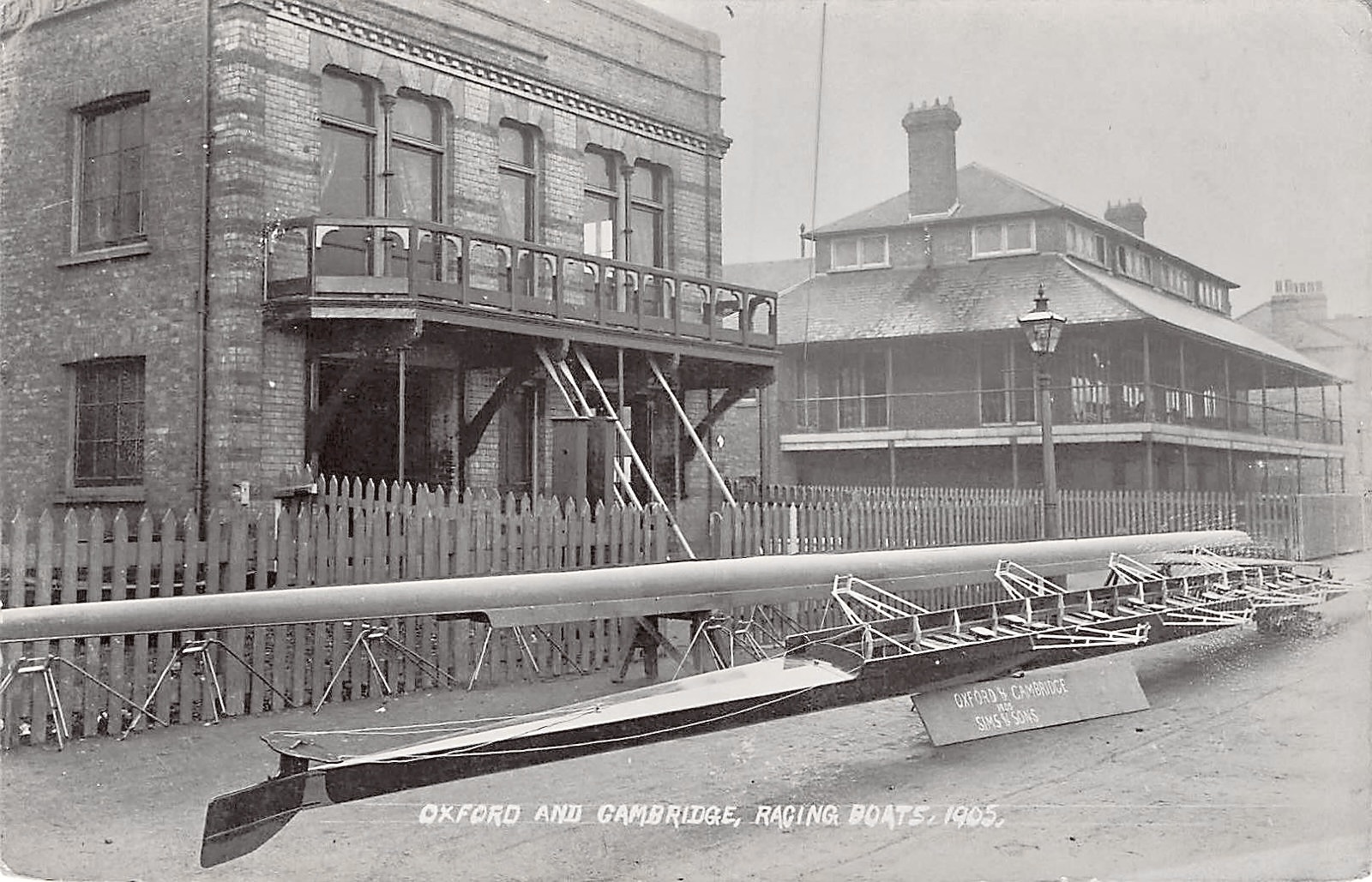
Recently, I randomly came across two undated pictures from different sources. Both obviously included buildings on the Putney Embankment before the 1914-1918 War and, as it turned out, each assisted in dating the other.
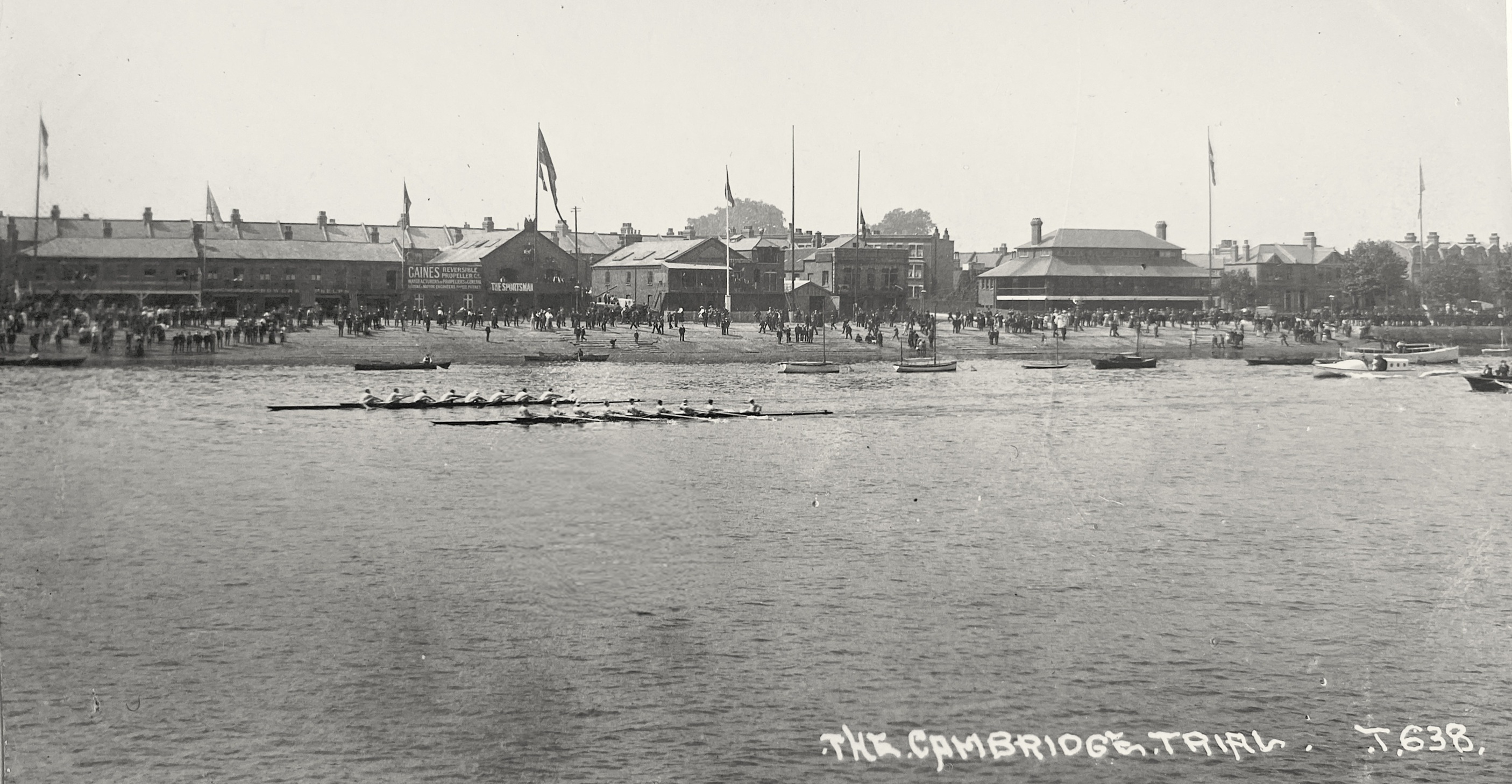
However, the London Evening Standard of Tuesday, 29 November 1904 wrote:
Until yesterday no Cambridge Trial Eight had ever practiced on the Thames at Putney (but) the ice on the River Ouse at Ely, where the contest is usually held, prevented it from taking place…
Thus, the Cambridge picture can be confidently dated to 28 November 1904.
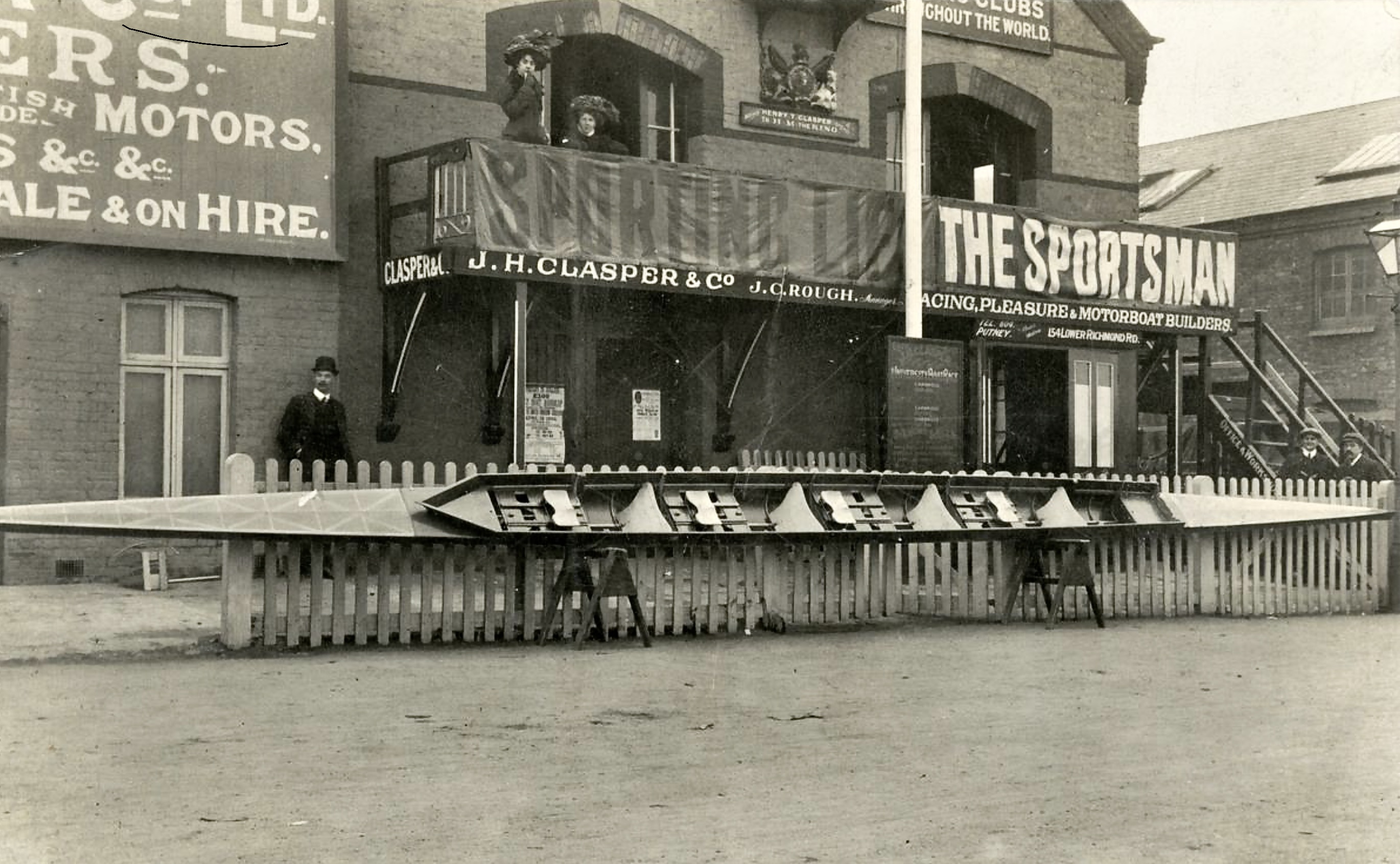
The Clasper picture has to be post-1901 since one of the signs mentions “The King”. This must be Edward VII who reigned from 1901 to 1910.
Unfortunately, I do not know when John Clasper Rough, who appears on the signage, became manager. Another sign shows a telephone number, Putney 804, and a Putney address, 154 Lower Richmond Road. This was John Clasper’s home. John died in 1908 and we can speculate if his address would have remained on display much after that.
Strangely, it is the small section of the large sign on the building next door to Claspers, viewed top left in the picture, that may give the best clue as to the period.
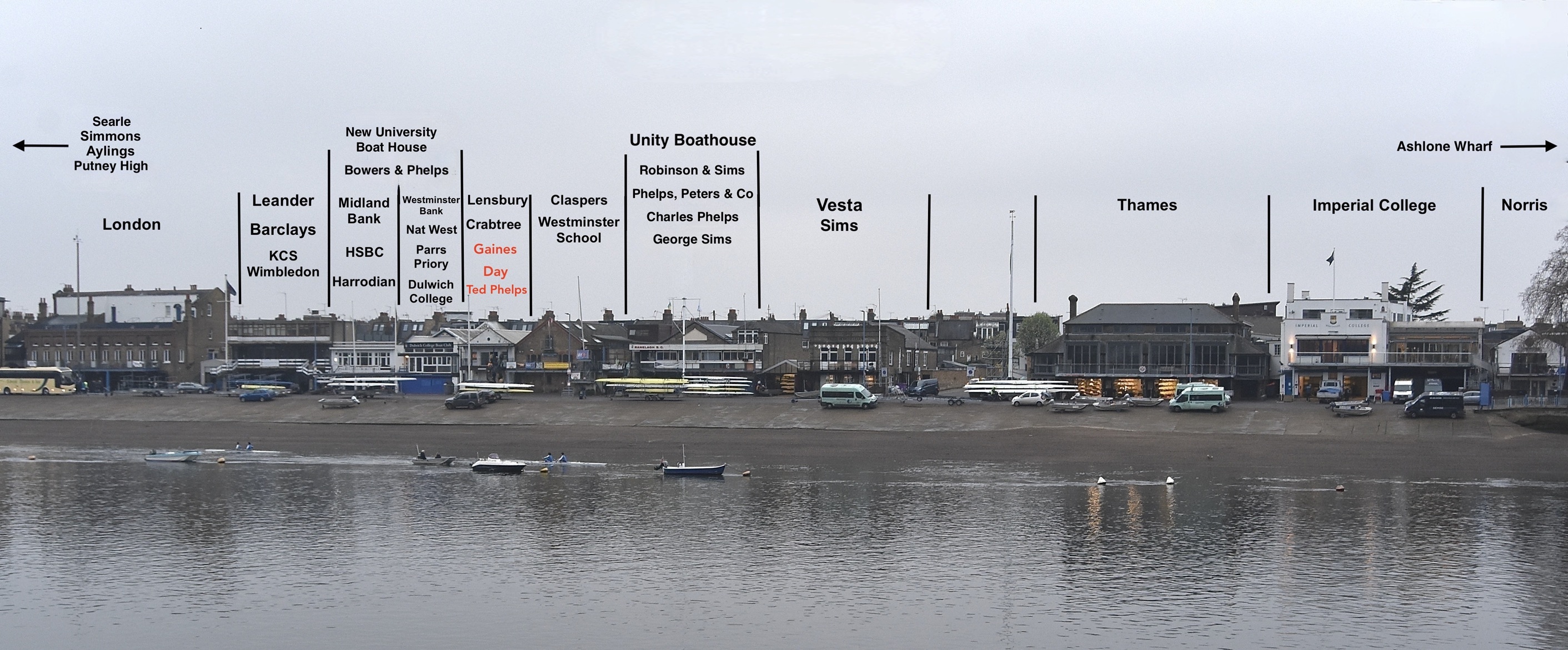
The building to the left of Claspers as viewed from the Embankment is today’s Crabtree BC and before that was Lensbury RC. I am confident that the sign on this building is for an engine manufacturing company variously known as Day Motor Co or Day Marine Motors or Days Ltd.
Evidence of Day’s time at Putney:
Graces Guide, a source of historical information on industry and manufacturing in Britain, says that the Day Motor Co was formed in 1908 by Joseph Day a now forgotten British pioneer of the internal combustion engine who designed a valveless two-stroke engine that had only three moving parts and would run equally well forwards or backwards. It achieved world wide sales.
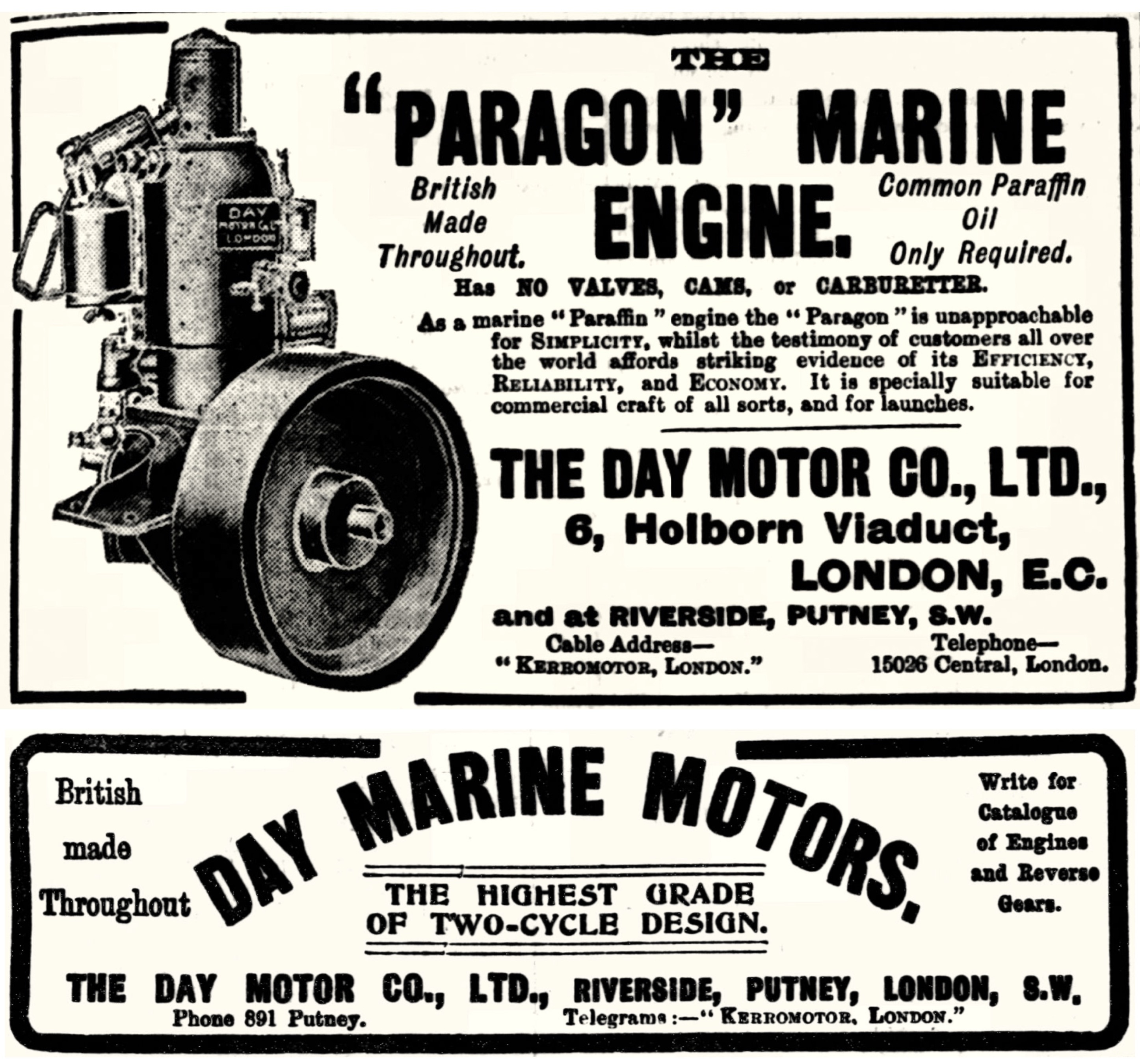
The Liverpool Journal of Commerce of 17 March 1914 wrote:
Prominent amongst the marine oil engine builders on the Thames is the well-known firm of the Day Motor Co (Ltd) of Putney. This firm enjoys a well-earned reputation as builders of all types of engine, electric sets, and reverse gears. The works, which cover a large area, are complete with all modern machinery and are situated on the river front, thus affording every facility for the prompt transfer of engines from the shop to the craft they are intended for if necessary.
The Bristol Industrial Archaeology Society journal for 1986 states that the company undertook many defence contracts at Putney during the 1914-1918 War but by 1923 the business moved to nearby Richmond in Surrey and was renamed the Day Foundry and Engine Co. Ltd.
Unfortunately, I cannot find a full picture of the Day sign.
Thus, Day occupied today’s Crabtree site on the Putney Embankment from 1908/09 to 1922/23 and thus dates the Clasper picture to within that period – though I would place it closer to 1908/09, perhaps just before the death of John Hawks Clasper in September 1908.
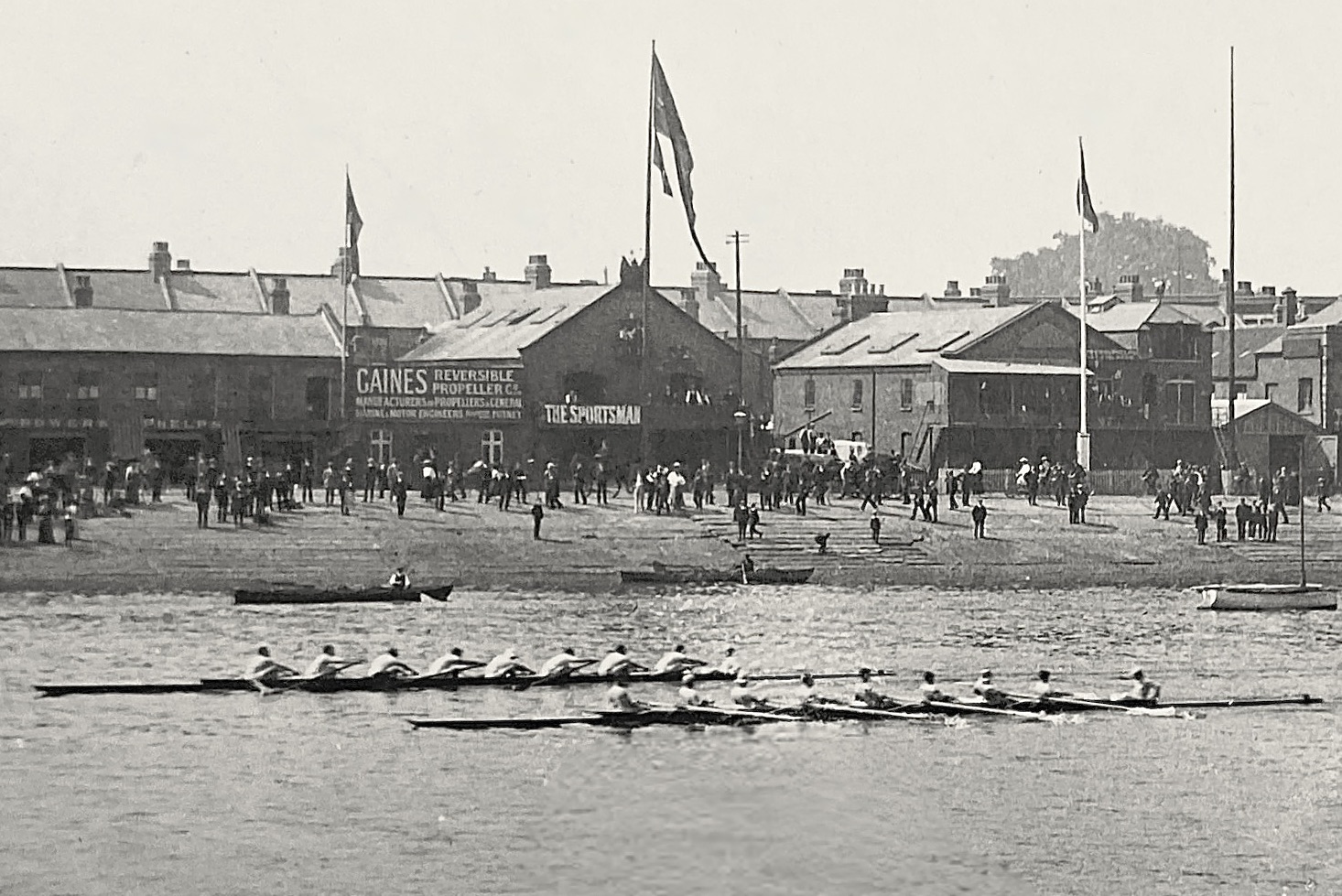
The National Archives records the Gaines Reversible Propeller Company Ltd as being incorporated on 31 March 1904 and dissolved before 1916. From what we definitely know about Day, Gaines could only have been on the Embankment between its incorporation in 1904 and Day moving in around 1908/09.
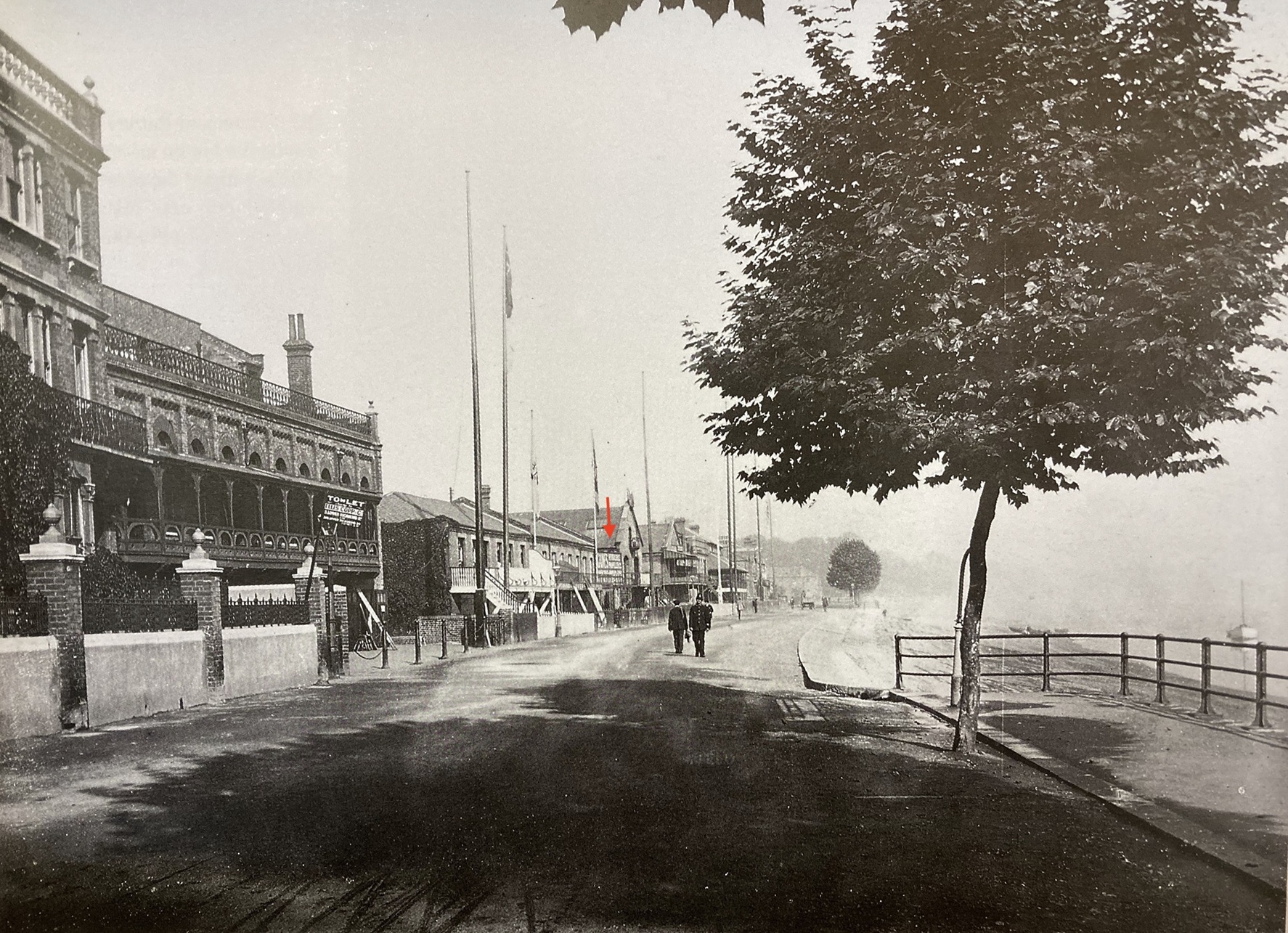
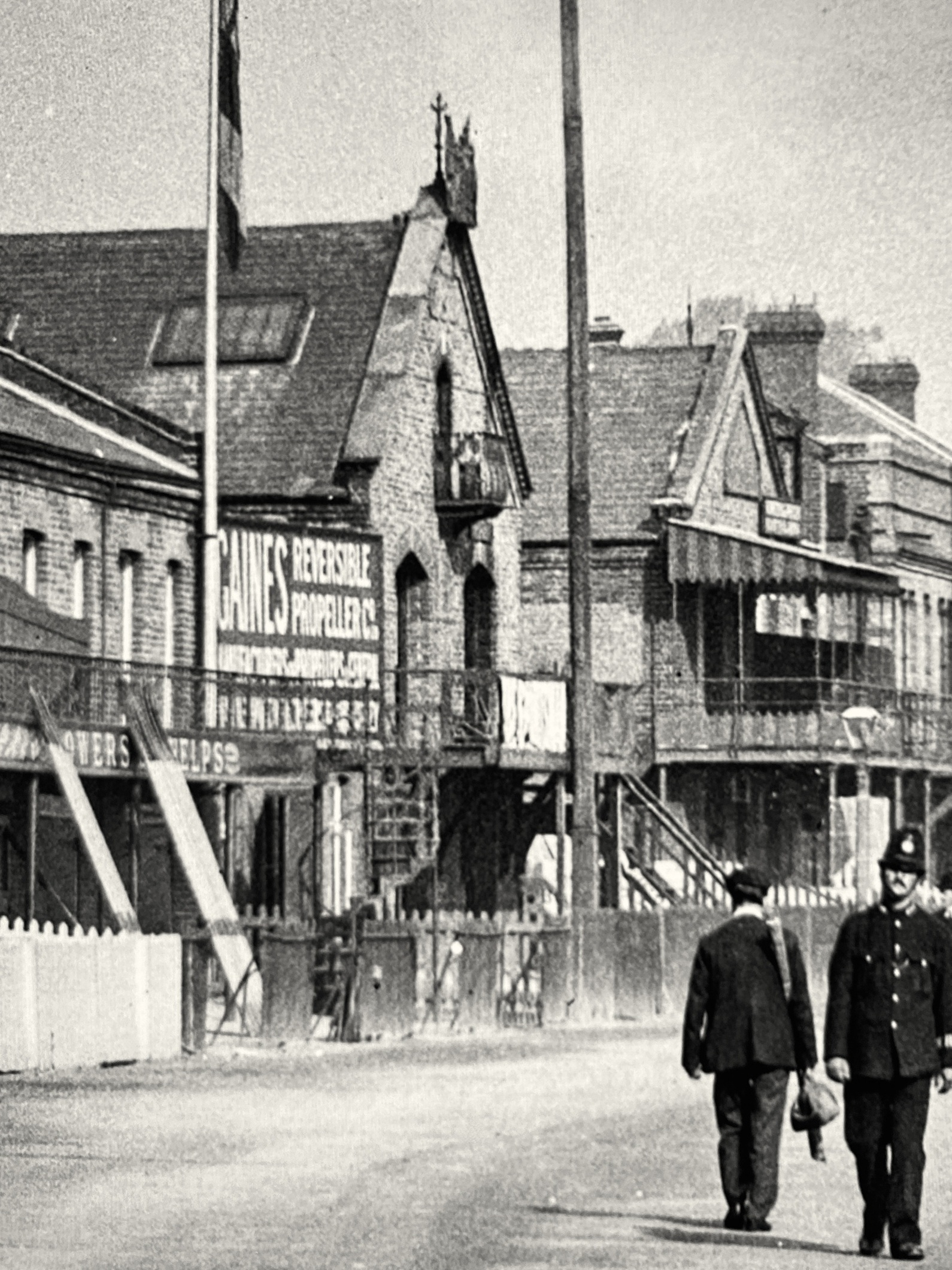
(I have previously stated that Gains was on the Putney Embankment as late as 1913, but this was based on a high resolution picture on the English Heritage website – currently not available – that I now must conclude was wrongly dated).
As additional evidence on dates, to the left of Gaines is a sign for Bowers and Phelps, boatbuilders who started in 1904. Their site is currently home to Harrodian BC and Dulwich College BC.
*A “three-pipe problem” is a phrase from Sir Arthur Conan Doyle’s Sherlock Holmes short story The Red-Headed League, meaning a complex puzzle that Holmes needs the time it takes to smoke three bowls of pipe tobacco to think it through.

