
18 September 2026
By Göran R Buckhorn
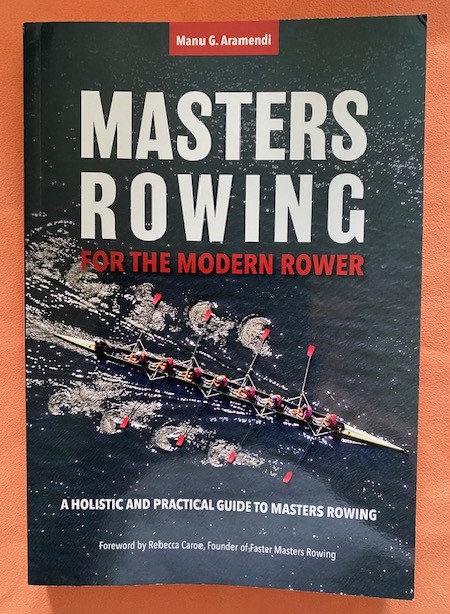
Manu G. Aramendi’s Masters Rowing for the Modern Rower should be on every masters rower’s bookshelf, or actually, on every rower’s bookshelf, because, let’s face it, we are all getting older.
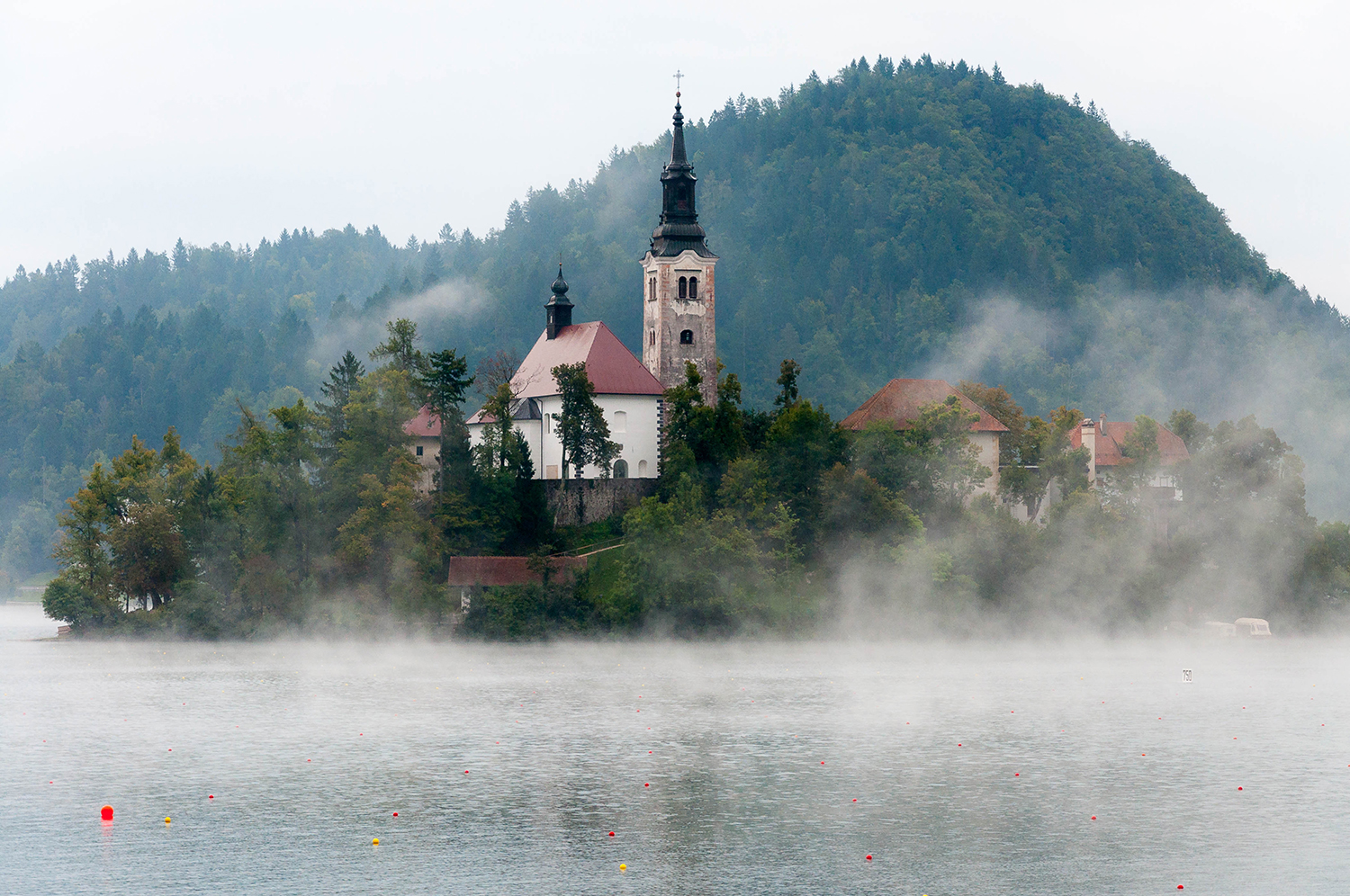
The 2026 World Rowing Masters Regatta on Lake Bled in Slovenia ended on Sunday, 13 September. The international governing body for rowing, World Rowing, reported that this was the largest regatta so far in the history of the sport. More than 4,700 athletes from 51 counties were competing in 981 races – 2,091 were women, representing 44.4 percent of the field. Counted in so-called racing seats that’s more than 20,000 seats filled across five days of racing.
Masters rowing is growing, which is affirmed by Rebecca Caroe, who is an authority on the subject being the founder of Faster Masters Rowing, which offers programmes for master rowers to “train smarter and row stronger”.
In Caroe’s foreword of Manu G. Aramendi’s brilliant Masters Rowing for the Modern Rower: A Holistic and Practical Guide to Masters Rowing, which was published earlier this year, she writes:
The masters community is growing, becoming more sophisticated in its approach to training and competition, and we are increasingly connected internationally. We need resources that respect our intelligence while acknowledging our unique circumstances. This book provides comprehensive coverage that ranges from historical context through cutting-edge physiology to practical guidance for everything from injury prevention to race strategy.
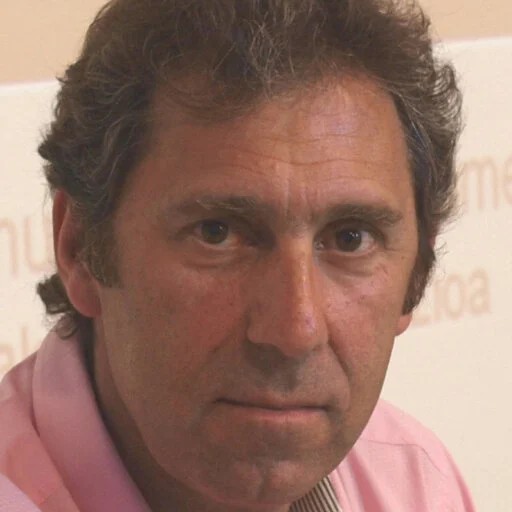
José Manuel González Aramendi, a Doctor of Medicine, Specialist in Sports Medicine and Associate Professor of Physiology at the Faculty of Medicine of the University of the Basque Country, Spain, is a rower who has competed in several championships and regattas and is well suited to pen a book about masters rowing.
There are already a few books on the market on technique, training and competition for masters rowers, but Aramendi’s Masters Rowing for the Modern Rower is far more than that.
The author writes that he was born in Errenteria in the Basque Country of Spain where the main livelihood was fishing. He talks beautifully about growing up in a community by the sea and around boats, and how, at times, whales would get stranded on the Basque shores. Centuries earlier the Basques had played an important role in the hunt for whales, and the English and Americans turned the hunt into a lucrative whaling industry – and, yes, Aramendi quotes from Melville’s Moby-Dick when the crew on Pequod row out to try to kill a whale.
Aramendi gives brief details from the early history of rowing as a sport: the Doggett’s Coat and Badge, Eton, Cambridge, Oxford, and The Boat Race between these universities, Henley Royal Regatta, Yale, Harvard and their Boat Race. He mentions the early clubs in England, Germany, France, USA, Australia, New Zealand, Italy, Spain, and those in South America – Buenos Aires RC, Montevideo RC and Clube de Regatas do Flamengo. He recognises that there were races in the USA and Canada and elsewhere before any clubs had formally been founded.
He praises Tom Weil’s meticulous timeline on Bill Miller’s website Friends of Rowing History (see here). Aramendi also references works by historians like Thomas C. Mendenhall and names who HTBS readers are familiar with, Chris Dodd and Peter Mallory. Throughout the book one can understand that he’s a reader of HTBS.
The author counts four “great innovations” that have made the boat go faster: a) the outrigger, b) replacing the outer keel with an inner keel, c) the sliding seat, and d) the swivel rowlock.
In one chapter, the author gives the reader an overview of rowing accidents and injuries and how they can be prevented – but also, if they occur, what to do and how to handle the situation (remember he’s a Doctor of Medicine). In other rowing books, you seldom see such a thorough description of these topics.
Though, this being a book for “masters”, you might believe that being older, masters rowers are more prone to injuries, but the author states that “Masters rowers are less injured than seniors and juniors.”
In the chapter “Ageing and Rowing”, Manu Aramendi mentions that physical activity prolongs our lives. He writes:
Rowing doesn’t keep us from ageing, but we will almost certainly age better if we keep rowing. At least for most of us, rowing is slowing down deterioration, keeping us closer to youth – an excellent therapy for the body and the spirit.
But with aging comes various problems and illnesses. With different diagrams, the author shows age-related functional losses, men’s and women’s physical condition, loss of strength with age and power loss. He also writes about diabetes and rowing, patients with cancer, arthritis, osteoarthritis, osteoporosis, obesity, anxiety and depression.
He also brings up adaptive rowing/para-rowing and shows the guide to properly grouping disabled rowers according to their physical impairment. However, he recognises that most of the para-rowers are younger men and women.
In the chapter on masters rowing, he goes through everything worth knowing about rowing especially for masters. He has case studies from two international regattas: the 2017 World Rowing Masters Regatta in Bled and the 2018 Euro Master Regatta in Munich. In tables he shows details about the boat classes, how many women and men competed in them, age groups, speed records, etc.
Masters Rowing for the Modern Rower is wrapped up with a holistic examination of rowing’s role in society.
The book is richly illustrated, mostly with photographs in colour, and it has many diagrams and tables, which collaborate closely with descriptions in the text.
At the very end of the book are some “rowing poems”, two of which are written by HTBS’s own poet, Philip Kuepper.

I’m especially happy about a tribute that Manu Aramendi pays to rowing historian Tom Weil. The author visited the River and Rowing Museum in Henley and there came across Tom’s wonderful collection. Tom died in September 2024, and Aramendi never met him, but he writes, “Still, I will get to know him better and better as I delve deeper into the wonderful legacy he has left us.”
As I’m interested in literature, I appreciate the many quotes in Aramendi’s book by authors like Herman Melville, Charles Dickens, William Butler Yeats, Jerome K. Jerome, Nuccio Ordine, Stefan Zweig to mention a few. And a book can never go wrong if it has a quote from Monty Python.
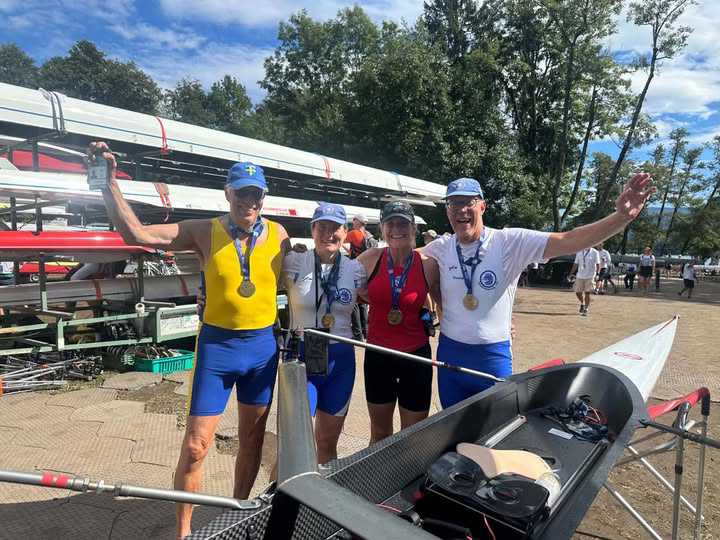
To come back to this year’s regatta in Bled. There’s a fine tradition at the World Rowing Masters Regattas. Medals are given to the octogenarians (80-89-year-olds) who are competing in the regatta. In Bled, World Rowing handed out 110 octogenarian medals! – there were even a couple of nonagenarians (90-100-year-olds) rowing in the regatta.
Remigare necesse est
Masters Rowing for the Modern Rower: A Holistic and Practical Guide to Masters Rowing by Manu G. Aramendi is published by Meyer & Meyer Sport 2026.

