
13 August 2026
By Tim Koch
Tim Koch on a man who is rowing a long course.
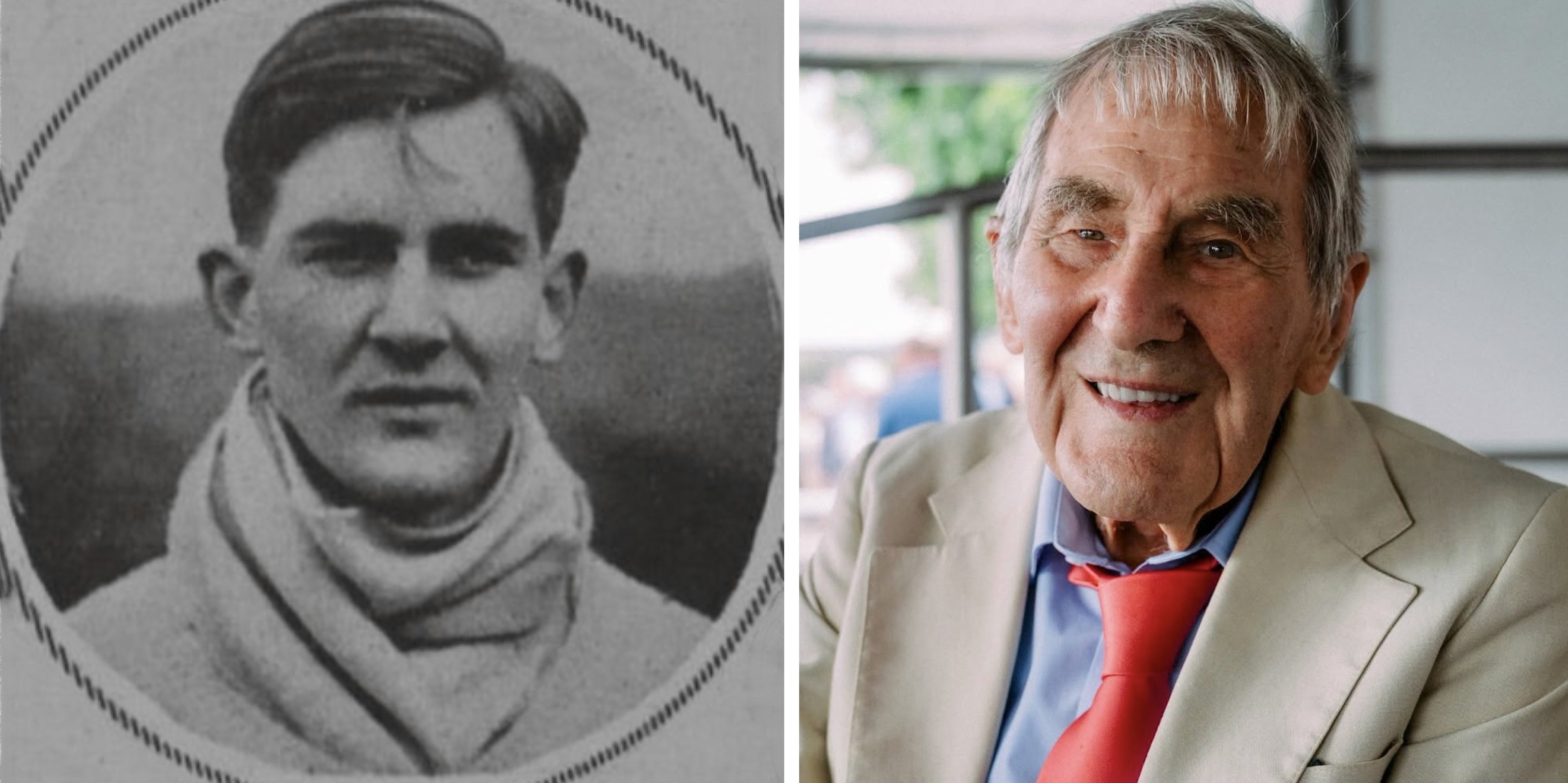
Every year, Henley Royal Regatta has no shortage of old oarsmen (and increasingly, old oarswomen) returning to remember the times they raced over the famous 1 mile 550 yards. However, few come back after eighty years, even fewer return to mark eight decades since they won the Grand Challenge Cup and certainly only one celebrated his 100th birthday at Henley Regatta on finals day, Sunday, 5 July 2026.
Anthony “Tony” John Richard Purssell was born in what is now called Shimla, then the summer capital of British controlled India, on 5 July 1926. He attended Oundle School where he was a long distance runner but on going up to Oxford’s Oriel College to read chemistry in late 1945, he took up rowing and was chosen for the 1946 Blue Boat after only one term on the Isis.
His talent was said to have been discovered and promoted by the famous but eccentric coach, Peter Haig Thomas, a Cambridge man who had defected to Oxford when the Light Blues dropped the Orthodox Style of rowing in favour of Fairbairnism and changed from fixed pin to swivel rowlocks.
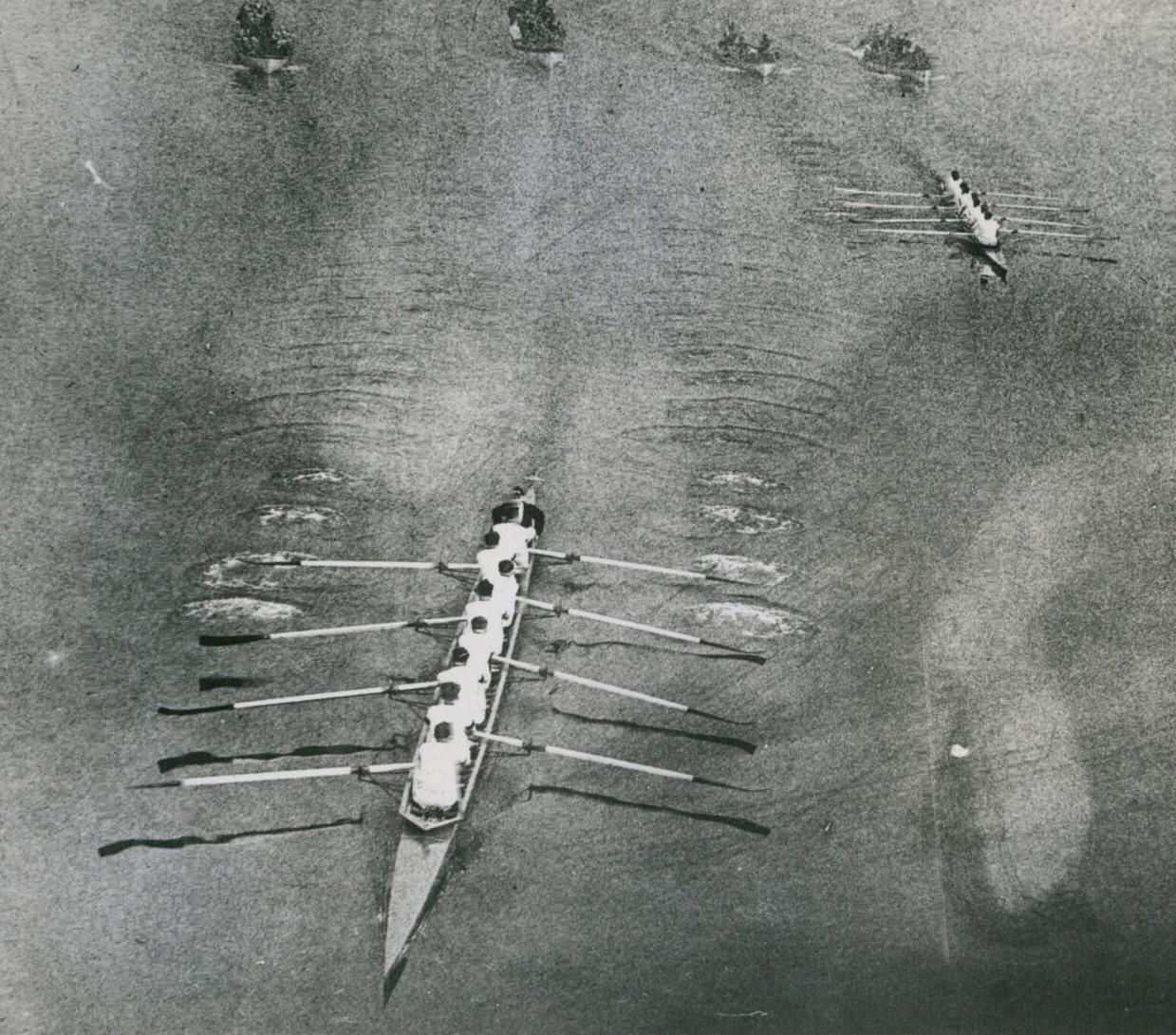
Austerity dominated life in Britain for many years after the 1939-45 War. Of the first Boat Race after the war, the Illustrated London News of 30 March 1946 said:
Food rationing is possibly responsible for the Oxford crew this year being one of the lightest on record. Their average weight is likely to be about 11 stone 12 pounds compared with 12 stone 12 pounds in 1939. This has made it necessary to order a new boat, all the pre-war boats being too big for them.
Not only was food in short supply, so was kit. The Illustrated Sporting and Dramatic News of 29 March 1946 wrote:
Two things have conspired to make this (first post-war) boat race possible – the enthusiasm of the rising generation of ‘varsity oarsmen and then the support of oarsmen of the earlier generation. Old Blues… have this time even delved into the old trunks in the attic to provide blazers, sweaters, shorts, vests for the youngsters in the appropriate colours…
Not only was old kit revived in 1946, so were old rowing styles. The Illustrated Sporting and Dramatic News continued:
Both Oxford and Cambridge have gone right back to the old orthodox style… In this Oxford have gone even further than Cambridge in reverting to fixed rowlocks, while Cambridge are still using swivels. Both Peter Haig Thomas, who has carried the main burden of creating Oxford, and Colonel GL Thomson, for Cambridge, started off with the slate clean and said, “To blazes with your ‘isms,’ – including Fairbairnism – we are going to teach these chaps to row….”
The legacy of the war also had an effect on crew selection:
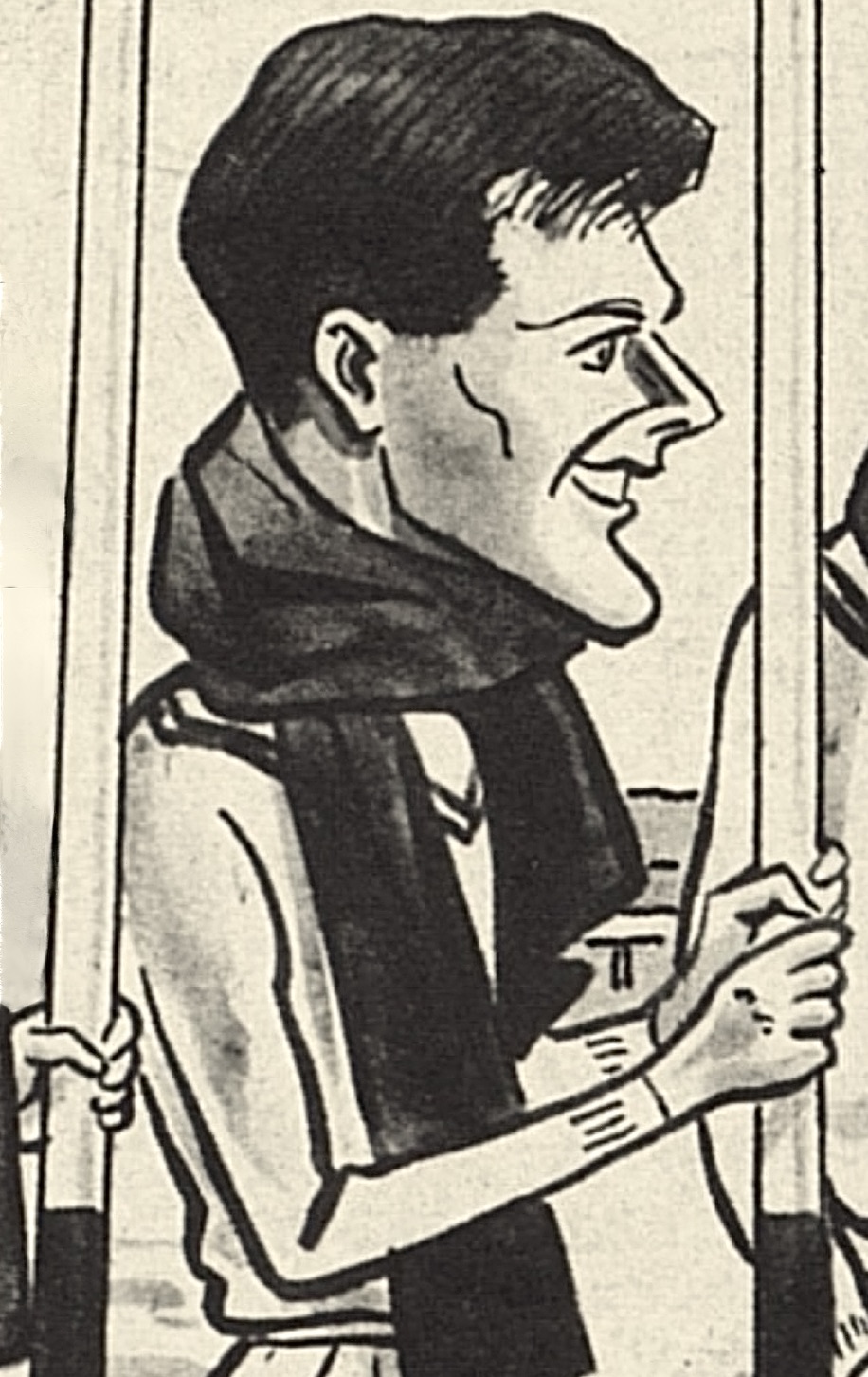
Oxford… were handicapped in fixing on a stroke. RMA Bourne… was the obvious choice… but years of young manhood spent in a … Prisoner of War compound is no sort of preparation for a tough race from Putney to Mortlake, so Bourne went back to the No. 4 thwart and AJR Purssell, of Oriel, took over.*
The Sunday Express of 24 March 1946 wrongly predicted that the heavier favourites, Cambridge, would win but admitted:
Oxford are more stylish, prettier to watch and have a grand stroke in AJR Purssell…
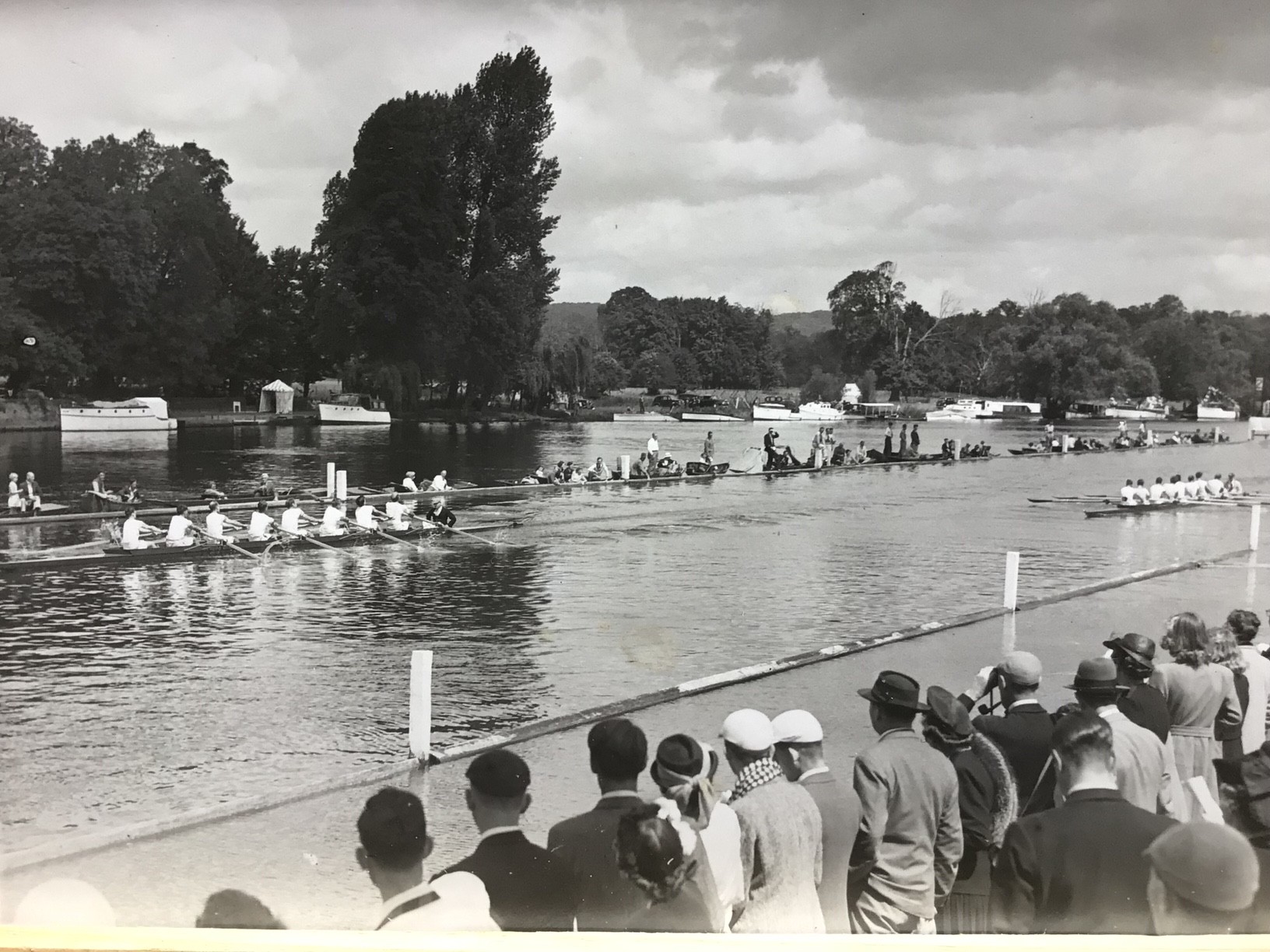
Purssell’s precocious talent meant that he also competed at Henley in 1946, winning the Grand Challenge Cup with Leander and reaching the Stewards’ Challenge Cup final with Oriel College, Oxford.
In the 1946 Grand, Leander beat Kingston by 1 1/2 lengths in a heat and Trinity Hall, Cambridge, by 1 1/4 lengths in the semis. They met the favourites, Ruder Club Zurich, Switzerland, in the final. Zurich led by a canvas at the Barrier but Leander were ahead at the Mile and, underrating their opponents, won by 3/4 length. They received their trophy from the young Princess Elizabeth, later Queen Elizabeth II.
Purssell also represented Great Britain at the 1948 Olympic Regatta where he and four other Oxford men competed in the coxed fours, an event that attracted a record sixteen nations making it the Games’ largest rowing event in terms of national participation.
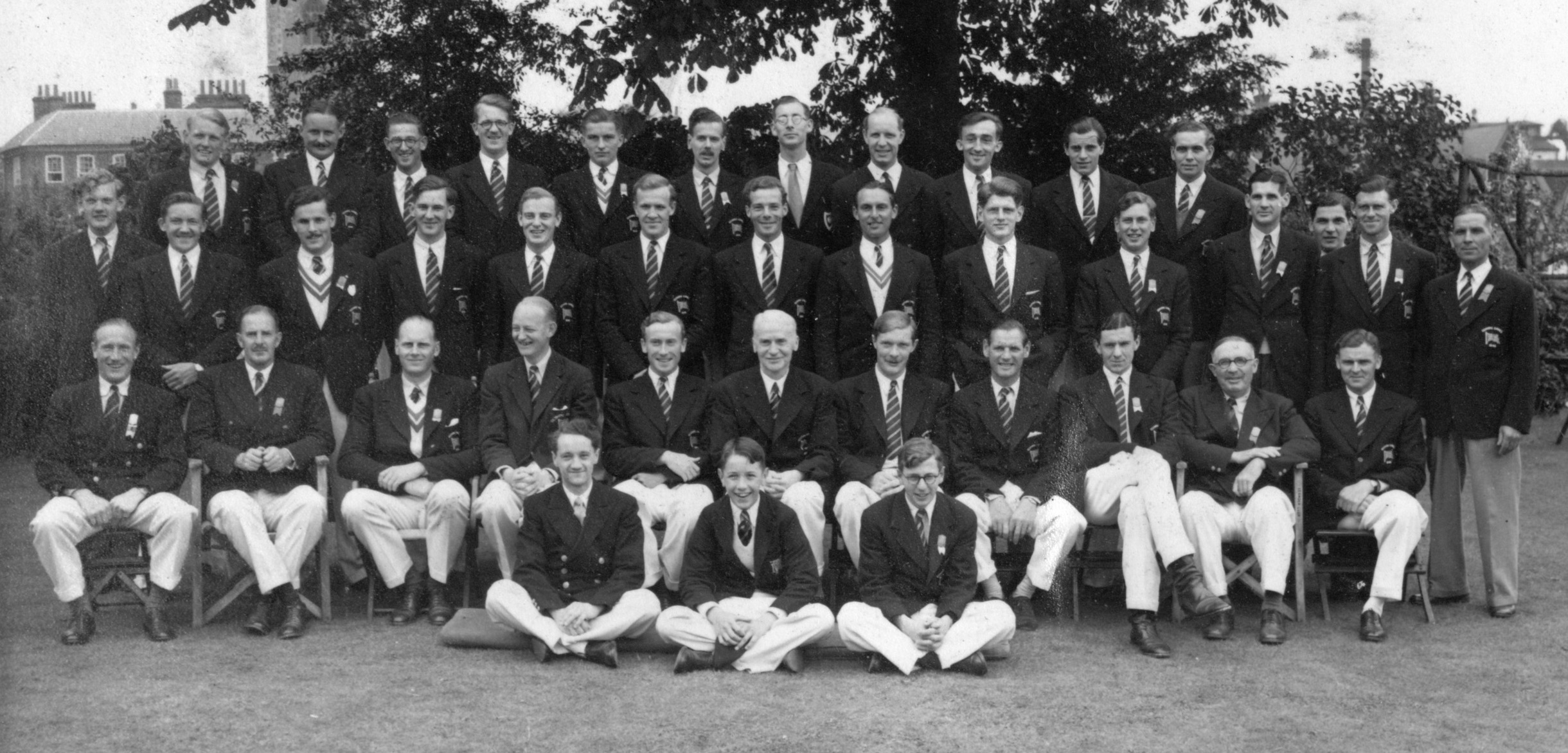
The British four stroked by Purssell lost in their first heat to the eventual winners, the Americans, but they won the repechage against Argentina. Their Olympic hopes ended in their next race when they lost by a length in the quarterfinal to Hungary.
Purssell joined Thames Rowing Club in 1948, and at Henley in 1951 he was in the TRC Stewards’ four that beat Leander by 1 1/2 lengths in the final and in the club’s Grand eight that lost by 1 1/3 lengths in their second round to the eventual winners, Lady Margaret BC.
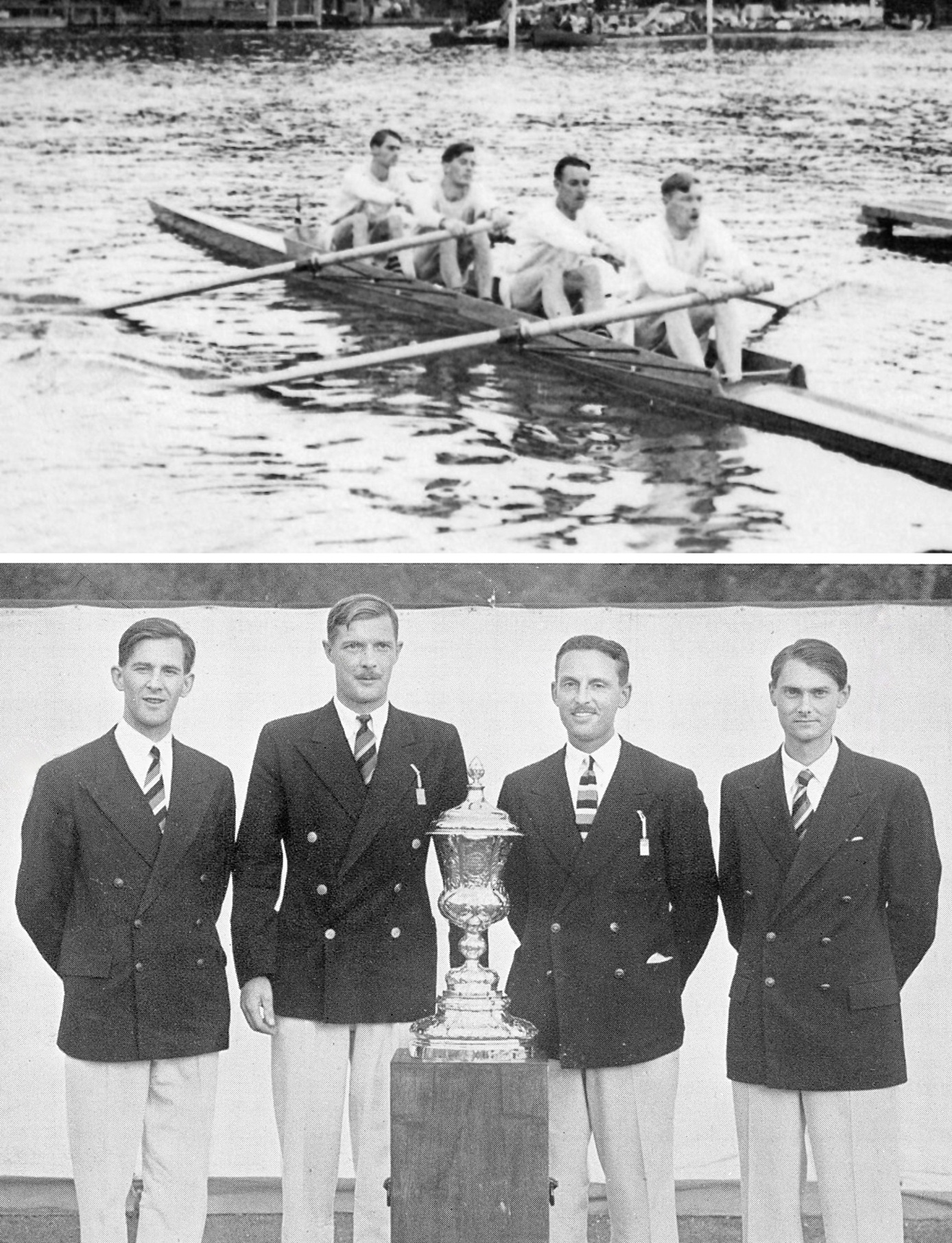
The website teamgb.com gives a summary of Tony Purssell’s non-rowing career:
After leaving University, Purssell got a job at the Guinness Brewery in Park Royal, London, before rising through the company ranks to eventually become head of brewing, and then managing director, and later chief executive. In the 1970s, he enjoyed a spell as chairman of Guinness Superlatives, the company’s publishing arm responsible for the Guinness Book of Records, and many other sports titles.
In addition to his various roles at Guinness, Purssell held positions at some of the leading British establishments and institutions. He was president of the Institute of Brewing 1974-76, was a member of the Independent Broadcasting Authority 1976-81, and of the Civil Aviation Authority 1984-90. Between 1993-2010 Purssell served as a trustee, chairman and vice-president of the National Epilepsy Society. He was also a former honorary treasurer of Oxfam, and served on the regional board of directors of Lloyds Bank.
It seems that Tony Purssell has needed 100 years and more to fit everything that he has done into a full and productive life. Well rowed.
*Addendum: RMA Bourne
2nd Lt RMA “Bobby” Bourne was part of the 145th Brigade which in May 1940 was ordered to defend the strategic French town of Cassel to allow time for the evacuation from Dunkirk of the remnants of the British Expeditionary Force. The 145th was effectively sacrificed and most of those involved in this rearguard action were captured, wounded or killed. Bourne spent five years in prison camps in Germany and Poland including six months in the notorious “reprisal” camp, the partly subterranean Fort VIII in Posen (Poznań) aka Stalag XXI-D. He later explained stoically that this incarceration “was for being a bad boy.”


great report, great career, congrats