
11 August 2026
By Tim Koch
Tim Koch finds some lost oarswomen.
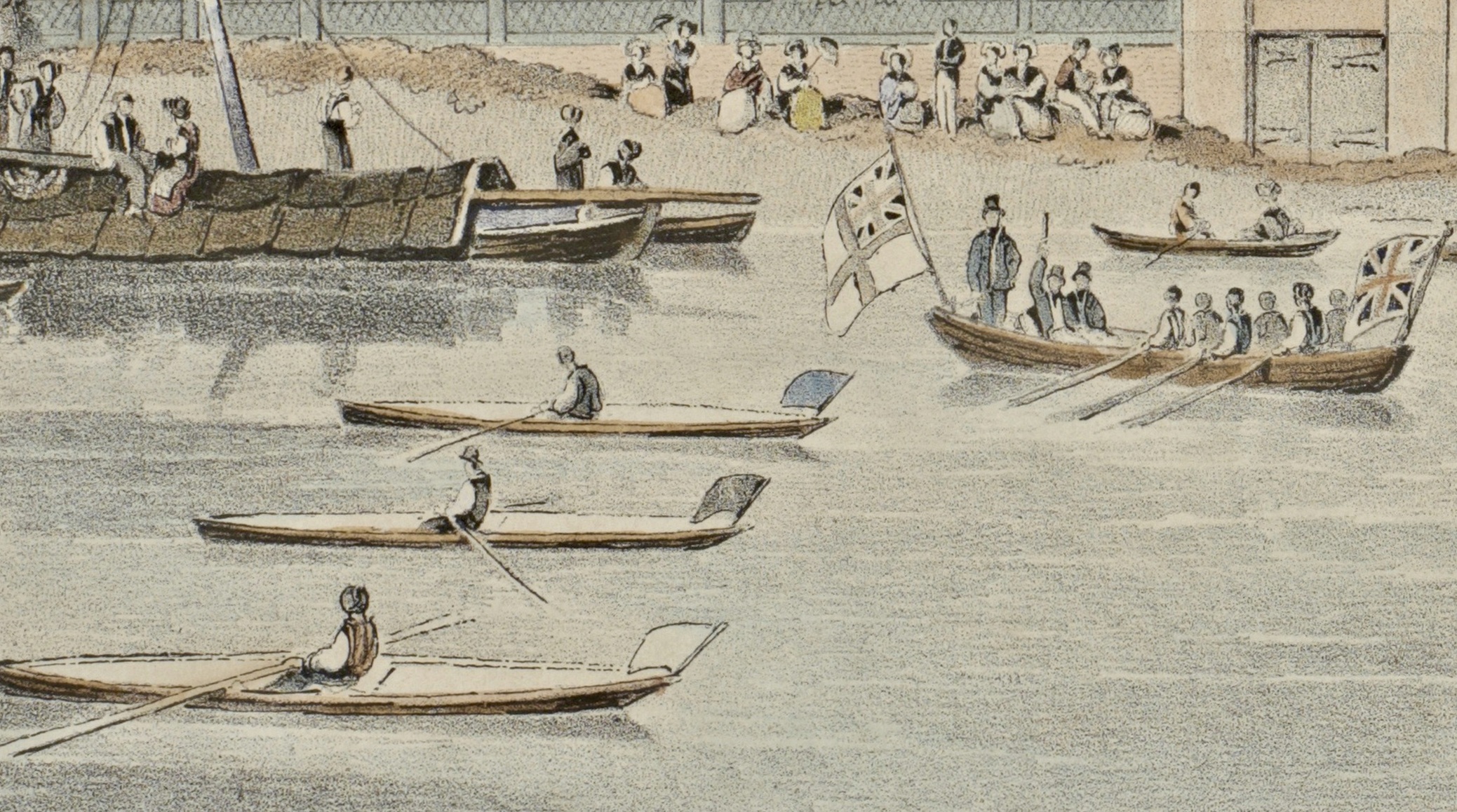
HTBS Types may remember that I previously wrote about rowing at Isleworth in my 2023 piece, The Percy-Grosvenor Nuptials Regatta of 1842. This was just one of many impromptu regattas held at Isleworth in the mid-nineteenth century and beyond, mostly for watermen but sometimes with events open to gentlemen and tradesmen. Later, even women were allowed to occasionally join in.
My research for the Nuptials Regatta showed that historically there have been several rowing clubs with “Isleworth” in their names.
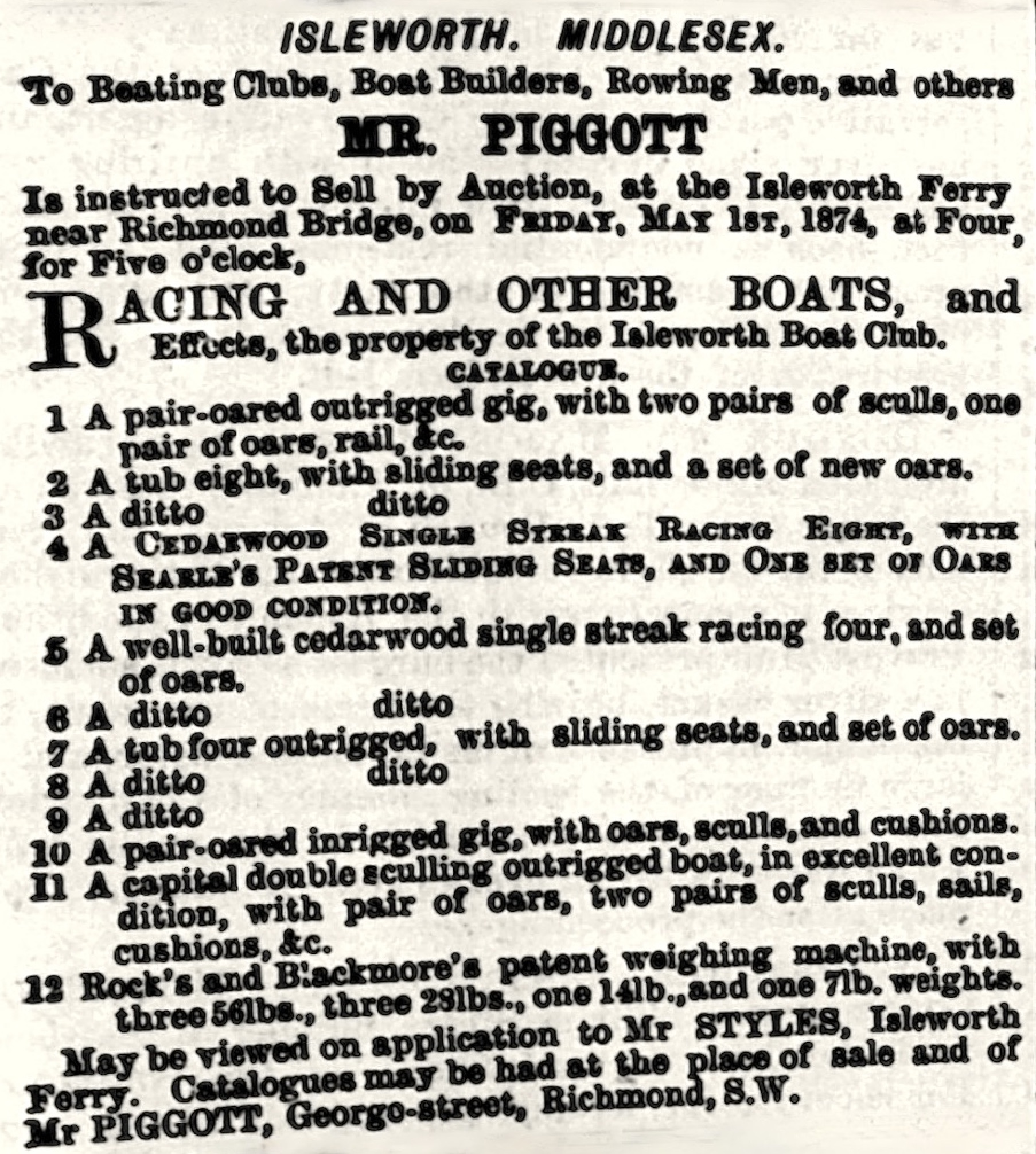
There is a newspaper reference to an Isleworth Rowing Club competing at the Kingston-on-Thames Regatta in 1872 though a report in 1900 noted that it had not existed for some years. I speculate that the boat club and the rowing club were the same.
The Isleworth Stella RC, a tradesmen’s club, existed for three brief but successful years, 1870 – 1872.
In 1886, the St John’s (Isleworth) Rowing Club aka the St John’s Institute Rowing Club (affiliated to the Tradesmen’s Rowing Club Association) was described as “a young club” and was very active in the 1880s and 1890s. In 1891, the Richmond and Twickenham Times called it, one of the largest (rowing clubs) on the Thames above London and its membership is steadily increasing… Strangely however, in 1900 it was reported that the club had decided to bring itself to an end.
Interestingly, in the Richmond and Twickenham Times of 15 August 1891, there is a report titled “Isleworth Ladies’ Rowing Club”:
The preliminary heats for the first annual contest got up by the first trained Ladies’ Rowing Club on the Thames were rowed on Saturday… Taking into consideration that the competitors had only put in practice in the past three weeks, the rowing was very good.
Only four boats entered and a man had to row at bow in each of the coxed double skiffs allegedly because a male sculler had drowned a few weeks earlier in one of the St John’s club races and having a man onboard was regarded as a safety precaution.
The prizes for the ladies’ race were “a pretty travelling clock” for the winner and a silver fruit knife for her instructor.
In its report on the race, the Middlesex Independent also of 15 August 1891 reported:
The (Isleworth Ladies’ Rowing Club) has now been in existence some six months, having been the outcome of the race for ladies at last year’s watermen’s regatta, and, during its life, it has been the means of providing healthy and rational amusement to a large number of girls, the roll of membership containing over thirty names…
The Independent continued:
The boat house at the church was thronged with ladies wearing the pretty light and dark blue dresses which form the distinctive badge of membership… They deserved the admiration too for are they not forming a record of Isleworth and giving to the little waterside village the credit of the first down river spot to bring off a ladies’ club race? Regattas up the Thames are often patronised by the fair sex as competitors but they scarcely ever row under the colours of any recognised club, whilst here, in the almost unknown village, there is a flourishing combination of some months standing.
Sadly, the only other newspaper reference to the ladies’ club is in 1895 when the Middlesex Mercury simply asks, Will the Isleworth Ladies Rowing Club be resurrected this season?
A 1903 newspaper article noted that, a movement has recently been started in (Isleworth) to resuscitate the rowing club, which in past years was so very successful… but the promoters have been accorded little support from the local rowing fraternity.
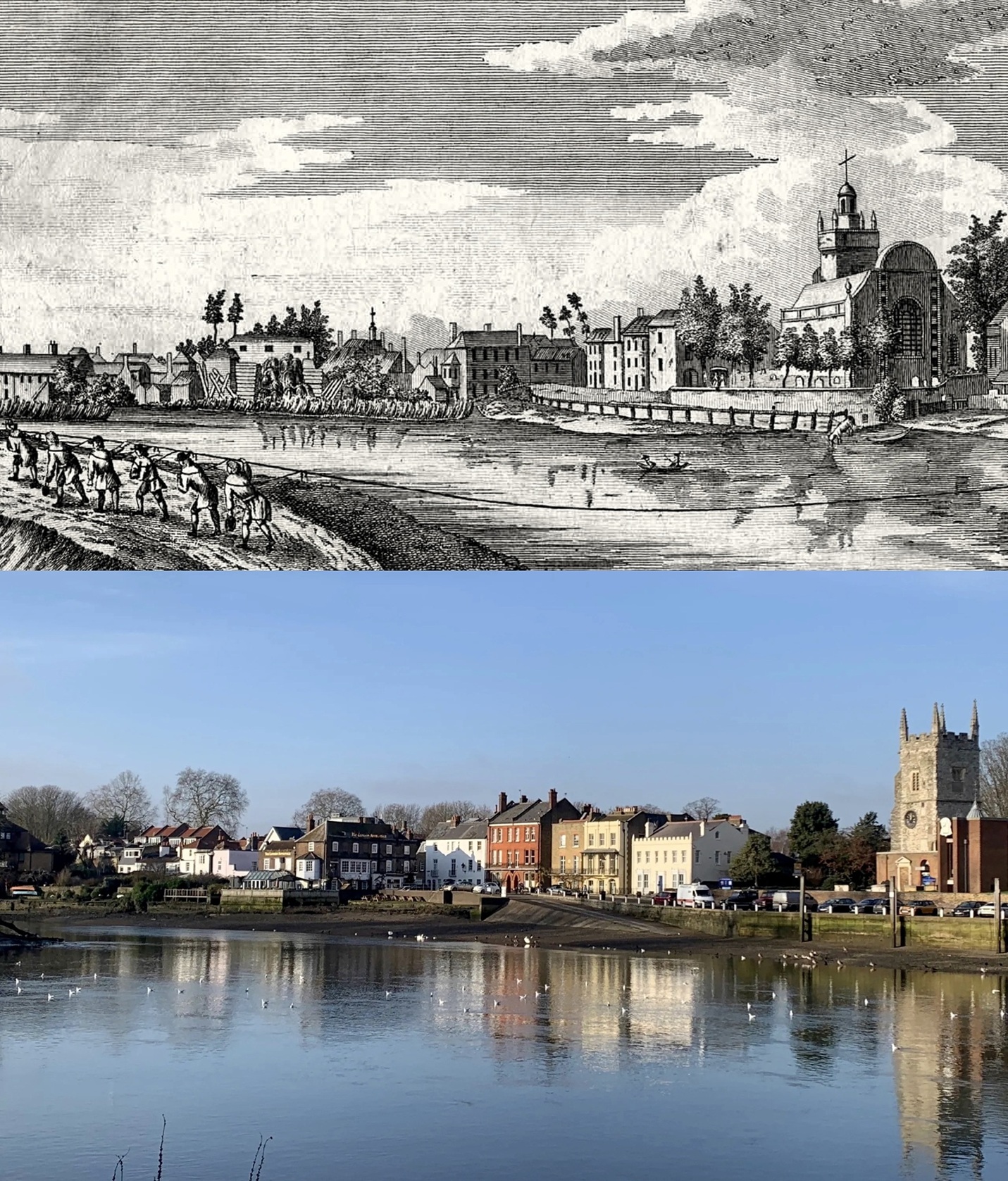
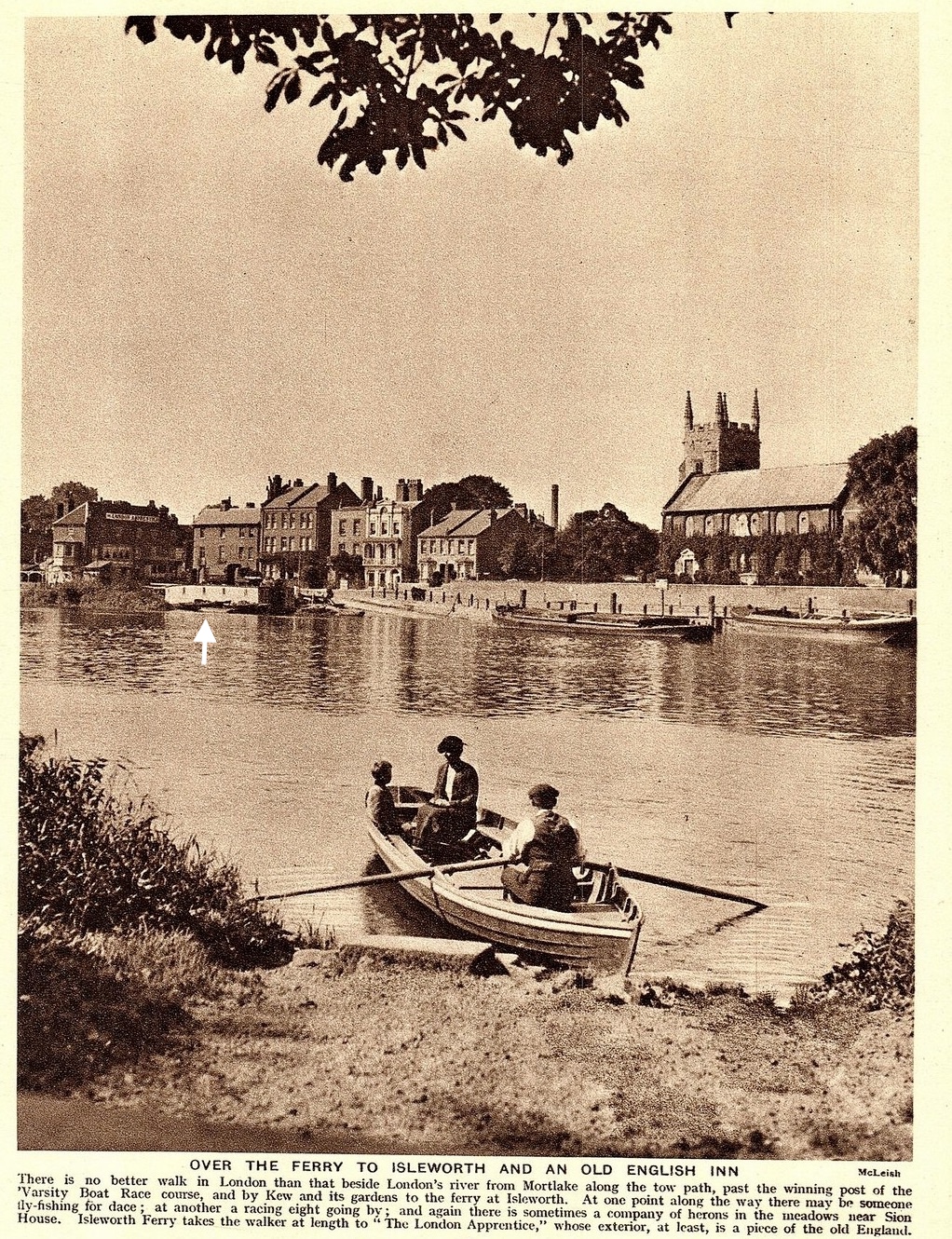
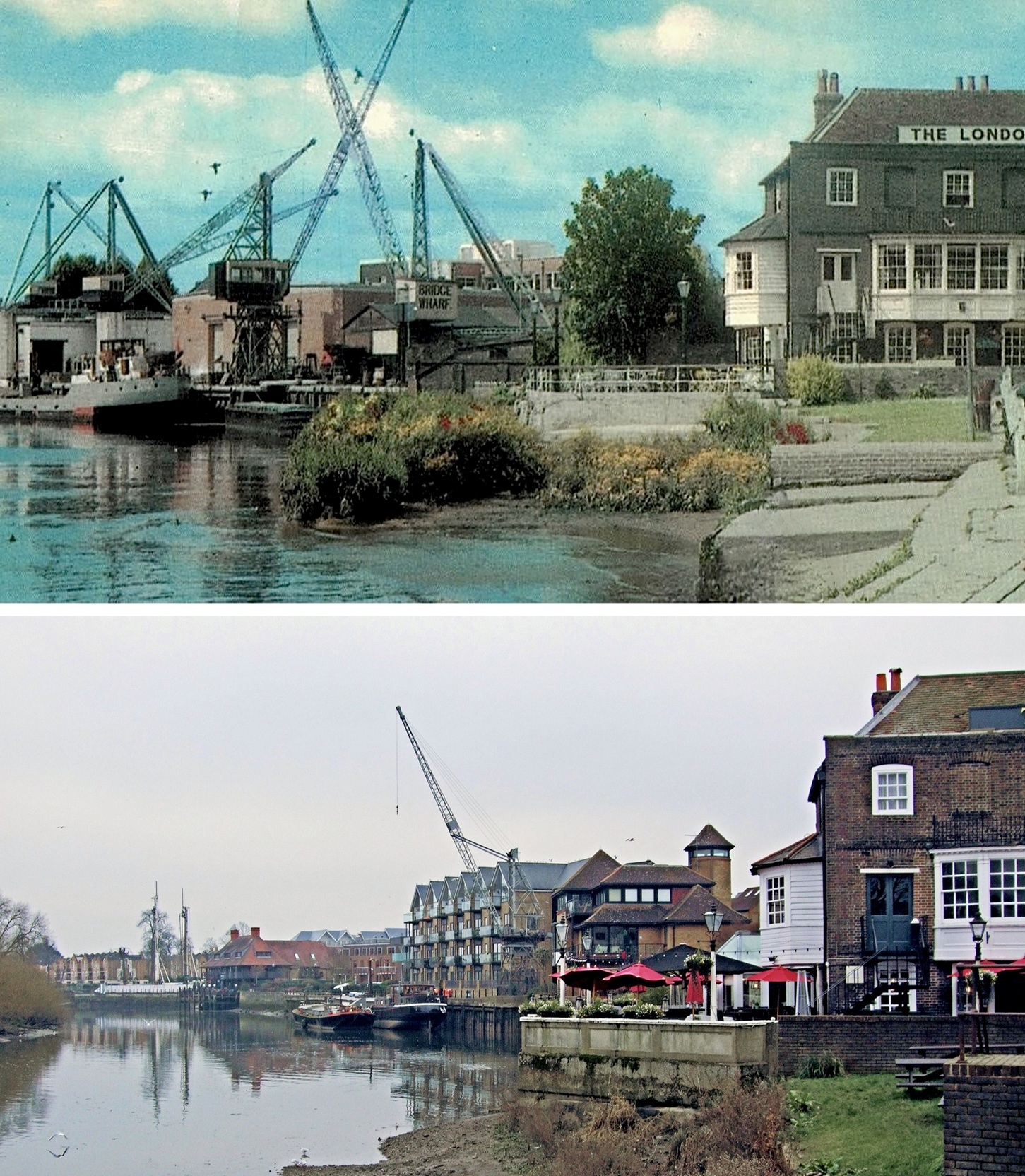
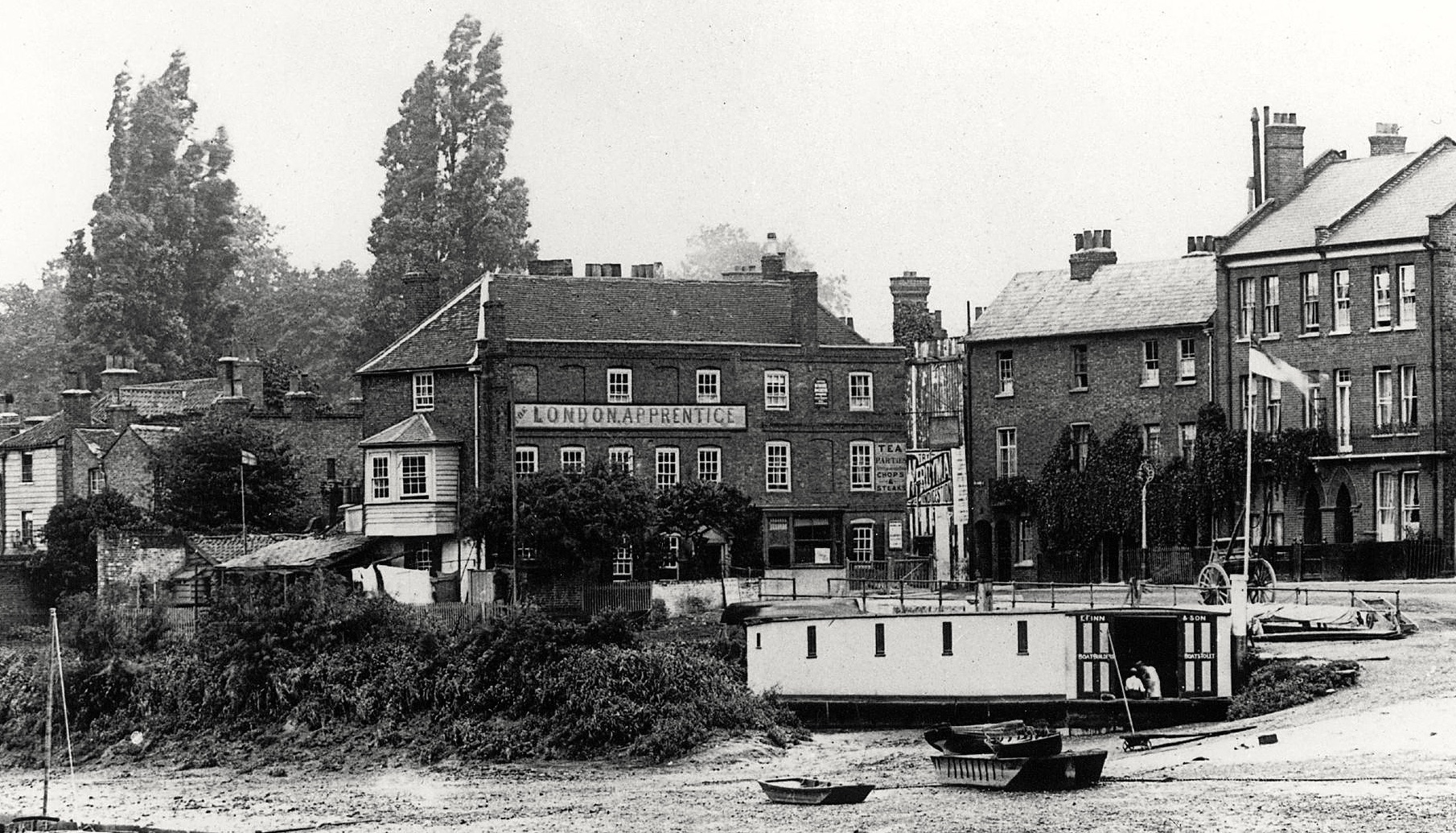
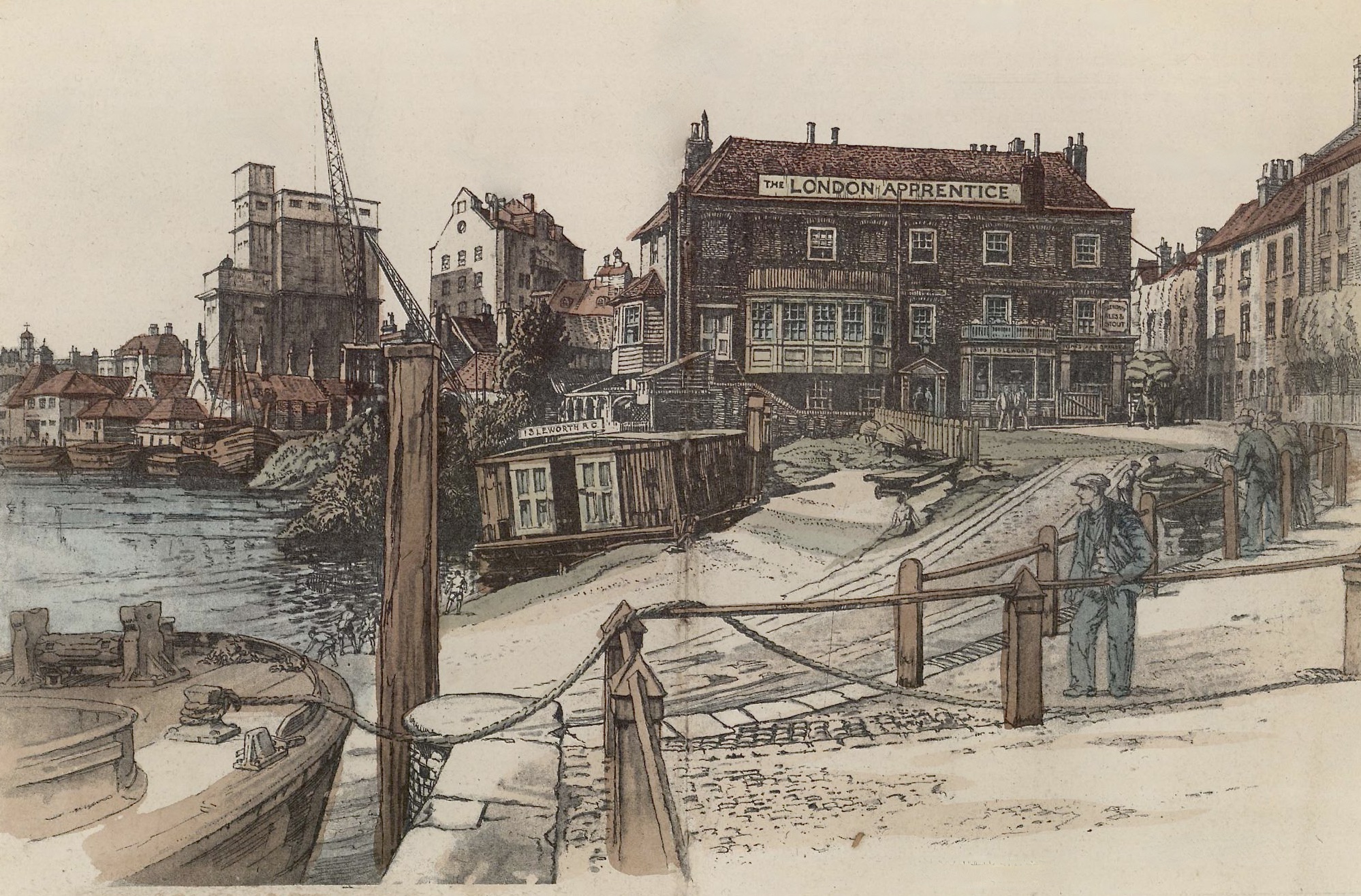
The “Isleworth RC” (IRC) referenced in the first picture seems to have been formed in c.1923 and it presumably took over Finn’s barge. Whether it was used as a clubhouse and/or dressing room or as a boathouse for fours and smaller boats, I do not know. Possibly a “club room” was rented in the London Apprentice pub, then a common practice for impecunious rowing clubs.
In 1935, the Isleworth RC barge was cut adrift by vandals and was wrecked. There is one reference to the club then moving “a mile upstream from Richmond”, presumably renting space in an existing boathouse such as Messum’s. Richmond is three miles upstream from Isleworth.
In c.1925, the IRC had started a women’s section, an unusual move for the time, particularly for a club with such limited resources. It was sometimes referred to as a separate club and it is true that the men had to row under the National Amateur Rowing Association and the women under the Women’s Amateur Rowing Association.

However, even with unsuitable premises and a small membership, the IRC Ladies’ Section produced a four that, with some occasional crew changes, briefly became quite a force in inter-war women’s rowing both home and abroad, something now largely forgotten.
There are many newspaper reports of an Isleworth women’s four beating crews from better remembered (or at least longer lived) women’s clubs such as Weybridge, Alpha, United Universities, St George’s and Ace. The fact that these victories were usually in fours, not eights, suggests that the Isleworth women did not have great strength in depth and their strength lay in the talents of just a few. Names that have survived include Kate Davis, Amy Tompkins, Phylis Taylor, Grace Phipps (née Chapman), Grace Berry and Betty Ambler.
The London Evening News of 3 July 1936 noted that:
English racing crews are to take part in the Essen regatta on July 11 and 12… The Ladies Amateur Rowing Club of Isleworth (sic) will… be carrying British colours. This will be the first time a crew of British women has taken part in German events.
The women’s Isleworth club won international honours in Paris in 1933 and 1934 and in Ostend (Belgium) in 1935 and 1936. They have been unbeaten in events for fours and eights in Great Britain during the last four years.
A newspaper report of 1931 called the IRC Ladies’ four, “Champions of England”. There is no information on how or when they won this title but possibly it came from their victory in the Senior Fours at the 1931 Women’s Amateur Rowing Association Regatta. I can find no reports of wins in eights.
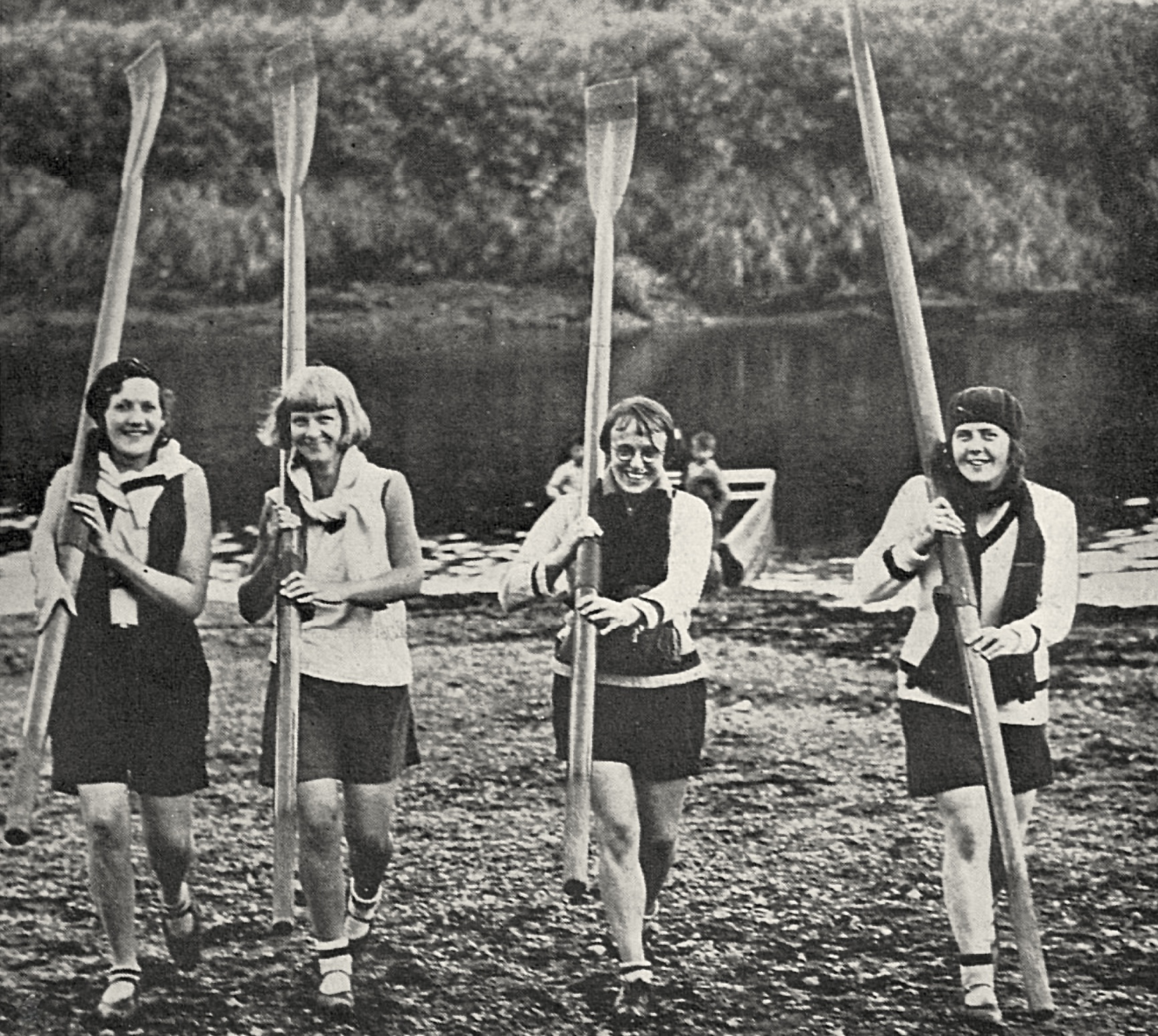
The Boxing Day Regatta at Richmond was a particularly popular event. In 1932, the Richmond Herald wrote:
Particular interest was evidenced in the ladies’ fours race between Isleworth RC and St George’s Ladies’ RC. The fame of the Isleworth crew and their all-conquering way has been noticed abroad, and both teams took to the water to the accompaniment of the clicking of many cameras.
In 1937, the Herald noted that the Isleworth Ladies had won the women’s fours at the Boxing Day Regatta for the seventh year in succession.
Earlier, the Richmond Herald of 21 September 1935 reported that:
Miss Betty Ambler, one of the members of the victorious Isleworth Ladies RC four, which has scored so often in the past year or two, is now the English women sculling champion. She won the title on Saturday last, when without much difficulty, she finished first in the 4 1/2 miles race from Putney to Mortlake.
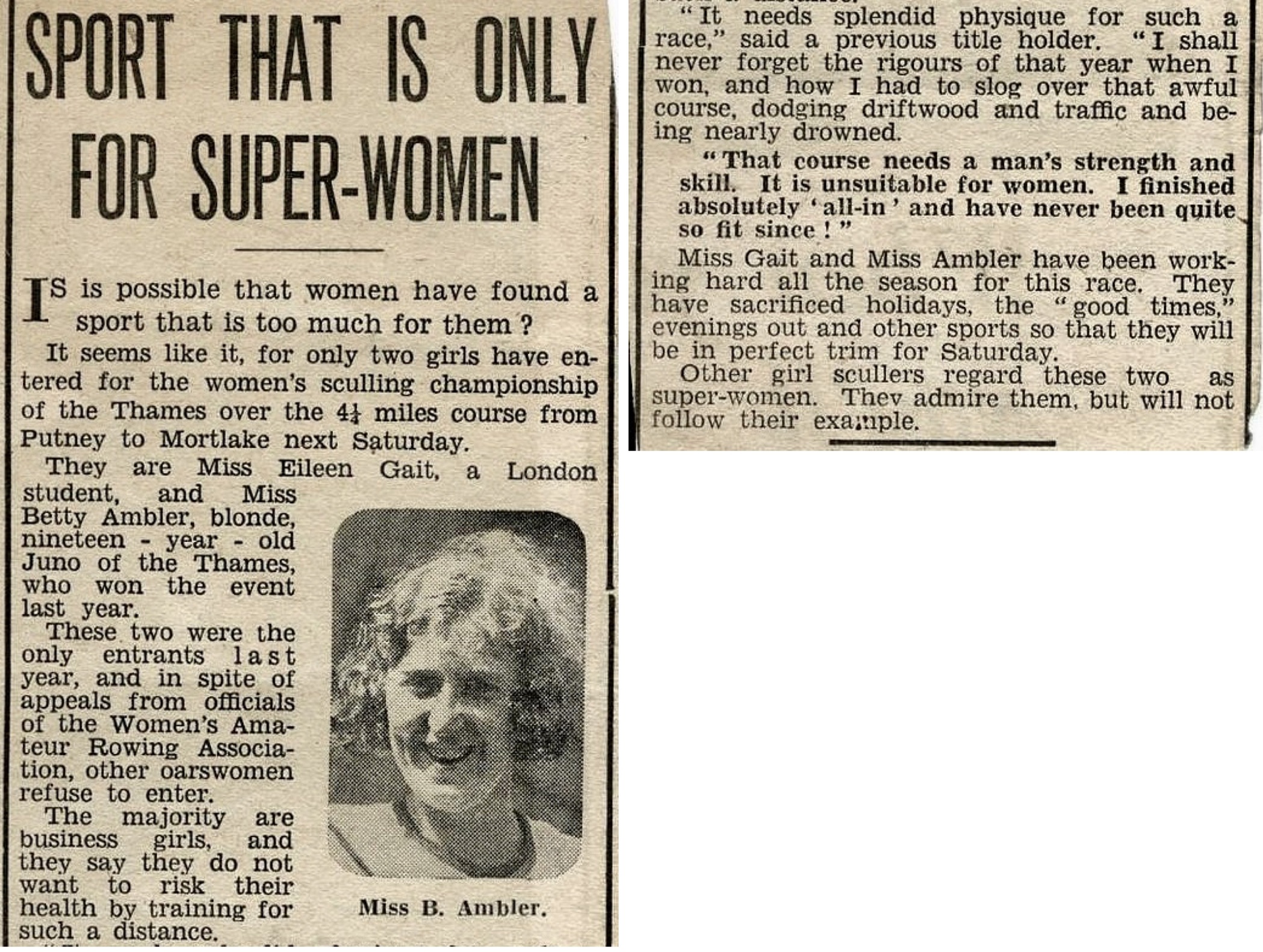
The Evening News of 7 July 1936 wrote in an equally patronising way about the successes of the Isleworth women’s coxed four in the period 1931 – 1936. The News seemed as much concerned with hair colour as rowing ability:
Five London girls who think pastries a vice and smoking a crime, left London today for a very strenuous few days in Germany. They are members of the Isleworth Rowing Club and they are competing at the international regatta at Essen. They are taking with them a wonderful reputation and plenty of confidence.
Since they have teamed up they have had triumph after triumph including victory in the women’s fours at the recent Ostend regatta. Three of the four have rowed together for five years now, winning forty races and losing only four. Yet all are still in their early twenties. Incidentally all are fair, there is not a brunette among them.
Starting at the bow, there is Miss Amy Tompkins. She’s so fair that she is always called “Blond Tommy”. During the day she is employed at a big engineering works, but most of her leisure time is spent training for rowing.
Next, No. 2, Miss Kate Davis, a hairdresser. She likes dancing (but not, of course, during the rowing season) as does No. 3, Miss Grace Berry. They go to dances together in the winter. Grace, by the way, is the heaviest member of the crew, but she doesn’t mind a bit.
Then comes Miss Phylis Taylor, the stroke. She does not like dancing but does like swimming. But it’s all the same because swimming and rowing, like dancing and rowing, don’t mix.
Last but not least – except on the scale – auburn haired seven-stone Miss Marion Ford, the cox. A dressmaker in the West End and (they say) a strict disciplinarian on the water.
Miss Taylor told me the rules all the girls observe most strictly. They are:
NO smoking
NO pastries or sweets
Chocolates – a few if you must
At least eight hours sleep a night
Practice on the river five nights a week (never mind the weather)
Hockey, netball and gym in the winter
“We have no particular tips to give” said Miss Taylor, “but these rules are necessary if we are to keep fit. Slimming we don’t bother about. For rowing fitness counts more than what the scales have to say. And you must have some weight in the boat you know. However strictly we are training for big events we all love it.”
The 1936 Internationale Hügel-Regatta in Essen served as a showcase for elite European rowing a month before the 1936 Berlin Olympics. While there would be no women’s rowing in the Olympic Games for another forty years, it still must have been a great thrill for the Isleworth women to mix in such company. Cox Marion Ford later recalled that they were entertained by members of the Krupp family, the major German industrialists and armament manufacturers. I can find no record of the results of the women’s races at Essen.
Despite their success, the women of Isleworth Rowing Club may have still been treated as second class members by the men. In an article titled, Sex-antagonism in sports, the Queen magazine of 10 February 1938 wrote:
We have had several accounts of mixed bowling clubs where women have been asked not to play after 7pm and there is the recent instance at the Isleworth Rowing Club as to whether women members have the same rights with men to the use of club boats. If it is true that there have been occasions when one of the women’s crews have been turned out of a boat when just on the point of starting off, then the position is unfortunate.
The Richmond Herald of May 1939 reported that the National Fitness Council had provisionally offered to pay half of the cost of a new IRC boathouse in Petersham Road, Richmond. It is reasonable to assume that the outbreak of war in September 1939 saw the end of this offer and also the end of this particular incarnation of the Isleworth Rowing Club.
 Hear The Boat Sing
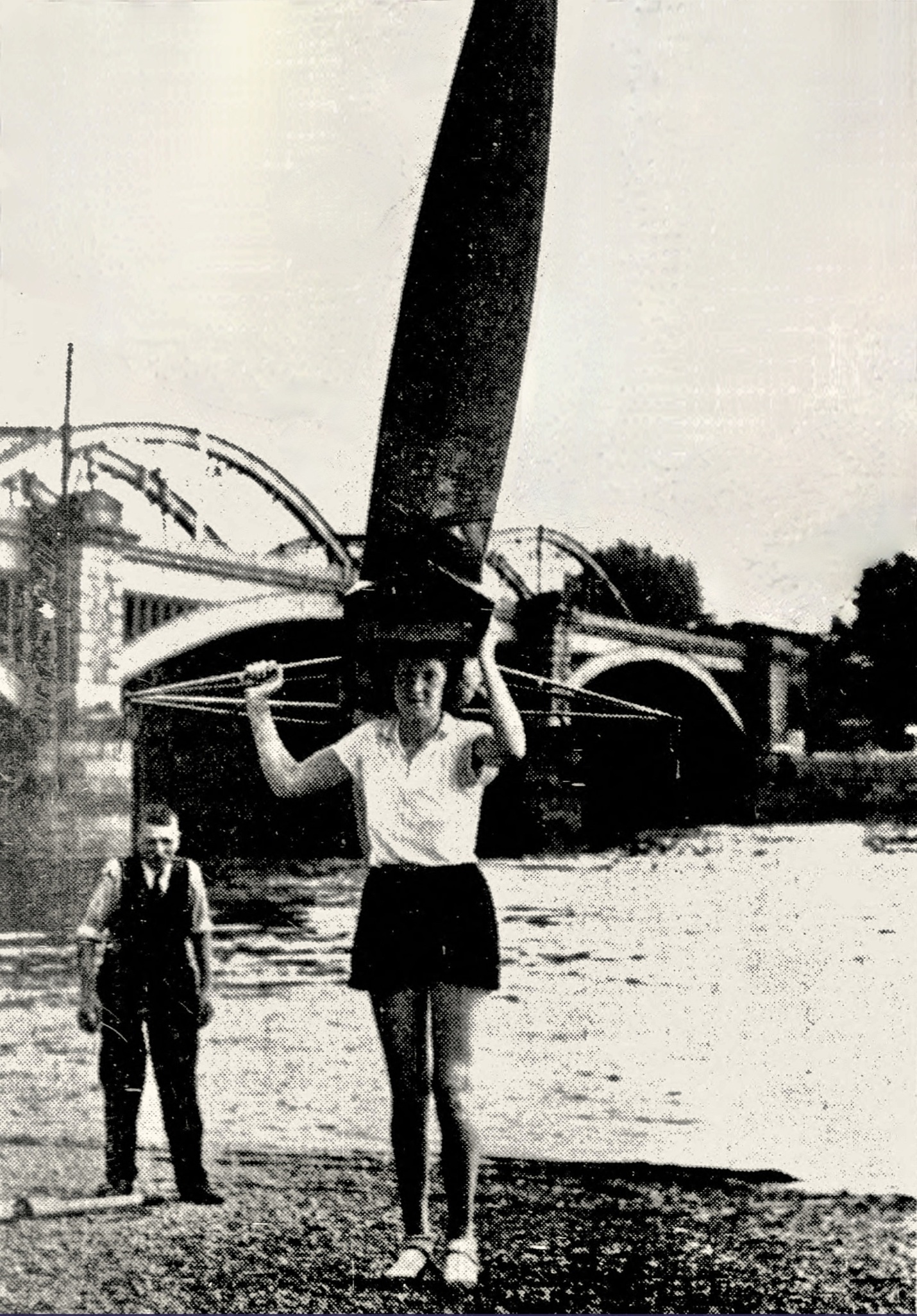
The (last) photo – Betty Ambler – is at the old Thames Tradesmen’s at Barnes Bridge
Ian, the present incarnation of Thames Tradesmen may not have existed in the 1930s and even if they did, they were not based at Barnes Bridge. Betty Ambler would have been using Tom Green’s Boathouse https://heartheboatsing.com/2014/03/24/good-times-in-a-rat-infested-shack-tom-greens-boathouse/
I can add a little more to the story of Isleworth RC. In 2000 the parish magazine of the local church had a short article about the club. Extracts included the following:
“The club was formed in 1924 with a membership of 8, all men, but in the following year a ladies section was added; I believe the initial number of women was around 6 or 8. From this small beginning the club gradually expanded to a membership of 100 men and 30 ladies by 1932 when it was in its heyday.
Headquarters was a floating boathouse moored on the foreshore about 20 yards from the London Apprentice at Isleworth and known as The Ark. This was E Finn’s Boathouse where rowing boats could be hired and repaired. In it were kept the eights and fours plus blades, with a changing room for the men at the rear. The girls had to be content to use a rather dilapidated wooden shed at the bottom of a garden belonging to the people in the house just before All Saints’s Church, an Edwardian cottage, now replaced by Butter Field House; not that it worried them, they were only too grateful to be allowed to use it. By the time the ladies had established their internation reputation, they changed in the top room of the London Apprentice, a great improvement indeed, for there were facilities for washing, etc.
… In 1935 Isleworth Rowing Club suffered a cruel blow: vandals wrecked their boathouse by removing bolts over a foot long from one of the ‘travellers’, which anchored it to a heavy pile on shore. This meant there was no way left to make it rise and sink with the tide, so on the next flood tide it became partially submerged. Before this, however, all the boats and blades had been removed; later of course it became a complete wreck – and it was never discovered who did it.
The club was then offered accommodation at Hammerton’s boathouse, also a floating one at Marble Hill, Twickenham, where it remained until 1941? when it ceased to exist, a casualty of the Second World War.”