
22 July 2026
By Tim Koch
Tim Koch comes to the abrupt end of Richard Beesly’s scrapbook. (Part I is here and Part II is here.)
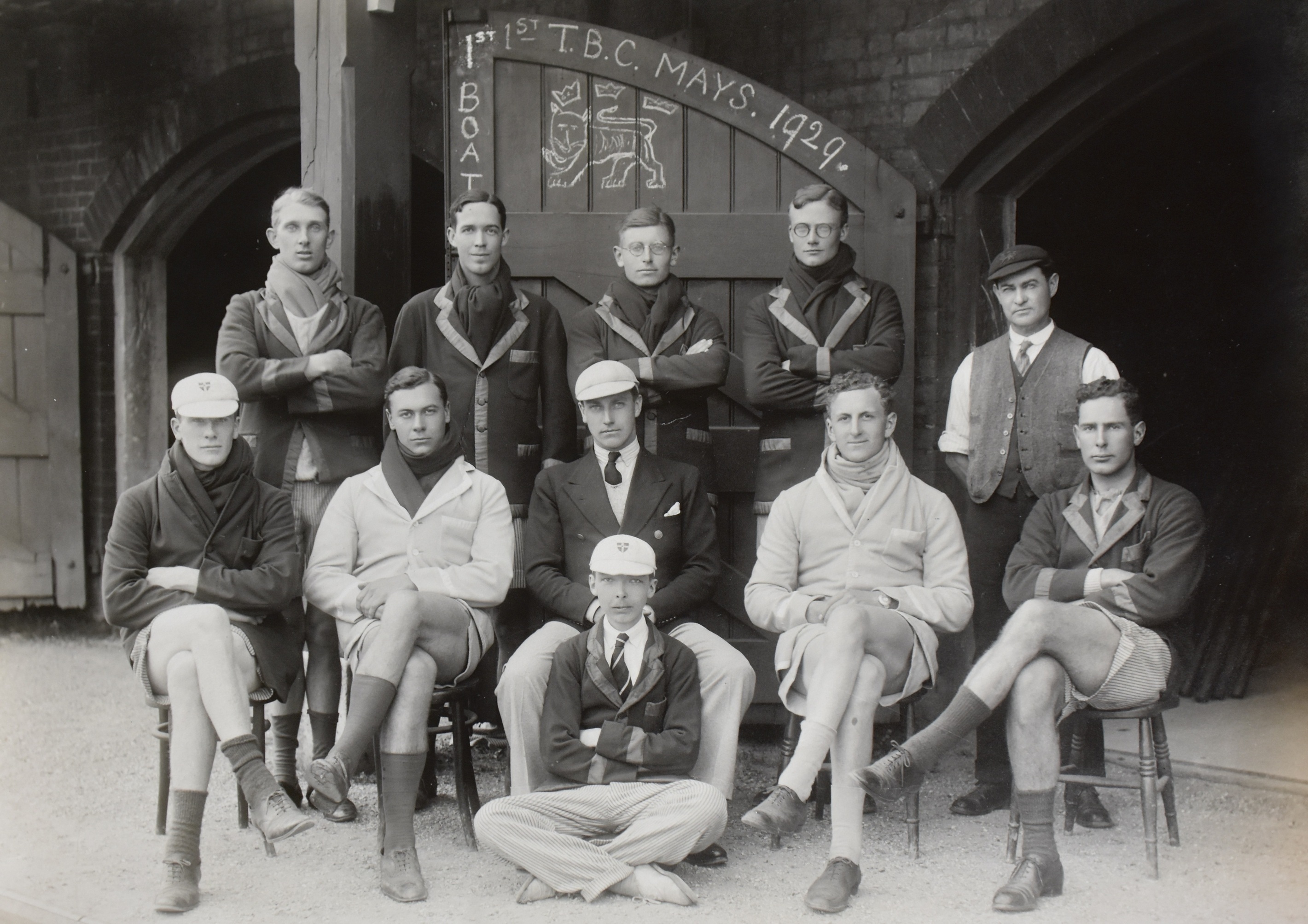
In 1929, Beesly was in the winning Cambridge Boat Race Crew for the third time and also won two Henley events with First Trinity, the Ladies’ (intermediated eights) and the Stewards’ (championship coxless fours).
While Beesly’s scrapbook covers the run up to the 1929 Boat Race in excruciating detail with forty pages of press cuttings, for some mysterious reason the last cutting is dated 7 March – but the race was on 23 March. Further there is no coverage of Henley which ran from 3rd to 6th July. The scrapbook had twenty blank pages left to fill and I can only presume that someone stopped paying the press cuttings agency that was compiling the material, Romeike & Curtice.
The Boat Race of 23rd March 1929
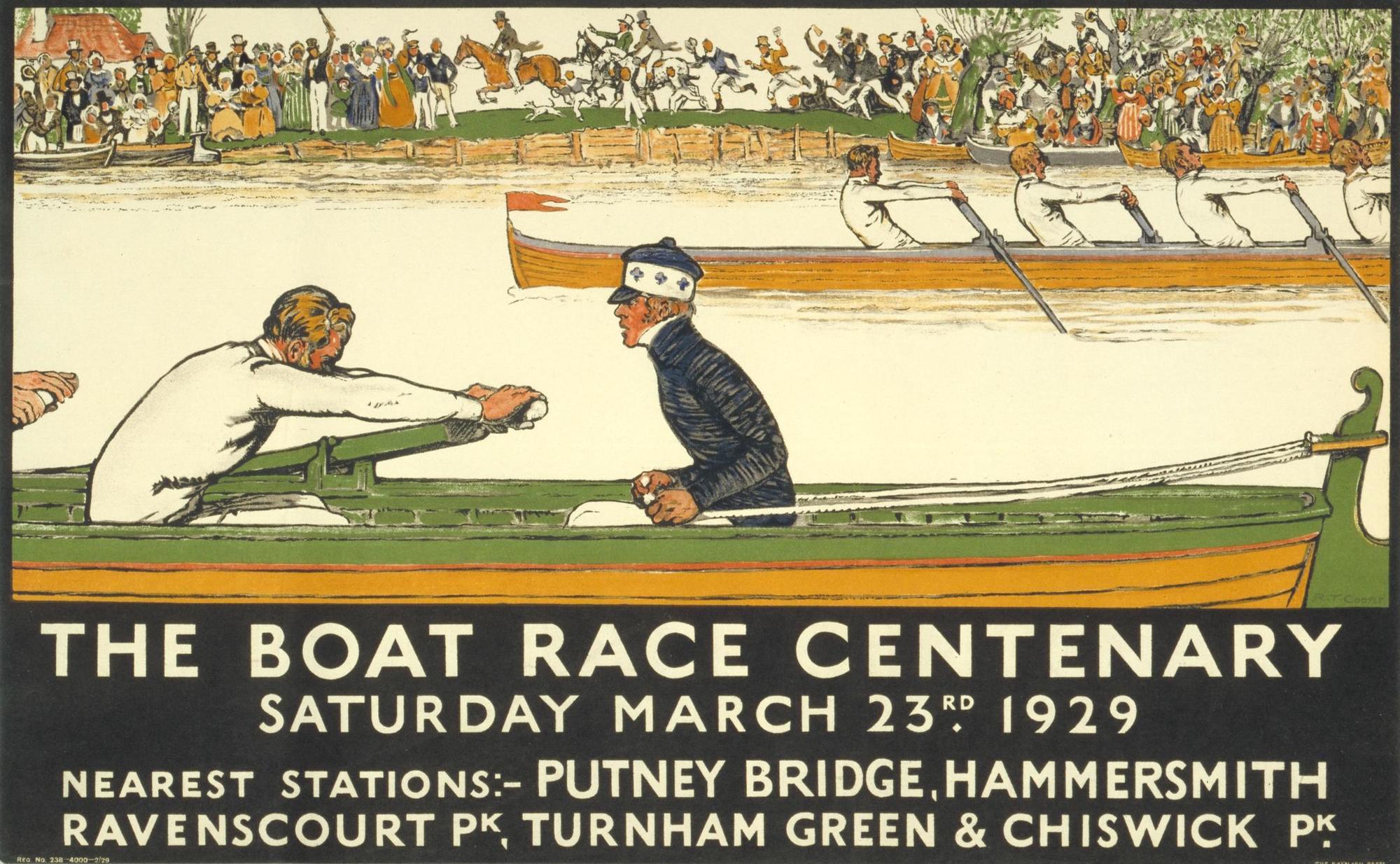
A Light Blue victory in 1929 would have meant that Cambridge would draw level with Oxford in the number of victories – then standing at Oxford 40, Cambridge 39 with one dead heat. Spoiler alert, Cambridge did draw level in 1929, went ahead in 1930 and has never fallen behind Oxford since. The closest the score has reached since 1929 is Oxford 68 and Cambridge 69 in 1992.
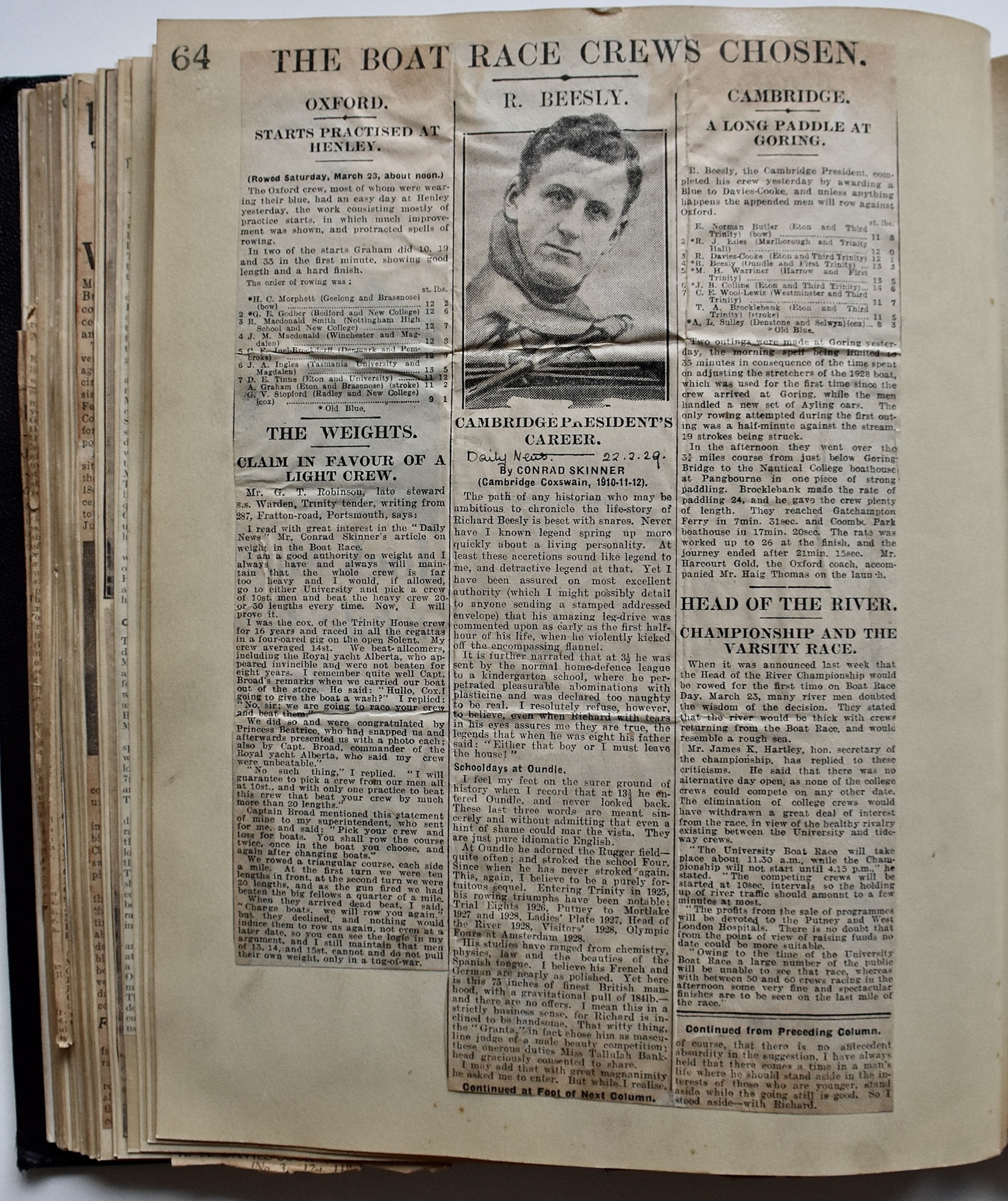
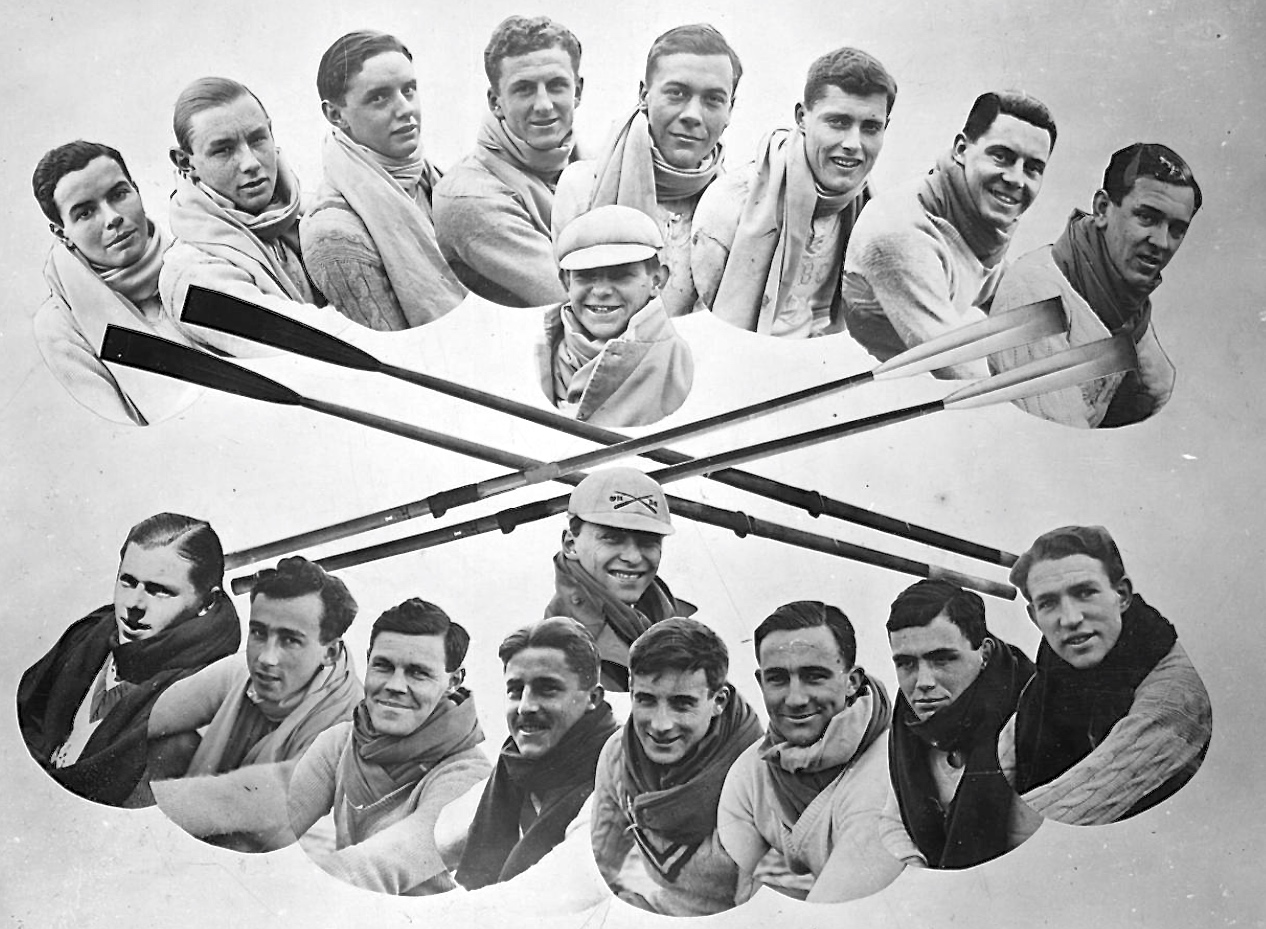
As President of CUBC, Beesly did not row in the Trial Eights of 2 December 1928 run over two-and-a-half miles at Ely. The winning boat beat the long standing course record by 13-seconds, a good indication of things to come.
The multitude of press reports seemed to agree that President Beesly’s biggest problem in forming a crew was that he had too many good oarsmen to choose from, including six Old Blues, and that he had to pick a stroke from at least three potentially good candidates. Making these choices was probably not helped by the fact that, as was the usual practice, the coaches changed every few weeks.
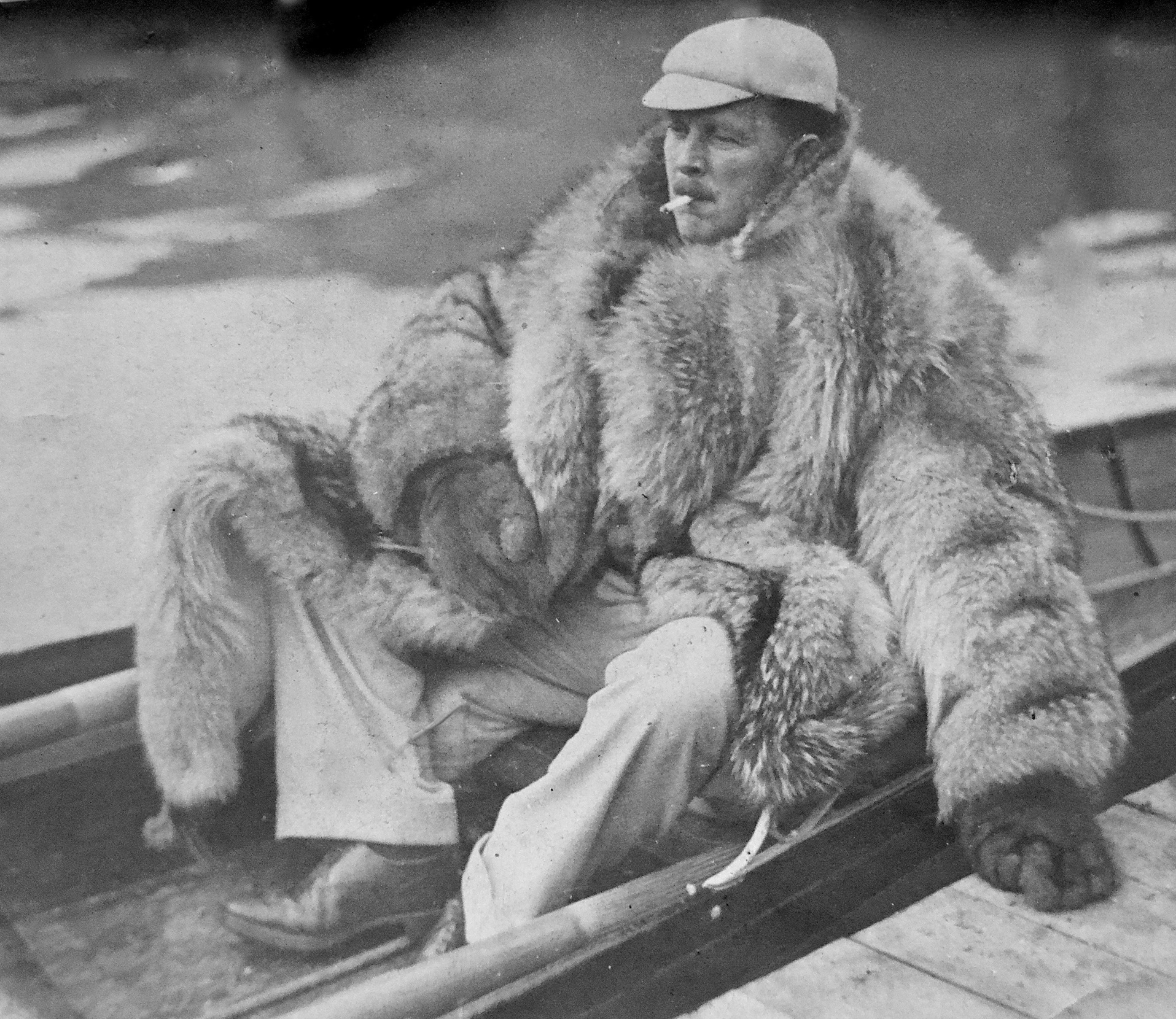
By 7th March, two weeks before Boat Race Day, The Field reported:
The only conclusion that the coaches had definitely come to at the beginning of last week was that the crew was not nearly fit enough, and from the depths of their armchairs Mr Escombe and Mr Haig-Thomas prescribed running each day to the Pike and Eel (one mile) and a fifteen mile walk on Sundays.
On Boat Race Day 1929, Cambridge on Surrey and Oxford on Middlesex made an even start. Cambridge took advantage of the Surrey bend and moved into a narrow lead near Craven Steps. Passing the Mile Post, Cambridge gradually increased their advantage to around three-quarters of a length. By Hammersmith Bridge, Cambridge had stretched their lead to approximately two lengths and looked firmly in control. On Chiswick Reach, Cambridge produced a powerful burst of around twenty strokes which broke Oxford’s resistance and widened the gap significantly. Oxford tried one final effort but could not match Cambridge’s pace or endurance. By Barnes Bridge, Cambridge held a lead of about five lengths and continued rowing strongly to the finish, winning by seven lengths.
Henley 1929
While Beesly’s scrapbook does not cover Henley 1929, it does contain two nice photographs of both of his winning crews at the Royal Regatta.
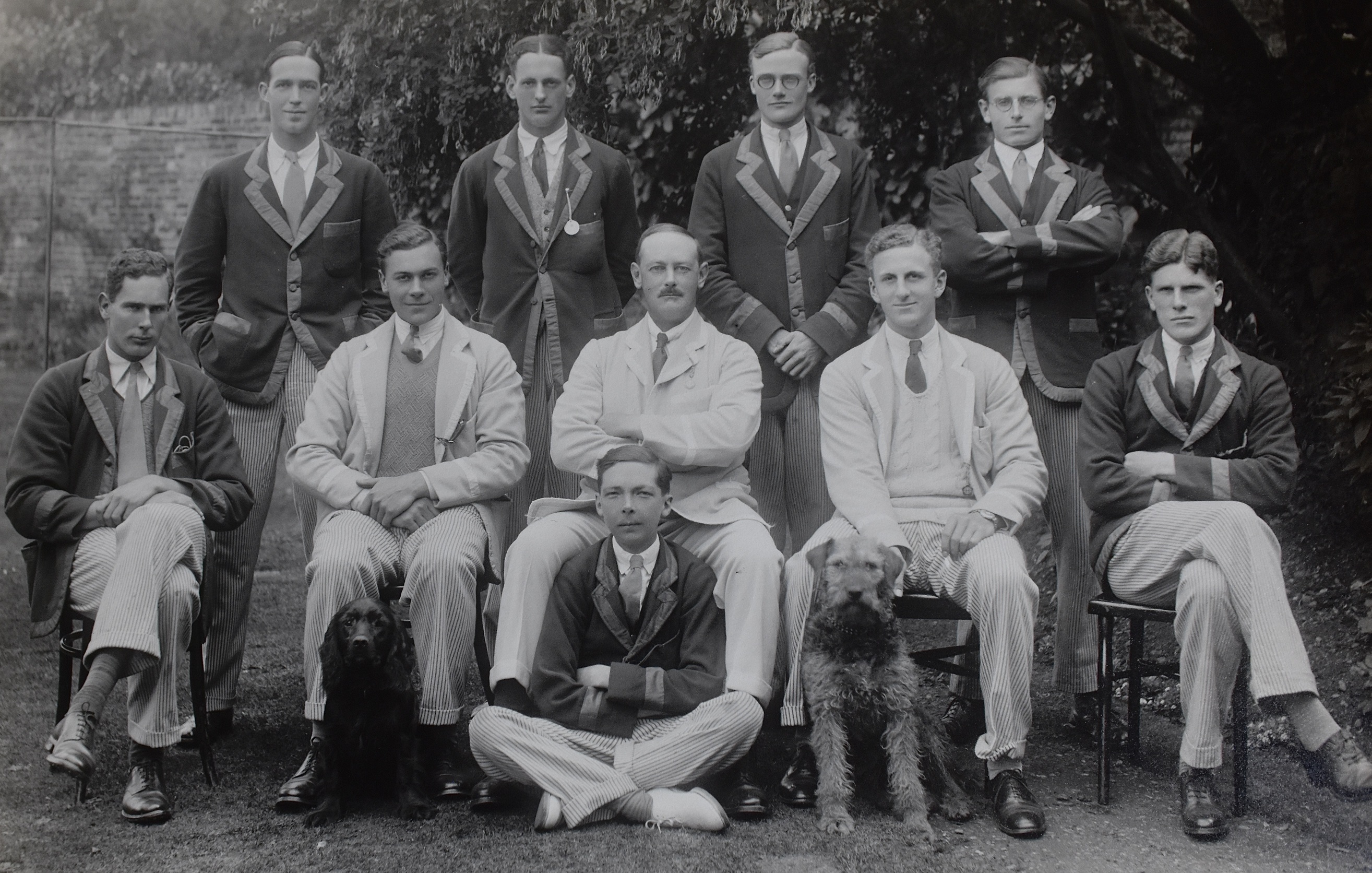
The seated front row in the above photograph is the four of, left to right, John Lander, Michael Warriner, an unidentified coach, Richard Beesly and Edward Bevan. I cannot individually identify the four standing, but they will be O Terry, WAT Fairbairn, JG Lenox-Conyngham and J Watts. The cox was RES Swartwout.
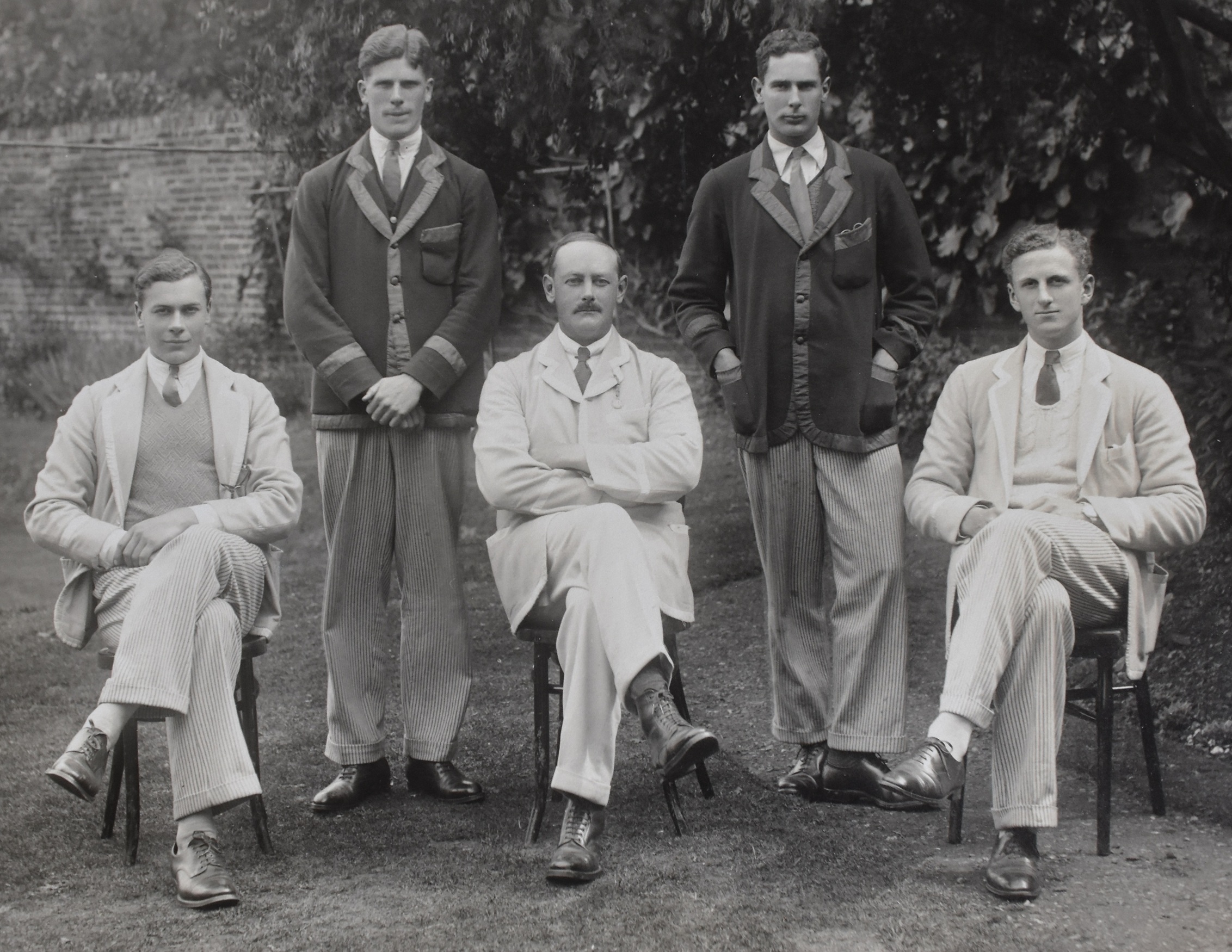
The crew in the above picture is, left to right, Michael Warriner, Edward Bevan, an unidentified coach, John Lander and Richard Beesly.
Post Cambridge
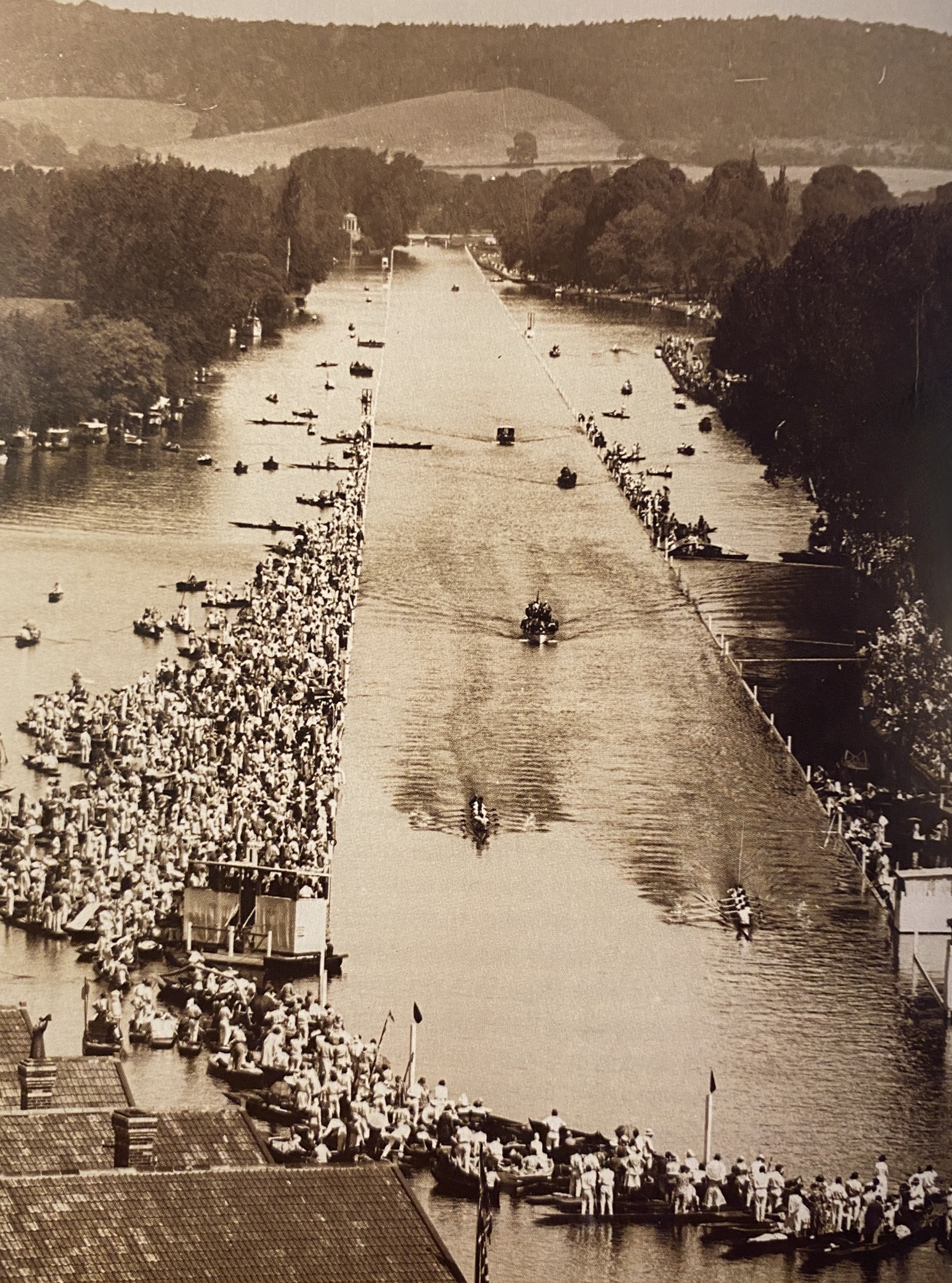
Beesley had one final competitive row after leaving Cambridge in 1929. Two weeks before the 1930 Henley Regatta, Leander put together a crew for the Grand consisting largely of recent Cambridge Blues. With Beesly at six, they took on a much fancied London crew in a straight final but lost by 1 1/2 lengths.
Beesly married in 1931, and in 1932, Beesly joined Guest Keen and Nettlefolds, a firm then specialising in tooling and component manufacturing. During the 1939-1945 War he served with the Ministry of Supply. After the war, Beesly bought a controlling interest in an important and long established farm machinery manufacturer, FW McConnel, which was a major employer in South Shropshire.
Beesly’s last active involvement in serious rowing came in 1949 when he was one of the five coaches for that year’s Cambridge Blue Boat. The crews were evenly matched and after an exciting race, Cambridge won by just 1/4 length. The race is famously remembered for BBC commentator John Snagge’s on-air gaffe after his following launch broke down: “I can’t see who’s in the lead, but it’s either Oxford or Cambridge”.
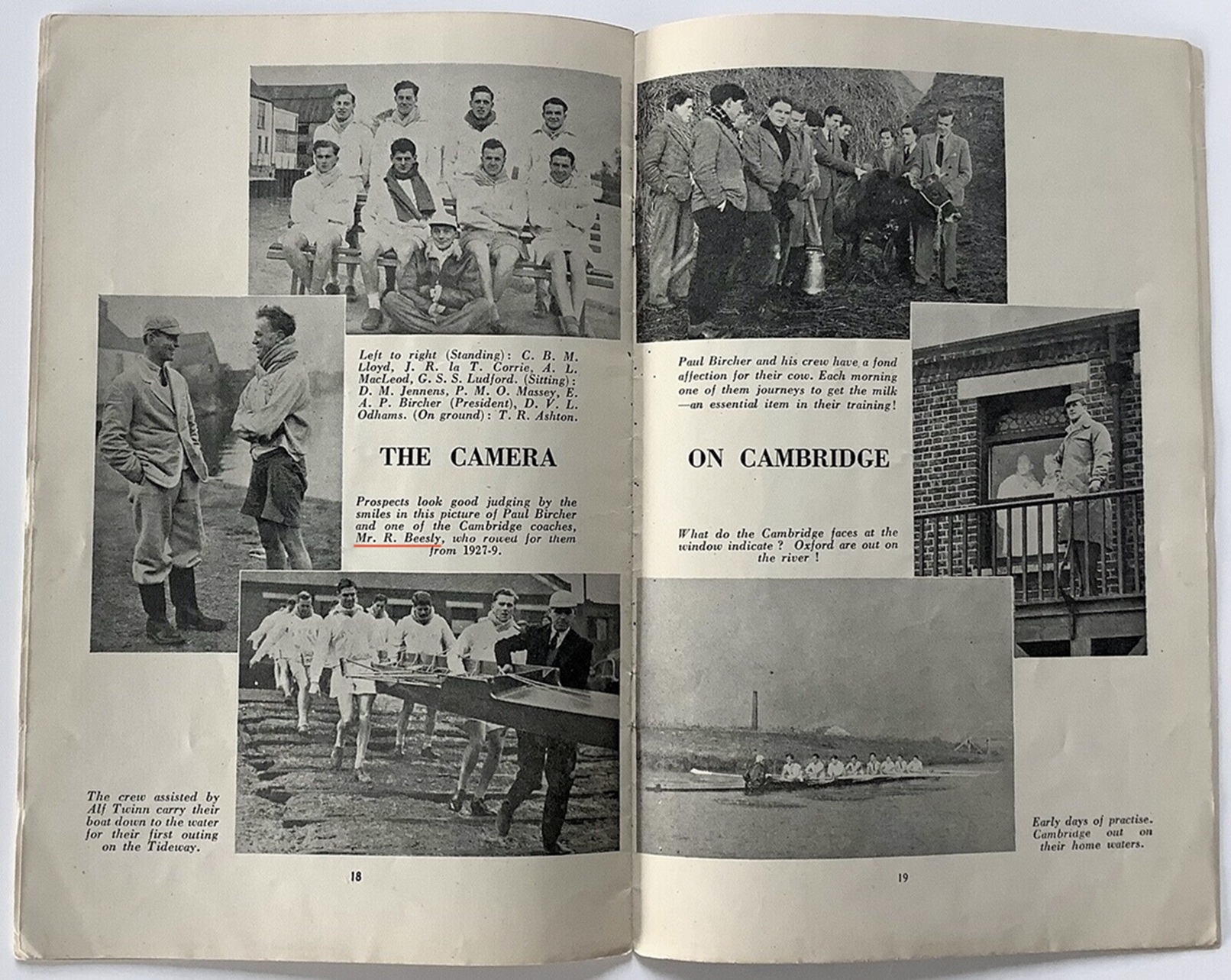
In 1965 at the age of 57, Beesly was living at Ashford Hall, Shropshire, where he had a farm. Here he suffered a bizarre death when he was gored by a bull. Over 600 people attended his funeral at the local parish church. It was a tragic end to a life well-lived.
 Hear The Boat Sing
A message for Tim Koch: A fascinating biography, based on a scrapbook obsessively maintained. However, describing the Ladies’ Plate in 1929 as ‘intermediate eights’ is anachronistic. As I’m sure you know, it was an event open to British schools, colleges and universities, plus TCD. Other overseas institutions were admitted in the 1960s but it was not until 1985 that the event took on its current form. Regards Michael Blogg