
20 July 2026
By Tim Koch
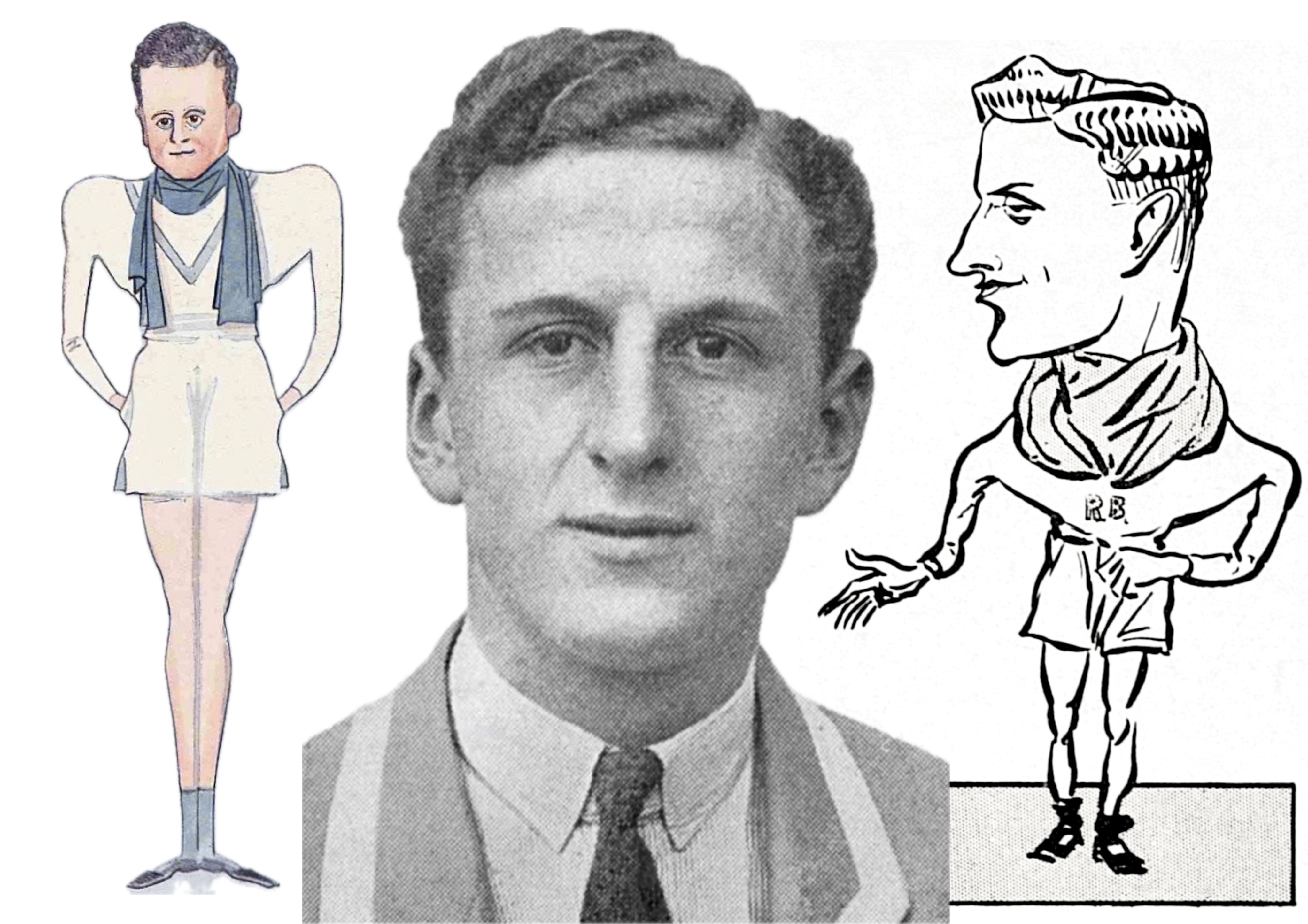
Tim Koch looks at a brief but spectacular rowing career.
Early Years
Famously, youth is wasted on the young. One manifestation of this is that students sometimes squander their time at university. However, while I do not know what Richard Beesly (1907-1965) achieved academically or socially when at Trinity College, Cambridge, between 1925 and 1929, it is certain that, on the water at least, he made very good use of his undergraduate years.
Every year between 1927 and 1929, Beesly won both the Boat Race and an event at Henley (two HRR events in 1929). Further, in 1928 he won an Olympic Gold in the coxless fours, and his First Trinity boat went Head of the River in that year’s Cambridge May Bumps. If there was a Quadruple Crown for interwar sweep oarsmen, this would have been it.
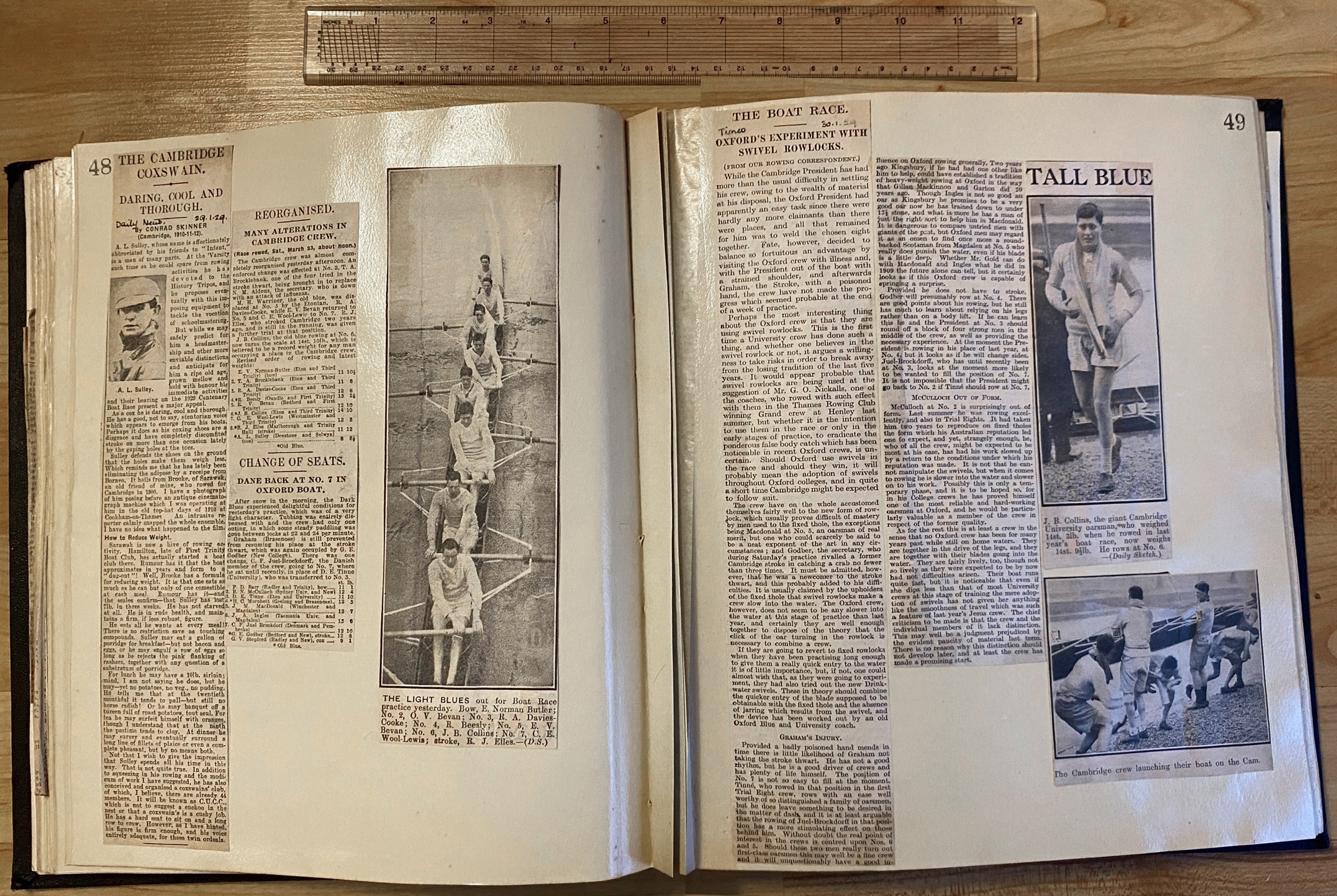
Beesly stopped rowing soon after leaving Cambridge and his impressive achievements in the sport are largely forgotten. Fortunately, either he or his proud parents paid a media monitoring agency, (also known as a press cutting agency, in this case, Romeike & Curtice of Ludgate Circus, London) to collect newspaper and magazine references to him and the events that he was involved in, cut them out and meticulously paste them into a scrapbook.
The book passed to Richard’s daughter, Hilary, and she eventually passed it onto her son, Harry. Harry and his wife, Lucinda, previously rowed at my club, Auriol Kensington, and they have kindly given me access to this valuable record of rowing between the wars. To make a more complete record, some images used here are not from the scrapbook and these are marked with an asterisk.
Richard Beesly was born in Bromsgrove, Worcestershire, west central England, in 1907, the son of Gerald Beesly JP and Helen (née Chamberlain) Beesly. Helen was a cousin of Neville Chamberlain, Prime Minister 1937 – 1940.
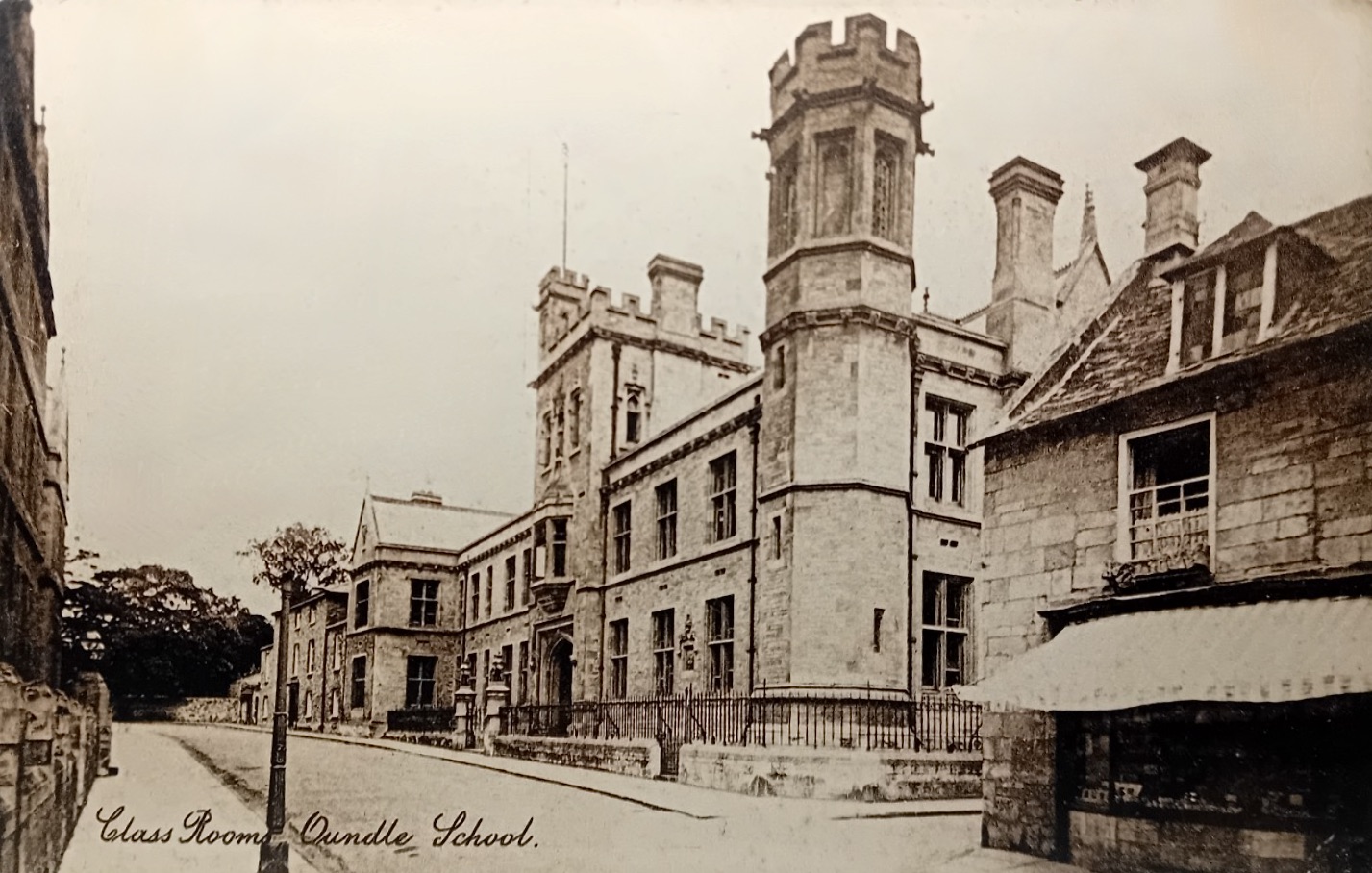
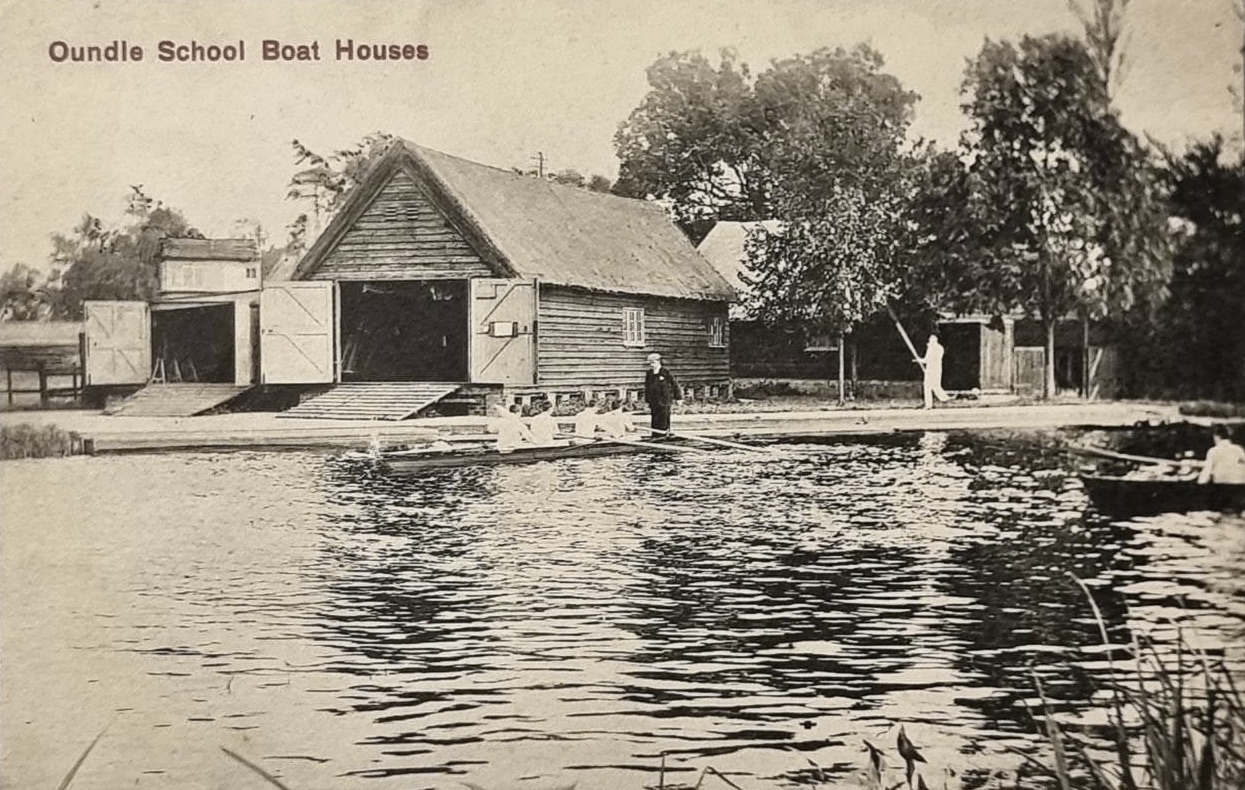
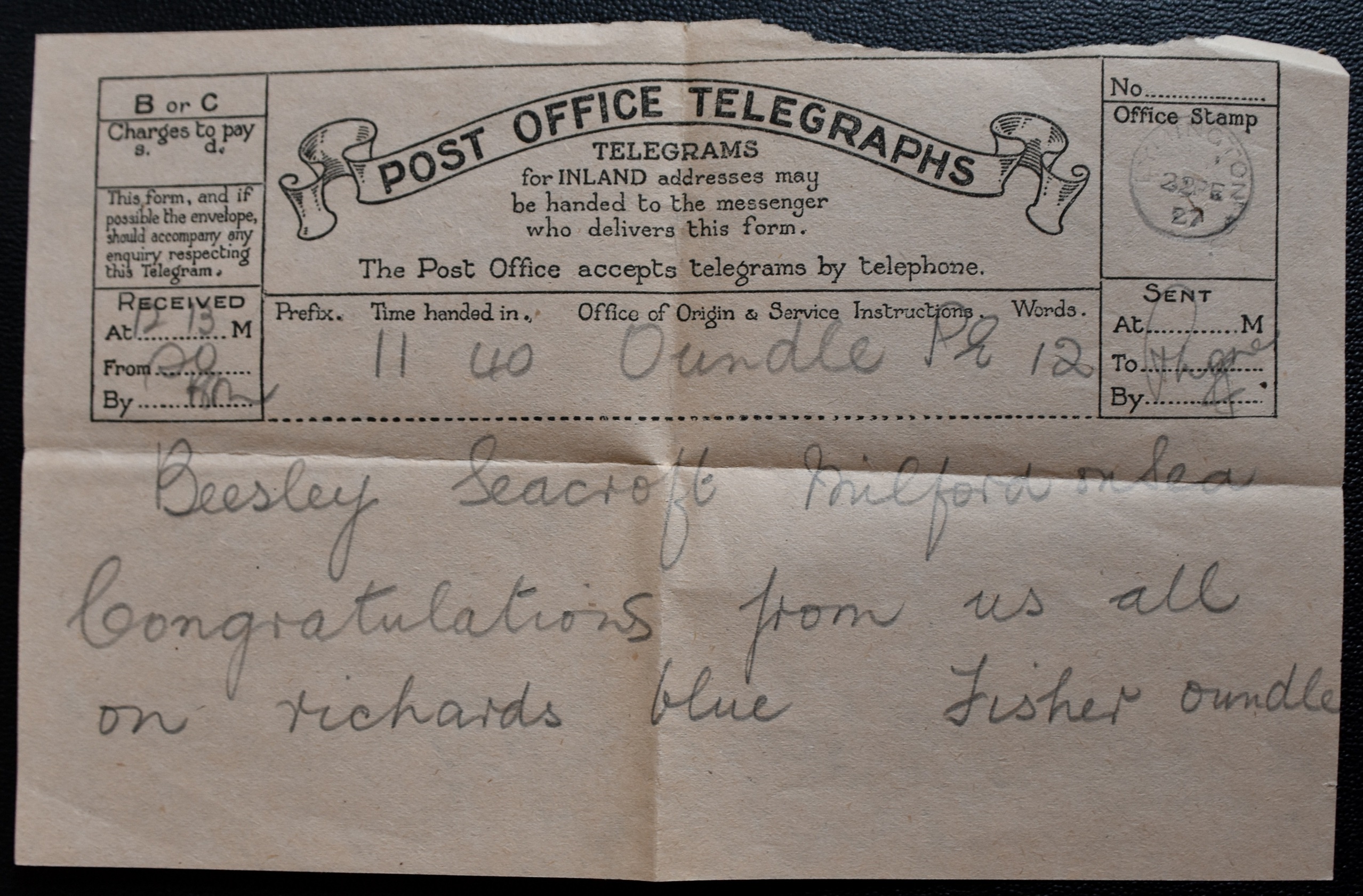
Between 1920 and 1925, Beesly Attended Oundle School in Nottinghamshire, central England, a popular place to send the sons of industrialists from the English Midlands. Here he played rugby and stroked the school’s first four. The boat club may not have had eights at the time and Oundle was not one of the great rowing schools. In 1923, TDA Collet was the first alumnus to get an Oxbridge Rowing Blue, Beesly was probably the second.
Denis Eadie (1917-2015) rowed at Oundle ten years after Beesly. He also went onto Trinity College and stroked the Cambridge crew in 1938. He told Leander News in 2013: (Oundle) went up to York to row against the school there. That was the only outside competition, otherwise it was all internal.
In 2014, HTBS was given access to the unpublished memoirs of Mike Ashby (1914-2004) who attended Oundle School seven years after Beesly and he was in the Oxford Crew in 1936 and 1937. It is safe to assume that Beesly’s experience of school was much the same as Ashby’s was a few years later:
Oundle was a very tough place. Rugger was everything… Life was hard and rather spartan. We had to have an ice cold plunge every morning, in and out like lightning into the big overflowing tin baths. It was certainly very healthy and we became impervious to cold…….. Unless carried too far, the tough lives of hardship and intense competition did most of us good, and by the time I left I felt as hard as steel in both body and mind, and that I could face Dame Fortune, whatever she may bring.
In October 1925, Beesly went up to Trinity College, Cambridge. He rowed in the January 1926 Trial Eights but was not selected for the 1926 Boat Race. Probably Oundle’s small boat club that only rowed intra school events had not fully prepared him for the standard of rowing that Cambridge required.
However, Beesly must have been a quick learner. While the scrapbook has no record of his more successful Trial Eights for the 1927 Boat Race, he must have done well as the first entry on Page 1, a cutting from the Morning Post of 26 January 1927, shows the CUBC crew for 1927 with Beesly at “4”.
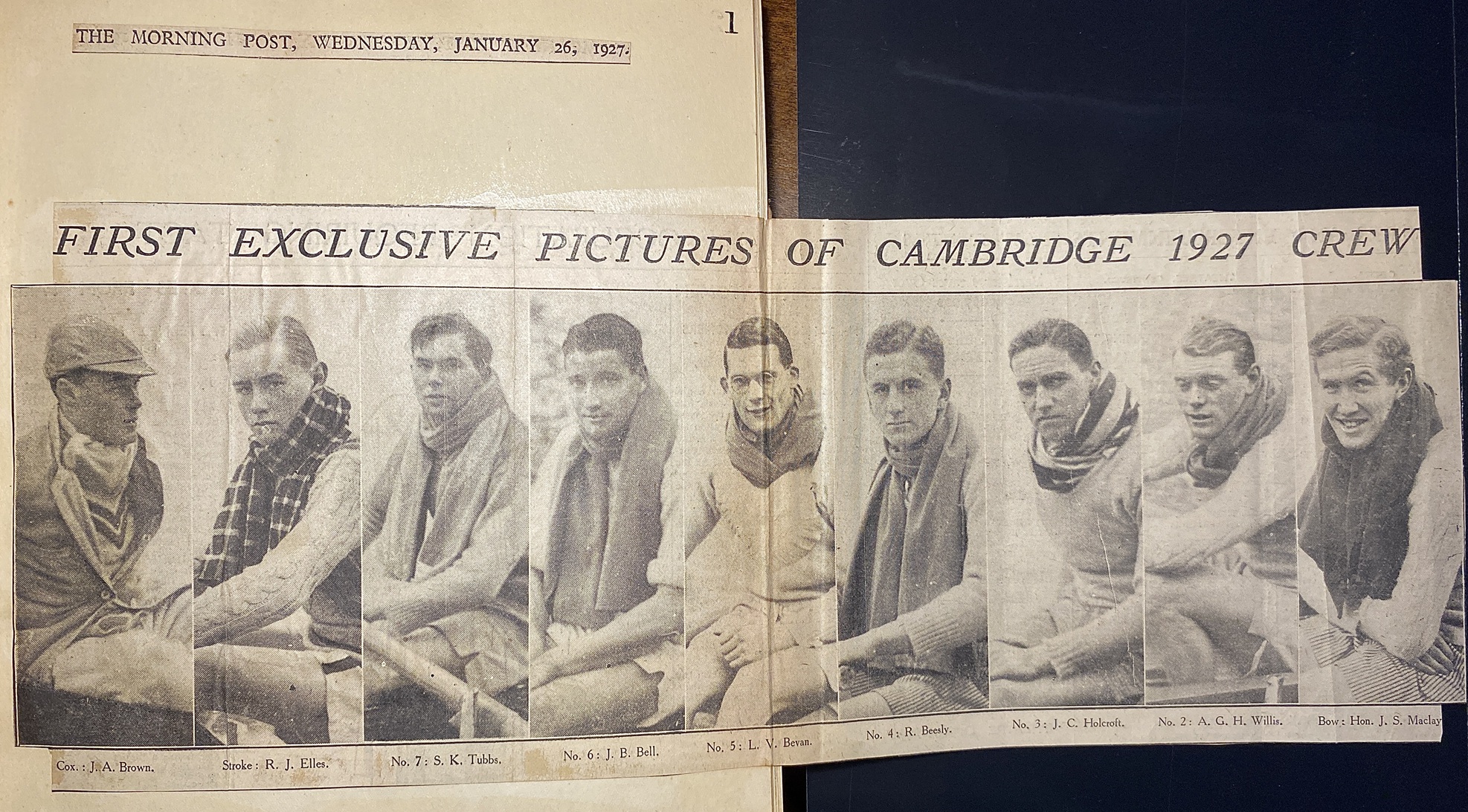
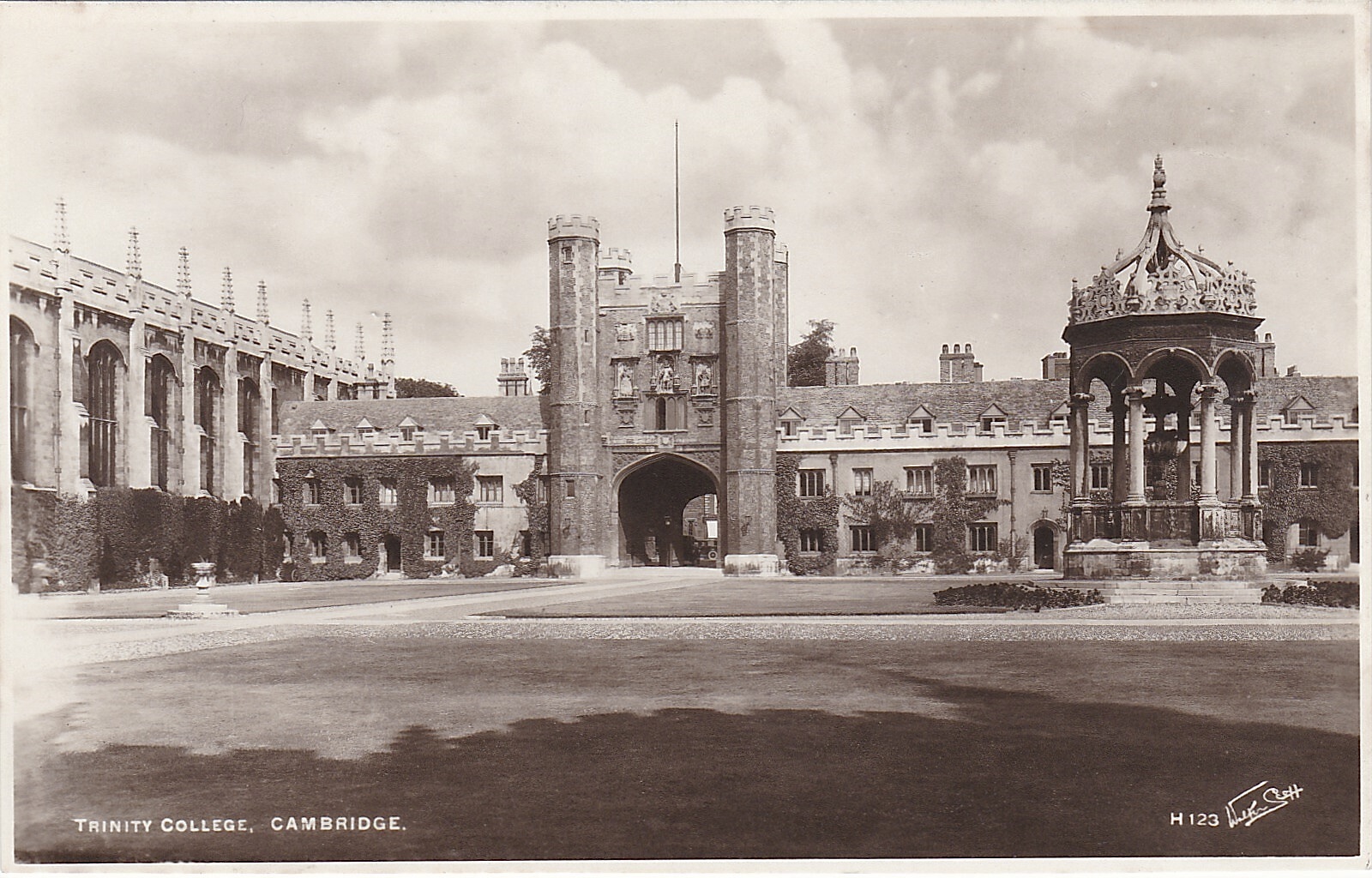
By chance, Beesly’s time rowing with Cambridge University Boat Club (CUBC) and at Trinity College was during a period of great success for both. CUBC was in the midst of its record-breaking run of thirteen wins in the Boat Race, a sequence that ran from 1924 to 1936. In the 1920s and 1930s, Trinity College’s two boat clubs achieved a combined total of nineteen Henley wins, including six in Beesly’s time.
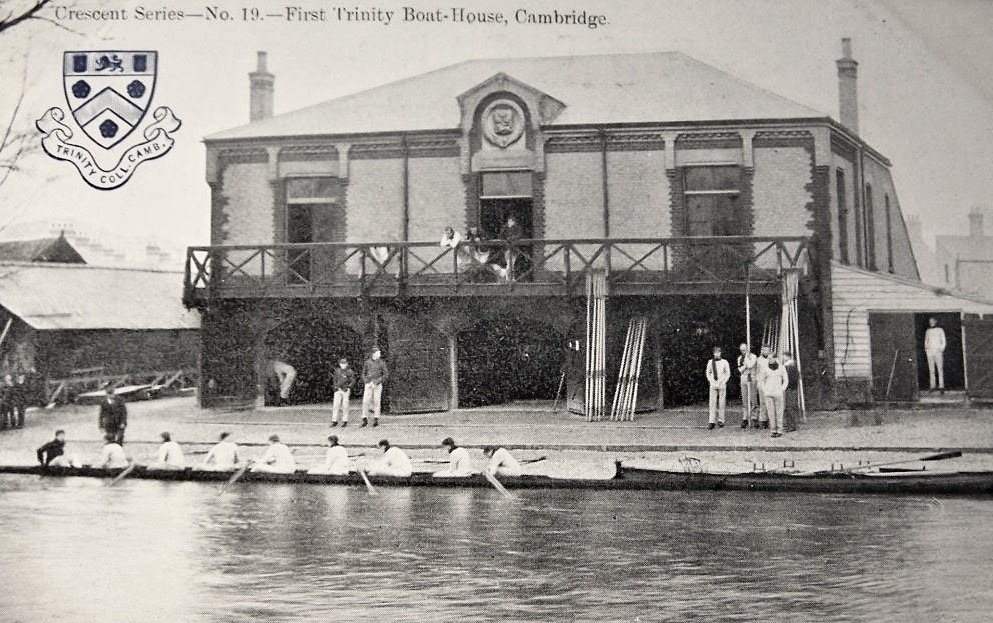
Trinity College had two boat clubs before they amalgamated in 1946 to form today’s First and Third BC. Third Trinity had been for those who had attended Westminster or Eton schools whilst First Trinity was for the rest – including Beesly. There had briefly been a Second Trinity, “The Hallelujahs”, a boat club for theology students and clergymen, but it had folded by 1876.
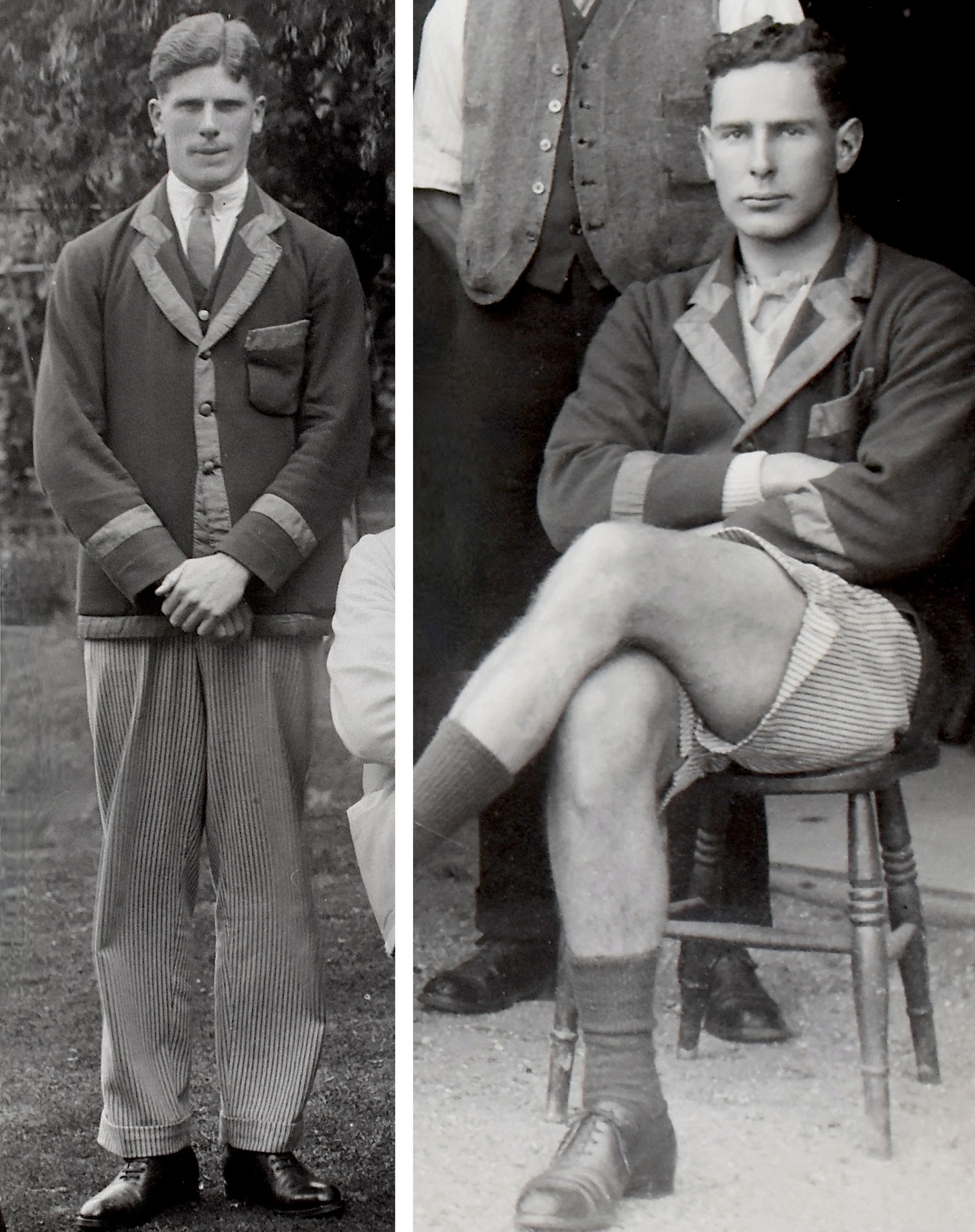
In 1927, Beesly won the Boat Race and Henley’s Ladies Plate. Also, he was a finalist in Henley’s Visitors’ Challenge Cup.
The Boat Race of 2 April 1927
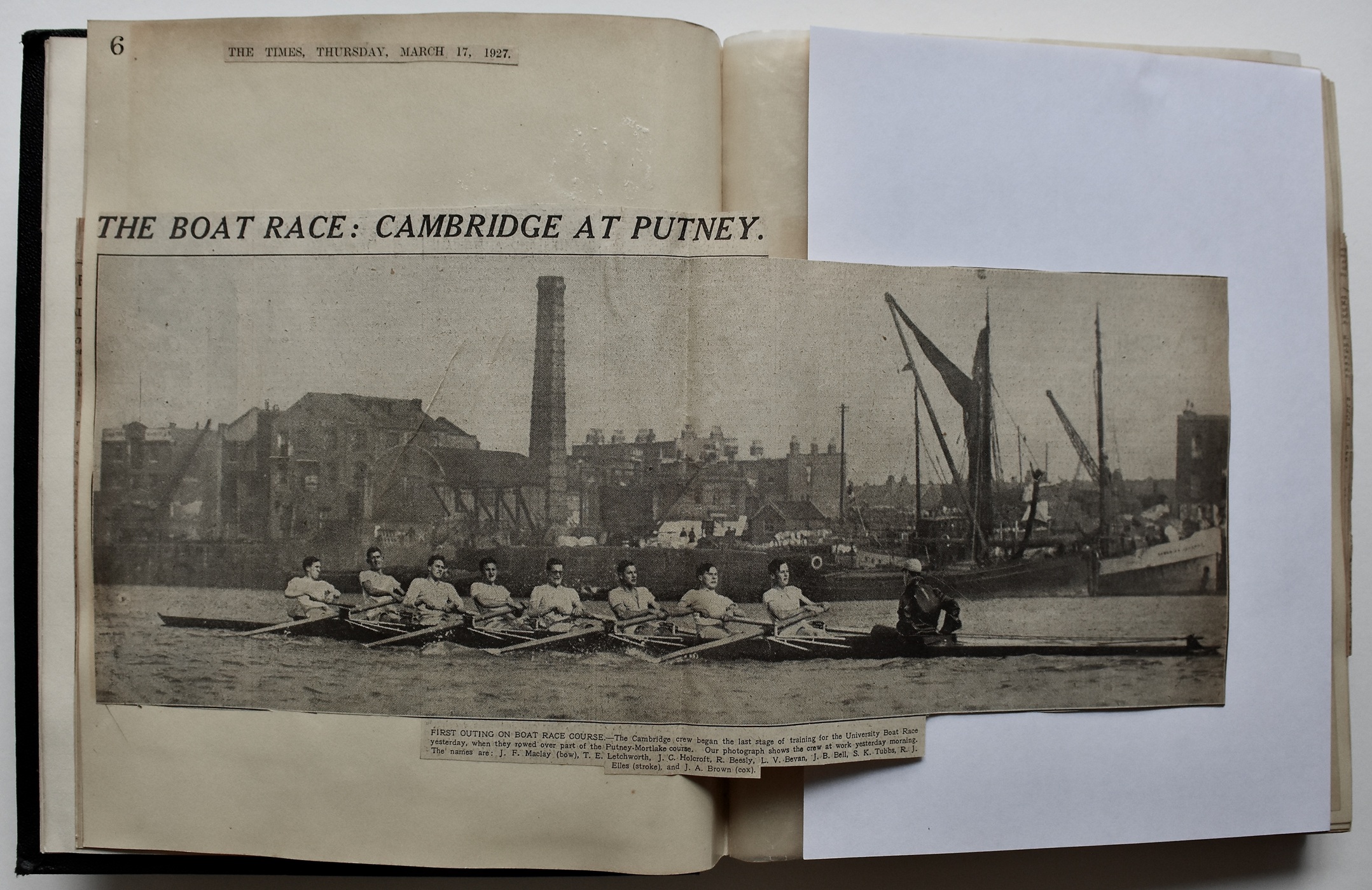
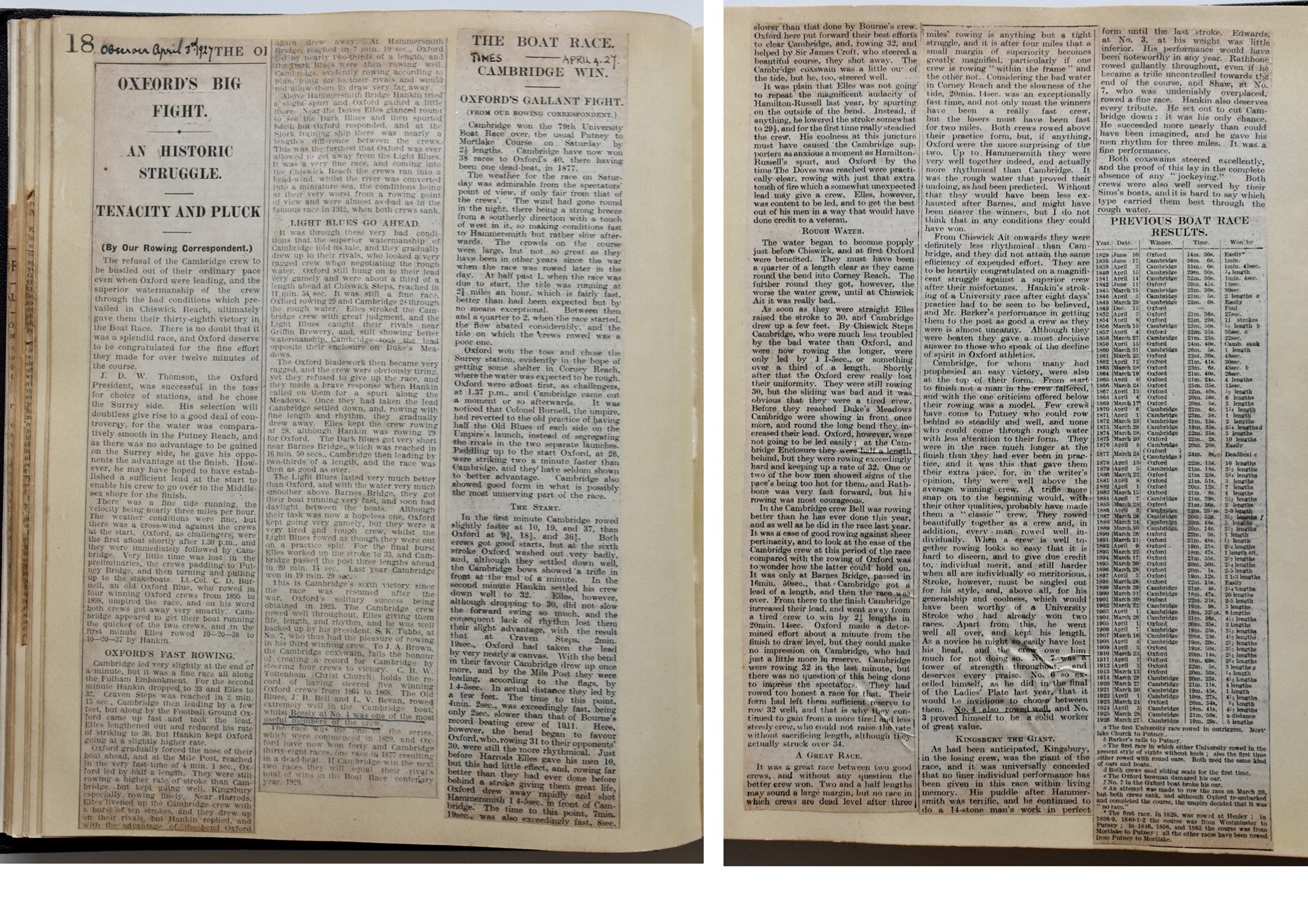
Pages 2 – 12 cover the two-month run up to the 79th Boat Race. The Times of 7 February 1927 noted:
…the individual performances of the three old Blues, Tubbs, Bell and Bevan, together with Beesly, were really very good, their leg drive and excellent blade work being conspicuous.
Two days later, The Times’ rowing correspondent wrote 20 column inches on the Cambridge Crew. He was critical of most but said of number “4”:
Beesly has a nice, easy style and considerable length, and in the writer’s opinion is rowing the best of the newcomers.
The Observer’s rowing correspondent, George Wansborough (CUBC 1925), wrote two Boat Race previews:
20 March. Beesly at 4 is rowing very well indeed and with a remarkable correctness of form – I have never seen an oarsman who so exactly illustrated tho old coach’s instructions to draw back the shoulders at the finish as if to crack a walnut between the shoulder blades. When he is more experienced and has filled out his proper weight – for he is a present “coltish” in build and looks as though he will row at 13 1/2 stone next year – he may become one of the great heavyweights.
27 March. The four stern oars are all of the right build to make great length possible… Beesly at four is not quite so fortunate: his build is comparatively stocky and his arms are not very long, so he clearly finds it harder to achieve such a length of stroke.
Boat Race press coverage was not all technical stuff. The downmarket tabloid, the Daily Sketch of 15 March 1927 had a piece titled, Lighter Side of the Blues, Intimate Stories of the Cambridge Crew. It was by Robert Egerton Swartwout, credited as the editor of The Granta but better known to HTBS Types as the CUBC cox in 1930 and the author of such works as Rhymes of the River (1927) and The Boat Race Murder (1933). He wrote of Beesly:
…a stern, craggy-faced man, with a mind soaring above all the petty things of this world. Yet to those of us who know him, he is an exceedingly amiable person, and a lively raconteur. I am informed on good authority that he has at times been seen attending a lecture.
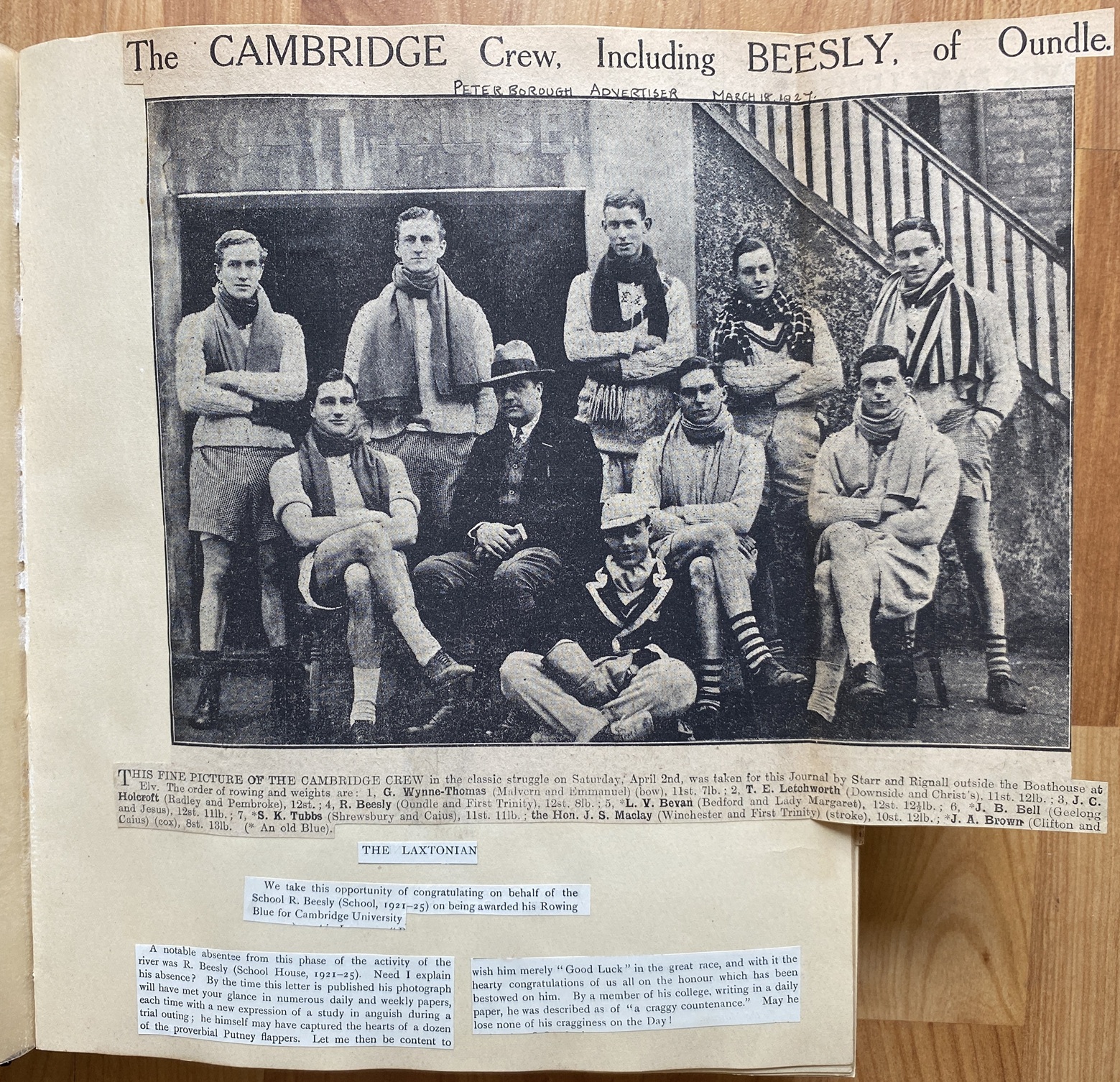
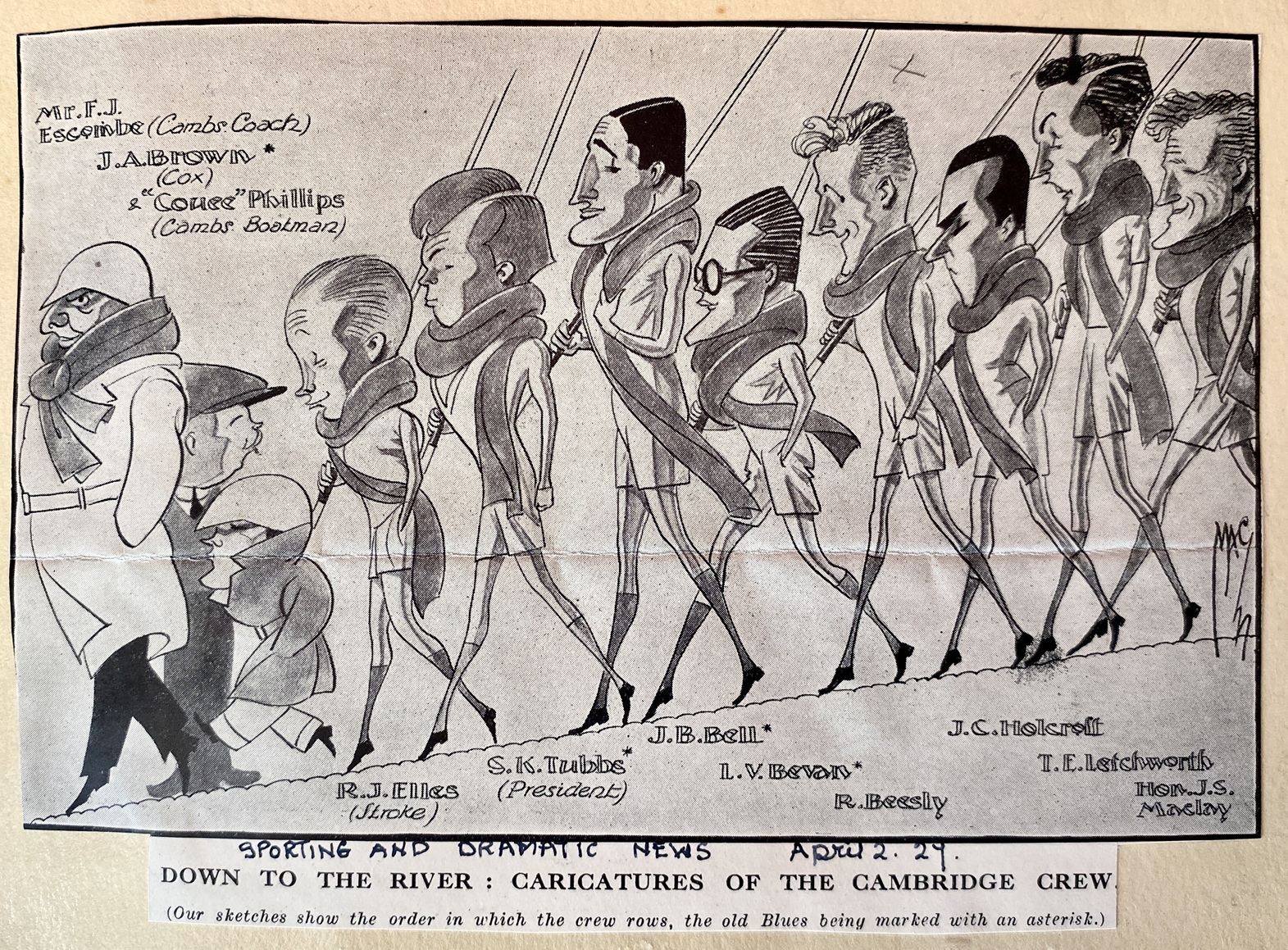
On the morning of the race, 2 April, The Times’ preview held that:
Beesly, a newcomer at No. 4, has a fine natural swing and is one of the most useful members of the crew.
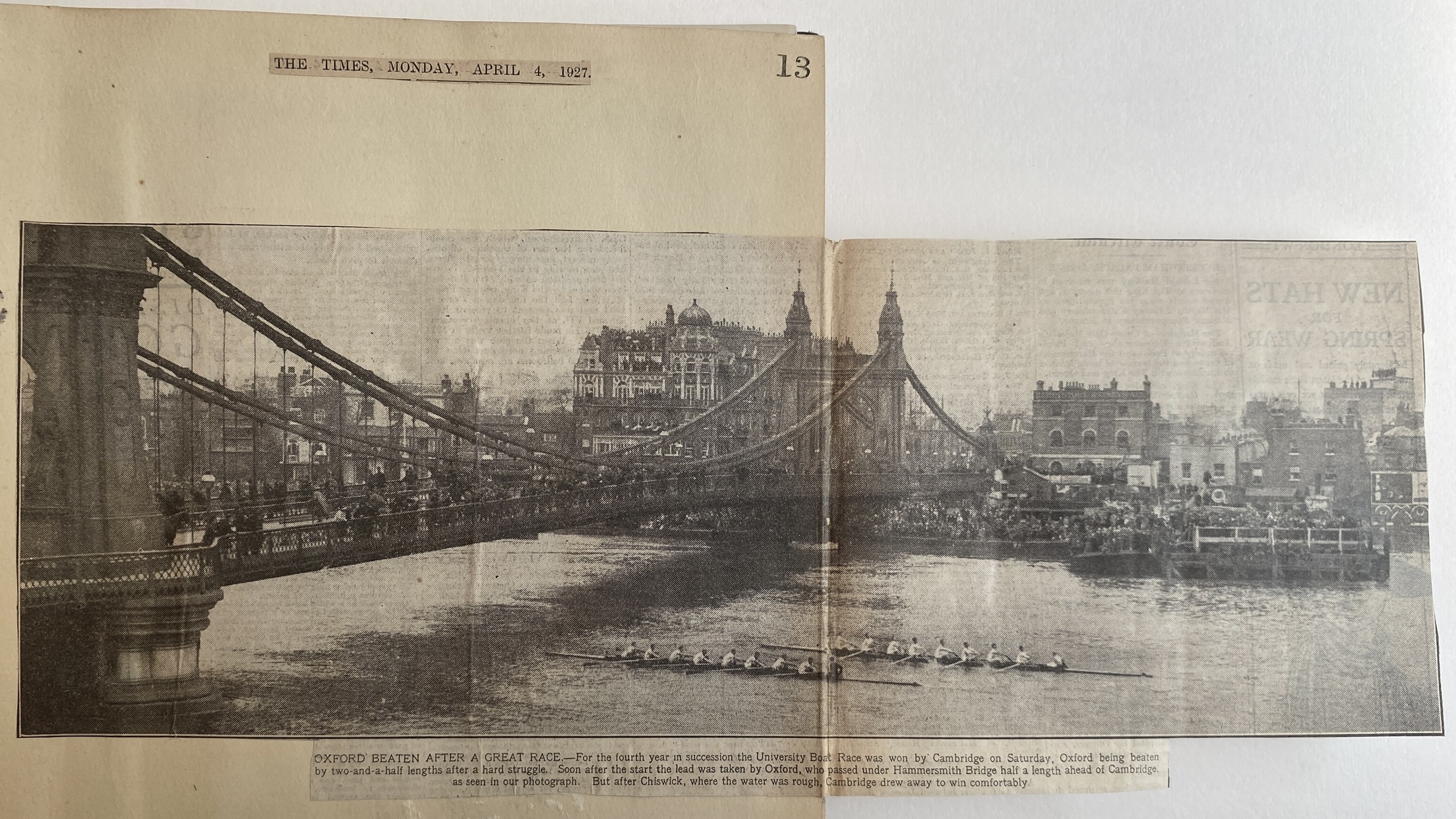
The caption for the above picture summarises the race:
For the fourth year in succession the University Boat Race was won by Cambridge… Oxford being beaten by two-and-a-half lengths after a hard struggle. Soon after the start the lead was taken by Oxford who passed under Hammersmith Bridge half a length ahead… But after Chiswick, where the water was rough, Cambridge drew away to win comfortably.
Henley 1927
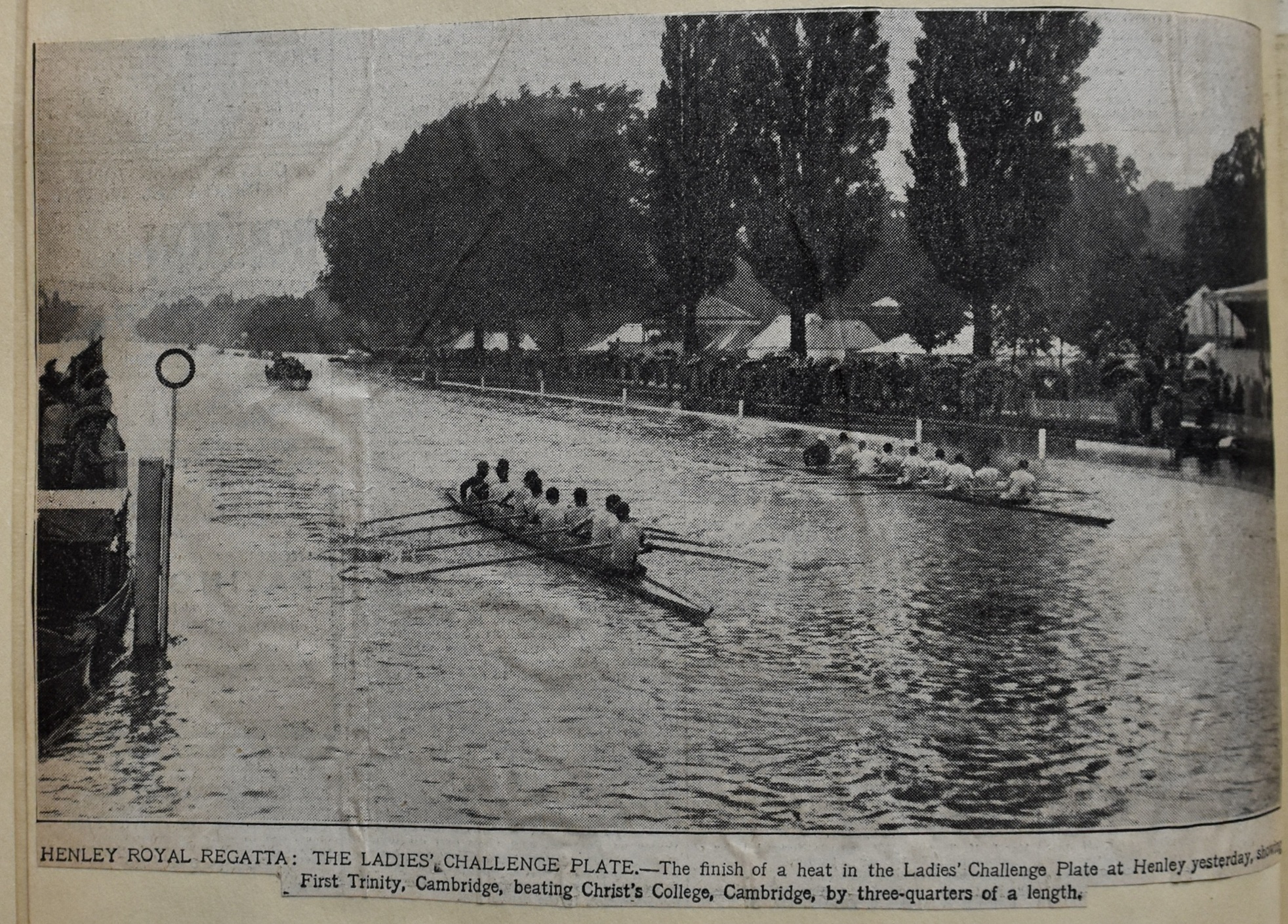
Beesly at No. 6 won the Ladies’ Plate (an eights event that was then for students and schoolboys from the UK and Trinity College, Dublin) when First Trinity beat Third Trinity by 1 3/4 lengths in the final. They had previously beaten Bedford Modern School by 3 lengths, Shrewsbury School by 2 lengths and Christs College, Cambridge, by 3/4 length.
The Field of 7 July 1927 wrote:
Beesly, the Cambridge Blue who rowed at six, undoubtedly made the crew and he was one of the soundest University oarsmen at the regatta.
Switching to stroke, Beesly was a finalist in the Visitors’ Challenge Cup (intermediate coxless fours). First Trinity beat Pembroke College, Cambridge, easily and then Christ Church, Oxford, by 2 1/2 lengths but lost to Christ’s College, Cambridge, by half-a-length in the final.
Part II covering 1928 follows tomorrow.
 Hear The Boat Sing
What a treasure trove the scrapbook proved to be. A delightful read.
And the explanation of why FIrst and Third Trinity got it name solves the puzzle I’ve wrestled with since 1971. Ed Woodhouse