
18 May 2026
By Göran R Buckhorn
In March, I wrote that the German journalist Wolfgang Goede and I had been in contact for months about a review of the anthology The Greatest Rowing Stories Ever Told for the rowing magazine Rudersport. After several emails back and forth, and Wolfgang having had the opportunity to dig deep into HTBS, he suggested that he should not only write a review of the book but also interview me about HTBS and my rowing book collection.
I must confess that I hesitated as I’m not keen to be in the spotlight. I’m more comfortable writing about others than being featured in someone else’s writing. However, at a weak moment, and Wolfgang being such a gentleman, I agreed to an interview.
The interview was published in this month’s issue of Rudersport. You can read/see the result, “Rudern ist Poesie in Motion”, below.
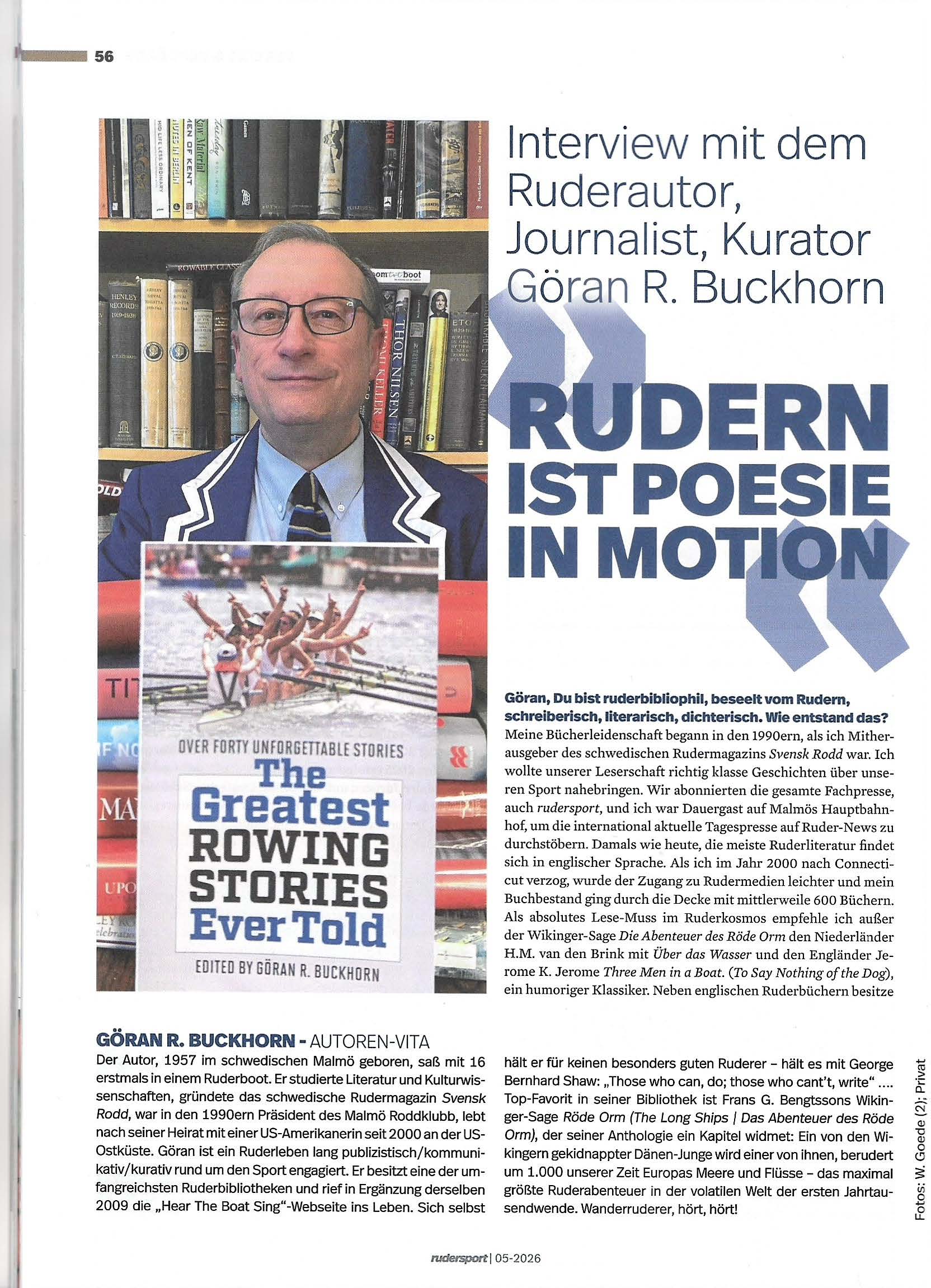
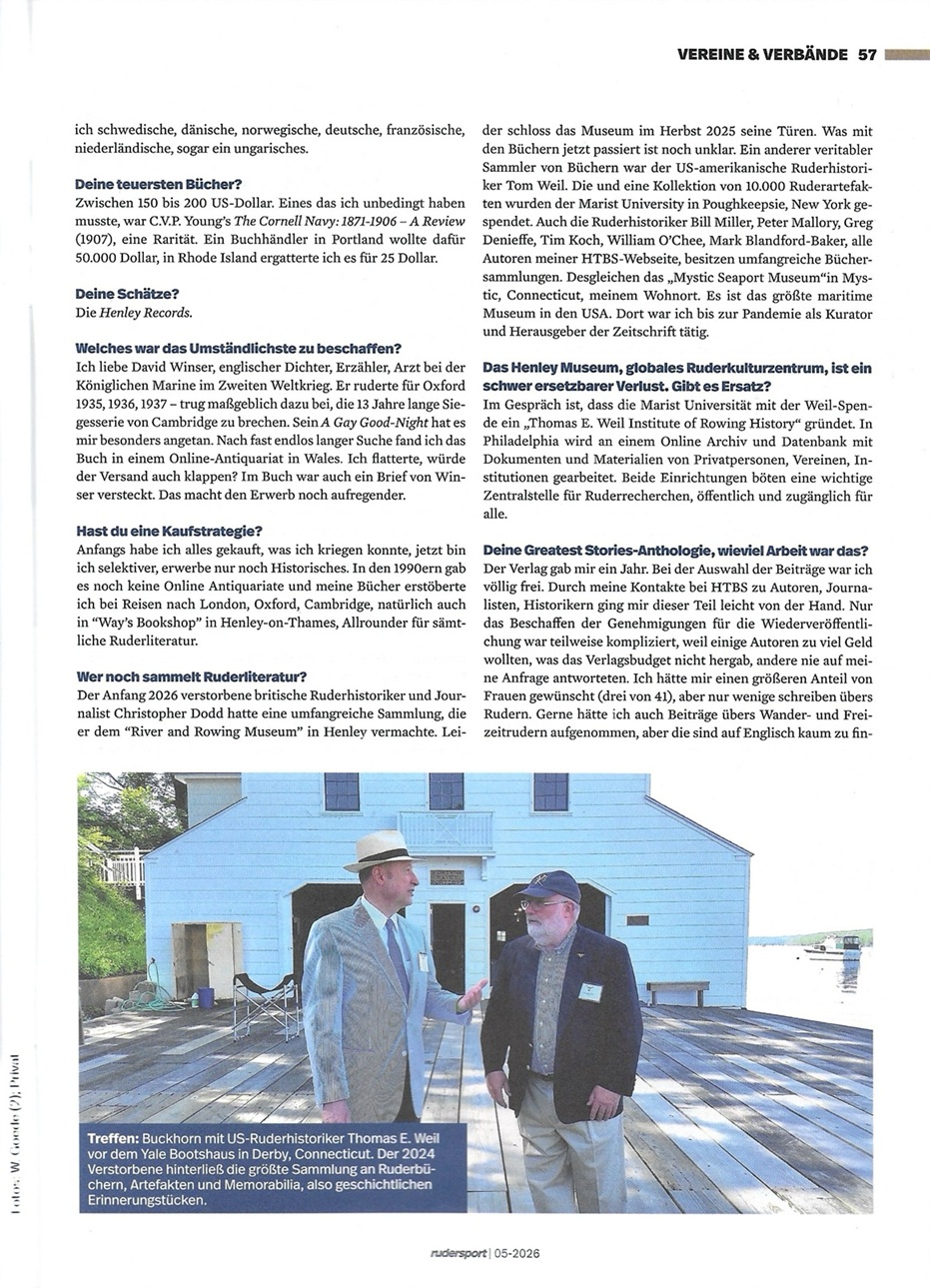
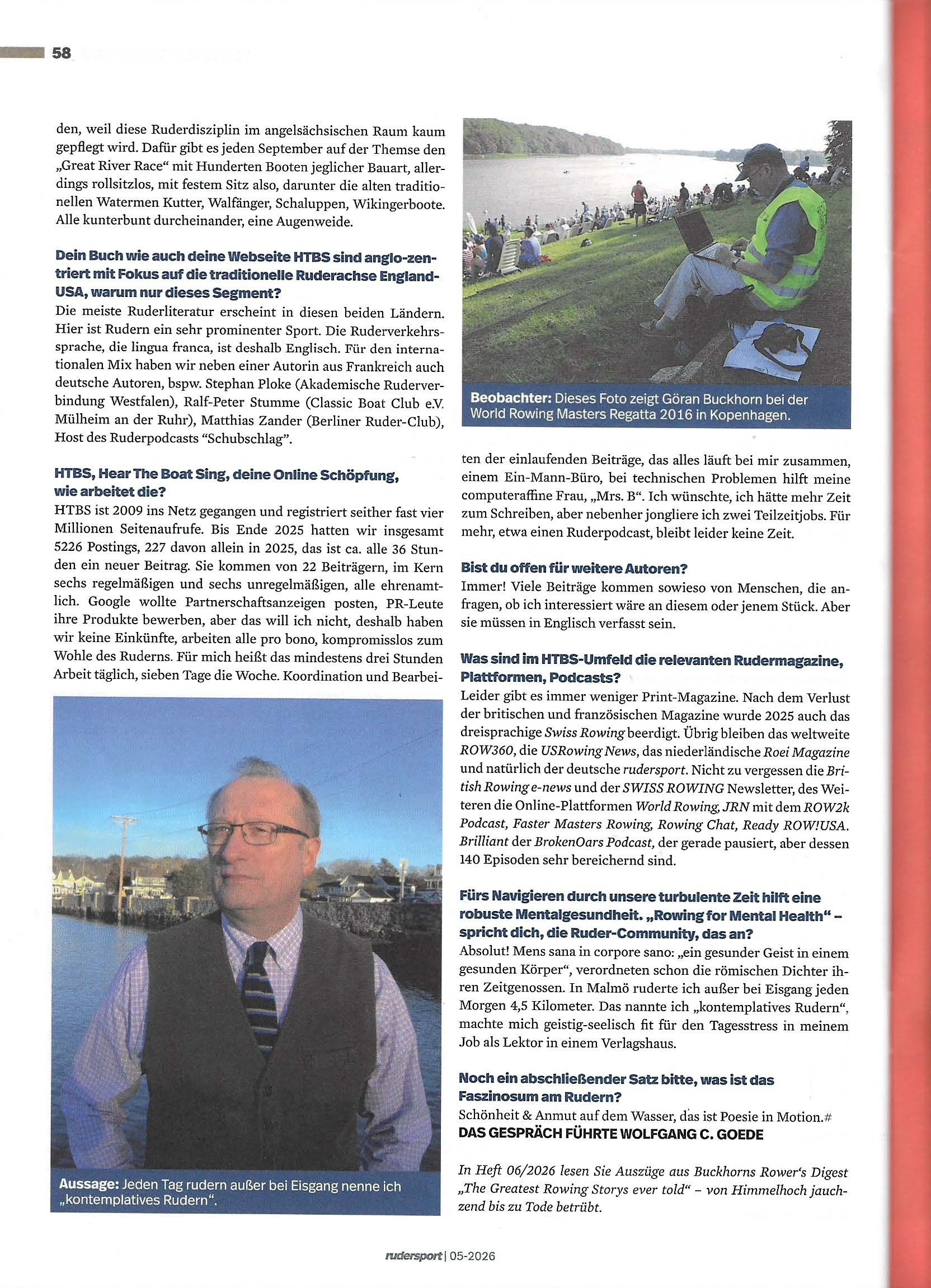
In our email exchange in English – while I studied German in school in Sweden, my knowledge of the language is now reduced to being able to order something at the Bierstube – Wolfgang and I discussed several rowing-related matters, so it’s these things, including some information he gathered from The Greatest Rowing Stories Ever Told and a “Q & A” email that forms the base for his interview.
As there was limited space in the magazine for the interview, my babbling answers needed some editing. I’m grateful that Wolfgang and the editor of Rudersport got it down to a readable size.
However, what follows here is the lengthy “Q & A”. I have added some images to this version of the interview and added some necessary comments at the end as some things have changed since the interview was drafted in the beginning of January.

Interview by Wolfgang Goede
Interviewee Göran R Buckhorn
WG: Your rowing library, please tell me more about it.
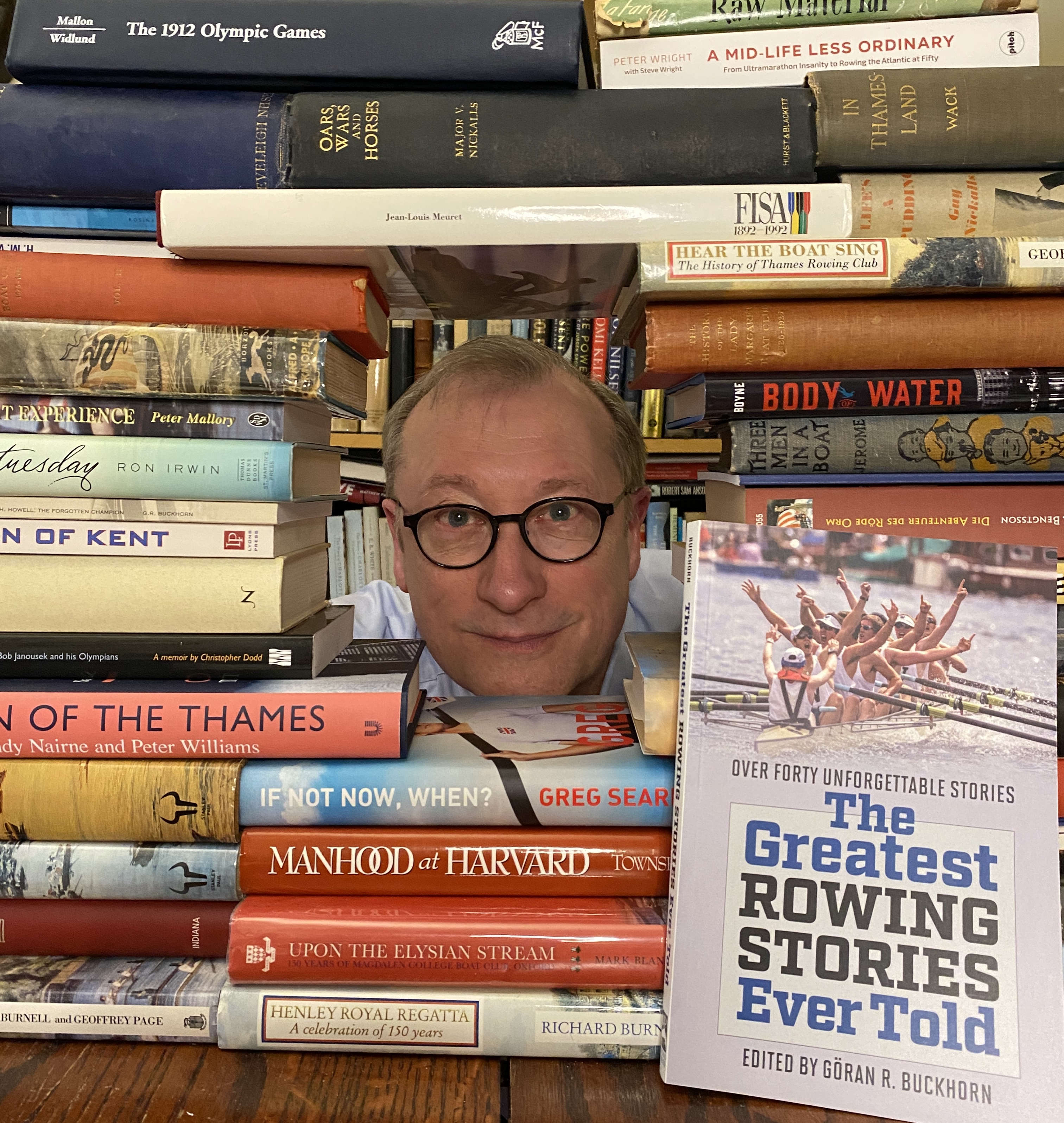
GB: I began collecting rowing books when I was the co-editor of the Swedish rowing magazine Svensk Rodd in the beginning of the 1990s. I wanted to re-tell some good stories to the readers of the magazine and not only have the magazine to feature reports from clubs and regattas. There weren’t that many books on rowing in Swedish – unfortunately, rowing in Sweden is a minor sport – so I branched out trying to find books in English. Soon it became clear that the title of the magazine, “Svenska Rodd” (“Swedish Rowing”), was a little deceiving as many of the articles were dealing with the sport outside of Sweden. My friend Per Ekström, who was the other editor of Svensk Rodd, and I subscribed to English and German rowing magazines, and I bought English newspapers when I knew there were race reports from the Oxford – Cambridge Boat Race, Henley Royal Regatta, the Olympic Games, etc.
When I moved to Connecticut in 2000, I continued to look for rowing books. When the internet made it easier to find books, my collection started to really take off. Now I’m approaching slightly more than 600 books, added to these are pamphlets, programmes and magazines. But I’m far from having the largest private collection of rowing books. I believe other rowing historians have more than I do.
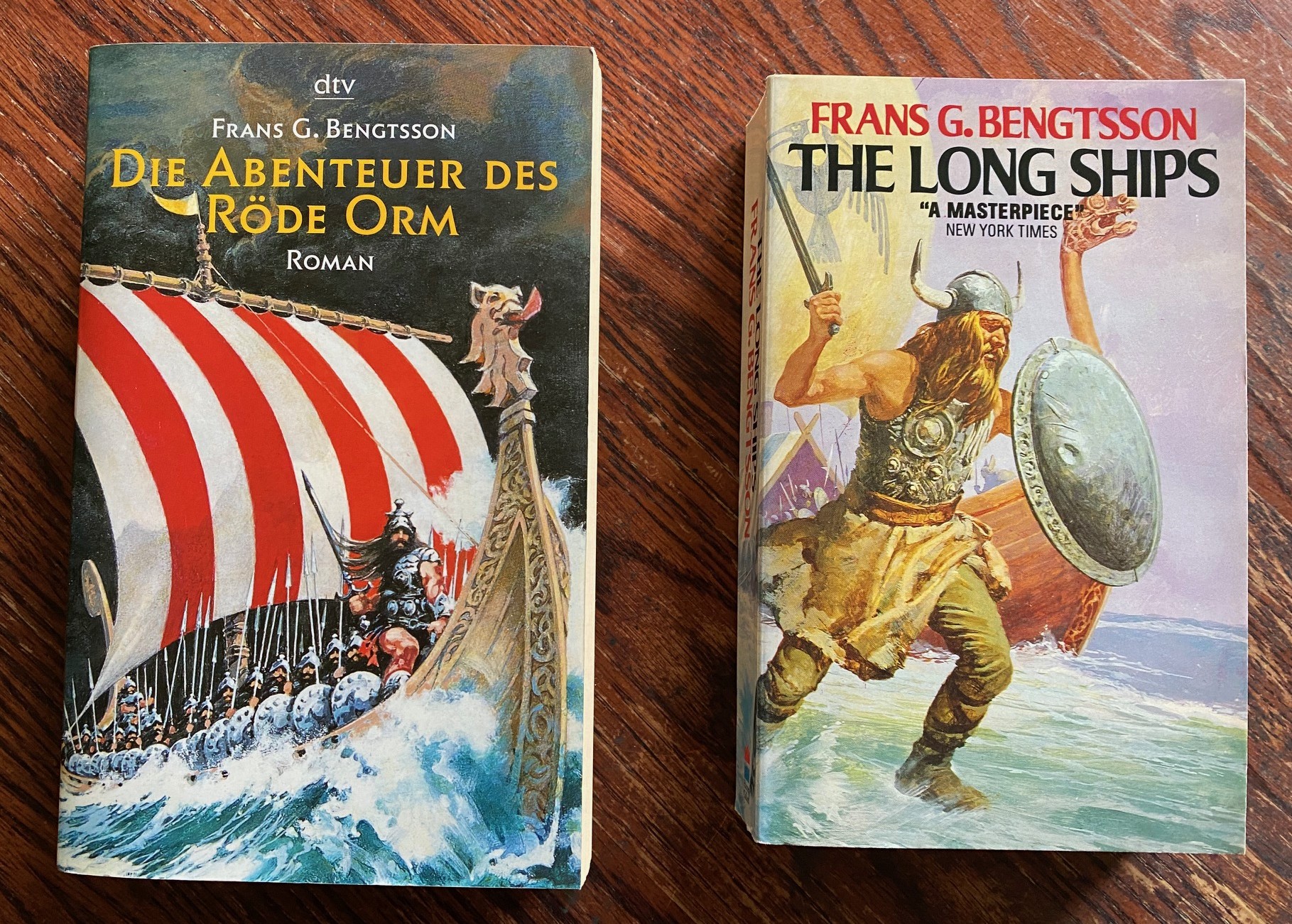
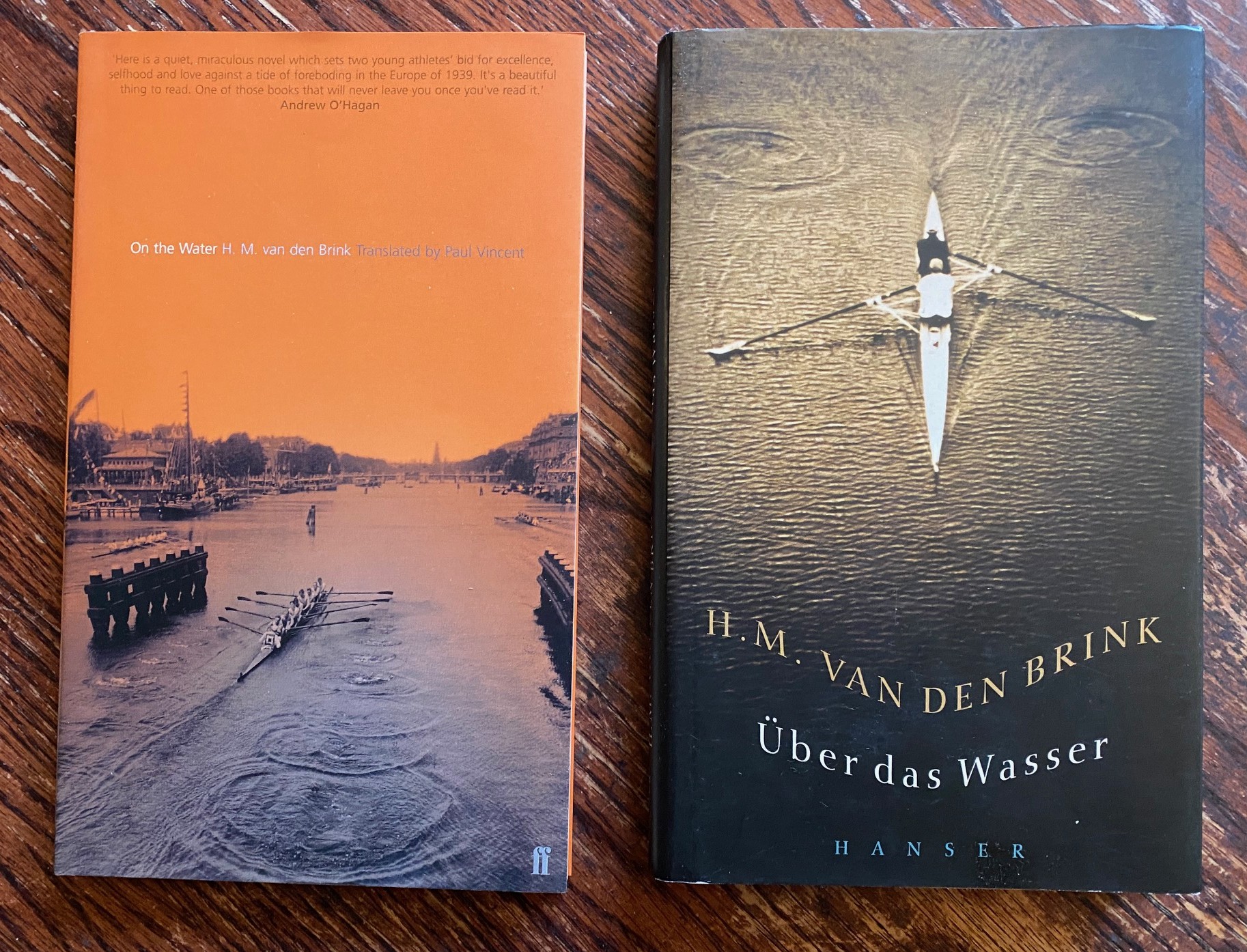
Among my rowing books are also fictional stories with rowing. My all-time favourite Swedish novel is the Viking saga, Röde Orm by Frans G. Bengtsson (The Long Ships in English and Die Abenteurer Des Röde Orm in German). It’s a very funny and entertaining book and it has some rowing in it. I have it in several languages and editions. Another fictional great story is a novella by the Dutch author H. M. van den Brink, Over Het Water (On the Water in English and Über das Wasser in German). Also, this story I have in different languages. I also have a nice collection of youth novels from the 19th- and beginning of the 20th centuries by authors like R. H. Barbour, A. T. Dudley, T. Hughes (his Tom Brown books), R. D. Paine and, of course, J. K. Jerome’s Three Men in a Boat.
WG: Do you only have English books or also books in Swedish or any other languages?
GB: While most of my rowing books are in English, there are also a few books in Swedish, Danish, Norwegian, German, French, Dutch – I even have one in Hungarian; no, I don’t read Hungarian, but I came across the book from 1943 at an antiquarian bookseller in Sweden. I just had to buy it.
WG: What are your treasures?
GB: A tricky question. I regard several of the books and pamphlets as “treasures”, but for different reasons. Some books that I value are the “Henley Records”, which are indispensable when it comes to research on rowers and races at Henley Royal Regatta.
WG: Which are the most expensive?
GB: I really don’t have that many expensive books. When I moved to Connecticut in 2000 and our children were young, I didn’t have much money to spend on books, so the most expensive books range from $150-$200. I have also been lucky to get some books cheap. Let me give you an example. In 2009, I was looking for C.V.P. Young’s The Cornell Navy: 1871-1906 – A Review (1907), a rare book. I found a copy on the website abebooks.com at a bookseller in Portland, Oregon. His asking price was $50,000! A ridiculous price. A couple of weeks later, I found a copy in secondhand book shop in Rhode Island. I paid $25 for it. The book was in a poorer condition than the one in Portland, but I was only interested in the information in the book; I was not looking for a pristine copy. I have also been given some rare books by rowing historians Thomas E. Weil and Bill Miller, who had cleaned out some duplicates they had in their collections.
WG: Which was the most difficult to obtain?
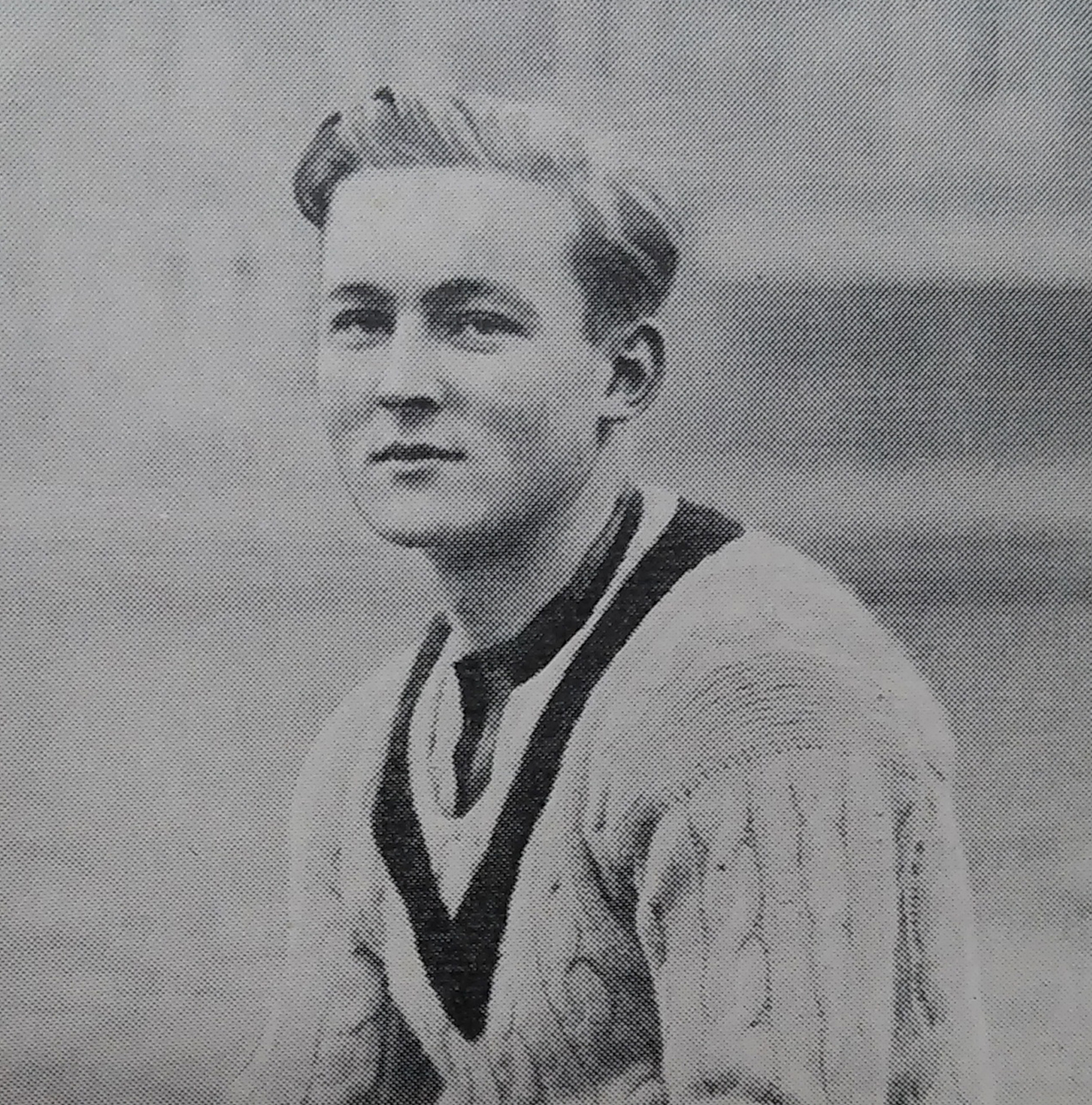
GB: I have a special interest in David Winser, who was an oarsman, scholar, award-winning poet, novelist, writer and doctor in the 48 Royal Marine Commandos in the Second World War. Winser rowed for Oxford in three Boat Races, in 1935, 1936 and 1937 (Oxford won the 1937 race, managing to break Cambridge’s 13-win streak). Nowadays, he is mostly known for his short story “The Boat Race Murder” (1940), which I included in the rowing anthology The Greatest Rowing Stories Ever Told. I have been collecting the few novels that he wrote, but his first novel, A Gay Good-Night, which was published in 1937, has eluded me for more than ten years. I managed to borrow the book from Yale University Library some years ago and saw that one of the main characters in the book was an Oxford oarsman. Two weeks before Christmas in 2025, I finally found a copy of the book online at an antiquarian book shop in Wales. I didn’t order the book then as I was afraid it would get lost among the Christmas parcels, but I ordered it just after New Year’s. I’m now eagerly waiting for it to arrive. In the book is a letter written by Winser, which makes the purchase even more exciting. (1)
WG: Do you follow a certain strategy to complete it?
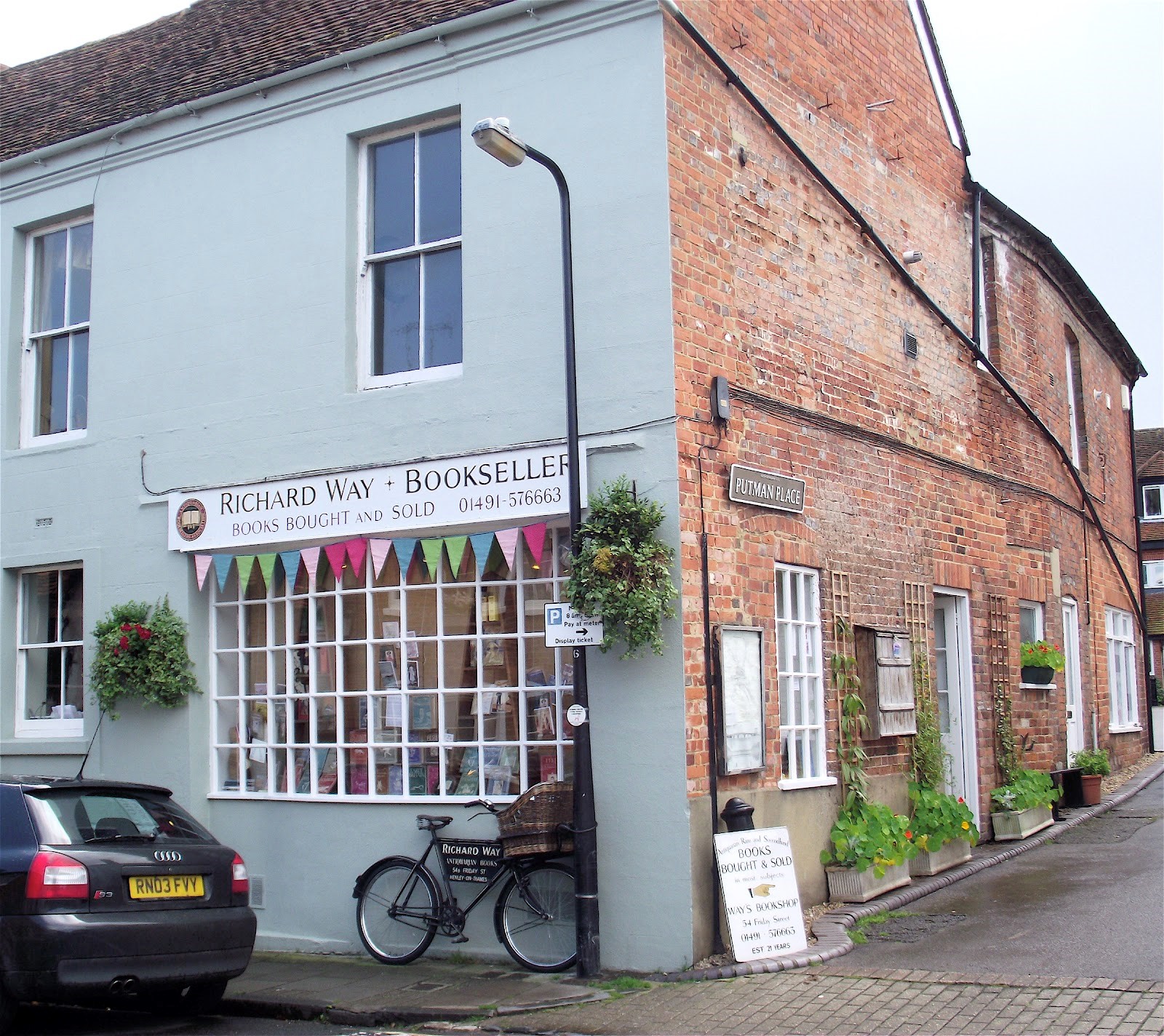
GB: Knowing that my library will never be “complete”, I’m, nowadays, a little more selective obtaining books for my library. When I started collecting books, I bought almost everything I came across in the book shops. One thing to remember is at that time there were no internet book shops and antiquarian booksellers selling their books online. I had to visit the shops. I found some nice books on my trips to London, Oxford, Cambridge and, of course, Henley-on-Thames at Richard Way Bookseller, who specialise in new and old rowing books. I’m still purchasing books on rowing history, but I have stopped buying books on modern rowing techniques or how-to-row books. And I don’t buy “scientific” books on rowing.
WG: Would you know of any other libraries of this type?
GB: I know that famous rowing historian, journalist and writer Christopher “Chris” Dodd had a large collection of books, which he donated to the River and Rowing Museum in Henley. Regrettably, the museum closed its doors to the public in September last year. I don’t know if Chris will get his books back or what will happen to them.(2) Rowing historian Tom Weil, who sadly died in September 2024, had an enormous collection of rowing books, pamphlets, magazines, regatta programmes, etc. His collection of more than 10,000 artifacts has been donated to Marist University in Poughkeepsie, New York. I believe that rowing historians like Bill Miller, Peter Mallory, Greg Denieffe, Tim Koch, William O’Chee, Mark Blandford-Baker – all who write for HTBS – have nice collections of books. Mystic Seaport Museum in Mystic, Connecticut, has a fine collection of rowing books in its research library.
WG: Your book as well as website mainly feature rowing content from the US and UK. Why? Because they have been the hot spots? Because the English literature about rowing is the most accessible and aggregates the most volume?
GB: Most of the rowing books coming out every year are published in the UK and the USA where rowing is prominent sport. As I’m now living in Connecticut, it felt natural that HTBS should be written in English. However, even if everything on the website is in English, German writers have written about German rowing clubs and history, for example Stephan Ploke (Akademischer Ruderverbindung Westfalen), Ralf-Peter Stumme (Classic Boat Club e.V. Mülheim an der Ruhr) and Matthias Zander (Berliner Ruder-Club), who is one of the hosts for the German rowing podcast Schubschlag.
In an incredibly popular three-part article in January 2023, the Englishman Julian Eyres took a closer look at the German eight competing at the Berlin Games in 1936. Eyres showed that the eight and their coach were a pure club crew from Berlin’s Wiking Rowing Club, who stood outside the Nazi selection system. Eyres’s article is an interesting counterpart to Daniel Brown’s The Boys in the Boat (Das Wunder von Berlin in German).
Hélène Rémond writes articles from France, maybe not specifically about racing but about pleasure boating in art work. The Irishman Greg Denieffe, who lives in England, writes about Irish rowing among other things.
When it came to the rowing anthology The Greatest Rowing Stories Ever Told, which I was the editor of, there was never a discussion between the publisher, Lyons Press, and me if the anthology should include material in any other languages than English. This is understandable as the anthology is aimed for English speaking readers.
WG: What about Swedish highlights, for example? What about Germany (as the East Germans were such a powerful rowing nation, as you indicate in your book)? (3) What about the rest of the world?
GB: I have written articles on HTBS about Swedish rowing, about my club Malmö Roddklubb for example, but also about the Olympic rowing in Stockholm in 1912. One piece that I’m pleased with is when I interviewed the Swedish para-rower Ebba Einarsson in 2018 when she was on her way to the World Championships in Plovdid, Bulgaria.
While I wish I had better contacts around the world to ask for articles, most of the articles I post on HTBS come from people contacting me asking if I might be interested in pieces that they intend to write or have written. I also find it hard to approach rowing writers as I can’t pay an honorarium for their work. Luckily, I have a group of writers who regularly send material to HTBS.
WG: Do you detect anywhere “sleeping tigers”, awakening rowing nations?
GB: I’m not well suited to predict future successful rowing nations, but let me put it this way, it makes me happy when I see “small” rowing nations winning medals at international regattas, take countries like South Korea, Mexico, Peru, Uruguay, Indonesia and Greece which took medals at last year’s World Championships.
WG: Would you have any suggestions on which is the most important rowing literature and publications related to it.
GB: Another tricky question. I hope that those who purchase rowing literature buy the books with subjects they are interested in. Of course, books which should be in every rower’s library are the bestseller The Boys in the Boat and On the Water – and my favourite Swedish novel about Röde Orm.
WG: Which are the relevant magazines, online platforms (besides HTBS), podcasts, and others?
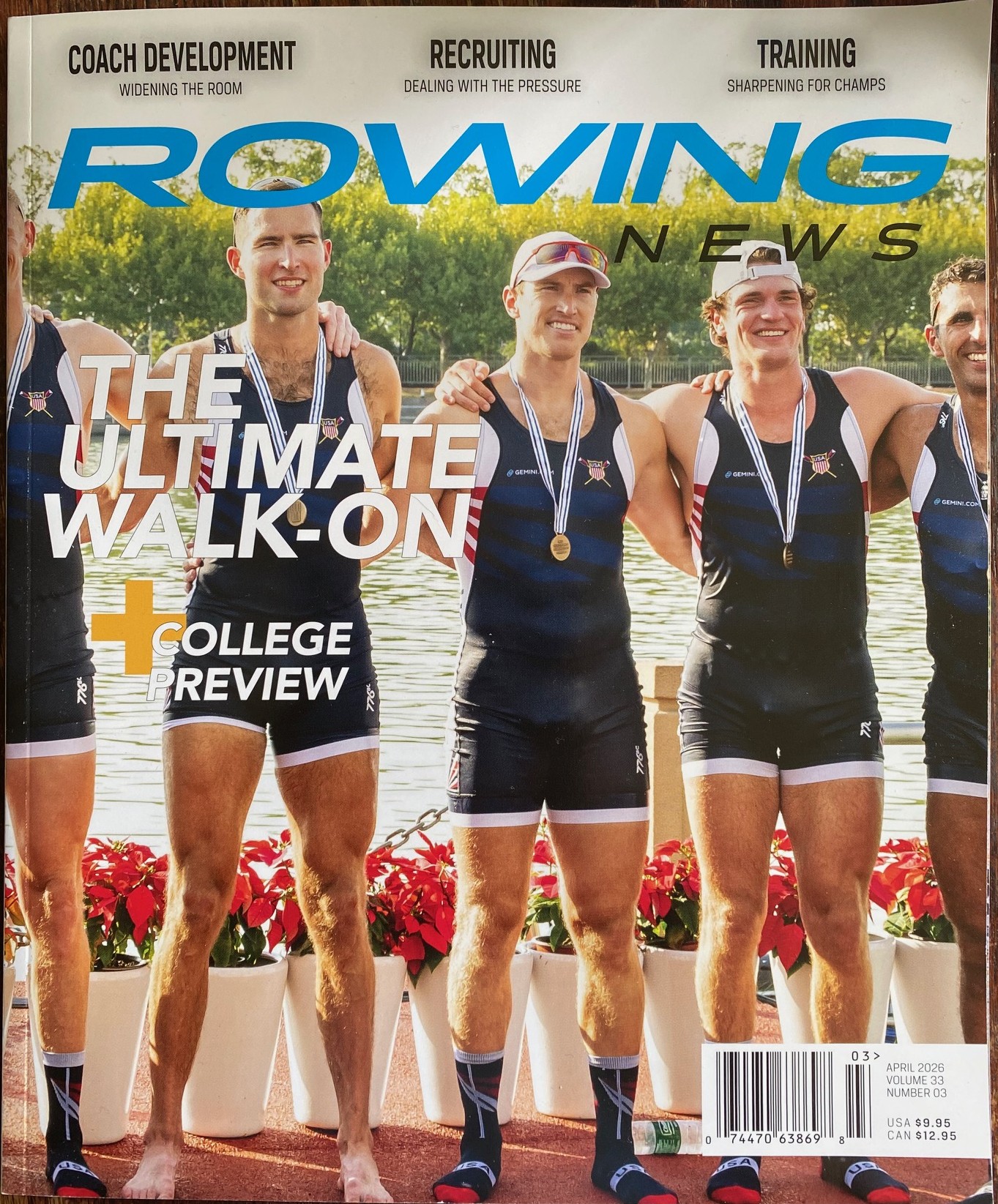
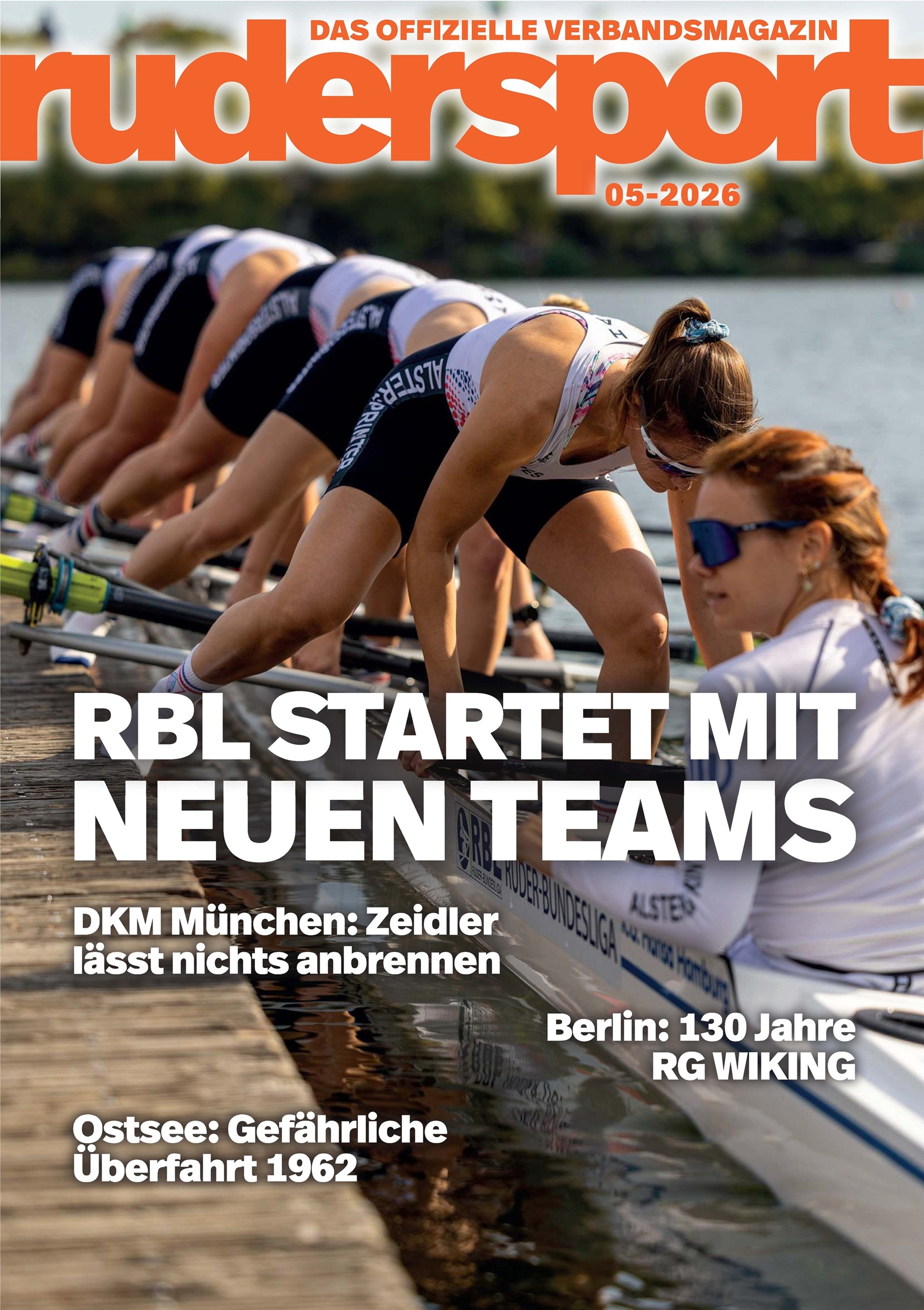
GB: Unfortunately, there are now few printed magazines about our sport. There used to be fine printed rowing magazines in Sweden, Denmark, Great Britain and France, which were published by the countries’ rowing federations. The latest magazine that was axed was the trilingual Swiss Rowing, which went down the drain last year. Now there are the global ROW360, the American Rowing News, the Dutch Roei Magazine and, of course, the German Rudersport. Some nations publish e-newsletters – Great Britain and Switzerland, for example – and there are the online platforms “World Rowing”, “JRN”, which has a podcast, “ROW2k”, “Faster Masters Rowing”, “Rowing Chat”, “Ready ROW! USA” and coaching and work out apps and apps for indoor rowing, etc. The brilliant “BrokenOars Podcast” has taken a break, but there are about 140 episodes still around to listen to.
WG: HTBS is your “baby”, how many followers, page impressions, contributors, do you earn money with it (advertisements), have you thought about adding a podcast, for example?
GB: The last time I looked at the “numbers” for HTBS was just after midnight of the 1st of January 2026. In 2025, HTBS published 277 posts from 22 contributors, which includes a core group of six regular and six irregular writers. The website had 247,466 page views and 117,129 visitors. On the list of the Top Ten countries was the UK with 107,895 page views. Germany was in fourth place with 6,894 page views. Altogether 185 countries, regions and territories visited HTBS during 2025. The last post of 2025 was the 5,226th post since we started in 2009, and since then HTBS has had a total of 3,747,875 views. These numbers maybe don’t seem a lot in terms of websites, but you must remember that we are talking about a rowing history website.
Making money on HTBS? Ha, ha, no, not a penny. I once signed up for Google ads. It didn’t work. Google looked for key words in the articles and the next day some ads would show up for some strange things. Let me give you an example. I wrote about a sculler in his single sculls and the next day an ad showed up for a dating app that said: “Are you over forty and still single?” I turned off Google ads immediately. However, I’m constantly approached by PR companies which are offering me/HTBS money – or so they say – to post their articles about their clients’ products. Of course, I turn down these offers. I’m not working on HTBS to make money. (My dear wife is a little sad about that…)
I have no knowledge about how to produce a podcast, nor do I have the time to add another layer of media to HTBS. HTBS contributors Tim Koch and William O’Chee have made very good films and interviews that I have posted on HTBS’s YouTube channel.
I work approximately 3 hours a day (often more), seven days a week to edit, and then promote HTBS on social media, etc. I wish that I had more time to write my own articles, but as it is now, the hours I have at my disposal are not enough. Some readers seem to think that there are several people in the HTBS “office”, but it’s only me. Though, I sometimes have to ask my computer savvy wife, “Mrs. B”, to solve some technical website problems. Besides working with HTBS, I’m also juggling two part time jobs, which are actually paying me a little money.
WG: So, HTBS is just a hobby, then?
GB: It started out as a hobby, but it has turned into an unpaid job.
WG: With all your resources as well as passion, you very likely could put out a new book every year. How long did you work on “The Greatest…”, which were the criteria for selecting the units?
GB: The publisher gave me more or less a year to put together the rowing anthology, and then the publisher had the manuscript for another eight months before it was published in October 2023. This was the time when we just got out of the Covid pandemic, so everything took a much longer time with printing. While I would be able to put out another anthology, a publisher would probably hesitate because a new anthology would compete with the first one. And publishing an anthology every year would be exhausting for both a publisher and me. And again, there is the time factor to consider.
The publisher gave me a free hand to select the articles, essays, poems, etc. for The Greatest… It was easy in the beginning because through HTBS, I already had good contacts with rowing historians, writers and journalists. And I knew some stories that I absolutely wanted to include. For some writers I had to contact their publishers or literary agents. Not all writers whom I approached wanted me to republish their stories, and a few wanted quite a lot of money. The publisher had given me a budget, but I couldn’t break it by paying high fees. A few writers that I contacted never replied. I wish there was a better balance between male and female writers in the anthology, but sadly there seem to be fewer women writing on rowing.
WG: It’s very heavy on racing, did you ever think about something similar on recreational rowing?
GB: Yes, The Greatest… has mostly pieces on racing. I tried to find articles on recreational rowing, but it was difficult to find longer articles on the subject. Though there is a wonderful “recreational” piece by Mark Helprin, “Palais de Justice – A Short Story”.
WG: How come that this branch, highly popular in so many countries, is almost unknown in the Anglo countries?
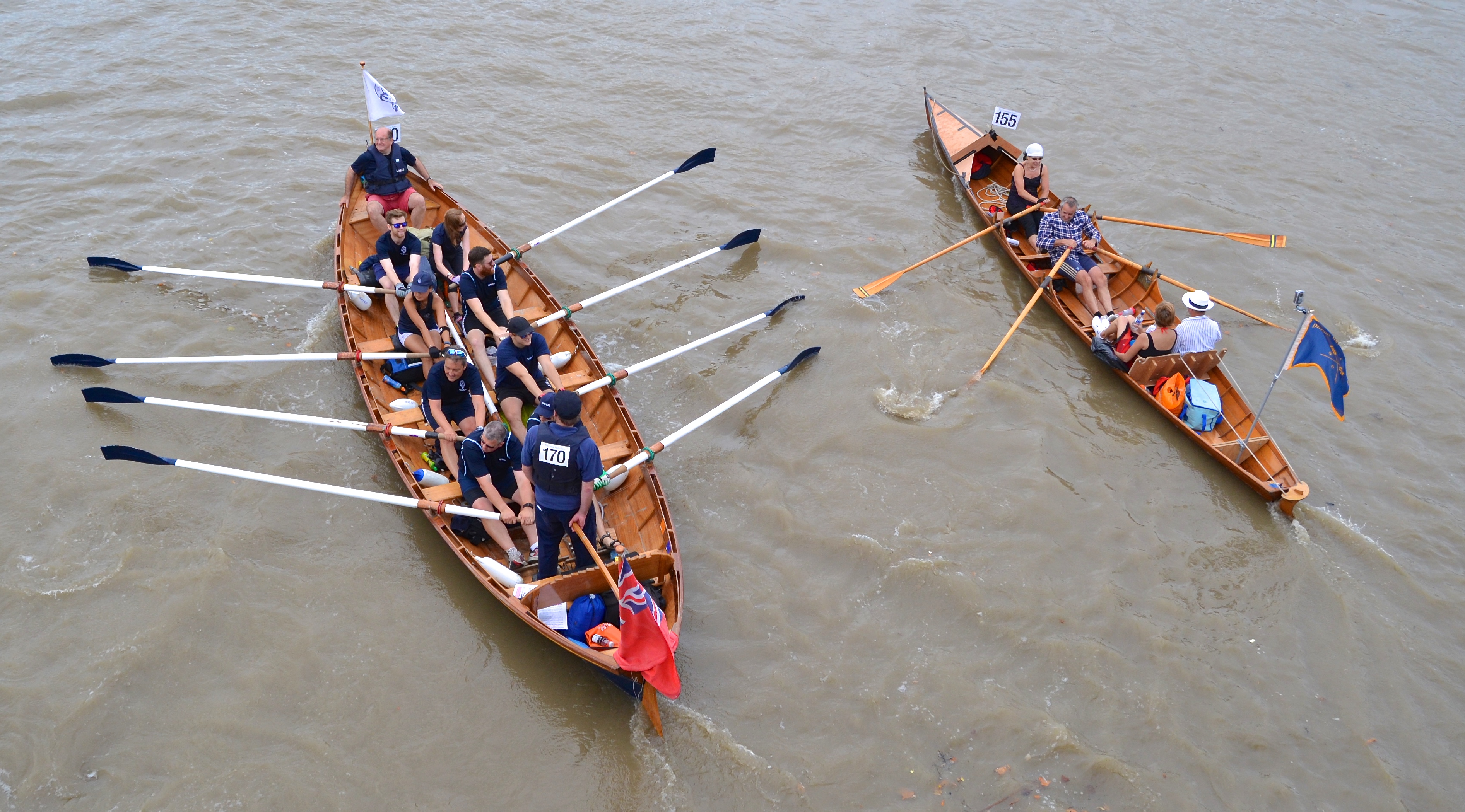
GB: If by recreational rowing you mean rowing in wider boats, wooden clinker-built boats or inriggers, and so forth, which are so popular in Scandinavia and large parts in Europe, there are in Great Britain clubs rowing in Thames skiffs, cutters, gigs, whalers, etc. Every September on the River Thames in London around 300 boats with more than 2,000 rowers take part in the Great River Race (GRR). The competitors come from all over Europe, but also from USA and Canada. You will find articles about the GRR on HTBS, of course. [Rudersport should send a reporter!] I’m guessing that as both the rowing governing bodies in Great Britain and the USA are concentrating on racing (in narrow shells), recreational boating is unfortunately set aside when it comes to promoting that type of rowing, which is a great pity.
WG: Another angle, rowing in health sustaining terms. “Rowing against cancer” in Germany has been very successful. In addition, many practice rowing as a kind of therapy. Would you see a potential for a campaign “Rowing for Mental Health”?
GB: Absolutely! I think that rowing not only is a great sport to build up your physique, but it also helps your mental health, or as I say about HTBS, it’s “a necessary element to keep your wit and stay sane”, Mens sana in corpore sano. When I was still living in Malmö, I lived a block away from my club. Almost every morning – when there was not ice on the canal – I went to the club, took out an old, wooden single sculls and rowed 4,5 km around the canal. Then I went to work at the publishing house where I worked as an editor. After work, I went back to the club. That early hour on the canal was for me “contemplation rowing”. It cleared my mind and helped me to meet the challenges of the day.
WG: Rowing stories about the Greek, Romans, Vikings, indigenous folks – are they documented and wouldn’t they be a feast for historically interested rowers and lay people? An Uber Henley type of written museum.
GB: There are a good number of books on the vessels built by the Egyptians, Greeks and Romans – how these boats worked under oars and their strategy in battles. There are also books on Viking ships. At some museums in Denmark and Norway visitors can see original Viking ships that have been found but also see replicas built these days. A famous modern 35-metre longship is the Draken Harald Hårfagre, which was launched in Norway in 2012. She was sailed and rowed to America in 2016.
But you bring up an interesting question about “rowing written museum”. While there are maritime museums and sports museums around the world, there are few museums that are entirely concentrated on rowing. The River and Rowing Museum in Henley was mentioned earlier, but it closed. The serious question then arises: if a place like Henley can’t sustain a rowing museum, where on earth can such a museum exist? Mystic Seaport Museum in Connecticut earlier held the National Rowing Foundation’s Rowing Hall of Fame, but the exhibit closed. A new place for the Rowing Hall of Fame has not been found. (4) With the Tom Weil donation, Marist University plans to eventually open a “Thomas E. Weil Institute of Rowing History” (the name has yet to be determined). In Philadelphia, a group has started to build an online archive to collect rowing documents and materials from private people, clubs and institutions. In the near future, both the “Weil Institute” and the Philadelphia archive will be important tools for rowing research – and available for everyone.
WG: How would you put into simple words, what is so exciting about rowing (for many contemporaries including media, it is rather boring).
GB: If you know nothing about rowing, it can be boring to watch people going back and forth on a rolling seat for 2,000 metres. But to me, there on the water, I see beauty, grace and “poetry in motion”.
WG: The three basic elements to become a successful oarsman?
GB: You have to be able to master the technique, be mentally strong and be a team player. If you are not the latter, you should row in a single sculls.
WG: With your outlook, will beach sprint rowing aka coastal rowing add excitement or in line with the science fiction story in your book could it slowly die?
GB: I think that beach sprint and costal rowing have a great future. Both of these branches within the sport of rowing have an excitement that even a layman would find fun and interesting. However, what I don’t want to happen is that these forms of rowing take over the traditional rowing, pushing out certain boat classes in the Olympic Games for example.
WG: And what is so exciting to write about it?
GB: Rowing fascinates me with its rich history of races, regattas and rowers. There are so many marvellous stories to tell. It’s a well that never runs dry.
WG: With your rowing track history in Sweden, why did you go to the US – ever thought about returning?
GB: My wife is an American, so that is the reason we are living in the U.S. Returning to Sweden? As the situation is now, I almost daily think about moving back to Sweden with my family. However, I believe that would be the end of HTBS.
Wolfgang’s review of The Greatest Rowing Stories Ever Told and more about HTBS will be published in Rudersport’s June issue.
Comments
(1) Oh, the irony, David Winser’s A Gay Good-Night never arrived; the novel and letter were lost over the Atlantic. The search for the book continues…
(2) Sadly, Chris Dodd died on 25 January.
(3) Wolfgang is refering to Chris Dodd’s essay “Downfall of Rowing’s Master Class” in the anthology.
(4) Rowing historian Bill Miller announced that there will be a rowing exhibition and the Rowing Hall of Fame opening in the summer of 2028 at Nathan Benderson Park in Sarasota, Florida.

