
19 May 2026
By Greg Denieffe
Greg Denieffe reports from the Home Front.
A popular version of George Orwell’s sentiment about sport reads: ‘Serious sport is war minus the shooting.’ You can find the actual quote, from his 1945 essay, “The Sporting Spirit”, here.
HTBS is a treasure trove of articles about WWI and WWII combatants who were also rowers. Why, even AI says that the site ‘frequently documents the lives of Oxford and Cambridge rowers and other oarsmen who exchanged their oars for rifles, with many giving their lives in WWI.’ As a BBC reporter might say, ‘other wars are available.’
In Ireland, rowing came to a halt during the years of the Great War (WWI), as noted by T. F. Hall in his History of Boat-Racing in Ireland (1939):
With the Limerick regatta, the season [1914] virtually finished, and few could then have anticipated that before Irish oarsmen again foregathered at regattas four years of war were to intervene. During that time, rowing men were called to sterner conflict than boatracing, and many of the best laid down their lives on foreign battlefields. Unlike many other sports, rowing was entirely abandoned during these years, and, except for a few informal meetings, there was no racing until 1919, after peace had been declared.
Hall wrote most of his book in 1937, and so the future, at least for rowing, was optimistic. His pride in the fact that rowing, unlike other sports, saw fit to shut up shop for the best part of five years so that Irish ‘rowing men’ could die in a needless and pointless war says much about his own political views and those of the rowers who jumped at the chance to sign up – conscription was never imposed on Ireland because of opposition from nationalists, trade unionists and the Catholic Church.
Hall glosses over the turbulent period of conflict in Ireland between 1919 and 1923, during which the country was transformed by the War of Independence, partition, and civil war. It was during the War of Independence (Jan 1919 – July 1921) that the so-called Black and Tans, the most hated of all the British forces in Ireland, were added as reinforcements to the RIC (police force). The Tans, officially temporary RIC officers were, to a significant extent, unemployed WWI veterans. Owing to shortages, they wore a mix of dark green RIC tunics and khaki military trousers, leading to their nickname.
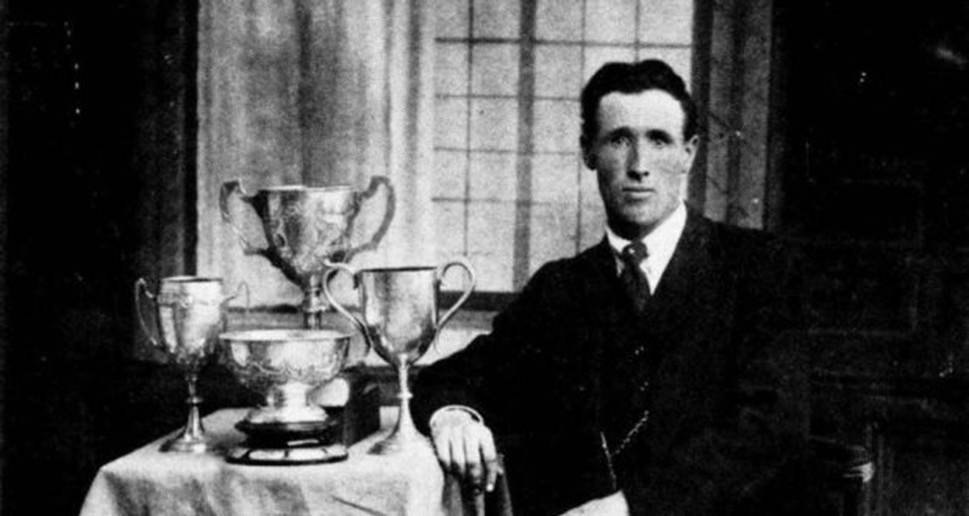
Against this backdrop of guerrilla war, an unlikely rowing hero appeared on Irish waters. According to Kevin Courtney, writing in The Irish Times in 2013, his grandfather, Thomas Courtney, sculled to victory in The Eblana Challenge Cup and Scullers’ Championship of Ireland at Dublin Metropolitan Regatta (Metro) three times during this period whilst being an intelligence officer in the mid-Galway No 1 Brigade of the IRA.
Thomas Courtney was born in Newcastle, County Galway, on 5 January 1890, and as a young man, he joined the Ancient Order of Hibernians and Saint Patrick’s Rowing Club (1875-1917). The rowing club was affectionately known as The Temperance Club. In the 2013 article, Kevin Courtney wrote that his grandfather had become politicised as a teenager after stopping to listen to a speech by Arthur Griffith in Eyre Square in Galway City. Galway was, in his opinion, the most shoneen town in Ireland, and he determined to join the armed resistance and battle British influence.
James Casserly, writing in his 2008 book, A History Of Galway RC 1910-2009, comments that in the senior sculls at the 1914 Galway Regatta, Eugeen Hickey [The Hibernian Rowing Club] came second to Tom Courtney (Commercial B.C.), who was to be Irish Scull Champion three times in the 1920’s (sic). By 1919, The Hibernian Rowing Club had changed its name to Galway Rowing Club.
In 1919, rowing and regattas returned, but despite great enthusiasm, the standard of rowing was not high. Sculling in particular suffered, and the Eblana event was not raced at that year’s Metro Regatta.
By 1920, Courtney, now aged 30, was back in a boat and still racing for Galway Commercial Boat Club. He won both the junior and senior sculling events at his hometown regatta before claiming his first Scullers’ Championship of Ireland title.
Hall noted that in 1920, clubs did not travel far outside their local areas except in the case of the Metropolitan meeting, which, on this occasion, was unusually well supported. In his review of the year, he states that ‘This year witnessed a great revival of rowing in the West; and Galway R.C. won the Subscribers’, Gray, Liffey and Civic Cups at Metropolitan, the greatest successes ever enjoyed by a Galway club at the premier Irish regatta.’ However, there was no mention of Courtney, a native Galwegian, or his win in the Eblana that year.
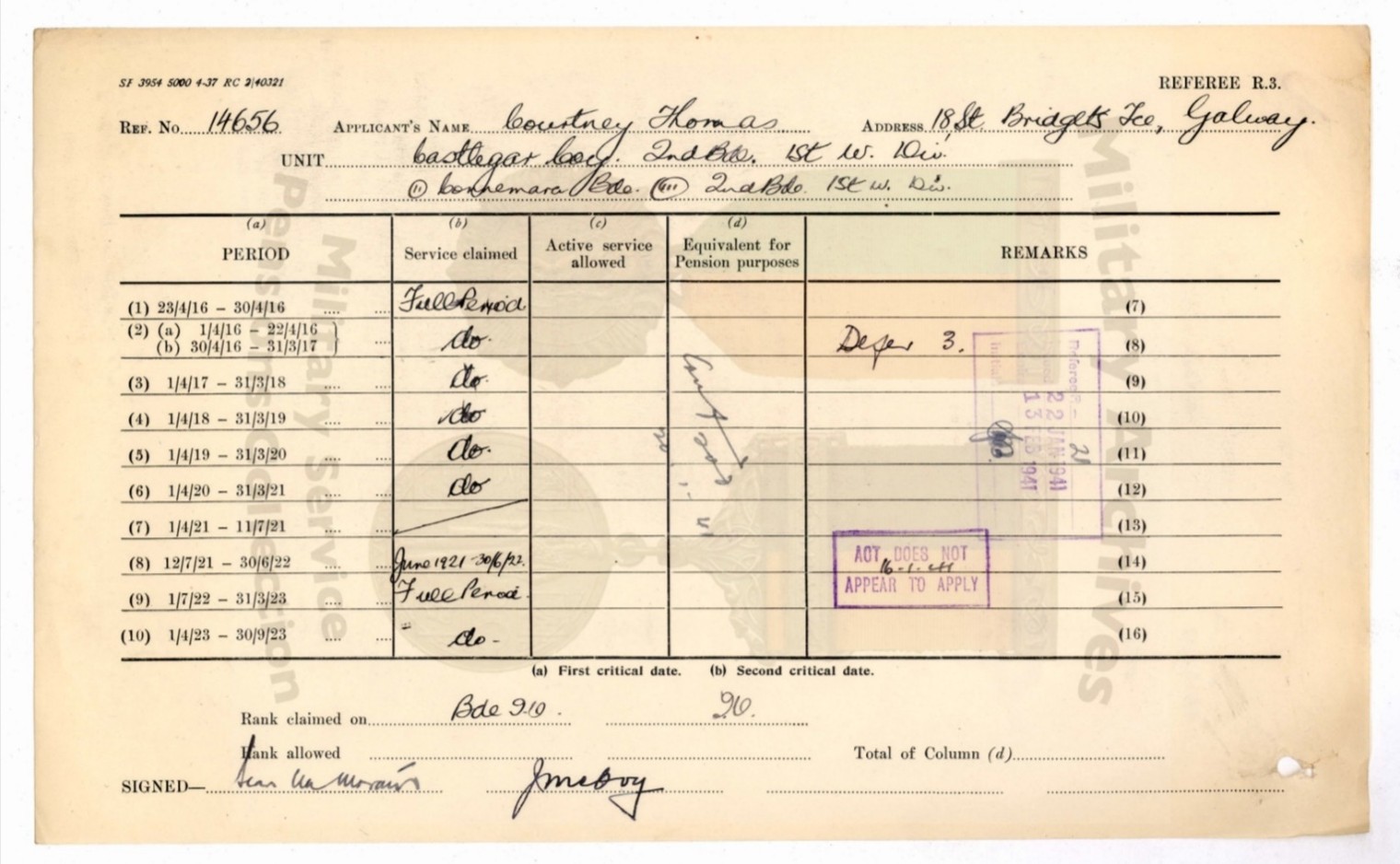
The 1921 Metro Regatta went ahead despite the civil disturbances that caused several regattas in the south to be cancelled. The winner of the Eblana was J. J. Togher of Galway Commercial. If, as claimed by Courtney’s grandson, Courtney won the title three times, then J. J. Togher was an alias he used while on the run from the authorities.
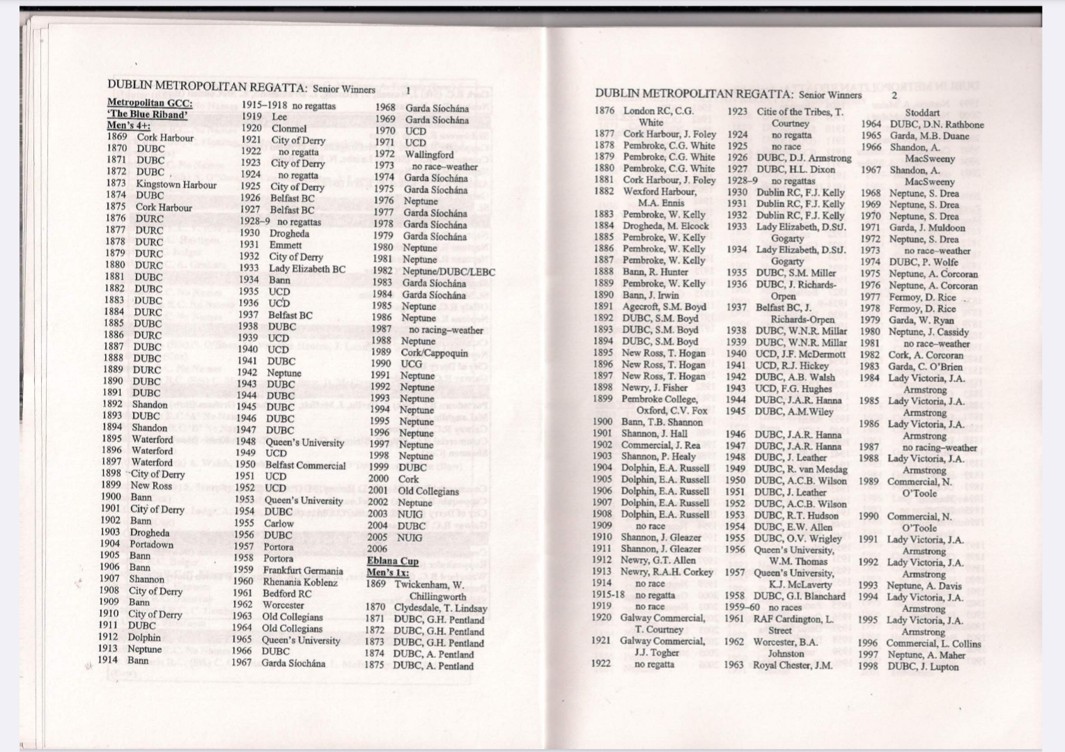
However, in Courtney’s claim for a military pension, he stated that: ‘Owing to the state of my health, this and other extenuating circumstances compelled me to leave the country in about February 1921. I went to America, but was unable to work there, and came home in March 1922.’
Based on this statement, Courtney could only have won the Eblana twice, firstly in 1920 and again in 1923. The 1922 Metro was cancelled because of the imminent threat of civil war.
Thomas Courtney regained the title of Champion Sculler of Ireland in 1923 but this time he was wearing the colours of Citie of the Tribes Rowing Club. This was a new club, formed by the committees and members of all the other clubs in Galway, so that the best oarsmen could represent the city in a single crew.
Courtney also raced in 1924, but because the inaugural Tailteann Games were taking place in Dublin that year, the Dublin Metropolitan Regatta Council decided not to hold an event. Quoting myself from a December 2024 article on HTBS, The 1924 Tailteann Games – A Centenary ‘Crewcial Collectables’ Special:
The Senior Sculling final resulted in a win for C. T. Denroche of Lady Elizabeth B.C. over T. MacCurta [Hall spelling] of City of the Tribes. Denroche was unbeaten in 1924, and Mac Cuarta was unbeaten in 1923. No two men could be so politically apart: Denroche was a bastion of Dublin University B.C. (Lady Elizabeth B.C. being their alumni club) and returned from the Great War as a major in the British Army. Mac Curta, AKA Thomas Courtney, was an intelligence officer in the IRA during the War of Independence.
That appears to be the end of Courtney’s sculling career and perhaps an apt place to end this article. However, there are several interesting tales contained in Courtney’s application for a military pension: some in his own handwriting, some in typescript.
Regarding the 1916 Easter Rising, Courtney used his rowing connections to hide ammunition and boats that were to be used by local volunteers. In his own words:
The Rising, which was to be on Easter Sunday, was called off. I had two shotguns of my own at Briarhill [just east of Galway]. I spent Easter Sunday with a few others cutting shotgun cartridges. This is a wildfowler’s trick which makes a shotgun cartridge as dangerous as a bullet for about 200 hundred yards. It was on my advice that this was done. As I was the Captain of St Patrick’s Temperance Rowing Club, I was able to hide 6 rowing boats on the west bank of Lough Corrib. This was for the purpose of getting volunteers of Spiddal and Moycullen companies across the Corrib. And also arms, which we understood were to be landed on the Connemara coast.
The Easter Rising of 1916 was planned for Easter Sunday, 23 April 1916. It was reliant on a shipment of German arms being landed in time to supply the rebels. The shipment of 20,000 rifles, ten machine guns, and a million rounds of ammunition was transported on the steamer SS Aud but was intercepted by the British Navy on 21 April 1916, and the cargo was scuttled in Tralee Bay. The plan to smuggle the German weapons was the brainchild of Sir Roger Casement. When Eoin MacNeill, one of the leaders of the rebellion, learned that the shipment had been intercepted and Casement arrested, he attempted to cancel the Rising. The other leaders decided to go ahead on Easter Monday, and so began more than six years of war that eventually led to the partition of Ireland.
During the War of Independence (1919-21), Courtney acquired the code-name Captain Puzzle. Owing to his job as a telegraph boy in the post office, he was perfectly placed to intercept military correspondence and pass on valuable information to the IRA. In addition, he carried secret messages to and from IRA leaders, even bringing smuggled messages to prisoners in Galway Gaol. Again, in his own words (all sic):
During this time, I had devised a means of getting clear with and disposing of any Enemy correspondence which I captured. Some of this correspondence was sent to G.H.Q. Dublin, for which I was commended.
I was also a prominent Sculler and Yachtsman, having won Sculling and Yachting cups. This enabled me to be in touch with several British Military Officers, and later on Auxialaries, also some Civilians who were suspected doing intelligence work for the Enemy.
Sometime during this period, I am not sure of the date. About June or July [1919] I was transferred as I.O. to East Connemara Brigade. This was at the request of Miceal O’Droigneain, Brigade O.C., and from that time took my orders from him. I also acting on his instructions, supplied other Units with intelligence as each occasion demanded and where the information was most useful.
I had at this time organised a small but efficient intelligence Unit, and with the help of a Fianna Boy Scout, M. McGreal, I made the Commercial Boat Club my Headquarters having got duplicate keys as I was not a member of this club at the time. But I became a member in 1920 and was elected Captain when I was but a fortnight there. I chose this club for its strategic position in Galway.
Later in his statement, Courtney states that in September 1920, he and other named members of the I.R.A. borrowed a boat from the Commercial Boat Club at about 11 p.m. and transported 3 Enfield rifles and nearly 100 rounds of ammunition to Hurneys, Annagh. They arrived at the location on the shores of Lough Corrib about 2 a.m., handed over the weapons, and made their way back to Galway. As the guerrilla war intensified, the Galway City Battalion became disorganised, and Courtney, fearing discovery, decided to remove the intelligence records he had at the Commercial Club and took them to Moycullen.
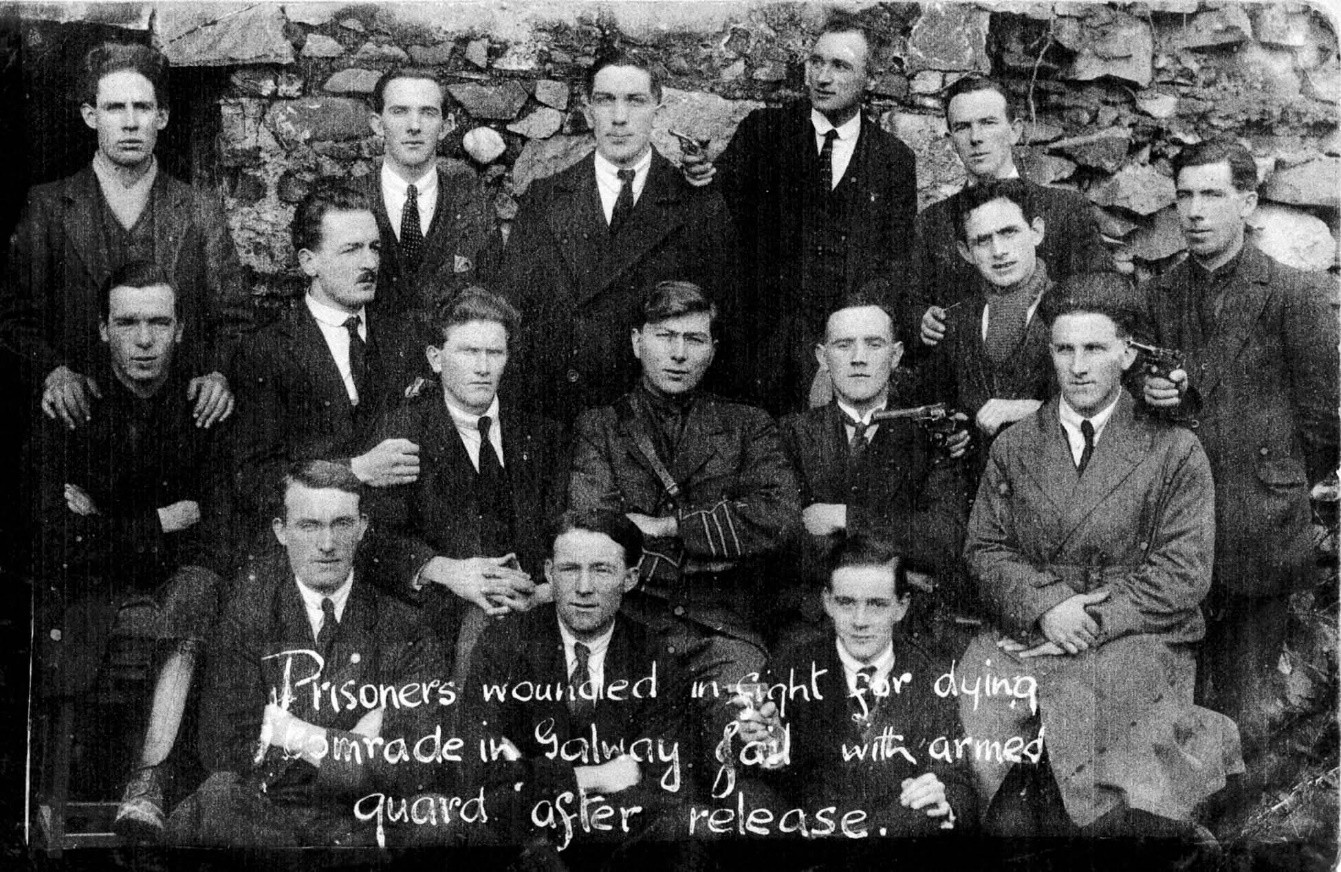
If Courtney felt that the authorities were on to him, he was right. On 24 November 1920, he was stopped by the Black and Tans in Castlegar, who found incriminating evidence of his activities in his postbag. He was taken to Earl’s Island Barracks, tortured and threatened before being released. Releasing prisoners, only to kill them later, was a terror tactic used to intimidate the Irish population, retaliate for IRA actions, and remove suspected rebels without the need for formal trials. Knowing this, Courtney went on the run. It is not surprising that he left for America the following February.
Whilst Courtney was in Newark, New Jersey, U.S.A., the war continued, with fighting breaking out all over the country and violence reaching a peak. In an effort to halt the mayhem and end the stalemate, a truce was agreed on 11 July 1921, ending two-and-a-half-years of Anglo-Irish hostilities. Treaty talks concluded in December, and the partition of Ireland was ratified by Dáil Éireann (Irish parliament) on 7 January 1922. Courtney returned to Ireland in March 1922, and to a country now called the Irish Free State.
During the truce, Courtney remained inactive, but as soon as the Civil War (between anti-truce republicans and the Irish Free State) started, he was recruited as an Intelligence Officer by the republicans in Galway. He was working as a temporary postman and returned to steaming and opening letters and passing on information to the republicans. The Irish Civil War (June 1922 – May 1923) ended in victory for the Pro-Treaty Irish Free State forces over the Anti-Treaty IRA. Following the death of anti-Treaty leader Liam Lynch and the urging of Éamon de Valera, Frank Aiken ordered anti-Treaty fighters to dump arms and stop fighting. There was no formal surrender.
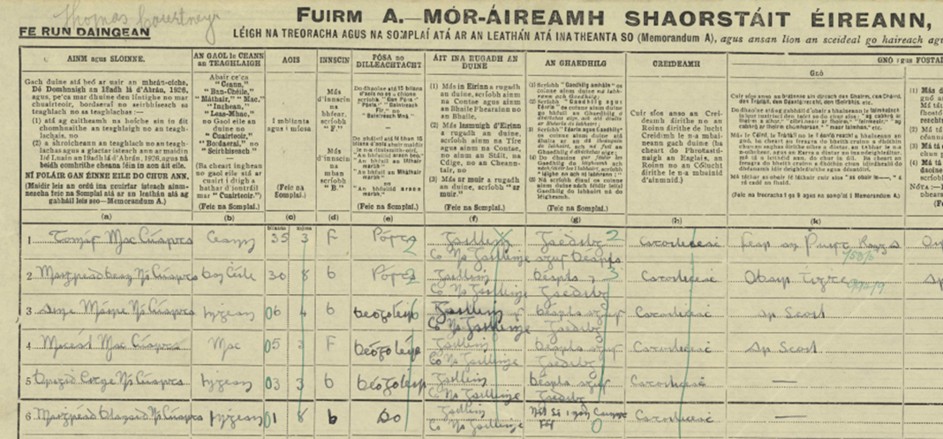
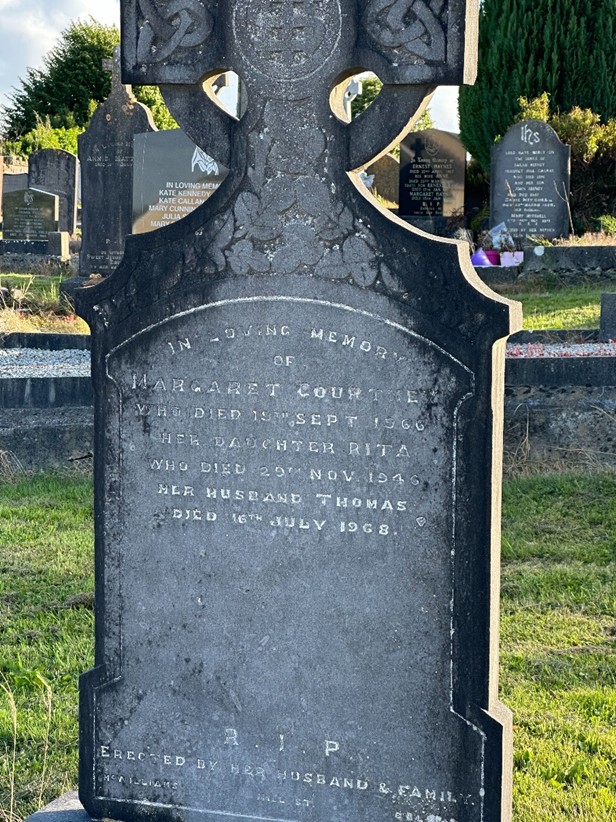
A few weeks later, Courtney won The Eblana Challenge Cup, regaining the title of Champion Sculler of Ireland. His job as a postman was made permanent later that year, and life moved on. He had married Margaret Cloonan in 1919, and they had 10 children (E&OE). He died on 16 July 1968, having never received the Military Services Pension that he richly deserved.
Sources:
Books and periodicals
Casserly, James. A History of Galway Rowing Club 1910 ~ 2009. Galway Rowing Club (2008).
Courtney, Kevin. Not quite the GPO, but a militant telegraph boy. The Irish Times (23 May 2013).
Hall, T. F. – History of Boat-Racing in Ireland. Irish Amateur Rowing Union (1939).
Henry, William. Blood For Blood – The Black and Tan War in Galway. The Mercier Press Ltd (2012).
Kenny, Tom. Fire and Protest in Galway Jail. Galway Advertiser (12 July 2018).
Websites
Find a Grave
Irish Rowing Archives
The Military Archives
The National Archives of Ireland
WikiTree

