This website covers all aspects of the rich history of rowing, as a sport, culture phenomena, a life style, and a necessary element to keep your wit and stay sane.
The Olympiastadion had a capacity of 110,000 spectators and was part of an especially built sports complex of 330 acres in Grunewald, western Berlin, named the Reichssportfeld.
6 December 2025
By Tim Koch
Tim Koch continues thumbing through a real page-turner.
As I explained in Part I, John Beresford, whose father Jack was the most successful British rower of the inter-war period, recently gave me access to the great man’s meticulously assembled photograph albums chronicling his long career. They are made up of both professional and amateur pictures and, while many of the former have technically long been in the public domain, most of the latter have not been seen outside of the Beresford family and their friends.
Jack’s most famous win was with Leslie “Dick” Southwood in the Olympic Double Sculls in the 1936 Berlin Games and this is the second part of a two-part post using Jack’s photographs documenting this event. Part I covered the run up to the start of the Olympic Regatta and Part II covers the Games’ opening ceremony and Beresford and Southwood’s progress through and beyond the three days of racing which ran 12-14 August.
Before progressing further, I should probably acknowledge that there are keyboard warriors who think that it is somehow wrong to post pictures of Hitler and of swastikas, even in an historical context, as if this somehow shows sympathy for the monstrous German National Socialist regime, 1933-1945. This is clearly nonsense.
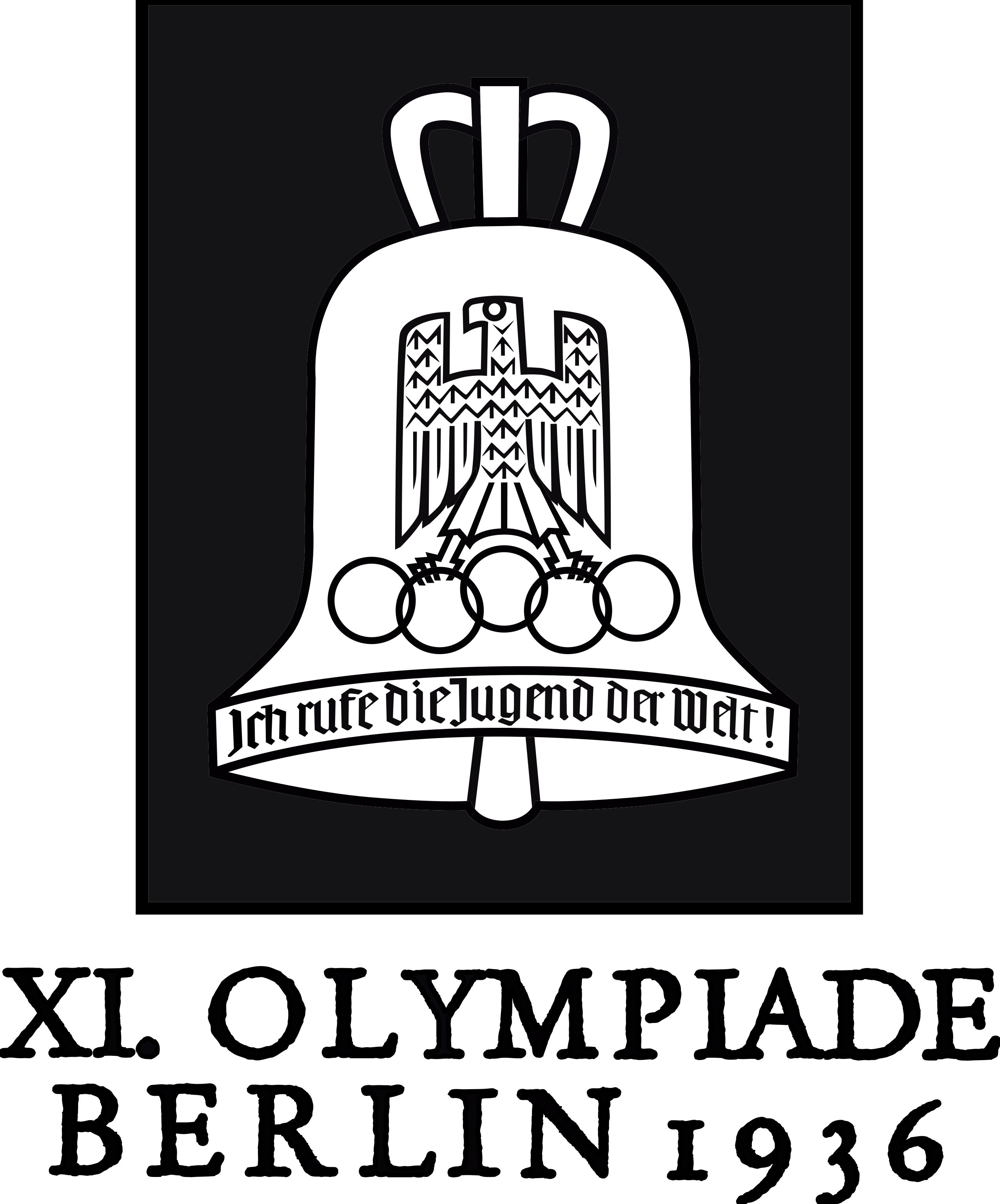
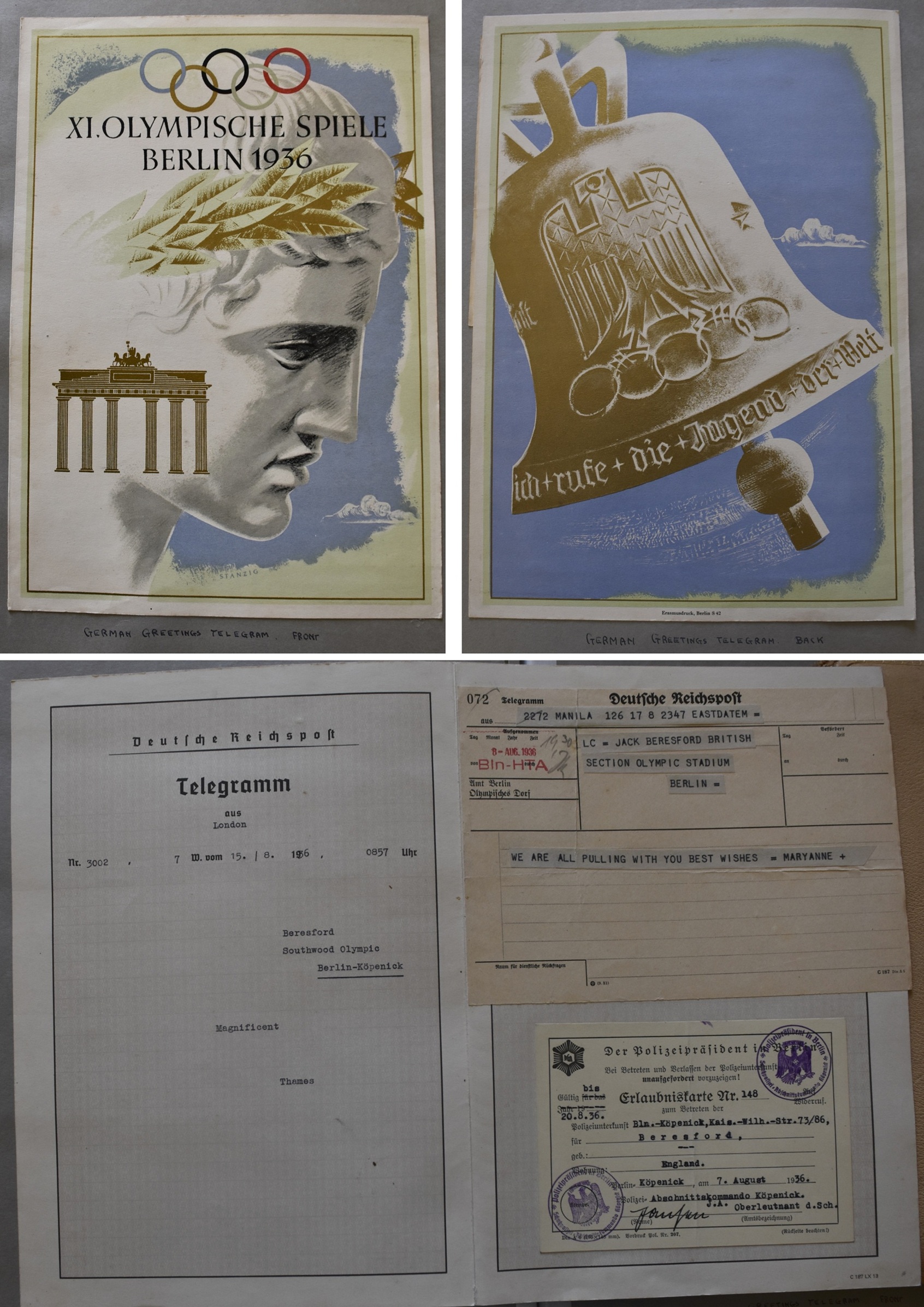
The Nazis usually had their German Eagle clutching a swastika but for a time in 1936 it had its claws around the Olympic Rings.
Further, as I noted in Part I, what we now know about the Nazis was not universal knowledge in 1936. Thus, Jack probably did not think it strange to put a picture of Hitler in his album when he assembled it in 1936 or 1937. In 1945, my father stuck a picture of Soviet leader Joseph Stalin in his wartime photograph album but at the time Dad probably thought of him as one of the allied leaders, not as a man that ordered millions of deaths.
I also noted in Part I that, although the Berlin Games are now remembered with embarrassment as the “Nazi Olympics”, at the time they were thought of as a great success. Today we still hold international sporting contests in countries run by undesirable regimes that cynically use such events to improve their international standing. It now has a name: “sportswashing”.
Opening Ceremony
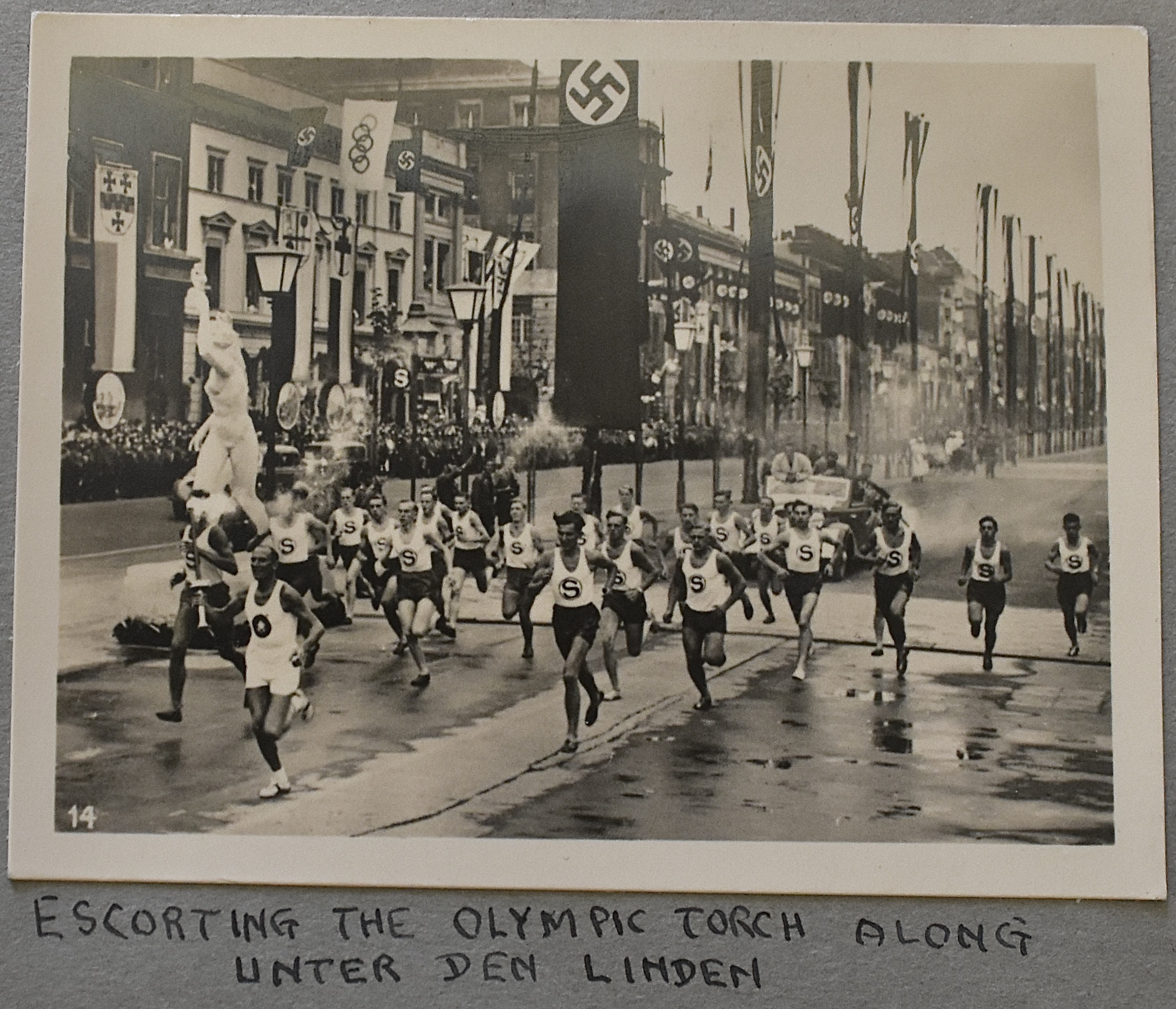
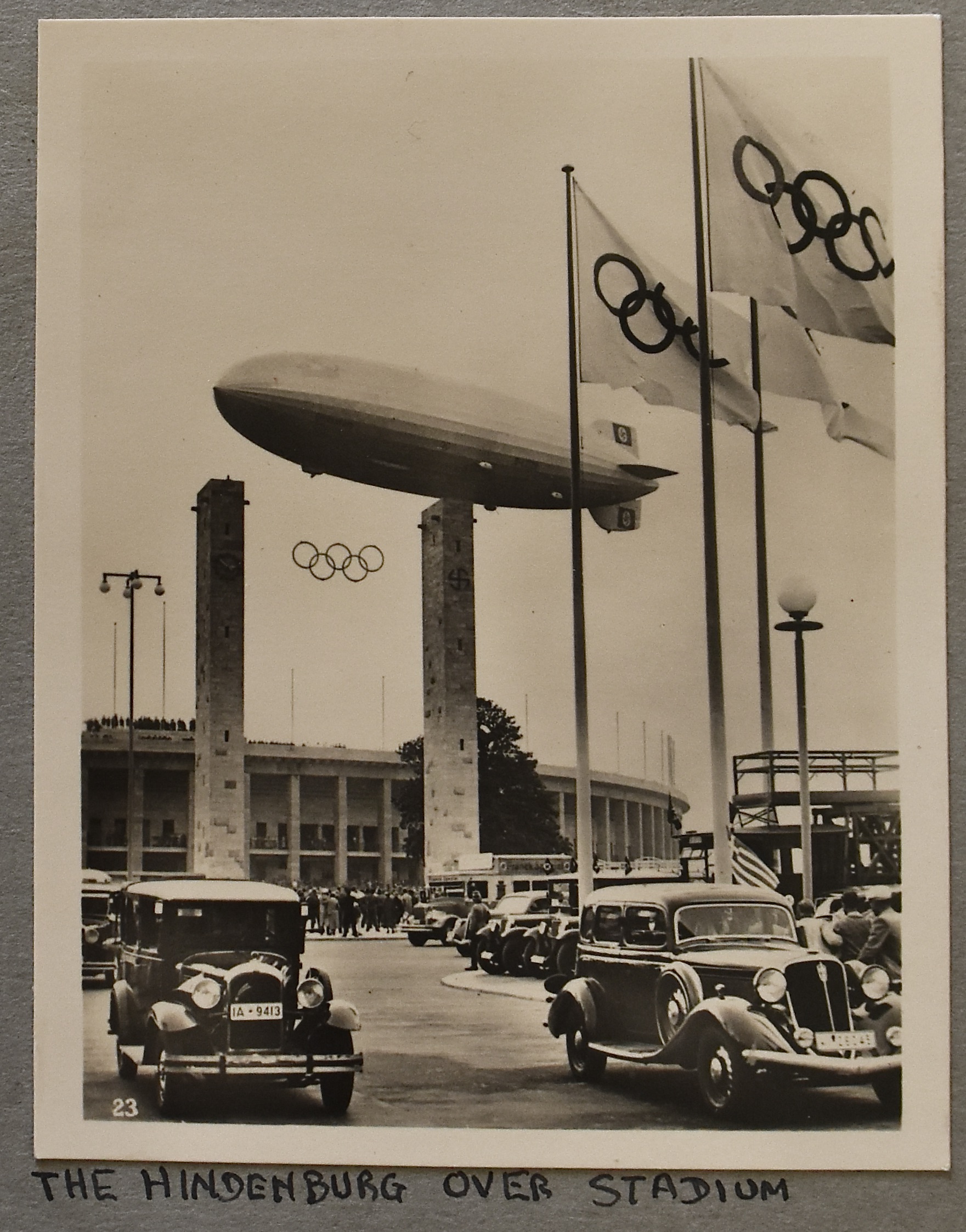
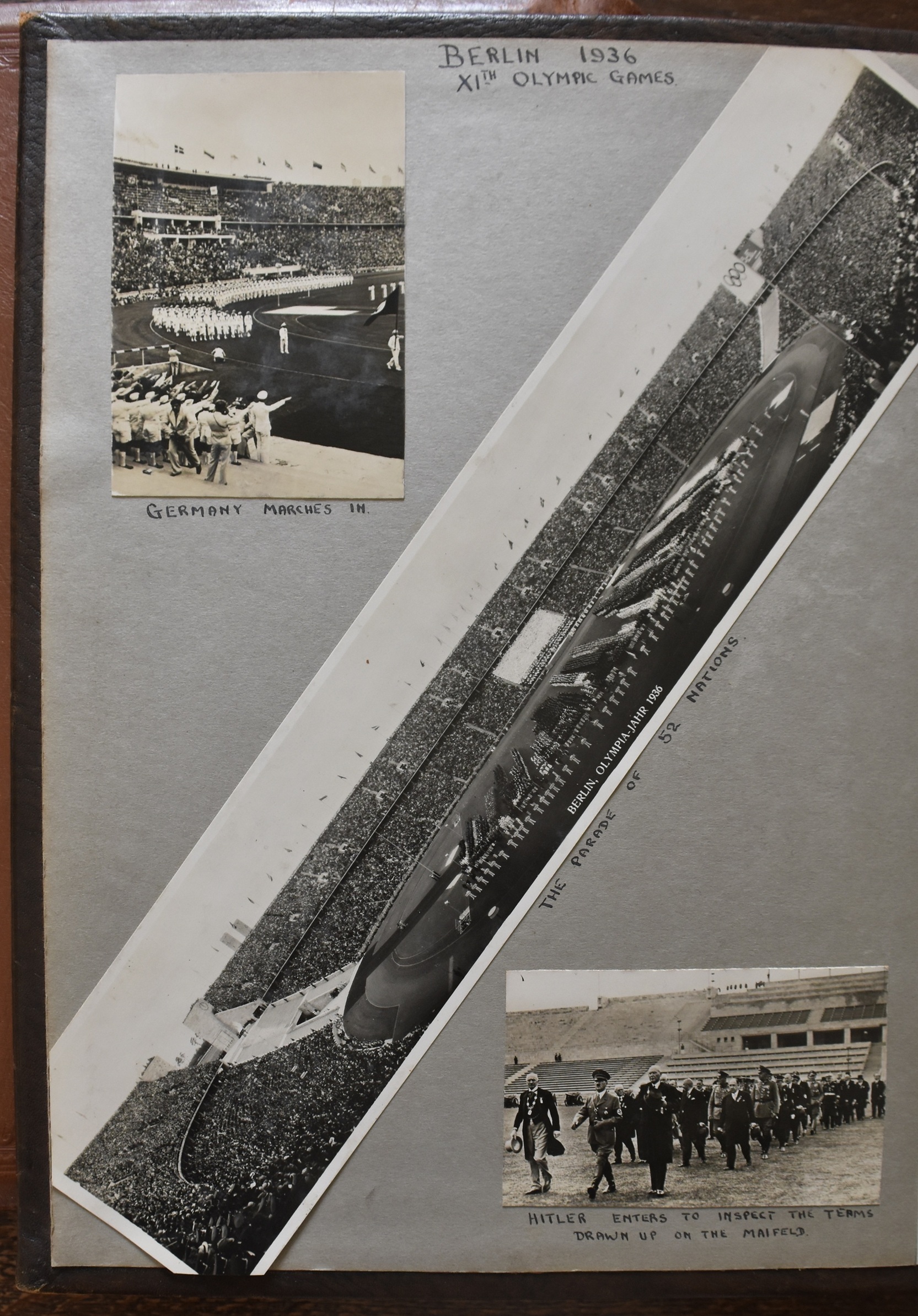
Although it is understandably not acknowledged today, the torch relay from Olympia in Greece to the Olympic Stadium of the host country is an innovation from 1936. For the Berlin Games, the flame left Olympia on 20 July and reached Berlin on 1 August. On 7 August, another flame was lit from the cauldron in the Olympic Stadium and carried to Grünau, the site of the rowing and canoe events.As part of the opening ceremonies on August 1, 1936, the Hindenburg airship performed a low-level flyover of the stadium, with the Olympic flag trailing behind it. Just over a year later, it would famously catch fire just over Lakehurst, New Jersey, on 6 May 1937.
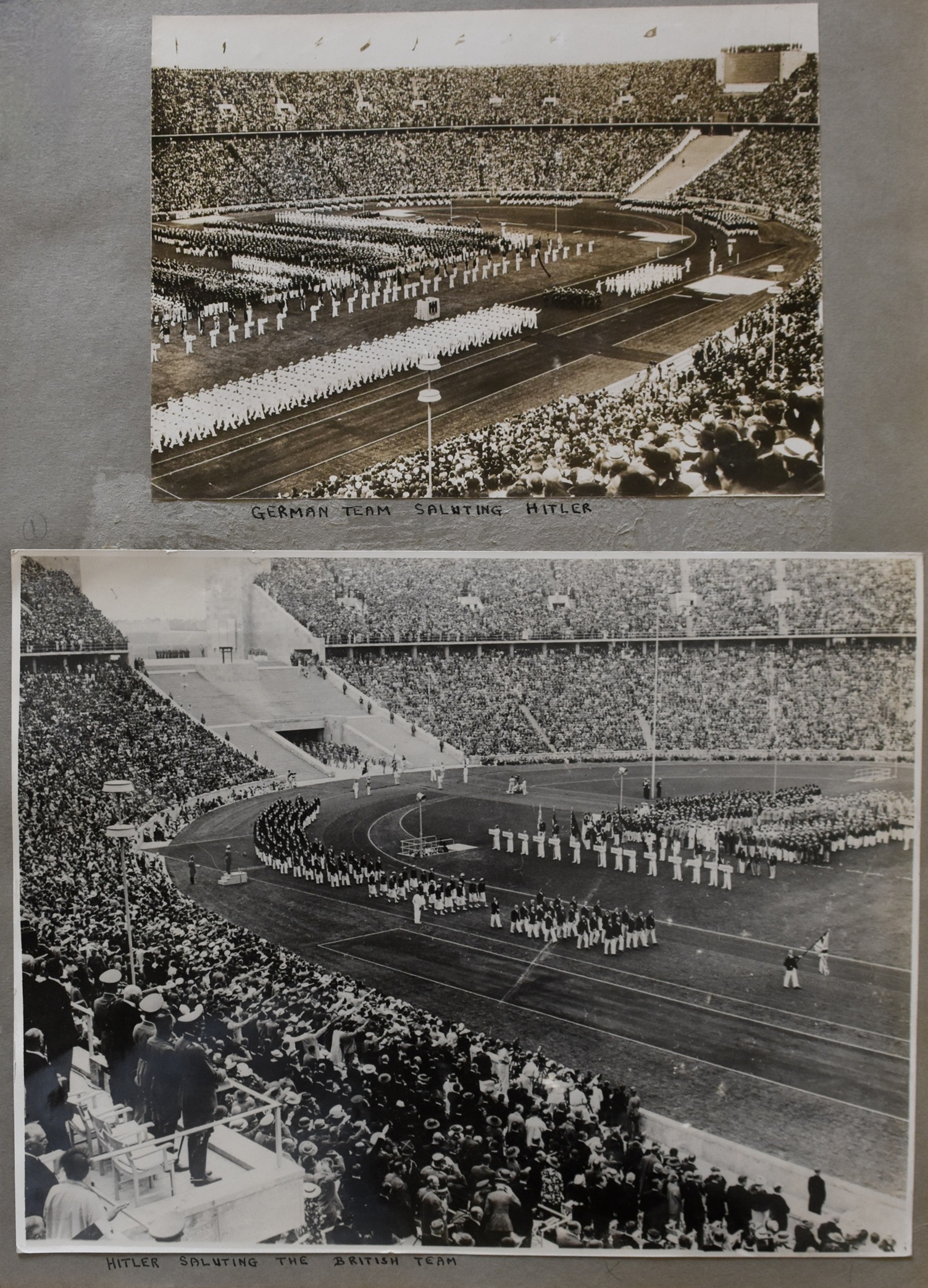
The opening page of Jack’s Berlin album.
Jack has captioned the top picture, “German team saluting Hitler”, and the lower one, “Hitler saluting the British team”. He did not mention that he is pictured as the British flag bearer.
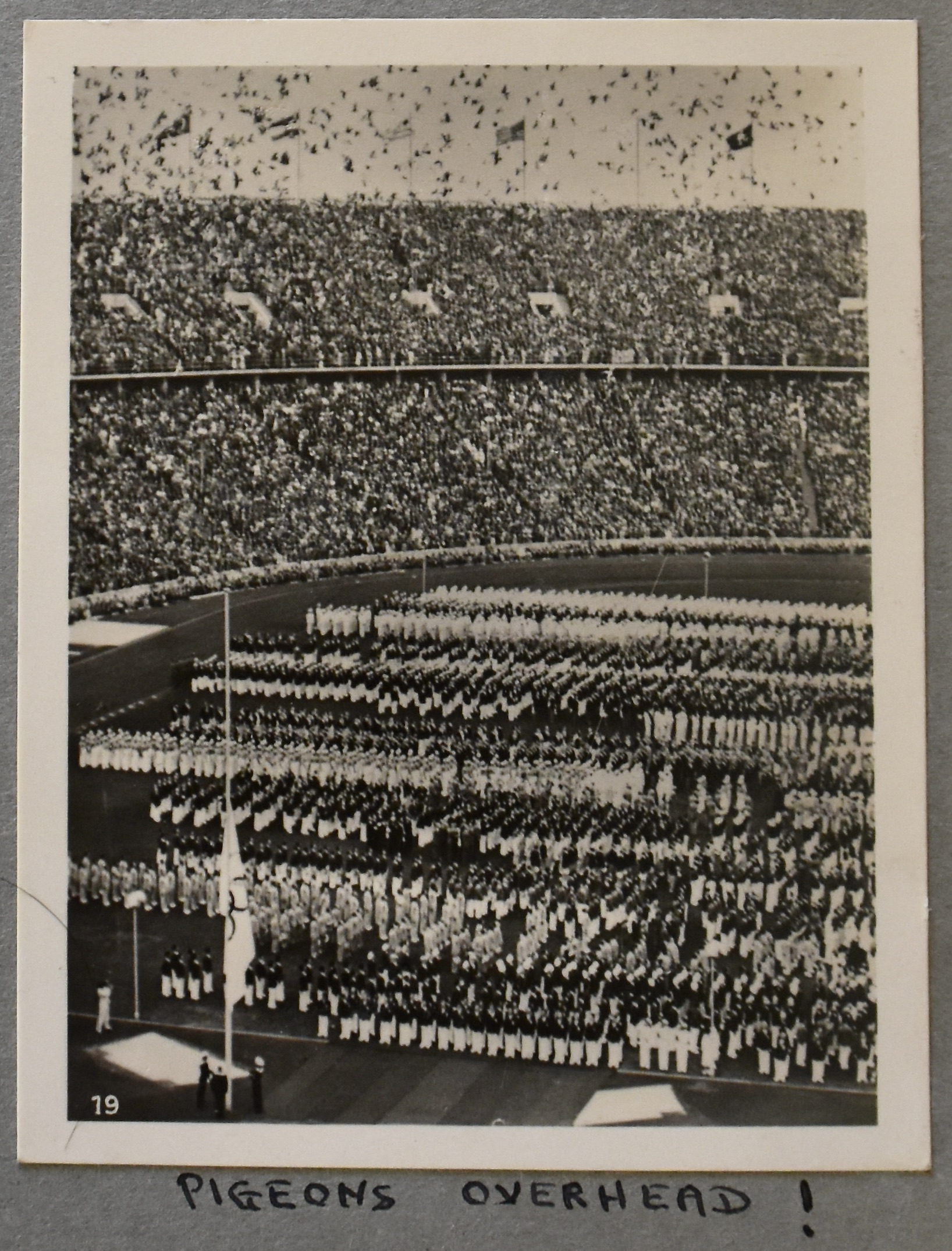
A German Olympic gold medalist from 1932, weightlifter Rudolf Ismayr, took the Olympic oath on behalf of all the athletes. Just prior to this, Spyridon Louis, the winner of the first Olympic Marathon in 1896, presented Hitler with an olive branch from Olympia. Were irony an Olympic sport, Louis would have won again.Pigeons presumably standing in for doves of peace.
Jack’s use of an exclamation mark in his caption,“Pigeons overhead!” needs an explanation. Wikipedia quotes one of the athletes present, American runner Louis Zamperini:
They released 25,000 pigeons, the sky was clouded with pigeons, the pigeons circled overhead, and then they shot a cannon, and they scared the poop out of the pigeons, and we had straw hats, flat straw hats, and you could heard the pitter-patter on our straw hats, but we felt sorry for the women, for they got it in their hair…
Further, Chris Dodd was told by British rower Hugh Mason that before the birds were released over the Olympiastadion, he and his crew mates, waiting to enter the arena for the parade of athletes, prematurely gave a cage of thirty pigeons their freedom from Nazi imprisonment. Hopefully after their great escape they made it to Switzerland.
The Olympic Regatta
The existing rowing course at Grünau, a suburb of southeastern Berlin, had been expanded and modernised for the Games. It featured six 2,000-metre straight racing lanes, aligned naturally along the lake’s long, narrow shape.Permanent grandstands provided excellent visibility for spectators and a distinctive finish tower was built. The venue allowed precise timing and judging and was one of the most advanced rowing courses of its time.
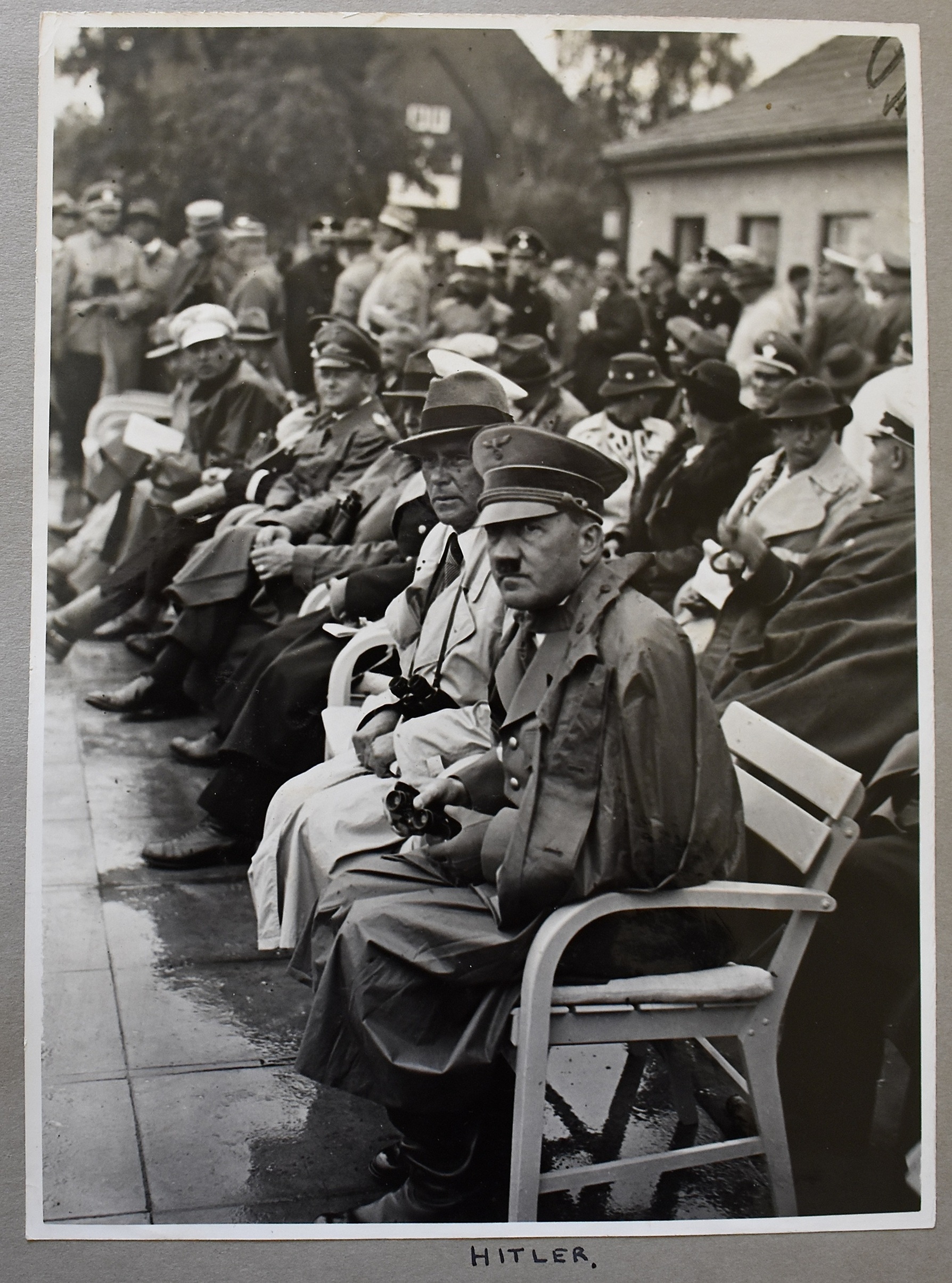
Hitler at the Grünau regatta course in an unusually candid picture. Although professionally taken, it is not a flattering product of his propaganda team. He sits not in his covered high level box but at ground level with no shelter from the rain showers that punctuated the racing. Further, he seems surrounded by a crowd of mostly civilians seemingly uninterested in him.
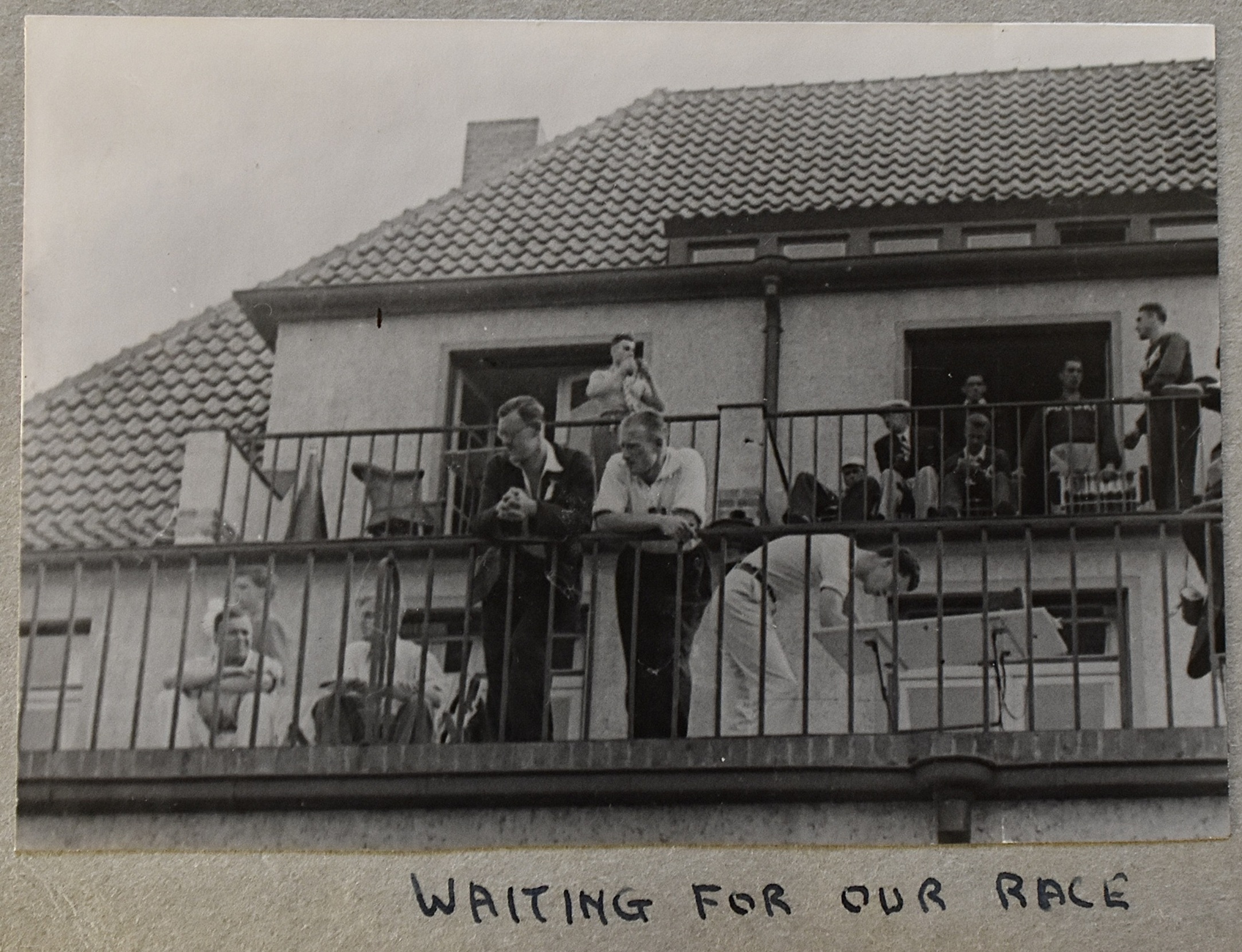
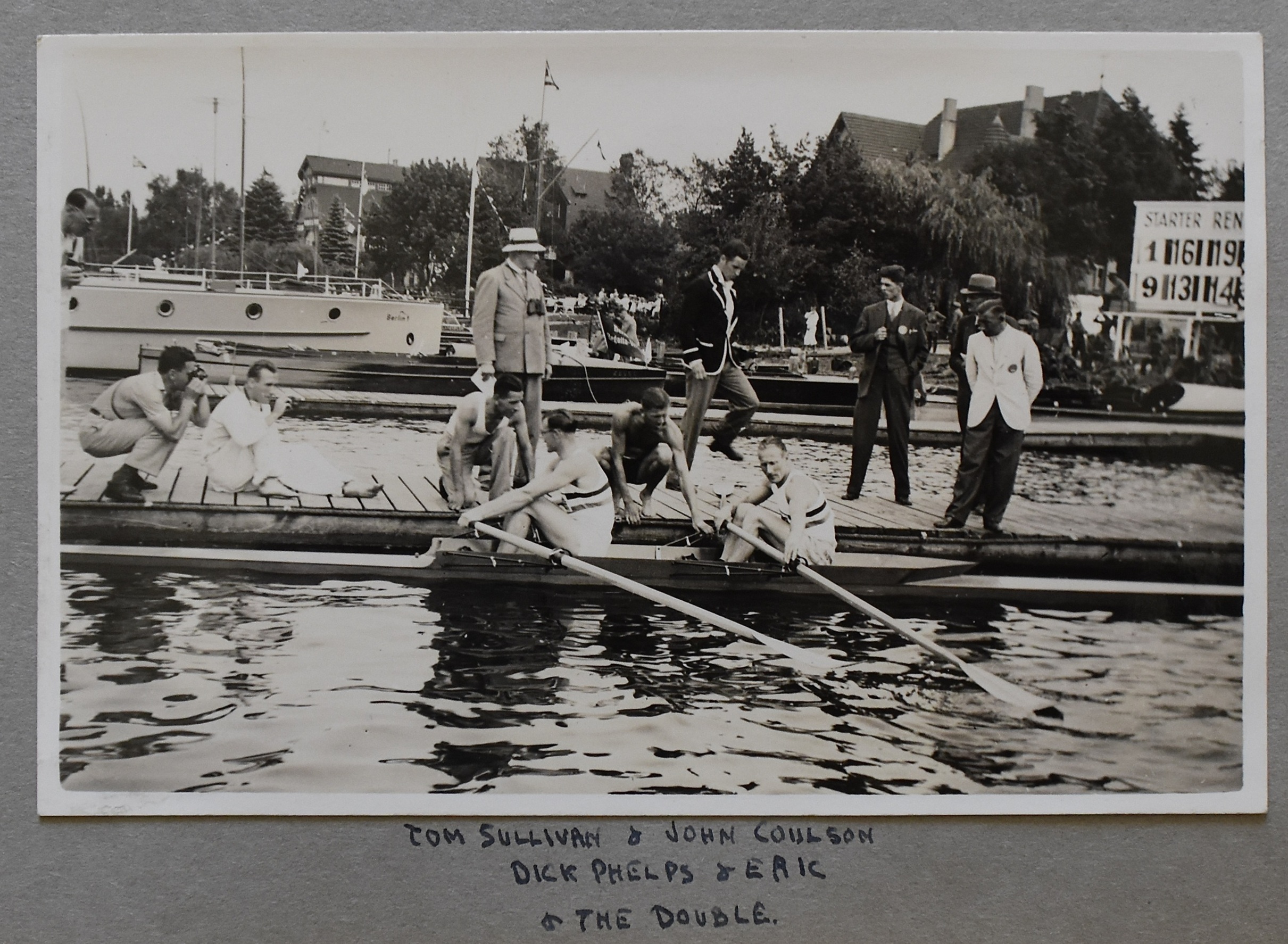
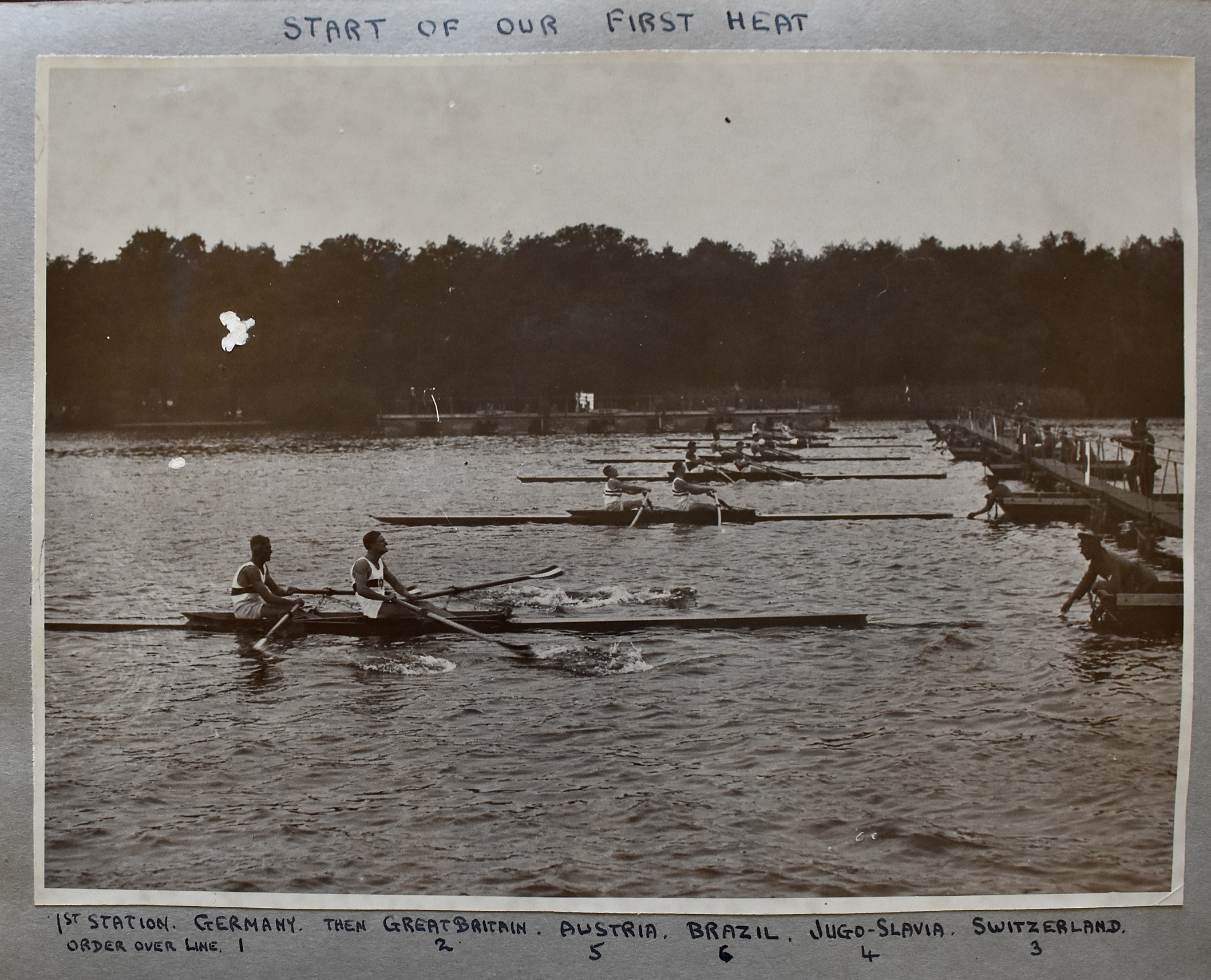
“Waiting for our race.”The double going out for either their heat on 12 August or for their repêchage on 13 August. The people named are: Tom Sullivan (a New Zealander who was coach of Berliner Ruder-Klub at the time); John Coulson (a member of the Canadian squad); Dick Phelps (the British Team boatman); Eric Phelps (a professional who was coach in deed if not in name to Beresford and Southwood).The start of the double’s first race. Tellingly, the Germans (nearest the camera) have jumped the start – or at least the stroke man has. For the final, Beresford and Southwood decided that they would follow the Germans in a slightly premature start.
In 1964 Jack remembered:
In our first race in Berlin we met five other countries, including the Germans, European record-holders. They were very fast off the mark and their tactics were to get ahead and then edge over and “line” us up, i.e. scull dead in front of us, giving us their wash. They succeeded in doing that the first time and the other four countries were so much behind that the single umpire in the launch wasn’t able to control the course of the two leaders. At the finish we had to ease up or we would have bumped them and damaged our boat. So we just smiled and made no comment after the race.
The Germans won the heat in 6.41.0 and went to the final. The British were second in 6.44.9 and went to the repêchage. The Swiss were third in 6.59.9.
Jack:
Next came the repêchage heat, which we won very easily and so got back into the final. By then we had (cursed) those Germans, at least so we reckoned, and it worked out that way.
In their repêchage, the British double won in 7.48.0, next were the Americans in 8.02.8. The final was clearly to be a race between Britain and Germany.
“Pushing off for the final.”
Jack:
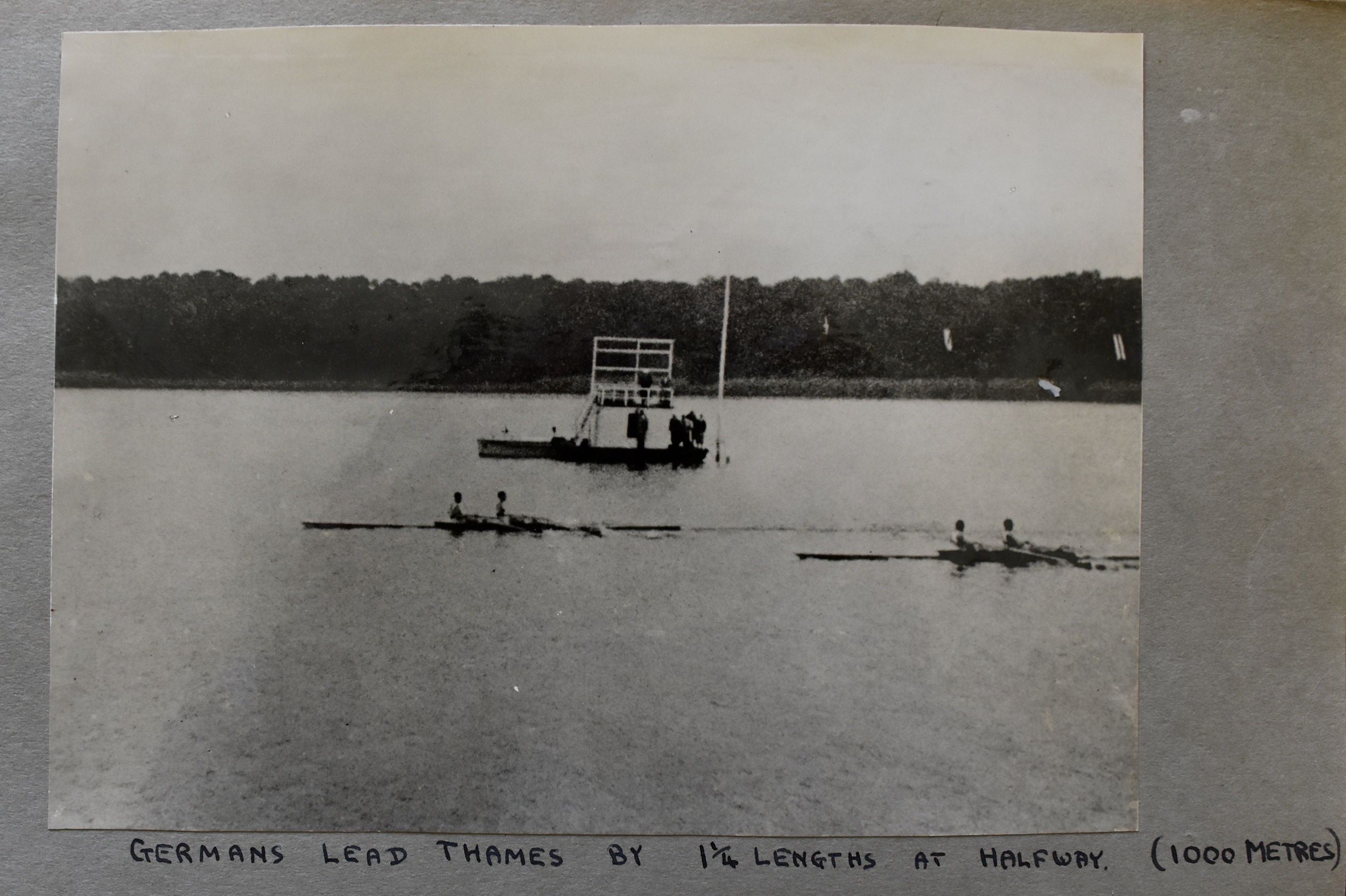
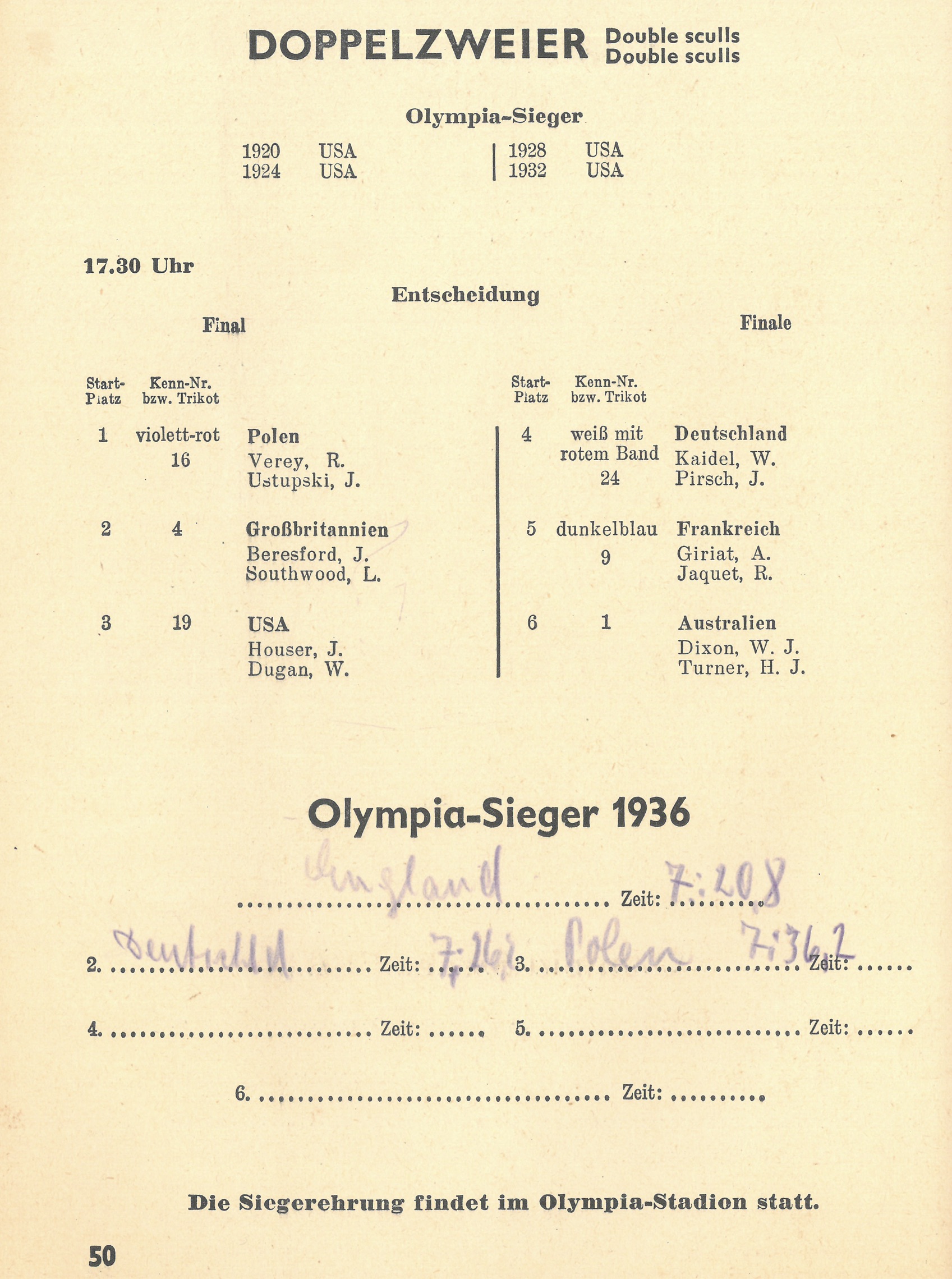
In that final, besides Britain, were Germany, Poland, France, USA and Australia. We were determined to stay with those Germans but even at halfway (1,000m) they led by 1½ lengths, with the other countries out of the hunt.
“Germans lead Thames by 1 1/2 lengths at halfway (1000 metres).”
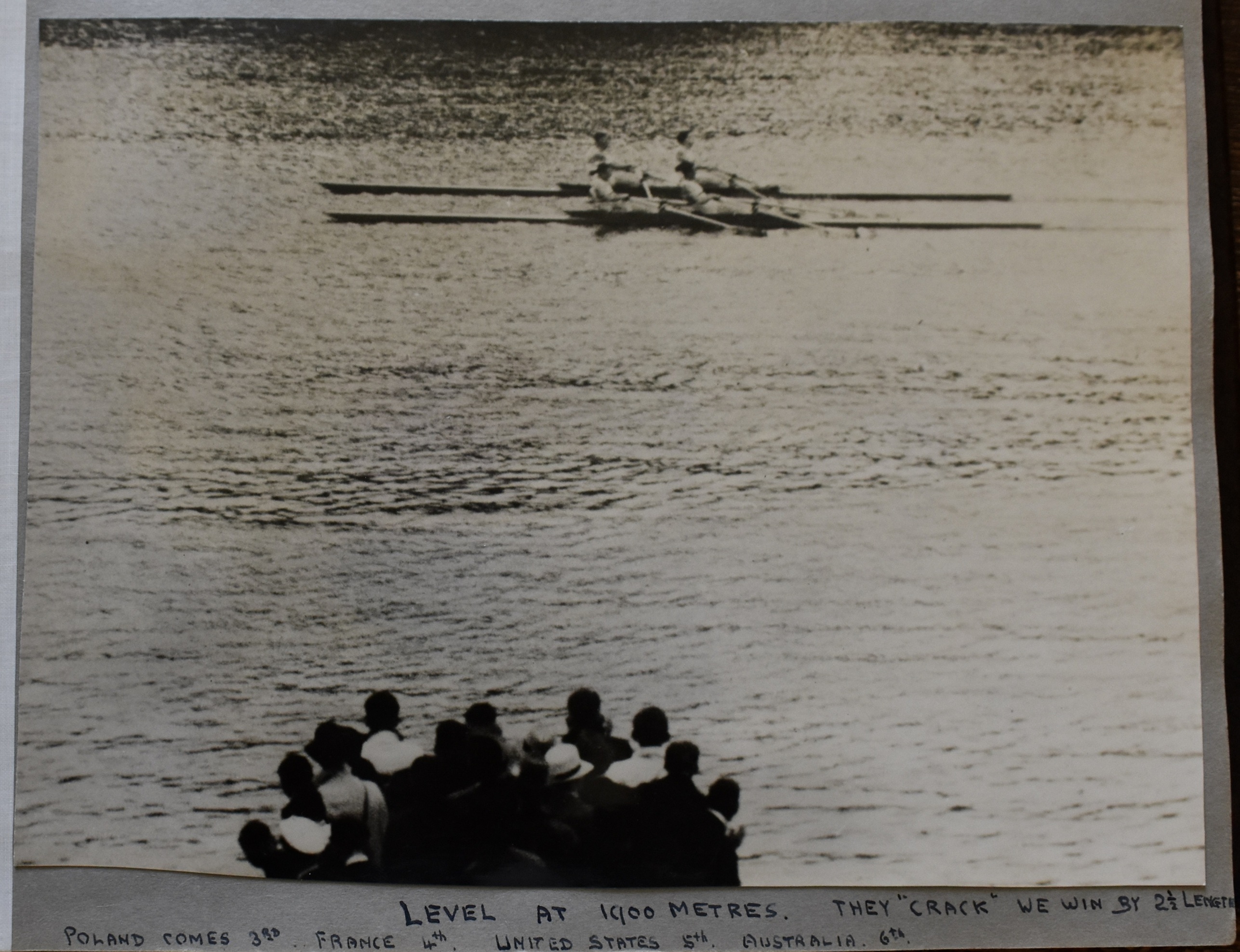
At that point we challenged for the lead and went on doing so until they “blew up”. We literally gained foot-by-foot for the next 800m until at the 1,800m mark we were dead level. And so we raced to the 1,900m mark with blades almost clashing, for they had tried the old game of trying to (wash us down) but not again!
“Level at 1,900 metres. They ‘crack’, we win by 2 1/2 lengths.”
Jack:
Right in front of Hitler’s box the Germans cracked and we went on to win by 2½ lengths. The air was electric, for until we broke the spell Germany had won five finals off the reel. Yes, the last win in the doubles was the greatest and the sweetest, for we had come out to Berlin without a race and beaten the world.
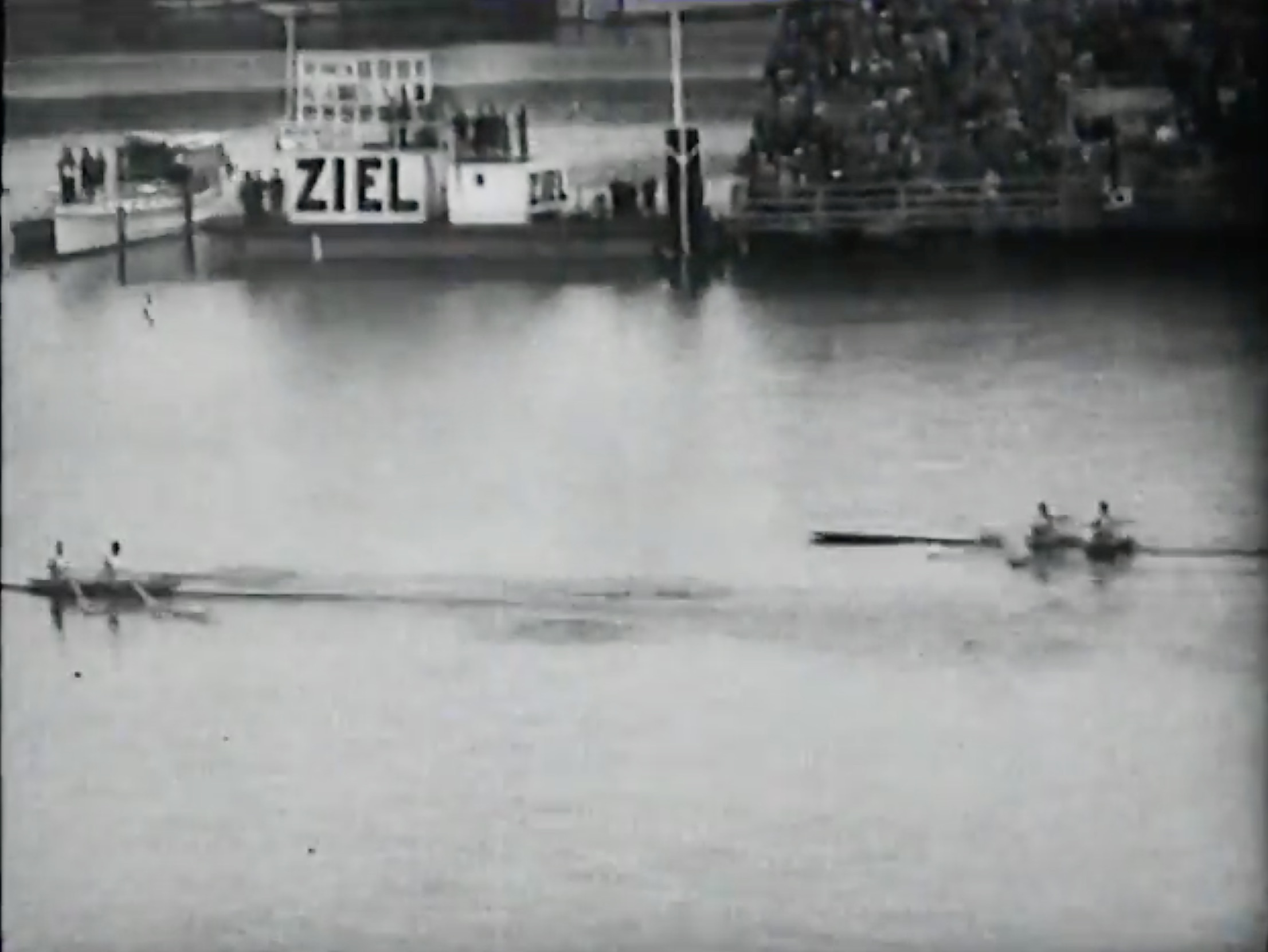
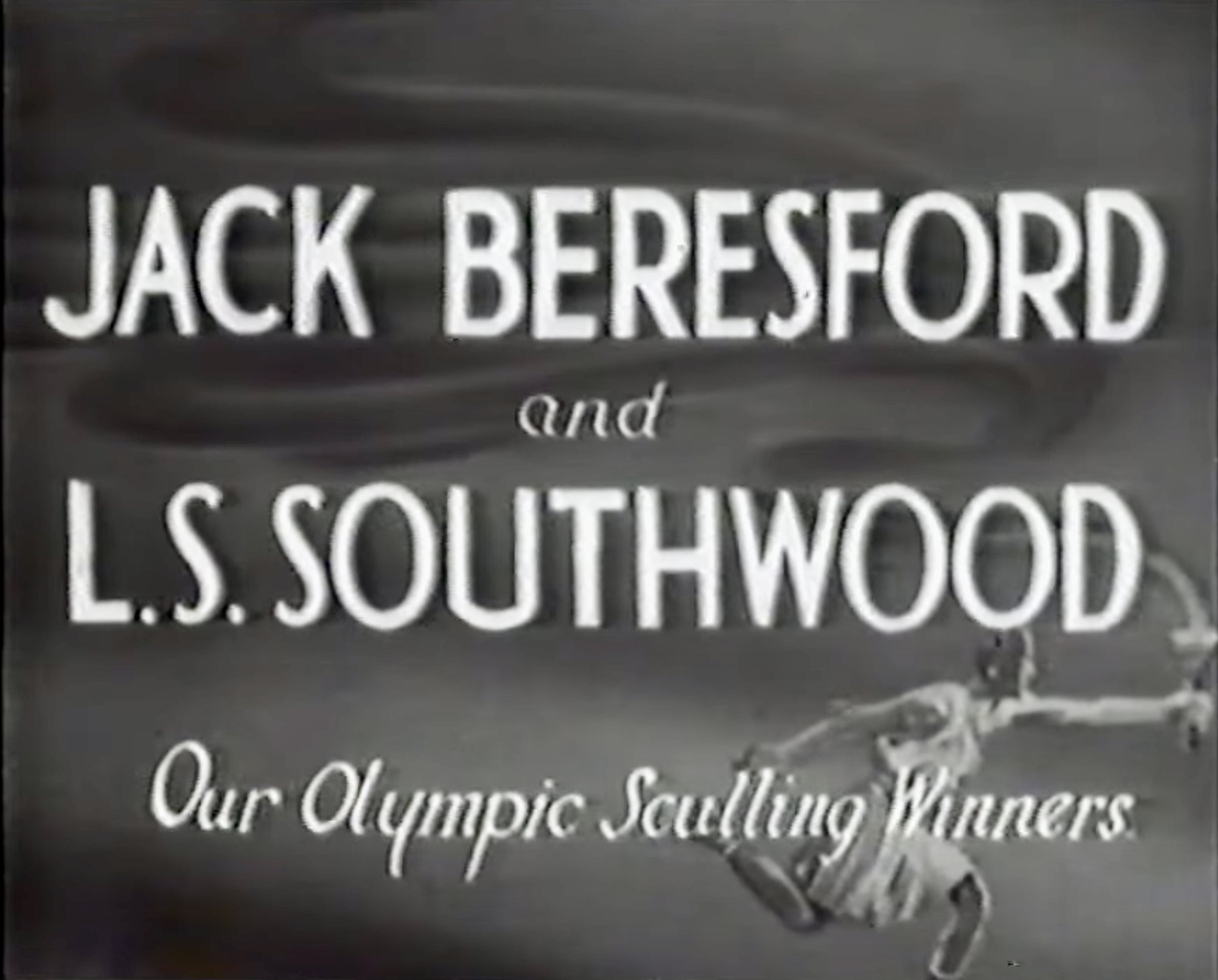
Beresford and Southwood cross the finish line followed by the German double of Kaidel and Pirsch. Picture from a screenshot of the official Olympic film, not from the Beresford archive.
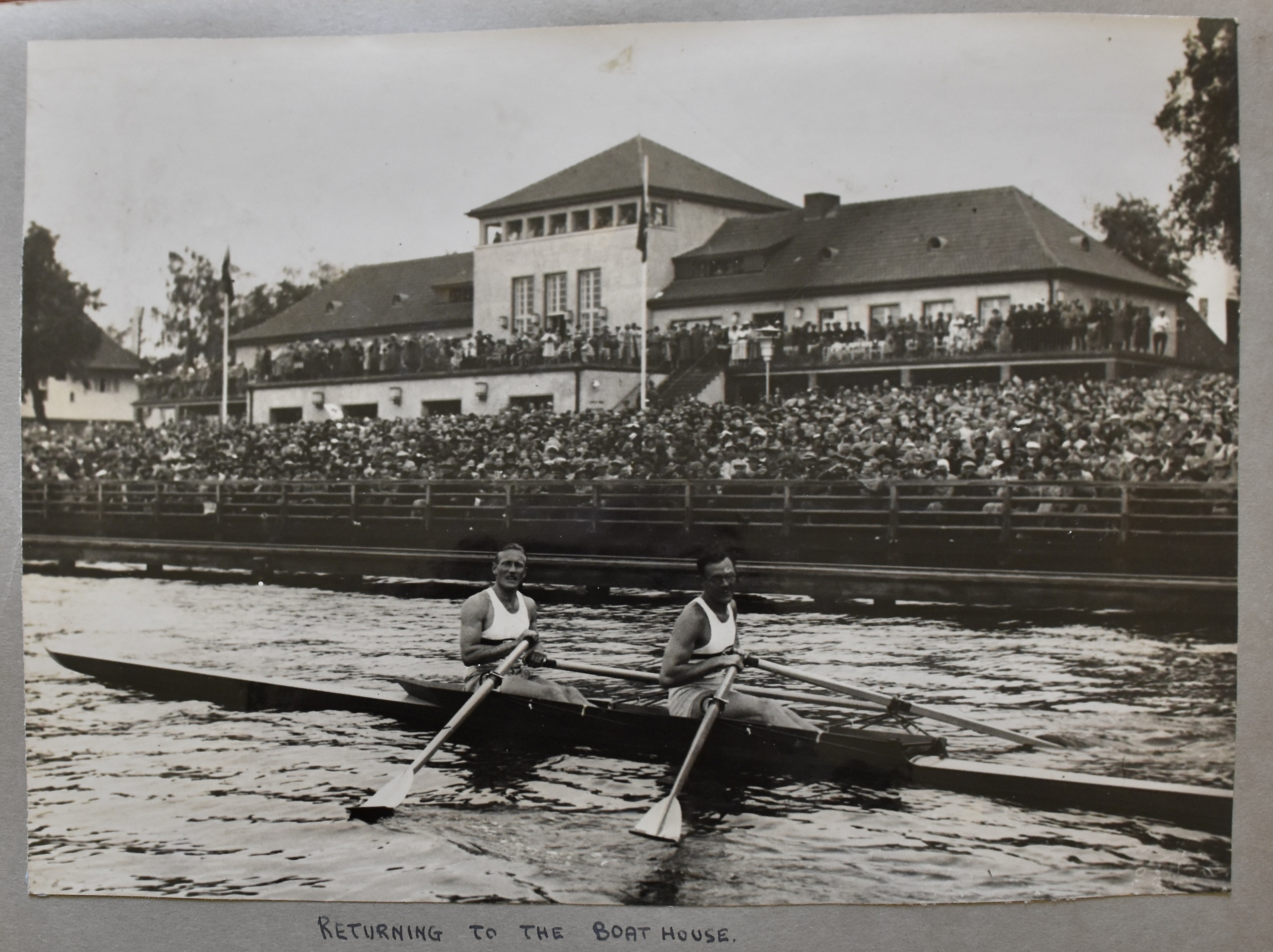
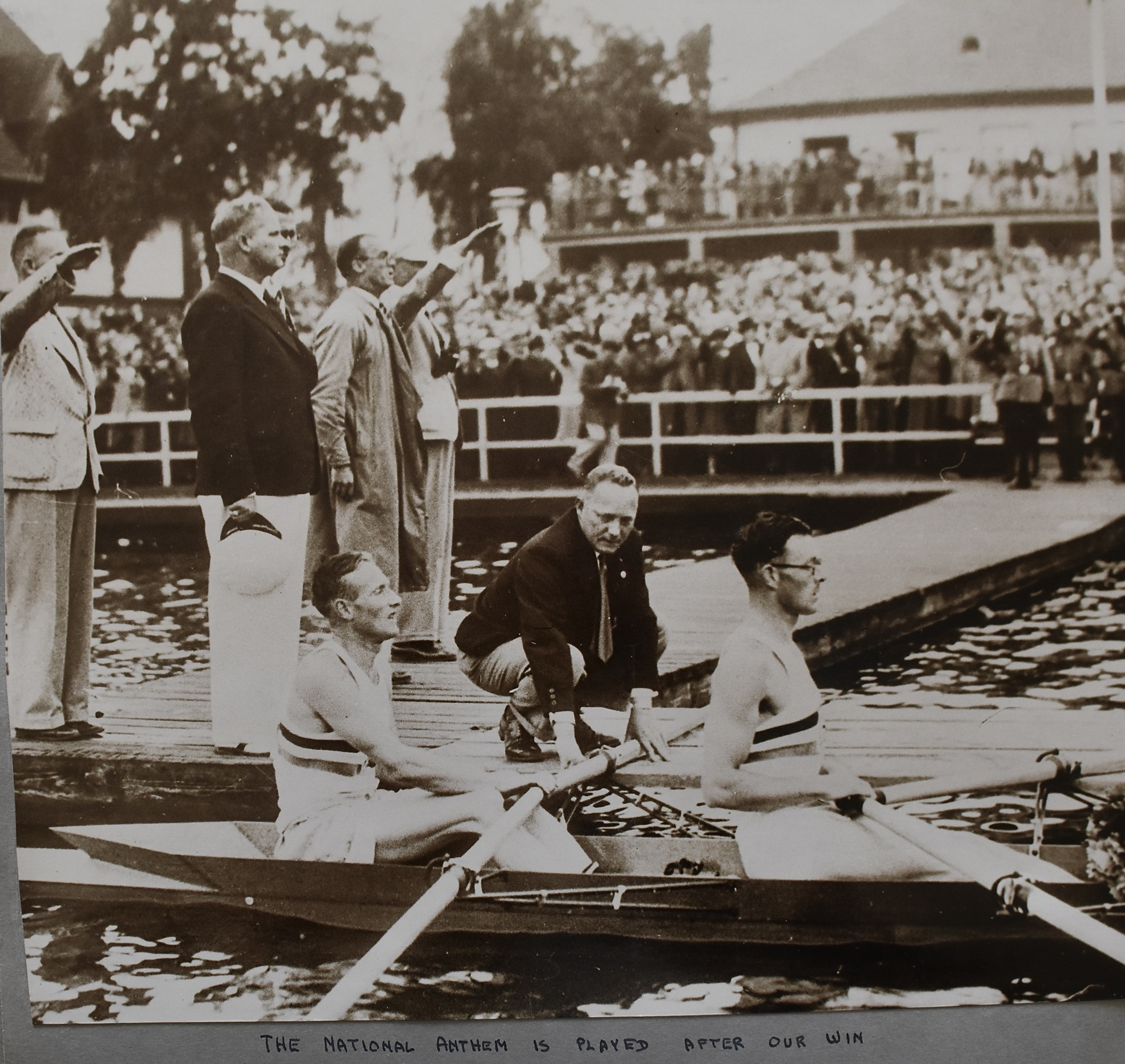
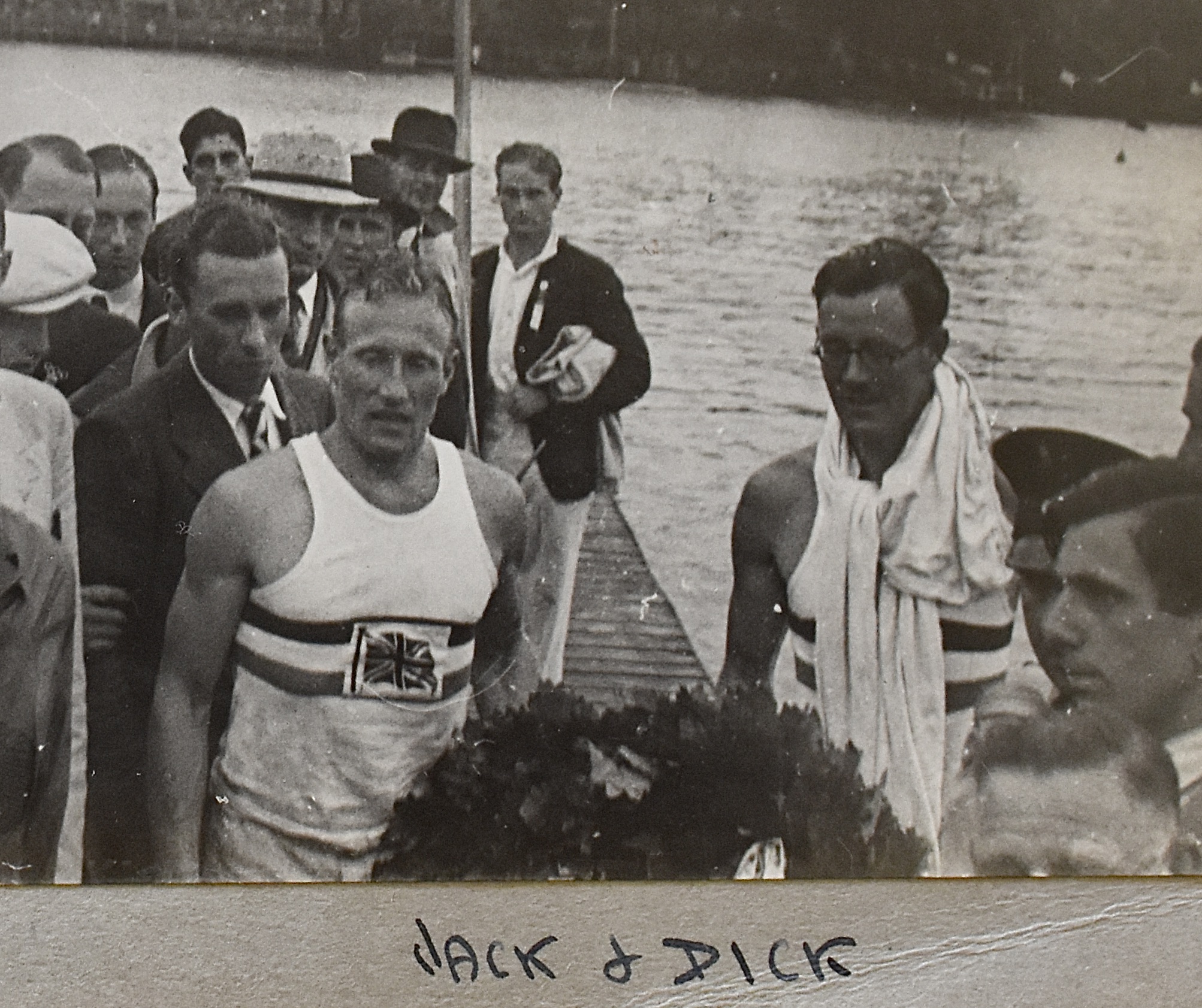
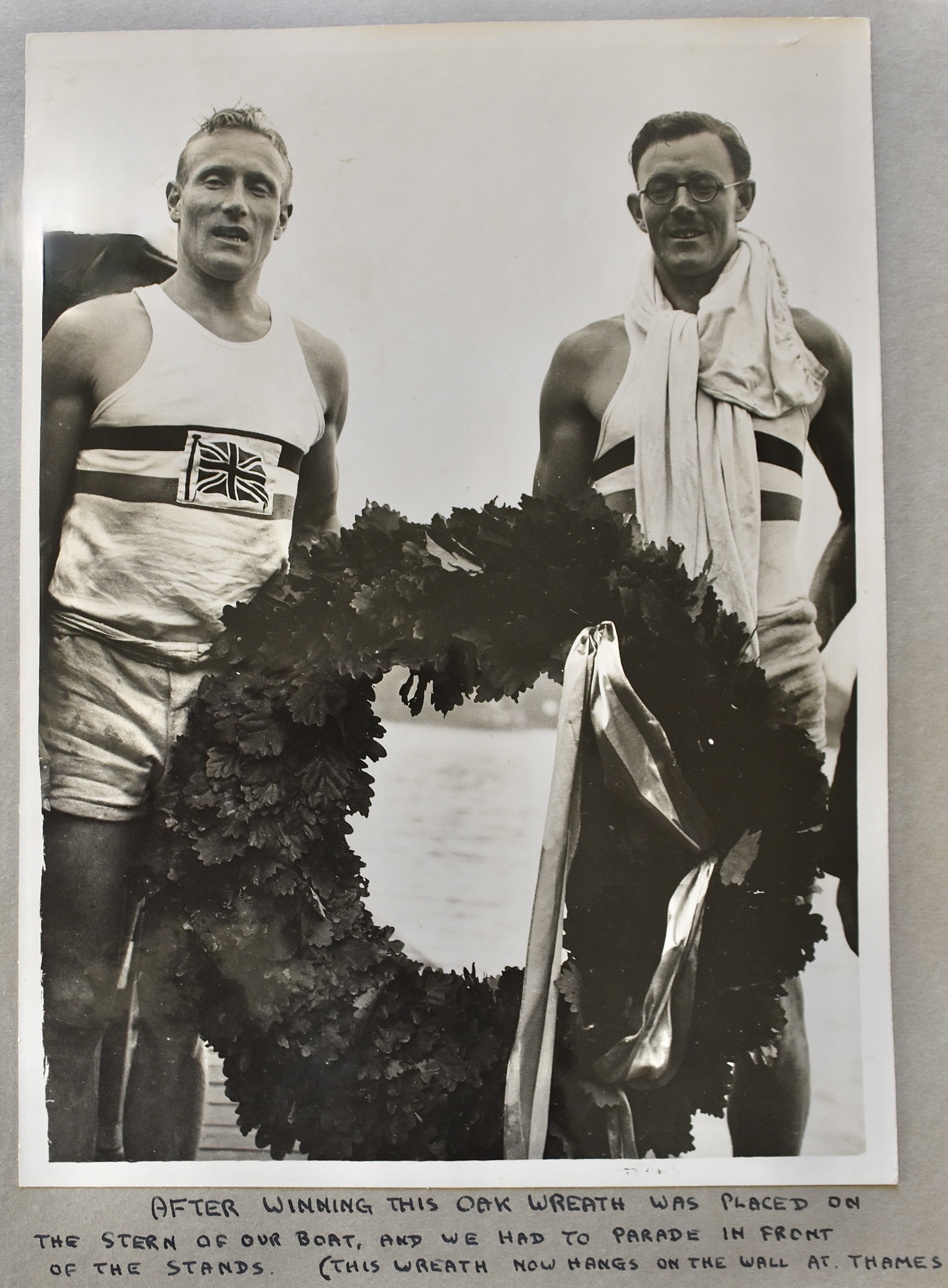
After the final.On the presentation raft.The playing of the British National Anthem. Beresford was highly patriotic and it would have pained him not to stand for “The King”. I think that the salutes being given are not Nazi gestures but are unfortunately similar Olympic salutes. Understandably, they were not used after 1936.A wreath of oak leaves was presented to the winning crews. Beresford and Southwood’s is now at Thames Rowing Club.“Coming in after winning.”Jack is perhaps showing his 37 years.
The oak wreath displayed.
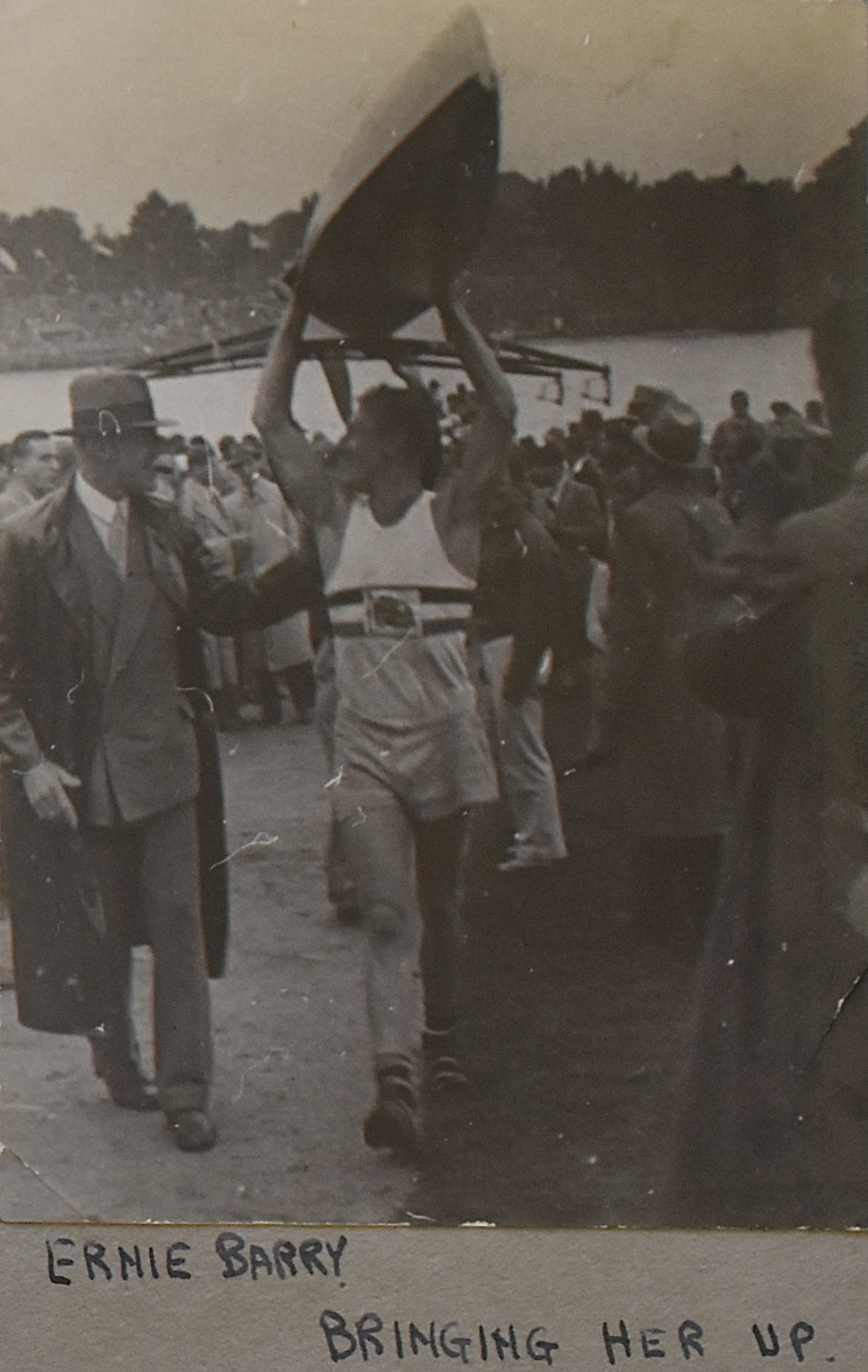
Bringing the double back in. In 1936, the British professional sculler and coach Ernie Barry was a coach at Danske Studenters Roklub in Copenhagen so perhaps he was in Berlin with the Danish team.
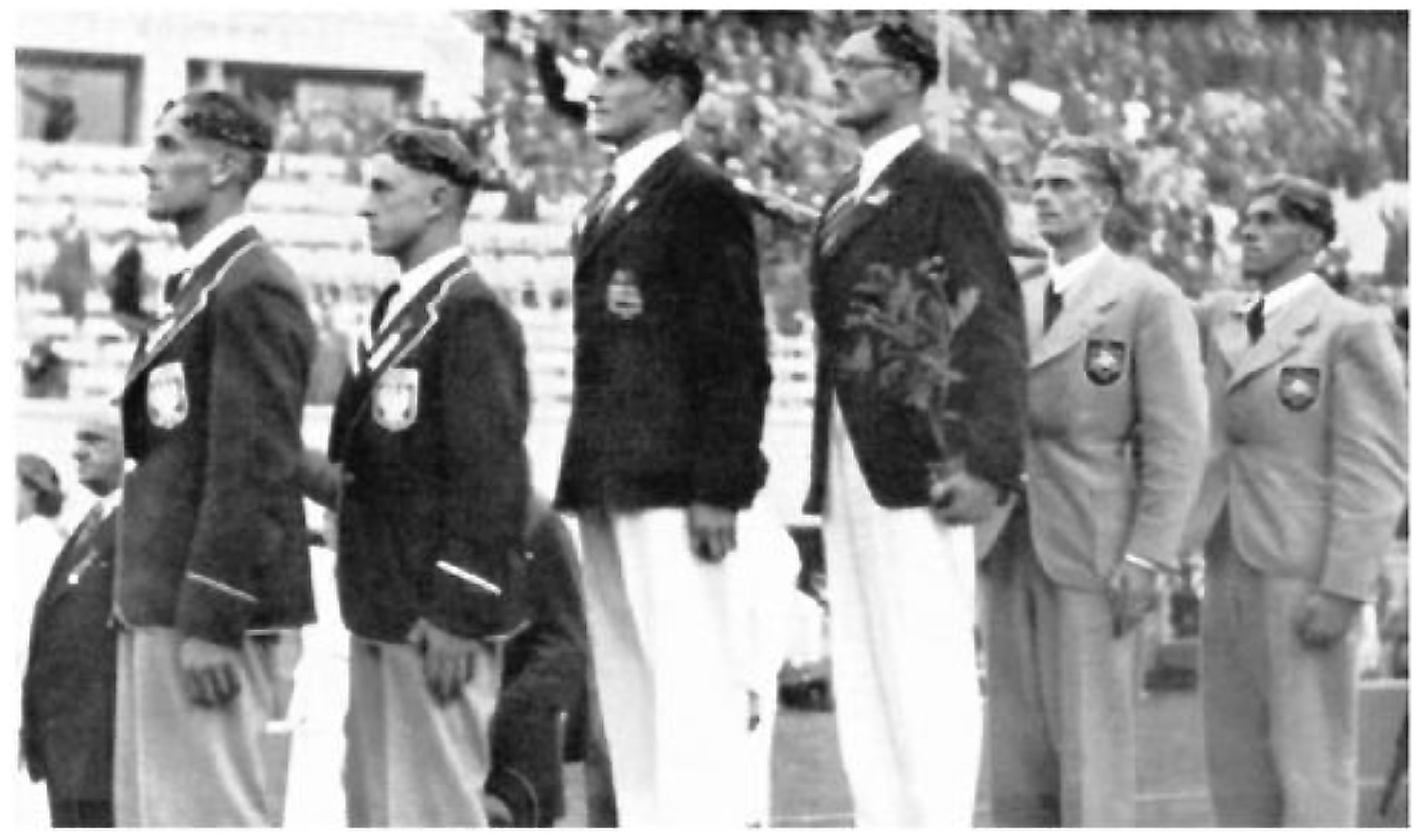
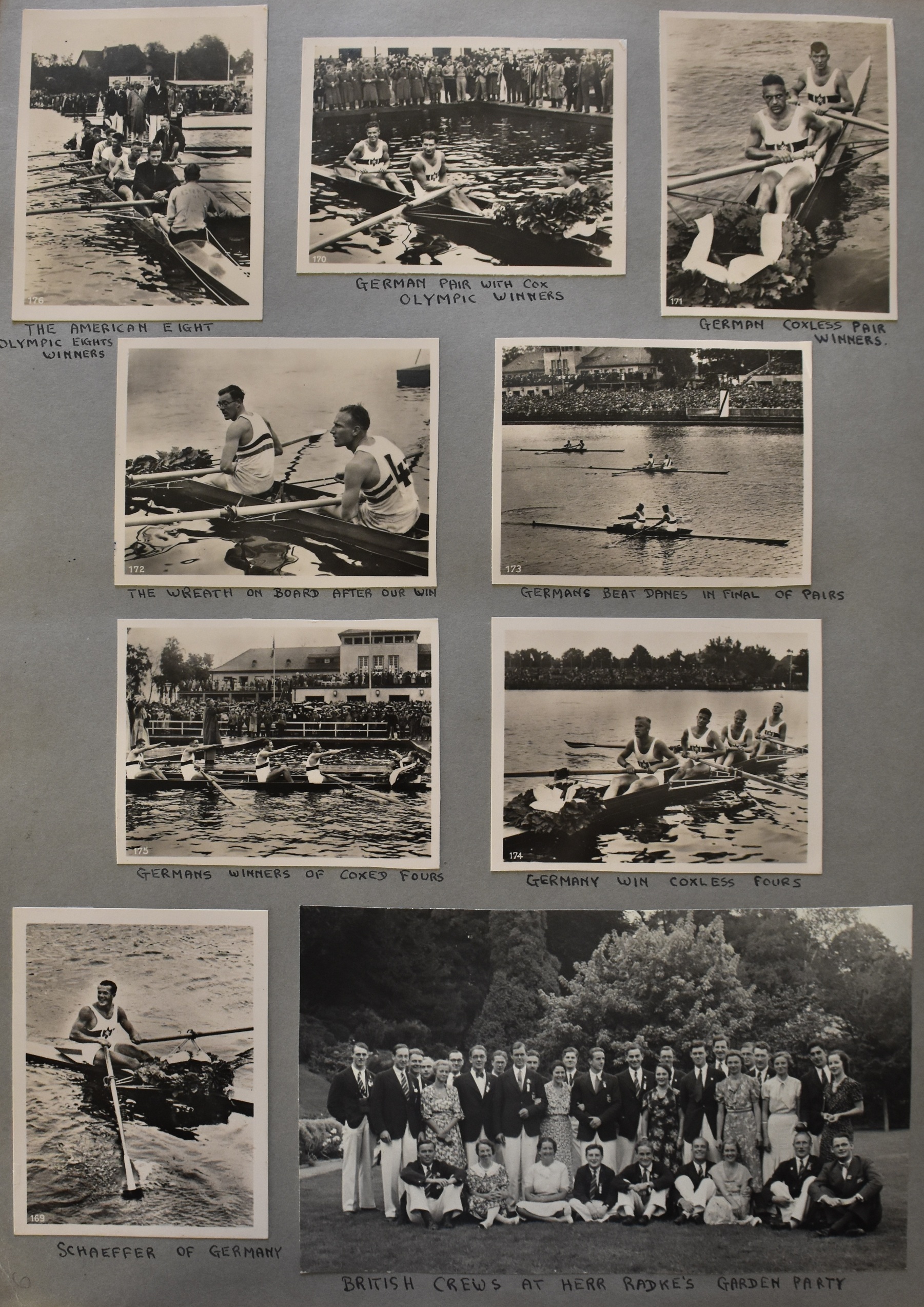
Beresford and Southward at the medal presentation ceremony. A picture from the Games’ Official Report, not the Beresford archive.Jack’s record of the winners of the seven rowing and sculling events at Berlin. The Germans won five, losing only two races and those to a couple of exceptional crews: Beresford and Southwood and the American eight, The Boys in the Boat. Perhaps Herr Radke’s Garden Party was part of the post regatta celebrations.
Congratulations from home.
“Feeling cheerful out of training!”
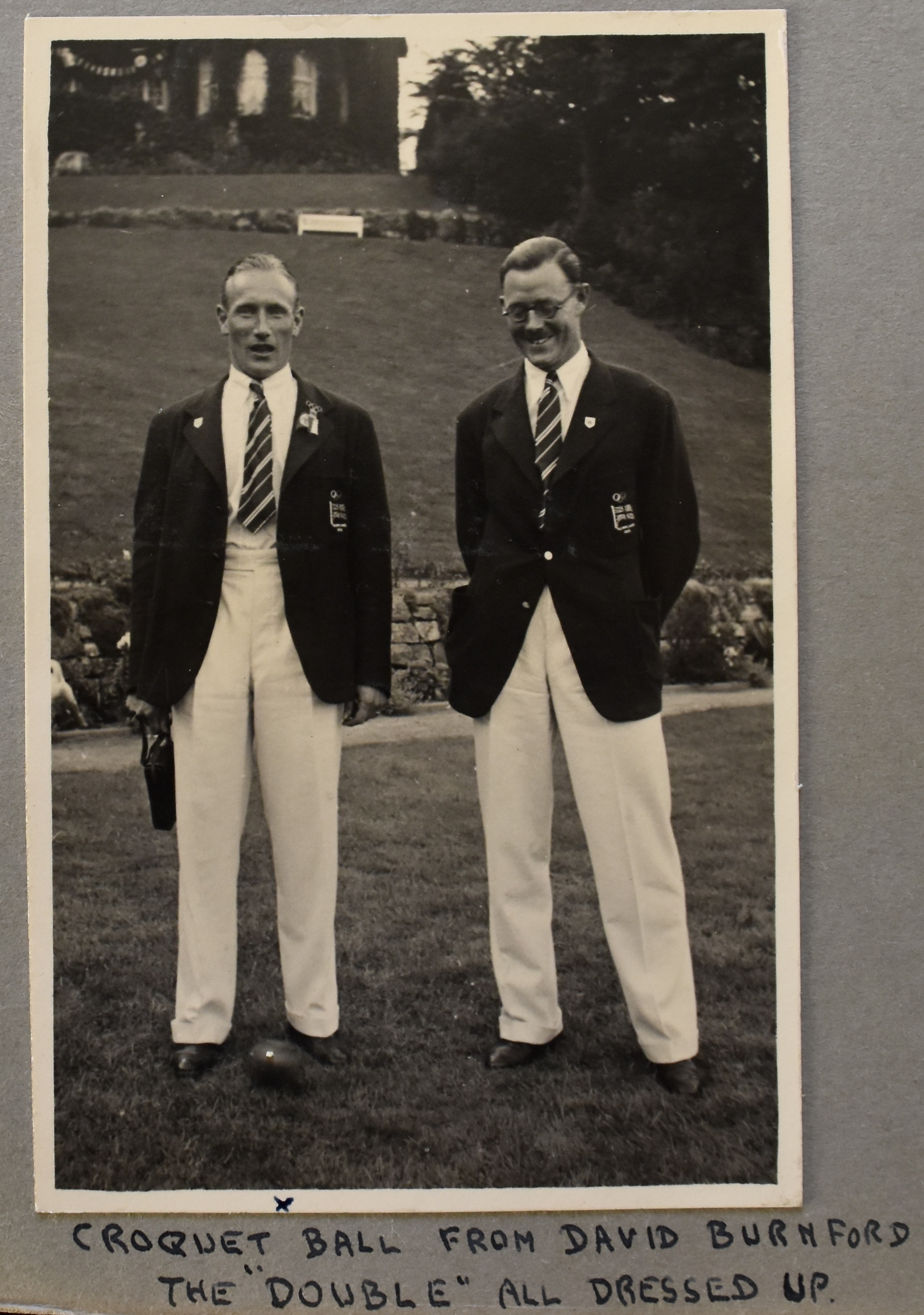
“Croquet ball (at Jack’s feet) from David Burnford.” Cambridge Blue and Henley winner David Burnford was in the British pair in Berlin and later led a most colourful (if ultimately tragic) life.
Packing up for home
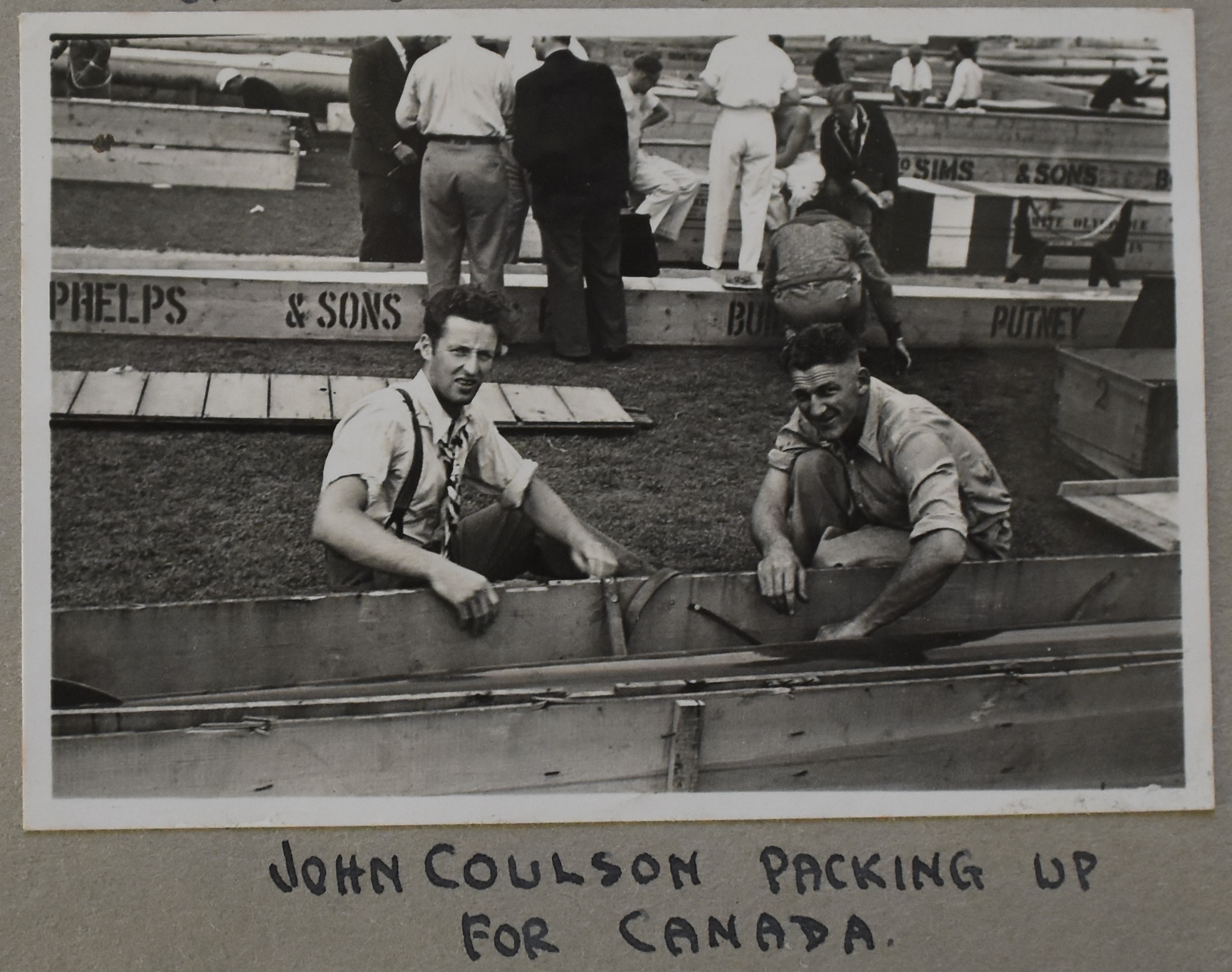
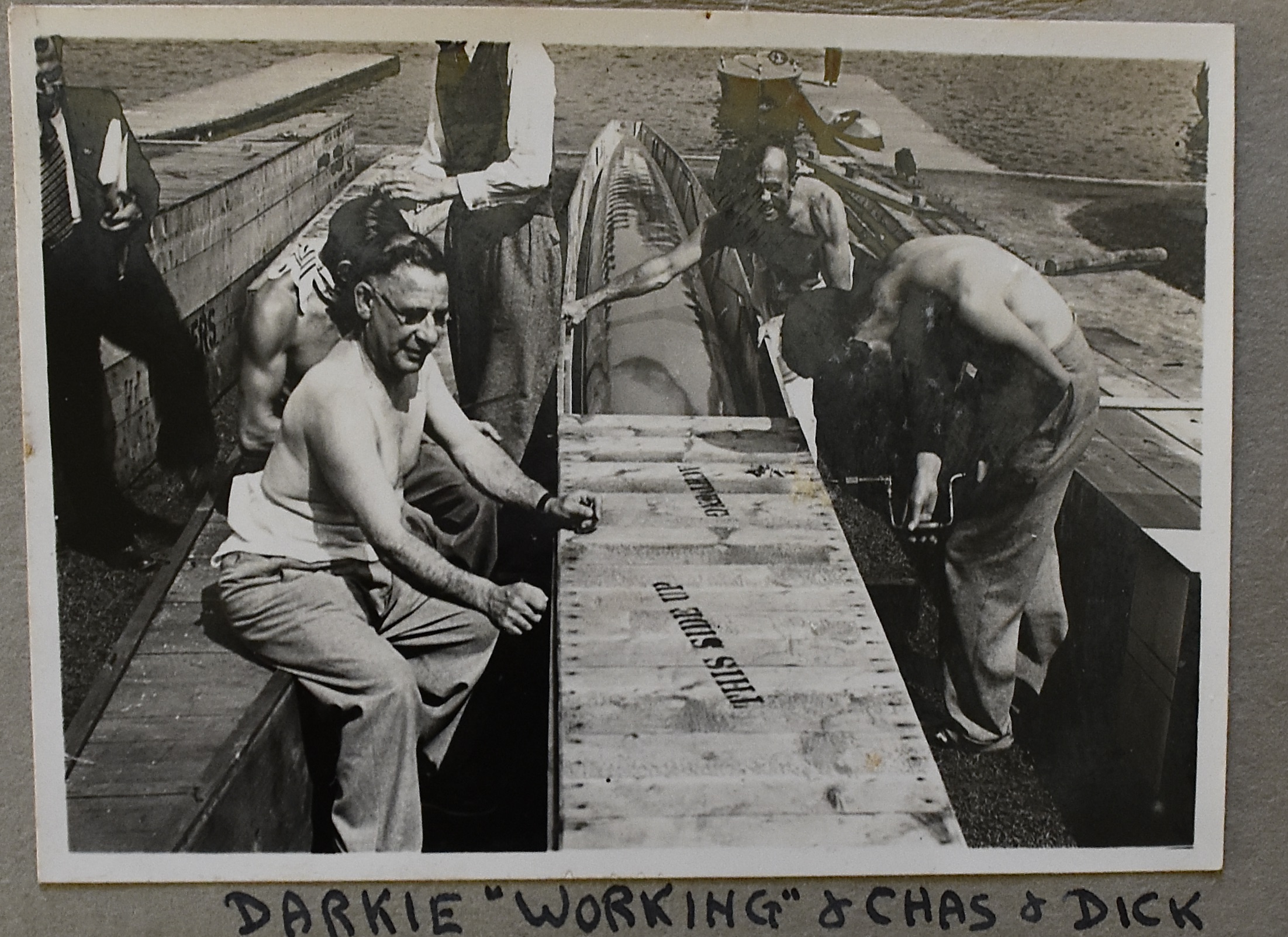
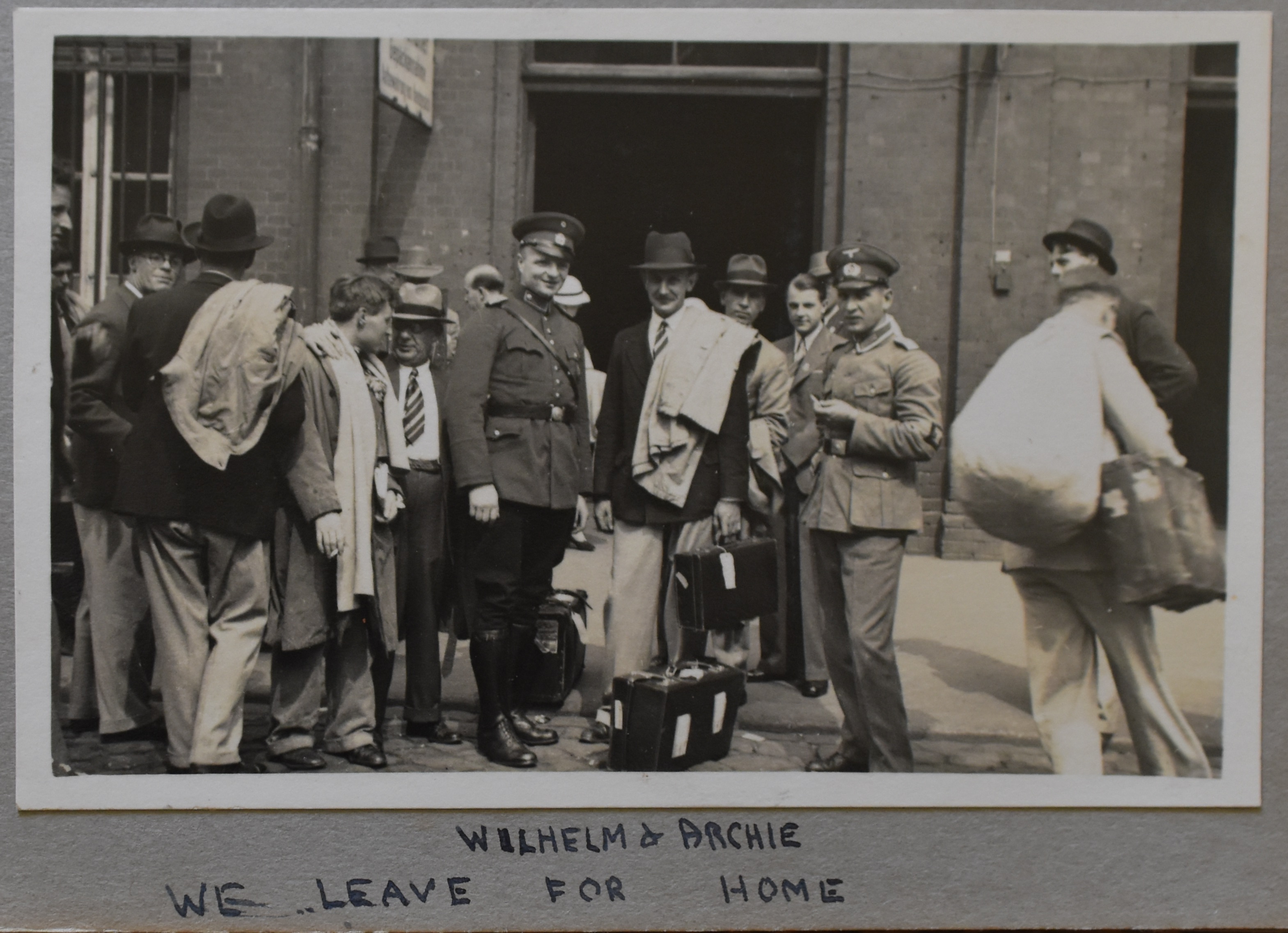
Canadian John Coulson was entered for the singles but ultimately did not compete. Note the packing cases marked “Phelps” and “Sims”, both Putney boatbuilders.Dan Williams (foreground, left) was the official team masseur, “Chas” (background, right) probably refers to the team manager, Charles Morrell, and “Dick” (foreground, right) probably refers to boatman Dick Phelps.“We leave for home.” Wilhelm is obviously some popular German functionary while Archie was Robert A Nisbet, one of the team’s two honorary coaches and a silver medalist in the pair in the 1928 Olympics.Bossie may have been upset at Jack’s quiet reception back home, but I suspect that the man himself was not too surprised and probably did not much care.YouTube has some films from 1936 that have been joined together. The first is a silent cinema newsreel of the opening of the Games with Jack shown carrying the British flag at 22 seconds in. The finish of the doubles final begins at 1min 29 secs. From 2min 16 secs there is sound film of the coxless fours and the eights finals intercut with shots taken in training. From 6min 20sec there is a wonderful report on the new Olympic champions in their double back on the Thames Tideway and showing their arms between the knees sculling style.
After he returned home from Berlin, the ultra competitive Jack Beresford may well have been thinking about taking part in the Tokyo Olympics of 1940 at the age of 41. Sadly, four years later, the world had no time for games.
Part III will be a selection of my favourite photographs from Jack’s other albums.
Thank you very much for these articles and for so elegantly addressing online scolds’ nonsense. The photos highlight the athletes and the sport, and give us much to think about.
Thanks, Tim, another fascinating story about Dad & Dick. You’ve drawn so much narrative from the photos, which I love. I’ll now have to re-study the photos!











 Hear The Boat Sing
Thank you very much for these articles and for so elegantly addressing online scolds’ nonsense. The photos highlight the athletes and the sport, and give us much to think about.
Thanks, Tim, another fascinating story about Dad & Dick. You’ve drawn so much narrative from the photos, which I love. I’ll now have to re-study the photos!