
6 June 2025
By William O’Chee
HTBS discovers the intersection between rowing, art, and what really matters, in this discussion with rowing artist, Kate Pontes de Freitas.
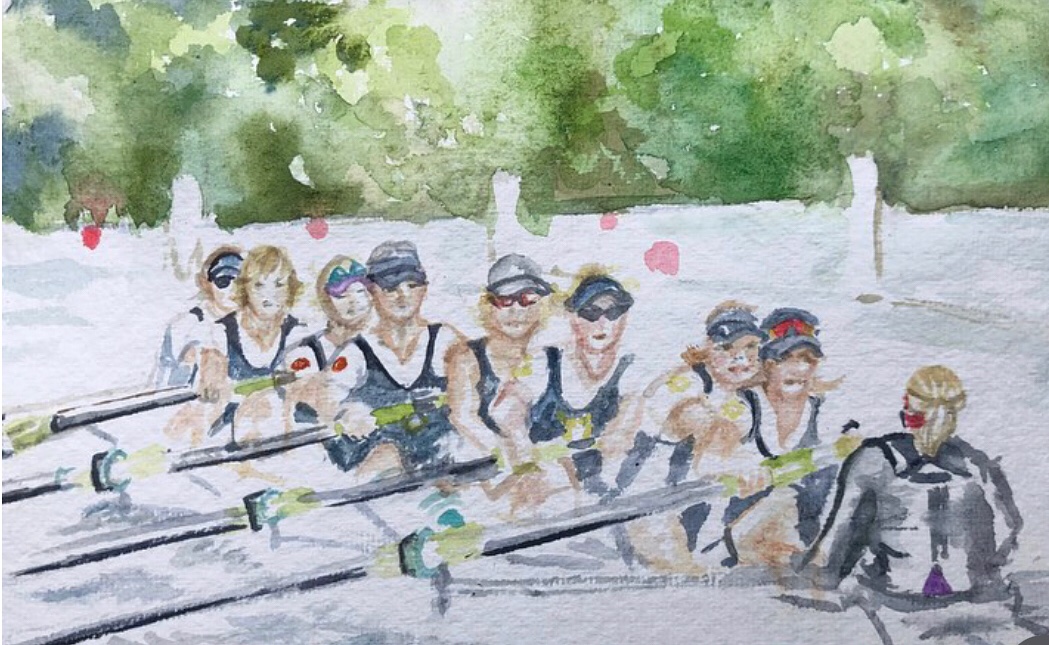
Anyone who has rowed at any decent level will know there is something sensuous and beautiful about rowing and sculling. There is the delicious sense of run on the finish, the tinkling singing of the hull, and the surging boat speed as the drive reaches its culmination. However, beyond these, rowing has a visually aesthetic quality which few sports can match. Given all of this it is simply astounding that the world does not abound in rowing art – but it doesn’t.
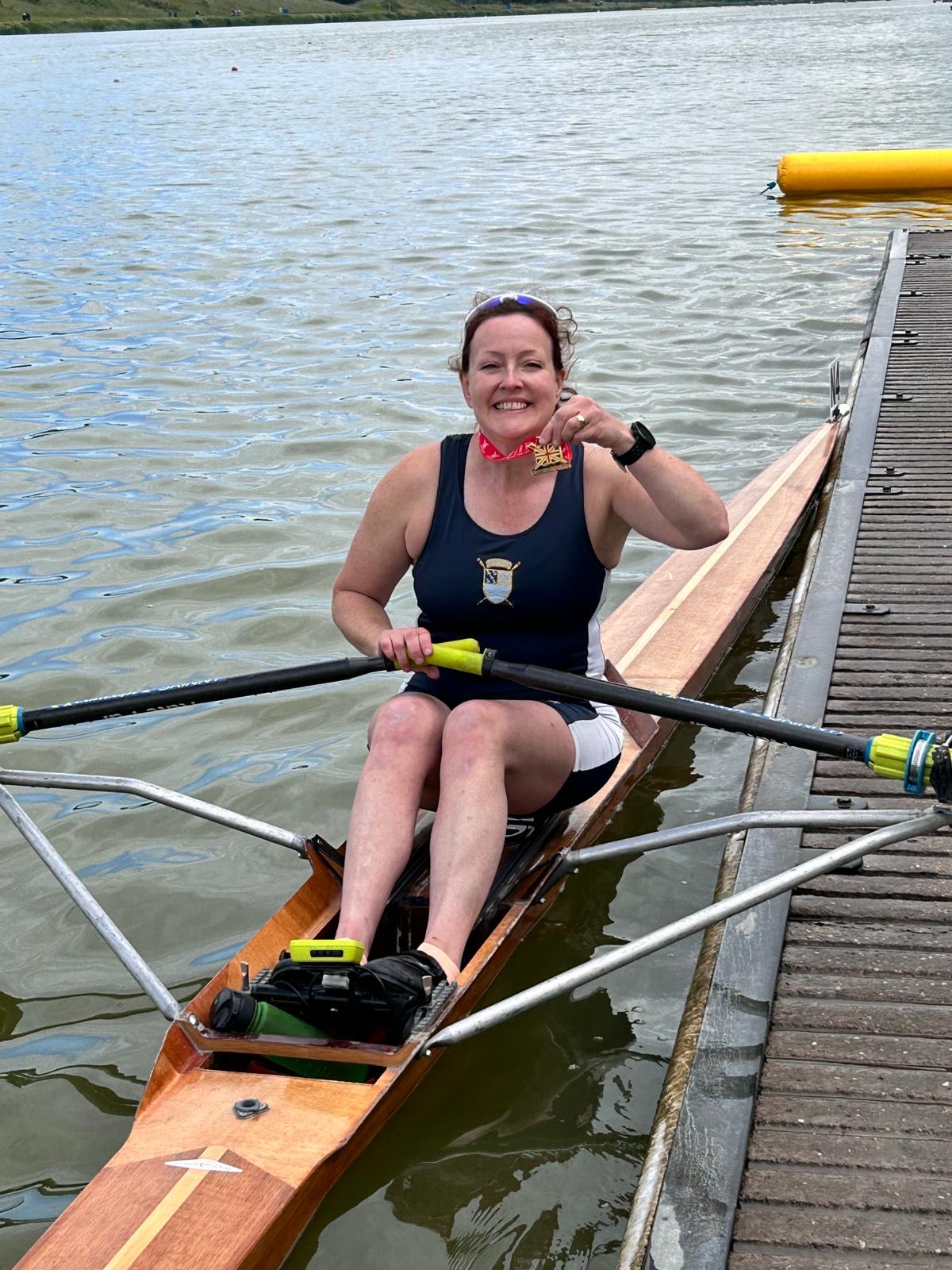
To their great credit, the Stewards of Henley Royal Regatta have arranged for a number of artists to display their work in the Stewards’ Enclosure where the regatta trophies are on display. One of those artists, Kate Pontes de Freitas, is also an accomplished rower in her own right, having won at British Masters National Championships in her single last year. With this in mind, I sat down for a discussion about her art, and her love of the river. Kate wears her heart on her sleeve, which makes for an interesting chat.
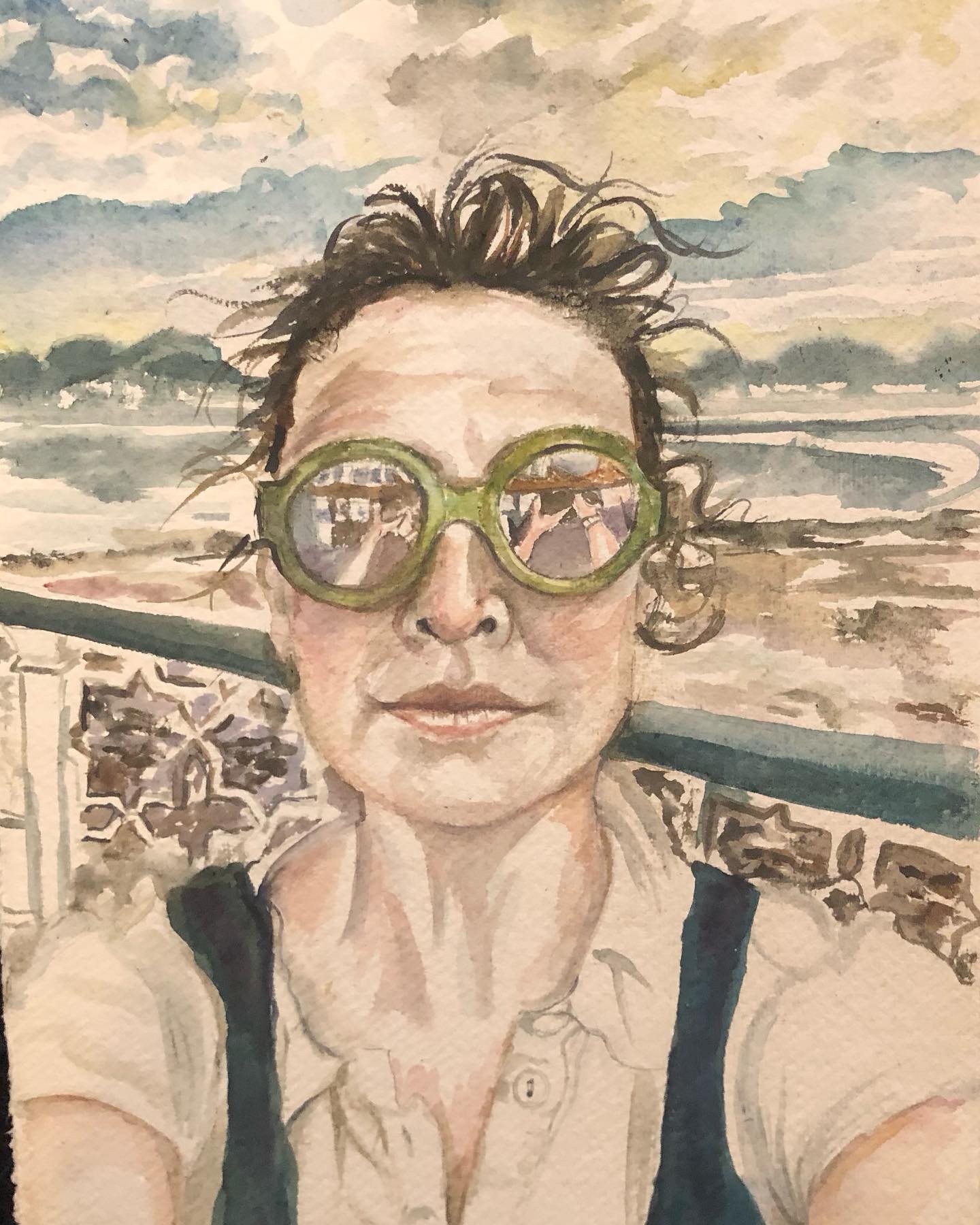
“A lot of art is about what do I want to celebrate here? What do I need you to know? What do I really want to tell you about what I love?”
Kate is quick to point out that her love does not come without a cost.
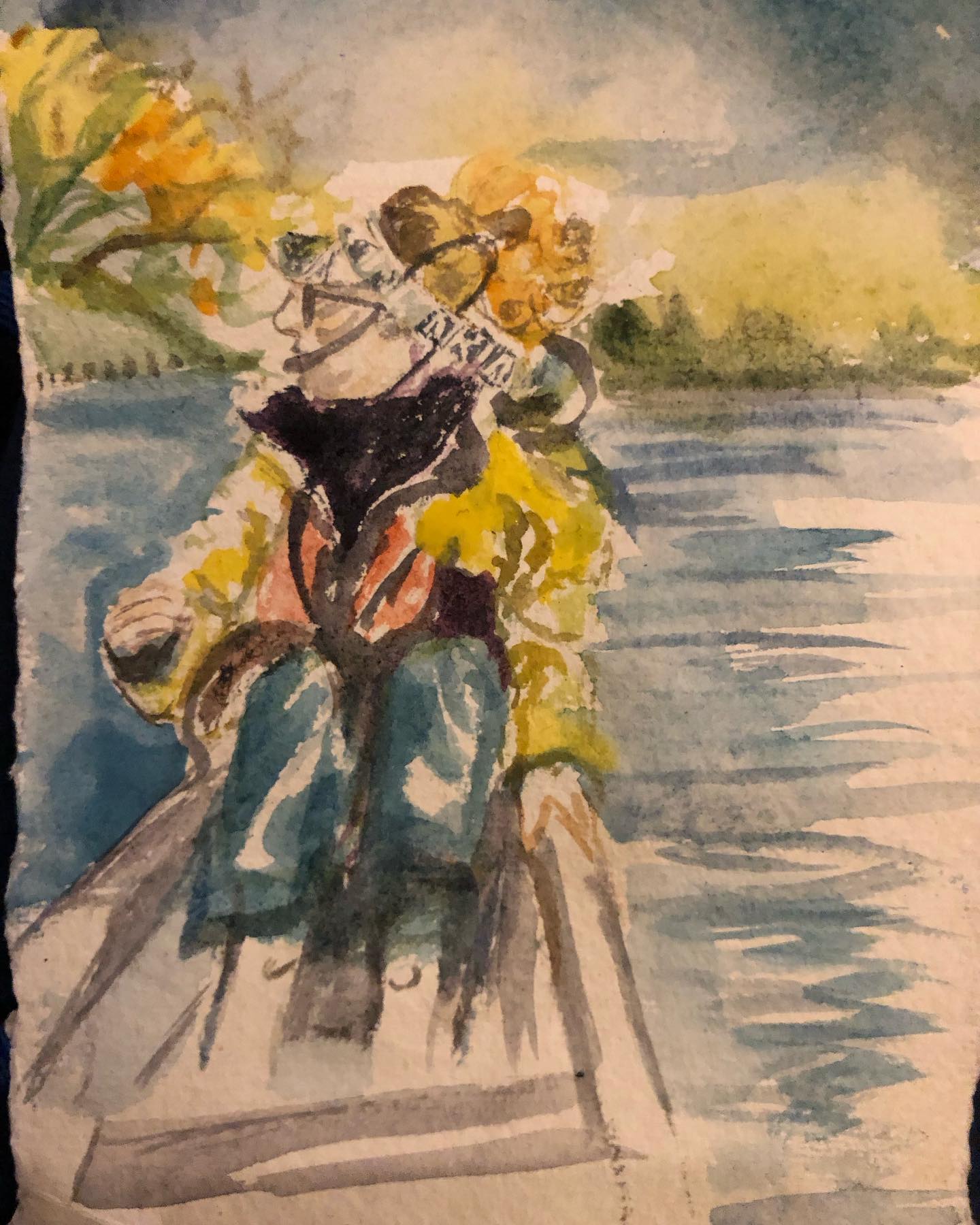
“The first thing you notice is physicality in a boat. In terms of art, if you’re painting rowers for example, you want to paint exactly what they’re going through”, she tells me.
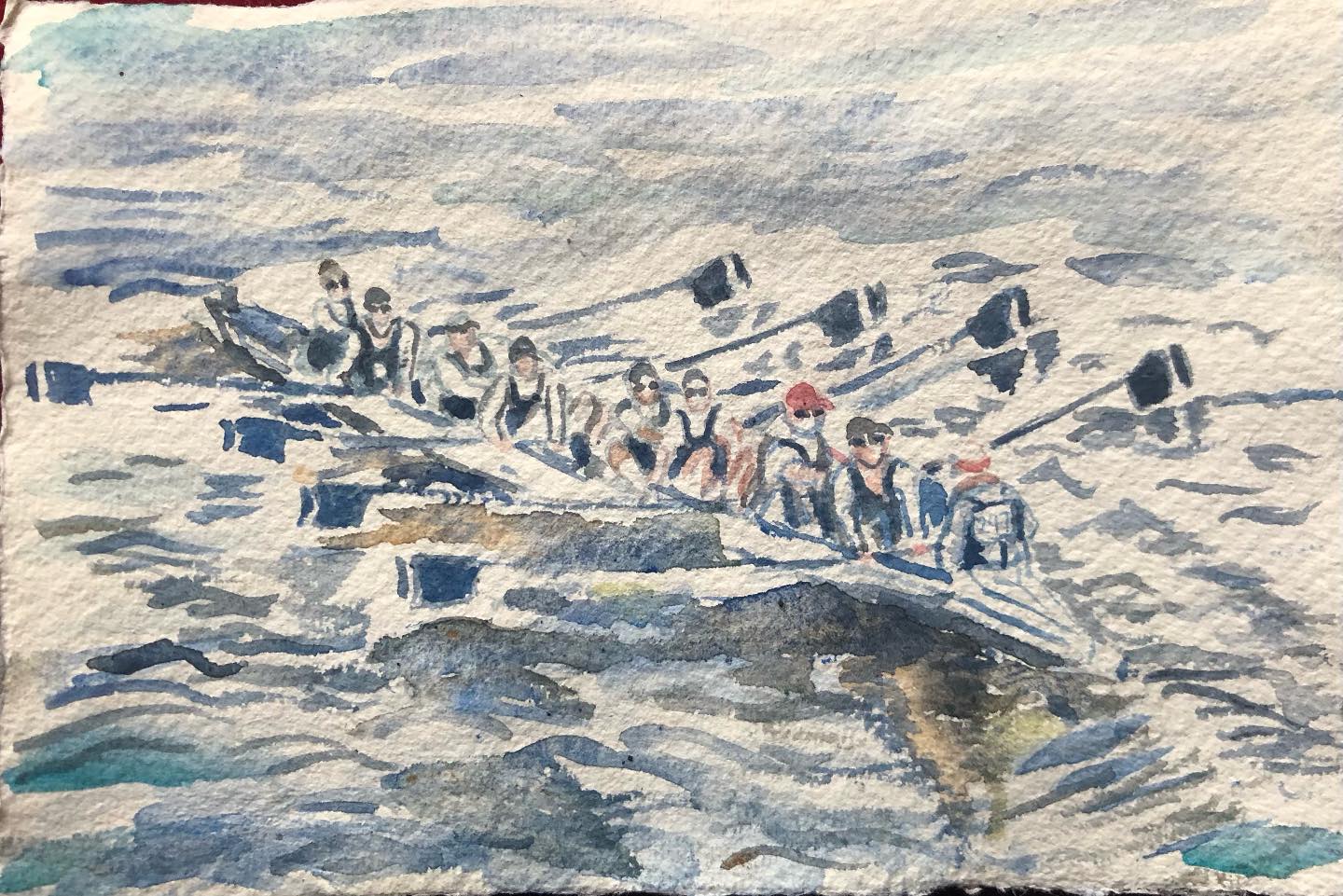
“The other thing is I am really fascinated by water, and how water is affected by boats and rowing.
“You see a lot of rowing art and you can tell it is painted by people who don’t row. And I think the reason for that is because of physicality and what it costs you to row, and how the tensions are recorded in your body. I think that as an artist I want to get that across.”
For those of us without any artist talent, that sounds confusing, but she explains.
“In terms of physicality it is often just an angle, it’s about which bit of the body to feature. Sometimes it can be so hard. Sometimes you can put too much information in. So, it’s about finding the most important thing; what do I really love about what I am painting, what’s the thing I most enjoy from looking at it?”
She also manages to capture the beauty of the rowing scene, especially around Henley Royal Regatta.
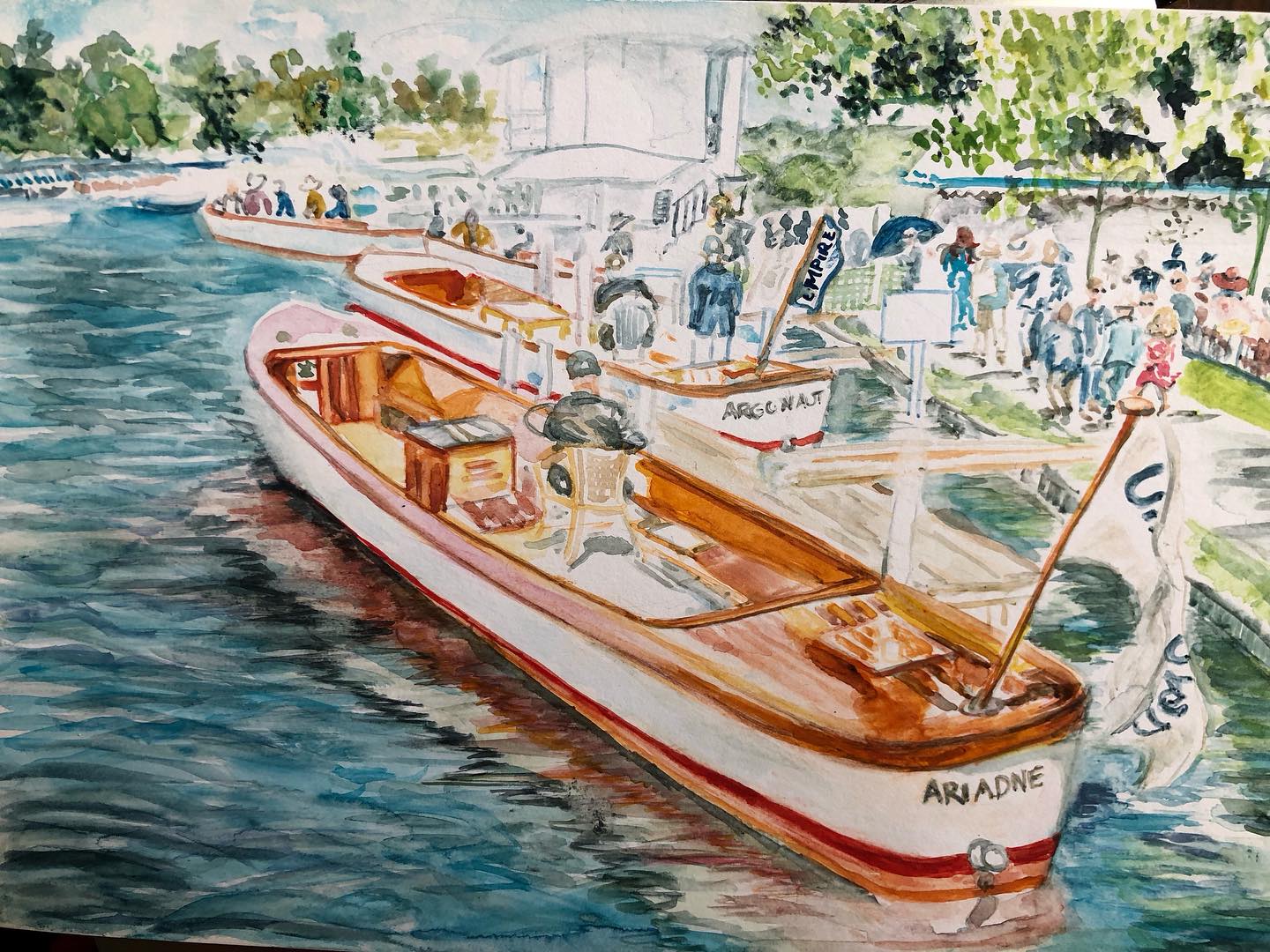
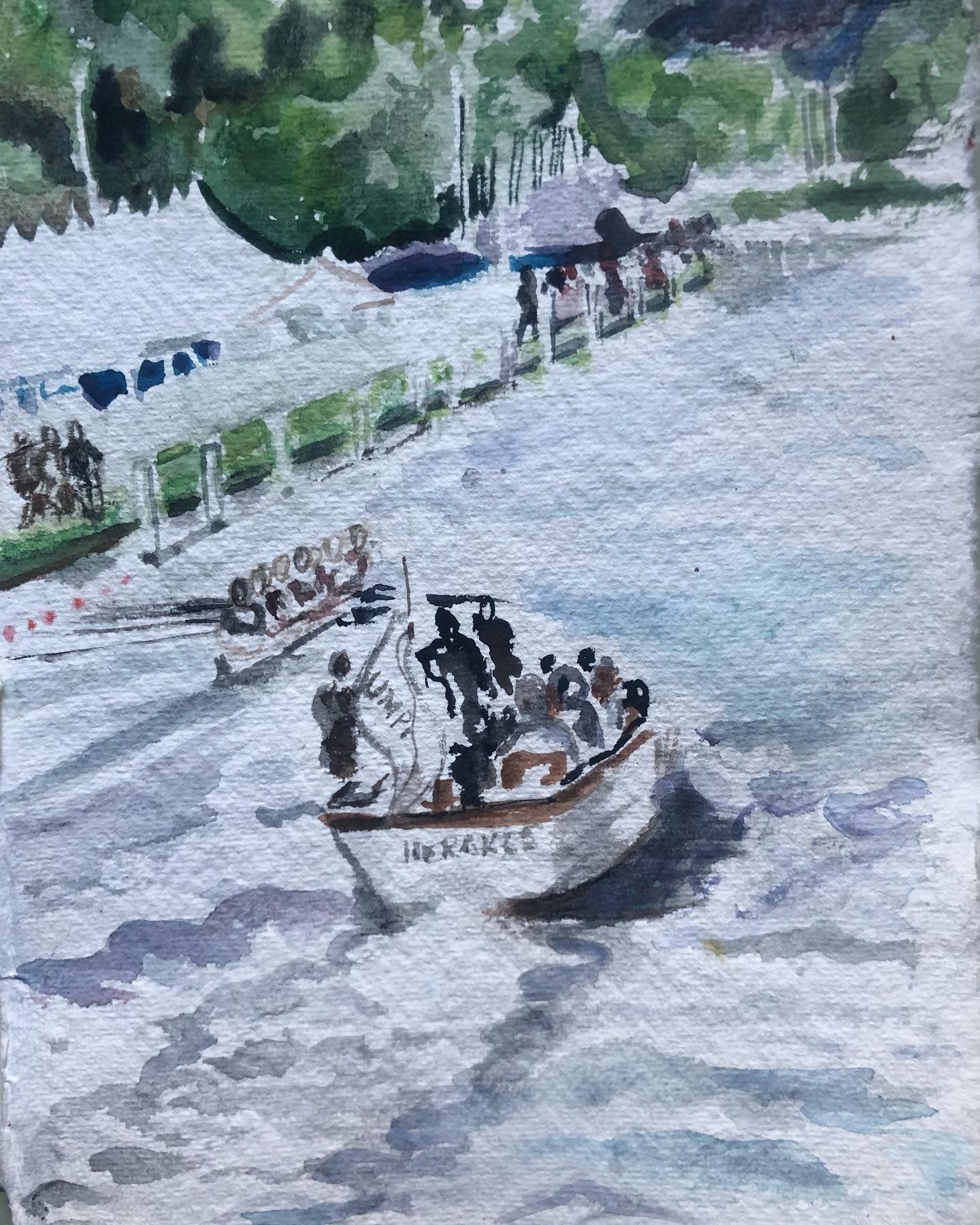
“I’ve been doing a lot of paintings on cotton rag paper, which is very rough and it soaks the colour up instantly, so impressionist painting is the impression you get from looking at it, but it is also from an artist’s point of view, ‘what’s the first thing that I want to show about this? What’s the thing that I want to celebrate about this? What’s the first impression I’ve had looking at this?”
It helps, no doubt, that she comes from an artistic family.
“My father was always drawing us and he taught himself to play the guitar. He did his humanities degree whilst being in the Royal Air Force and is a prolific poet. My mother sang and won art competitions at school and wanted to be a fashion designer but ended up in the RAF where she met my Dad , and she later became an Antiques dealer. My sister Lucy Williams is a costume designer who has designed for Bafta nominated TV shows. She also plays the cello really well too,” she tells me.
Art was always going to be part of her life. She started on stage, then embraced singing, and finally painting.
“I asked to go to boarding school which was odd as I was so homesick when I got there and cried for three months. We chose the school as it had an amazing art department, and I also used to help mend the very old costumes in the costume department. It was also a very sporty school but at the time I was very shortsighted, wearing glasses and had astigmatism, and so absolutely useless at most sports,” she says of her school days.
Somewhere along the way, rowing crept into her life.
“As previously mentioned, I was very unsporty at school and always had my head stuck in a book or a sketch pad but my first jobs as an actor involved a lot of dancing, so I became very fit by accident. Moving to West London I ran 10ks, a few half marathons and a couple of marathons. One of my running routes used to take me past Putney Town Rowing Club on the Thames near Kew Gardens and I thought ‘I want to learn how to do that!’ I joined the racing squad at PTRC about six years ago.”
One of the loves of Kate’s life is her scull.
“I have a Carl Douglas wooden shell that is rigged to cope with the Tideway really well, which is quite lucky.
“It belonged to the president of my club, who was very, very well respected and well loved, John Comer. Whenever I go anywhere with her, people recognise her and say ‘Oh, you’ve got John’s boat.’ She’s a good friend, and she has a really good run on her,” Kate burbles.
A lot of her works depict scenes from her home water on the Tideway, and I am reminded of her comments about the water, and how it is affected by the boat.
Kate explains that while they seem very different, rowing and painting intersect in important ways.
“So the way that you would notice something and the way you would respond to it is that same in everything that you do. I think the kind of artist I am is very similar to the kind of rower I am, which is also very similar to the kind of singer that I am, or the kind of writer that I am.
“Take rowing for example, when you’re single sculling and you’re working by yourself and your trying to improve, the first thing you are doing is you are noticing. So, you’re noticing where your bad habits are. I think the same is true for art. You’re choosing your subject and it’s ‘Okay, what caught my attention about this? What is it saying to me? Why do people need to see this?”
We also discuss the pain involved in training and competing.
“Rowing is so binary, isn’t it? Regattas are so short – four minutes for masters – and you’ve trained weeks and months. So there is something very extreme about it,” she muses.
“I’m going through that myself at the moment coming back from something. But everybody has to come back from something at some point. Everyone is going to have peaks and troughs. So it is such a good sport for teaching you how to manage expectation, teaching you psychological strength as well as physical strength. Teaching you that sometimes it is your day and sometimes it isn’t; sometimes you’re going to fall in, and you never saw that coming.
“It’s such a real life lesson, rowing, isn’t it?”
We conclude by discussing ambition, a big part of sport, but also of art. What is her artistic ambition?
“To have a painting that I am truly happy with. I get terribly self-critical. But what is my ambition as an artist? I think I want my paintings to make people feel they are there and if the Mall Galleries want to exhibit me some day, I’m more than fine with that!”
Kate Pontes de Freitas’s work can be found at: http://katedefreitas.com/. Her works will be on display in the Stewards’ Enclosure throughout Henley Royal Regatta. Her watercolours are £290 and her oils are £375.


Very interesting and lovely art work. It would appear that you have to live in the south to be recognised (even noticed) though. I have been making rowing sculptures for over 60yrs. An exhibition at the River and Rowing Museum proved that. I have made sculptures for the Museum, Thames RC, York BC, JL, Sabino in Italy, and many others. At least in this corner of Scotland, rowing art is aplenty. Please encourage as many as possible to use rowing and sculling as a theme for their art, but try not to forget those who blaze the trail.George Parsonage.George parsonage riverman art.comparsonageriverman.com