
4 April 2025
By Tim Koch
Tim Koch marks time.
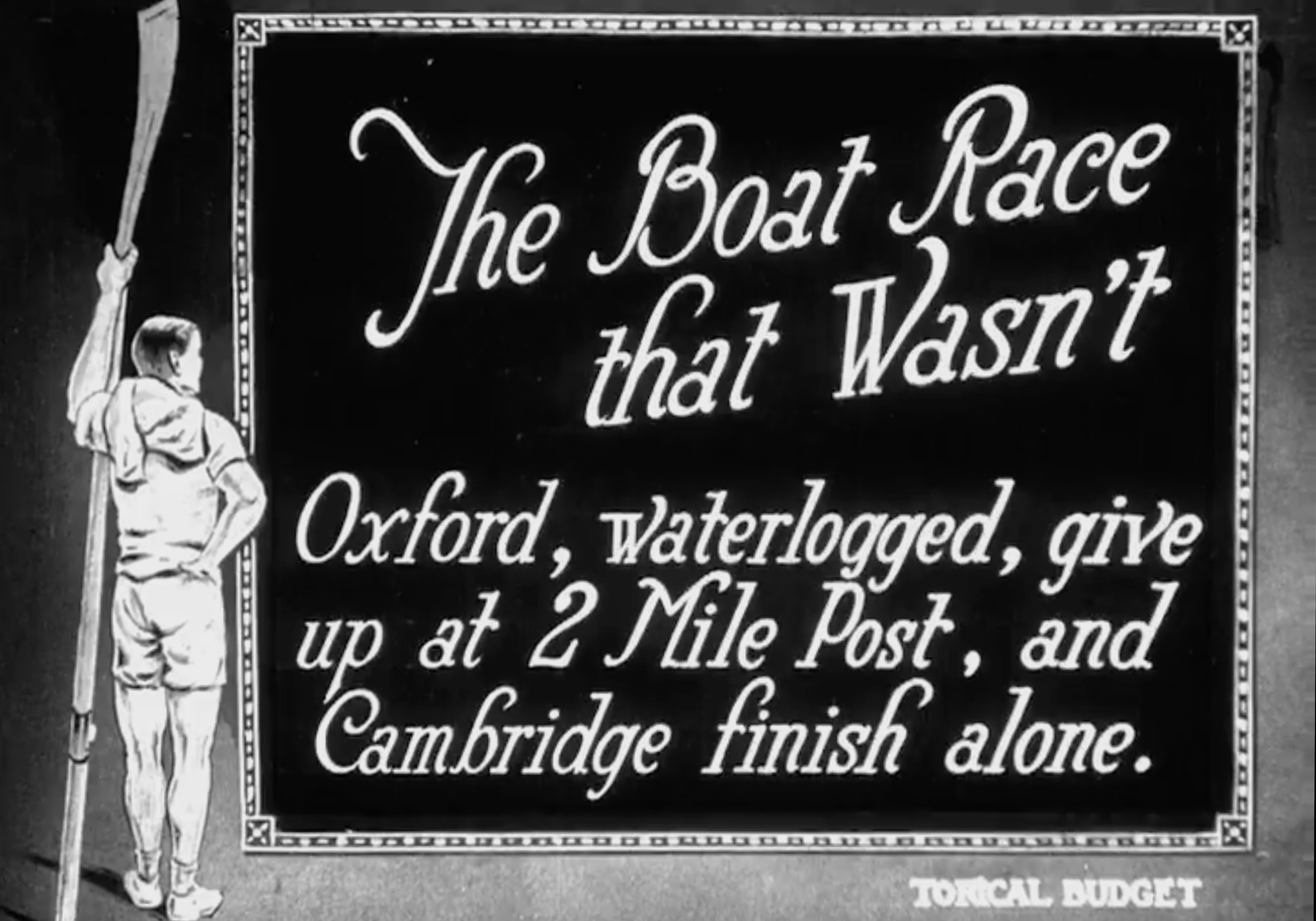
Our obsession with anniversaries is a strange one. Why remembering say an event’s centenary is more significant than recalling it 99 or 101 years past I do not know, but social media, print media and broadcasters all love to commemorate an event in minimum multiples of five years past. HTBS is as guilty as the rest and I was spurred into marking the Men’s Boat Race of 1925 by finding a particularly good film of it that is available to view on the British Film Institute website.
In the University Boat Race Official Centenary History (1929), Drinkwater and Sanders wrote of the 1925 Race:
Oxford were particularly unlucky in every way. Practice was hampered by illness, first one member of the crew and then another falling out, and the final order was only reached five days before the race…
The innumerable changes prevented the (Oxford) crew from ever really getting together, and, rowing as they did with three unfit men in the boat, it is perhaps providential that the elements prevented them from having to complete the course…
The race itself was a complete “washout” in the literal sense of the word. A strong wind, blowing diagonally across the river at the starting point, raised a miniature sea which made it impossible for an eight to live on the Surrey side.
With the loss of the toss, Oxford (on Surrey) were doomed, and before they had been rowing one minute they were completely waterlogged. Cambridge, with the shelter of the Middlesex wall, shipped little water and went rapidly ahead. Too late, Oxford drew in for shelter behind Cambridge under the wall…
Mr Stanley Garton (Oxford’s finishing coach) after asking leave of the umpire, shouted to (Oxford) to stop… (They) eventually gave up at the Doves. Cambridge dropped to a strong paddle and finished alone, in 21 min 50 sec.
Thus, 1925 joined 1859 and 1912 in which a crew was submerged and had to stop rowing. It brought the score since 1829 to Cambridge 36, Oxford 40 but it was the Light Blues’ second win in what turned out to be a record sequence of thirteen, 1924 – 1936.

As regards an anniversary for the Women’s Boat Race, the first officially recognised WBR was a time trial in 1927 between Oxford University Women’s Boat Club and a Newnham College, Cambridge, crew (Cambridge University Women’s Boat Club was not formed until 1941). While a 98-year anniversary is not normally celebrated, 2025 does mark ten years since women achieved parity with the men when the women’s Blue boats raced on the Tideway on Boat Race Day.

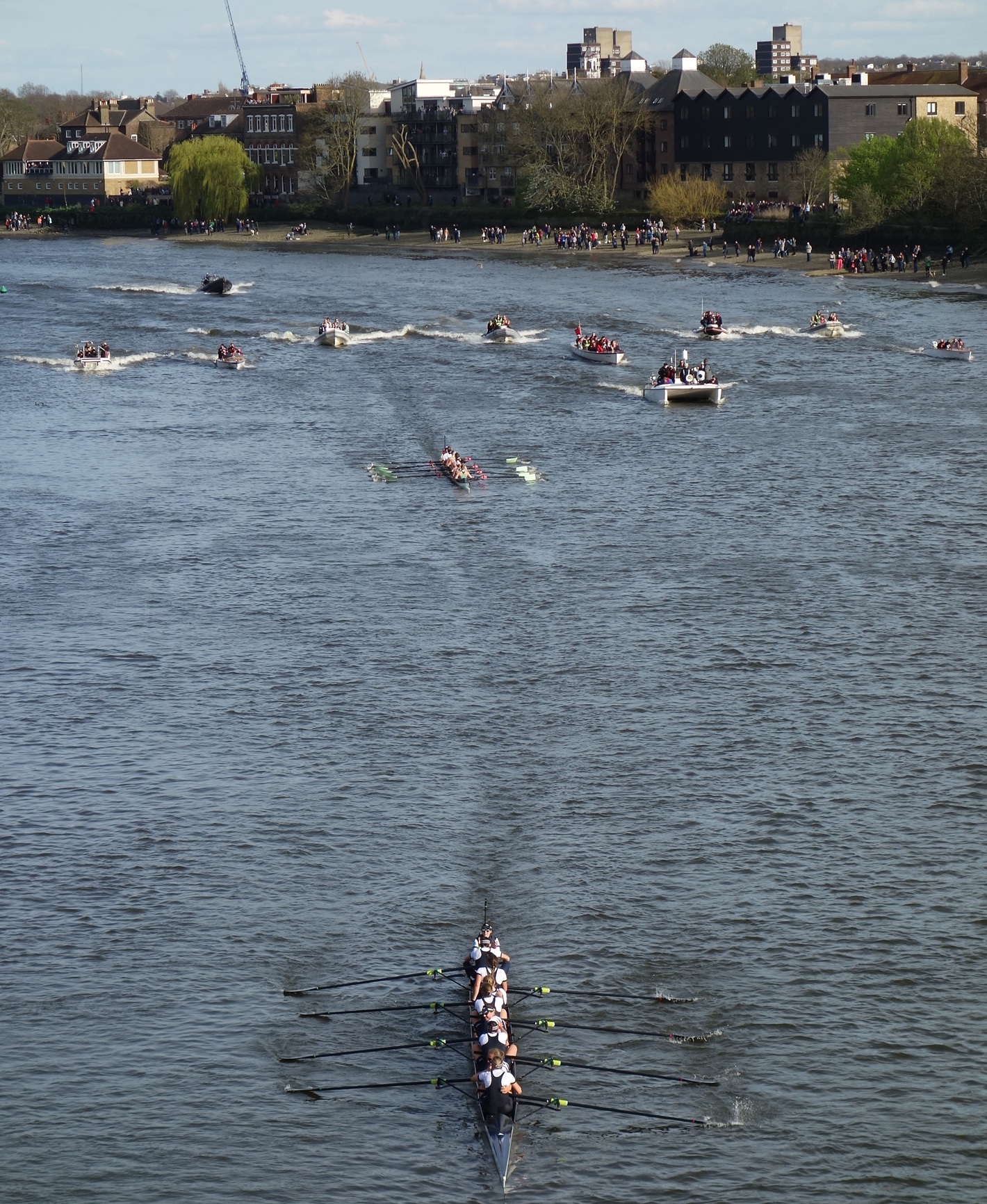
The Wikipedia entry on the 2015 Women’s Boat Race records: Oxford took an immediate lead and were five seconds ahead at the Mile Post. Despite out-rating their opponents, Cambridge failed to make any ground on Oxford, and were around three lengths down by St Paul’s School. Approaching Barnes Bridge, Oxford’s cox called for a push, and her crew passed below the central arch with a substantial lead. Oxford won by a margin of six and a half lengths in a time of 19 minutes 45 seconds.
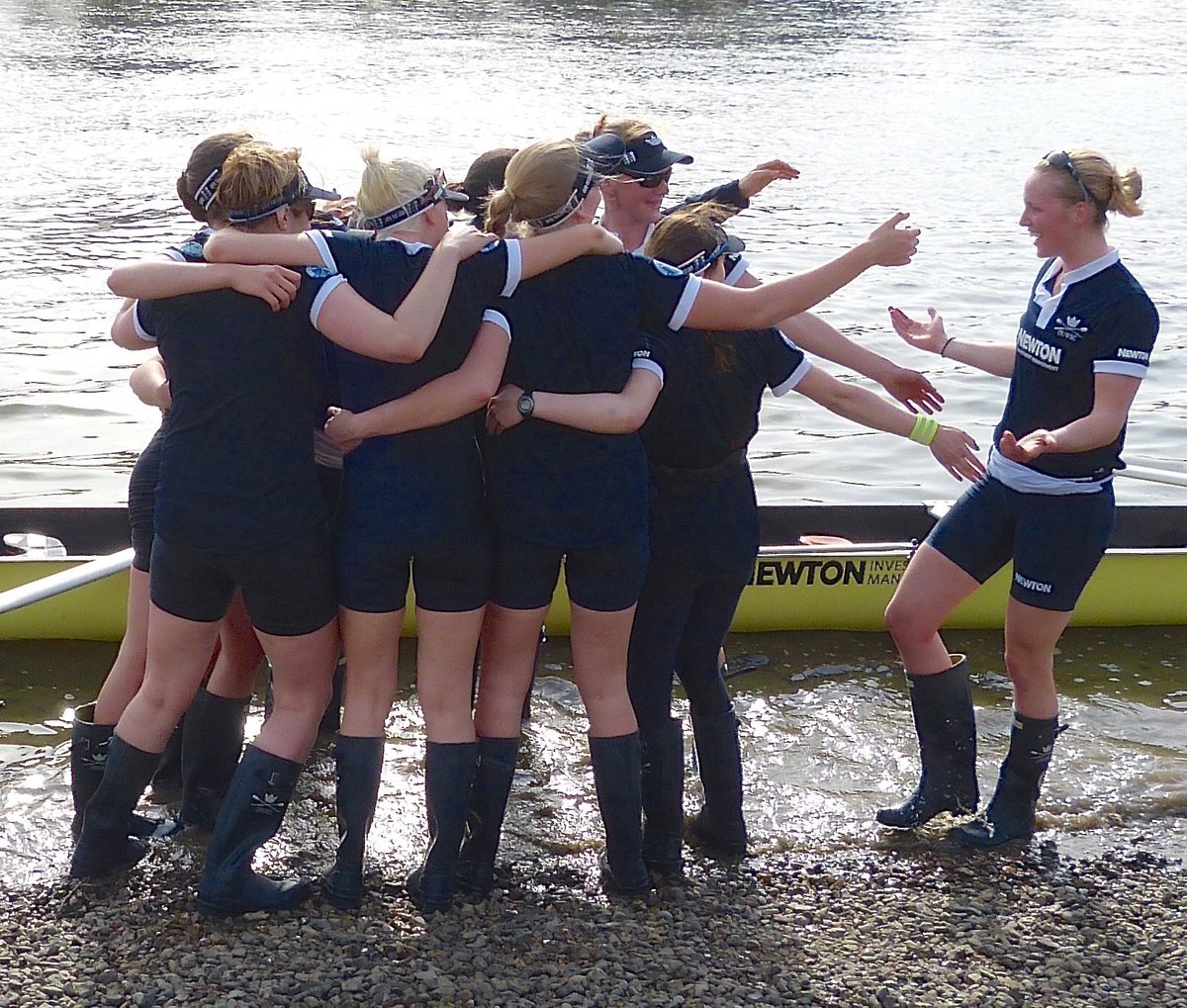

While Boat Race parity was part of the spirit of the age, it took money to produce immediate and positive action. The global financial services company, Bank of New York Mellon, took over sponsorship of the men’s race in 2013. One of the bank’s wholly-owned UK subsidiaries, Newton Investment Management, had sponsored the Women’s Boat Race since 2011. Newton’s CEO was Helena Morrissey, one of the founders of the 30 Per Cent Club, which is committed to bringing more women on to UK corporate boards. She held that if the men were to be sponsored, the women would be as well – and would receive equal funding. From this, it was inevitable that women’s crews should also be equal in the sense of racing on the same day and on the same course as the men.
Only a decade on, it seems incredible that there was a time when the women were not as much a part of Boat Race Day on the Tideway as were the men.

