
10 October 2023
By Marie Barge, text and photo
(edited by Göran R Buckhorn)
On World Rowing’s website you can read the following about doping:
The use of doping substances or doping methods to enhance performance is fundamentally wrong and is detrimental to the overall spirit of sport. Drug misuse can be harmful to an athlete’s health and to other athletes competing in the sport. It severely damages the integrity, image and value of sport, whether or not the motivation to use drugs is to improve performance.
To achieve integrity and fairness in sport, a commitment to a clean field of play is critical. The World Rowing seeks to maintain the integrity of sport in [sic!] by running a comprehensive anti-doping program that focuses equally on education/prevention and on testing, with consequent sanctioning of those who break the rules.
There were doping controls also at the 2023 World Rowing Masters Regatta in Tshwane, South Africa.
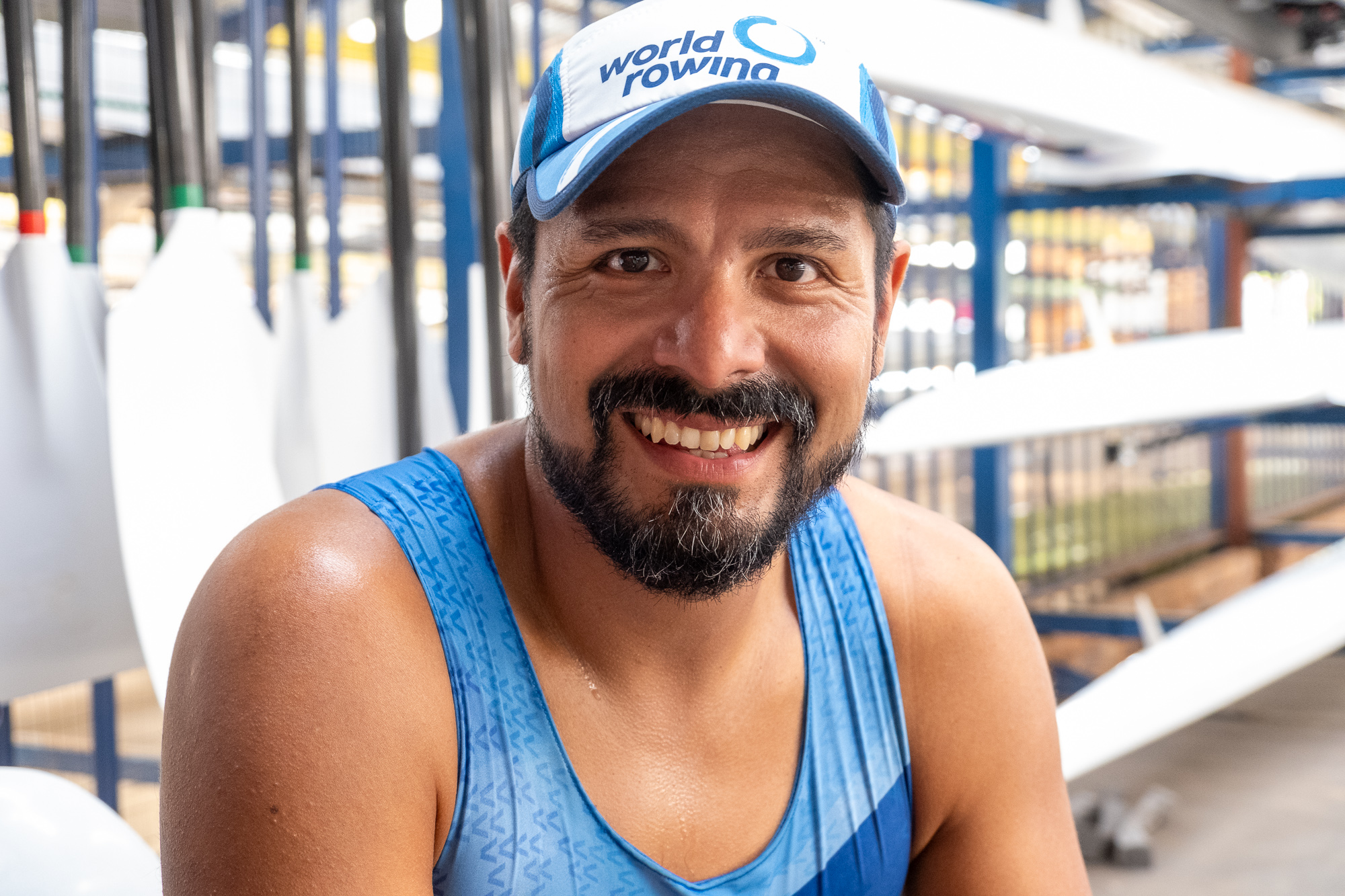
One of my friends, who rows with my husband Thomas, is Danilo Chinchilla-Sosa, 45, who was randomly picked for a doping test after he had won his race in the single sculls. Danilo has lived in Sweden for many years and rows for the local rowing club in Malmö, where he lives with his wife and two children, but in Tshwane, he rowed for his family’s native country, Guatemala.
“They were waiting for me by the dock,” Danilo said. “The two officials identified themselves and told me that I had to come with them to the doping control area. ‘We will accompany you during the whole process,’ they said.”
“They came with me to return my rented boat, and then we went to the control area,” Danilo said. “They were really professional and explained everything and gave me documents to read and papers to sign.”
Danilo continued: “They told me I had both responsibility but also rights. For instance, every material for the test I had to choose and sign and seal myself, so I had control over the whole process. After a race, you are quite dehydrated, so you must drink a lot. The whole procedure took nearly two hours.”
Afterwards, the tests were sent to a lab for processing. World Rowing did five controls every day during the regatta. The tests were not cheap. One control costed 6000 rand, which is equivalent to US$320 / £260 / €300, which make the tests cost 30,000 rand / US$1,600 / £1,300 / €1,500 a day.
Danilo said he felt very well treated throughout the process. The officials were correct, courteous and respectful.
My husband also rowed together with Per Ekström at the regatta in Tshwane. Per works as a sport consultant in Malmö. He explained that the same control process applies in Sweden whether it is a national competition or a club competition.
“I think it’s a good thing,” said Danilo, “and in the end it’s for the benefit of all athletes.”

