
16 April 2026
By Tim Koch
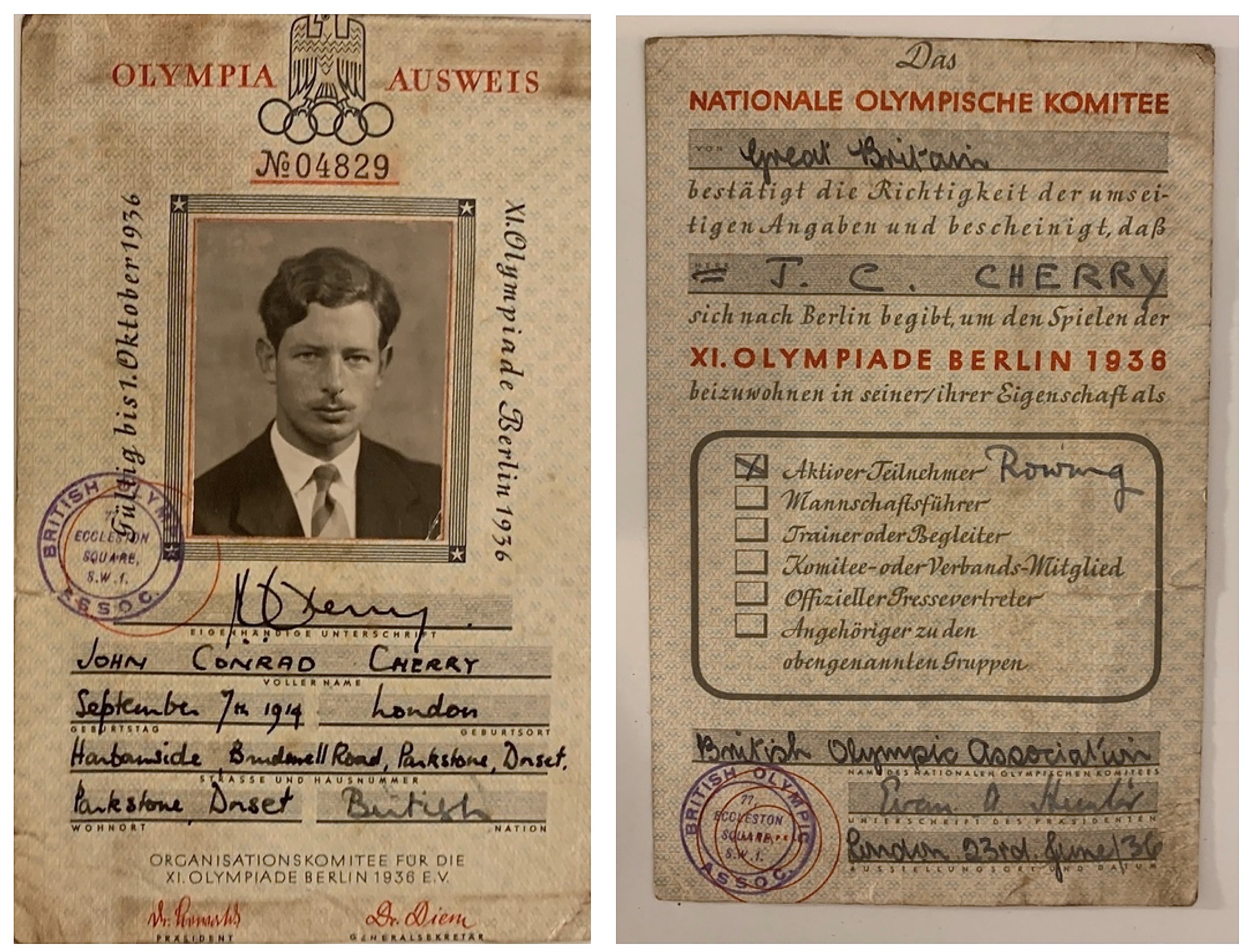
In November 2022, Spink, the famous London auction house founded in 1666 (“Where history is valued”) sold a collection of artefacts relating to Con Cherry, one of the most talented Oxbridge oarsmen of the 1930s. The auction lot showed that Cherry, like so many oarsmen, served with distinction in both war and peace.
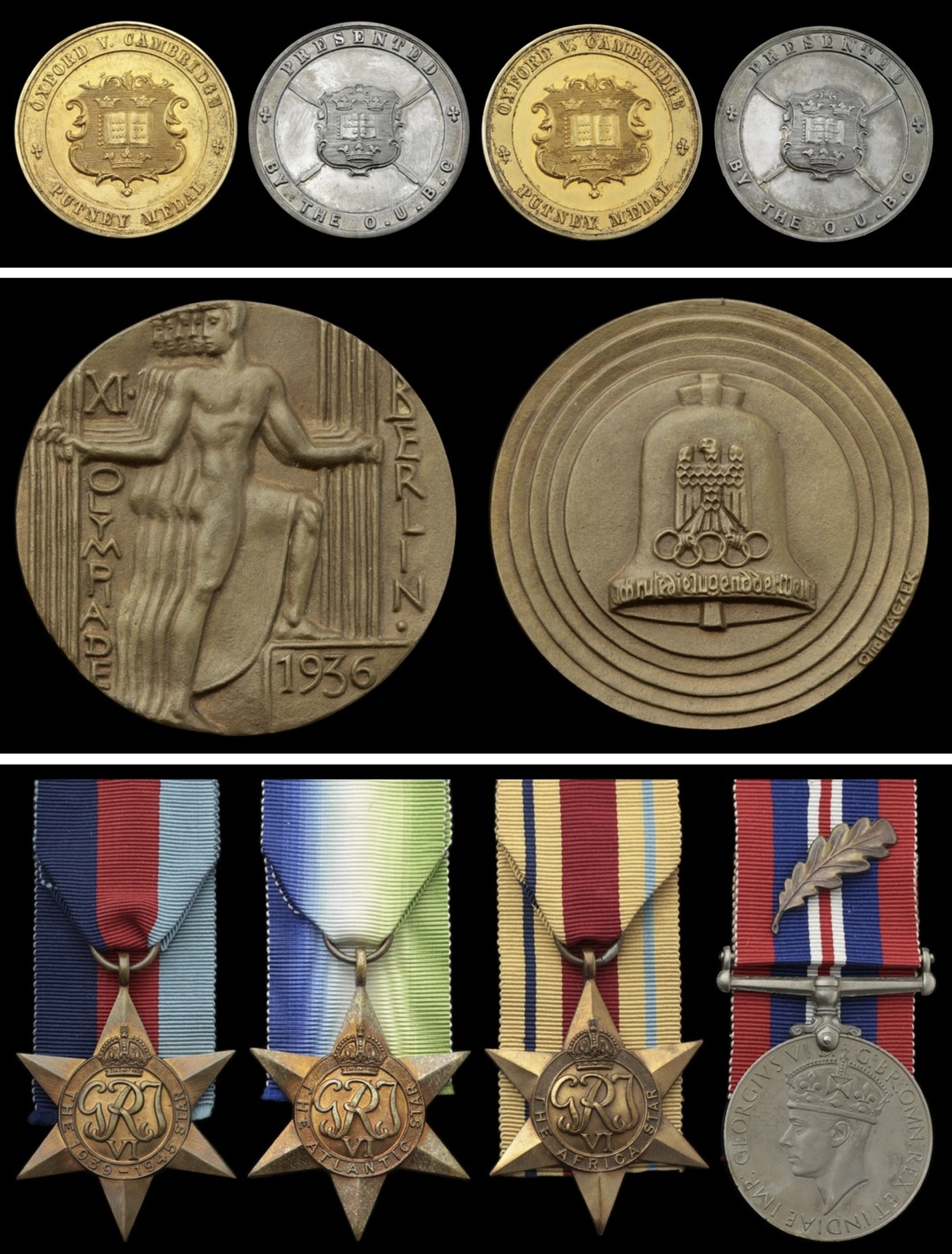
Top row, Cherry’s campaign medals: 1939-45 Star; Africa Star; Atlantic Star, War Medal 1939-45 with a Mentioned in Dispatches oak leaf, an award recognising courageous or meritorious action in the face of the enemy. Cherry did not live to wear these.
Middle row: Participant’s Medal, 1936 Berlin Olympics.
Bottom row: Oxford v Cambridge Putney Medal 1937; Oxford University Trial Eights Medal 1933; Oxford v Cambridge Putney Medal 1938; Oxford University Trial Eights Medal 1934.
The entire lot sold for £1,800. To paraphrase Wilde, this was a price but not a value.
Cherry was born in London in 1914 and was educated at Westminster School, 1927 – 1933. He started rowing there in 1929 and was in the First VIII 1930 – 1933.
The 2023 history of rowing at the school, In the Pink, noted that, at the time, Cherry was the most promising oarsman in the boat club. Not surprisingly, in 1932 he was made Head of Water (Westminster argot for the captain of the boat club). In Cherry’s final year at Westminster, 1933, the school magazine said of him:
A tower of strength to the boat; he kept the swing of the crew going, and his puddles showed how he was helping the boat along. Improvement for him lies, first in avoiding bent arms; this will give him the full advantage of his reach; secondly, in coupling up the whole body with his drive straight through from the stretcher to the finish. If he gets this, he will be a great oarsman. He has been an exceptionally able Head of the Water. He has done work and left a standard which will live after him.
The schoolboy Cherry had other talents. He was a Lance Sergeant in the Officer Training Corps, was praised for his performance in the role of John Worthington in the school’s production of The Importance of Being Earnest and, incredibly, as an “amateur electrician”, he was allowed to install electric lighting in the boathouse changing rooms.
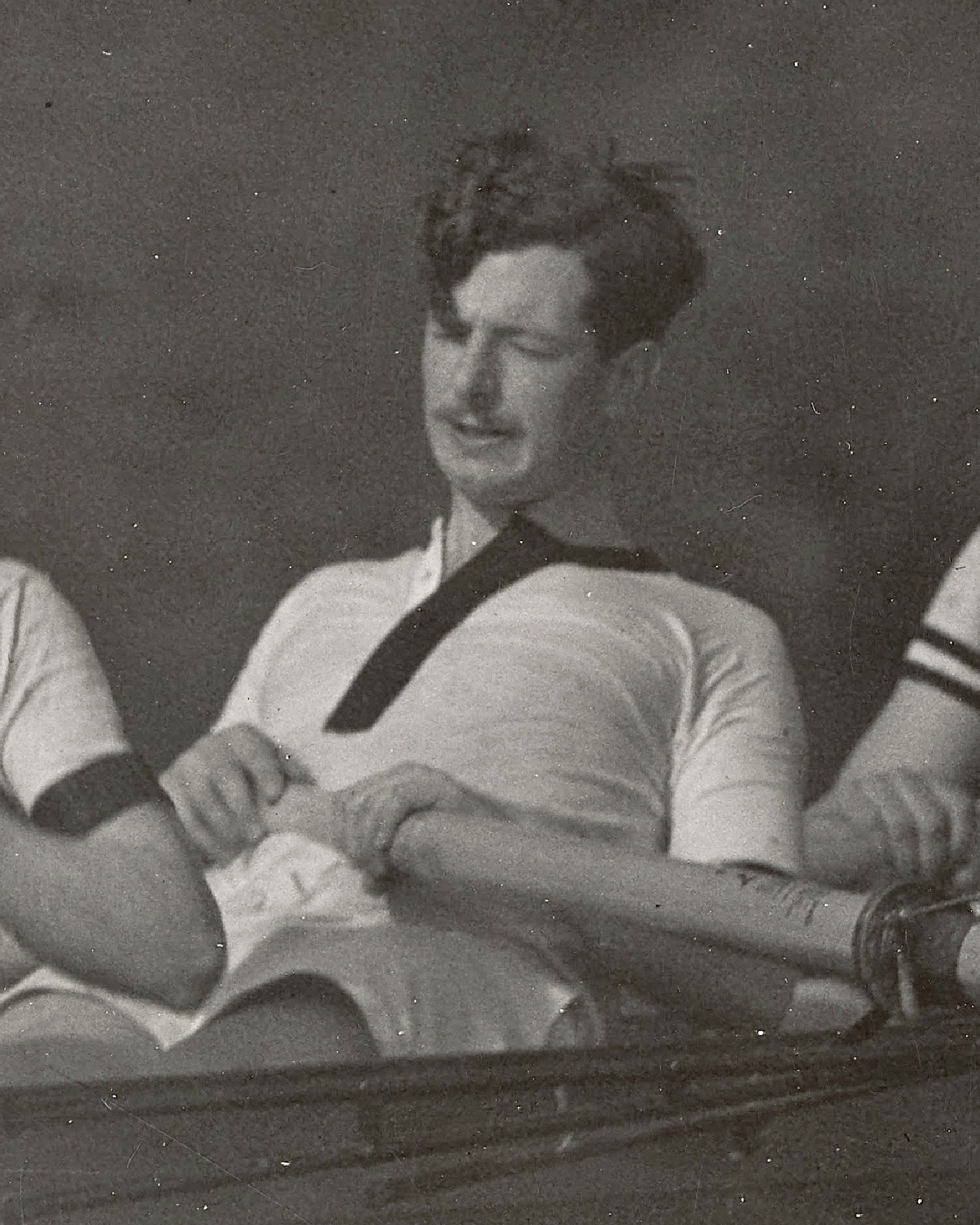
Cherry went up to Brasenose College (BNC), Oxford, in October 1933 and rowed in the Brasenose First VIII from 1934-38 and in the BNC IV entry in Henley’s Visitors’ in 1936 and 1938. He was Secretary of the boat club 1933-34 and Captain 1934-35.
Cherry’s obituary in the BNC magazine, The Brazen Nose, was written by the college Chaplain, The Rev Reginald Owen, a Blue from 1910. Owen recalls first impressions of the 19-year-old undergraduate:
Tall, good looking, always neatly turned out, he was so well built and proportioned that he did not always strike one at first as a particularly powerful man. And yet in three years he was to become one of the finest heavy-weights who had ever rowed for Oxford.
As evidence of Cherry’s “clubable” nature, he was a member of Brasenose’s Phoenix Club, the oldest dining club in Oxford, and also of Vincent’s, Oxford’s club for Blues and sportsmen. Further, in 1936 he was President of the Brasenose College Junior Common Room.
As to academics, Cherry was “in residence” at BNC for five years. He read Chemistry in his first three years but took his degree in Geography in his fifth year. Such things were not entirely uncommon at the time – particularly for oarsmen. Owen later noted that:
He was not a good enough scholar to revive Oxford rowing and at the same time satisfy the exacting requirements of (the examiners) but in due course he got a degree…
He did – sort of. The Yorkshire Post of 1 July 1938 lists the Oxford Geography school’s class list for that year. There is one Class I degree awarded, twenty Class II, eleven Class III, four Class IV, and then at the bottom of the list there is JC Cherry (BNC) who we are told was a Candidate overstanding for honours but satisfying the examiners. Who knew that there was something below a Fourth, a class usually referred to as an oarsman’s degree? Luckily, many employers of the time were more impressed by a Blue than a First.
While Cherry’s contribution to academia may have been small, his contribution to rowing at BNC was not. On the eve of Eights Week 1937, The Times wrote:
Cherry… is rowing superbly at No. 7 in the Brasenose crew and is quite outstandingly the best man in that crew, or for that matter in any crew…. it is obvious that the crew have modelled themselves upon him. Hence their length and rhythm.
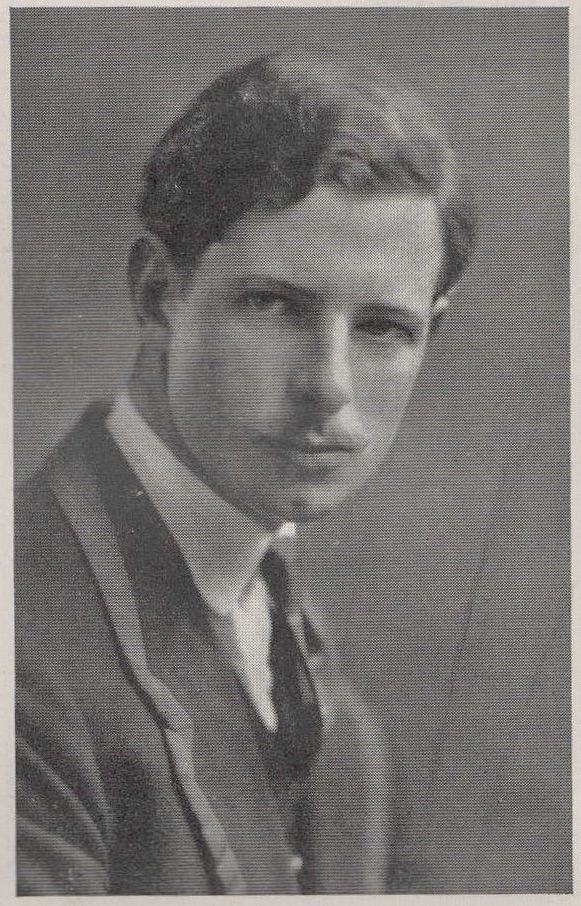
I had wondered why in his first year, 1935, Cherry was in the OUBC reserves, the first ever Isis crew, and was not immediately chosen for the Blue Boat. Owen offered a possible explanation:
He did not come quickly into his own; for although he possessed many attractive equalities, he had a curiously languid manner, which made his contemporaries in College think him rather aloof and uninterested, and made his coaches on the river doubt his energy and power.
But when they got to know him, they found beneath that somewhat casual exterior a man of fine quality, warm-hearted, wishing to be friendly, eager to excel on the river, and at the same time interested in many things besides driving a boat through the water.
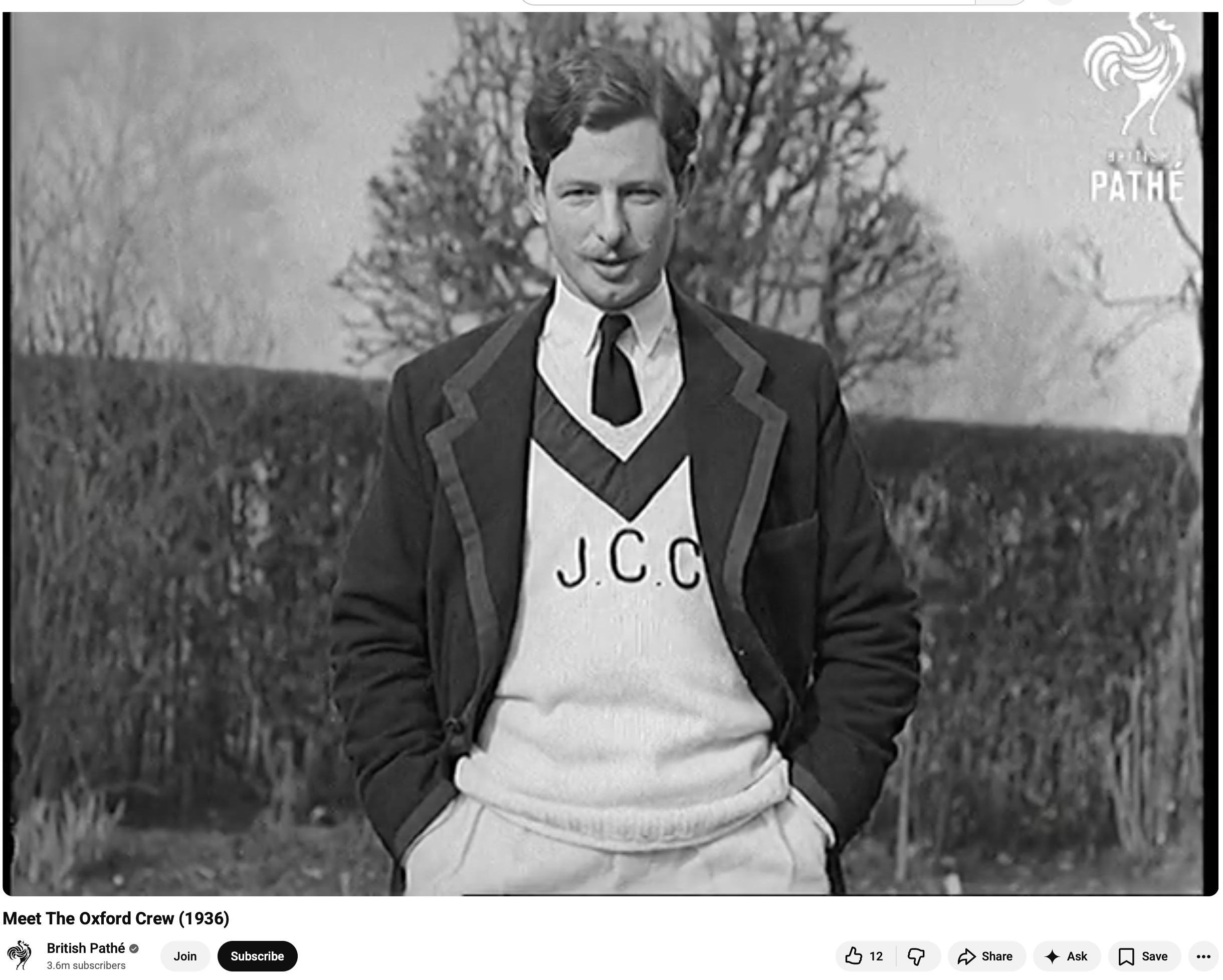
In January 1936, the Yorkshire Post wrote on the Oxford Trials for that year’s Boat Race:
Apart from (Ralph) Hope, the two best men in the Oxford Trial Eight race were probably JC Cherry… a heavyweight who should be almost sure of a Blue, and MG Ashby…
By March, the Yorkshire Post noted:
There is… no doubt that the recent introduction of JC Cherry to the Number seven thwart is a success. His splendid swing and steadiness curb (stroke) Winser’s impetuosity and will help the whole crew develop along the right lines.
On 1 April 1936, three days before the race, the Coventry Evening Telegraph and otherscalled Cherry (7) and Sturrock (6), magnificent oarsmen.
His talent and commitment eventually recognised, Cherry was in the Oxford seven seat for the Boat Races of 1936, 1937 and 1938.
While Cherry’s first appearance for OUBC in 1936 was Oxford’s thirteenth loss in succession to Cambridge, his second and third races in 1937 and 1938 saw victory for the Dark Blues.
His Times obituary stated:
(In the 1936 Boat Race, Cherry) was a No. 7 of unusual merit. The next year, he at seven and Sturrock at six, were the backbone of the first winning Oxford crew in 14 years, and in 1938, as president, he was the keystone of another winning crew.
Cherry rowed at 14 stone (89 kg). He was one of the best heavyweight oarsmen of all time, but he will be even better remembered for his absolutely faultless style, so rare in a big man.
…those who saw him row realise what the orthodox style could be at its best…
Off the water, there were boat club politics to deal with. In his 2023 history of Brasenose College Boat Club, The Pinnacle of Fame, William O’Chee states that after the 1936 Boat Race:
BJ Sciortino had chosen Con Cherry to be his successor as O.U.B.C. President (for 1937) but after thirteen consecutive Cambridge wins, the (College) Boat Club Captains were in no mood to tolerate a business as usual attitude… Cherry was a popular figure on the river, so rather than opposing his appointment personally, objection was taken to the planned coaching arrangements… Sciortino made the painful decision to withdraw his nomination of Cherry, and to put forward a compromise candidate, Jock Lewes…
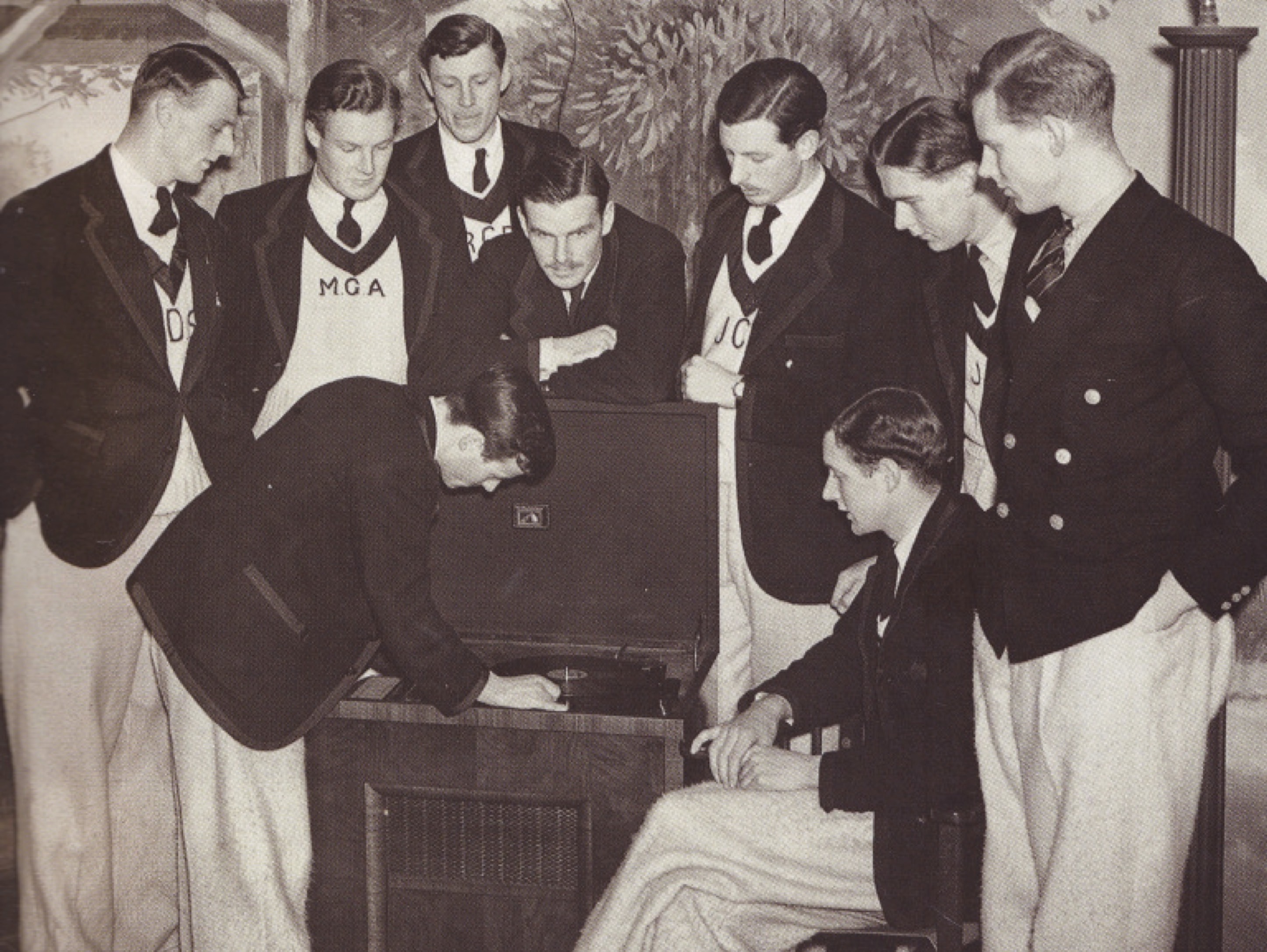
After Oxford won in 1937 overturning thirteen years of Cambridge dominance, the Western Mail said that, JC Cherry and JD Sturrock, the two Oxford stalwarts, never rowed a finer race while the Illustrated Sporting News held that, chief honours must go to JC Cherry…
Following the historic victory, OUBC President Lewis was much lauded and could persuade Cherry, who was about to go down, to stay on at Oxford to replace him as President for 1938 without suffering a repeat of the previous opposition from the college boat club captains.
In the days before full-time professional coaching, the OUBC President, like his counterpart at Cambridge, had a much greater responsibility for producing a winning boat as he had ultimate power in selecting coaches and crews. Owen states that President Cherry showed a power of quiet but firm leadership which surprised only those who had not previously known the man.
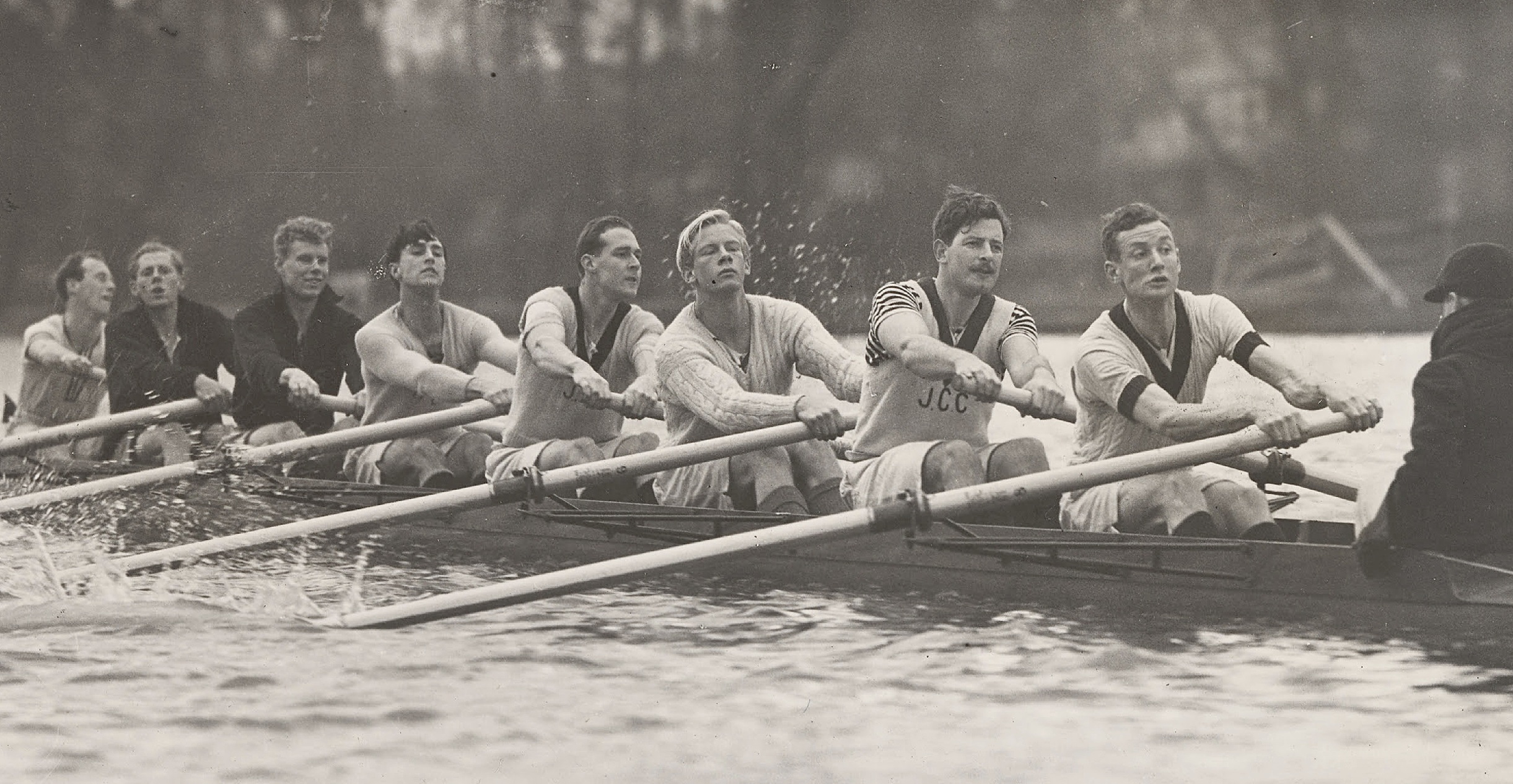
Cherry did not only distinguish himself with OUBC, he also rowed for Leander and Great Britain.
In his history of Brasenose College Boat Club, William O’Chee records an invitation that the great Cambridge stroke, Ran Laurie, made when he was Captain of Leander in 1936:
Having raced against Cherry in the Boat Race, (Laurie) recognised him to be one of the outstanding Oxford oarsmen of the age, and invited him to row in the Leander entry for the Grand (Challenge Cup at Henley). In fact, the crew included five Cambridge Blues, with the only Oxford men being JM Couchman… and Cherry himself.
Leander’s Grand Crew with Cherry at five were defeated in the final of the Grand by Zurich Rowing Club but nonetheless six of the crew were selected for the British Eight for that year’s Olympics in Berlin.
The obvious candidate for seven to Ran Laurie’s stroke would have been his old partner, Jack Wilson, but he was now a District Commissioner in Sudan so Cherry was the next clear choice to sit behind and back up the great Laurie.
In the Olympic final, the British were placed fourth, five seconds behind the winning American crew, The Boys in the Boat.
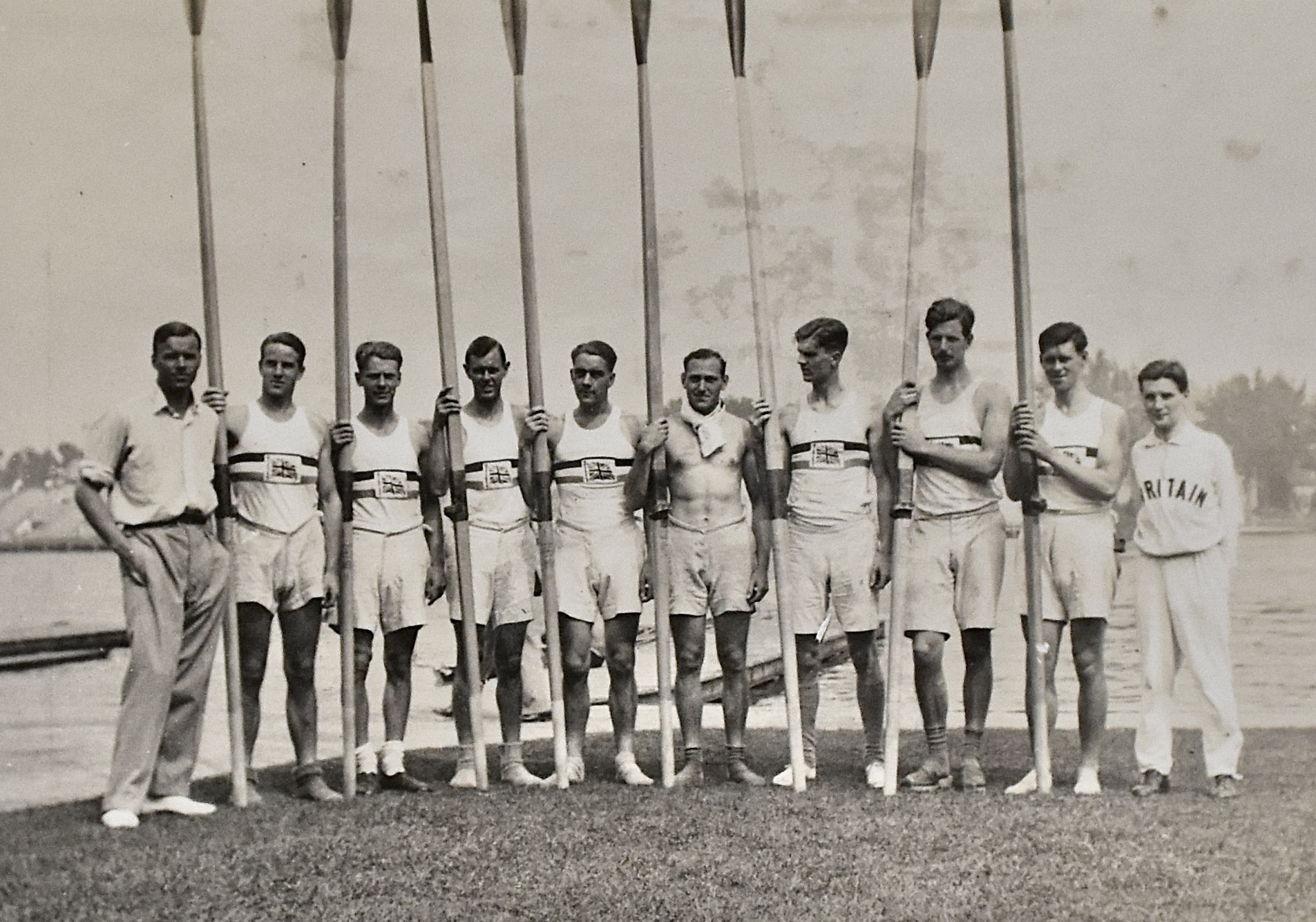
Despite its respectable performance, the British cox Noel Duckworth believed that the crew was a “patched up affair” that had trained to peak at Henley rather than the Olympics.
Cherry’s most notable wins with Leander were in 1937 and 1938 with victory in Henley’s top coxless fours event, the Stewards’. As his Times obituary later noted, His easy style of rowing, so deceptive of its power, was seen to even greater advantage in a four than an eight…
Initially overlapping with his Oxford Presidency, Cherry was made Captain of Leander in 1938, responsible for assembling crews for Henley. Officially, Cherry remained Captain into the war until his death in 1943.
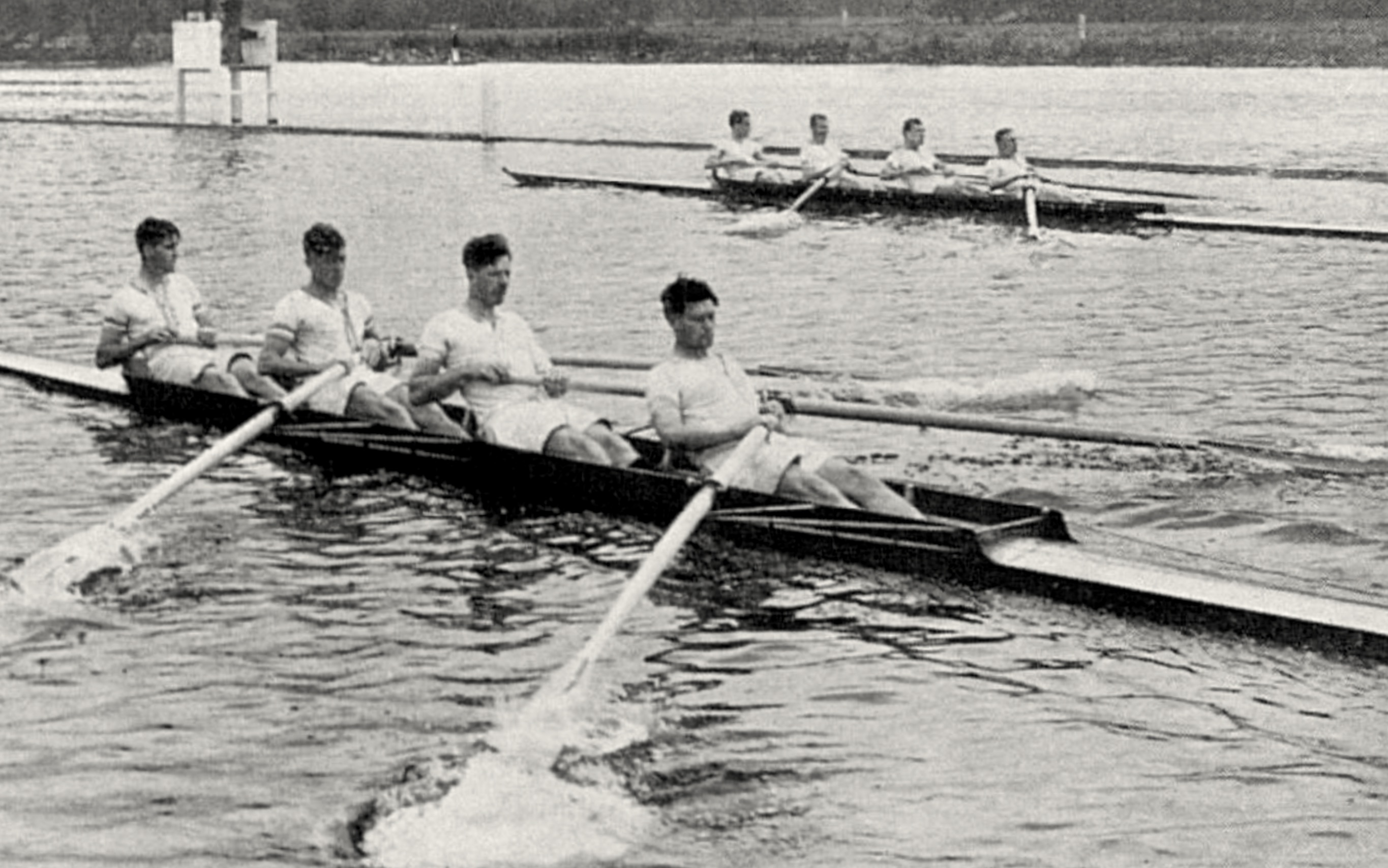
After he finally left Oxford in June 1938, Cherry worked for Phillips and Powis, an influential British aircraft manufacturer. Crucially the firm was based near Henley – thus giving the “administrative trainee” the maximum time for his duties as Captain of Leander.
In 1939, Cherry found time for various other rowing activities outside his Leander Captaincy: he coached Oxford in March, gave a talk on the BBC titled Keeping fit for rowing in April, trained that summer as part of the Leander crew for the Grand and, beginning in June, sat on a committee of four set up by the Amateur Rowing Association to arrange the “best ever” British crews for the 1940 Olympic Games in Helsinki. Unfortunately, by 1940 the world was involved in a less sporting contest.
Following the outbreak of the Second World War in September 1939, Cherry was commissioned a Sub-Lieutenant in the Royal Naval Volunteer Reserve in November 1940. In the previous month he had married Iris Glory Rowe, sister of his 1937 Oxford crew mate, Ronnie Rowe. They had one daughter, Susan, born in 1942.
Cherry’s obituary says that in 1940, he shared in the great work at Dunkirk… For the next two years he was in small ships of the destroyer kind and saw the war at close quarters.
The auctioneer, Spink, takes up the story of Cherry’s war:
(He) joined the Abdiel class minelayer Manxman in March 1941 and quickly saw action on the Malta supply run, in addition to operations in the Gulf of Genoa and the Sicilian Channel. His name was twice put forward for (a Mentioned in Dispatches award) in February and July 1942, but to no avail.
On 1 December 1942, while in transit between Algiers and Gibraltar, Manxman was severely damaged by a torpedo strike from U-375. Hit twice in her port side, she took on a heavy list and had to be towed to Oran (Algeria) for emergency repairs. Cherry was once more recommended for a mention in despatches, on this occasion with success. The citation read:
“The success of the damage control organisation, which enabled the ship to be saved, was largely due to the initiative and constant attention to it of this officer during the last eighteen months.”
The award was announced in the London Gazette on 1 June 1943. Tragically, however, it transpired to be a posthumous award.
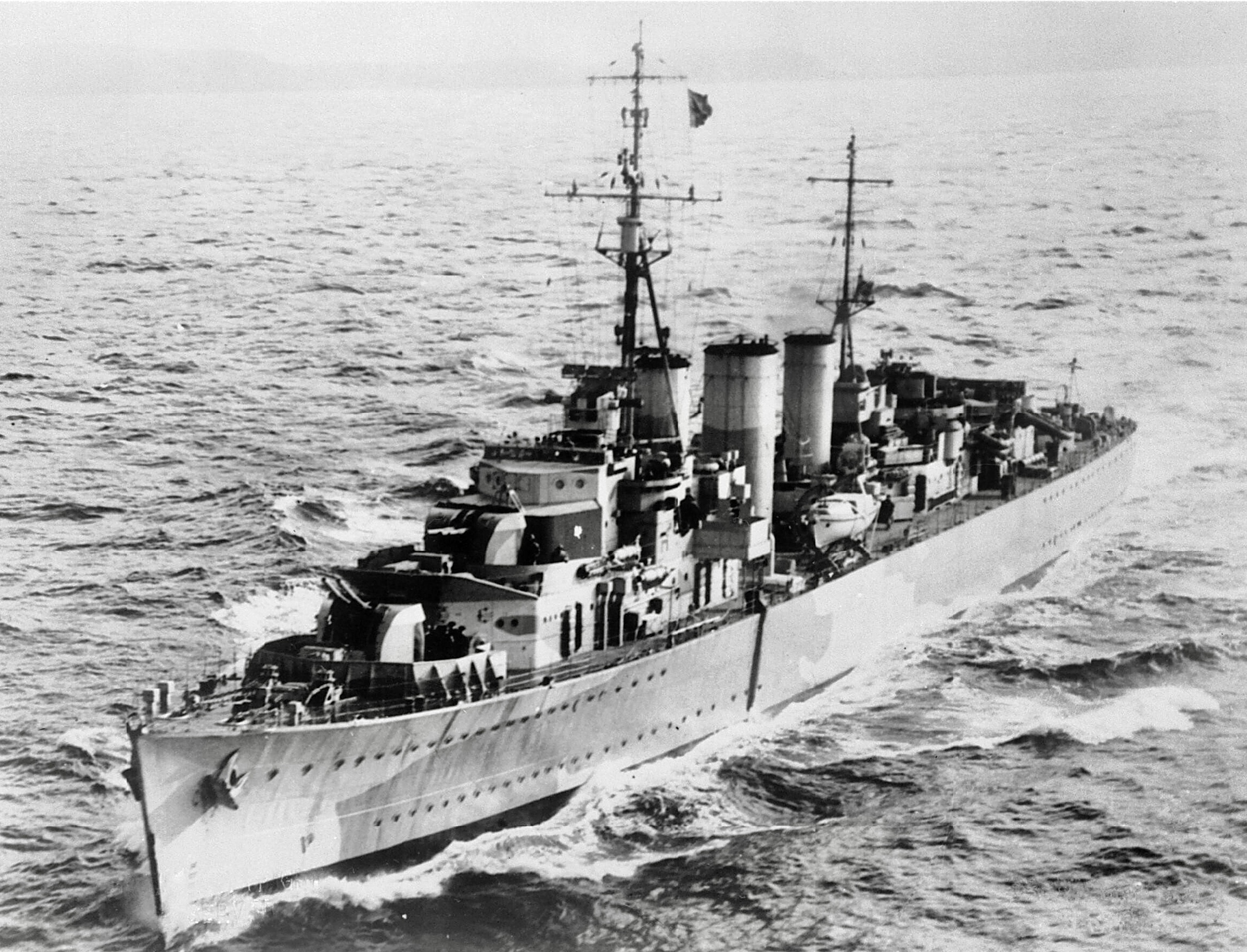
Transferred to another Abdiel class minelayer – the Welshman – in late December 1942, Cherry saw further action on the Malta supply run, in addition to minelaying operations in the Skerki Channel, across the Axis evacuation route from Tunisia.
Sadly, however, Cherry was killed in action, aged just 28, on 1 February 1943, when the Welshman fell victim to a torpedo strike from U-617… The Welshman capsized and sank by the stern east of Tobruk, with the loss of 155 souls.
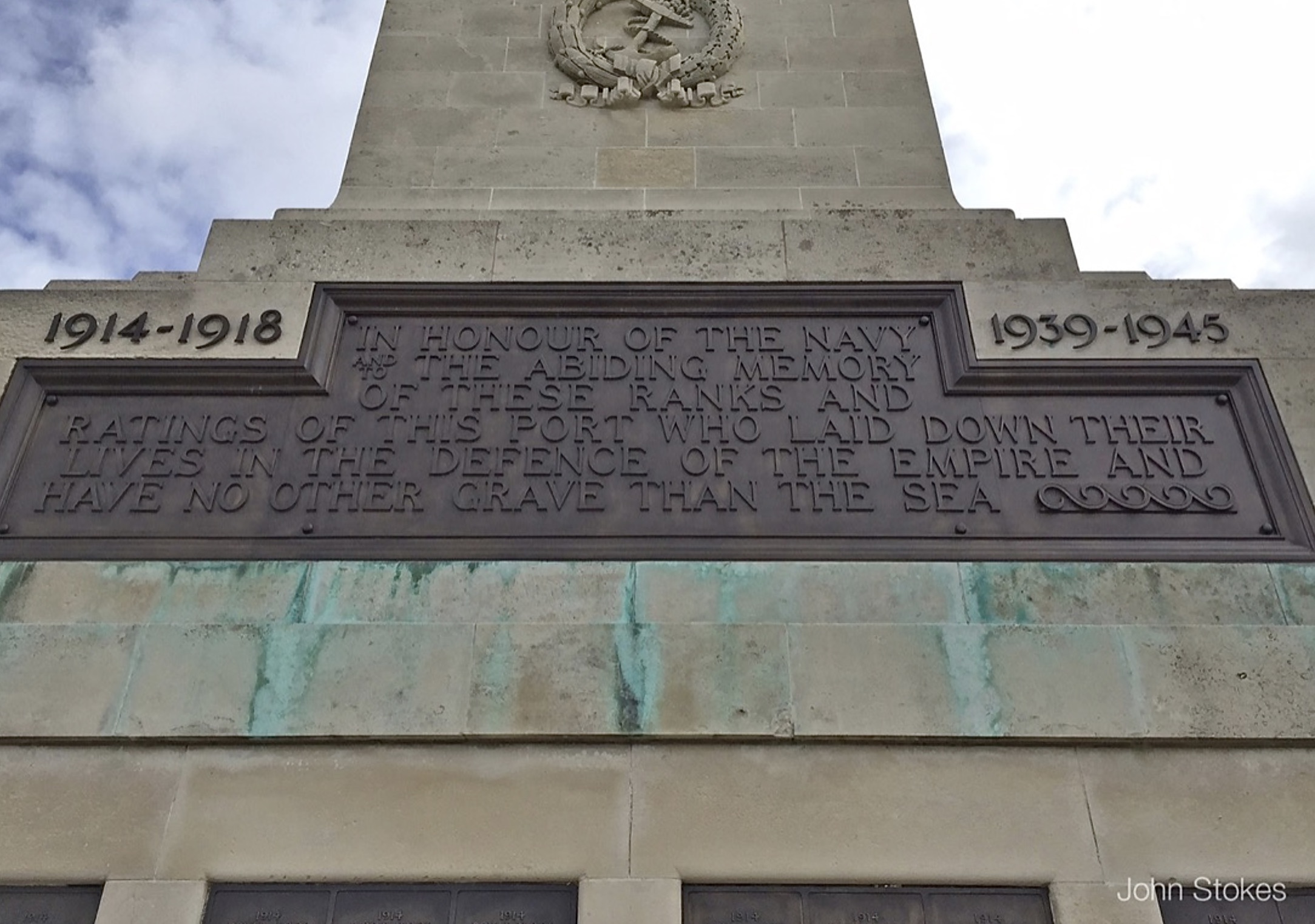
The gallant Cherry has no known grave and is commemorated upon the Chatham Naval Memorial.
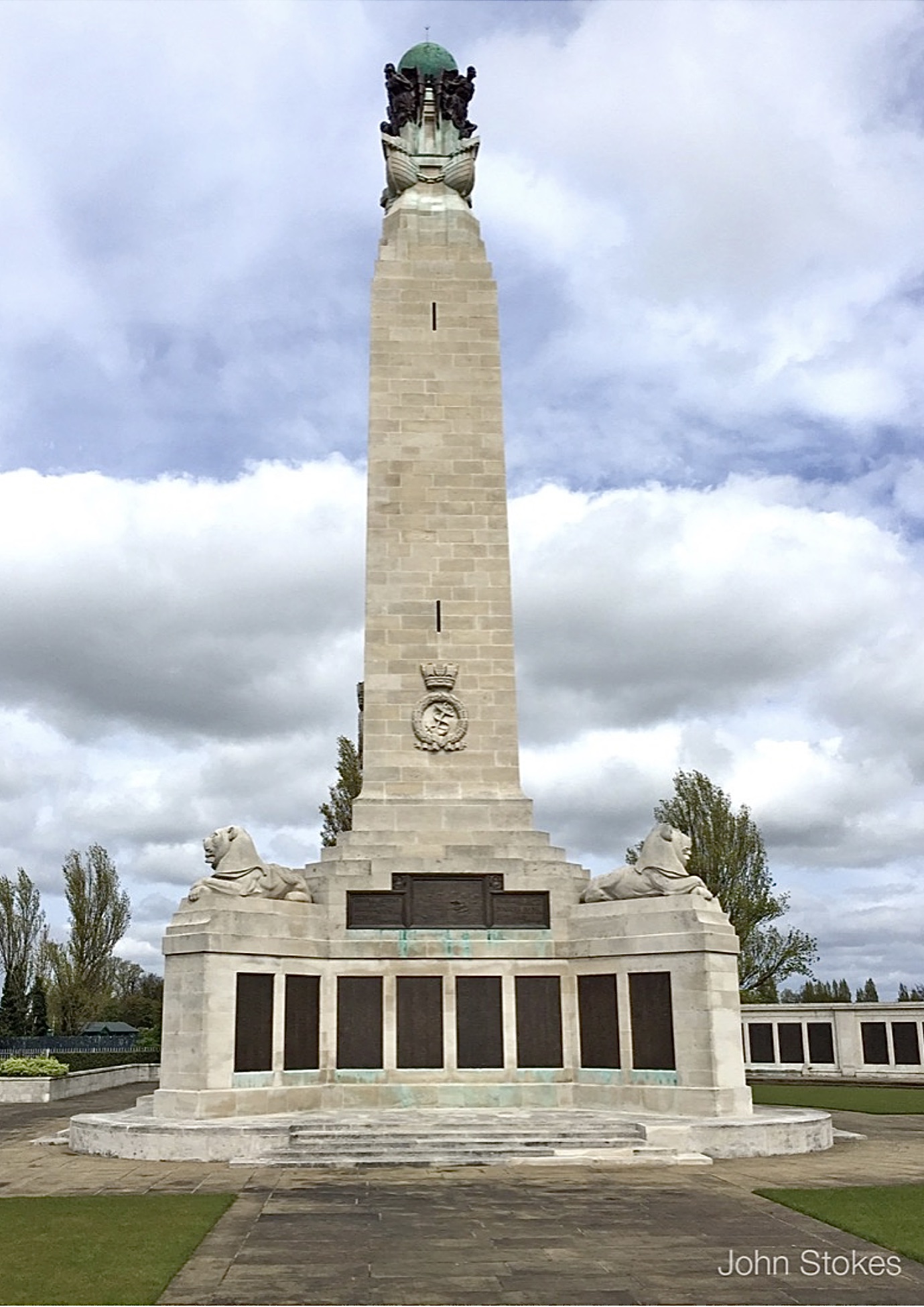
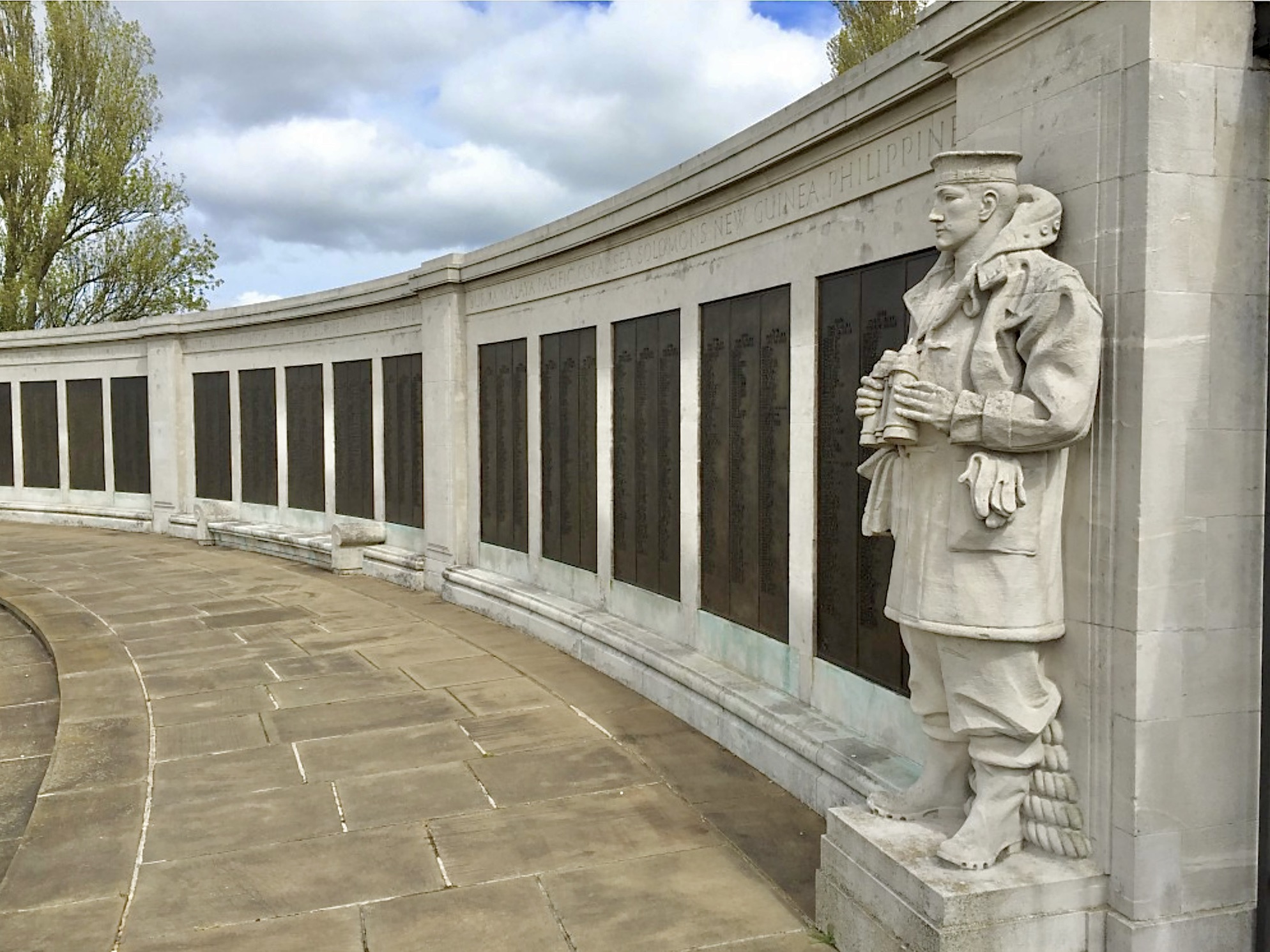
My thanks to William O’Chee, historian of Brasenose College Boat Club and Oxford University Boat Club, for his assistance.

