
30 March 2026
By Tim Koch
Tim Koch looks at some historical differences to the current Tideway Week.
Tideway Week has historically lasted anything from one to three weeks before Boat Race Day. Then as now, the crews would live in or near Putney and go out on the river two or three times a day for light paddling and practice starts, their hard training now behind them. On the plus side, at this time the water-work is physically undemanding but, on the minus side, it could be a time when negative thoughts intrude for both favourite and underdog alike.
Historically, before the advent of professional coaches committed to the whole of a season, a “finishing coach” would take over for the Putney period. Part of my 2019 biography of the great interwar coach, Peter Haig Thomas, shows that in his time the Boat Race season was divided into three, each under a different coach or coaching team.
At Oxford, there was the “preliminary” period on home waters that ran for five to eight weeks before and after Christmas (including Trials). This was followed by the two to four week “refining” period on the non-tidal Upper Thames. Finally, there was two to three weeks “finishing” at Putney.
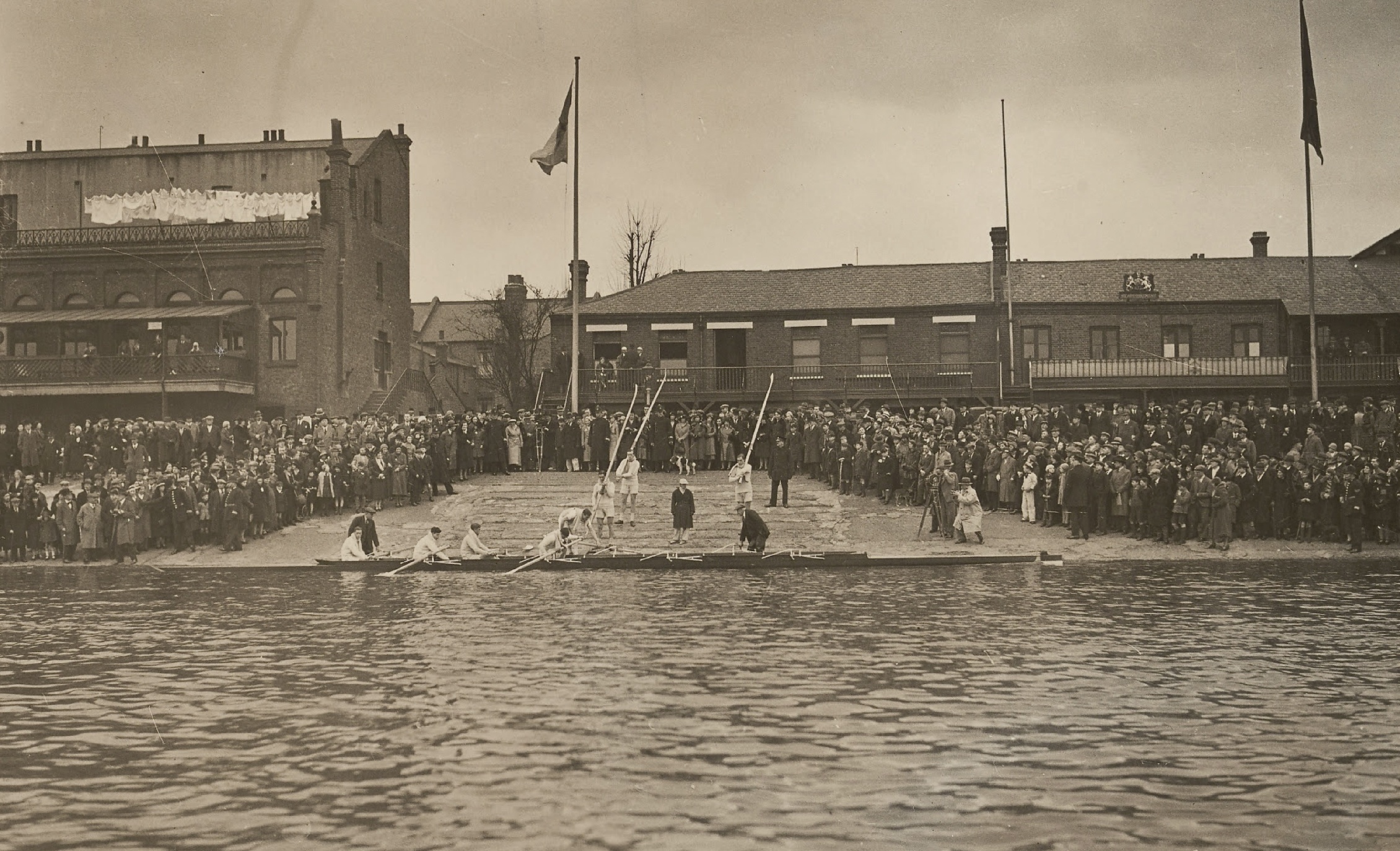
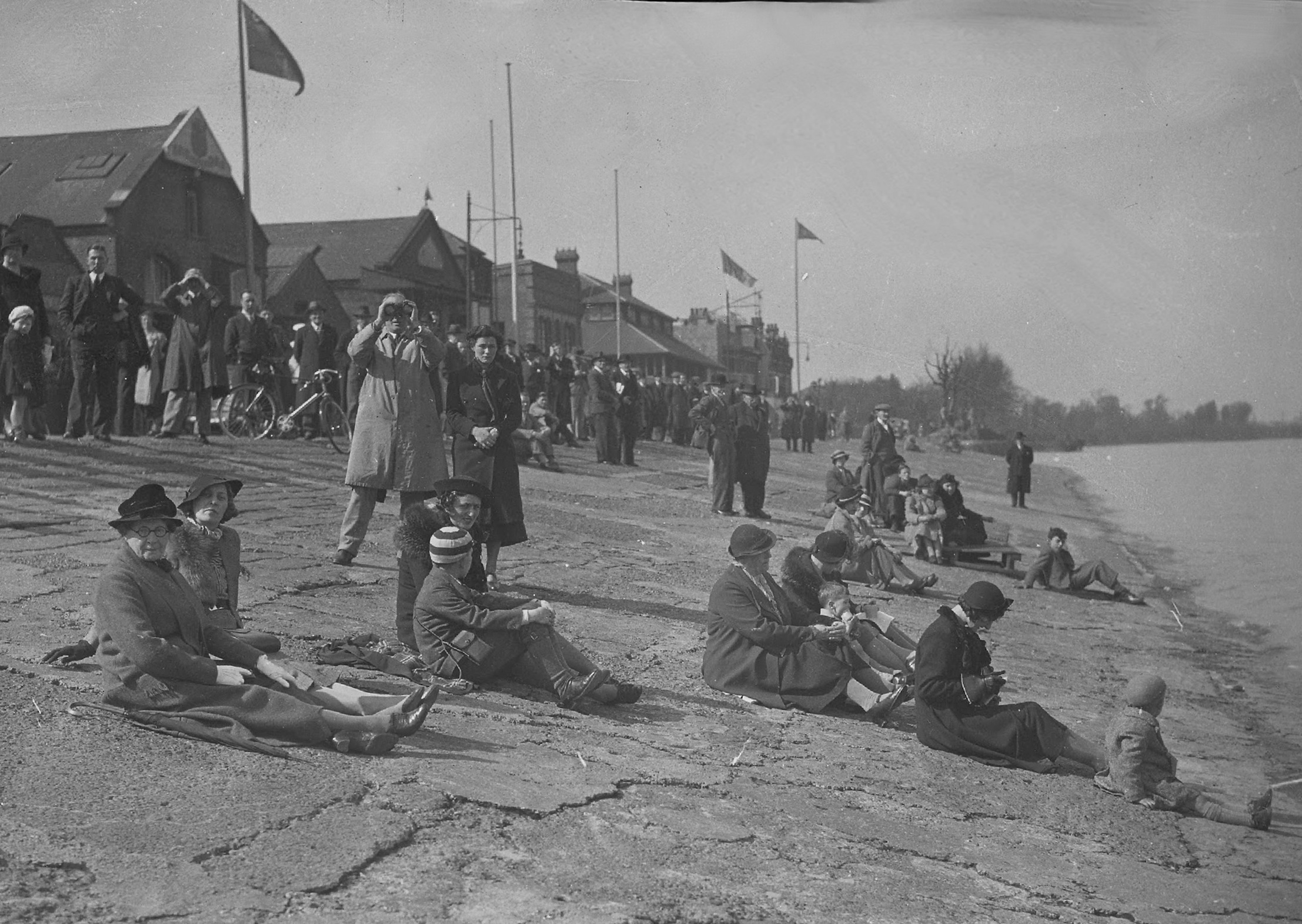
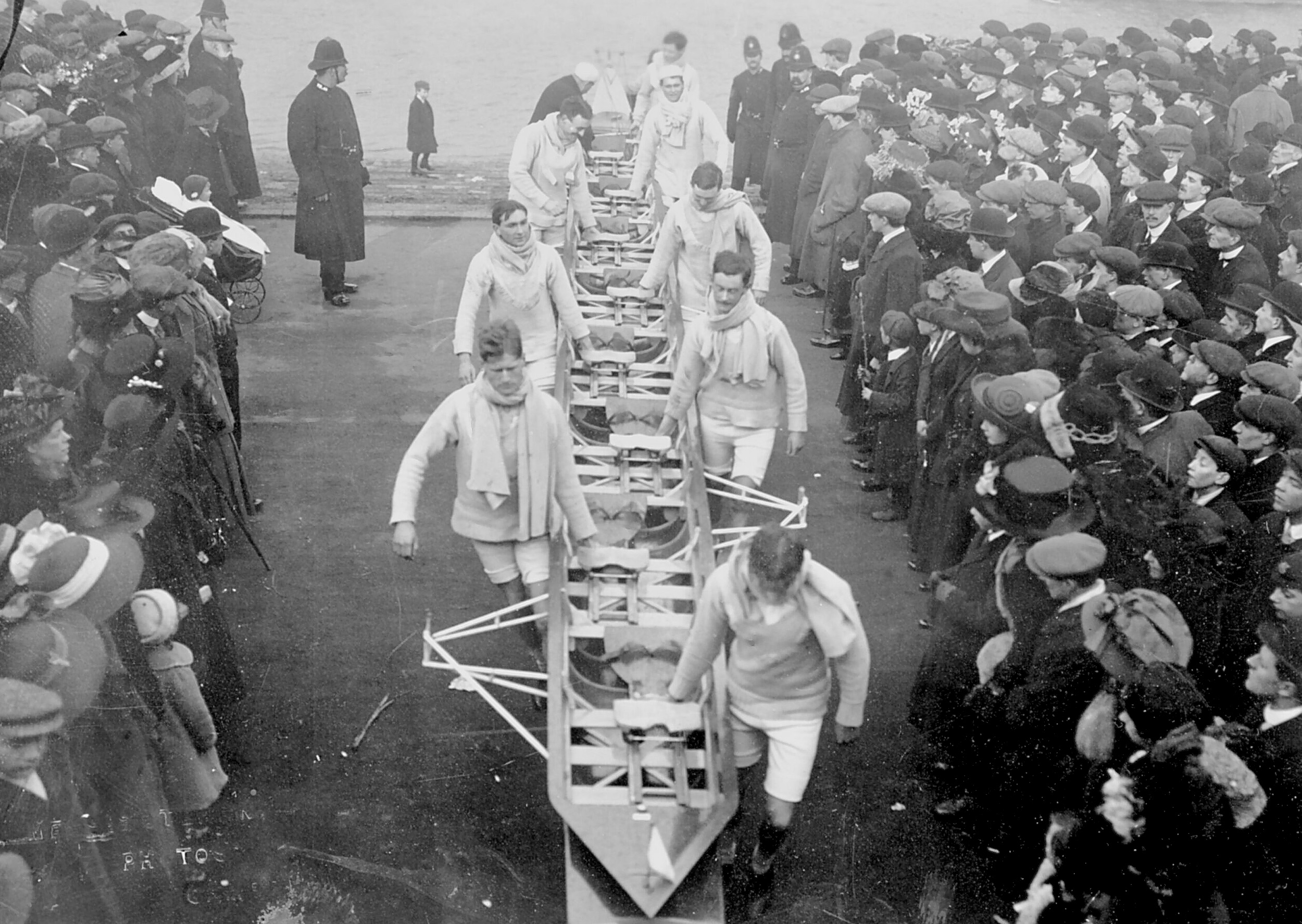
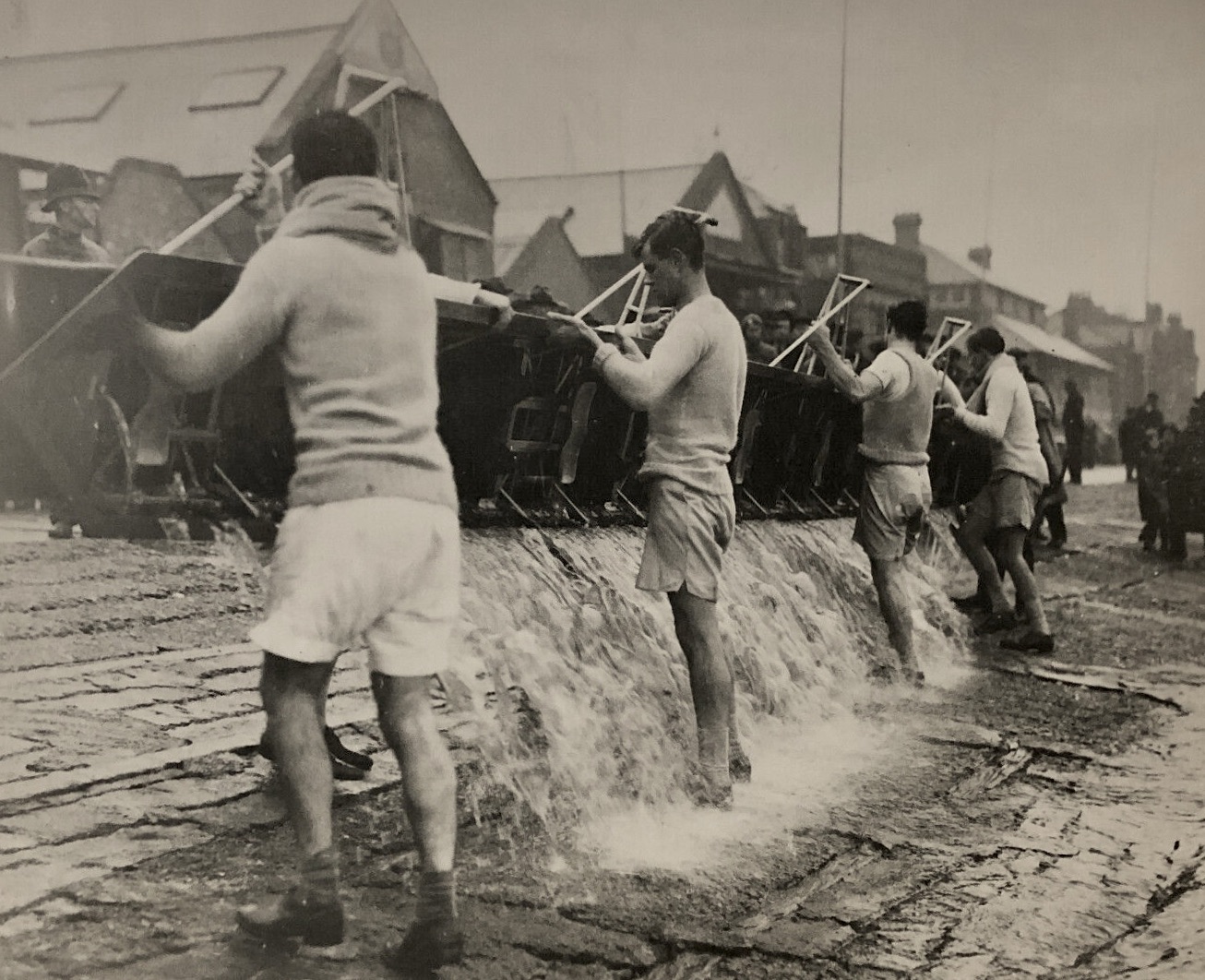
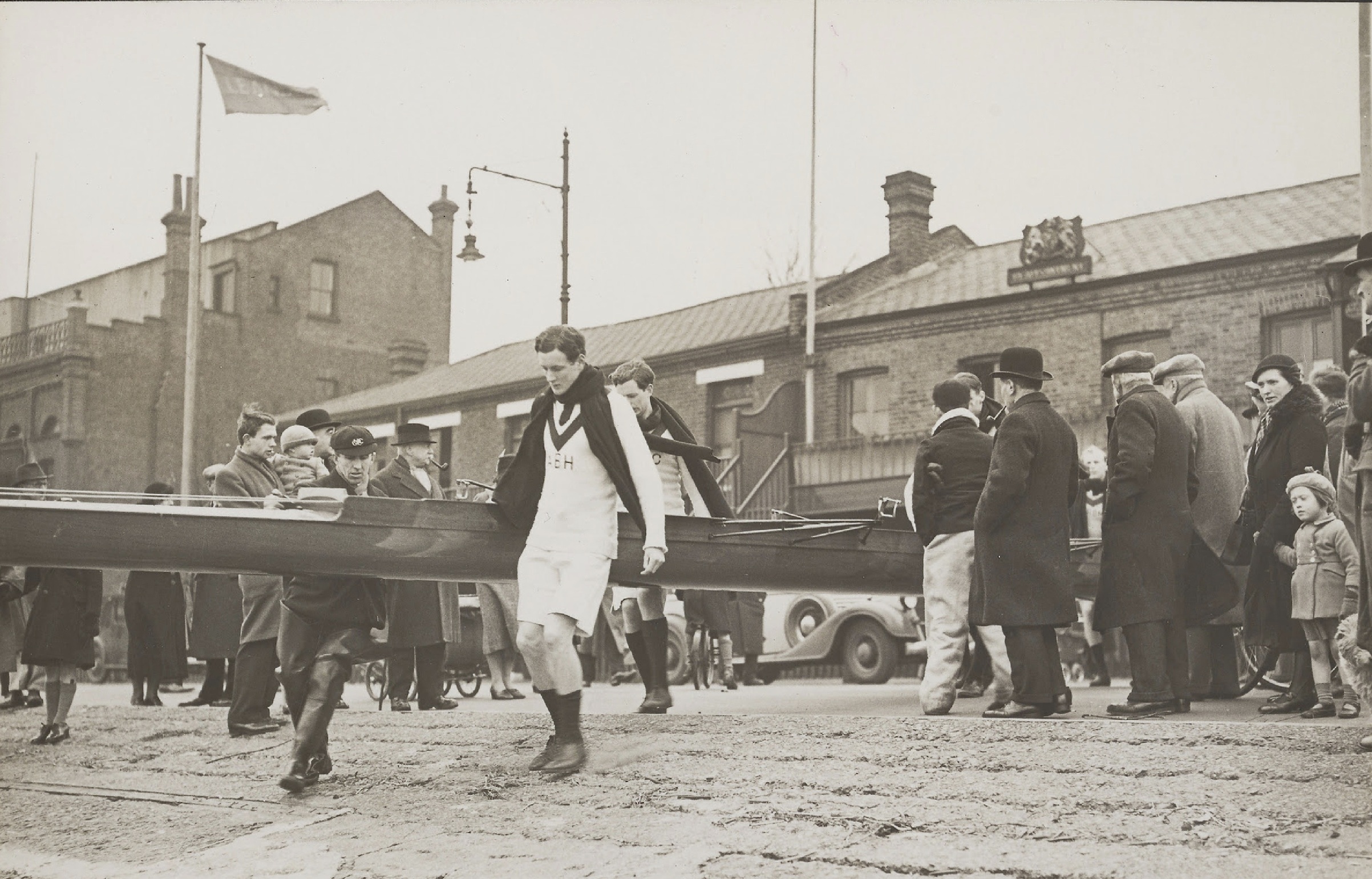
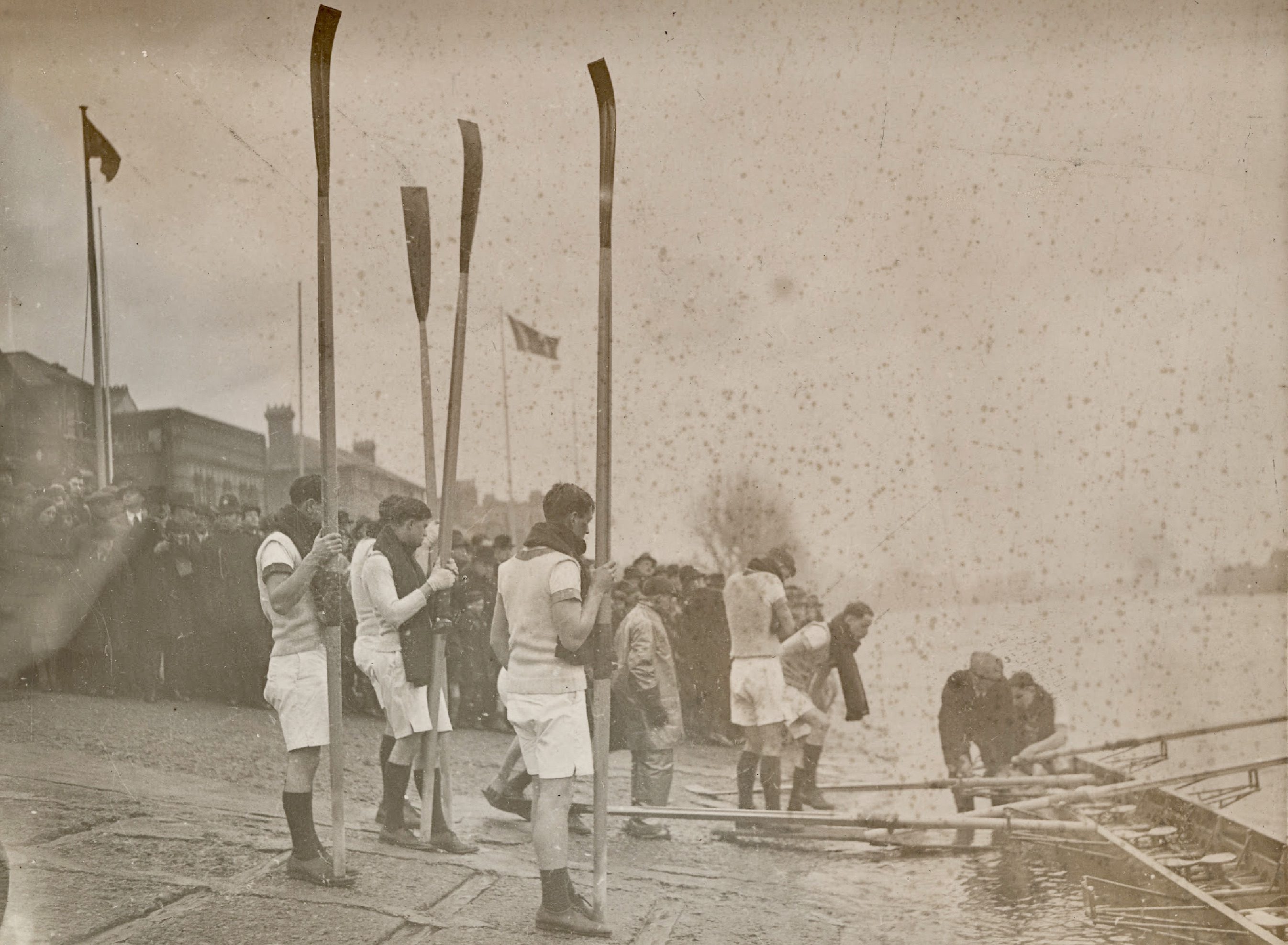
A full fifteen days before the 1932 Boat Race, the Sunderland Echo reported a thousand spectators at Putney, many of them of the fair sex. The inter-war period, 1920 to 1939 was probably the peak of such spectatorism.
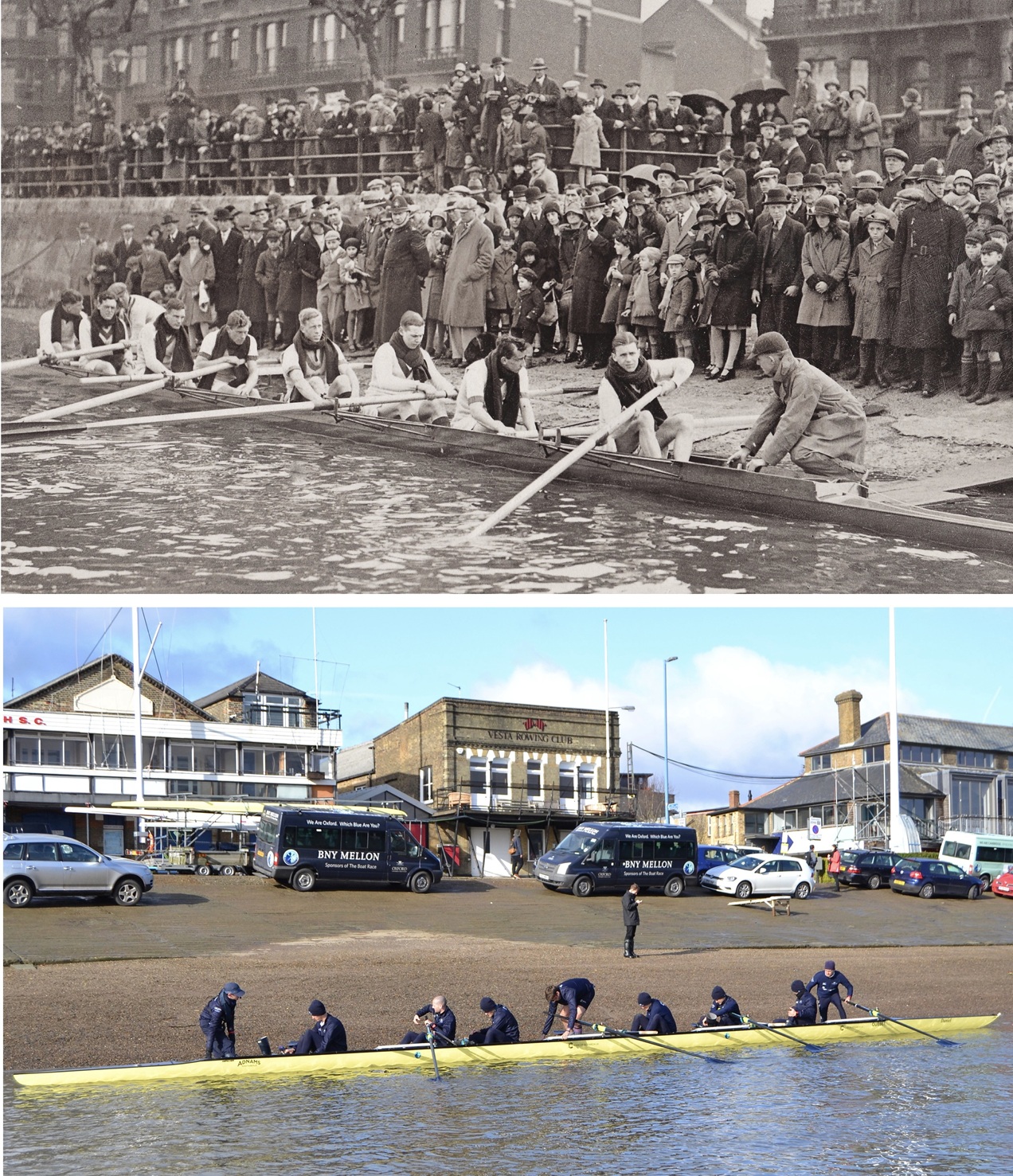
In his 1983 book, The Oxford and Cambridge Boat Race, the late Chris Dodd had a chapter on what he called the Putney Fortnight of 1982. Although low level sponsorship had started six years previously, it had still not made the clubs or the race into the world class professional entities that they are today.
For example, in 1982 both OUBC and CUBC were still scratching around for odd bits of practical support and Chris records that in that year Heinz donated two thousand tins of beans to Cambridge. Minor assistance from a brand famous for flatulence is a long way from today’s generous sponsorship by a branch of the world renowned French fashion house, Chanel.
Chris began his Putney chapter:
Two weeks before the 1982 Boat Race the centre of operations moved to Clarendon Drive in Putney. Oxford occupied a house which they had rented there and, by chance, Cambridge found one barely a boat’s lengths away on the opposite side of the road. It is this final period of preparation which finds the crews most in the public eye yet much of the time cocooned from the attention pressured which are upon them. Boris Ravkov, Oxford’s “Grand Old Man” in the number five seat whose fifth appearance this will be, says that these two weeks are the best part. “Eat, sleep and row” is how he sums it up.
The mention of the crews sharing Clarendon Drive reminded me of my 2020 piece on lifelong Boat Race fan and Prime Minister 1945-51, the great Labour leader, Clement Attlee. A biographer wrote:
Among Clement’s early memories (was)… the annual Oxford and Cambridge Boat Race. It was a half-mile walk from (the Attlee family home) to Putney Bridge… and Clement recalled that ‘Any visitor to our house was at once asked, “Are you Oxford or Cambridge?” Our general view was that the Universities existed solely for the purpose of this race.’ The Cambridge Crew used to stay in the house next door to the Attlees and Clement ‘always hoped that one day the crews would meet in the street, when, if they followed our example, there would be a fight.’
Returning to Chris’ work, there are a few more examples showing what a different age 1982 was. He quotes Cambridge “4” man, Nick Bliss, the only member of the crew to learn to row while at university:
Everybody regards me as a total barbarian at Cambridge because I have a northern accent… It’s quite useful is that: they don’t expect great things of me.
Perhaps Bliss was guilty of hyperbole and playing up the Northern stereotypes but it does seem that in 1982 the most exotic foreigner in the Cambridge Blue Boat was from County Durham. This year’s CUBC President, Noam Mouell, is a Black Frenchman and there are fourteen different nationalities represented across the Blue Boats.
Another long gone event recorded by Chris was that during the fortnight Oxford had a dinner for old blues, rowing correspondents and coaches plus their wives. This was probably a very jolly occasion for all involved except the poor crew who would be denied alcohol but probably given unsolicited advice from intoxicated old men who last sat in a boat many years before.
Perhaps Cambridge got off lighter, in a very Dodd sentence Chris notes that, they dined their blues and press together at Hurlingham Club and were then ordered off to early beds while the heavies and the speculators heavied and speculated.
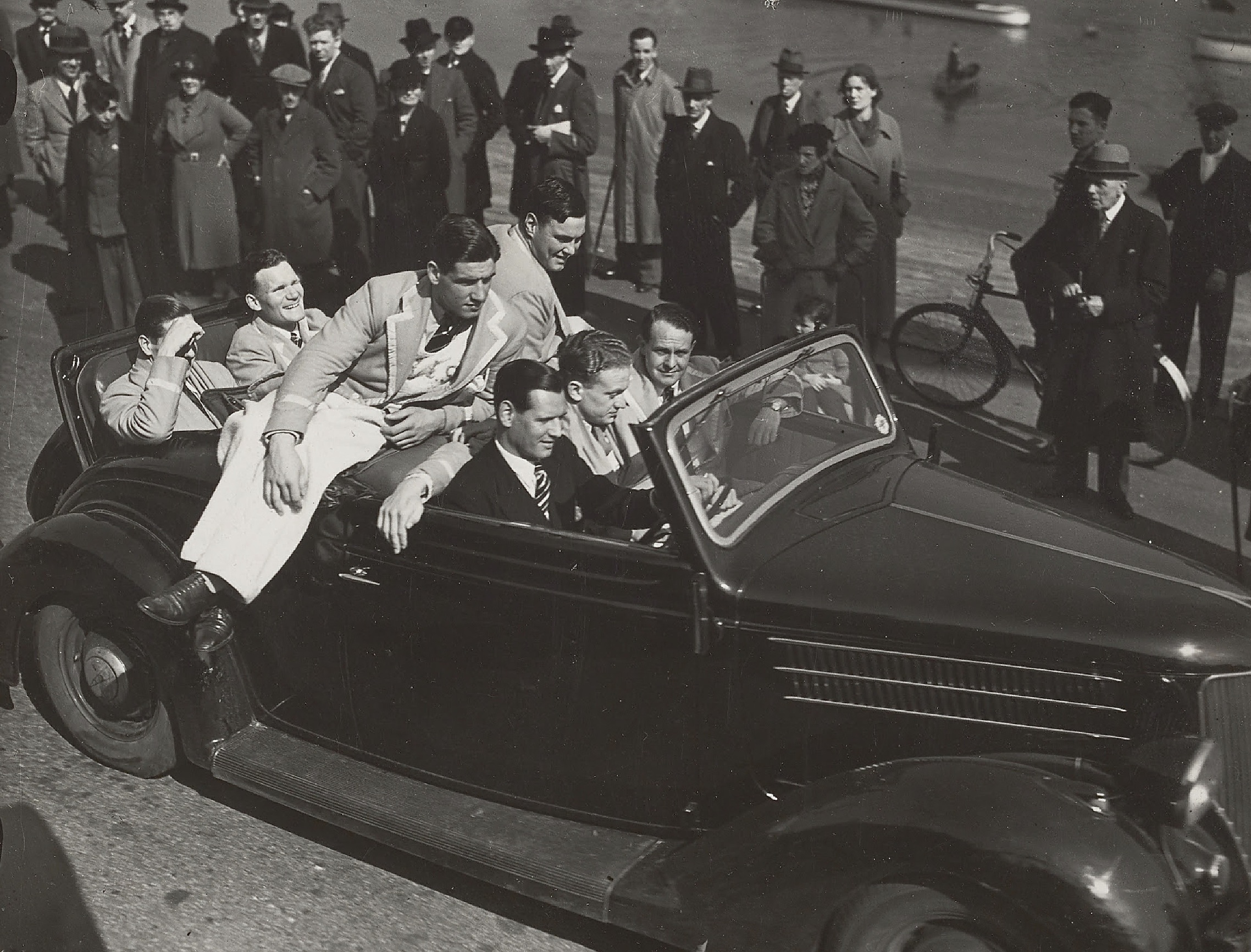
Spectatorism in pictures
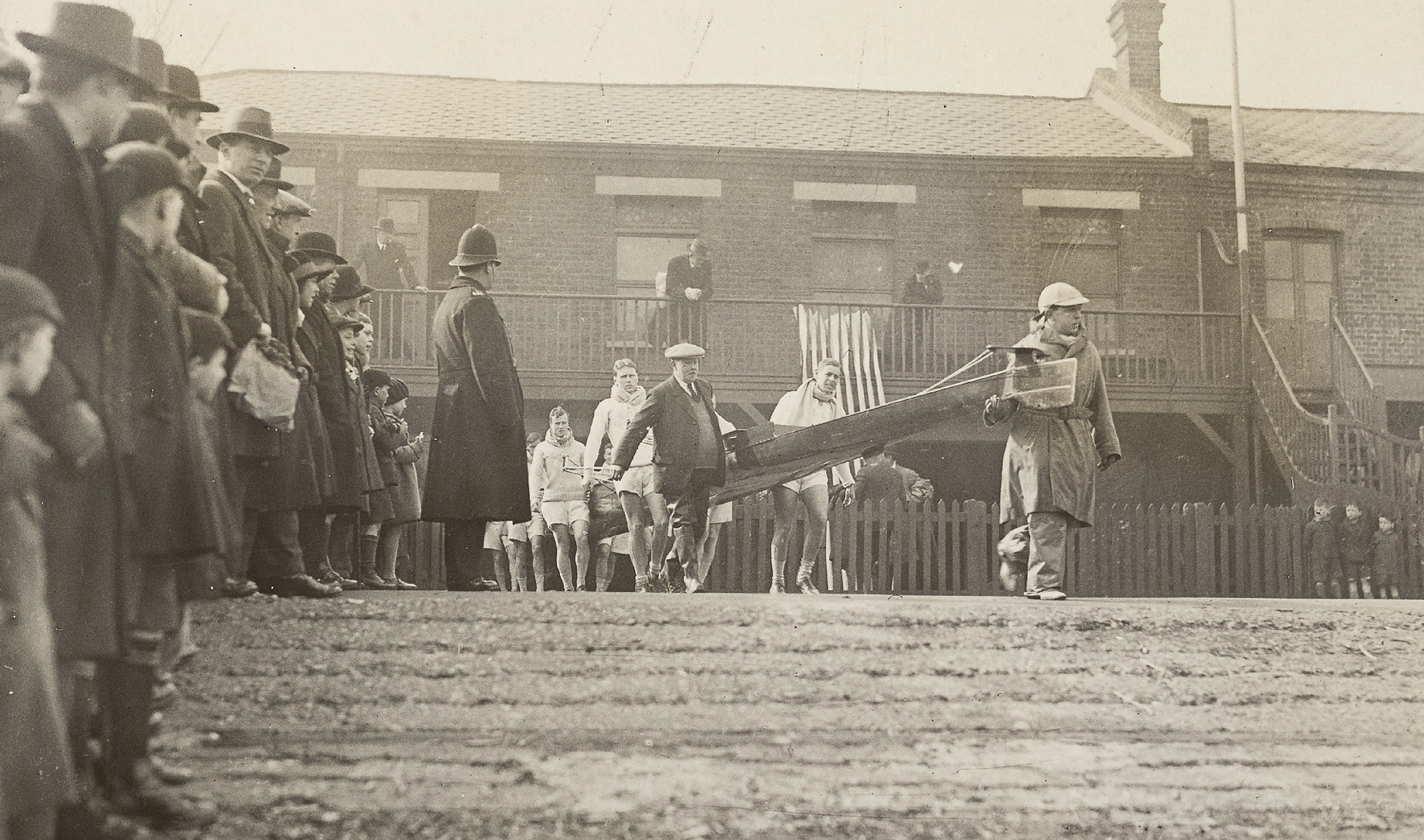
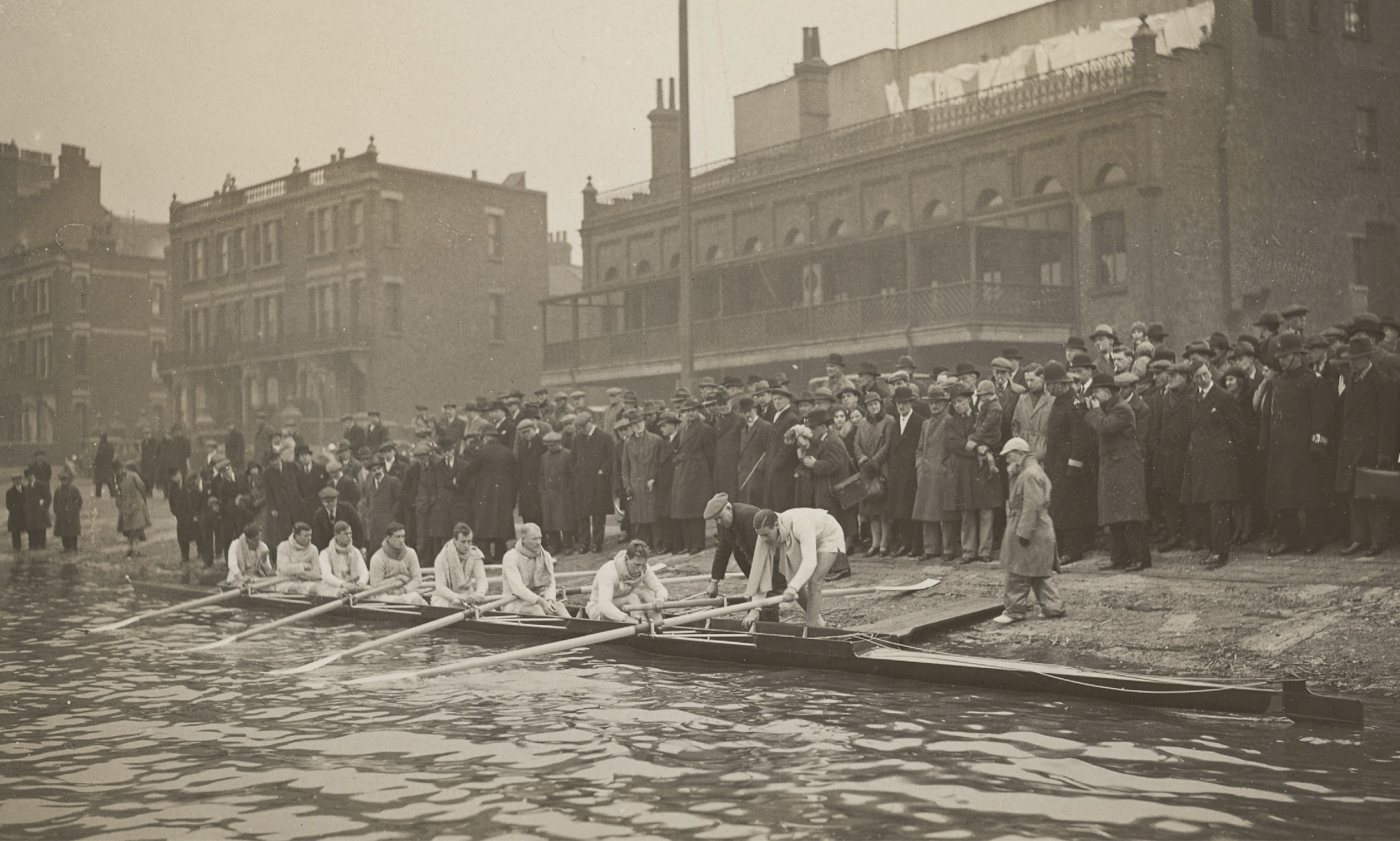
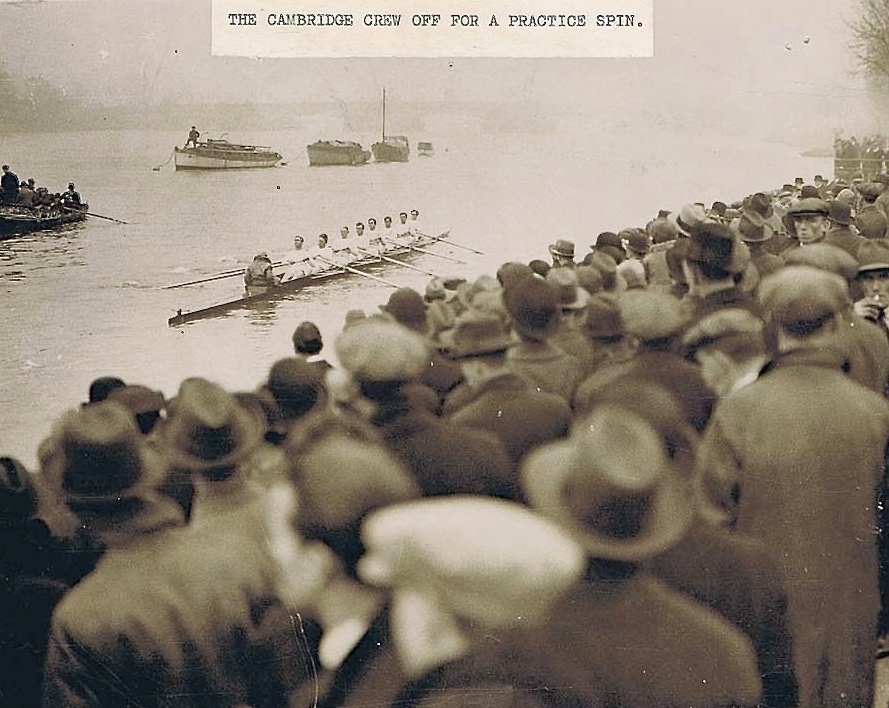
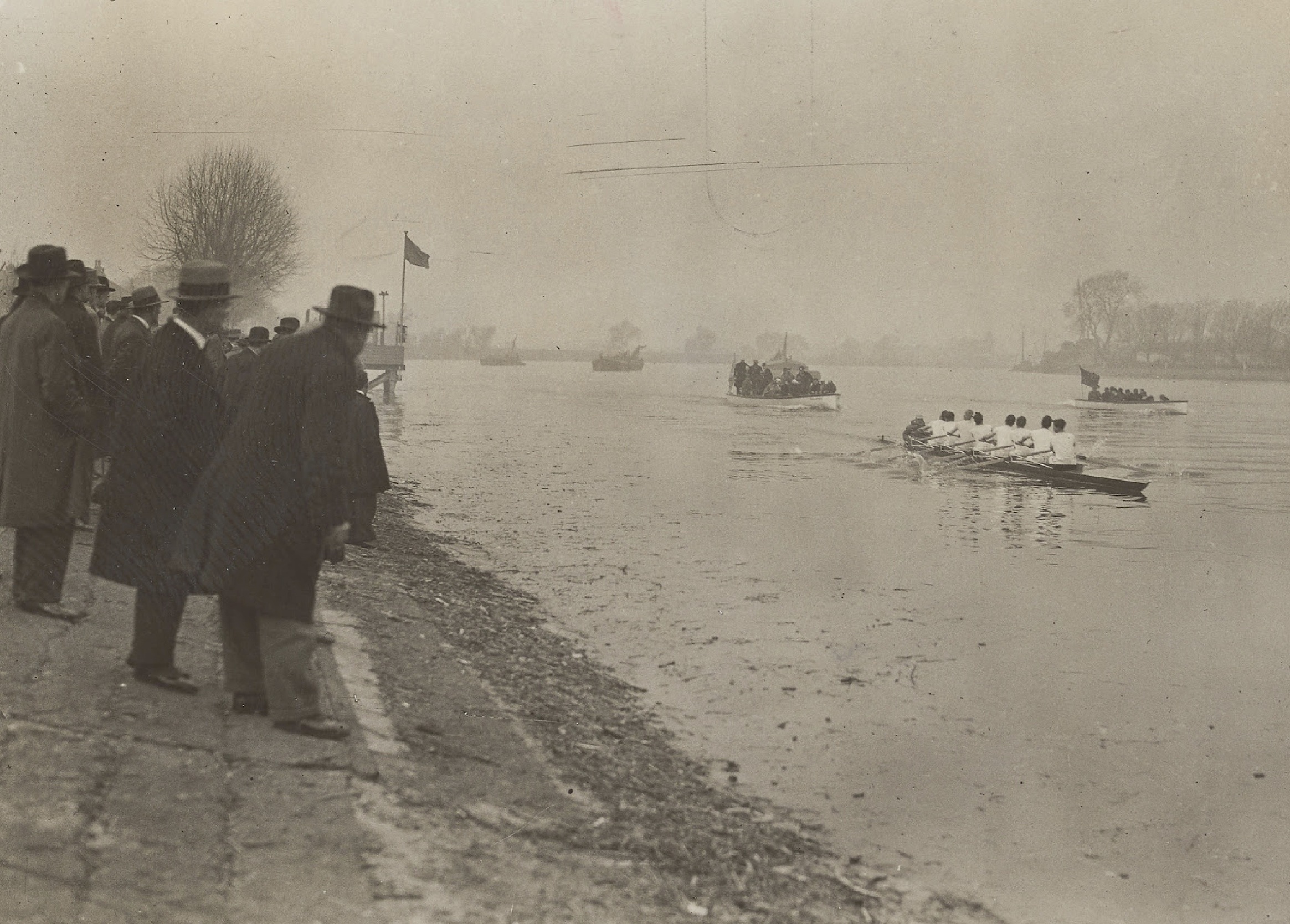
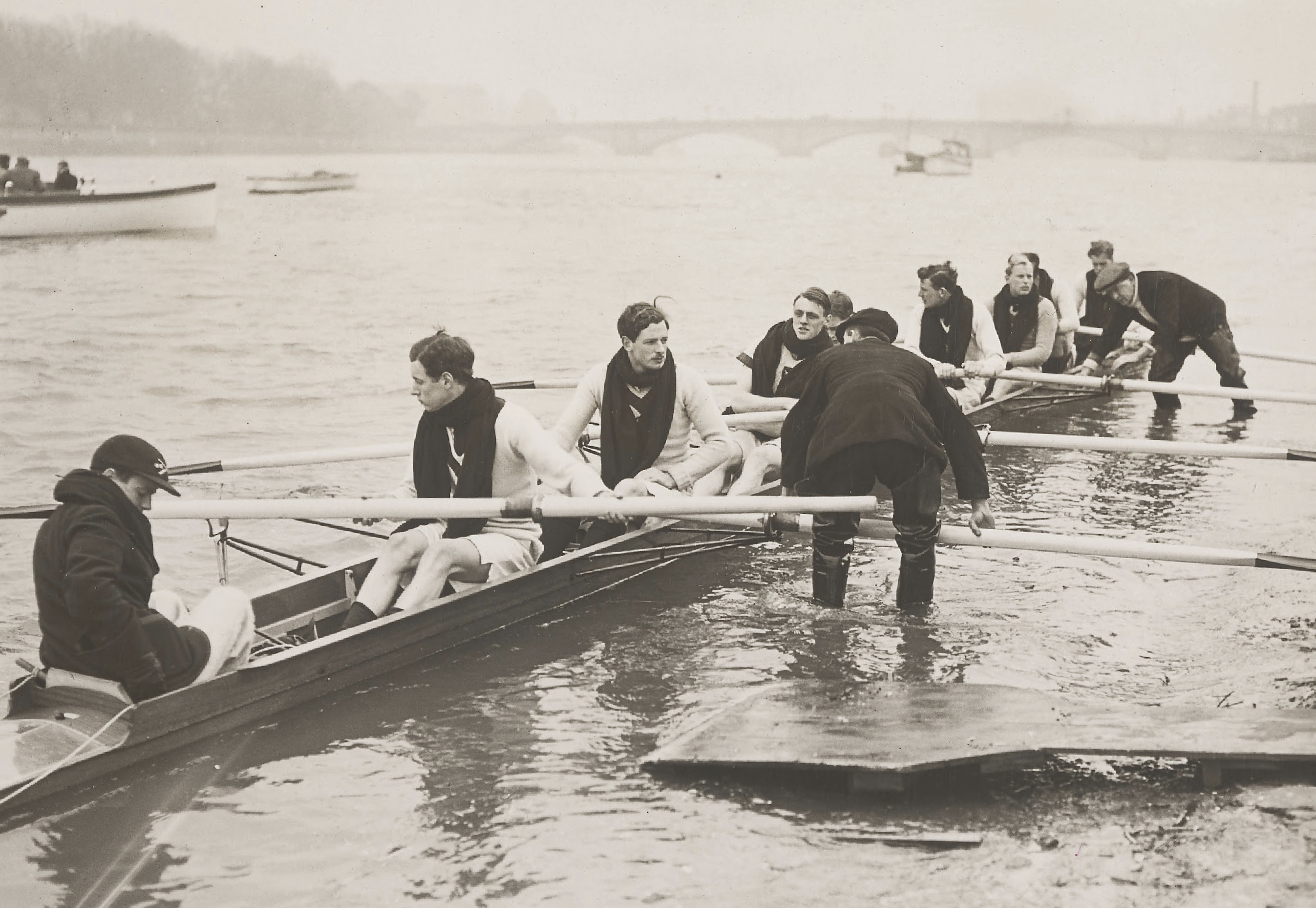
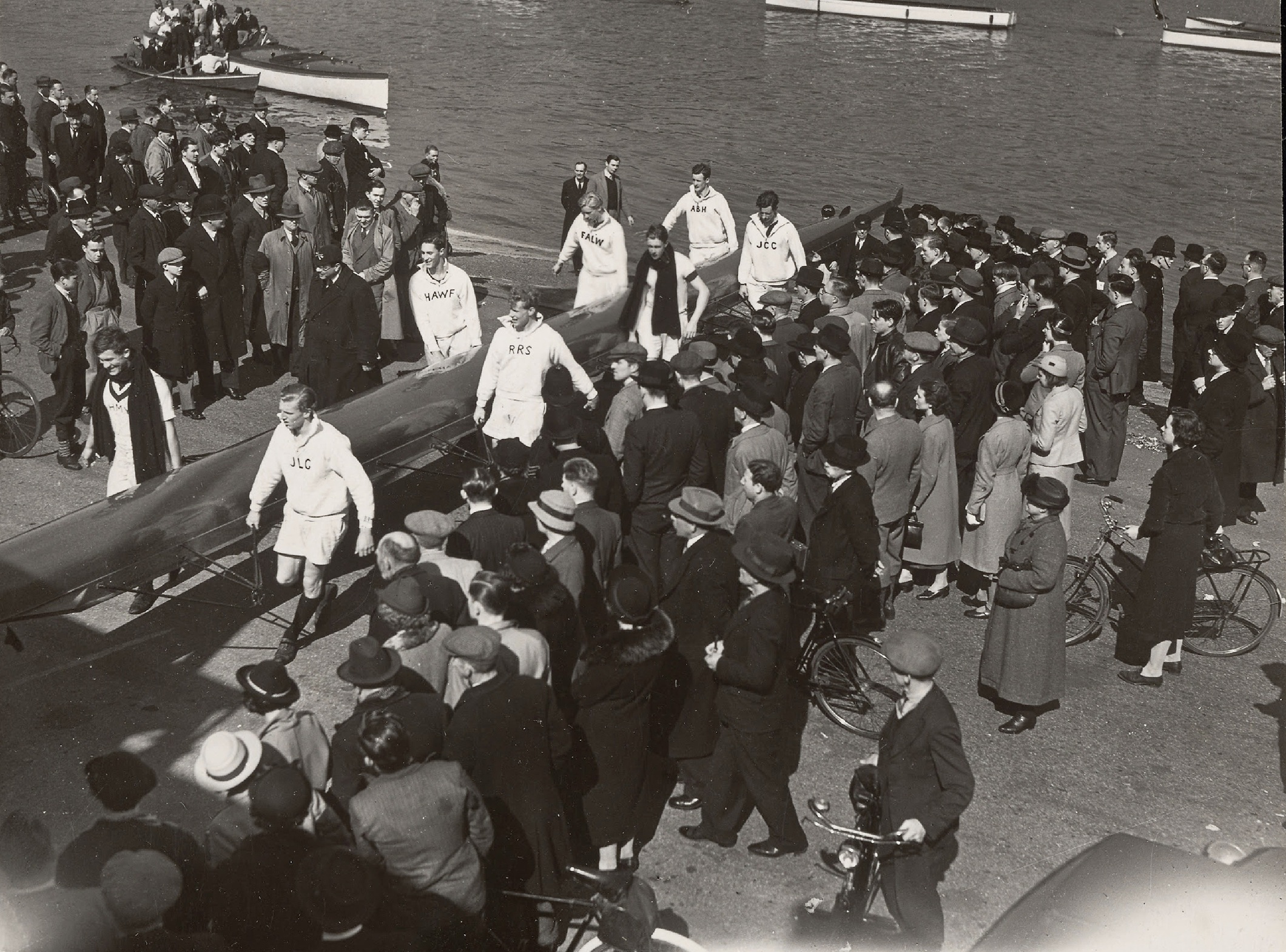
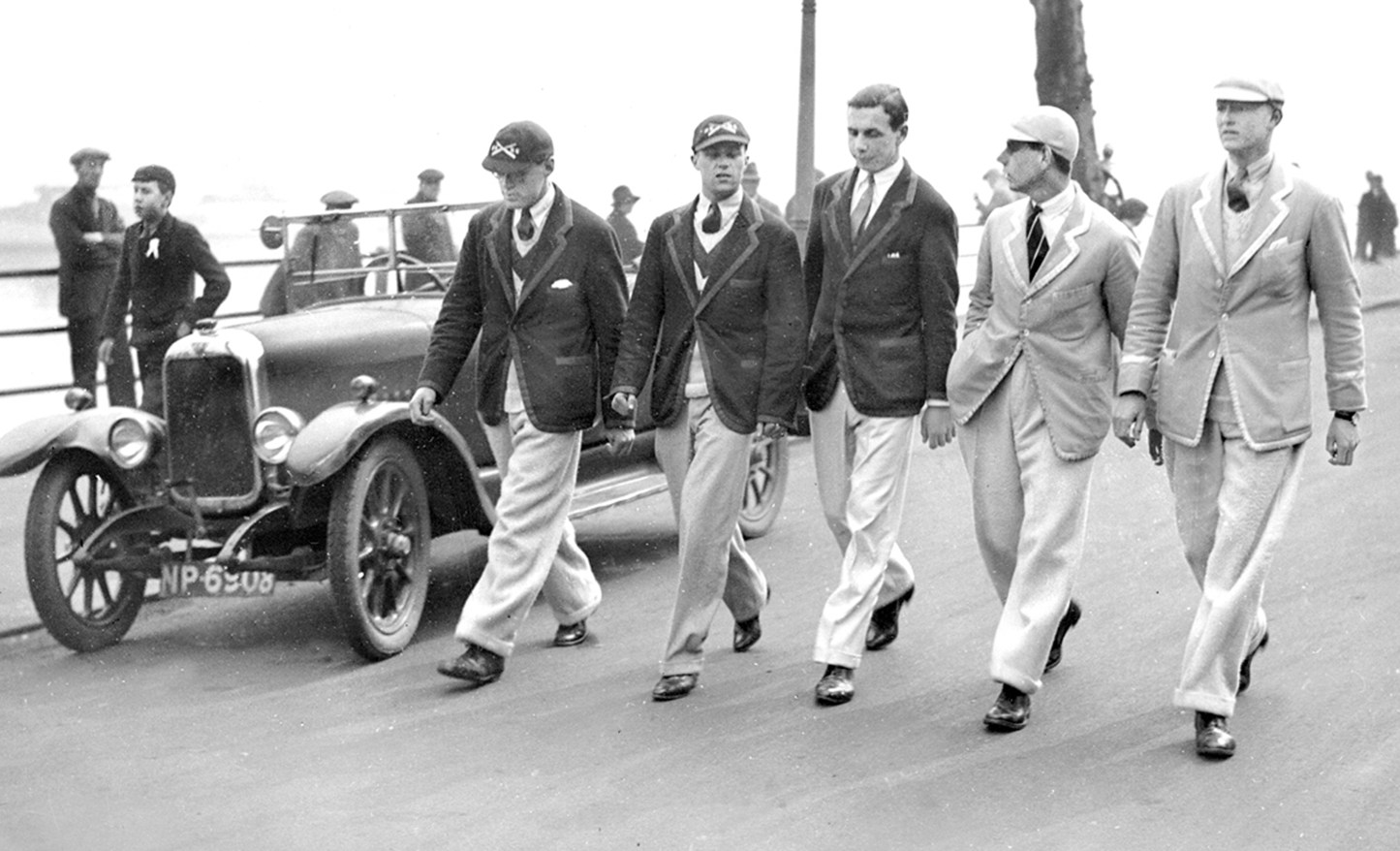
Chris concludes his chapter on the Putney Fortnight on the eve of Boat Race Day:
Basically, the cameras were ready, the stage was set, the selection was settled, the training was done, and the world was getting impatient for their annual few minutes of partisan vicarious rowing. There was very little that could be done to alter the crews in heart, lung, or head now.
Timetable
Friday, 3 April
13:50 – Women’s Lightweight Boat Race
14:05 – Women’s Veteran Race*
14:35 – Men’s Veteran Race*
14:50 – Men’s Lightweight Boat Race
*The Veterans start in Putney and finish just after Hammersmith Bridge.
Saturday, 4 April
14:21 – Women’s Boat Race
14.36 – Women’s Reserve Race
14.51 – Men’s Reserve Race
15:21 – Men’s Boat Race
 Hear The Boat Sing