

22 December 2025
By Tim Koch
Tim Koch follows in the wake of Boat Race hopefuls.
The simplest explanation of the internal races known as the Oxford – Cambridge Boat Race Trial Eights is that the last sixteen rowers and two coxswains contending for the men’s or women’s, Oxford’s or Cambridge’s Blue Boats race each other in matched crews over the full Putney to Mortlake course under the all seeing eye of the coach that has to make to final selection. However, a large number of caveats have to be added.
To be in a winning crew does not guarantee anyone a Blue Boat seat on the big day – nor does being in a losing boat exclude anyone. Further, to not be in the Trials at all (usually because of injury) does not mean that the chance of a place on Boat Race Day has gone.
As to matched crews, this year injury in the Oxford men’s squad meant that the crews were deliberately not matched and an unusual rate capped race took place.
Trial Eight races are designed to test athletes not just against each other but also see how they cope with Tideway conditions and race day pressure. However, these days, Trials are about data as well as distance.
In recent years, technology has given Trails a new twist as the use of telemetry means that the coaches no longer have to rely on the mark one eyeball backed up by video and that individuals rather than crews can be more easily accessed. Each of the 600 or so strokes that every rower makes to cover the P to M course can now be analysed ad infinitum for stroke length, oar angle, force curve, acceleration, power and blade slip. A nice explanation of telemetry is on the Reading University BC site.
Cambridge’s Trials for the 2026 Boat Race were on 18 December and saw the boats of the men’s and women’s “A” and “B” races named with traditional undergraduate humour. While being a lightweight did not automatically exclude anyone from an “A” crew, the “B” race crews were officially a mix of openweights and lightweights.
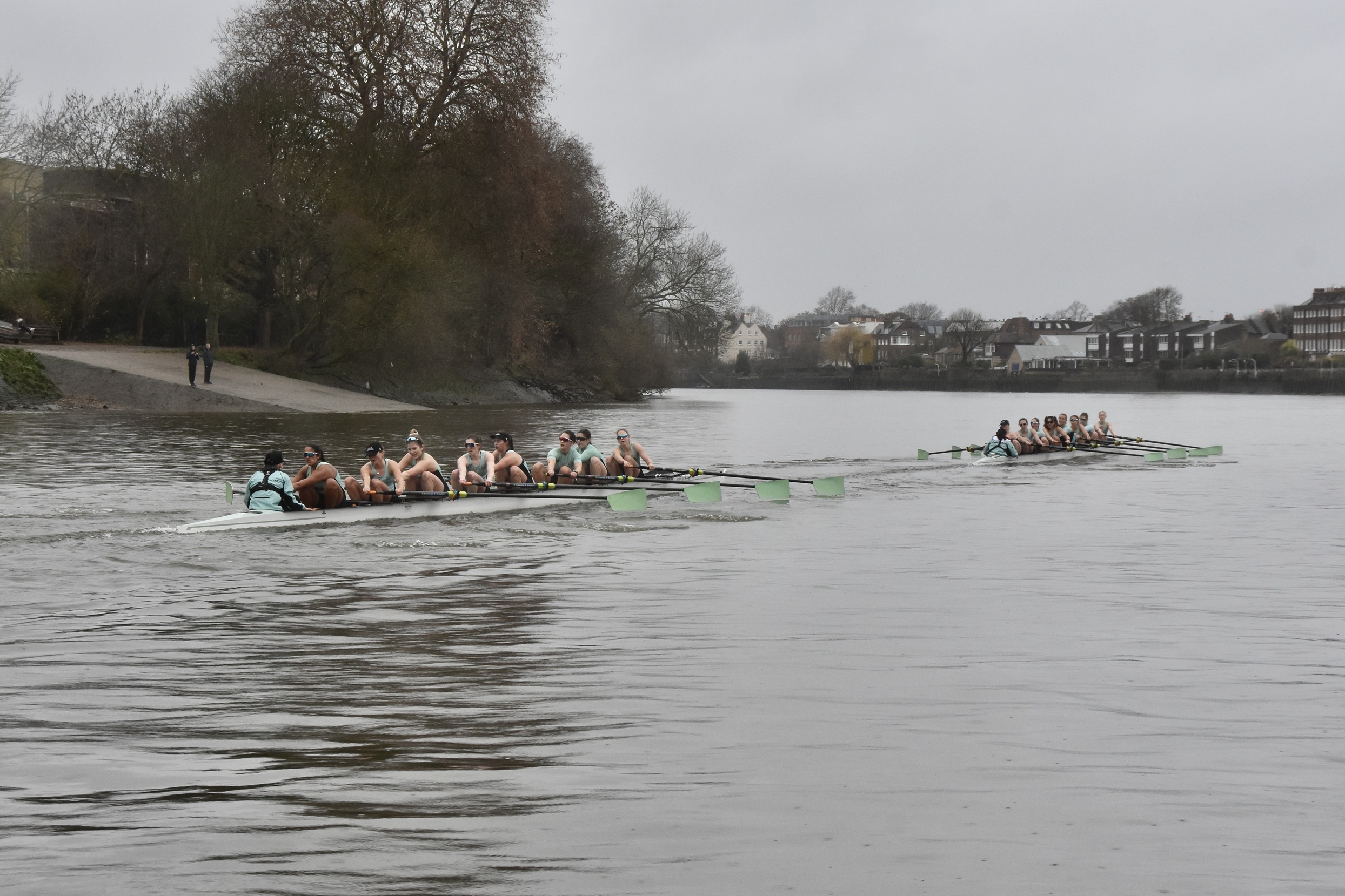
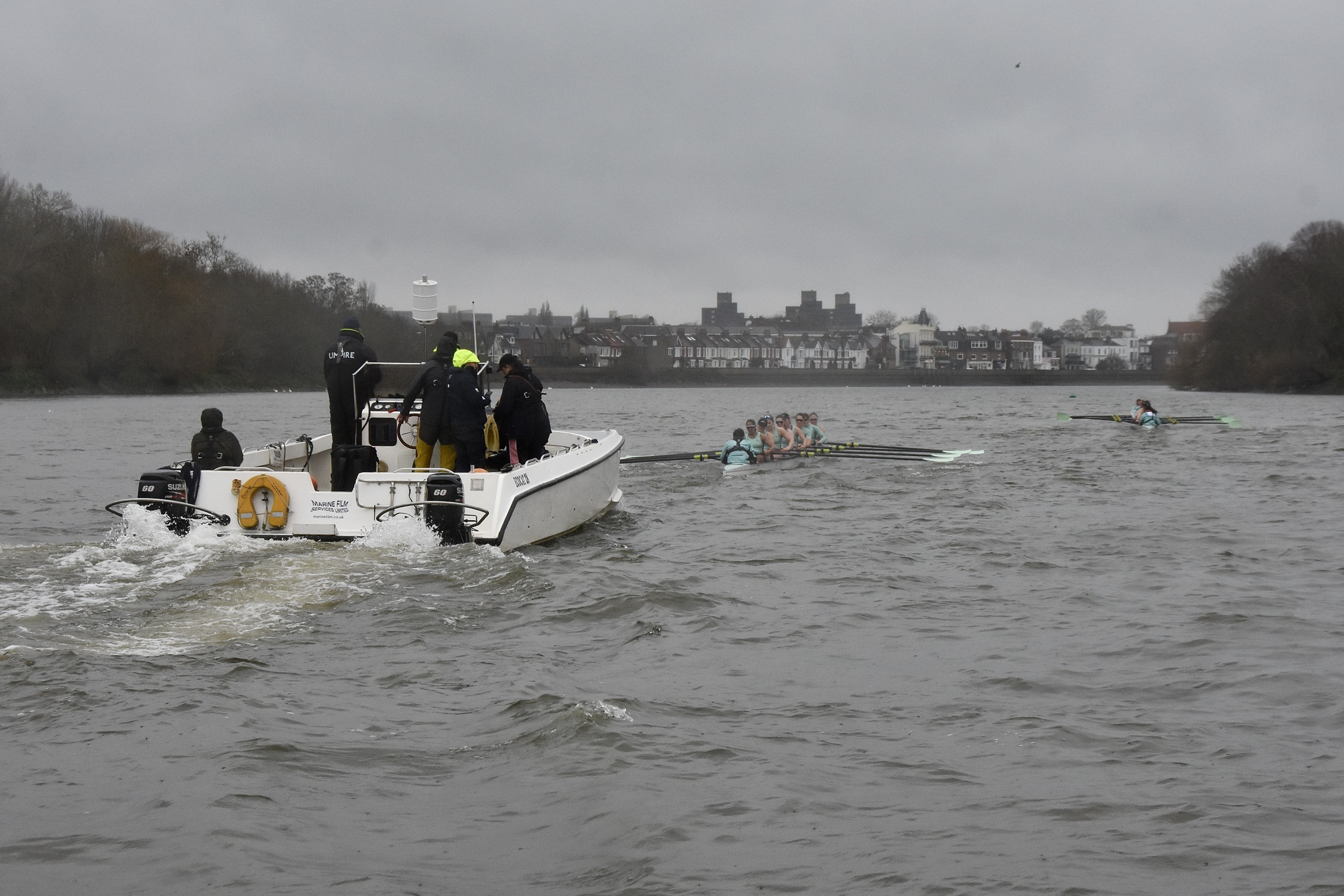
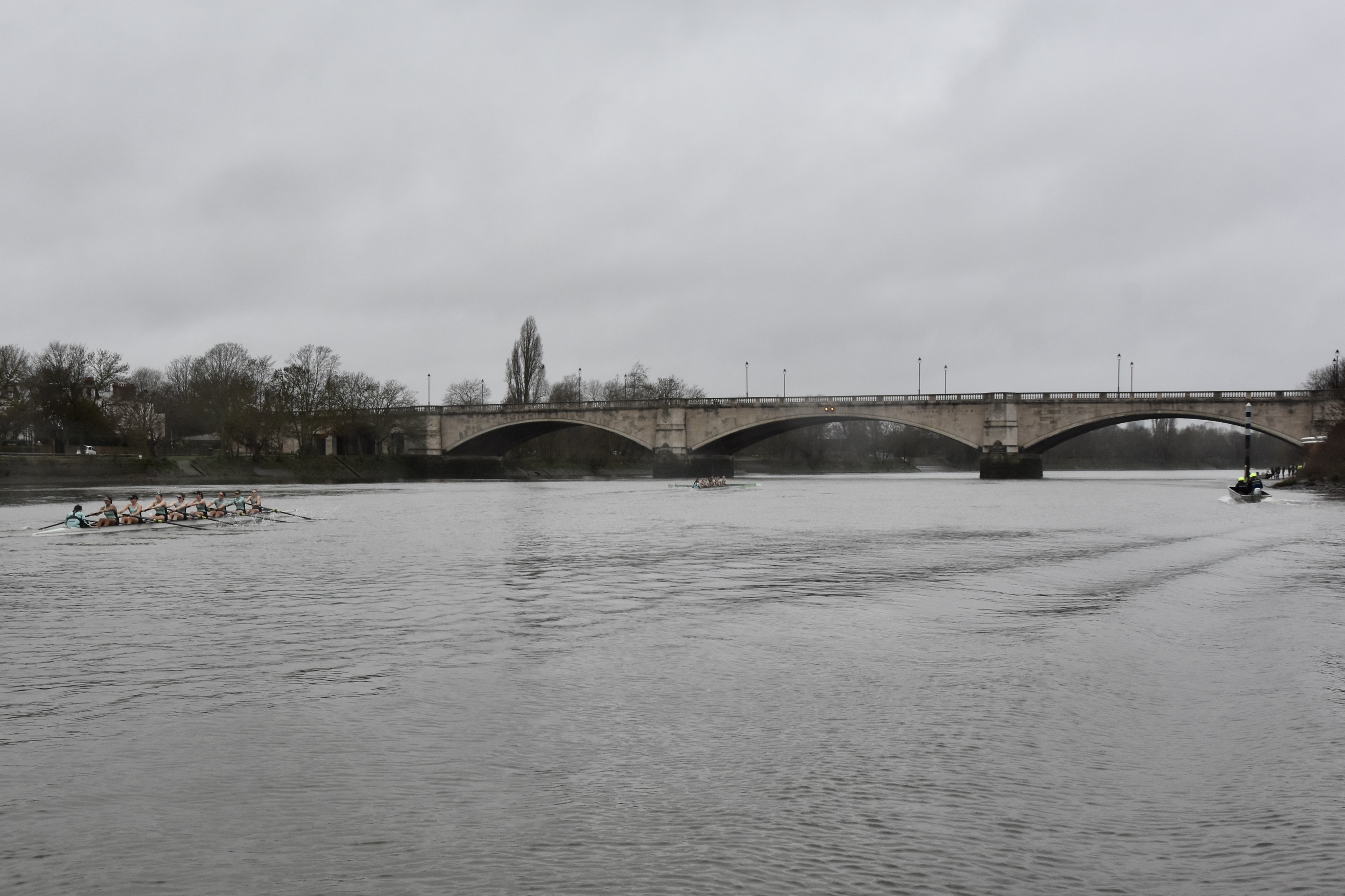
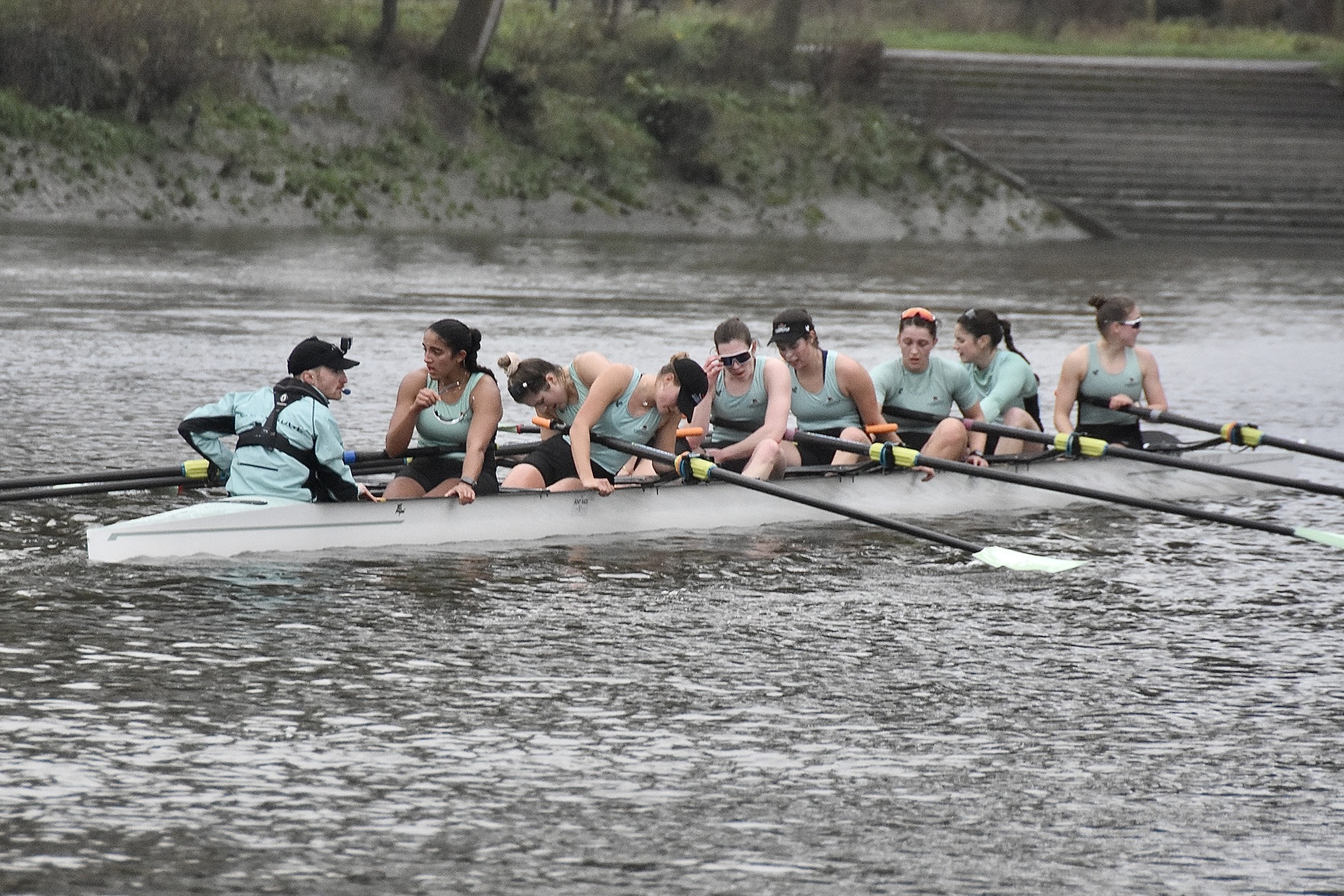
Cambridge Women
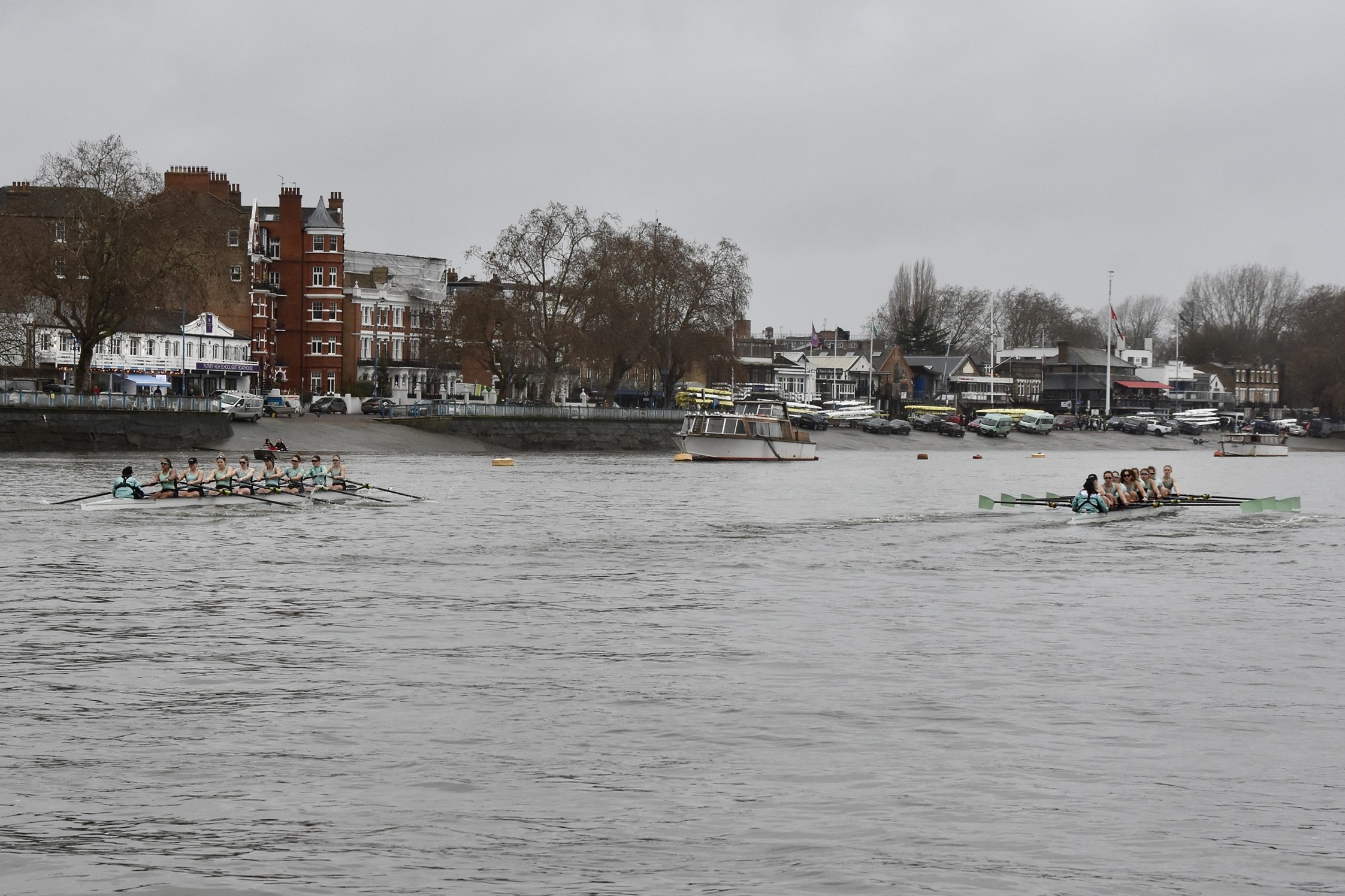
Off the start, it was Ginger, steered by Matt Moran, that had the higher rate but Baby, steered by Lidya Acar, soon took control and established a clear lead.





Cambridge Men
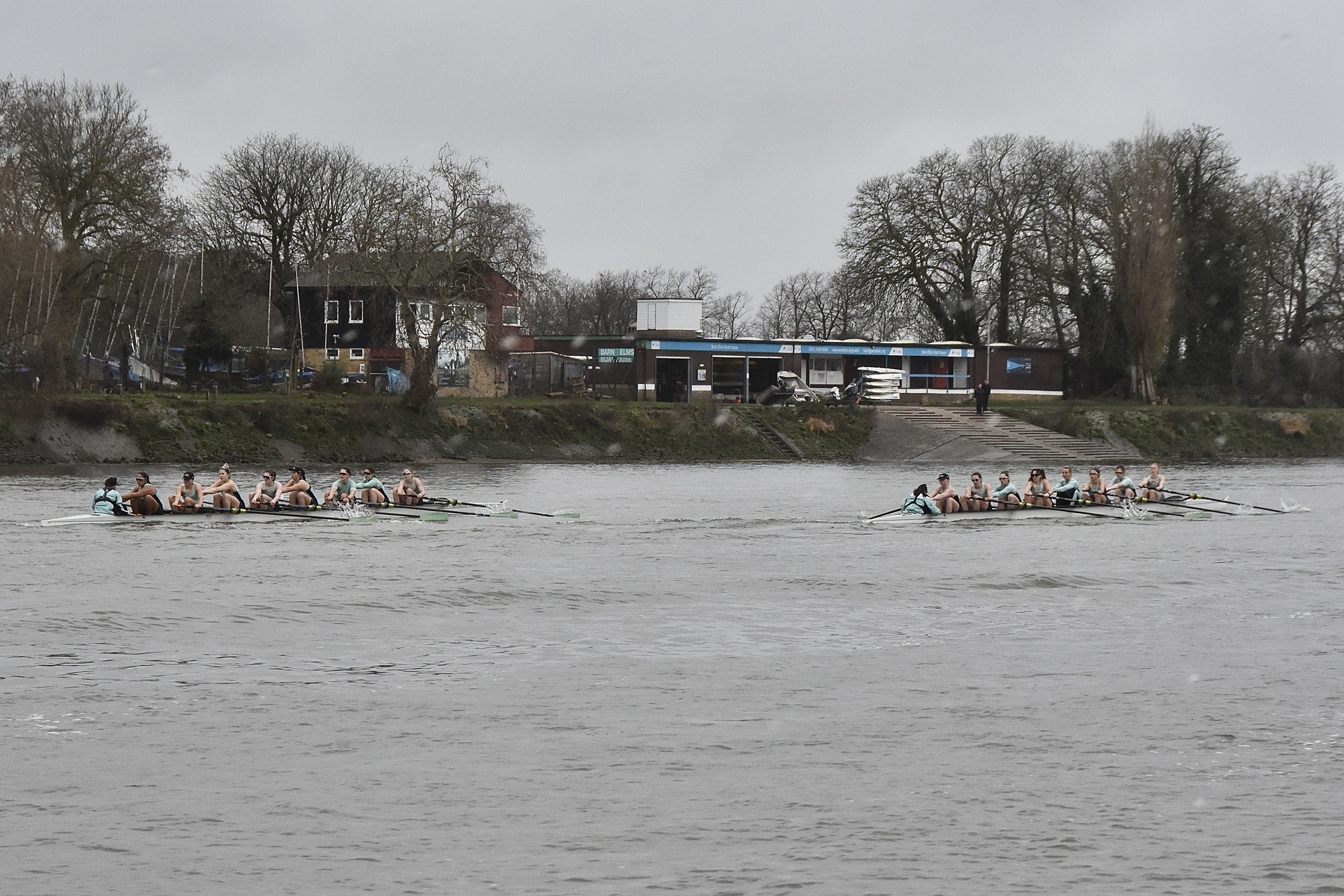
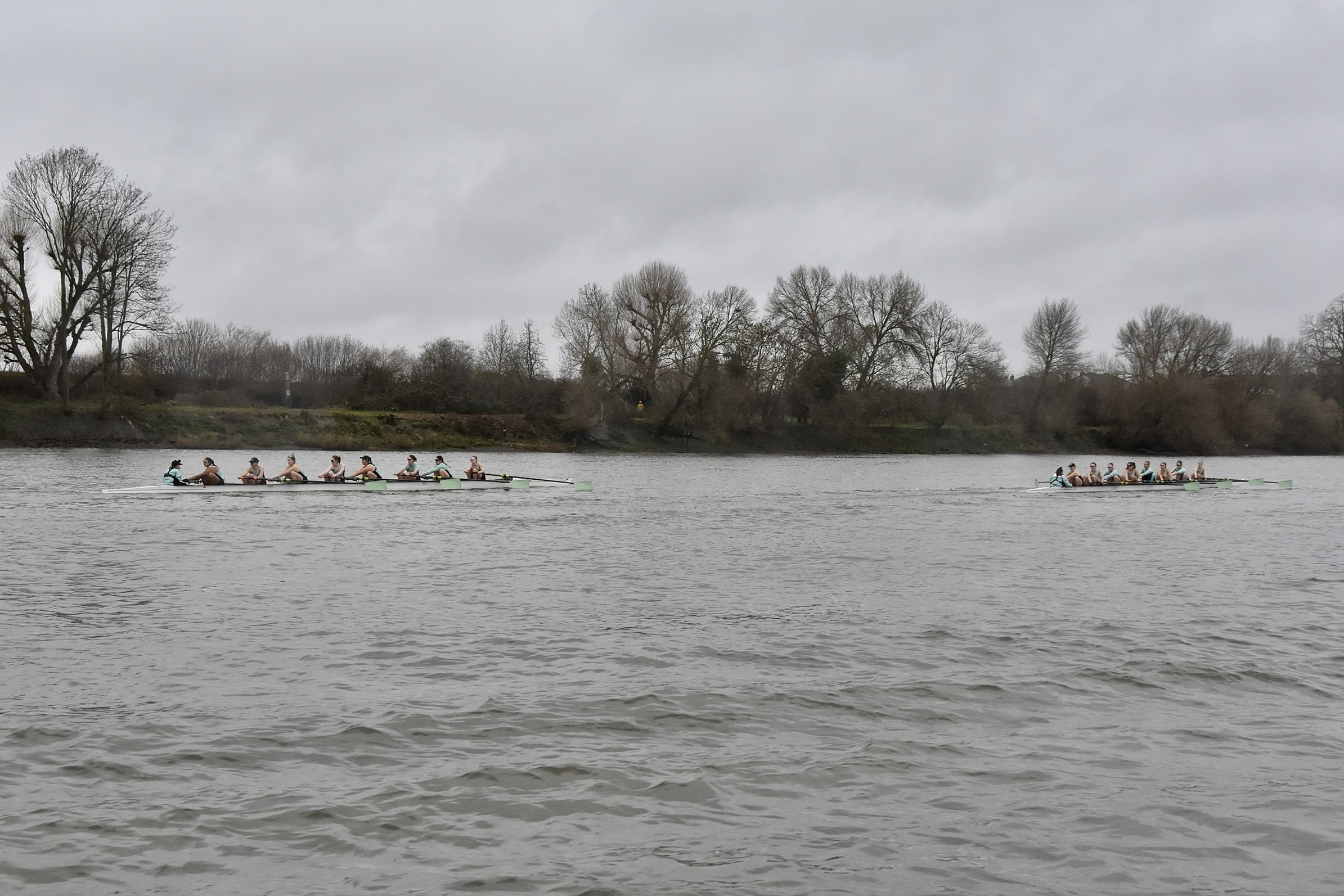
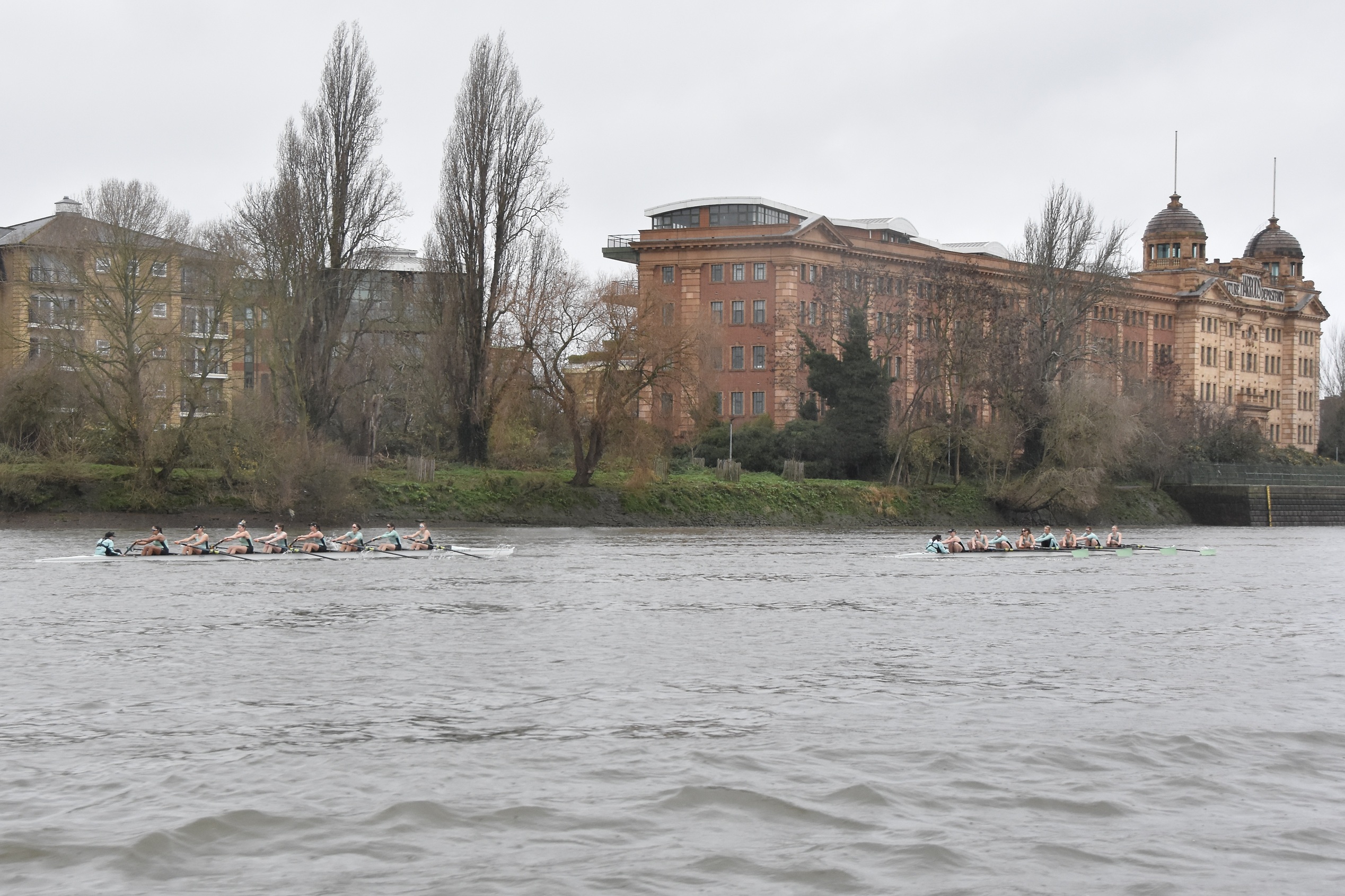
The Cambridge men referenced their post training session meals of Beans and Slop when naming their boats. By the time that they went onto the start, the water had become even more difficult than it had been for the finish of the women’s race with wind blowing down the course and rain becoming constant. Both rowing and photography are put under much strain in such circumstances.
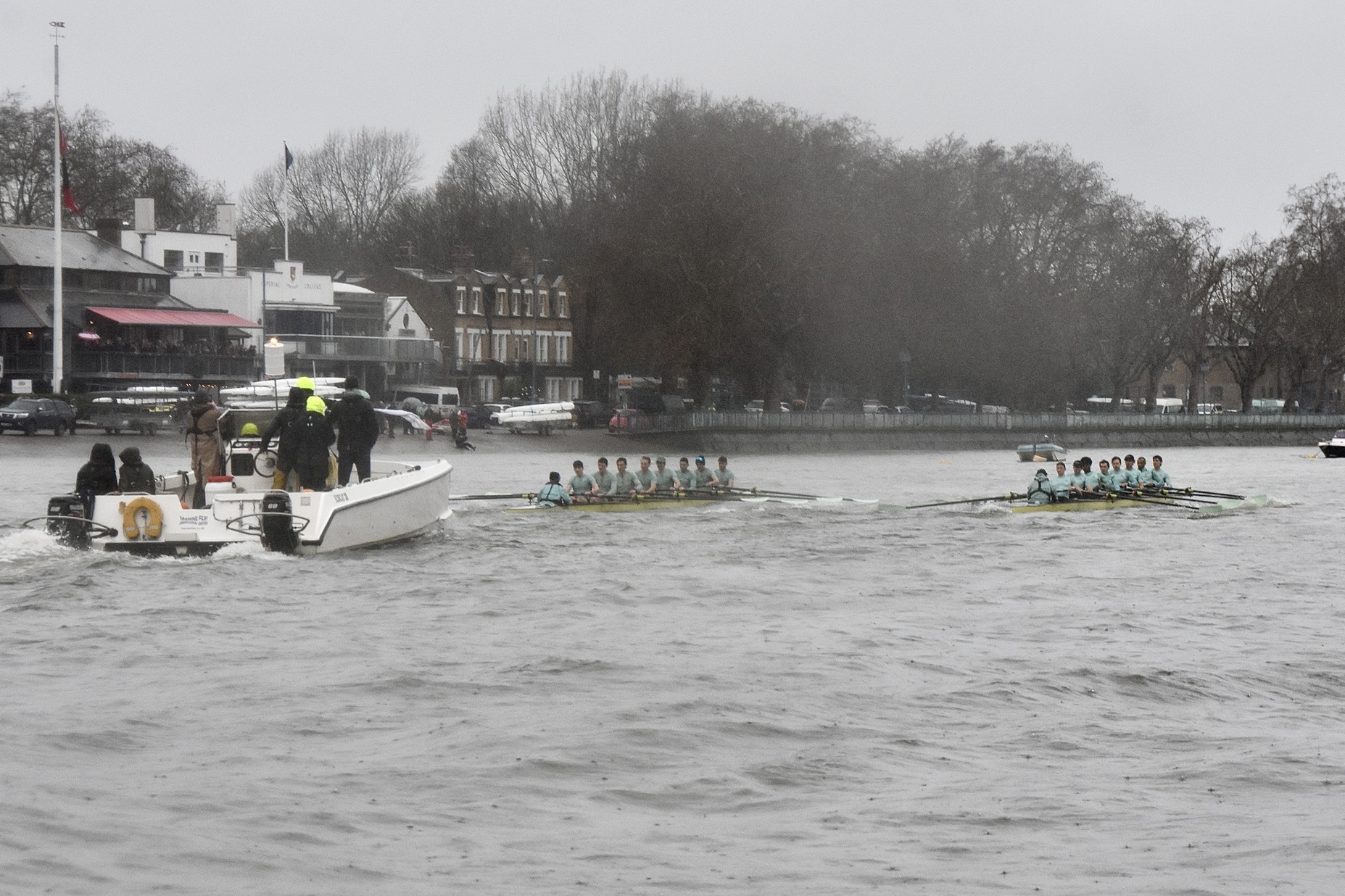

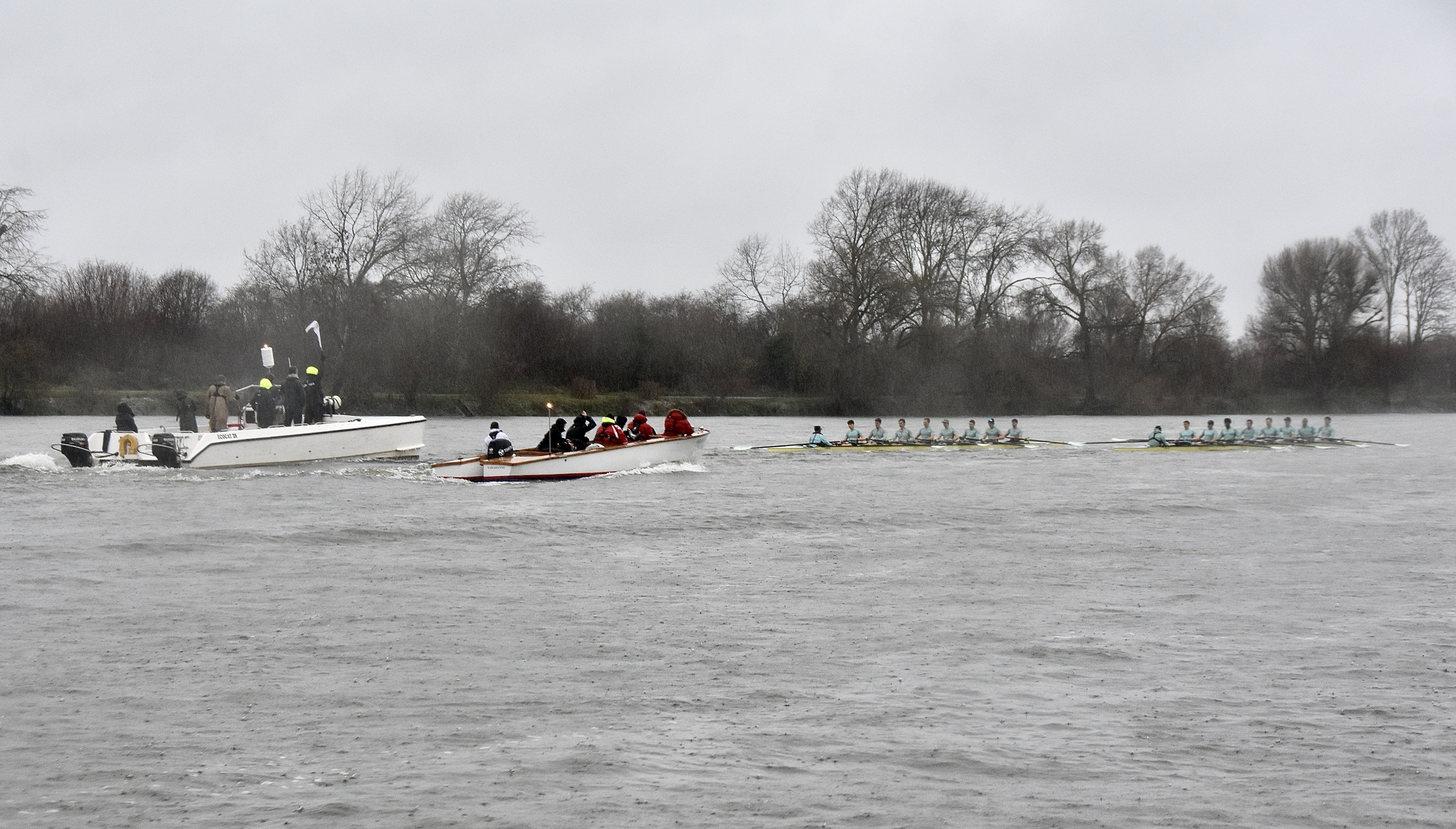


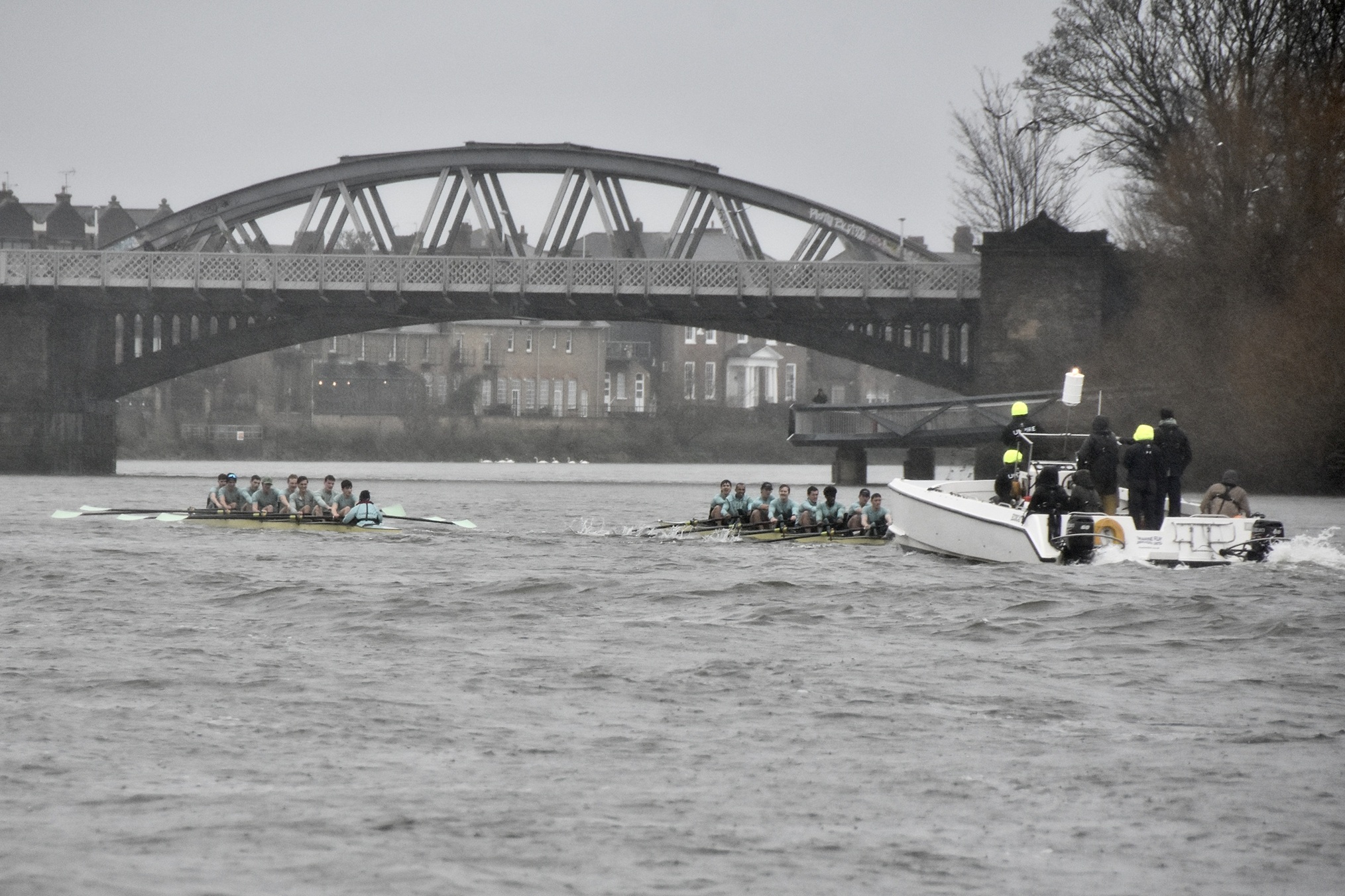
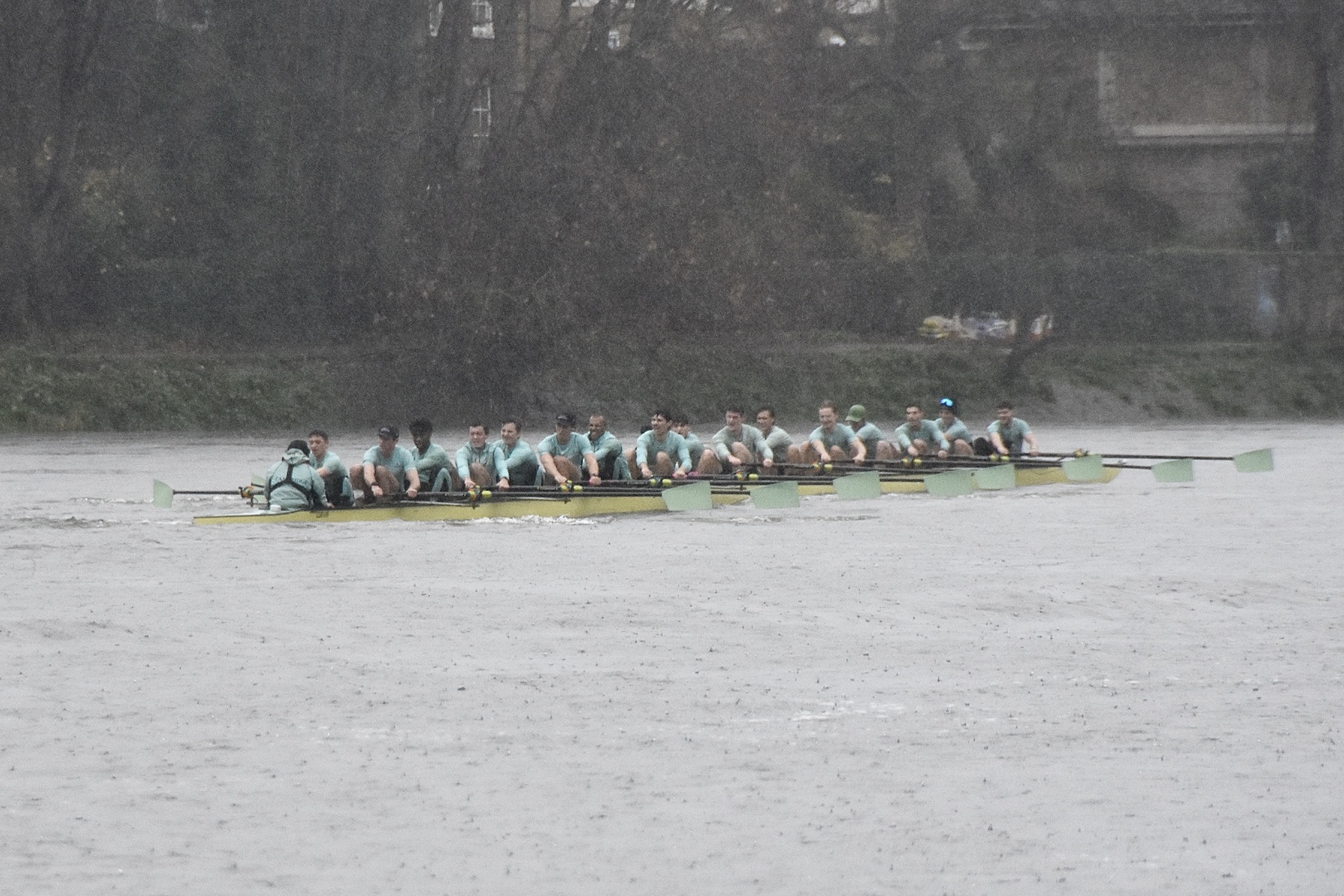

The Cambridge men have an embarrassment of talent to call on this year especially and several of their best oarsmen did not take part in Trials.


Last March there was an eligibility controversy over some of the Cambridge squad. It was in part an argument over Postgraduate Certificate in Education students and partly over a rule brought in after James Cracknell took part in the 2019 race. This imposed a 12-year limit after a student first enrolled at any university but which had previously been ignored without complaint. On 3 December, OUBC and CUBC issued a joint statement:
Since May 2025, OUBC and CUBC have been reviewing the Joint Agreement rules regarding student athlete eligibility to row in the Boat Race.
Both Clubs confirmed at the end of September 2025 that they would accept and abide by the established Joint Agreement eligibility rules.
Discussions have continued and by mutual consent the Clubs have decided to suspend the “12-year rule” for the 2026 Boat Race season.
It is intended that any other changes to the Joint Agreement eligibility rules will be announced well in advance of the 2027 Boat Race season.
Make of that what you will.
 Hear The Boat Sing
Hello,
I am again disappointed that in your recent (Dec 21st) and comprehensive coverage “Countdown To The 2026 Boat Race: Cambridge Trial Eights” you continue to refer to a point along Hammersmith Reach as “Opposite St Paul’s School” whenI suggest it is more appropriate to be referred to as “Opposite Latymer Boathouse”.
From an image standpoint, as the attached illustrates, there is little comparison between a row of historic buildings (including the home of William Morris) and a slab of concrete!
From the historic standpoint there are also some comparisons. While St Paul’s was founded first 1509 vice 1624, Latymer moved to Hammersmith in 1756, St Paul’s in1884. Latymer moved to its current site in 1895 while St Paul’s moved south in 1968, incidentally two years after the “new” Latymer Boathouse was built. Clearly both fine schools with a friendly rivalry (particularly in rowing) going back many generations.
I will concede (as someone who knows that stretch of water well) that it easier for a following boat to take a picture towards the Surrey bank. However, Latymer remains the most striking rowing related landmark along Hammersmith Reach.
Sincerely,
David Godfrey
Del Mar, CA
(Latymer 1964)
David,
If St Paul’s is in shot, it makes little sense to refer to Latymer.
Best,
Tim