
31 July 2025
By Tim Koch
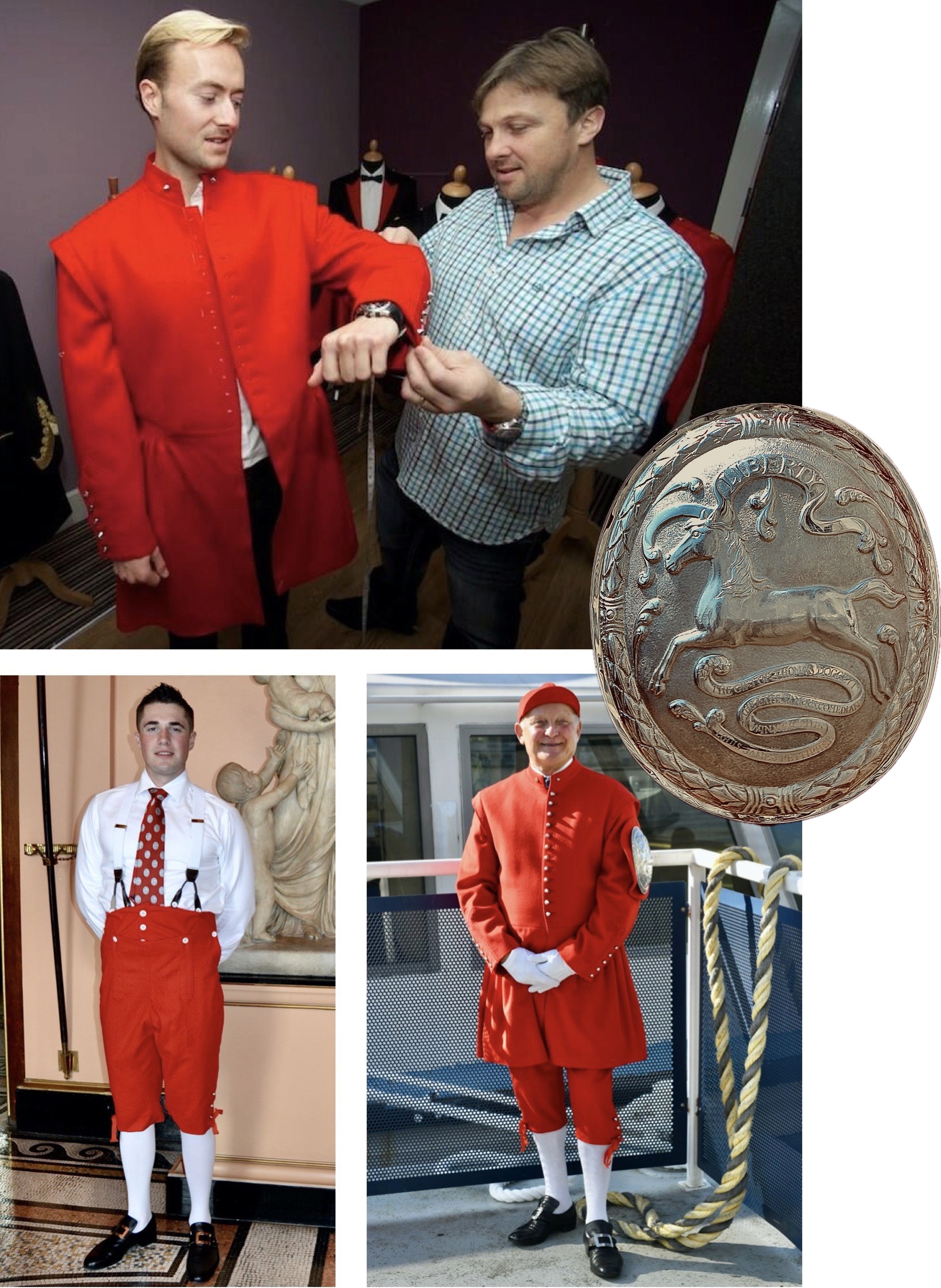
Tim Koch witnesses the 311th draw for the 311th race for the Doggett’s Coat and Badge.
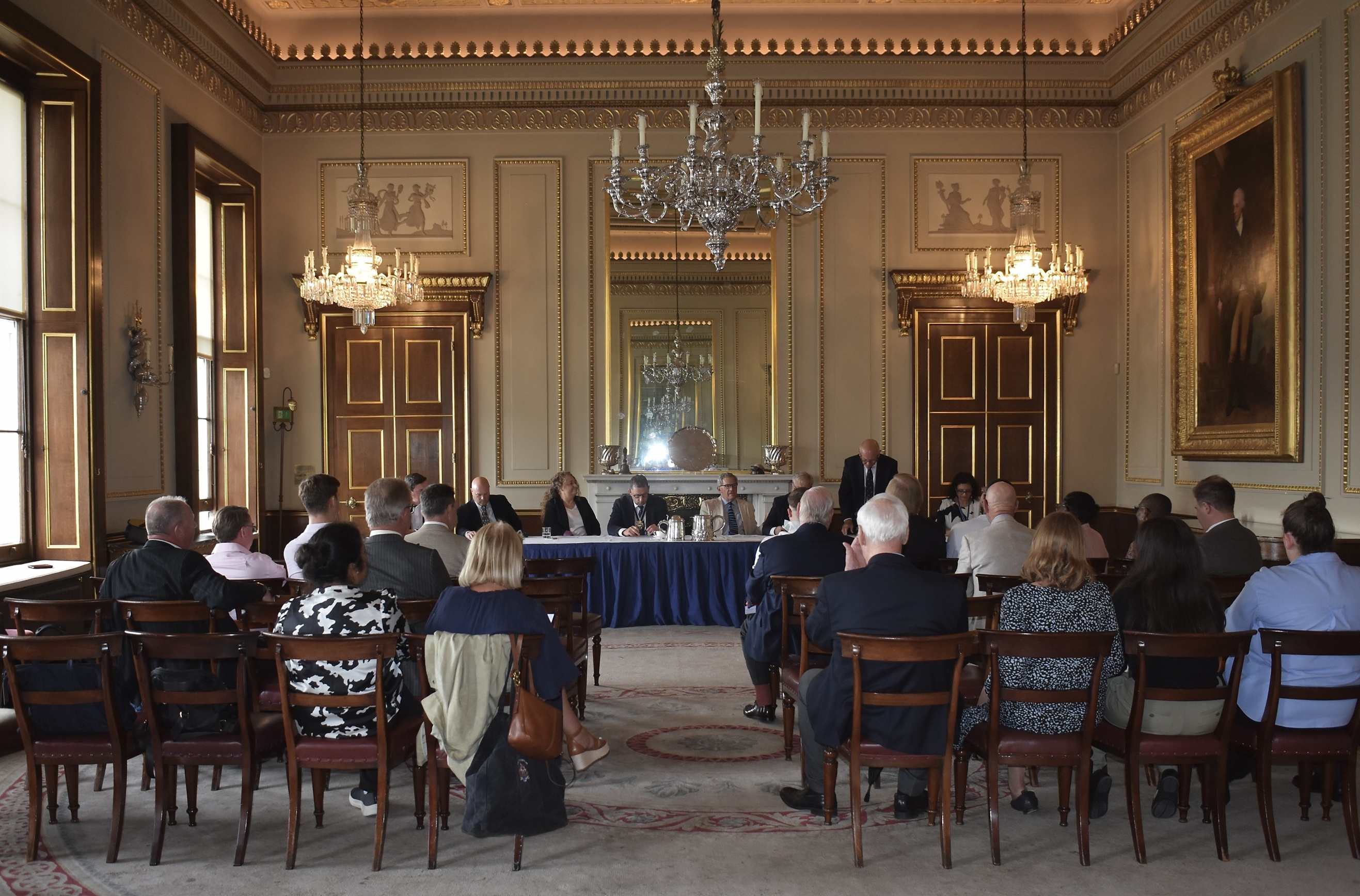
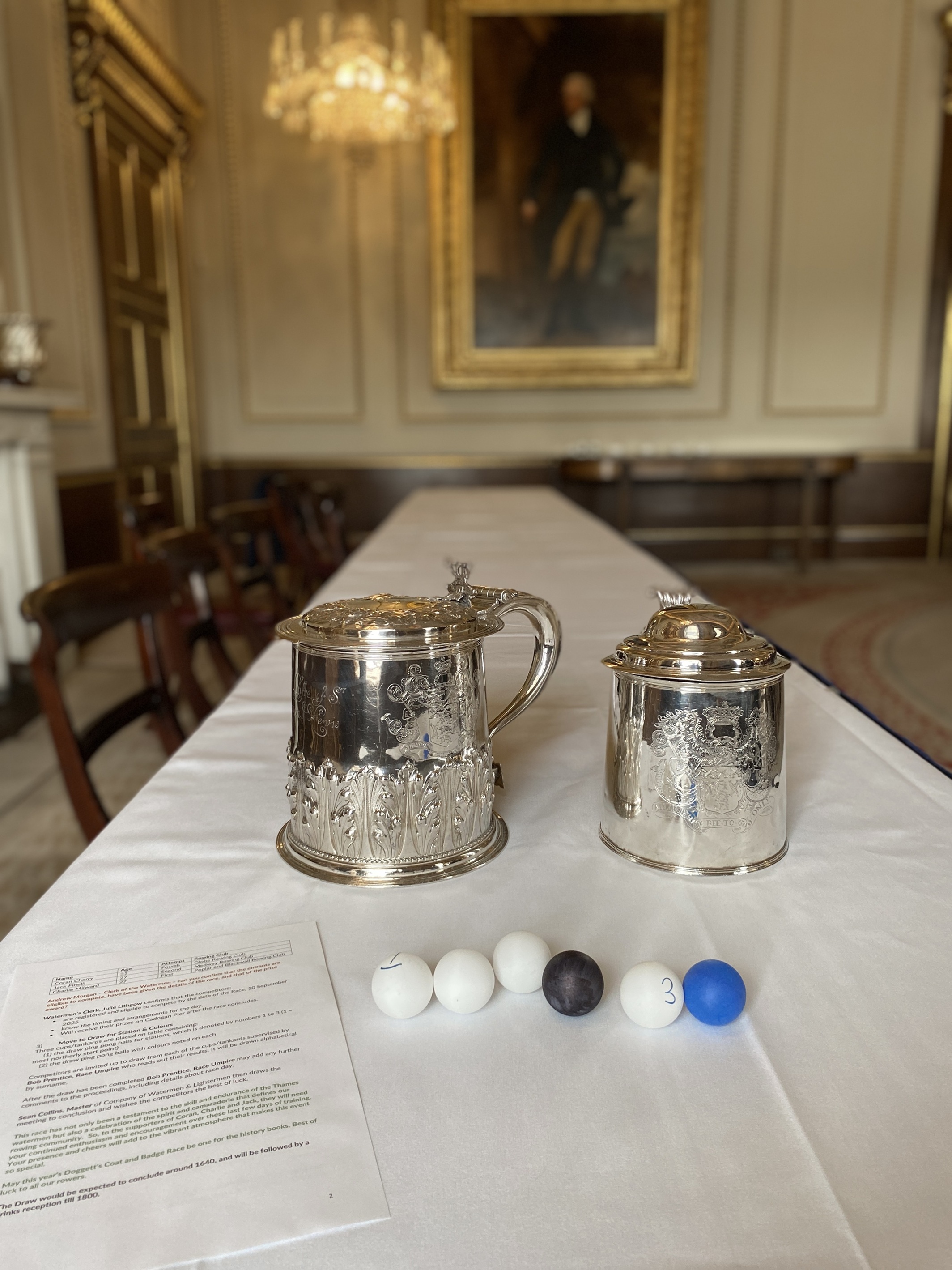
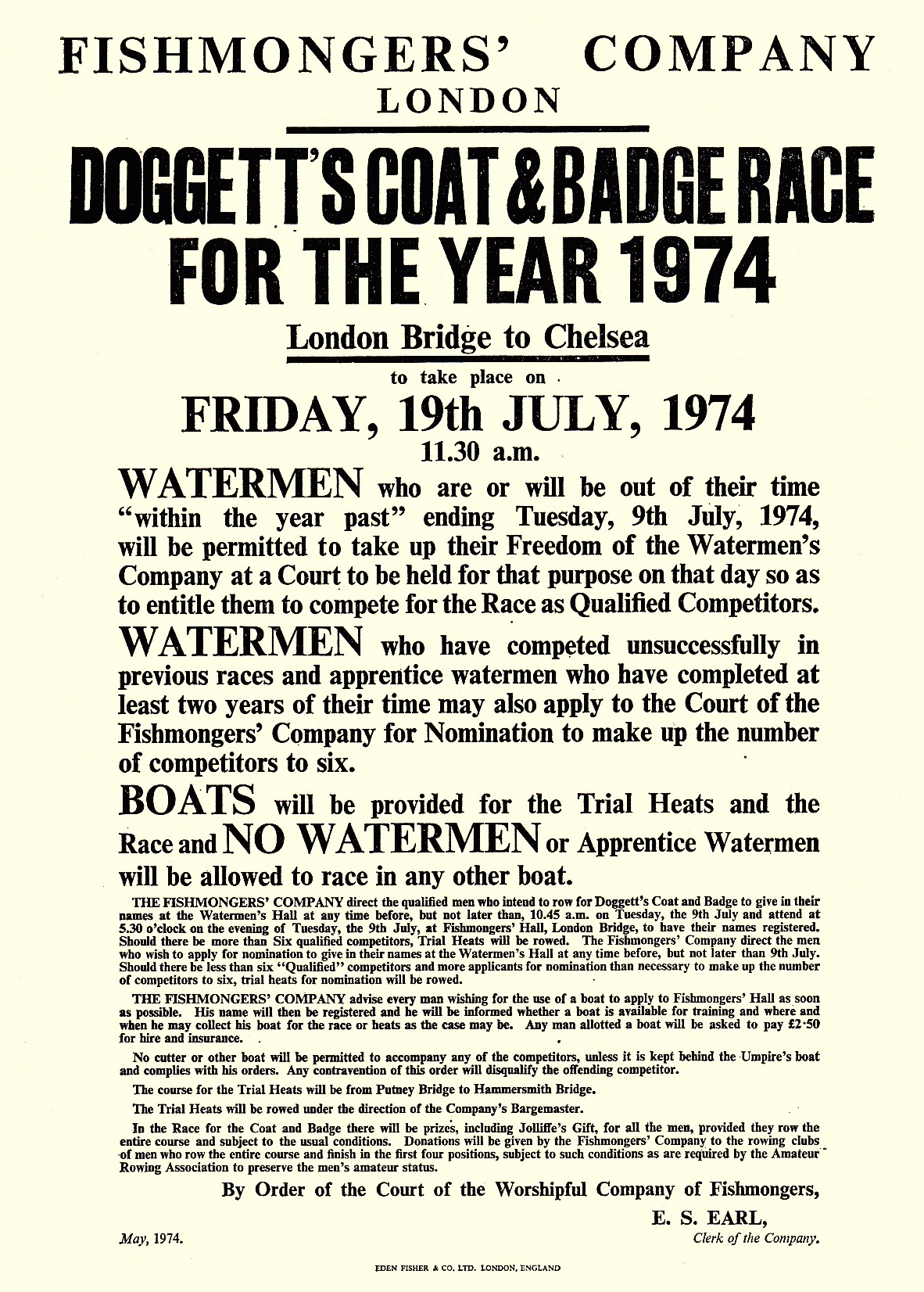
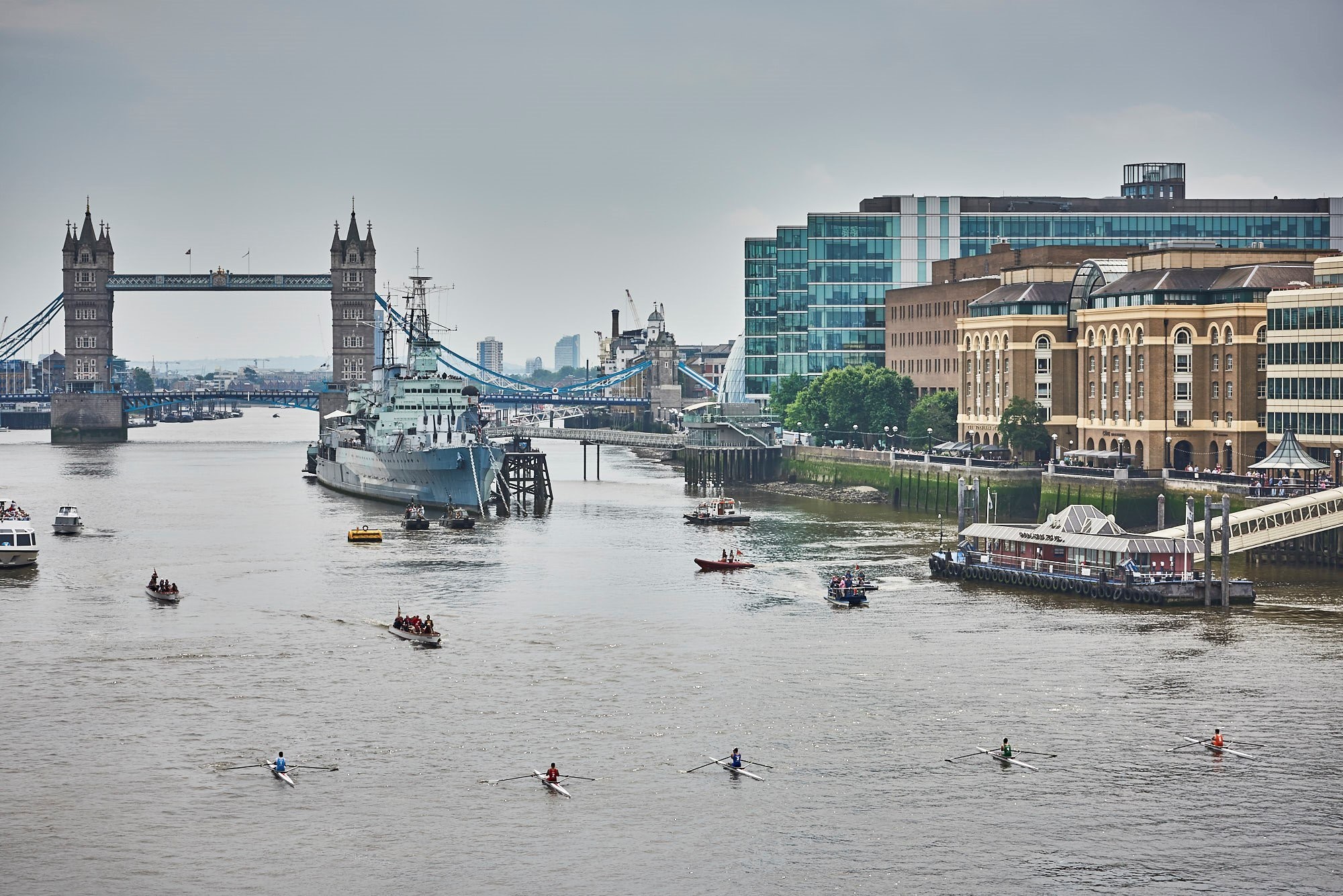
On 30 July, in the magnificent surroundings of Fishmongers’ Hall overlooking London Bridge, the draw for stations and colours for the 2025 Doggett’s Coat and Badge Wager took place. This year’s race will take place between three hopefuls on Wednesday, 10 September.
The ‘Wager’ (from the old use of the word meaning trial by personal combat) is the oldest continuously run rowing race in existence. It had been going for 114 years when the Oxford – Cambridge Boat Race started in 1829 and was 124 years old when Henley Regatta began in 1839.
That such a long-established event should nowadays be relatively obscure is largely due to its very restrictive entry conditions. The race is only open to a maximum of six people who have completed the long apprenticeship that, traditionally, was the only way to be allowed to carry goods and people on the River Thames.
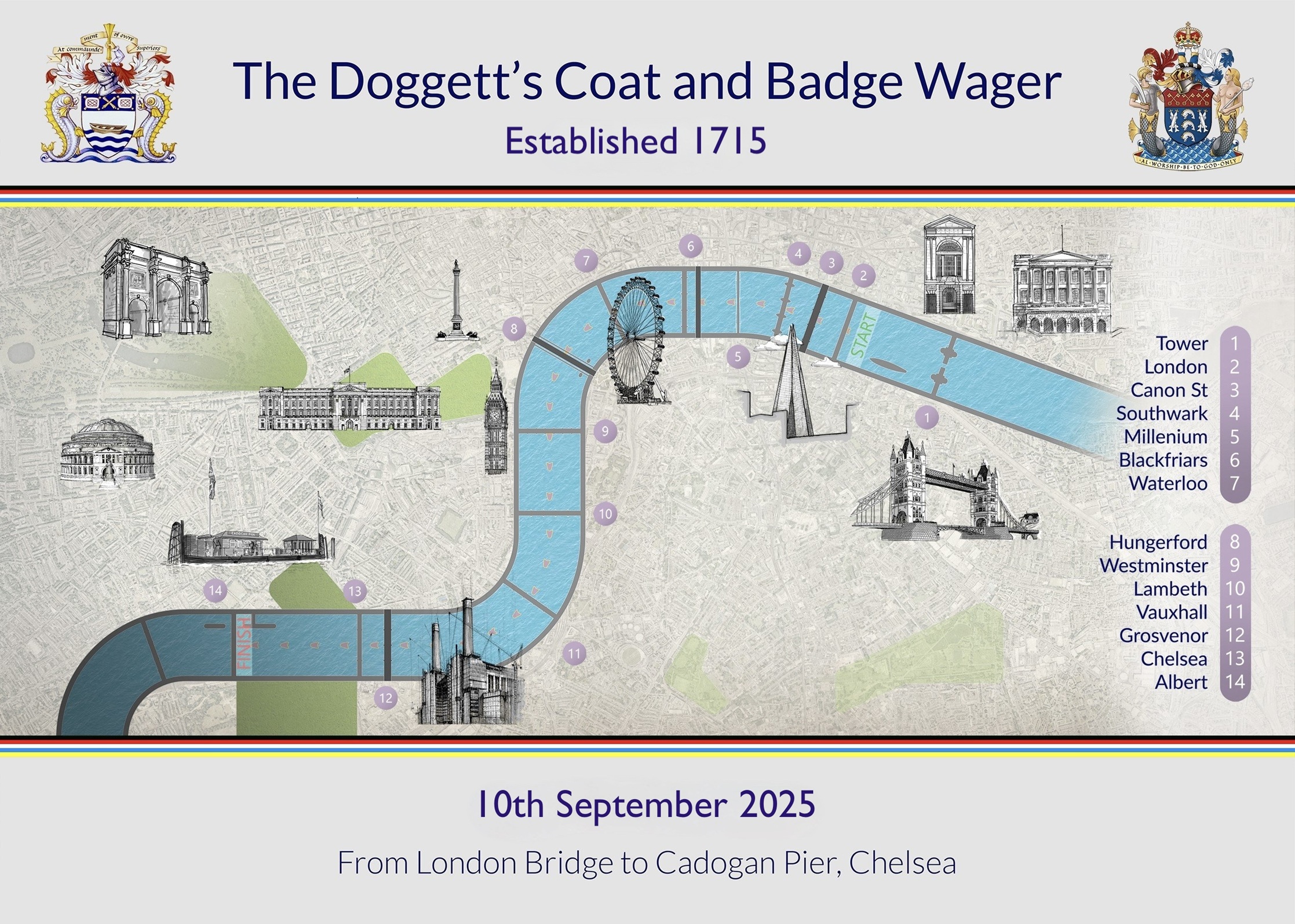
If that were not enough of a barrier to entry, the course itself should dissuade all but the brave or the foolish. It is the 7,400 metres of unsettled and unsuitable water between London Bridge and Cadogan Pier, Chelsea, containing washes, bends and currents, plus the potential to hit any of fourteen bridges and numerous other unyielding objects.
Although the race is only open to particular members of the Company of Watermen and Lightermen, since 1722 the event has also been associated with another of London’s ancient trade guilds, the Fishmongers’ Company. One theory is that the respectable Fishmongers were considered more suitable to look after the money provided by the will of the founder, Thomas Doggett, than were the Watermen as, in the past, those who worked the river were considered rather roguish.
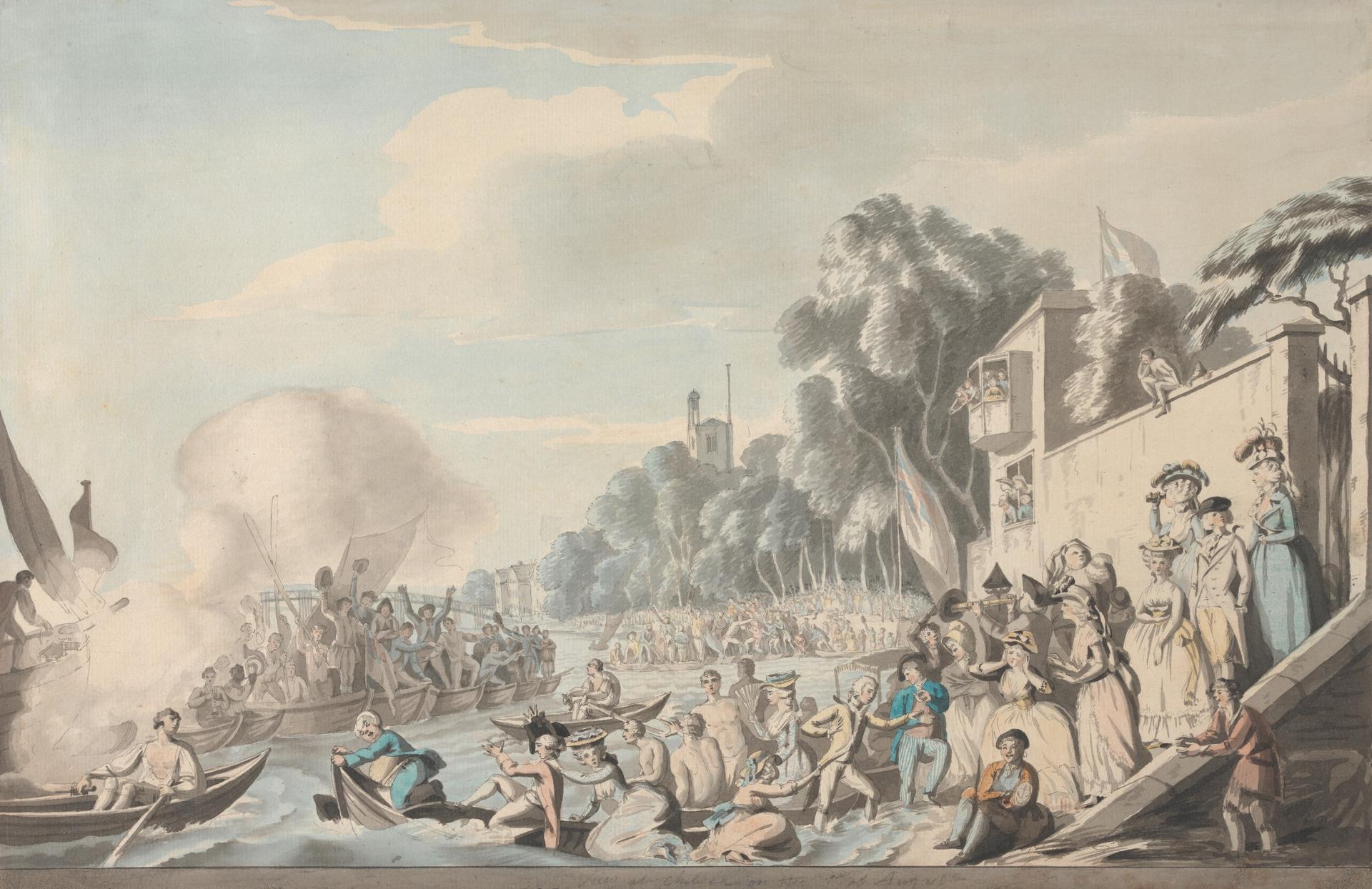
Doggett instigated his Wager in celebration of George I’s ascension to the throne and the securing of a Protestant line of succession. The race originally involved heavy passenger carrying wherries sculling against the tide, with “fouling” as part of the game. Start to finish could take two hours or more. Today, it is run with the tide in contemporary sculling boats and the record is just over 23 minutes.


 Hear The Boat Sing
Wonderful. Thanks for sending it. George Parsonage.
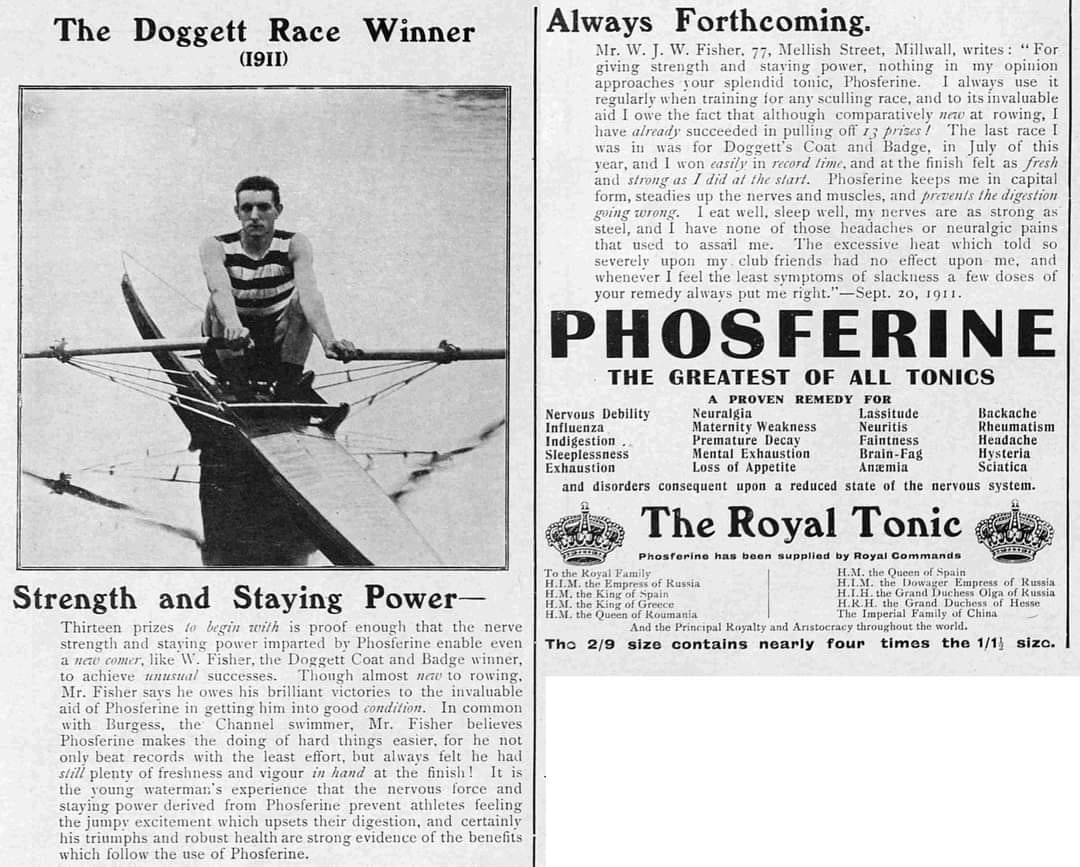
I was amused to see the advertisement for phosferine promoted by Mr W Fisher, the 1911 Doggetts winner. This was a well known quack remedy containing alcohol, quinine, sulphuric acid and phosphoric acid which gave it the name. It could not have had any beneficial effect on Fisher, but being highly recommended by such an athlete it may well have been effective to the purchaser owing to the placebo effect, and a good excuse to drink alcohol “for medicinal purposes.” Sulphuric acid is in your car battery, and quinine is the chief ingredient of tonic water, hence some contemporary accounts jokingly described it as a combination of gin and tonic with a splash of battery acid!
Did you know that in the Netherlands the wherries have evolved into having outriggers and sliding seats? There are still races being held (see https://www.wherrywedstrijden.nl/), apart from extensive use for touring. Another use is in the 20+ marathon events, these are 50km+ courses, with options for touring or race, besides the usual C4* and C2* (see https://knrb.nl/roeivorm/marathonroeien/).