
5 June 2025
By Tim Koch
Tim Koch watches an aquatic game of snakes and ladders.
Necessity is, famously, the mother of invention and it is the fact that the Thames at Oxford is too narrow and twisting for any side-by-side racing in which all 43 colleges and halls that make up the University could reasonably take part that necessitated the invention of bump racing. To quote myself, “bumps” are a brilliant and fair way of allowing the maximum number of participants of extremely varying abilities to race on a most unsuitable stretch of river (with) a large portion of them becoming “winners” in one way or another.
I have explained the intricacies of bump racing many times before but for those who are unsure of how it works, the introduction to my HTBS piece on the 2019 Summer Eights is a good place to start.
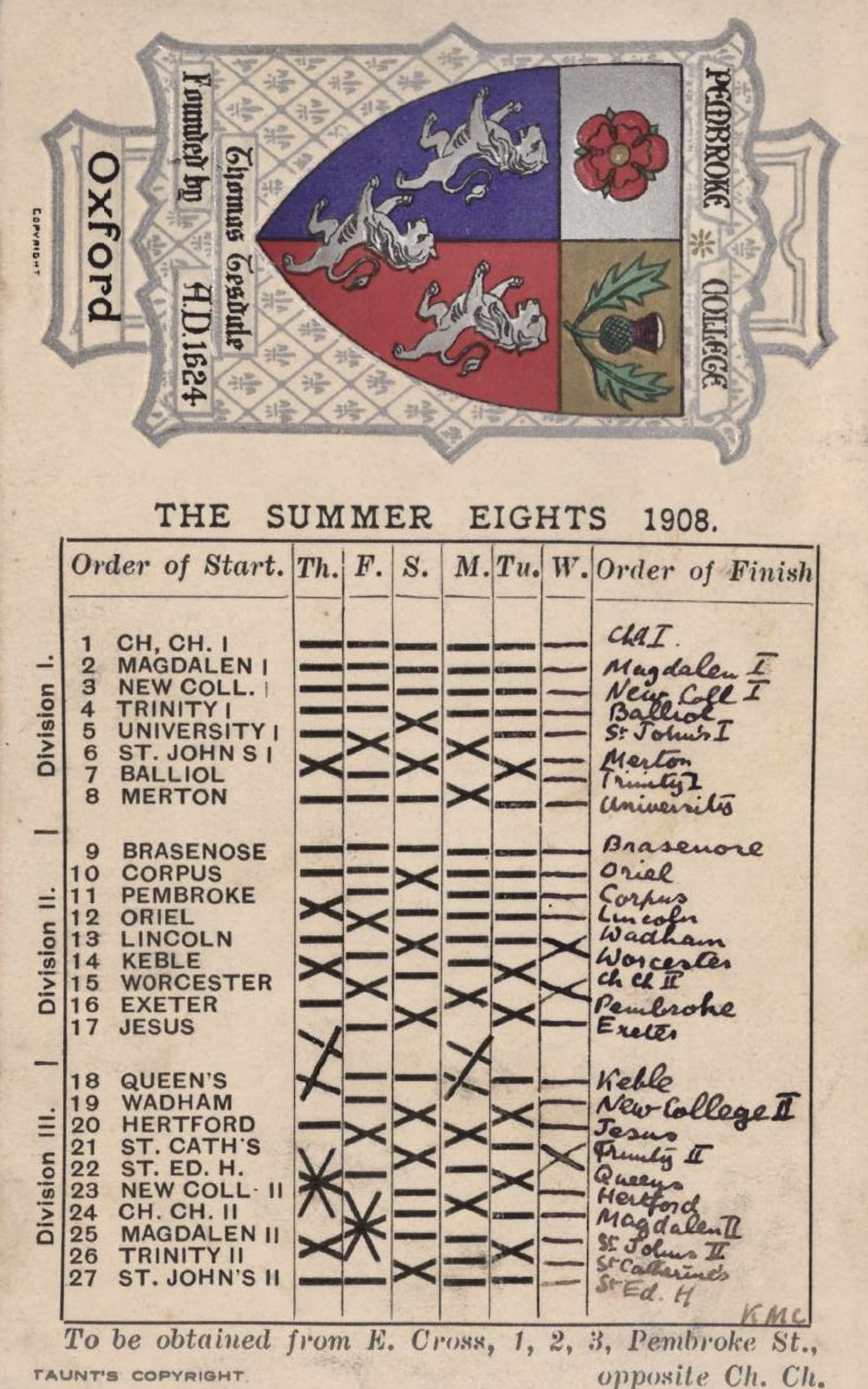
In summary, a bump race begins with the boats lining up about one-and-a-half boat lengths apart. The object is to overlap the crew in front without being caught from behind. A boat’s start order depends on its finish order the previous day or, in the case of the first of the four days, the finish order of their college’s equivalent boat at the end of the previous year’s races.
I attended the final day of this year’s four-day Summer Eights or Eight’s Week on Saturday, 1 June. In the official programme (surprisingly, paper versions were on sale) Jack Davies, the secretary of the Oxford University Rowing Clubs, wrote:
This year’s VIIIs consist of the largest entry since 2009, showing that, despite increasing rain and the continued difficulties of fitting sport into the busy Oxford life, college rowing continues to be central to the experience of many at this university.
The seven men’s and seven women’s divisions of thirteen boats each are raced in reversed order with both Division Ones as the final two races of the day. Unfortunately, I had to leave before the end and so missed two historic “Head of the River” results.
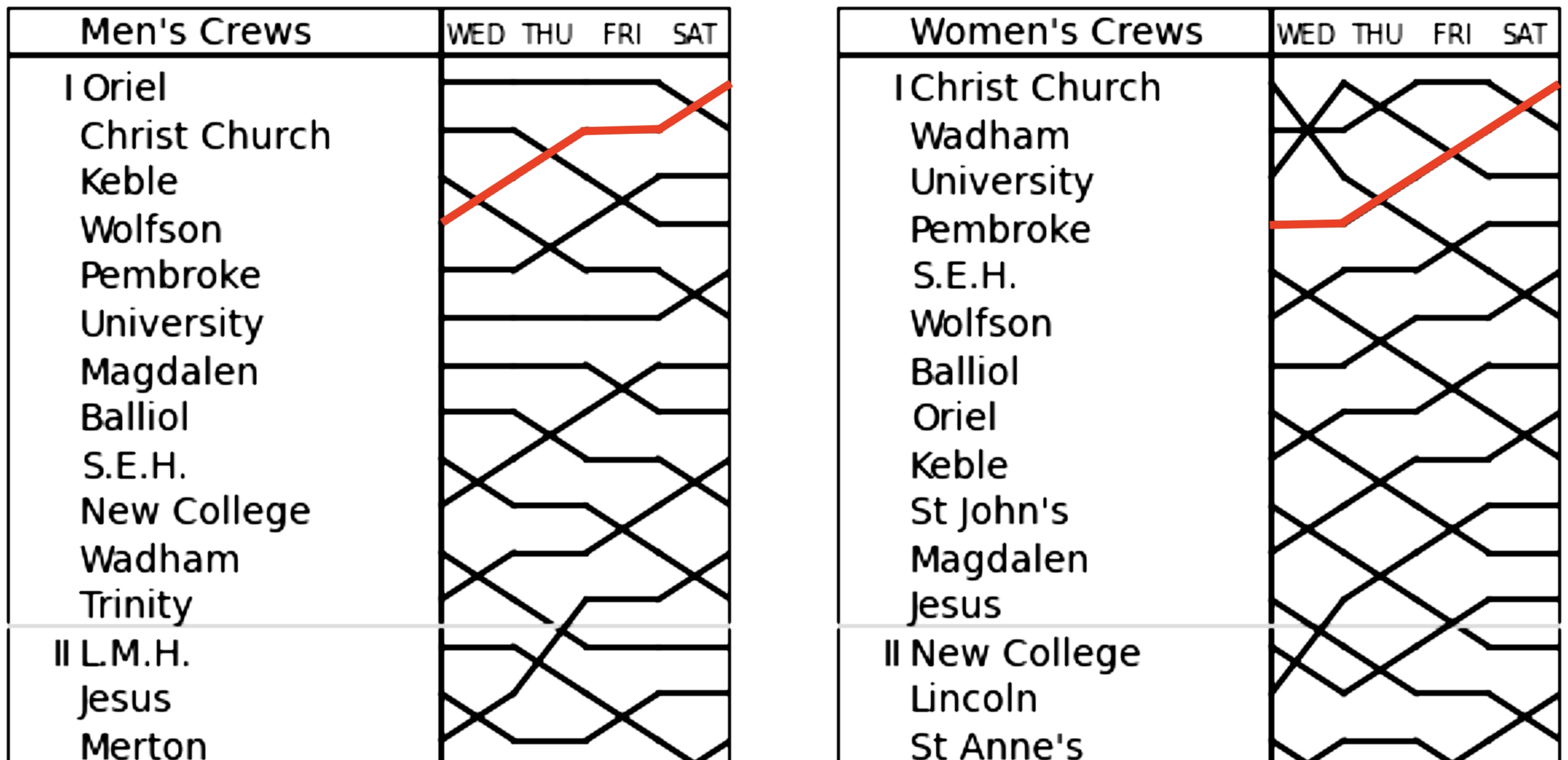
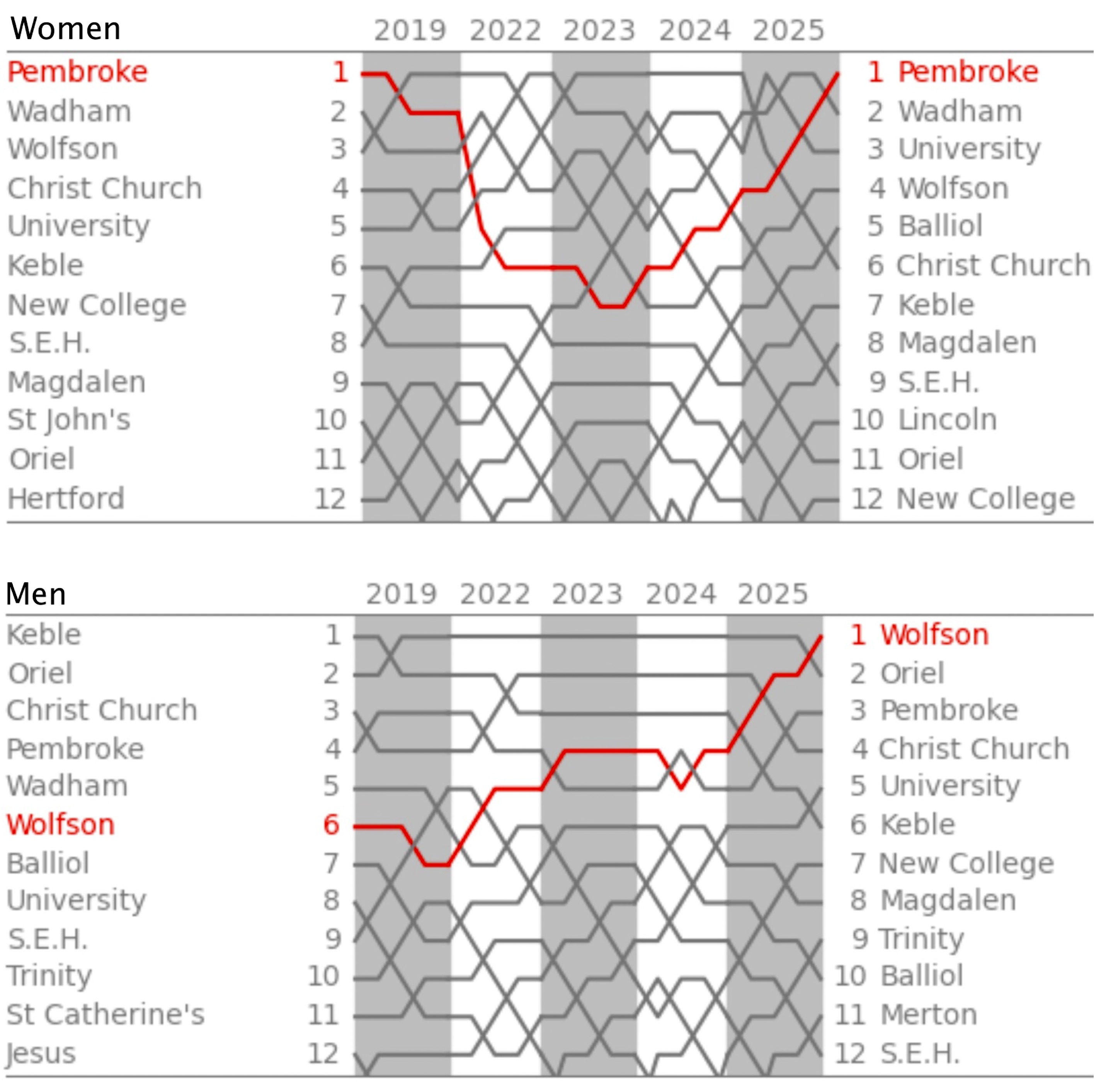
As the charts above show, in Men’s and in Women’s Division One, Wolfson for the men and Pembroke for the women, both finished fourth in 2024 and both bumped on three of the four days and went “Head of the River” in 2025. The Pembroke women have not been Head since 2019 but it was the Wolfson men’s highest ever position on the river. While rising four places to go Head is not unknown, it is very unusual. The full results are here.
Sebastian Page, writing on Sunday in the Oxford student newspaper, Cherwell:
To begin with the supposedly INFALLIBLE Oriel (men’s) crew with not one but two Olympic medallists were toppled by Wolfson yesterday! After they got the better jump yesterday, there were signs that the Oriel crew weren’t necessarily guaranteed headship, but I don’t think anyone would have predicted that Wolfson would take it off them today. The Women’s Division I headship also changed hands in slightly less unthinkable fashion, as it was heartbreak for Wadham who had rowed beautifully all week, but were no match for a Pembroke crew hungry for headship after summiting those heights at Torpids. In the end, both crews who achieved headship (in the 2025 Summer Eights) followed up on doing so at Torpids.
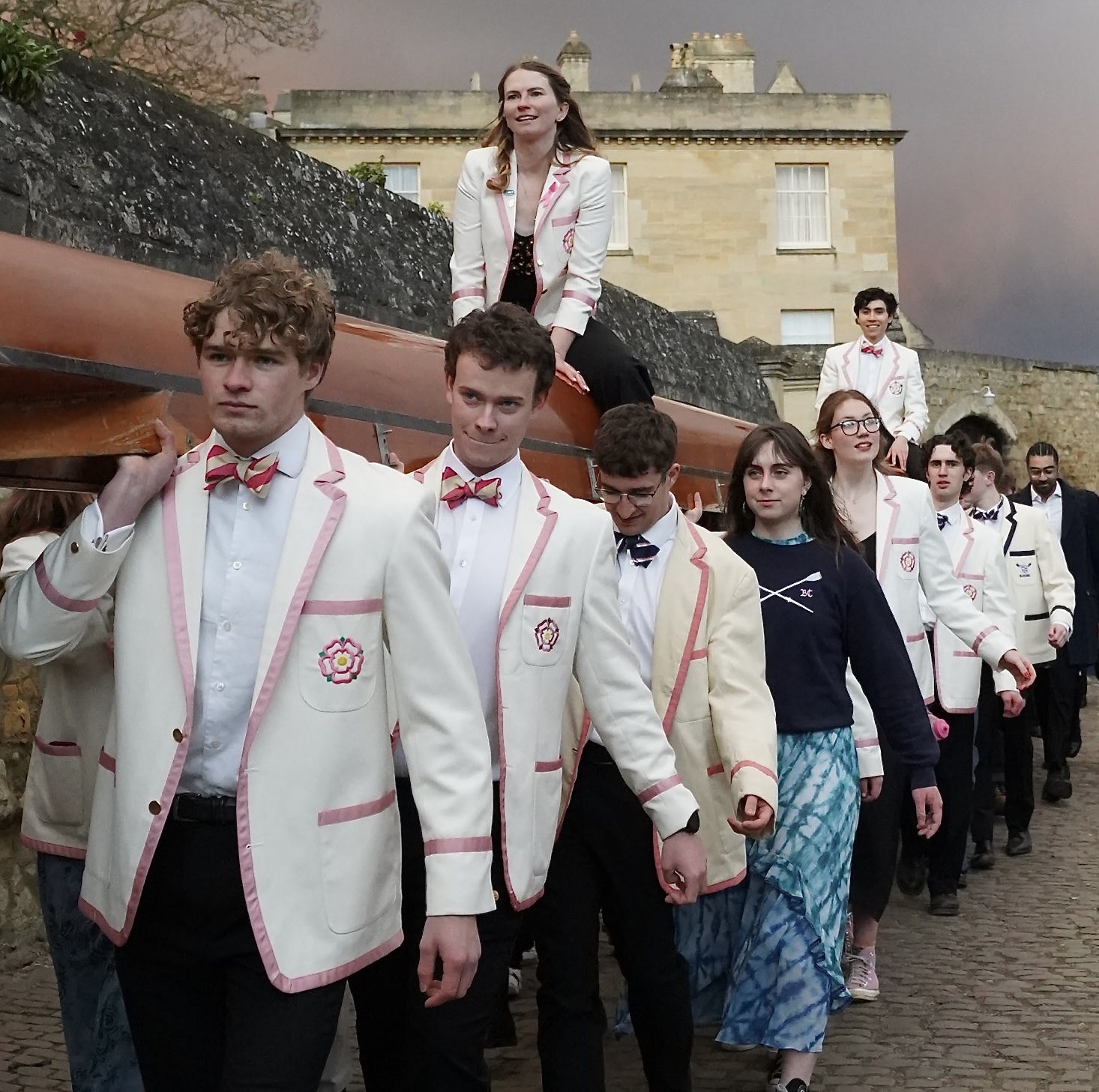
Addendum: Soon after posting this piece, I received the following from City Barge Boat Club stalwart, Richard Robinson: “I thought Oriel College was unlucky to lose the Headship as a result of equipment failure – a broken fin and damaged rudder. Contrary to the Cherwell correspondent’s piece, they had rowed Head comfortably for the first three nights.”
The two Oriel Olympians that Sebastian Page mentioned were Tom Mackintosh and Nick Rusher. Unfortunately for them, the pair have been in second place in both of Oxford’s iconic rowing events this year, Summer Eights and the Boat Race.
A few newspapers picked up on the fact that the actor, Emma Watson, best known for her role in the Harry Potter film franchise, coxed the New College Women’s Third Boat. Sadly, there was no Hollywood ending, her crew were bumped for three days of the four. Watson is currently doing a PhD equivalent in creative writing but is no stranger to local academia having attended the city’s Dragon School (no joke) between the ages of five and thirteen.
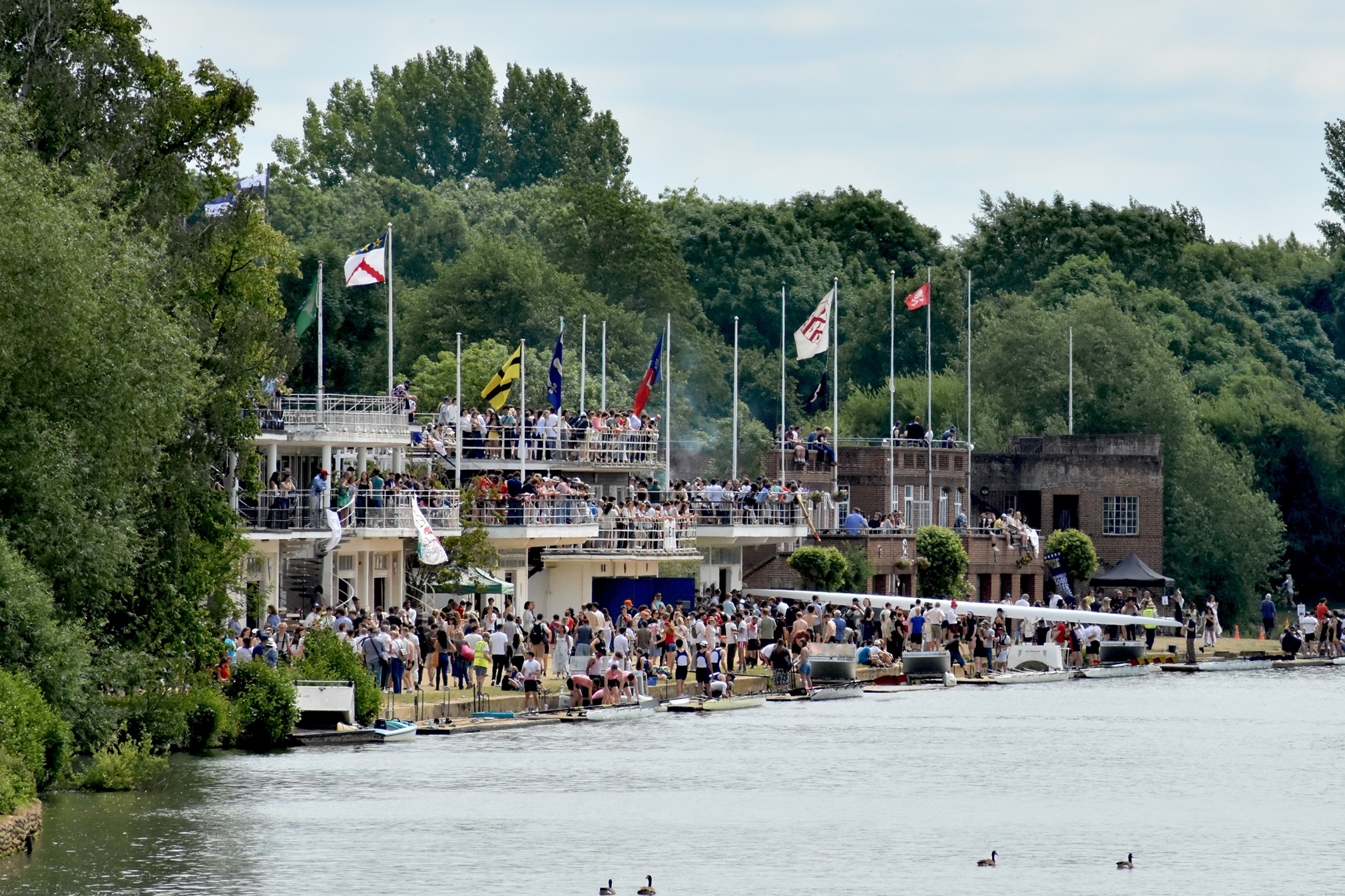
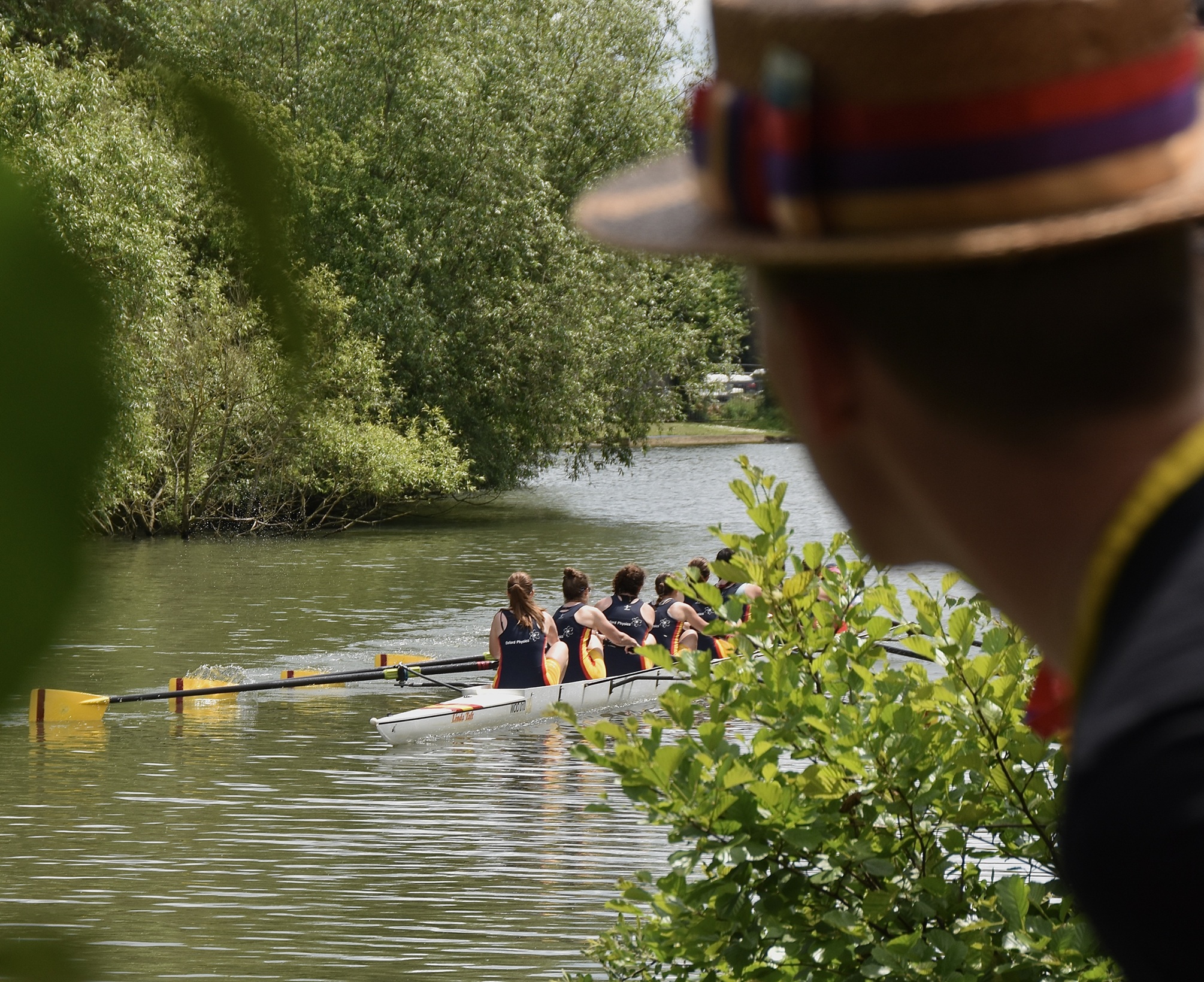
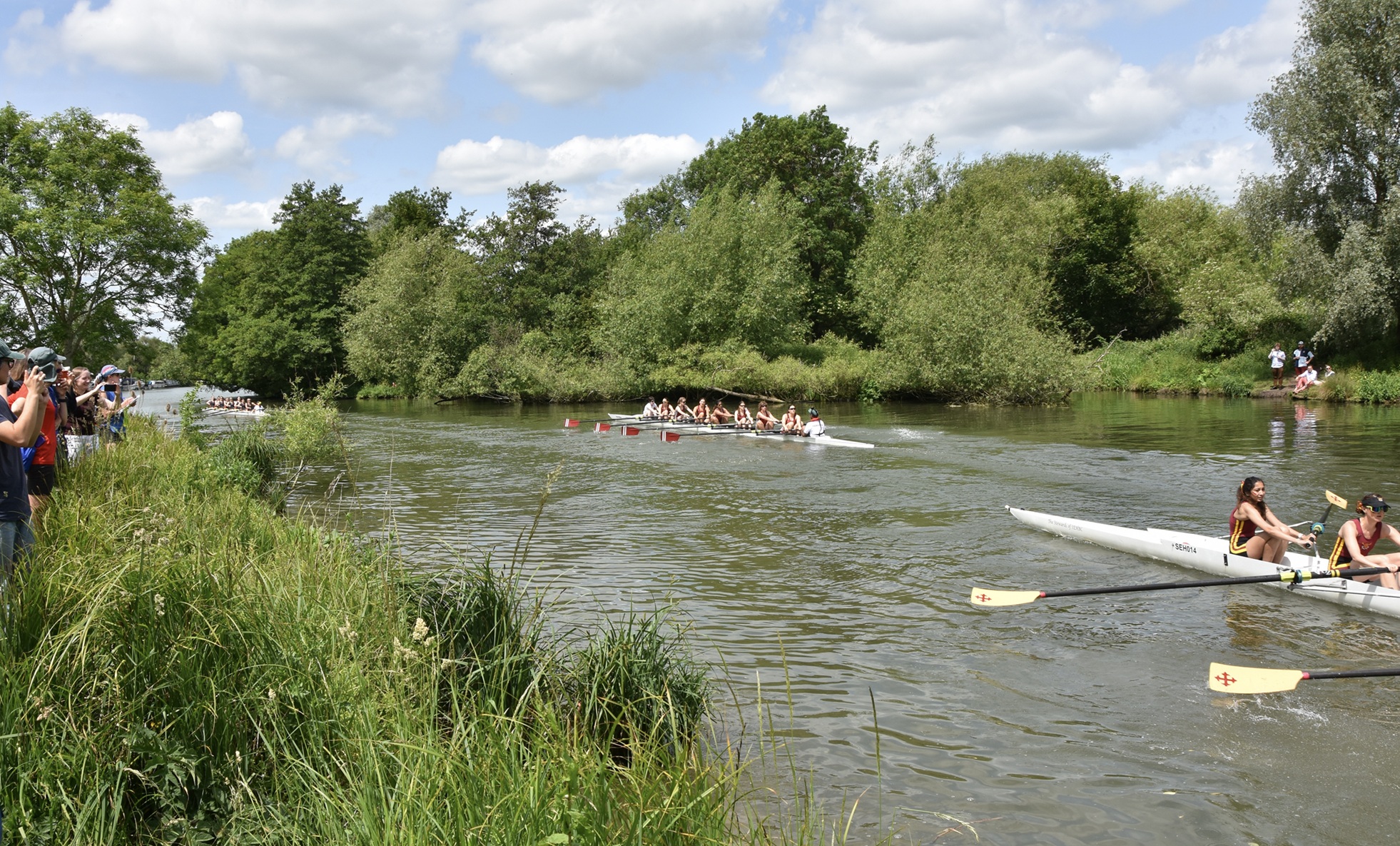
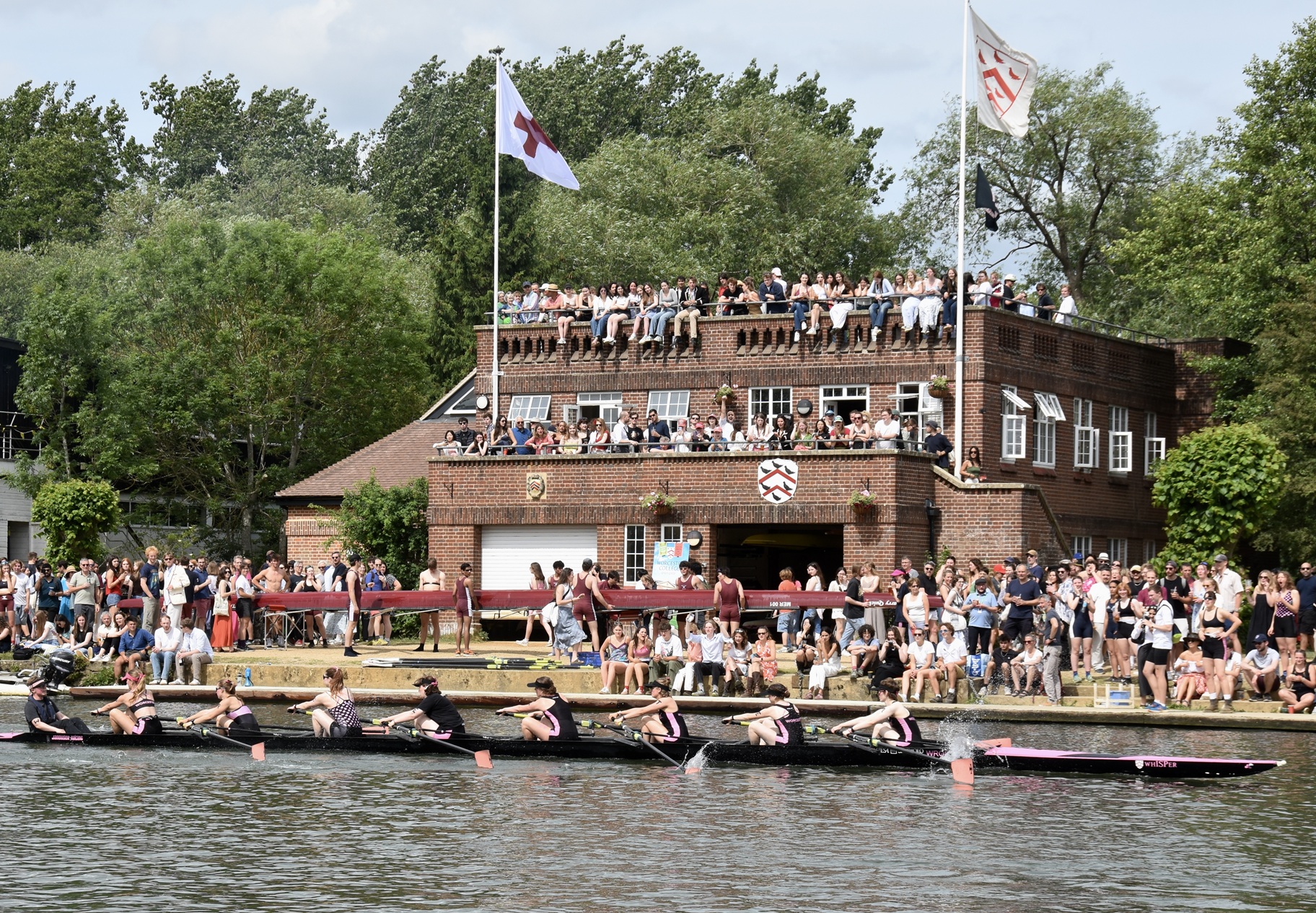
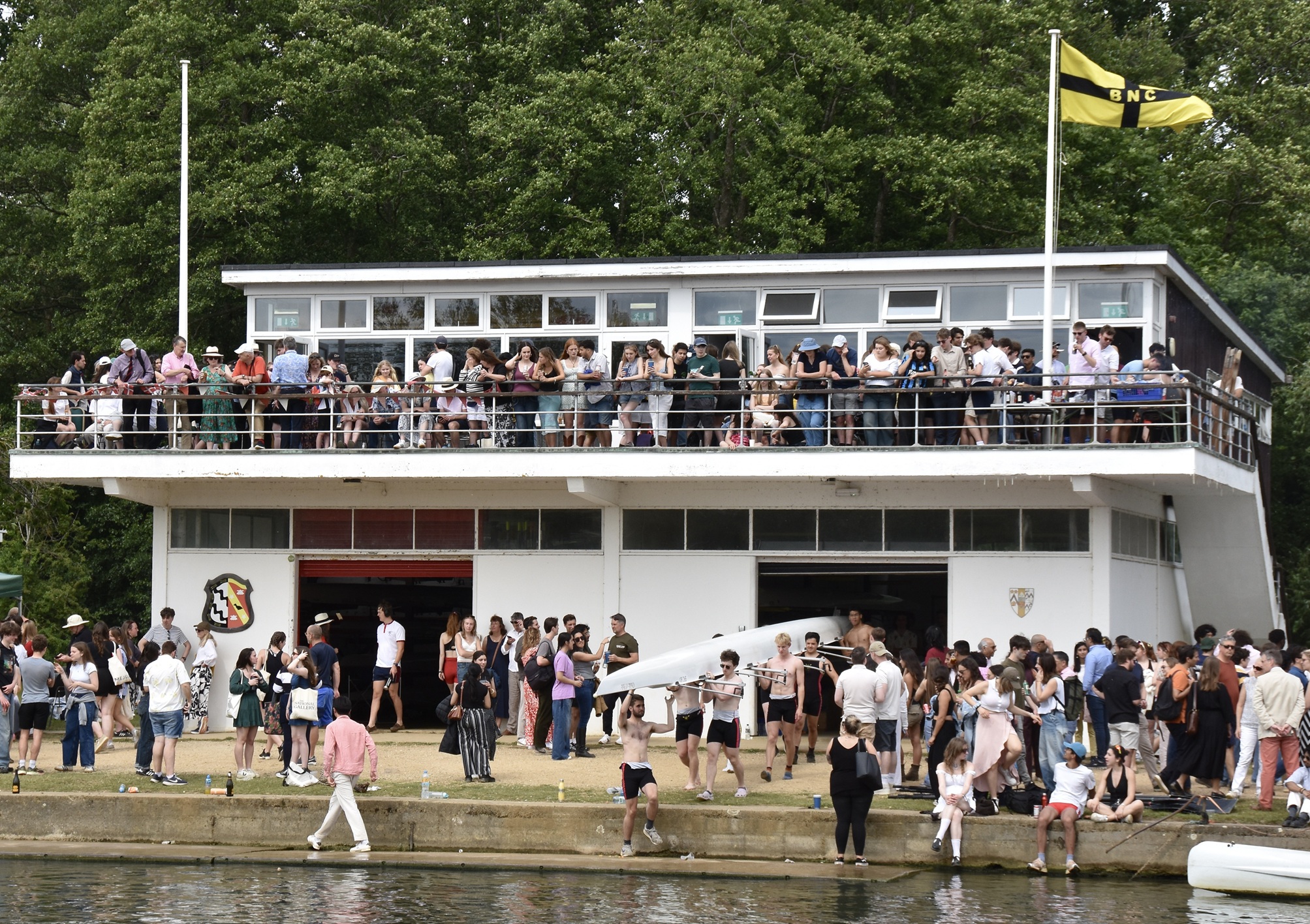
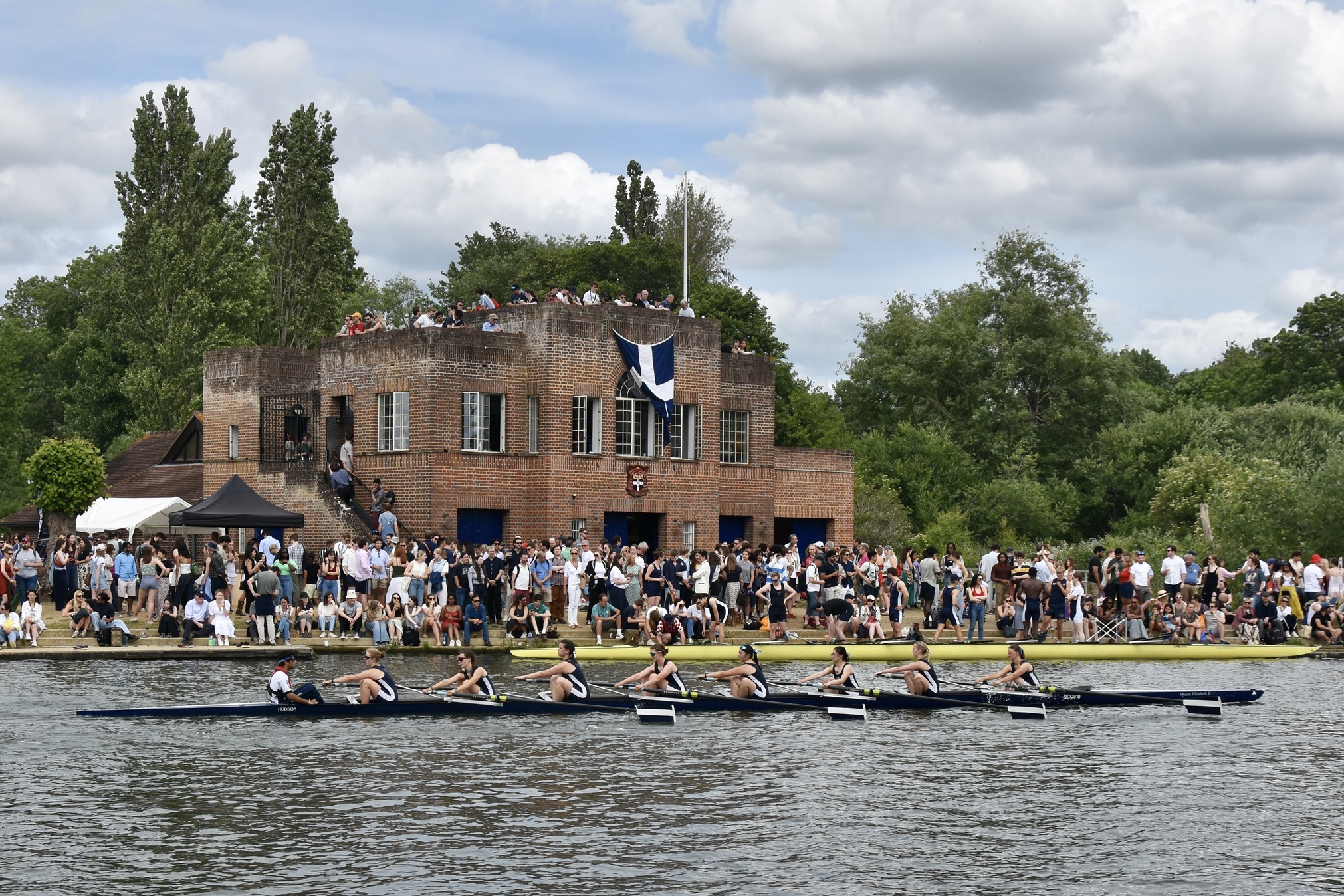
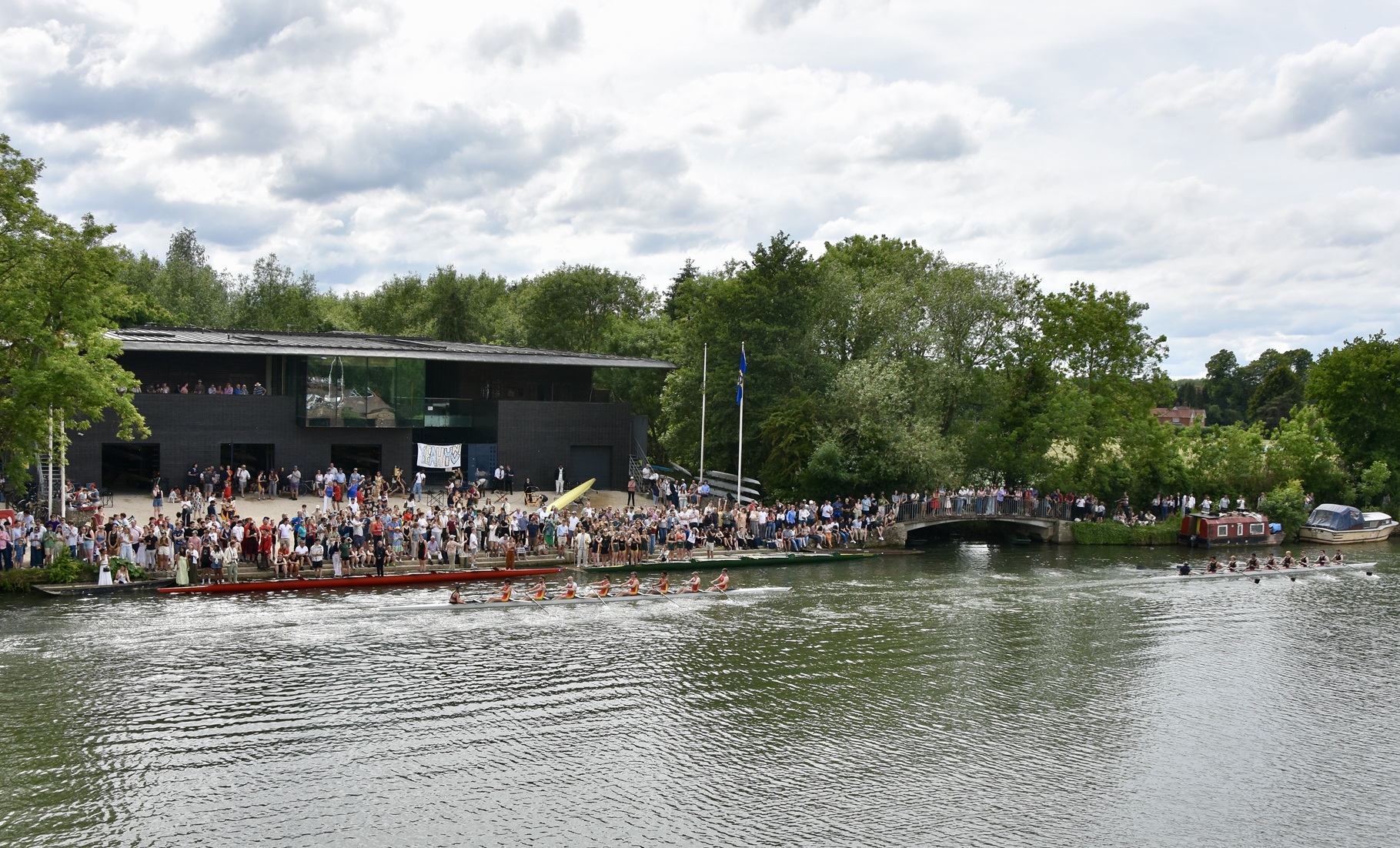
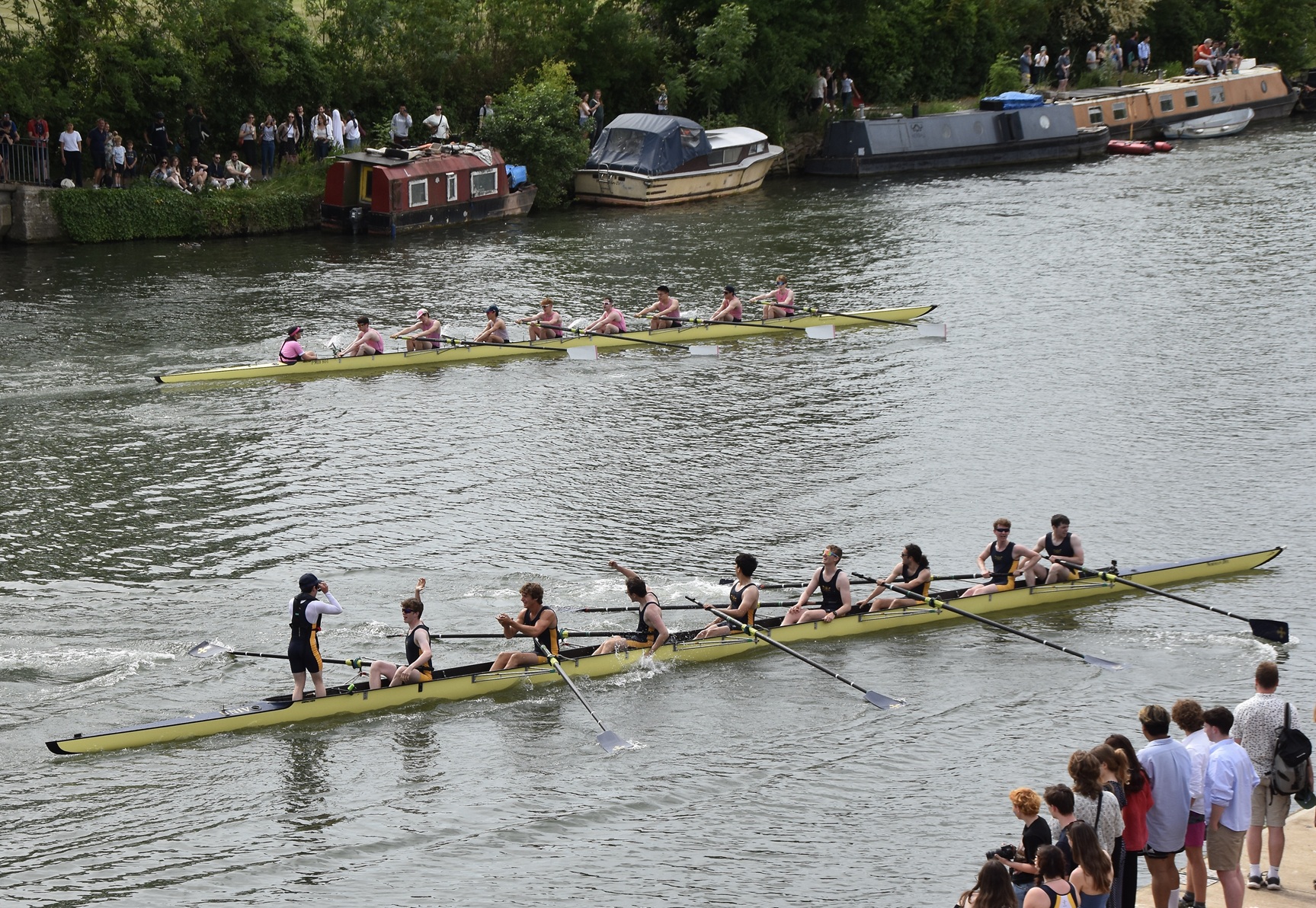
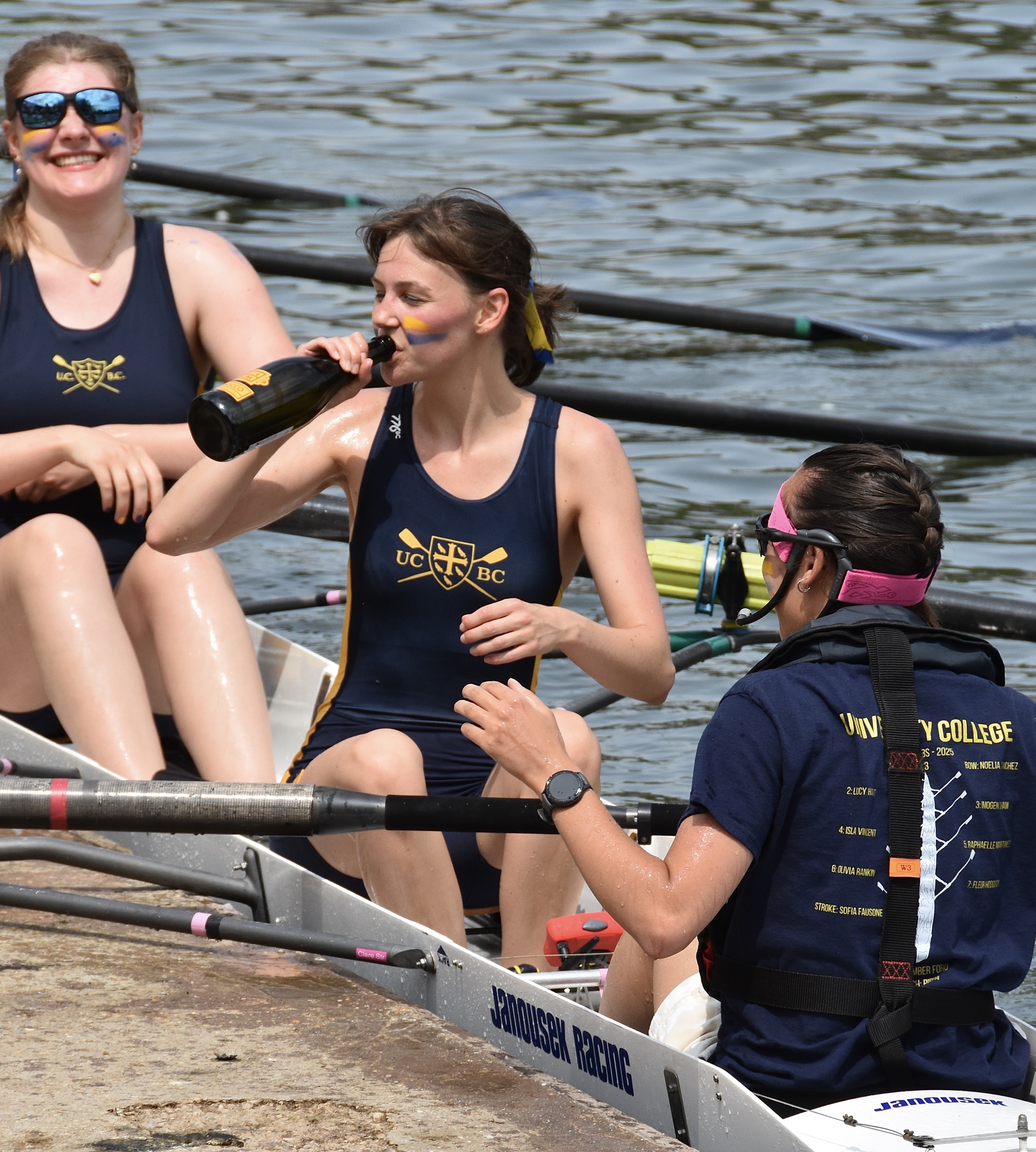
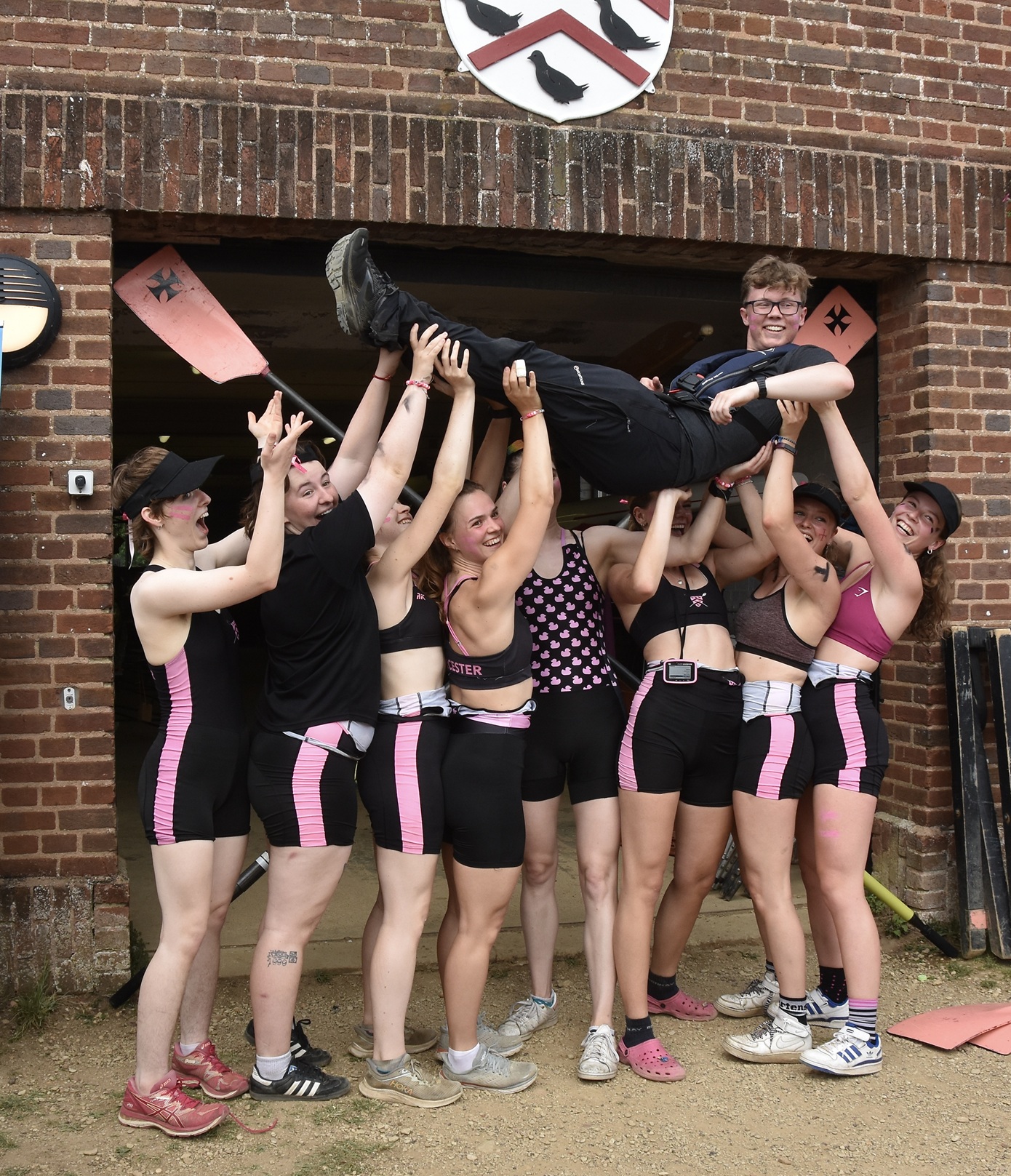
The pictures that follow are of the lower divisions and are not necessarily posted in chronological order, they have been arranged to show racing from the start to the finish.
At The Start
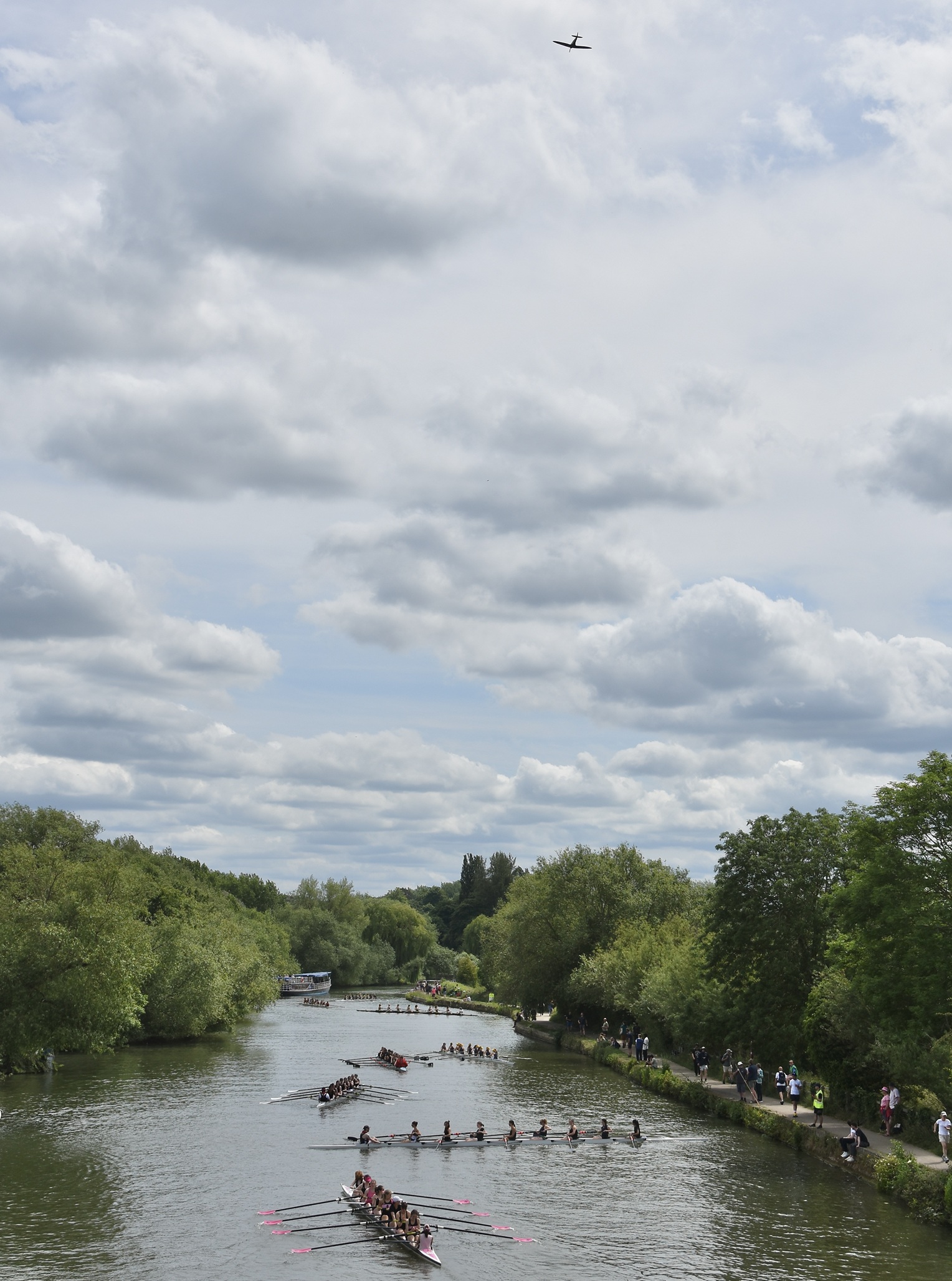
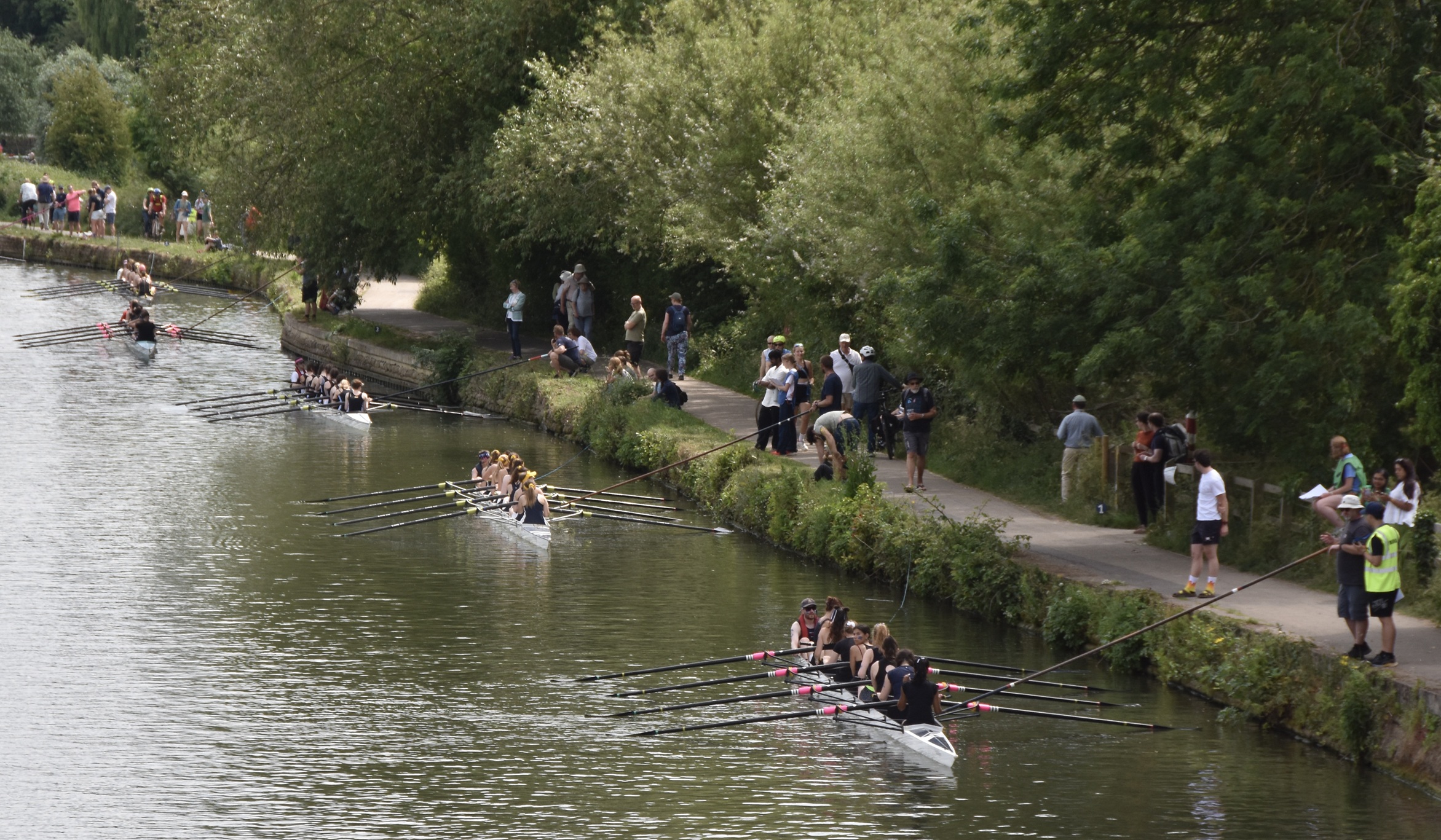
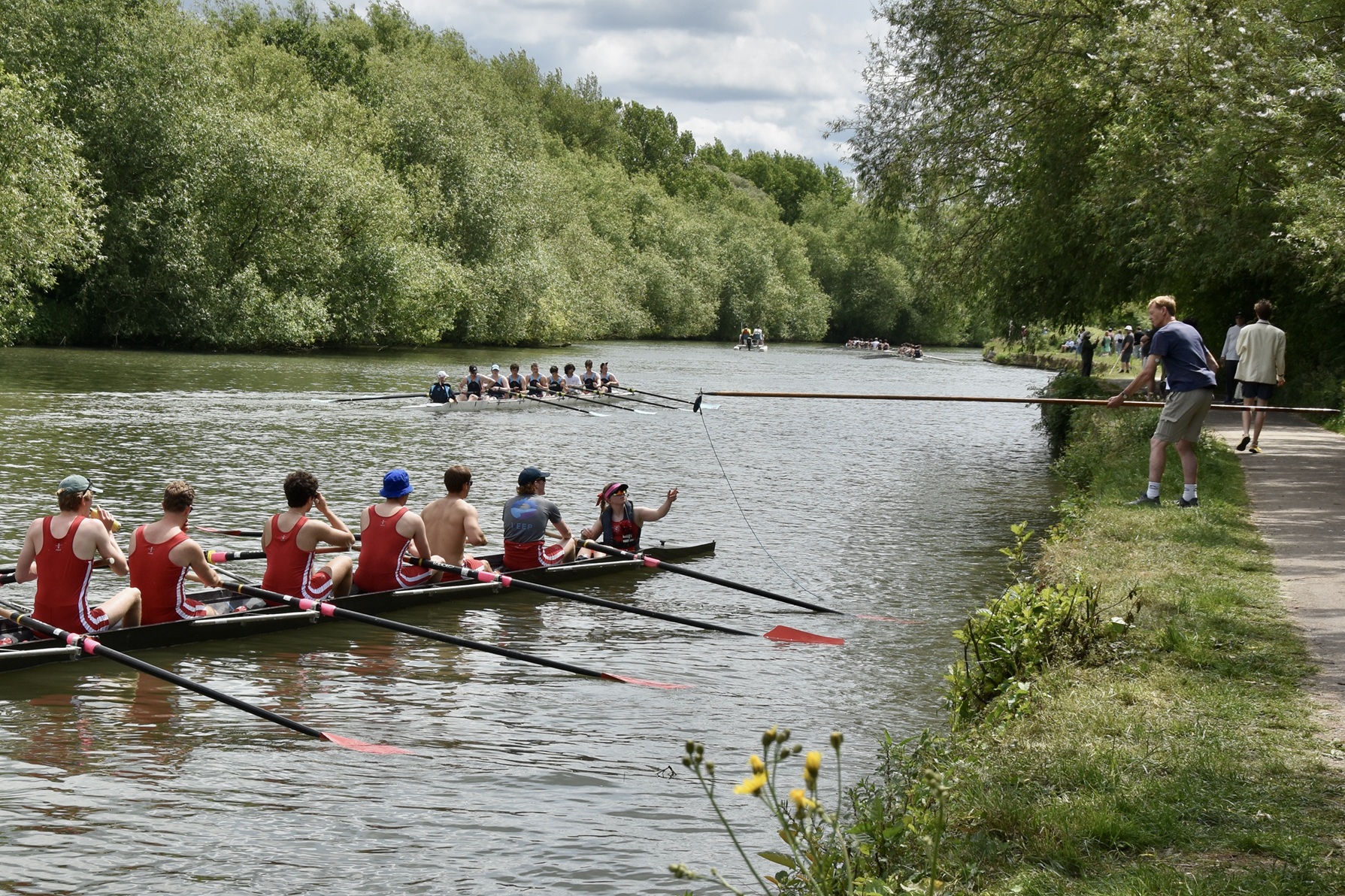
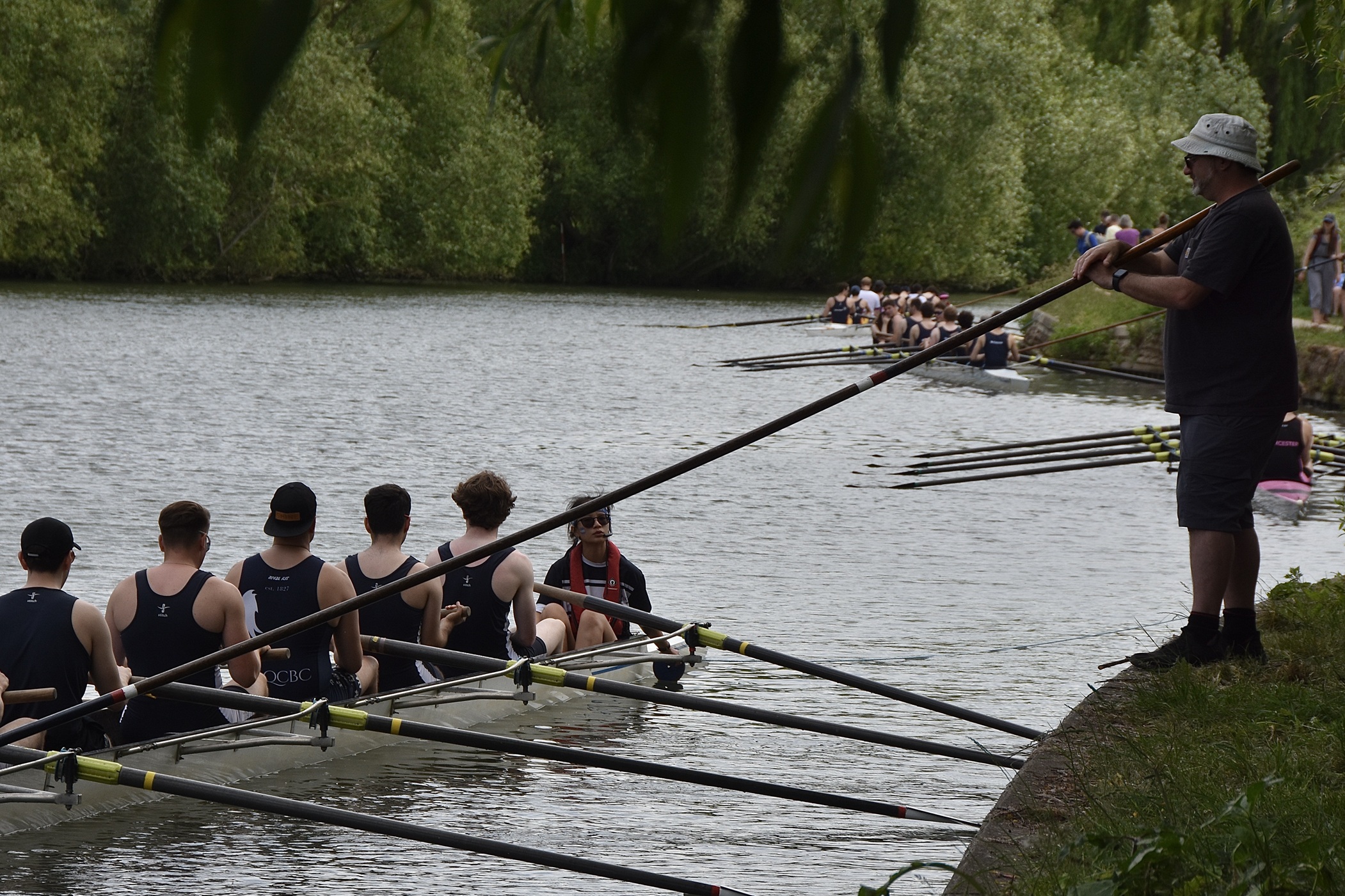
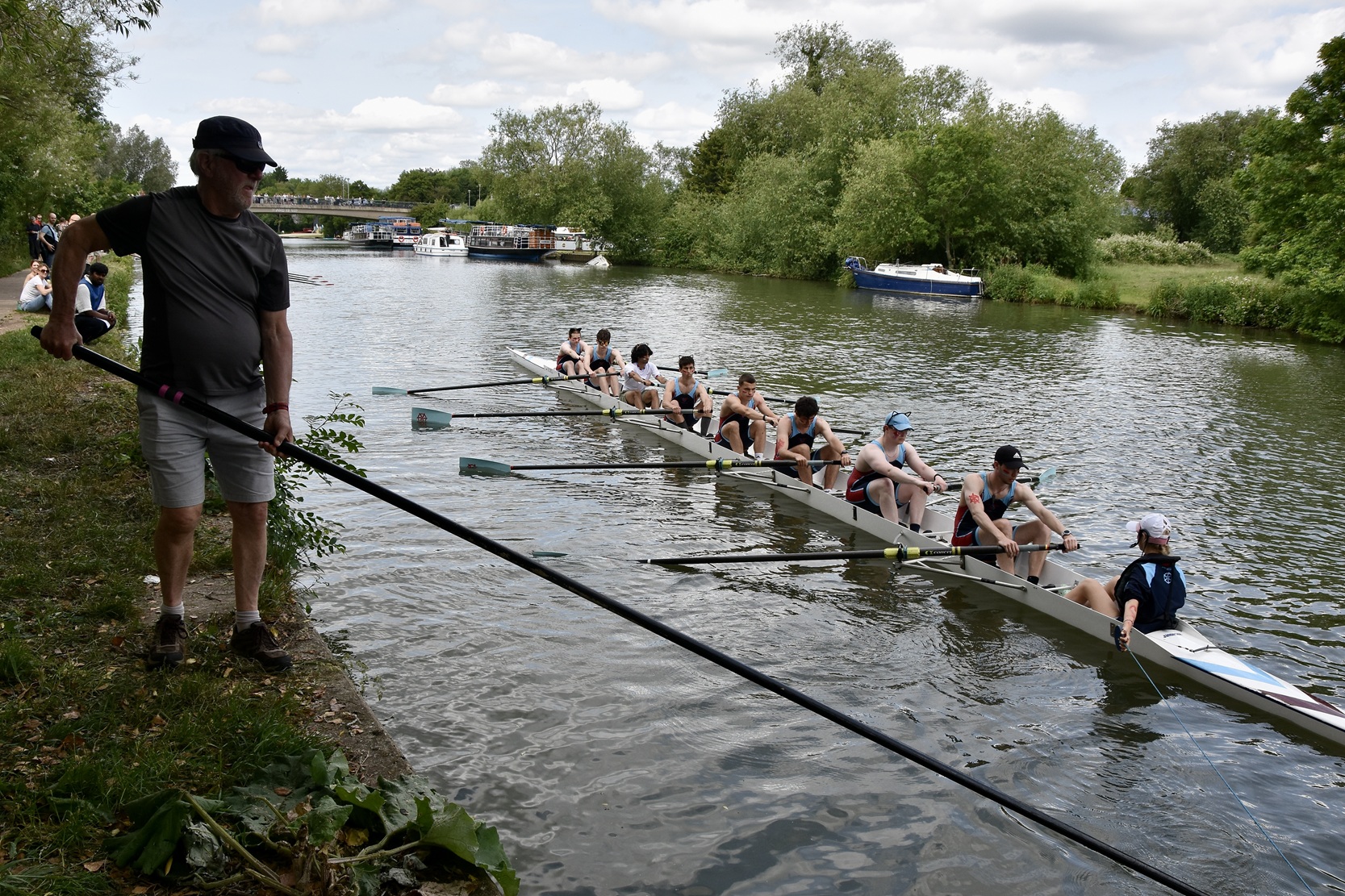

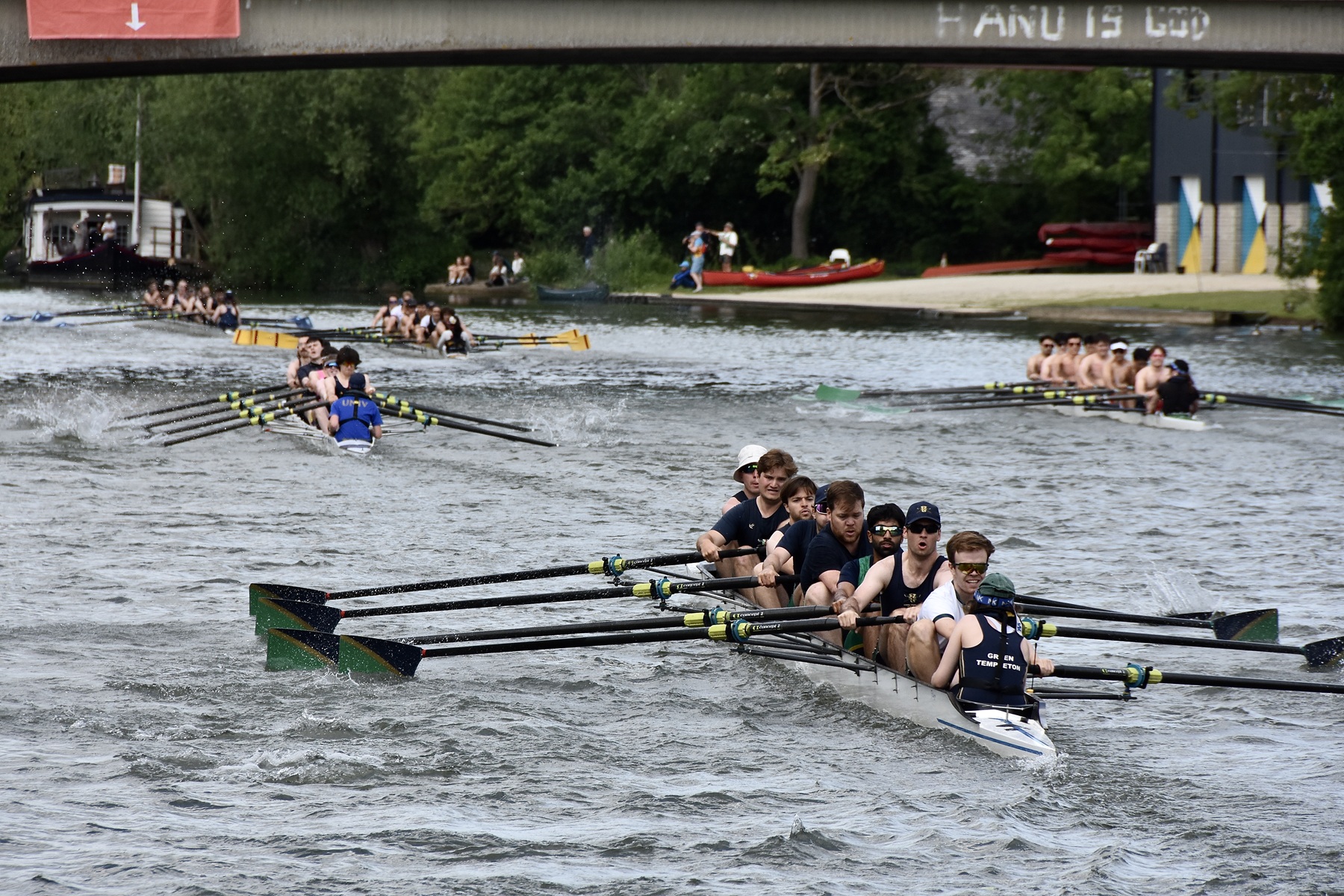
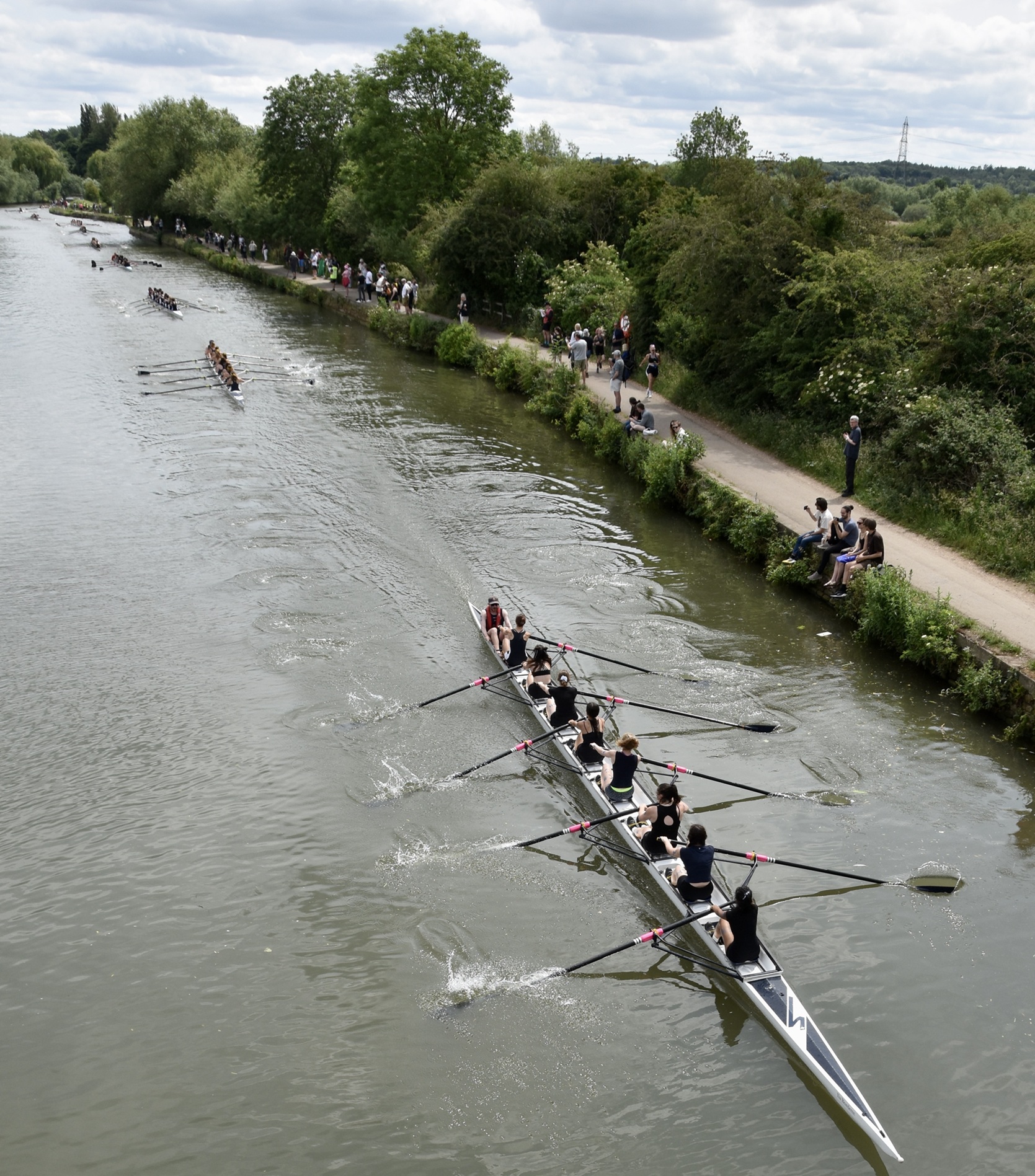
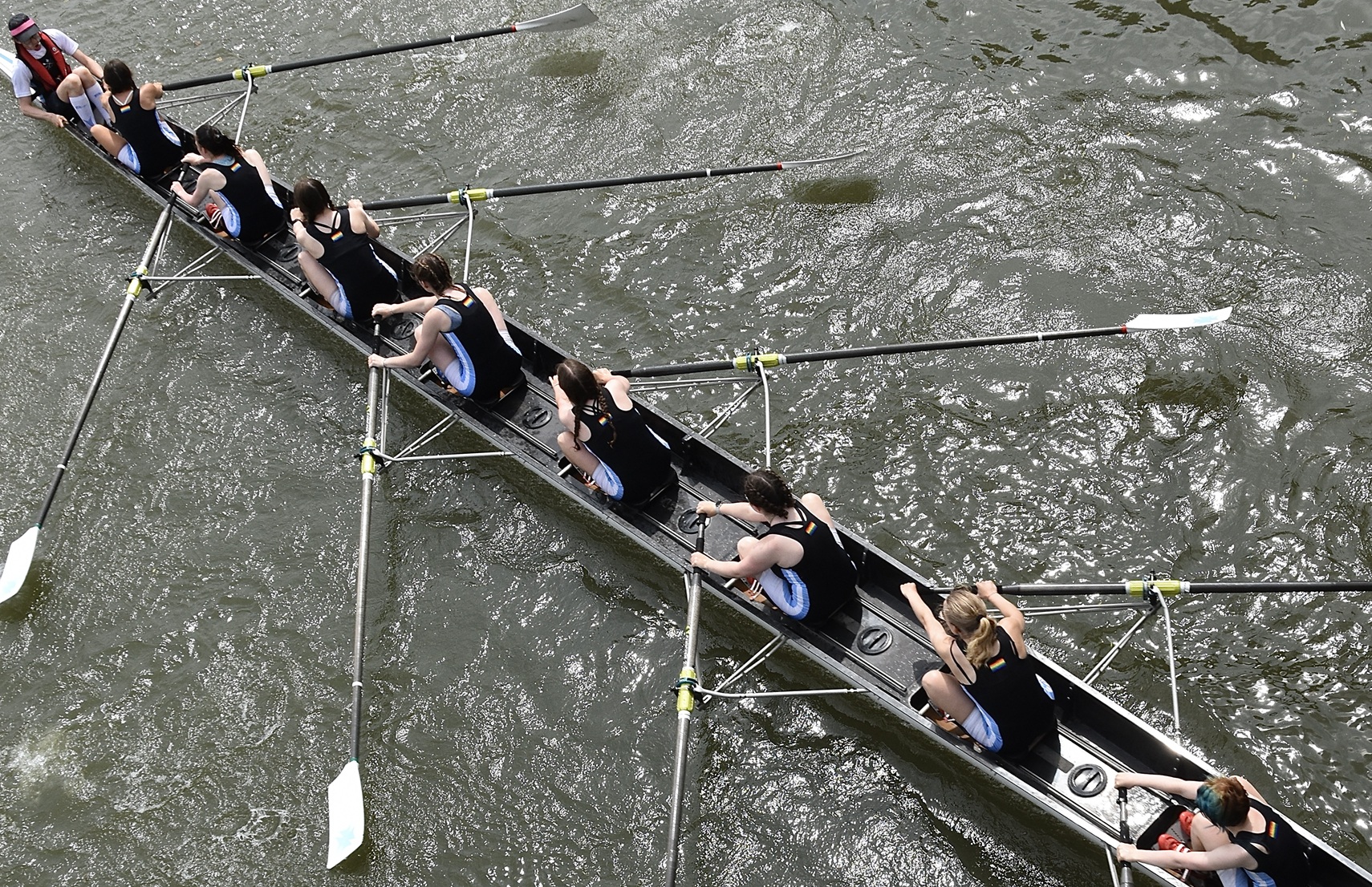
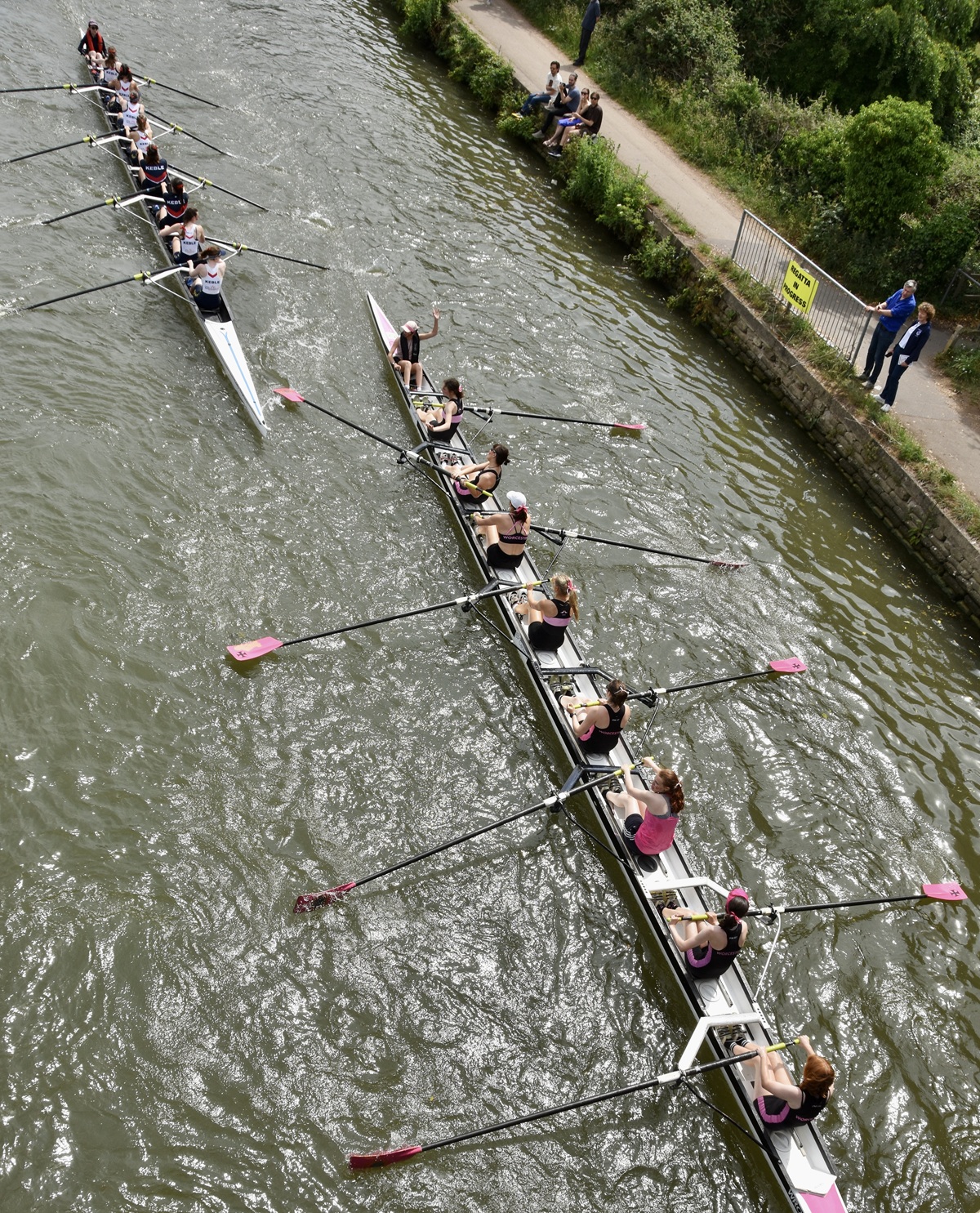
The distance each crew rows depends on their speed relative to the crews around them as, once a bump has happened, both boats involved pull into the bank so they do not interfere with the racing. For crews that are similar in speed, bumps are unlikely and they may have to row the full course. However, a fast crew may only have to row for a minute or two.
The Gut
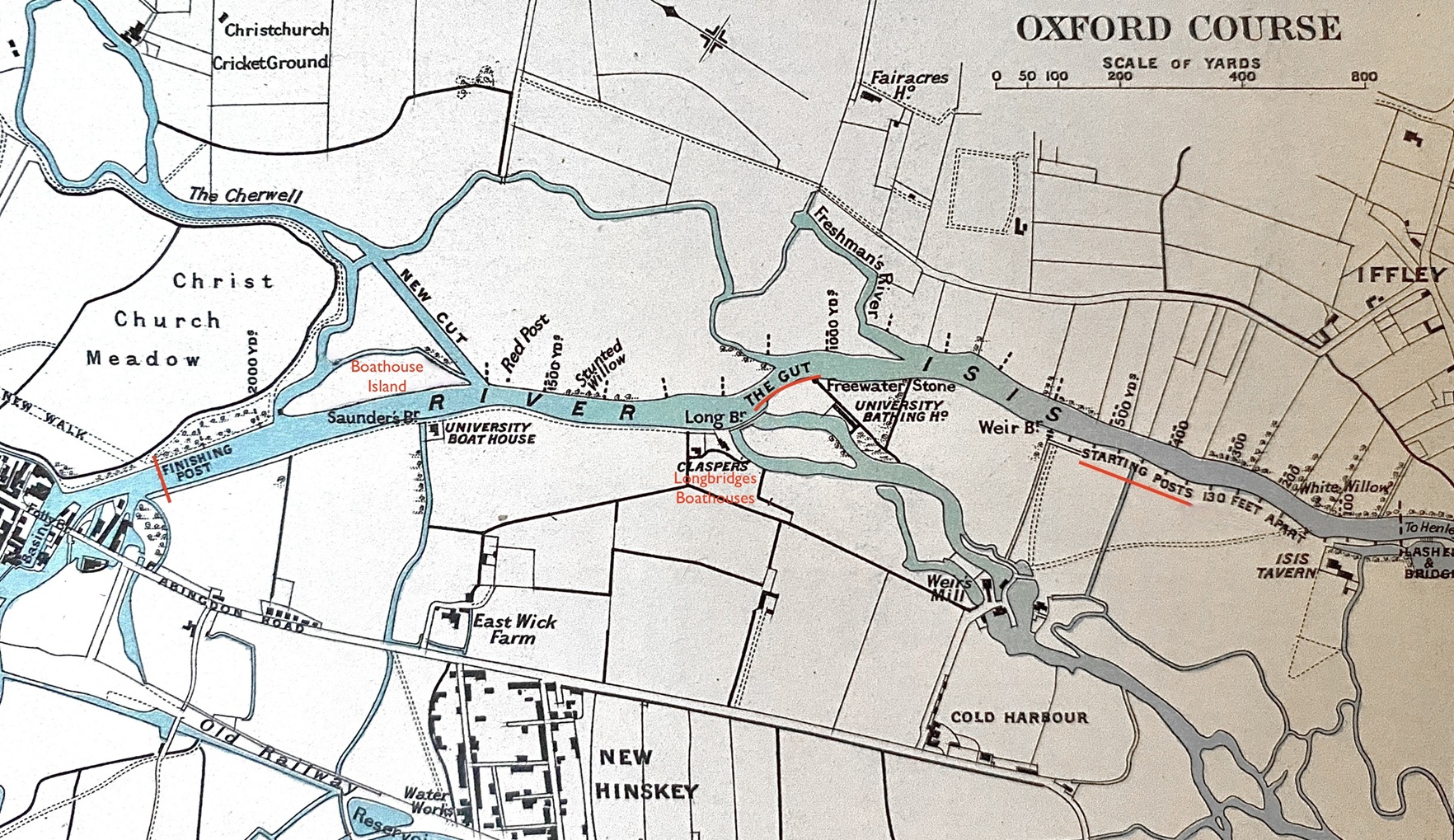
“The Gut” refers to a narrow, confined part of the course which contains the only difficult bend in the race. It is a challenging area to navigate, especially for less experienced coxswains.

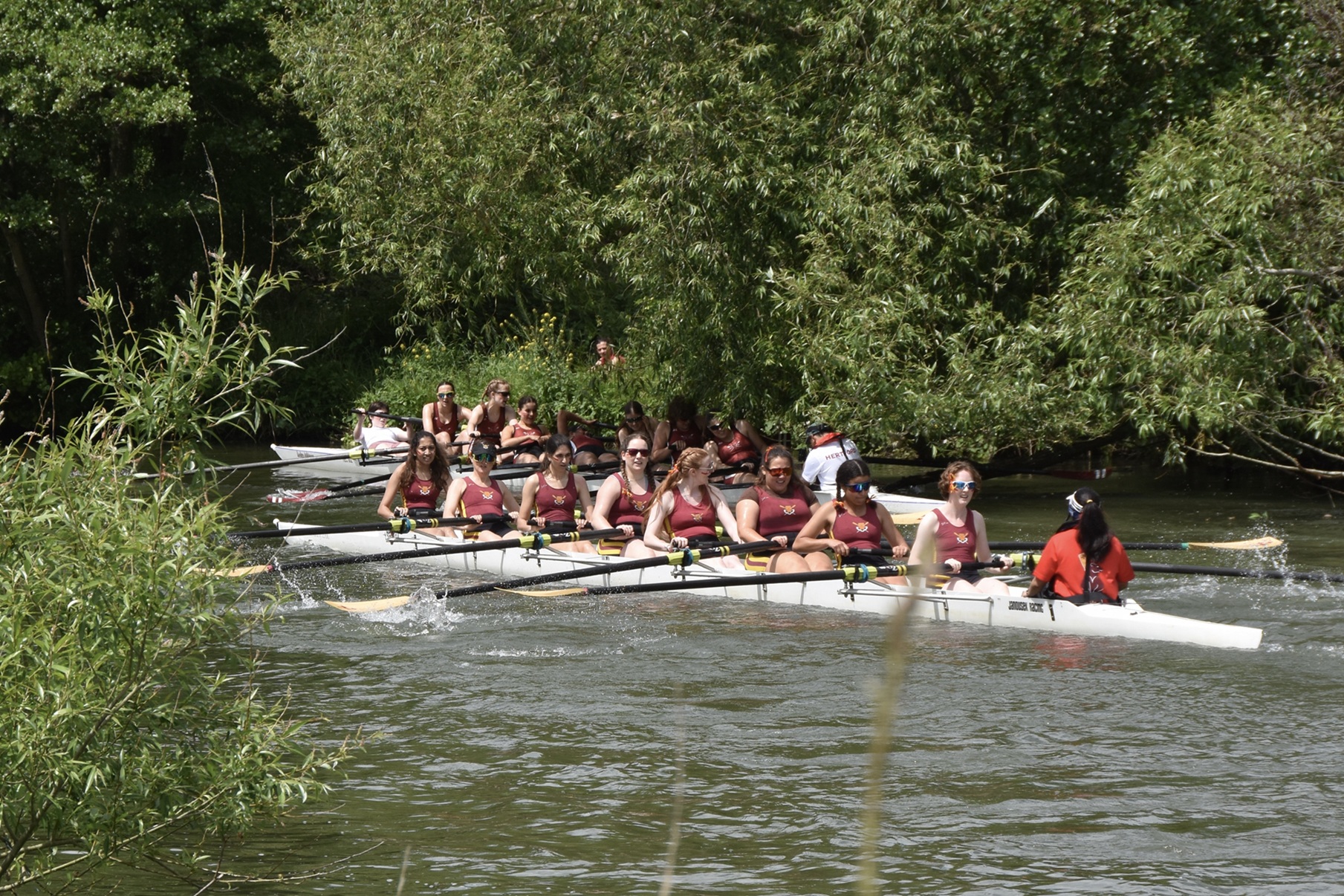

Boathouse Island

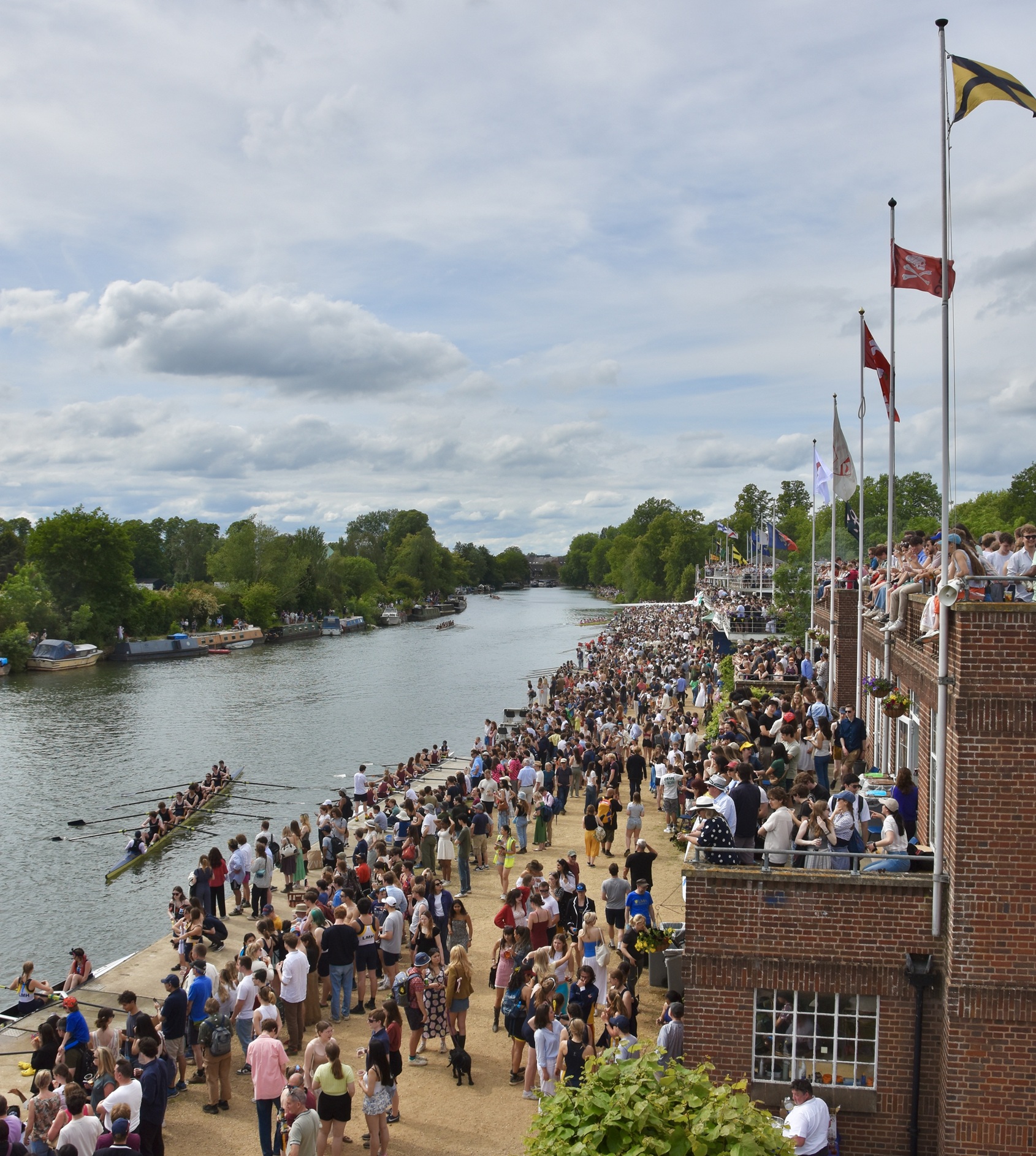
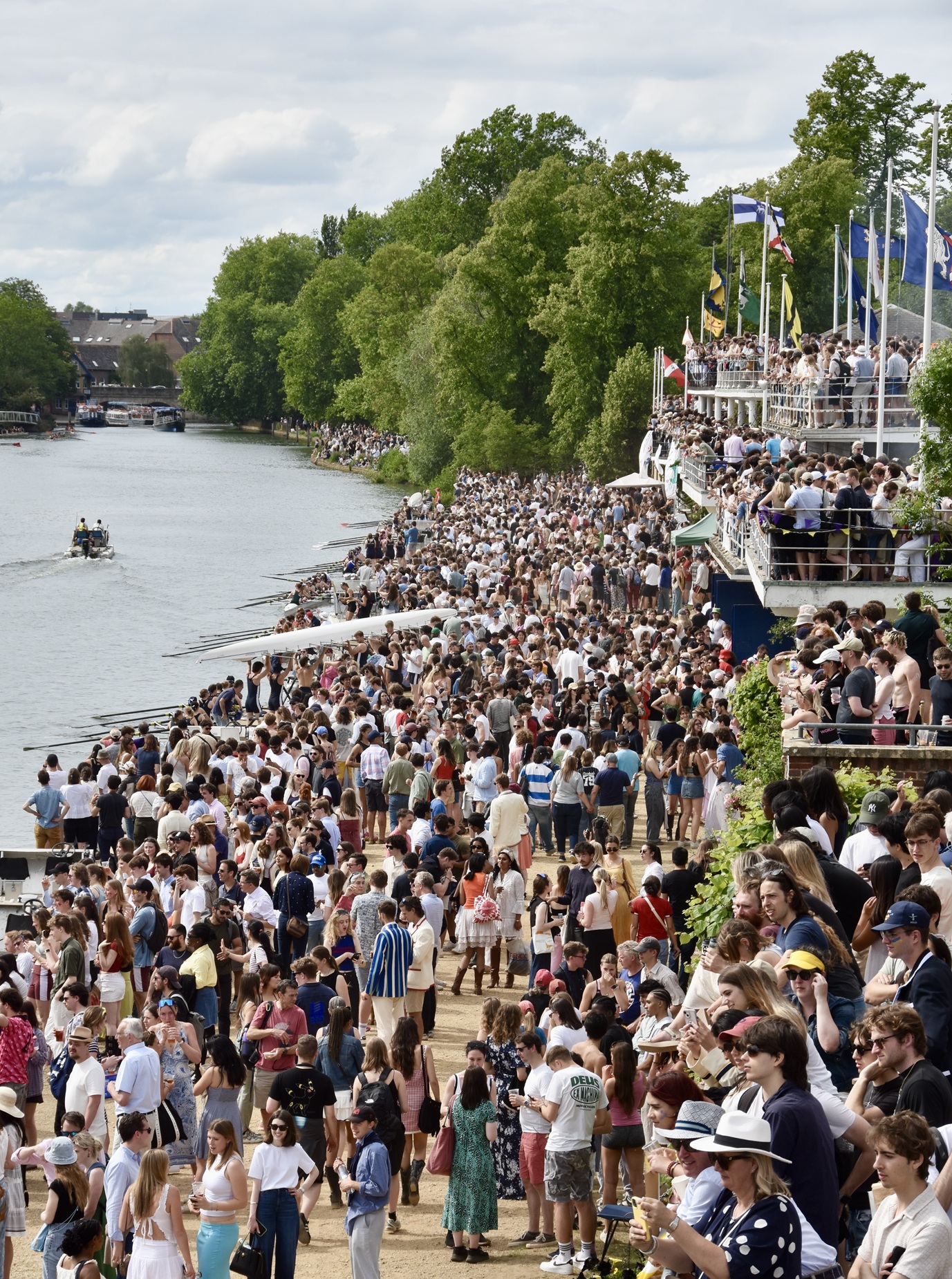
Near The Finish
Anu Dudhia’s concise and interesting, History of Oxford College Rowing is available online.
Cambridge’s 2025 May Bumps will take place from Wednesday 18th to Saturday 21st June.
 Hear The Boat Sing
I’m curious to know what happened at the top of women’s division 1 on the first day: Univ appear to have leapfrogged Wadham in bumping Christ Church. How is this possible?!
Hi David,
I was in the Wadham crew! What happened was, ChCh stacked it into the bank off the start, so we were forced to overtake. Tried to pull off to one side but Univ were already trying to overtake us by that point, so we obstructed them. Penalty bumps for us and ChCh for being hazards, but we caught Univ the next day so no matter.
David,
Cherwell says of Womens Div 1 on Day 1: “Lots of the bumps allegedly occurred as a result of Christ Church, who stopped in the middle of the river after being bumped by Wadham. By congesting the river, the gaps between the crews narrowed dramatically”.
The OURCs Racedesk Bluesky account for 28 May at 18.58 said “Announcing a penalty bump consideration against Wadham and Christ Church in Women’s Div I. We are requesting evidence from Christ Church, Wadham, University, and Pembroke.”
Hi Tim, The poles we use to set the crews up for the start don’t have any specific name, we just call them “poles”! They are around 16-18′ long (about 5m in new money) and usually made of hardwood, although one Boatman has a carbon fibre one.
Thanks, Tom Stewardson, Boatman for New College, Balliol and Magdalen.