

19 May 2025
By Göran R Buckhorn
Dutch journalist and author Hans Maarten van den Brink – writing as H. M. van den Brink – came out with the novella Over Het Water in 1998. After the English translation, On the Water, by Paul Vincent was published in 2001, it has been my favourite fiction story on rowing. It made van den Brink not only a name within the international rowing community, but On the Water also became known among non-rowers. Though van den Brink has published both fictional and non-fictional books after his novella, it is still his most renowned book. It has received many rave reviews and been nominated for several literary prizes, including the Prix Femina étranger, the Prix Médicis étranger, the Independent Foreign Fiction Prize, the Libris Literature Prize, the Generale Bank Literature Prize, and it has won the Euregio Prize. To date, the novella has been published in several editions and printings.
On the Water, a stylistic gem, is a wonderful coming-of-age story about two young, novice oarsmen, Anton and David. This is what I wrote about the story in December 2020:
In 1939, the two boys Anton and David are training in a coxless pair at a rowing club in Amsterdam. Their coach is a mysterious German, Schneiderhahn. Especially the working lad Anton becomes so captivated by his training that he is little aware what is happening around him. The novella begins at the end of the war when Anton, who is the one telling the story, sees the Allies planes flying to bomb Berlin and Germany. The tale then goes back in time to the happy days when Anton and David are practicing for going to the 1940 Olympic Games in Helsinki. The war puts an end to the Olympics and the boys’ dream. The club closes and both David, who is Jewish, and coach Schneiderhahn have disappeared.
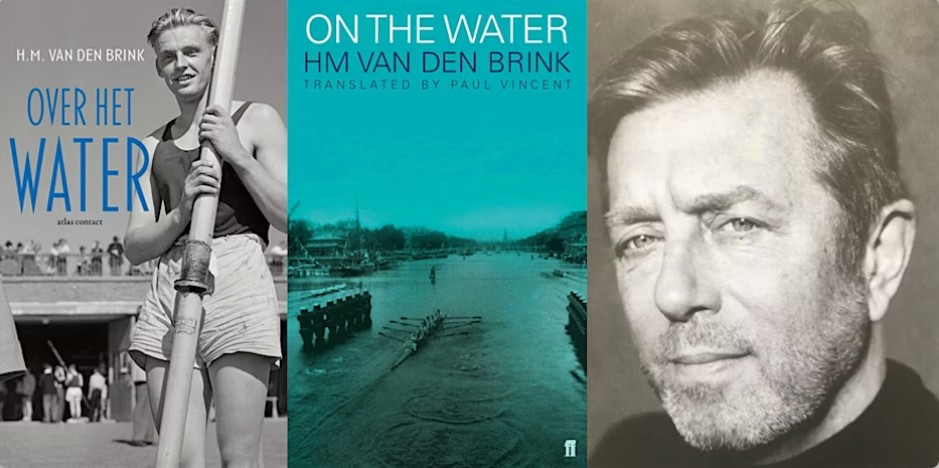
On 27 March, Leander was hosting H. M. van den Brink at the club’s popular Library Rowing Book Talks where authors come to talk about their rowing books and funds are raised for the Leander Trust. The Trust is a charity to advance the lives of young people through rowing.
Irene Hewlett, Leander Club’s librarian, reported to HTBS that it had been a splendid event with more than 50 attendees, who fully enjoyed the evening. It was the idea of Dick Lester, President of the Leander Club Committee, to bring van den Brink over from the Netherlands. On the Water is Mr. Lester’s all-time favourite, Hewlett wrote. During the evening, four copies of van den Brink’s novella were auctioned and brought in £330 for the Leander Trust.
Also in March, H. M. van den Brink was interviewed by Tom Ransley for ROW360. In the interview, the readers learn that the 68-year-old van den Brink has a multifaceted background. After dropping out of literature studies at Universiteit Leiden, he spent a couple of years as a taxi driver. Later van den Brink worked at the Dutch daily NRC Handelsblad and was the newspaper’s correspondent in the USA. Then he reported on the pro-democracy protests in Tiananmen Square in Beijing. He was a war correspondent during Operation Desert Storm in the Gulf War and then he was in Spain where. among other things, he covered the Olympic Games in Barcelona.
I guess that many readers of On the Water wonder if van den Brink has a rowing background as he so elegantly writes about the sport. Ransley writes in his interview:
As a veteran rower Hans Maarten rowed for De Hoop, which more or less served as a model for the fictional rowing club in the story (“it used to be very elitist”), but he spent his competitive years at Die Leythe in Leiden. He was coached by Jan Klerks, who later coached at the highest levels. “I was part of a small group of talented rowers. Several went on to win gold medals at the Olympics. Not me. I did the work and it made me happy, but I did not achieve international success. Just wasn’t good enough. That was an extra motivation: can I do something else?”
And that “something else” eventually became On the Water. Read Tom Ransley’s full interview with van den Brink here.
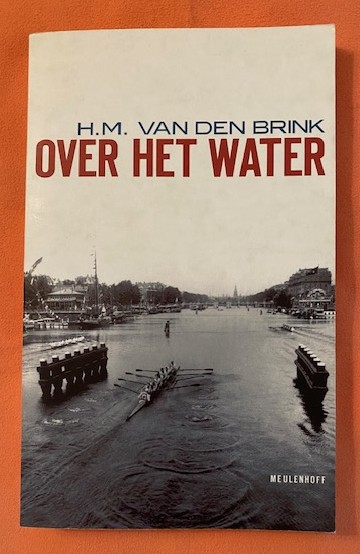
It is said that the novella has been translated into 14 languages, so I decided to do a little research to see which languages. What I have found so far is Dutch, English (Britain and the USA), French, German, Spanish, Italian, Romanian, Danish, Norwegian (Bokmål) and Korean. That makes 11 languages, if we now count the English editions as two, as different publishing houses – faber and faber in the UK and Grove Press in the USA – have come out with their own editions, both translated by Paul Vincent. If you know any other languages, please write a comment.
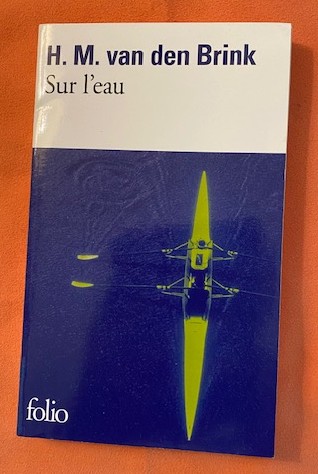
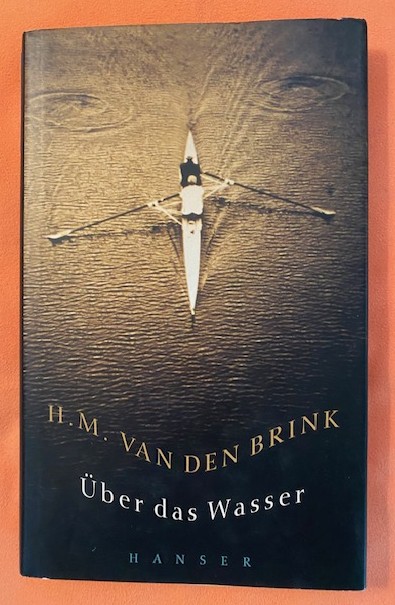
As a Swede, I am of course disappointed that the novella has never been published in Sweden. In an email exchange with Irene Hewlett, I complained about this, whereupon Irene suggested that maybe I should translate it into Swedish. Now, I have to confess that I have been playing with the thought, but I must admit that my knowledge of Dutch is limited.
In my collection of rowing books, I right now have a few editions of the novella in Dutch, English (the British and American editions), German, French and Danish; the latter just arriving the other day from an antiquarian bookseller in Copenhagen.
Just for fun I started translating the novella with the help of Google Translation, from Dutch to Swedish. Having knowledge of English, German and the Scandinavian languages, I was surprised that after a couple of paragraphs, I did understand some Dutch. Now having in my possession the Danish edition, it is easy to compare what Google thinks the text should look like in Swedish, sometimes with a bad result. But translating the whole Over Het Water into Swedish must wait till I am retired.
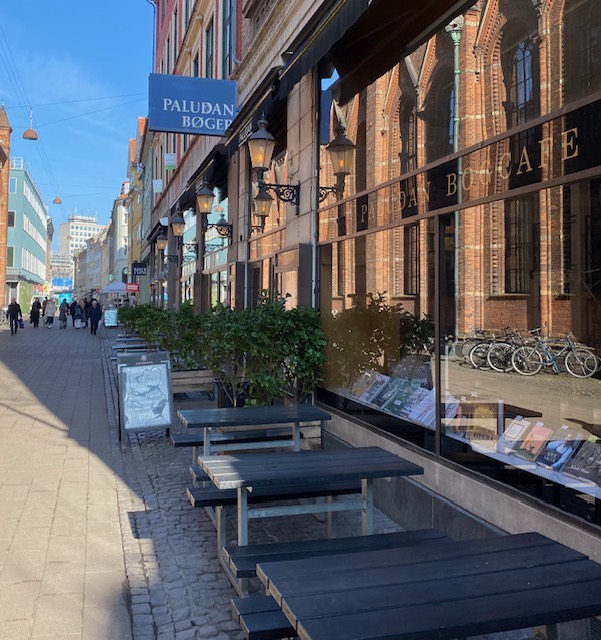
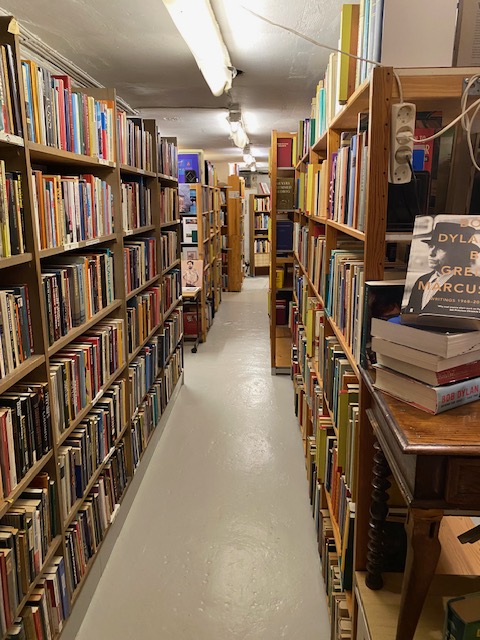
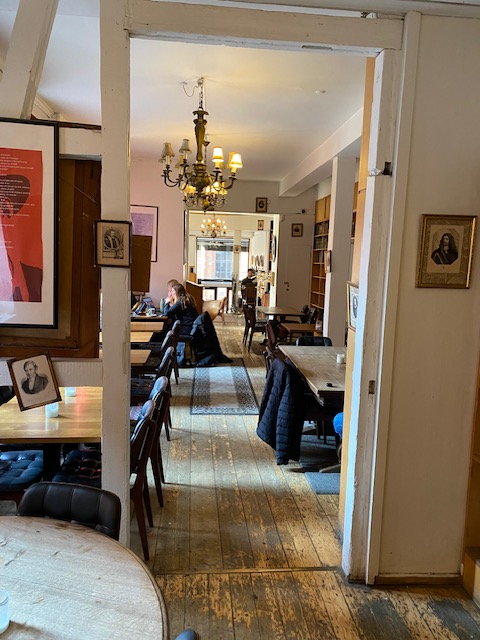
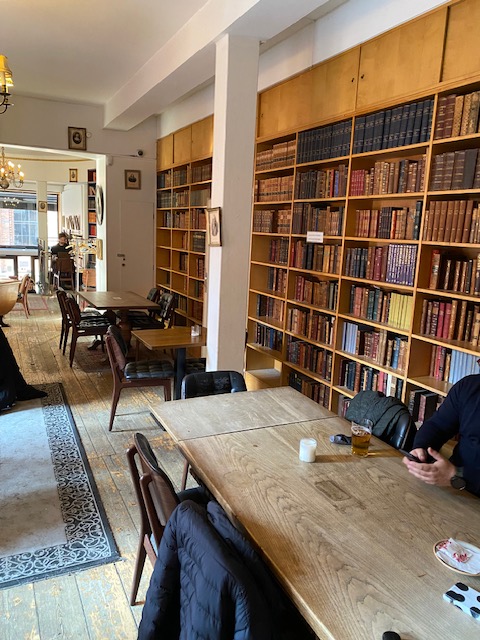
I’m sad that I never made it to van den Brink’s talk at Leander. I was, actually, in Sweden for six weeks in February and March, so it would be a hop, skip, and a jump to get over to Henley, but unfortunately, I had to fly back to the U.S. before the Leander Talk took place. I spent a day in Copenhagen where I visited a few antiquarian booksellers, among them the famous Paludan Bøger & Café in Fiolstræde by the Københavns Universitet.
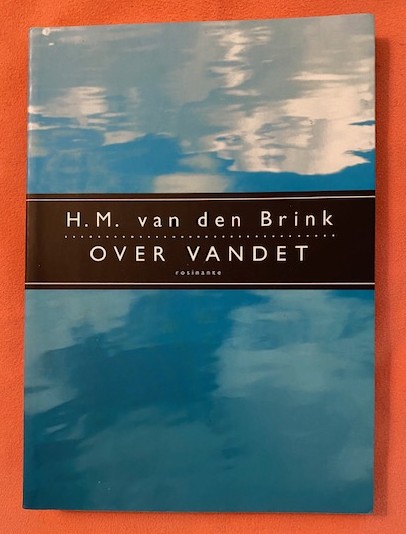
Back in the USA, I was looking at abebooks.com and I found a copy of Over Vandet, the Danish edition of Over Het Water, which I have been in search of for many years. The book was located at Vangsgaards Antikvariat Aps in Fiolstræde, two blocks away from Paludan Bøger & Café! Shipping was a small fortune, double what I paid for the book. Luckily, I ordered the book before the U.S. tariffs went into effect, so maybe I got away with a cheap deal after all.
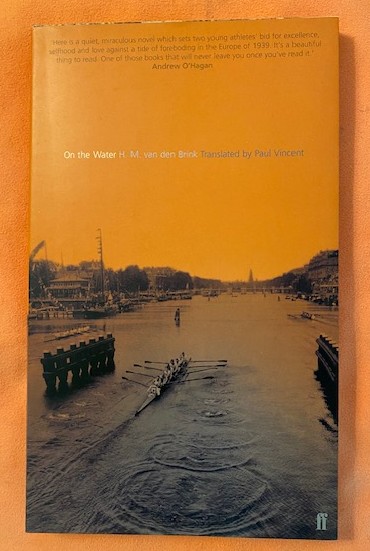
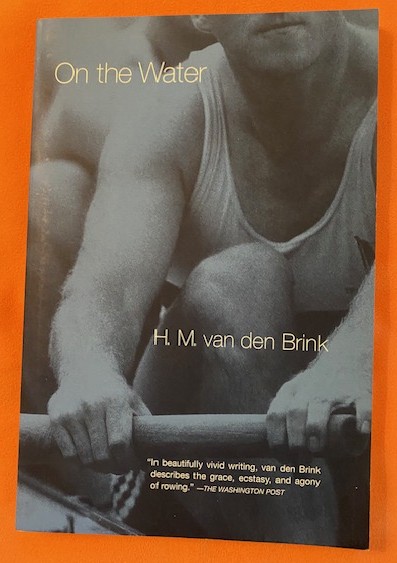
I discovered one interesting thing comparing the first three paragraphs in the different languages. Despite the fact that both the British and American editions were translated by Paul Vincent, a zealous editor of the American edition has decided to add something in the second paragraph, probably not trusting the American readers geographical and historical knowledge. The first sentence in the second paragraph reads in the Dutch edition: “Even heb ik me voorgesteld hoe het zou zijn om mee te vliegen naar het oosten.”;
British edition: “For a moment I imagined what it would be like to fly east in the planes.”;
American edition: “For a moment I imagined what it would be like to fly east in the planes, towards Germany.” (My italicization)
Leander Library Rowing Book Talks continue this autumn. Watch this space!
 Hear The Boat Sing
It is a beautiful book. I have read it many times and given multiple copies to friends, rowers and non-rowers alike, all of whom loved it as well.
– Don Costello, Coos Bay, Oregon