
2 May 2025
By Tim Koch
Tim Koch is on a riparian ramble.
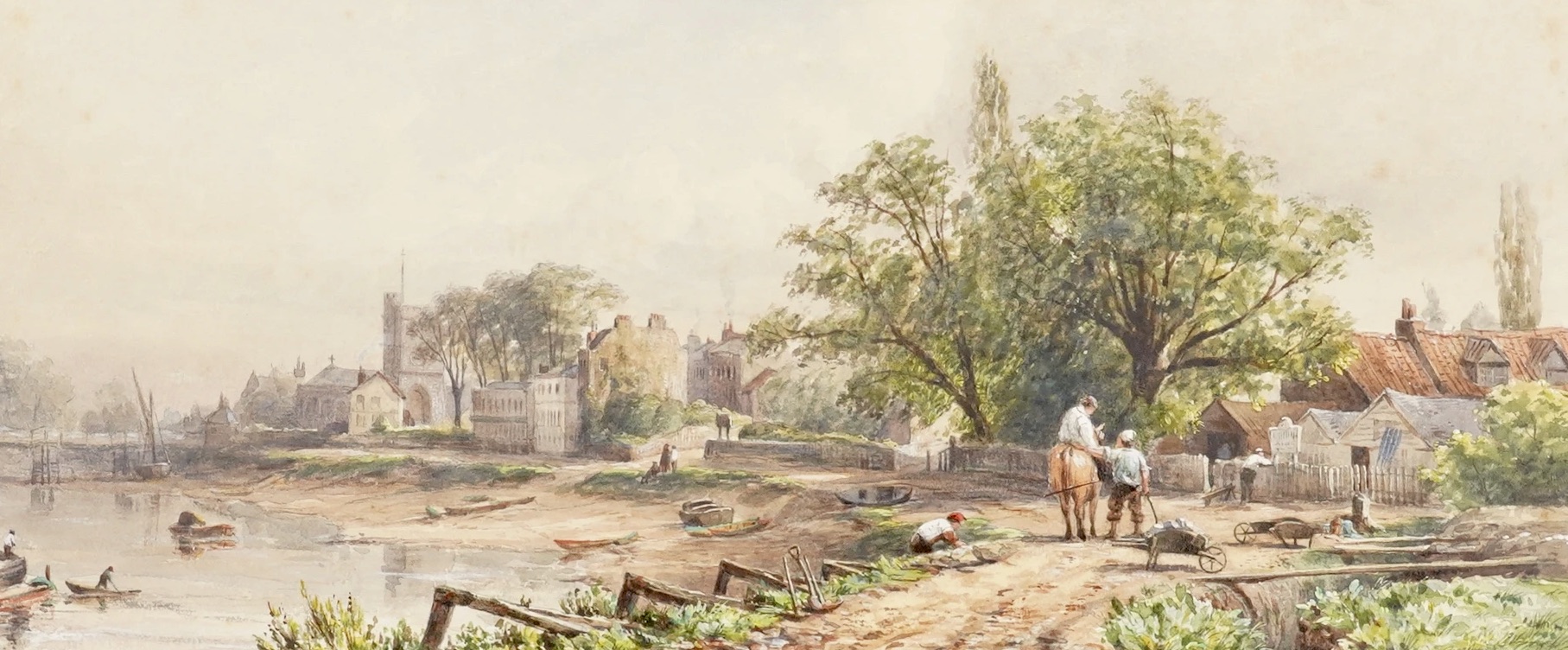
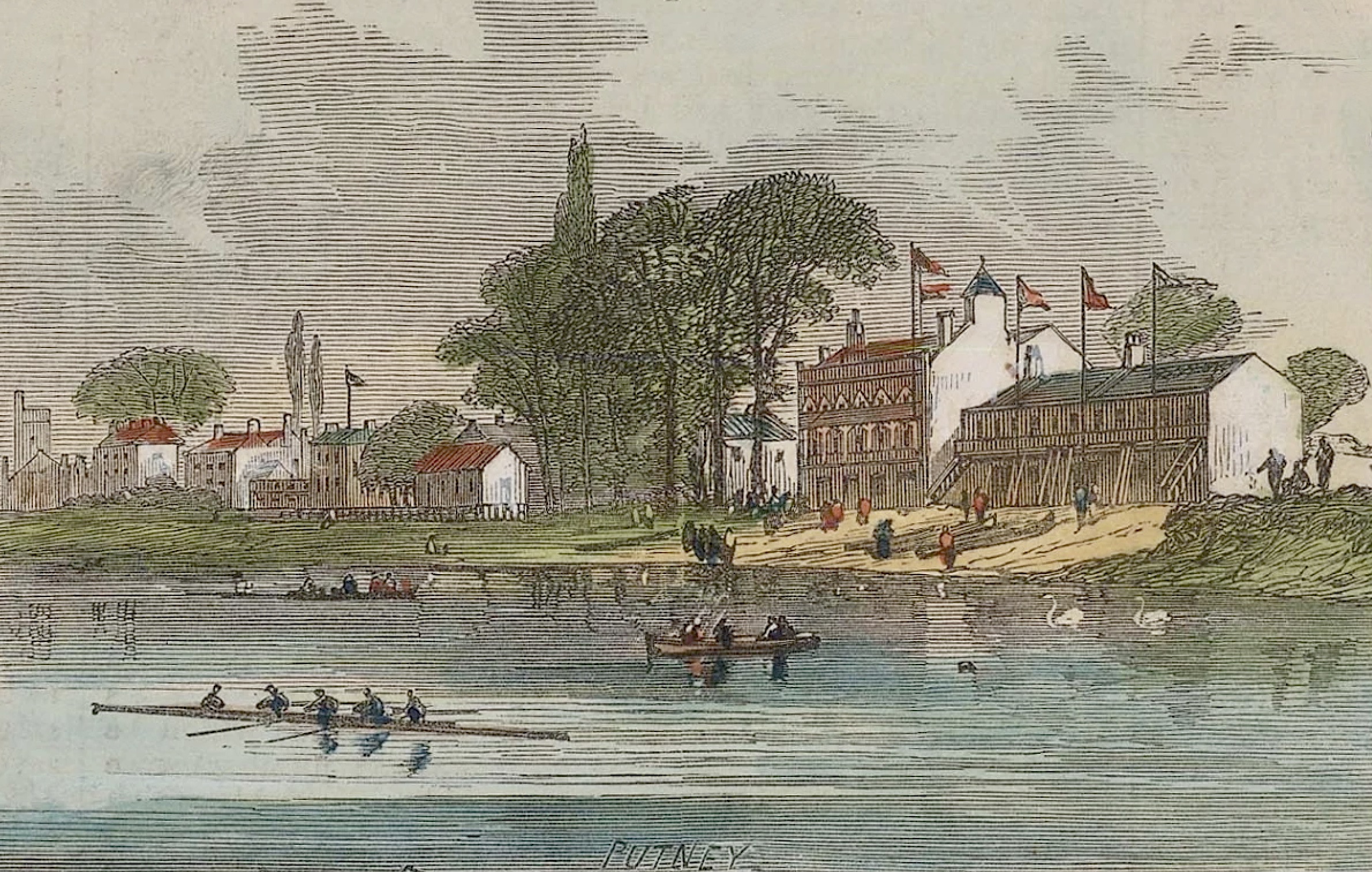
My recent piece Dating Aquatic Art 2 centred on the watercolour reproduced below, a picture of the Putney waterfront sometime between 1857 and 1866 and showing, on the far right, the boat shed that was the beginning of both London Rowing Club and of organised amateur rowing along this stretch of the Thames. This inspired me to revisit something that both Daniel Walker and I have looked at previously, London’s “Boathouse Row”, the aquatic buildings along the Putney Embankment in London SW15.
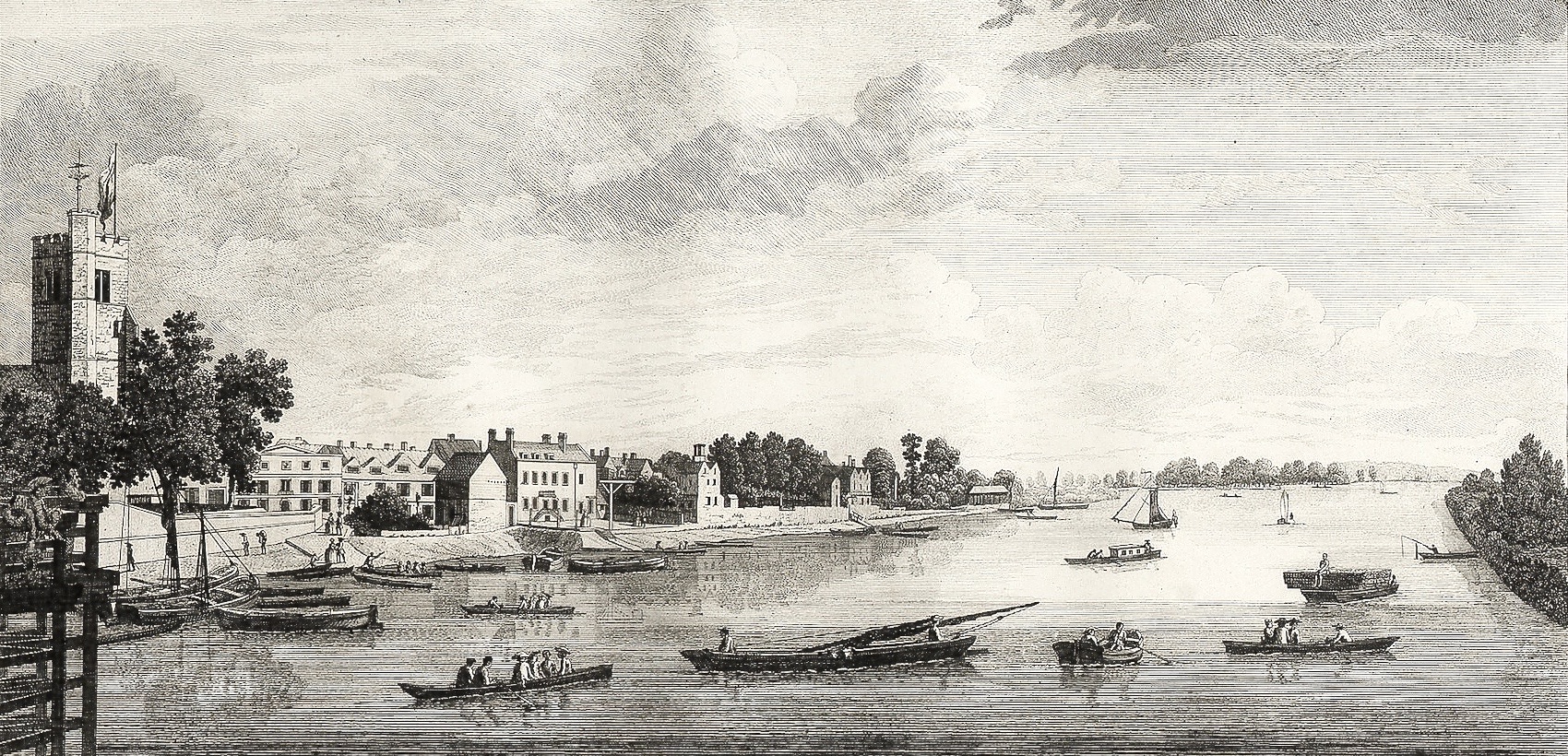
The briefest of summaries of the history of rowing for pleasure by amateurs in London and South East England would be that it started in the mid to late 18th century at the schools of Eton and Westminster and the universities of Oxford and Cambridge – though there is debate on who were first, the schoolboys or the undergraduates. When their formal education finished, the gentlemen oarsmen who came to London rowed out of the boatyards that had originally been established to serve the capital’s working watermen, notably those around Lambeth on the Thames opposite the Houses of Parliament.
In Hear the Boat Sing: The History of Thames Rowing Club and Tideway Rowing (1991), Geoffrey Page states:
On the Tideway in the early 19th century there were no big clubs and no clubhouses such as we know today. Small groups of enthusiasts got together and bought or hired boats and rented changing rooms from boatyards or pubs, and those associations or groups of oarsmen often took their names from those of the boats in which they rowed: The Shark, The Star, The Arrow and many others now forgotten.
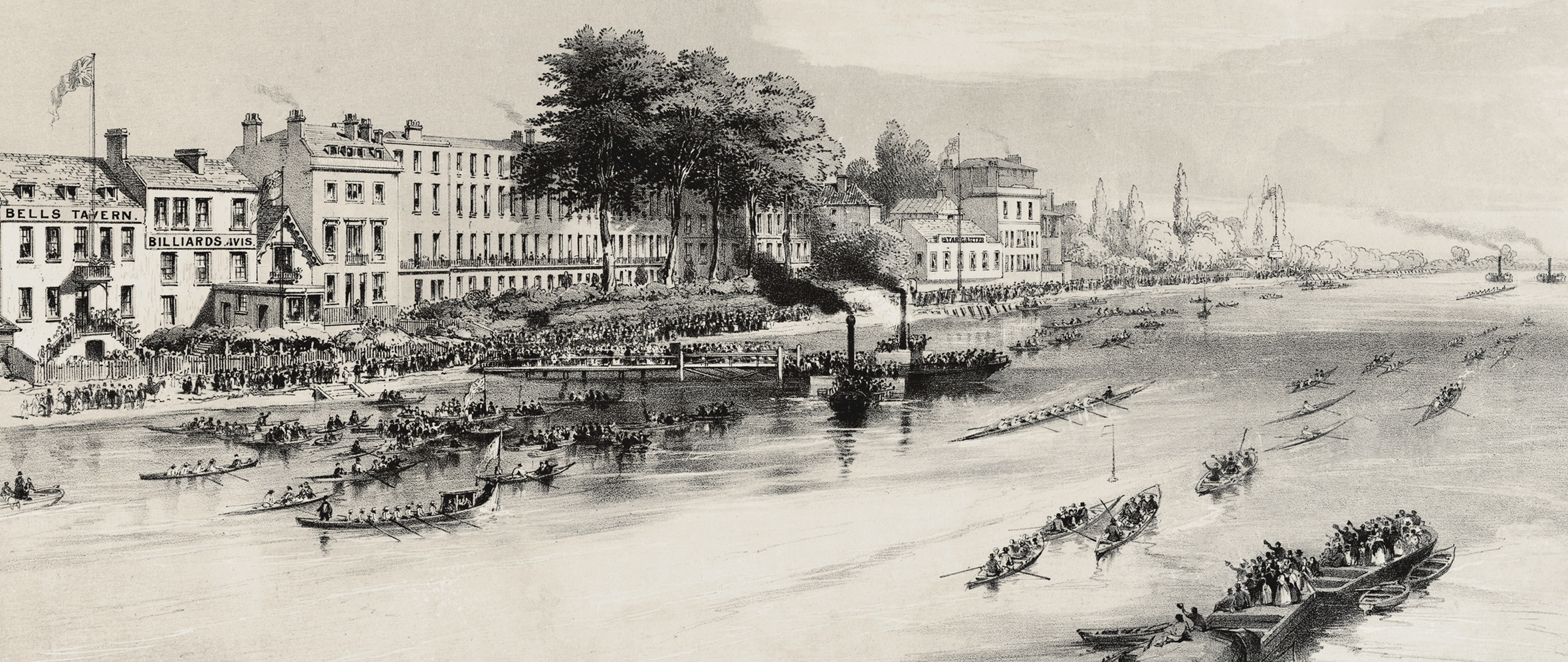
By the 1850s and 1860s, pollution and industrialisation forced London’s amateur oarsmen to either cease their sport or to move it out of the centre of the city to Putney, a riverside village on the urban outskirts.
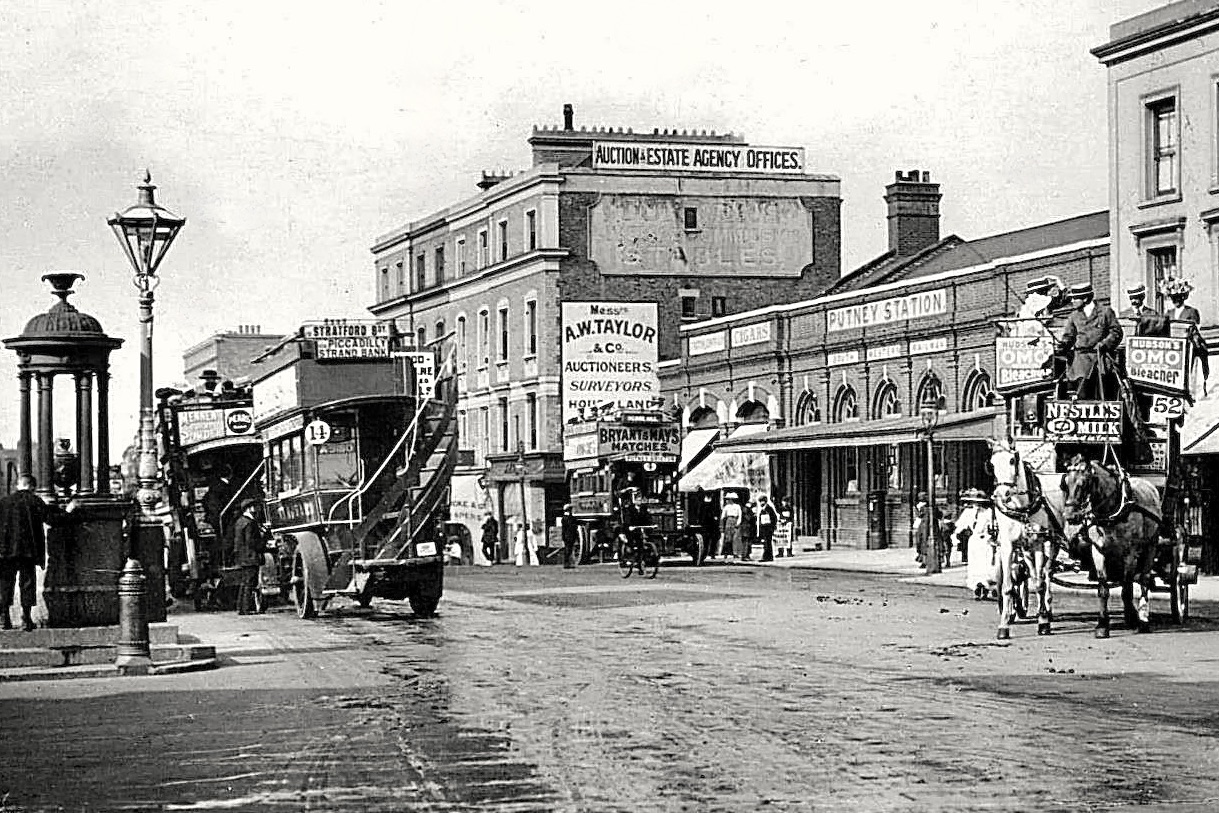
After 1846, a fast railway link meant that a man could live or work in London but be in Putney in twenty minutes. An early Thames RC notice read: The rowing train will leave Waterloo (Railway Station) at 6.34 p.m. and crews will be formed at 7.00 p.m. This left six minutes to cover the kilometre between Putney Station and Thames, a good warm up!
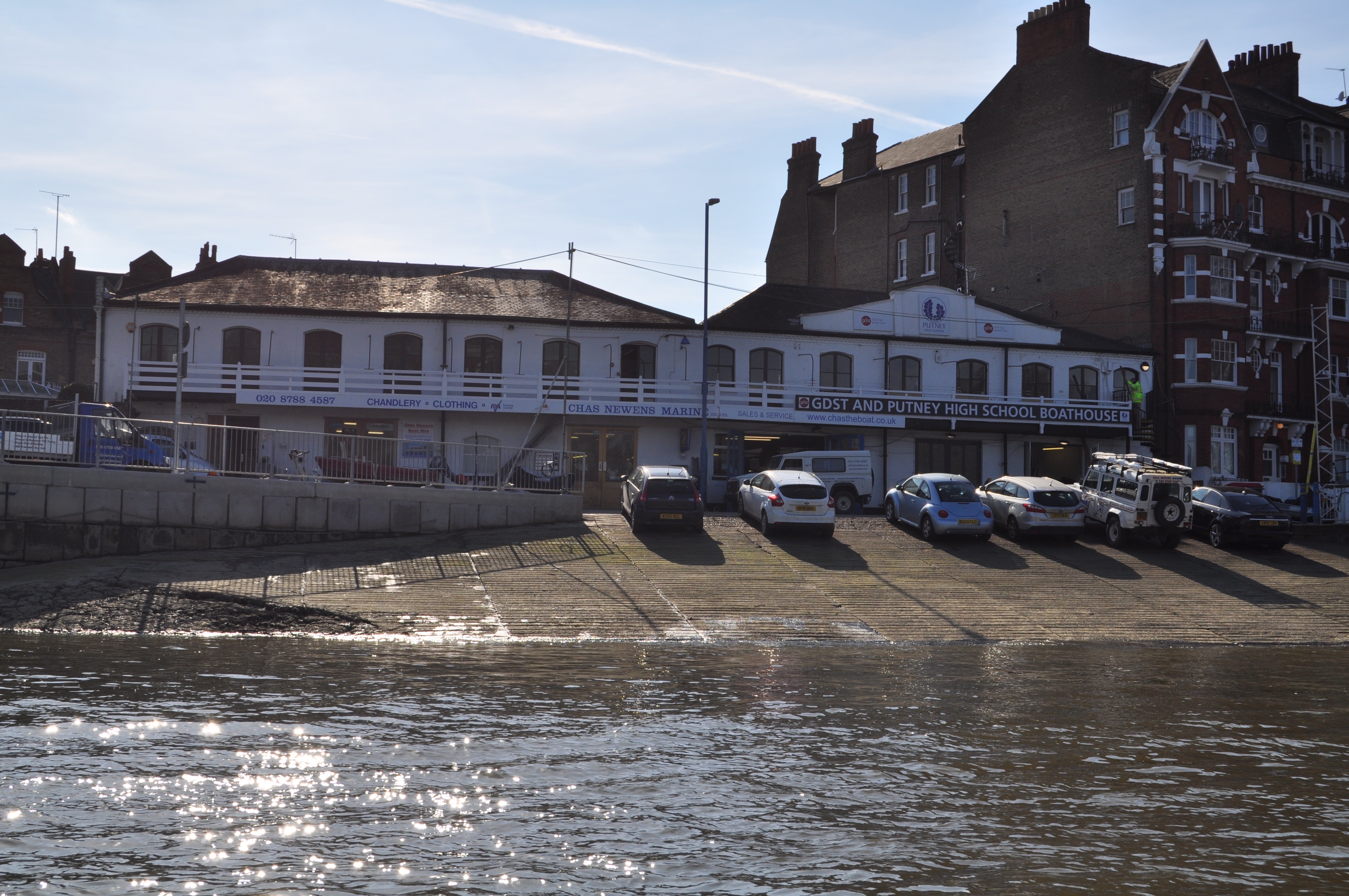
Thus, on its foundation in 1856 London Rowing Club could base itself outside of central London in bucolic Putney, initially and briefly at Searle’s boatyard (today, partly the site of Putney High School Boat Club).
In The Brilliants, Geoffrey Page states that this shifted the centre of gravity decisively from Lambeth to what was then still the country village of Putney, and sounded the death knell of the score or so of small private clubs which had hitherto catered for amateur oarsmen in the metropolis…
The formation of London RC at Putney was more than just a geographical move. Amateur rowing on the Thames had deteriorated between 1835 and 1855. In the words of one of London’s founders, Josias Nottidge, An eight from the tidal Thames had not been seen at Henley for years. Was rowing for amateurs and gentlemen dead, or could it be rekindled?
To compete against “closed” clubs, notably college crews from Oxford and Cambridge, the new London RC would have to be a club “on a gigantic scale” with its own boathouse and boats.
When London RC was joined in Putney in 1860 by Leander and an admittedly then unambitious Thames, the fightback had truly begun. Initially, changing facilities and boat storage were temporary and ramshackle but by 1866 Leander had a brick and mortar boathouse with all or part of the adjoining Styles’ New University Boathouse rented to Thames Rowing Club. London’s shed of 1857 served for fourteen years but by 1871 LRC built the core of its present home. Thames had done the same by 1879.
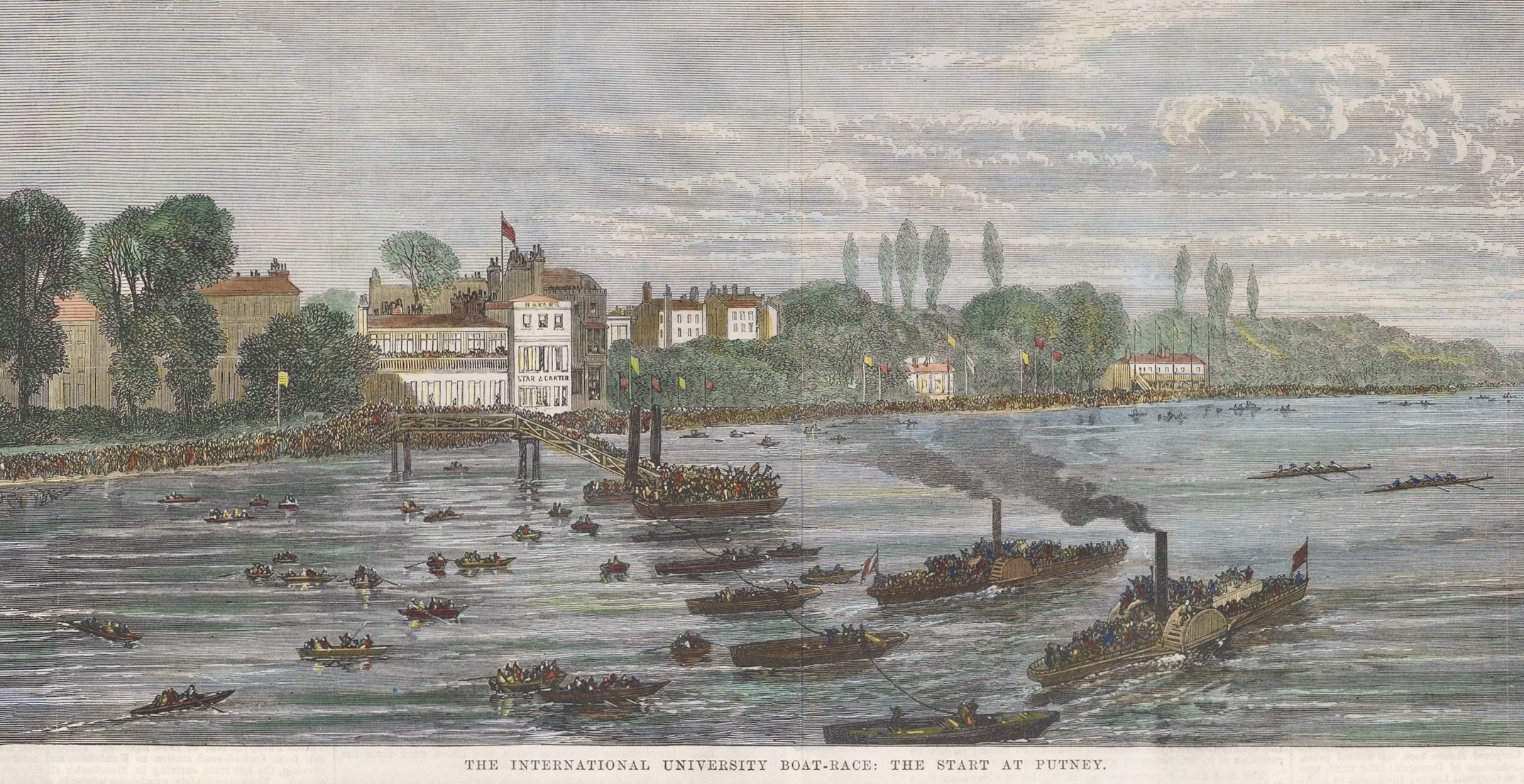
Fortunately, early photography was able to record many of these developments.
Boathouse Row, Putney
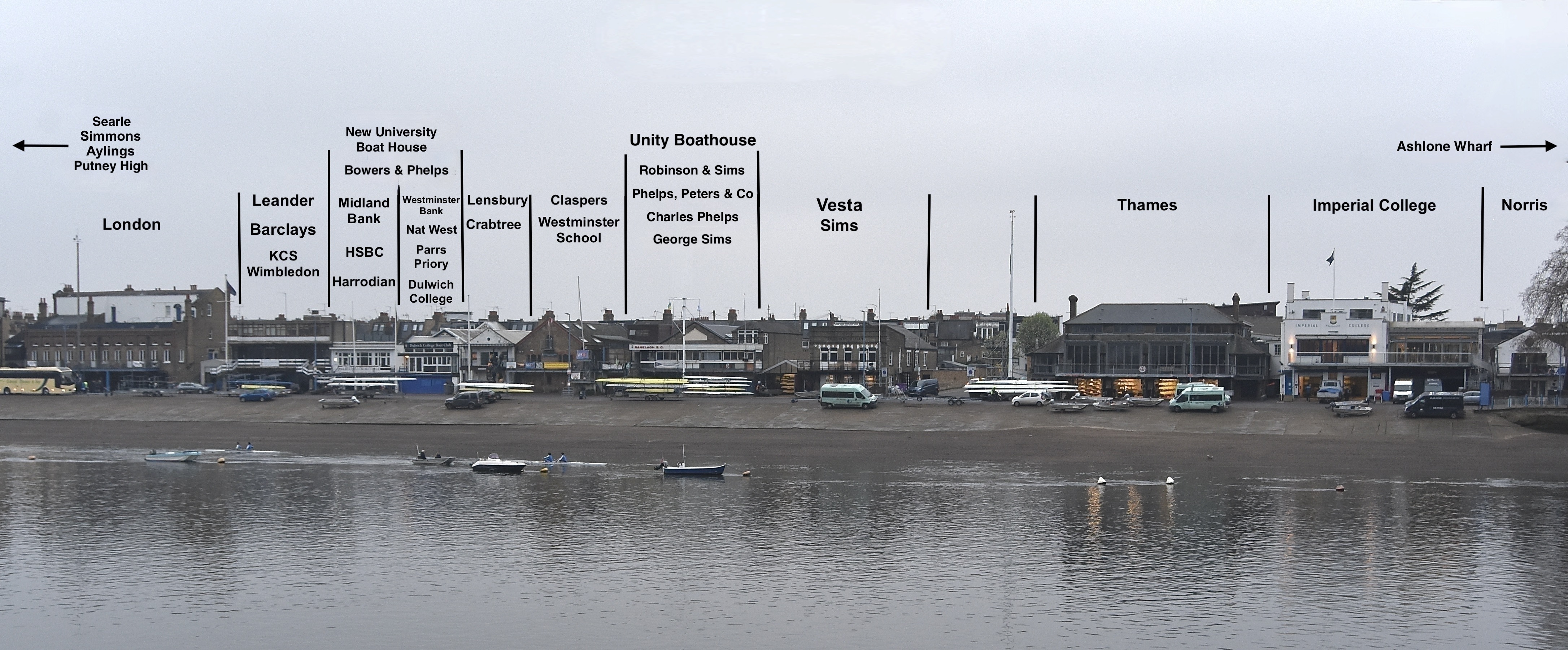
The Searle site

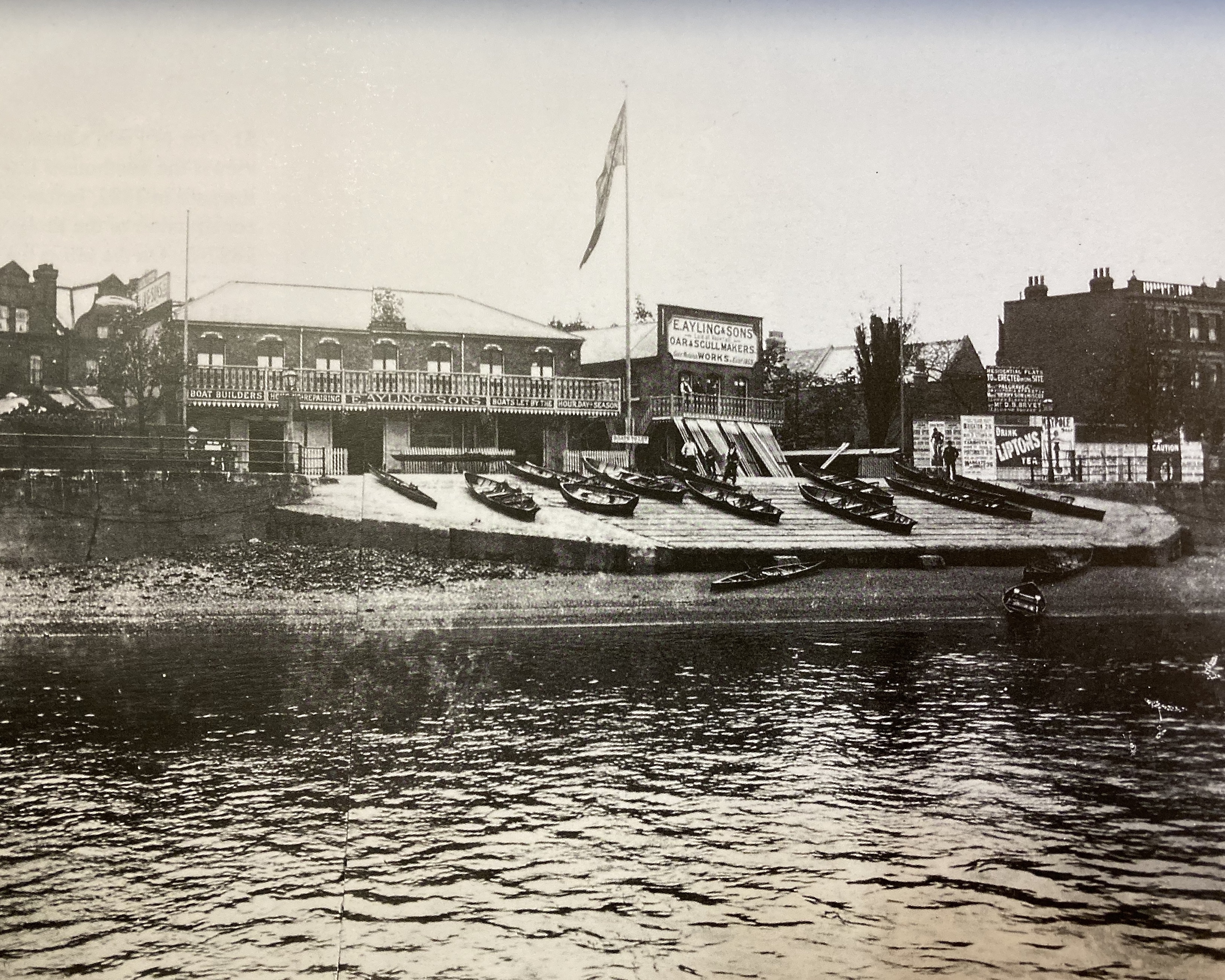
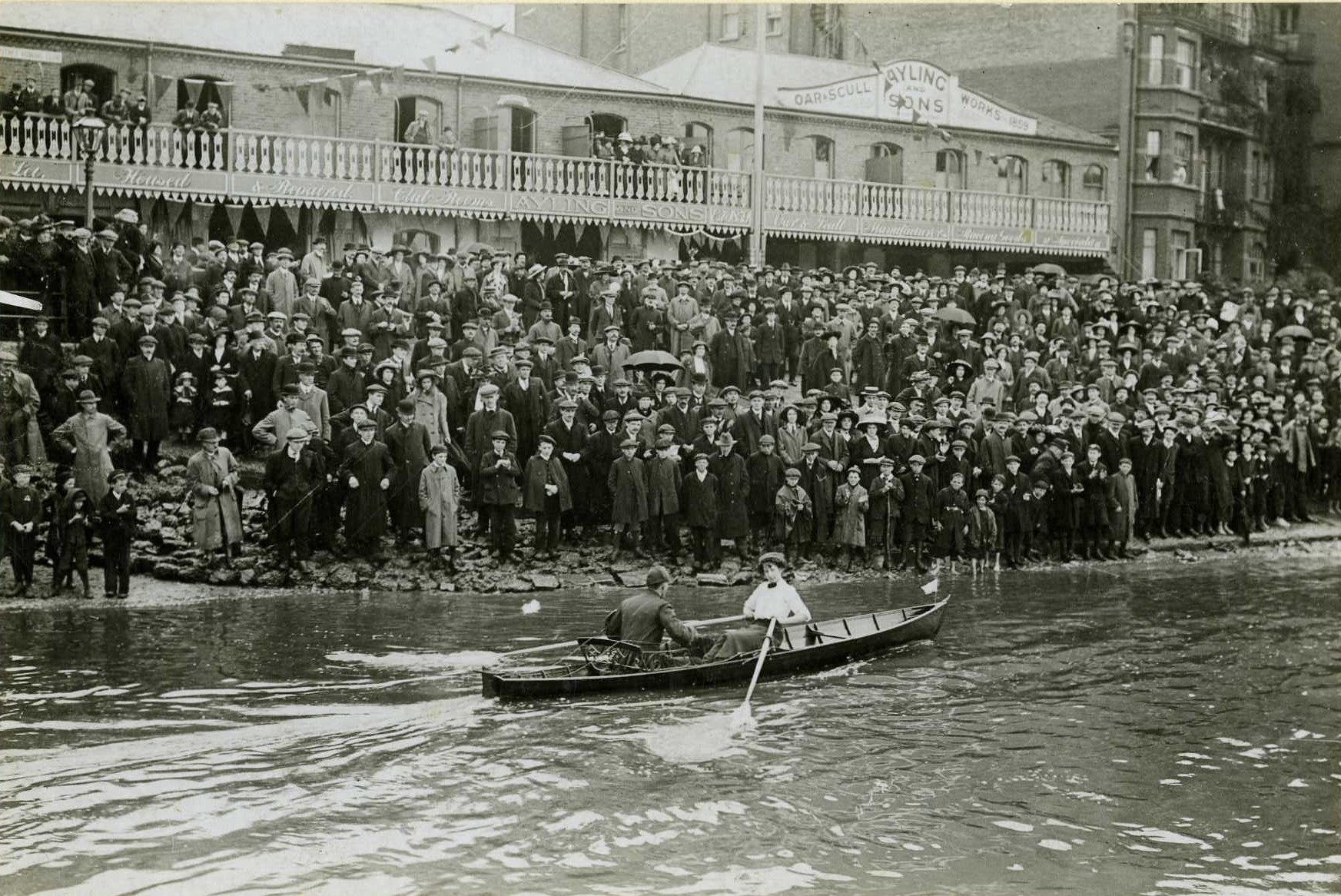
The smaller separate Aylings building on the right in the above picture was formerly the boathouse of the Ilax Rowing Club. It may date from c.1864, it is marked on a map of c.1875 and was demolished before c.1912 to make way for an extension to the bigger Aylings building.
A very high resolution and magnifiable version of the above picture is on the Historic England website. Click the double ended arrow to enlarge and then use the +/- slider. Not all features may work when viewed on a smartphone.
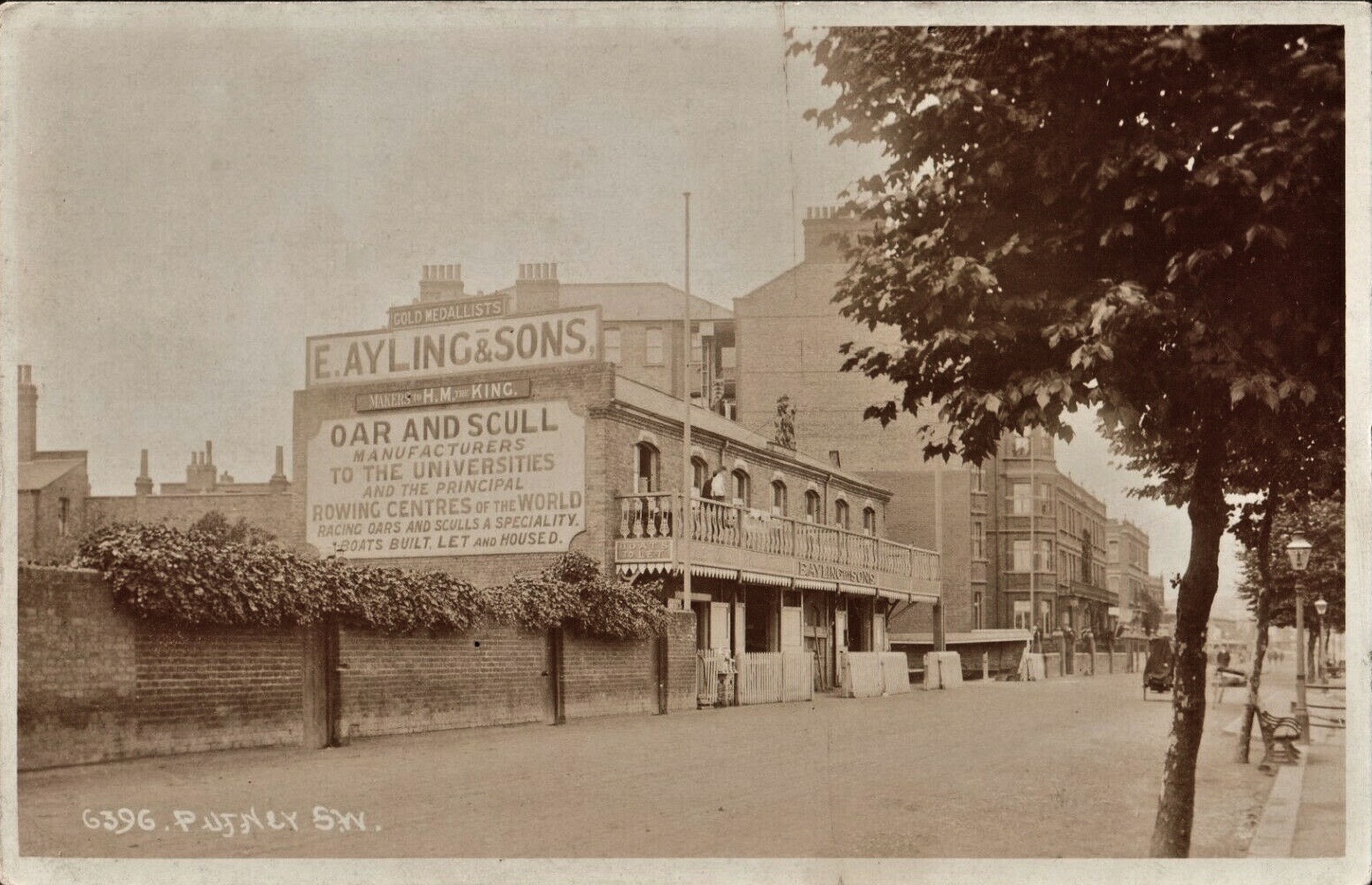
A 1934 picture on gettyimages.co.uk (no hyperlink available, use Getty search “Cambridge team 5th March 1934”) shows the upstream half of Aylings with a sign for Sims boatbuilders.
London Rowing Club
From 1856, London’s first fifteen years at Putney were spent with clubrooms at the Star and Garter Hotel and a rough shed to house boats erected on Finches Field – the spot where the core of the building that has served LRC to this day first opened its doors in January 1871. Importantly, the founders of what may be the world’s oldest existing purpose built rowing club (certainly the oldest in the UK) decided to include not just boat storage but also changing, staff and social rooms.
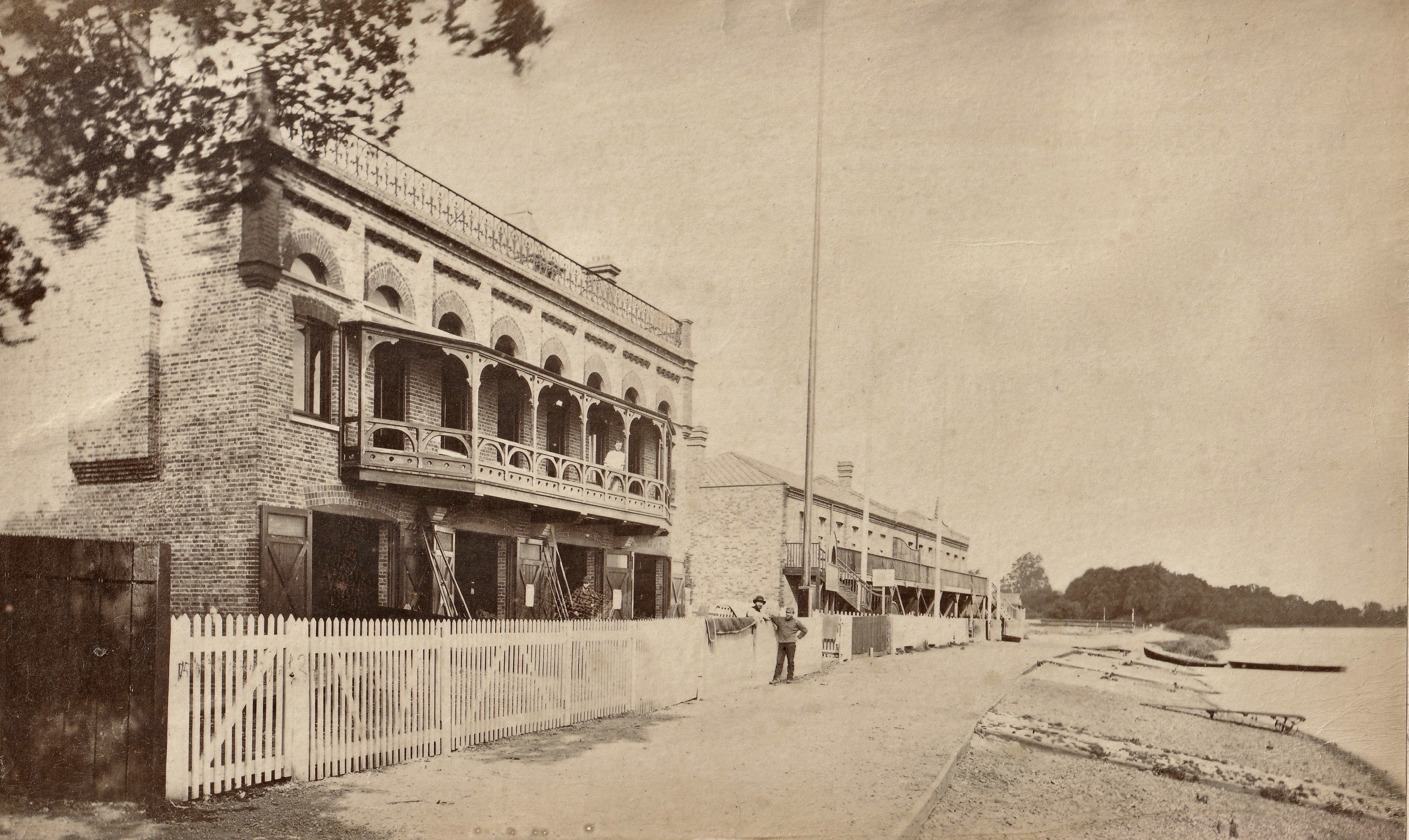
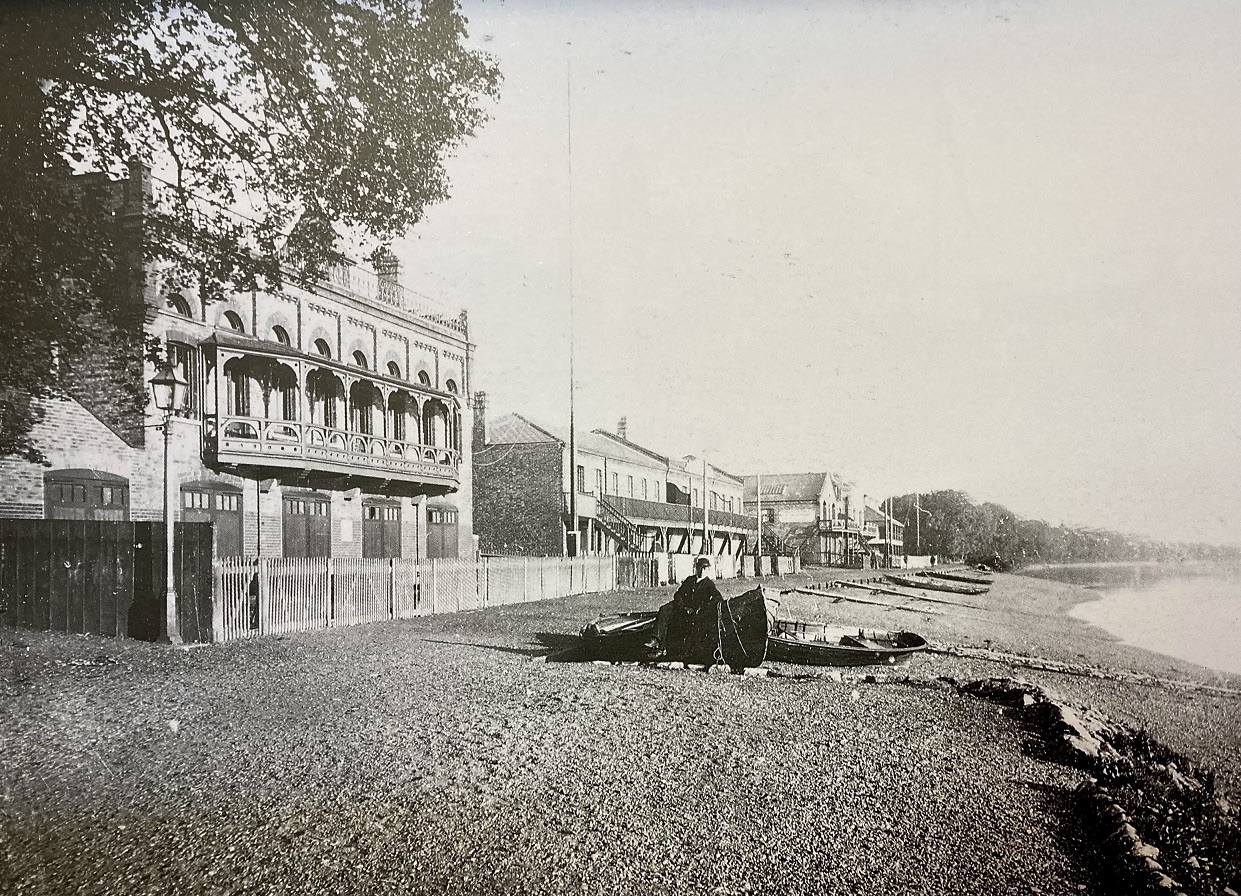
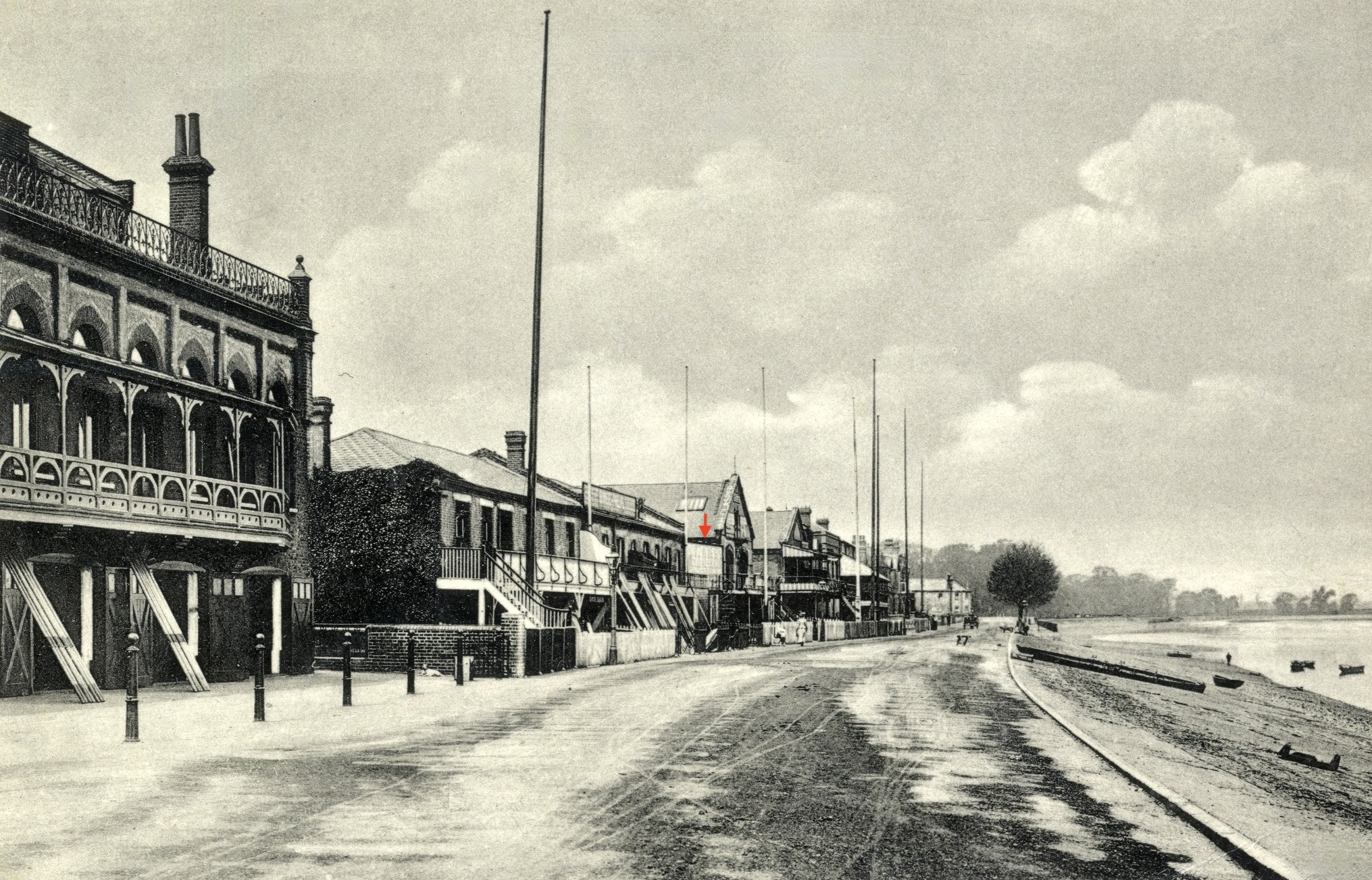
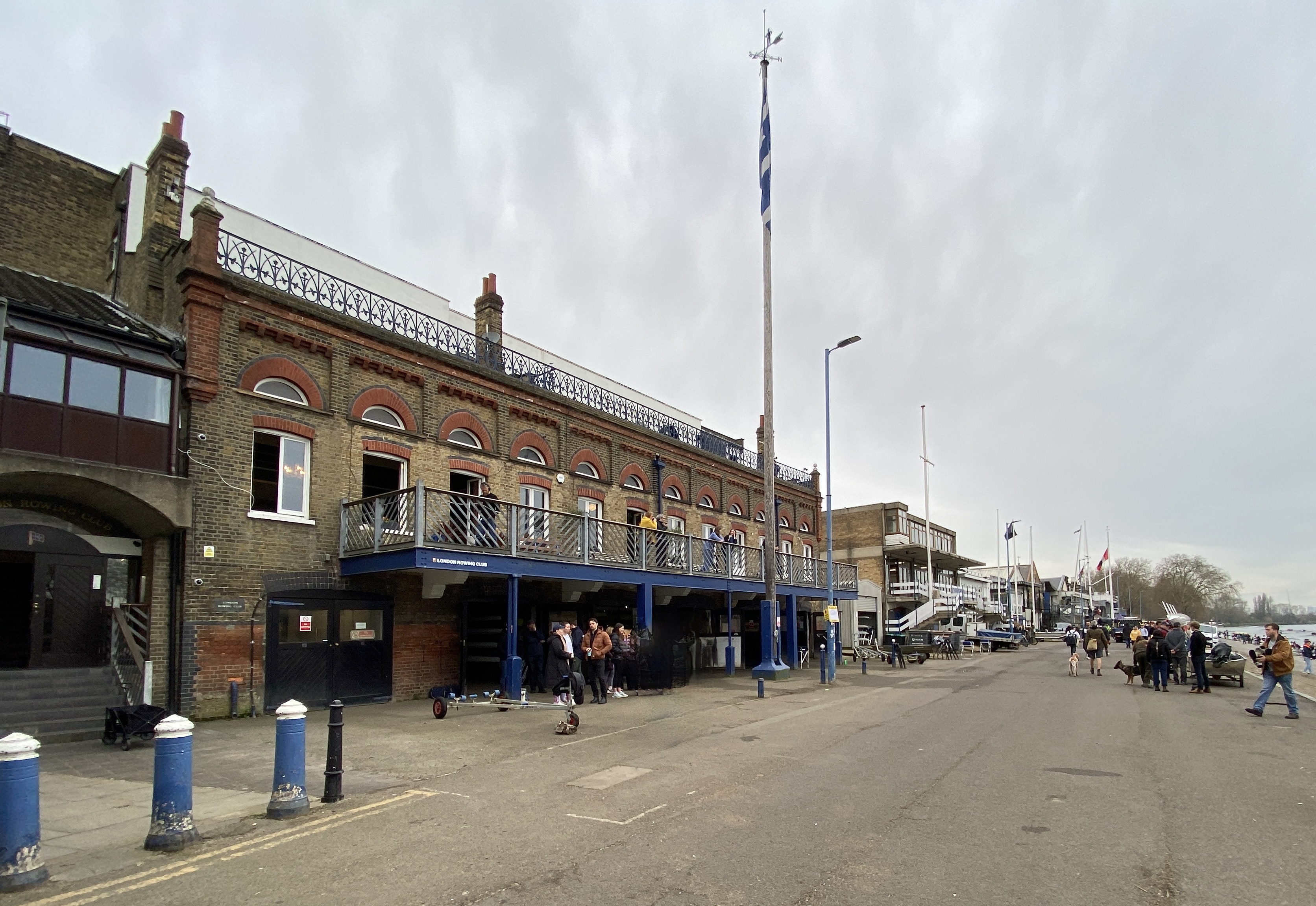
For much of the twentieth century until the 1970s, London was lapse in maintaining and updating the fabric of its building and LRC legend Peter Coni described it as “a sporting slum”. Remarkably, showers were only installed in 1971.
The Leander Boathouse and the New University Boathouse
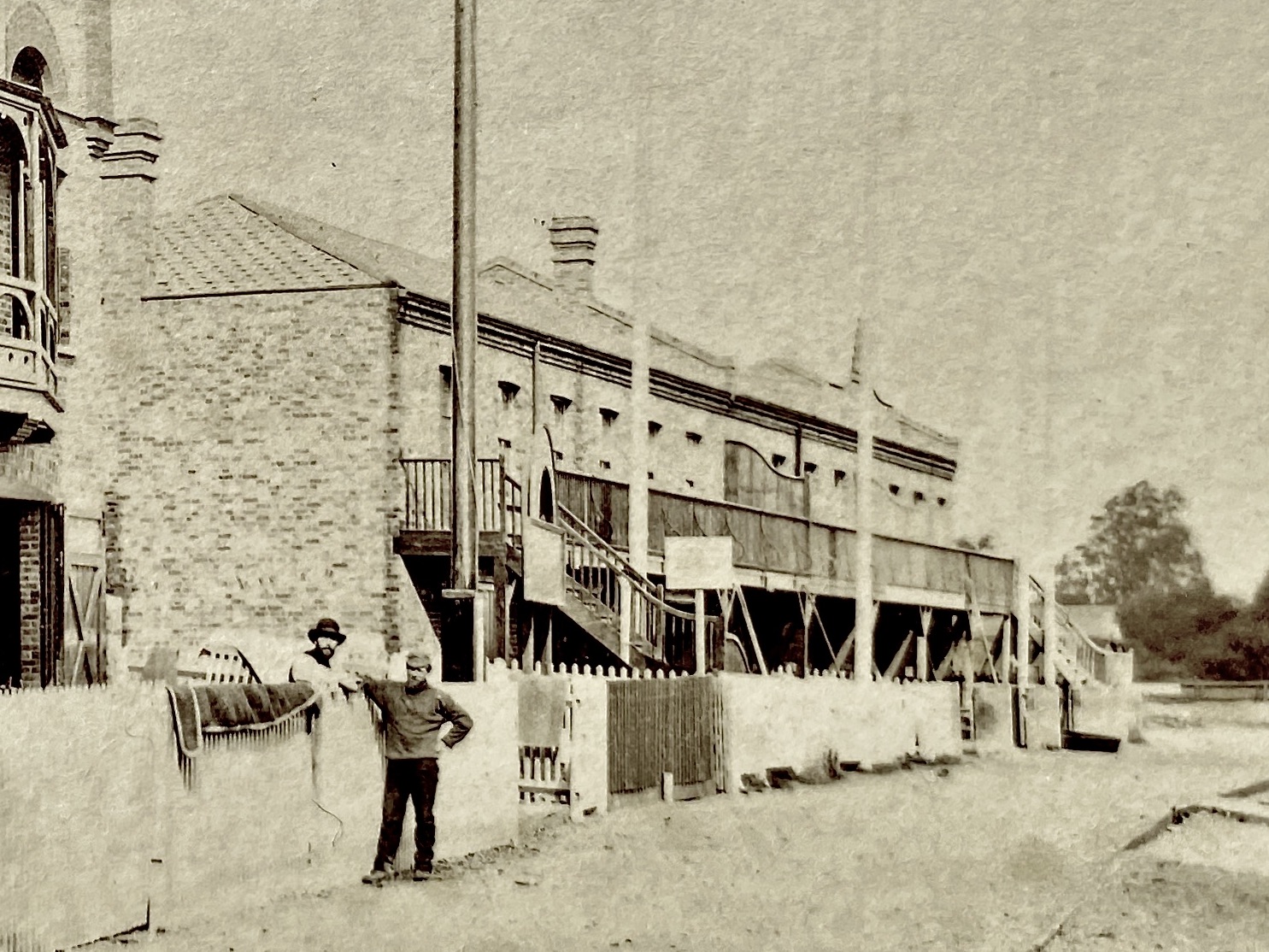
The conjoined Leander/NUBH boathouses were often thought of and referred to as just “the Leander boathouse” but they had distinct histories.
Leander
In 1860, Leander moved from central London to Putney, obtained rooms in the Star and Garter and rented a small piece of land on which a tent was erected for housing boats. This land was leased by London Rowing Club in 1864 and is the site of today’s LRC building. Leander then leased the adjoining piece of land and in 1866 built its own boathouse on it (though the NUBH was clearly built at the same time). A post-1888 picture showing the Leander flag flying is on the Historic England website.
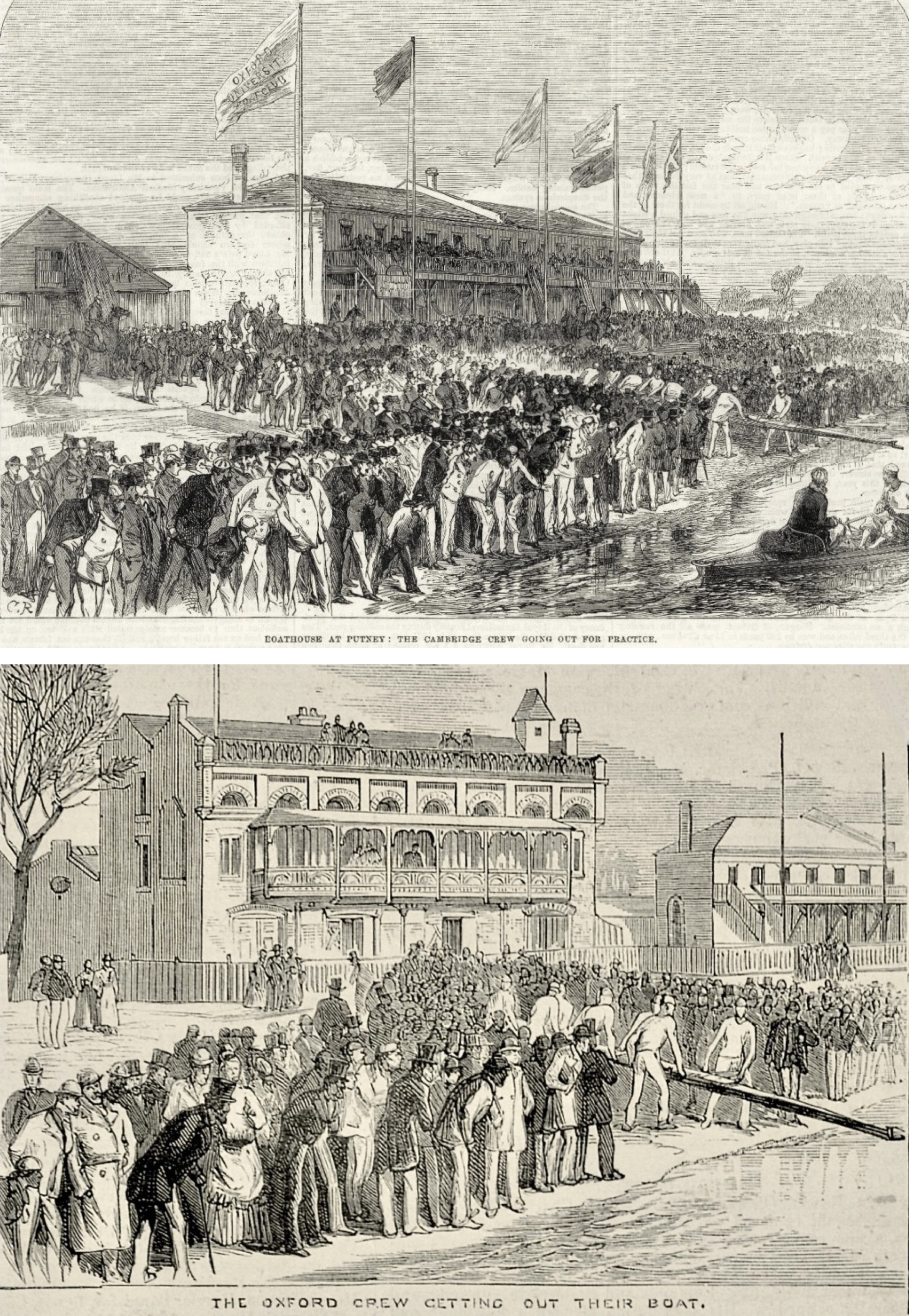
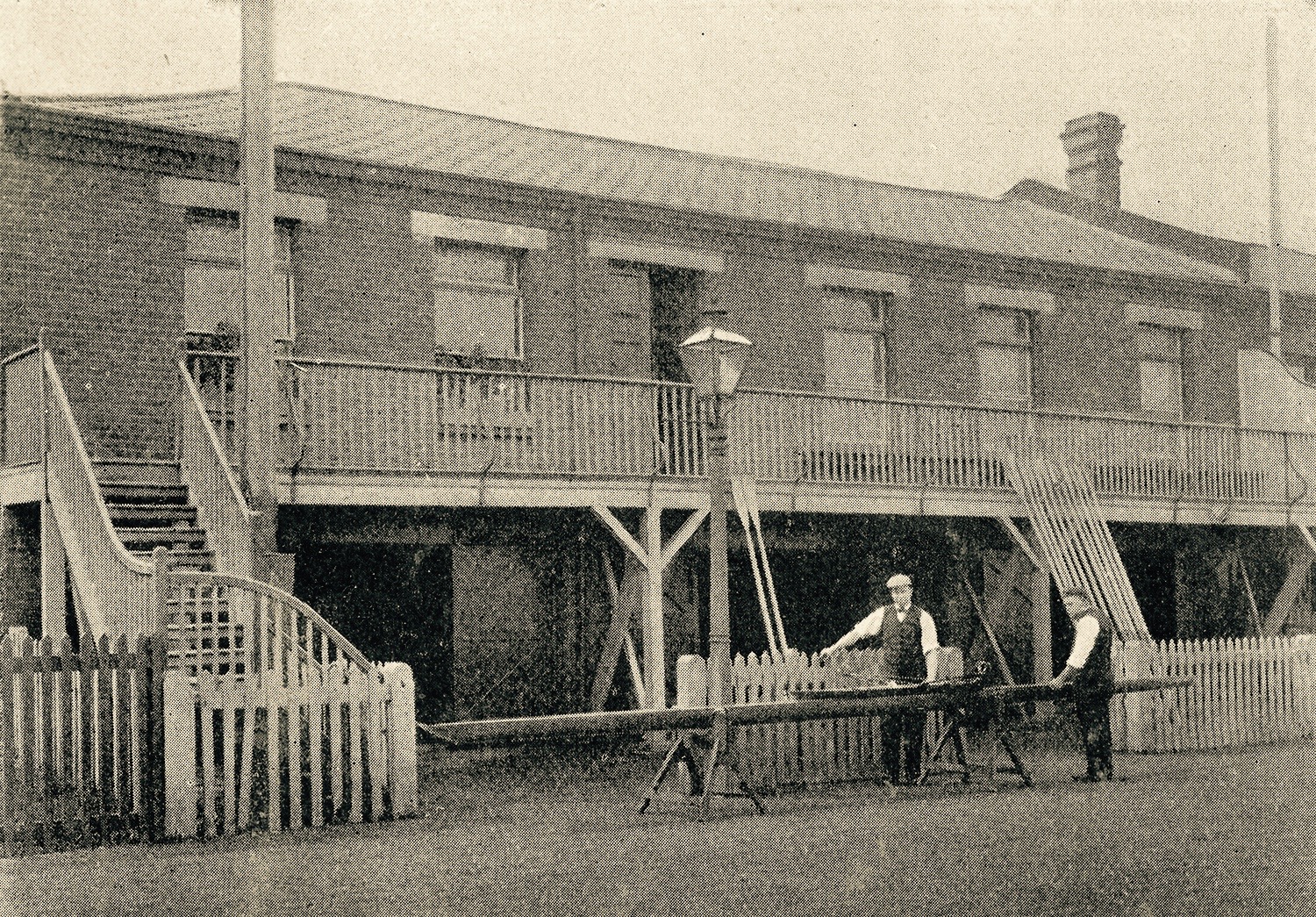
In The Brilliants, Geoffrey Page states that, In 1961, although (Leander) Club crews were often training on the Tideway, the Club parted with the remainder of its interest in the Putney boathouse but was allowed the use of its facilities and half a bay for rack space.
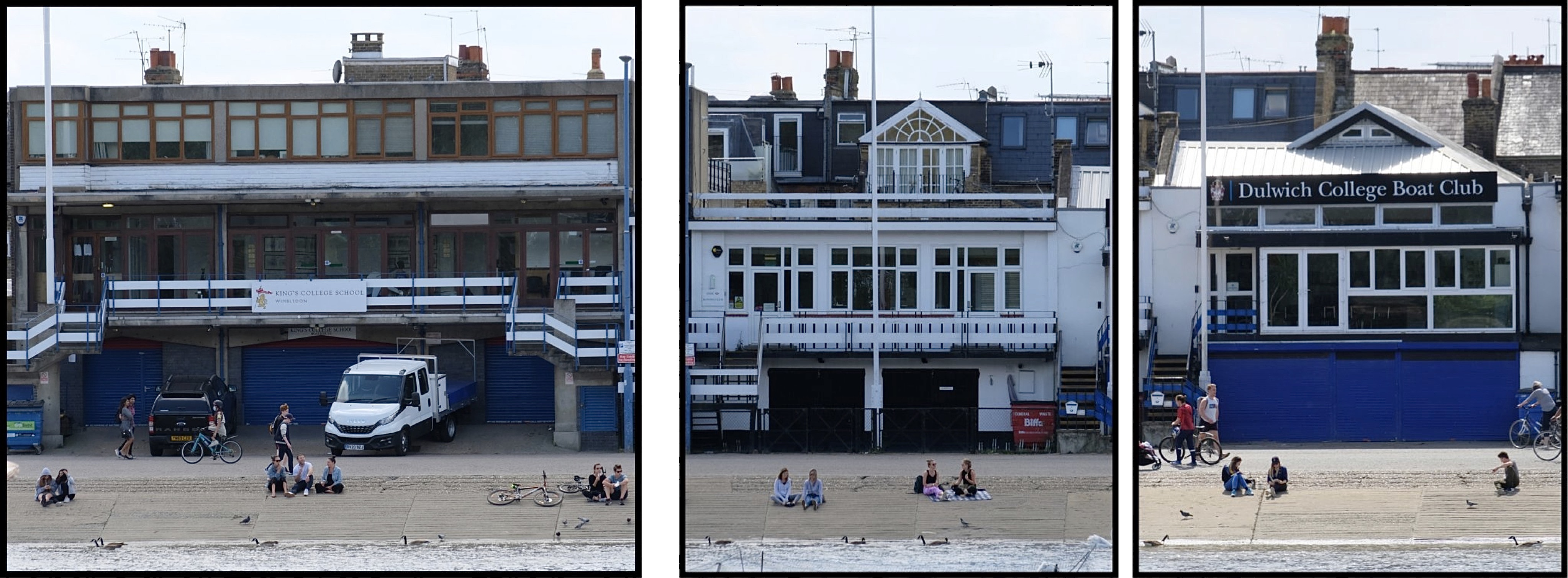
In December 1966, Barclays Bank RC opened the current structure on the old Leander site. It boated from here until 1993 when the bank withdrew its support for such fripperies and sold the boathouse to the current occupiers, King’s School Wimbledon BC.
The New University Boathouse
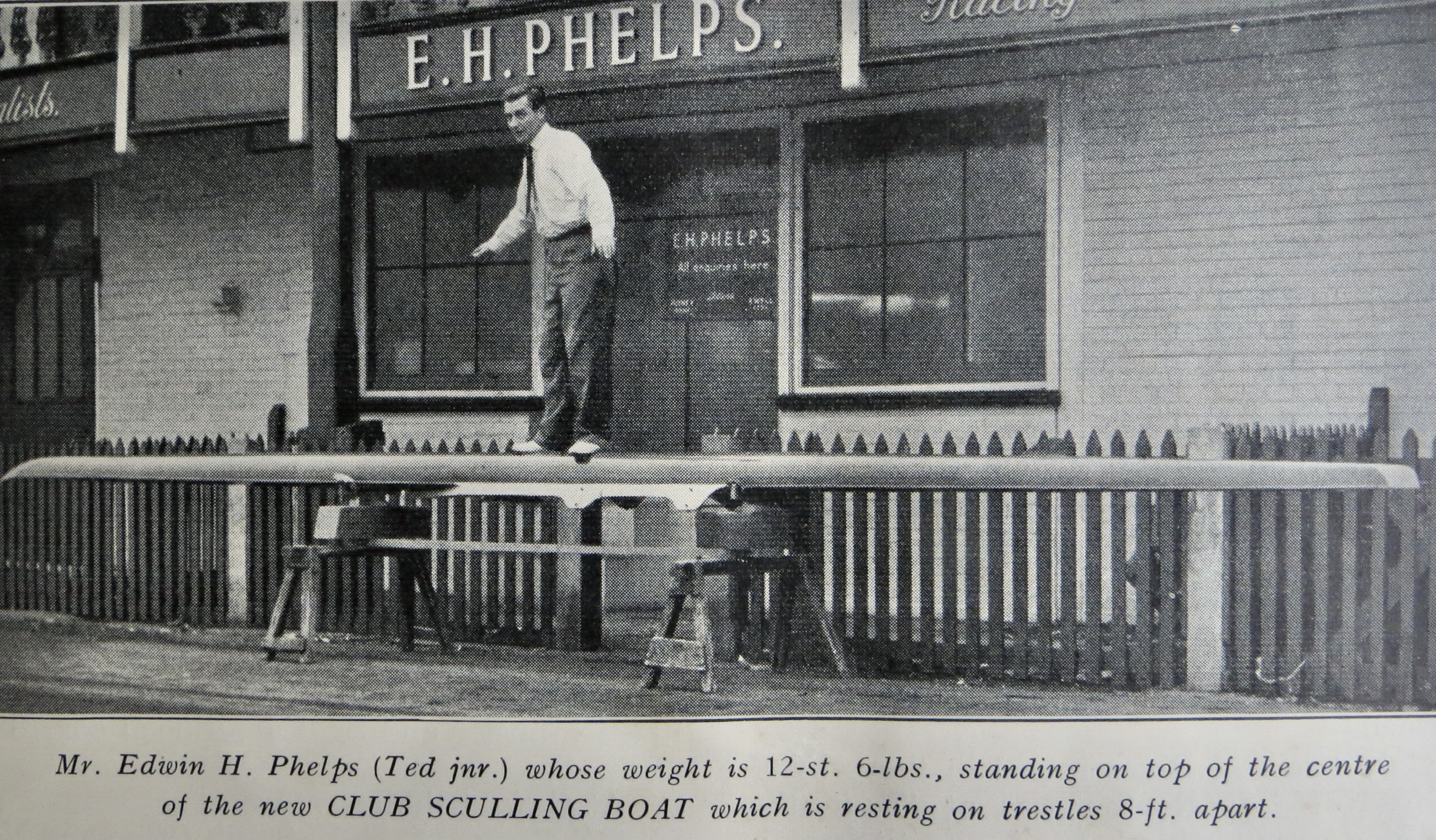
The ground floor of the New University Boat House was home to a series of boatbuilders: first in 1866, by the long established William Styles of Isleworth under his manager, William East Senior; then William East Senior under his own name from 1872; then Bowers and Phelps from 1904. I speculate that the NUBH was originally built by Styles.
The upper floor of the NUBH served as changing rooms for many clubs over the years but the names of most of them are now seemingly lost. Most notable of those that we know of is Thames Rowing Club who were based there between 1866 and 1879. Further, in both of these 1906 and 1913 pictures, the NUBH is flying the flag of the Royal School of Mines BC.
A July 1972 copy of Rowing magazine says that before the 1914-18 War, the New University Boathouse was home to Sons of the Thames RC and Farnborough RC (FRC), clubs for working men that hired boats as required from Bowers & Phelps. FRC was first mentioned in the press in 1893, it was part of a Battersea Social Club. Historically, many unrelated clubs have called themselves Sons of the Thames, this incarnation probably dates from 1887. With the coming of war, Farnborough wound up and Sons moved to Hammersmith. The article seems to suggest that after the war, a new tradesman’s club, St Mary’s RC, rowed from the NUBH. In 1922, St Mary’s changed its name to Putney Town RC and moved to a boathouse below the Dukes Head pub, Putney, in 1929.
By the 1930s at least, the NUBH was split into two.
The upstream half of the NUBH was rebuilt or remodelled (probably for the Westminster Bank Rowing Club) by at least 1932 – as evidenced by this picture.
In 1968, Westminster merged with the National Provincial Bank to become the National Westminster Bank. The National Provincial gave up its splendid building at 6 Lower Mall in Hammersmith (now British Rowing) to move to the Putney premises. The National Westminster club became Parrs Priory RC in 2000 and is now based a little way upriver at Barn Elms boathouse. The building was rebuilt or refaced in its present form after 1969 and the current occupants are Dulwich College BC.
The downstream half of the NUBH is roofless and seemingly derelict in this 1948 photograph. Ten years later, it was the site of the Midland Bank Rowing Club, renamed HSBC in 1999, but since 2023 has been occupied by the Harrodian School.
Poor screenshots from Boat Race newsreels may be the only photographic records of changes made to the NUBH:
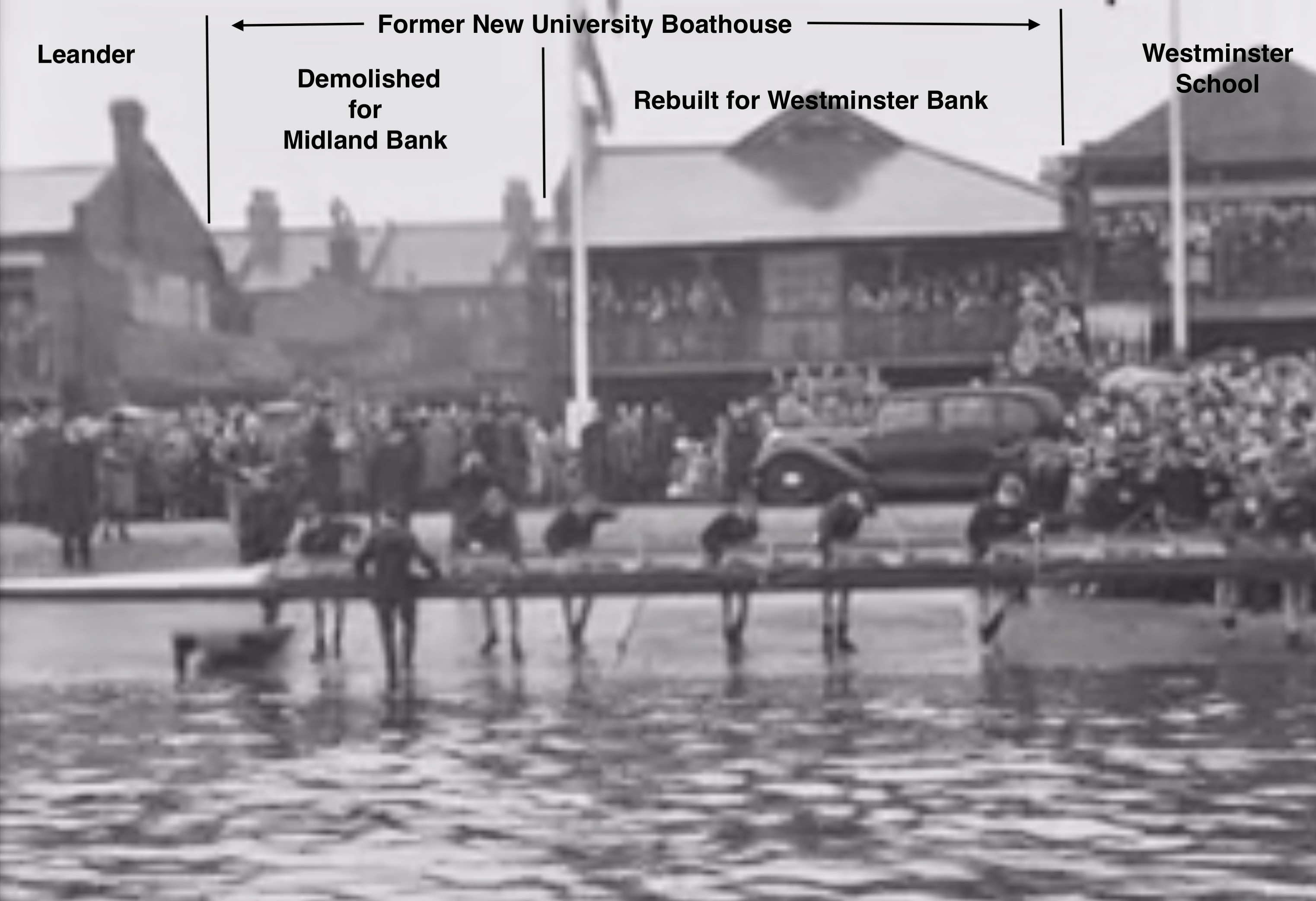
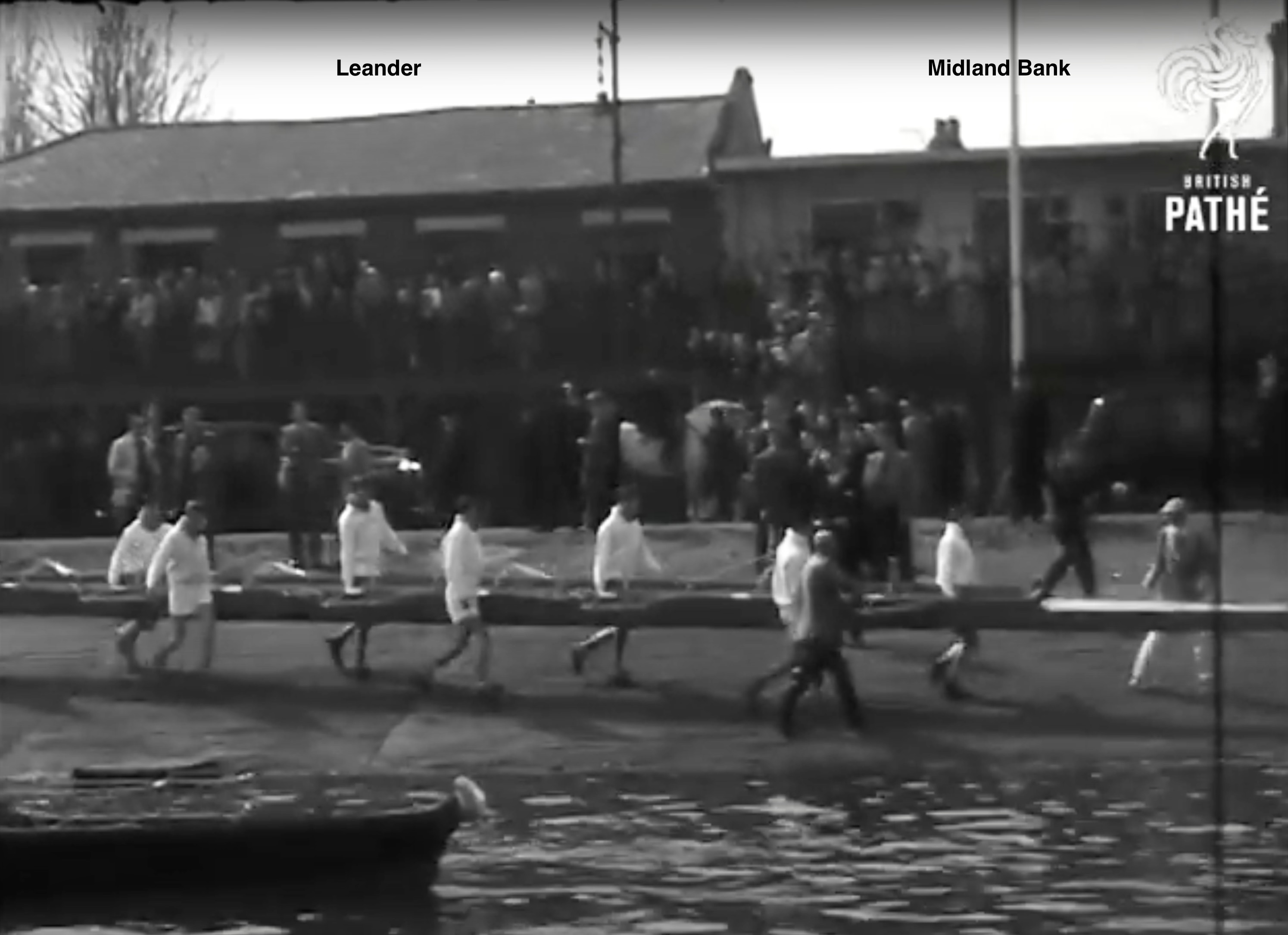
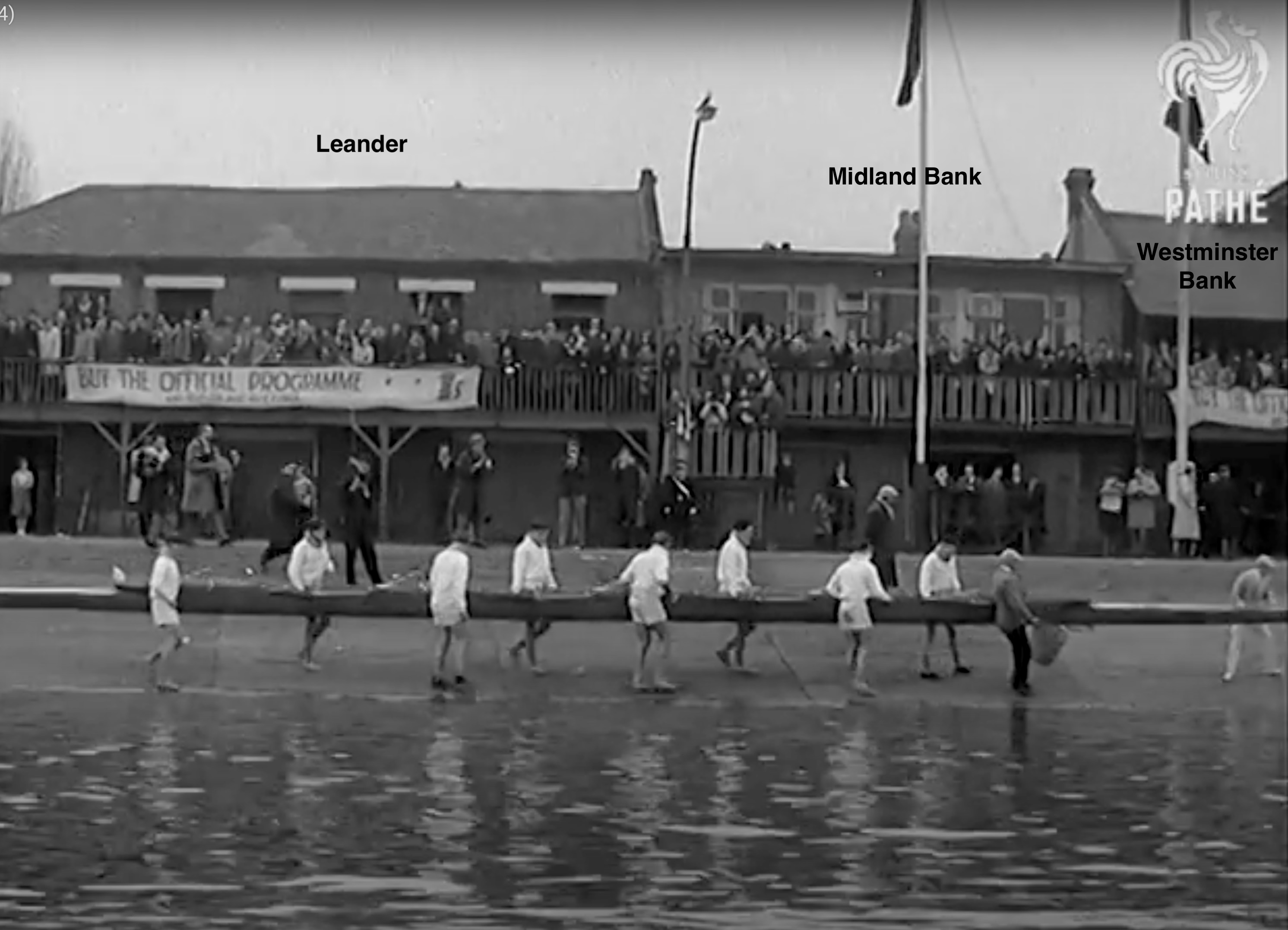
The snappily named Putney Embankment Conservation Area Appraisal and Management Strategy Report 2010 is referring to today’s King’s School/Harrodian/Dulwich College replacements for the Leander/New University Boathouse when it diplomatically says:
The… relatively recent additions (to the Embankment boathouses) reflect the architectural style of the 1950s and 1960s and should be regarded as positive in terms of their function and group value even though their overall design lacks the finesse of their neighbours.
Tomorrow: Part 2, from Crabtree to Ashlone Wharf.
 Hear The Boat Sing
This is absolutely brilliant, Tim and HTBS. Really liked learning more about this period. Broken Oars
Loved finding out more about this period, Tim and HTBS. Great work.