

30 November 2024
By Tim Koch
Tim Koch on a strange way of showing gratitude.
Like the dog umbrella or the motorised ice-cream cone, I have always assumed that throwing a winning coxswain in the water was probably an American invention. I do not know when it started in the US and any suggestions are welcome. However, when Andy Anderson, aka Doctor Rowing, posted this on HTBS in 2016, he did not get any answers:
I have been unable to find any mention of (cox tossing) in old publications… Did it originate in the UK or USA? We know from watching the documentary The Boys of ‘36 that the Washington crew threw Bobby Moch in the water after winning. Can anyone supply any other older instances? Is it done in other rowing countries?
In 2020, the late and much missed Tom Weil produced a post for HTBS celebrating the ritual but not proving any answers as to its origins.
I have not seen any written or pictorial records of tossing coxswains in the UK before the inter-war period, 1918 -1939. I think it reasonable to speculate that the first duckings on British soil (water) occurred with celebrating American crews at Henley in the 1920s.
While not definitive proof, a piece in the London Daily Chronicle of 8 July 1929 is very interesting. The British reporter clearly thinks that a crew drenching a victorious cox is so unusual that it merits a full description of the act.
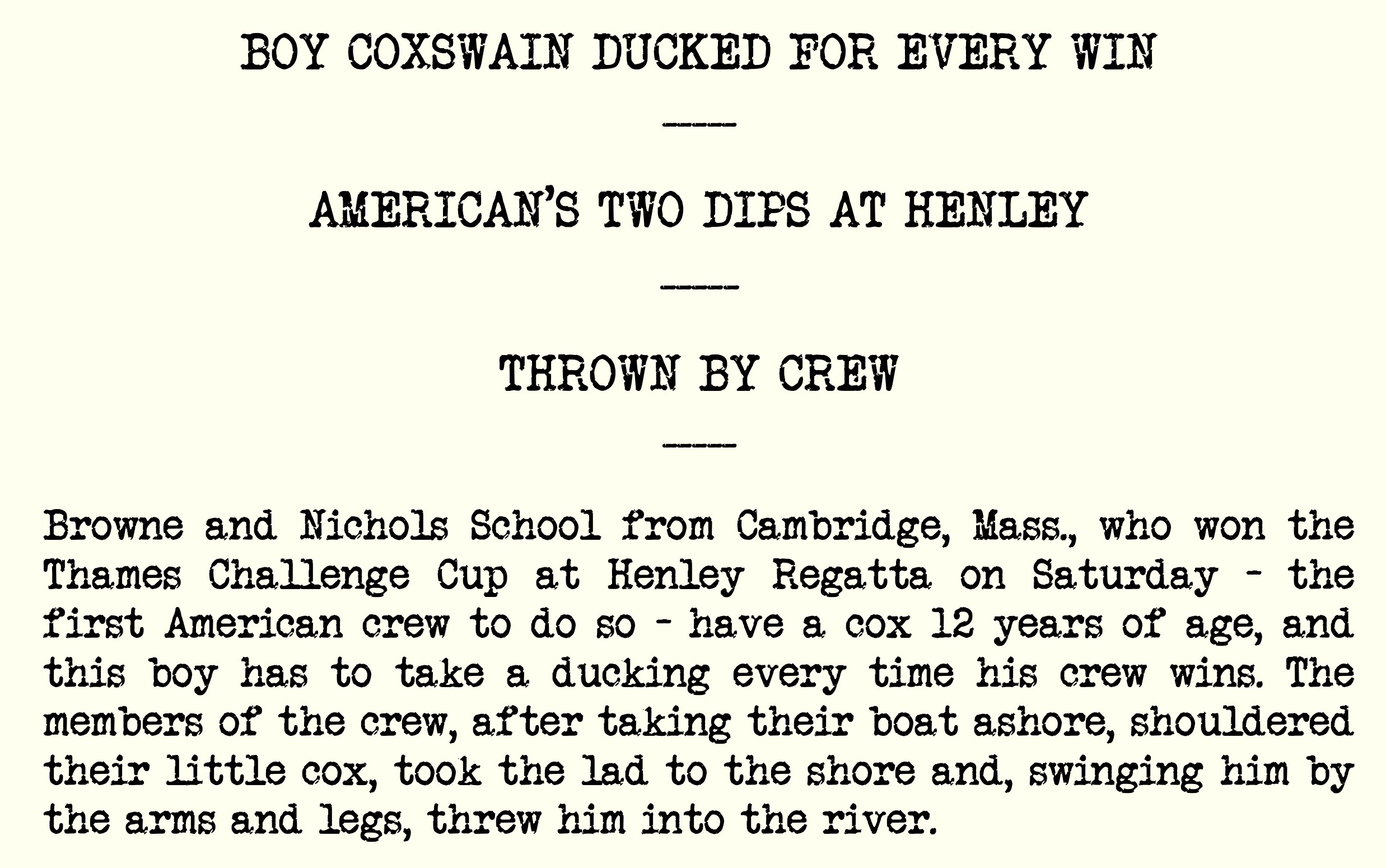
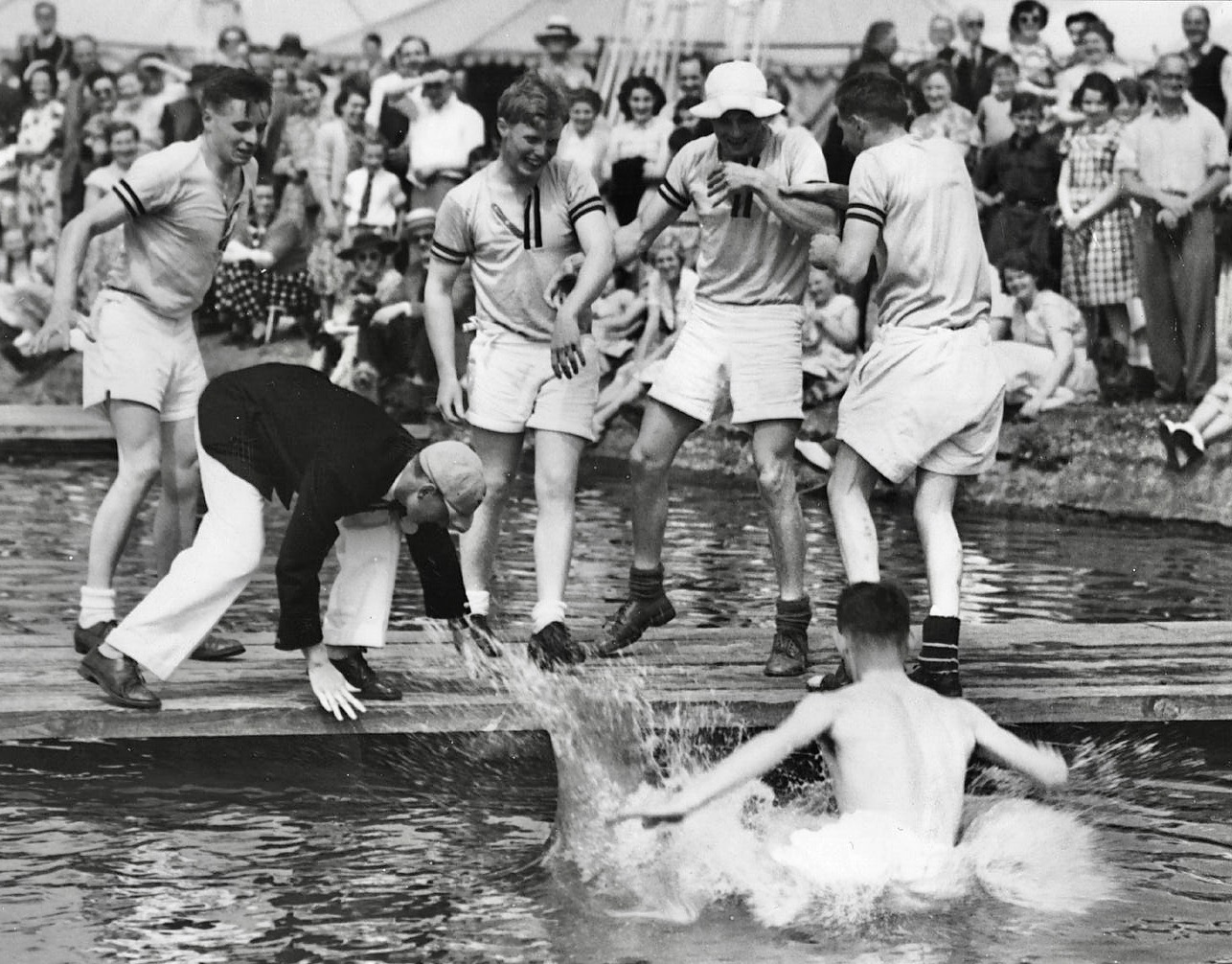
While it is not possible to say when exactly this form of acceptable abuse became commonplace in Britain, a piece twenty years later in the Times of 26 May 1949 suggests that it was widespread by then, at least on the Isis:
The final night of the Oxford Summer Eights was watched by thousands of people and there were the usual wild scenes at the close with coxswains of crews being thrown into the river…
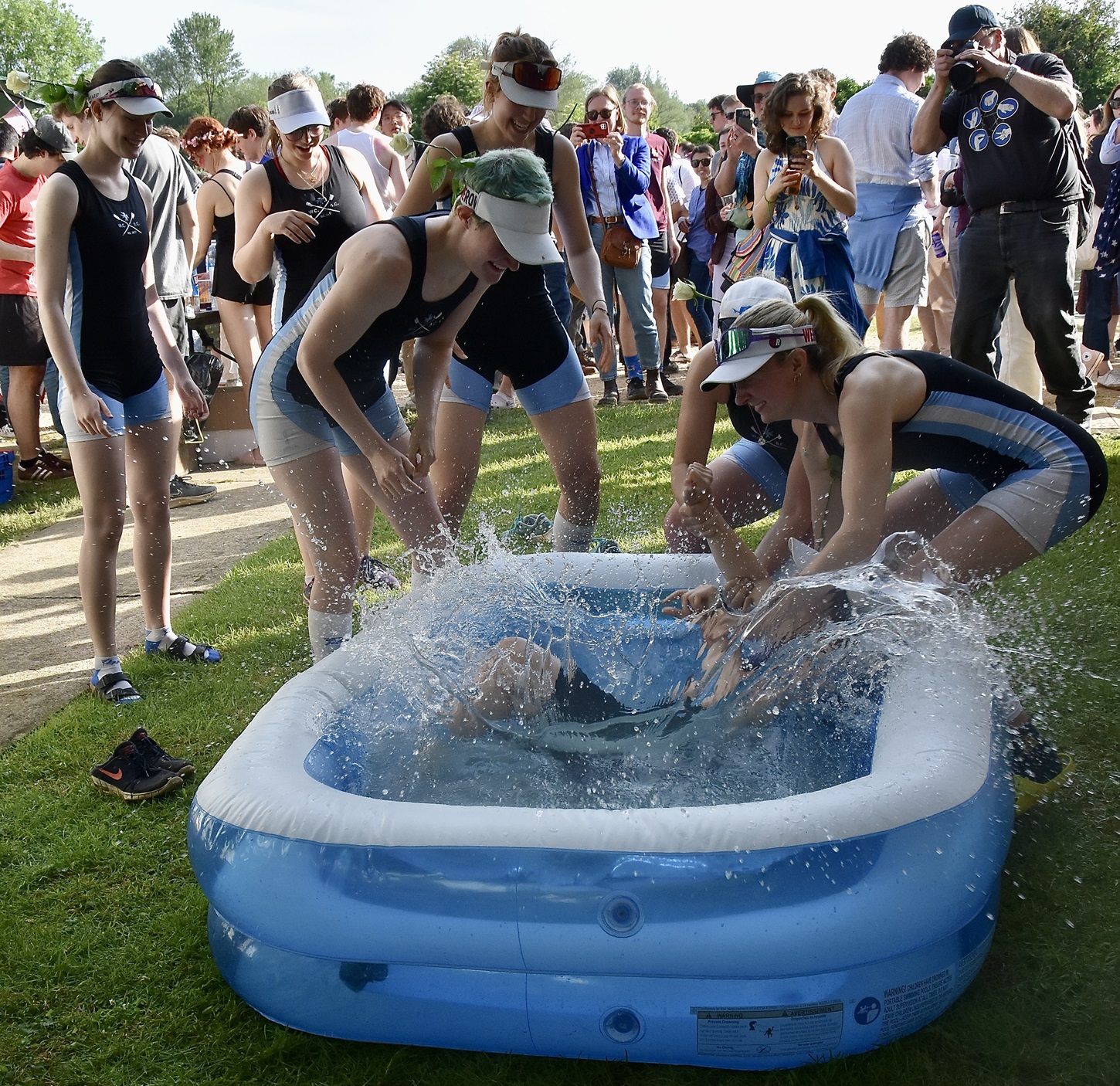
It is, sadly, slightly easier to date what may be the end (or perhaps the temporary suspension) of this practice. In 2024, concern about UK water quality resulted in a cessation of the traditional dunking of winning coxswains, most famously following that year’s Boat Race. The Guardian quoted Ed Bracey, who steered the Cambridge men to victory, at the finish:
(Bracey) said that despite widespread concerns about pollution he would have been happy to be thrown in the water by teammates in line with tradition. “We’ve been splashing about in that for weeks and weeks,” he said. But he was swiftly overruled by the Cambridge coach, Rob Baker. “I know he would like to but we don’t want to risk it,” he said. “Absolutely not. We’ve been really lucky – we’ve been healthy – but we don’t want to take any risks.”
In 2022-23, England’s water firms made £1.7bn in pre-tax profits, an 82% increase from 2018-19. But also, in 2023 there were 464,056 recorded sewage discharges in England, a 54% increase from 2022. Some suggest that it is the heads of water companies that should be regularly thrown in the country’s lakes and rivers and not rowing’s innocent deadweights.
 Hear The Boat Sing
A reminder of the danger of throwing coxes (or anyone else) into the water is at https://www.britishrowing.org/wp-content/uploads/2015/09/Safety-Alert-2014-4-What-lies-beneath.pdf .
“acceptable” abuse, I am afraid not. The problem is when this behaviour is carried out on other waterways and the cox, when wading out of the water, cuts his or her feet on broken glass, or a rusty piece of metal. Please do not encourage this practice.
Set out below is my comment on the matters raised in the article.
Ron Paterson