
10 April 2024
By Lebby Eyres

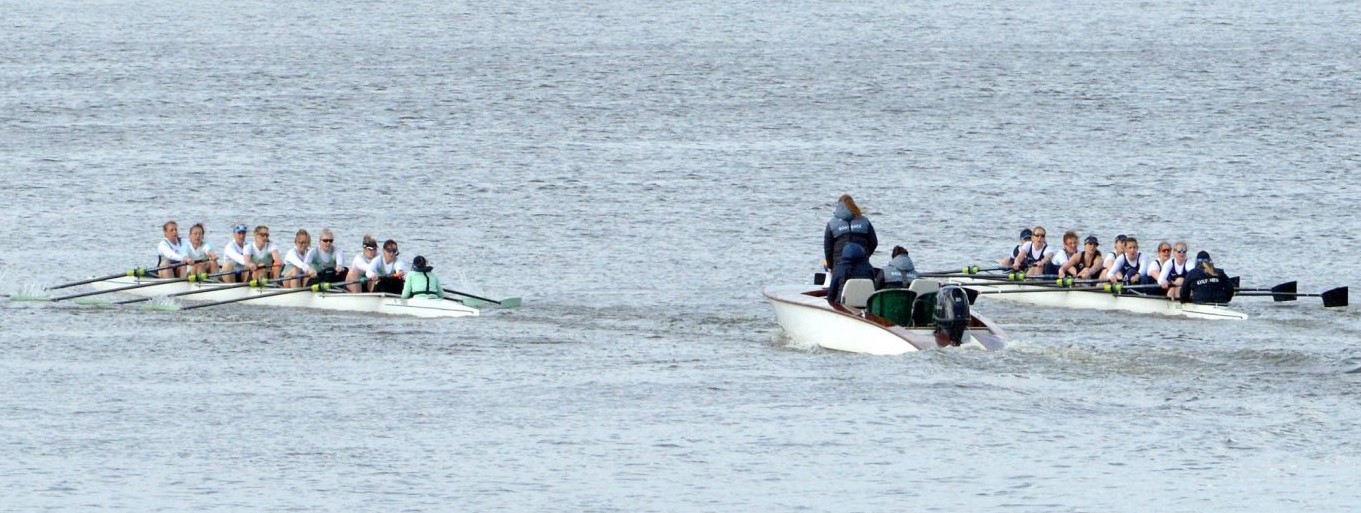
After 147 years, it happened again! Dark Blue stroke Lebby Eyres recounts what it was like to be part of a historic dead heat (to Oxford!) in the Women’s Veterans’ Boat Race.
Both my outings for Oxford ended in defeat – once in Osiris in 1993, and for the Blue Boat in 1994. I could slightly assuage that pain by getting the better of a Cambridge crew to win gold for Tideway Scullers at the Nat Champs in 1995, but then hung up my oars for 24 years.
In 2019, I felt the lure of the river once more and started rowing at Lea RC, and in 2021, I rowed across the Atlantic in the Talisker. It wasn’t until 2022 that, at the age of 50, I could finally experience what it was like to beat Cambridge properly, in the inaugural Women’s Veterans’ Boat Race. What a pleasure that was.
The beauty of Women’s Veterans’ Boat Race rowing is that crews are a mixed bag: of returners to the sport and those who never gave up, with a spattering of Olympians, all united by the joy of being on the river again in Dark or Light Blue, and many getting to row the Tideway course for the first time.
I’m not sure many of us will have experienced a race quite like this year’s, which ended in a body-battering but historic dead heat. The official verdict from umpire Sarah Langslow was that the Dark Blues ended the race 1.5ft up, as judged from the finish line on Furnivall Steps. “A moral victory,” she said, but not an actual one, sadly.
That margin makes it even tighter than the famous draw of 1877, when “Honest” John Phelps declared the race result as a “dead heat to Oxford by 5ft” – an event which heralded the arrival of the finish post.
There’s no such marker in the Men and Women’s Veteran’s Races, which go from a free start just after Putney Bridge, to the middle of the doors of Furnivall a few strokes after Hammersmith Bridge.
As we discovered on 29 March, the winner must be 6ft ahead of their rivals by this point or a dead heat is declared. This rule came into being after a men’s veterans’ race which Oxford “won” by one ft and it was subsequently decided the free start meant there should be a little more leeway on the finish. “It’s all the men’s fault,” quipped Jonny Searle when I recounted the saga in the Duke’s Head later that day. Well, quite!
Before we even got to the start line, this year’s race felt like a bit of a grudge match. With the tally at one win apiece, this one was important. No one in the Oxford camp wants momentum to start swinging Cambridge’s way, especially when it currently feels unstoppable in the main Boat Races.
Richard Manners, in the Men’s Dark Blue Veterans’ Boat, told us they’d focused on “recruitment, not practice” to avenge last year’s defeat, while we did both. In 2023, Cambridge women had three Olympians to our two, and were on average six years younger.
With new recruits and relative youngsters Jess Webb – a blue for both Oxford and Cambridge – Emma Payne and Tamara Laughton on board, we reduced our average age to 48, with the Tabs at 46. Last year’s brutal Tideway conditions also took us by surprise, and mindful that Cambridge have a base at Crabtree, we made sure we had a few more London outings under our belt.
Given that, we knew this year was going to be a “dog-fight”, in Jess’s words. We won the toss and chose Middlesex. Matt Pinsent was on the bank to line up the boats, with our cox Nicola Walther protesting that we were slightly down on our rivals.
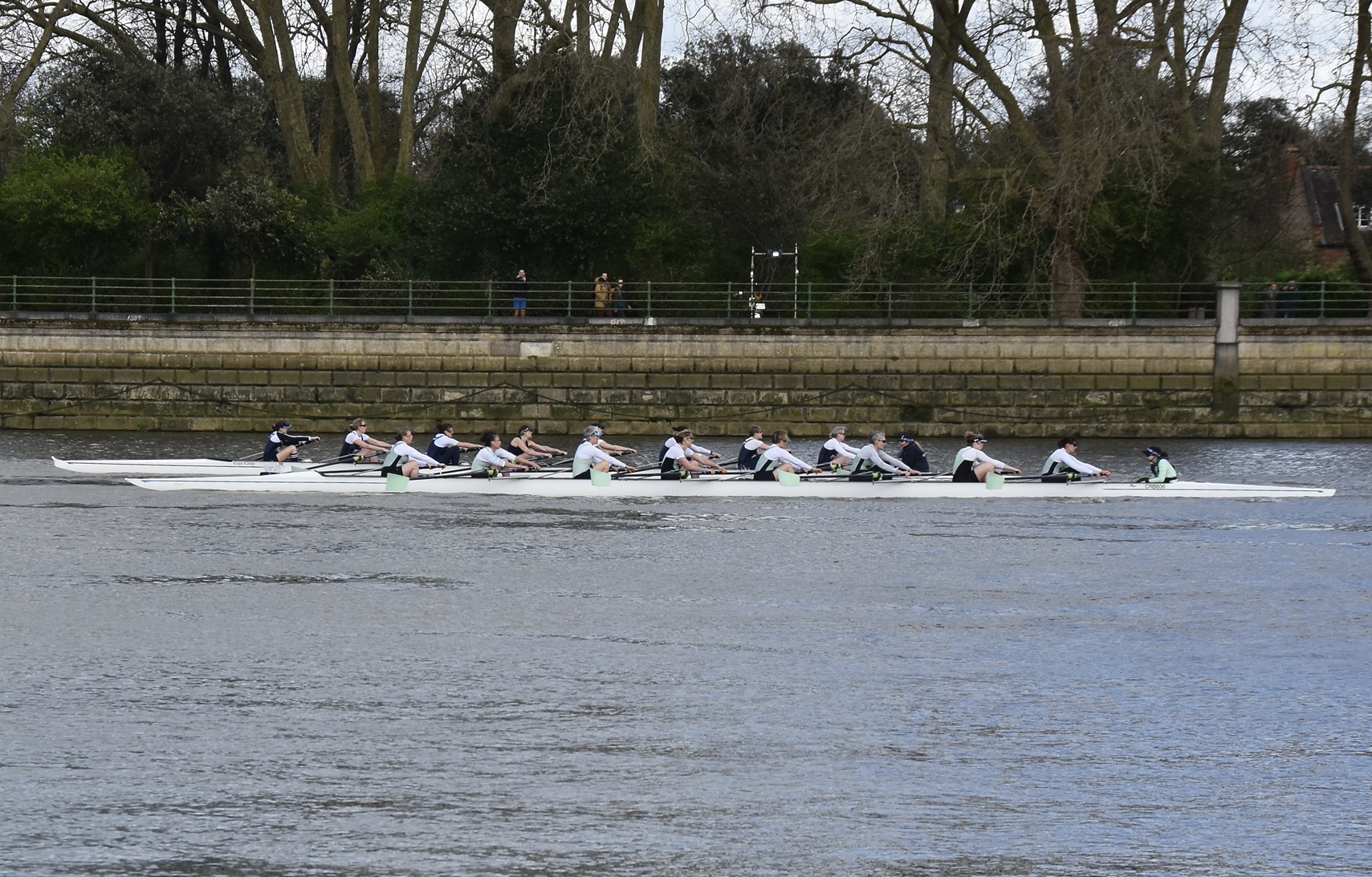
No matter: the race was evened up within a few strokes of the start, both crews going off at rate 40. In 2023, we’d reasoned we had one chance to win, and that was to take the stronger Cambridge crew by surprise off the start. That pace ended up being unsustainable over 3K, so this year we aimed for a meaningful settle and a stronger rhythm.
It paid off: we started to move up on Cambridge, perhaps by quarter of a length, although they pulled this back as we rowed past the boat houses on the Putney Embankment to the Black Buoy. We didn’t panic – concentrating on the rhythm, we started to move on them again, secure in the knowledge we were about to come into our advantage on the bend.
In the middle of the race, we were flying, sensing that Cambridge were flagging, and desperate for that all-important clear water before Hammersmith Bridge. “You’ve got Cath Bishop!” yelled our cox as she drew level with Cambridge’s Olympic silver medallist in the six seat.
Her call worked – as one we surged to a three-quarter length lead, but that was as far ahead as we were going to get. She urged us on to kill them off, but Cambridge were now coming to their advantage and pushing us hard from Harrods. Our lead shrank to half a length.
It suddenly felt much more like a start than a finish: the Cambridge blades so close and the bridge so far away, still. We were being warned, too, to add to the sense of chaos amid the worsening water.
Then: calamity. Under Hammersmith, we got our blades stuck in a wave of brown water. Boris Mavra, stationed on the bridge, reported later that the TV launches following the women’s lightweights had created wash which was still rebounding around the arches. It’s hard to know exactly what happened but we came off worse than Cambridge. Even more disconcertingly, I could hear their cox grasping this fact too, and urging her crew on to grab victory in the final strokes.
What goes through one’s head at this point, amid the pain and desperation to hold on? For me, it was one word: no. No, we are not going to lead all the way and then lose. There’s fear, too, in the knowledge that one bad stroke will end in defeat. Plus no one in the veterans’ boat race really knows where the finish line is, so you just keep rowing until told to stop, especially when the stakes are so high.
Eventually, the call came from Sarah. I had no idea whether we’d won or lost, bar feeling we’d begun to reclaim our lost momentum. Our cox was certain we’d won, but Cambridge cheered first.
There was a brief moment of protest from us when the verdict was announced but that petered out as we realised the momentousness of the result. I think we ended up the cheerier of the two crews, the official verdict at the prize-giving being “dead heat to Oxford” – a bottle of Chapeldown, but as challengers, no trophy.

On reflection, there was a real winner on the day, and that is women’s masters rowing. What a testament to both crews’ spirit, drive and will to win. At 52, I don’t know how many more times I’ll have the privilege of stroking this race – and it is a privilege – but I think this may be the most precious one of all.
The 2024 Women’s Veterans’ Boat Race Crews:
Cambridge:
Bow Liz Bassett, 2 Caroline Ng, 3 Ruth Naylor, 4 Linda Dennis (C), 5 Blaise Metreweli, 6 Cath Bishop, 7 Fay Sandford, Stroke Fran Rawlins, Cox Emily Insanally
Oxford:
Bow Tamara Laughton, 2 Emma Payne, 3 Alice Topley, 4 Jenny Taylor (C), 5 Victoria Parsons, 6 Jess Webb, 7 Ali Cox, Stroke Lebby Eyres, Cox Nicola Walther
 Hear The Boat Sing
Dear Tim, and dear Lebby
thank you so much for the lively report if the women’s veteran race this year.
As a 54 year-old master but only seldom race rower many of great experiences and memories come to my thoughts.
a great report, thank you.
Herzliche Rudergrüsse from Switzerland,
Christian
A nice piece by Lebby but unfortunately she repeats the old story that, in 1877: “Honest” John Phelps declared the race result as a “dead heat to Oxford by 5ft” (admittedly, she does link to my 2020 post which disproves this).
Firstly, there is no need for inverted commas around Honest as it was not an ironic title, Phelps was a sober, upright and moral man who served rowing well all his life.
Secondly, in 1877 there was no “line of sight” to judge a very close finish so Phelps bravely gave the only result possible under the circumstances, that each boat surged ahead in turn depending on their place in the stroke cycle. The umpire, later Lord Justice Chitty, accepted Phelps’ explanation without question.
While the verdict was not seriously contested on the day, the three/four/five/six/ten feet story soon grew up in Oxford circles and has not gone away since.
It would have been a nice touch if John’s ancestor, Richard, this year’s women’s race umpire, had been in charge of Lebby’s race.