
9 April 2026
By Tim Koch
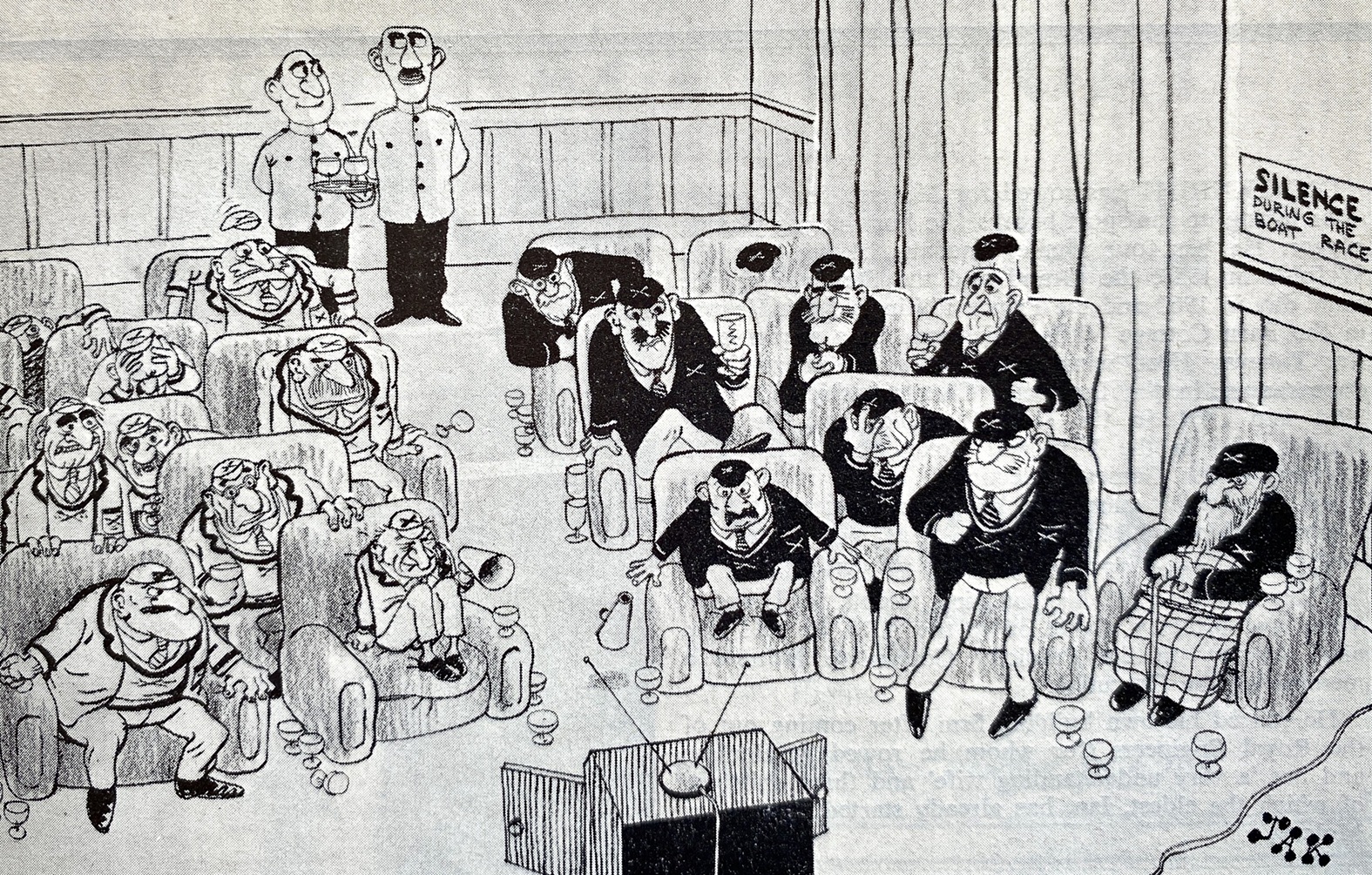
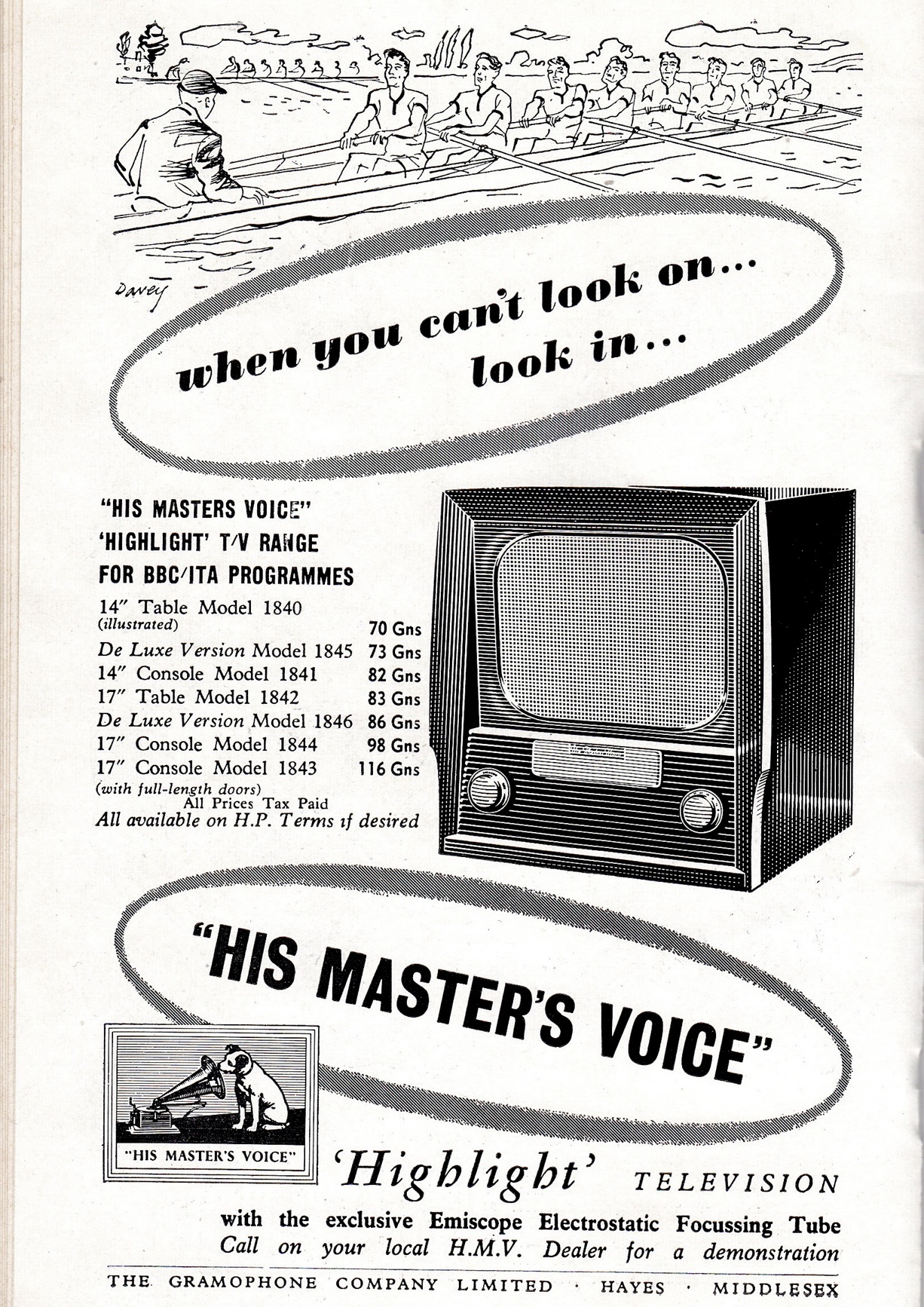
In 1928, C.P. Scott, the editor of the Manchester Guardian, said of television: The word is half Latin and half Greek. No good can come of it.
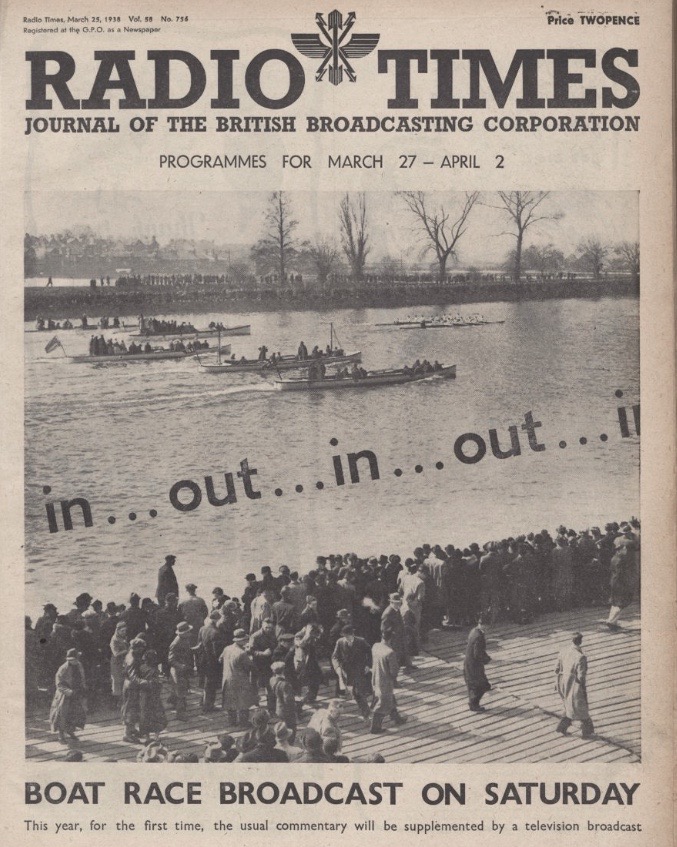
This year, perhaps hoping to prove Scott wrong, the UK’s Channel 4 (C4) had, following an open tender, secured exclusive free-to-air broadcasting rights to the Boat Race in a five-year deal taking over from the BBC.
In deciding how it would cover the historic event, Channel 4 faced the same perceived problems as did the BBC and Independent Television (ITV) before them.
They needed to produce a three-hour live programme that would appeal to at least three million of the UK “general public” involving a little appreciated and little understood minority sport in which the participants are considered by some to be at best “posh” and at worst “elitist”.
The sport of rowing’s sin of poshness is unfortunately multiplied when combined with the universities of Oxford and Cambridge, both thought by some to be housed in ivory towers (though surely these days a sustainable non-pachyderm material would be used in the construction of such edifices)?
While historically the Boat Race is a British National Institution beloved by many with no rowing or Oxbridge connections, nowadays its appeal to the so-called “youth demographic” (18-34 year olds) in particular is limited and this is something that panics old-fashioned media such as broadcast television and printed newspapers, entities desperate to attract the yoof away from their Game Boys and Walkmans.

Not unreasonably, C4 aimed to widen the appeal of the Boat Race and attract a new audience. Pete Andrews, the head of sport at Channel 4 said: It’s about coming in with a new set of eyes…
Regarded as the most progressive and forward-thinking terrestrial TV channel, Channel 4 has a reputation for taking irreverent looks at British national institutions. However, C4 did choose to continue to use the same specialist sports production company, FilmNova, as had been used by the BBC.
Further, C4 decided that the lead presenter would continue to be Clare Balding, previously the face of the BBC’s long-standing coverage, who anchored the programme from the balcony of Thames Rowing Club assisted by presenters new to the Boat Race, Ade Adepitan and Jamie Laing.
At the time of writing, three days after the event, the entire three-hour programme as broadcast is not available on the internet (though the actual races are) so I am relying on my first impressions of viewing the live transmission.
When the races were actually underway, it was business as usual with the best pictures that modern technology can produce and a commentary by people who knew what they were talking about, rowers Martin Cross and Jess Eddie under experienced broadcaster Alex Jacques. As the resulting output could have been done by any of Channel 4, the BBC or ITV, it was the parts in between the racing that afforded C4 the opportunity to make its mark.
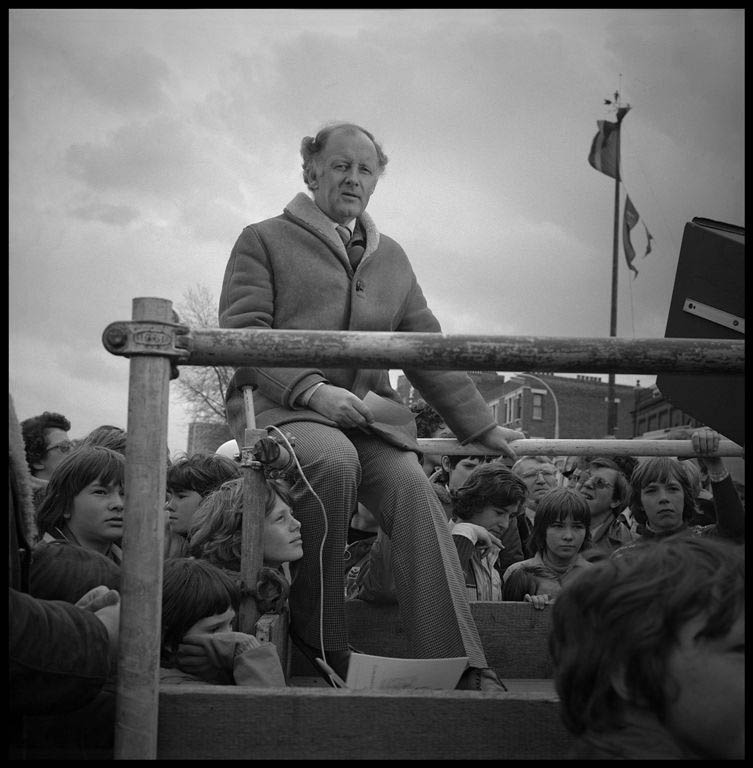
As British readers will know, Clare Balding is a popular and respected broadcaster, a consummate professional who is considered a “safe pair of hands” to cover almost any sporting or national event. It was in the choice of Balding’s co-presenters that C4 hoped to be different.
Ade Adepitan’s Wikipedia entry tells us that he is, a Nigerian-born British television presenter and wheelchair basketball player. As a presenter, he has hosted a range of travel documentaries and sports programmes for BBC television. Adepitan is a disability advocate and one of the first physically disabled television presenters in the UK, with a career of over 20 years.
Adepitan was based in the Great Hall of Thames Rowing Club with Pete Reed (described by C4 as “a pundit”) the multiple Olympic and World Champion who twice rowed for Oxford and who has used a wheelchair since a spinal stroke in 2019. Despite his experience, Adepitan came across as nervous and perhaps underrehearsed, and he did not get the best out of Reed.
However, it was the choice of Jamie Laing as the roving presenter that most slowed the C4 boat.
Laing’s Wikipedia page describes him as apresenter, television personality and investor. He is best known for appearing on a “structured-reality” television series, Made in Chelsea, which allegedly follows the vacuous lives of some affluent and attractive youngish people in wealthy parts of London and elsewhere.
Laing was a strange choice from the start. First, the Old Radleian is guilty of being posh, surely an association that C4’s Boat Race coverage was keen to get away from?
Second, was the 37-year-old supposed to attract the youth demographic (or is being “a celebrity” thought enough to draw in the kids for three hours)?
Third and worst, Laing at may call himself “a presenter” but, as he painfully demonstrated, he does not have the very special skills needed to keep on top of a live, three-hour, fast moving and slightly unpredictable outdoor sporting event.
Like Adepitan, Laing seemed nervous and underrehearsed, things not helped by the fact that he seemed to be getting a lot of direction in his earpiece. Listening and talking at the same time is a gift of the few.
At Putney, we started with Laing running a rushed piece involving a “fantasy boat” crewed by well-known sportspeople, something that attempted to show how a crew is formed but that did not really work.
A little later, we cut back to the Embankment where Laing had Imogen Grant explaining the course with the aid of a map. Grant, an Olympic, World and Boat Race winner, is media savvy and good at explaining complex rowing matters in an understandable way and all Laing had to do was stand back and let her talk – but he did not.
However, it was at the Mortlake finish where Laing really failed to come into his own. His default question was to ask everyone how they were feeling. Even this would have been acceptable had he asked some less obvious follow-up questions; rowing is not short of articulate interviewees if they are given a lead.
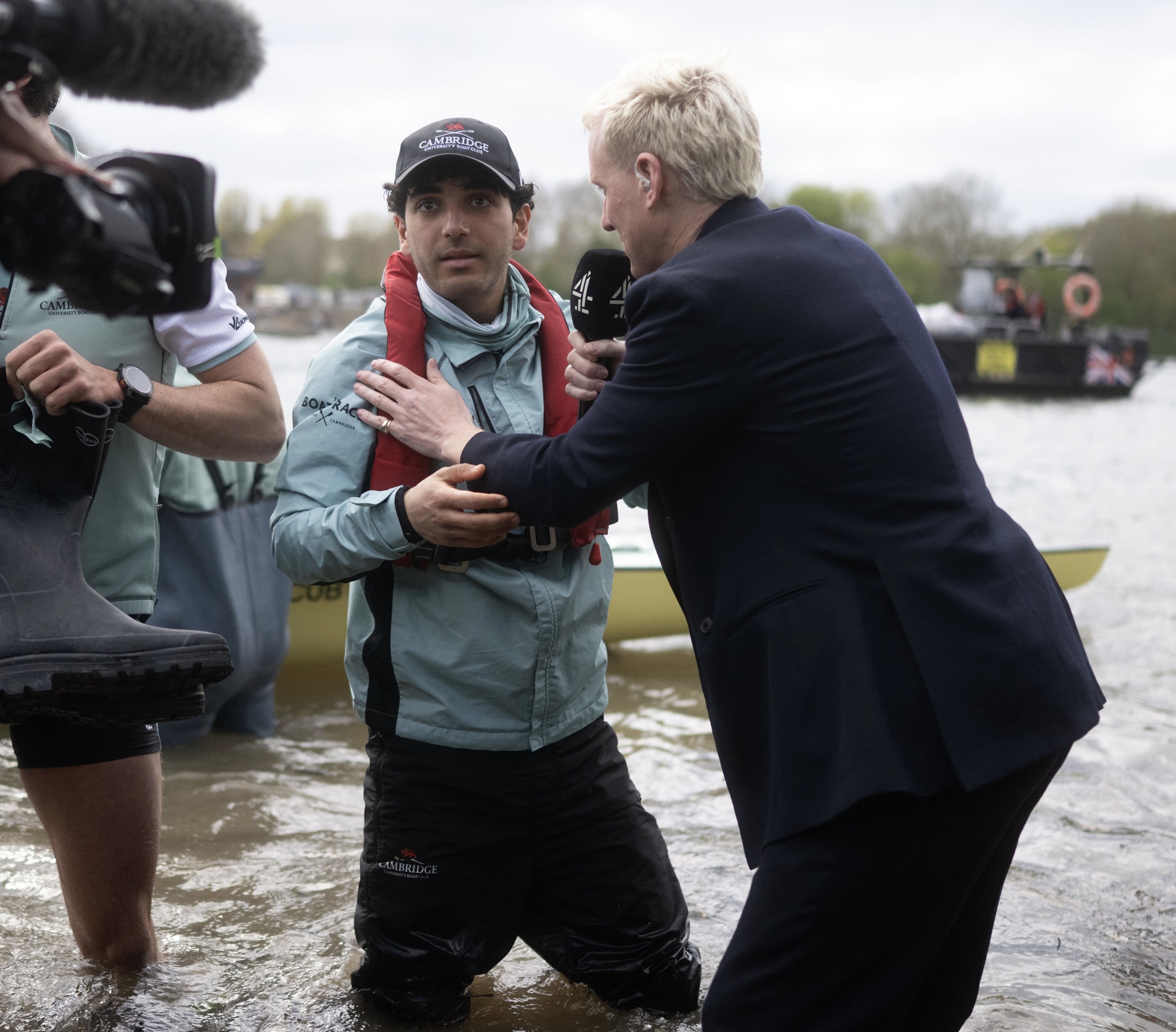
When instructed to interview the Cambridge men’s cox, Sammy Houdaigui, after the race, Laing could not find him and there was some messy airtime until the victorious steers was discovered still in his boat. Laing, gamely wading thigh high into the water to get to Houdaigui, then chose to mostly talk about bagels. To be fair, he may have got his cue from Clare Balding who also inexplicably used the immediate aftermath of the men’s race to discuss the chewy bakery products with Houdaigui’s mother.
Laing’s stilted attempt to MC the prize giving again demonstrated his lack of experience of such things.
As to the prerecorded inserts, previous BBC and ITV broadcasts showed the student athletes back in Oxford or Cambridge trying to balance their training with their academic and social lives. Perhaps in an attempt to be different, C4 showed the Oxford women having a fishing lesson and the four Presidents going bowling. I did not learn anything from this.
A live inset that had potential was an interview with broadcaster and mathematician Hannah Fry, Professor of Public Understanding of Mathematics at Cambridge, who we were told would explore the scientific aspects of rowing. Perhaps warned not to get technical or too clever, she did not tell us anything enlightening.
Channel 4 could learn from the BBC’s coverage of the 2016 Boat Race. Alan Tyers, writing at the time in the Daily Telegraph, was largely impressed:
……. rowing can offer any number of articulate pundits, and (the program) was happy to let them discuss the ins and outs without dumbing them down…….
Coverage of the Boat Races in recent years has tended to feature too many of those soft-soapy features to which broadcasters are drawn when worried the audience will turn off if things get too technical or too posh. But this year, the BBC seemed keener to play up the elite sport angle rather than the human interest.
This increased confidence in the product worked, the pre-recorded features and the punditry combining to give an insight into the freakish dedication of these sportspeople, whose preparation and lifestyle are amateur in name only…..
Balding and her team walked well the line between remaining respectful of this august fixture while acknowledging that sport on TV is at least partially a branch of show business……
Ten years on, Tyres’ review of this year’s broadcast was critical of Laing’s efforts though he did acknowledge that he put a lot of effort and energy to his role as the cheeky-chappie roving presenter and his conclusion was that, Overall, Channel 4 did a solid job.
Addendum
After the broadcast, Channel 4 released a very upbeat press release, though it is in rather technical language. A share is a percentage of those actively watching television at that time. This is different to a rating which is a percentage of the entire potential audience. Overall reach refers to the total number of unique viewers or households watching at least once during a specified period:
Channel 4’s debut broadcast of The CHANEL J12 Boat Race saw an overall reach of 3 million people…
A peak audience of 2m saw the climax of the… race between Oxford and Cambridge men, delivering a 31.3% peak audience share… The men’s race also saw a 23.5% peak 16-34 (year-old) audience share.
A peak of 1.4m viewers and a 12.9% 16-34 audience share watched (the women’s race).
The Boat Race YouTube Channel has the women’s race, the men’s race, the reserve races, the women’s lightweight race and the men’s lightweight race. There is also an edit of the highlights of both Blue races.
 Hear The Boat Sing