

3 April 2026
By Tim Koch
Tim Koch gets meteorological.
To the question, who will win each of this year’s Oxford – Cambridge Boat Races, we sometimes have to turn to legendary singer – songwriter Bob Dylan who, in a rare foray into predicting the outcome of the historic contest, once observed, The answer, my friend, is blowin’ in the wind.
As the Boat Race press pack explains:
The main weather factor affecting the conditions for rowing on the (Tideway) is the wind.
The Boat Race runs on an incoming tide, which means the water is flowing in the direction of Putney to Mortlake, in a westerly direction.
If the wind is going in the same direction as the flow of water, a tailwind for the crews, it generally won’t cause too many waves unless it’s really strong.
But if the wind is going in the opposite direction to the flow of water, a headwind for the crews, then this can start to cause large waves in certain parts of the course.
Because the water is generally flowing in a westerly direction, any westerly wind (NW, W, SW) is potentially going to cause problems on sections of the course where the stream is pointing directly opposite…
Further, the closer it is to high tide, the greater the chance of wind against tide producing rough water. On race day, high water at Putney is 16.51 with the women’s race starting at 14.21 and the men’s at 15.21.
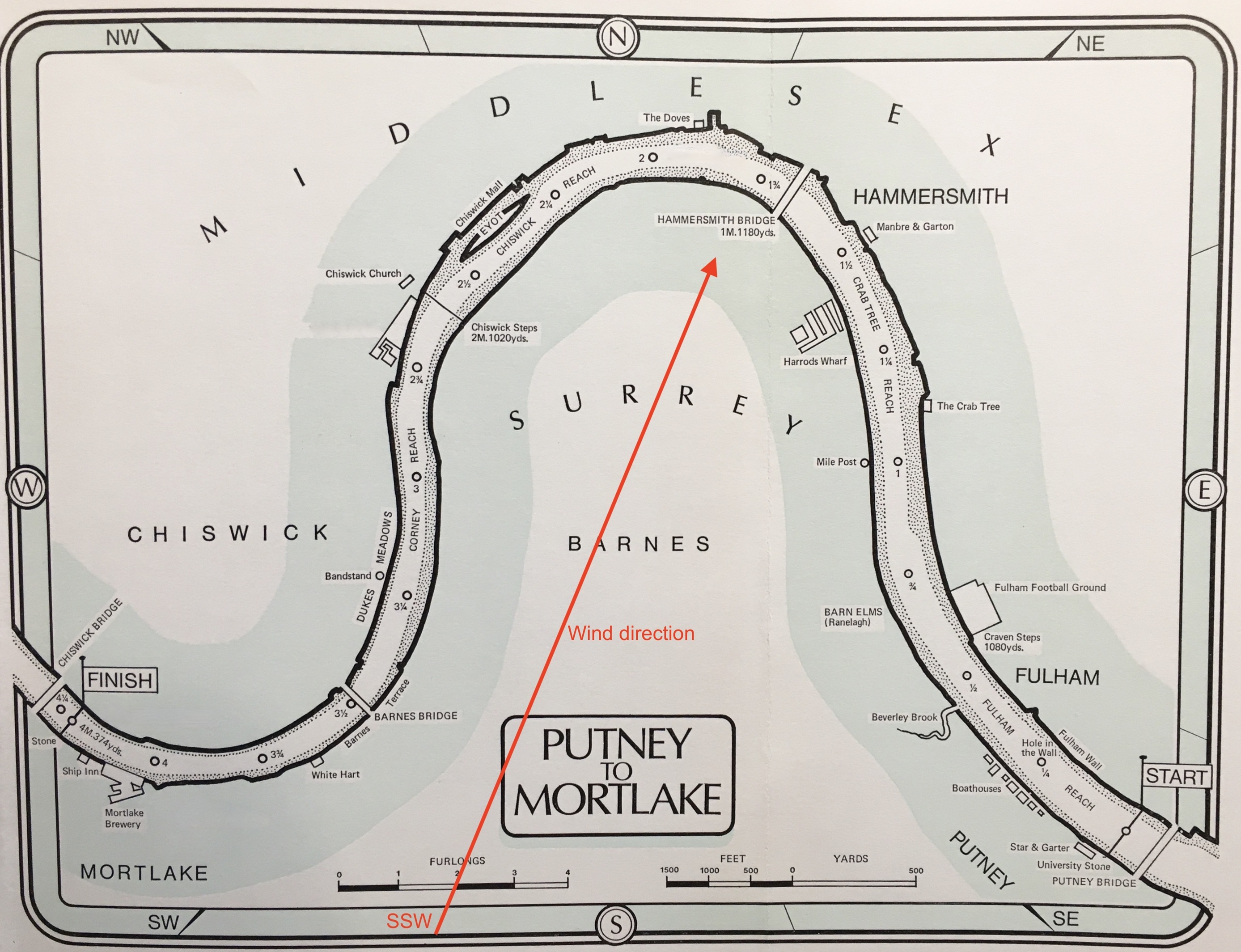
At the time of writing, 48 hours before race time, the wind is predicted to be from the south-south-west (SSW) and blowing at 18 -19 mph.
The Royal Meteorological Society describes a wind between 13 and 18 mph as “a moderate breeze”, Force 4 on the Beaufort Wind Scale: Raises dust and loose paper; small branches moved. Small waves, fairly frequent white horses (US – whitecaps).
A wind between 19 and 24 mph is “a fresh breeze”, Force 5: Small trees in leaf begin to sway; crested wavelets form on inland waters. Moderate waves, many white horses.
Thus, conditions will be challenging. Could this mean that the races will be more tests of watermanship and coxing strategy rather than boat speed? Winning the toss may be especially important this year. In an SSW wind, the Surrey Station (the south or Putney side) may be the preferred choice for the winner of the coin toss for stations. It provides better shelter from the wind, especially as crews pass Hammersmith Bridge and enter the long, exposed bend towards Barnes. Of course, if the plan is to get under the shelter of the Fulam Wall, Middlesex would be the prefered station.
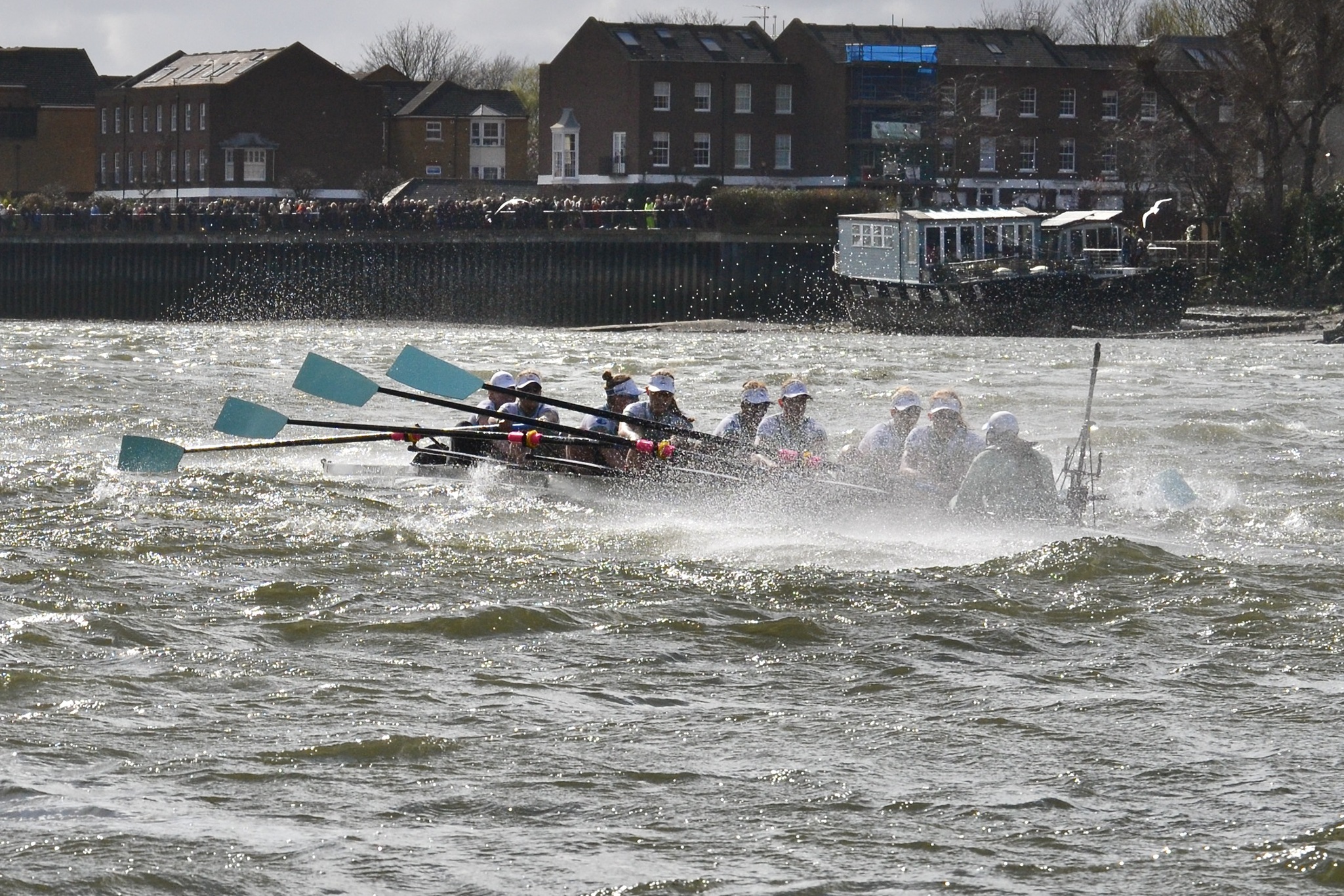
Modern boats have greater buoyancy than in the past and are equipped with pumps and so are rowable (though not necessarily raceable) even when filled with water. They cannot “sink.”
The Lightweight and Veteran races held on Friday, the day before Boat Race Day, may provide some sort of weather preview with 14 mph winds from the west-south-west predicted for them.
A strong SSW wind is considered one of the most challenging conditions for the Boat Race because it creates a headwind on the most exposed part of the course, particularly along Corney Reach. Specifically:
Putney Reach: If the wind is strong, the water can be rough right from the start.
Football ground to Harrods: an SSW acts as a cross-wind, pushing boats towards the Middlesex bank, forcing coxswains to steer hard to maintain their line.
Hammersmith Bridge to Chiswick Eyot: The course turns more westerly, making an SSW a direct, powerful headwind.
Corney Reach: This is the most vulnerable point. The river opens up and the crews are unprotected.
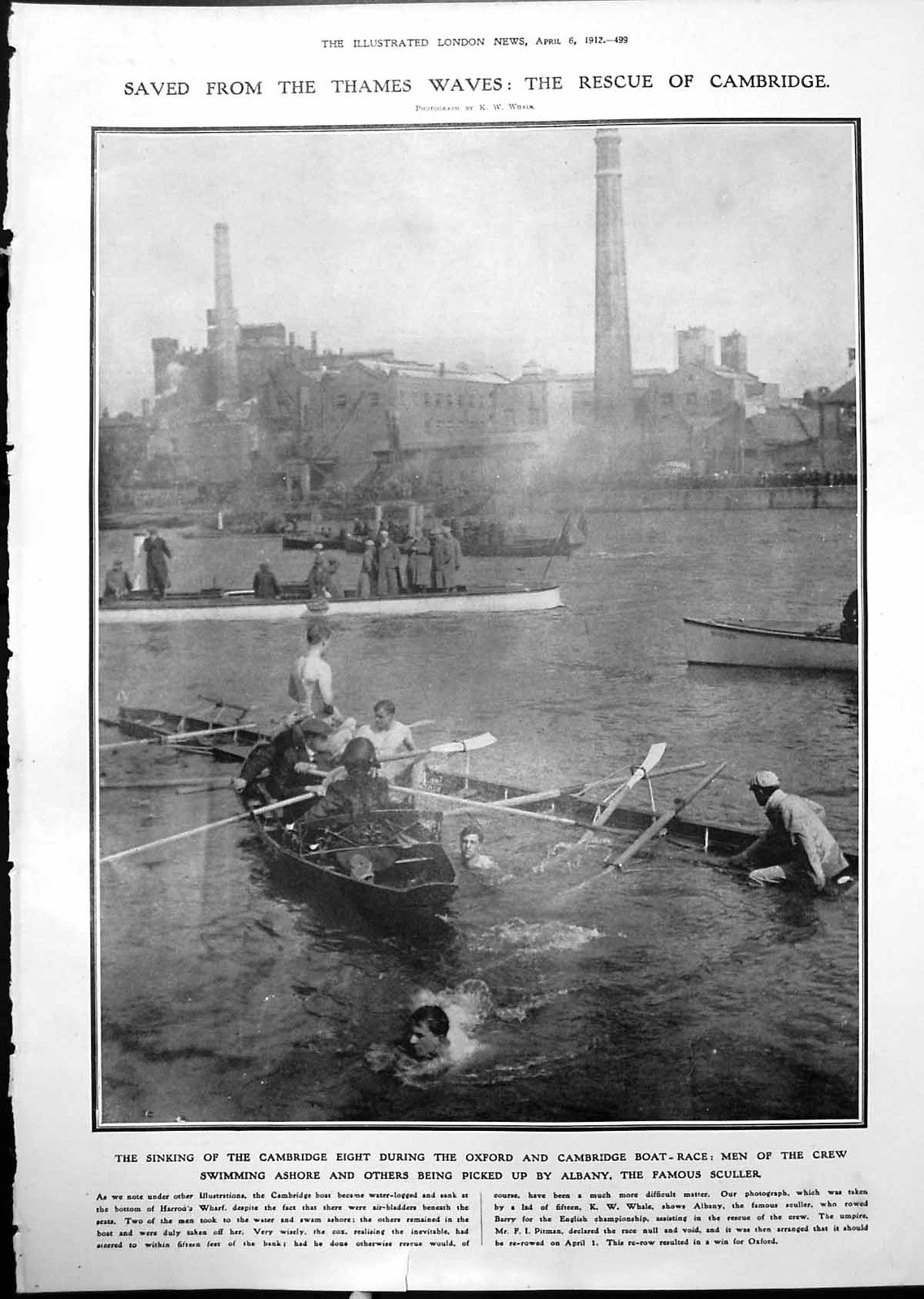
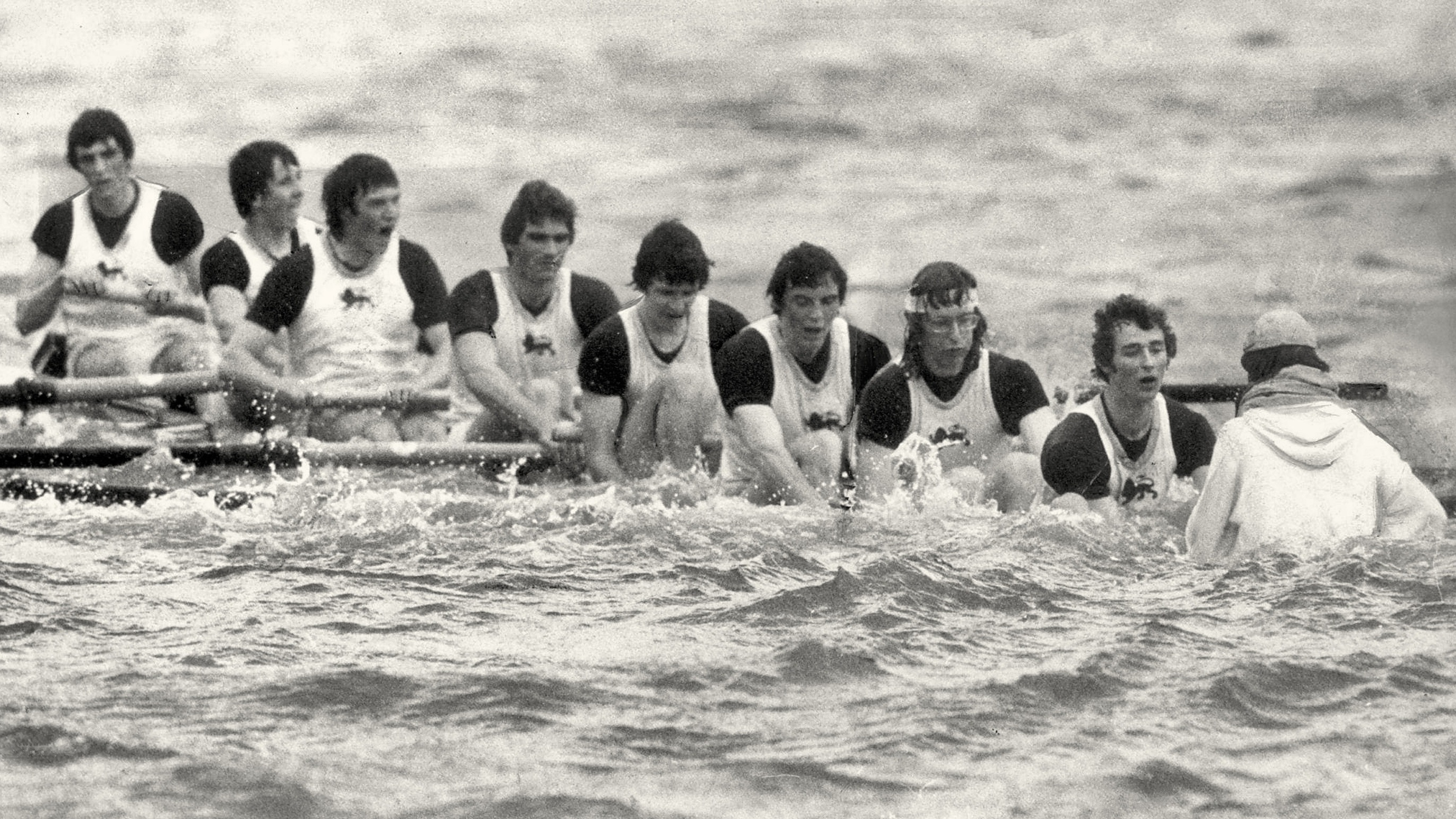
In 1951, a strong westerly wind caused Oxford to sink while still along opposite Putney Embankment. The race was declared void and rerun two days later but there was much concern over the economic cost of this. The Daily Herald of 26 March 1951 reported:
…the re-row could cost the Oxford and Cambridge Boat Clubs another £500 apiece… Before the (1939-45) war, the race cost each club over £1,000. It is twice that today… The clubs get little more than the profit on the 1s (5p) programmes.
Returning to the official press pack:
In 2026, there has been significant rainfall within the Thames Valley so the amount of water flowing from source to sea was unusually high. This resulted in strong stream conditions in Oxfordshire and on ebb tide on The Championship Course such that at times it’s been too fast to row on safely, causing disruption to training.
The impact for The Boat Race specifically is that with a lot of rainwater pushing downstream, the ‘conveyor belt’ effect of the incoming tide won’t be as strong with all this extra water to push against – in extreme situations this could cause coxes to consider alternative racing lines like we saw in 2023.
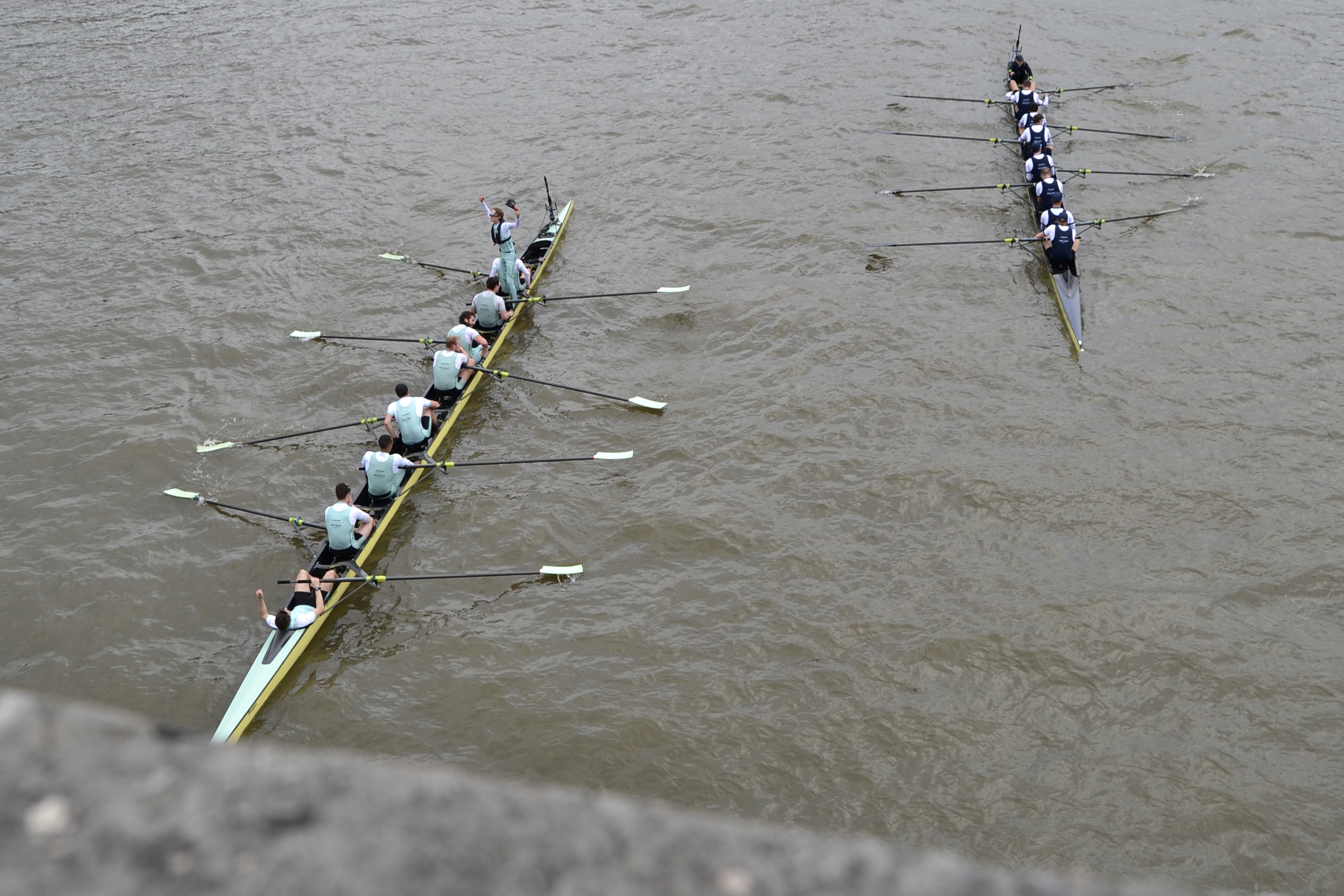
At the start of the 2023 men’s race, Cambridge cox Jasper Parish boldly moved to the flatter but slower water on the Fulham side, something widely credited with assuring Cambridge’s victory. Oxford made the same move in the 1987 race, and this produced the same reaction by the opposition, hesitation before also moving to Middlesex, and the same victorious result for the innovator.
Final thoughts – odd odds
On 1 April, the bookmakers William Hill posted their odds for the Boat Race (though I cannot imagine that the event attracts any significant betting).
In the men’s race, Hill has Cambridge as favourites at 1/6 (an 86% implied chance of a win).
Conversely, in the women’s race, Oxford are the favourites with odds of 2/5 (a 71.4% implied chance of a win). However, this simply means that more people have bet on the Dark Blues and I would suggest this may be the result of hope rather than experience, perhaps driven by the fact that this is the best Oxford women’s crew for years (indeed, Junior Rowing News picks Oxford to win the women’s race).
Cambridge came 6th in the Women’s Head of the River Race held over the full Tideway Championship course on 14 March. Oxford did not enter but to suggest that they could gone faster than Cambridge, you have to believe that the Dark Blues could have finished amongst the top five in the Head: Leander A and B, University of London, Molesey and Thames. I cannot imagine that this could have been achieved but, as a precaution, I will be at Mortlake ready with my humble pie eating fork at around 14.40 on 4 April.
Timetable (BST = GMT+1)
Friday, 3 April
13:50 – Women’s Lightweight Boat Race
14:05 – Women’s Veteran Race*
14:35 – Men’s Veteran Race*
14:50 – Men’s Lightweight Boat Race
*The Veterans start in Putney and finish just after Hammersmith Bridge.
Saturday, 4 April
14:21 – Women’s Boat Race
14.36 – Women’s Reserve Race
14.51 – Men’s Reserve Race
15:21 – Men’s Boat Race
For details of viewing/listening to the races in Britain and elsewhere, see here.
The Digital Programme is here.
 Hear The Boat Sing