
26 March 2026
By Tim Koch
On 23 March, the BBC’s Culture and Media Editor, Katie Razzall, wrote on the Corporation’s news website:
Matt Brittin has been enjoying what he described as a “mini gap year” since the end of 2024 when he left his role as President of Google in Europe, the Middle East and Africa after nearly 20 years at the big tech company.
At the time, the… World Rowing bronze medallist… wrote “I’ve already grown a beard, bought a single sculling boat and plan to learn scuba diving”.
When he is confirmed as director general in the coming days, he’ll have arguably the most scrutinised job in British media…
In the About section on his LinkedIn profile, the 57-year-old Brittin describes himself as “Above average at sitting down sports.”
It is reasonable to ask the question, why am I writing about Matt Brittin now and not when he had an even more important and influential job at Google?
Well, I am still using Ask Jeeves as a search engineand the BBC would still be very close to my heart even if it did not currently pay my pension. However, it is not only me that regards the British Broadcasting Corporation as a National Treasure and, both in Britain and abroad, the brand is looked upon with respect, affection and trust by many and there is great interest in who is in charge of Auntie – as the BBC is sometimes affectionately known (though George Orwell famously described it as a mix of a girls’ school and a lunatic asylum.)
Google, arguably the world’s most powerful company, may have more consumers than the BBC but do these users have any affection for it? Brittin took a massive pay cut to become DG and I suspect that there are not many companies or corporations that he would have done this for. I just hope that he does not now have to get some extra income by selling his new sculling boat.
Brittin is taking on an organisation that is routinely criticised, sometimes justifiably, but this is nothing new or probably even avoidable for such a body. The one-year-old BBC drew Churchill’s ire when it refused to be a mouthpiece for government propaganda during the 1926 General Strike. Presently, there is a problem with Mr Trump to be sorted.
Further, the arrival of the wild west that is the internet and the massive changes that technology has brought to all types of media, has, rightly or wrongly, eroded some of the aforementioned respect, affection and trust and the one-hundred-year-old BBC is certainly much less relevant to Gen Z and their successors. Does it have any meaningful future as the passing of time means that its greatest fans are going the way of the cathode ray tube?
Criticism of the appointment was swift.
Katie Razzall: Naysayers ask why you would put the BBC in the hands of somebody who comes from big tech, which has displayed such different values and has also had a role in decimating traditional media businesses…?
The reaction of the Times and the Daily Telegraph showed that they are part of a dying media. The former called the appointment of someone with no TV experience, baffling to the point of idiocy while the latter headlined, Just what the BBC doesn’t need: a new Lefty boss. As usual, the Torygraph has trouble distinguishing lefty from empathy.
However, supporters were more united in their arguments.
Razzall: Brittin’s backers say it is a good mindset shift for the BBC to have a leader who doesn’t see big tech as an enemy… He’s been picked by the BBC Board for his insider knowledge of big tech.
The Spectator, Australia:
(Supporters say) you only have to look at three of the biggest issues facing the BBC – the power of the streamers, how people access content, and the curse of misinformation – to see why his appointment makes perfect sense. This was his daily bread and butter during nearly 20 years at Google.
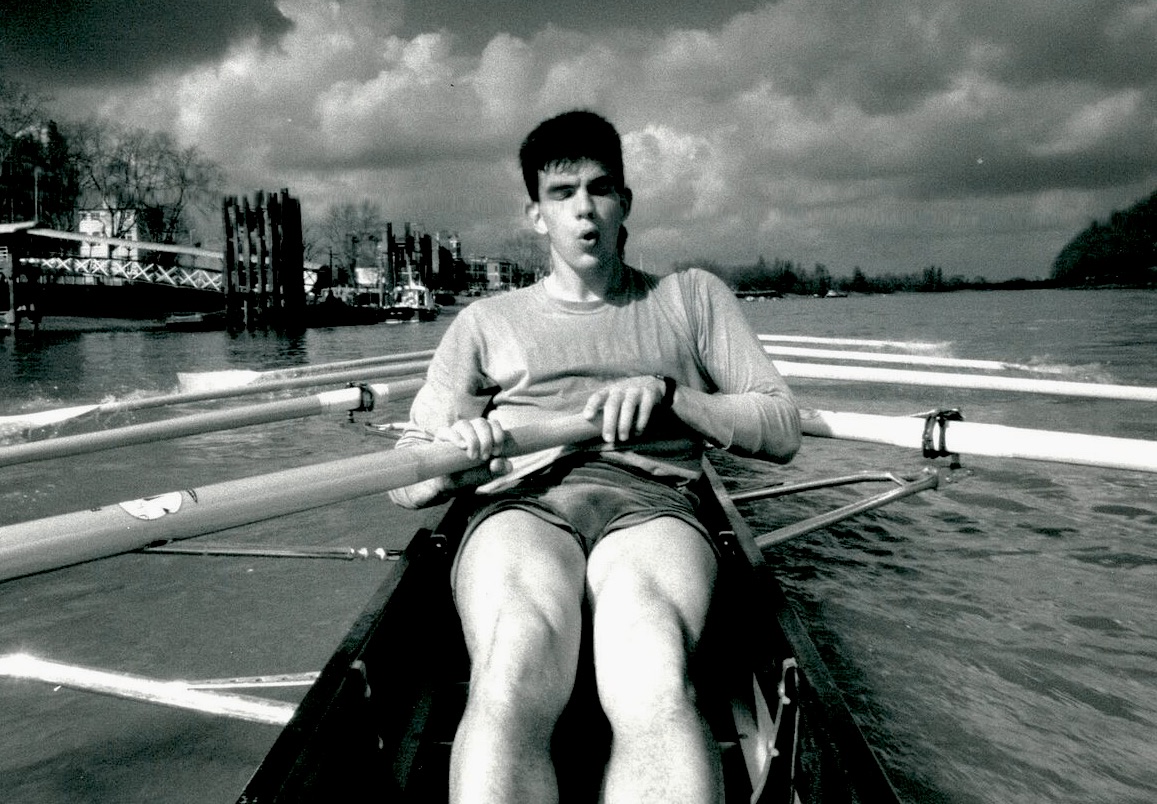
When Brittin was awarded a CBE in the King’s New Year Honours for services to technology and the enhancement of digital skills, he told his old college, Robinson, in an interview:
(My father, Sid) grew up in a condemned corner shop between St Pancras and Euston, his world of technology was a wireless radio for BBC news and entertainment. I have much to thank the British education system for – particularly for the scholarship funding that took my father – and later me – to grammar school. Neither he nor my mother Shirley had the chance to go to University – making me the first in our family to do so. At Robinson College, the combination of academic rigour and fierce Boat Race competition… taught me so much…
Brittin went to Hampton School on a scholarship and here he was lucky enough to fall under the influence of two great rowing coaches, Martin Cross and Steve Gunn. In December 2025 in an edition titled Matt Brittin – What Rowing Taught Me, he told Faster Masters Rowing Radio on RowingChat:
I was the son of a really good footballing father… and a netballing mother and I was laughed at by them for my lack of coordination at ball sports. But then I went to Hampton School… (Where rowing), a sport where they tell you exactly how to move, appealed to me. After being pretty rubbish… I started to get quite good, I was quite large and I had the chance of going in a pair with one of the teachers at school, a guy called Martin Cross who was training with the British Team at the time.
By that stage, Cross had won silver at the 1975 World Junior Rowing Championships and bronze in the 1978 and 1979 World Champs and in the 1980 Olympics. He would go on to win gold in the four at the 1984 Olympics.
I went in a pair with Martin and I discovered a whole other level. Long story short, I went on to be part of a really successful school crew… and four years later (1988) I was in the Olympic Village… as one of the spare pairs for the British Team…
Brittin rowed for Great Britain from 1985 to 1989, becoming an Olympian and winning a bronze medal in the eight at the 1989 World Rowing Championships in Slovenia. He goes on to say that rowing success encouraged him to apply to Cambridge in 1986.
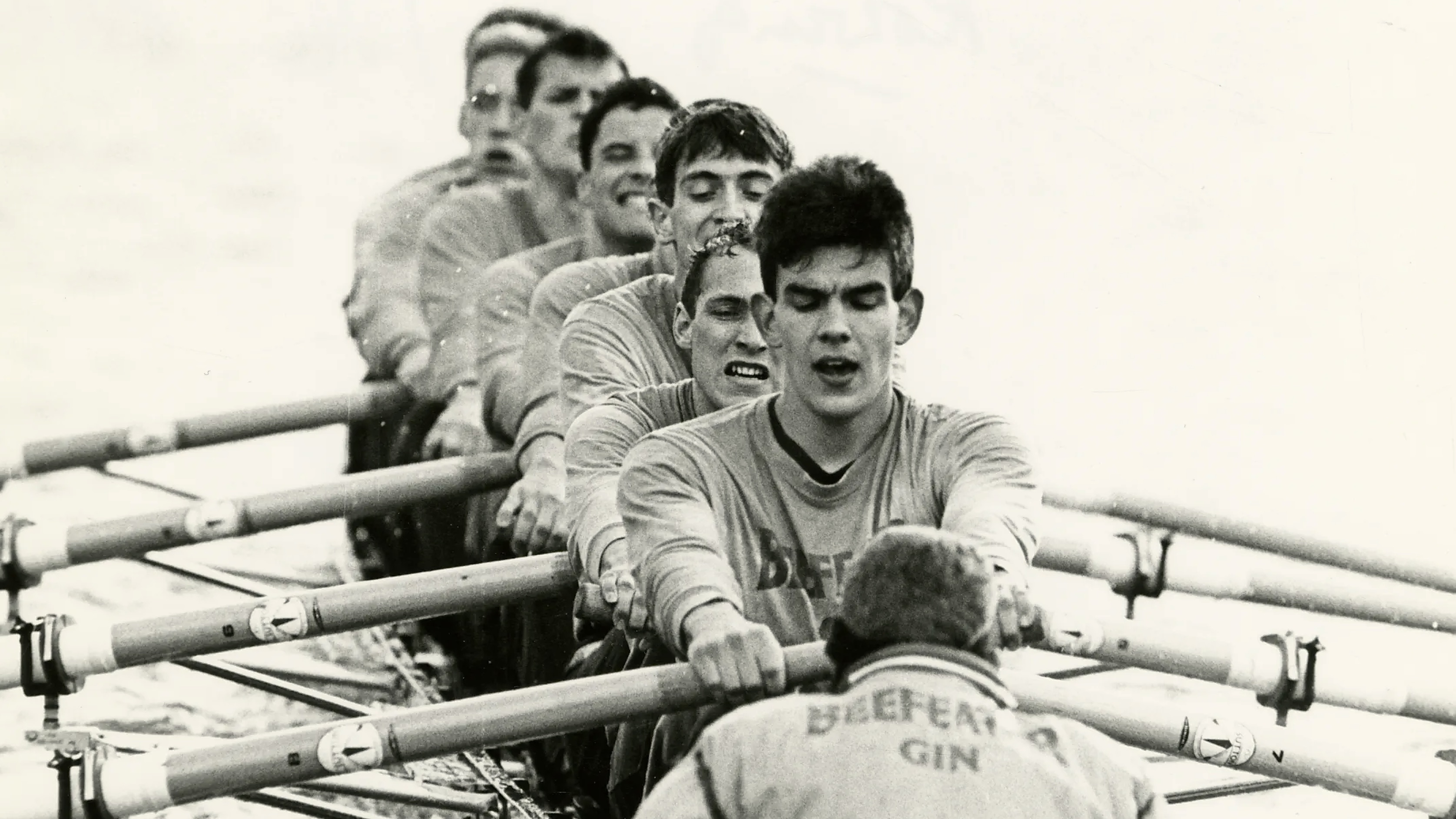
In the Boat Race, Brittin rowed at “4” in 1987, at stroke in 1988 and was back at “4” in 1989. Unfortunately for him, this was at the start of a six-year Oxford winning run, 1987- 1992 and he lost all three of his races. 1987 was particularly painful as it was the year of the so-called Oxford Mutiny and no one expected the Dark Blues to win after such a major disruption.
However, Brittin’s time with CUBC did have positives.
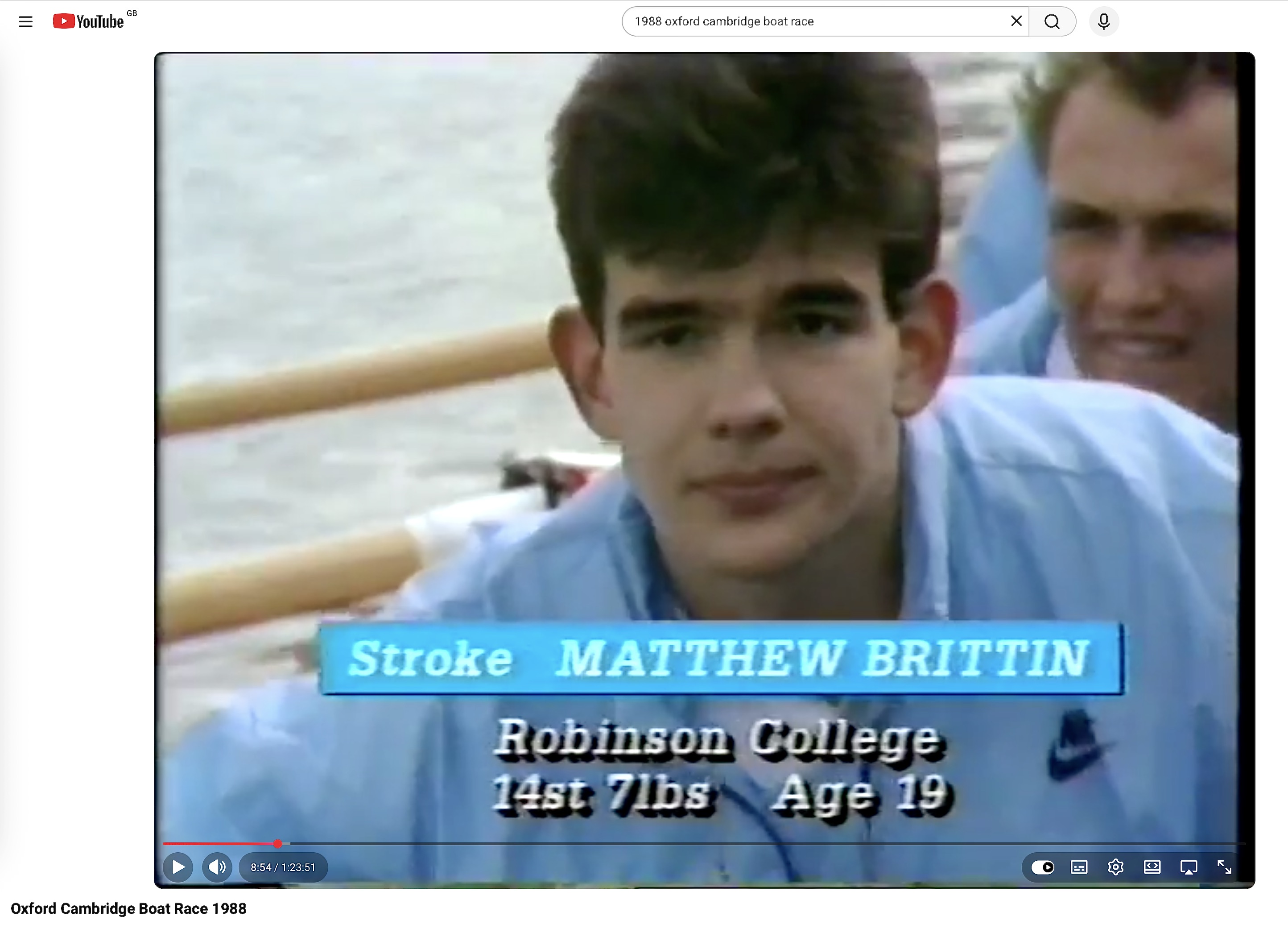
In my last year at Cambridge, I was elected President (of CUBC)… It was my job to produce a crew to win the Boat Race. I failed at that but what I did do was bring in professional coaching for the first time. As I was finishing as President… I was asked to become Chair of the club to see the project through… I did this for a few years until we won a couple of races back to back.
In fact, after Oxford’s six-year winning run, 1987 to 1992, Cambridge won seven years in a row, 1993 to 1999.
I think that’s a nice connection between my passion for sport and trying to run an organisation… When I look back on it, it was a pivotal experience to have…
People who have worked with me over recent years will have probably got fed up with some of my rowing stories and metaphors but… I spent a long time at Google building teams and relationships.
One of the most valuable (lessons from rowing for me) was when at school aged fifteen and my coach, Steve Gunn, who went onto coach Olympic gold medalists and was a brilliant and successful coach, was following us in a launch and said to me, “Matt, there is a piece of shit on the end of your oar….” I could not see anything and looked puzzled and he said, “No, the other end…” He was quite a harsh coach but the point was (laughs) that you have to take responsibility for what you are doing… before you start blaming other people…
The stuff that I learned at rowing was more useful to me everyday than the stuff I learned at university, (London) business school and working for top strategic consultancies because it was the human stuff.
I’ve been working in AI and I feel that in this really uncertain world where it’s in vertical take off, we know it’s going to do amazing things, we are not quite sure what, one thing that you can be sure of it that the human side of things, the human experience, will become more valuable, how we relate to each other, creativity, curiosity, critical thinking, collaboration, and many of those things come through in rowing…
After retiring from rowing at the age of 22, Brittin returned to the sport aged 45 in 2013 joining a group of ex-internationals at Molesey Boat Club where, as the photographic evidence below shows, he says that he rediscovered the joy.
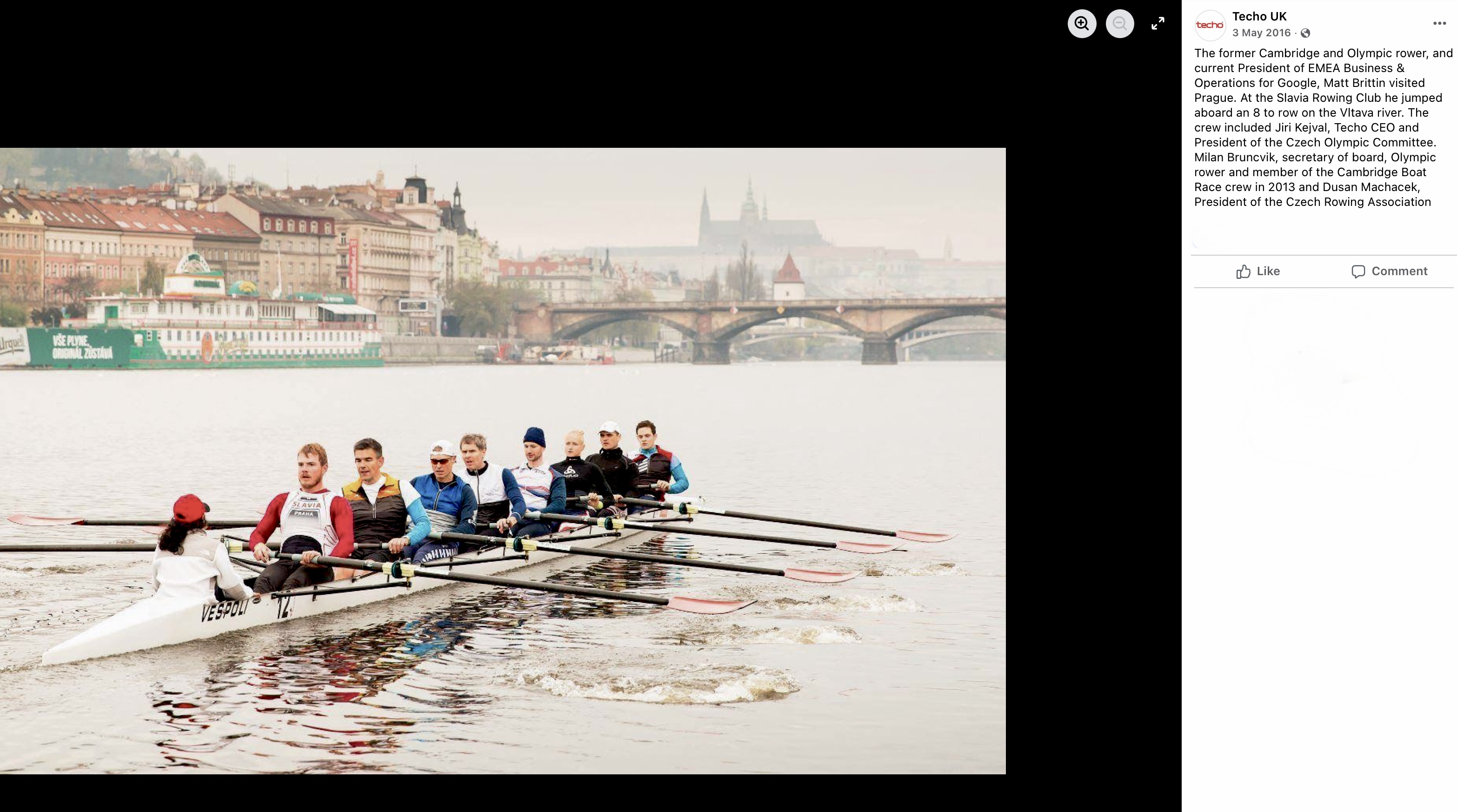
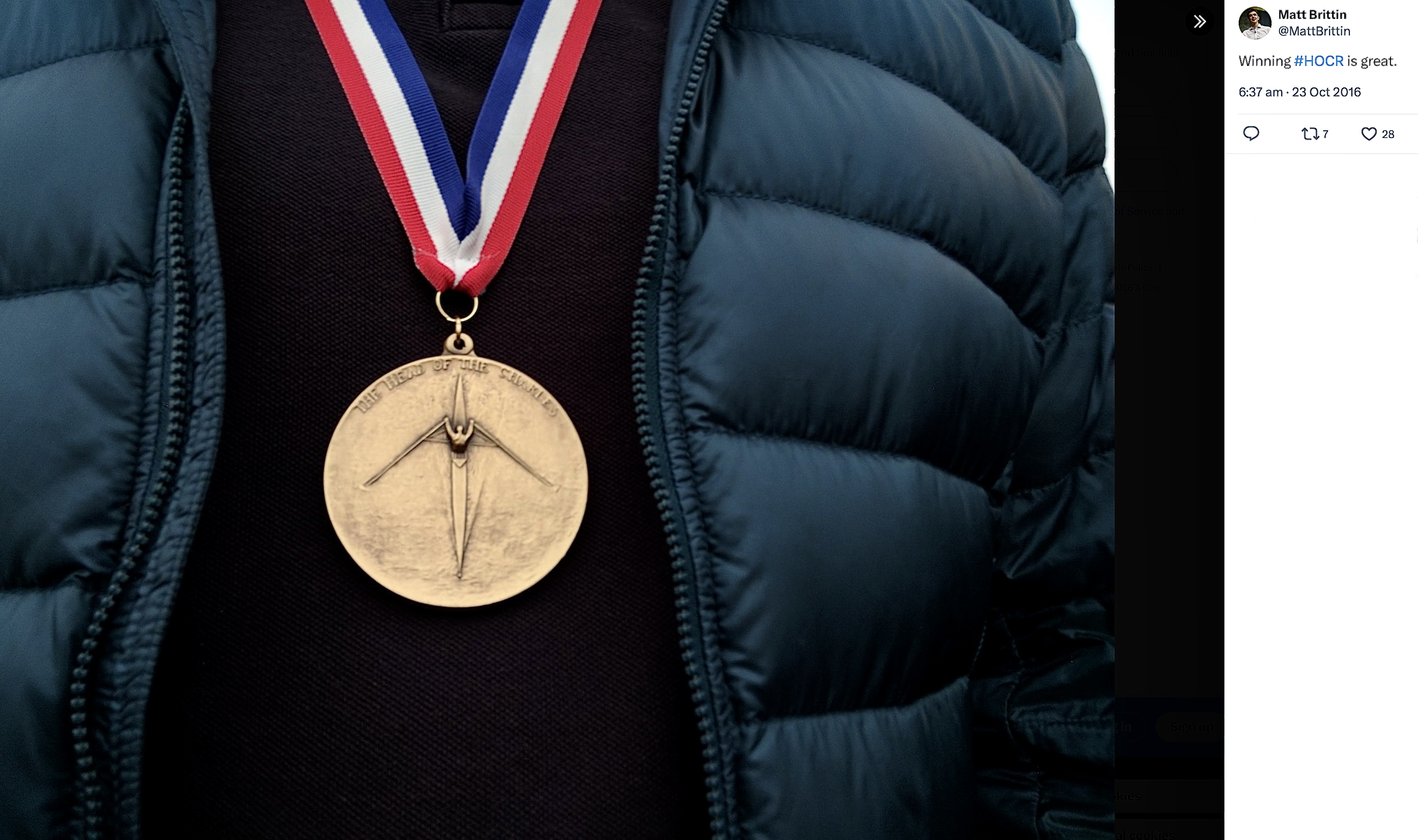
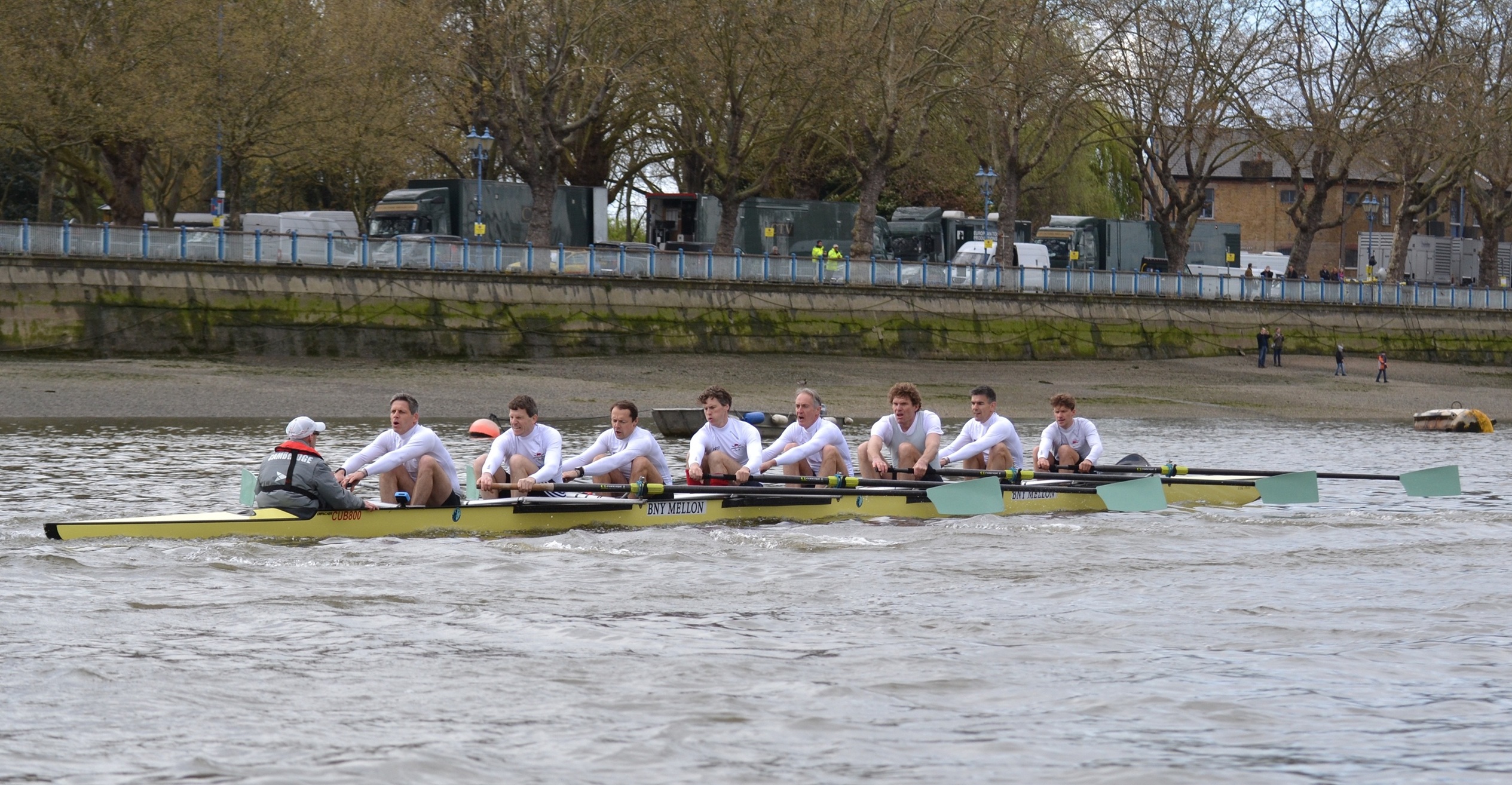
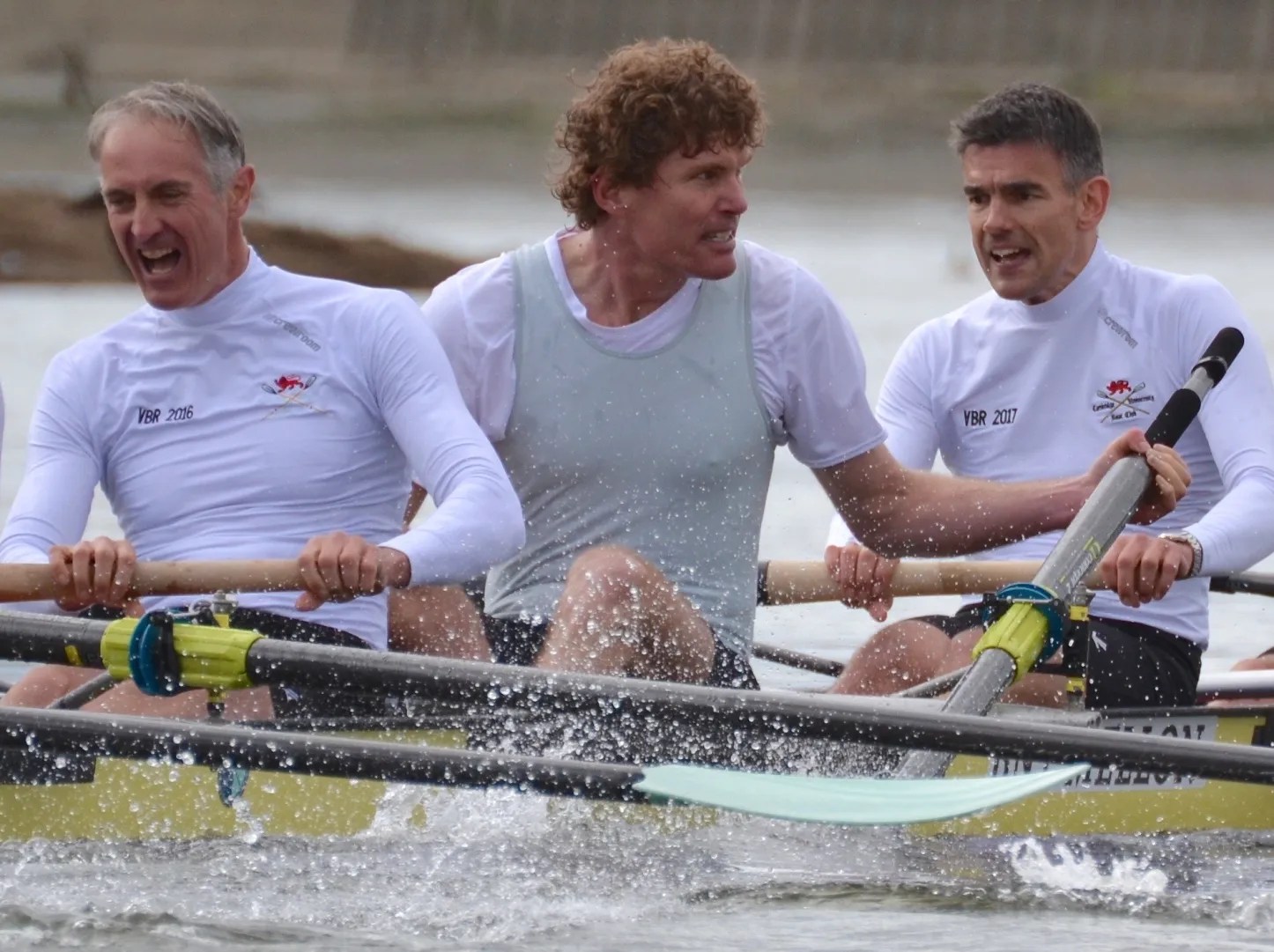
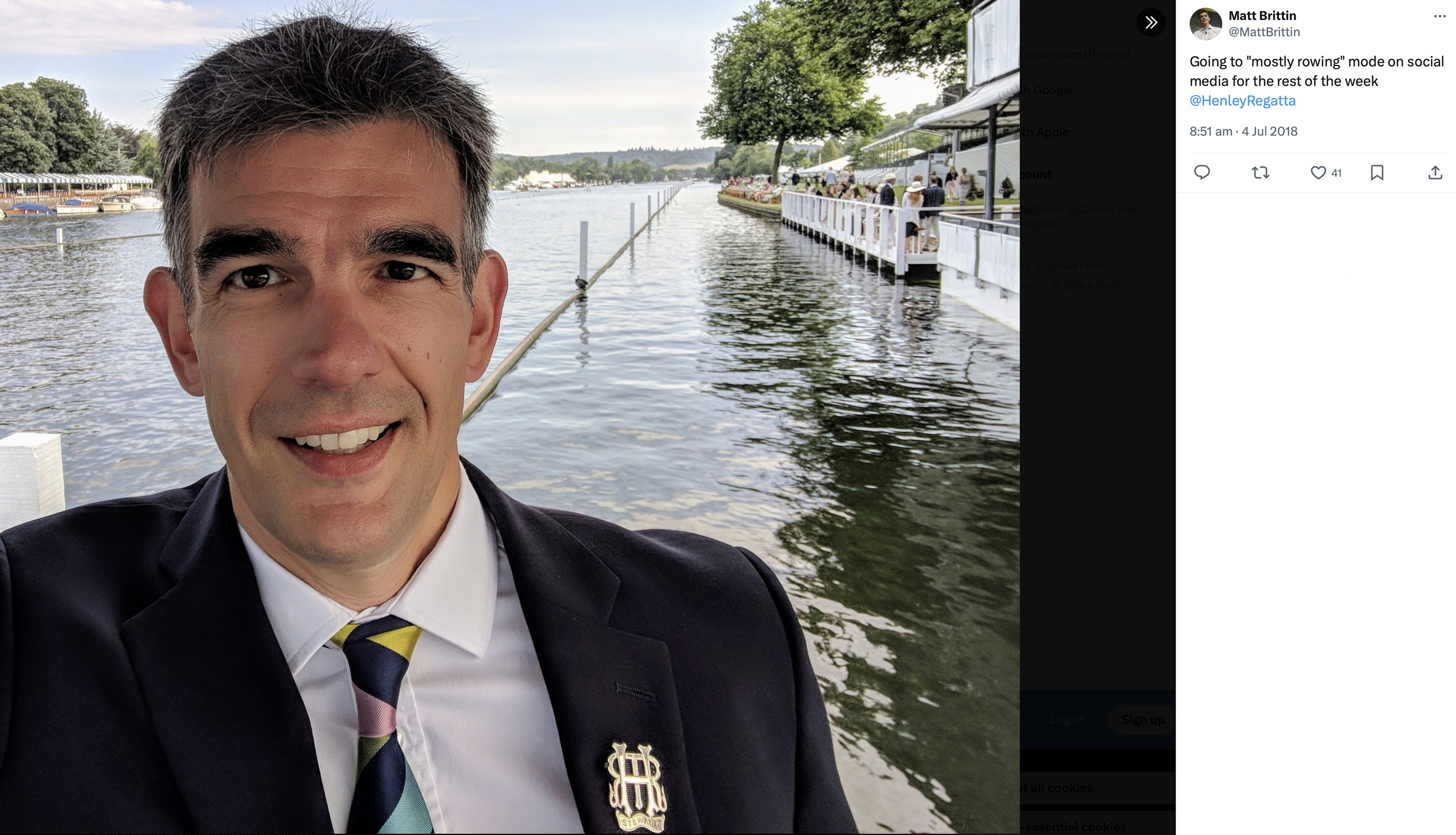
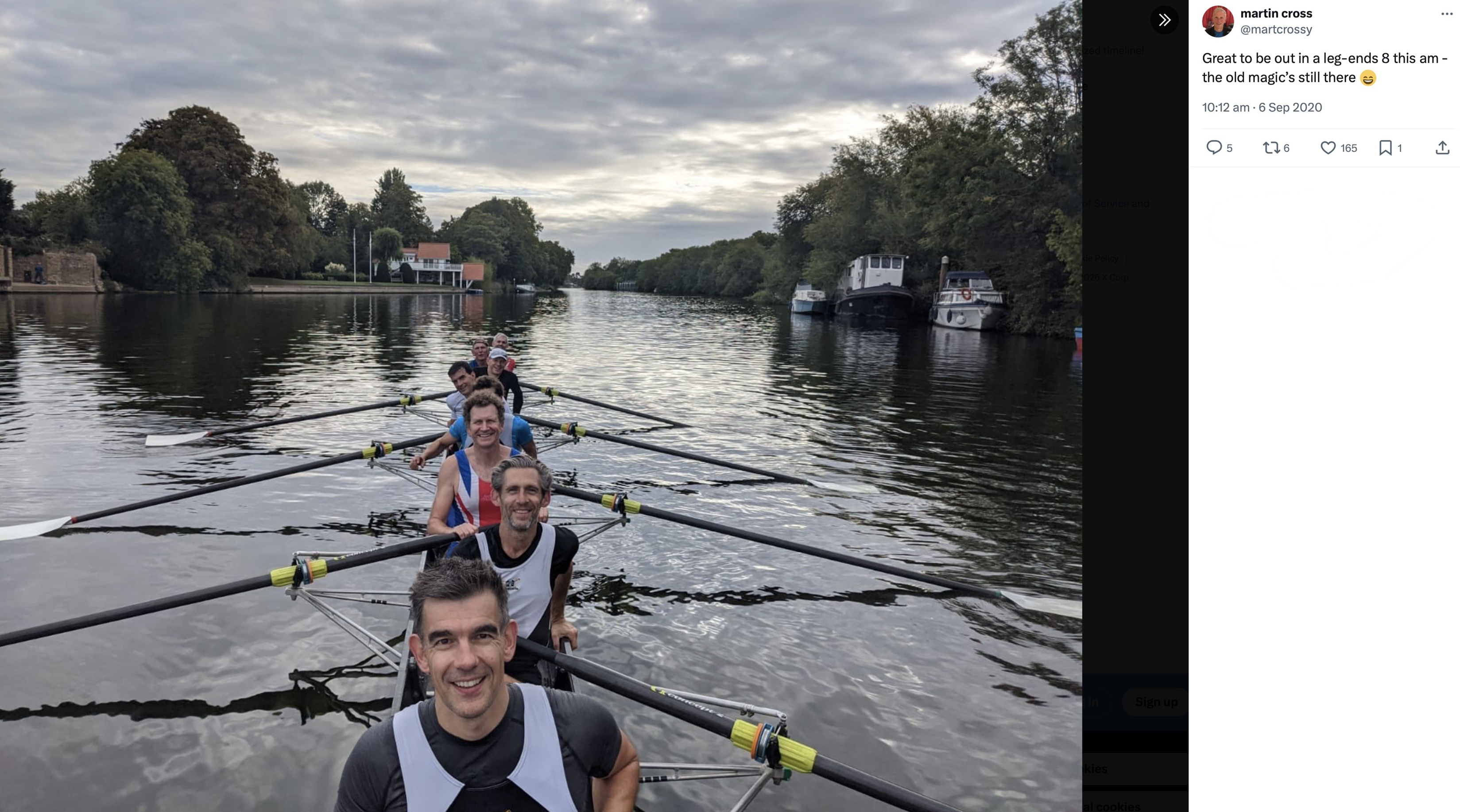
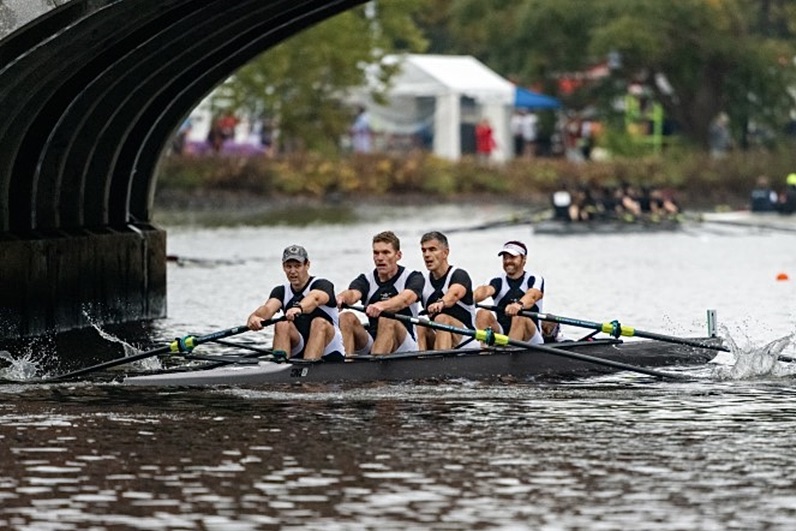
I hope that Matt Brittin will continue rowing with his old friends while in his new job as the sort of changes that he needs to bring about at the BBC means that he is unlikely to be making new ones in the near future.
 Hear The Boat Sing