
26 January 2026
By Tim Koch
Tim Koch says it’s only Rock ’n Roll.
Becoming Led Zeppelin, a new film about the British band that dominated the music industry in the 1970s, was the most successful feature documentary at the US box office in 2025. No doubt, support from old rockers, who remembered Led Zep’s active years, 1968 – 1980, were responsible for this success – though a section of every generation born after the band broke up seems to rediscover the collective talents of Robert Plant, Jimmy Page, John Paul Jones and John Bonham.
According to the band’s Wikipedia page:
With a heavy, guitar-driven sound and drawing from influences including blues and folk music, Led Zeppelin are cited as a progenitor of hard rock and heavy metal. Among the best-selling music artists of all time, they influenced the music industry, particularly in the development of album-orientated rock and stadium rock.
Writing on a fan-site, ledzeppelin.com, Keith Atkinson records rowing’s unlikely involvement in all this:
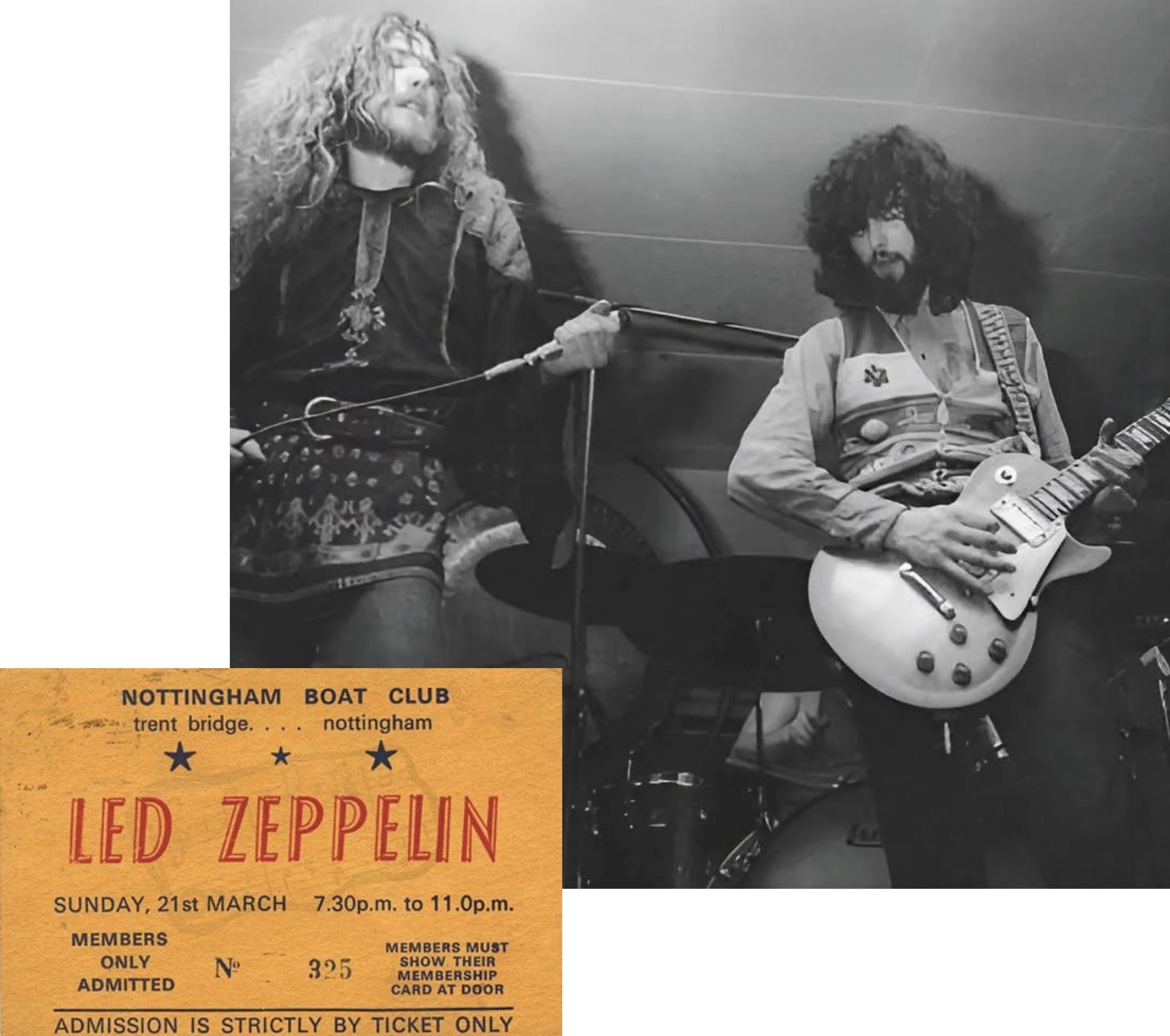
(In 1971) Led Zeppelin were unquestionably the biggest band on the planet. They were playing to sold-out crowds in some of the world’s biggest stadiums. But on Sunday, 21 March 1971 they played The Boat Club for nothing. The whole area was absolutely heaving. Fans were desperately trying to climb into the club over the balcony and volunteers from the club were trying to stop them.
But even if you just sat on the slipway outside on the Trent, you’d have heard Zeppelin’s set start with Immigrant Song. If you were waiting for Stairway to Heaven, that came halfway through – and for the encore, you’d have heard Communication Breakdown.
The Boat Club was a persona of Nottingham Boat Club (now Nottingham Rowing Club), an historic and intimate 250-capacity live music venue that hosted iconic rock, punk, and indie acts between 1962 and 1982 while still functioning as a thriving River Trent rowing club founded in 1892.
The 1971 performance was actually Led Zeppelin’s second appearance at The Boat Club, they had first played there on 6 April 1969 as part of a series of intimate club gigs that solidified their reputation before moving to larger arenas. The setlist included Dazed and Confused which became the band’s most regularly performed song. The 1969 gig earned the band £90.
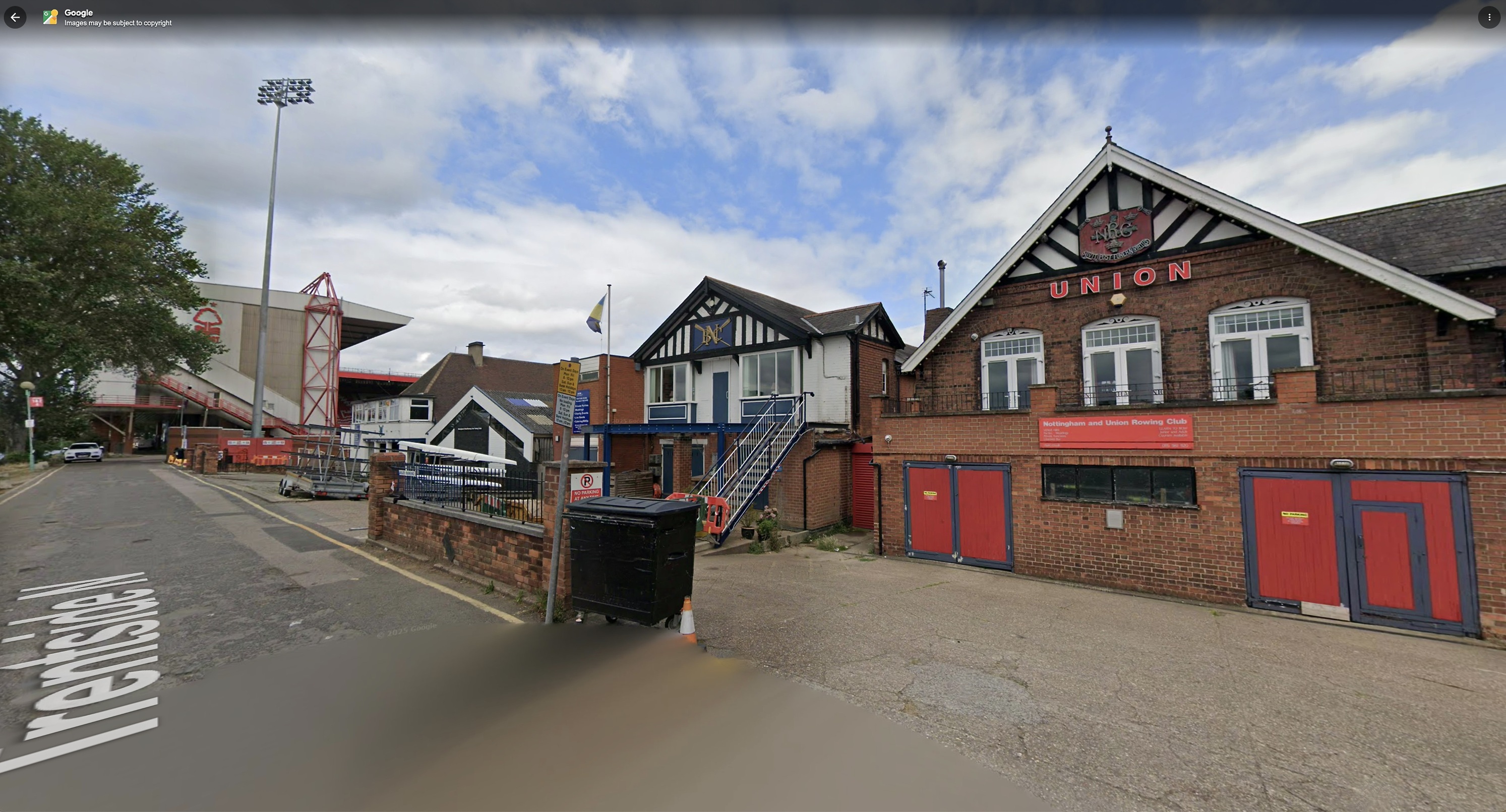
Nottingham & Union Rowing Club (right) was founded in 1946 as an amalgamation of the Nottingham Union Rowing Club (1871) and the original Nottingham Rowing Club of 1862. In 2006, Nottingham Boat Club (1892, centre) and the Nottingham Britannia Rowing Club (1869, far left) merged to form a new Nottingham Rowing Club. Picture: Google Earth.
The aforementioned Keith Atkinson is a remarkable man who joined Nottingham Boat Club (NBC) in 1954, was its one-time chief band booker, served as Captain in the 1960s and was President 1977 – 2017. Despite being diagnosed with Multiple Sclerosis, he set himself a target of completing fifty million metres (31,000 miles) on the ergo – which he did, starting in 1997 and finishing in 2019. In 2023, Keith was awarded British Rowing’s Medal of Merit. He has claimed: I’ve never grown up, I’ve seen what it does to people.
As NottinghamshireLive noted:
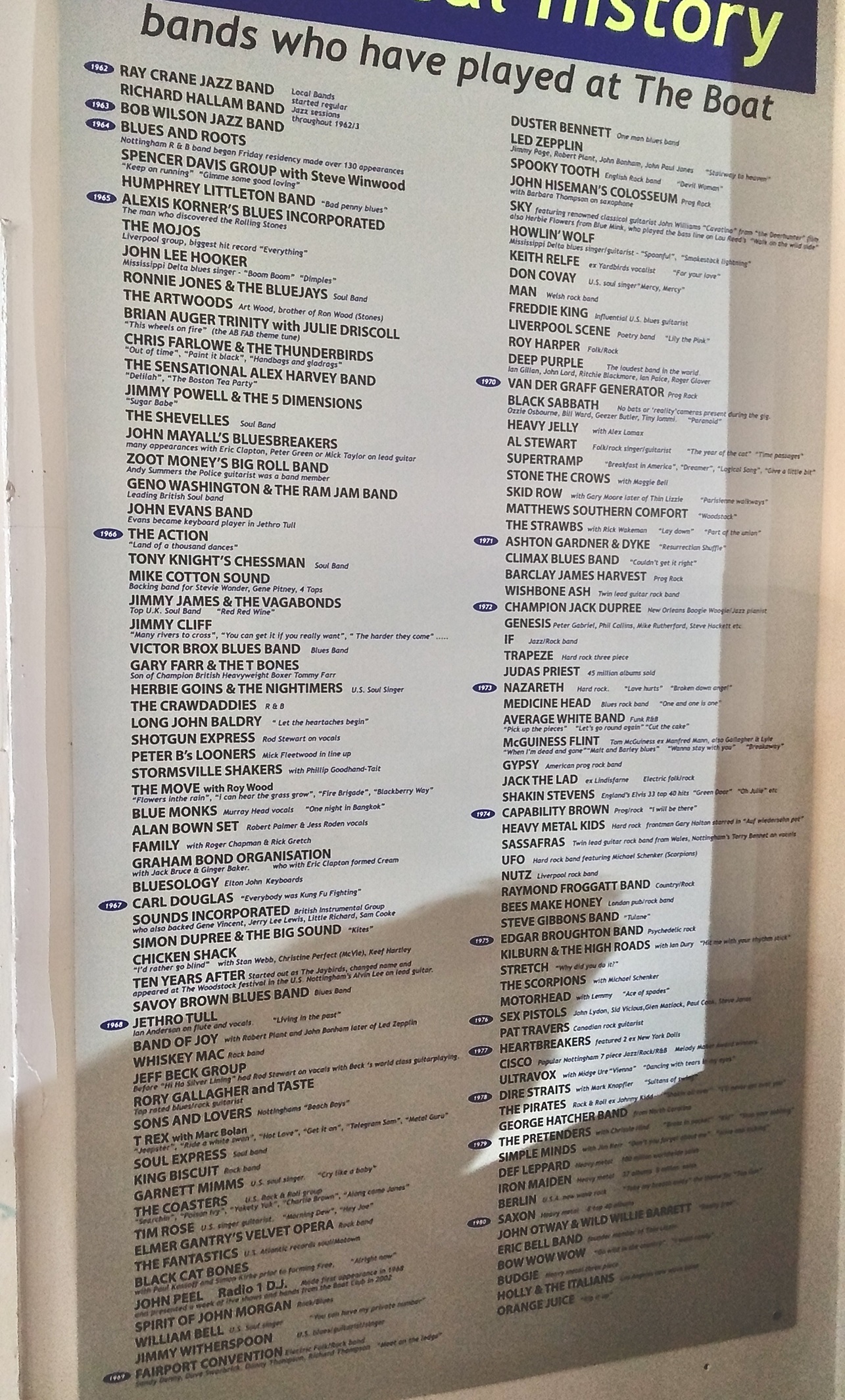
Before Elton John played the Dodger Stadium, before Led Zeppelin hit Knebworth and long before Bono was bothering the stage at Live Aid, these stars, amongst scores of others, were strutting their stuff on stage at a tiny Edwardian boat house, sat on the banks of the River Trent.
Alongside ol’ Rocketman (who performed on keys as a teenager in a band called Bluesology), Led Zep and U2, there was, deep breath… Rod Stewart (six times!), Eric Clapton, Dire Straits, Ultravox, T-Rex, Iron Maiden, Jethro Tull, Jeff Beck, Rory Gallagher, Wishbone Ash, Supertramp, Judas Priest, Shakin’ Stevens, The Sex Pistols, Motorhead and Def Leppard, to name but a few.
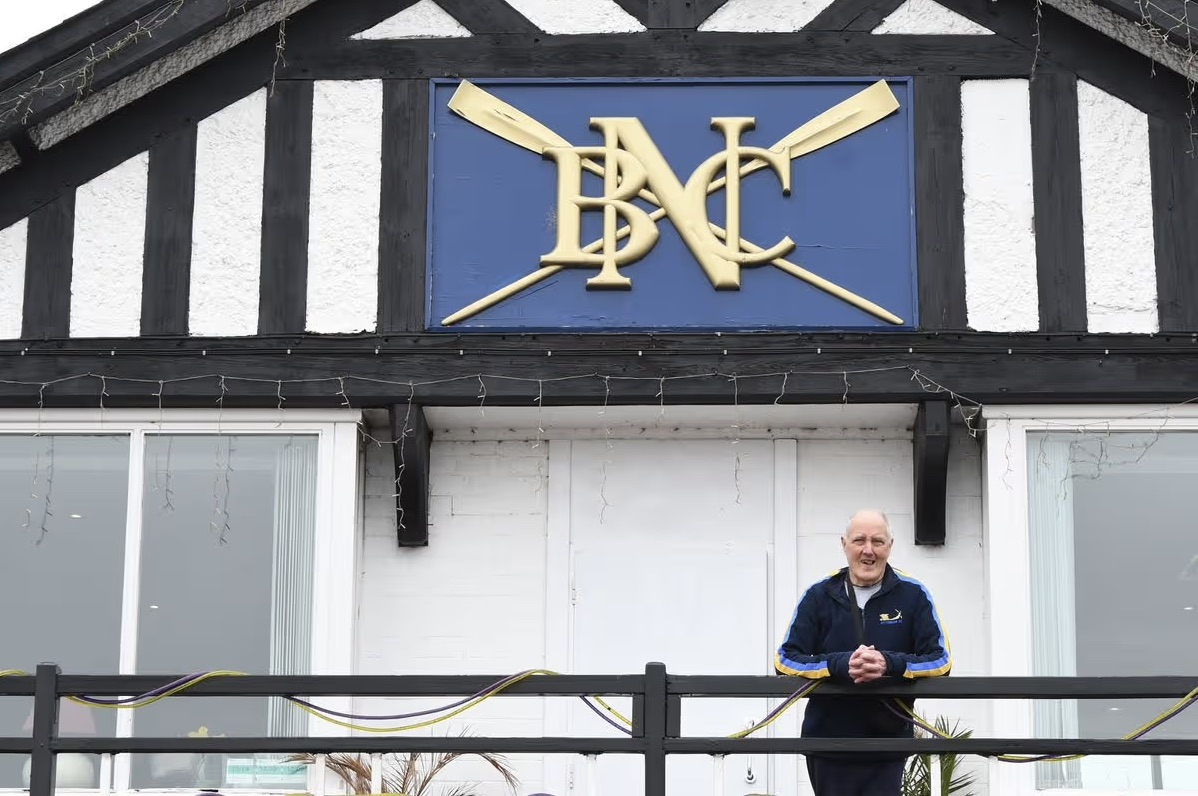
All this started because of a situation known to many rowing clubs, lack of money. Keith told NottinghamshireLive:
(In the early 1960s, Nottingham Boat Club was) bankrupt, we had £13 in the account, so we had to somehow get some money. We started putting these jazz bands on and then slowly but surely we got these other bands in and of course, money was flowing through the club. We’d get new boats and new oars and for a certain time rowing was virtually free because there was so much money coming into the club… There used to be queues…right over Trent Bridge…
The (Nottingham Union Rowing Club) tended to have pop bands, (Nottingham Boat Club) had roots music and (Nottingham Britannia Rowing Club) had Northern Soul. As one club filled up they went into the other one, and then the other one… We just didn’t know what we were dealing with. The thing was, we picked (the bands) up when they were nobody. It was only later on they became very famous…
As Led Zeppelin did in 1971, several bands returned and played for free as a thank you for the club’s support. Keith:
The reason they played for nothing was because we helped them on the way up. I thought that was a very generous way of repaying it…
However, it was not to last. Keith:
…because of the behaviour of people and the way they kicked around the club, it got to the stage where we weren’t making any money because everything we made we had to spend repairing the place…
(When psychobilly rock band King Kurt played in 1982) they were throwing rabbit’s innards at the people. They had a competition and the competition was who can drink this drink in 90 seconds. People thought that was easy. But that wasn’t the competition, the competition was who can hold it down for 90 seconds because it was a violent emetic. Anybody who drank it was violently sick. You can imagine at the end of that night it was absolutely shambles. I remember coming down and saying, “that’s it, we’ve finished.”
Since then there has been the occasional gig – but nothing like the old days.
*Houses of the Holy was the fifth studio album by Led Zeppelin, released in 1973.
 Hear The Boat Sing
Fascinating article.
I see @Carl Douglas played the venue in 1967. Presumably before he started building boats!!