
20 December 2025
By Mark Blandford-Baker
Mark Blandford-Baker, editor of the latest ‘Henley Records’, gives HTBS an insight about his work.
Though Henley Regatta began in 1839, it was not until 1903 that the first set of ‘Henley Records’ was published. H.T. Steward, a Steward by role as well as by name, and Chairman of the Committee of Management, resolved to research the name of every competitor and the result of every race from that inaugural Regatta to that of 1902. Record-keeping was not as fastidious as it is today: it was quite a task given the number of years which had elapsed. Many rowed under assumed names for various reasons (Oxford students were often banned from competing by their college), he diligently sought out their real names wherever possible. Herbert Steward was at the time also Chairman of the Amateur Rowing Association and President of Leander Club: quite a hat-trick.
That edition was followed by a volume covering 1903 to 1914, entitled ‘Henley Races’ edited by Sir Theodore Cook, published in 1919. It also contained some records of local racing which were not part of Henley Royal Regatta. Herbert Steward’s son, Clifford, edited ‘Henley Records’ that covered the Regattas of 1919 to 1938. The fourth work, edited by H.B. Playford, covered the period from the Centenary Regatta of 1939 to that of 1968. This is a double volume edition, and it included notes on the administration of the Regatta and other aspects thought to be of general interest. All three of these editors were Stewards and also members of the Committee of Management.

Following this began the principle of publishing the records and accompanying notes in shorter periods. A volume for 1969 to 1974 came out in 1975, and subsequently there was a period of producing the Records annually. The five-year publication cycle began with the edition covering the period 1980-1984 and this has been maintained ever since. Richard Burnell was the editor for the 69-74 edition, a role he continued for twenty years, passing it on to Angus Robertson who began as editor for the 1995 to 1999 volume. Mike Sweeney edited the 2010 to 2014 edition, his latter period as Chairman. Sir Steve Redgrave edited the 2015 to 2019 edition, the first five years of his Chairmanship.
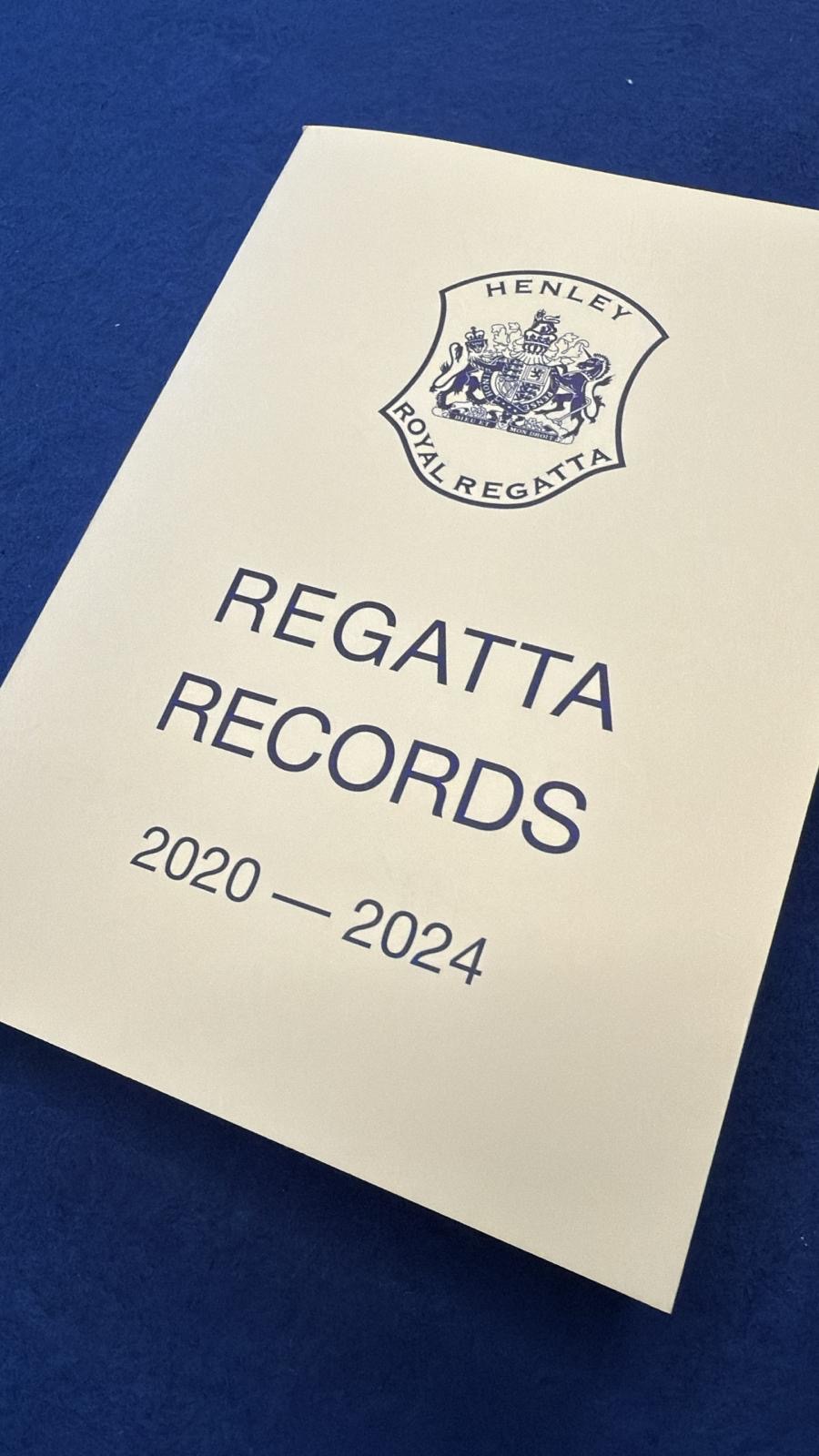
Which brings us to the fifteenth edition of the ‘Regatta Records’ covering the period 2020 to 2024. I say ‘the period’ because, of course, there was no Regatta in 2020. Even during the First World War there was some schoolboy racing on Henley Reach each year, albeit not HRR; in WWII and in 2020 there was no racing at all. And then in 2021 the first Regatta to be held in August took place with various precautions and changes, and very few overseas crews. By 2022 things were back to normal.

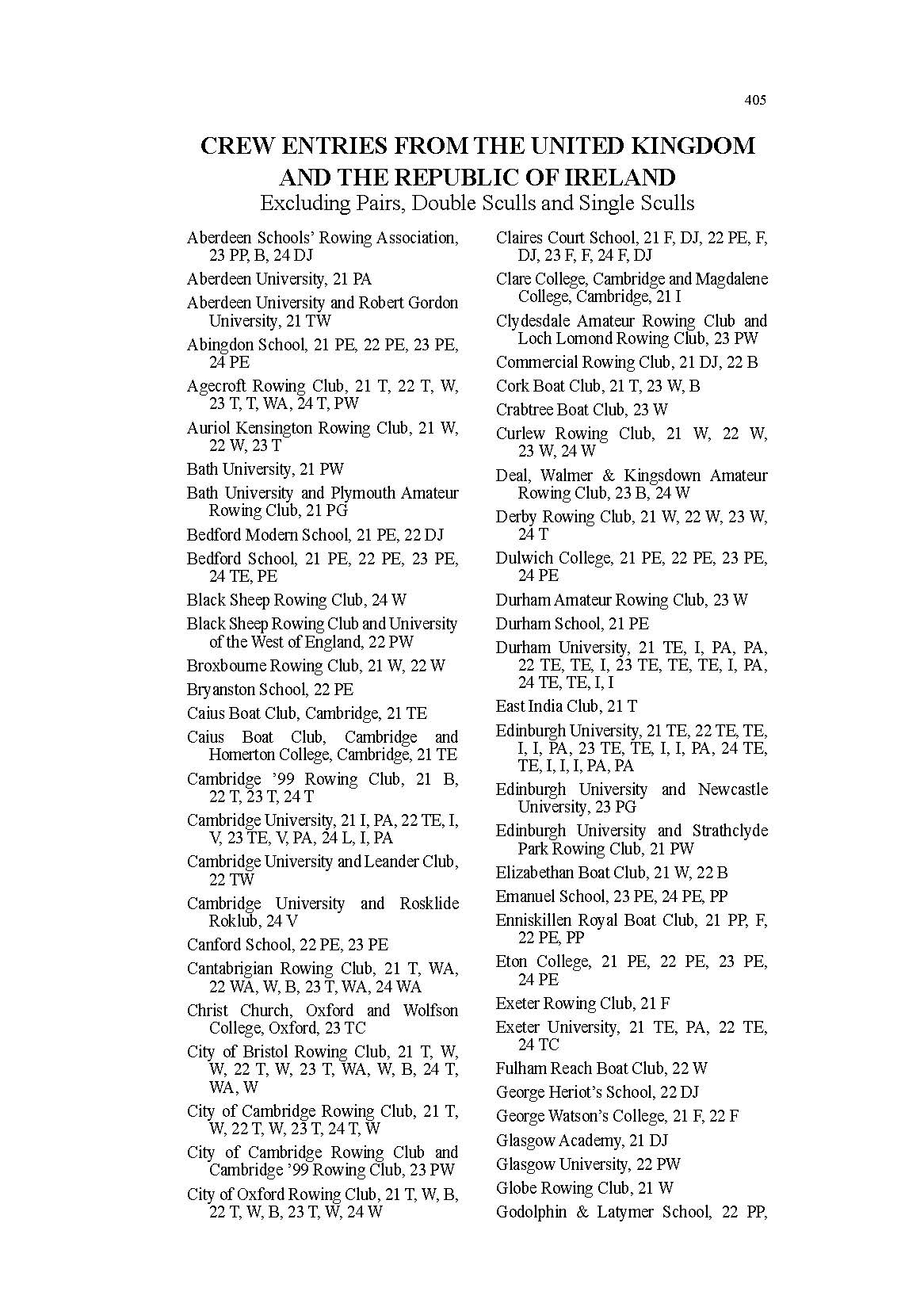
In 2023 the Chairman asked me to take on the Editorship for this latest edition. I was delighted to be asked but had not a little trepidation at the task – beginning with writing the background to 2020, and then the subsequent Regattas. As I recall in the Introductory Notes, during the period there was a change of Regatta management system and that has meant a lot of work tidying up competitor records to ensure each individual has one record with all their racing, quite a task when the spelling errors, insufficient initials and even spoof dates of birth cause a new record to be created. As the former and new systems were merged there was the task of ‘de-dup[licat]ing’ records to achieve the ‘one person, one record’ position.
Of course, the meat of the Records is the narrative on the racing in each event. Reading the ‘pink tickets’ – the race reports written on the back of the umpire’s launch by one of the Stewards, to find the interesting elements on which to write. Looking at who the finalists were and following their route to Sunday is a key line in a side-by-side knock-out system, but so is the bigger picture of how other crews progressed. Tracking selected crews, and sometimes the unexpected progress of an unselected crew is of interest. So, too, are the close races of the early rounds, or those with moments that make or break a race. Once in a while I have not been able to adequately discern the writer’s narrative, nowadays one can go and watch the race online, but of course one can’t do that for every race. Frequently the turn of phrase I have used about a crew or a race is lifted straight from what the race recorder wrote. In the Premier events, in particular, I have largely resisted the temptation to recount a crew’s international performance. Sometimes it gives context with their opponents, but otherwise Henley is Henley and different environment and competition from six-lane racing at World or Olympic venues.
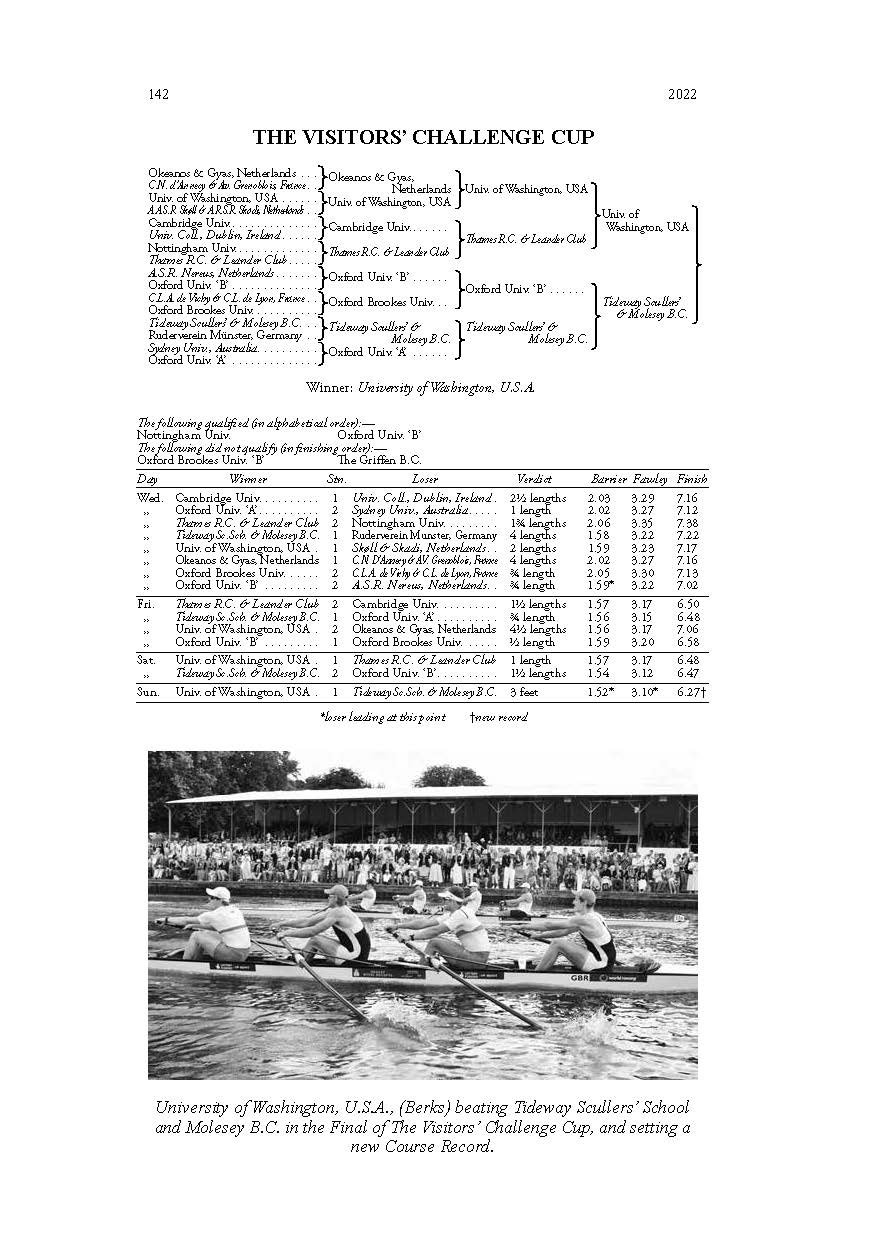
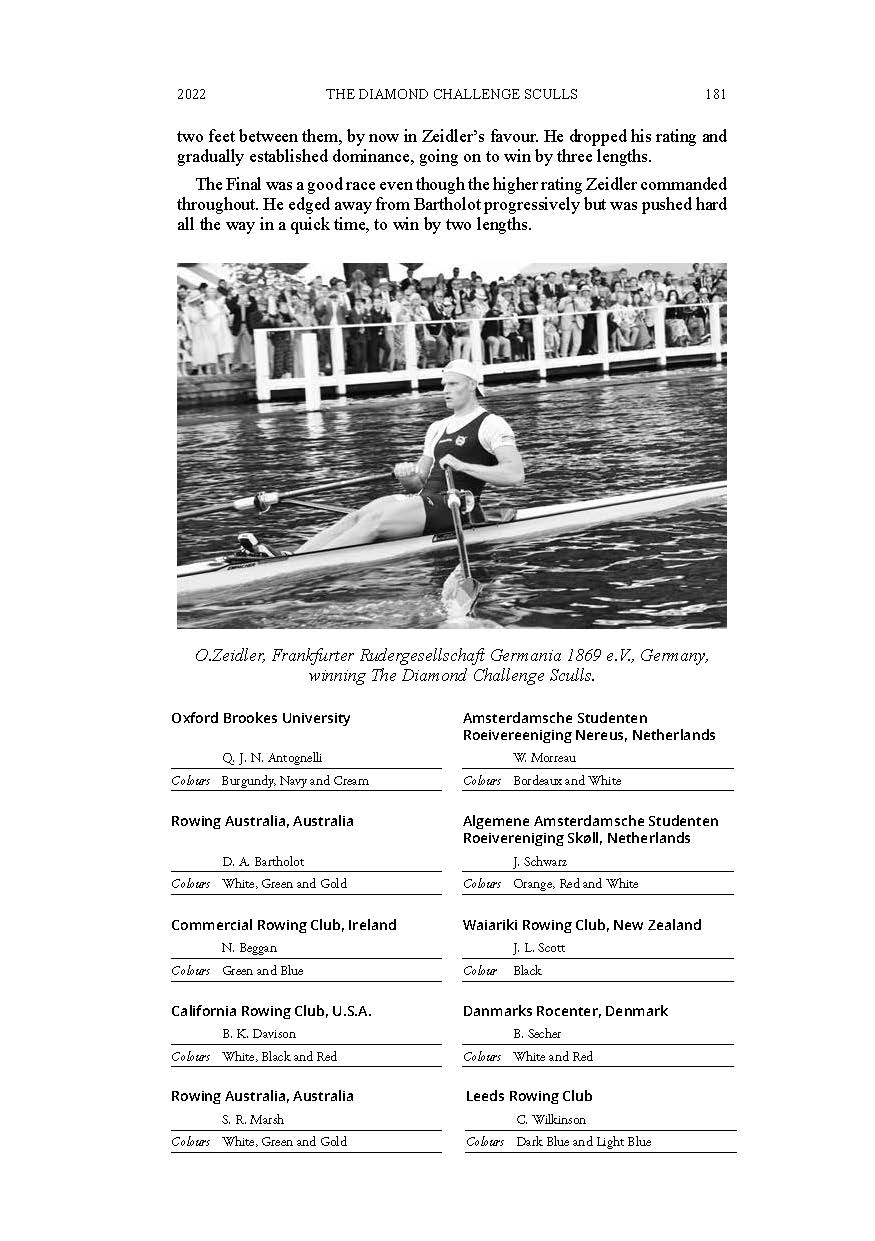
Sort out the photographs last, once you know where there is room, was the guidance. In fact, finding the best picture of a winning crew can be tricky. I resolved to use only those in which the faces of the competitors are visible, but sometimes even with a close result there might not be both boats in the shot. Trophy presentation pictures make for variety. Having included the three new trophies (for 2021) in the introduction, and having room after searching for good pictures of winners, the idea to include all 27 pieces of silverware occurred to me: they are dotted throughout on pages that relate to the same event as the cup.
Data is always in demand, and the Winning Stations statistics have been reinstated in this edition. I, for one, think that is quite an interesting to see how the results split. Of course one could have endless detail of days, events, weather and much more but that is too geeky for this book.
Perhaps one of the best race stories ever written about Henley is a heat of the Goblets in 1924 between Nickalls & Lucas and Hampshire & Phillips. If you don’t know it, do look it out.* A race of the unexpected, of gentlemanly behaviour, and some unconventional goings-on, all recounted in an entertaining manner. I can’t offer anything like that in the 2020-2024 edition, but I hope readers will enjoy the review of racing, and competitors be pleased to find themselves in the crews lists as a record of their participation in the world’s most famous regatta.
Copies (including some earlier editions) can be purchased here.
*Editor’s Note: ‘Henley Records 1919-1938’ (1939), edited by Clifford Thomas Steward, pp 127-128, tells the story about the Nickalls & Lucas and Hampshire & Phillips race that Mark Blandford-Baker mentions above:

The story continues on the following page and reads:
“…the Winning Post the race was over and that a boat must abide by its accidents.”
 Hear The Boat Sing