
17 December 2025
By Göran R Buckhorn
HTBS continues to help you find books for a rower’s Christmas stocking or to fill a spot under the Christmas tree.
This time, we recommend a variety of rowing books that would brighten up your Christmas – and the rest of the year.
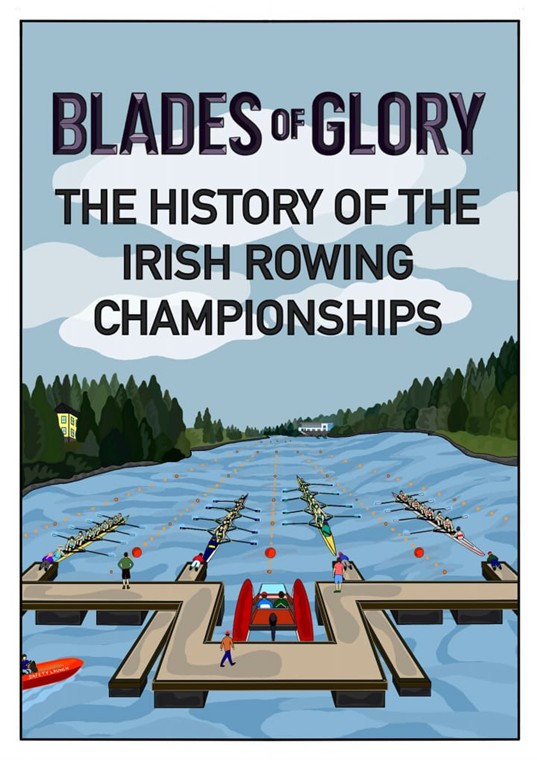
Blades of Glory – The History of the Irish Rowing Championships (2025) by Kieran Kerr. “Kieran Kerr has done a stellar job in compiling this contribution to Irish rowing books. It tells the story of the development and growth of the championships through more than a century, only interrupted by the Great War and the COVID-19 pandemic. It recounts many stories, including the threat by the clubs not to accept the Big Pot (as the Senior Eights Championship trophy was affectionately known) because it was made in England, the wrangling by regattas to secure a championship event, which up to the 1970s were moved around the country on rotation. In addition to the history of the championships, the book is packed with facts, including the results of the 1,830 championships which have taken place to date, details of the 28 courses on which the championships have taken place, course records and club rankings,” Greg Denieffe wrote in his review of Kerr’s book. Read Greg’s full review here.
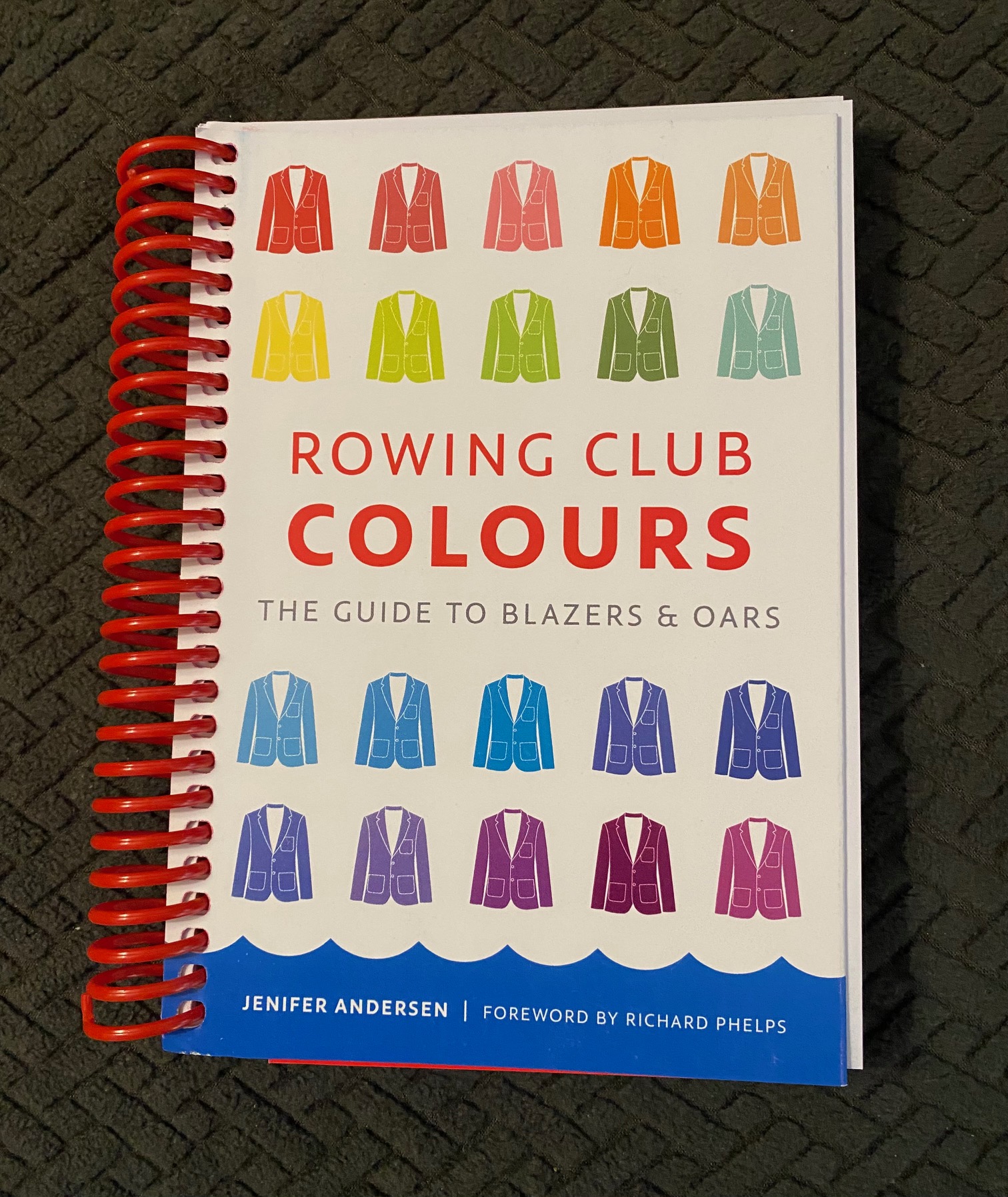
Rowing Club Colours: The Guide to Blazers and Oars (2025) by Jenifer Andersen. About Andersen’s book, Tim Koch wrote: “This handy little guide by rower Jenifer Andersen has been cleverly designed for easy use by even the most enthusiastic Pimm’s drinker at the end of a long day in the Fawley Bar. The spiral bound book fits easily in a handbag or blazer pocket and the clear and simple graphics showing over 120 blazers are handily arranged by colour. [- – -] HTBS Types may think that they do not need such assistance but few of us are infallible and a copy of Rowing Club Colours given to less knowledgeable guests would be a thoughtful present and a nice souvenir.” Read Tim’s review here.
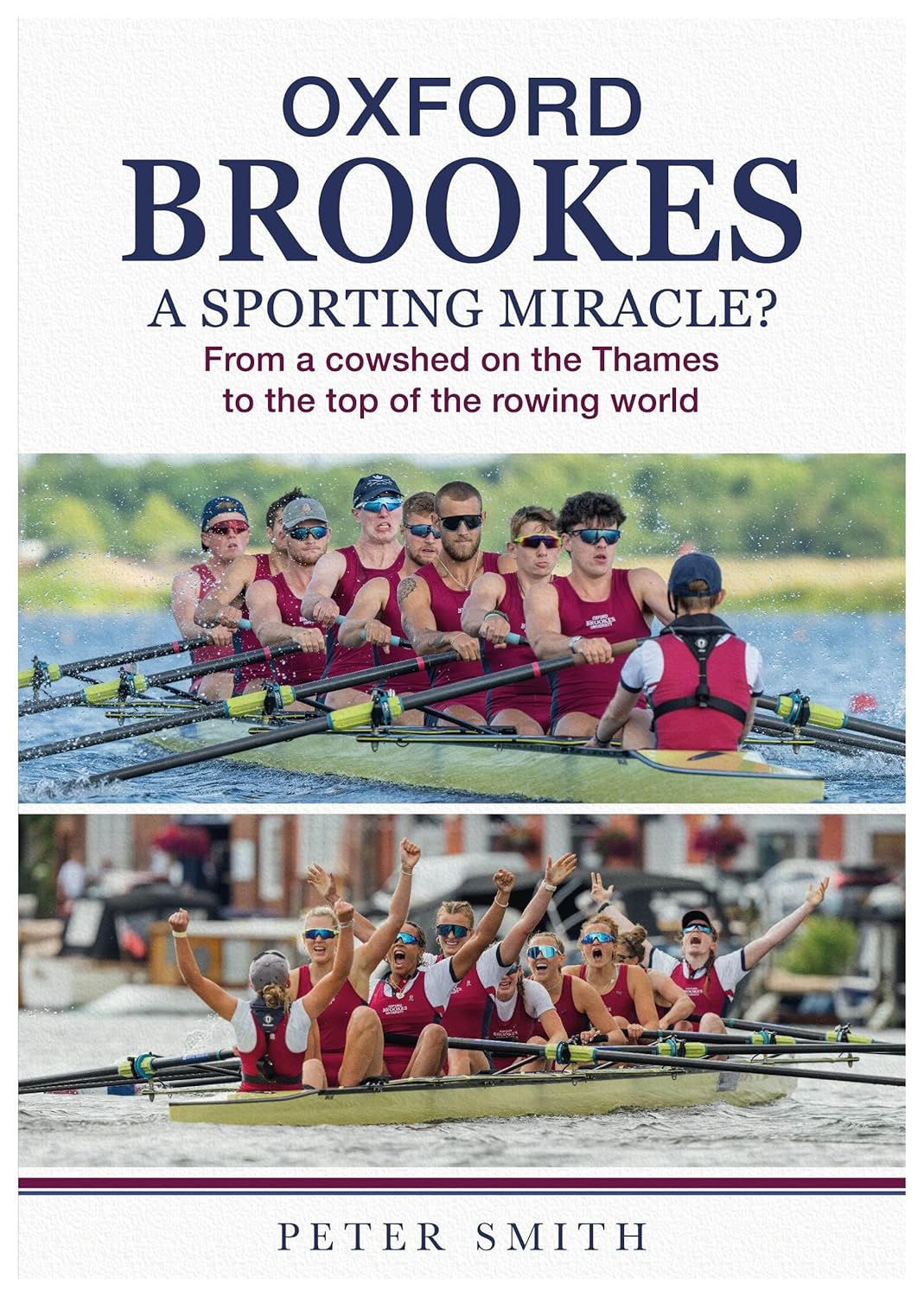
Oxford Brookes University Boat Club – A Sporting Miracle? From a cowshed on the Thames to the top of the rowing world (2024) by Peter Smith. In a review of Peter Smith’s book, Mark Blandford-Baker wrote: “For avid rowing historians, it is both a surprise and a delight to have a history of the first forty-seven years of Oxford Polytechnic Boat Club, which became Oxford Brookes University Boat Club (OBUBC) in 1992. [- – -] Peter Smith, himself a cox of Lady Margaret Boat Club and Cambridge University Lightweight Rowing Club, has followed the rise and rise of Brookes as a rowing fan. Since he is not a member of the Brookes alumni he writes in a more observant and detached way than many rowing histories are. Ever since I can recall supporters shouting ‘Poly’ from the upper deck of the Henley Floater, in those curious blue blazers (a blue that is definitely not going to be confused with either Oxford’s or Cambridge’s, and is now largely obsolete), I have watched this club develop and come to be a dominant force not just in British student rowing, but in the wider rowing community at home and abroad. [- – -] Of course not everything in the garden blooms all the time. Smith notes a few scrapes and awkward moments along the way, but he also writes about the successes of boathouses and money, and how many athletes go on to represent Great Britain at U23 and senior levels. As a source of athletes at the international level, they are rivalled only by Leander Club (which, Smith notes, are the beneficiaries of an unrepeatable cry at the Brookes annual dinner). He also gives good coverage of the early years of the club and the period shortly after the Poly became a University. Read Mark’s full review here.

On the Water (1998; Eng. transl. Paul Vincent 2001) by H.M. van den Brink. This novella is a personal favourite of mine when it comes to a fictional story on rowing. Famous rowing coach Daniel Topolski wrote in his reviewed in The Guardian: “But rarely have sport and literature combined so seamlessly to produce such an absorbing and satisfying novel as this small miracle of a book from Holland by H M van den Brink. Sweetly lyrical, it tells of a shy young boy’s coming of age through sport in Amsterdam as Europe prepares for war.” In 1939, the two boys Anton and David are training in a coxless pair at a rowing club in Amsterdam. Their coach is a mysterious German, Schneiderhahn. Especially the working lad Anton becomes so captivated by his training that he is little aware what is happening around him. The novella begins at the end of the war with Anton, who is the one telling the story, sees the Allies planes flying to bomb Berlin and Germany. The tale then goes back and forth in time to the happy days when Anton and David are practicing for going to the 1940 Olympic Games in Helsinki. The war puts an end to the Olympics and the boys’ dream. The club closes and both David, who is Jewish, and coach Schneiderhahn disappear.

A Sea To Row By – Poems (2015) by Philip Watson Kuepper. By now, Philip is known by the regular readers of HTBS. His first rowing poem, “The Race”, was published on HTBS on 13 March 2010. The first seven lines read:
All that year, he rose,
just after dawn broke
light across the sky.
He took his shell to the river,
laid it on the water,
and slipped quietly,
effortlessly, into rowing.
Philip’s poems have topics about everything between daily life and the divine, and some have been inspired by his many travels in Europe. They are carefully crafted, some witty and several with a wonderful twist at the end. For this slim volume of rowing poetry, I selected 25 that would form the first part of the collection, and for the second part Philip wrote 15 new rowing poems (as of December 2015). By now, HTBS has published hundreds and hundreds of Philip’s rowing poems on this website. Almost every Sunday, you will find a new poem by Philip’s hand.
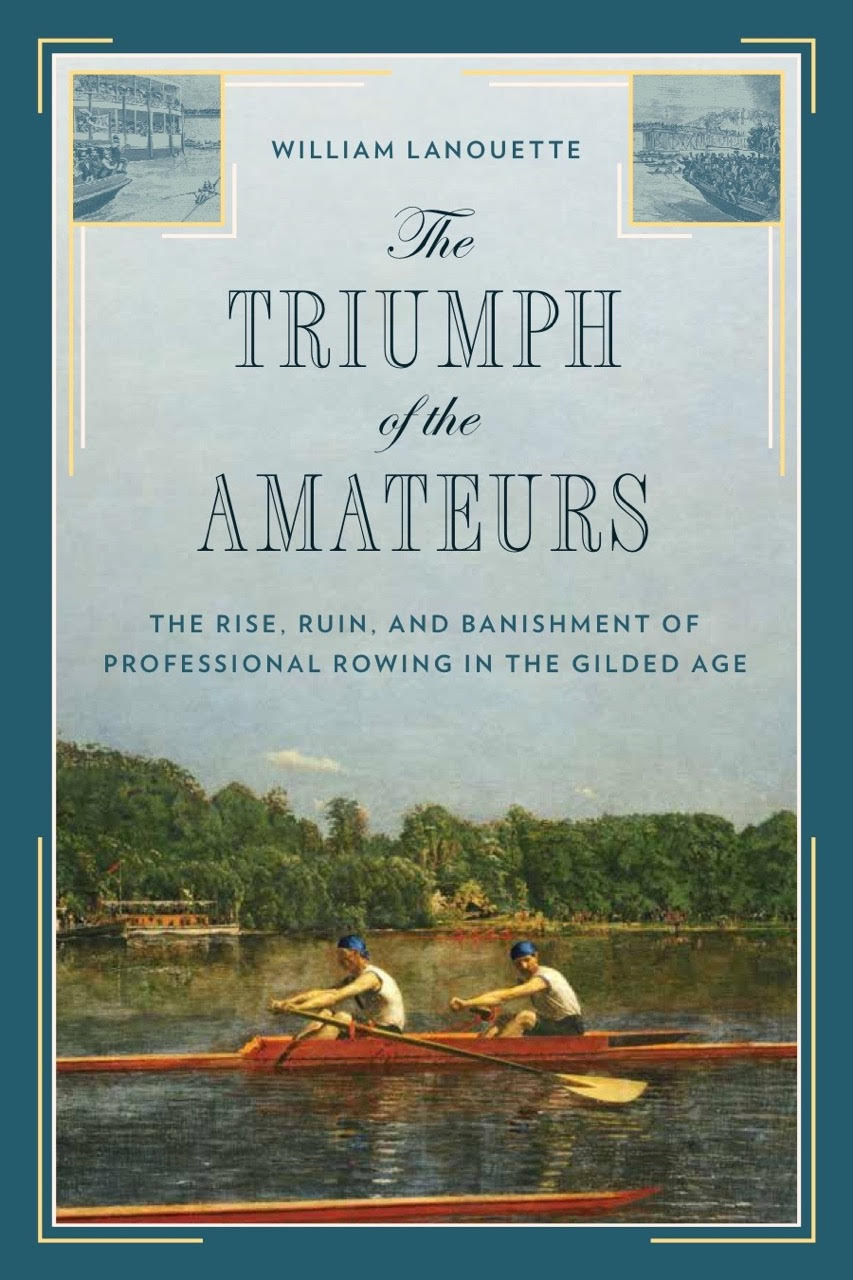
The Triumph of the Amateurs: The Rise, Ruin, and Banishment of Professional Rowing in the Gilded Age (2021) by William “Bill” Lanouette. Rowing historian Bill Miller wrote: “The Triumph of the Amateurs by William Lanouette is a wonderful collection of historical details about an era in rowing history that is just about all forgotten: the professionals. Few people realize that professional rowing was huge in the 19th century. It rivals professional sports of today in popularity. The difference is gambling was the fuel that supported professional rowers, while today it is advertising and marketing. [- – -] Bill weaves all these events into a great picture of what professional life was like as a rower, and how the public became disgusted with their antics. Finally, the public turned their backs on the professional rowers and the gambling that supported their livelihood. In its place, amateur rowing grew and captured the public’s interest along with other sports such as baseball. Collegiate rowing was growing rapidly. Hundreds of rowing clubs were formed all over the country, from Portland, Maine, to Minneapolis to New Orleans. Amateur associations were formed in all regions to host amateur championships. [- – -] I thoroughly enjoyed all the details Bill Lanouette uncovered and wove into its chapters. Read Bill Miller’s full review here.
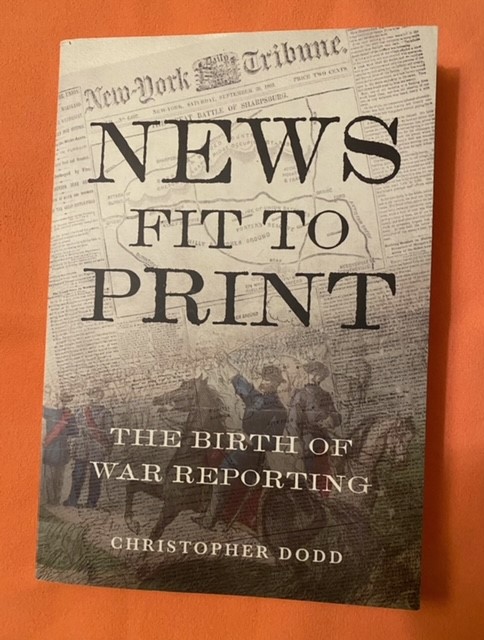
News Fit To Print (2024) by Chris Dodd. Chris Dodd had an idea for a novel while researching his history of the Boat Race, published in 1984. Forty years of tinkering turned the idea into News Fit To Print. The story takes place during the American Civil War and its accompanying revolution in the gathering and distributing of news (and fake news). It follows the adventures of George Washburn of the New York Tribune at the Battle of Antietam on 17 September 1862. Washburn attended both Yale and Harvard and practised law before taking part in the birth of war reporting. Shadowing the Union Army also brings him in touch with oarsmen from his college days, rowing being the most popular collegiate sport at the time.
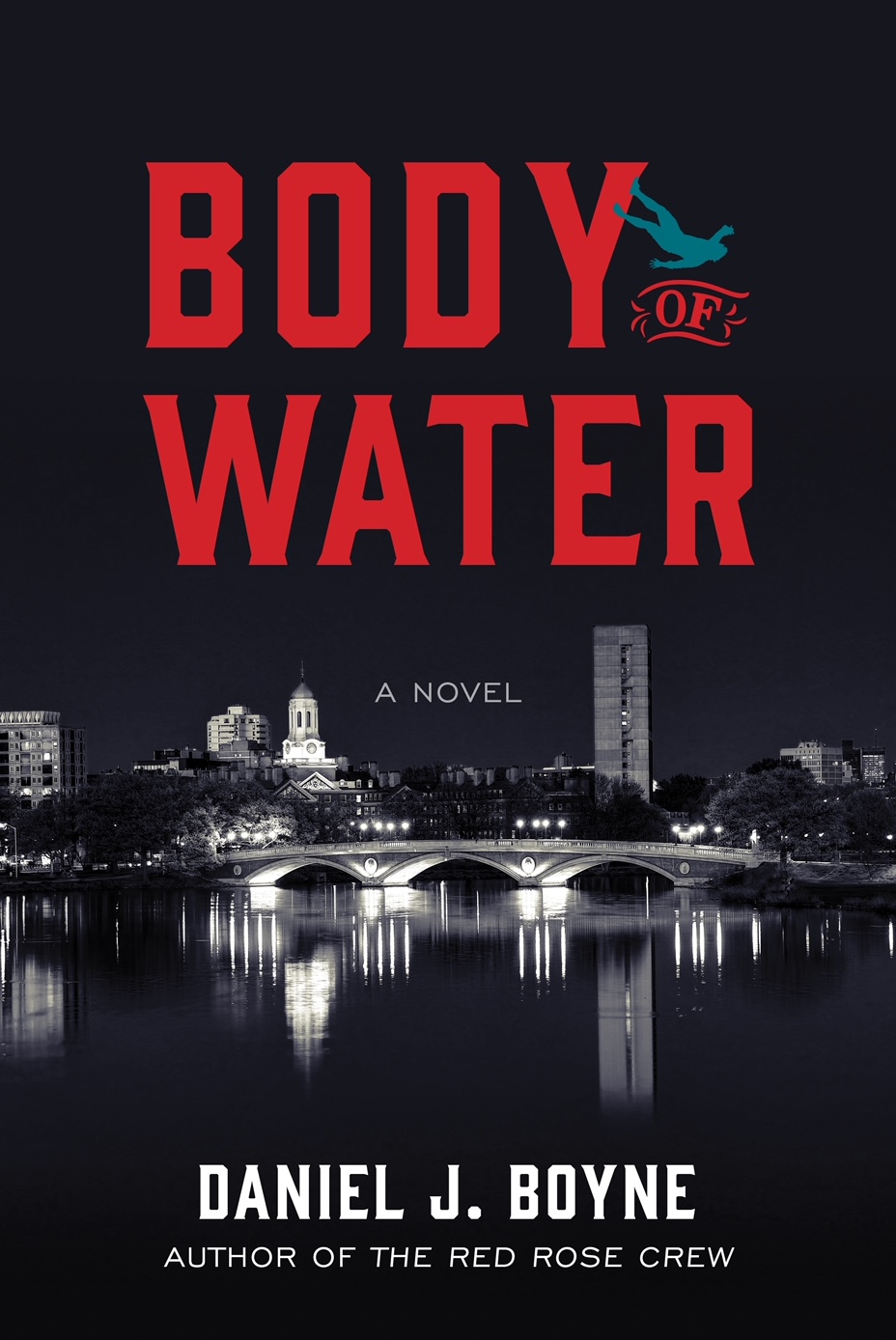
Body of Water (2023) by Daniel J. Boyne. I wrote a review of Boyne’s first crime story: “The main stage in Dan Boyne’s Body of Water is the Charles River in Boston, and the main characters are never many steps away from the Charles. The story starts with Ed Masterson, a former coach at Harvard, who is out sculling on the Charles River. Boyne is doing a tremendously good job at describing Masterson’s work-out on the river. One can tell it is a sculling coach who is holding the author’s pen. While out on the water, Masterson finds a body floating. To his horror he recognises the body is that of ex-coxswain, Finley Sparks, whom Masterson coached at Harvard. It was Finley’s father, the stinking rich Sheldon Sparks who pressured Harvard to sack Masterson after an incident Masterson had had with Finley. Sparks Senior, who once rowed for Harry Parker, has a big influence due to his large donations to the Harvard rowing program. [- – -] Is Finley Sparks’s death murder or suicide? As the entire Charles River and the DCR (Department of Conservation & Recreation) parkland is considered state police territory, it will be state trooper Sean Delaney’s job to figure out what happened. Like other great fiction detectives, Delaney has a side-kick, and his “Watson” is state trooper Marshall McDonald, known as “Marsh”, whom Delaney most of the time finds annoying to a fault. To Delaney’s aid is also chief coroner Sue Chason, a woman with a sharp intellect and a sharp tongue who rowed bow at the elite Saint Paul’s School’s first eight and can give him an insight of the noble art of rowing – and acts as his bed companion.” Read the full review here.
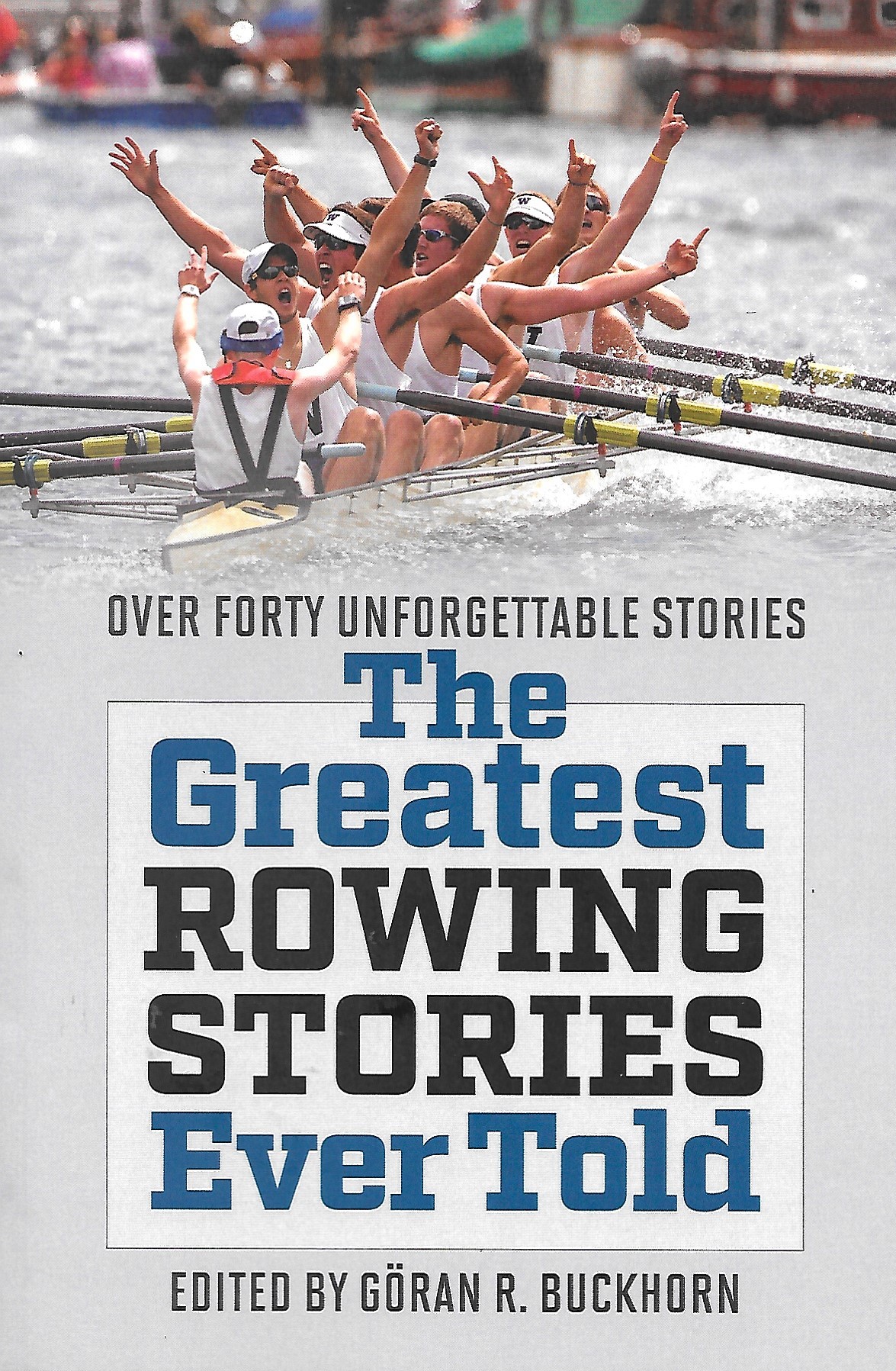
The Greatest Rowing Stories Ever Told – Over Forty Unforgettable Stories (2023) edited by HTBS editor Göran Buckhorn. The anthology was reviewed by Michael J. Socolow, the author of Six Minutes in Berlin: Broadcast Spectacle and Rowing Gold at the Nazi Olympics (2016) and a former Columbia University (Heavyweight) and King’s Crown Rowing Association oarsman. “The Greatest Rowing Stories Ever Told, the excellent new collection of stories, poems, essays and narratives edited by the veteran Swedish journalist and oarsman Göran R Buckhorn, whose website Hear The Boat Sing comprises one of the web’s few remaining delights, recently prompted my thoughts on rowers and their stories. [- – -] Buckhorn’s compilation contains brief and engaging excerpts from several well-known rowing books, including ones from Daniel J. Boyne’s The Red Rose Crew (2000), Stephen Kiesling’s The Shell Game (1982), Brad Lewis’s Olympian (2021), and Toby Ayer’s The Sphinx of the Charles (2016). It also includes humorous pieces, such as Andy Anderson’s “The Legend of the Japanese Eight.” [- – -] The Greatest Rowing Stories Ever Told contains inspiring stories, funny moments, engaging Olympic tales, and work from some of rowing’s most astute and stylistic writers, including Peter Mallory and Christopher Dodd. Somewhat unexpectedly, some of the most powerful and memorable parts of the book concern grappling with losing. [- – -] Buckhorn’s selections might differ in format and length, but they are uniformly engaging and thoughtful. The Greatest Rowing Stories Ever Told comprises perhaps the most diverse and multifaceted rowing book I’ve ever encountered. Readers can dip in and out of this collection rather than read it in a linear fashion, and the best pieces can (and should) be re-read often. [- – -] Rowing remains a distinctive activity notable for the ways it can teach its practitioners about working with nature, about collaborating with others, and about themselves. Rowing, in this sense, is ultimately about life. That’s what makes reading The Greatest Rowing Stories Ever Told so richly satisfying.” Read Michael Socolow’s full review here.
Part I is here.
 Hear The Boat Sing