

16 December 2025
By Tim Koch
Tim Koch finds how far some people will go for a boat race.
What’s in a name? In some instances, a lot. The name changes that the quadrennial multi-sport event now known as the Commonwealth Games has undergone since the first in 1930 reflect the changing relationship between Britain and its former territories as the British Empire decolonized and became the modern Commonwealth of Nations, a voluntary association of 56 independent countries, mostly former territories of the British Empire.
Between 1930 and 1950 the games were the British Empire Games; 1954-1966, the British Empire and Commonwealth Games; 1970-1974, the British Commonwealth Games; 1978-present, the Commonwealth Games.
According to the teamscotland website:
The concept of a sporting competition to bring together the nations of the British Empire had been talked about since the 1890s. Reverend Astley Cooper is credited with first proposing the idea in an 1891 article in The Times newspaper suggesting a ‘Pan-Britannic-Pan-Anglican Contest and Festival’ every four years as a means of increasing the goodwill and good understanding of the British Empire.’
In the end the concept was beaten to the punch by the modern Olympic Games, first held in 1896, and the idea of an Empire Games was put on hold…
The concept of a ‘Commonwealth Games’ then lay dormant for several years until M.M ‘Bobby’ Robinson, a journalist and member of the Canadian Olympic Committee at the 1928 Olympic Games in Amsterdam, raised the idea to his counterparts from Britain, Australia, New Zealand and South Africa, with the idea of hosting the first Games in (Canada in 1930).
As the Wikipedia page Rowing at the Commonwealth Games shows, rowing has had a chequered relationship with the event and not every one has held a regatta. This is possibly because some view it as a sport dominated by Britain and what are euphemistically called the countries of the Old Commonwealth, the original group of self-governing British dominions (Canada, Australia, New Zealand and South Africa).
The first Games in Hamilton, Canada, in 1930 offered races for singles, coxed fours, coxless fours and eights and, though attracting a limited entry (Canada, England, New Zealand, Australia and British Guiana), they were watched by crowds of up to 70,000 on the shores of Lake Ontario.
Strangely, no rowing events were offered at the second Games held in London in 1934. Henley was the only place near the capital that could host a long, straight, multi-lane race and, as they would be taking place only a month after Henley Royal, it was felt that there was not enough time to prepare and that it would be too disruptive of the British rowing season.

The events offered at Sydney were track and field, boxing, cycling, lawn bowls, wrestling, swimming, diving – and rowing (singles, doubles, coxed fours and eights).
As HTBS Types will recall, I have recently had access to the great Jack Beresford’s personal photograph albums and this has been a very long introduction to the pictures that he collected as the coach of the English Eight entered for the 1938 Empire Games.
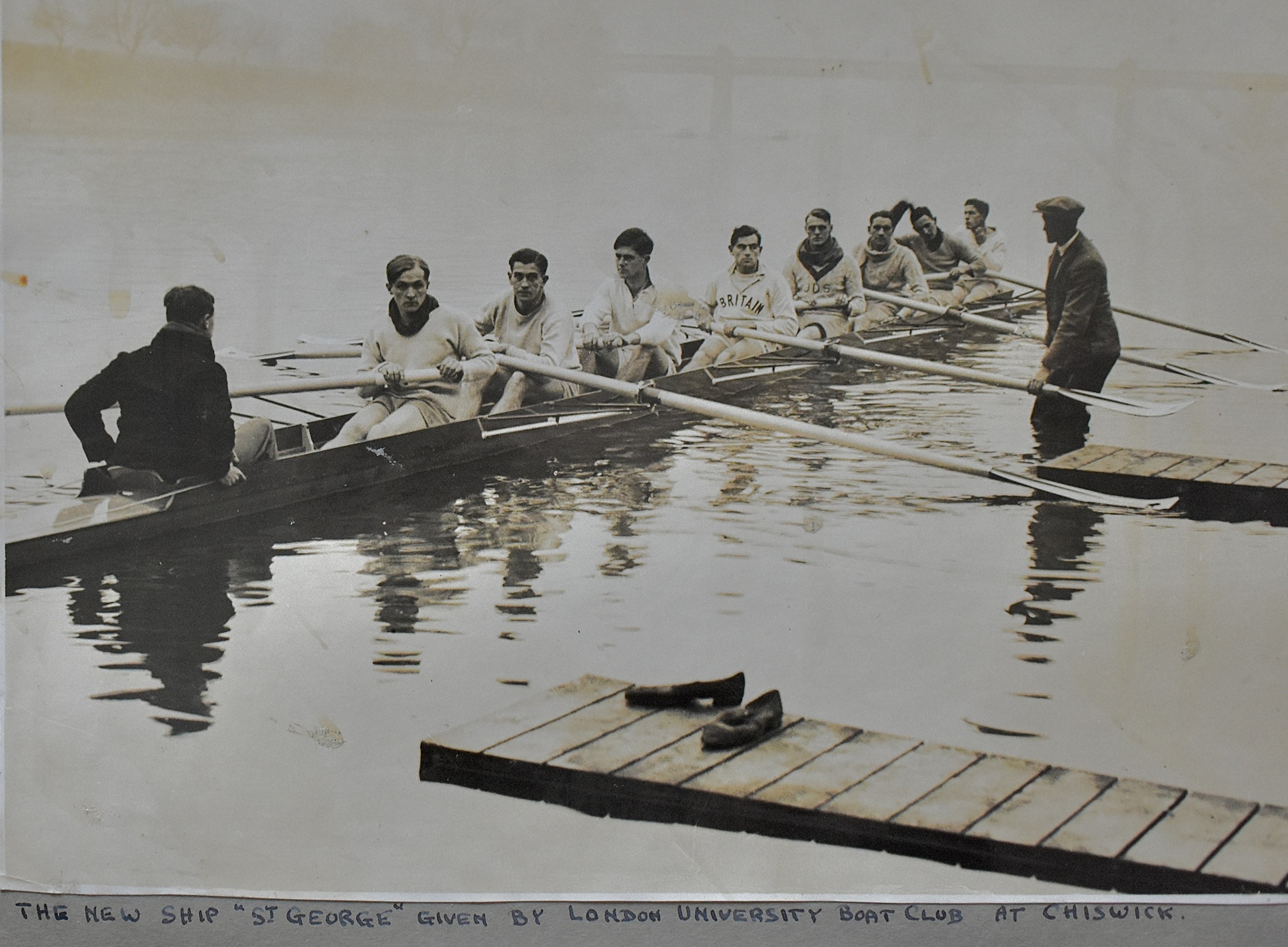
Four months before the Games, on 28 September 1937, the newspapers announced:
The Amateur Rowing Association has approved the entry of a sculler and an eight for the Empire Games… Jack Beresford… has agreed to form an eight representative of English rowing and so on this occasion England will not be represented by a club crew. Victory in the Grand at Henley has usually been the supreme test in the past. Beresford will not be able to travel (to Australia).
Thus, the usual practise of those pre-national squad days, that of sending “private navies”, the best domestic club crews, to represent Britain or one of the home countries was abandoned in favour of picking good oarsmen from different clubs and moulding them into an effective unit under a chief coach, in this case Jack Beresford. Notably, rowers from old rivals London and Thames were for once in the same boat.
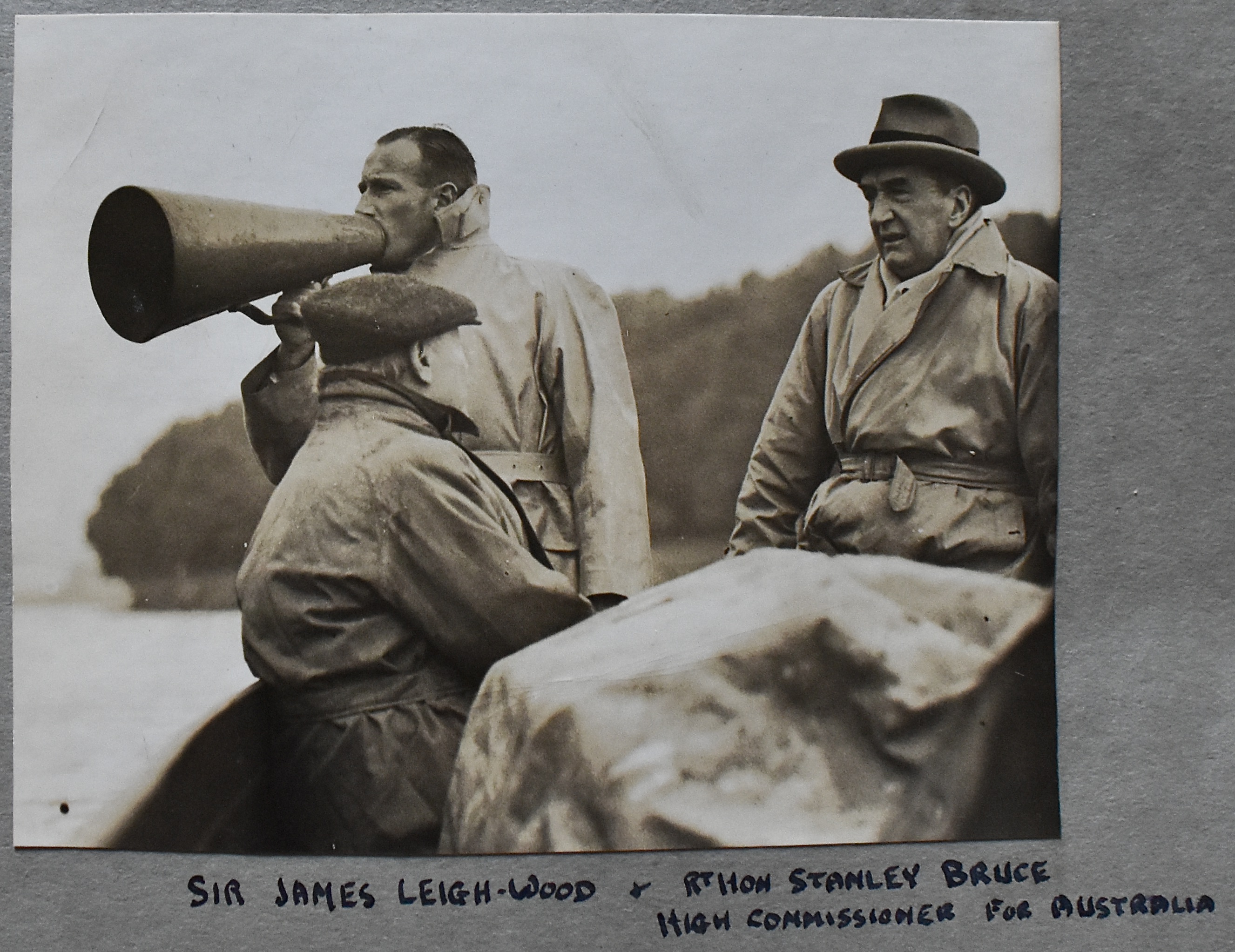
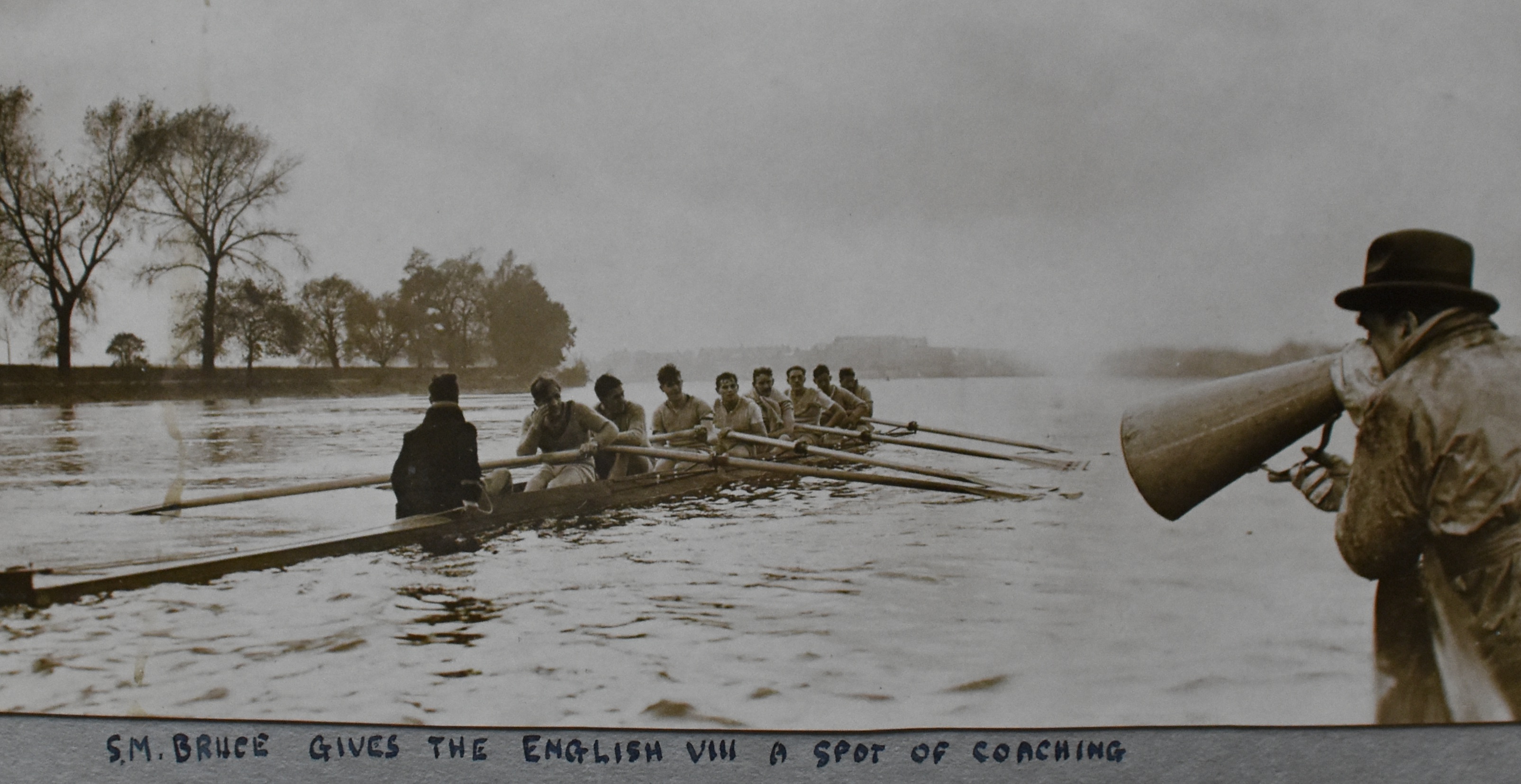
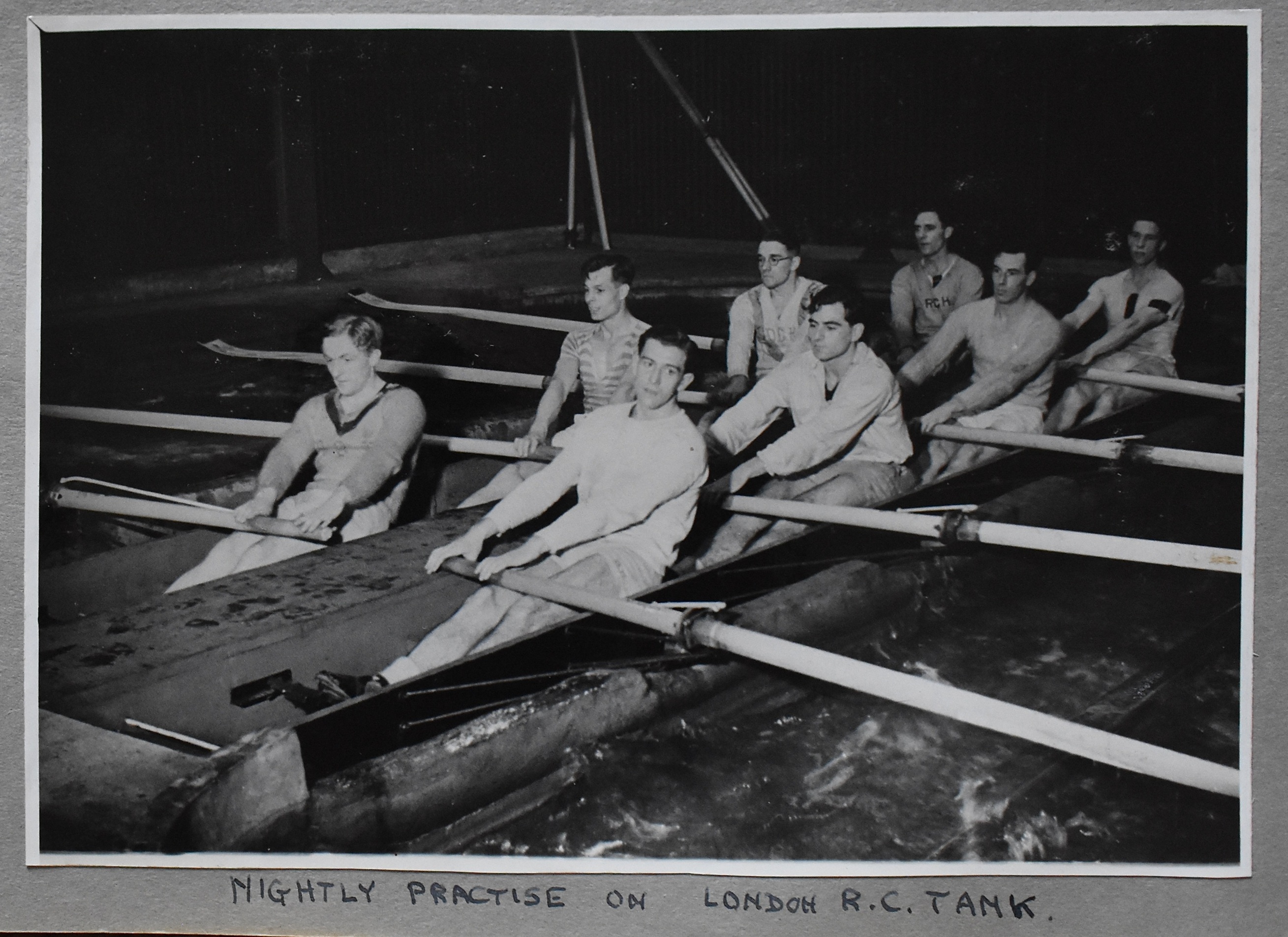


The Illustrated Sporting and Dramatic News of 12 November 1937 called the crew “a magnificent eight” and suggested that they were better than any crew that had rowed in the 1936 Berlin Olympics:
Raising the crew has been no easy matter, but Jack Beresford, the famous Olympic oarsman, and PH Jackson have made an extraordinarily good job of it… Coaching at present is in the hands of Beresford; he is not boring the crew with much over-talking. All their work is done at a hard paddle and they are becoming machine-like in their precision, with a magnificent leg drive.
By 3 December 1937 another paper reported on A Brilliant Eight:
Fears that we might be unable to compete in the Empire Games at Sydney have, thanks to the enthusiasm of that great oarsman, Jack Beresford, and the keen patriotism of various employers, been triumphantly dispelled… Anyone who takes a look at our Sydney crew, who are now in regular week-end training at Putney will realise that they are indeed a brilliant eight. They average just under 13 stone…
Film of the crew in training at Putney is here between 1.17 and 3.06.

There was a worry among the Australian organisers of the 1938 Games “as to whether other parts of the Empire would agree to their representatives travelling so far and being away from their occupations for so long.”
To assuage some of this concern, the government of New South Wales reluctantly agreed to give £10,000 (£860,000 in today’s money) to cover the travel costs of non-Australian teams.
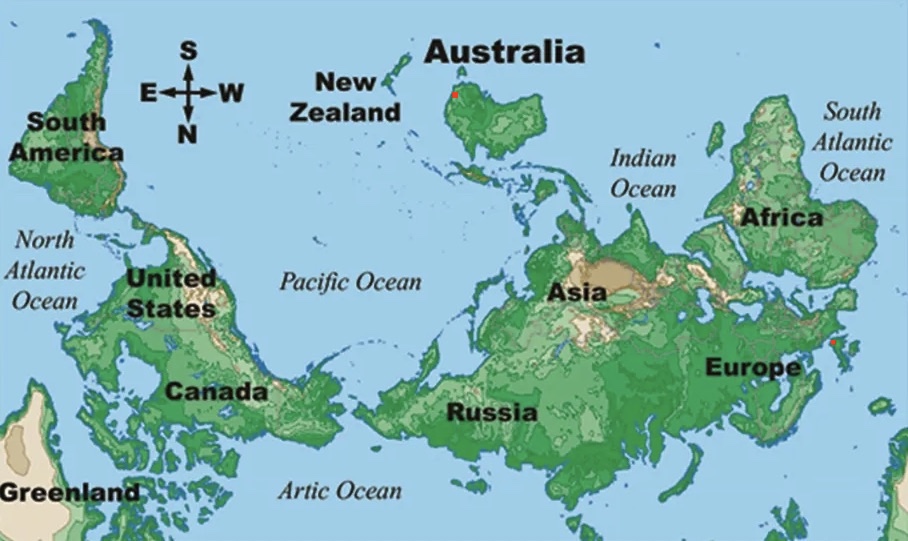
While the cost of traveling to Australia may have been negated, the time that it would take to get there by ship could not be – it took 40 days each way. With three weeks in Australia itself, any competitor from Britain would need to be able to take four months off work. Their employers did indeed need to be “keen patriots.”
It could be asked why the athletes did not fly to the Games as a London to Brisbane airline service had started in 1934.

The 12,750-mile flight could take 10-12 days and for good reason it was nicknamed “The Kangaroo Route”. Wikipedia:
Eastbound passengers from London would first fly from Croydon to Paris, take an overnight train to Brindisi, and fly onward with stops at Athens, Alexandria (overnight), Gaza, Baghdad (overnight), Basra, Kuwait, Bahrain, Sharjah (overnight), Gwadar, Karachi, Jodhpur (overnight), Delhi, Cawnpore, Allahabad, Calcutta (overnight), Akyab, Rangoon, Bangkok (overnight), Alor Star, Singapore (overnight), Batavia, Sourabaya, Rambang (overnight), Koepang, Darwin (overnight), Longreach (overnight), and Charleville to Brisbane.
The real problem was cost. A single airline fare in 1938 was £195 (which would equate to £8,600 in today’s money) and the English were sending fifty-four athletes (plus officials) in total. Thus, it would cost more than the entire Games travel budget to fly all the English athletes out. The usual cost of a tourist class ticket by ship was £47 one way but presumably a discount was arranged for the England team.
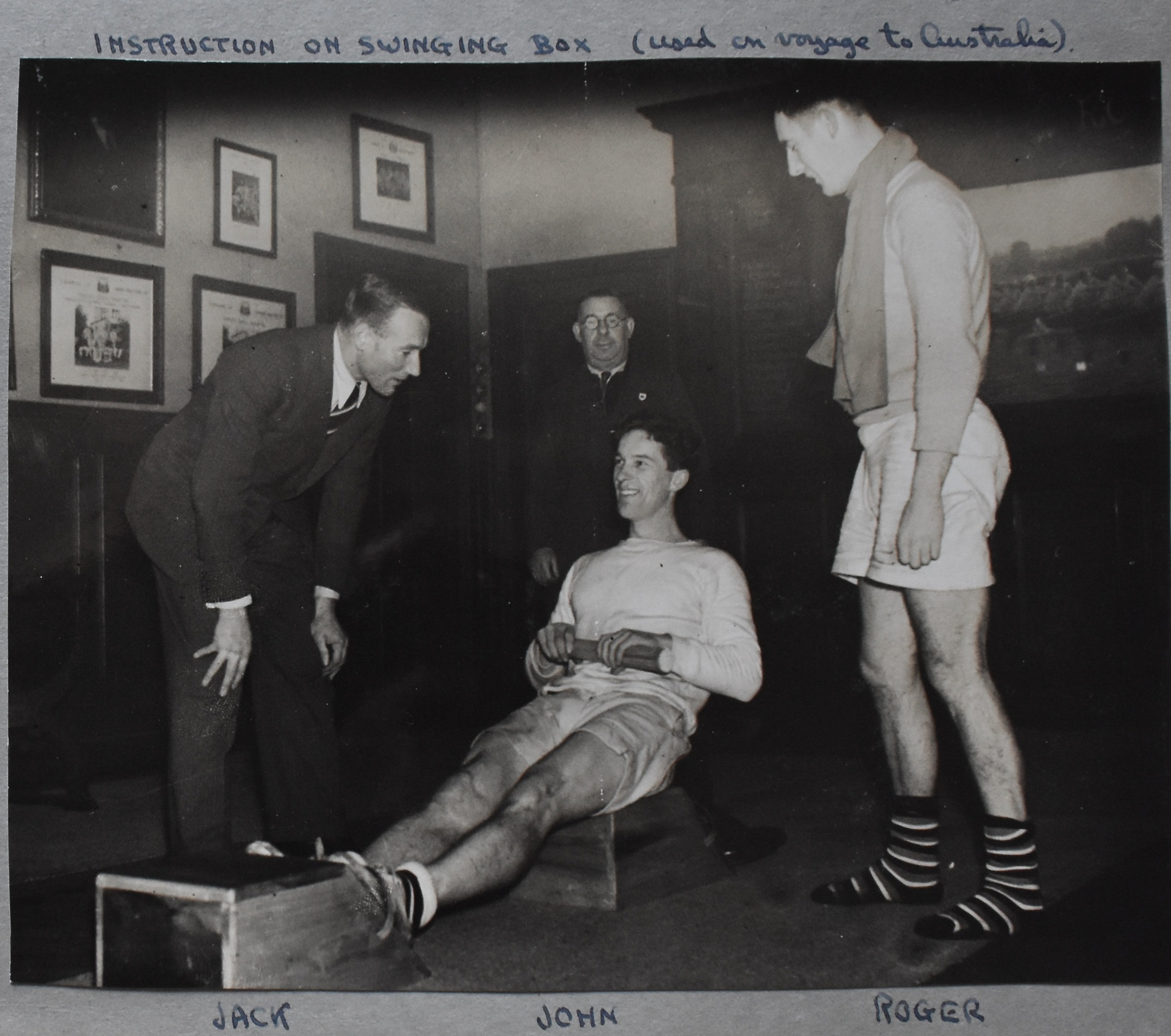
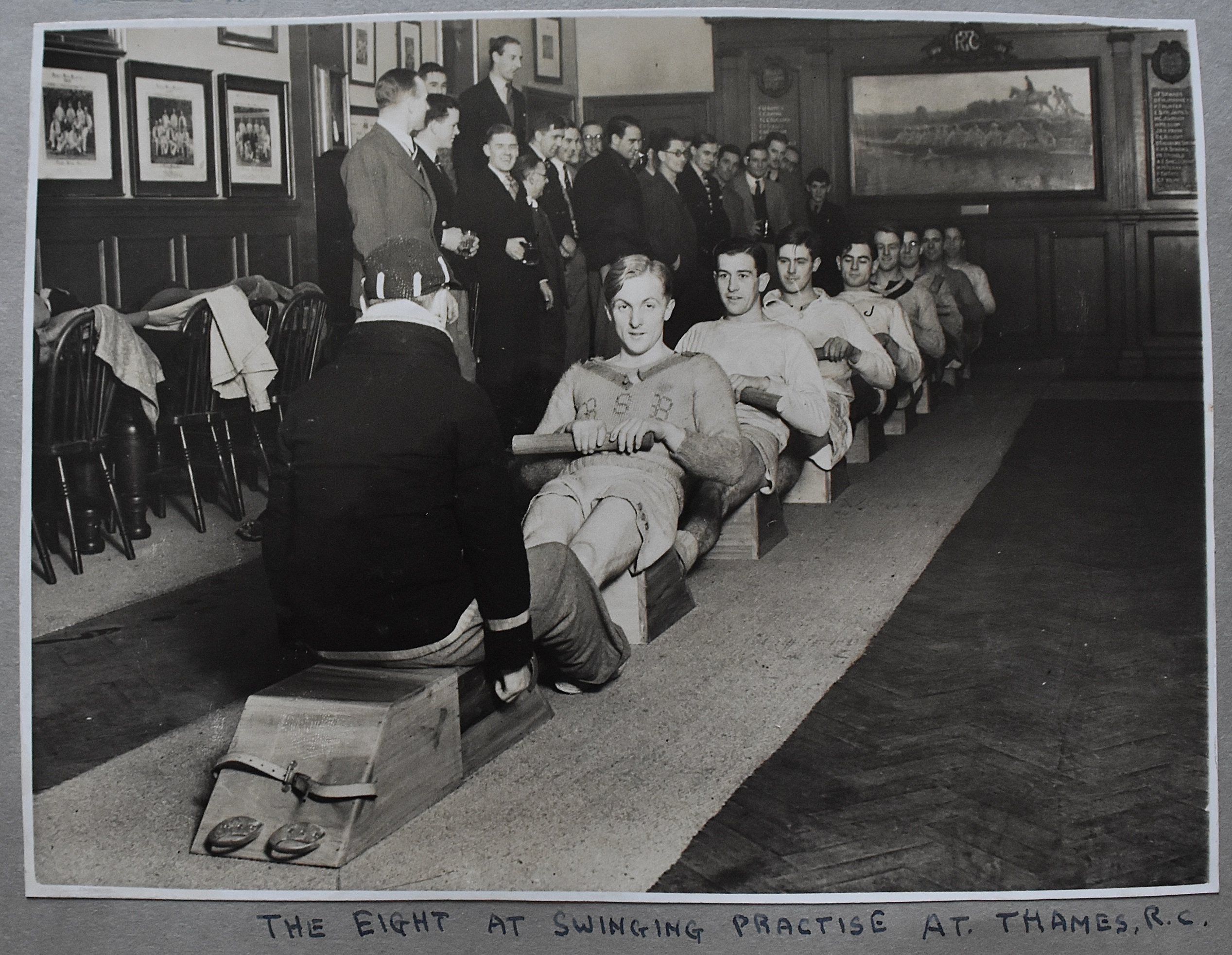
The above pictures from the Beresford Archive show an invention credited to Jack for use onboard the ship. The Sketch newspaper of 1 December 1937 reported:
When the crew to represent England at the Empire Games Regatta in Sydney, Australia, in February, leave for “down under,” they are taking no chances of getting out of training through a lazy life as ship-board passengers. They will, on the contrary, be able to keep fit during the weeks of the voyage. Jack Beresford has designed a very neat little device to help over this. It consists of a series of swinging boxes which look like shoe-black’s rests. These are placed in a row, so that the eight occupy their usual positions, each sitting on his box. On the sloping back of the box in front of each, heel-traps and straps are fixed in exact imitation of the stretcher on which an oarsman rests his feet in a boat. Each man holds a dummy oar handle, and cox gives the orders. Rhythmical swinging from these boxes is found to be a better physical exercise than anything else.
Even though the crew had three weeks in Australia before their first and only race and, despite “swinging together” while holding a handle that was not attached to anything, not being able to row for 40 days before a race would have produced obvious problems.

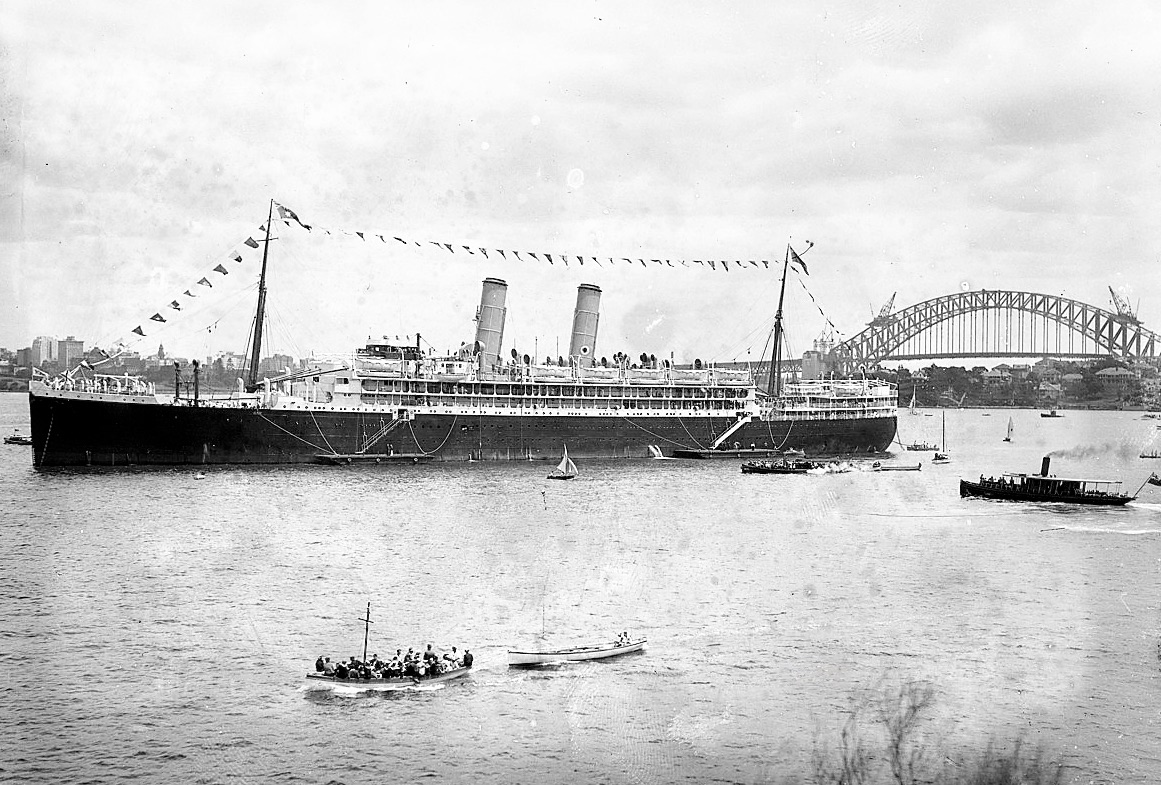
The journey started on 4 December 1937, when Ormonde departed Tilbury Docks near London. There were ten ports-of-call, Christmas was spent in a stopover in Colombo, Ceylon, and Sydney was reached on 13 January 1938, four weeks before the Regatta which was to be held over one day on 9 February.
On board were eleven English oarsmen, the nine from the eight and a double, the Offer brothers from Kingston RC. Peter Jackson was to double up in the eight and the single. The English did not contest the coxed four event.
The rowing, held on the Nepean River near Penrith, 50 miles from Sydney, featured four events with four nations (England, Australia, New Zealand and Canada) competing. Ultimately, all four events were straight finals with only three starters.
The final line up of the England Eight was:
Bow: John Burrough (Thames)
2: Basil Beazley (London)
3: Rhodes Hambridge (Lady Margaret BC, Cambridge, and London)
4: John Turnbull (Clare College BC, Cambridge)
5: Peter Jackson (GB and London)
6: Jan Sturrock (GB, OUBC, Leander and Royal Engineers)
7: Desmond Kingsford (GB and London)
Str: Tim Turner (London)
Cox: William Reeve (Clare College BC, Cambridge, and London)
Sub: Roger Harman (London)
Hambridge and Turnbull were Australian born British residents, but the real controversy came with the sudden dropping of Roger Harman soon after arrival. He had trained with the crew throughout and had travelled with them from England but was then replaced by Tim Turner, a former London RC rower who had settled in Australia, but who had not been included in the official English team. I speculate that Jack Beresford, the ultimate sportsman, would not have allowed such a thing had he been there.
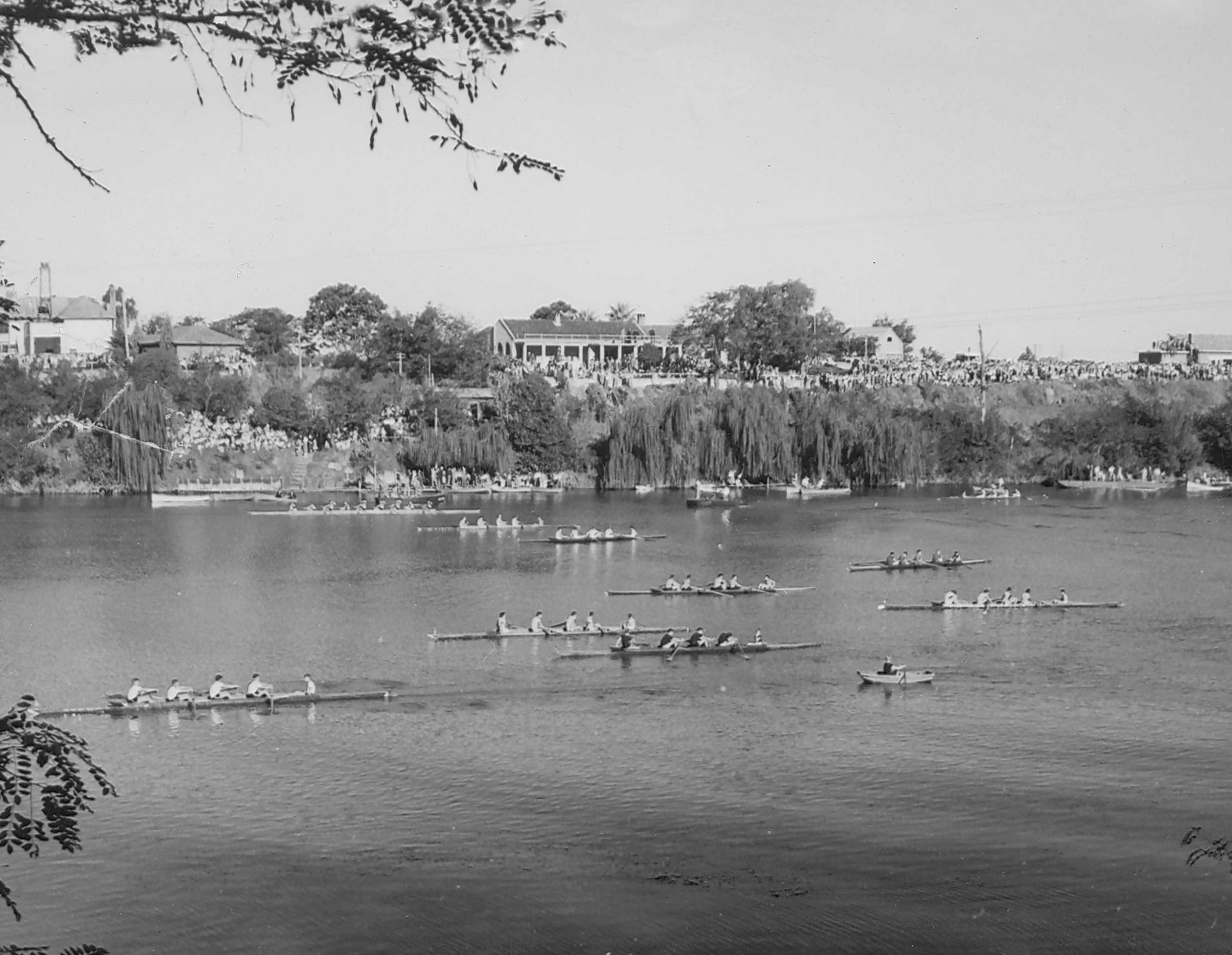
ln a thrilling finish, the English eight won by three-quarters of a length over Australia with New Zealand third. Their time over the course of 1 1/4 miles (2011m) was 6mins 29secs.
The Liverpool Evening Express of 9 February 1938 reported:
One of highlights of the Empire Games today was the success of England’s “experimental crew” stroked by Tim Turner. Turner, who has done no really serious rowing for nearly four years, played a notable part in the English success in the Eights…
Experts shook their heads when, having gained special permission through a waiving of the rules, officials decided at the last minute to include Turner at stroke instead of Basil Beazley. Turner, who stroked the London eight at (the Melbourne Centenary Regatta) in 1934 before he settled down in Australia, led England to victory over Australia in a tight finish. New Zealand were third.
After a beautiful start, England jumped into a slight lead but the Australians were a length in front at the mile post. Then Turner quickened the stroke to 36 and, maintaining a fine rate of striking, the English crew closed the gap. With a quarter of a mile to go, Turner called on his men for a final burst and they went to the front.


The English eight had started training in early October 1937 and would arrive back home by the end of March 1938. In total, they spent 80 days at sea. For all the pleasure of winning, it was a big price to pay for victory in a three boat straight final.
The whole experience should have proved that this embryonic and one-off national squad system was clearly superior to the practice of selecting successful domestic club crews for international events. However, this was not a lesson that was not learned for many years – much to the detriment of British international rowing.
 Hear The Boat Sing
Another extremely interesting article, Tim, & extraordinary that the lesson of a National Crew took so long to be revived & GB rowing to be revitalised.
I had no idea these fascinating histories of rowing existed in Dad’s albums.
Thank you once again, Tim.
John Beresford.