
11 December 2025
By Tim Koch
Tim Koch looks at HRR’s annual David Bowie moment when they bring in ch-ch-changes.
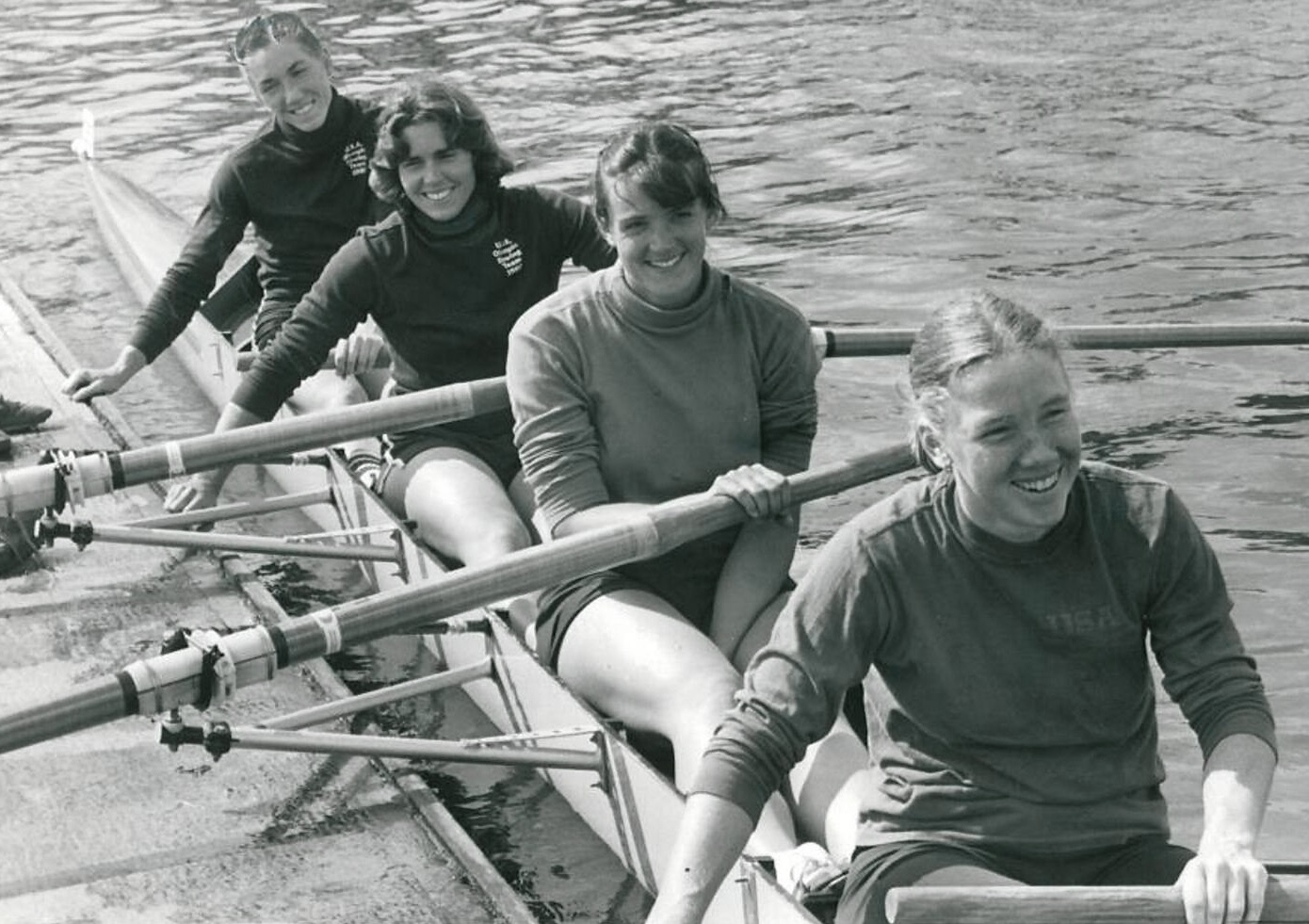
If you can remember when boats were made out of wood, kit was made out of cotton and most rowers were made out of men, you will also recall a time when Henley Royal Regatta had an uncertain future.
From at least the 1960s, Henley had failed to respond to changing times and as a result its finances were in a poor state and support from spectators and competitors appeared to be declining. Thus, between 1973 and 1993 the regatta could not, for example, afford to award the silver-gilt Pineapple Cups that had been given to each winner of the Diamond Sculls since 1850.
Even when there was some reform, it was done begrudgingly or defensively. Notably, when Henley finally allowed women to cox in 1975, the then chairman stated “I would emphasise that this is in no way the thin end of the wedge. It is not a triumph for women’s lib – or any nonsense of that sort.”
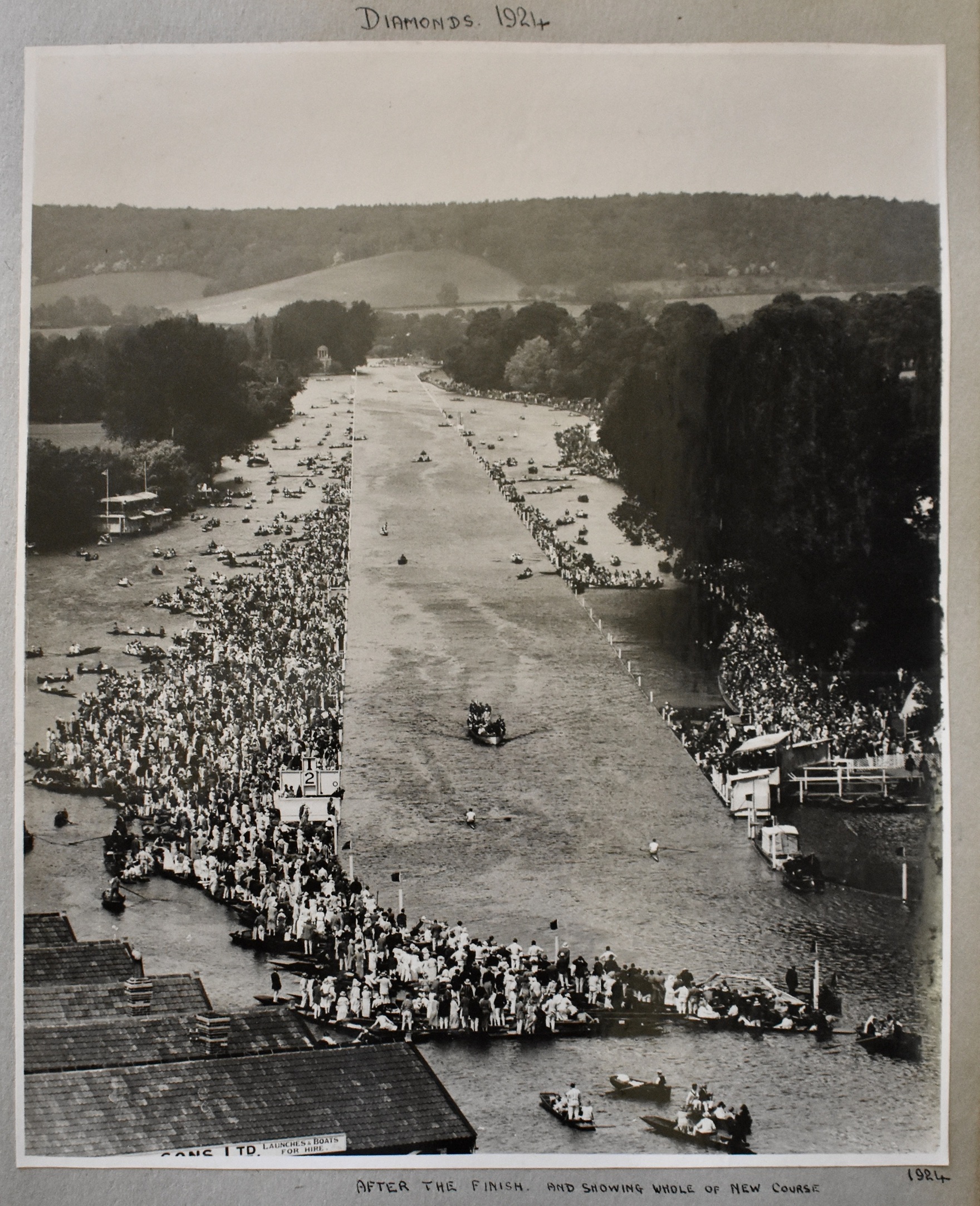
Henley was not always a conservative institution. Following the 1914-18 War, those in charge of the world’s most famous regatta quickly realised something that many did not, that the conflict had changed the world forever and that the age of relatively widespread inherited wealth and of cheap labour, land and materials had passed.
The Stewards’ response in 1919 was to get the regatta an assured income by formally establishing the Stewards’ Enclosure, membership of which required an annual subscription. Having to pay a vulgar yearly membership fee to watch the rowing from the best seats may have been distasteful to some who remained in the Edwardian age but it secured Henley’s future for many years after.
Today, those young enough to compete in recent regattas will never have known a time when Henley Royal Regatta was not a thriving and financially solvent event that produces carefully considered responses to rapidly changing social, economic and sporting conditions and its recent Annual General Meeting provided ample evidence of this continuing journey. In its own words:
The AGM marks an opportunity for the (Stewards) to propose amendments to the event’s qualification and general rules, as part of the constant evolution of the event…
Henley Royal Regatta’s vision aims to broaden its appeal, establishing itself as the premier international regatta and an iconic British sporting event for both rowers and spectators alike.
With a focus on gender parity, inclusivity and enhanced experiences, Henley Royal Regatta is poised to continue breaking barriers and redefining excellence both on and off the water.
The two most notable things to come out of the AGM on 9 December are the introduction of three new women’s events in 2026 and the “probable” removal of two Open (effectively men’s) events in 2027.
Three new women’s quadruple sculls events in the Intermediate, Club and Student categories have been introduced for the 2026 Regatta. Women can now compete in fourteen events paving the way for an equal number of Open and Women’s events at the 2027 Regatta, achieving gender parity by event for the first time. Ten new women’s events have been added to the Henley programme since 2017.
The new events mean that female scullers in quads can now progress through the regatta from Junior to the Olympic-level Premier category and this should have a positive impact on women’s sculling generally.
The Britannia Challenge Cup (Club Open 4+) and The Visitors’ Challenge Cup (Intermediate Open 4-) are “likely to be suspended” from 2027. I asked Henley Chairman, Richard Phelps, about this:
At the 2025 Regatta, we had eleven women’s events and sixteen open events and so, to get to parity, one option was to go sixteen-sixteen and add five new women’s events. That was not going to happen, we do not have space for thirty-two, so you have to work out how many events you can add and what has to get cut.
At present, twenty-eight events is the size of our regatta – so if you add three women’s events, you have to cut two open events (to get fourteen-fourteen).
Looking at the open events, there are two for juniors and two for students but three for clubs and three for intermediates. Thus, if you are going to cut open events, you are going to look at those in club and intermediate.
In the club category, the Brit coxed four was the least subscribed, smaller event. The feedback (from the clubs) was that a coxed four event is more expensive as you have to buy a boat that can only be used (for sweep) whereas a coxless boat can be used as a four or a quad…
Looking at the open intermediate category, the overwhelming feedback from the clubs was “give us more sculling” so it would have been bizarre to cut the Prince of Wales (intermediate open quads) so you are left with either cutting the Ladies’ (open intermediate eights) or the Visitors’ (open intermediate coxless fours) and (we decided to give) eight rowers and a cox the experience of Henley over a four…
We did not touch the Premier events, they are already equal number… We are working on the names and trophies for the new events… No more new events are planned…

Looking at other changes, rowers who have competed for a national team more than five years ago can now compete in the Club category races subject to Committee discretion. This mirrors similar exemptions at Henley Women’s Regatta.
Richard Phelps:
The Committee has discussed such a change over the years but our recent club consultations made it clear that the regional clubs in particular are the ones who are impacted. If an ex-international, still fit and wanting to row, joins a provincial club then any crew they are in would be forced to row at intermediate level… where they probably would not qualify, let alone compete…
Each case will be looked at on its merits… and we have indicated that up to two in any crew is acceptable. In the modern age of digital databases, we are much more able to see athletes’ past records. This is principally to (benefit) non-Thames Valley clubs… it is not for large clubs to create supercrews, we will be keeping an eye out for that.
An example of how modern Henley looks to the future and realises that today’s regulations may not be suitable for tomorrow’s racing is in their explanation of the rules for the new women’s student quad event:
These rules mirror those of The Island (women’s student eights), except that they do not permit the participation of clubs from secondary schools, where quadruple sculling is currently more developed than in universities and colleges. This restriction will be kept under review as women’s sculling becomes established at university and college level.

The AGM also agreed to two new Stewards, Anna Watkins and Matt Evans. A press release says of them:
Dr Anna Watkins MBE joins the body of Stewards with an impressive history of rowing success, winning a Bronze medal at the 2008 Beijing Olympics and a Gold medal at the 2012 London Olympics, in addition to winning four World Championships medals, and The Remenham and Princess Grace Challenge Cups in 2004 and 2010 at Henley Royal Regatta. With a PhD in Applied Mathematics and a career in sports leadership as CEO of the British Elite Athletes’ Association, and Non-Executive Director at the UK Sports Institute, she brings a wealth of expertise in athlete wellbeing, governance, and strategic insight…
Matt Evans… is currently Sports Manager for Rowing, Coastal Rowing, and Para Rowing at the Los Angeles 2028 Olympic and Paralympic Games. With a strong background in rowing, including volunteering at Henley Royal Regatta since 2015 and senior roles at World Rowing, he brings expertise in event management, operational leadership, and athlete-centred planning. His career spans complex international projects, strategic initiatives and governance roles…
For all the new rule changes in detail – see HERE.
Henley Royal Regatta 2026 will run Tuesday, 30 June to Sunday, 5 July.
 Hear The Boat Sing