
5 December 2025
By Edward H. Jones
Father Football
By Edward H. Jones © 2025
As college football’s patriarch,
the game now bears his stamp.
The sliding seat he too did hail,
so praise to Walter Camp.
Last month, I introduced HTBS readers to John the Orange-Man of Harvard, a nineteenth-century Irish immigrant and fruit peddler who became a beloved mascot of the Harvard University athletic teams. This month, I figured I should devote a few words to Harvard’s athletic archrival, Yale University, especially after Yale’s upset win in its first game of the Football Championship Subdivision (FCS) playoff series, defeating favored Youngstown State University 43 to 42 this past Saturday.* This was the first time in eighty years that any of the eight teams comprising the Ivy League athletic conference (the “Ancient Eight”) advanced in a postseason football playoff. (Harvard lost its playoff clash against Villanova last Saturday.) The eighty-year hiatus was a result of a provision in a 1945 agreement among the member schools to limit play to the regular football season in part to maintain the league’s tradition of athletics not overshadowing academics. In 2024, however, the eight member schools voted to allow postseason play beginning with the present 2025 football season.
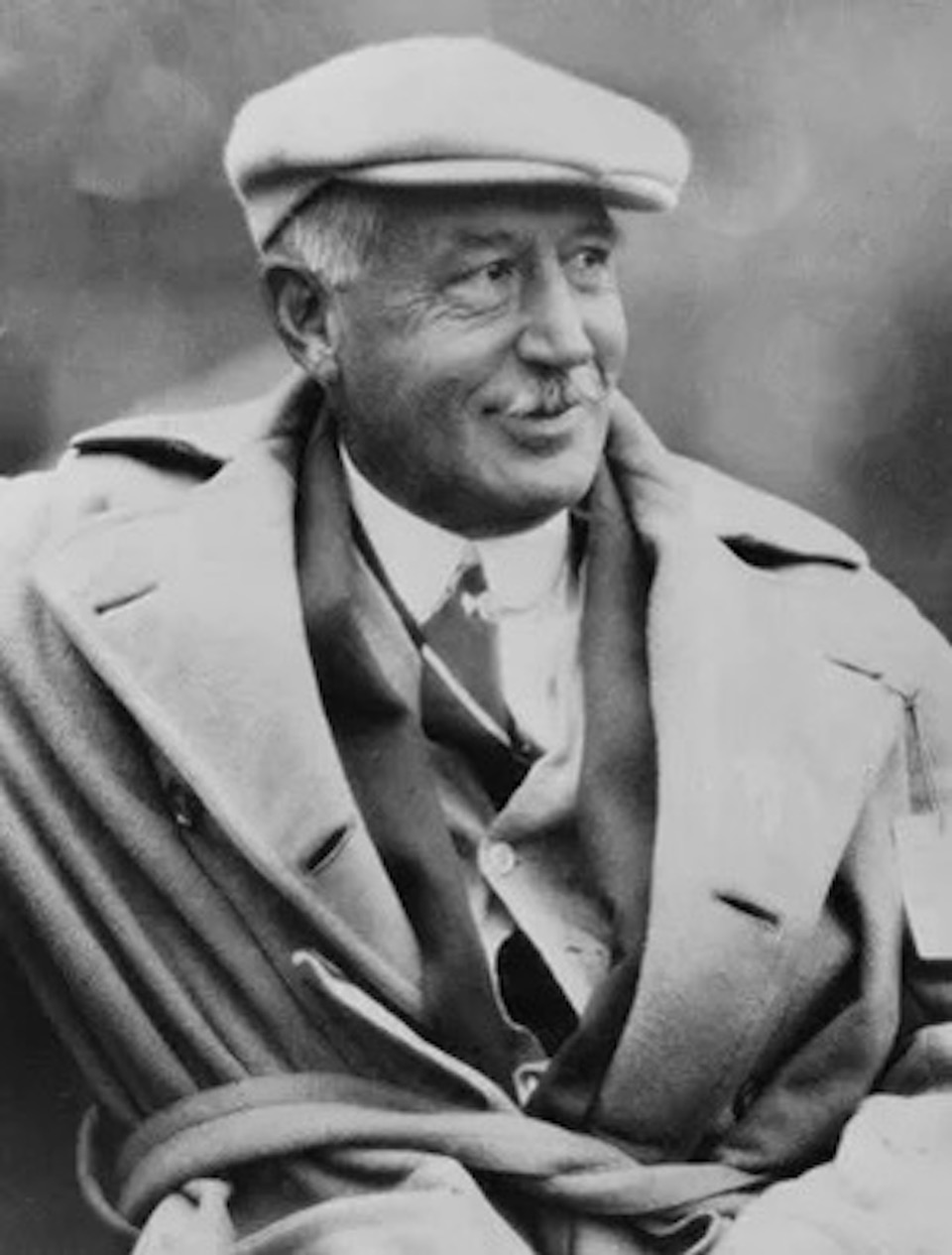
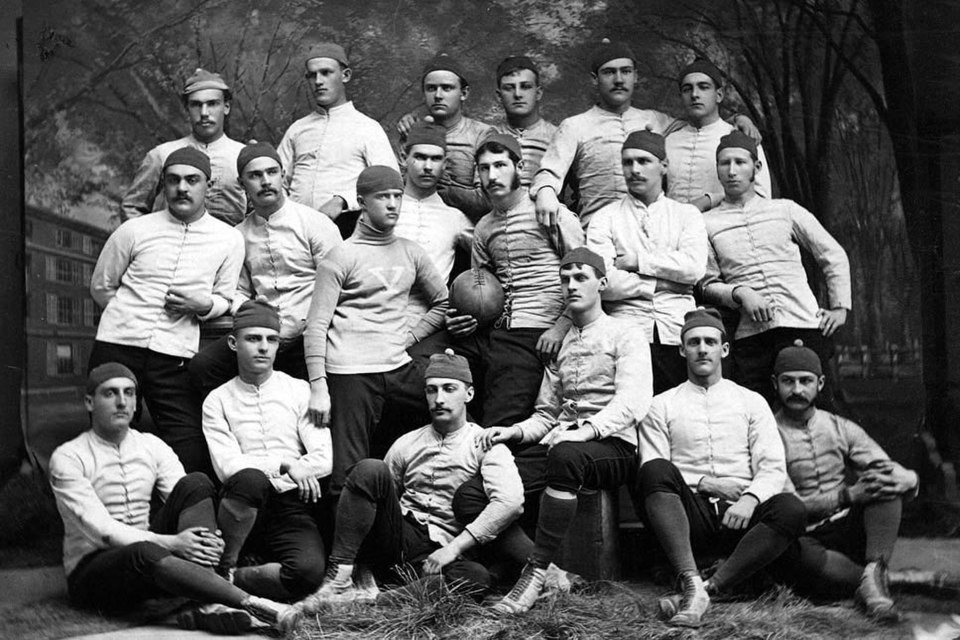
Yale’s upset of Youngstown State would certainly have pleased Walter C. Camp who was a multi-sport star athlete as a Yale undergraduate between 1876 and 1880. Camp starred as a halfback on the football team, played left field and shortstop and pitched on the baseball team, played singles and doubles in intercollegiate tennis tournaments, won the high hurdles in track, and rowed the number 3 seat of his class of ‘80 six-man crew. At the time, Yale had University, club, class (freshman, sophomore, etc.), and even professional school (ex., Law School) rowing crews.

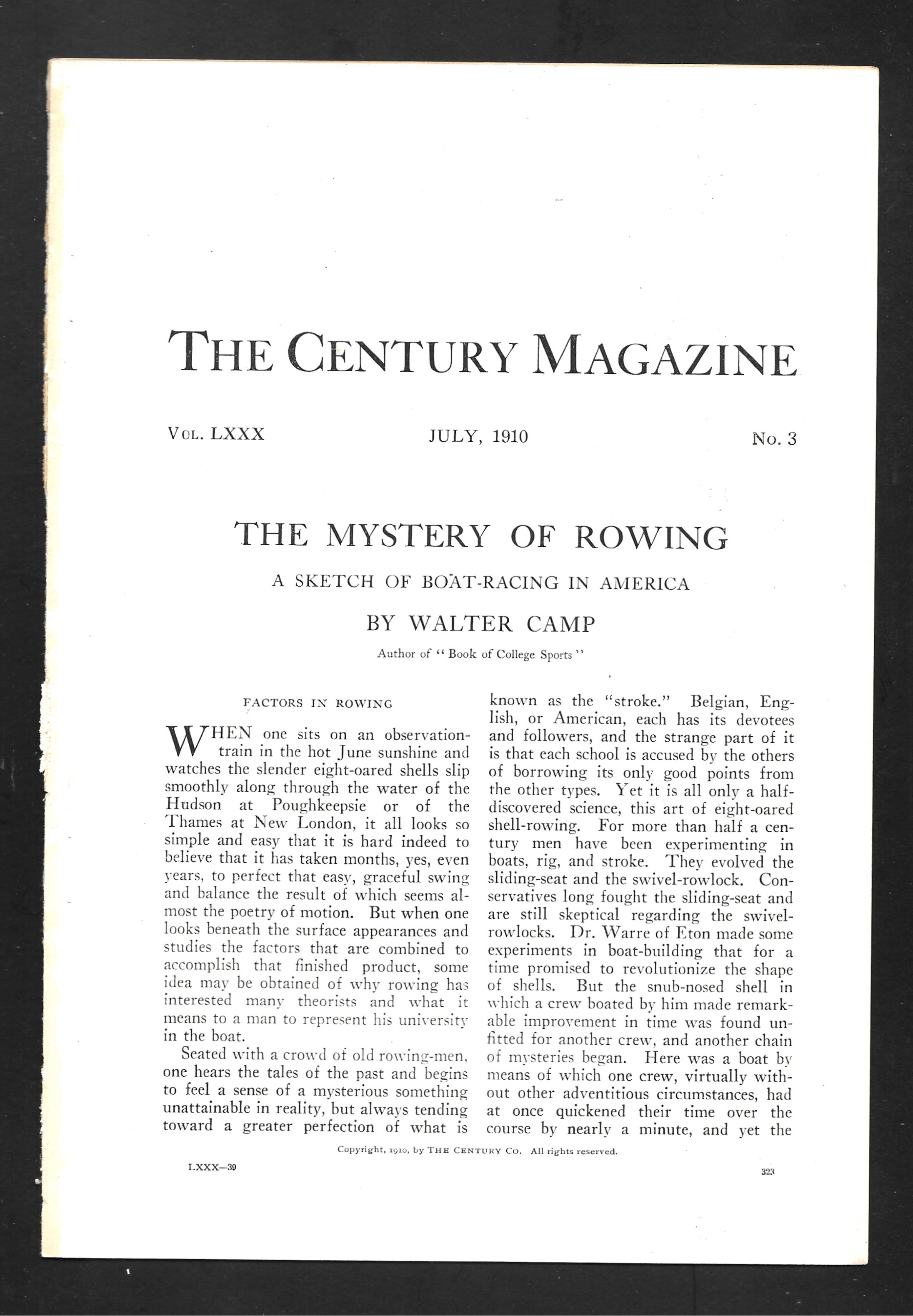
In Yale, Her Campus, Class-Rooms, and Athletics (1899), a book that Camp co-authored, he gave a brief history of the sliding rowing seat and noted that Yale crews began using the innovation in 1870 and was the first college crew to do so. In that year Yale, rowing with the sliding seat, finished ahead of Harvard in their annual boat race (The Race) but nonetheless lost owing to a foul. Camp certainly would have been familiar with the sliding seat during his own time at Yale. With his college rowing experience, Camp could credibly argue in 1899 that “[t]he most interesting feature in connection with boat-building of the last thirty years has been the introduction of the sliding seat.” He noted that the only thing that had prevented the use of the sliding seat by rowers in training at Yale and other colleges – tempting them to train on fixed seats – was the tendency for the oarsmen to slide too soon and lose control over the slide. Otherwise, Camp saw the sliding seat as a positive innovation once it was properly mastered. In an article Camp wrote for The Century Magazine in 1910 titled “The Mystery of Rowing,” he touted the superiority of the sliding seat by pointing to a four-oared boat race in 1871 in England for the championship of the River Tyne:
The value of these seats may be appreciated from the fact that Winship’s crew, rowing on sliding-seats, easily defeated Chambers’s crew, using fixed seats. Shortly after, these same crews met, both rowing on fixed seats, and twice in succession Chambers’s crew beat Winship’s.
These race results suggest that in a head-to-head match-up, the sliding seat provided the Winship crew, apparently the less talented of the two, with a decided advantage allowing them to garner a victory.
In his book Yale, Her Campus, Camp contended that there were two individuals who were considered the inventors of the sliding seat: Captain J. C. Babcock, an American Civil War veteran and former oarsmen, and Walter Brown, the onetime American single-sculls champion and the patentee of the sliding seat in America. Camp believed that the greatest number of authorities favored Brown, who claimed to have had the idea of the sliding seat after observing British oarsmen “slipping or sliding” on greased seats when Brown was in training in England in 1869. This slipping and sliding was what Americans termed the “buckskin and butter plan.” British scullers would slide along highly polished thwarts (stationary plank seats) by the liberal use of grease or soap with the scullers sporting “leather patches on their rowing breeches” for durability. In the 1986 movie The Boy In Blue starring Nicolas Cage as Canadian professional sculling champion Ned Hanlan, there is a scene showing oarsmen preparing for a race by having grease applied to the seat of their rowing breeches. This slipping and sliding evolved to replace the less-efficient rowing stroke that involved the rower pivoting back and forth on a stationary, bench-like seat affixed to the boat.
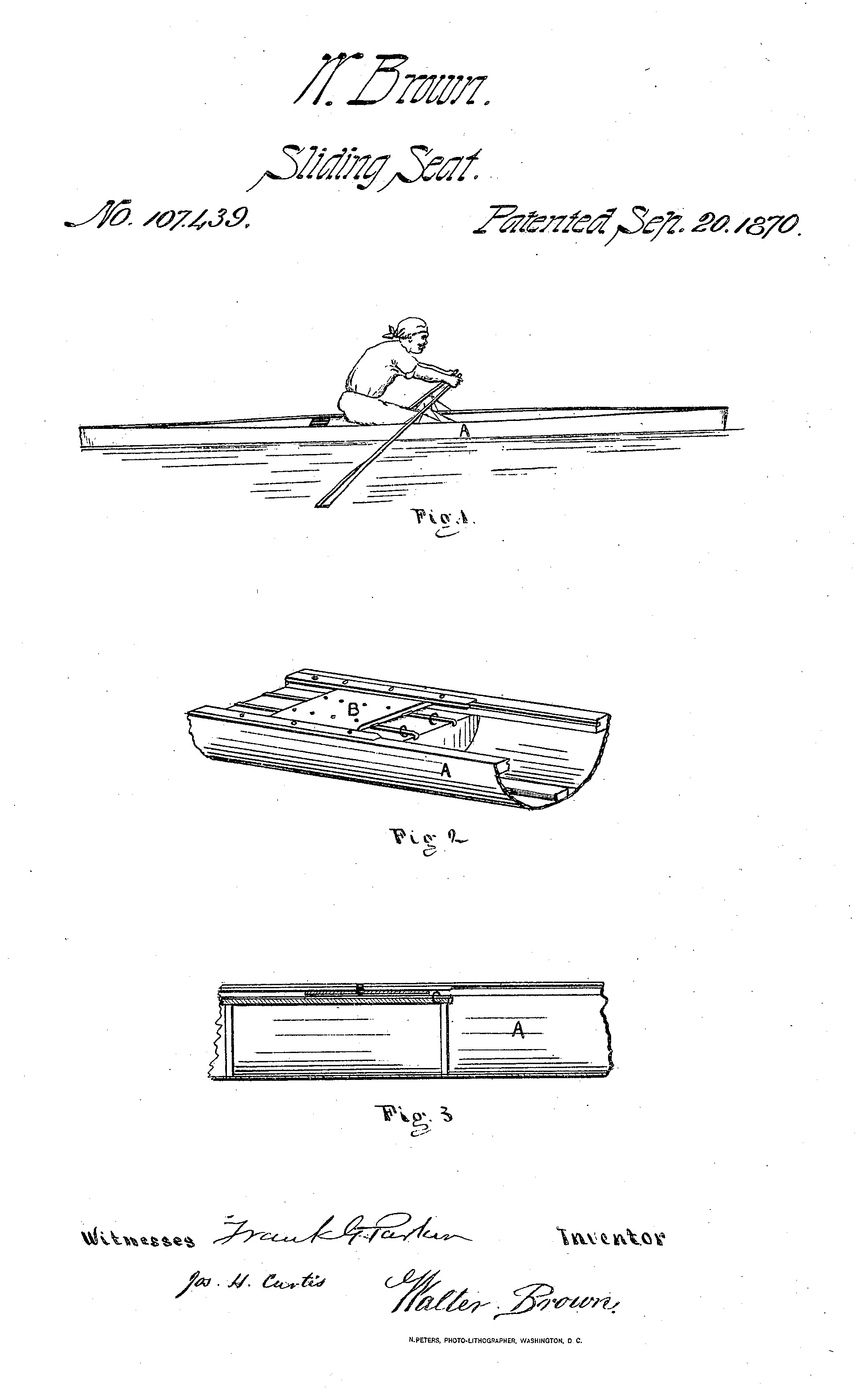
On September 20, 1870, Walter Brown was granted U.S. Patent No. 107,439 for an invention titled “Improvement In Seats For Row Boats.” His invention consisted of a flat seat that slid along a set of tracks, thus providing for a more efficient rowing stroke by taking advantage of the powerful muscles of the calves and thighs to push against a foot plate. This was the first sliding seat patent in America. In a further evolution of the sliding seat, The New York Herald in 1873 described a modification of Brown’s invention that was being used by English universities. “These seats are simply pieces of board – say a foot square – mounted on small wheels, which travel on rails running fore and aft on the thwart or stationary seat itself,” the article explained. This use of friction-reducing wheels on sliding seats is a basic concept still in use today.
Walter Camp would become known as the “Father of American Football” for his contributions to the evolution of the early game. The reduction of football squads to eleven men to a side, the establishment of the line of scrimmage, and the creation of the position of quarterback were all introduced by Camp. To American football fans, Camp’s name is more likely to be associated with the annual selection of the Walter Camp All-American football teams, a process begun by Camp in 1889, honoring the best college players in the nation. Although Camp is considered the “Father of Americn Football,” with his writings promoting and chronicling the sport of rowing, he can also be considered the “Champion of the Sliding Seat.”
* The Yale Bulldogs will next play the Montana State Bobcats on Saturday, December 6, 2025.
 Hear The Boat Sing