

3 December 2025
By Tim Koch
Tim Koch is given access to photographs that he Leica very much.
There can be little argument that the three most successful amateur oarsmen that Britain has ever produced (measured by the standards of their time) are Guy Nickalls, Jack Beresford and Steve Redgrave.
I recently had the honour and pleasure of being able to study a very personal record of the rowing career of one of these greats, Jack Beresford. I had been invited to the home of Jack’s son, John, to photograph his father’s meticulously assembled photograph albums and to see some of his medals and trophies.
Jack Beresford CBE (1899 – 1977) enjoyed a career that spanned the years 1920-1939, one abruptly and prematurely ended by the Second World War. He won five medals at five Olympic Games in succession (three Gold and two Silver), was Wingfields Champion for seven consecutive years, had ten Henley wins and won the Philadelphia Gold Cup twice.

John is the author of Jack Beresford: An Olympian at War (2019). The book is mostly about Jack’s letters home from the trenches of France in the 1914 – 1918 War and a hundred pages are devoted to this. The remaining twenty pages look at his life before and after the war and at the Berlin Olympics, but they are not intended to be an exhaustive biography.
In my review of An Olympian at War I wrote:
Historically, men have had two great chances to prove their mettle: in battle and in sport. While many are aware that Jack Beresford was one of Britain’s greatest oarsmen, this new book by his son, John, reveals what few knew, that Beresford served his country with distinction in war as well as in peace. Moreover, he did both with a modesty that is usually indicative of true merit.
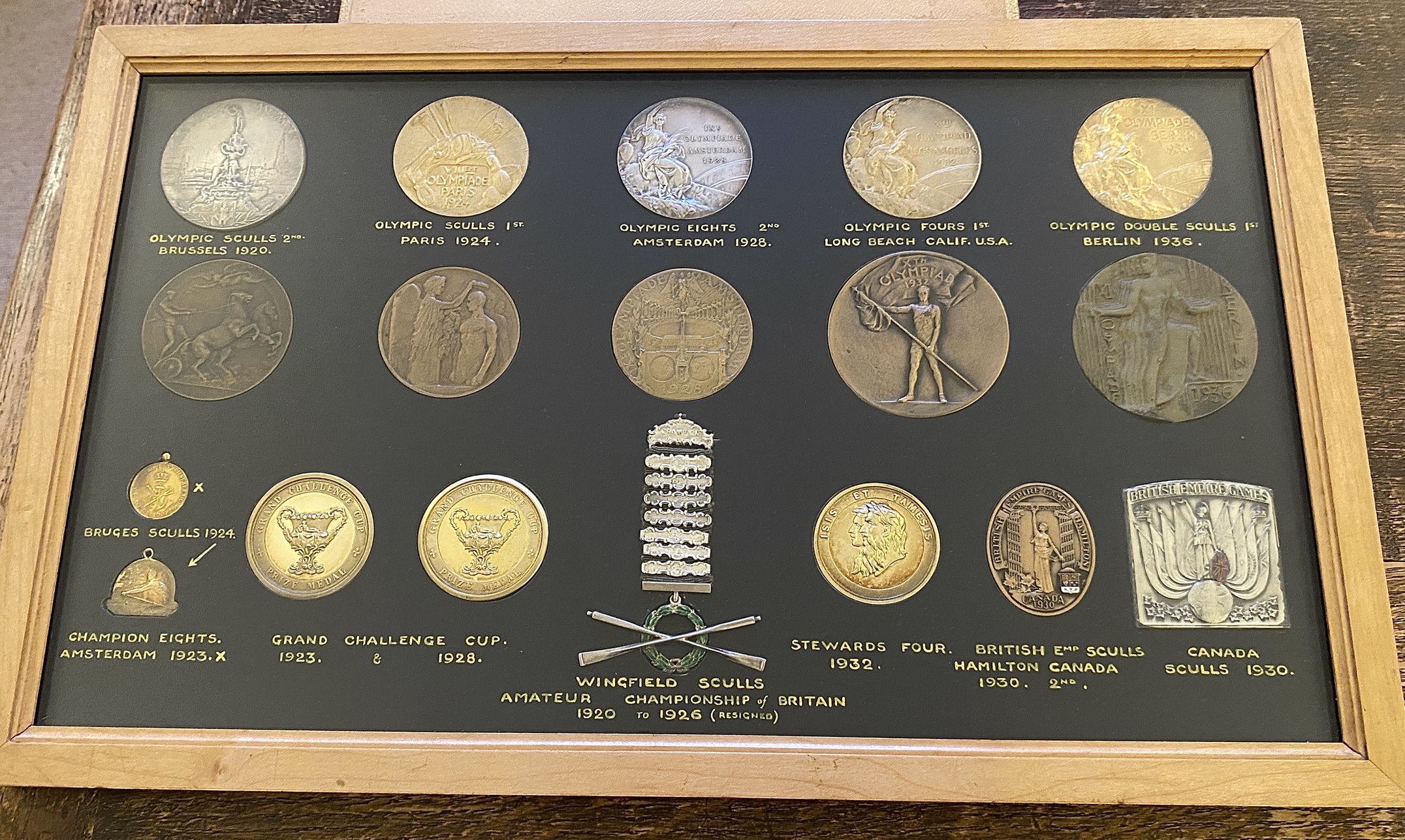

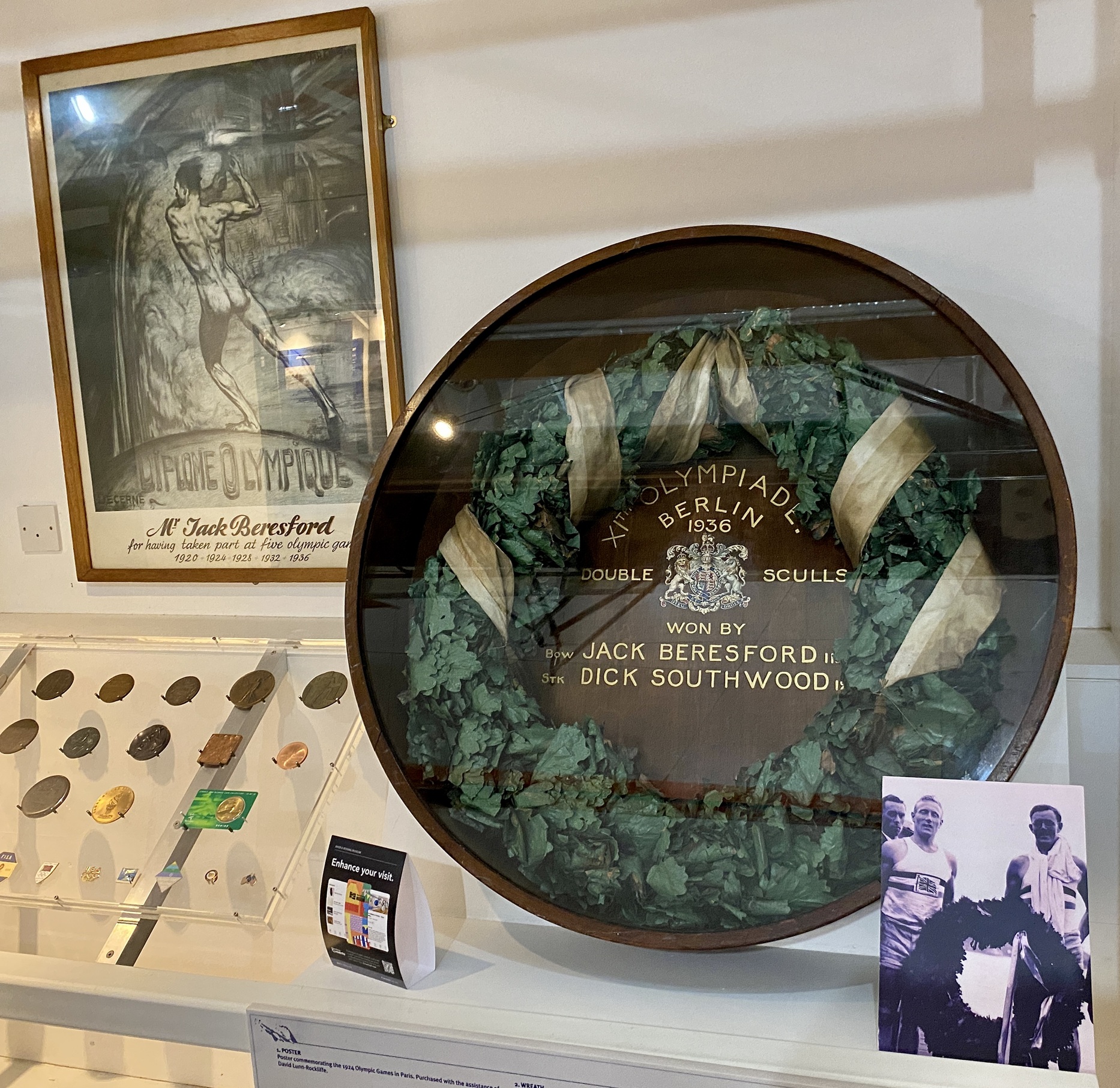
There is an intention for all of Jack Beresford’s albums to be professionally scanned and put into the public domain through the remarkable Thames Rowing Club Archive. Here, I will post a selection of Jack’s pictures from the 1936 Berlin Olympics.
Of the pictures in these albums, some are amateur snapshots taken by Jack and other athletes. Others are professional shots, either official ones or those taken by photographers who were employed by various newspapers and press agencies. In the past it was common to buy such professional pictures for personal use as, while affordable amateur photography did exist, professionals had the access rights, expensive equipment and skill required to take quality pictures. All of the album pictures, whatever their source, are made extra special by being captioned by Jack in his own handwriting. He usually refers to himself in the third person.
At Putney

In 1964, Jack remembered:
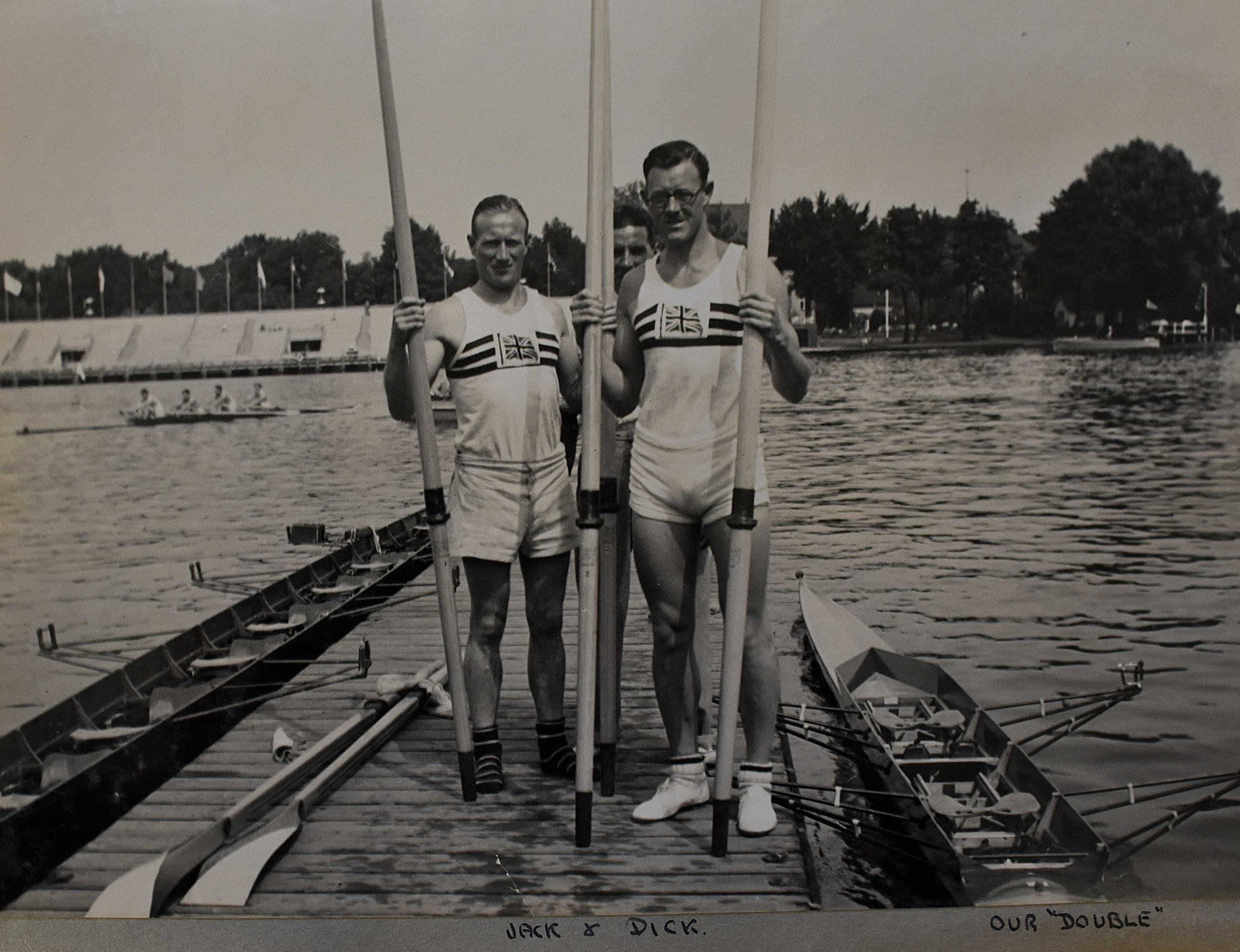
In 1935 Dick Southwood teamed up with me in a double-sculler – object Berlin, 1936. By that time we were both pretty tough and mature, with the confidence and will-to-win well ingrained in us. In those days there were no open double-sculling races in England, but with 10 months’ practice behind us and 2,000 miles in the boat plus daily early-morning running and exercises, we were strong and fit.
Because of the British rowing establishment’s opposition to professionals coaching amateurs, many professional coaches had gone abroad for work and one such talent, Eric Phelps, had been employed as coach, chauffeur and handyman to German industrialist and Olympic team aspirant, Georg von Opel, since 1935.
Six weeks before the Olympics, Phelps met Beresford at Henley Regatta and told him that his and Southwood’s attempt at the Olympic double sculls was currently “a waste of time.” Despite this, Phelps had a high opinion of the 37-year-old Beresford:
I paced him a lot. He was very vicious in the boat… He never knew what it was to pack up. He never knew what it was to let a man pass him.
Phelps knew the German rowing scene well and had observed the German favourites for the Olympic double sculls, Kaidel and Pirsch, in practice. He knew that they were fast off the start but, after sculling against Pirsch in a single, found that “the bugger had no stamina.” He told Beresford, “The Germans are an 1800-metre crew. Stick with them that far and you’ll beat them.”
Phelps saw that Beresford and Southwood needed a much lighter boat and so Sims of Putney made them the one pictured above in two-and-a-half days for £50.
As to training, the double had been coaching themselves and had done a lot of long distance work. Phelps changed this to a lot of short distance pieces several times a day.
Arrival in Germany
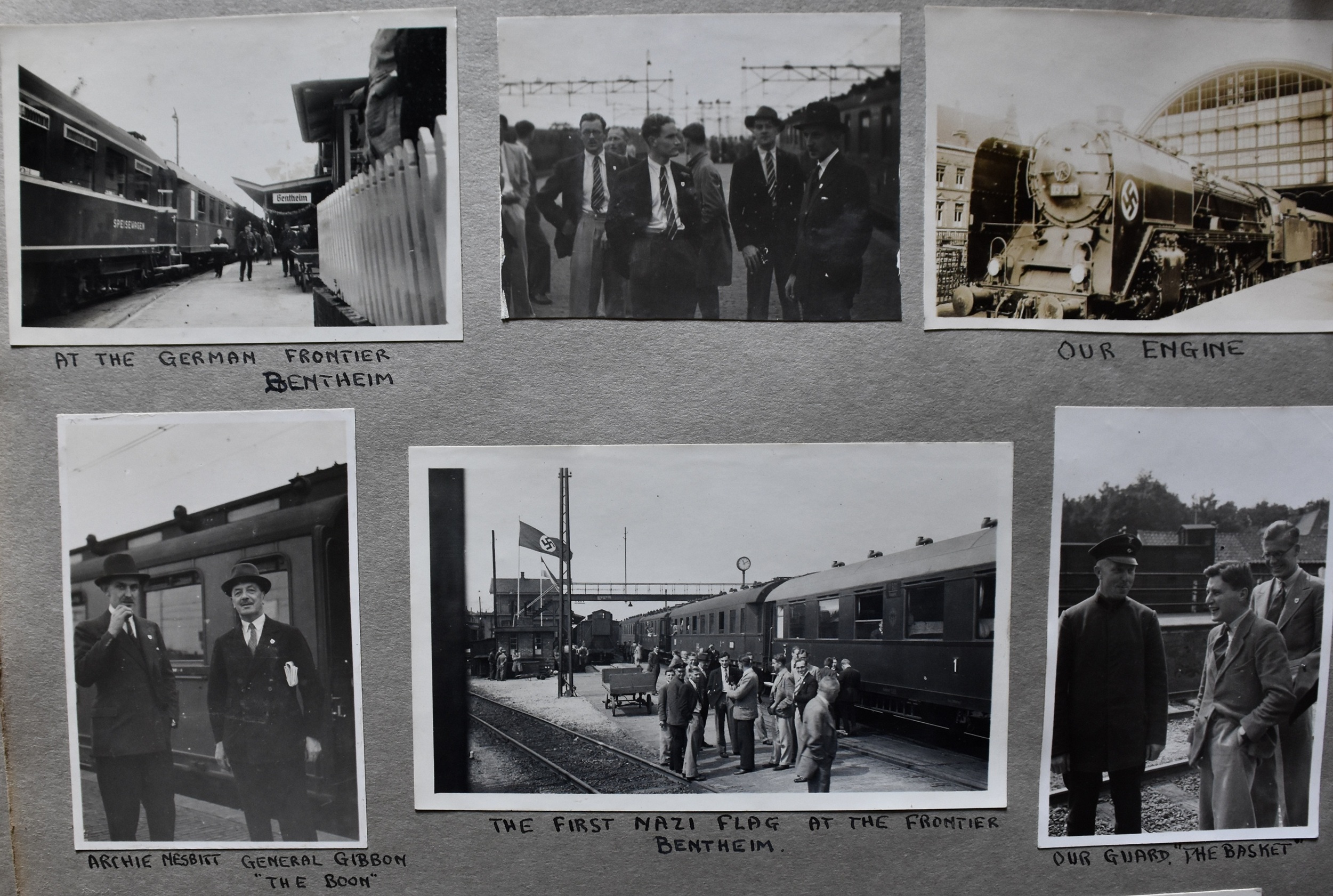
It must be remembered that what we now know about the monstrous Nazi regime of 1933-1945 was not universal knowledge in 1936. Attitudes toward Nazi Germany at the time were mixed and increasingly polarised.
Many Germans expressed enthusiasm, fuelled by economic recovery, nationalism, and propaganda that portrayed Hitler as restoring strength and stability. Internationally, some observers were impressed by apparent order and growth (David Lloyd George, British Prime Minister 1916 -1922, met Hitler in 1936 and afterwards called him, the “greatest living German” and the “George Washington” of a peace-loving Germany, determined to never again go to war with Britain). However, others viewed the regime with deep suspicion and alarm, noting its aggressive rearmament, ruthless suppression of dissent and pitiless persecution of Jews.
I think that the pictures above, snapped as soon as the team crossed the border, keen to capture an image of the first swastika, reveal a concerned fascination as to what sort of country the team were entering.
Berlin was awarded the 1936 Olympics before Hitler came to power and initially he was sceptical about hosting it. Propaganda Minister Goebbels eventually persuaded him of its potential propaganda value and from then on enormous efforts were put into staging the event and training German athletes.
The 1936 Olympics was the first time that a state systematically used the Olympics to promote itself and its ideology. The Nazi regime recognised the global attention the Games would attract and meticulously crafted an image of Germany as a powerful, orderly, and modern nation. Now remembered with embarrassment as the “Nazi Olympics”, at the conclusion of the Berlin Games it was thought of as a huge success.
Accommodation

The Regatta Course was on the Langer See (“The Long Lake”) at Grünau, a suburb of southeastern Berlin, long established as a water‑sports centre. Because the main Olympic Village was 47 km away on former army land at Elstal, rowing and canoeing crews were accommodated separately near to Grünau in Köpenick, mostly in the 685 bed police barracks, a 1931 modernest construction that was “all glass, steel and concrete.”

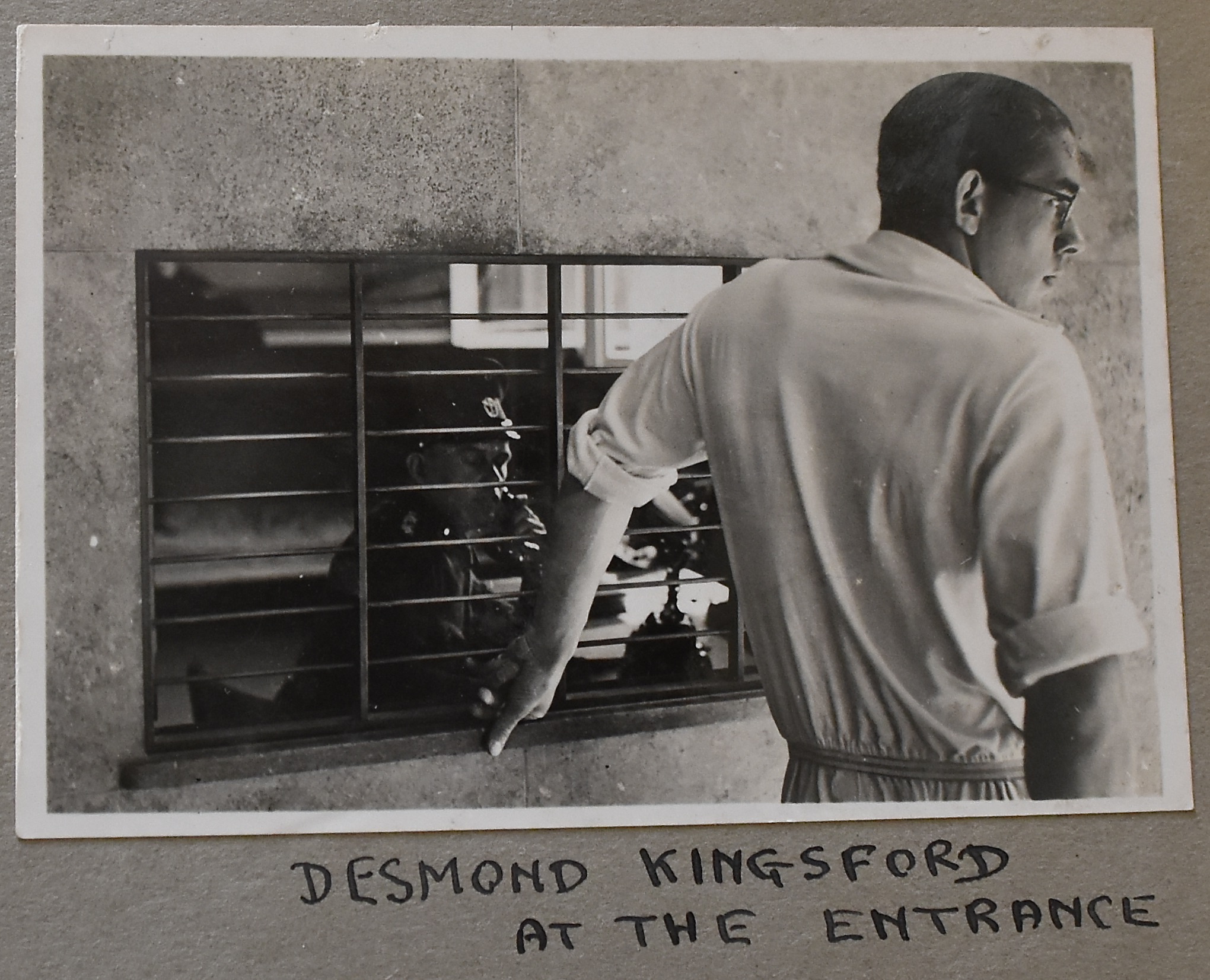

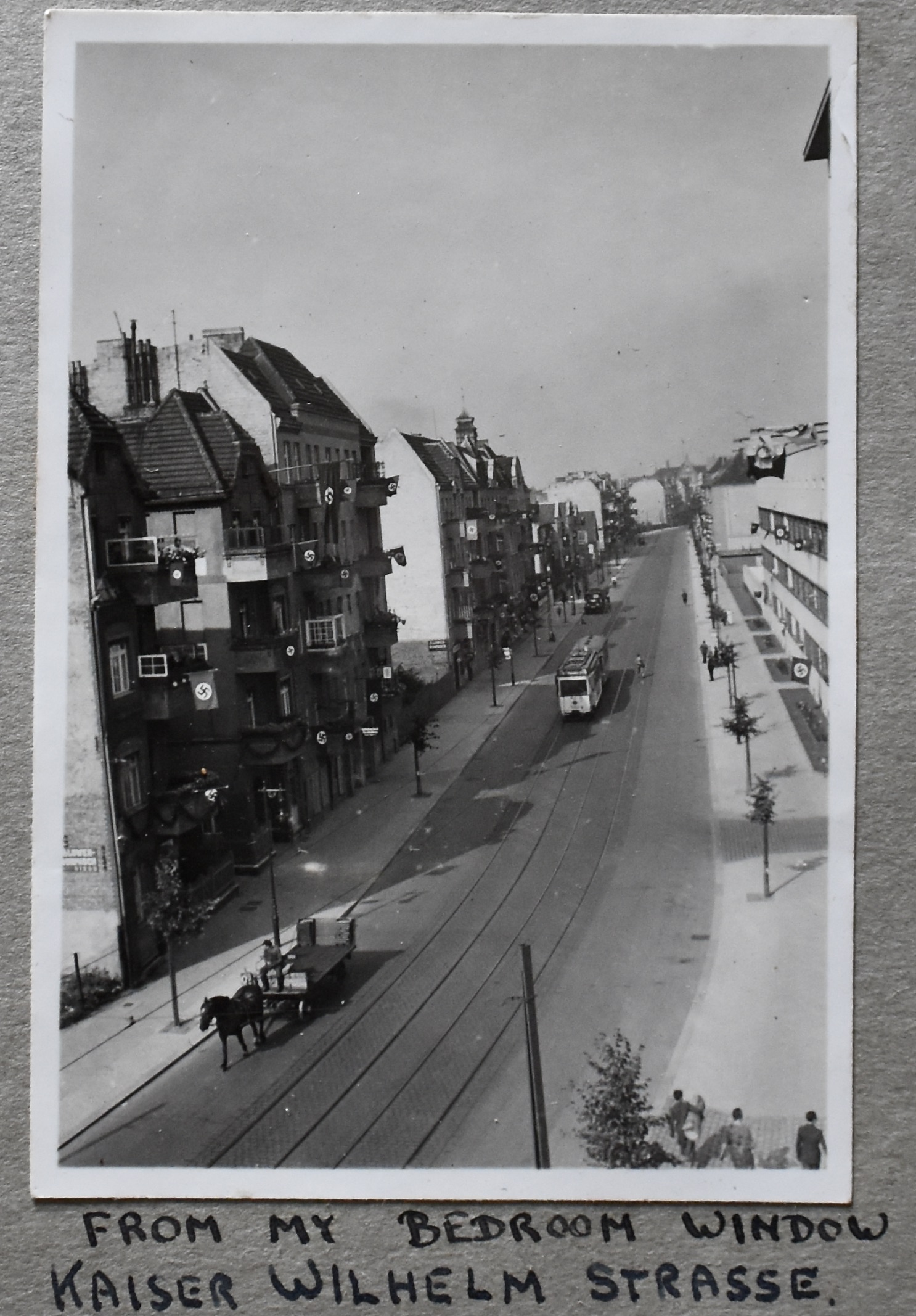
Jack later recalled that, on the night before the final, SS troops made a lot of noise outside the barracks by marching and parading. In The Boys in the Boat, author Daniel James Brown wrote that:
Almost every night there was some kind of disturbance in the cobblestoned street (outside the barracks). One night it was brown-shirted storm troopers singing and parading past in hobnailed boots. Another, it was military night manoeuvres – roaring motorcycles with sidecars, trucks with glowing green night-lights in their cabs, caissons carrying field artillery – all rattling past under the street lamps.
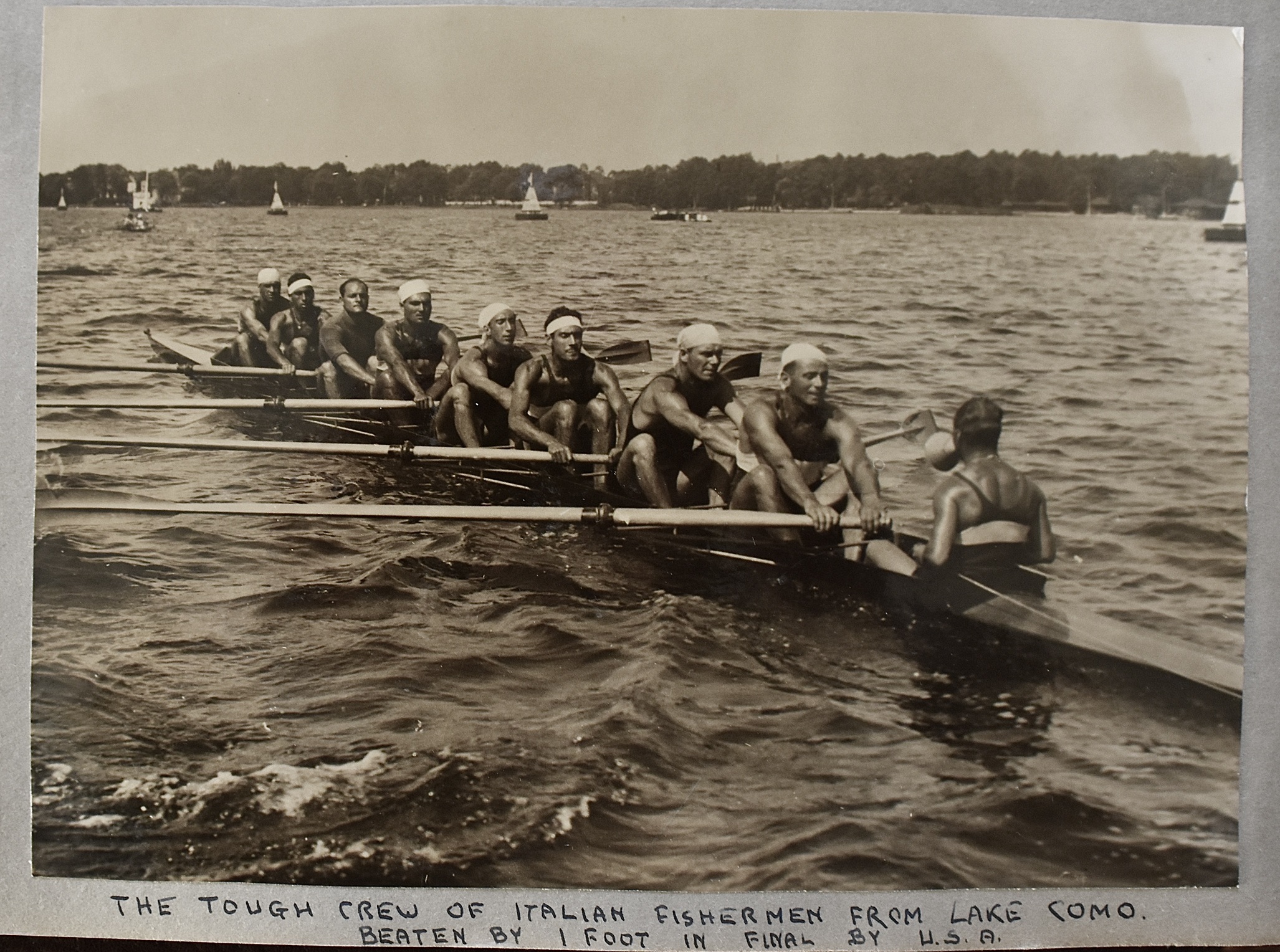
All this was clearly a ploy by the hosts to disturb their opponents’ sleep. More serious Teutonic cheating occurred when the normally efficient German Railways temporarily “lost” Beresford and Southwood’s created double in a siding somewhere between Hamburg and Berlin and German officials denied them a chance to borrow a boat for training. Most famously, the American eight’s performance in the heats should have earned it one of the sheltered lanes for the final but these were inexplicably given to Germany and their fellow fascists, Italy.
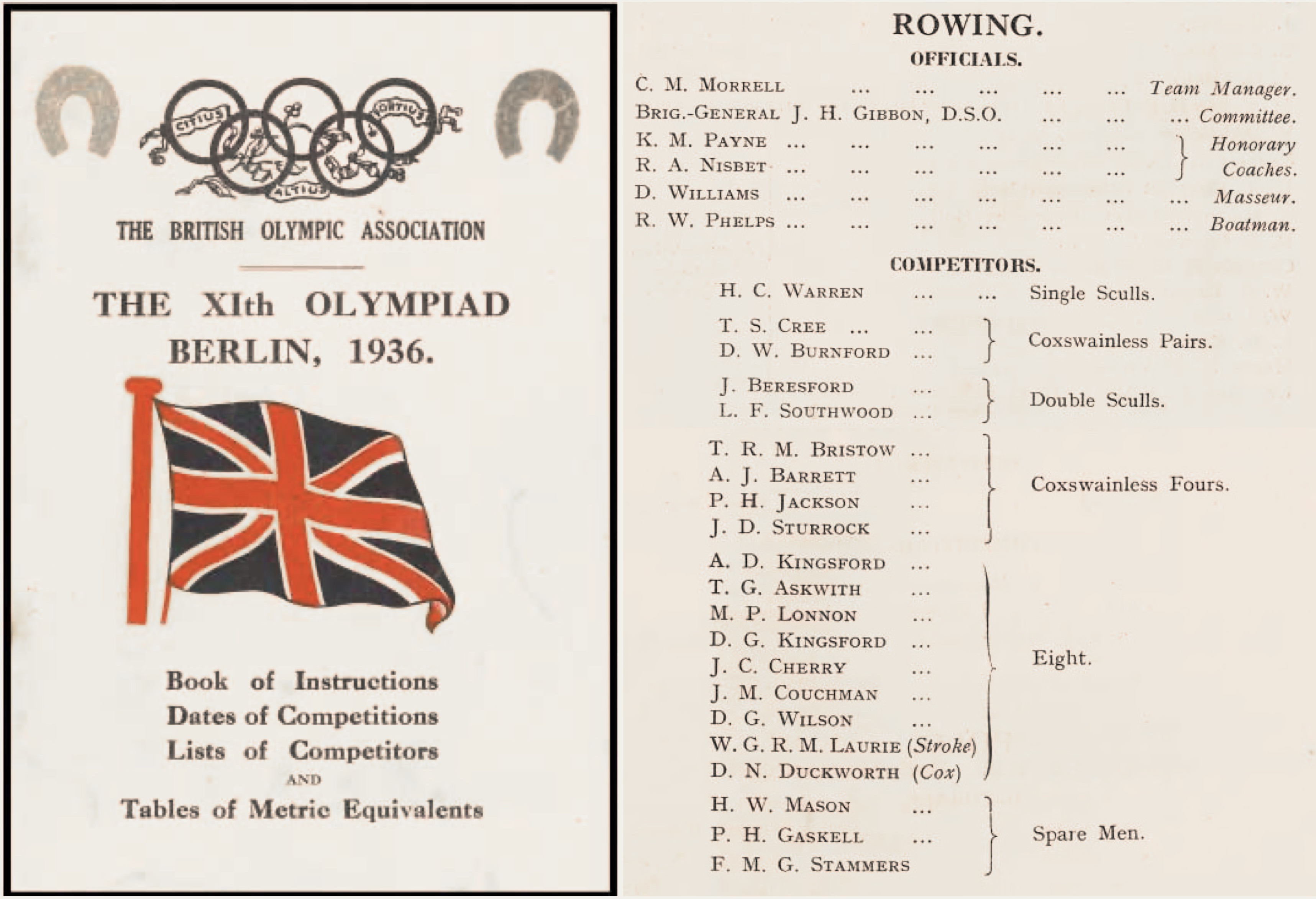
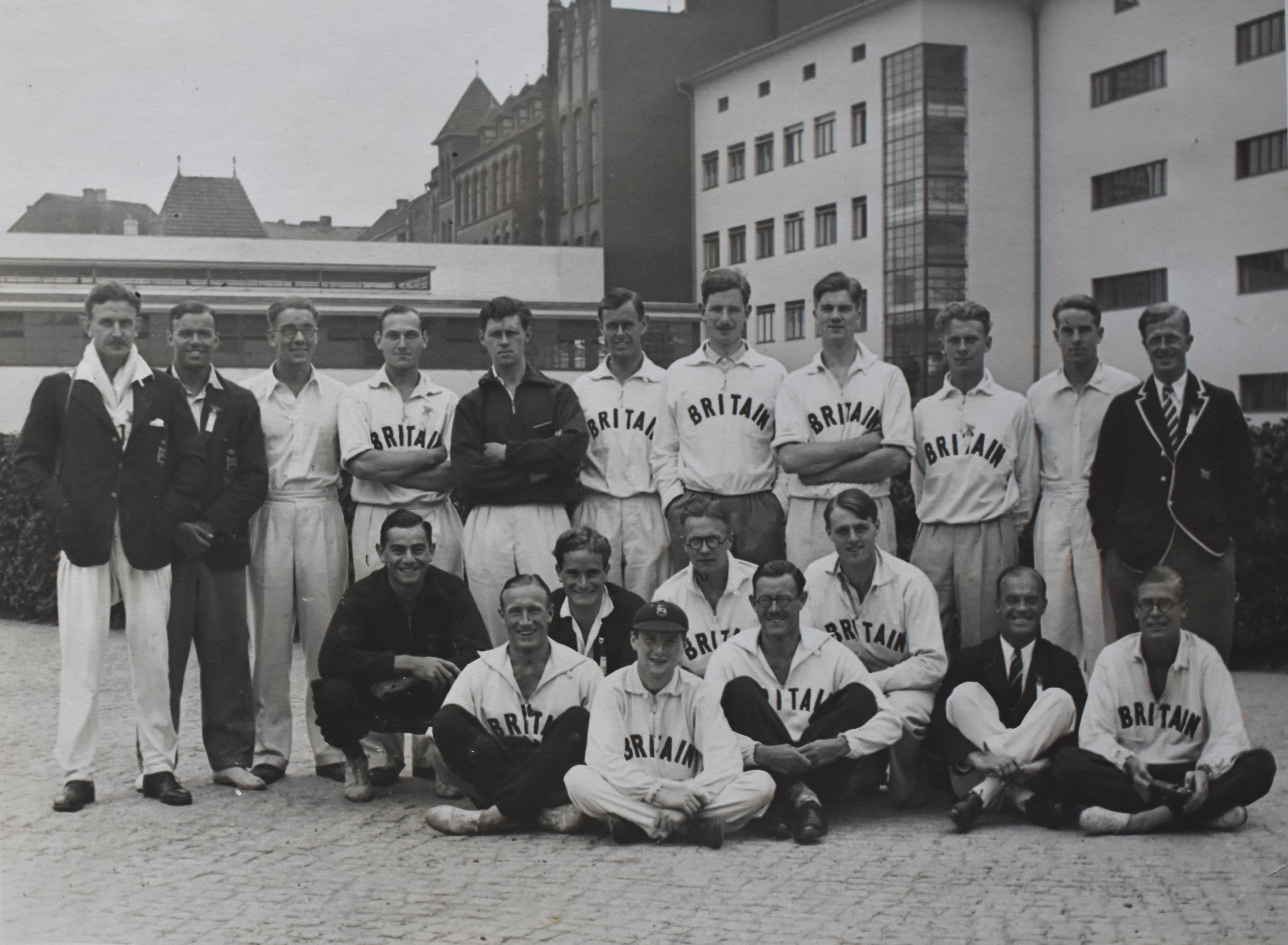


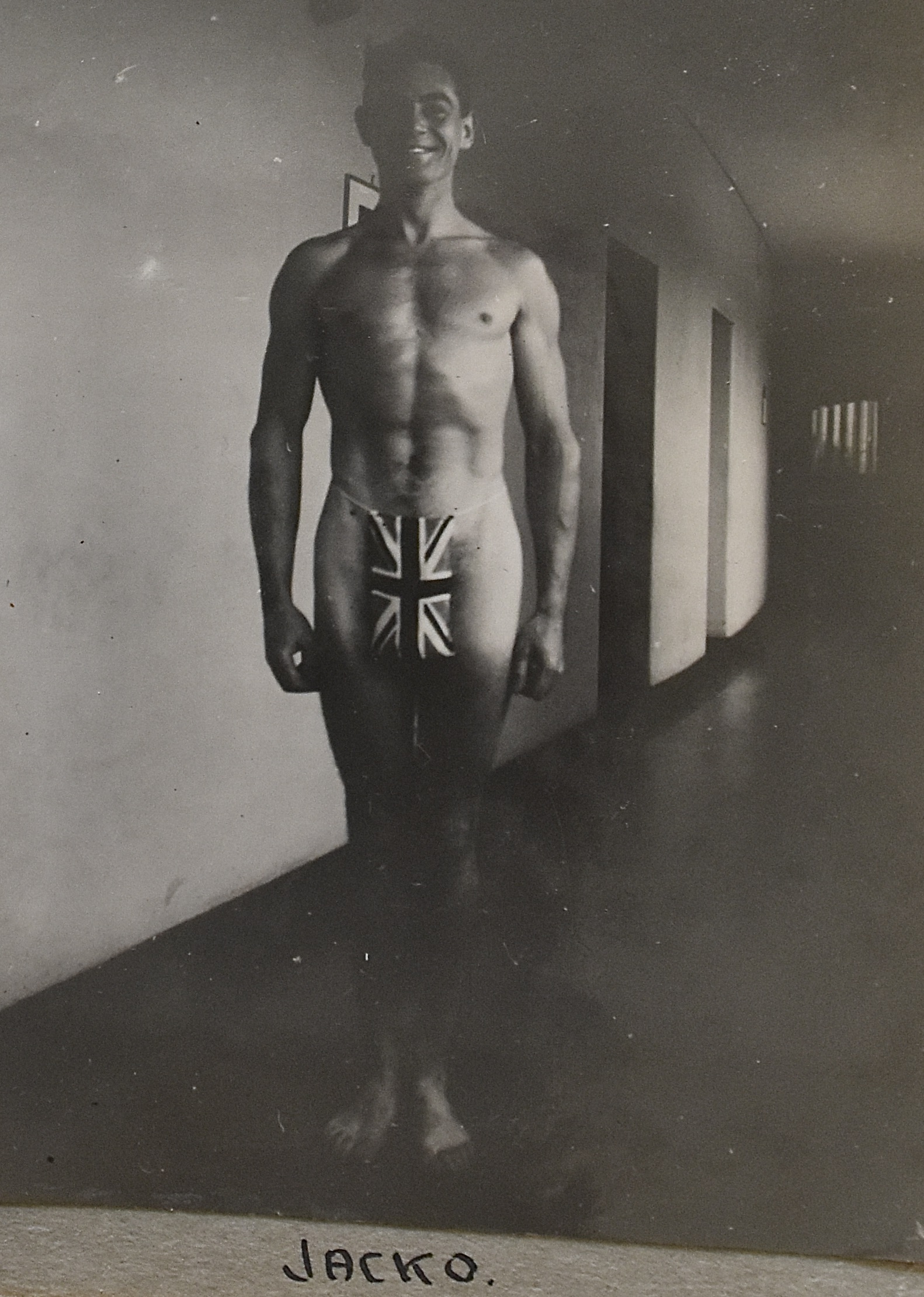
A renowned trainer and masseur known for his physical conditioning and recovery work with both boxers and rowers, Williams was highly respected by both. He owned a gym in North End Road, Fulham, West London. In the rowing world, he was associated with Thames Rowing Club and Cambridge. Breath and visceral bodywork have become popular in recent times but Williams was known for performing diaphragm work with athletes in the 1920s and 30s. Williams was white, his nickname was not a racial slur.
Transport
The German army provided a fleet of motor‑coaches and drivers to ferry rowers and officials from Köpenick to the Grünau course. However, Martin Bristow from the British four later recalled that the bus timetable was, stereotypically, “rigid and unalterable” and so he and the others used public transport most of the time.


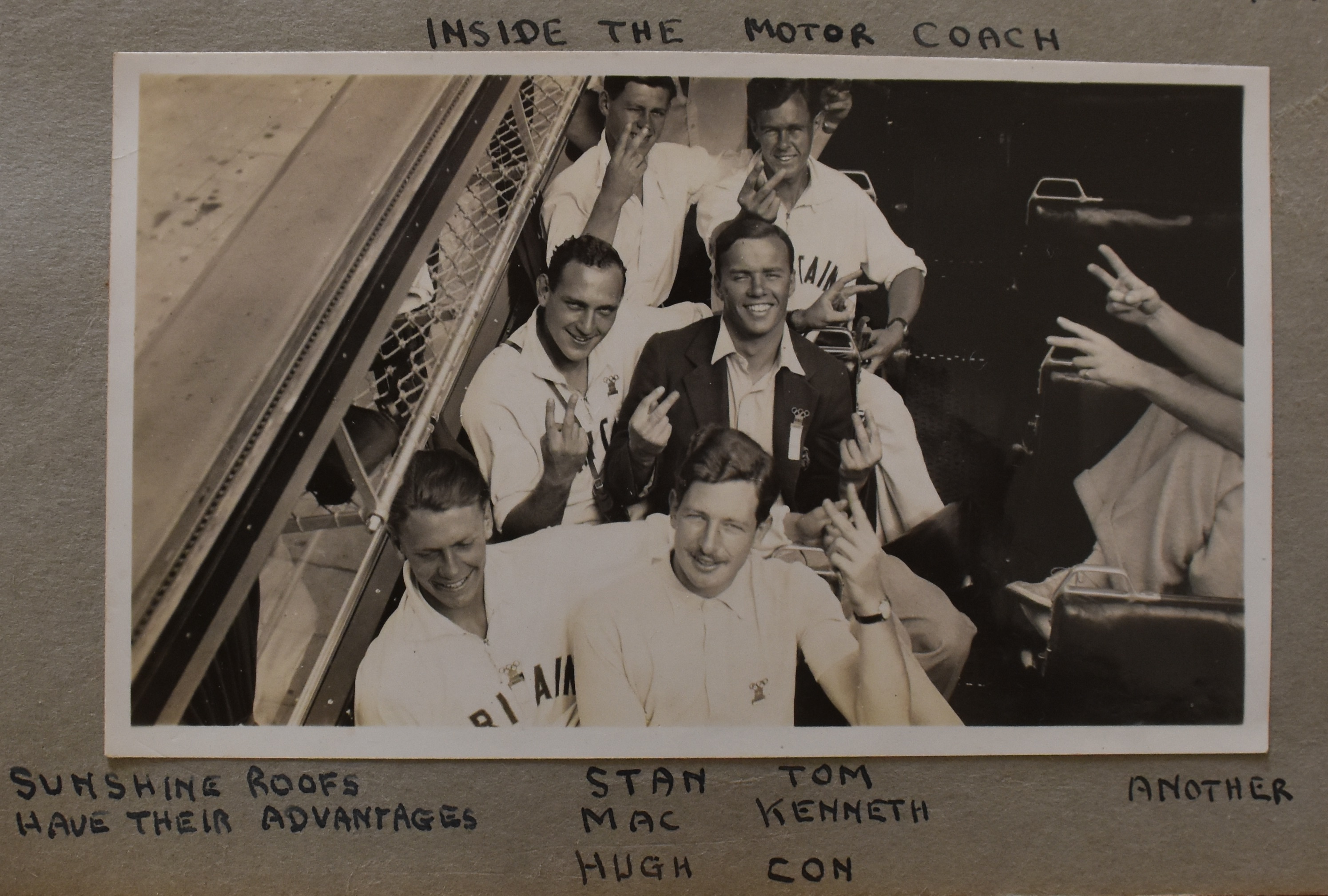
In 1989, Tom Askwith from the eight recalled:
Before the opening ceremony, we were all drawn up outside the stadium and Hitler reviewed us… (He) stared each one of us in the face. It was a very sinister feeling one got, he had a very kind of keen personality and one could have believed anything. But, at the same time, having a certain respect, he wasn’t the little Charlie Chaplin that one had thought he was before…
In 2023, HTBS published a newly discovered letter written by the great boatbuilder, George Pocock, and sent from Berlin to his sister on 10 August 1936 giving his impression of the place:
The German people have tried to make our stay as pleasant as possible but the whole atmosphere is one of military and police. The army seems to have charge of everything, even to soldiers holding the sterns of the shells on starting. We are living in an army officer training barracks, transported in army buses and there is much clicking of heels and saluting. From very young childhood the German boy is taught drilling and soldiers’ work. It puts me in mind of a country on the brink of war…
Training at Grünau
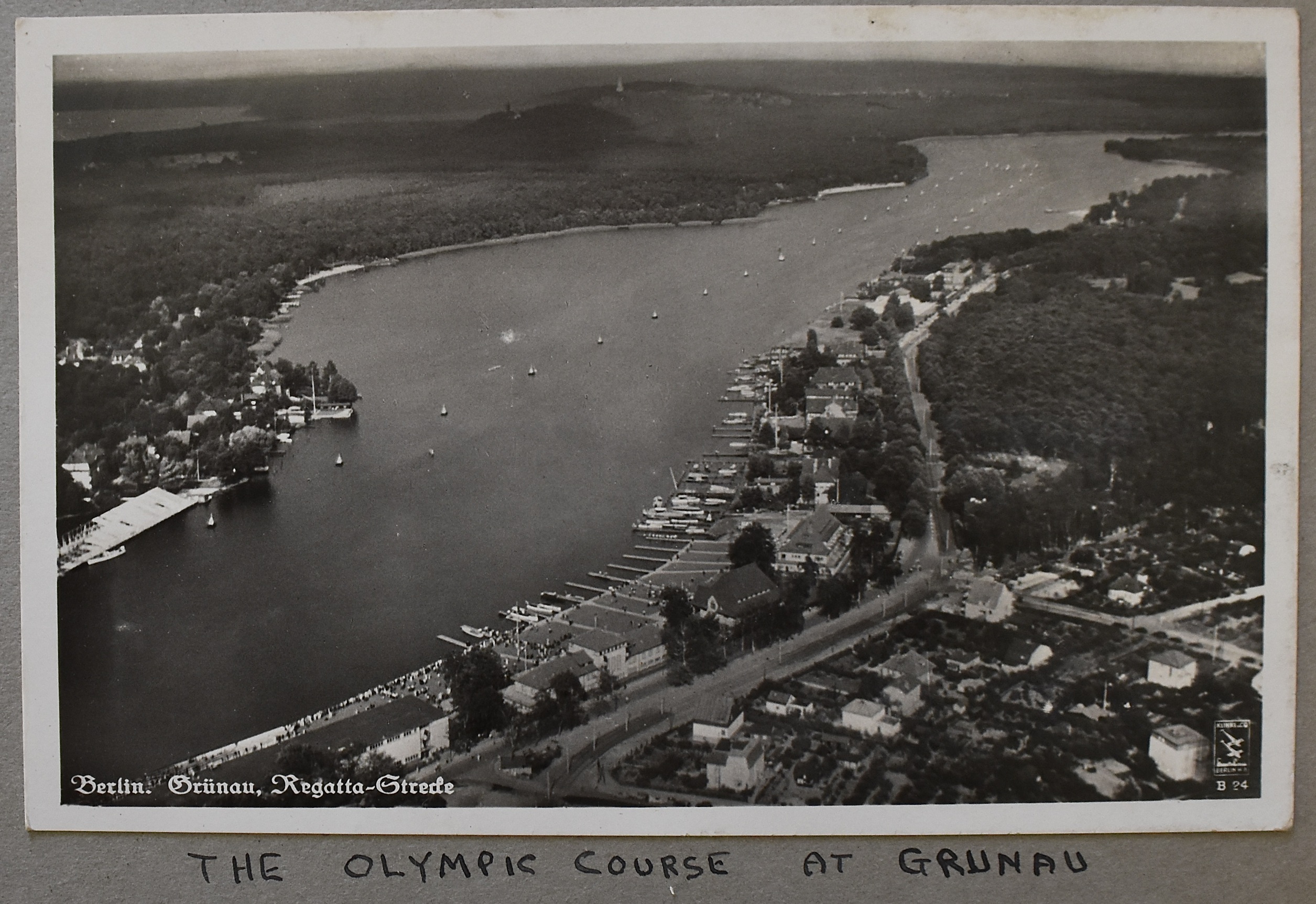

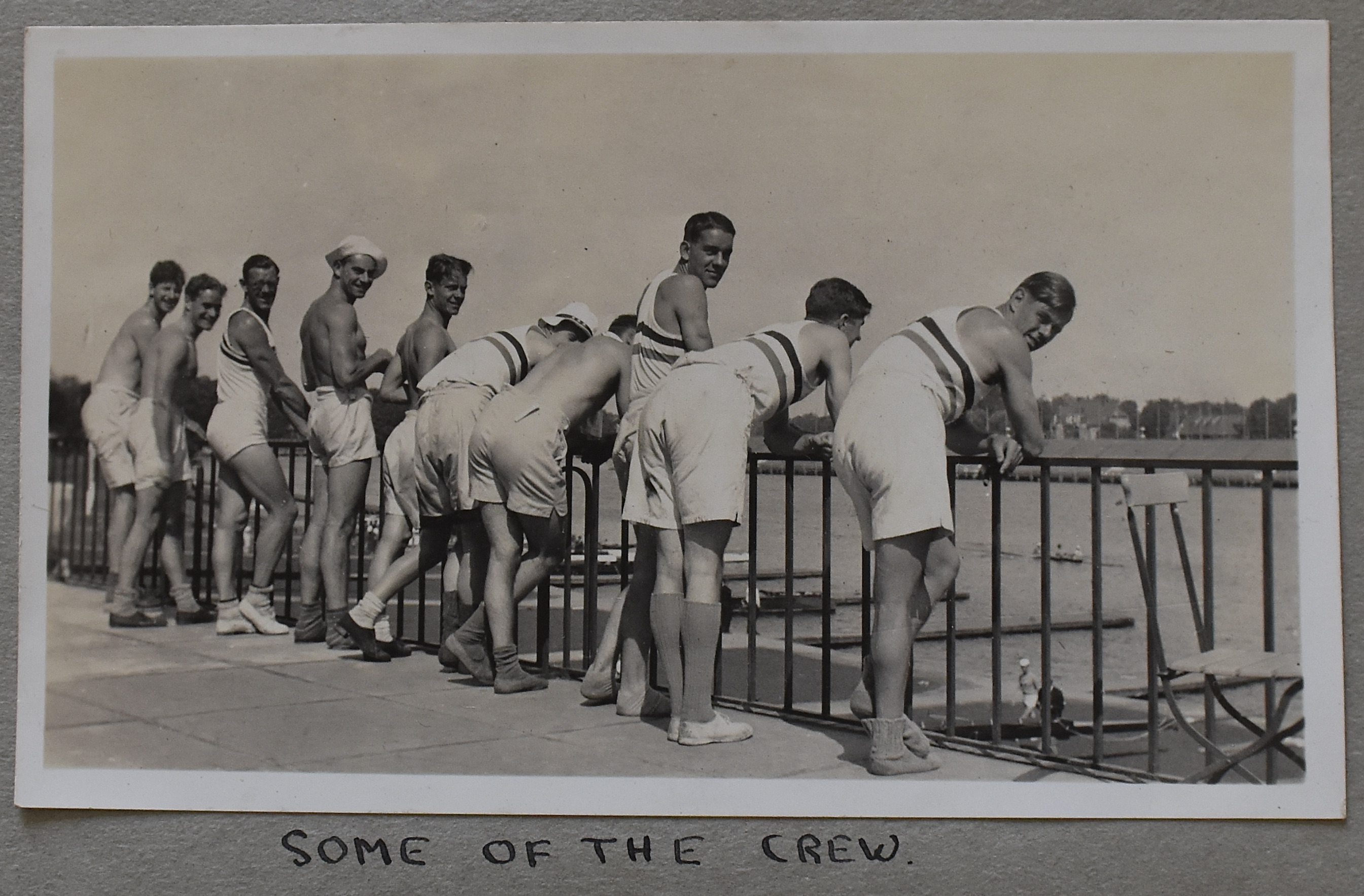
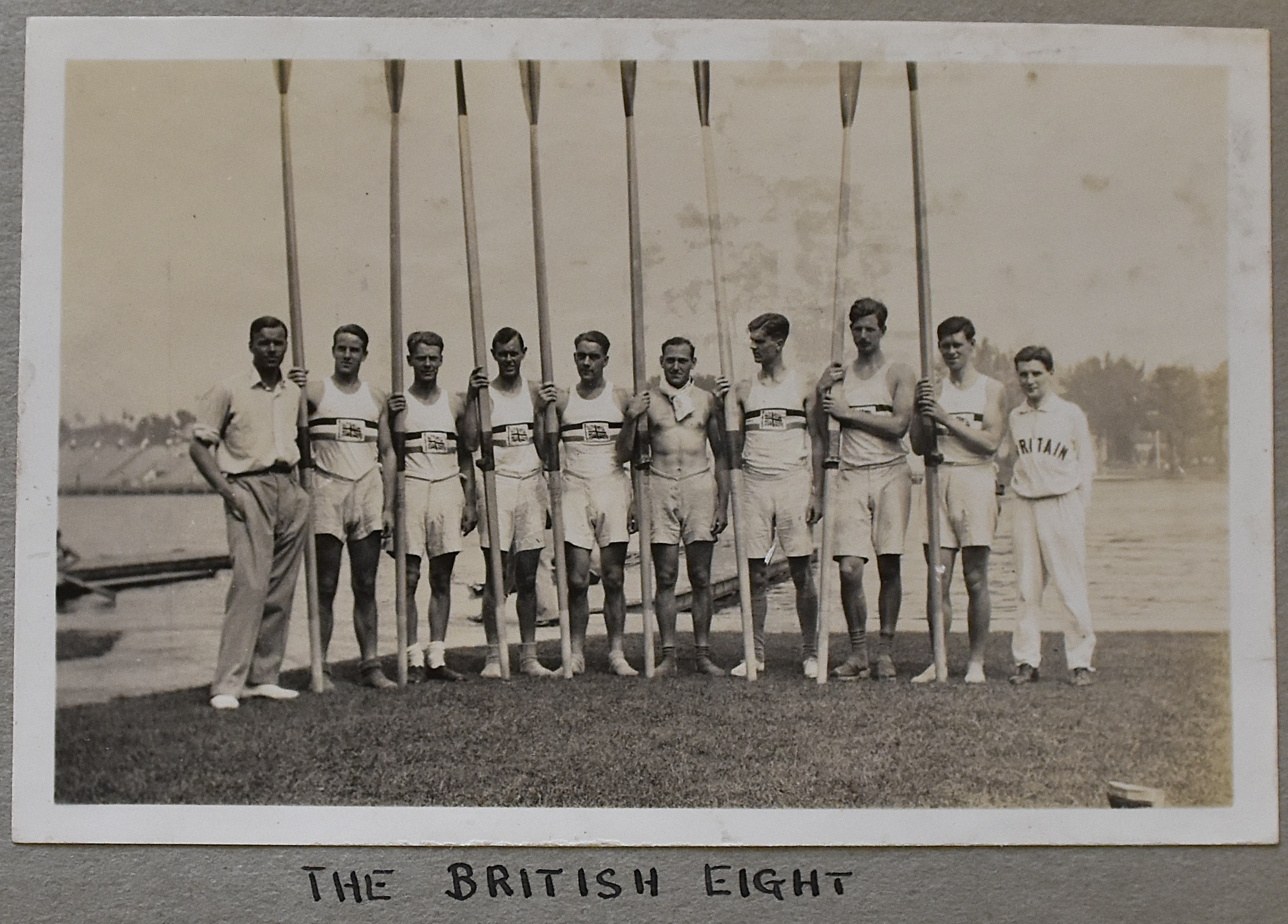

The cox of the British eight, Noel Duckworth later described the crew as a “patched-up affair.” He believed their selection and preparation had been poor, arguing they lacked the “life, dash and determination” needed to challenge the more disciplined, “quasi-professional continental crews”.
The Germans and Italians in particular were operating an embryonic national squad system. Further, the German and Austrian rowing federations had merged as early as 1921, seventeen years before the Anschluss, the German annexation of Austria in 1938.
Also according to Duckworth, the eight arrived at the Olympics after having “spent all its enthusiasm and energies previously at Henley.” In other words, they had not tailored their training to peak in Berlin.
British rowing was still organised more like a traditional amateur sport rather than a disciplined, Olympic-driven programme. However, in their preparation for Berlin, Beresford and Southwood were something of a British exception to this – as the final result showed.
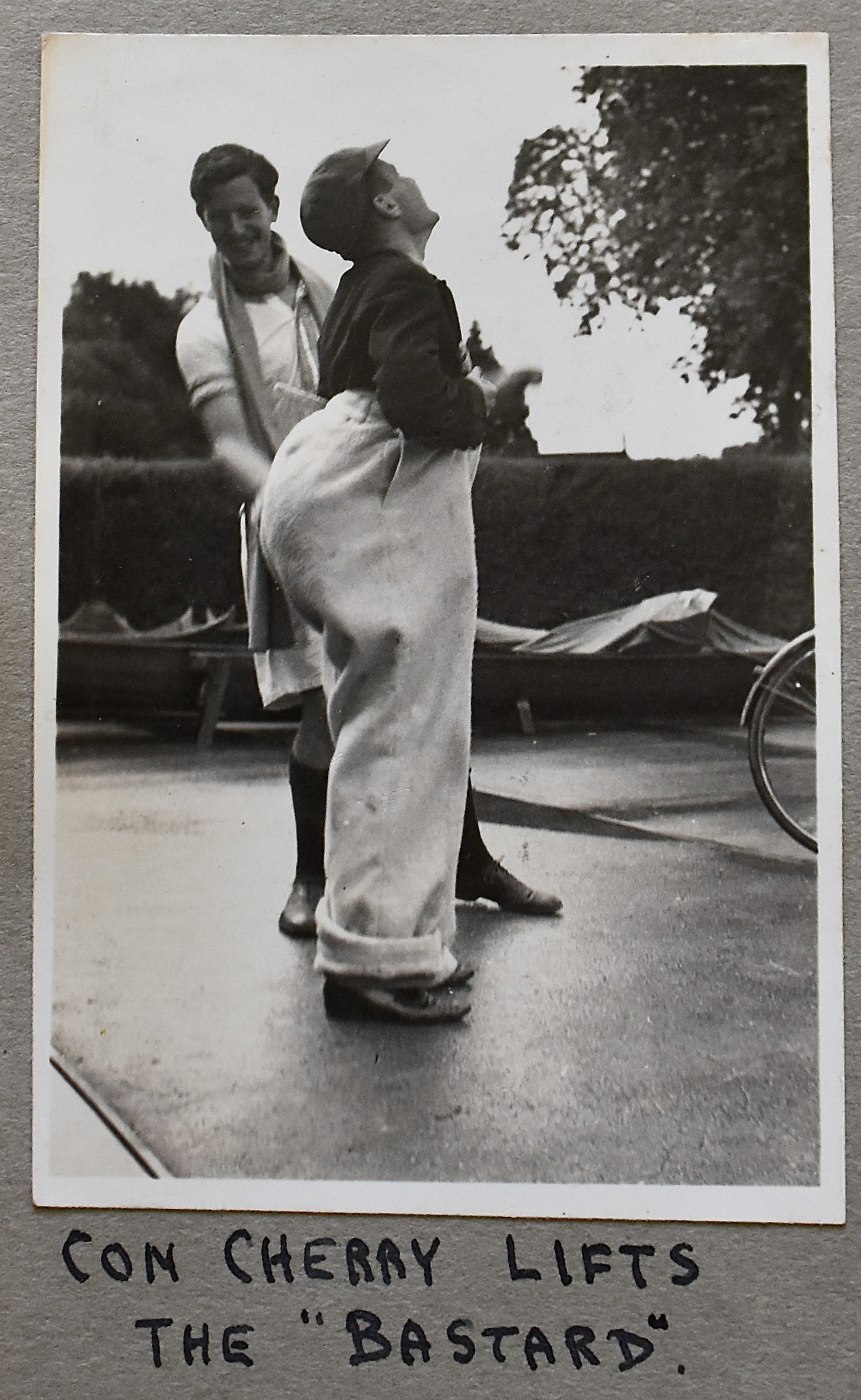
There are several pictures of Noel Duckworth in the Berlin album, but Jack never refers to him by name but simply as “the bastard” or, using the polite version, “the basket.” While it could be argued that all rowers think of coxswains as bastards, this is strange as Duckworth was ordained an Anglican minister late in 1936 and, when held as a Japanese prisoner of war 1942-1945, “almost killed himself doing good”. For the whole of his life, Duckworth was a much loved figure. Perhaps Jack was being ironic?



Dear Mother,
I thought you’d like to see that we’re both bearing up mighty well and (how) fit we both are and hope to pull it off tomorrow. I was glad to have your last long letter and do hope Pater is better.
Your loving son,
Jack.
Did they pull it off? Find out in Part II.
Jack Beresford: An Olympian at War by John Beresford. Published by Cloister House Press. Hardback ISBN 978-1-909465-89-3 is £14.99 and paperback ISBN 978-1-909465-87-9 is £11.99. Available from most rowing booksellers, including Richard Way Book Shop in Henley-on-Thames (tel. 01491 576663), or online.
 Hear The Boat Sing
A priceless collection. I had the honor of sharing the Leander Dock with Jack Beresford at the lunch interval during the 1971 Henley. He was sculling and I was in a coxless pair then training for the US Junior Trials. Ed Woodhouse
Tim I’m so pleased to be able to give you the chance to create such a wonderful, true story of Dad, from his photo album. He would be so delighted thank you.
John.
Great report! Thanks much. The lanes were assigned by the draw through FISA judges. There was no influence by the Germans . My dad was there he later on became a FISA Ref. And developoed the Rotsee in Lucerne
alex peyer
sensationallyunknown – thank you for that interesting piece of information. It was still a very unusual decision and I cannot help feeling that some pressure must have been put on FISA or Rico Fioroni, the Swiss-Italian President of FISA. However, Tom Daley has written on HTBS that “Just how much of a disadvantage the (eights) lane assignment was is a matter of dispute.”