This website covers all aspects of the rich history of rowing, as a sport, culture phenomena, a life style, and a necessary element to keep your wit and stay sane.
Drowning In Honey I: The Gondola Builders of San Trovaso
Famously, the word “iconic” is overused but it is difficult to talk of Venetian gondolas without defaulting to it. Here, one of the craft forever associated with the city nicknamed La Serenissima (“The Most Serene”) for over 900 years passes the Palazzo Salviati in the Dorsoduro district. There are over 400 gondolas in service in Venice today, all made and maintained by one of five local boatyards.
23 October 2025
By Tim Koch
Tim Koch is recovering from drowning.
In Brideshead Revisited, author Evelyn Waugh has protagonist and narrative voice Charles Ryder say of a holiday in Venice: The fortnight in Venice passed quickly and sweetly – perhaps too sweetly; I was drowning in honey, stingless. On some days life kept pace with the gondola…
Ryder later talks of …marble interiors; of water everywhere, lapping on smooth stone, reflected in a dapple of light on painted ceilings…
Apologies if this is a pretentious start to a piece on a recent visit to a Venetian gondola builder but I am still heady from the same syrupy submergence suffered by Charles Ryder and others who explore the floating city of a million unforgettable moments.
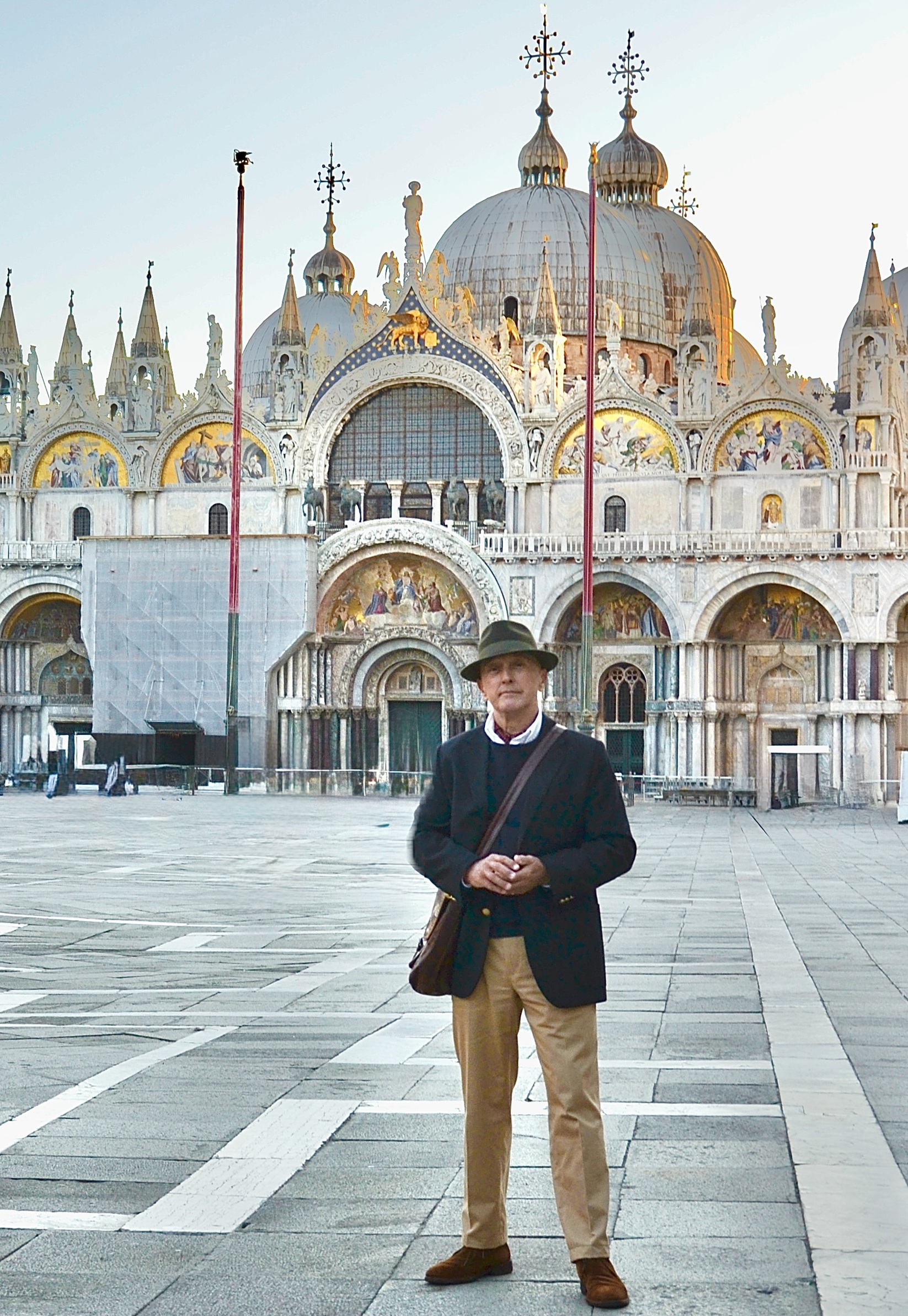
While it is true that mass tourism can make visiting Venice a less pleasurable experience, it is reasonably easy to escape the worst of the crowds by starting the day early and by exploring districts other than San Marco. Here, at 7am, I only have to share St Mark’s Square with a few pigeons – and I can also pretend that I am not a tourist.
There are five traditional gondola builders, known as squerarioli, left in Venice, each working out of a boatyard called a squero (from squara meaning team).
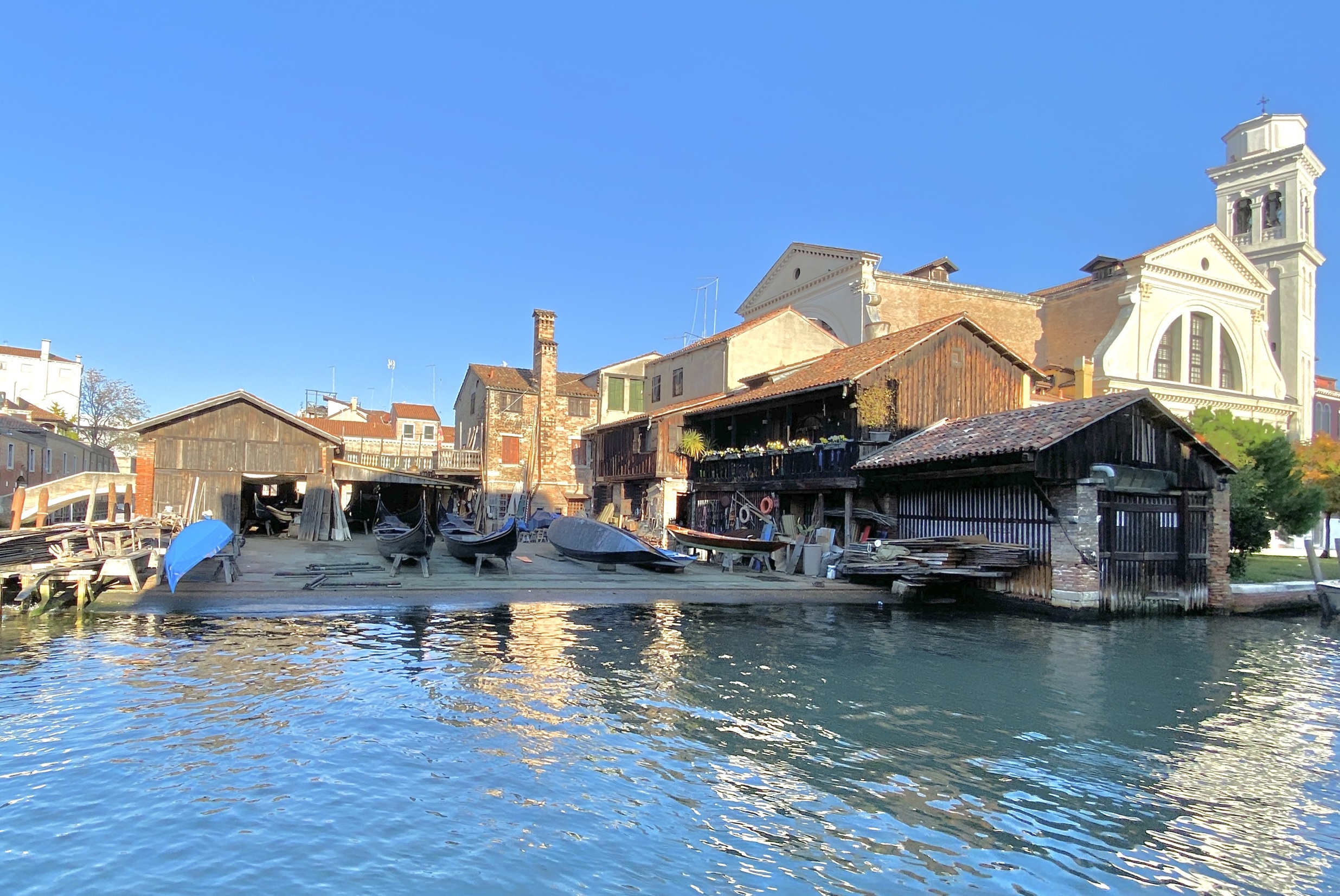
I visited Squero di San Trovaso located in the Dorsoduro district. Francesca, the daughter of the squerarol or chief boatbuilder gives short, private tours by arrangement.
Also in Dorsoduro is Squero Tramontin, a family-owned squero that has been building gondolas since 1884. Today, the business is run by sisters Elena and Elisabetta Tramontin. The Tramontin family is credited with perfecting the gondola’s modern asymmetrical design. A gondolier uses the starboard side to row because the gondola has the port side 25 cm longer than the starboard. This unique design allows the gondolier to stand and row from the stern using a single oar, propelling the boat efficiently through the canals.
Of the other three surviving squeri, two are on the island of Giudecca (Squero Crea and Squero Costantini-Dei Rossi) and one, Squero San Giuseppe, is in the Castello district.
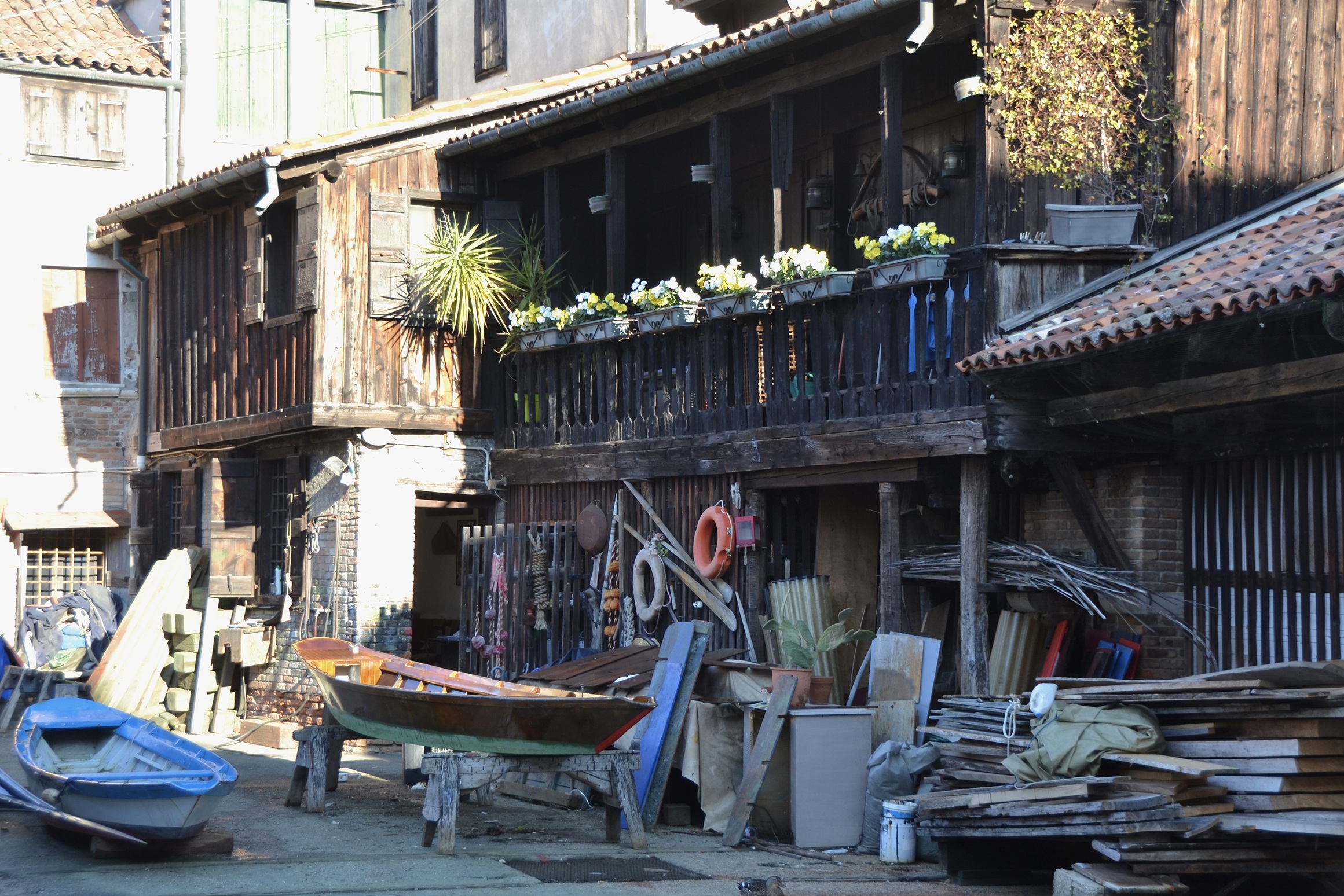
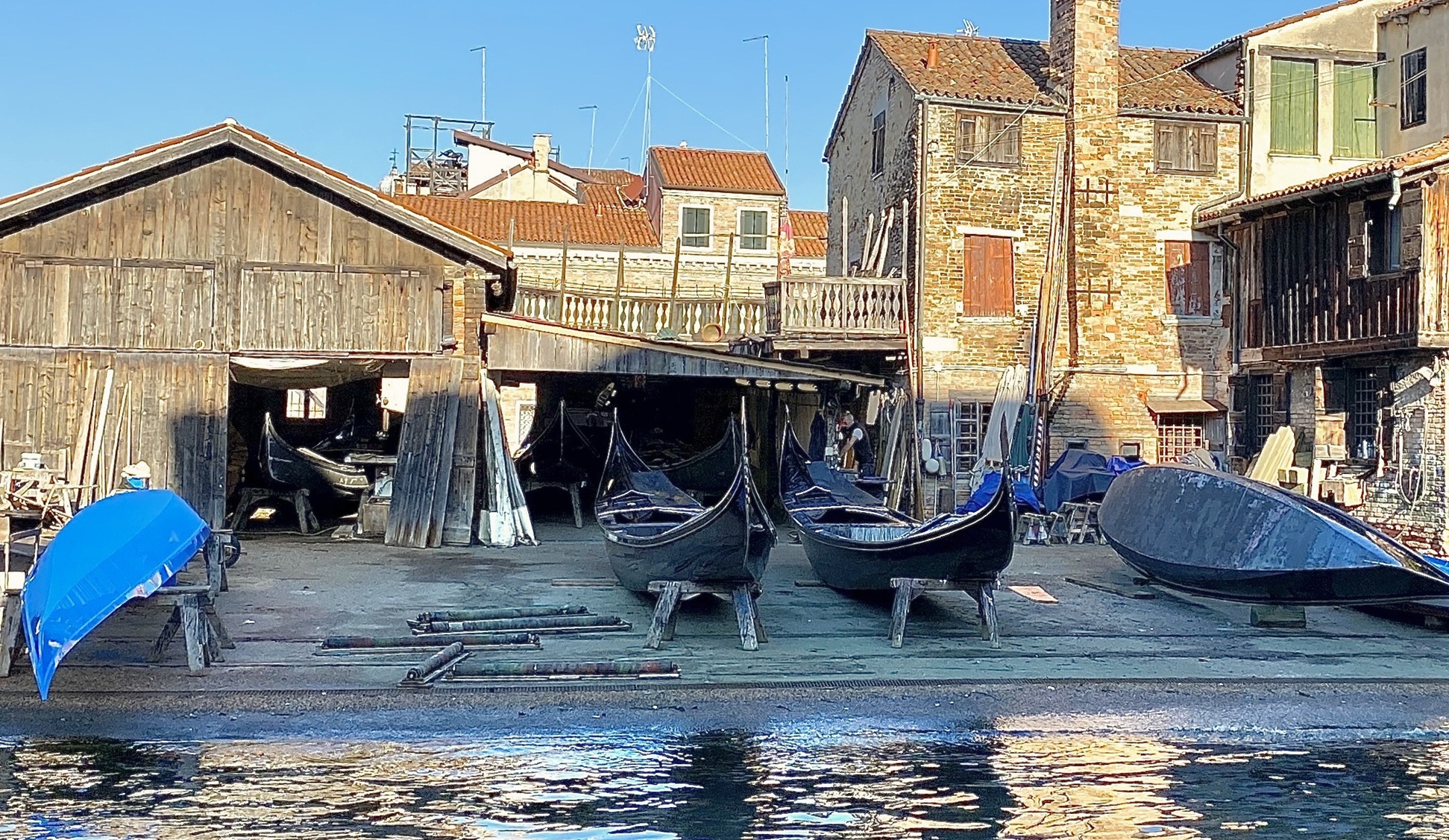
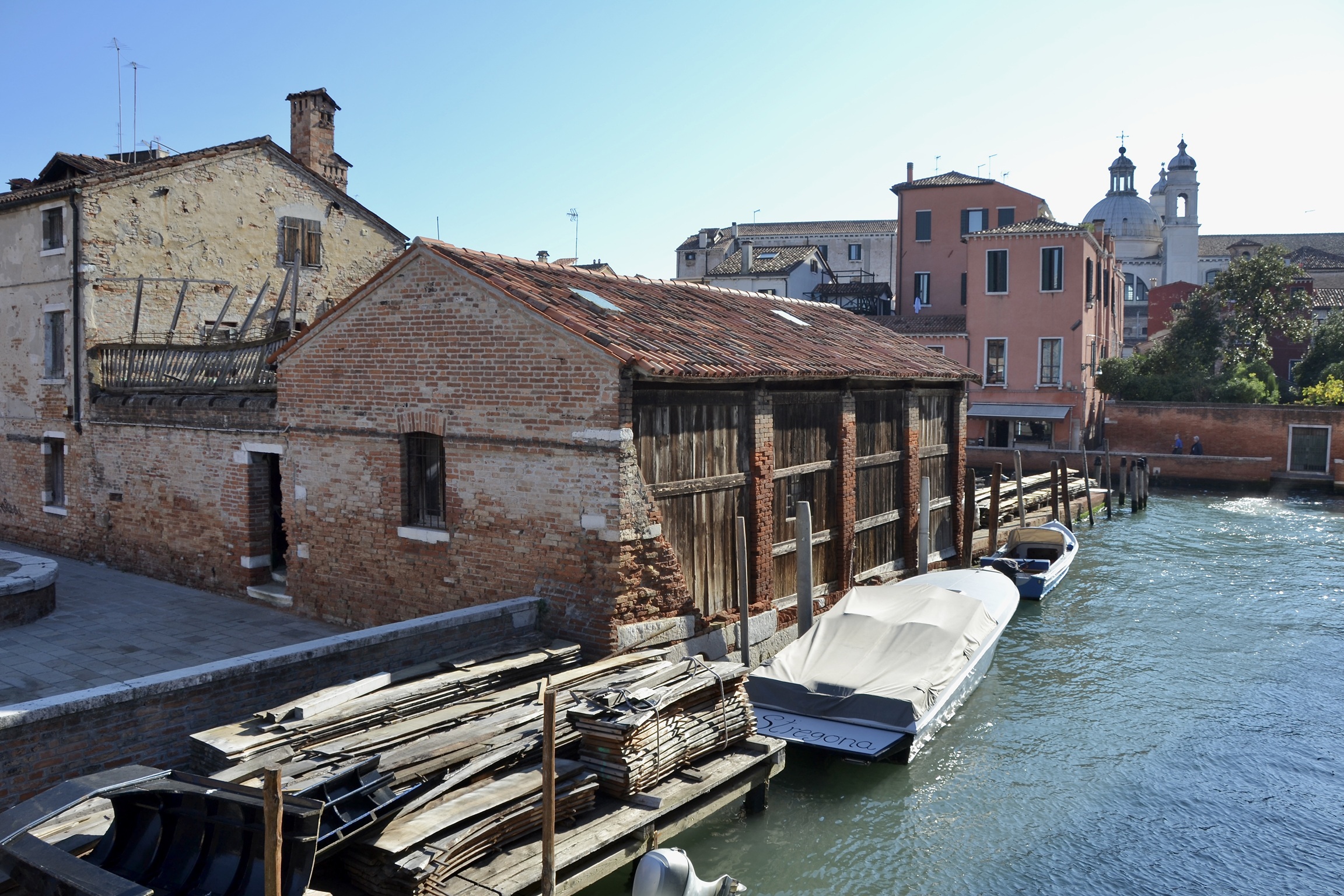
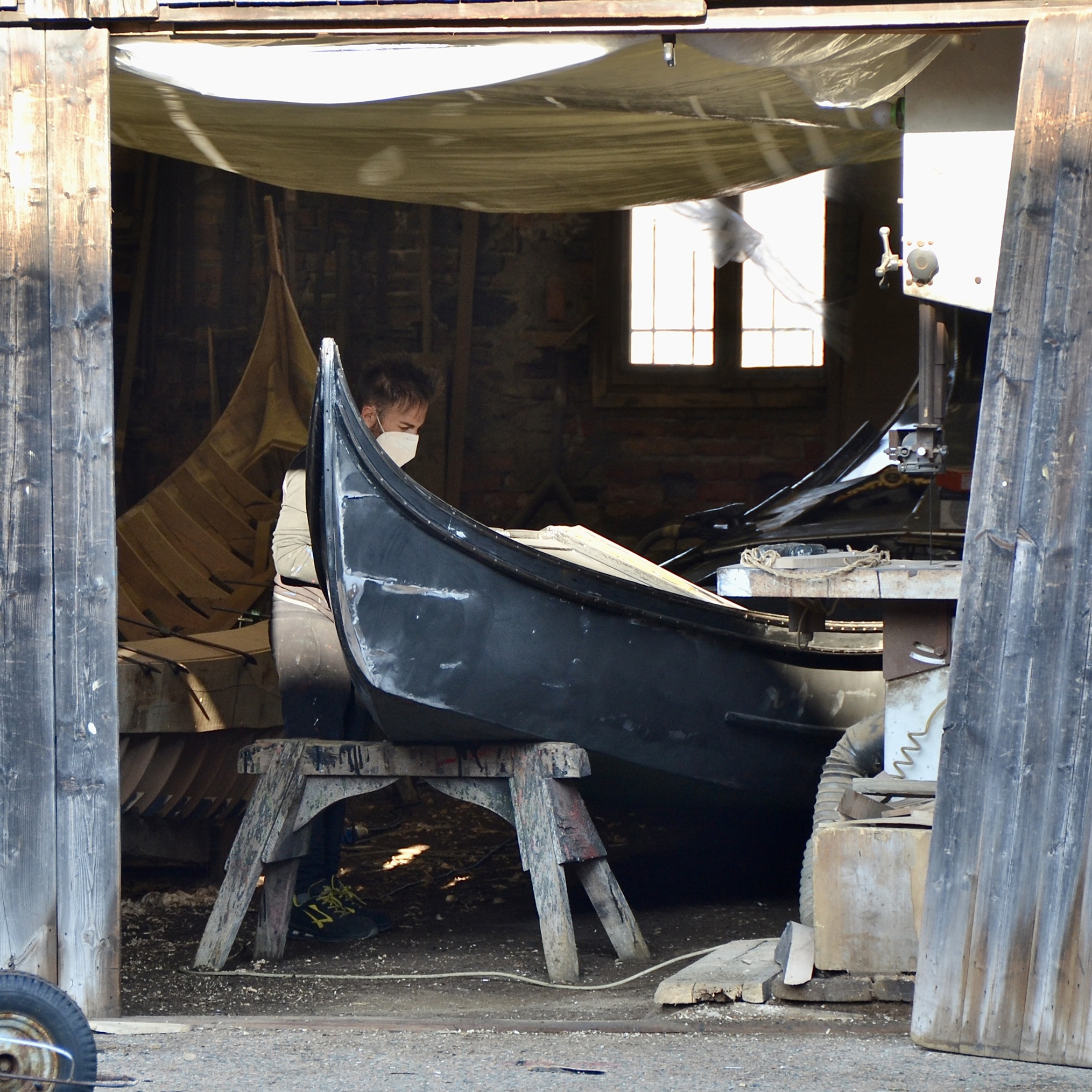
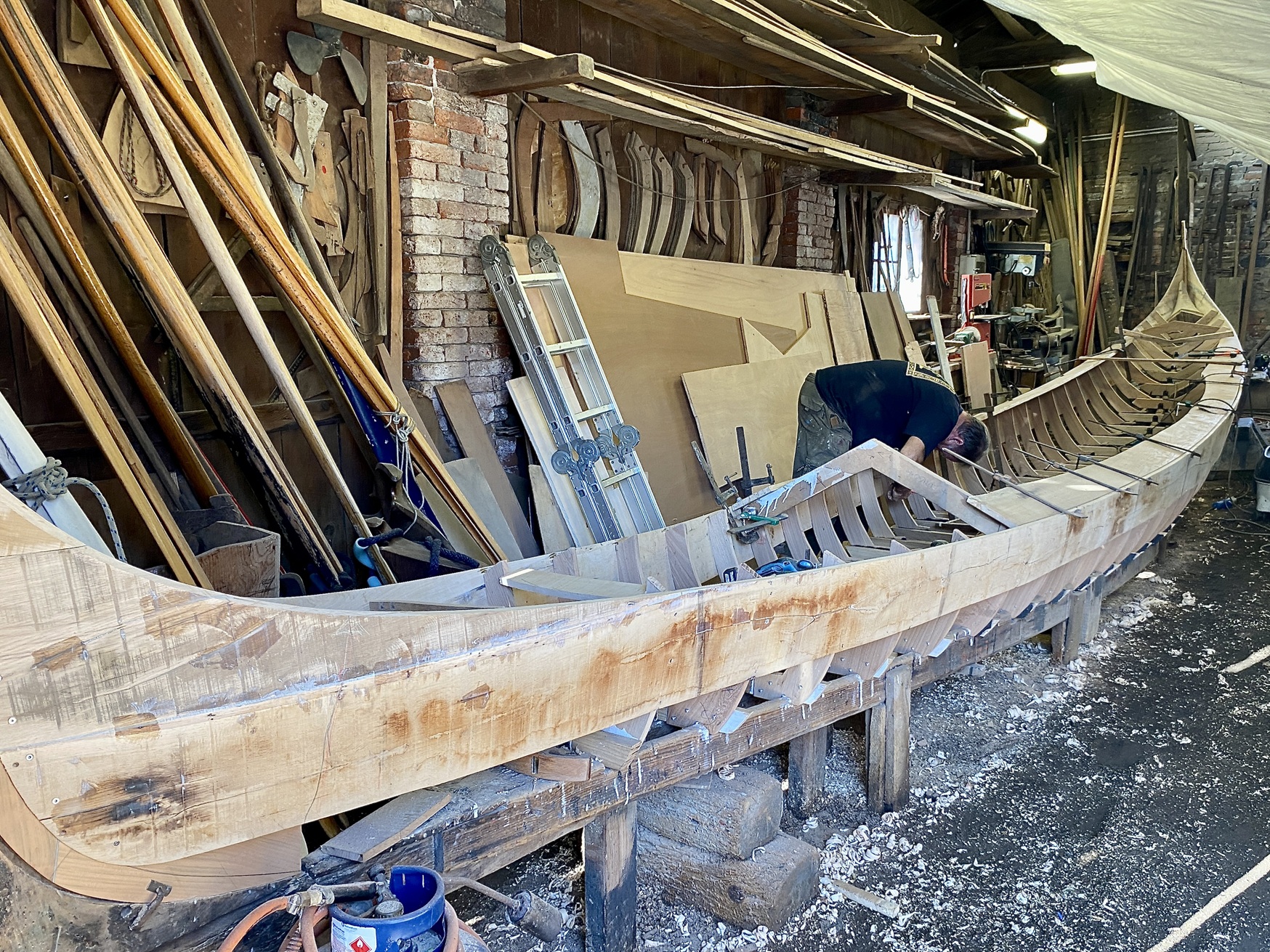
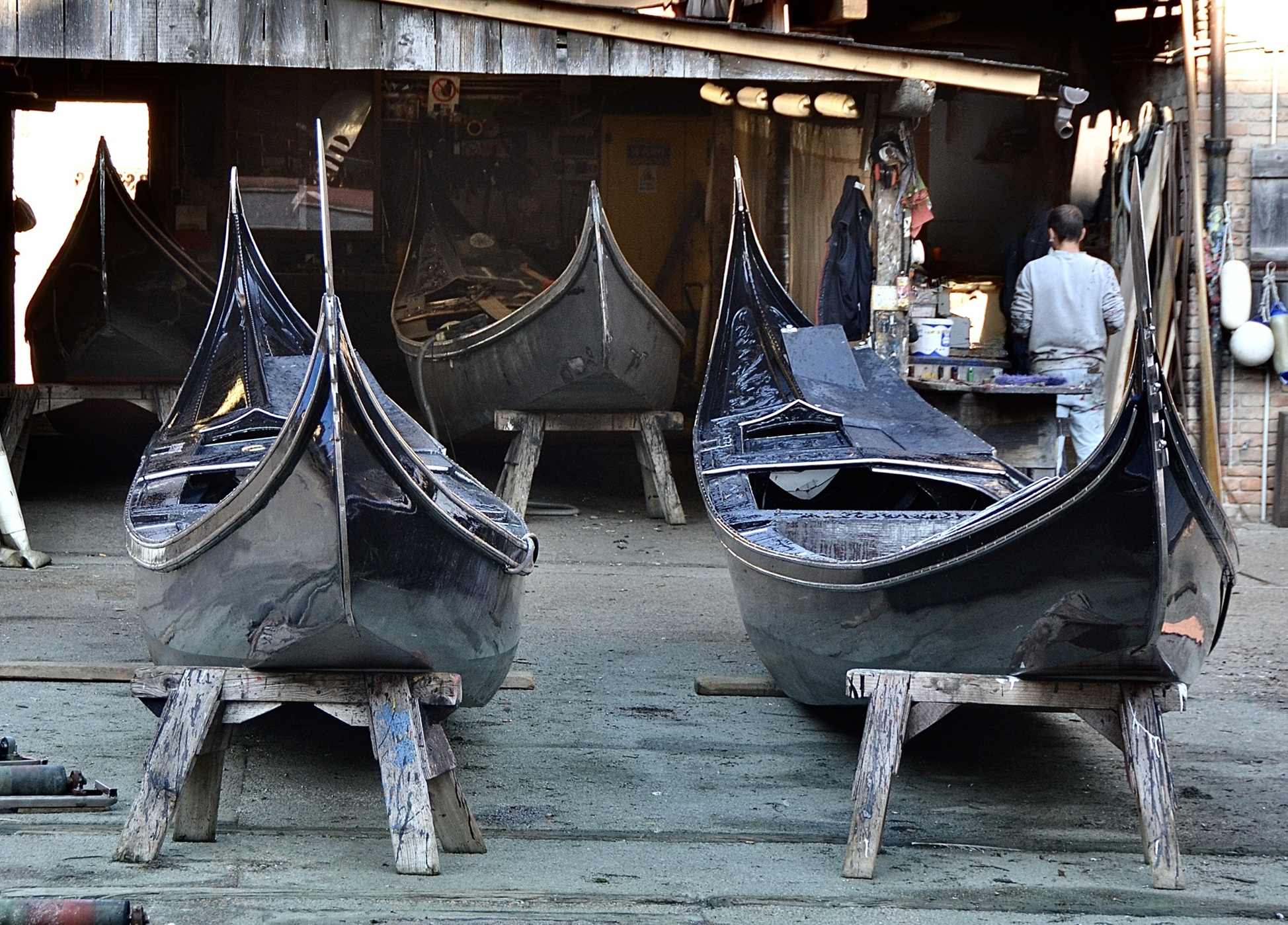
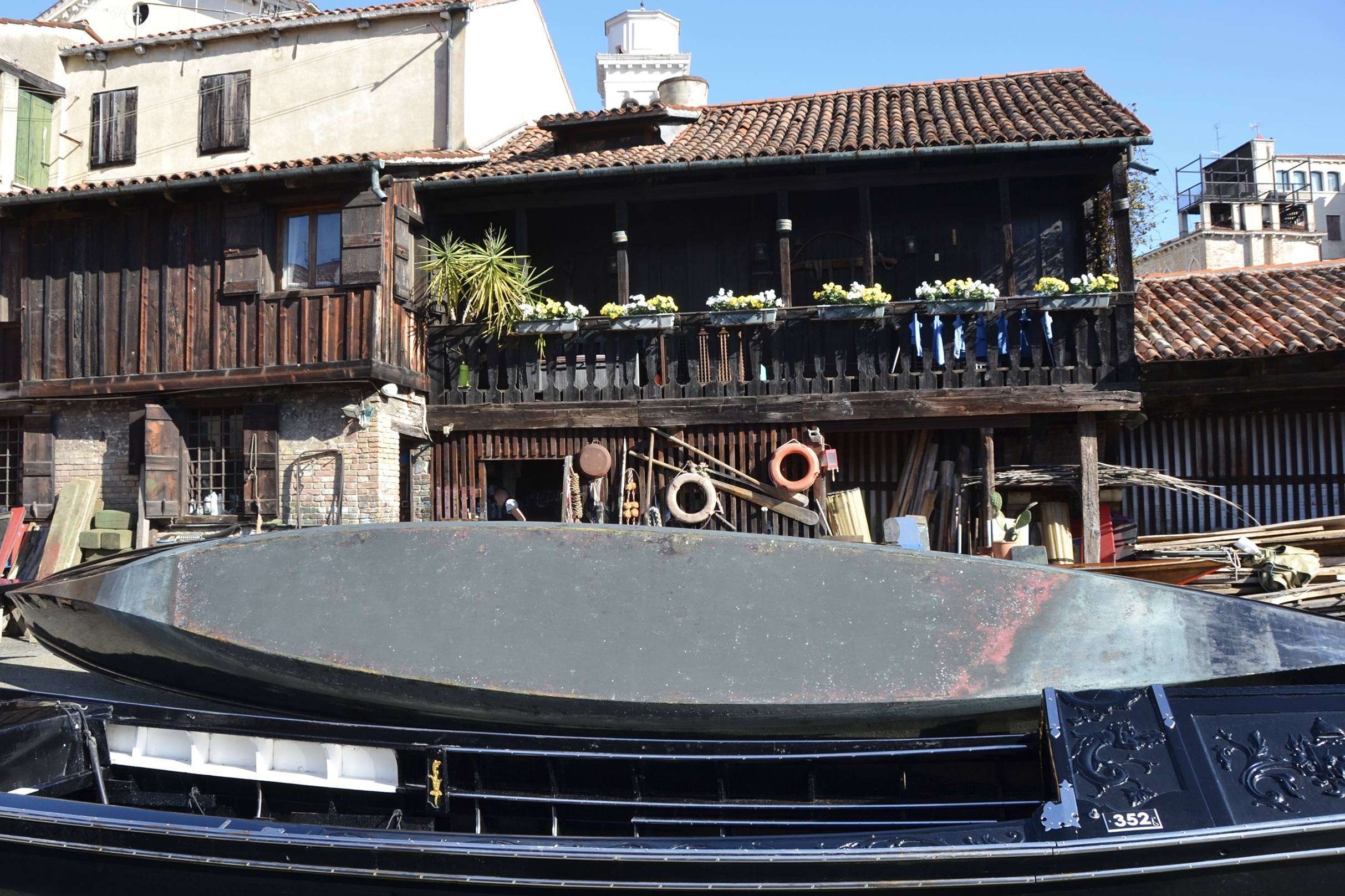
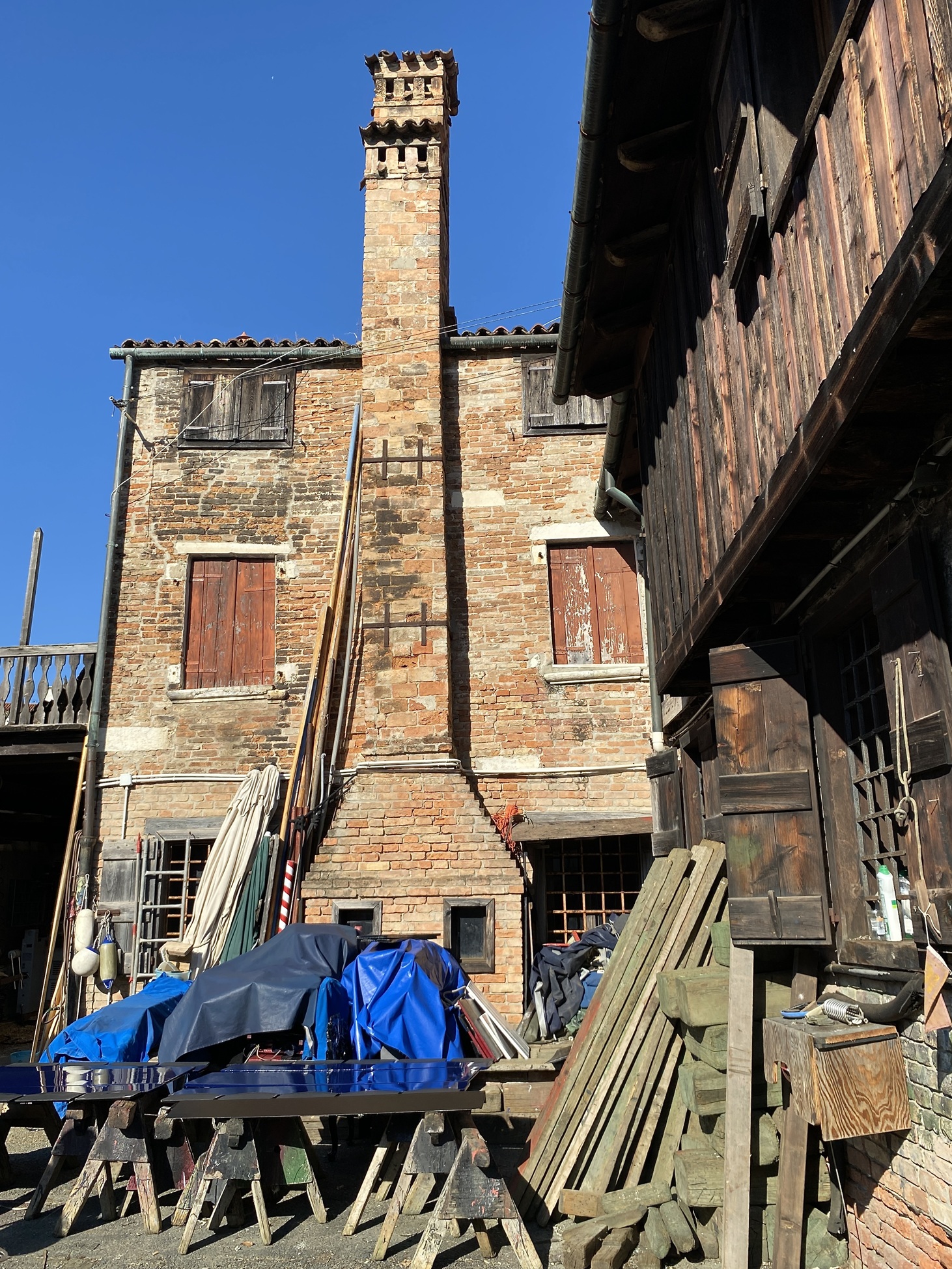
Dating back to the 17th century, the Squero di San Trovaso can be viewed from across the canal at Fondamenta Nani. All the squeri have an outside area featuring a slipway or scalo to launch boats into the canal.The original boatbuilders came from the Cadore area in the Dolomites, a mountain range north of Venice, and on arriving in Venice they built wooden mountain houses typical of their region. These are the only buildings made of wood in the city as such constructions were later banned as a fire risk. The boathouses or workshops where squeraroli work repairing or building gondolas are called teza.The rear of Squero di San Trovaso.A new gondola costs about 40,000 euros so regular maintenance is undertaken to preserve the exquisite craft, a full restoration can extend a gondola’s life for many years.Squero di San Trovaso only produces about one new gondola a year under the guidance of the squerarol or “master of the axe”. A permanent form called a cantiér is used as a template for the hull’s shape and it takes five squerarioli forty-five days to produce such a boat.
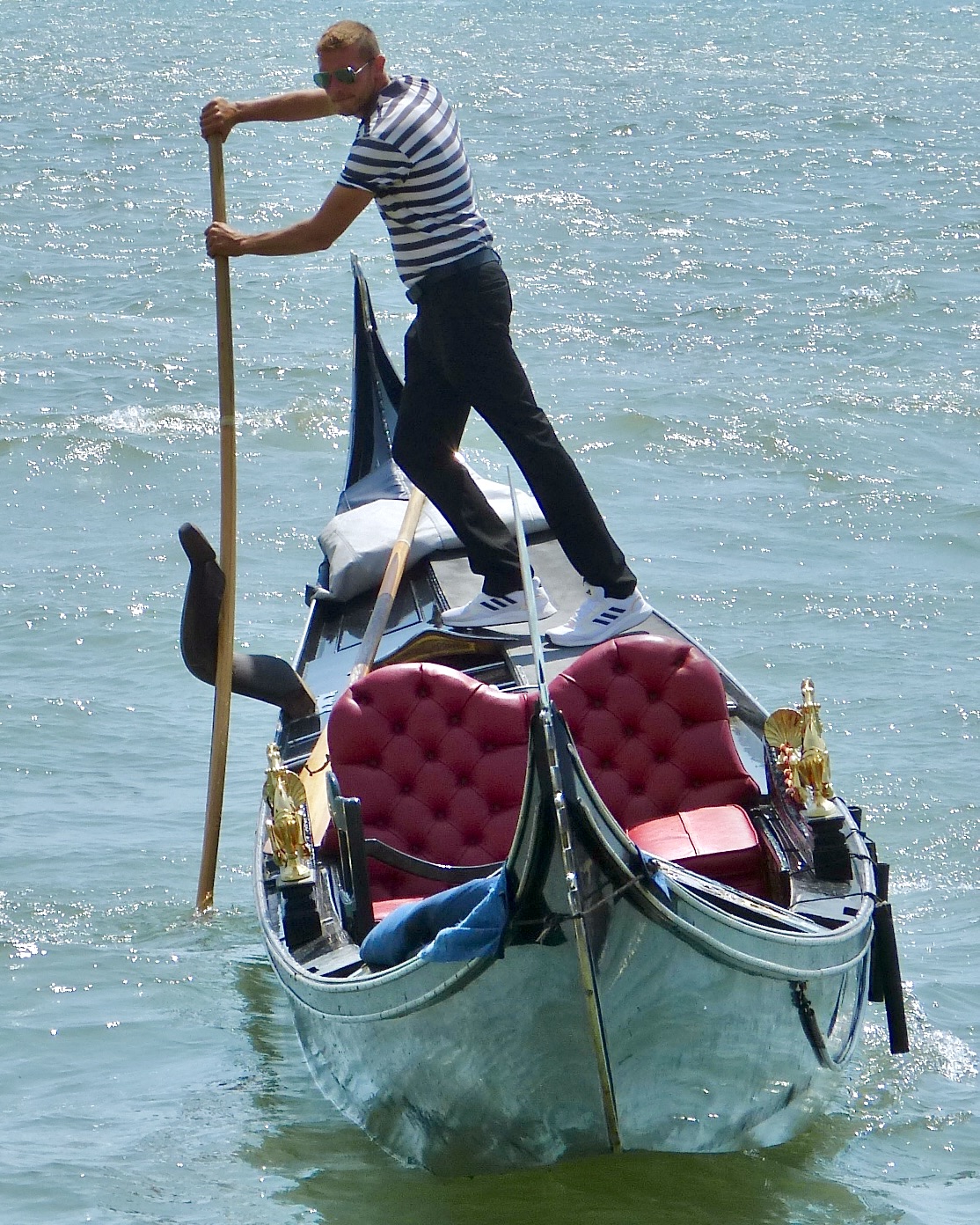
The squerarol’s expertise is in creating a boat that is not only strong but is also perfectly balanced, essential for its performance on the water powered by a single gondolier using a single oar around a single rowlock.
The etymology of “gondola” is debated, but the most widely accepted theory is that it comes from the Latin cymbula, meaning “small boat”. They are 11 metres long and weigh 350 kg, but are easily manoeuvred by the gondolier.
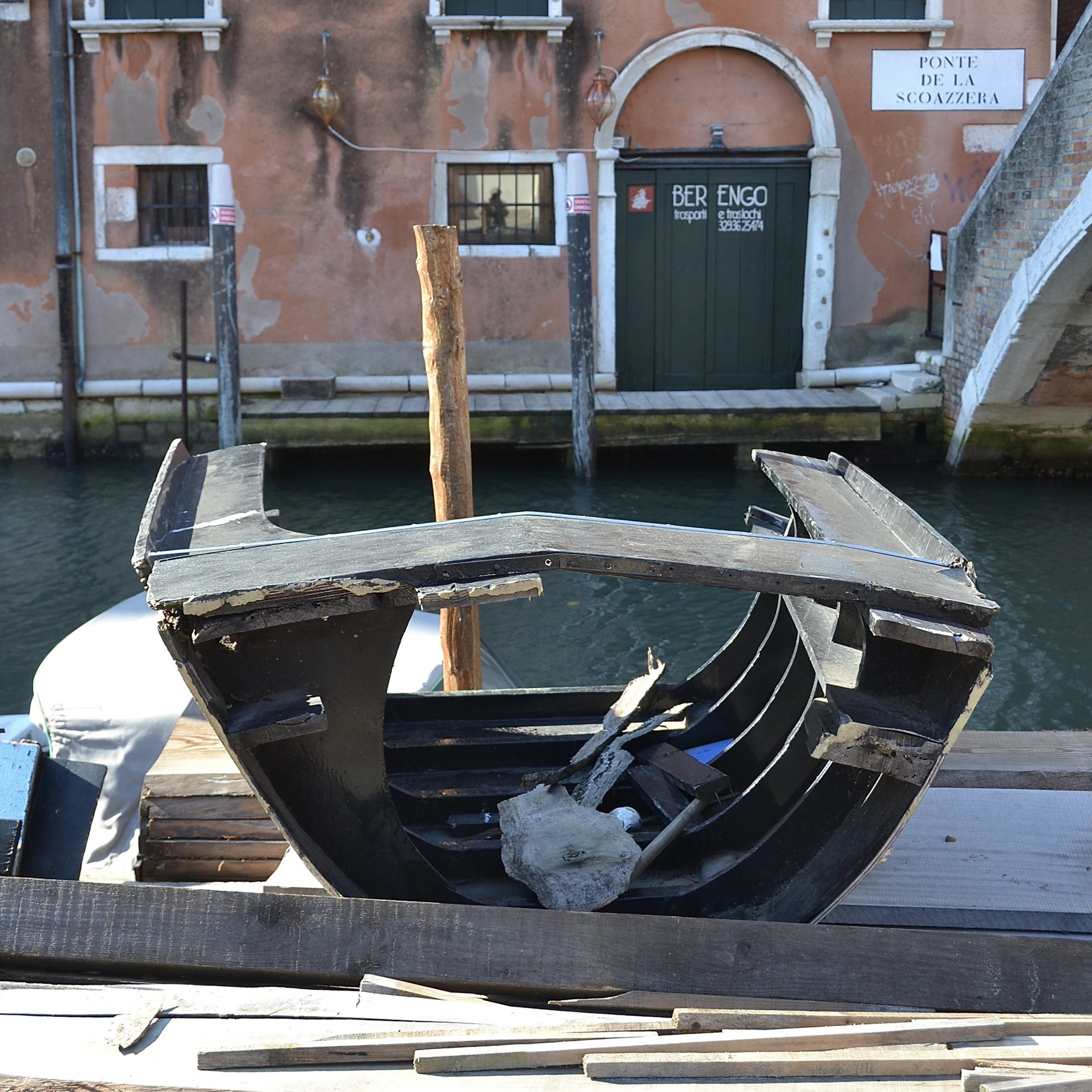
A gondola on its side showing the flat-bottomed constriction needed for the shallow Venetian lagoon.
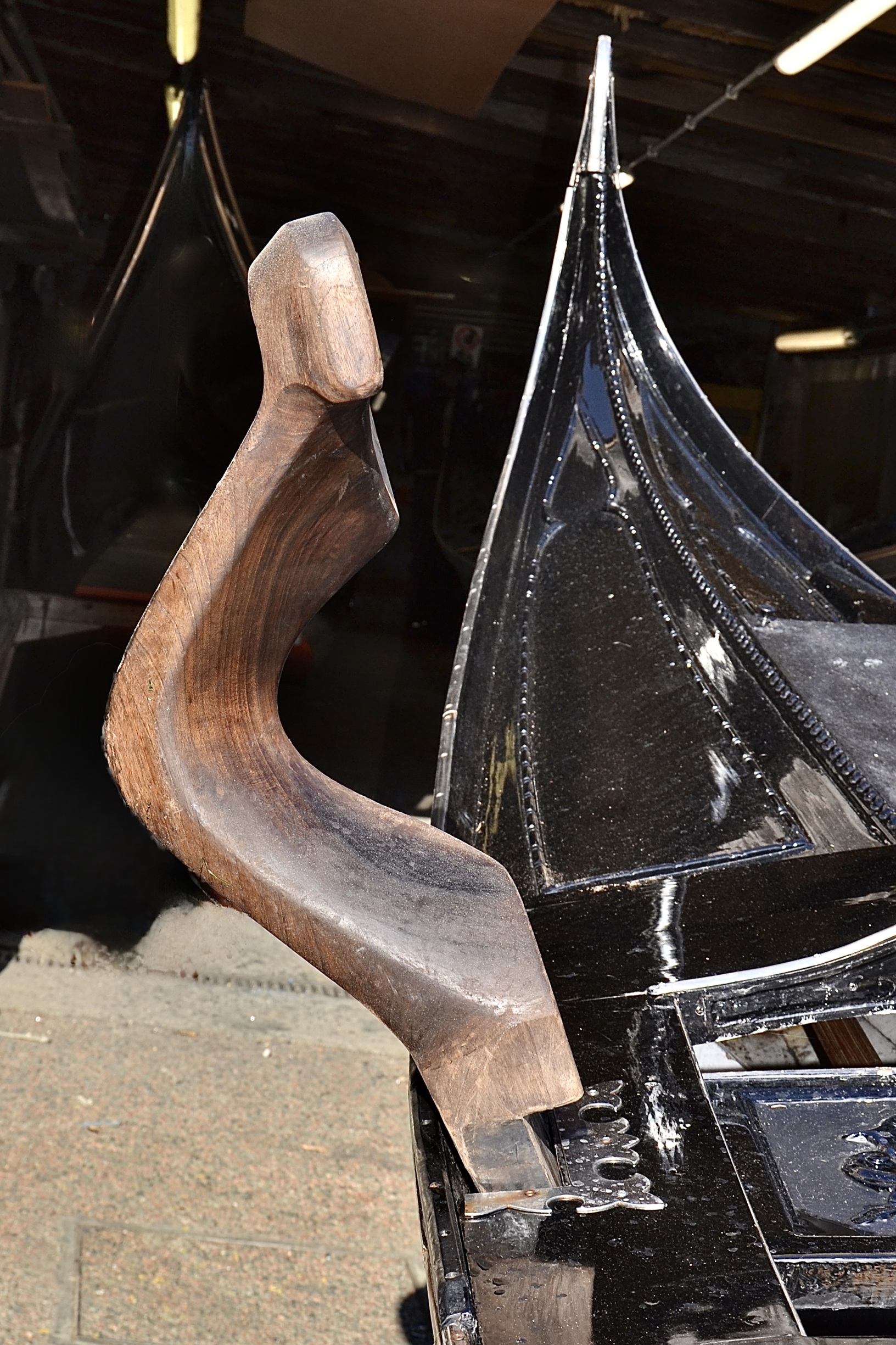
A fórcola, a unique, carved wooden rowlock providing a variety of fulcrum positions giving different points of control to change the speed and the direction of the boat.
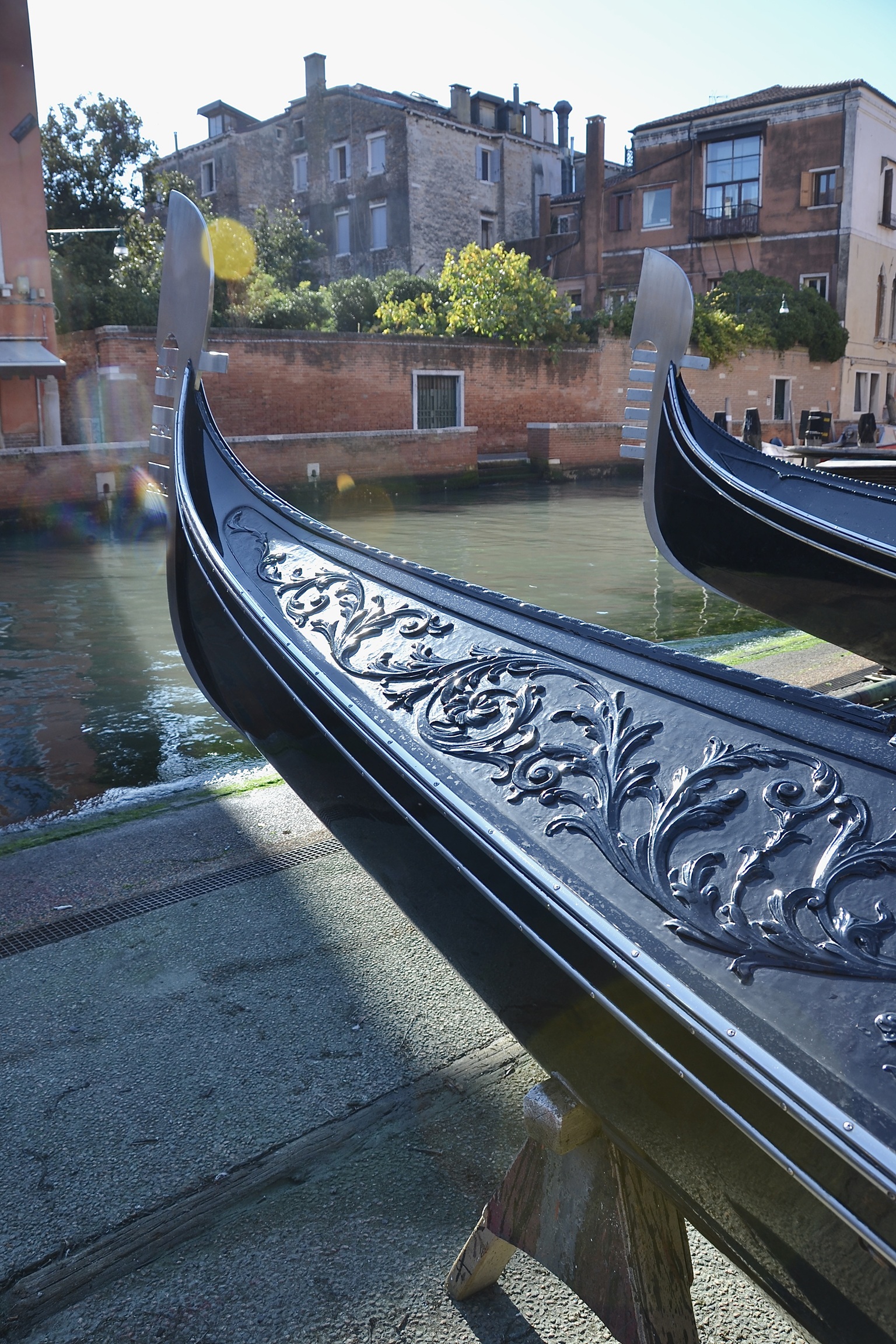
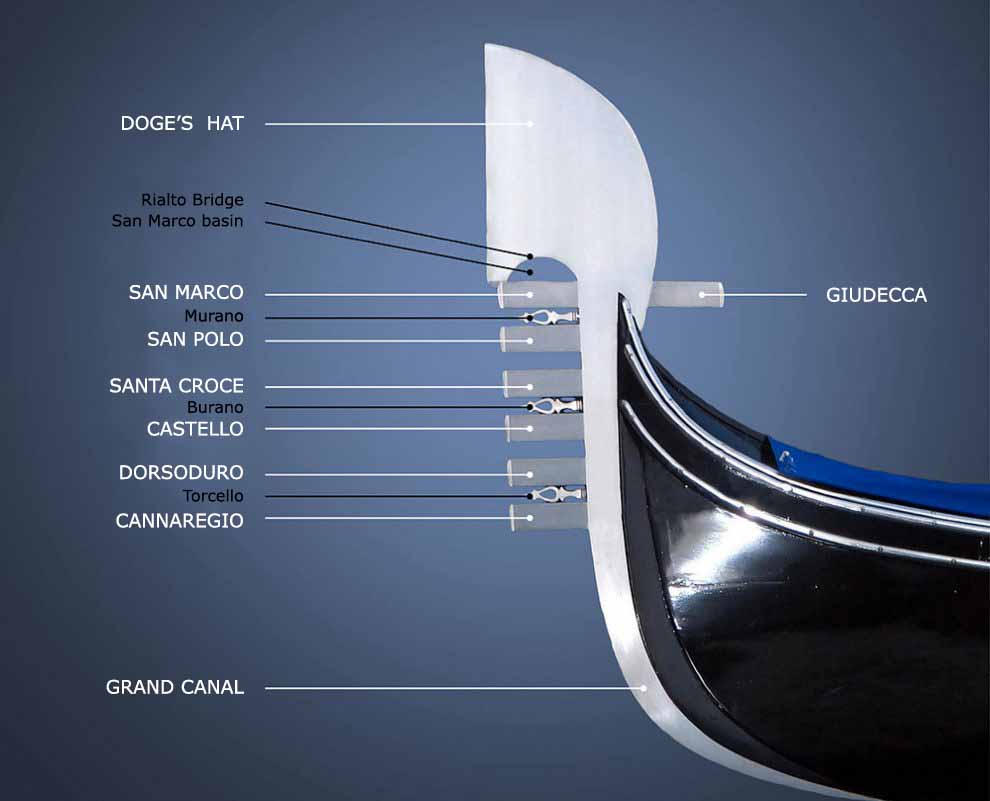
A ferro is a weighted metal bow ornament of perhaps 10kg that protects the bow from collisions and helps to counterbalance the weight of the gondolier who rows while standing on the boat’s stern.
The ferro is full of symbolism, the six-tooth comb allegedly represents the six districts of Venice – and more. Picture: veveglass.comA cross section of part of a gondola that has seen better times.
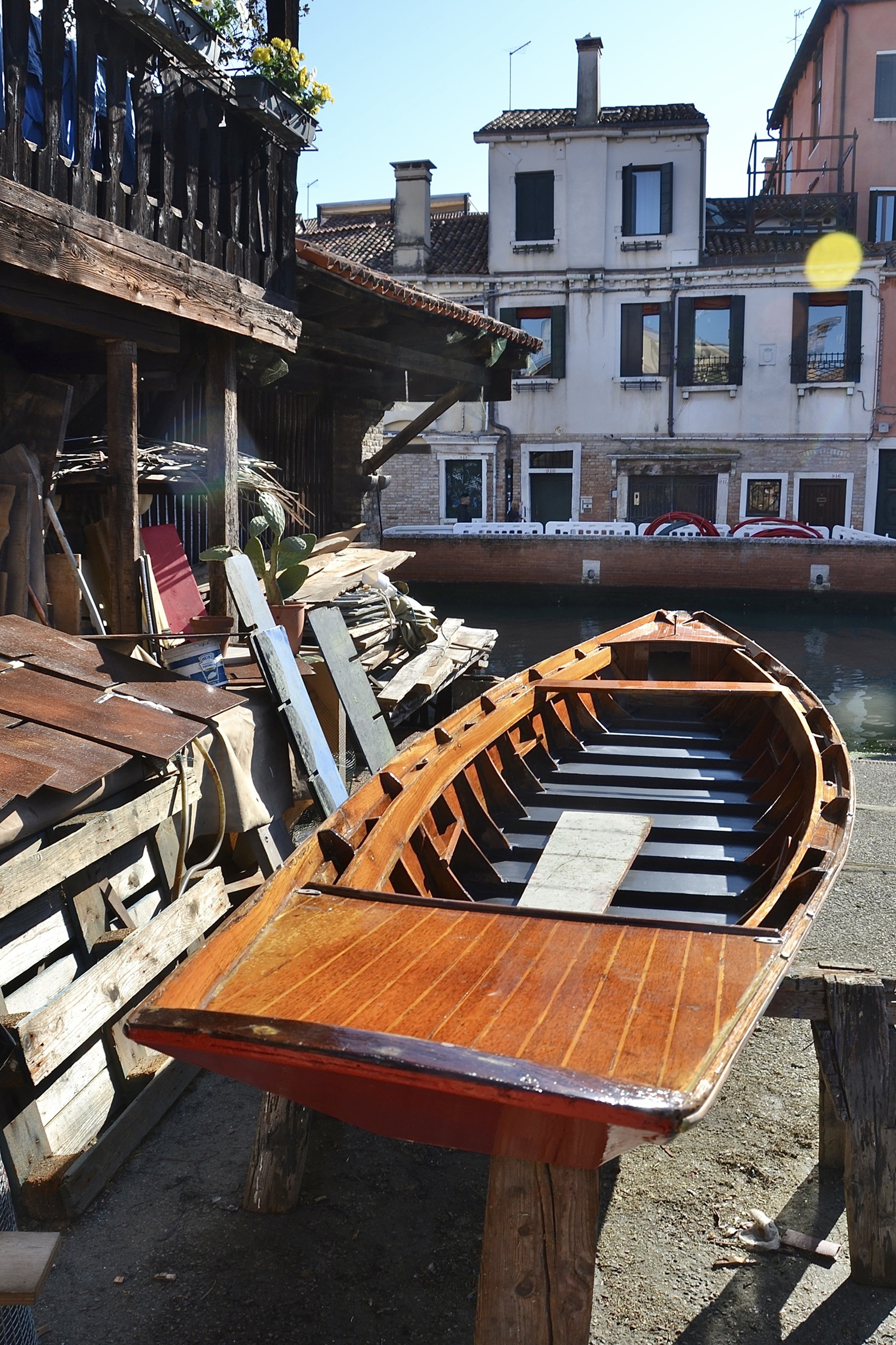
A sandolo buranello, a much smaller and more compact craft than a gondola. It is rowed by two people who stand in the bottom of the boat. Originating from the island of Burano, it was historically used for fishing in the Venetian Lagoon. There are more than fifteen traditional, flat-bottomed Venetian rowing boats besides the gondola.
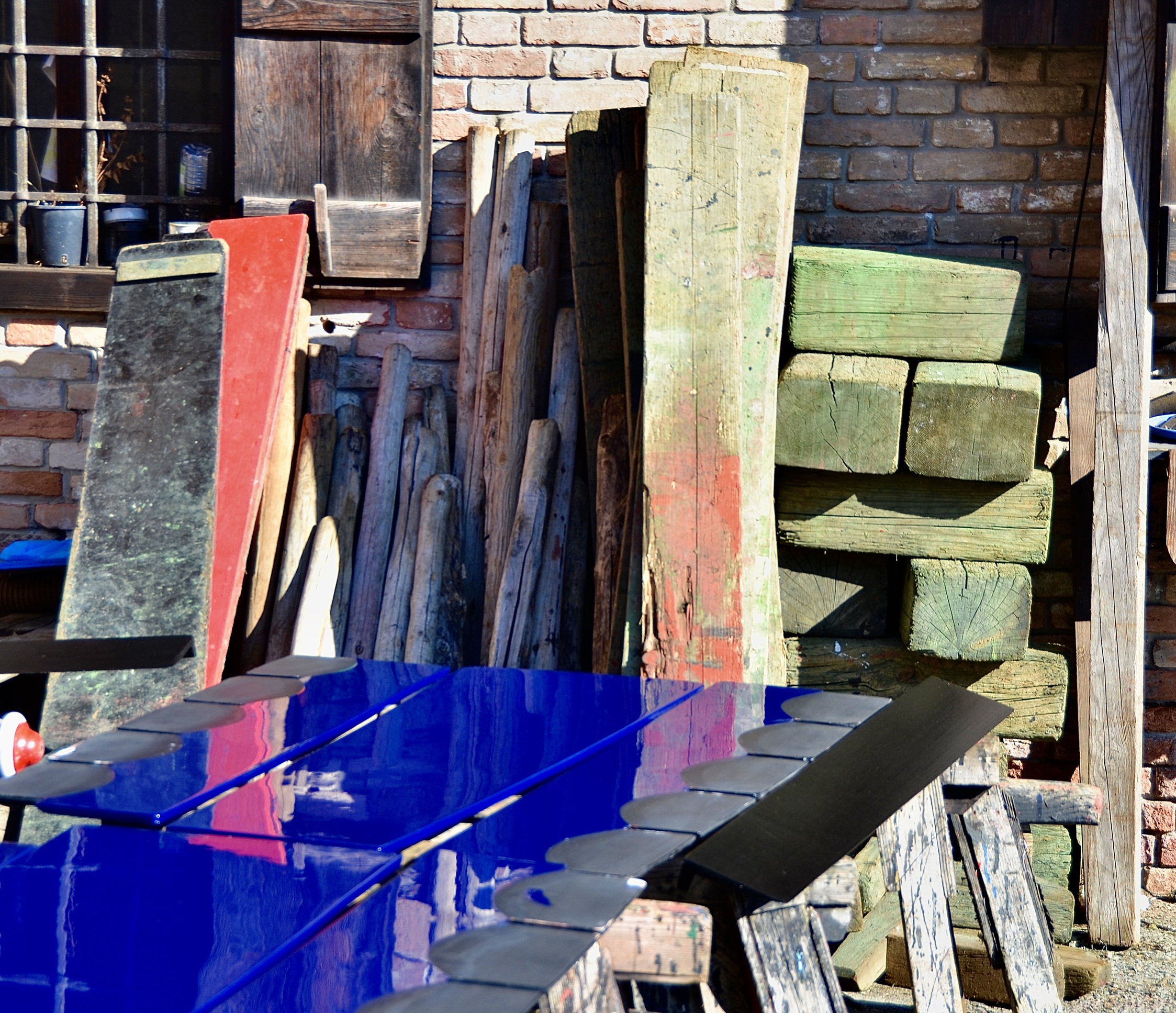
Every boatyard in the world seems to operate in the same organised chaos.A typical gondola is built from many different types of wood (oak, fir, cherry, larch, walnut, lime, mahogany and elm). Wood must dry for at least a year before it is worked to minimise the risk of future warping and splitting.
Once a basic gondola hull is completed, many other crafts contribute to the finished article. There are those who make oars and fórcole as well as those concerned with the ornamental features such as brass figures, carved and gilded friezes, bow irons, cushions and furnishings for the passengers and hats and clothing for the gondoliers.
There is an association of such artisans called El Felze and its members include squerariòli (boatbuilders), remèri (oar and rowlock makers), fravi (metalworkers), intagiadóri (wood carvers), indoradóri (gilders), baretèri (hat makers), sartóri (tailors) and caleghèri (shoe makers).
The finished product in action. Bella! Magnifico! Bravo!


 Hear The Boat Sing