
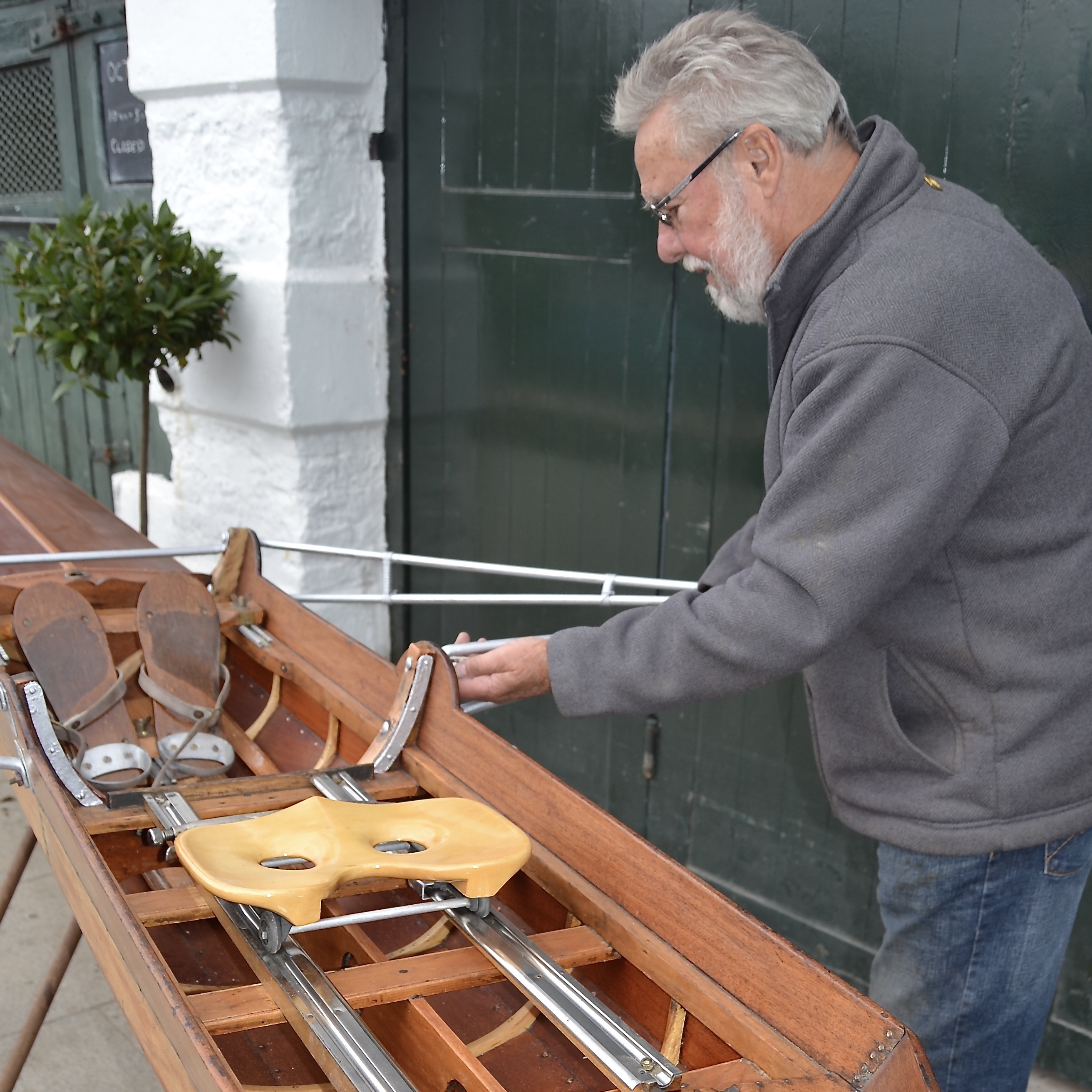
21 October 2025
By Tim Koch
Tim Koch on a father and son whose lives were dominated by boats and the River Thames.
HTBS has often decried the increasing lack of good (or indeed any) rowing related writing in the mainstream media, both print and digital. Print media is slowly dying and one of its ways that sports reporting seems to be attempting to fight this demise is to concentrate only on the most popular athletic contests, particularly soccer in the case of Britain. Rowing, a minority sport that some see as elitist, is a particular victim of this mindset.
It was a very pleasant surprise therefore to see an obscure rowing related story given prominence in a very well written piece in the Times newspaper, both print and digital, with the publication of the obituary of Bill Colley.
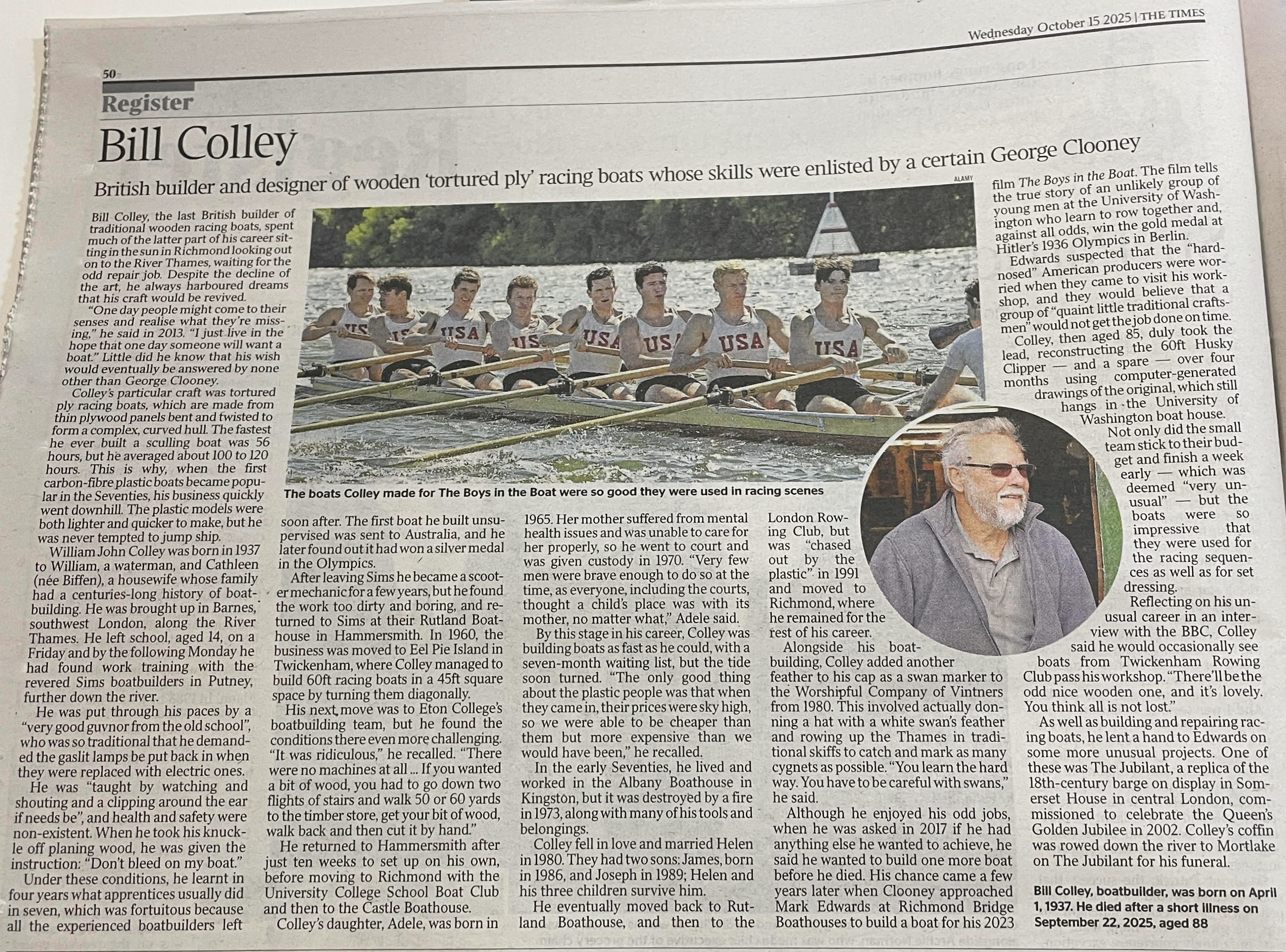
For those of us who were rowing in West London 40 years ago however, William John Colley (1937 – 2025) will always be “Young Bill”, a sobriquet to differentiate him from his father, William Charles Colley (1902 – 1986), “Old Bill”, a waterman and lighterman for sixty years, the son and the grandson of watermen.
When I started at Hammersmith’s Auriol Kensington RC on Lower Mall in the mid-1980s, Old Bill lived in one of the nearby semi-detached early 17th Century cottages and was a frequent visitor to AK where he was delightful and gentle company. I remember him telling of a Zeppelin raid on London that he witnessed from the river during the First World War.
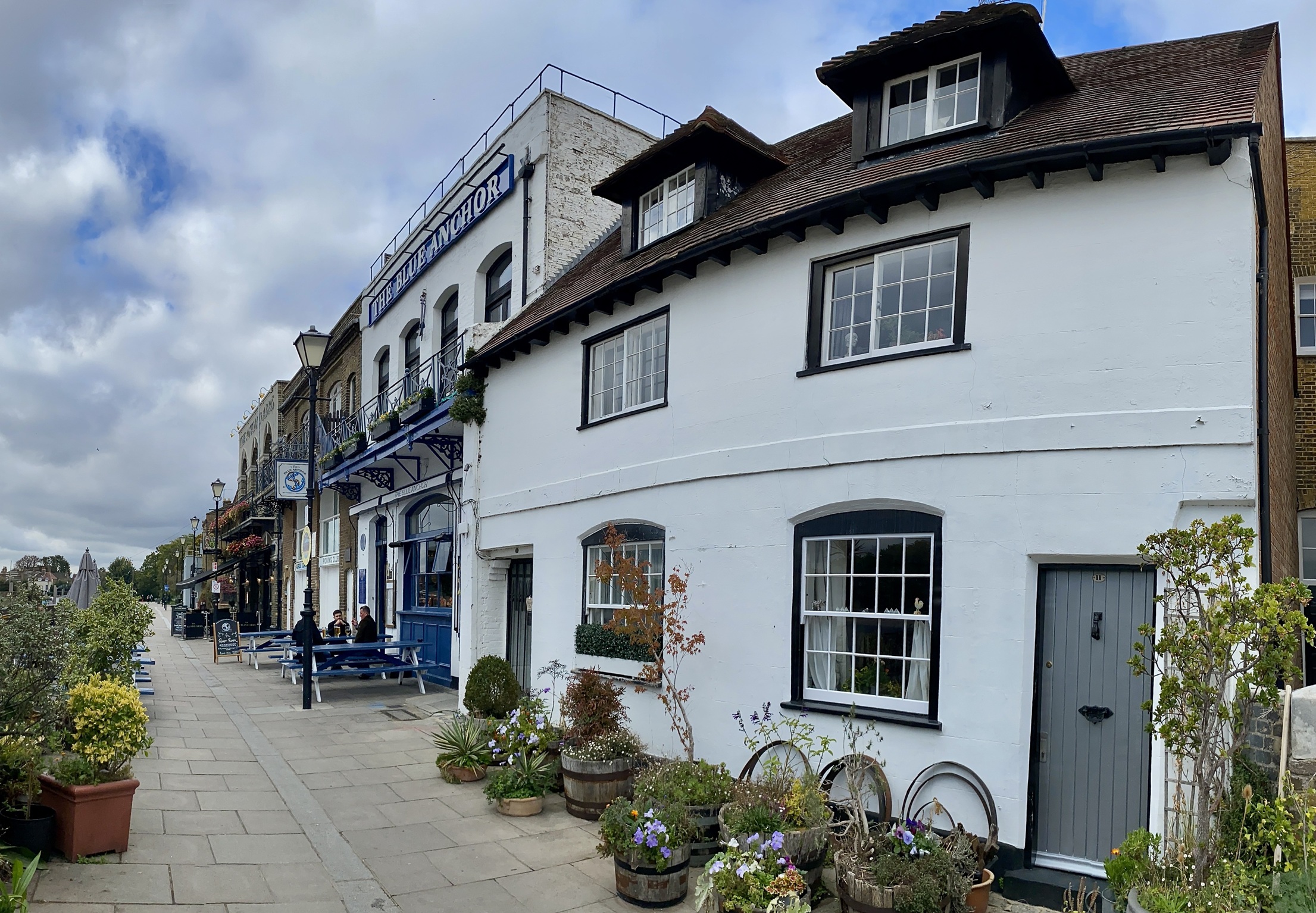
Young Bill was born at 11 Lower Mall which, despite its Grade II historic listing, he remembered as “very cold”. Today, the humble fisherman’s or waterman’s cottage is worth well over a million pounds and is, no doubt, much warmer.
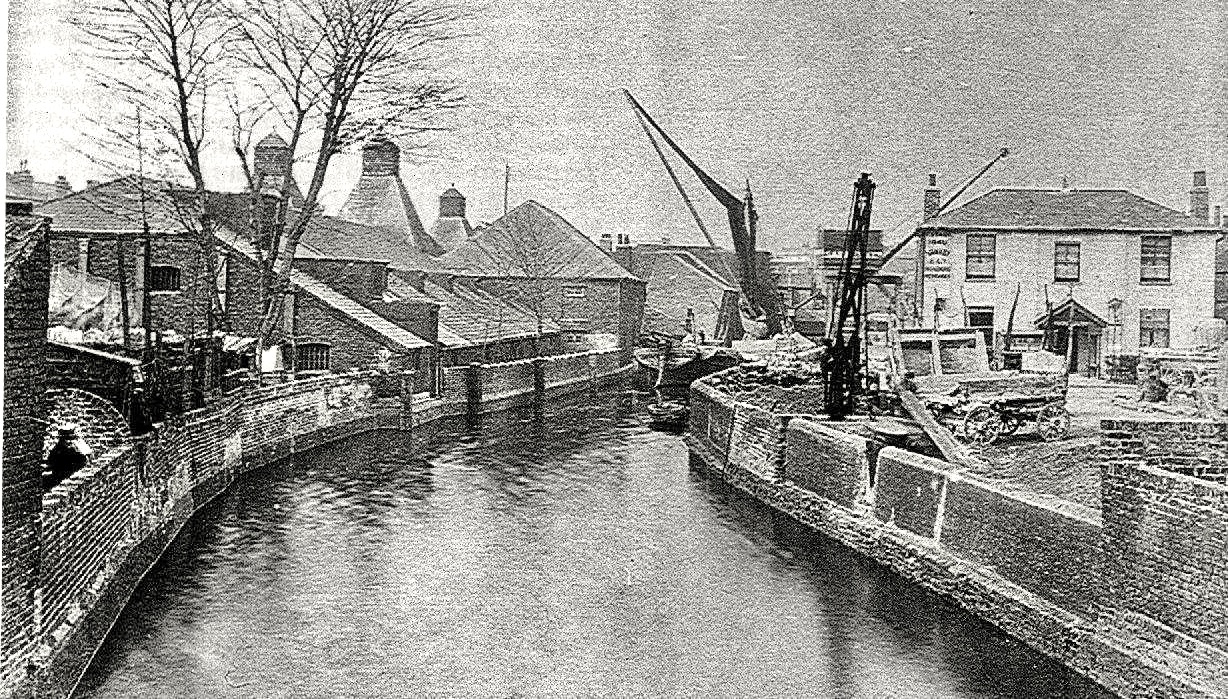
The Auriol Kensington archive has several items related to Old Bill, most notably two biographical pieces from local newspapers (when such publications existed and printed well-written stories and features of local interest).
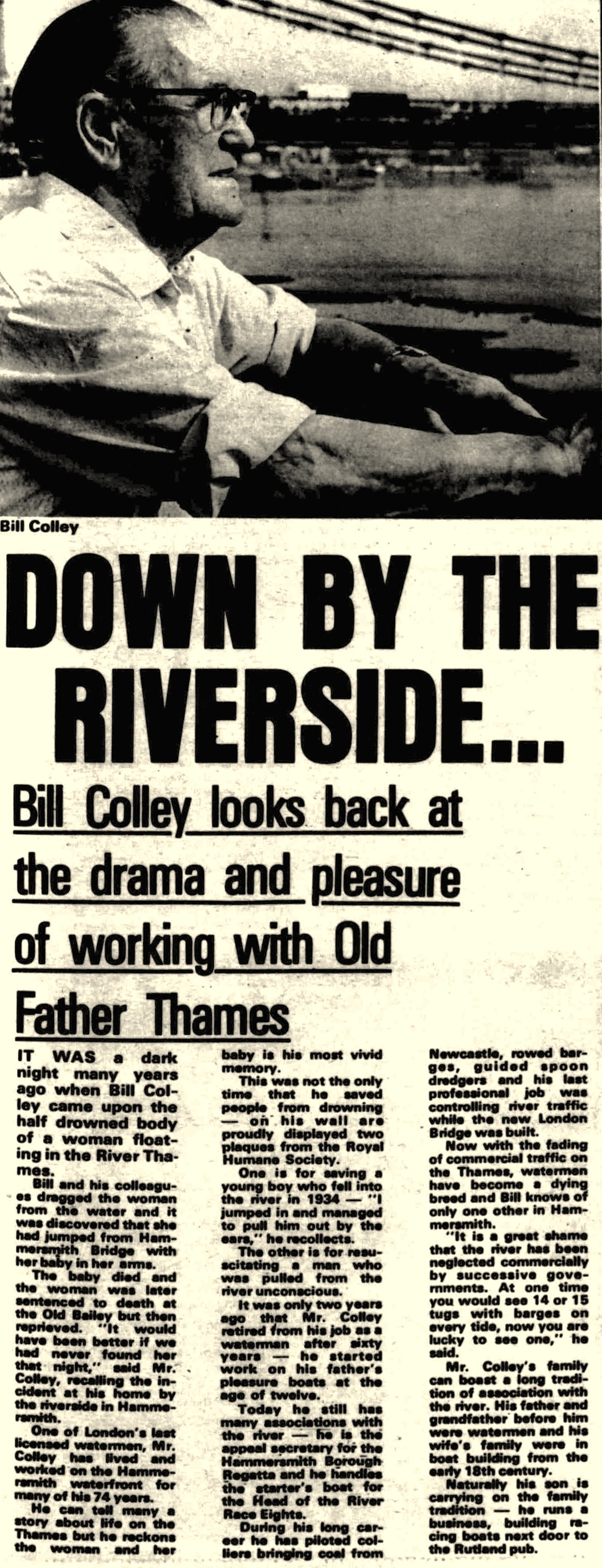
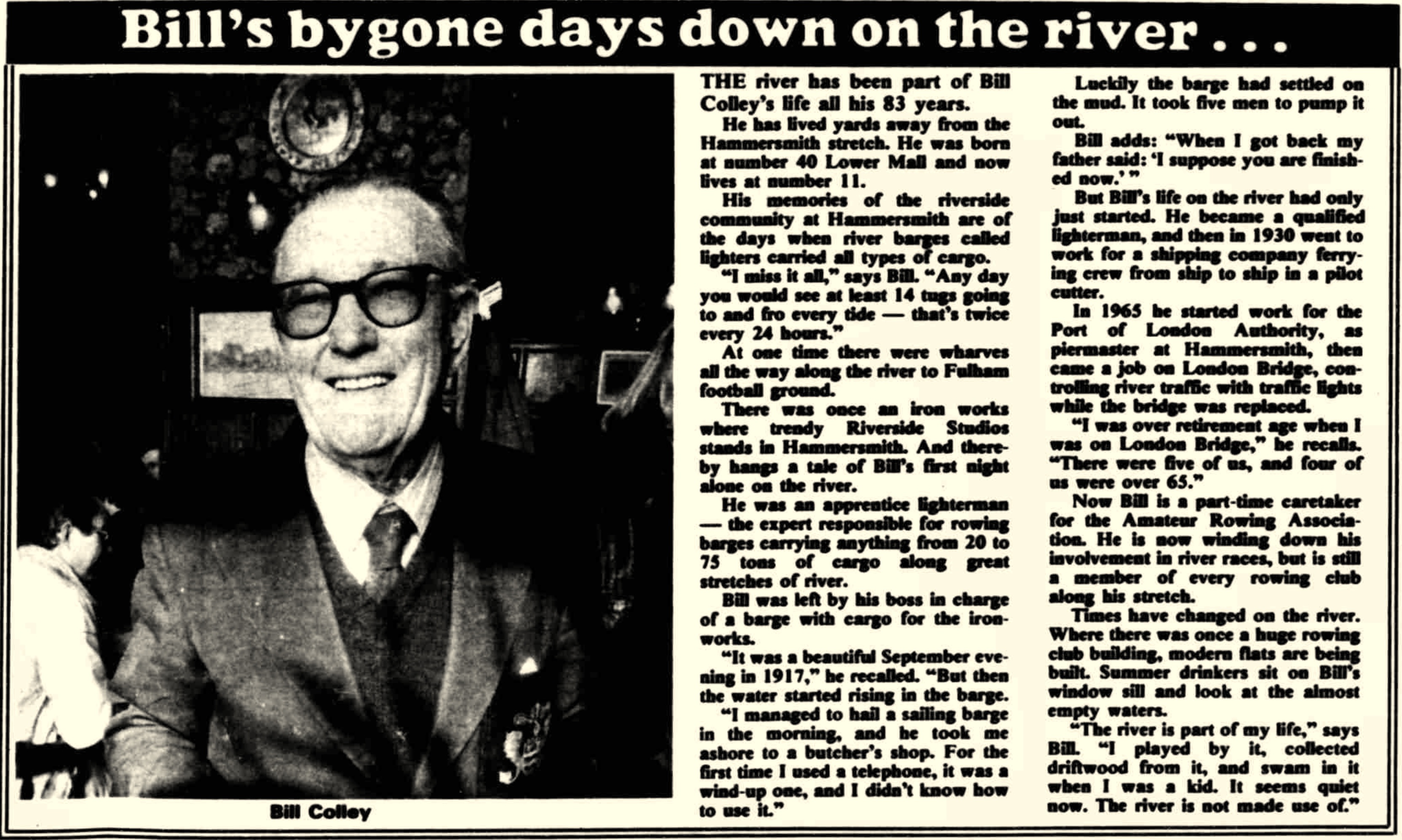
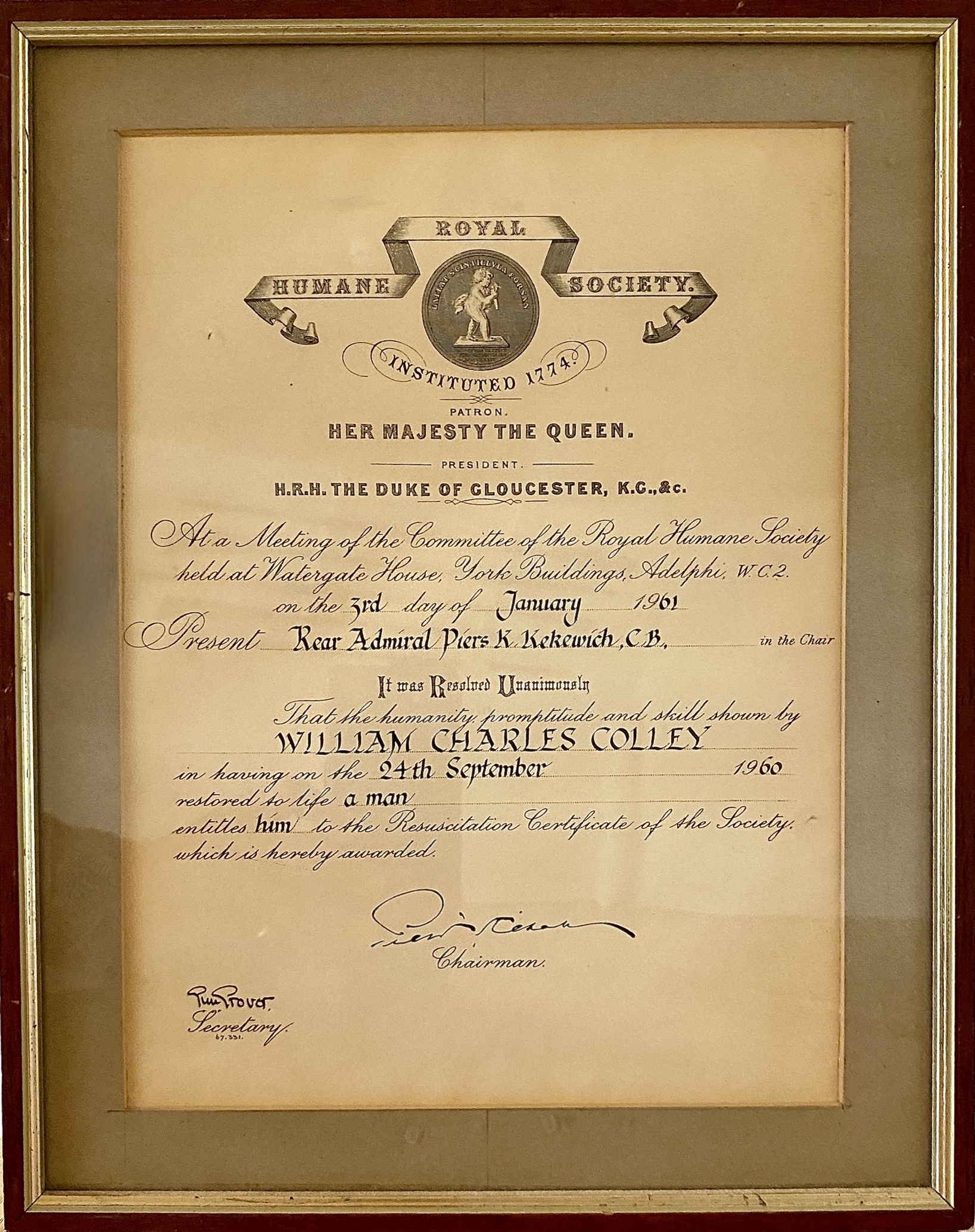
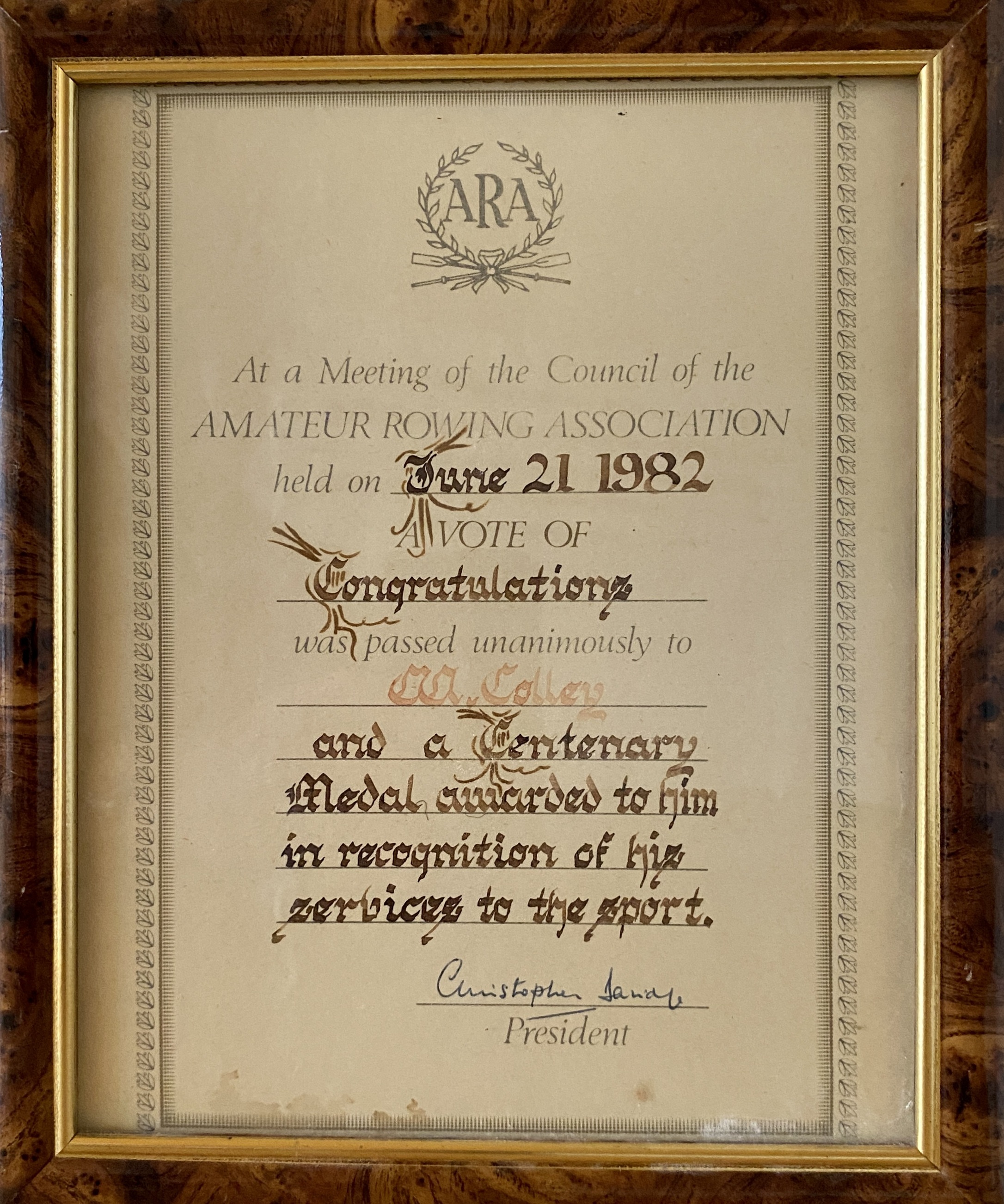
Other biographical details about Old Bill are that in his youth, he rowed for Parkside RC, a working man’s club based at Hammersmith’s West End Boathouse. He remained active on the club’s administration side until it was wound up in 1964.
After he finished his waterman’s apprenticeship, Bill was one of seven entries for six places in the 1925 Doggett’s Coat and Badge but, after trail races at Hammersmith, he was the one who was eliminated.
Over fifty years, Bill raised thousands of pounds for the West London Hospital as the appeals secretary of the Hammersmith Borough Regatta.

 Hear The Boat Sing
Seeing this is very nostalgic and I did see the obituary in the Times.
I was born and grew up in Hammersmith very close to the River. In about 1958 I joined Parkside Rowing Club out of the West End Boathouse. They trained me to be a coxswain and I think around that time Bill was in the first eight in a boat (I don’t know if he built it) named Eight to the Bar. Around that time they came 50th in the Head. The attached was the Parkside 2nd eight in the 1960 Head taken from Hammersmith Bridge. I was the coxswain and that was an old clinker built boat; it was hard to get going but heavy to both lift and steer.
I was around, alas, when Parkside ceased to exist and West End was demolished. I also rowed out of West End when I was at Latymer Upper School before they built their own boathouse just up river in 1965.
During my frequent return trips to London I often walk along the Mall from the Black Lion to Hammersmith Bridge. A lot has changed but the part from the Rutland past Auriol and the Blue Anchor has remained much the same. As I say I’m very nostalgic and a reminder of the great history of that section of the Tideway.
Much enjoy your many interesting Hear The Boat Sing articles, including the one about the Sims boatbuilding in the loft behind the Rutland and across Mall Road from the West End Boat house, where Eight to the Bar was built.
David Godfrey
3361 Caminito Luna Nueva
Del Mar, CA 92014, USA
(HTBS has my contact information)