

25 September 2025
By Tim Koch
William “Bill” Colley, the last British builder of wooden “tortured ply” racing boats died on 22 September*, aged 88. His daughter, Adele, says that “Dad died at home with us after a short illness surrounded by love.”
Reposted below is an interview that Bill gave me in 2016 and further tributes will follow. Bill gained some late fame seven years after this was first published when film director George Clooney commissioned him to build two wooden eights for the 2023 Hollywood film about the American crew that won the eights at the 1936 Olympic Games, The Boys in the Boat.
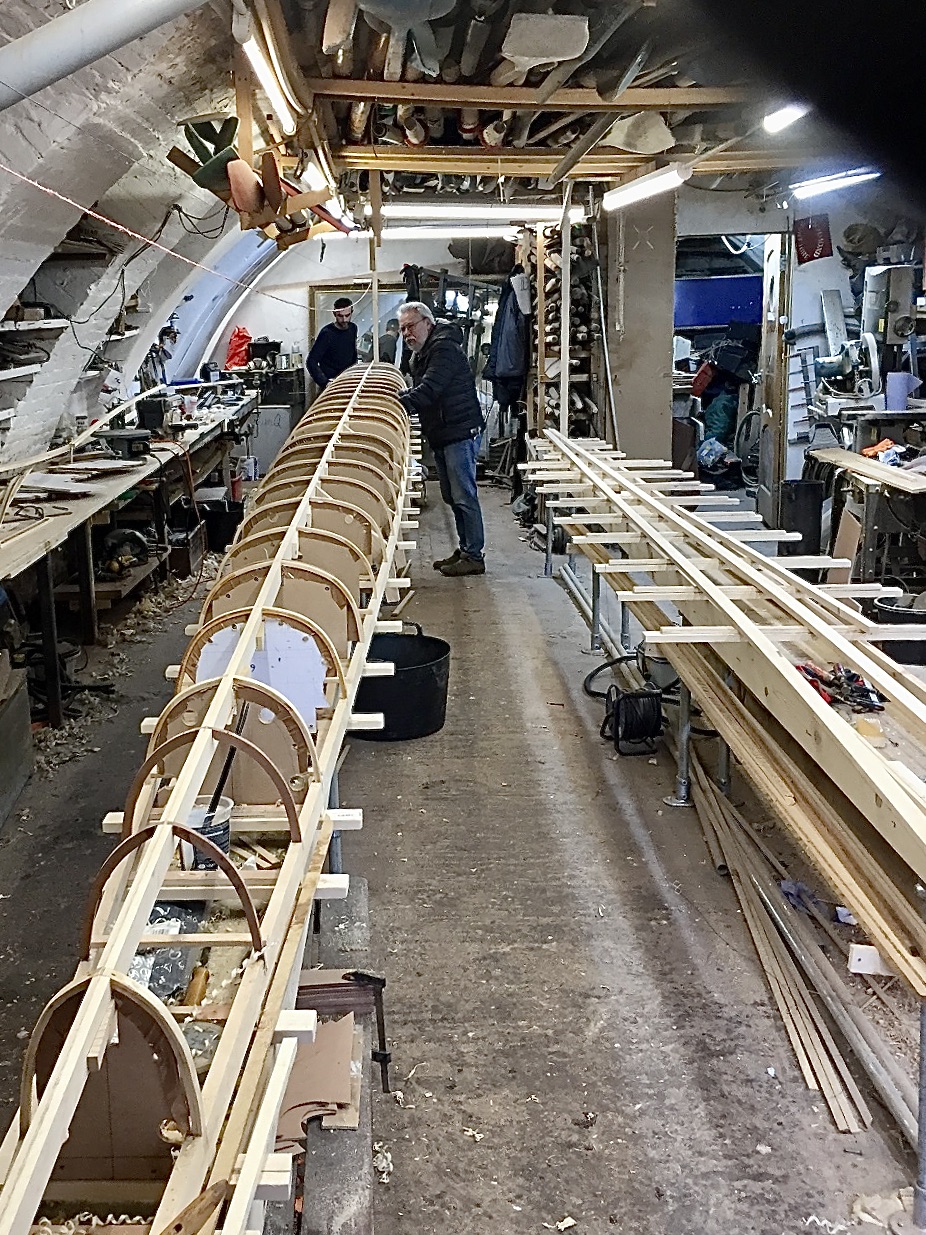
Bill speaking in October 2016:
I’m 79 now and I have been a boatbuilder for 64 years. I was born on 1 April, which is my excuse for everything. My uncle was a boatbuilder at the West End Boathouse in Hammersmith and my father was a waterman, he was always afloat, in later years he was a river pilot.
I started work under Roland Sims at Putney in 1952 when I was 15, though not officially an apprentice. They would not take on apprentices, I don’t know why, but I did in four years what the proper apprentices did in seven. I managed to build a boat that won a Silver Medal in the Olympics after four years.

When I left Sims, I became a scooter mechanic for a couple of years but that was a bit boring, it was a good change but I went back to boatbuilding at the first opportunity and worked for Sims of Hammersmith at the Rutland Boathouse.
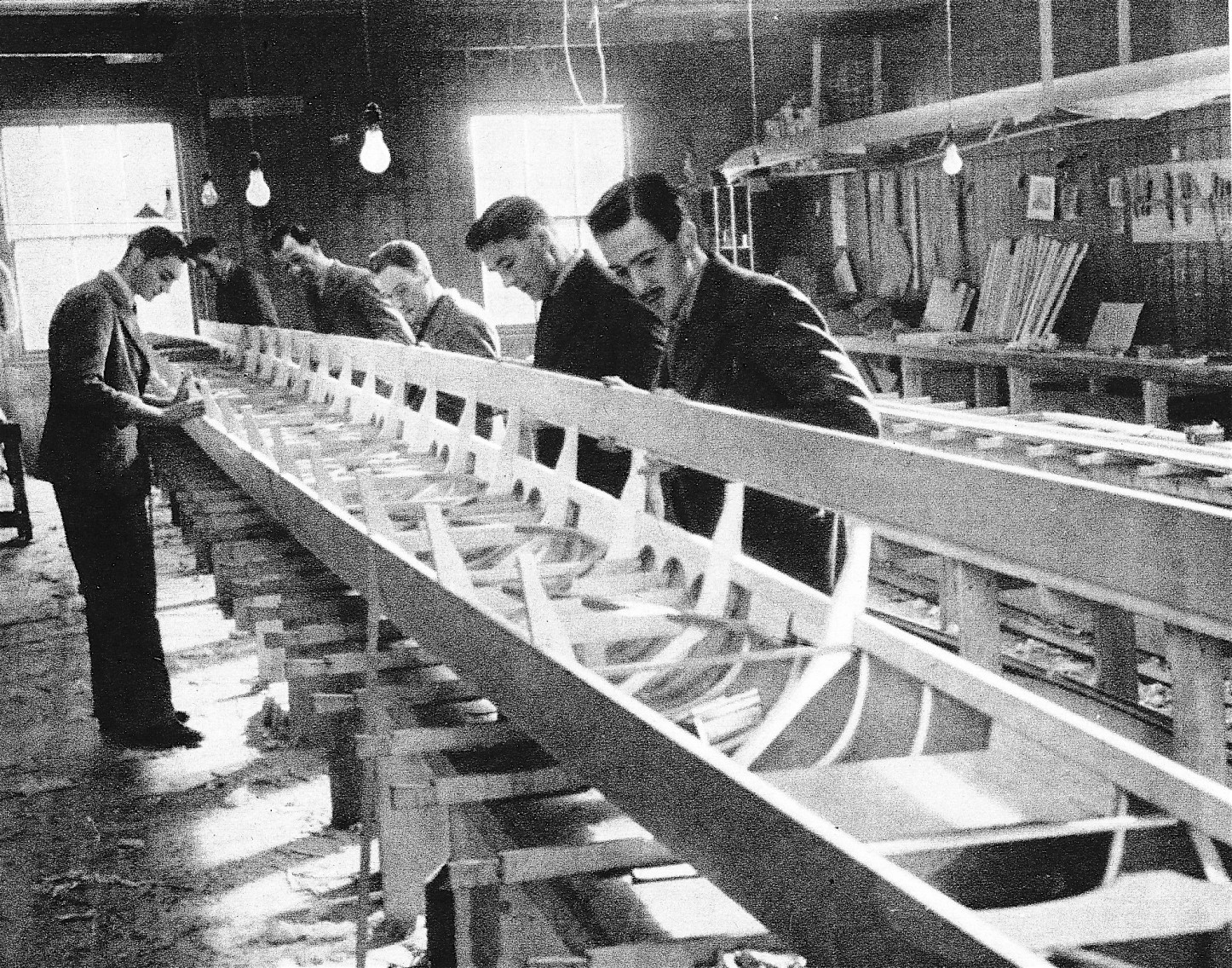
In 1960, Bill Sims then moved the Hammersmith business to Eel Pie Island in Twickenham. The company built eights that were 60-foot long, so we had a workshop built on Eel Pie Island that was 45-foot square and the eights had to be built diagonally, corner to corner. But he did turn around the business.
Dear old Frankie Sims (who ran the company before Bill and was the grandson of the founder) was losing money on every boat that he built. But, at that time you had six to eight months of advance orders, so Bill wrote to all the prospective customers and said that their boat would cost them 10 or 12 per cent more – and nobody said no, they appreciated that the boats had been too cheap.
The only good thing about the plastic people was that when they came in, their prices were sky high, so we were able to be cheaper than them but more expensive than we would have been. Boat people are not business people, that’s our trouble, we’re all the same.

In about 1963, I went to Eton College but that was absolutely disastrous, it was ridiculous how you had to perform. There were no machines at all, everything was done by hand. If you wanted a bit of wood, you had to go down two flights of stairs and walk 50 or 60 yards to the timber store, get your bit of wood, walk back and then cut it by hand. There were no toilets, you had to use the public one down the road.
I was there for just ten weeks and I never finished building a four, I only just over half finished it – normally I could build a four in three weeks. Once I built four eights in four months. My record is that I once built a sculling boat in 56 hours. That’s from going to buy the timber to the finished boat going out with the riggers and everything. My average time for building a sculling boat using my method was about 100-120 hours (which is a bit different to the plastic ones, count them in minutes rather than hours)! Frankie Sims claimed that he once single handedly built ten sculling boats in 100 days.
This upbeat newsreel from 1950 does not even hint at the problems of working at the Eton College boathouse that Bill encountered.
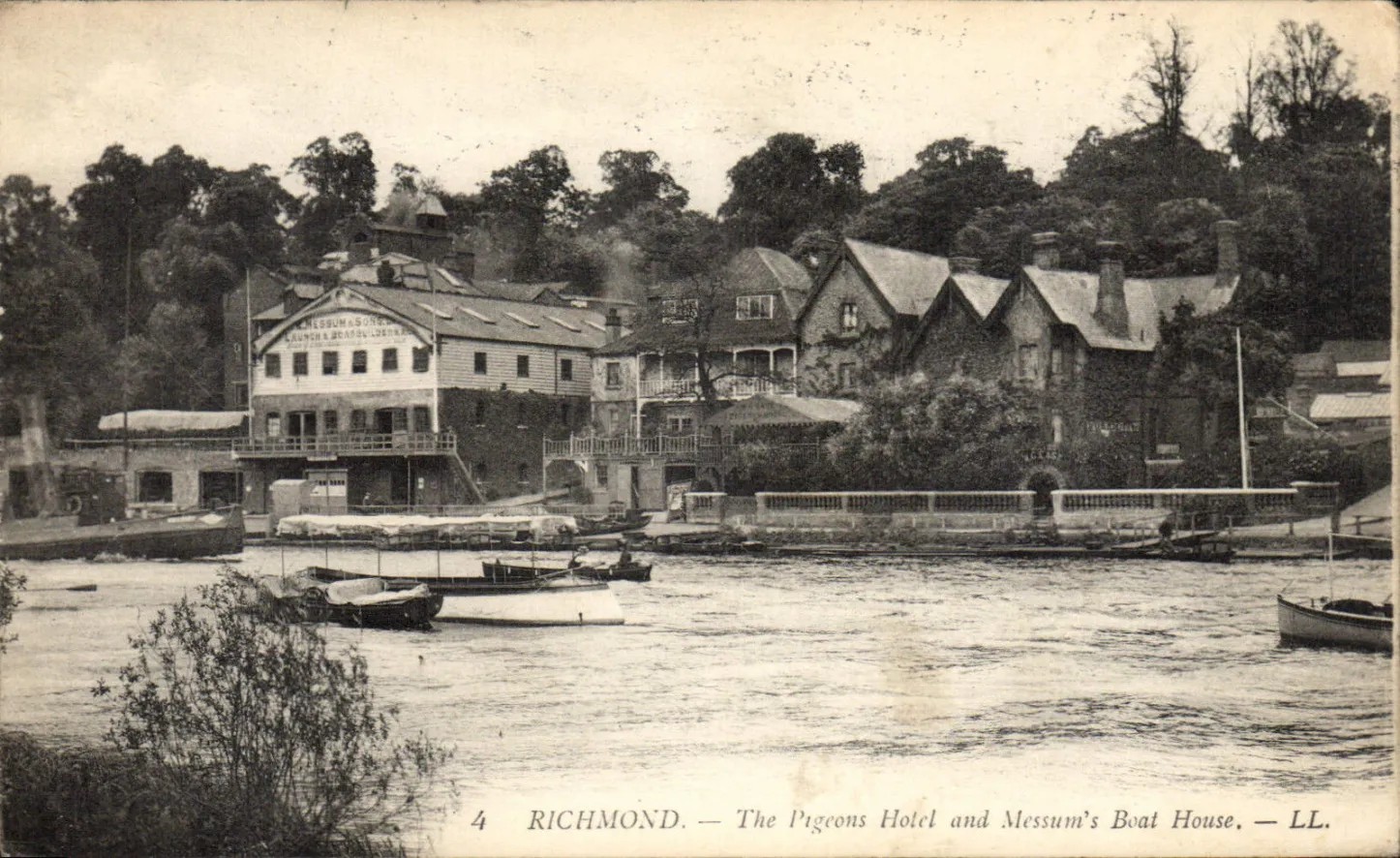
After ten weeks at Eton, I went self-employed, at Hammersmith, behind the West End Boathouse, working with my uncle. But we fell out and I went to the University College School Boat Club by The Three Pigeons in Richmond. It was a nice place to work, a great big workshop, but there was no money so I went to the Castle Boathouse in Richmond for three or four years.
I was there until 1970 or ’71 and I got a big place in Kingston and I was living in there as well. But, I had not been there for three months and the whole place burnt down, the boats, building, everything was lost. About six companies were renting from Turks in there and they all went in the fire.
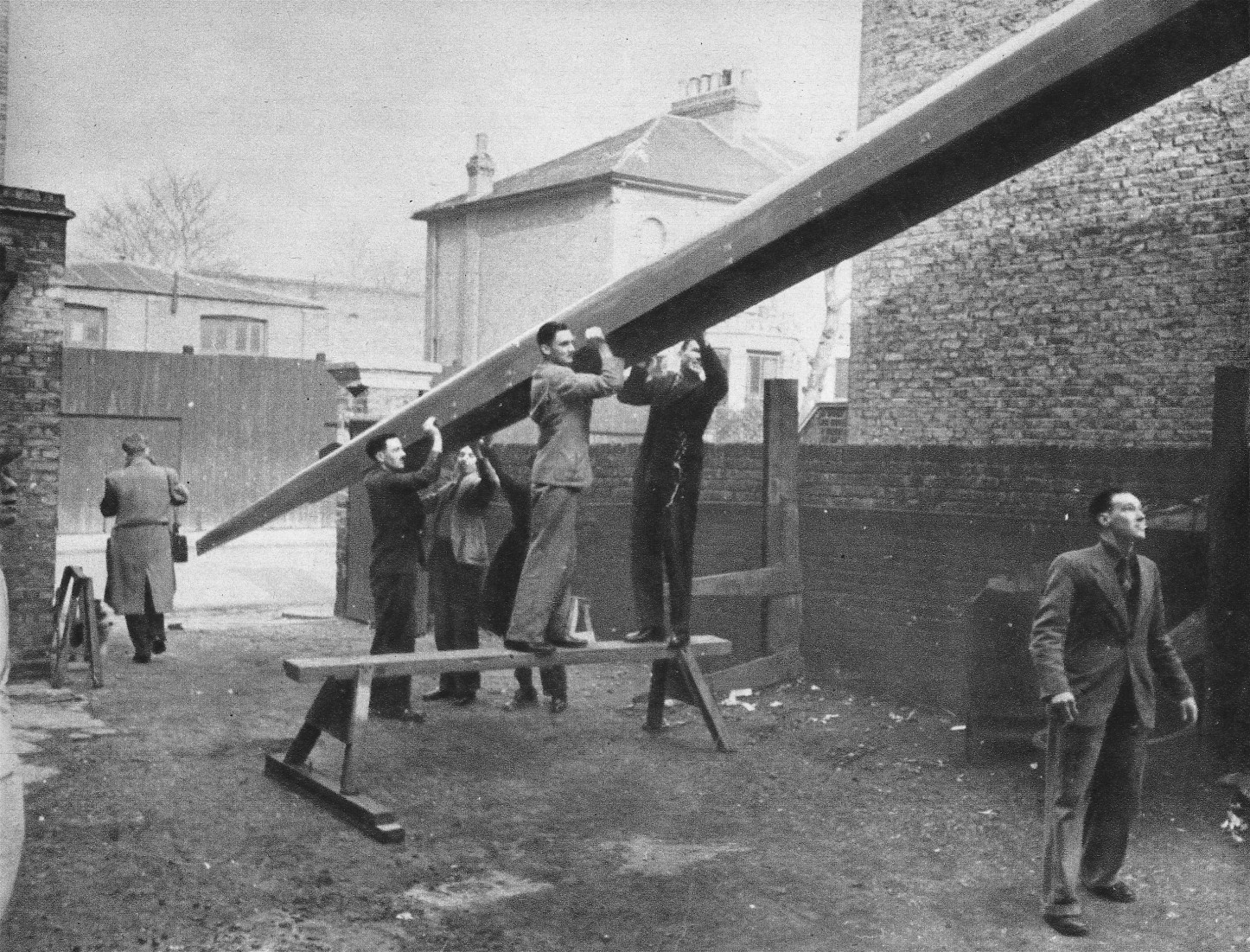
For a year in ’72, I was unable to find suitable premises, you obviously need a lot of space for eights, but eventually I was back at the Rutland Boathouse in Hammersmith. London Rowing Club had rented it on short term while their club was been done up and the rent laws at that time meant that the brewery that owned it could not charge me any more than they charged London – £4 a week! It was about 3,000 square feet and it really annoys me that today it is derelict. My grandfather, on my mother’s side, built that in about 1880. He was a Biffin, he must have had tons of money (he never gave me any) as he custom built the place on three floors purely for building boats, most other boat building places have been adapted from something else.

When I left there in ’83, the writing was on the wall, the plastic was really beginning to take over, so I went to work for London Rowing Club. I was there for eight years but was chased out by the plastic by ’91. So I went down to Richmond to work with Mark Edwards and built a few boats with him. I was then asked by Mortlake, Anglian and Alpha Boat Club to make and repair boats at their old Mortlake boathouse (they had moved across the river to Chiswick). It was very nice, a big place, I built several boats in there and mended lots more but was then one day suddenly given three months’ notice to quit.

I went back to Richmond, in the row where I am now – but in the end unit – for six years. The landlord then decided to sell it and I moved two units up to here – and I am not moving again! (In fact, Bill moved along the Richmond waterfront one more time.)
I have done virtually nothing this year. But, this is the most beautiful place that I have been in, sitting here in the sun, lovely. I have never been tempted to learn about plastic boats, I don’t like the smell. As to doing other ‘woodwork’, it’s a very specialised thing, boatbuilding. People say, ‘come and put up a shelf for me’, or ‘resurface my table’ or things like that. No, can’t do that, won’t do that. You can be the best boatbuilder in the world but it does not qualify you to do any other woodwork.
Bill in his workshop in 2016:
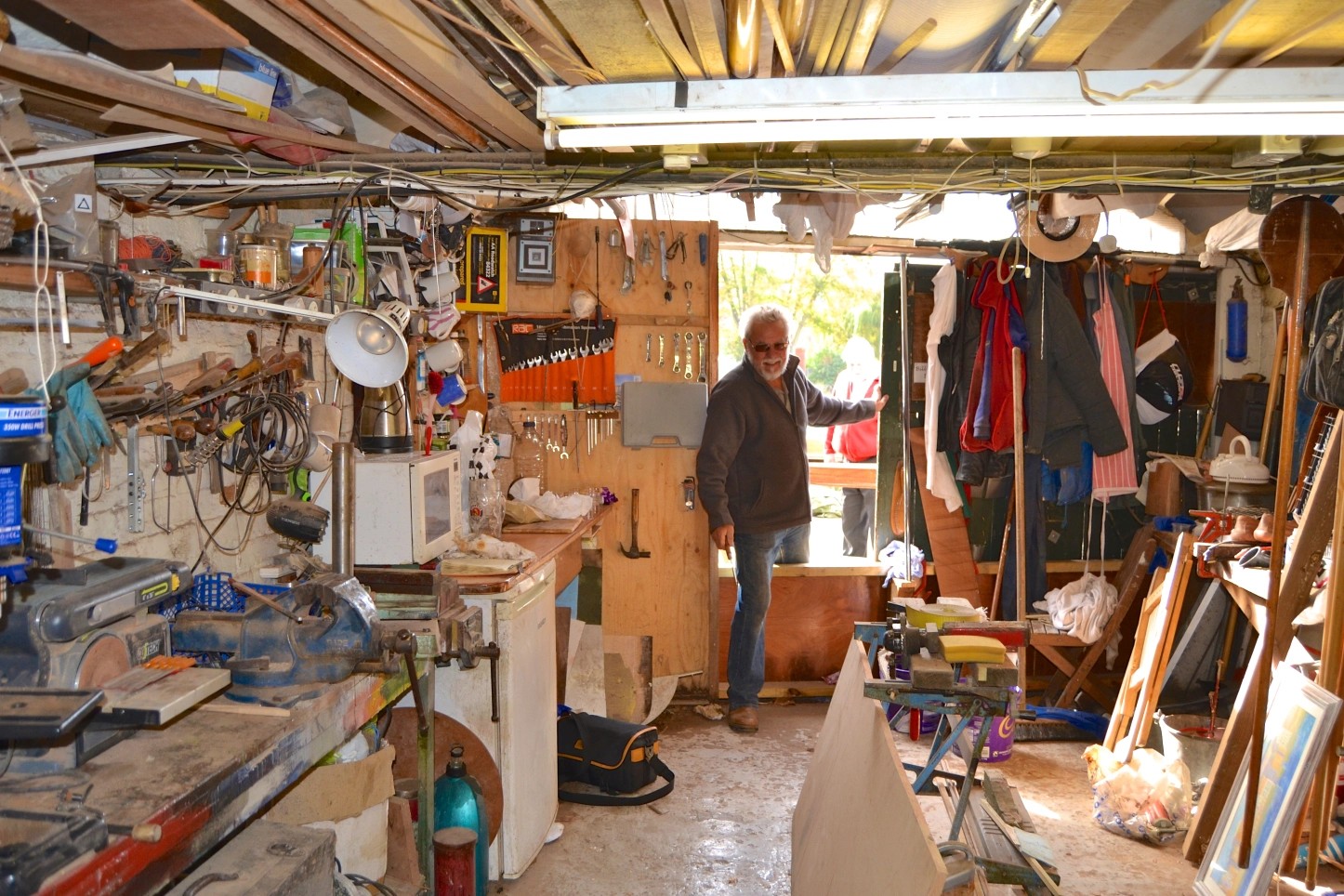
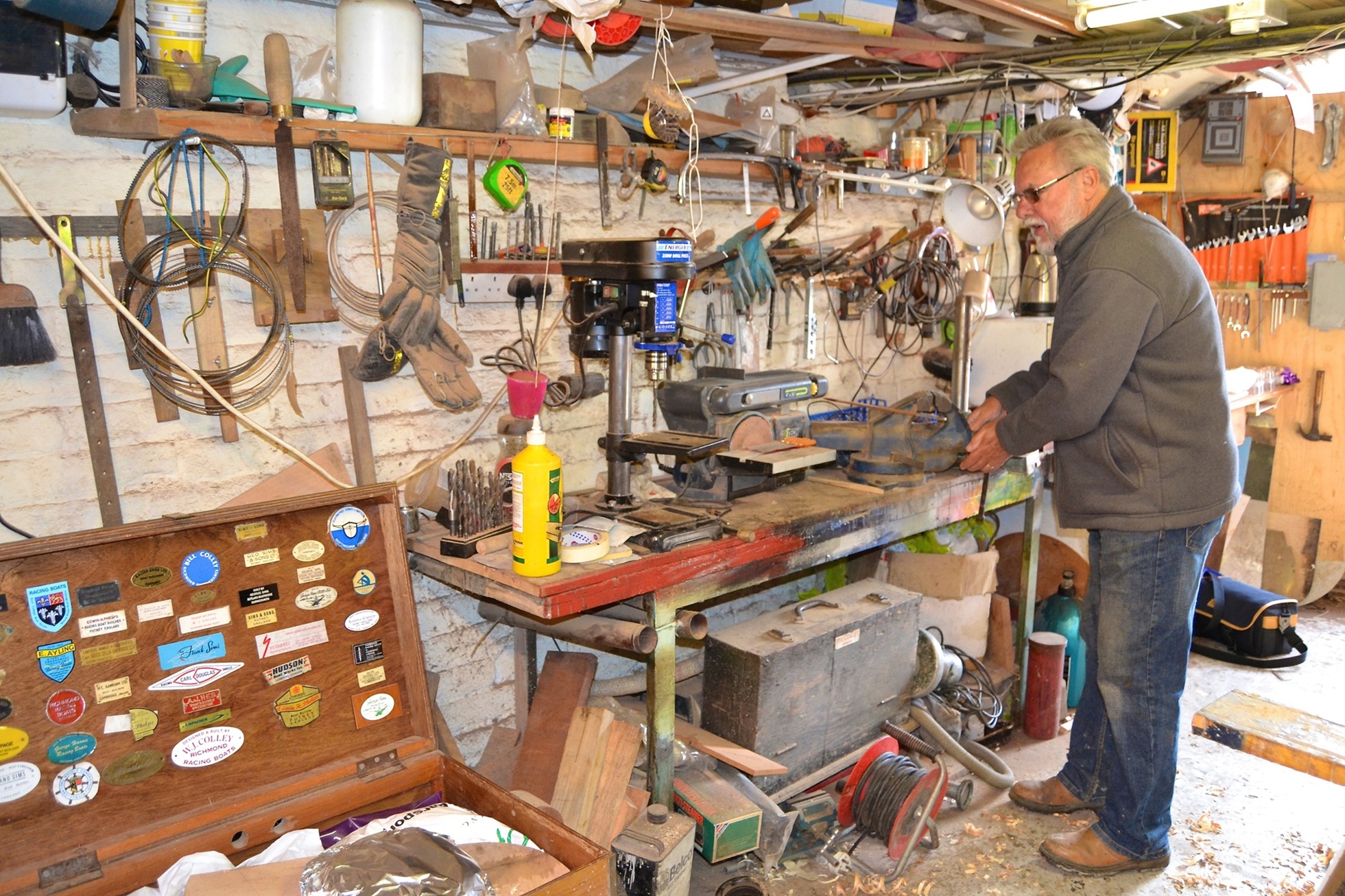
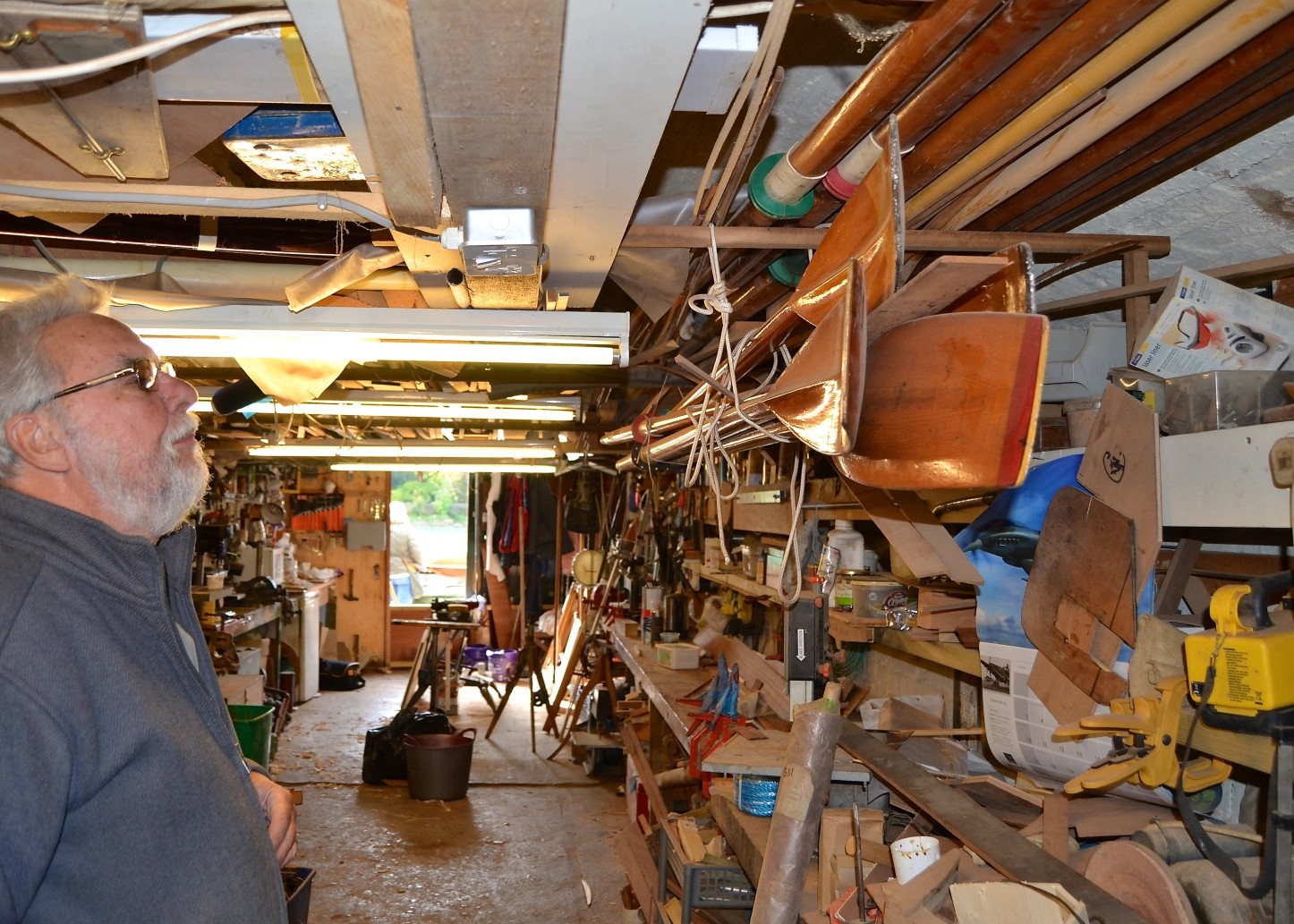
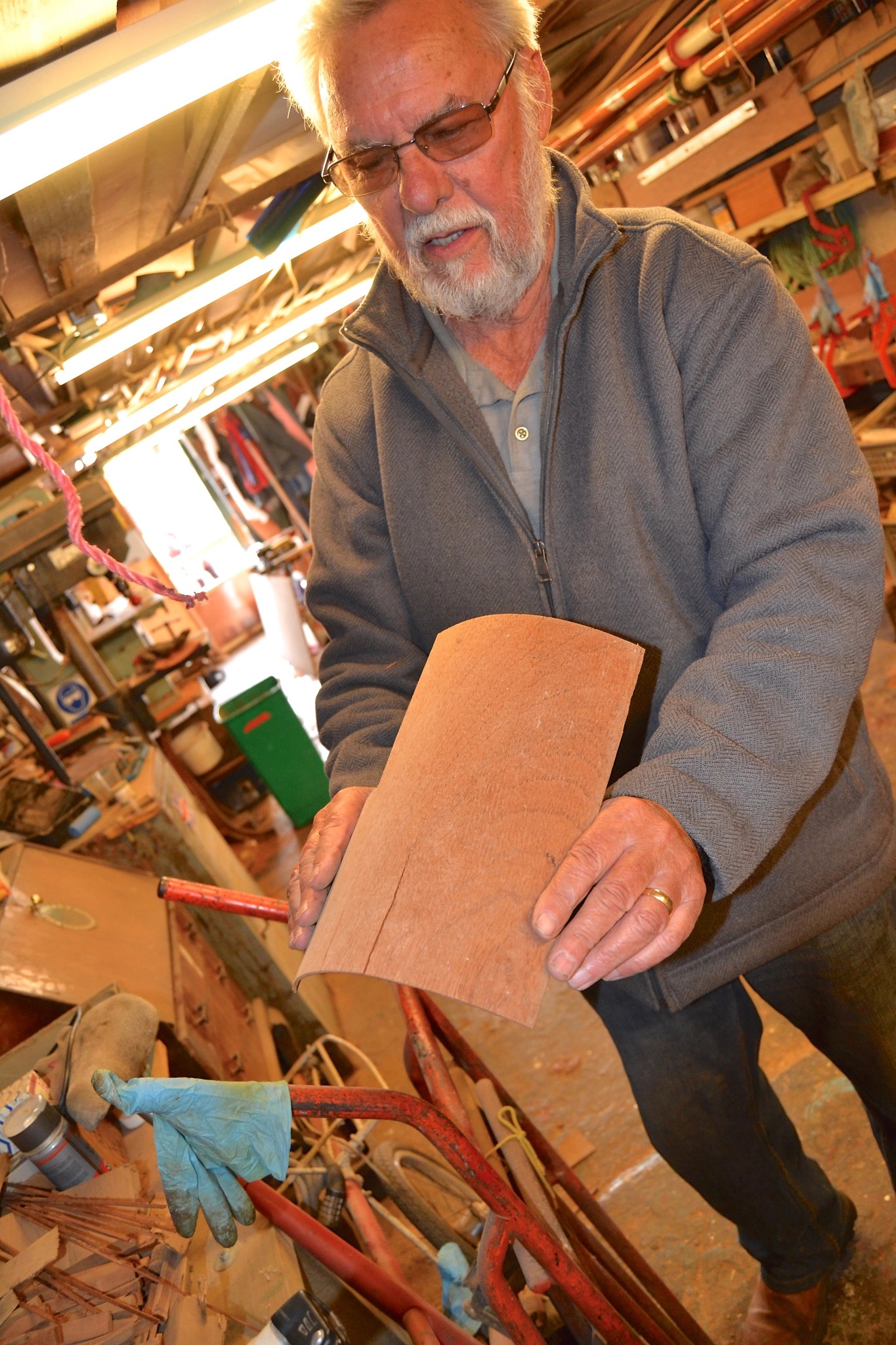
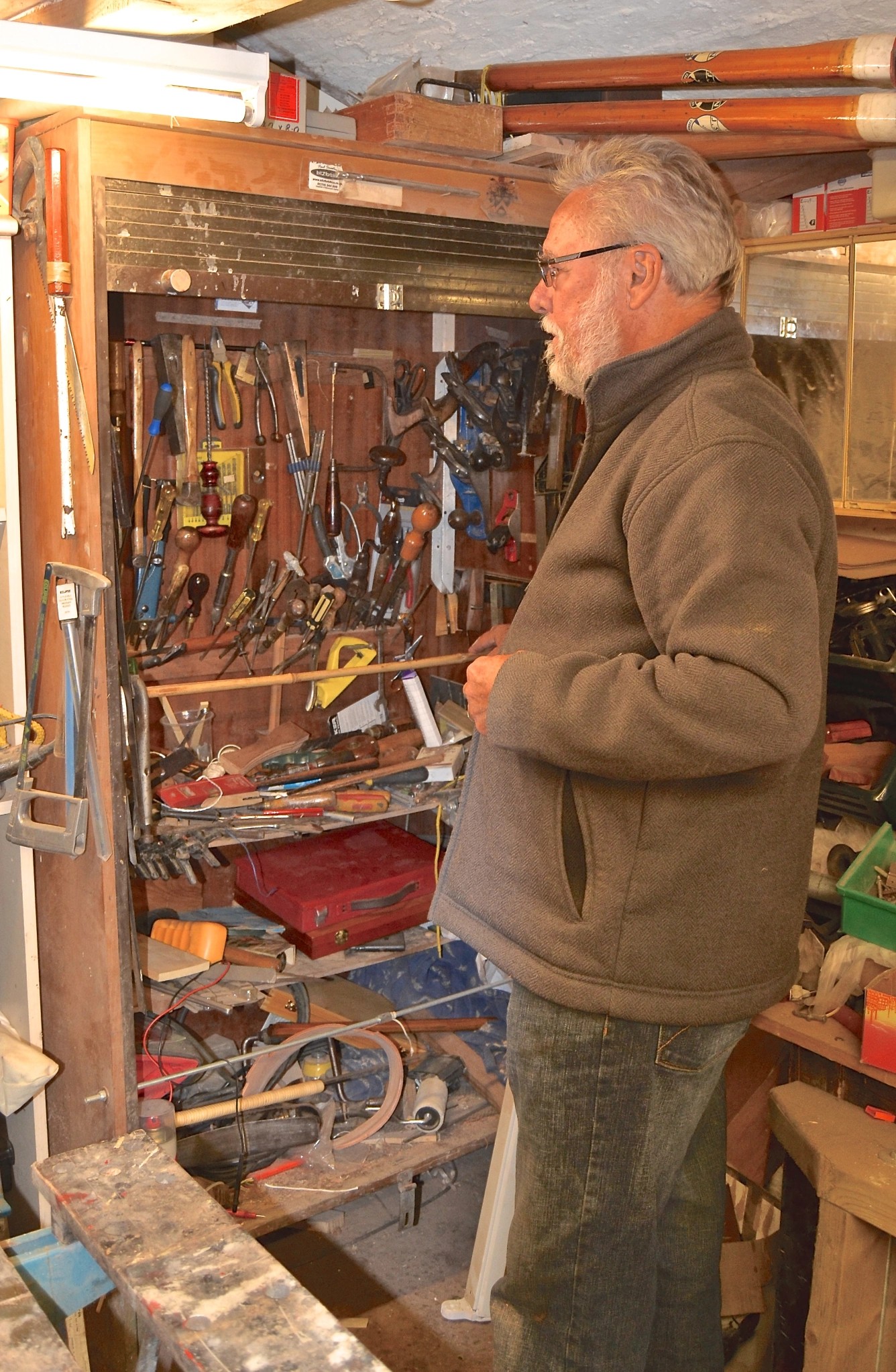
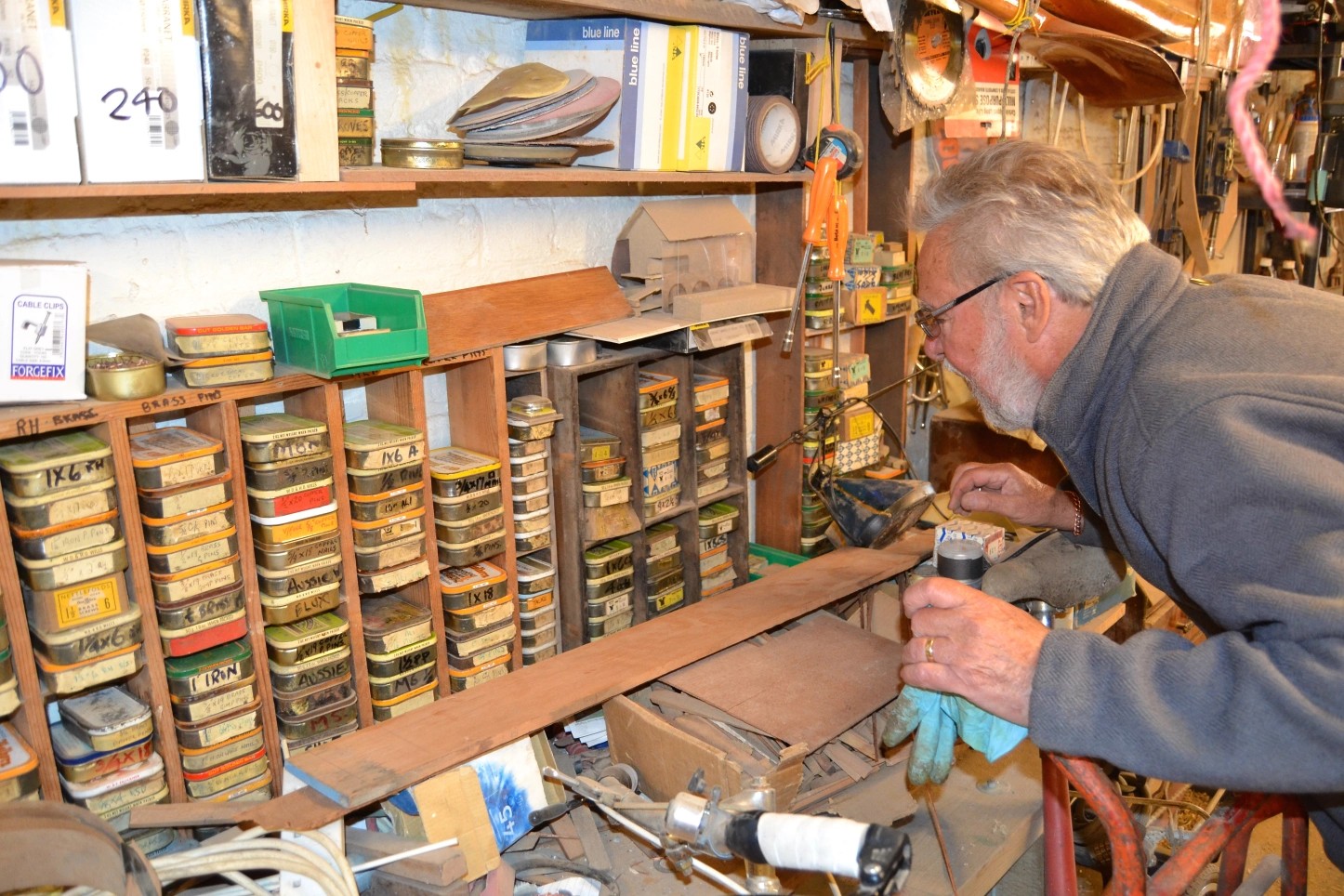
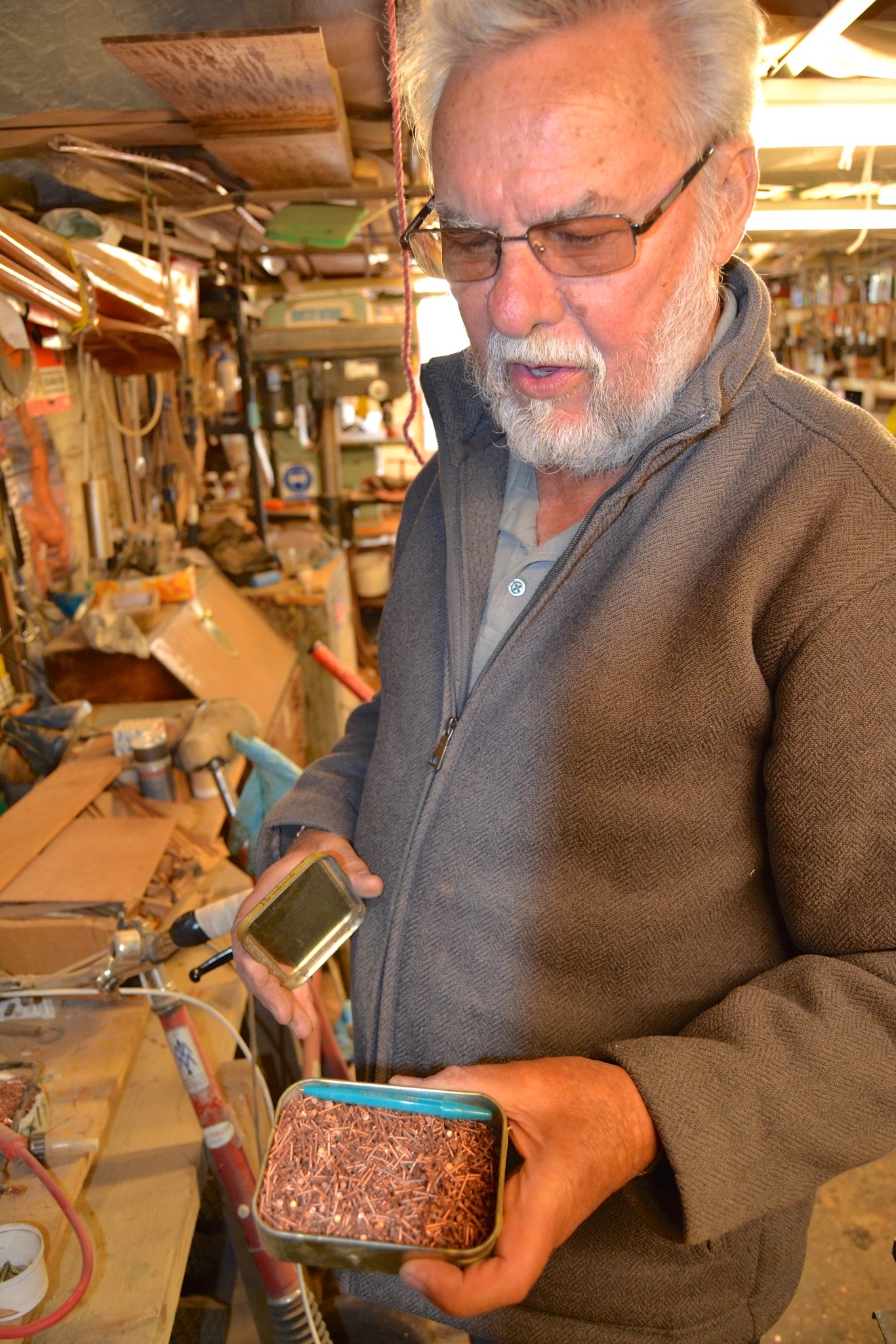

In December 2013, the BBC made a nice film about Bill and it is still available online. It is a lovely tribute to a remarkable craftsman.
*In a previous version of this article, HTBS unfortunately had the wrong date for Bill Colley’s passing. Corrected date is 22 September.
 Hear The Boat Sing