
26 August 2025
By Tim Koch
Tim Koch writes a piece, parts of which are quite excellent.
For over one-hundred-and-fifty years, from 1841 to 1992, Punch magazine with its gentle satire of British social and political life was a national institution, famously a staple of dentists’ waiting rooms and of gentlemen’s clubs. It also made two major contributions to the English language.
First, according to magazine.punch.co.uk:
One momentous day, Punch made a grim joke which accidentally changed the English language by giving a new meaning to an old word.
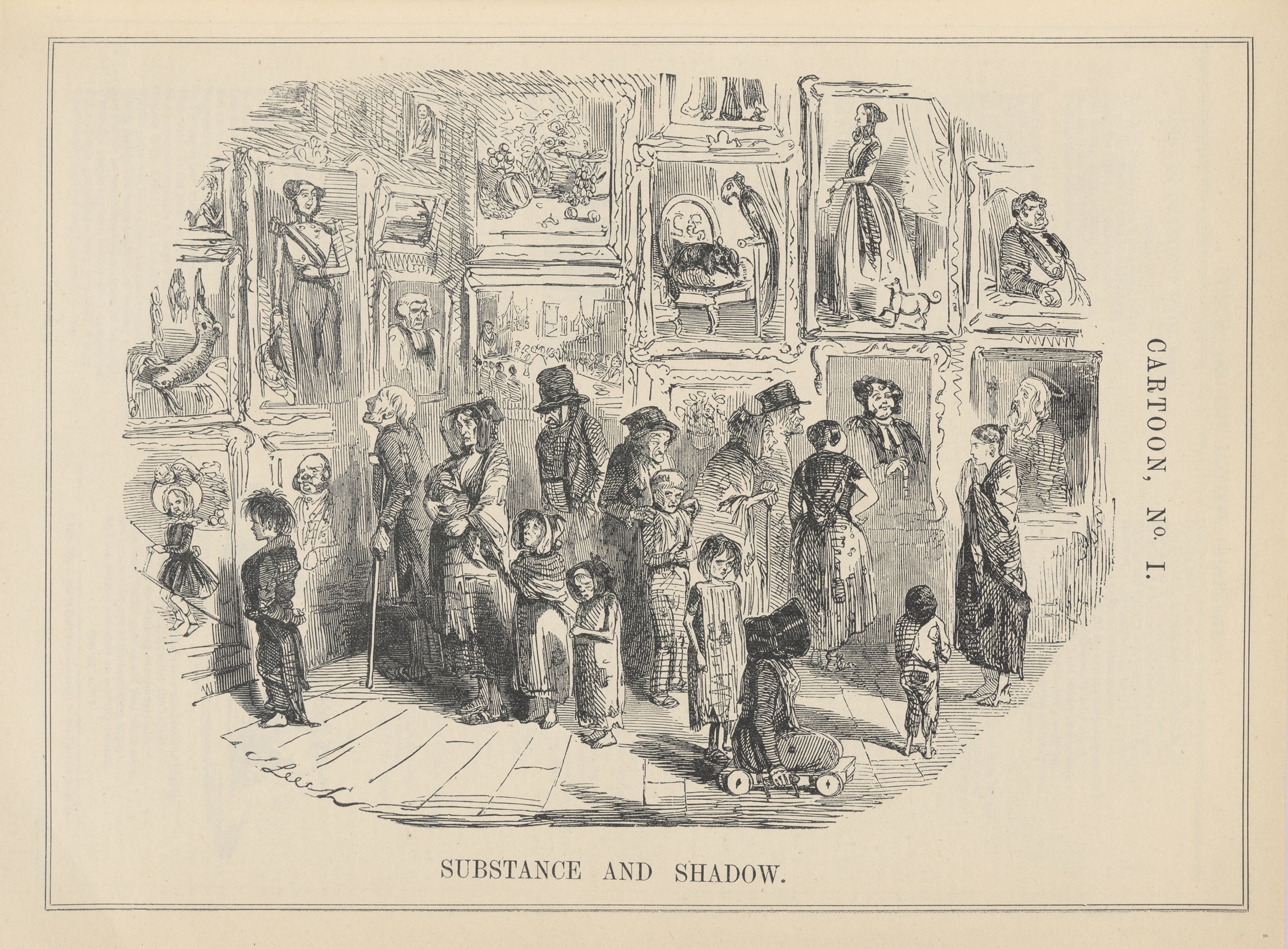
The butt of the joke was an exhibition intended to help in the selection of new paintings and murals for the Houses of Parliament, then being rebuilt after the disastrous fire of 1834. Artists made their submissions in the form of cartoons – the original meaning of the word was a preliminary drawing for a work of art; a painting, a fresco, a tapestry…
In a series of drawings which it ironically titled “cartoons”, Punch contrasted the sumptuousness of the Parliamentary plans with the miserable poverty of the starving population. With heavy sarcasm, Punch declared that the government had “determined that as they cannot afford to give hungry nakedness the substance which it covets, at least it shall have the shadow. The poor ask for bread, and the philanthropy of the State accords – an exhibition”…
As a result the word “cartoon” stuck and became associated with pictorial satire and eventually with any humorous drawing.
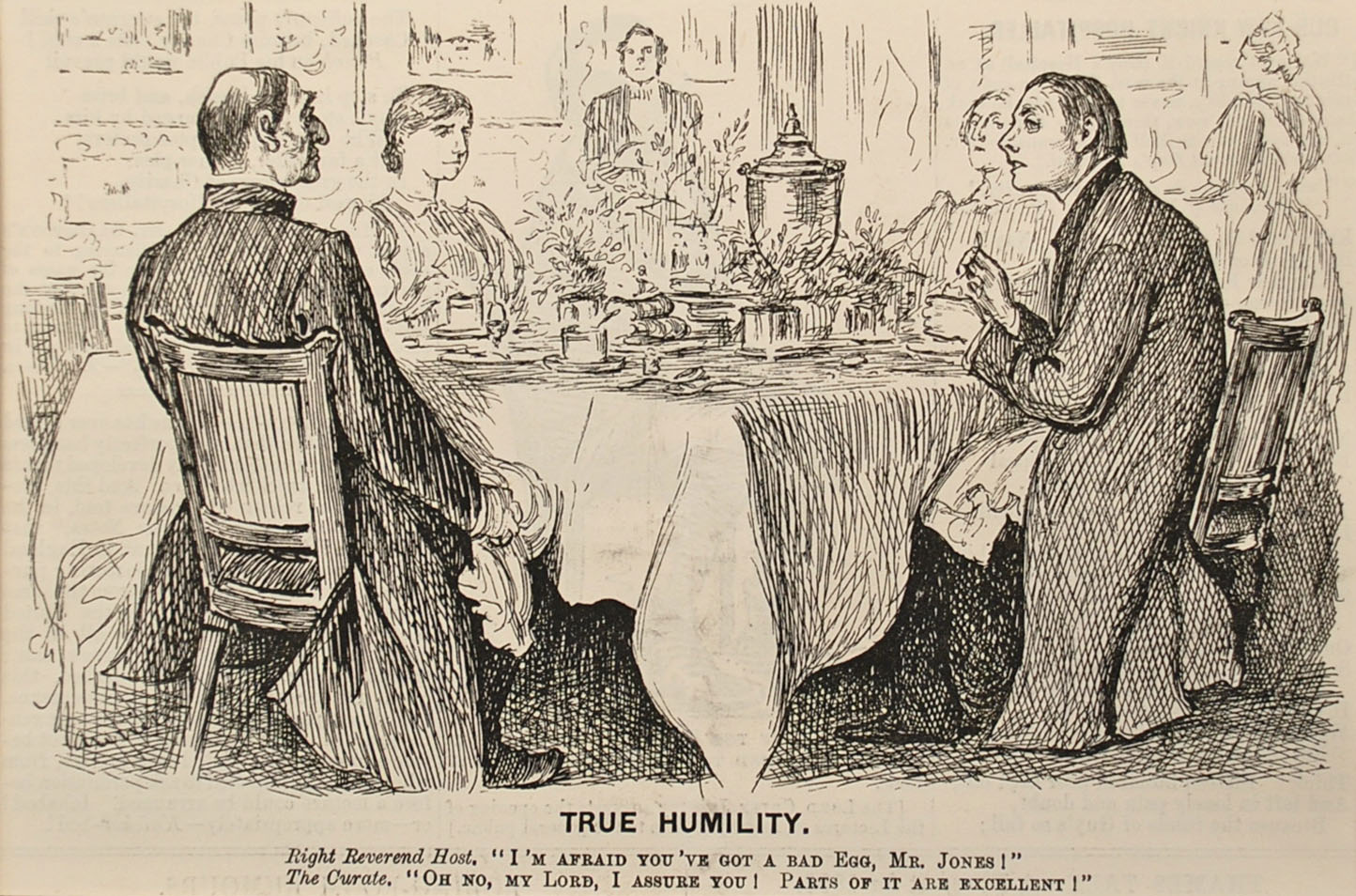
The above cartoon produced Punch’s second contribution to the English language, the expression, “A bit of a curate’s egg.” Wikipedia:
A “curate’s egg” is something described as partly bad and partly good. In its original usage, it referred to something that is obviously and entirely bad, but is described out of politeness as nonetheless having good features that redeem it. This meaning has been largely supplanted by its less ironic modern usage, which refers to something that is in fact an indeterminate mix of good and bad,possibly with a preponderance of bad qualities.
The cartoons featuring rowing that appeared in Punch over the years are certainly a bit of a curate’s egg. However, at least they seem to have avoided a particular trait of many nineteenth century cartoons which were often ponderous and verbose, often needing explanations in brackets to get to the so-called punchline. In the words of cartoonstock.com, they frequently featured long-winded conversations, tangled sentences, and grandiloquent speeches.
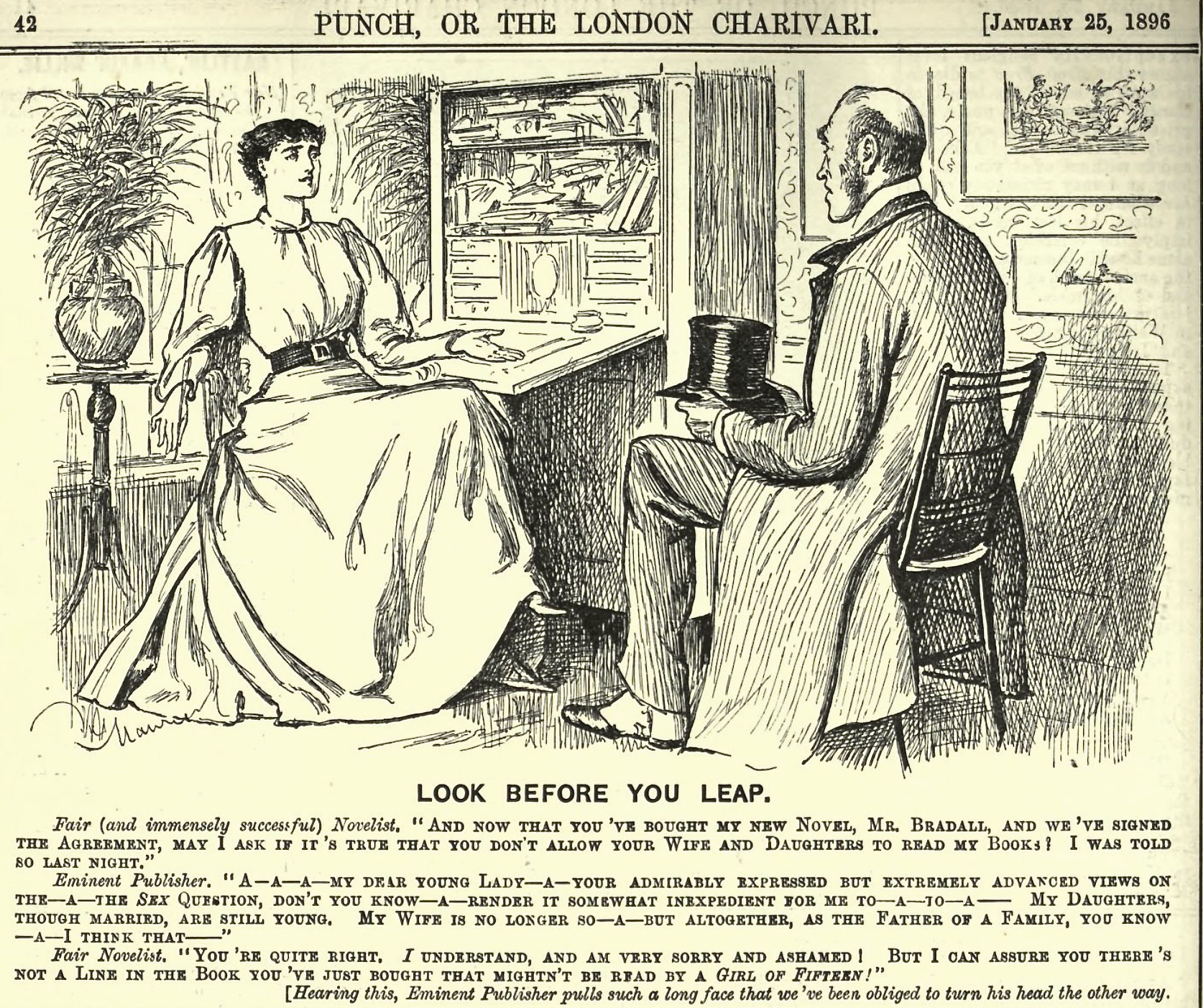
To be fair, humour does not age well and what was found funny only a few years ago may not, for many reasons not all connected with changing social attitudes, raise a laugh now. Many of us of a certain age that thought that Monty Python was hilarious on its first television transmission but are not so amused fifty years on.
In my rather random chronological collection of some of Punch’s rowing cartoons reproduced below, I have only selected those that attempt simple jokes via observation or wordplay and not satirical pieces using the hackneyed metaphor of rowing to make political comments.
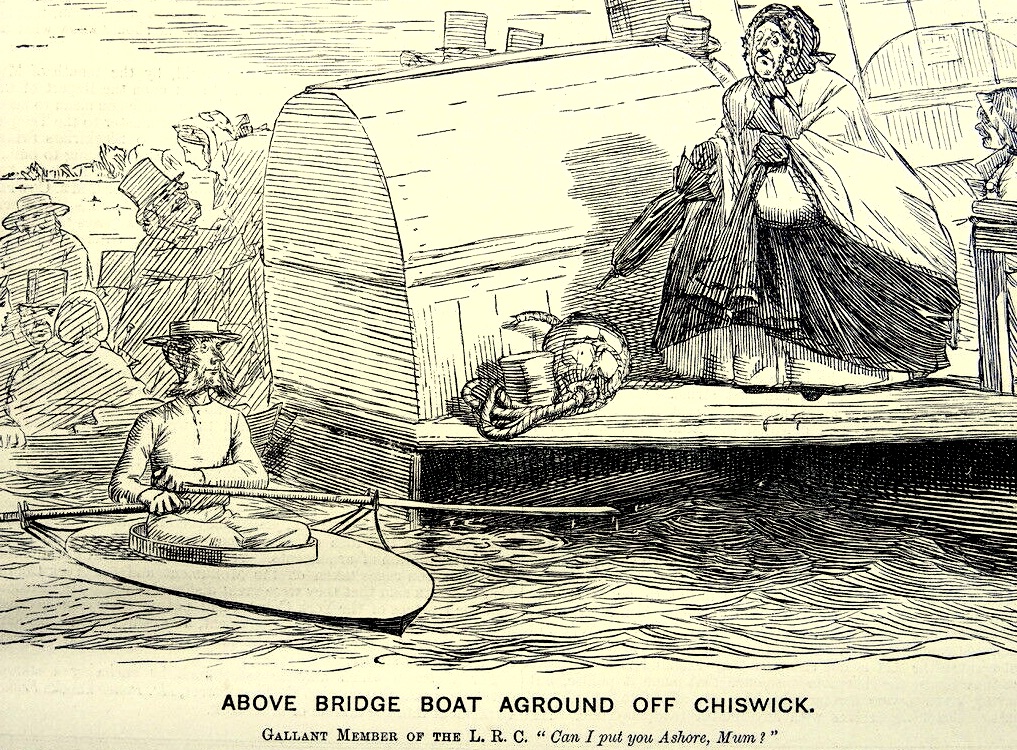
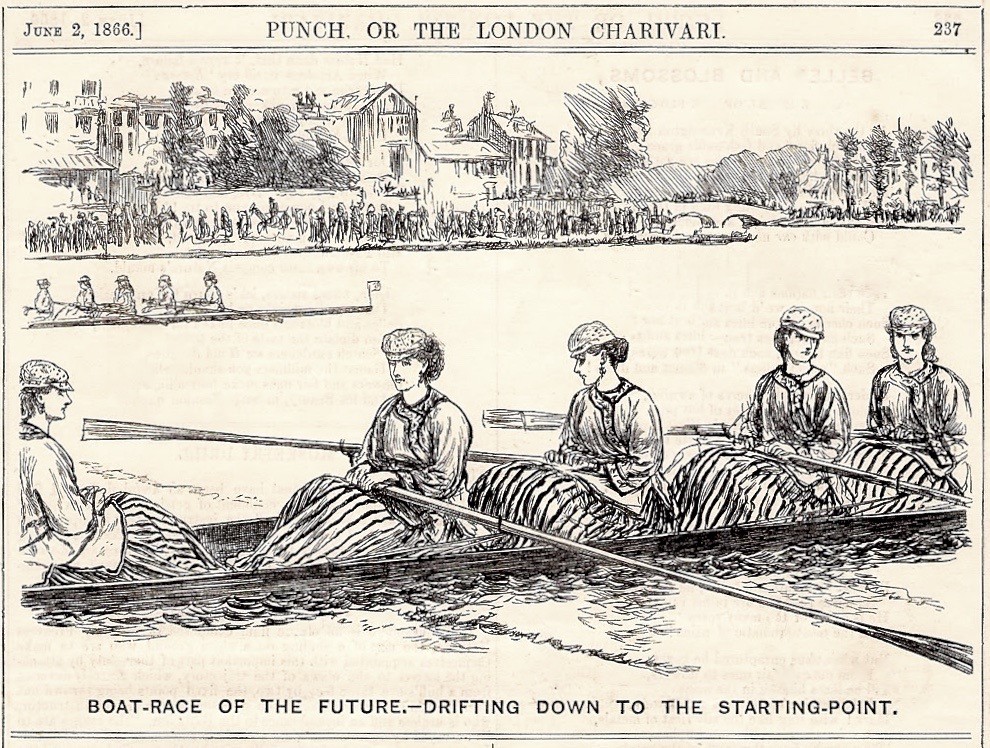
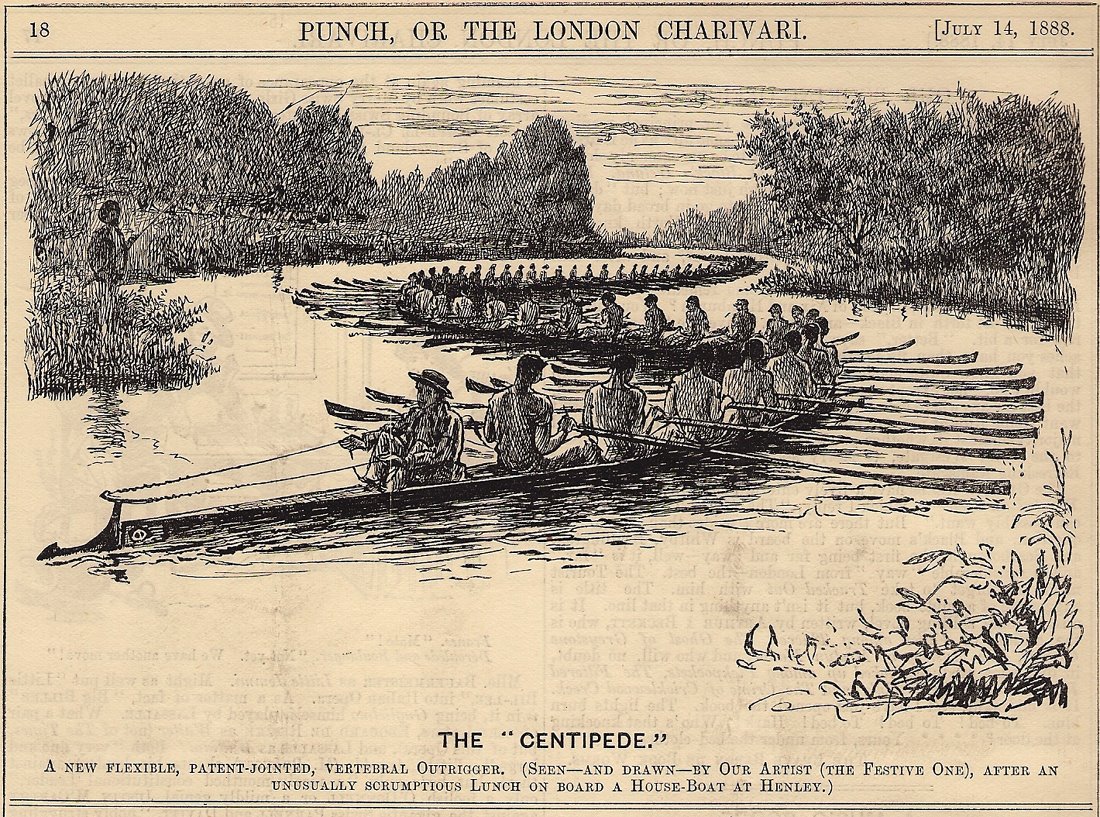

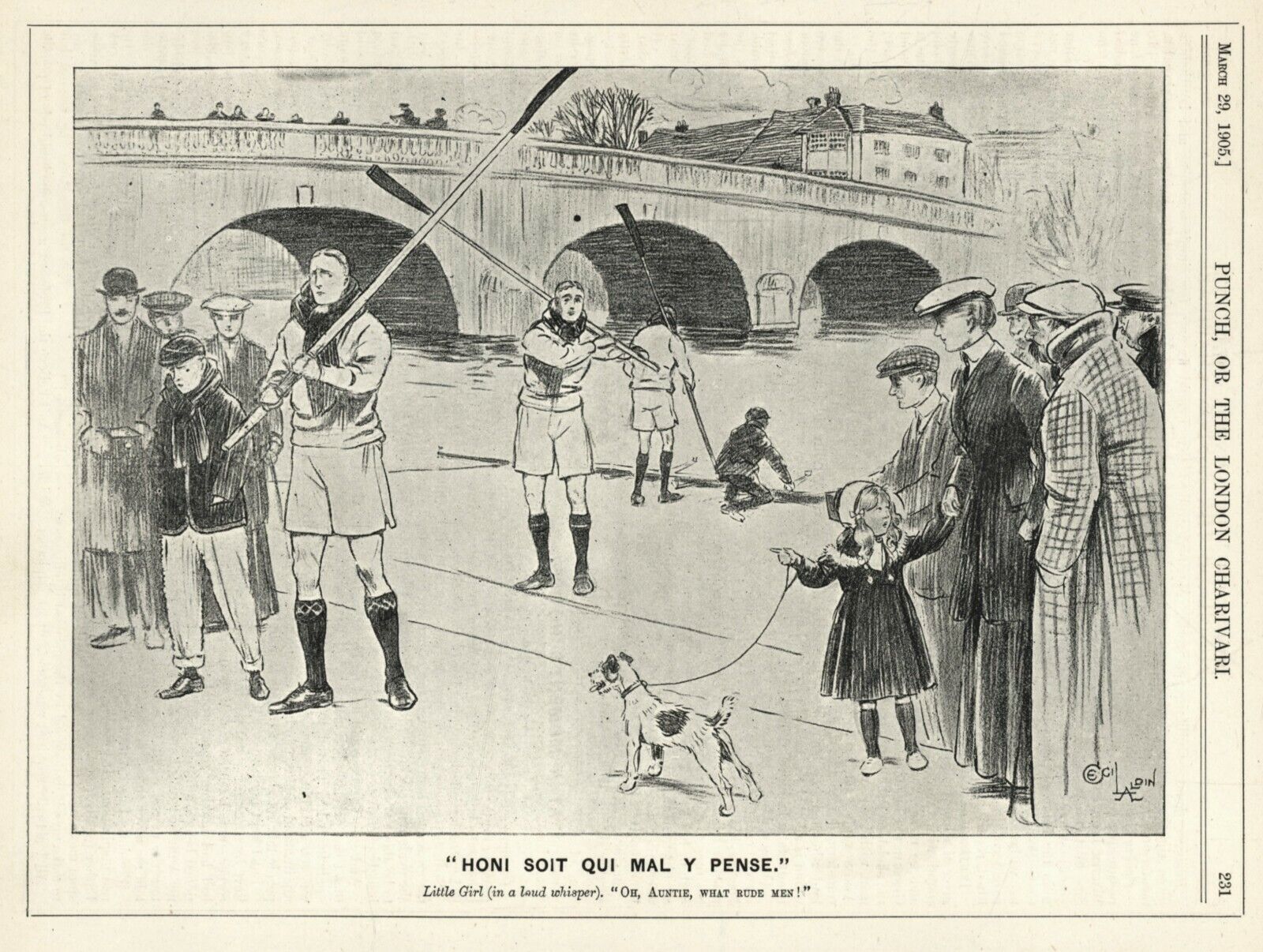
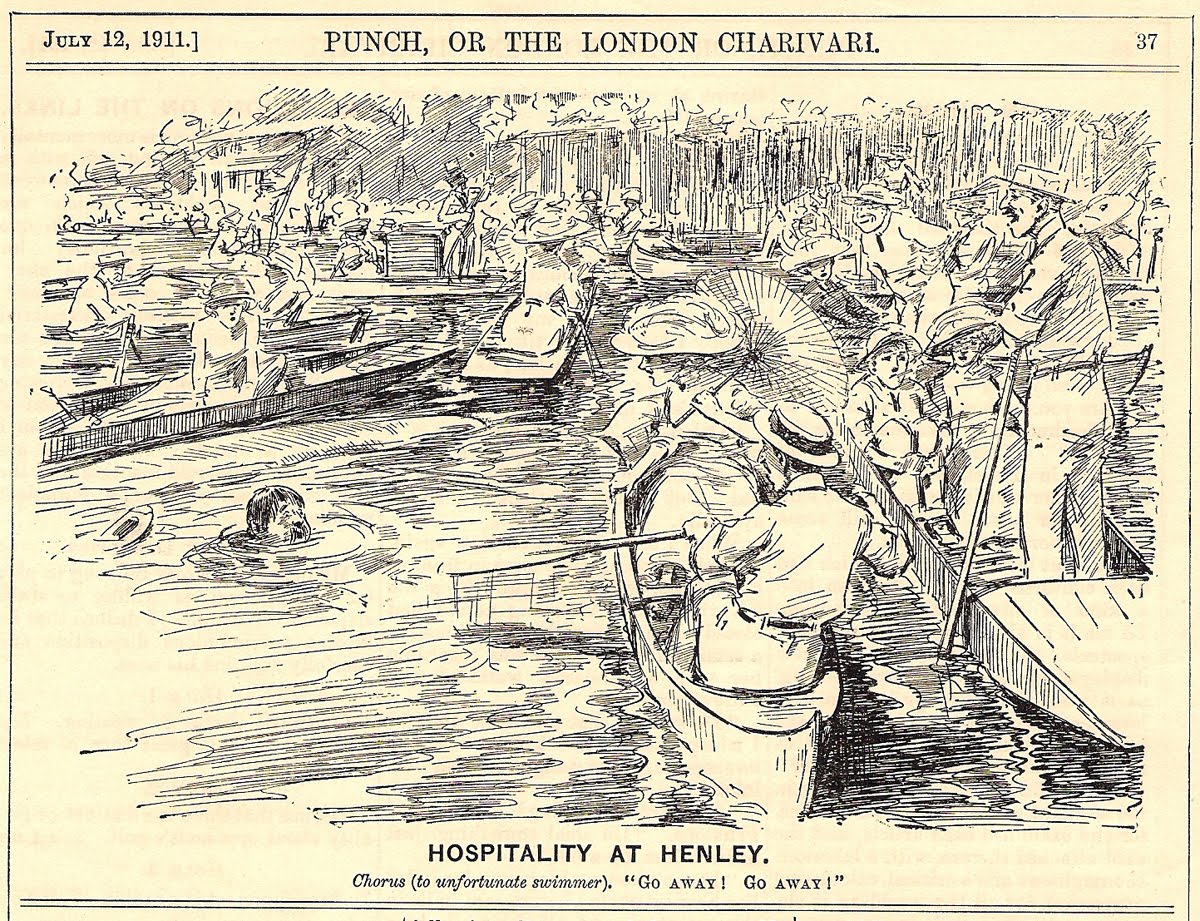
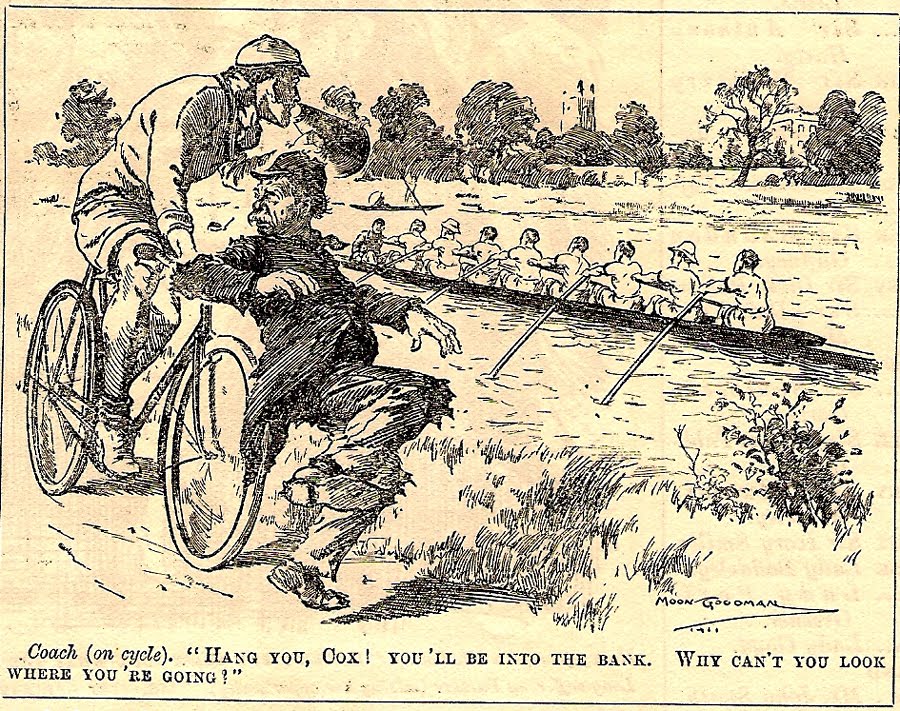
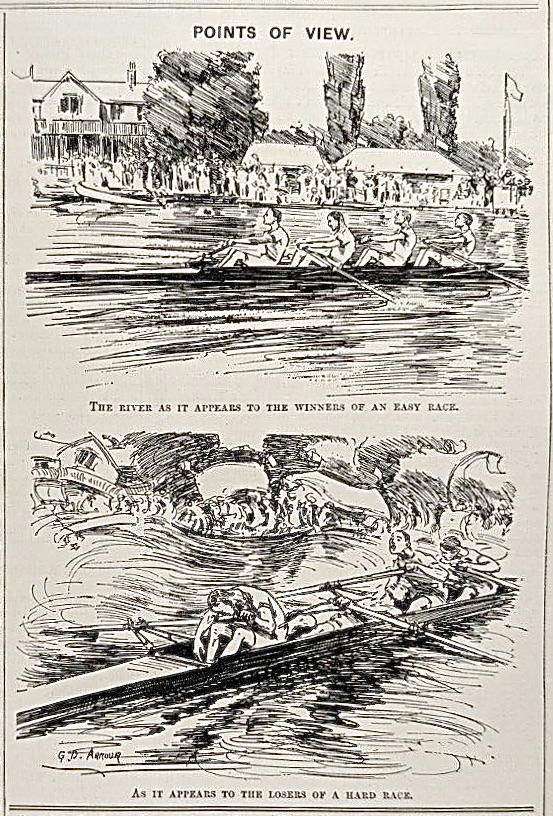
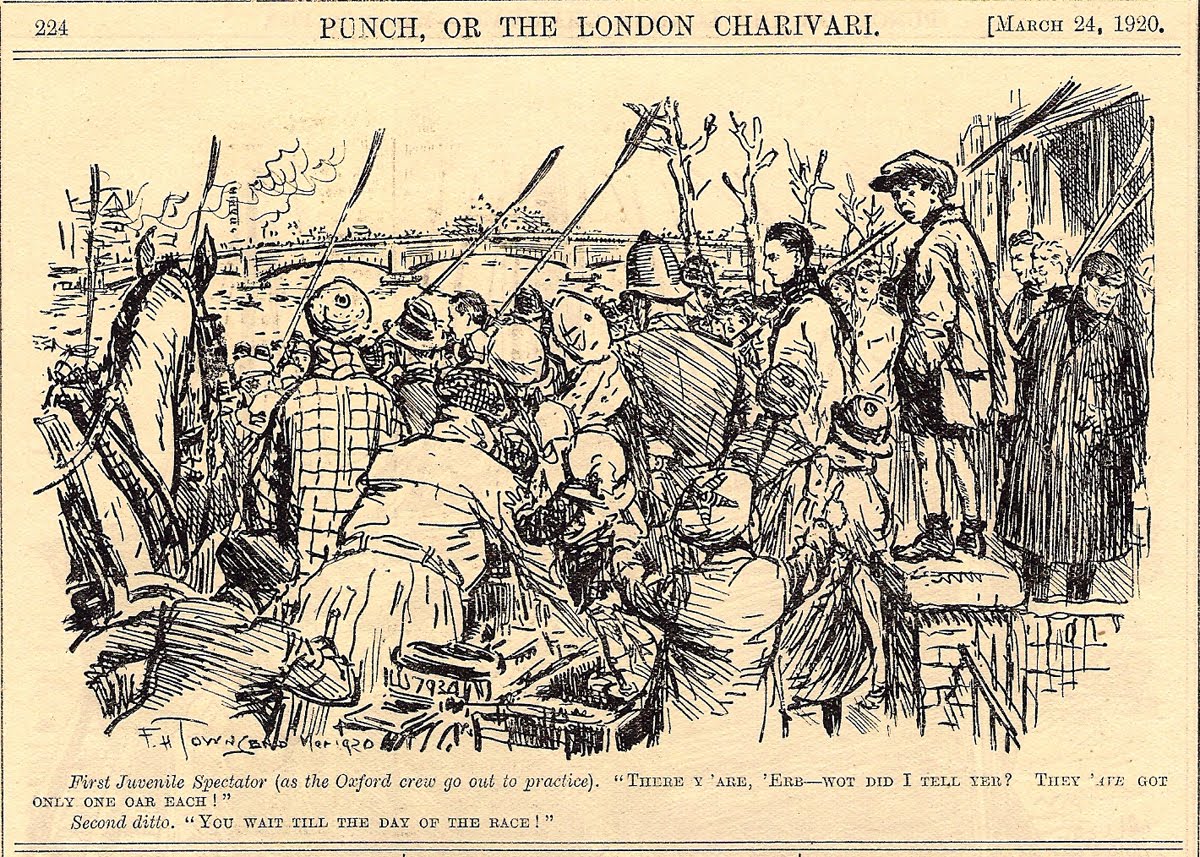
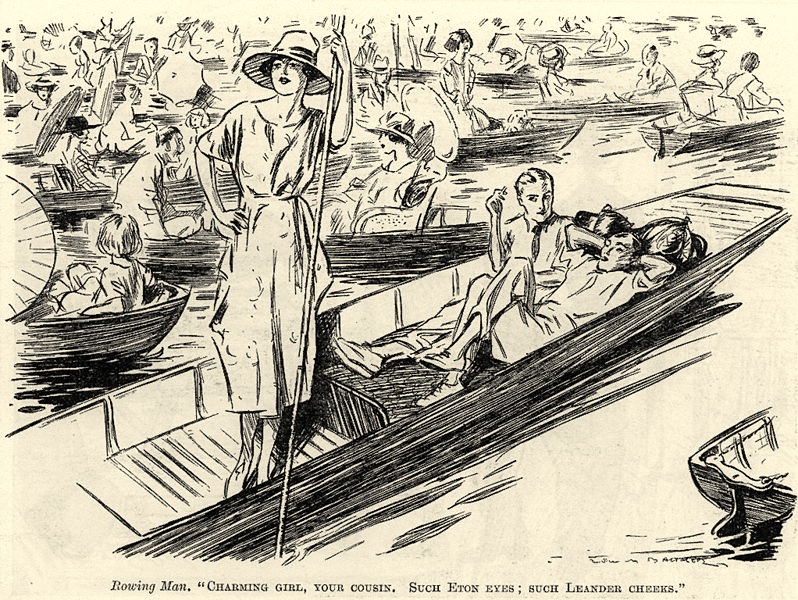
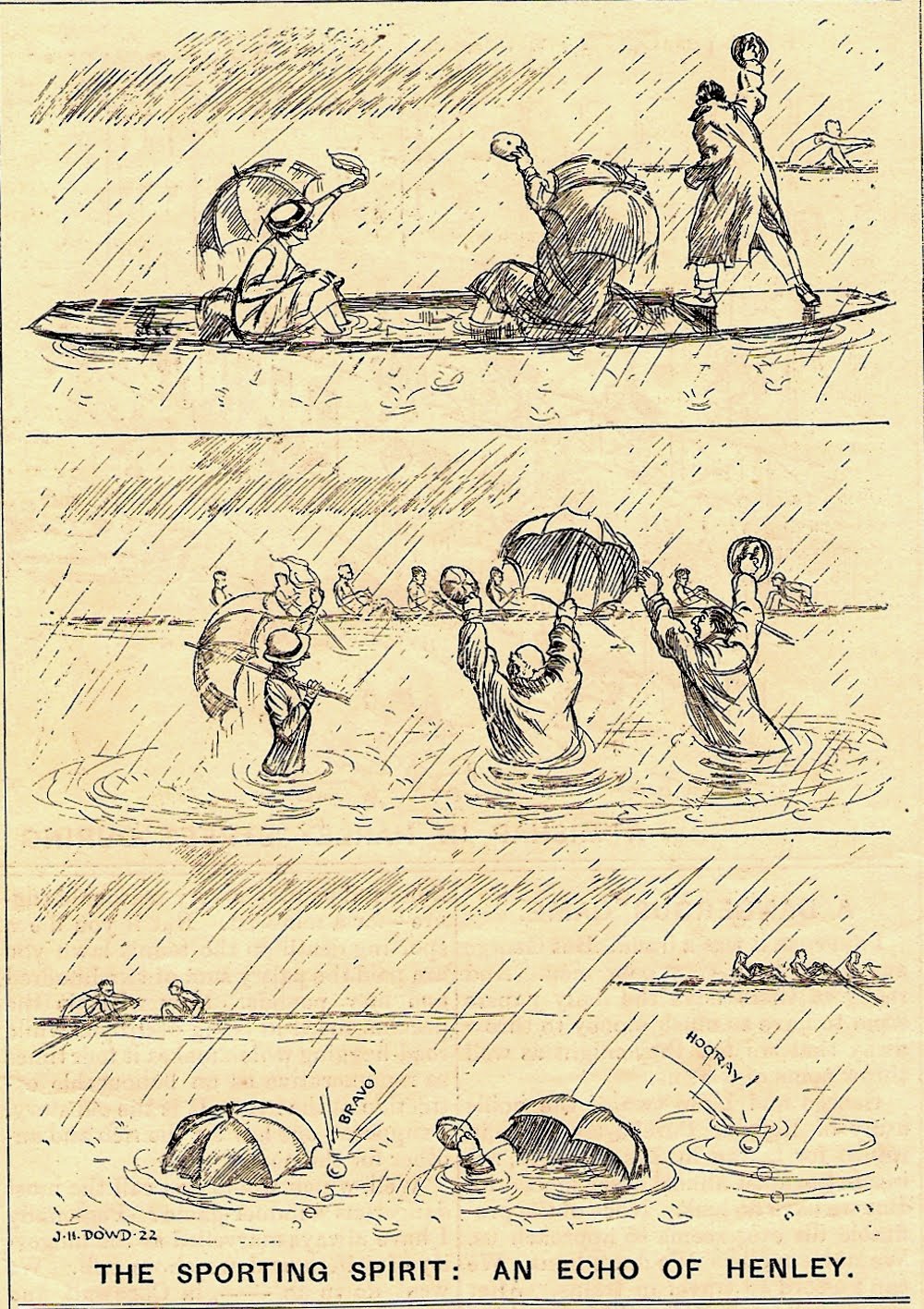
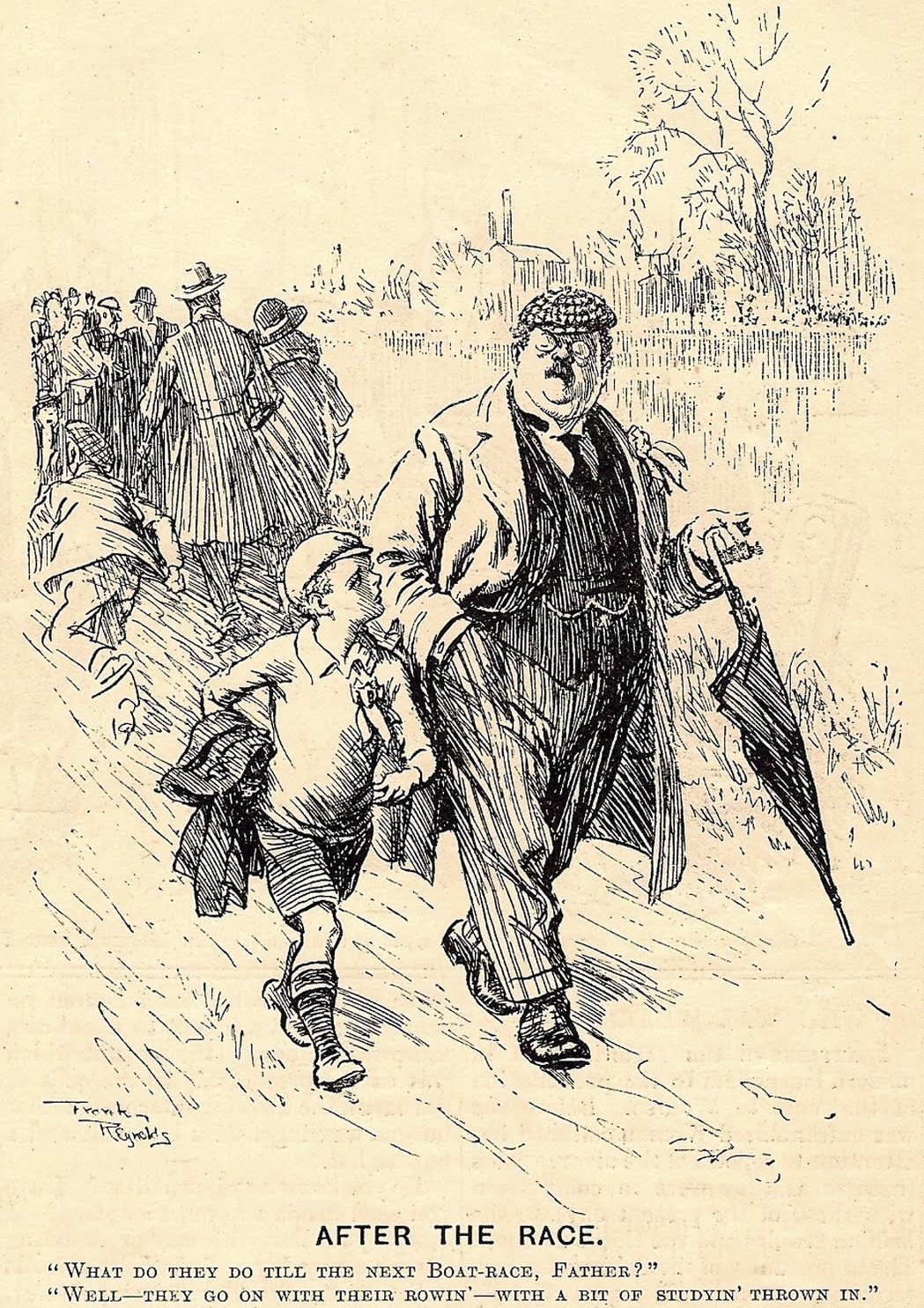
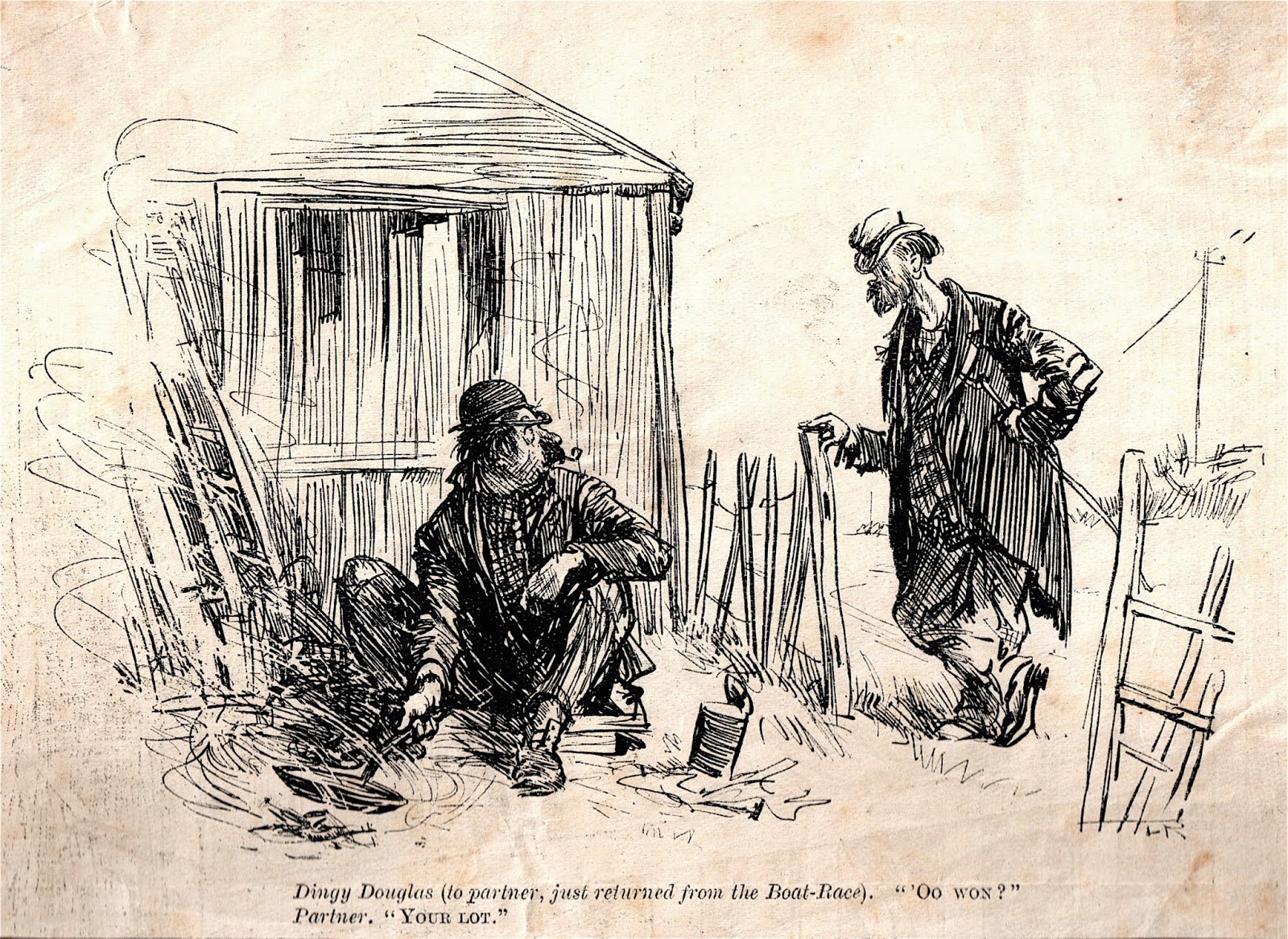
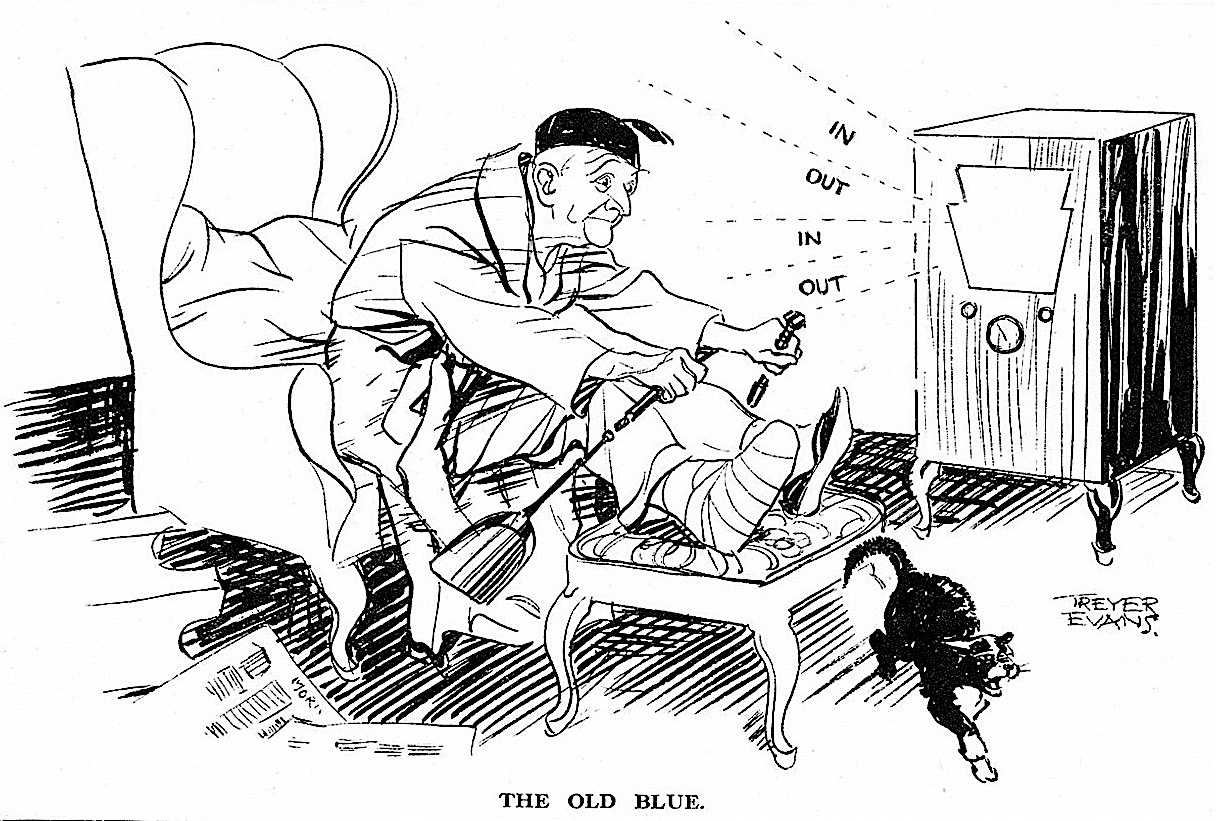
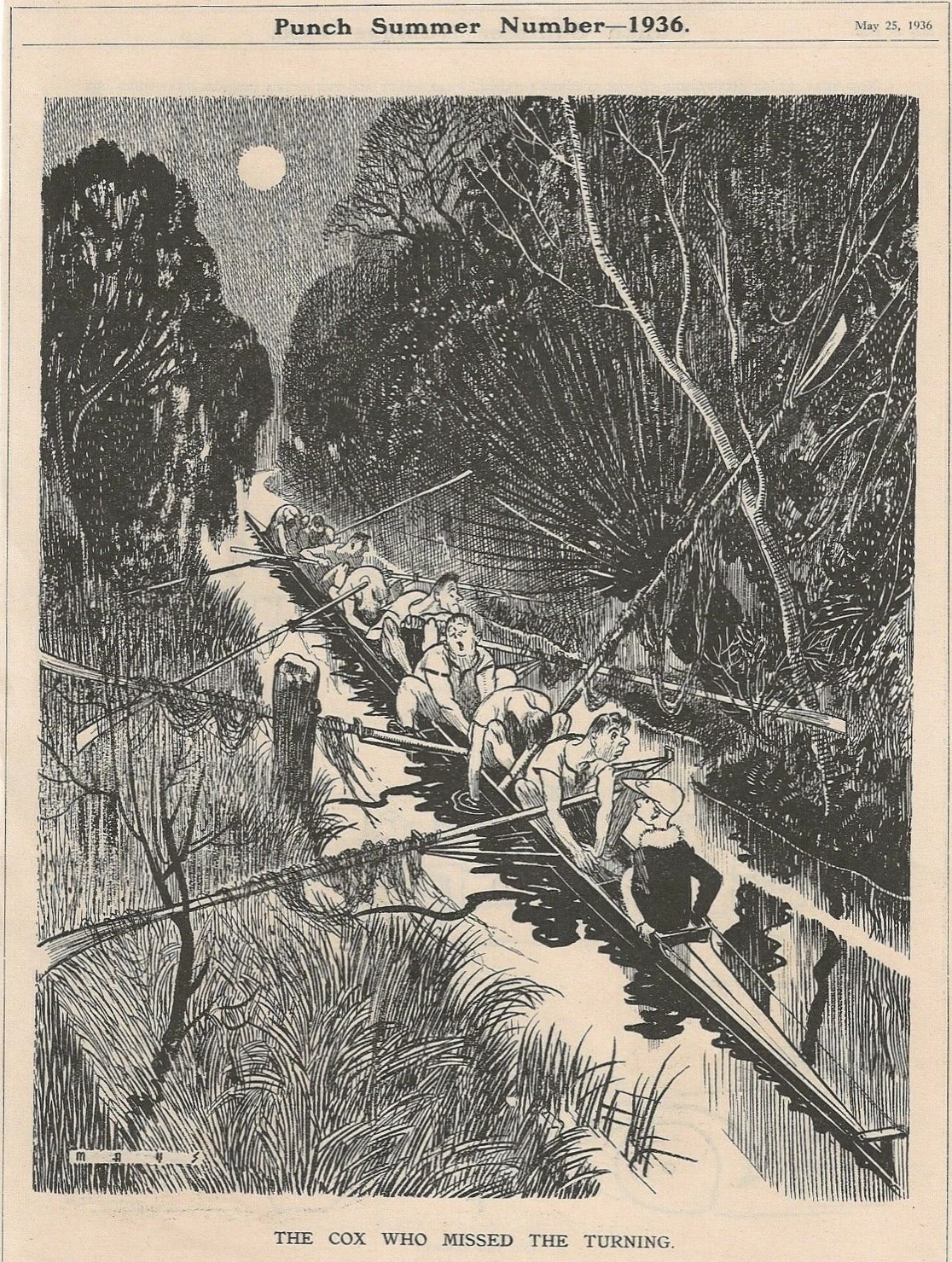
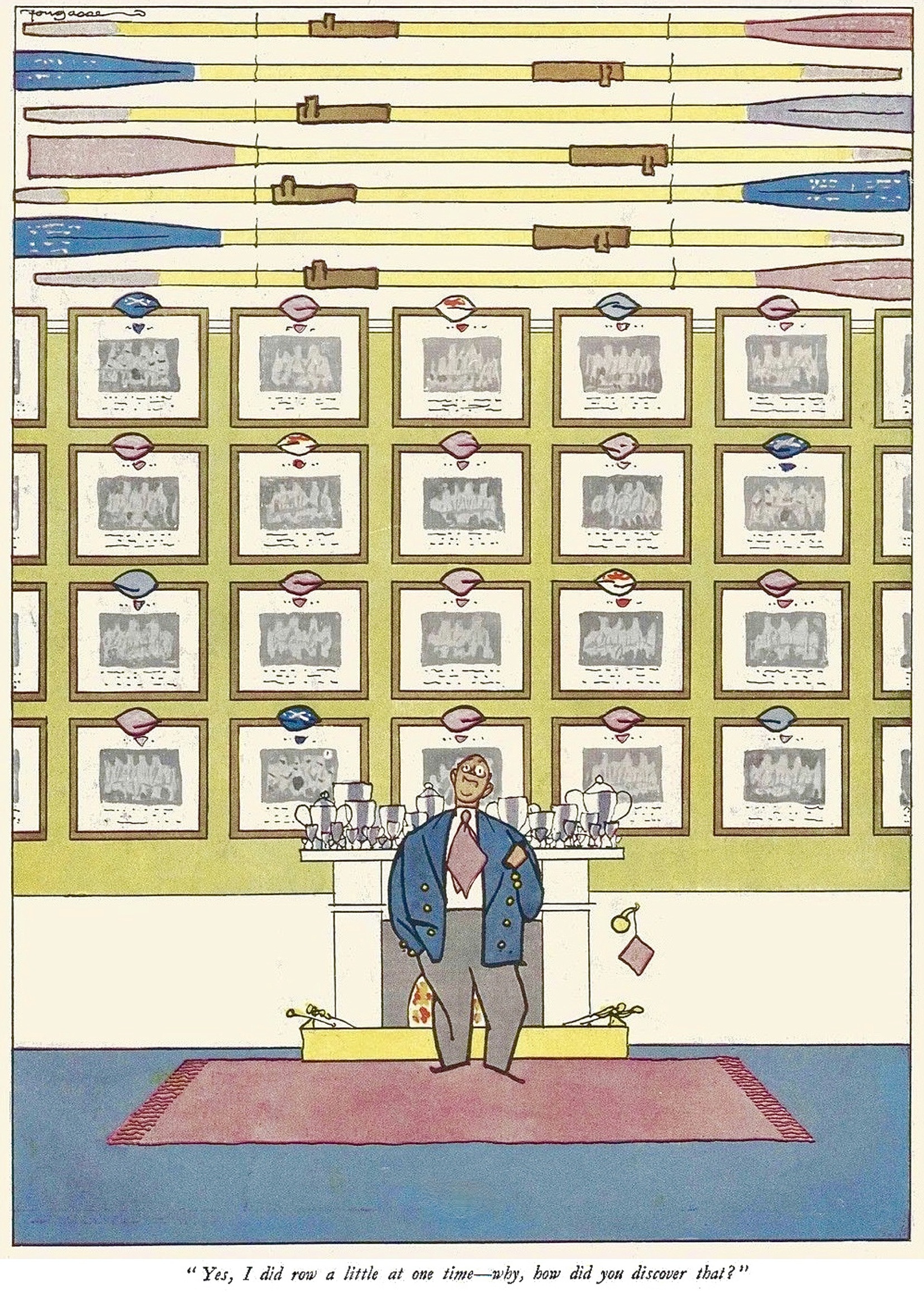
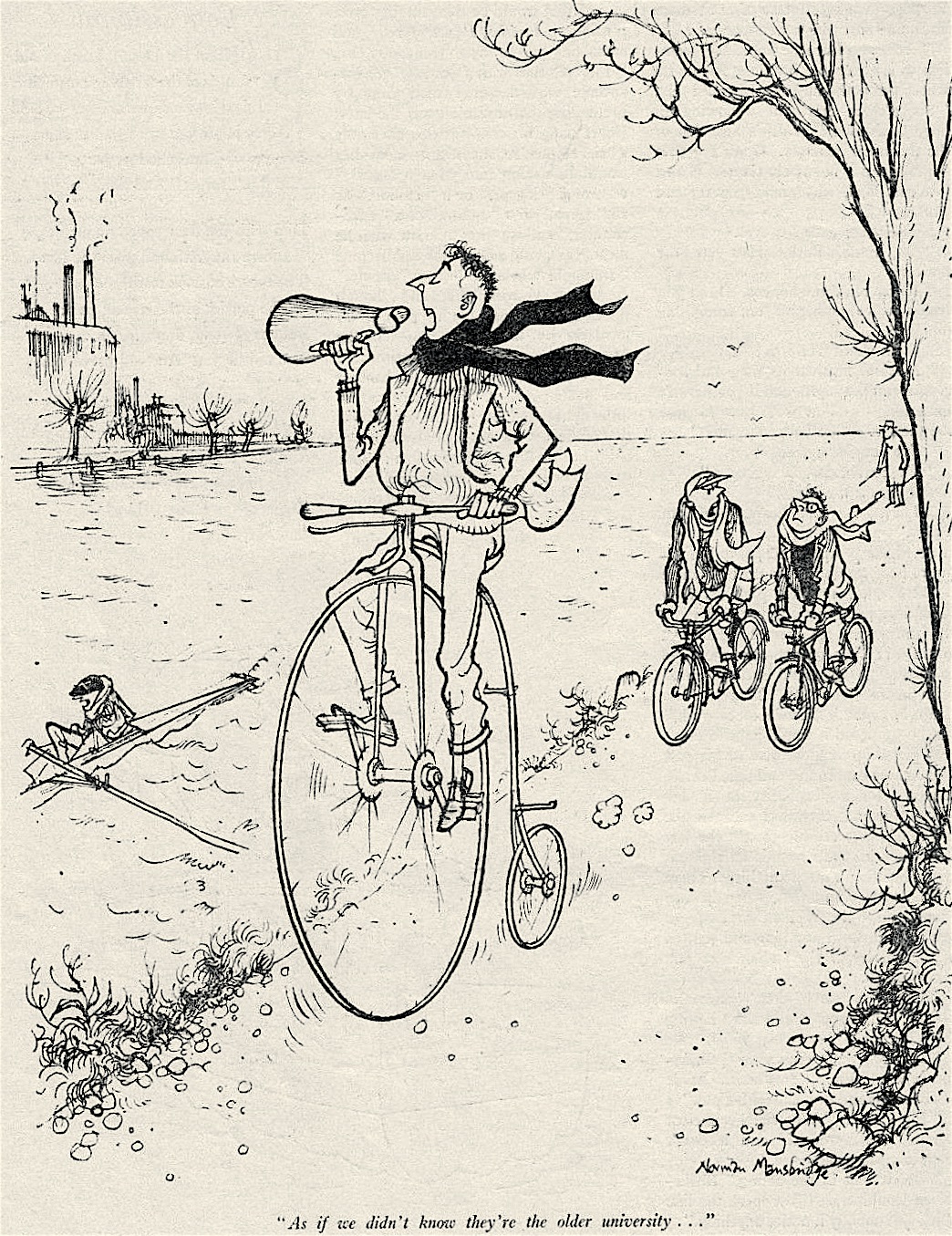
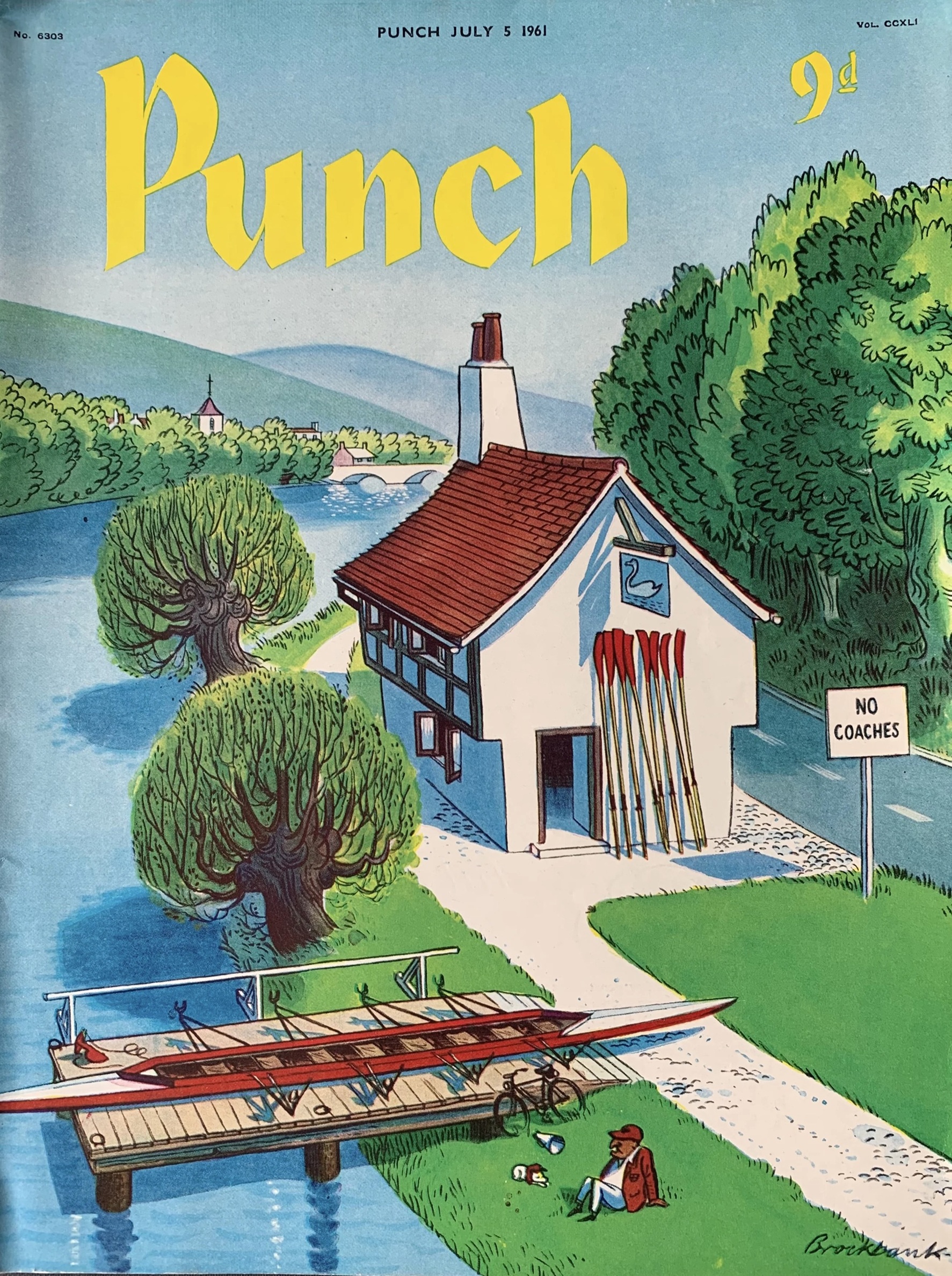
The online books page hosted by the University of Pennsylvania has a splendid archive of old copies of Punch, 1841- 1922.
 Hear The Boat Sing